The Lions Pavilion Hong Kong History - Why This Tiny Lookout Still Draws the Crowds
10 things you didn’t know about The Lions Pavilion at Victoria Peak in Hong Kong

The J3 Group - Premium Quality Private Tours | Experiences and Insider Chats since 2010
Me Jamie, your host, I am English and I have lived in Hong Kong since January 2nd 1972 - I know the place.
A meaningful blog post with a difference - tips on Travel, Tourism, Tours, Daily Life and my personal thoughts on Hong Kong.
Please do visit Amazing Hong Kong
Hong Kong | Pearl of the Orient

A Resident since 1972 - Private Tours of Hong Kong with Jamie
The Best Things to do in Hong Kong
click on the image to enlarge
© Copyright Acknowledged | All rights reserved | image courtesy of Gwulo
The Lions Pavilion at Victoria Peak | Totally Iconic since 1976 | Hong Kong
Foreword by Jamie
10 things you didn’t know about The Lions Pavilion at Findlay Road, Victoria Peak in Hong Kong
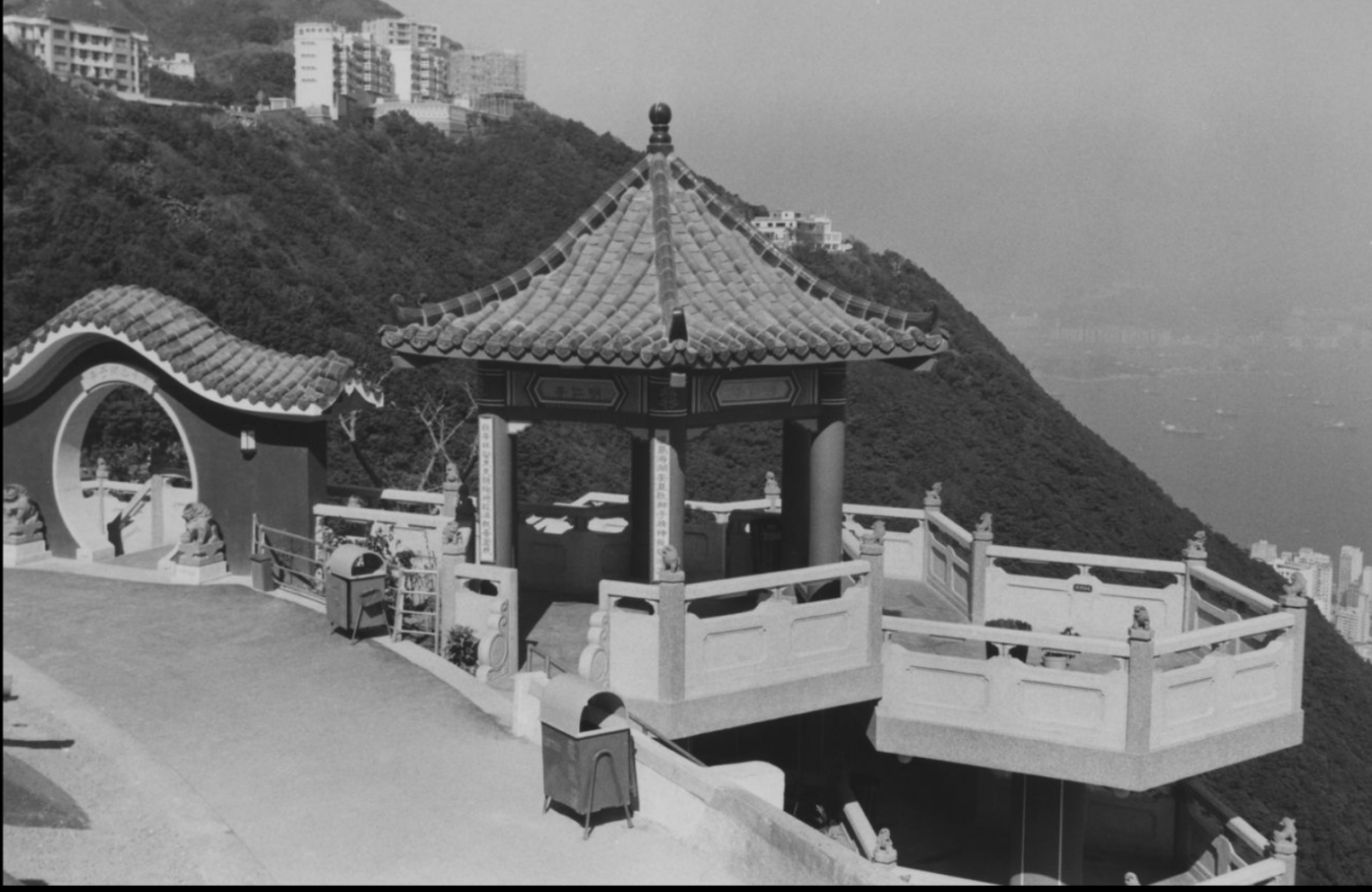
I just love the image above taken shortly after the Lions Pavilion opened for business, it, I remember it like this,when you visit the Lions Pavilion today the contrast is stark, 7 days a week all year round it is mobbed by thousands of tourists,many on cheap package tours and the whole experience just leaves a sour taste, 50 years ago it was a wonderful experience, small and polite crowds and an opportunity linger and take in the stunning views, more on that later.
There is something quietly telling about the Lions Pavilion that sits just a short 2 minute stroll from the Peak Tower. For decades it has offered one of the most photographed views in Hong Kong, yet it remains stubbornly small, a little awkward underfoot, and completely free. In the mid-1970s it made perfect sense. Today it often feels like a structure that the years and the crowds have rather outgrown. What follows are ten solid facts and observations about the place, drawn from its history, its design, and the practical realities of standing on it with a mob of other people all trying to get the same photograph.
1. The complete history of Lions Pavilion from foundation to the present
Construction of the Lions Pavilion began with a foundation-stone ceremony on 28th February 1975, officiated by the then Director of Home Affairs, Ho Hung-luen. The project was a joint donation by the Tai Ping Shan Lions Club and the Ming Ren Shipping and Trading Company (associated with the Shi Jiazong family). The main building work took roughly 19 months. On 3rd September 1976 the pavilion was formally opened by Urban Council Chairman A. de O. Sales.
It is a traditional Chinese-style structure, hexagonal in plan with a double-eave roof. A bronze lion sculpture sits at the centre of the roof, and the balustrade posts carry 24 small carved stone lions. A moon-gate opening frames the view northwards across the harbour.
In 1992 the pavilion underwent a substantial renovation and was reopened on 20th June that year with a ribbon-cutting ceremony by Urban Council Chairman Leung Ding-bong. Further modest maintenance work took place in the early 2000s. Since then the structure has remained essentially unchanged in form and footprint. It sits on government land on Findlay Road and is managed as a public open space. Its official Chinese name is sometimes recorded as Ming Ren Pavilion, though the Lions name has stuck in everyday use because of the donor club and the decorative lions.
2. Why it is called the Lions Pavilion
The name comes directly from the Tai Ping Shan Lions Club, the principal donor organisation. Lions Clubs around the world have a long tradition of funding public pavilions, resting places and viewpoints as community projects. The decorative programme reinforces the name: the bronze lion on the roof and the 24 smaller stone lions set into the railings make the association unmistakable. There is no record of a single individual inventing the name; it was the natural outcome of the club’s involvement and the architectural detailing.
3. Why it is the Lions Pavilion so small
In the mid-1970s the daily number of visitors reaching Victoria Peak was measured in the hundreds rather than the many thousands of today. A compact, multi-level Chinese pavilion was perfectly adequate for the expected footfall. Five or ten people standing on the upper platform was considered a reasonable crowd. No one designing the structure in 1975 could have foreseen the explosion in visitor numbers that followed the growth of mass tourism, the expansion of the Peak Tram capacity, and the later arrival of large organised tour groups. The footprint was never intended to handle 40 or 50 people at once, which is why the upper level quickly becomes uncomfortable and the steps become a bottleneck.
I am trying not to get to critical here but mobs of visitors today anytime after 10am just make for a very unpleasant experience, basic manners go out of the window as people vie for the best selfie spot and yes you can get groups of 20 people all wanting to be in the same image so they push people out of the way. There is an upstairs and downstairs section but everyone wants to be on the upstairs level, not wanted to walk down more steps and it is quite dark and the view is not the same and as hard as it is to believe it was much worse in 2018 when we hit 65 million visitors, last year we only had 50 million!
So timing is everything, the earler in the day the better and certainly around 9am would be perfect, 10am at a pinch
4. The foo dogs and the stone lions on the railings at the Lions Pavilion
Traditional Chinese architecture places guardian lions (often called foo dogs in the West) at entrances and along balustrades as protective symbols. At the Lions Pavilion the most prominent feature is the bronze lion on the roof ridge, right at the centre of the double-eave roof., the problem is, is that is almost impossble to see from ground level due to the design of the pavilion and the mass of trees, it is on top of the structure with the red columns near the front entrance
If you look at the main black and white image above, add in large trees and take into account the design you can understand why it is all byut invisible
So from the upper platform it is easy to miss because it sits well above head height and the eye is drawn to the view rather than upward. It is a proper bronze sculpture, darker in tone than the pale stone lions that are set into the balustrade posts all the way round. Those smaller stone lions appear at regular intervals along the railings and are the features most people notice first. The roof lion is the central decorative element that completes the traditional Chinese design and gives the whole structure its name in a more formal sense. Additional pairs of stone lions appear at the approaches; some of these were later donations or additions associated with the broader Lions Club tradition of marking public facilities with lion imagery. The overall effect is deliberate and consistent with Chinese garden architecture of the period.
5. Ownership and day-to-day maintenance of the Lions Pavilion
The pavilion was never a private structure in the long-term sense. It was built as a public donation by the Tai Ping Shan Lions Club and the Ming Ren Shipping interests and handed over to the Urban Council from the outset. After the reorganisation of municipal services in 1999 the responsibility passed to the Leisure and Cultural Services Department, which still looks after it today. Daily upkeep (cleaning, basic repairs, lighting and safety checks) falls under the Central and Western District parks and playgrounds team. Filming permits and similar permissions are handled through the same department. The presence of LCSD signs tucked behind one of the entrance foo dogs is a quiet reminder of this official status. It is a public facility rather than a commercial attraction, which explains both the free access and the relatively modest level of ongoing investment compared with the privately operated Peak Tower complex a short distance away. 2 minute
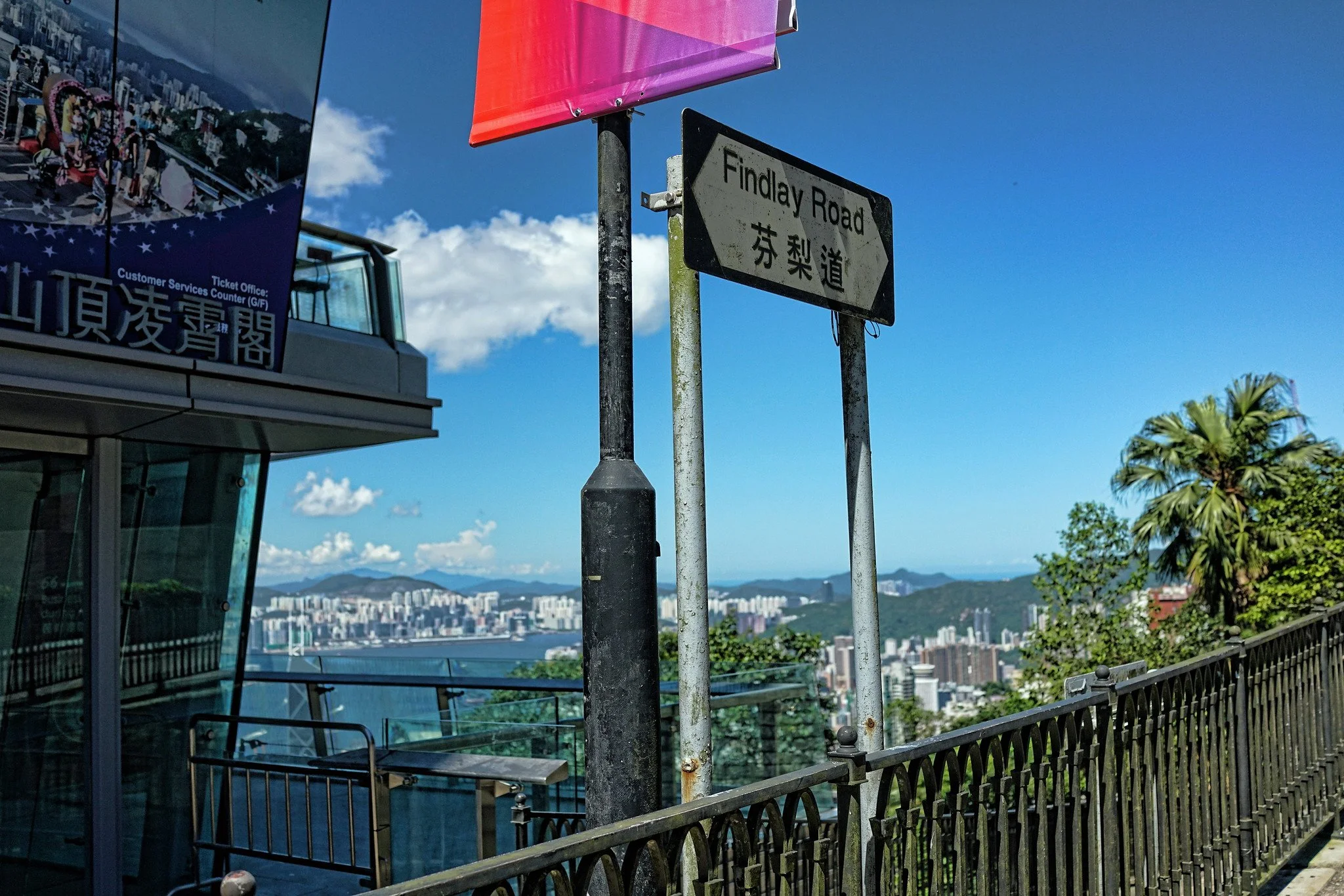
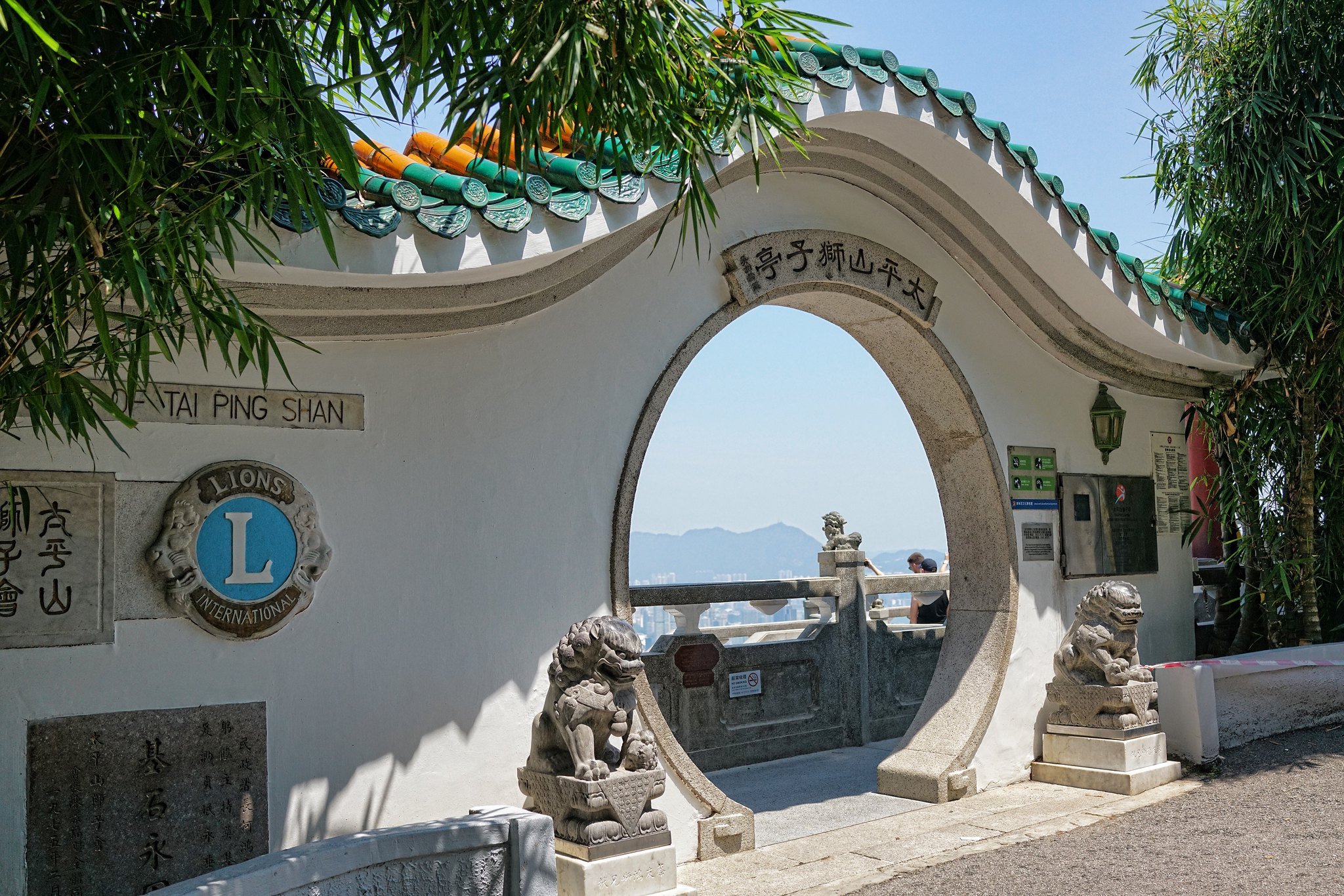
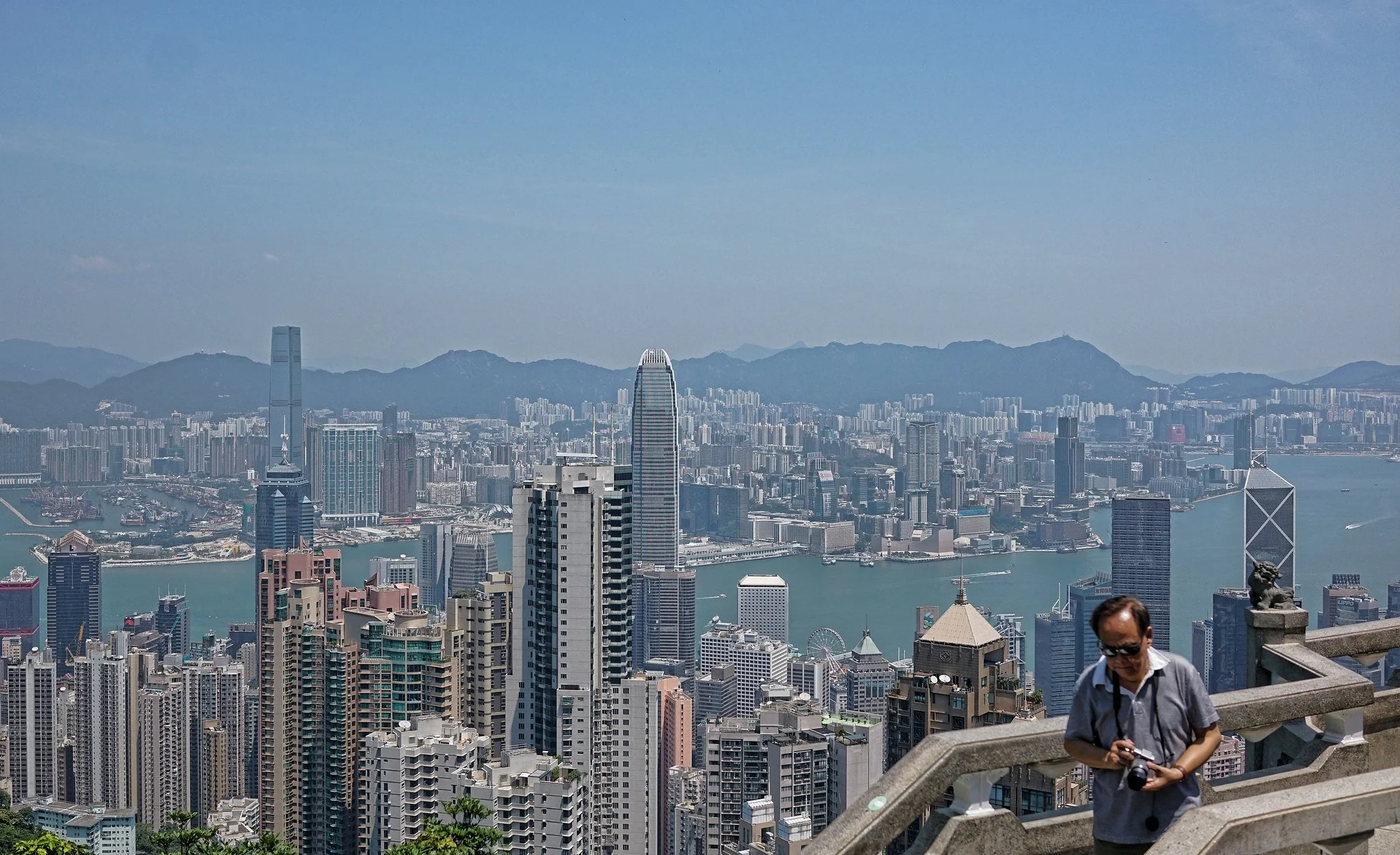
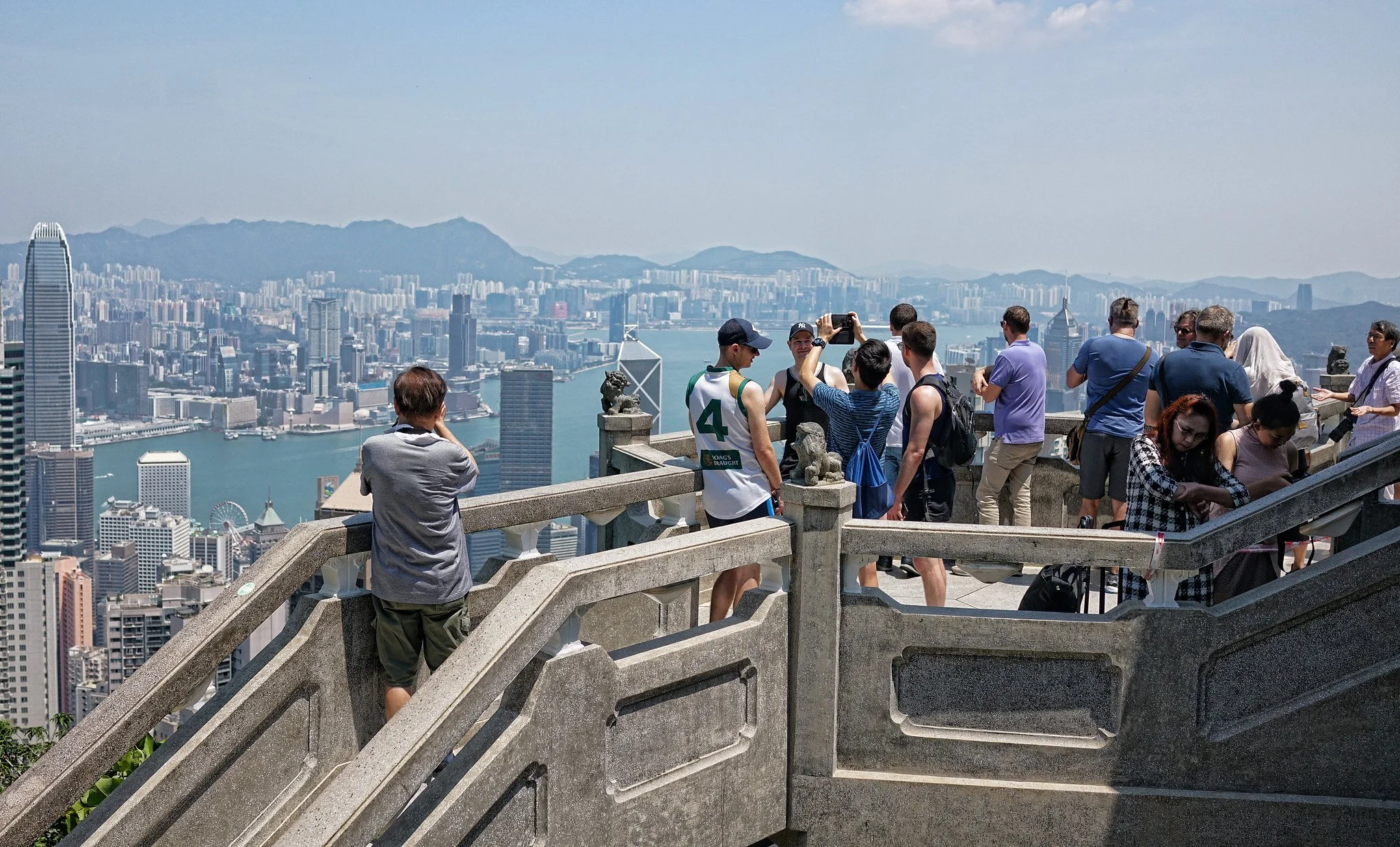
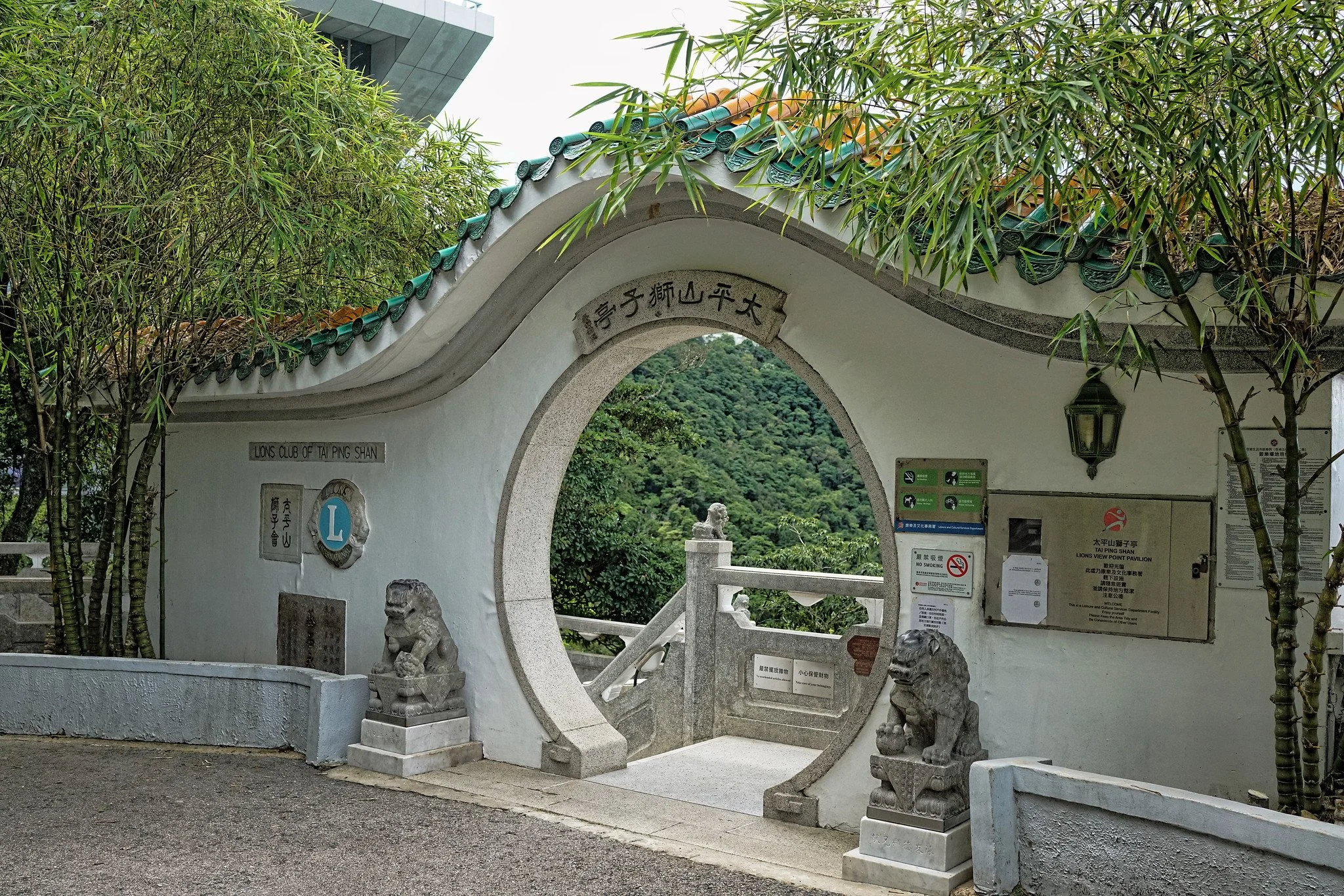
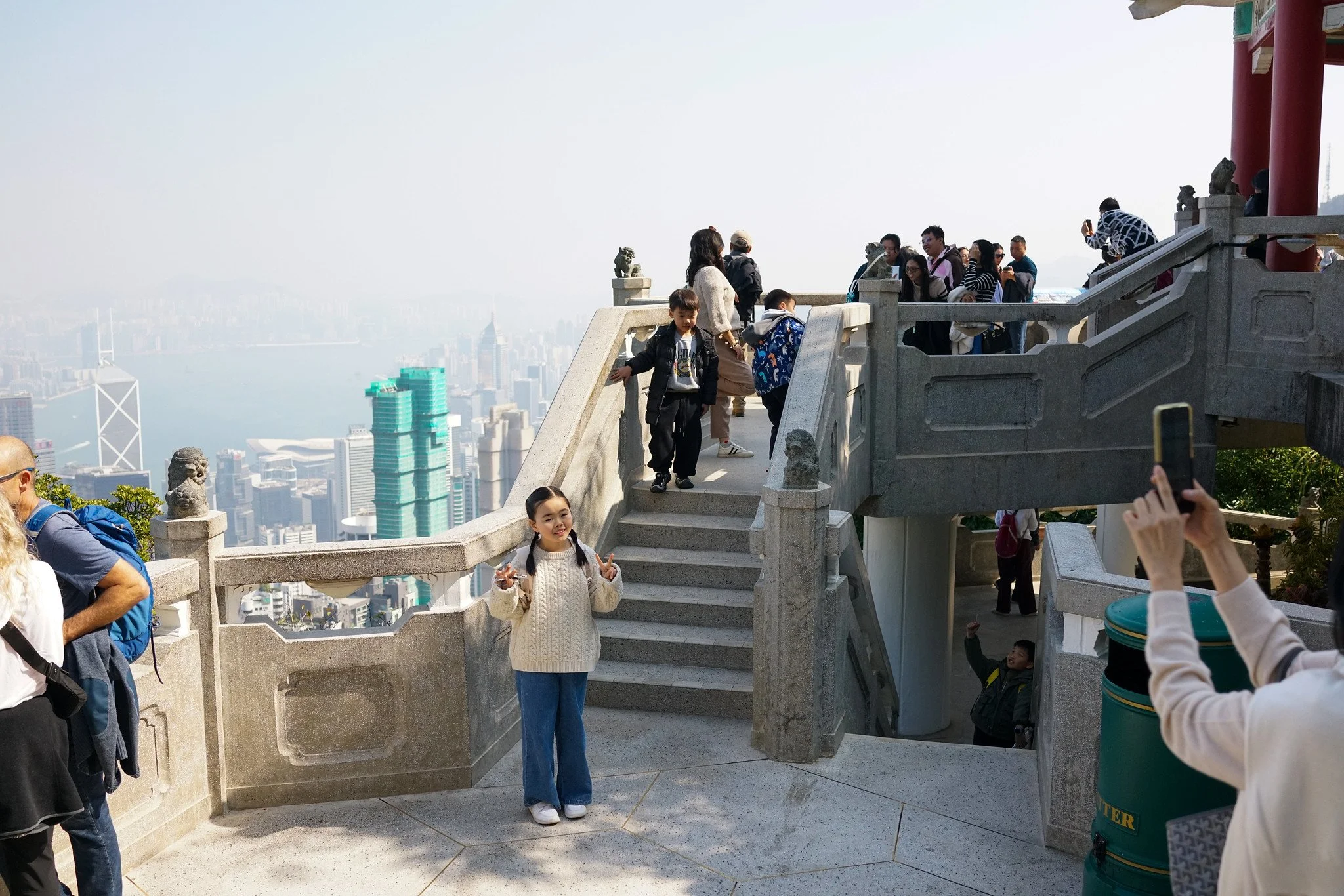
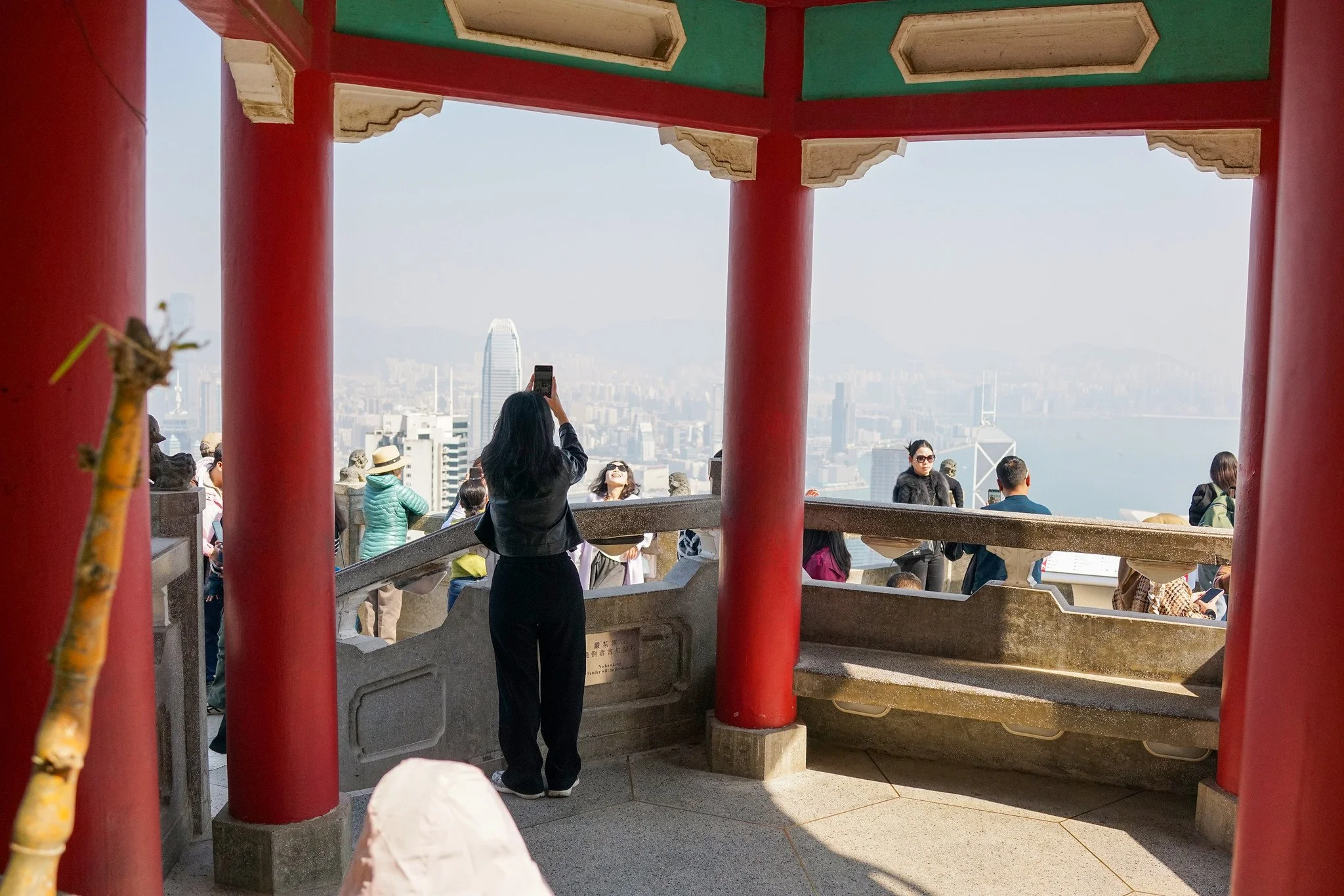
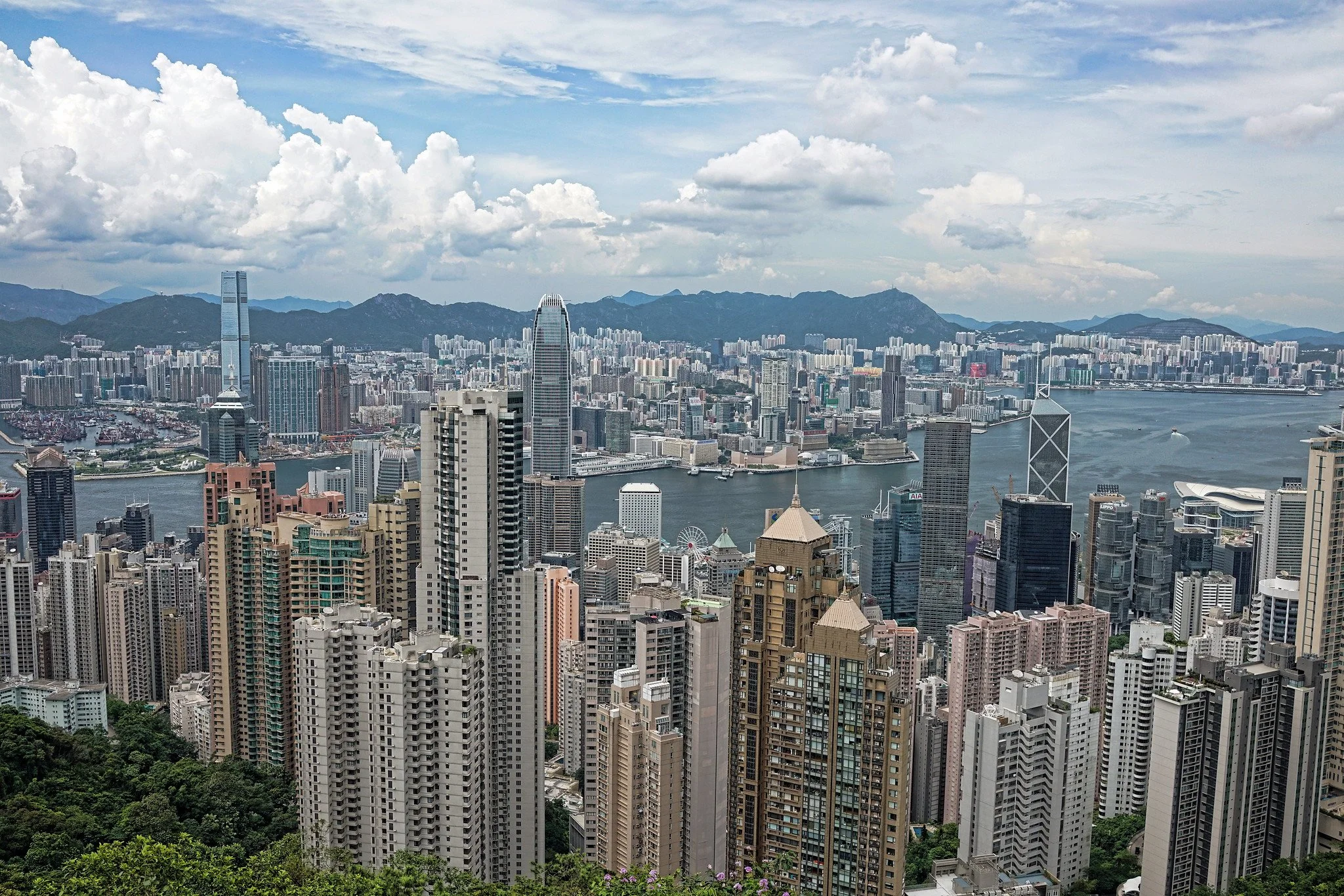
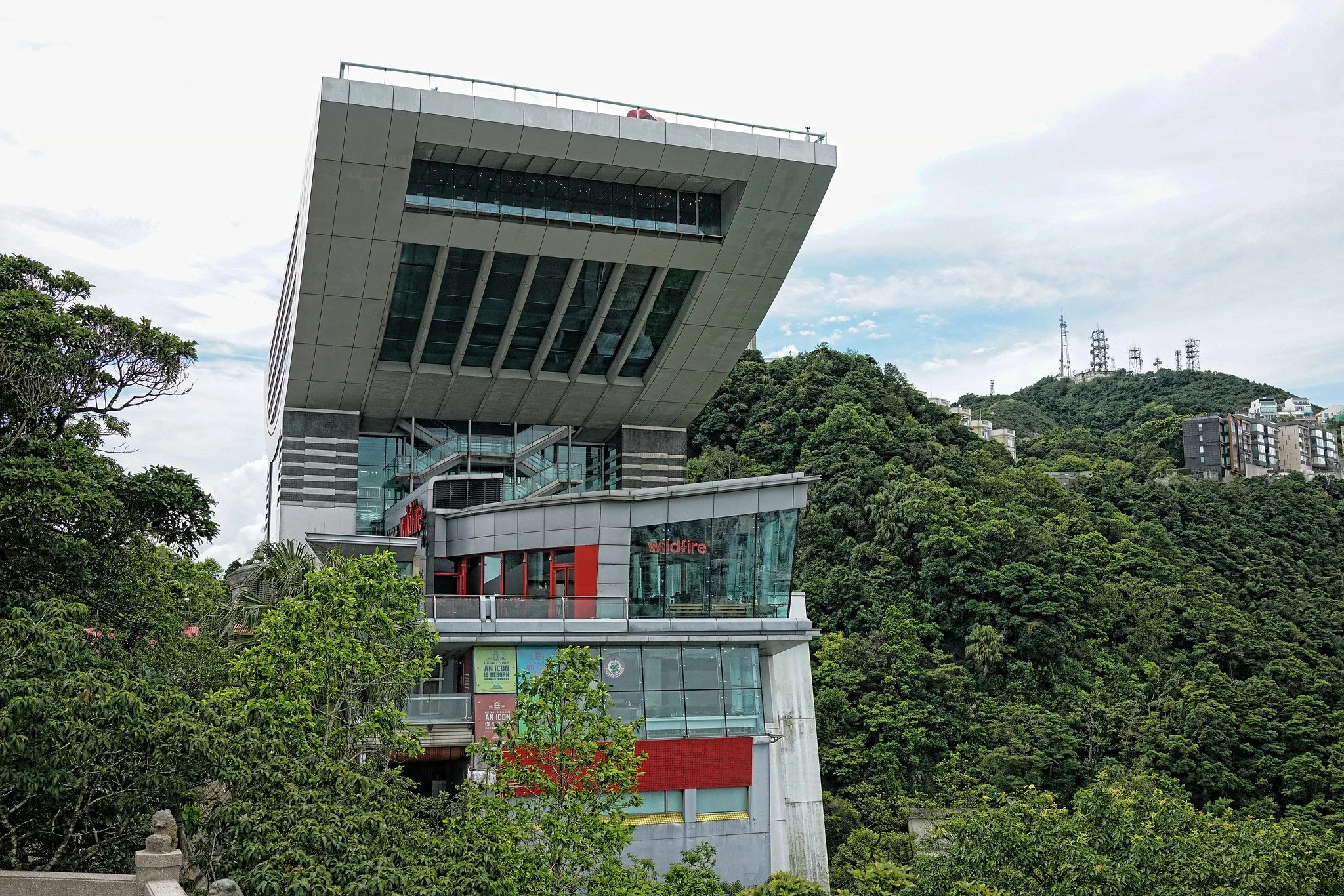
click on any image to enlarge
© Copyright Acknowledged | All rights reserved | images taken by Jamie
The Lions Pavilion at Victoria Peak | Totally Iconic since 1976 | Hong Kong
6. Why the Lions Pavilion remains free of charge while The Peak Tower Sky Terrace 428 charges US$10
Sky Terrace 428 is a commercial observation deck operated as part of the Peak Tower | Peak Tram complex. Adult admission is currently around HK$80 (approximately US$10). The Lions Pavilion was built and donated as a public welfare viewing facility and has always been free. The two places offer essentially the same northerly panorama of the harbour and the city, although the Sky Terrace sits a little higher and provides a more “rounded” view experience. The difference in pricing simply reflects the difference between a private commercial facility and a government-managed public pavilion.
Naturally the problem is that many people on cheap package tours have no interest in paying US$10 per adult for a view which is essentially the same when it can be had for free at the Lions Pavilion! basic human nature and if you think the crowds are bad at the pavilion, they can much worse at the Peak Tower 428 Sky Terrace as it can hold a lot more people
7. Official address of the Lions Pavilion
The official address is Findlay Road, The Peak, Hong Kong. It sits immediately adjacent to the Peak Tower complex, a walk of roughly 100 to 150 metres from the tram terminus and the main plaza., in plain English roughly 2 - 3 minutes depending on the size of the crowd heading to the Lions Pavilion
8. Approximate size and people capacity of the Lions Pavilion
The pavilion is a compact multi-level structure. The upper viewing platform is small enough that 25 to 30 people already feel crowded; 50 people makes movement difficult and photography almost impossible without constant negotiation and dealing with people with poor manners who simply push you out of the way. There is no published official floor area in square metres, but the overall footprint is modest by any modern standard. The stepped levels and narrow stairs further limit how many people can occupy the space comfortably at one time.
The pavilion is built on two main levels. The upper platform is the one almost everyone uses because it offers the most direct and elevated view. The lower level sits a short flight of steps down and is reached from the sides of the structure. It is narrower and slightly more enclosed, but on busy days it is noticeably quieter simply because most tour groups and casual visitors never bother to go down. The view from the lower level is still good, just a fraction lower and with a slightly different framing of the harbour. Handrails are still limited and the steps remain steep, so the same practical cautions apply on both levels., I have only ever been down to the lower level just once.
9. Expansion plans for the Lions Pavilion if any
There is no public record of any serious proposal to enlarge the pavilion by a factor of two or three. Occasional informal suggestions surface from time to time, but the structure has remained within its original footprint for nearly 50 years. Expanding it would require significant engineering work on a constrained hillside site, possible disruption to surrounding paths, and a clear policy decision that the present free facility should be upgraded to match contemporary visitor volumes. No such decision appears to have been taken. The fact that the pavilion is firmly under LCSD management effectively rules out any private or donor-led expansion of the structure itself.
I have been down Findlay Path which goes down under the pavilion so to speak and walked further along Findlay Road, it is certainly not a difficult job to make it bigger!
10. The mismatch with today’s crowds and the absence of a make-over of the Lions Pavilion
When the pavilion opened in 1976 the scale was appropriate. Peak visitor numbers were low, queues at the old Peak Tower were rare, and a small Chinese pavilion felt like a pleasant, slightly exclusive lookout. Today the same structure is routinely packed, especially from 10am onwards and into the evening. Organised tour groups favour it precisely because it is free and only a 2 minute walk from the Peak tram. The result is a space that is often noisy, congested and difficult to enjoy at a measured pace.
There have been no major upgrades beyond the 1992 renovation and later routine maintenance. The steps remain steep and awkward, handrails are limited, and wheelchair access is effectively non-existent. The structure is simply not designed for the volume or the mix of visitors it now receives. Whether this is a matter of limited budgets, competing priorities within the Leisure and Cultural Services Department, or a quiet acceptance that the pavilion has reached the end of its useful design life is open to interpretation. What is clear is that the gap between the original intention and present-day reality grows wider every year.
Out of left field and other interesting points
A few additional observations are worth recording. The pavilion has become the default free stop for many tour groups precisely because no admission is charged. That concentration of large parties contributes to the pushing and shoving that visitors frequently mention. The steps and changes in level make the place genuinely hazardous for anyone with limited mobility, and the absence of continuous handrails does not help. Trees that have grown up over the decades now partially obscure parts of the view in places; occasional trimming would improve matters, yet it rarely seems to happen with any urgency.
click on any image to enlarge
© Copyright Acknowledged | All rights reserved | images courtesy of Gwulo + Others
Lions Pavilion at Victoria Peak | Location of the red Foo Dog | Hong Kong
The 2 images above are great for context, the black and white image simply show the Pavilion when it was new and it was quite common to go there and there wasn’t another soul in sight!
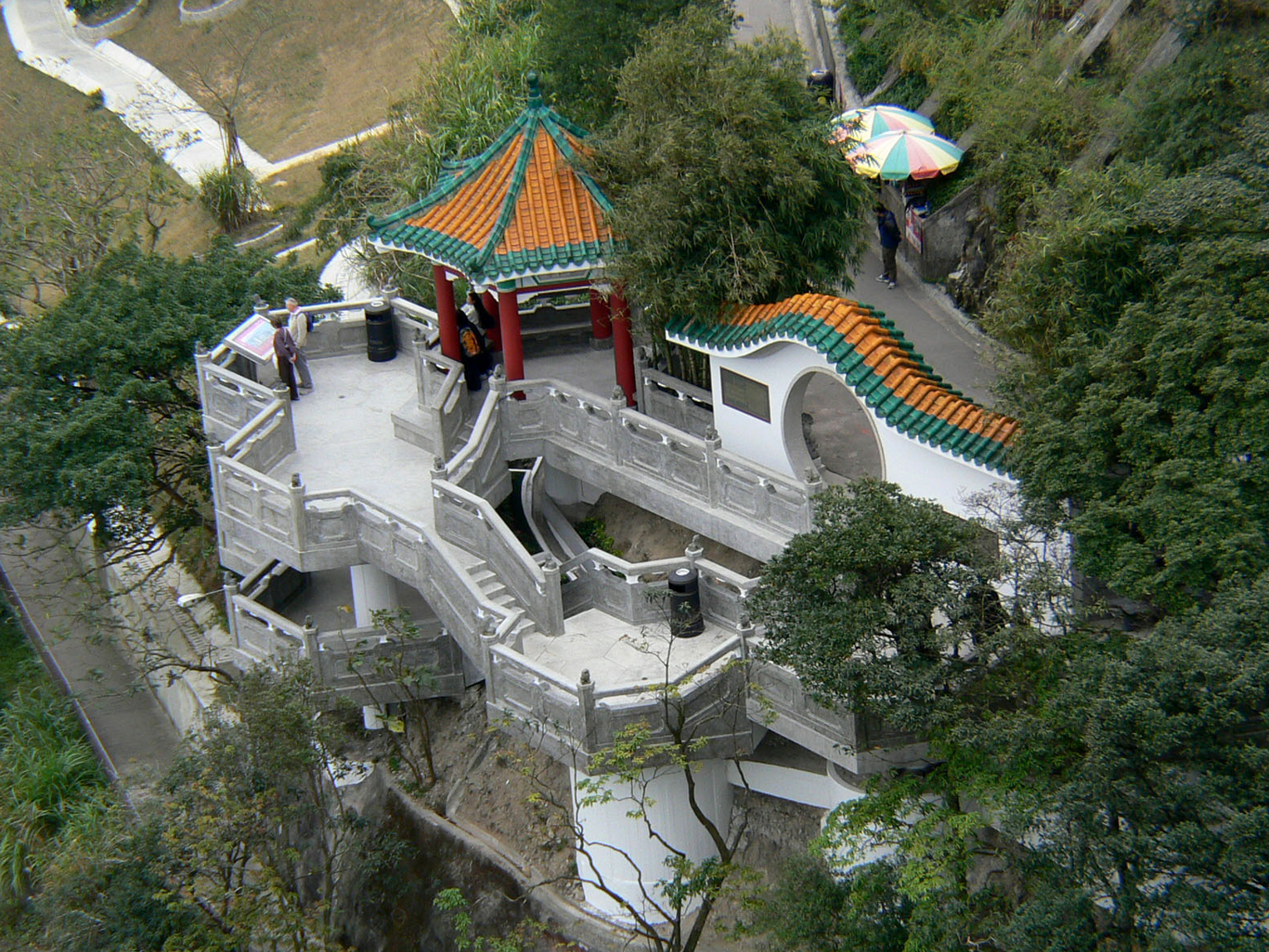
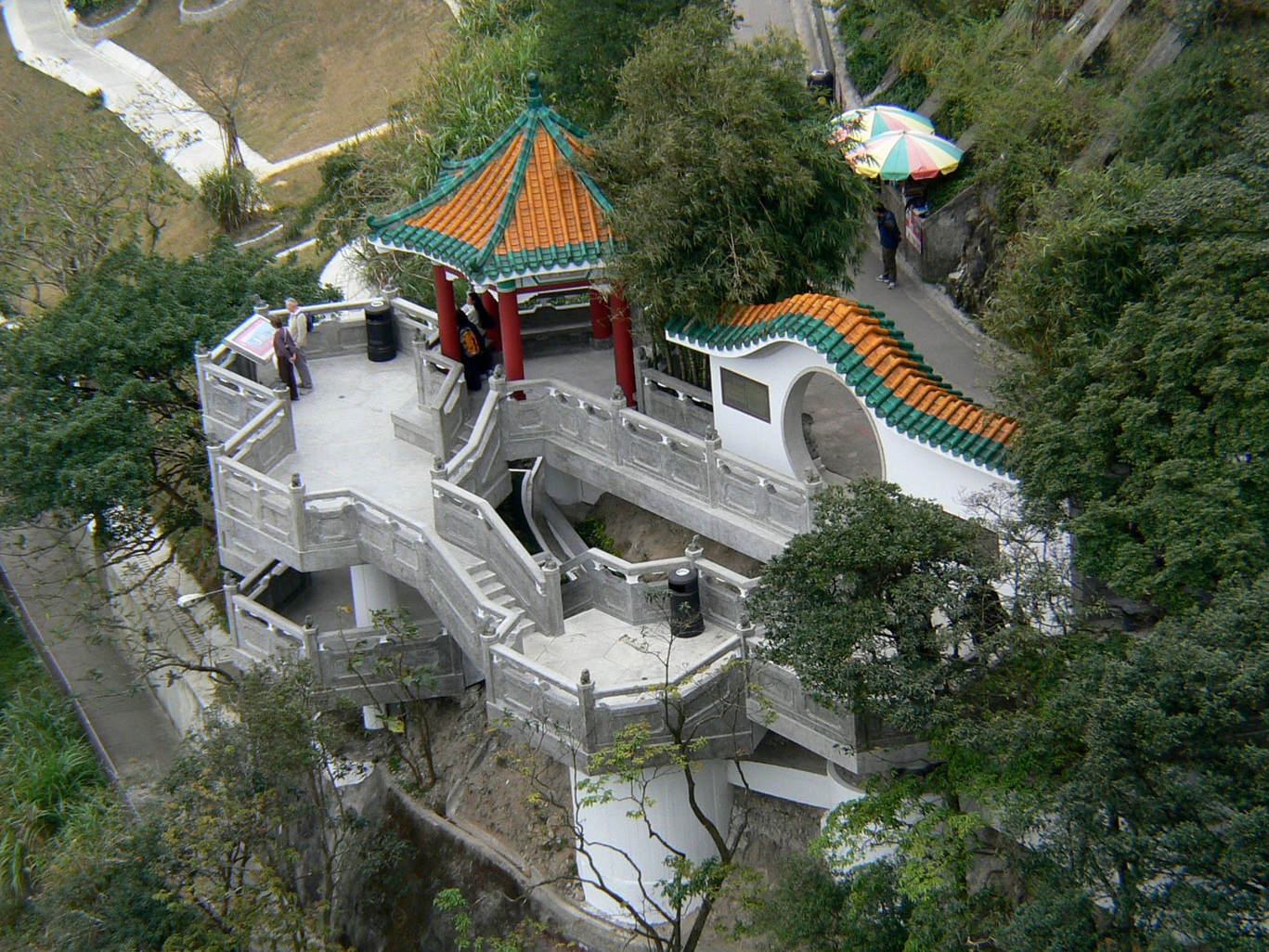
The aerial view is a current view of the Pavilion so you can see the scope of the entire structure, the green geassy patch in the top corner of the image is actuallly a cancelled real estate development, so I rest my case in the whole expansion idea! and you can see why it is almost impossible to see the bronze lion bcause of the trees, to repeat the structure with the red pillars and roof is where the bronze lion sits.
So I am not letting the bronze lion subject go - then there is the curious case of the bronze lion on the roof. Written descriptions speak of a bronze sculpture sitting at the centre of the double-eave ridge, darker in tone than the pale stone lions on the railings and intended as the central decorative feature of the whole structure. In architectural terms this is a finial - the decorative ornament that sits right on the very top of a roof or ridge, often a sculpted piece that completes the roofline. Older photographs, including the clear black-and-white image from the early years above, of the pavilion, do show a distinct sculpted finial right at the apex of the roof.
The aerial view confirms the same small rounded element sits on the very top of the tiled roof. From the viewing platforms themselves, however, it remains almost invisible. Most modern photographs of the roof show only the standard orange and green glazed tiles and that same modest finial against the sky, easy to overlook if the eye is fixed on the harbour. After fifty years of standing on the platform it is perfectly possible never to have registered it as a bronze lion at all, even when the image had already appeared in an earlier post. The stone lions on the balustrades are the real visual signature of the place. The roof element has managed to stay quietly in the background for decades, even when it was sitting in plain sight.
The Lions Pavilion remains a useful and historically interesting viewpoint. It is free, it is convenient, and on a very quiet weekday morning it can still deliver the classic harbour panorama without the escalators and the ticket queue. At peak times, however, it is a reminder that not every public structure built in the 1970s was designed with the tourist numbers of the 2020s in mind.
… and one of these days I will do another blog post about the Lugard Road Lookout views which are world class, it is a 20 minute walk from the Lions Pavilion and it is also free and you get the best panoramic city view in the world.
So there you go
Customised Private Tours + Experiences in Amazing Hong Kong
Jamie has lived in Hong Kong - Pearl of the Orient for 50+ years
Carefully Crafted Personalised and Customised Itineraries by Jamie | Hong Kong’s Most Experienced Private Tour Guide for : Solo Travellers Friends Families Seniors Couples Business People MICE Delegates.
Private Tours Cultural Tours Walking Tours Sightseeing Tours City Tours Night Tours Layover Tours Transit Tours Private Shore Excursions Bespoke Tours Personalised Tours Jewish Heritage Tours Luxury Private Tours Day Tours Luxury Boat Tours Themed Tours Private Family Tours Private Day Tours Corporate Tours
Just you, your family or friends and Jamie your personal English private tour guide - over 2,400+ tours completed since 2011 - Jamie offers quality Private Tours of Hong Kong
Tour Group Size 1 - 6 people only
J3 Group Hong Kong | J3 Consultants Hong Kong | J3 Private Tours Hong Kong
Creating Memories That Will Last A Lifetime
Go here for the Hong Kong Michelin Restaurant Guide which includes the Bib Gourmand Category

I do not do Food Tours in Hong Kong but I know people that do!
click on any image to enlarge
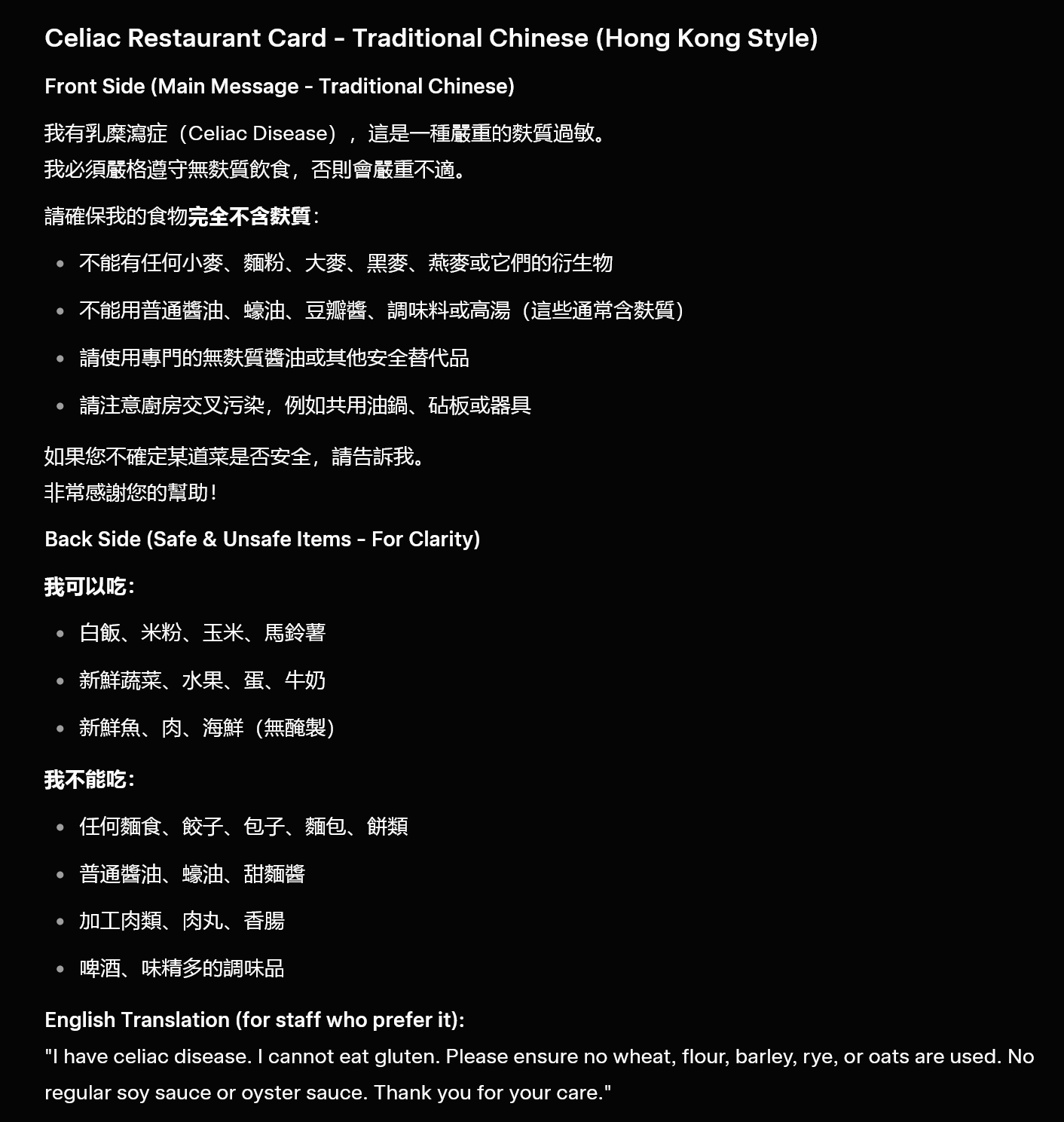
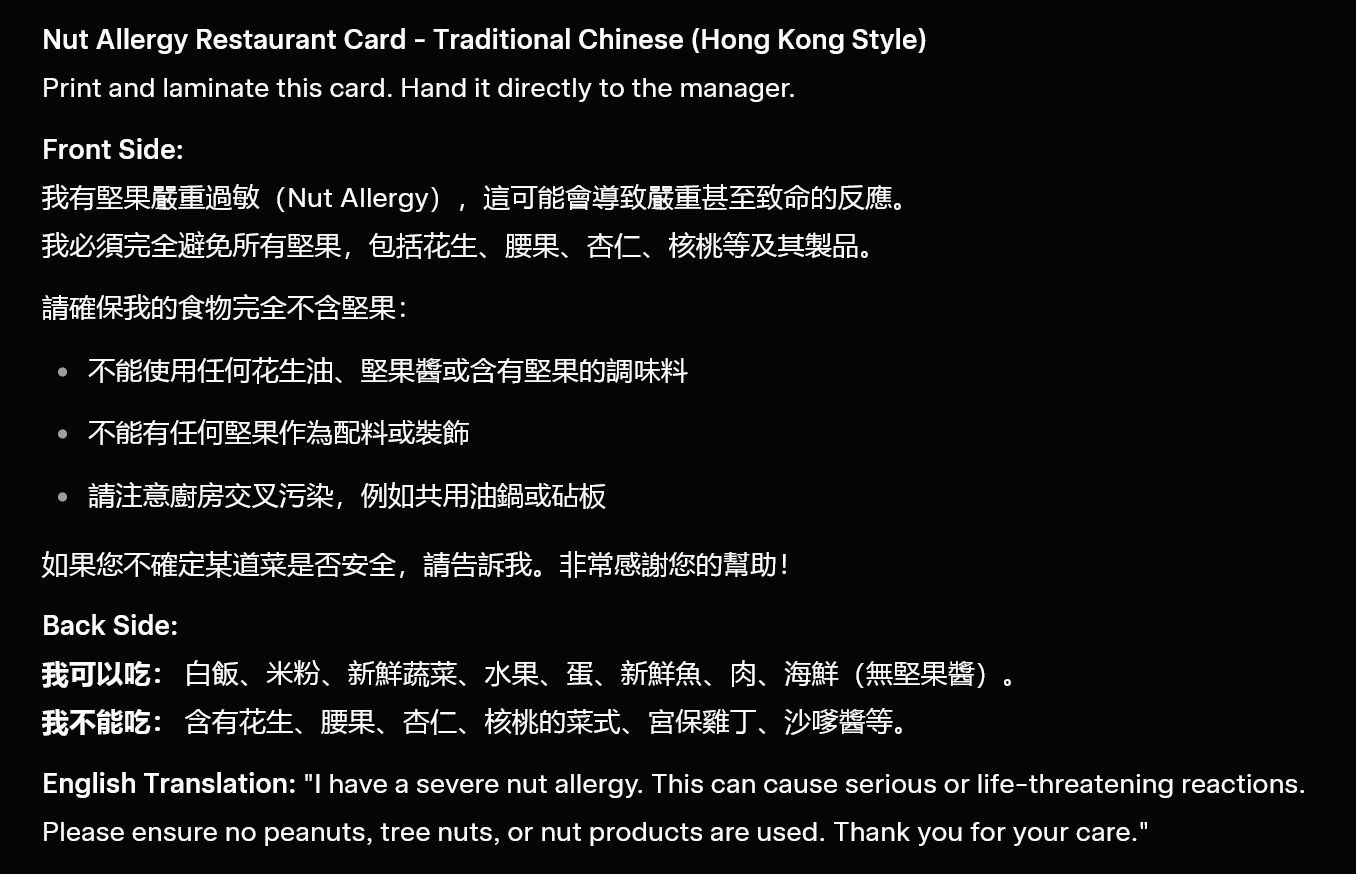
The information above can be shown to restaurant managers in Hong Kong if you are intolerant to gluten and nuts,
I do not do food tours as mentioned above, I have very specific reasons and part of it is that I do not speak Cantonese or write Chinese, I am from Yorkshire in England and I lack the language gene and it is not through lack of trying and yes a lot of restaurants do not have English menu’s or staff who speak conversational English.
.. and yet I have eaten at close to 1,400 restaurants in Hong Kong since January 2nd 1972, my wife was born in Hong Kong and we have been together over 40 years and her first language is Cantonese and a lot of her family are Chinese or half Chinese so I have never had much of an issue!
This does not translate to doing food tours though, yes, I could do them, no problem there but they would never ever be as good as the food tours done by my friends (see the 3 links above) most of their awesome guides are locally born Hong Kong Chinese and obviously food culture is part of their DNA, it is impossible for me to compete with that!
So please feel free to contact them for food tours
I do not do Hiking Tours in Hong Kong but I know someone that does!
I do not do Hiking Tours, never have and never will even though I used to go Hiking a lot when I was a lot younger, The Hong Kong Government is promoting hiking tours so I urge you to contact my friend Sabrina at Hong Kong Trails and Tours, she is a long time Hong Kong resident and and a very experienced hiker with close to 700 Hikes in 15+ years under her belt, please click on the link below
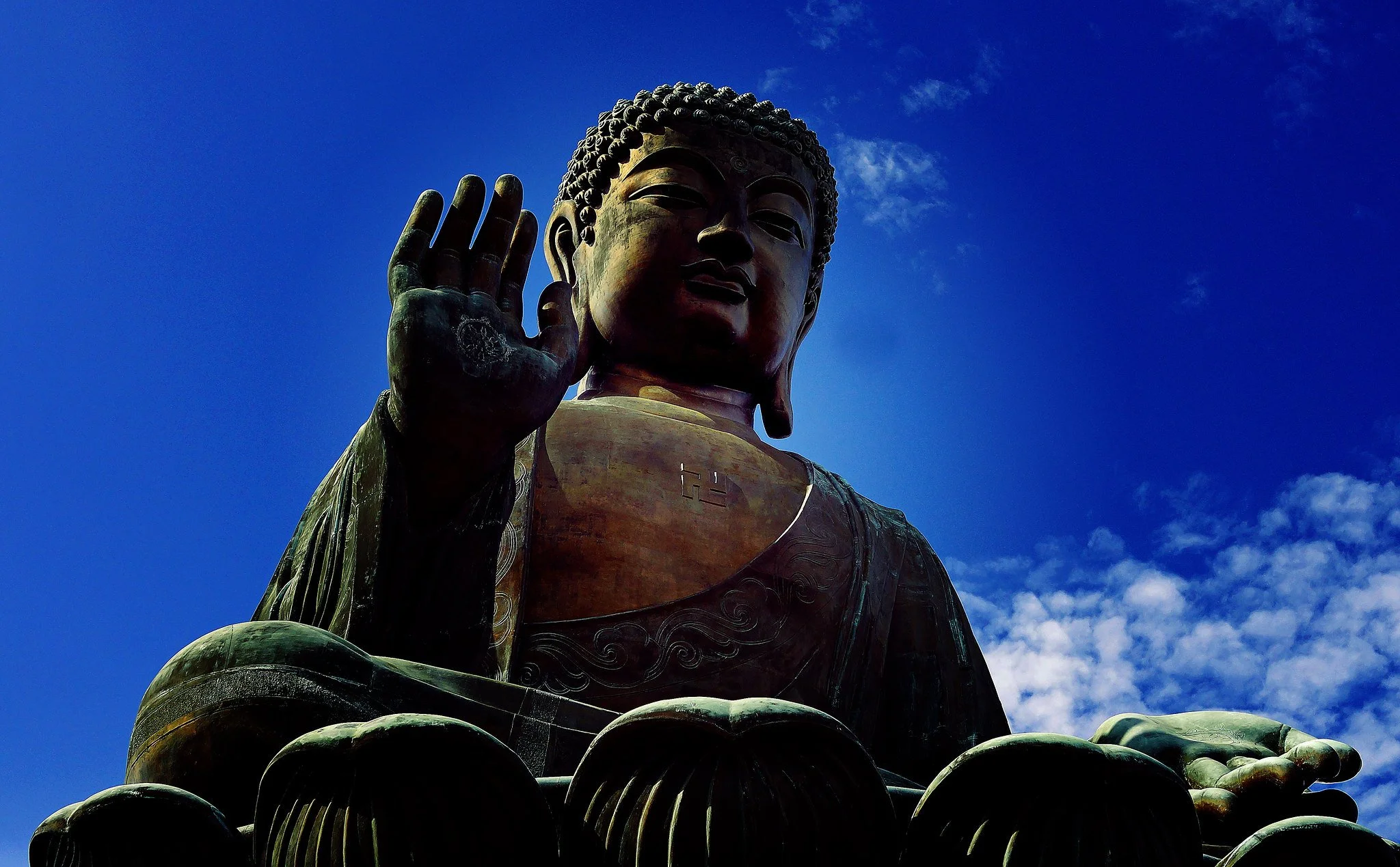
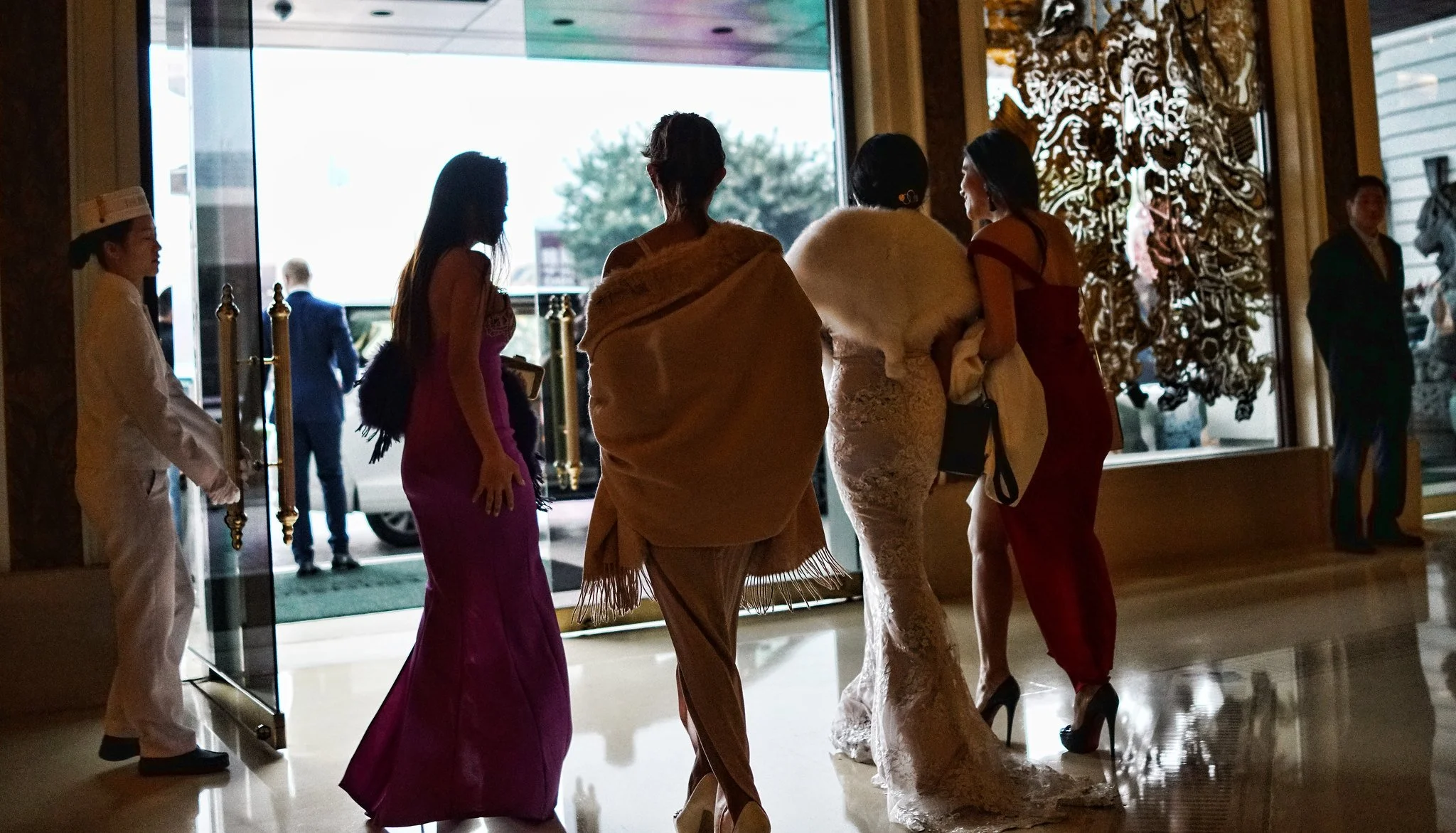
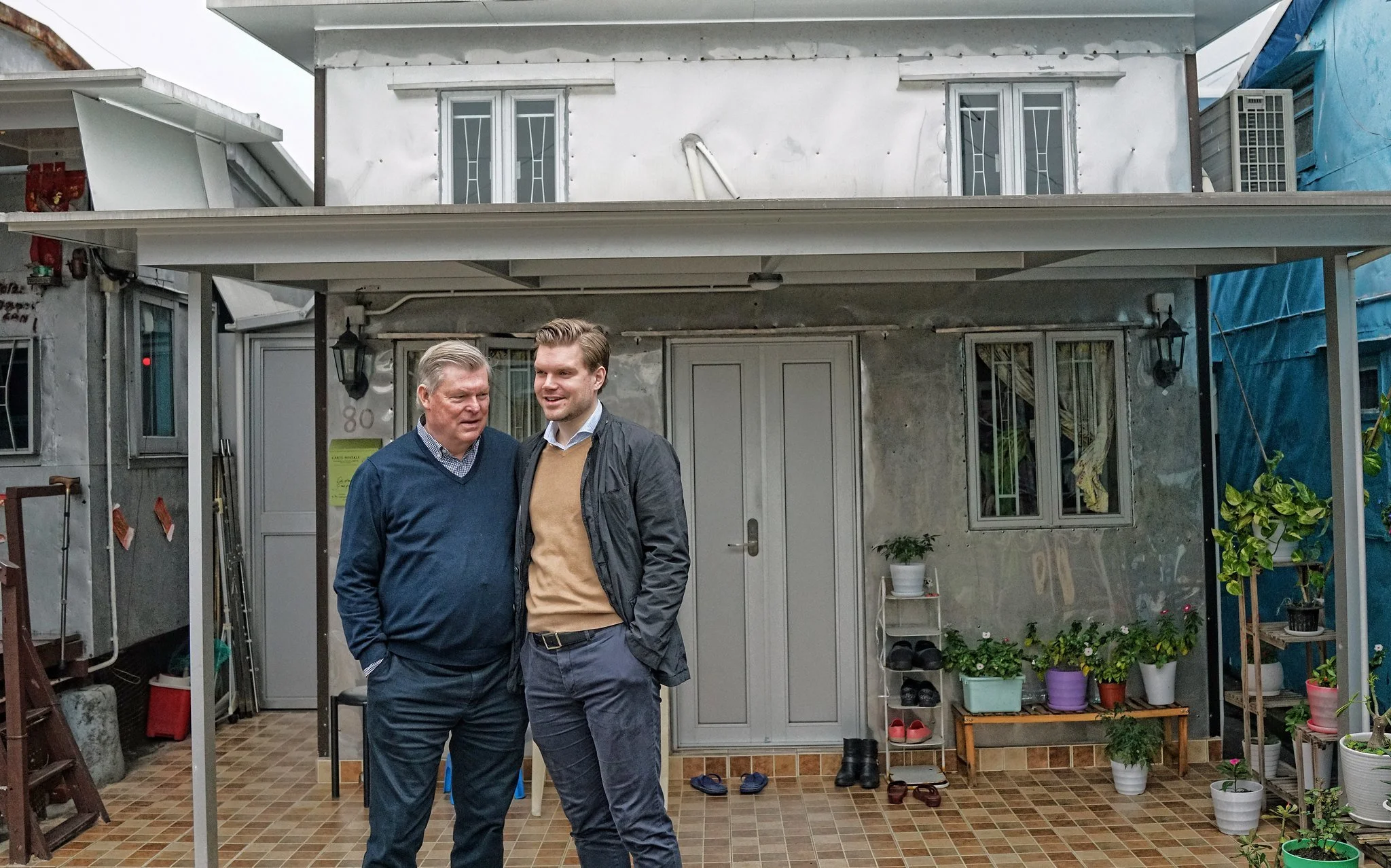
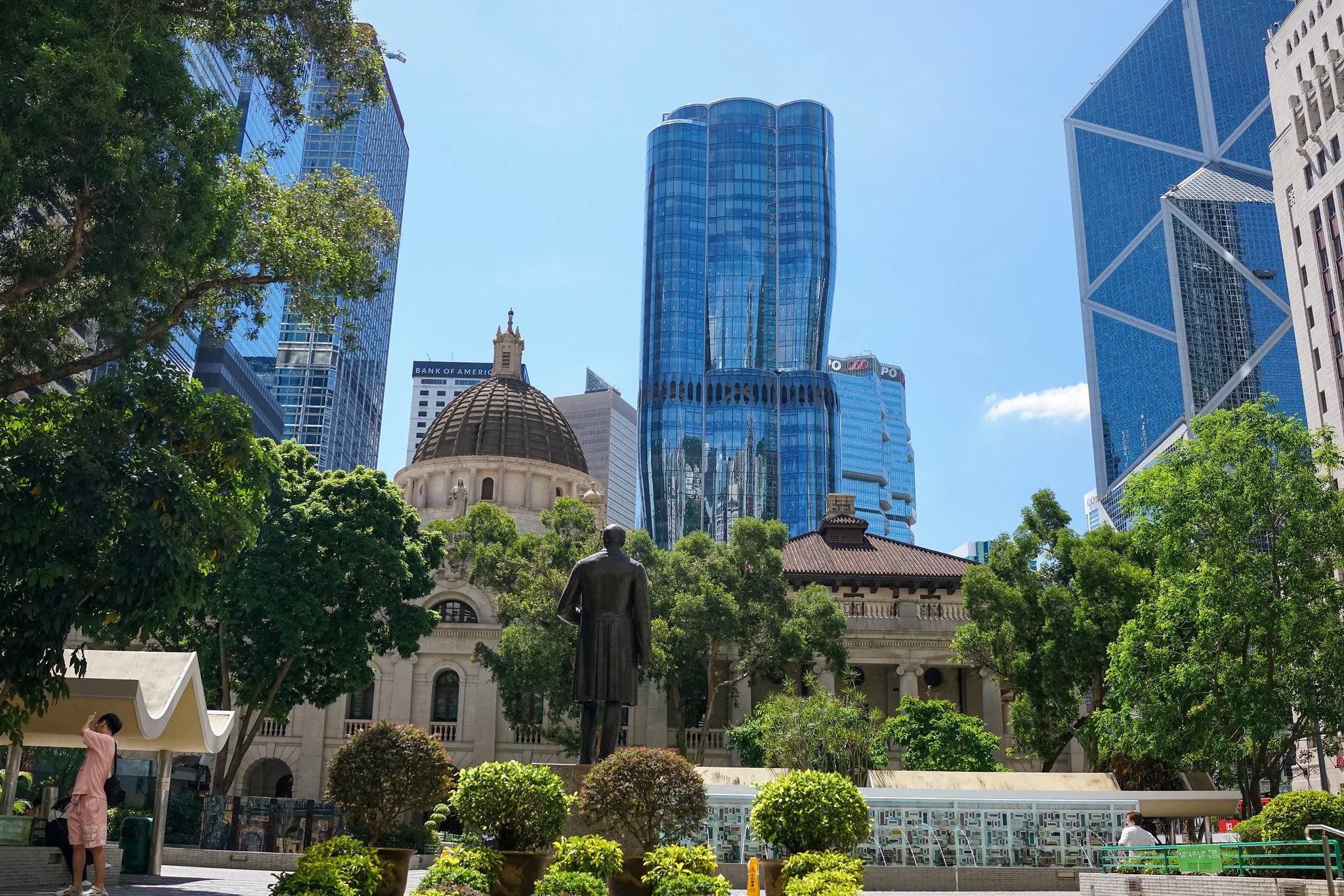
click on any image to enlarge
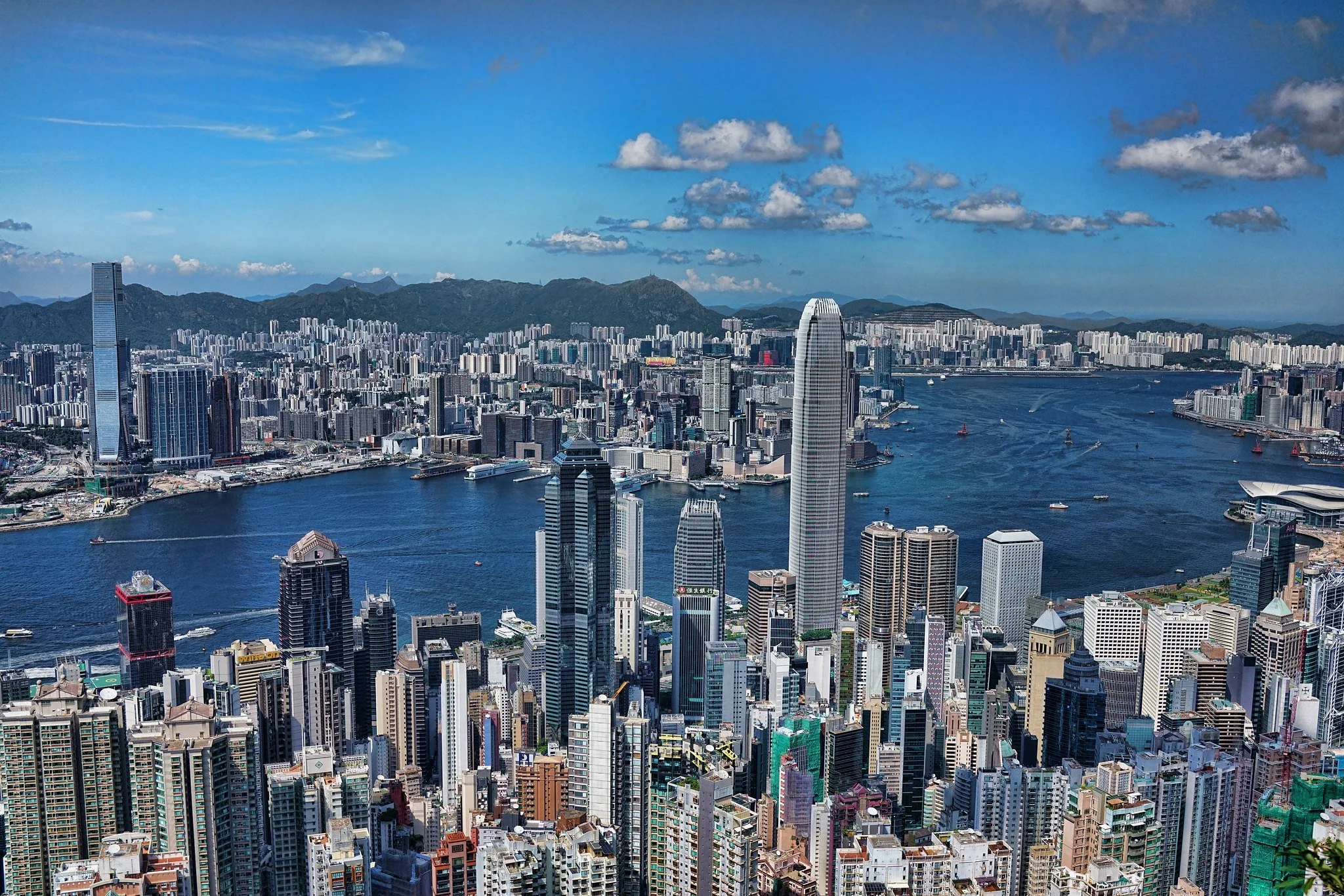
© Copyright Acknowledged | All rights reserved | all images taken b Jamie
Jamie’s Hong Kong | Some of my favourite images | Hong Kong 101