Kowloon Walled City Facts, Figures and the Park Today, From a Residents perspective

The J3 Group - Premium Quality Private Tours | Experiences and Insider Chats since 2010
Me Jamie, your host, I am English and I have lived in Hong Kong since January 2nd 1972 - I know the place.
A meaningful blog post with a difference - tips on Travel, Tourism, Tours, Daily Life and my personal thoughts on Hong Kong.
Please do visit Amazing Hong Kong
Hong Kong | Pearl of the Orient


A Resident since 1972 - Private Tours of Hong Kong with Jamie
The Best Things to do in Hong Kong
click on the image to enlarge
© Copyright Acknowledged | All rights reserved | image created by Jamie
The History of the Amazing Kowloon Walled City and Kowloon Walled City Park
Foreword by Jamie
Kowloon Walled City Facts, Figures and the Park Today
I have been 3 times in 2026 so everything is up to date, I would also like to add that Kowloon Walled City Park is a lovely park but not everyone is captivated by what I call a typical functional park, Hong Kong has many of those, 70 - 75% of Hong Kong is considered green, I do not have to walk very far to see trees, shrubs, plants and nature in general.
Kowloon Walled City Park is a different in so far of what it used to be however prior to the new exhibition it was simply impossible to imagine Kowloon Walled City, a small building here, a wall there, some building foundations and some bronze works of art was pretty much it.
That has changed.
I have written extensively about Kowloon Walled City more than once, first in 2021 and again when I revisited the old text. Each time I stopped short. The place deserved a single long piece that put the Qing fort, the slum, the demolition, the park and the new exhibition in one narrative, without pretending they are the same thing. They are not. One was a military outpost. One was the most crowded patch of ground on earth. One is a Jiangnan garden with warning signs on every gate. The exhibition that opened in 2025 is the first time the government has let the public walk through a version of the old alleys instead of staring at a bronze model and a few grainy photographs.
I first walked into Kowloon Walled City in 1972 as a schoolboy who had only recently arrived from Yorkshire in England. I have lived in Hong Kong since 2nd January 1972. I was a young white kid and I was perfectly safe. That still surprises people. The buildings were already quite tall, the alleys were already dark at noon, and the reputation was already filthy. What I remember is people trying to earn a living. Criminals, prostitutes, unlicensed dentists and hard drug users were all there. So were families, workshops, rooftop gardens and children doing homework under television aerials while Jets came in to land at Kai Tak Airport and came in so low you could read the registration numbers. Both versions are true. That is why the place still matters, and why knocking nearly all of it down still feels like a conservation disaster.
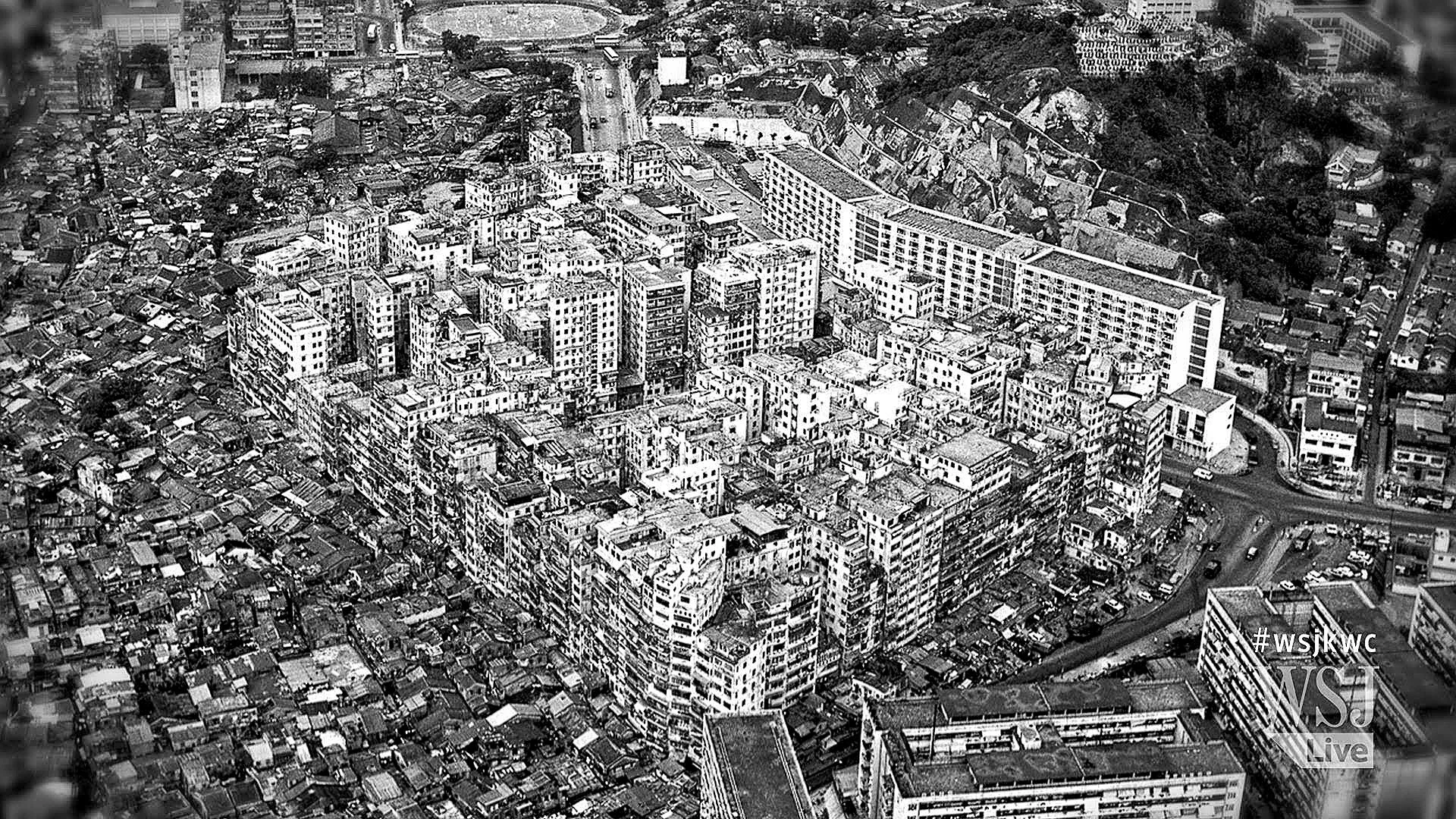
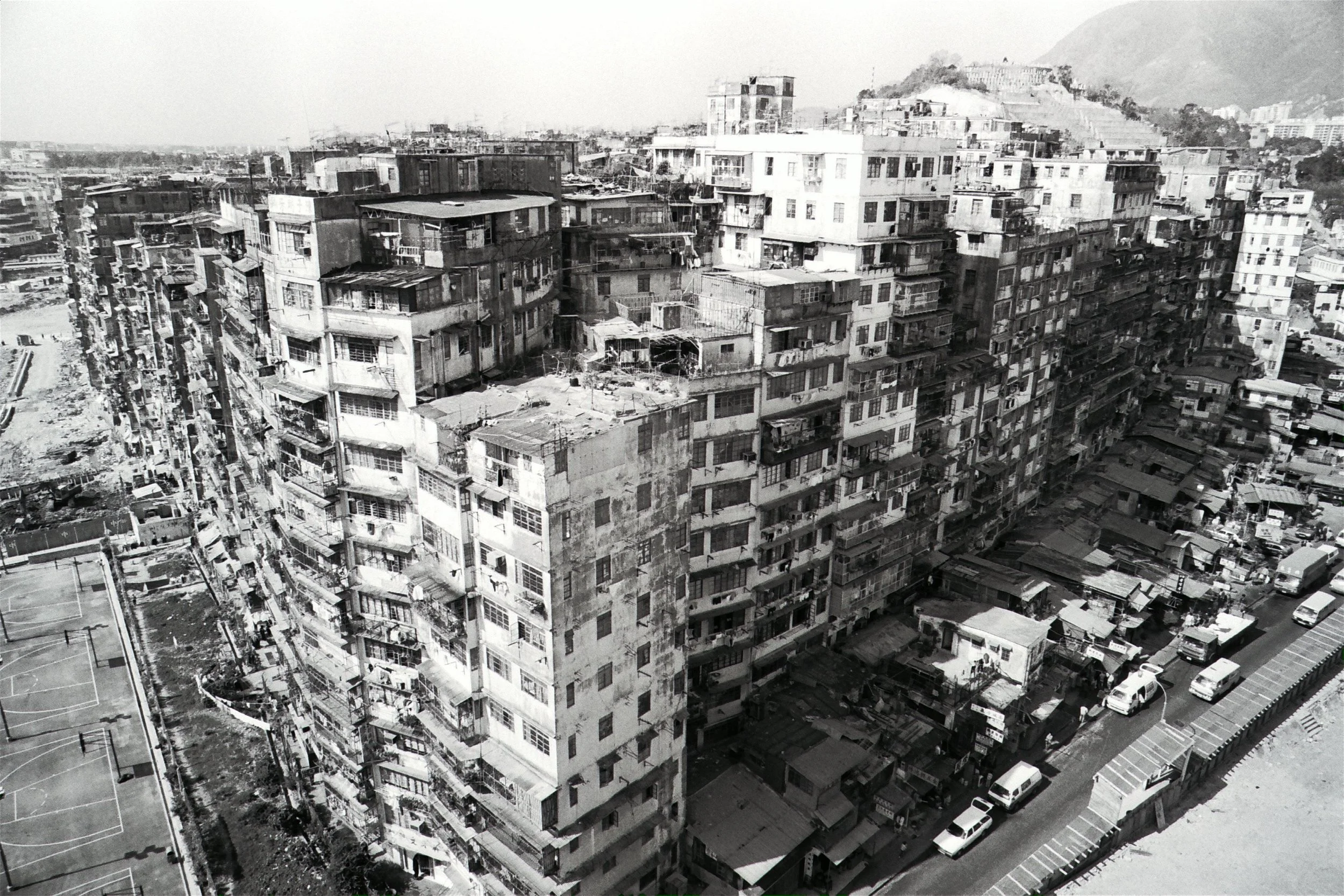
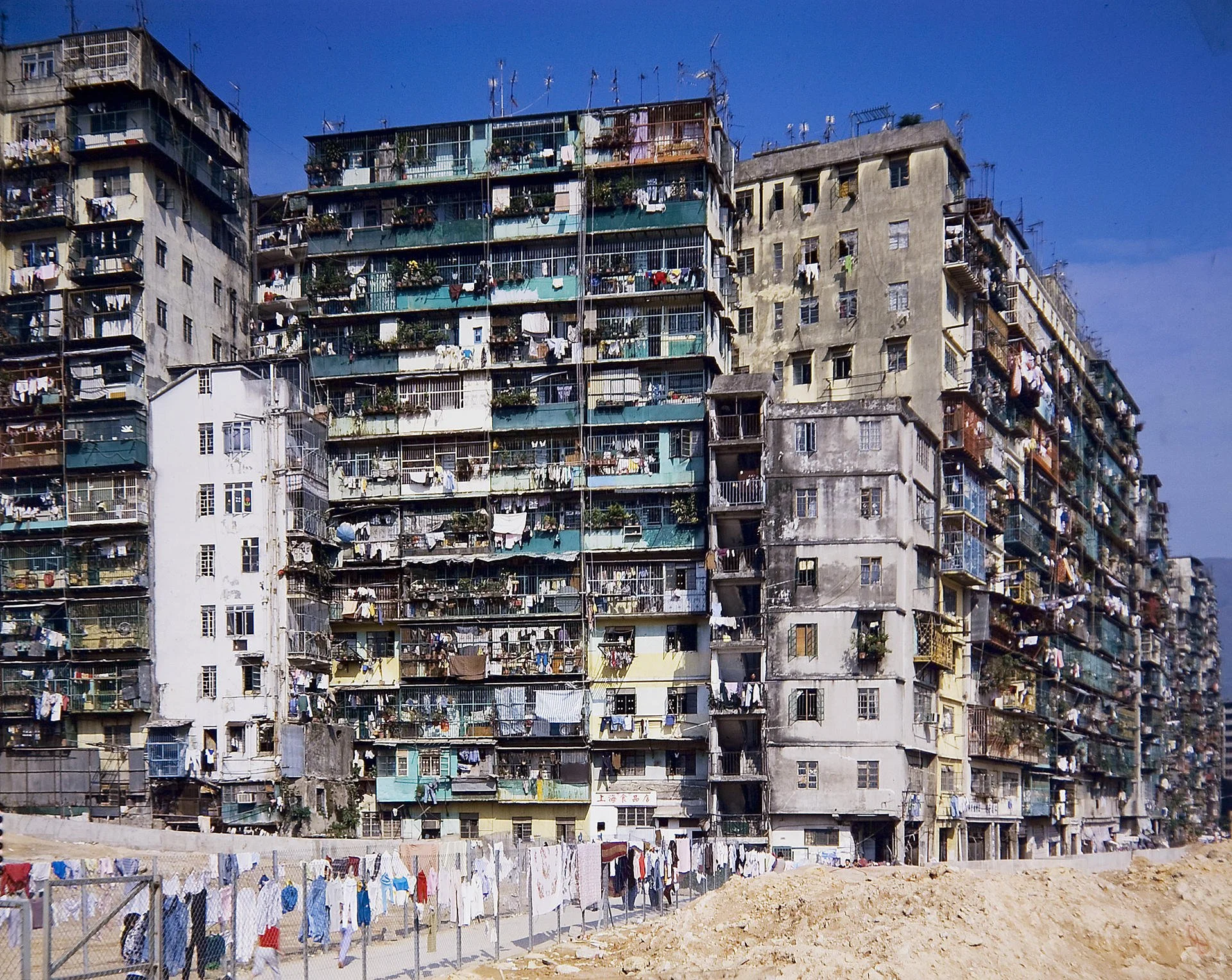
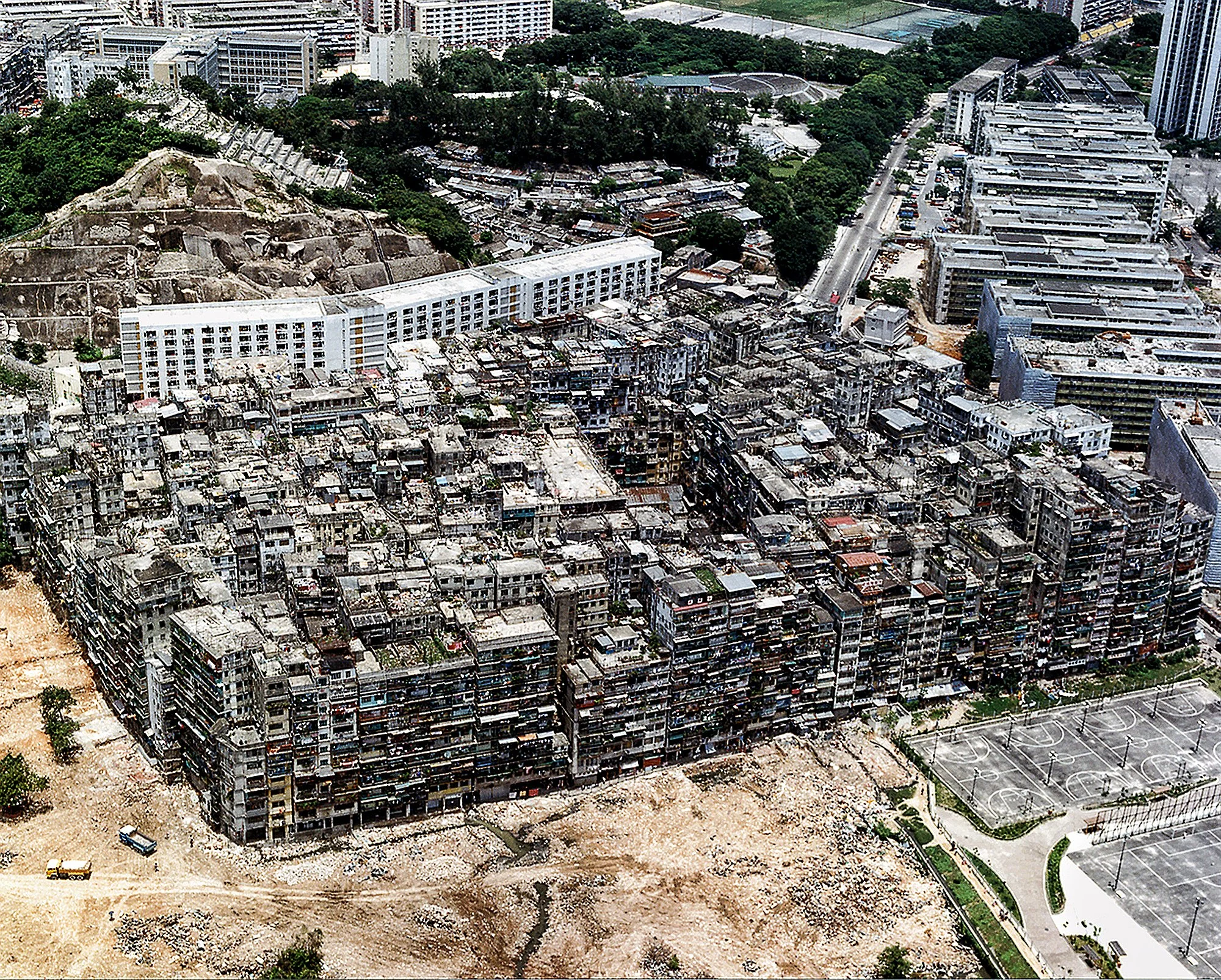
click on any image to enlarge
© Copyright Acknowledged | All rights reserved
Historic Images of the Amazing Kowloon Walled City in Hong Kong
A little piece of China inside British Hong Kong
Kowloon Walled City was an accident of treaties. After the First Opium War, Hong Kong Island went to Britain in 1841 (by treaty it was 1842). The Qing court answered by building a proper garrison on the Kowloon side so Chinese authority would still have a visible foothold looking across the water. Construction of the walled fort ran from late 1846 into 1847 and was finished on 31st May 1847. The enclosure covered about 6.5 acres. Granite walls, six watchtowers, four gates, barracks, magazines and the Yamen, which housed the Commodore of the Dapeng Brigade and the Kowloon Assistant Military Inspectorate. Troop strength sat at about 250 when the fort opened and rose to more than 500 by 1898.
When the New Territories were leased to Britain in 1898, the Kowloon Walled City was left as Chinese territory. In 1899 British forces briefly expelled the Qing officials and then more or less walked away. From that point neither government wanted the administrative headache. The Japanese occupation of 1941 to 1945 finished the original walls. The stone was torn out and carted off to extend the runway at Kai Tak. After the war the walls were gone, the legal vacuum remained, and refugees from the civil war in Mainland China poured in.
By the 1950s the old fort had become a squatters' settlement. By the 1960s and 1970s the squatters' huts had been replaced by illegal concrete towers jammed against each other until the whole plot read as one building. The flight path into Kai Tak Airport capped the height at 13 or 14 storeys, so instead of growing taller the city grew thicker. Bridges, stairs and illegal extensions knitted 350 buildings into a single mass.
The numbers that still surprise people
The 1987 Government survey is the figure I trust for official purposes. Informal estimates always ran higher. Use both and say so.
Official 1987 census: about 33,000 residents
Informal estimates by 1990: 50,000, some writers push 60,000
Footprint at the end: 2.6 hectares, roughly 6.4 to 7 acres
Density on the 1987 count: about 1,255,000 people per square kilometre
Buildings: about 350, almost all 10 to 14 storeys
Premises: about 8,500
Households: about 10,700
Lifts: only 2 in the entire enclave. Out of about 350 buildings, just 2 had a lift. The rest were stairs only
Wells sunk by residents: 77, some to about 300 feet
Postal service: 1 regular postman, Mr Lui from 1976, who painted his own door numbers because streets and blocks often had none
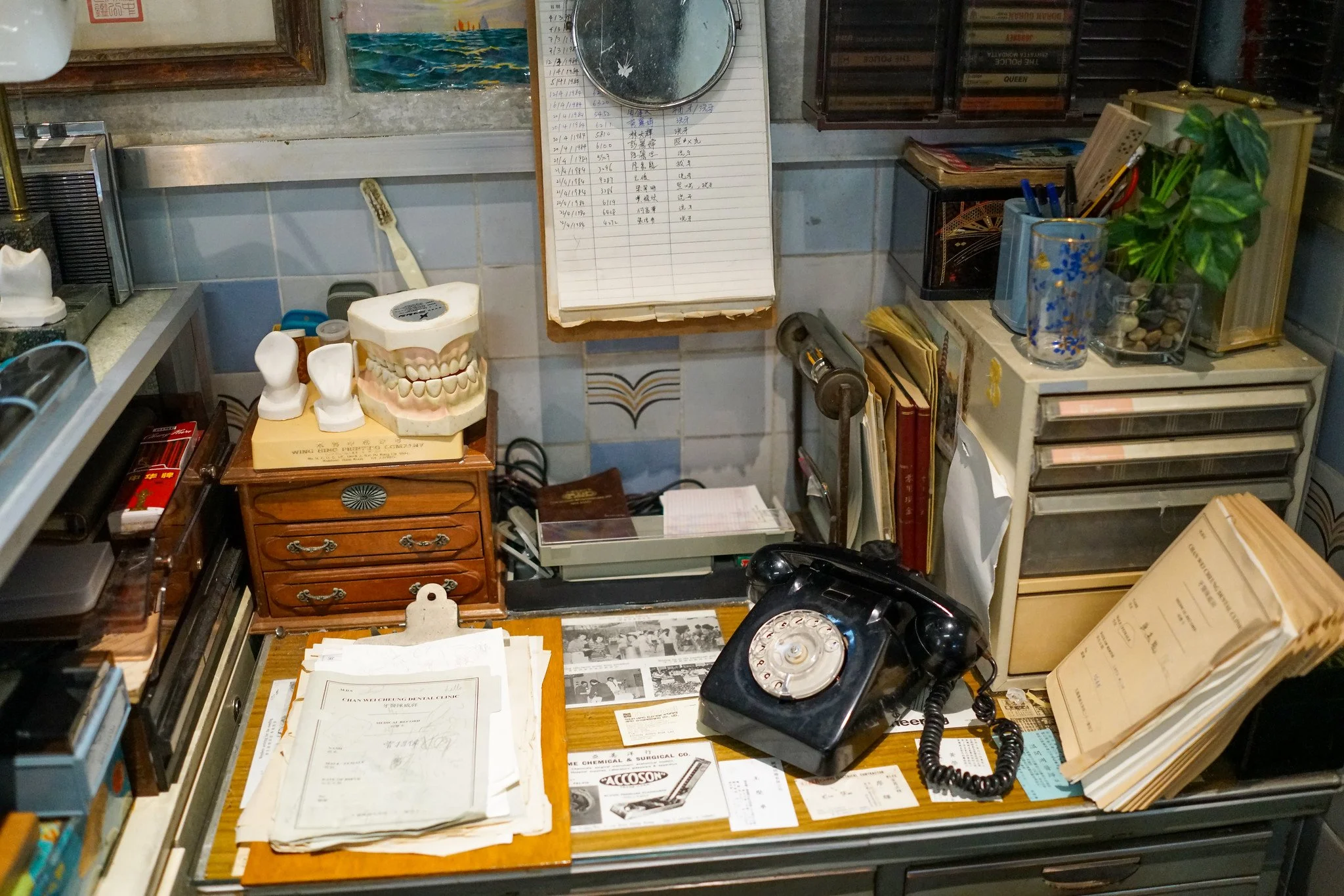
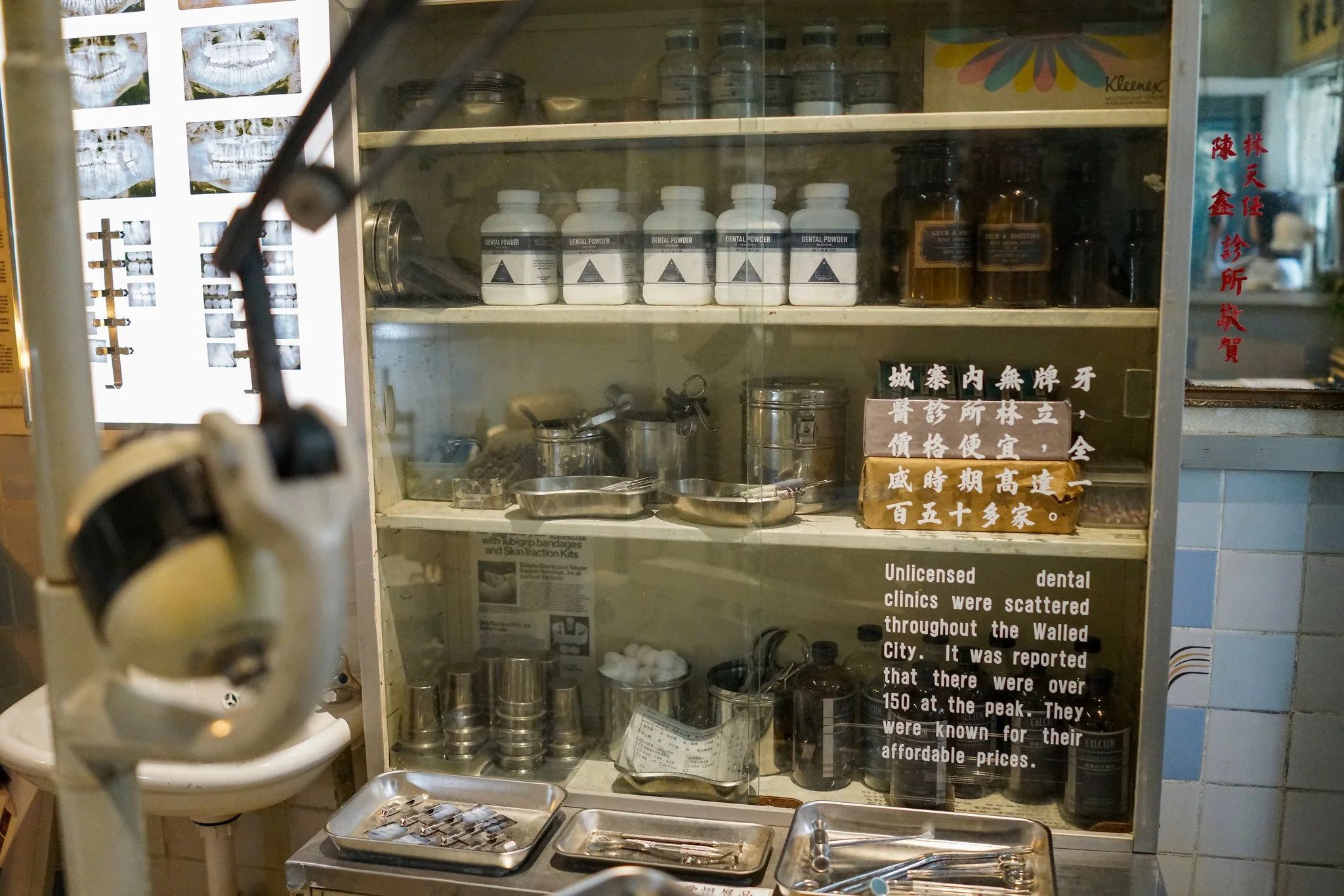
Unlicensed dental clinics: more than 150 on what people called Dentist Street
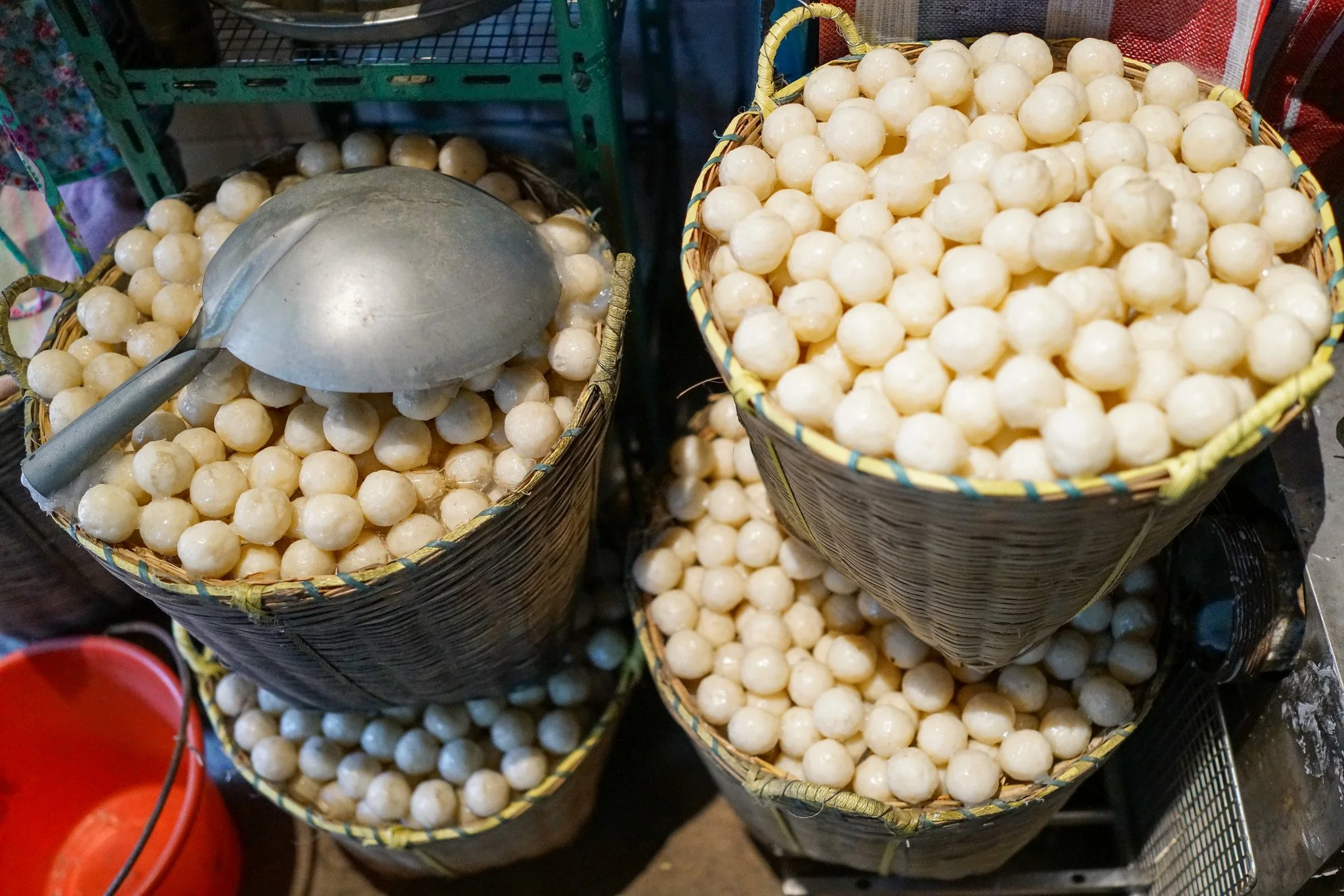
Fish ball production: estimated 80% of Hong Kong's supply at the peak
Compensation package announced with the clearance: about HK$2.7 billion, then roughly US$350 million
Park construction cost: about HK$76 million
Park area: 31,000 square metres, about 7.7 acres
Those density numbers still look invented. They were not. Mong Kok today is crowded. The Kowloon Walled City was in another category.
That lifts figure still makes people blink (myself included), and it made me blink again when I went back over it. I walked those streets and alleys as a boy and I never went up the buildings, so I had no reason to count lifts. The documented record from the late 1980s is blunt. Only 2 buildings in the whole place had one. The other 348 or so were climbed on foot, which is why the mid level bridges and rooftop crossings mattered so much. Once you think about how the towers were grown, extra floors poured onto older low rises with no lift shaft designed in, it stops being a mystery and becomes another of those Kowloon Walled City facts that sounds invented and is not. I am astonished, and I am not surprised. Even today, in some older districts of Hong Kong, you still find 10 storey buildings with no lifts at all. The Kowloon Walled City simply took that habit and stretched it across an entire city block.
Daily life was not only a grind and crime
The foreign press loved the triad story and they were not inventing it. From the 1950s into the 1970s the place was a convenient office for drugs, gambling and prostitution because neither police force wanted to own the jurisdiction. Fires were common. Sanitation was appalling and I will not dress that up. Anyone who tells you it was a romantic commune has not stood in those ground floor corridors and smelt the roses
What the press usually skipped is how the place actually functioned once you lived there. Residents drilled their own wells and ran a forest of pipes up to roof tanks, then down again to paying households. After a fire in 1970 the authorities allowed proper metered electricity rather than stolen supplies. Rubbish was collected. Kindergartens operated. Mahjong started in the alleys every afternoon. Racing pigeons lived in roof cages. Children treated the rooftops as the only playground that had sunlight and air. Planes on the Kai Tak Airport approach passed so close that laundry jumped on the line.
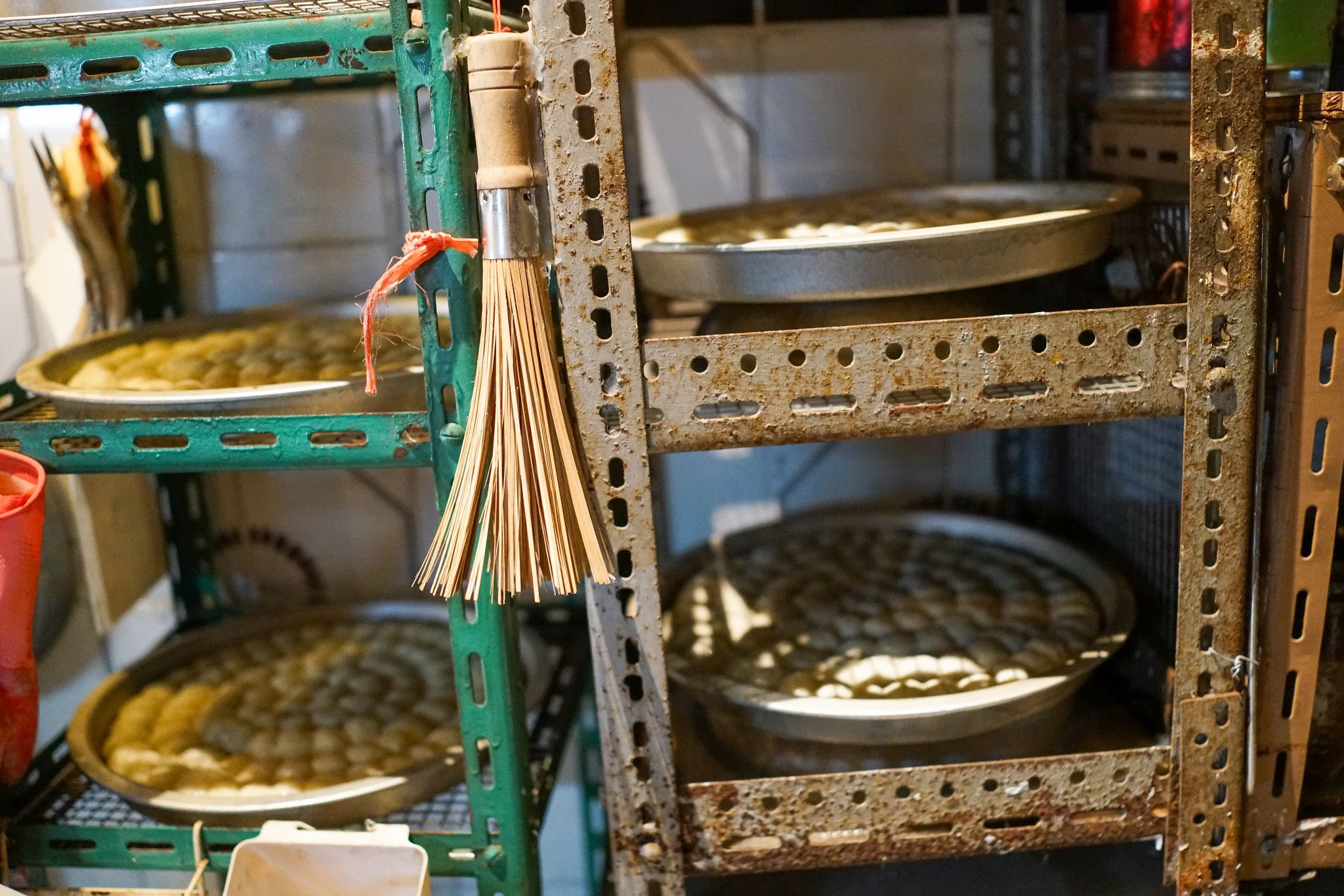
Factories filled the lower floors. Textiles, plastics, toys, watch straps, sweets, noodles, metalwork. Hui Tuy Choy opened a noodle factory in 1965 because the rent was low and nobody asked for licences from labour, health and fire. The fish ball workshops alone supplied a shocking share of what Hong Kong ate. Doctors and dentists who held Mainland China qualifications but not a Hong Kong licence set up clean little clinics and charged a fraction of the fees outside. Patients came in from the rest of Kowloon on purpose. That is an awkward fact for anyone who wants the Kowloon Walled City to be only a slum.
I keep saying it because it is the bit I saw with my own eyes. People were poor. People were resourceful. People were not exhibits.
The decision to erase it
The Sino British Joint Declaration of 1984 made the future of Hong Kong a known quantity. The Kowloon Walled City was an unresolved speck inside that future. On 14th January 1987 both governments announced that the enclave would be cleared and replaced by a park. A census was taken. Compensation was offered. Most of the 33,000 accepted and many were moved to Choi Ha Estate in Jordan Valley in Kwun Tong. A minority held out. Riot police removed the last households on 2nd July 1992.
While the buildings stood empty, Jackie Chan's film Crime Story used the shell in 1993. Demolition itself began on 23rd March 1993 and finished in April 1994. Then the archaeological team had a look, which is the only reason we have anything left in the ground.
I still think this was the greatest missed conservation project in Hong Kong. They could have kept one corner, one alley, two buildings and a stretch of the old street pattern, and turned that into a museum people could walk. Look at Tai Kwun on Hollywood Road on Hong Kong Island. Those mid 1800s buildings were in poor shape, one of them came down during the works, and the finished place is now one of the best heritage conversions in the city. The Kowloon Walled City was illegal, unsound and filthy. That is not a reason to flatten the lot and plant grass. A few photographs and a table sized bronze model do not replace a place 33,000 people called home.
What demolition actually left behind
When the towers came down, more survived in the soil than anyone expected.
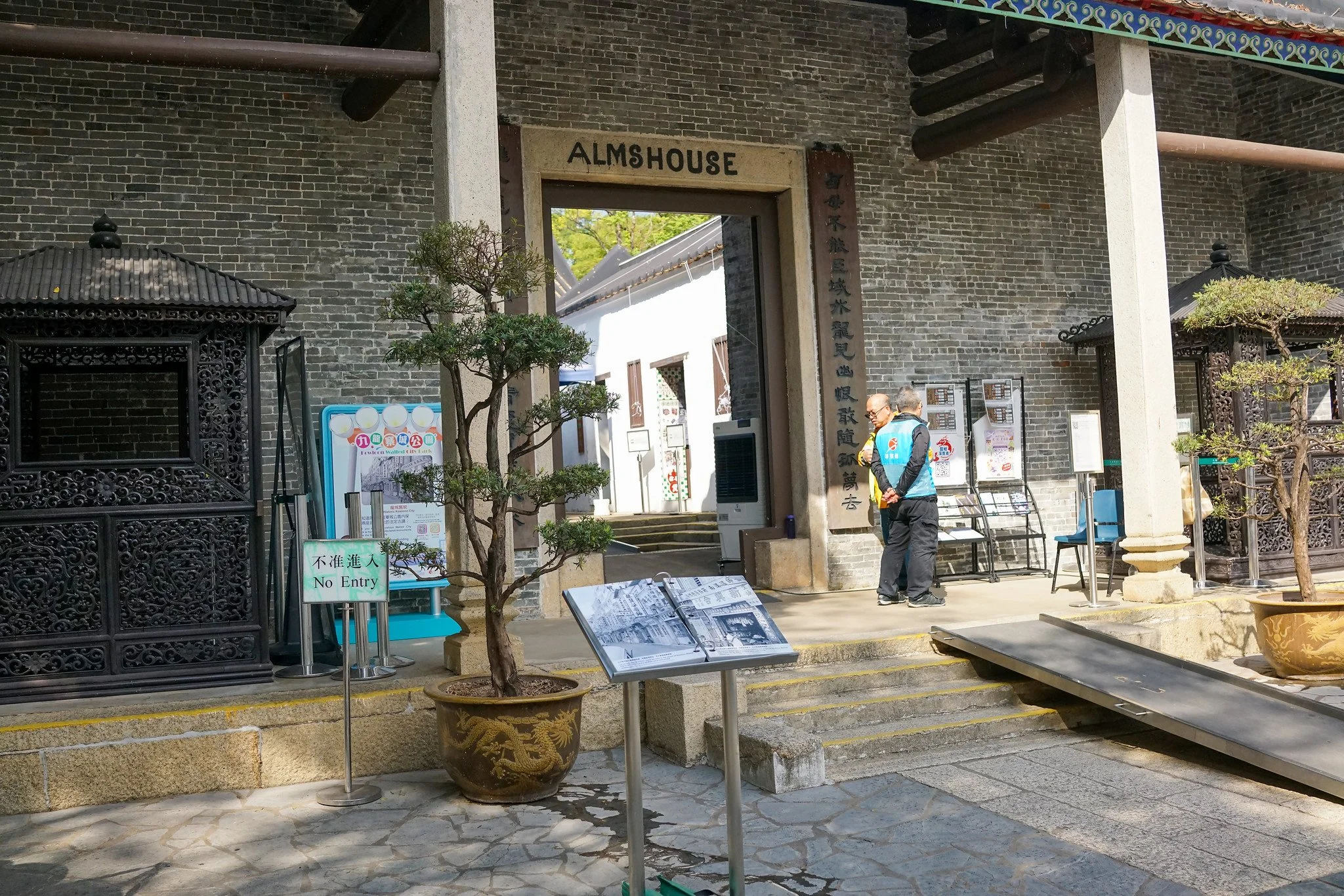
The Yamen of 1847 is the only standing Qing building. Three halls, two courtyards, grey brick and granite, fir roof with cylinder and flat tiles. After the garrison left in 1899 the Anglican church ran it as Kwong Yem Home. The English word ALMSHOUSE is still carved on the lintel, which is one of the stranger sights in Kowloon. Over the next century the same building served as a home for the elderly, a refuge for widows and orphans, a school, a clinic and finally an elderly centre. It never grew upwards. That is why it is still there. It was declared a monument on 4th October 1996.
The South Gate site is the other declared monument. Two granite plaques came out of the ground in 1994, one reading South Gate and one reading Kowloon Walled City. The story I have always liked is that residents buried them when the Japanese arrived so the names would not be lost. You can still see flagstone paving, wall foundations, the East Gate footings, a drain along the inner wall and a stone path. The South Gate was the ceremonial main entrance, though it did not face due south. It sat south east, toward the old Lung Tsun Pier, which is the sort of feng shui and practical decision that makes sense once you stand on the ground.
Two cannons dated 1802 stand in front of the Yamen. They were cast in the Jiaqing reign and later moved here from the Tung Lung forts. Three old wells, stone lintels, couplets and column bases were also kept. One tree of about 70 years, which had grown in the rear courtyard of the Yamen, was lifted and replanted behind the rockery at the north side so the building could be restored.
That is the inventory. Foundations, plaques, a low Qing office, two guns and a relocated tree. Compared with what stood there in 1992 it is almost nothing. Compared with a total wipe it is not nothing.
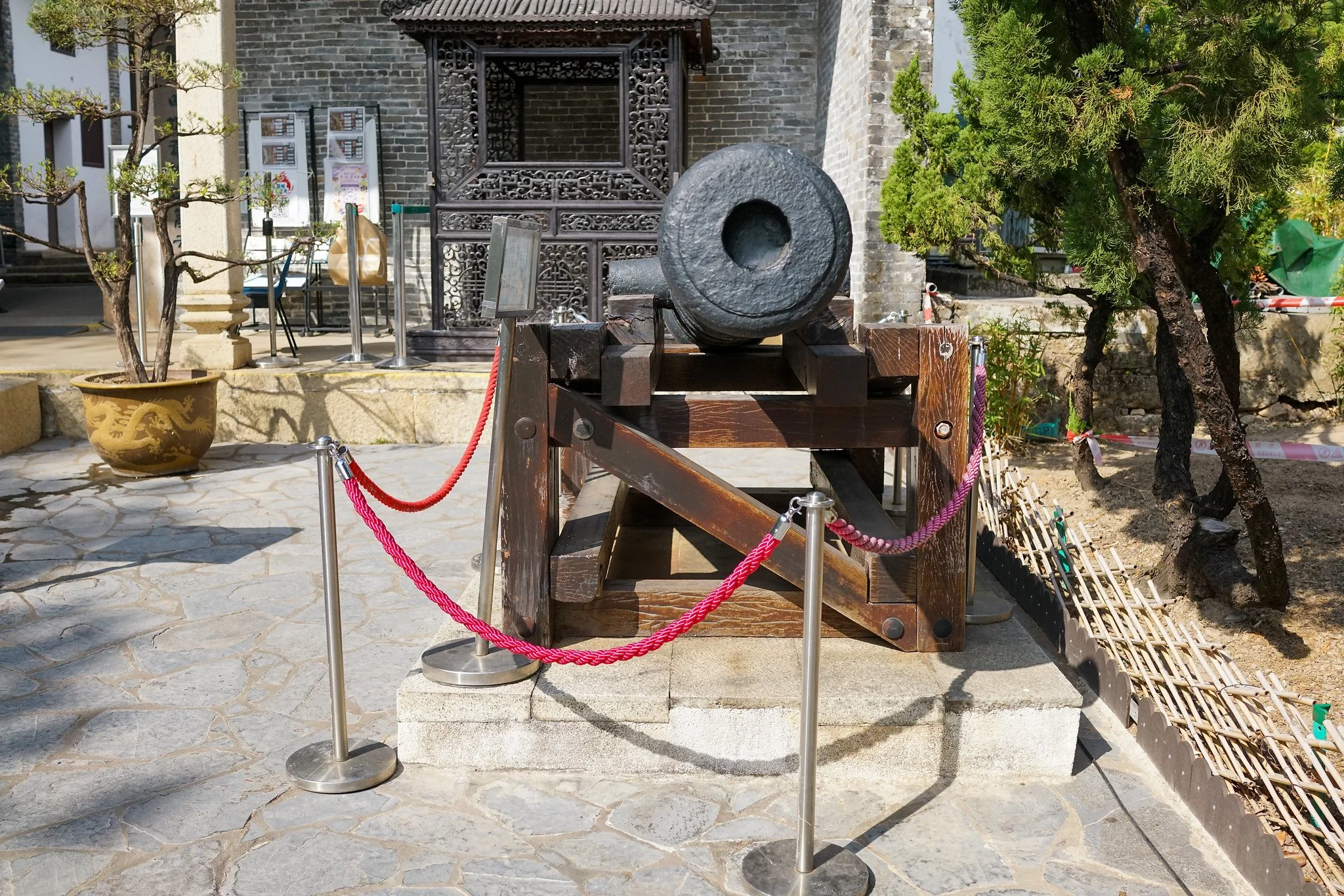
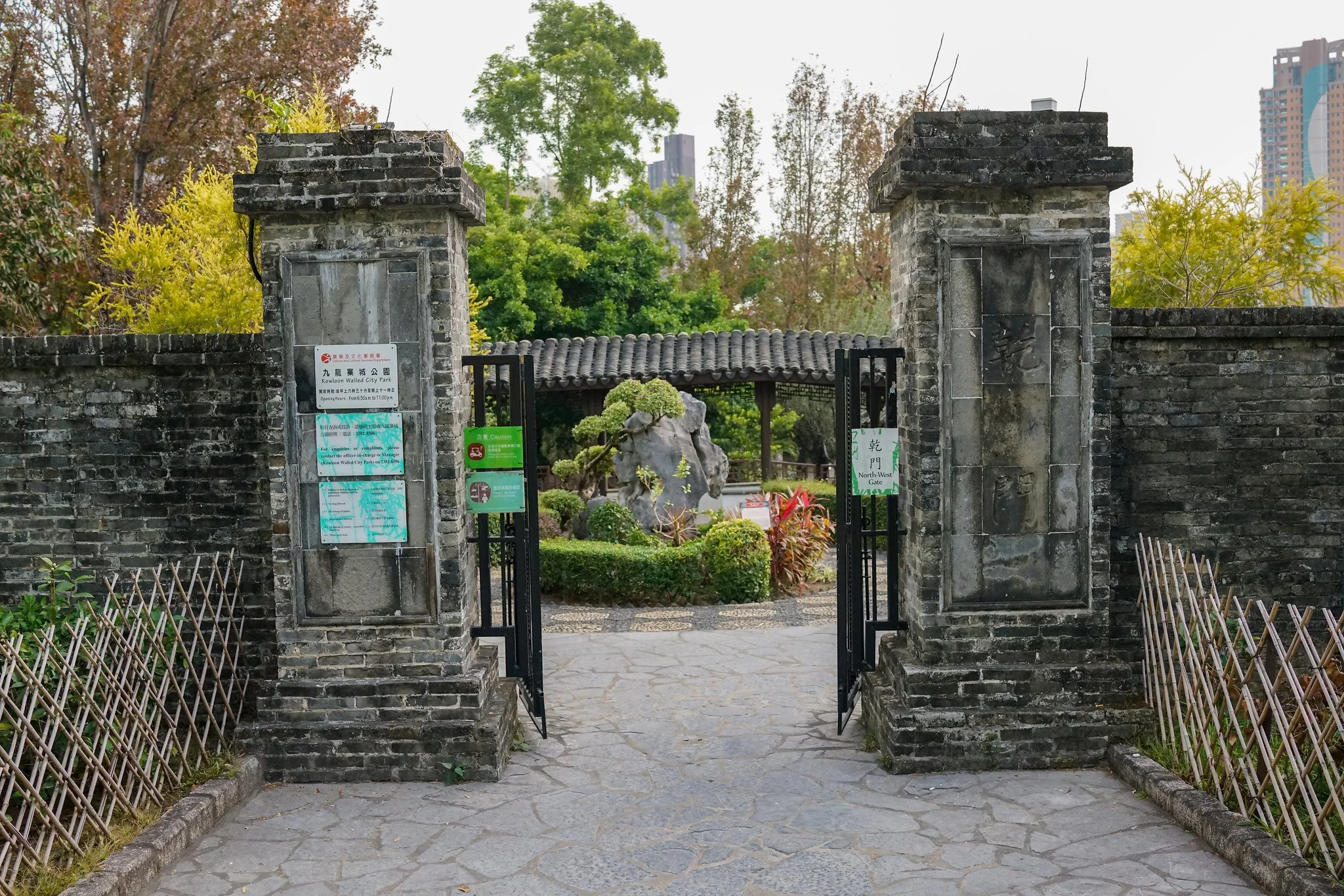
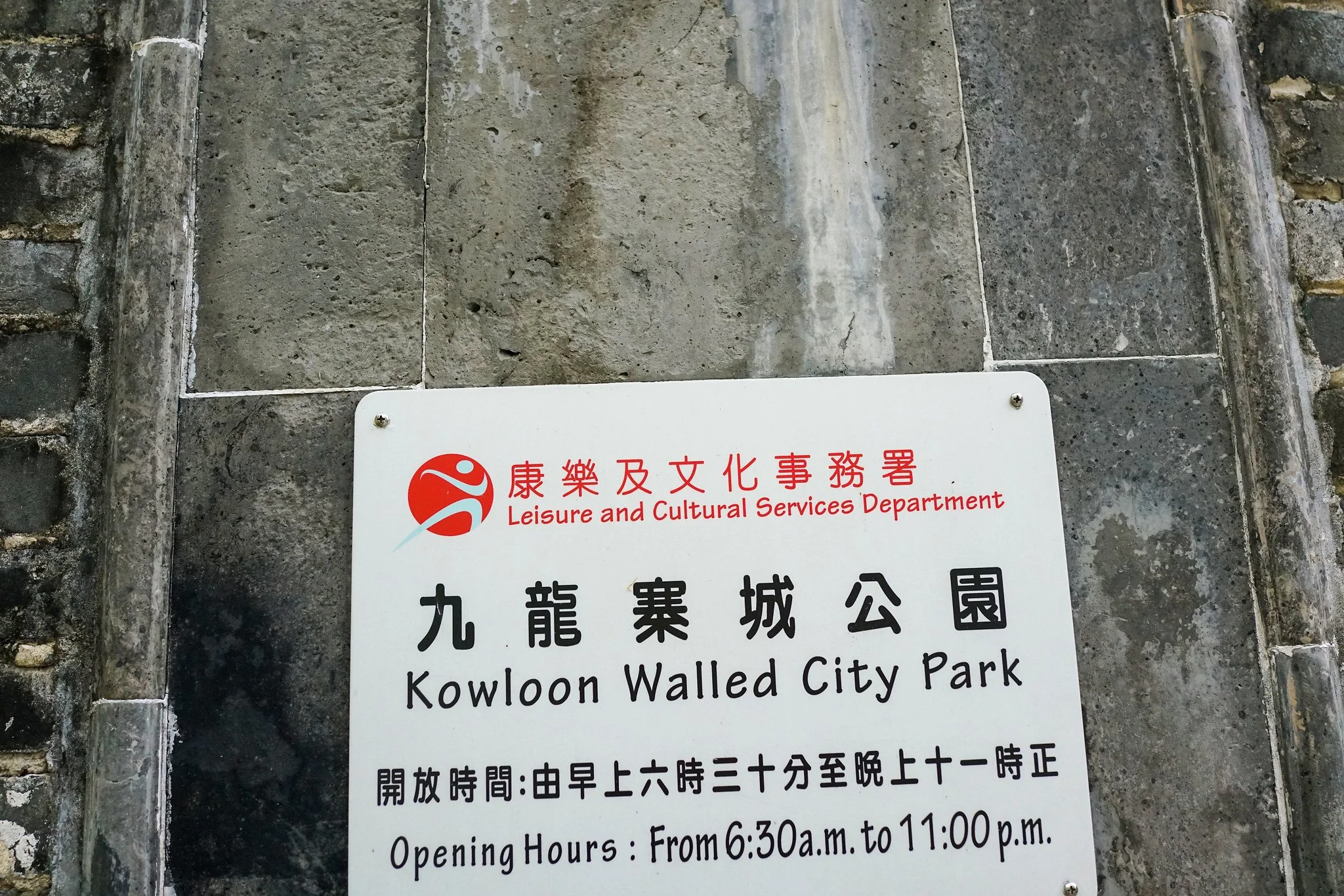
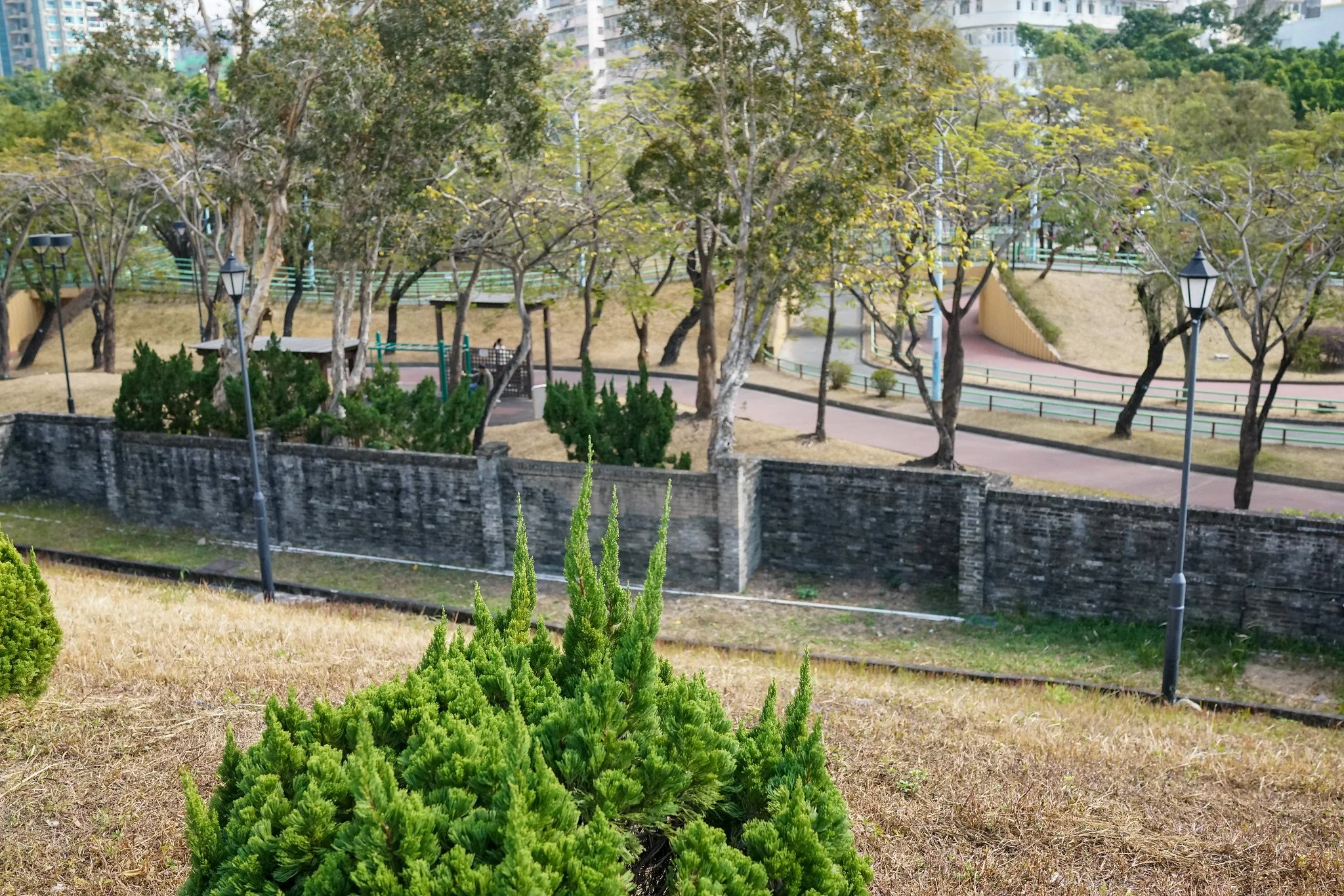
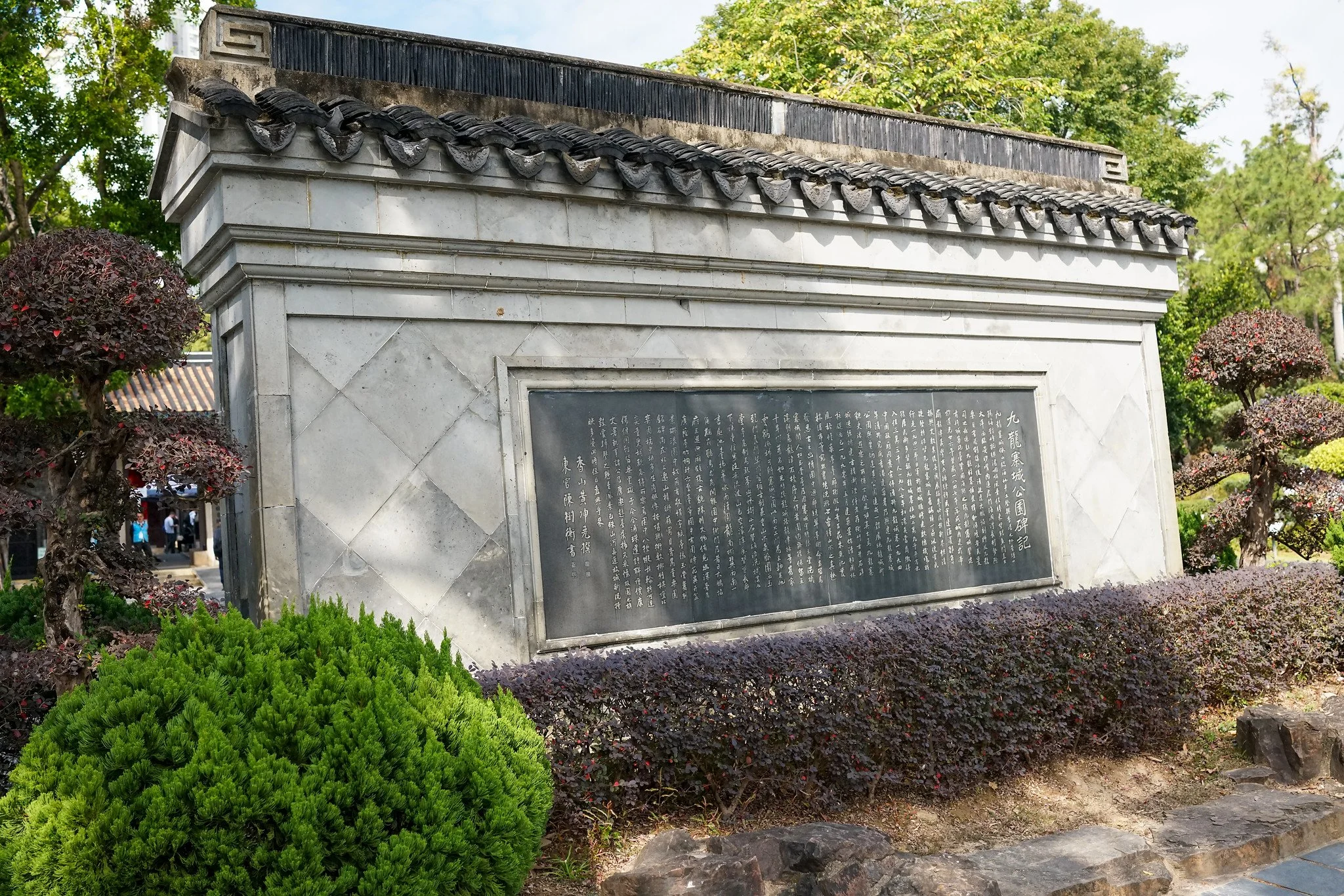
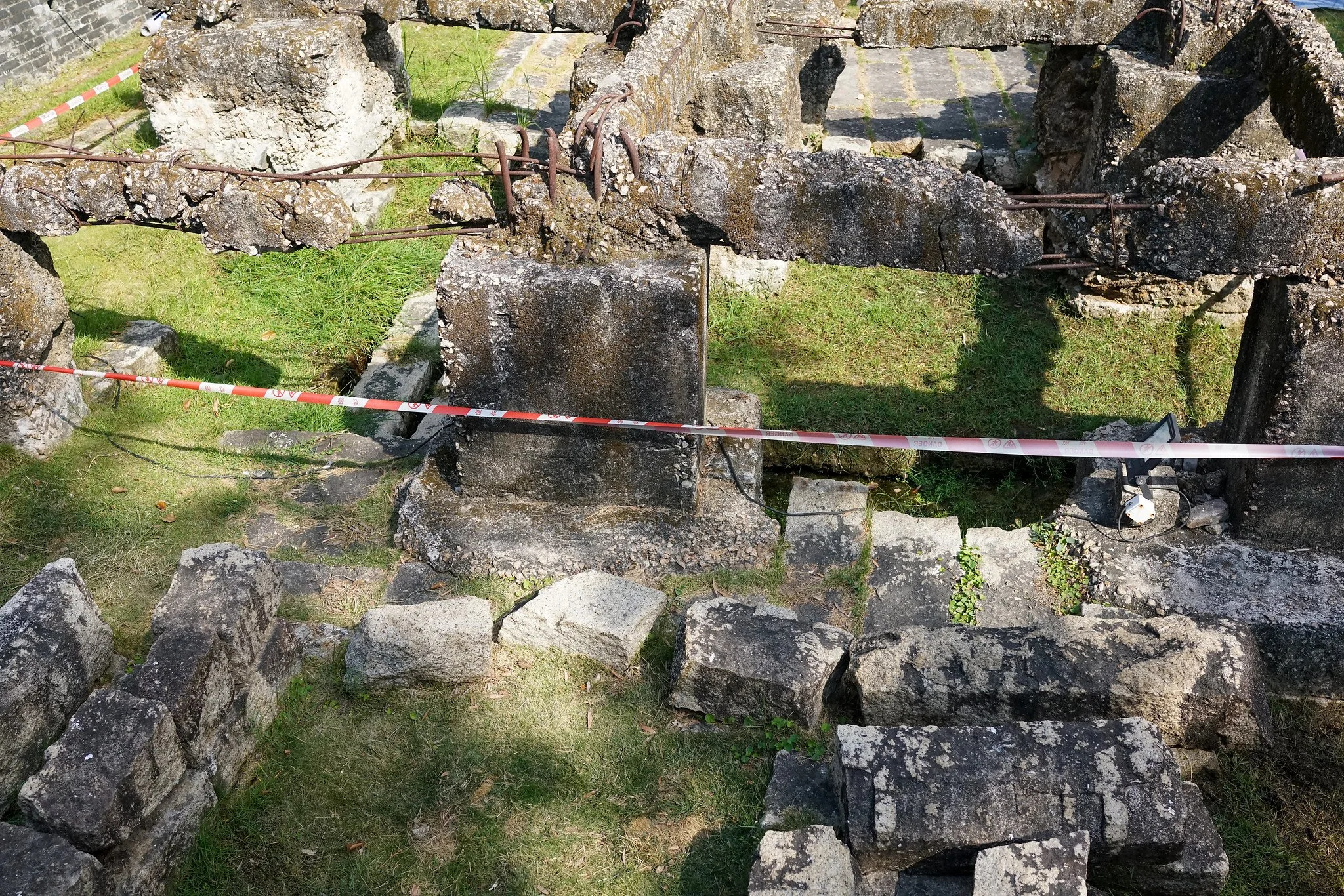
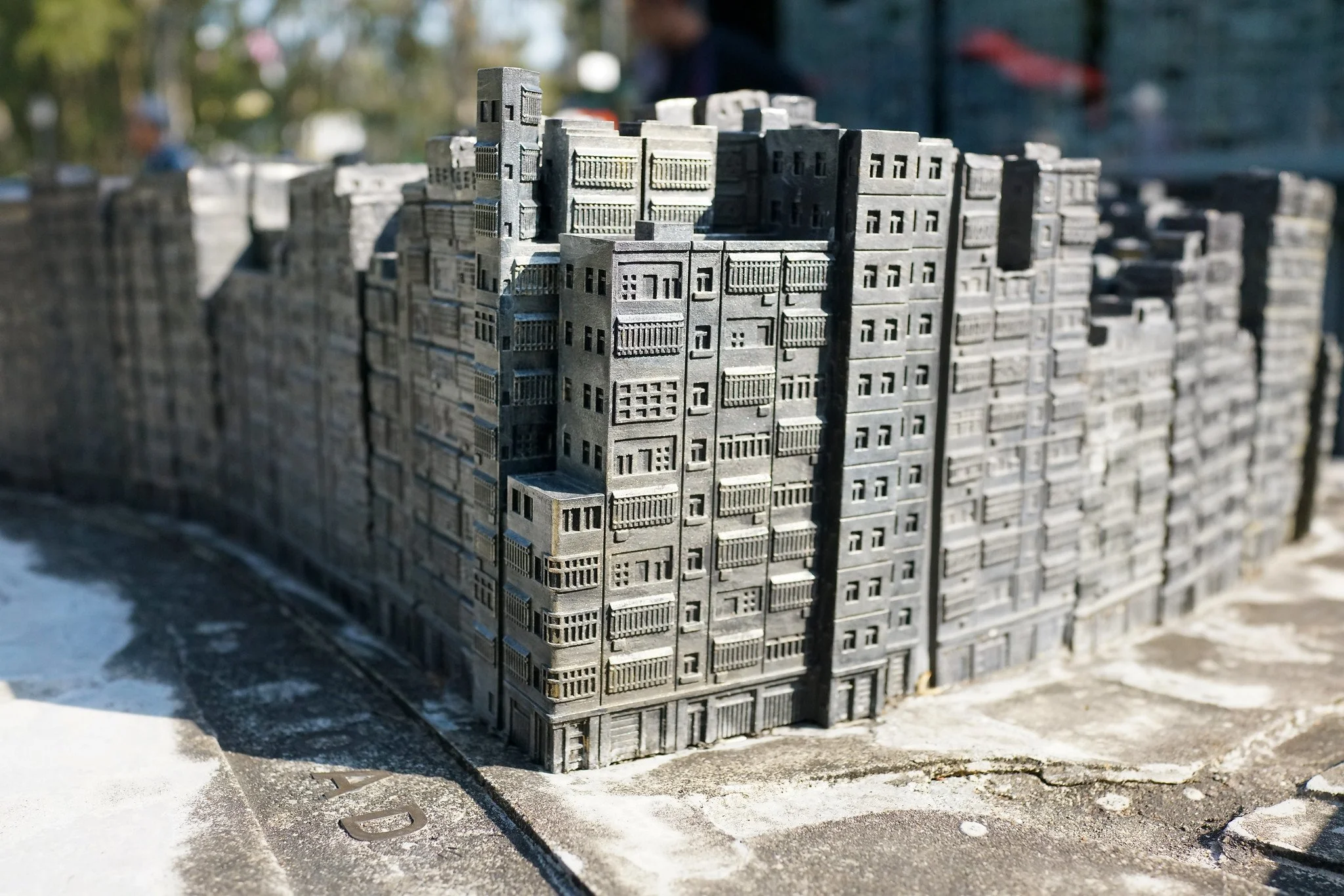
Click on any image to enlarge
© Copyright Acknowledged | All rights reserved | images taken by Jamie
Kowloon Walled City Park | The original park before the exhibition
The park they built instead
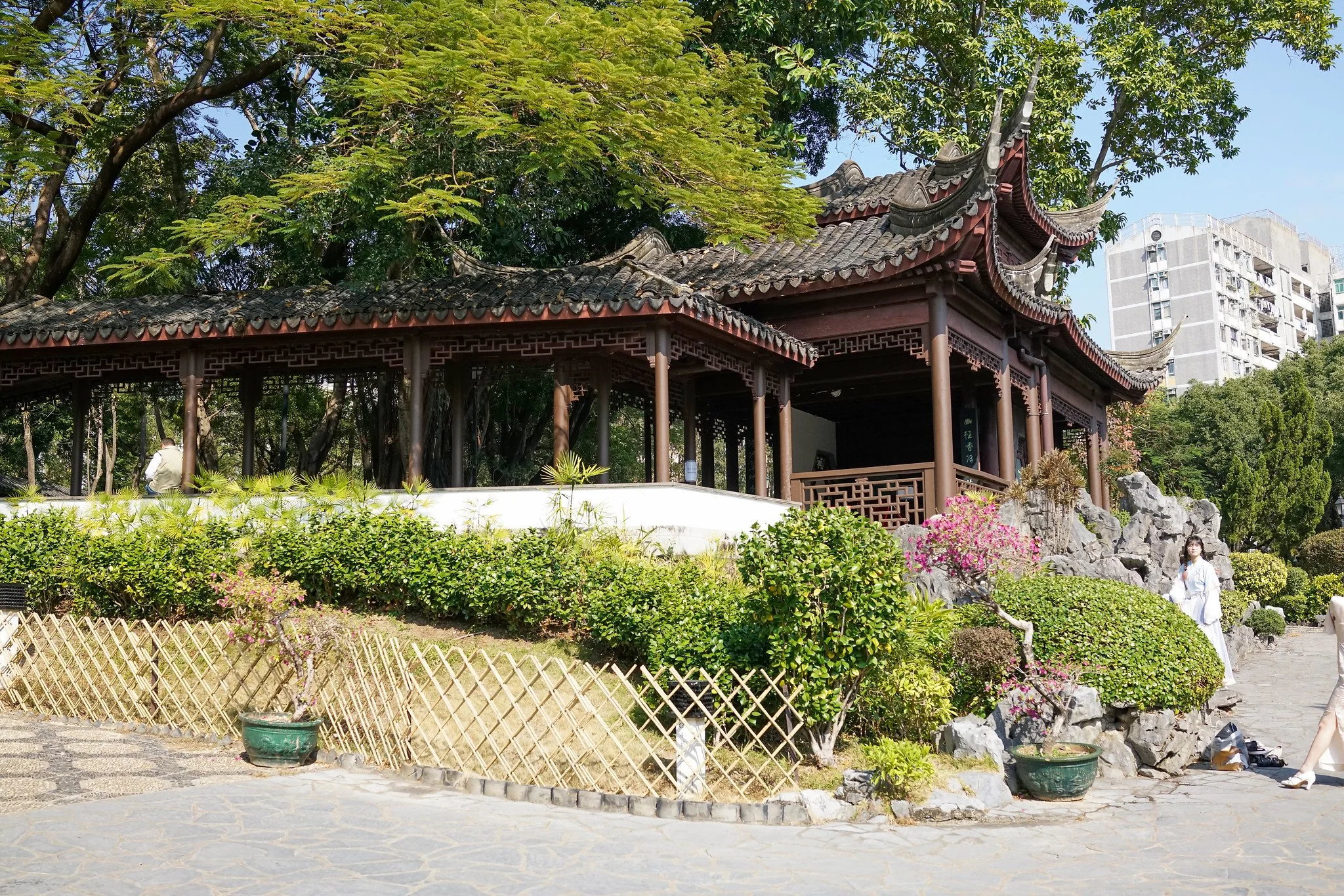
Kowloon Walled City Park was designed in the early Qing Jiangnan garden manner. Mainland Chinese craftsmen were brought in to get the pavilions and rockwork right. Work started in May 1994, finished in August 1995, and Governor Chris Patten opened the park on 22nd December 1995. The design later picked up a diploma at the IGO Stuttgart garden exposition.
The park is divided into 8 scenic zones.
The Yamen
The Old South Gate
The Eight Floral Walks
The Garden of Four Seasons
The Garden of Chinese Zodiac
The Chess Garden, with 4 giant Chinese chessboards set in the ground
The Mountain View Pavilion, a two storey structure that looks a little like a boat
The Fei Sing Pavilion and Guibi Rock
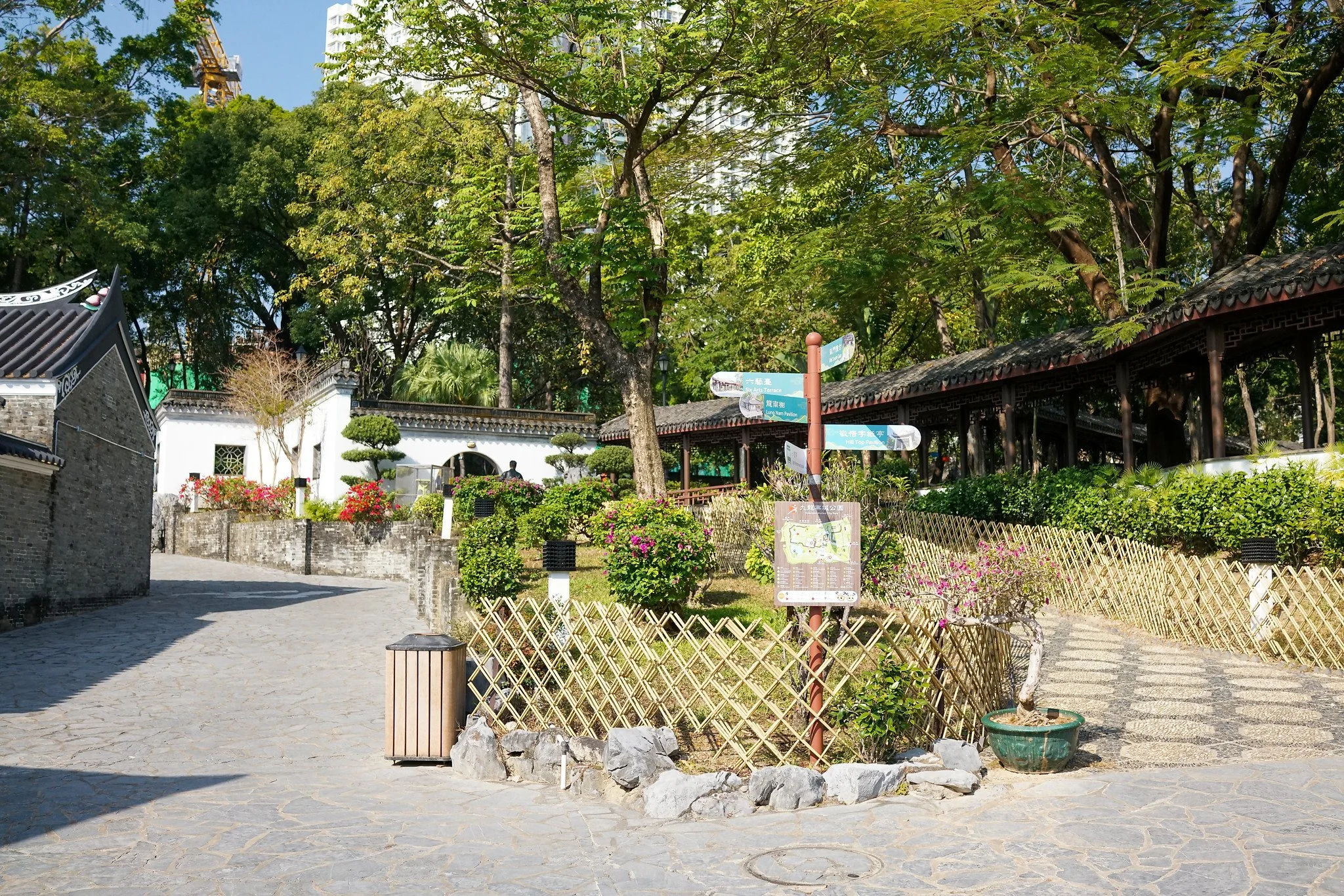
Paths and pavilions take their names from old Kowloon Walled City streets. There is a bronze scale model near the South Gate, a shadow wall with an essay, and since 2009 a permanent display called A City of Thousand Faces inside 6 rooms of the Yamen. On paper this is all correct. In person, for years, it was a very nice and very bland park. The same thousand signs you find all over Hong Kong, promising fines and jail for leaving the path or dropping a wrapper (that nonsense is another post for another day). Pleasant. Green. Almost impossible to imagine 350 tightly packed buildings from where you are standing.
This is still a sore point among tour companies and guides. Plenty of my friends like taking people there and I understand why. I do not, and the reason is not snobbery. The location is quite awkward from a time point of view. On a 6 to 8 hour day, with a visitor who has 1 or 2 days in Hong Kong, the detour does not earn its keep. Other than the film set exhibition there is little to offer once you have seen the Yamen and the South Gate stones it is just another patch of greenery, and it does not help that there is major construction work going on in the park and outside it. If someone is here for 2 or 3 days and wants to go on their own, that is different. Use the how to section below and go. I am not going to pretend it belongs on a short private day.
Hong Kong has some very good parks. I like Hong Kong Park. It is lovely, and guess what, it is actually easy to get to and Hong Kong Park has 3 restaurants or cafes inside the park, plus 2 food kiosks.
… and in 2026 going into 2027 - One more practical gripe, and I am not inventing it. The park is not flat. There are steepish steps and gradients all over the place, which is what you get when you drop a Jiangnan garden onto old ground that was never a bowling green. There are ramps if you look for them, and the official map marks the paths with stairs, but it is still a lot of up and down for a site that is sold as a gentle stroll. There is also no cafe and no kiosk inside the park. Drinking fountains and a vending machine if you are lucky. That is it. If you want a seat and a cup of tea, leave and go into Kowloon City.
Straight comparison, official figures of 3 major parks in Hong Kong
Size
Kowloon Walled City Park: 31,000 square metres, about 3.1 hectares
Hong Kong Park: 8 hectares, about 80,000 square metres
Kowloon Park: 13.3 hectares, about 133,000 square metres
So Kowloon Walled City Park is the small one.
Hong Kong Park is about 2.6 times larger
Kowloon Park is about 4.3 times larger
If you keep the HKTB football field language: Kowloon Walled City Park is about 4 pitches. Hong Kong Park is about 11. Kowloon Park is about 19.
Food inside the gates
Kowloon Walled City Park: 0 cafes, 0 restaurants, 0 kiosks. Fountain and a vending machine.
Hong Kong Park: 3 restaurants or cafes plus 2 kiosks. 5 outlets.
Kowloon Park: 1 full restaurant, the McDonald’s on the Austin Road side, plus snack and dessert kiosks. You can eat without leaving the park. It is not LockCha, but it is not nothing.
That is the practical gap. The Kowloon Walled City Park is a third the size of Hong Kong Park, a quarter the size of Kowloon Park, and the only one of the three with nowhere to sit down and buy a drink
A note about Kowloon Park - step outside any exit or entrance and you are 50 yards away from a gazillion convenience stores, restaurants and such
I have saved the best till last
Nan Lian Garden in Diamond Hill is the interesting one, because on paper it is almost the same size as the Kowloon Walled City Park. In practice it behaves like a proper destination.
Size
Kowloon Walled City Park: 31,000 square metres, about 3.1 hectares
Nan Lian Garden: 35,000 square metres, about 3.5 hectares
Nan Lian is slightly larger, about 13% bigger. Not another Kowloon Park. Same order of garden.
Food inside the gates
Official LCSD answer for Nan Lian is three outlets:
Long Men Lou, the Chi Lin vegetarian restaurant behind the waterfall
Song Cha Xie, the Chinese tea house
A large sitdown kiosk for snacks and drinks
That is 3 places to sit down and buy something, plus a souvenir shop.
Kowloon Walled City Park: 0.
How they stack up together
Kowloon Walled City Park: 3.1 hectares, 0 food outlets
Nan Lian Garden: 3.5 hectares, 3 food outlets
Hong Kong Park: 8 hectares, 5 food outlets
Kowloon Park: 13.3 hectares, McDonald’s plus kiosks
So Nan Lian Garden is the fair comparison, not Kowloon Park. Same kind of Chinese garden, almost the same footprint, and it still managed a restaurant, a tea house and a kiosk. It also wins on access. Diamond Hill Exit C2 and you are there in a few minutes. No taxi briefing required.
That is why Nan Lian Garden works as a visit and the Kowloon Walled City Park, without the film set, does not. Size was never the problem. The Kowloon Walled City Park is not starved of land. It is starved of anything that lets a visitor stay.
Pullinger’s stone
Most people walk past it. I did the same for years and then mixed it up with an American missionary, which is easy enough when you last looked at a plaque a long time ago.
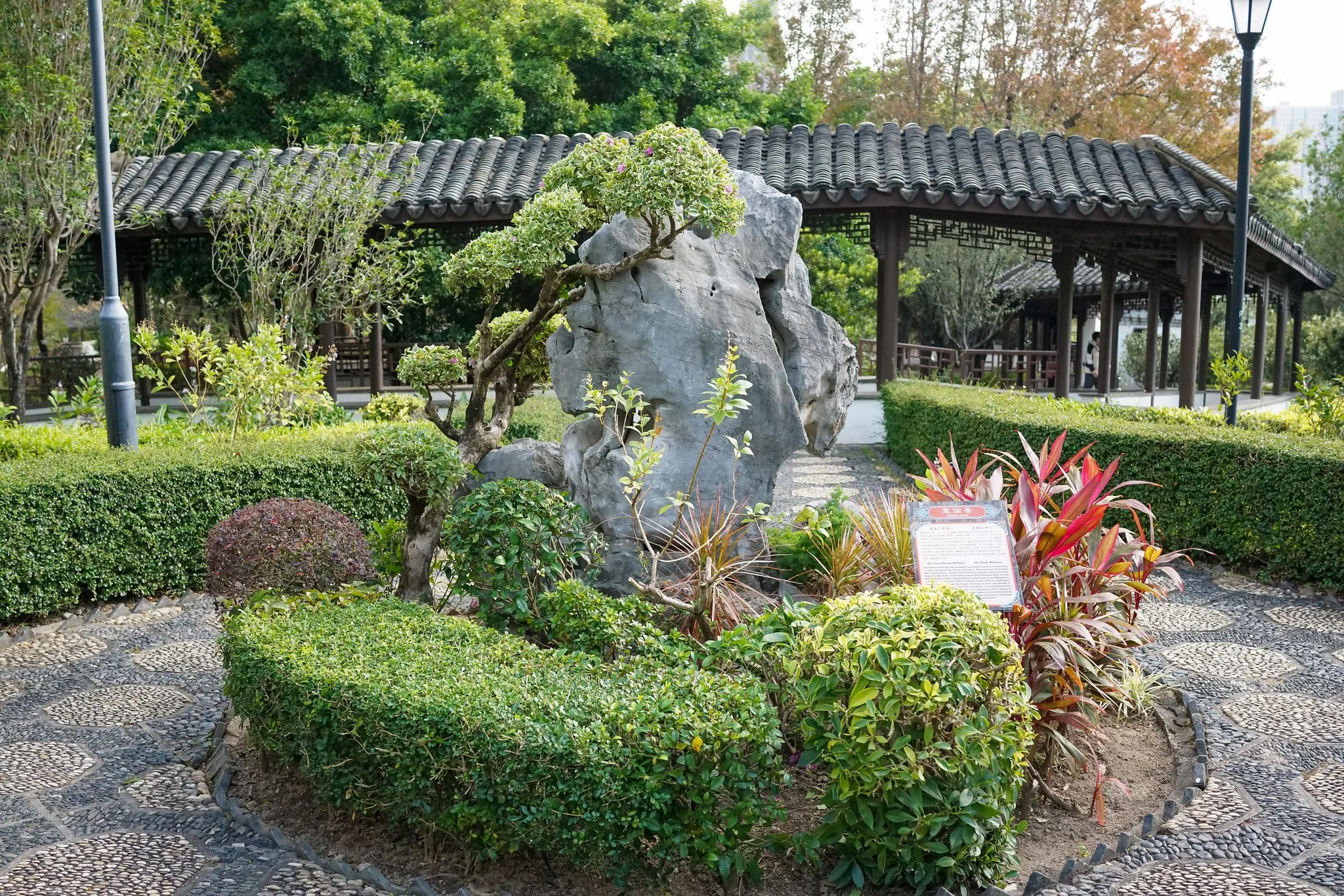
When the park was laid out, four Taihu rocks were brought in from Zhejiang in China and set up as memorials. They look like ordinary garden stones until you read the signs. One of them is 潘靈卓峰, Jackie Pullinger’s stone.
She is British, not American. She arrived from Britain in 1966, aged about 21, with almost no money and no plan that would have impressed an immigration officer. She went into the Kowloon Walled City on her own, taught English, ran youth work and then spent the next decades getting addicts, teenagers and women out of the alleys. Triads first tried to move her on and later, in that peculiar Kowloon Walled City way, ended up leaving her alone because the work was obvious. Her book is Chasing the Dragon. She was still going in there until the demolition. The stone is one of the few objects in the park that points at a living person rather than a Qing wall.
The other three rocks mark Rev Kwong Yat-sau, who put the ALMSHOUSE on the Yamen from 1890, Rev Lau Chi-sam, who ran clinics and schools from 1952, and the Willans couple, Jean and Rick, who worked with Pullinger from 1968. Jean really was American. Pullinger is the stone people remember.
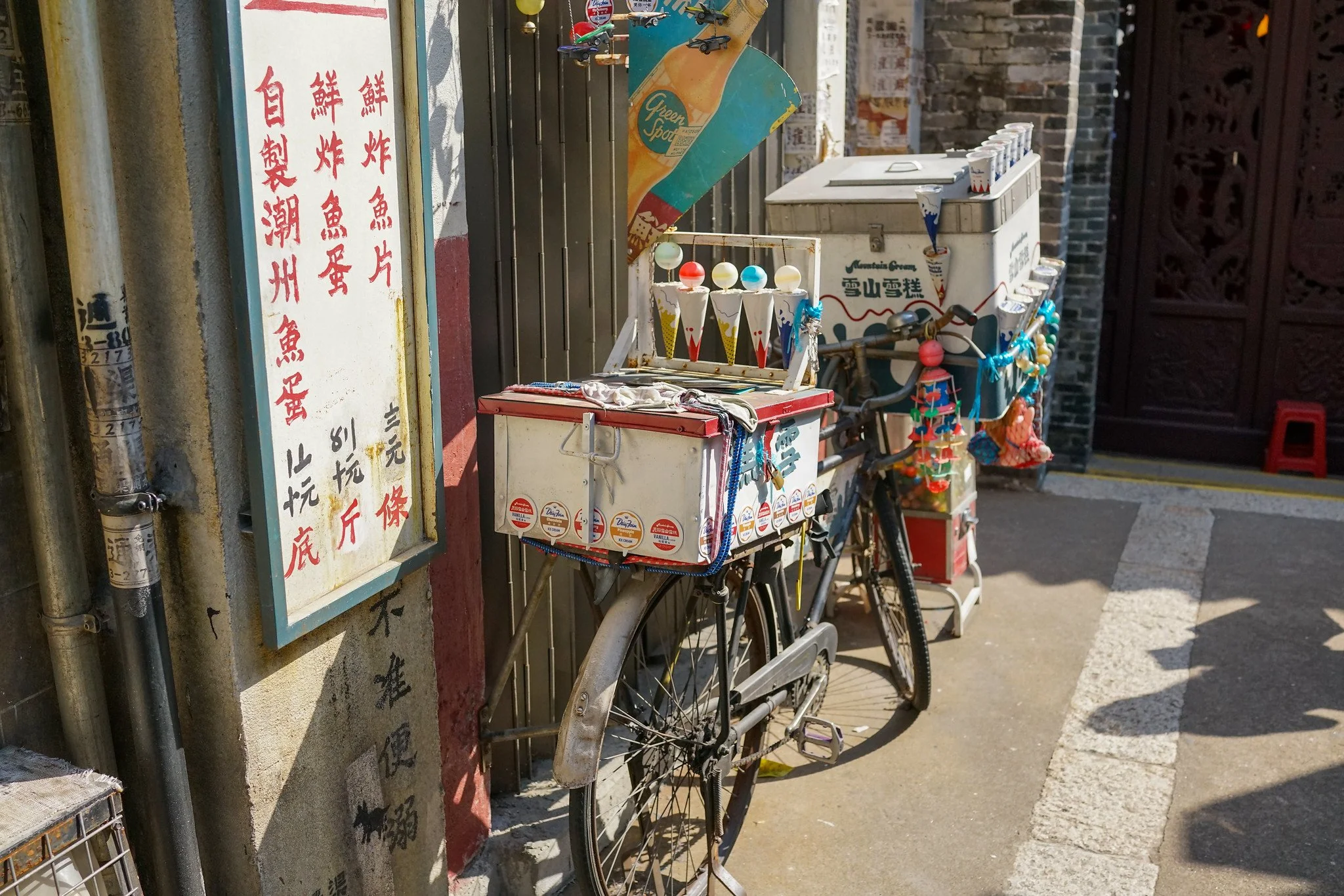
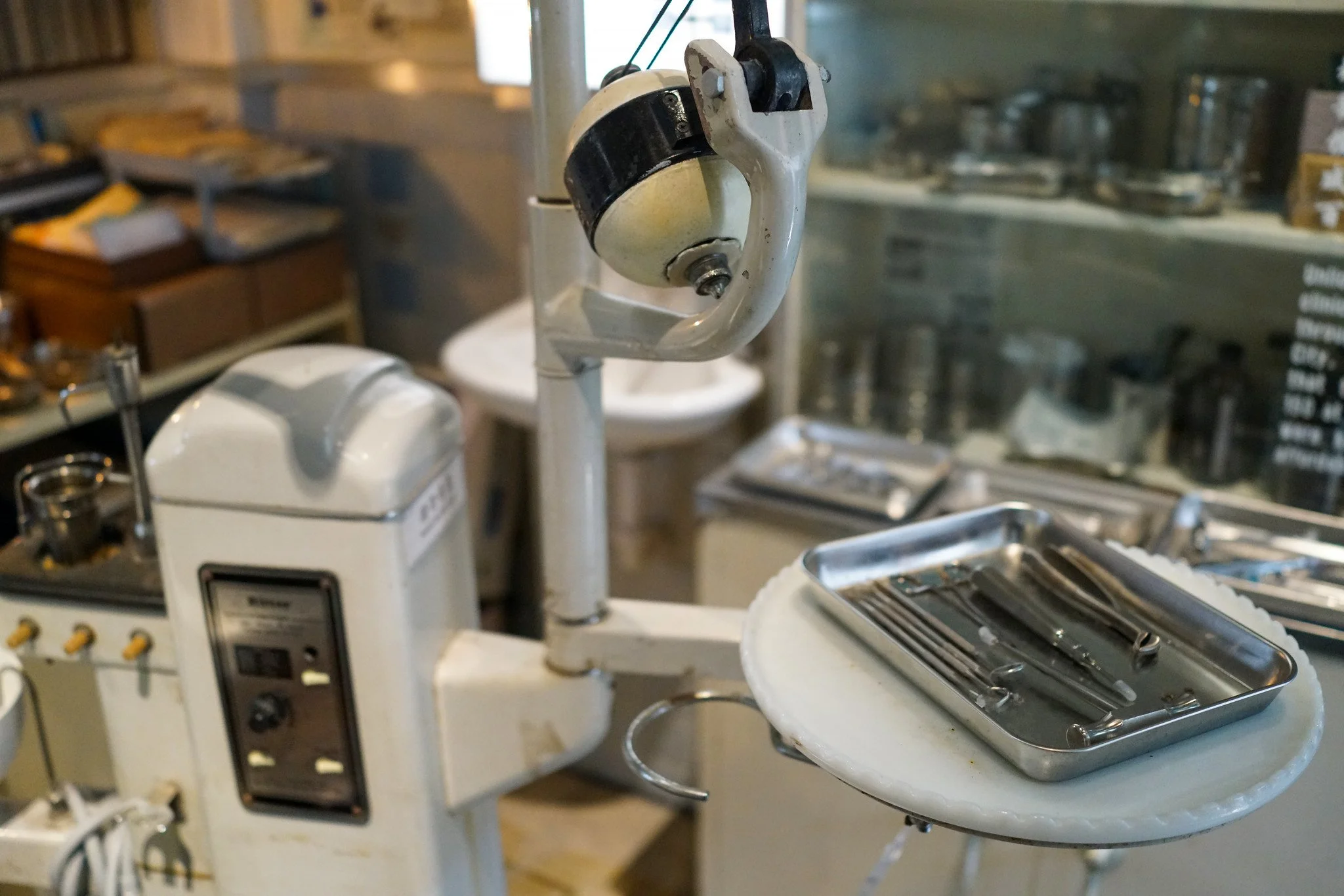
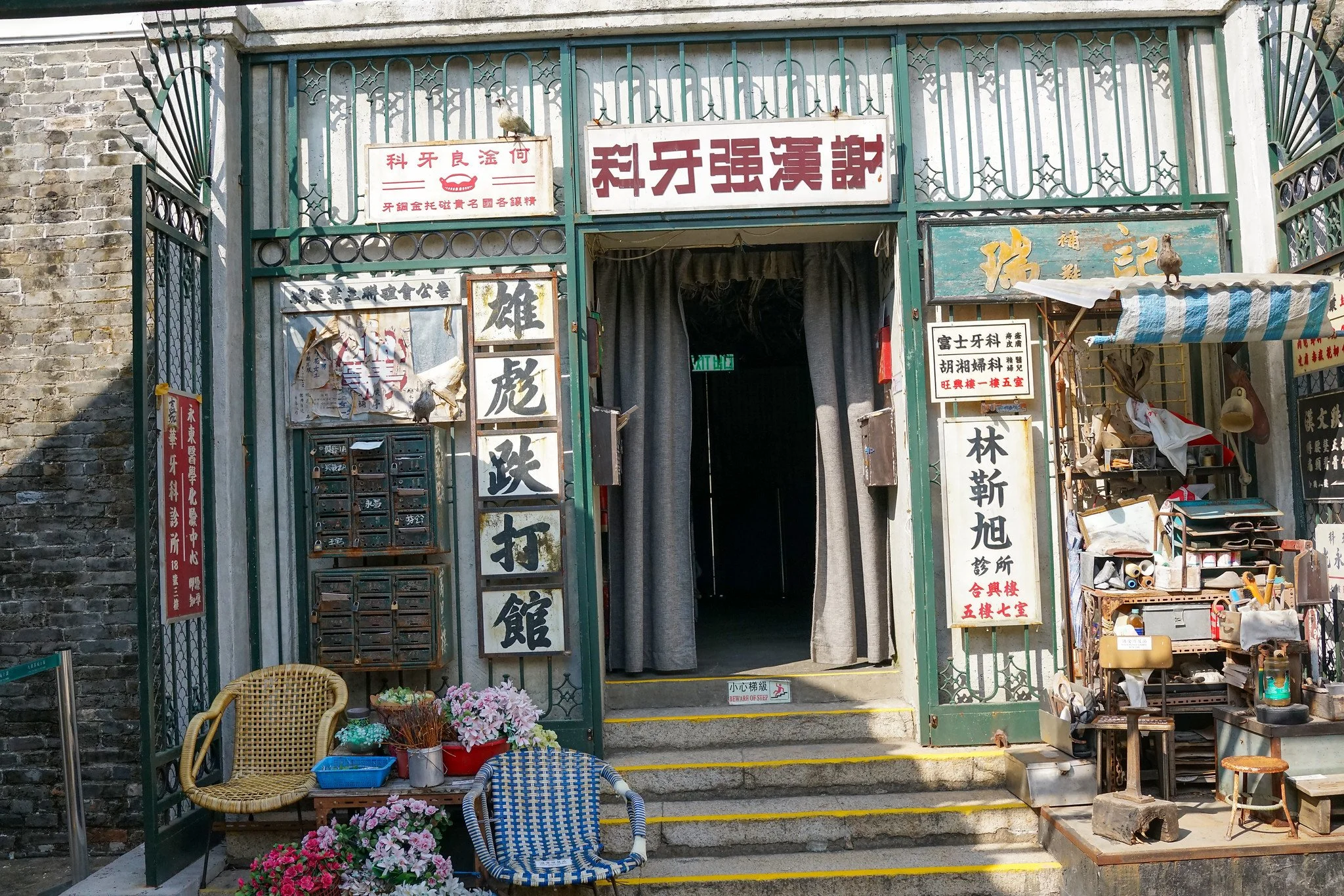
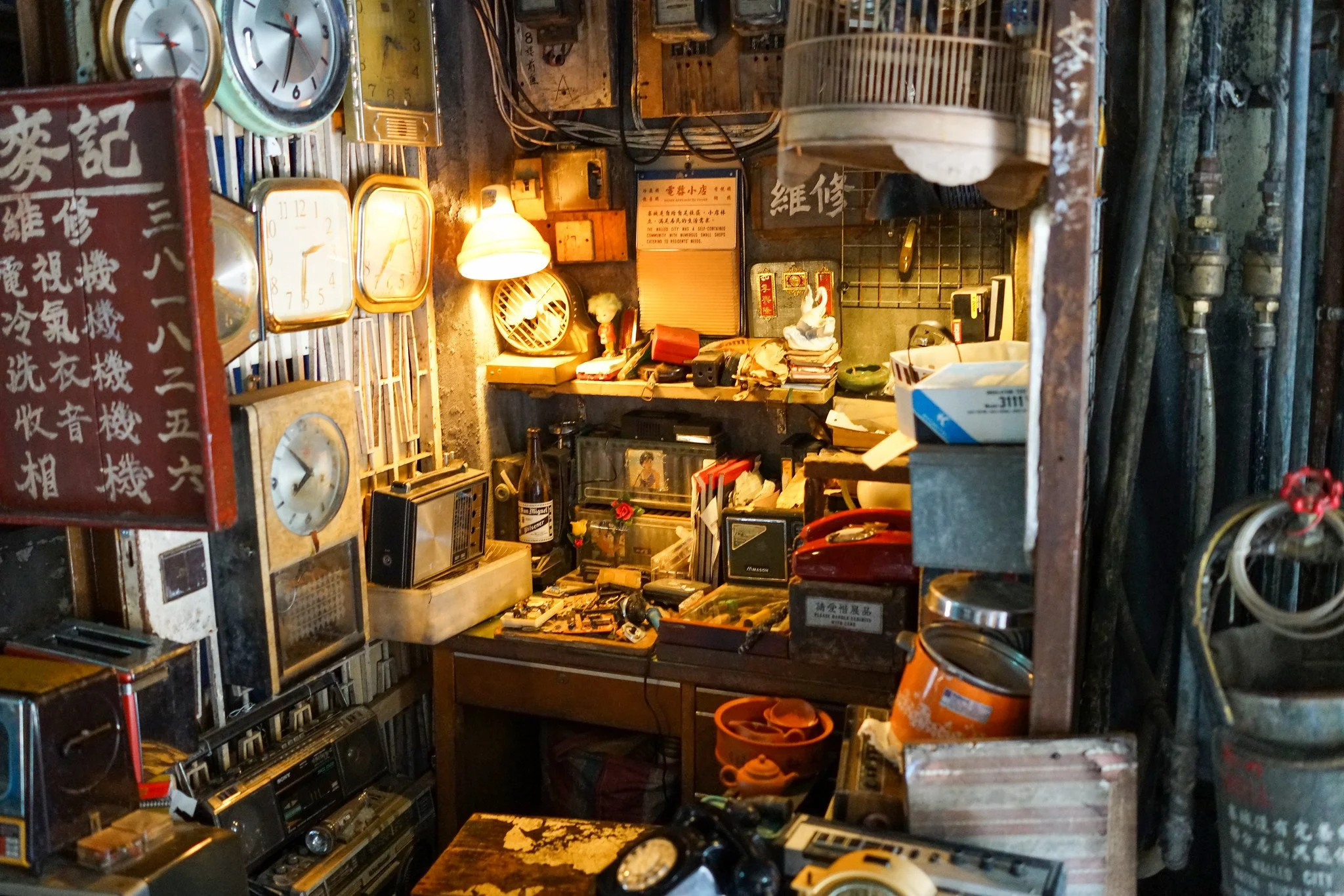
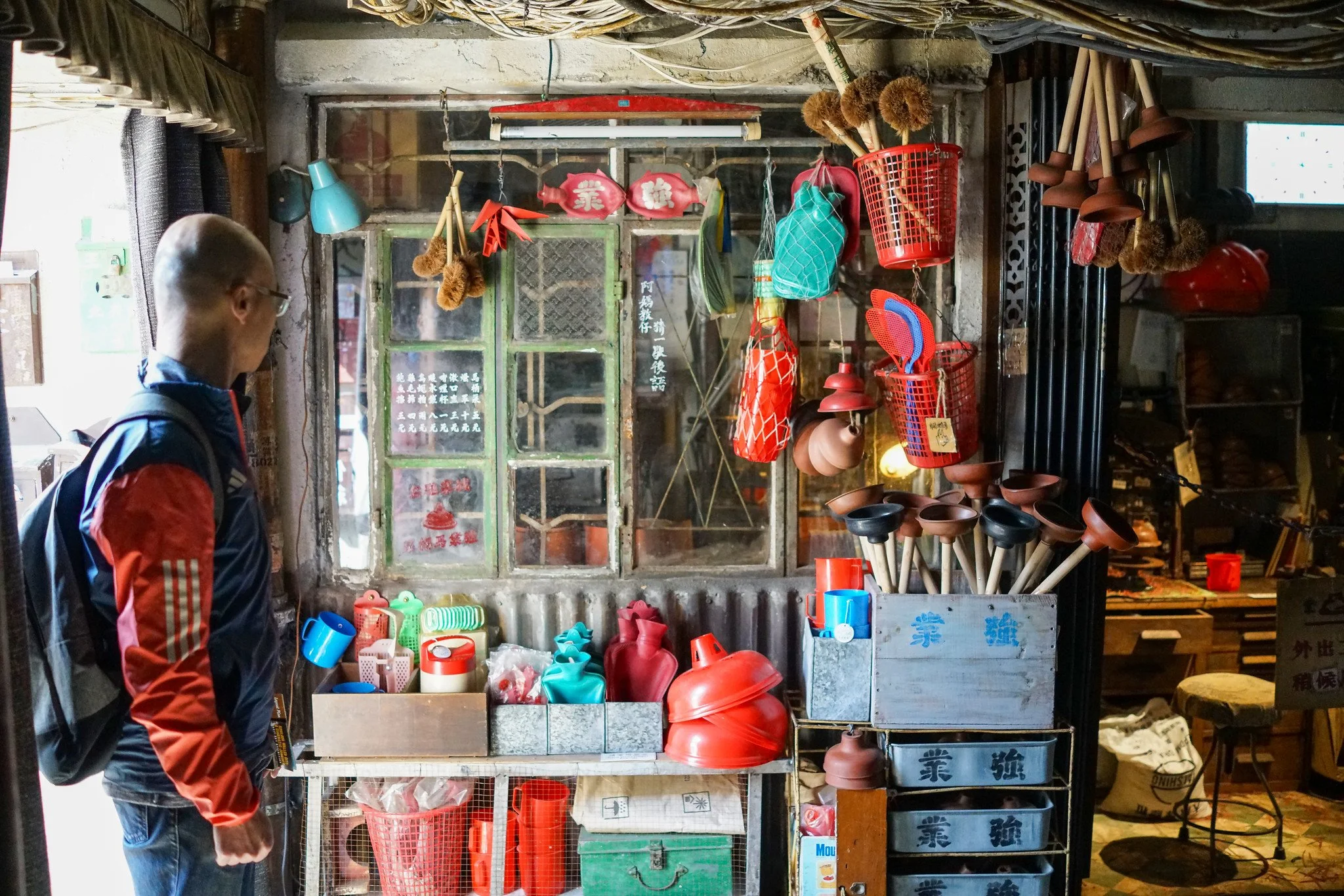
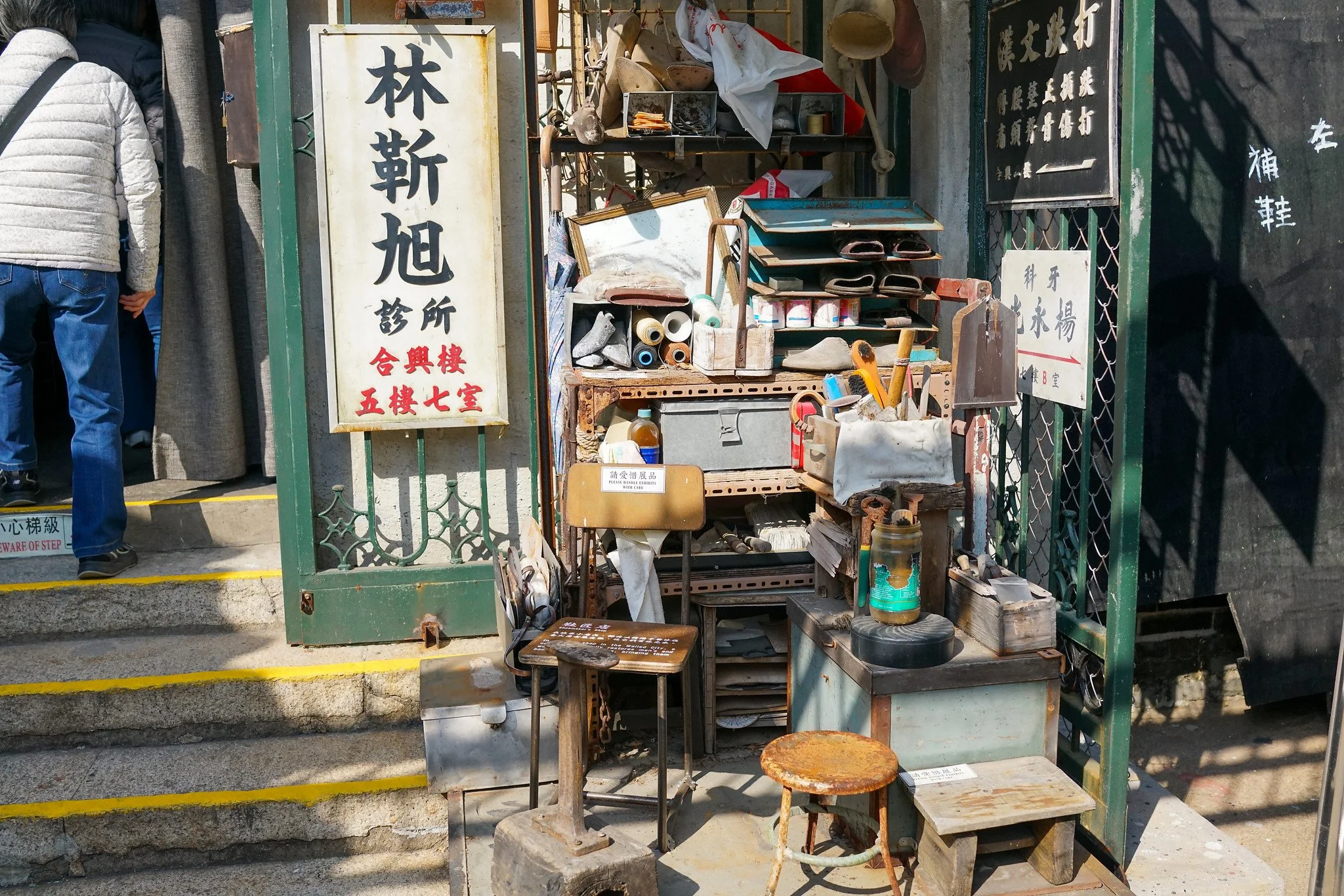
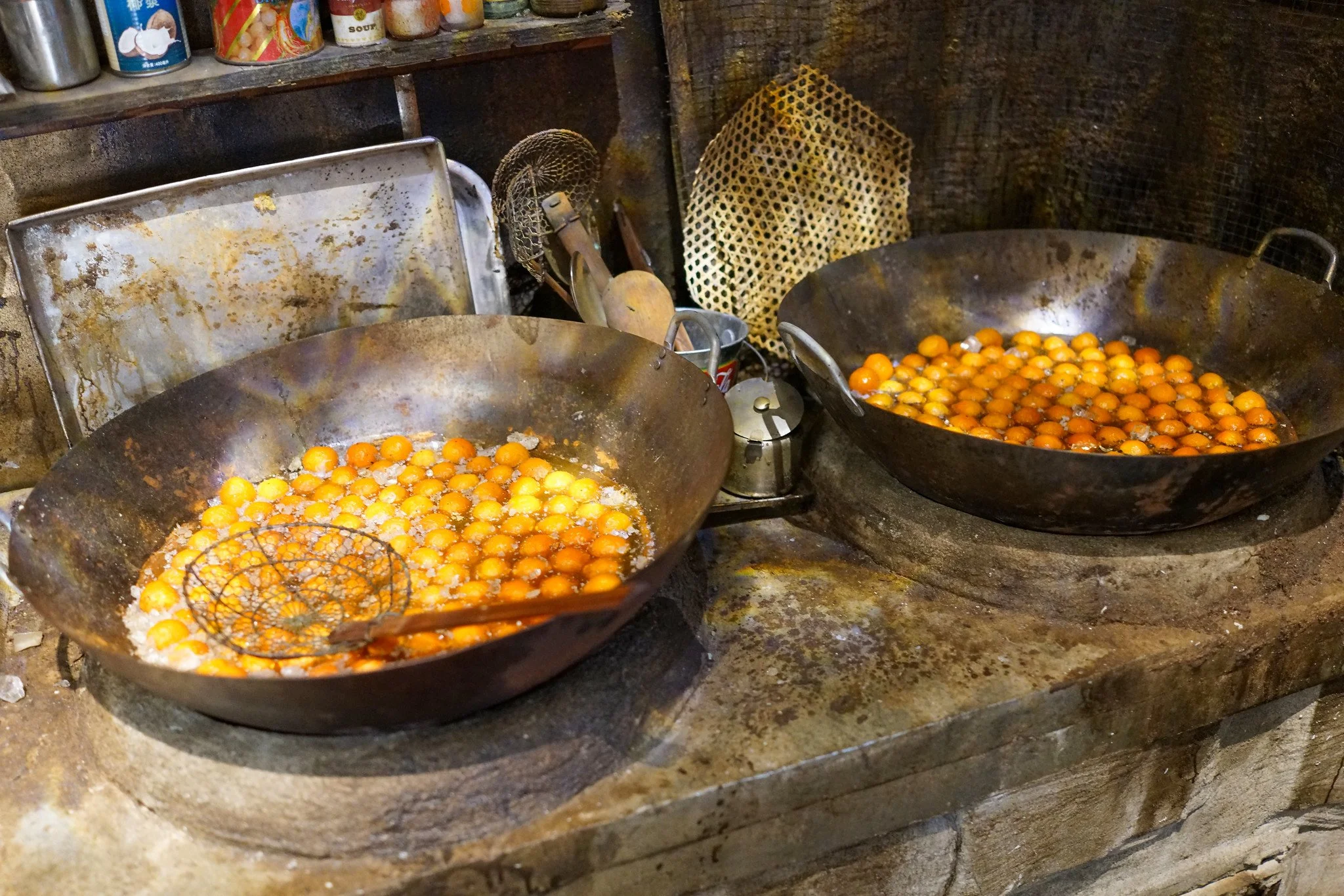
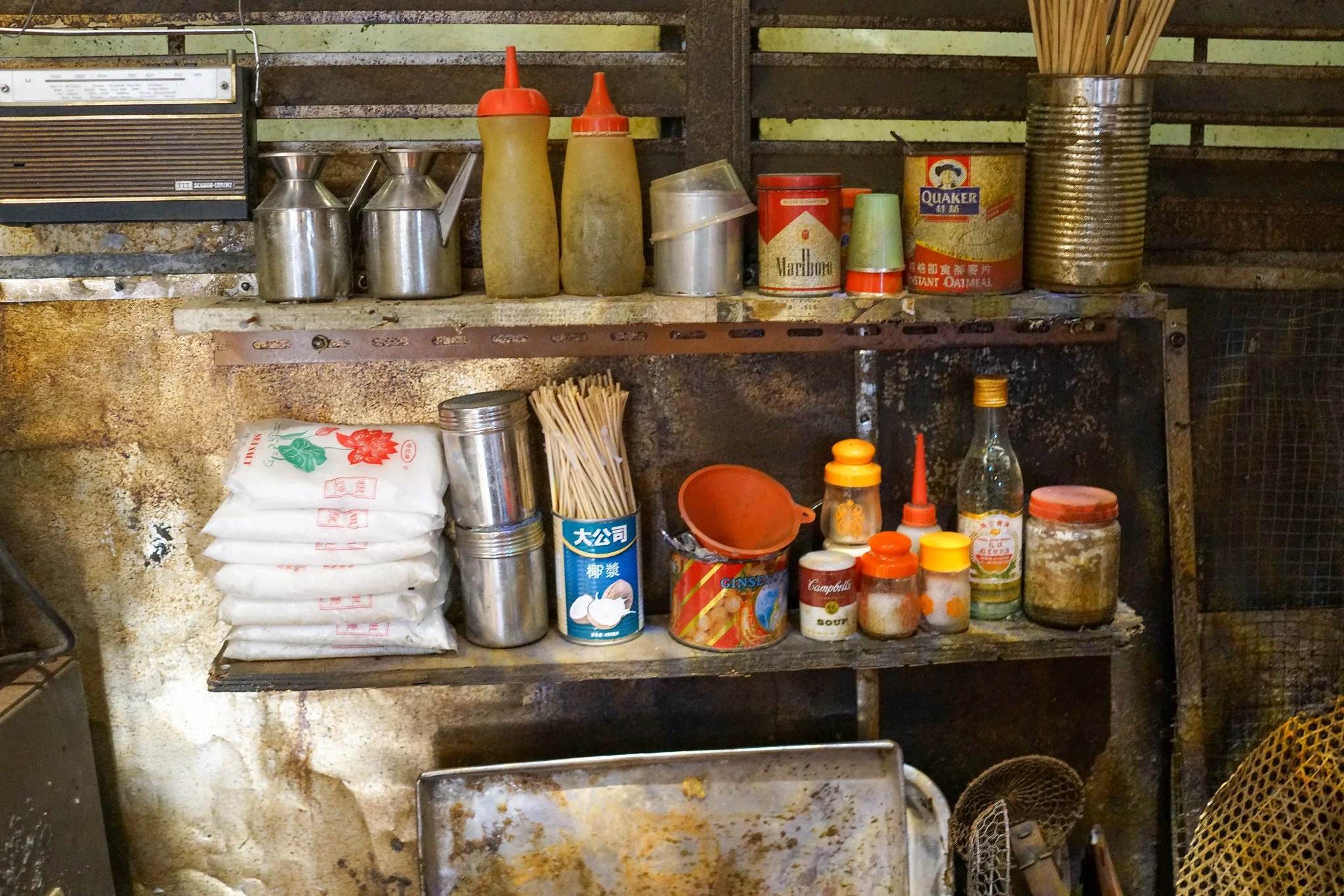
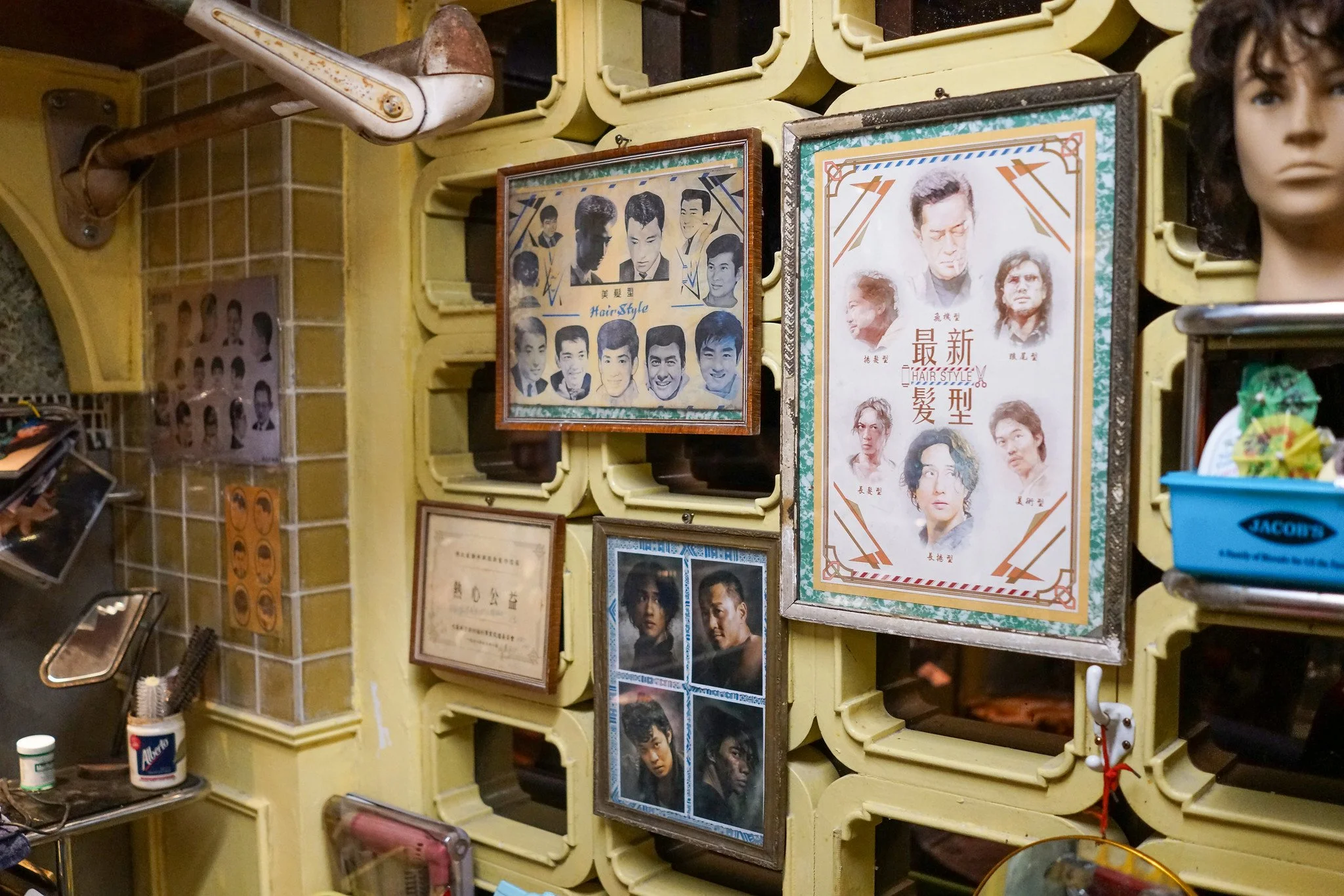
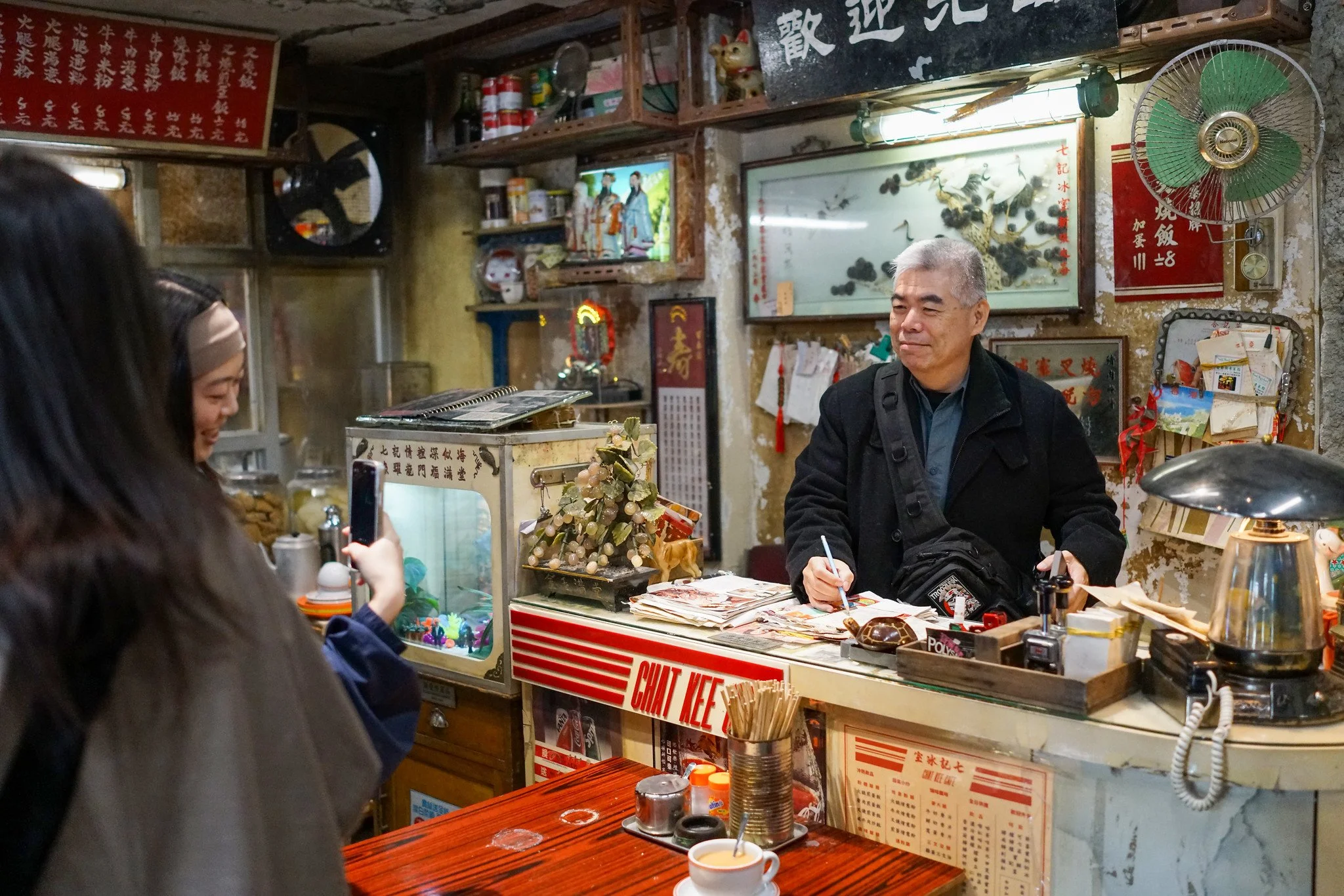
click on any image to enlarge
© Copyright Acknowledged | All rights reserved | image taken by Jamie
Kowloon Walled City Park | The original park after the exhibition
The exhibition that should have existed 30 years ago
On 24th May 2025 the park opened Kowloon Walled City: A Cinematic Journey. It is booked to run 3 years, until 23rd May 2028. The sets come from Soi Cheang's 2024 film Twilight of the Warriors: Walled In, which took Best Film at the 43rd Hong Kong Film Awards and became one of the highest earning local pictures in the city's history, about HK$108 million at the Hong Kong box office.
I am not a film critic. I am glad the film exists because it pushed the Government into doing what I have been asking for since the demolition. Recreate the alleys. Recreate the light. Recreate the noise of a jet on the Kai Tak Airport path. Let people sit on bamboo chairs and watch the day turn into night against a wall of windows. The exhibition is not the real Kowloon Walled City. It is a film set. It is still the closest thing Hong Kong has offered the public since 1994, and for a lot of younger guides and visitors it is the only version they have. Many of them have no memory of the actual place. The sets help them talk. That does not make the sets real. - my own comment was very specific after my first visit, the noise and the smell where missing!
Practical points as they stand in September 2026:
Park hours: 6:30am to 11:00pm daily
Exhibition hours: 9:00am to 7:00pm daily
Admission to both: free
Capacity inside the exhibition: 60 people at a time
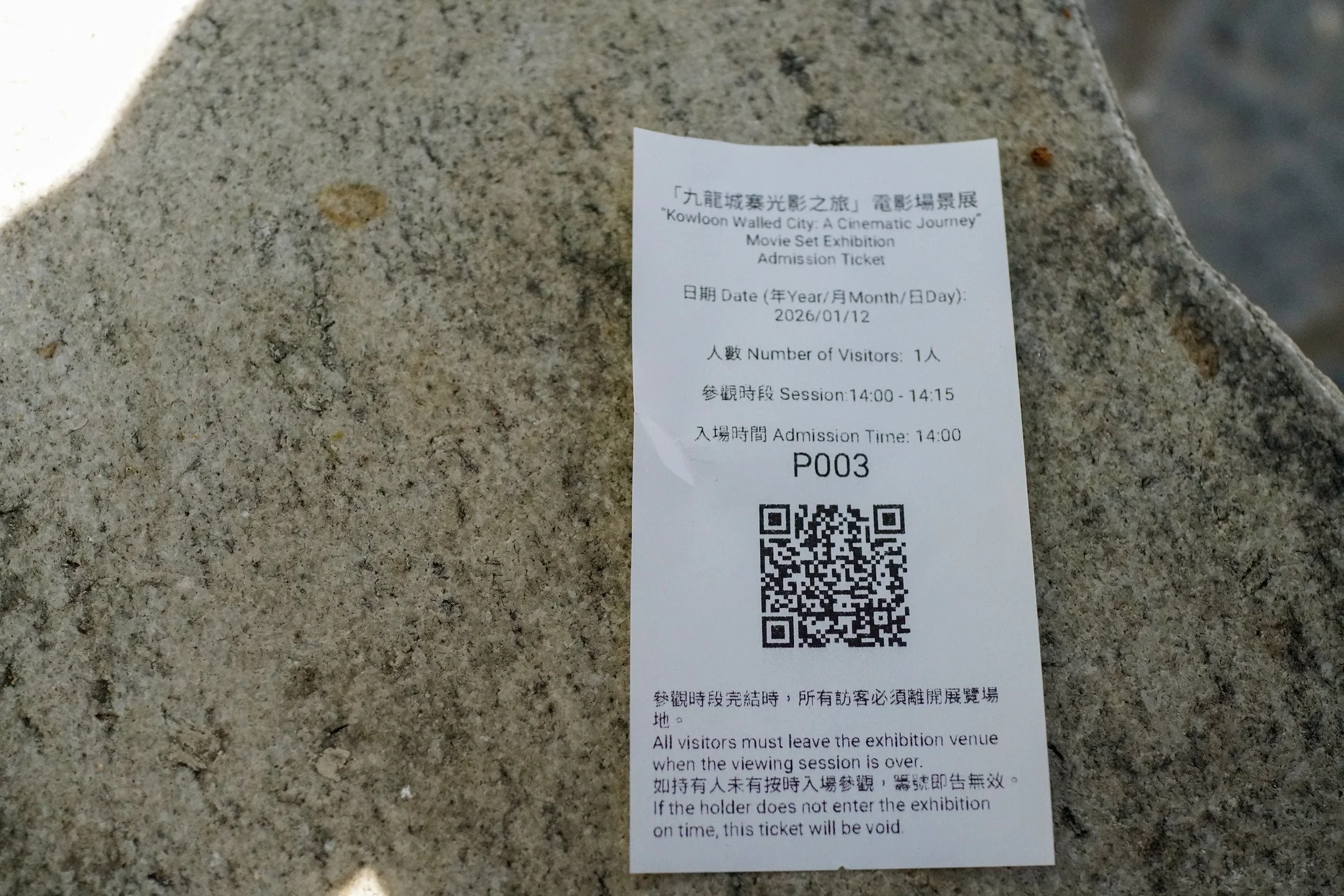
Tickets: collect on the day at the counter in front of the Yamen, maximum 2 per person
Morning tickets from 8:45am for sessions before 2:00pm
Afternoon tickets from 1:45pm for sessions from 2:00pm
From 1st September 2026, weekday mornings (except public holidays and the Mainland China golden weeks) run 2 sessions of 25 minutes each hour
All other times: 3 sessions of 15 minutes each hour
Miss your slot and the ticket is dead
Black rain or Signal No. 8 closes the exhibition. Amber, red, Signal No. 1 and Signal No. 3 do not
Go on a weekday morning if you can. Weekends stack up. The staff will move you on when the clock runs out, which is irritating and also the only way 60 people at a time stays bearable.
There are also free 45 minute guided walks of the park itself on most days. Use one if you want the Qing layer explained properly. Use the exhibition if you want to feel, even slightly, what the 1980s version looked like from the inside.
I have now visited the exhibition 3 times and I am very positive about it with one exception, each exhibit feels crowded and a little unruly if there are more than 5 people, there is essentially no crowd contral and most visitors simply want to take selfies. it can be a little frustrating.
How to get to the Kowloon Walled City Park, keep it simple
The park is at Tung Tsing Road in Kowloon City, next to Carpenter Road Park. I am not going to send a first time visitor to use the MTR (Subway) and then ask them to walk a fair distance. Using the MTR itself is easy enough, the signs are in English. Walking from a station to an off beat attraction is another matter. The nearest station is still a slog through ordinary streets, map apps get people turned around, and once you leave the main tourist and business districts the level of English drops some. Kowloon City is a local neighbourhood. That is not a criticism. It is a practical fact.
I keep this to 2 methods, which is exactly what I do myself.
1. Taxi from anywhere in Kowloon
This is the sensible choice. Tourists generally do not speak Cantonese. Show the driver the address in Chinese. Do not invent English directions and hope for the best.
Show the driver this:
九龍寨城公園
九龍城東正道
That is Kowloon Walled City Park, Tung Tsing Road, Kowloon City. Ask for the main entrance. From Tsim Sha Tsui, Mong Kok, Jordan or Yau Ma Tei it is a normal Kowloon cab ride, not an expedition.
2. The No. 1 bus from the Star Ferry in Tsim Sha Tsui
If you are already at the Star Ferry on the Kowloon side, the KMB No. 1 is the one that actually helps and the one i use the most. It runs from the Star Ferry terminus up through Tsim Sha Tsui and Mong Kok and has a stop named Kowloon Walled City Park, right outside the main entrance. Get on at the Star Ferry. Get off when you see the park or better still look at the LED displays on the bus which make it crystal clear what the next stop is!
A note for anyone who remembers other old Star Ferry routes. The No. 5 also starts at the Star Ferry and does go through Kowloon City, but it does not stop at the park gate. It stops over by Sung Wong Toi Park and the Regal Oriental Hotel. That still leaves you walking. Use the No. 1, or take a taxi.
That is it. Taxi, or the No. 1 from the Star Ferry. After the visit, stay in Kowloon City for lunch if you have the time. The neighbourhood still has some of the best Thai food in Hong Kong, a leftover of the old Kai Tak Airport years when this whole district fed aircrew and night workers.
What visitors say on Tripadvisor, and what the Tourism Board would rather you read
I had never properly sat down with the Tripadvisor page until this piece. As of 2026 the park sits at 4.2 out of 5 from 500 reviews, ranked somewhere around 37 among 1,540 things to do in Hong Kong. That is a polite score. It is not a love letter. The split is the giveaway. About 186 mark it Excellent, 222 Good, 80 Average, 8 Poor and 4 Terrible. In plain language, most people quite like a free garden. Very few people think they have just seen Kowloon Walled City. I am not surprised. It is pretty much as I have been describing it for years.
The 5 comments that keep coming back on the kind side are these.
Nice gardens, and a good 2 hours of quiet away from the busy streets, a bit out of the way but worth it if you have the time.
Greenery, winding paths and peaceful corners, a calm stroll in the middle of Kowloon.
The Cinematic Journey movie set is the reason to go, the props and room sets from the film make the visit.
A very photogenic little garden, pavilions, stonework and round doorways.
The No. 1 from the Star Ferry drops you right there, and the mix of a bit of history plus the gardens is pleasant if you are not in a rush.
The 5 that tell the other half of the story are these.
The park itself is nothing special apart from the old Chinese house and the movie sets, hot, not much shade, no cafe.
Just a park. They came because the Walled City was iconic. What is there now holds little for tourists. They could have kept a great deal more.
Not really too much to see. Would not go out of the way. Fine if you are already next door.
Pleasant and even photogenic, but it does not do justice to the history. A park is the wrong setting for what stood here.
A long, disappointing walk for some stone foundations and pathways. One visitor spent 30 minutes lost in the construction around Sung Wong Toi MTR Station before even reaching the gate.
That last one is why I will not send people from the MTR with a phone map.
The Hong Kong Tourism Board, for its part, would like you to know that the park is a beautiful garden featuring preserved artefacts, a serene oasis nestled in the heart of Kowloon City, about the size of 4 football fields, blending classical Chinese garden architecture with modern landscaping, elegant pavilions, lush greenery and serene ponds, on the site of a once troubled place whose history is as colourful as it is complex. They will also point you at the City of a Thousand Faces exhibition and, if you have the app, the City in Time pictures that overlay old views on the present garden. None of that is false. It is also the official way of saying the slum has been replaced by a nice park. Colourful and complex is what you write when you do not want to write 14 storeys, 2 lifts and 80% of the fish balls.
I would take the HKTB a lot more seriously if they lived in the real world and not a Cinderella universe. They have a staggering budget. If they were doing the job properly they would give real how to get there advice for every attraction in Hong Kong. Taxi with the Chinese address. The one bus that actually stops at the gate. Not a cheerful note to take the MTR and then wander.
Read the HKTB copy and the 5 star reviews together and you will notice they are describing the same object. A garden. Read the 2 star reviews and you will notice they came looking for the city. That gap is the whole problem.
What happens when the exhibition ends
On paper the show dies on 23rd May 2028. Nobody has announced anything after that date. It was paid for as a 3 year film project, not as a park. The tidy official ending is therefore obvious. Take the alleys down. Put the Yamen back to 6 quiet rooms and a bronze model. Call the garden a garden again.
That would be ludicrous.
I understand the arguments. The sets sit on and around a declared monument. The park was sold in 1995 as a Jiangnan garden. Film sets rot in a Hong Kong wet season. The intellectual property belongs to a movie that still has a sequel in the works. A timed 60 person ticket desk is not how a park is usually run. None of that is a brick wall. All of it can be negotiated. Licences can be written. Contractors can be hired. Wood and neon can be rebuilt when they fail. Opening hours can be simplified. If the government can pay a film company to put the alleys up in the first place, it can pay a private contractor to keep them up, or to rebuild them properly as a standing reconstruction. There is no shortage of photographs and old video to work from. Greg Girard and Ian Lambot alone left more reference than most heritage sites ever get.
The fact the government agreed to do this at all is the point. They thought out of left field for once. That is the bit people forget. For 30 years the official line was grass and pavilions. Then a film made HK$108 million and suddenly a slum could stand on the original ground again, as long as it was called an exhibition and given an end date. You do not get to discover that visitors will queue for the fake alleys and then pretend the discovery expires in May 2028.
Keep a chunk. Make it permanent now, while the carpenters still remember how the passages join and the projectors still work. Do not wait until April 2028 and form a working group. That is how you lose it and go back to a pleasant park that Tripadvisor already knows how to describe. The exhibition is fake. It is also the only reason most people have to come. Scrap that and you have spent 3 years proving the point, then thrown the proof away.
What I think, now that the dust has settled
I will not pretend the park is a failure. It is a typical but good Chinese garden. The Yamen is worth 20 minutes. The South Gate stones are worth 10. The model is useful for anyone under 40 who never saw the real thing. The exhibition is genuinely good. I am not saying otherwise. For guides who never walked the old alleys it is a working substitute. For someone with 2 or 3 days in Hong Kong and a free morning, it is a proper visit if they use the taxi or the No. 1 bus and do not try to invent a walking route from the MTR.
I still will not put it on a short day. Six to 9 hours in this city is not as long as it sounds. The location costs time. The construction around the site costs more time. And once you are honest about what is actually there, the exhibition is the reason to go. The rest is a pleasant garden on top of a missing city. If you simply want a beautiful park that you can reach without a campaign, go to Hong Kong Park.
That is the conflict I am left with. I have vivid memories of the real Walled City. The exhibition is a reminder, and it is still a fake scene. They should have kept a chunk of the place, made it safe, and let people walk the thing itself. We saved the office and buried the city. Then a film made HK$108 million and the alleys were allowed to exist again, as long as they were pretend.
If you want the best written and photographed record of the real place, find City of Darkness, the book Greg Girard and Ian Lambot published from work they did while the towers were still standing. Their pictures are why the rest of the world can still see the dripping pipes and the roof gardens. The park will not give you that.
My own view, after 54 years here, is simple enough. The Kowloon Walled City was a slum and a community at the same time. It should not have been left to rot and it should not have been erased. A slice could have been held. We did that elsewhere. We chose not to do it here.
Go anyway if you have the extra day. Stand at the South Gate stones. Walk the Yamen. Look for Pullinger’s rock if you want a reminder that some people walked into that place on purpose. Take your timed ticket and go into the exhibition. Then walk out into the garden and look at the empty air above the pavilions. That empty air is the point. 350 + 14 storeys of other people's lives used to fill it
So there you go
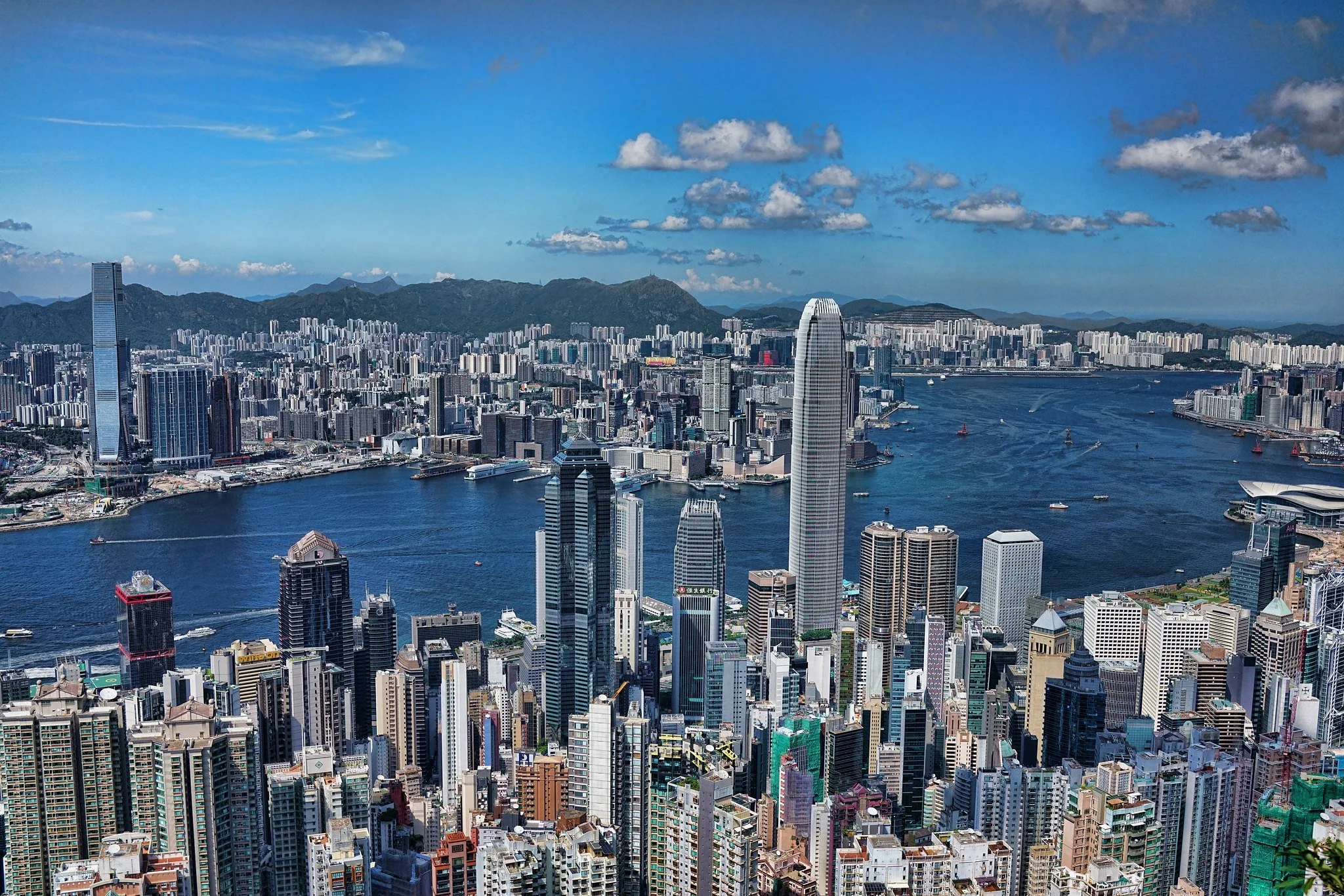
click on any image to enlarge
© Copyright Acknowledged | All rights reserved | images taken by Jamie