Study Tours and Educational Tours of Hong Kong 2027
A Tour Segment I Do Not Offer, and the Specialist I Work With
The J3 Group - Premium Quality Private Tours | Experiences and Insider Chats since 2010
Me Jamie, your host, I am English and I have lived in Hong Kong since January 2nd 1972 - I know the place.
A meaningful blog post with a difference - tips on Travel, Tourism, Tours, Daily Life and my personal thoughts on Hong Kong.
Please do visit Amazing Hong Kong
Hong Kong | Pearl of the Orient


A Resident since 1972 - Private Tours of Hong Kong with Jamie
The Best Things to do in Hong Kong
click on the image to enlarge
© Copyright Acknowledged | All rights reserved | image created by Jamie
Study Tours and Educational Tours of Hong Kong 2027





Foreword by Jamie
A Tour Segment I Do Not Offer, and the Specialist I Work With
This post is for Faculty leaders around the world
I do not lead study tours in Hong Kong. I do not lead educational tours for schools or universities either. I never have as a regular product, and I am not about to start. Study work is a segment of this industry. It is a growing one. That does not mean every private guide should add it to the list.
I found that out the hard way. Between 2011 and 2016 I took 3 corporate and study groups. That was enough. The last one was booked as 20 people. 30 people arrived. I am not set up for that. My own tours have been capped at 6 people since then, and that cap is not a marketing line. It is how I can still do the job properly. A study programme with a teacher, a syllabus and a larger group is a different trade. Most of the private guides I know will not take it on for the same reason they will not take hiking. It looks related to a city tour. It is not.
This page is for two kinds of booking. A private educational tour, where you choose 4, 6 or 8 hours the same way you choose the hours on my own tours. And a school or university group, where the headcount is larger, teachers are attached, and the programme may run one full tour or several. It is not for high-volume study tours from Mainland China. That is a different industry and I do not place those bookings.
This page exists for the same reason the hiking page exists. I work with specialist talent for the segments I do not run. The arrangement is in writing. You contact me first. I make the introduction. After that you deal with the people who will actually design and lead the programme. I stay in the loop as the advisor in the background. I do not run the classroom. I do not take the booking once the introduction is made.
Why so few private guides offer a real study tour
People from overseas assume a city guide can look after 25 students if you add a worksheet. That is how you get a coach circuit with a new title.
A study tour, done properly, has a purpose before it has a photograph. The teacher has a syllabus, or the university has a module, or the family has a subject they want treated seriously. The hours are chosen to match that purpose. The ground is chosen to match it as well. Housing is not a drive-past. The harbour is not only a view. Central is not only two banks and a lunch stop. Victoria Peak is geography and land use, not a ticket queue. The Big Buddha and the Tai O Fishing Village can sit inside a Lantau programme. They should not be the whole programme unless that is what was asked for.
Most private guides in this city are brilliant on streets, markets, temples, public transport and conversation with 1 to 6 guests. That is skilled work. It is not lesson design. It is not teacher ratios. It is not a 3 day programme with a rain plan, a split group and a learning outcome the faculty can defend when they get home. So the circle stays off that work. I include myself in that sentence.
You can find plenty of pages that call a city tour a study tour. You can find operators who will put 40 students behind one voice and call it educational because a museum is on the list. That is not what I am sending you to.
Why I work with talent in the segments I do not run
I have been running private tours in Hong Kong since 2010. I still work it the same way. One guide. 1 to 6 guests. The hours the guest chooses. Study tours are one of 20 segments or more in the market. Hiking is another. Car tours are another. Food tours are another. I do not try to do all of them.
I work with great talent in the segments I do not run. I use my 45+ years of sales and marketing experience and 16 years of private-tour work to help that talent get found faster than a new name usually can. A specialist can wait 2 or 3 years just to get the search recognition. I already have the pathway to being found.
The contact I work with on this segment can handle the thing I cannot. The design of a morning that belongs on a syllabus rather than on an OTA (such as Viator) thumbnail. Logistics when a school actually needs school sized logistics. Extra specialised guides when the group is larger than one voice can teach on a pavement. A coach when the group is too big for public transport. You contact me once. I match the date, the headcount, the subject and the shape of the programme. I make the introduction. Dates, hours, the fee, the meeting point, what to bring, transport, the number of guides and the teaching plan sit with the people who will be on the ground with you.
Who does the work, without turning this into a brochure
You book the programme, you get specialised guides, not a revolving Guide Team reading a script.
A private educational tour of 4, 6 or 8 hours will usually be one specialised guide with your group. That is the clean version and it is how a seminar group, a homeschool family, or 2 staff and a handful of students should be taught. A group that small can use public transport the same way my own tours do. The MTR (Subway), the Street Tram and the buses are part of the lesson when there are 6 of you.
A school or university group is a different shape. One guide cannot hold 25 people on a pavement and still call it teaching. When the headcount needs more than one person, the specialist can bring in extra guides and the friends who handle the logistics. Split groups. Road crossings. Museum rooms. A rain plan. A coach. That is the difference between a study programme and a crowd following a flag waving tour guide.
I am not collecting names for a public list. I am not sending you to a website and asking you to find the form yourself. I am not sending a school to an OTA (such as Viator) and walking away. The first message comes to me. I decide who should take the brief. The working conversation then moves to that specialist. I remain available if either side needs me. That is the work I do best.
How many guides. The numbers I would use
I do not lead these programmes. If I were building them, these are the numbers I would use, and they are the numbers I expect the specialist to use. It is not a luxury. It is common sense. It is also the only way public transport is even thinkable if a group insists on it.
1 to 6 people: 1 guide
7 to 15 people: 2 guides
16 to 30 people: 3 guides
1 to 6 is a private educational tour. One voice. Everyone can hear. That is my own cap on the tours I do lead, and it is the right cap for a serious morning.
7 to 15 is already two classrooms on the pavement. Two guides. Not one guide talking louder. At 15 you are at the edge of what public transport can survive, and only because the second guide is watching the back of the group while the first guide teaches.
16 to 30 is a school-sized operation. Three guides. Split walking groups. Teachers stay with the students. Somebody is counting heads. If a faculty member writes and asks for 30 people behind one microphone, the answer is no. That is a coach circuit, not a study tour.
Above 30 is not a booking I will try to force into this page. The work changes again, and it stops being the product described here.
Coaches or public transport
This needs saying plainly, because it is the question schools skip and then regret.
Public transport in Hong Kong is excellent when the group is small. It is a nightmare when the group is 15, and worse when it is 20 or 30. Ticket gates. Platform crowds. A train that leaves with 22 of you and not the last 3. A Street Tram that can take 6 and cannot take a year group. Stairs. Heat. Counting heads every time the doors close. I have done this city on public transport for 50+ years and on private tours since 2010. I still would not put 15 students through an MTR (Subway) interchange and call it a smooth morning.
So the rule on this page is simple.
A private educational tour of 1 to 6 people can use public transport. Often it should. The system is part of the teaching. One guide is enough.
7 to 15 people: 2 guides. A coach is still the sensible way to move between sites. If the group insists on public transport, the second guide is not optional. It is the only reason I would even discuss the MTR (Subway) at that size.
16 to 30 people: 3 guides, and plan on a coach. Not because a coach is luxurious. Because it keeps the group in one place, keeps the timing honest, and stops the lesson turning into a search party.
If the faculty specifically want the students to use the MTR (Subway) as a transport lesson, say so. That can be built in as a short, controlled piece of the programme, with the right number of guides. It should not be the way you move 24 people across the city all morning.
Contact me with the headcount first. Do not assume public transport will stretch. The specialist will say whether a coach is needed, what it costs, and where it can and cannot go. Some streets in this city are not coach streets. That is another reason the brief has to come in before anyone promises a route.
What Hong Kong actually is when you treat it as a classroom
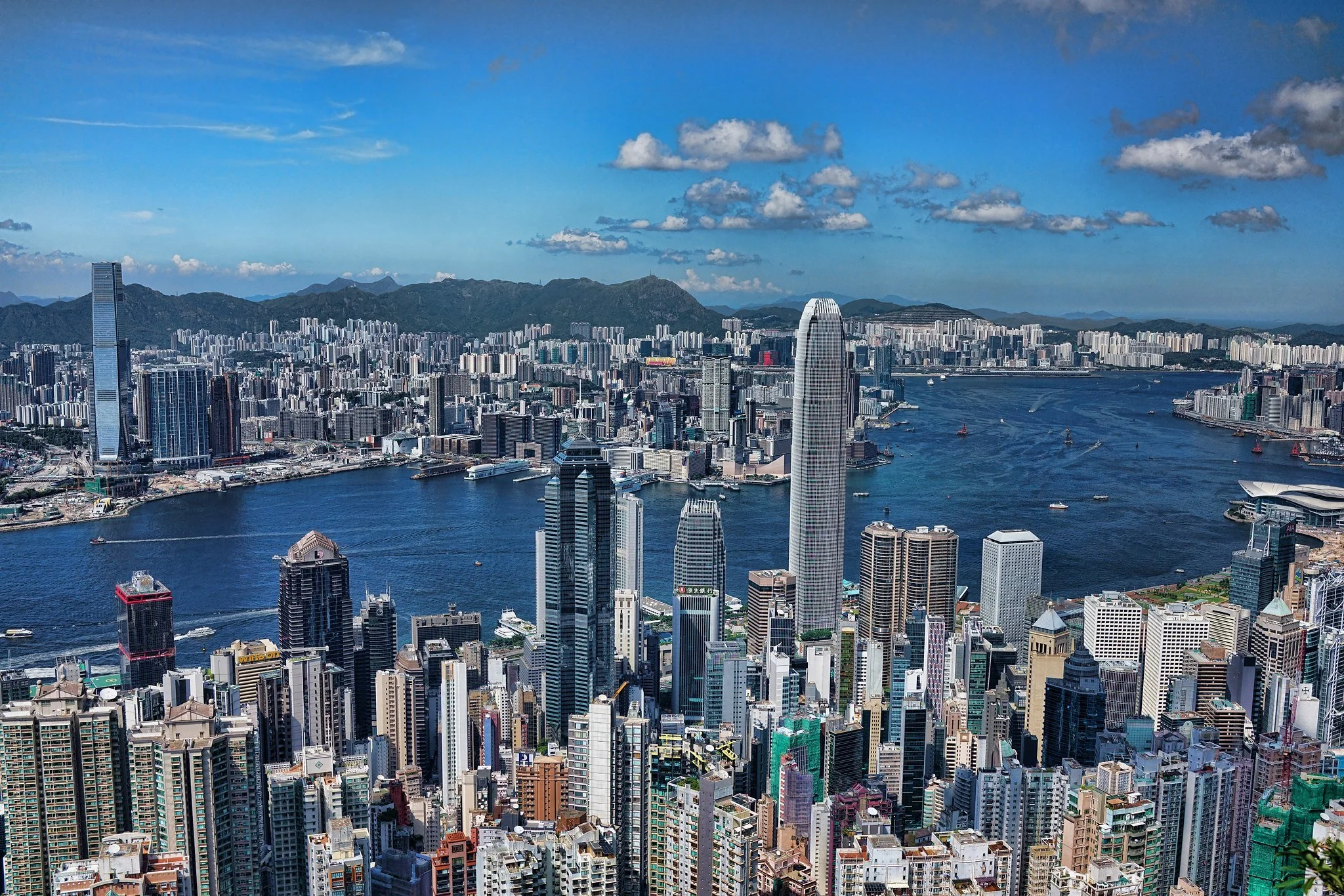
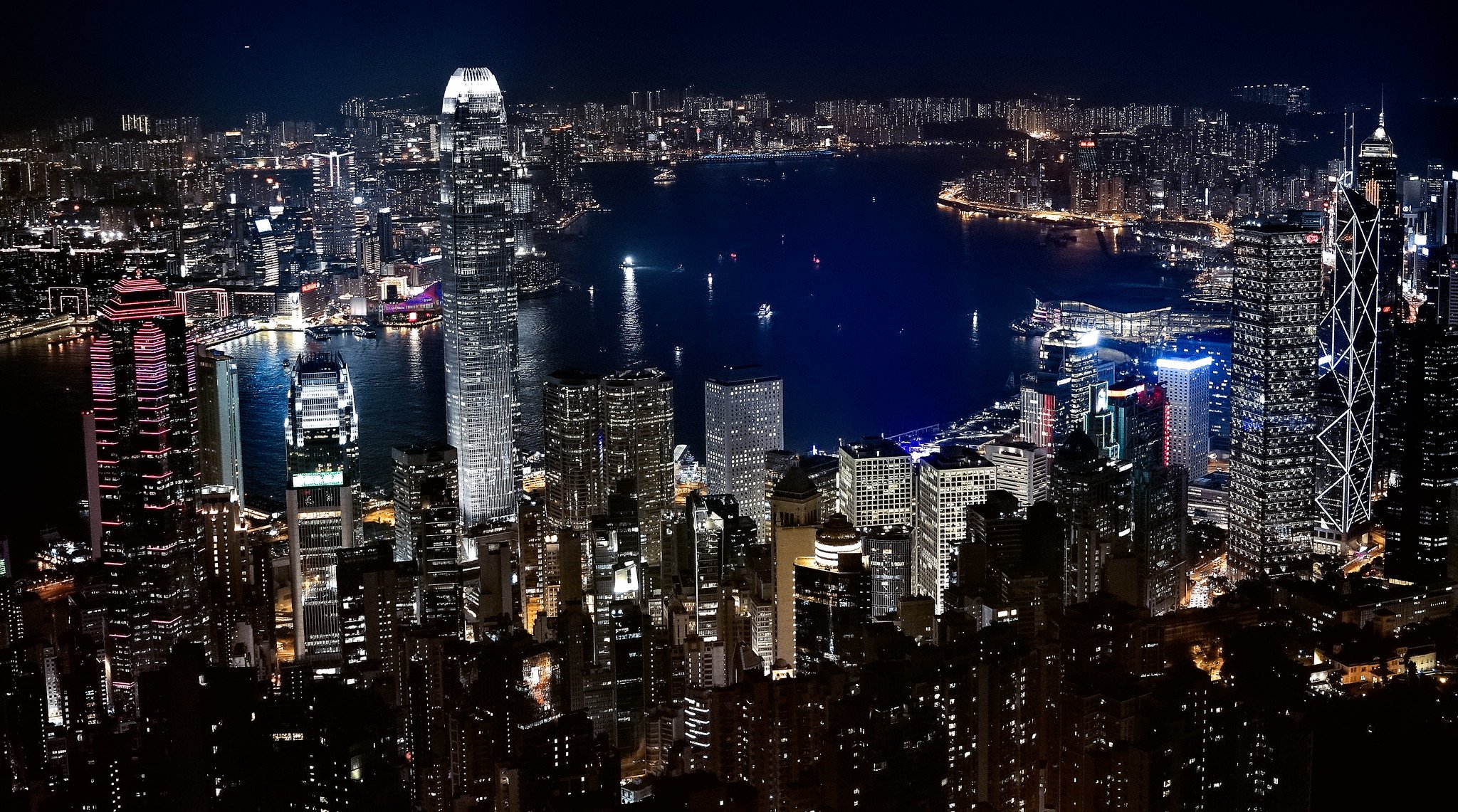
Visitors land at Hong Kong International Airport (Chek Lap Kok, on Lantau Island) and see towers. That is fair. The towers are what the photographs sell. A study tour that only sells the towers has wasted the airfare.
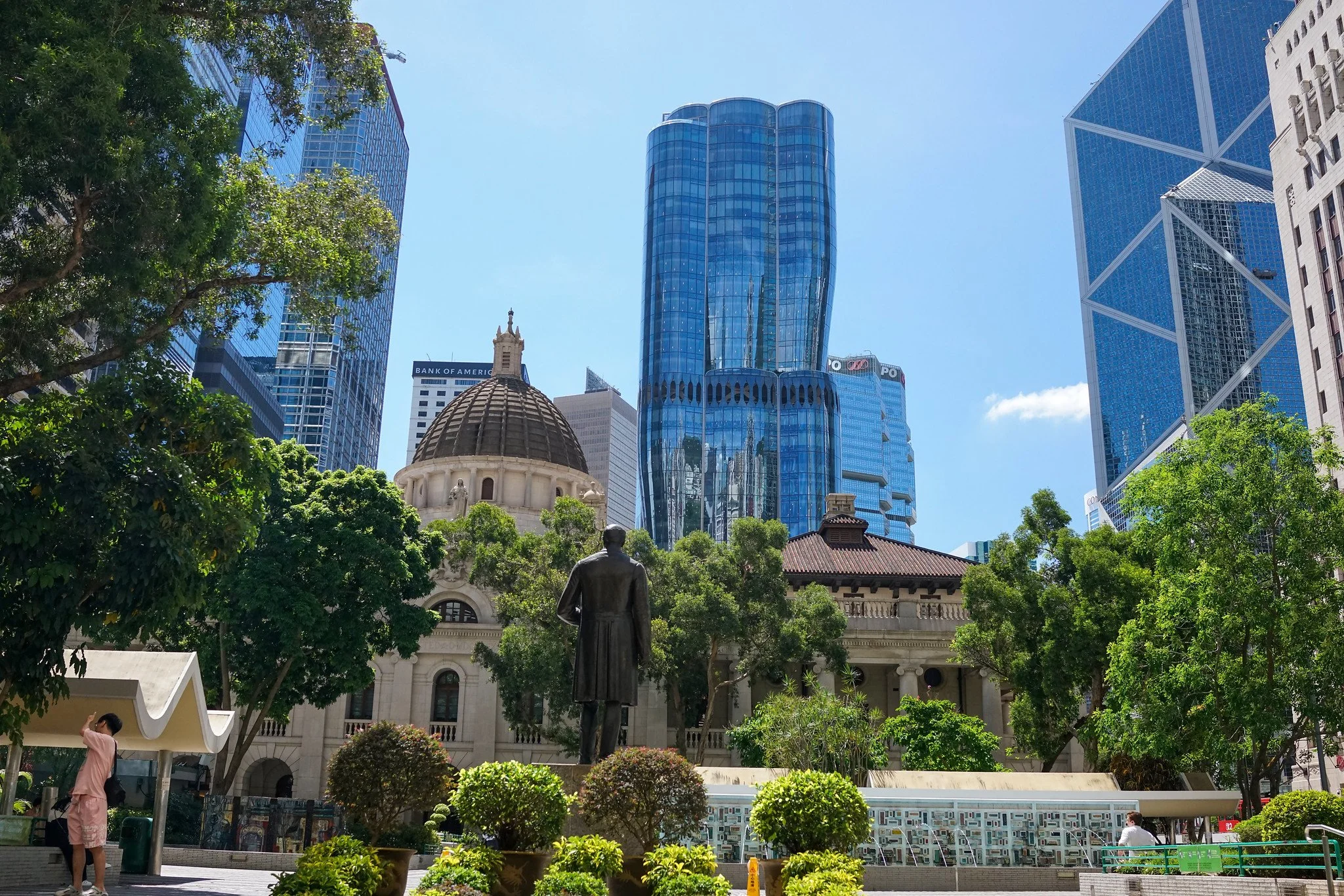
Hong Kong is a dense city-state with a harbour that still earns its living, a public-housing system that houses a huge share of the population, a financial centre that is not a film set, country parks on about 40% of the land, and a street map that still shows British civic building sitting next to Cantonese life. You can teach urban planning here without a lecture hall. You can teach trade by standing where the cargo actually moves. You can teach migration by walking districts that have taken wave after wave of arrivals and still have the shops to prove it. You can teach environment by leaving the pavement and using the same hills that sit 20 minutes from a tower block.
That is why the specialist work exists. The city will do the teaching if someone knows which street to stand on, and for how long, and what to ask the group while they are there.
The numbers that help a teacher before they contact me
A few figures, then the programme.
About 40% of Hong Kong’s land is country park and special area
8 public universities, including names faculty already recognise
Public housing is not a side topic here. It is how a large part of the city lives
The MTR (Subway) and the Street Tram are lessons in their own right, not only transport
Private educational hours commonly run 4, 6 or 8 hours, the same choice you have on my own tours
School and university programmes often run 1 full tour, or 3 to 7 days if the faculty wants a proper module
1 to 6 people: 1 guide. 7 to 15 people: 2 guides. 16 to 30 people: 3 guides
15 to 25 is a school-sized operation and should usually be on a coach between sites
Scheduled group education products I see in the market can sit anywhere from about HK$300 to HK$360 per student for a short attraction programme, say about US$38 to US$46, up to private custom fees that look like private-tour money because they are
A private custom programme costs more than a scheduled museum slot, because you are not sharing the guide with 30 strangers and a loudspeaker
A coach is an extra cost. It is also, for a group of 15 or more, usually the cheaper mistake to avoid
Those last lines are market colour, not a price list. Study-tour prices move with group size, number of days, number of guides, whether a private car or a coach is required, and whether the faculty wants site permissions. I will not print a grid here and watch it go stale. Contact me with the date and the brief. The specialist will price the programme you actually want.
click on the image to enlarge
© Copyright Acknowledged | All rights reserved
Study Tours and Educational Tours of Hong Kong 2027
What a study tour of Hong Kong actually is
It is not a city tour with a clipboard. It is not a private car that stops at a viewing platform for 15 minutes. It is not Victoria Peak, a shopping mall and a buffet. And it is not a family holiday with the children taking notes because someone used the word educational on the invoice.
A study tour in Hong Kong, done properly, starts with the question the group brought. Then it uses the streets to answer it.
You can ask for a short private educational tour of 4 hours. That suits a seminar group, a homeschool family, or 2 staff and a handful of students who already have a full timetable. You can ask for 6 hours or 8 hours. That is a proper working tour, with food built in and enough ground to make the subject stand up. You can ask for 3 days or a week if the specialist can take the group and the logistics. You choose the hours. That part is the same as every other private tour in this city.
You can ask for:
Housing and everyday life. Public estates, the story of resettlement, what density actually looks like at street level
Money and the civic centre. Central, the banks, the way the city earns a living, without turning the morning into a brochure for the skyline
Harbour, port and trade. Why this place exists at all
Urban planning and architecture. Old streets, new fill, adaptive reuse, the Mid-Levels escalator as a machine for moving people up a hill
History that does not stop in 1898. British civic Hong Kong, Japanese occupation, 1997, and the city as it is now. Both sides of the story. That is how I talk on my own tours and it is how a serious programme should talk
Culture and faith. Temples, churches, festivals, the religious map of a city that never had only one
Environment and geography. Country parks, the Hong Kong UNESCO Global Geopark, reservoirs, why the green sits so close to the towers
STEM in the real city. The Street Tram as engineering, the MTR (Subway) as a system, science collections when they serve the module
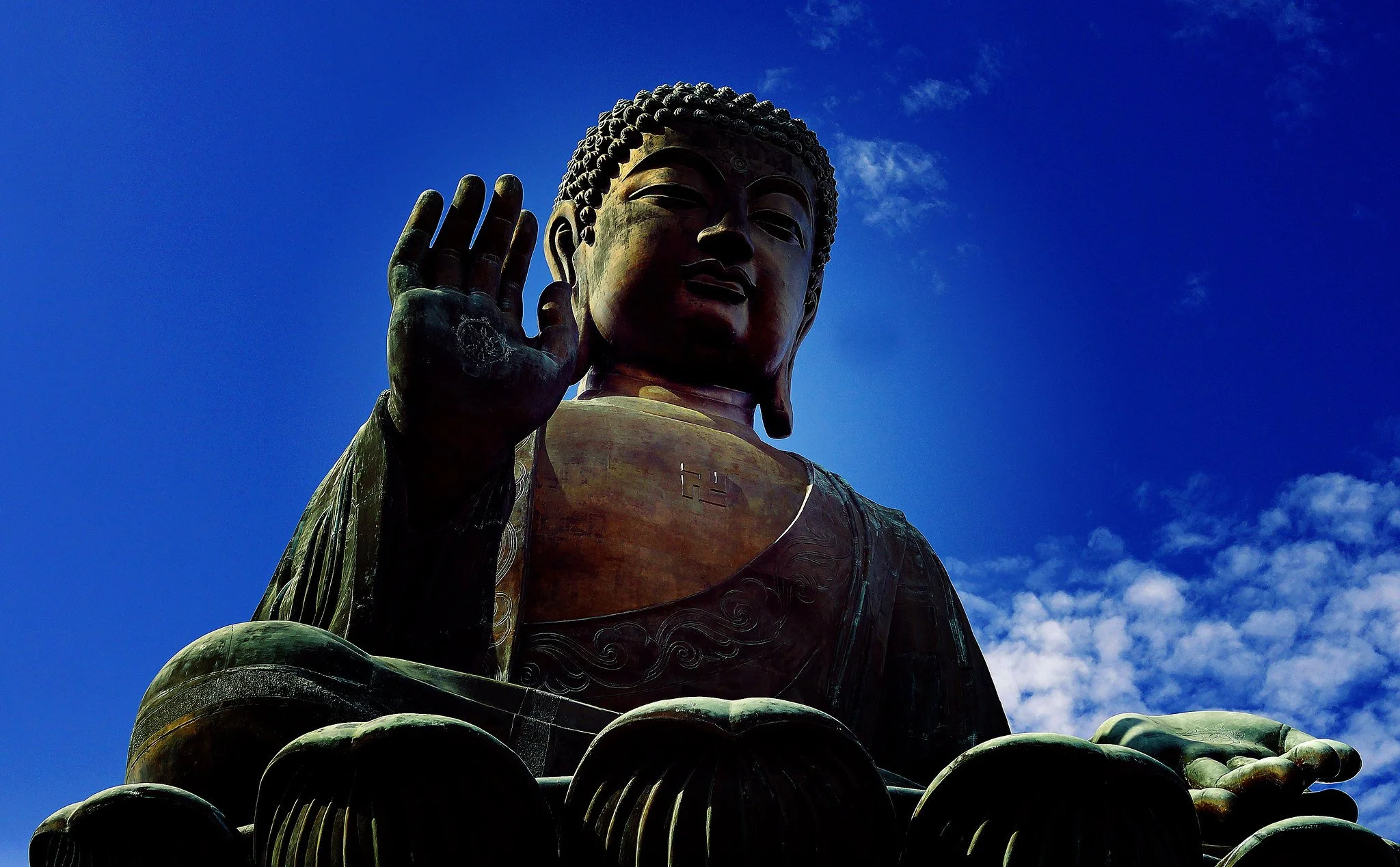
Lantau as a working island. The Big Buddha and the Tai O Fishing Village inside a wider lesson, not as a selfie circuit
University ground. Campus visits when they can be arranged, and an honest conversation about what student life here is actually like
Custom mixes. City in the morning, a slower field site after lunch, if the legs and the timetable allow
You cannot ask me to lead any of that as a study programme. You can ask me to put you with the people who should.
Built around the brief you bring, not a fixed menu
I do not sell a set programme with your school’s name written on the top. The specialist builds the tour around the students in front of them, the learning objective the faculty already has, and the subject the teachers actually want taught. A housing module is not a harbour module with a different title. An architecture seminar is not a first-timer circuit with a worksheet added at the hotel. The question comes first. The streets are chosen to answer it.
What the students should leave with is not a slogan about new perspectives. They should be able to say what they saw, why it is there, and how it sits against the thing they were already studying. Some of them will be curious. Some of them will be tired and hot. A good programme still gives both groups something they did not have at breakfast. That is the test. Not a line about memorable experiences.
If the faculty have a reading, a case study, or a question they want the group to leave Hong Kong able to answer, put it in the first message. That is more useful than a list of famous places. Contact me with the brief. I will put you with the people who should build the tour around it.
Three programme shapes, so you can see how the work is built
These are shapes or outlines, not timetables. I am not pinning hours onto them. Hours belong to you. The specialist will fit the shape to the group, the weather and the syllabus. I put them here so a teacher can see that this is not a sightseeing list with the word study stuck on the top.
Shape 1. A housing morning
The question is simple. How does a city this expensive house its people, and what does that look like when you get off the main road?
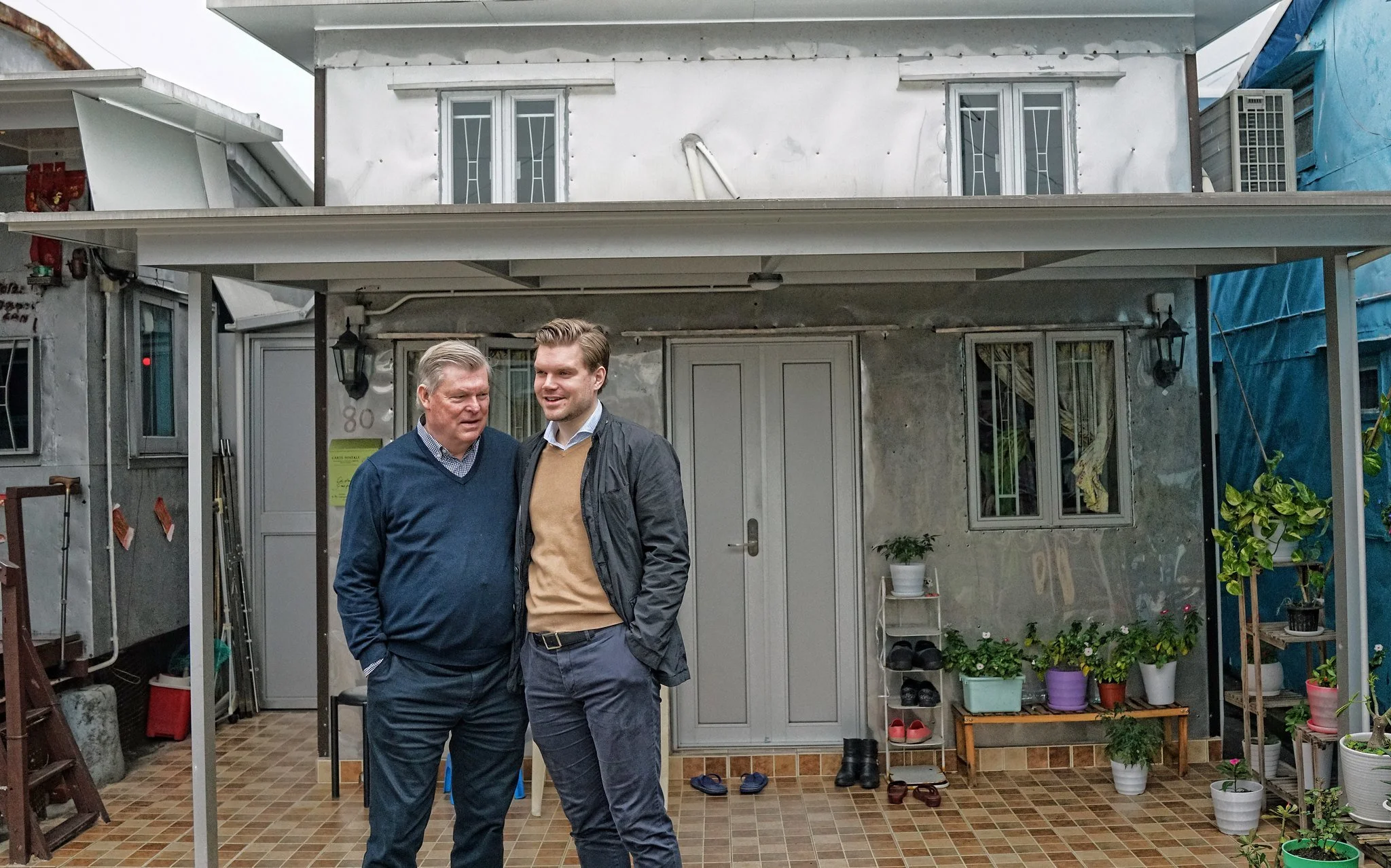
The group does not need a lecture hall for this. They need an older estate, a street that still works as a street, and a guide who can explain resettlement, public housing, private towers and subdivided space without turning residents into an exhibit. Mei Ho House and the first generation of public housing sit in that story. So do the later blocks, the shopping podiums, the wet markets underneath, and the gap between a brochure skyline and a flat that is actually lived in.
What the students should leave with is not a slogan about rich and poor. They should be able to say how housing policy made this city possible after the fires and the squatter years, why so many people still live in public estates, and why density here is a system, not an accident. Teachers who teach geography, economics, social studies or urban planning can take that home and use it.
This shape works as a private educational tour for 1 to 6 people on public transport with 1 guide. At 7 to 15 it needs 2 guides. At 16 to 30 it needs 3 guides, split groups, and a coach between the sites that sit too far apart to walk. One voice on a narrow estate pavement with 25 students is not teaching. It is a blockage.
Shape 2. Harbour and trade
The question is older than the towers. Why is Hong Kong here at all?
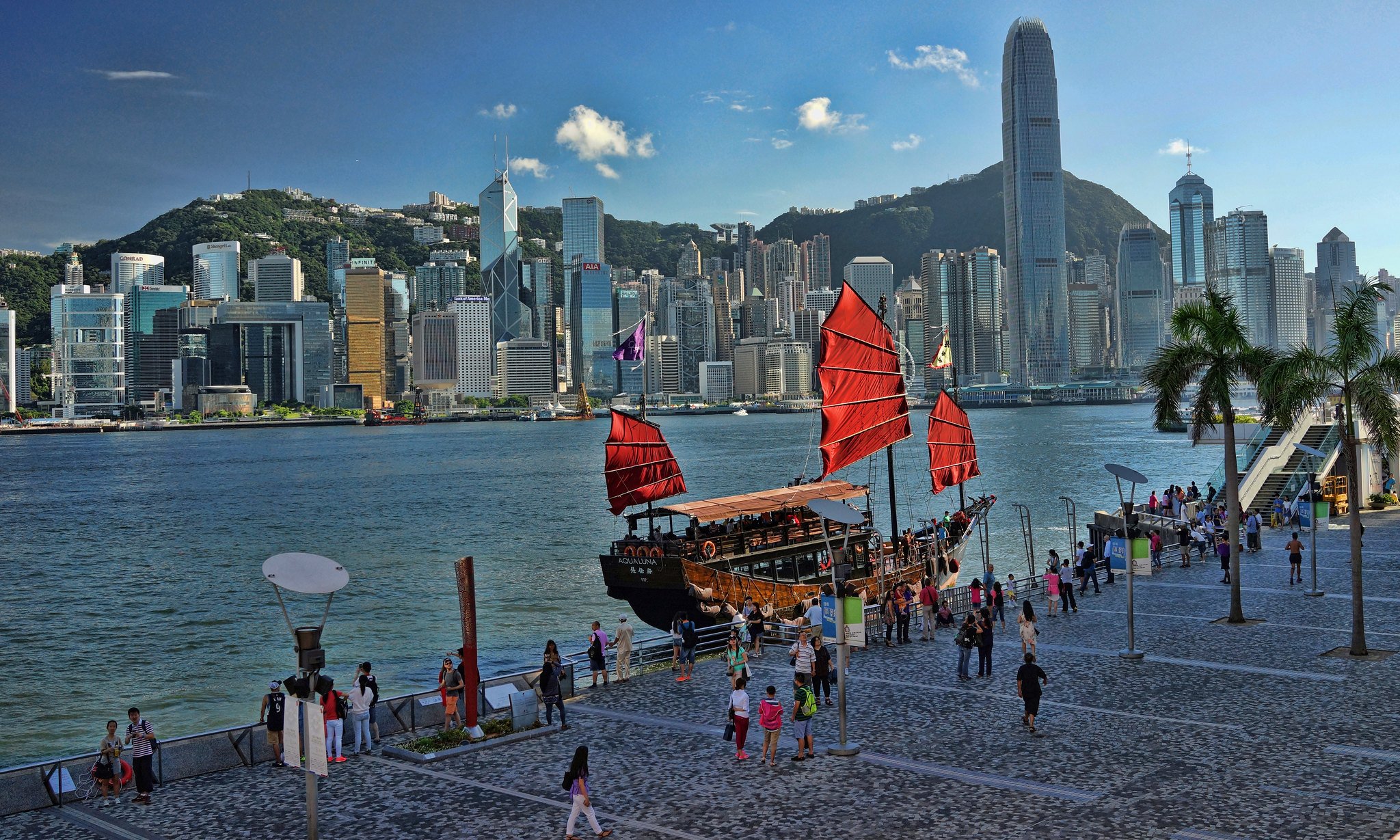
The harbour is not a postcard first. It is the reason the settlement was worth having. A proper programme stands the group where they can see working water, then walks the story inland. Reclamation. Warehouses that became offices. The old wholesale streets. The Star Ferry as infrastructure, not nostalgia. The port as a machine that still moves cargo while visitors photograph the other side of the same water. If a maritime collection or a working terminal can be arranged, it goes in. If it cannot, the street and the water still teach the lesson. You do not need a private viewing platform to explain trade.
What the students should leave with is a map in their heads. Mountains at the back. Deep water at the front. A harbour that faces the Pearl River and the sea lanes. A city that made its living as a port, then as a shop window, then as a financial centre, and still has all three in the same week. Faculty who teach history, business, geography or logistics can build a module on that without adding a single shopping stop.
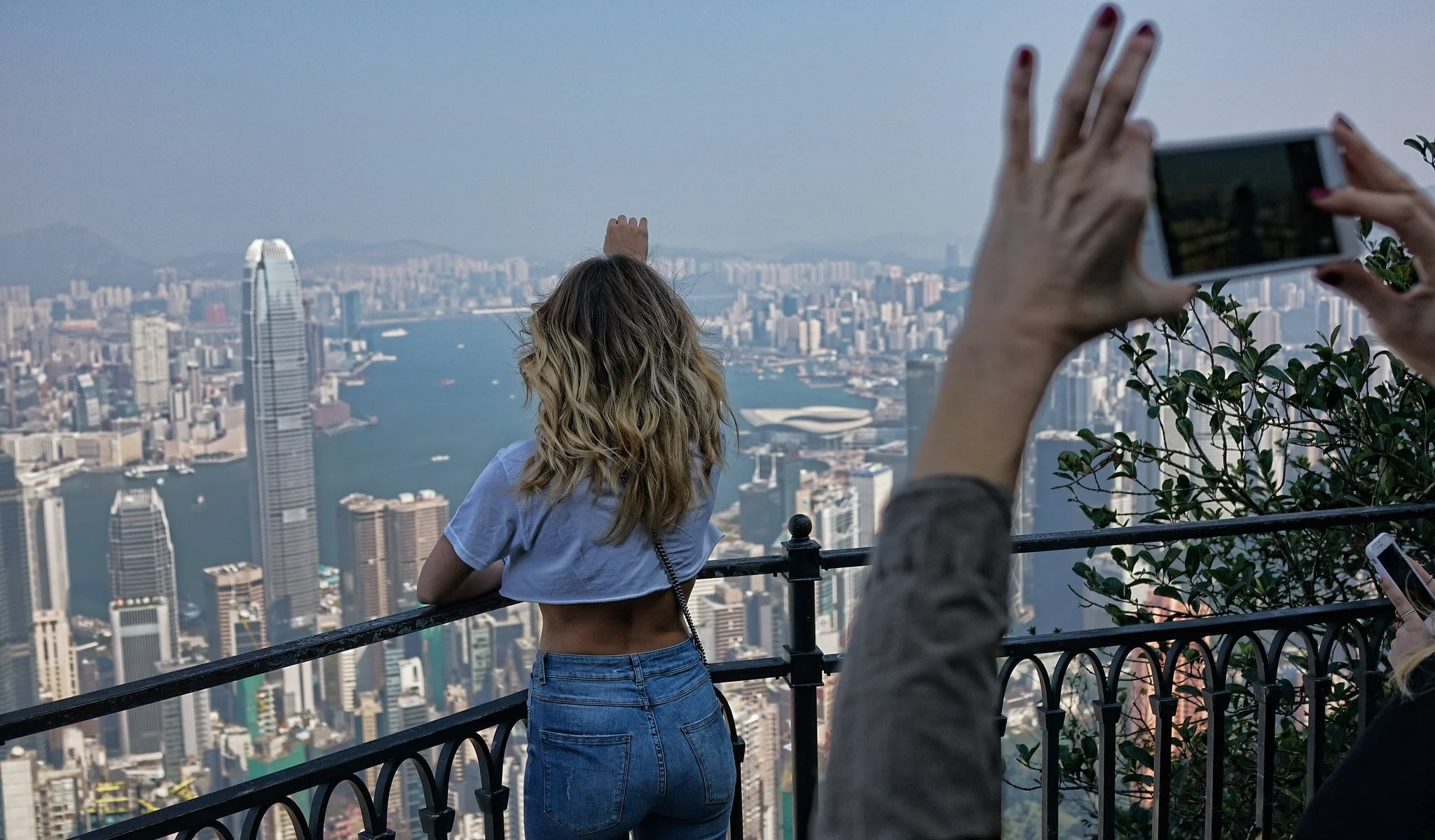
Victoria Peak can sit at the edge of this shape if the group needs the landform from above. It is not the product. The product is why the water and the hills forced the city into the shape it has. A group of 1 to 6 can do parts of this on the Star Ferry and the MTR (Subway) with 1 guide. A school group should not be asked to make every transfer that way.
Shape 3. A school group, split across the right number of guides
This is the one I could not do in 2016, and it is the one schools still get wrong.
Say the group is 20 to 24 students plus teachers. That is not a private tour. It is also not a sightseeing coach with a microphone. It sits in the 16 to 30 band, so it is 3 guides. Three walking groups, or two walking groups and one person holding the join-up, the crossings and the count. The same theme, or two halves of the same theme that meet again later. One group might take the housing streets while the other takes the market and the transport spine. They regroup for a sit-down, a comparison, and a second site. Teachers stay with the students. The guides teach. Somebody is watching the toilets, the heat and the child who always lags.
That is logistics as well as teaching. Extra guides. Friends who can handle the moving parts. A coach to take the whole lot from the hotel to the first site and on to the second, so the morning is not spent feeding Octopus cards through a gate. A rain plan that is not stand under the nearest mall sign. A meeting point that still works if the coach is 10 minutes late. If the faculty want written questions or a short debrief at the end, that is built in before anyone leaves the hotel.
If the same school insists on public transport, the answer is not a shrug. The answer is still 3 guides, slower transfers, and a much tighter route. I would rather they took the coach.
I put this shape on the page because it is the booking that looks simple on an email and is not simple on the pavement. If your number is 6, you do not need this shape. If your number is 22, you do.
None of these three is a menu you must pick from. They are proof of method. Tell me the subject and the headcount. The specialist will write the version that belongs to your group.
Hours, group size and who these tours are for
Like all private tours in this city, you choose the hours. On a study programme that choice matters more than it does on Nathan Road.
4 hours is a taste and a focused site. 6 hours is a proper working tour. 8 hours is a full tour and it should include food, water, a toilet plan and an honest look at the weather. Multi-day programmes are a different booking. Say so in the first message.
Group size is the other booking. My own tours stop at 6. That is why this page does not say I will take your year group. A private educational tour stays small on purpose, uses 1 guide, and can use public transport. A school or university group is planned as a larger group from the start, with 2 guides from 7 people and 3 guides from 16 people, and with a coach when 15 or more people have to move together. If you have 30 students you do not put them behind one voice on a pavement and hope. You split them. You plan the crossings. You plan the rooms. You plan the rain. You plan the coach.
These tours suit:
Teachers and programme directors who already know what the module is
University groups, including undergraduate and MBA
IB and secondary groups who need place-based work, not a theme-park day with a new title
Homeschool families who want a serious morning and will treat it as a tour, not a babysitting service
Adult learners and professional groups who want the city as a case study
Return visitors who have done Victoria Peak the ordinary way and now want the city explained
These tours do not suit:
A guest who wants me as the guide for 25 students
High-volume study tours from Mainland China
A coach product that is only a flag waving tour guide, a microphone and a shopping stop
A 2 hour gap between a cruise berth and a lunch reservation
High summer, unless the specialist looks at the forecast and the ages and still says yes
A group that only wants the photograph of the harbour and is using the word study as decoration
A group of 15 or more that insists on public transport for every transfer and will not take the extra guides
A group larger than 30 that wants this page to behave like a travel agent for a coach load
Season, weather and the school calendar
The private-tour low season in Hong Kong is roughly May to September. Heat, humidity, rain, typhoons. A walking classroom does not escape that calendar. It makes it sharper. Black rain and a No. 8 typhoon signal end the argument. The tour does not run.
Winter and early spring are when a 6 hour or 8 hour walking programme makes sense for visitors who are not training for anything. Clearer air. Less punishment. The busy season for private tours here runs from the end of September through May. That is also when the better study-tour weather sits.
If you are coming in July because that is when the school holiday falls, contact me with that in the first message. The answer might be shorter outdoor sessions, more indoor sites, an earlier start, or a polite suggestion to keep the long pavement days for another month. Faculty calendars and Hong Kong weather do not always agree. The first message has to include both.
What I need in the first email
Keep it plain. I do not need a novel, but I do need I need enough to make the match.
Date, or the 2 or 3 dates that could work
Number of people, ages, and how many teachers or staff
What the programme is for. Subject, syllabus, year group, or a plain sentence if you do not have a formal module
How many hours, or how many days
Whether this is a small private educational tour or a school-sized group
Whether you need a coach, or whether the group is small enough for public transport
Language the teaching must be in
Hotel area, or Hong Kong International Airport if the group is arriving that morning
Walking fitness, heat tolerance, anyone who cannot manage slopes or stairs
Any site you already need on the list, and any site you already know you do not want
Any medical or pastoral fact the guide must know before the group steps off the kerb
If the booking is built around a flight, put the flight times in the first message. Airport days for study groups are possible. They are also easy to get wrong.
How the introduction works
You contact me once. I read the brief and I make the referral. After that you are dealing with the people who will lead the programme. I stay in the loop as the advisor. I do not run the tour. I do not collect the fee for the study programme. I do not sit in the middle of every message about clipboards and meeting points. That would defeat the point. You want the specialist. I want you to have the right specialist for that brief. My job is the introduction and the advice behind it.
For my own private tours the details live on the site menu. Click Tours FAQ for the usual questions. Click Prices | Book Now for the calendar, the price list and the booking form. Click Private Tours for the list of tour options I do lead. Study tours are not on that list. That is the point of this page.
What this page is not
It is not me adding study tours to my own menu. It is not a public directory of every company in the city that has ever walked a school group to a museum. It is not a promise that every request can be done in 4 hours with 30 students, one guide, no rain plan and no coach. It is not a sightseeing coach with a new title. It is not a Mainland China volume programme. It is not a substitute for the specialist once the introduction has been made.
I used to think I could stretch into every segment because I know the city. I know the city. That is not the same as running every segment. I will not charge a school for a version of this work I cannot lead well. I also will not leave a teacher standing while they try to build a Hong Kong programme off a search page that was written for holidaymakers.
Contact me first. Tell me the date, the size of the group, whether you need a coach, and what the programme is for. I will put you with the people who should take you. After that, you work with them. I will be in the background if I am needed.
So there you go

click on any image to enlarge
© Copyright Acknowledged | All rights reserved | images taken by Jamie