Private and Group Food Tours Hong Kong 2027
Book the right tour via a Food tour company or Cultural tour company

The J3 Group - Premium Quality Private Tours | Experiences and Insider Chats since 2010
Me Jamie, your host, I am English and I have lived in Hong Kong since January 2nd 1972 - I know the place.
A meaningful blog post with a difference - tips on Travel, Tourism, Tours, Daily Life and my personal thoughts on Hong Kong.
Please do visit Amazing Hong Kong
Hong Kong | Pearl of the Orient


A Resident since 1972 - Private Tours of Hong Kong with Jamie
The Best Things to do in Hong Kong
click on the image to enlarge
© Copyright Acknowledged | All rights reserved | image created by Jamie
Private and Group Food Tours Hong Kong 2027





Foreword by Jamie
Book the right tour via a Food tour company or Cultural tour company
Let me blunt from he start, I do not do food tours and it comes down to one thing really and that is I do not speak Cantonese the Hong Kong language I do not write Chinese, so I cannot converse with restaurant staff, managers, chefs etc and a lot of places do NOT have English menu’s - it is not through lack of trying but it was not to be, my wife is a native Cantonese speaker, so we personally have no issues.
Eating in a single restaurant is not an issue, I could get by on a very basic level but food tasting in 6 different restaurants with no English speakers, well I am not going to make a fool of myself, time to call in the experts.
A few tears ago there was a food tour company in Hong Kong who took a pop at me, their logic was that no foreigner could possibly be qualified to do any sort of tour in Hong Kong, I wrote a blog post about it with screen shots of what they said, suffice to say that they are no longer in business.
…oh and did I mention I do not drink tea, ever, one sip in my life when I was very, very young and that was enough and you guessed it, tea is an integral part of Chinese food culture and the looks I get from people when I refuse tea is to me somewhat amusing and yes, I do like my coffee, not drinking tea is not a personality defect, it is a choice in the same way as I have never had a drop of alcohol.
I have lived in Hong Kong since 1972. That is 50+ years of dinners, late noodles,and the slow disappearance of the old dai pai dong licences. I have been taking private guests around the city since 2010, and the tally now sits past 2,500 tours. People write to me for Victoria Peak, for the harbour, for a cultural walk, a walk that explains how this place actually fits together. Quite a few of them also write and ask for a food tour. This tour page is the honest answer to that request, written for 2027 onwards, and it is a different sort of tour page from the others on this site.
I do not run food tours. I never did, on purpose. Eating in well over 1,000 Chinese restaurants here has not made me a food guide, a food expert, or a man who can deconstruct a bowl of wonton noodles for a living. My stance on that is public and it is not going to change. What has changed is the market, and the question people are really asking. Food tours are now one of the most crowded product segments in Hong Kong. Private cultural tours are crowded too. Quality in both segments runs from great to careless. A visitor with one morning is then forced into a choice that should not exist. Book a specialised food tour and miss the city, or book a cultural tour and eat badly, or book both and lose the afternoon and you pay another fee. So this is a matching page, and it is also a page about a gap. You write to me. I introduce you to 1 of 3 companies I already trust, a food specialist or a private company that can feed you inside a cultural day. After that introduction, the booking, the money, the dietary notes and the morning itself sit directly with them. I am not on the walk. I do not invoice the dumplings.
The choice nobody writes down
Again, let me be clear, some private tour companies offer a food only tour and some Food tour companies may or may not offer a cultural tour.
Before anyone talks about Sham Shui Po or a Michelin stall, there is a prior question. Do you book a specialised food tour company, or do you book a private tour company that also does food tours? There are plenty of both. We know each other. Both segments sit in the same tour group chat, and a good number of us are friends. The visitors are the ones who cannot see that. The photographs tell them which segment they are in before the words do. Dumplings mean a food tour. Victoria Peak, a temple and a wet market mean a cultural tour. People book the picture.
A specialised food company sells a tasting route. 6 to 6 stops, usually 3 to 4 hours, food in the price, culture as the talk between the bowls. A private tour company sells a day in the city, and food is a stop they can add. 2 or 3 sittings, 4 to 6 hours, the bill often paid at the table, the subject still the neighbourhood, the tram, a housing estate, the harbour. Both can be great. They are not the same product, and the booking sites file them apart, so a visitor never sees the comparison in one place. That is a filing problem, not a friendship problem.
I suspect, after years of these emails, that many people will not choose a specialised food company unless the culture is obvious in the title and the route. They did not fly here only to eat. They also do not want a cultural morning that marches them past roast goose and calls that lunch. So they are left with a bad choice. Book the food walk and miss a lot of the city. Book the city and eat in a hotel. Or book both. Two tours of 4 hours is not a plan. It is a surrender. Cost and time are the whole objection, and on a cruise ship shore excursion day or a one day Airport layover they are fatal.
Why the hybrid should already exist
The day most of these people actually need is not a mystery. It is a 4 to 8 hour tour. 4 tastings, not ten. Two or three cultural stops that are not an excuse to walk to the next stall. One guide. One price. A tea house or a noodle shop, a market, a tram ride, a temple doorway or a housing estate, roast meat or a cha chaan teng, and enough time to be told why the street looks like that. Morning, lunch, afternoon or evening. Not a whole day eaten twice.
Pieces of this already exist, which is why the gap is so irritating. Several food companies already say culture on the tour page. A 4 hour Island walk with a tea house, the Ding Ding tram and a dim sum kitchen is a hybrid wearing a food costume. Several private companies already stop for dim sum, noodles and milk tea inside a 5 or 6 hour day. One of my friends runs a night street food tour, which tells you the format is not stuck in the morning. What almost nobody sells, in plain language a visitor can recognise in 10 seconds, is the hybrid itself. Food and culture as equal partners, timed so you are fed and you have also seen the city.
I have friends in both segments. Great guides, out in all weathers, some of them at this for a long time. This is not a dig at them. Far from it. I think a few of them will read this privately and find something to ponder on, which is all I would want. There are a lot more companies doing cultural tours with some food tucked in than there are food tour companies doing a food tour with a real cultural shape to it. That imbalance is the gap. A hybrid is not a rebuke to either segment. It is an option, so a visitor does not have to choose one or the other. A 3 hour group food walk at about HK$800 a head (about US$103) is an easy ticket. A 5 hour private hybrid for 2, food included, lands nearer HK$3,300 to HK$4,500 all in (about US$423 to US$577). The second number looks expensive until you set it beside two separate tours. It is often the cheaper option, and the only day that fits between a ship and a sail away. Almost nobody writes that comparison on the tour page. The skill is already in the city. The option is what is missing.
Food tours are not just a morning product
One thing I will not let stand, because it is the sort of line that gets repeated until it becomes a fact. Dim sum does not belong only to the morning. It is not, it goes on until mid to late afternoon and the busy sitting for a great many people is lunch, not breakfast. Wet markets do not close at noon. Plenty of them are still active going into the evening. Food tours already run through the day and into the night. A night street food walk is a proper product and absolutely worth doing, not a novelty. So the old excuse, that the kitchens and the sights want different clocks, is weaker than it looks.
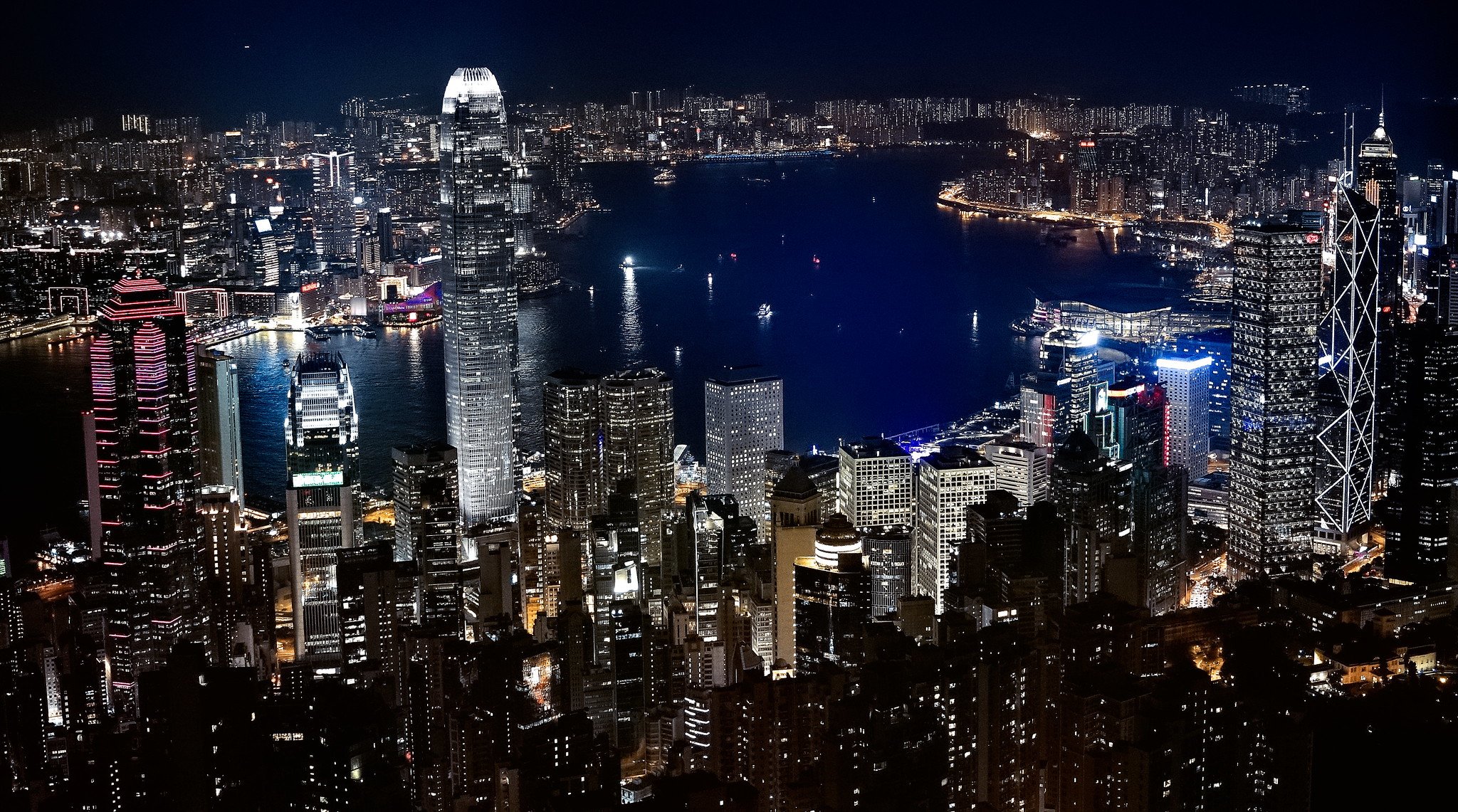
The real question for a hybrid is simpler, and I have never heard it asked cleanly. How do you fit Victoria Peak into a food tour, and how do you fit a food tour into Victoria Peak?
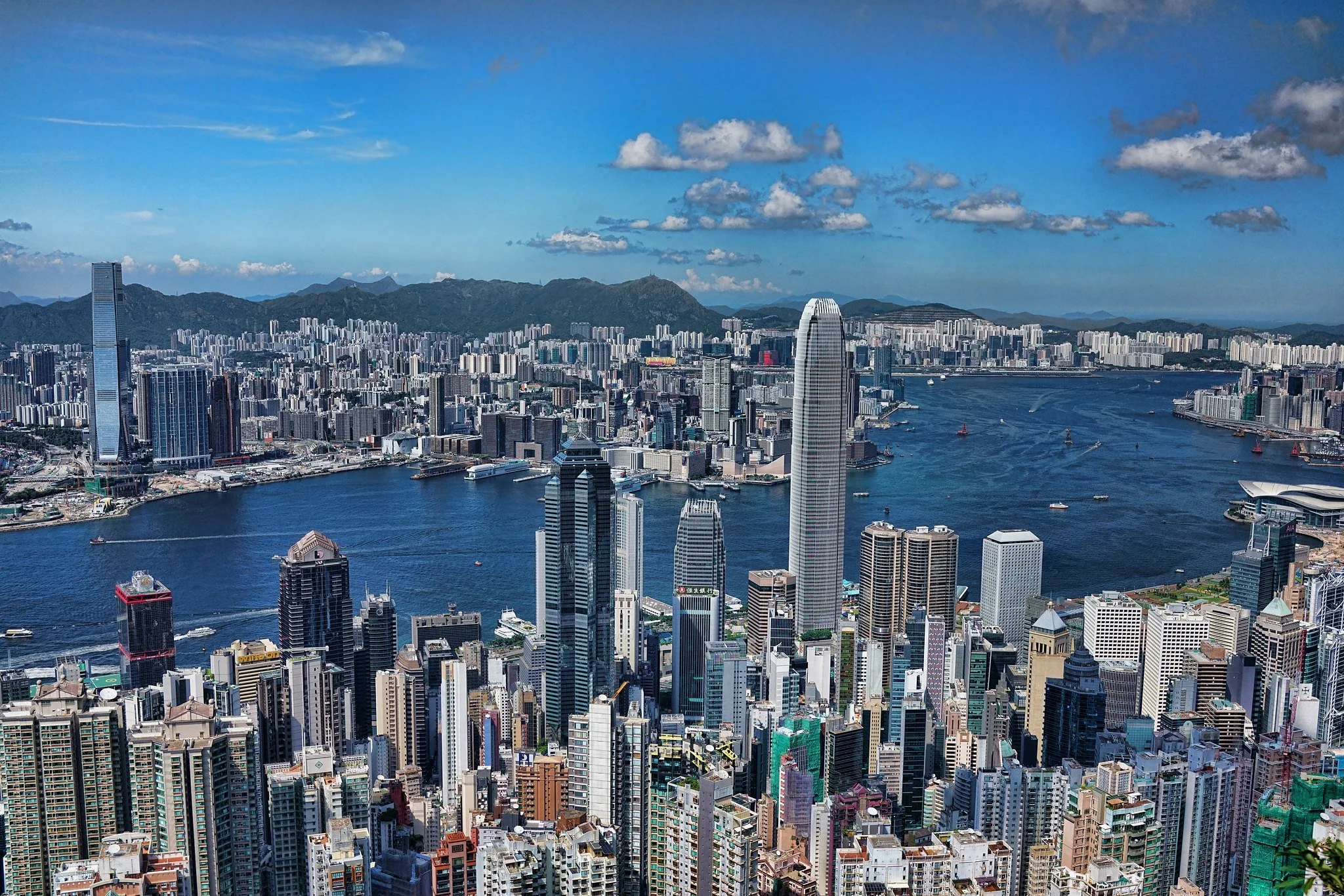
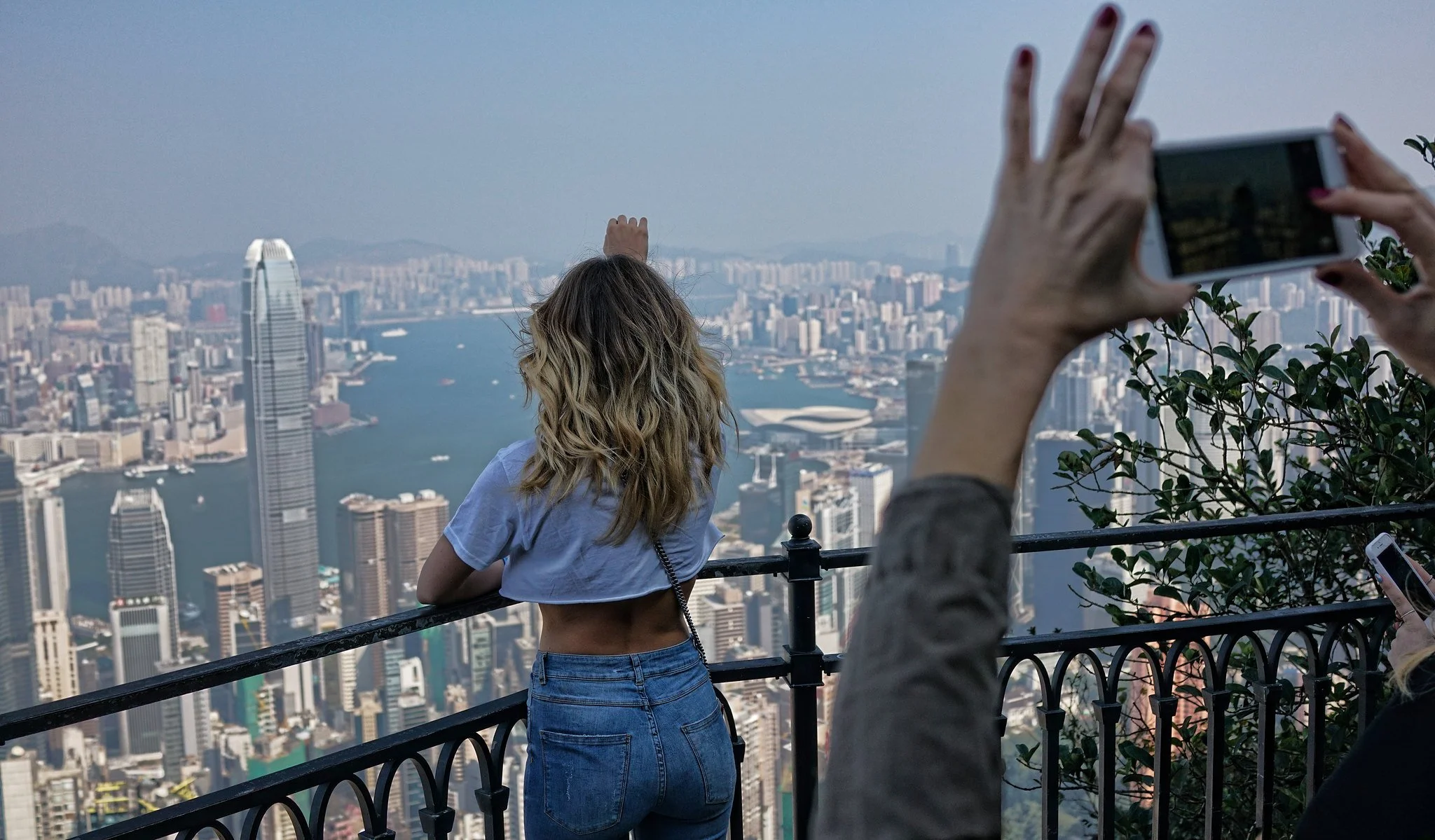
You do not need a banquet at the top to answer it. In the Peak Galleria you already have Mak's Noodles, and you have Tai Cheong Bakery, the egg tart shop people cross the city for. A bowl of wonton noodles and an egg tart, with the harbour under you, is enough for some folk who only wanted a taste of Hong Kong. It will not satisfy the person who came for 8 stalls in Sham Shui Po. It will satisfy the person who also wanted the view, and who does not have a second tour in them. That is the hybrid in one building. The rest of the day can be Sheung Wan, a tram, a market that is still trading, or a night walk if they have the evening. The food segment can go up the hill. The private segment can stop eating in a hotel restaurant and use the two counters that are already there. I am not sure why this has not been written on a tour page before now.
I will make this clear, about 50% of my guests want to eat at Maks noodles (which is highly rated) and love to try an egg tart and then the main event, the views from Victoria Peak and also to be clear, this is NOT a hybrid cultural food tour what I am saying is that you can easily fit in food stops on a cultural tour and vice versa.
Other Asian cities, and why Hong Kong is the awkward one
This is not a Hong Kong invention. Singapore, Bangkok, Tokyo, Seoul and Taipei all sell a food tour and a cultural tour as separate products. What changes is whether anyone has bothered to name the day in the middle, and whether the famous sight actually sits next to the food.
Seoul has done the thing I am describing, and it sells. A 4 hour night tour puts Changgyeonggung Palace, Jogyesa Temple and Gwangjang Market in one evening, with about 11 tastings and a vehicle between them, because the palace and the market are not in the same street. It is sold as a palace and market food tour, not as a food walk with a story taped on, and not as a palace tour that happens to include lunch. The Seoul food listings on one of the big sites run to about 82 results, more than twice Hong Kong's 35, so the crowd is worse there, and the hybrid still has a name. They did not wait for the palace to grow a noodle shop. They joined the two with a transfer and called it one tour.
Singapore is halfway there, and more honest about the title than we are in Hong Kong. Private food and heritage walks of 4 and 6 hours run through Chinatown, Little India and Kampong Glam, sometimes with a river cruise on the longer one, and 9 to 13 tastings. The operators put culture, heritage and neighbourhood in the name, not only in the small print. The reason it is easier for them is structural. The heritage districts are the eating districts. Hawker culture is the culture. A Singapore hybrid does not have to solve a hill. Hong Kong does.
Bangkok has the same two products, and also sells the join more plainly than Hong Kong does. Half day temple and food walks, a bike morning with a market and a wat, an art and food walk along Charoen Krung. Lunch or snacks are in the price. The street is the restaurant, so a culture walk that refuses to eat looks artificial, and a food walk that refuses the temple looks thin. The Grand Palace day still exists as a separate sightseeing product. The hybrid exists beside it, usually 4 hours, and nobody seems embarrassed to put both words in the title.
Japan has the split in the cleanest form, and at least one Tokyo operator says so out loud. A dedicated food tour is 4 to 6 venues over 3 to 6 hours, eating with walking breaks. A private city tour is 6 to 8 hours of neighbourhoods, temples and back streets, with 1 or 2 food stops woven in. Food is part of that day. It is not the day. Kyoto leans hybrid more naturally, because a food walk there is already a history walk, and some rooms still need an introduction. Tokyo does not. The ordinary problem in Tokyo is choosing, not getting in. So the pure food tour has a stronger reason to exist than it does here, and the hybrid is mostly a private day you have to ask for, which is exactly the Hong Kong position. Osaka is closer to Bangkok. The market wants you to point, and a tour of a place that does not need a tour is a harder sell.
Taipei is the night market city. The food tour and the culture tour collapse into Jiufen, Dihua Street, a temple and a market, more by habit than by product design. The night market is the culture. There is less of a palace problem, and less of a named hybrid, because the thing visitors came to eat is already the neighbourhood.
Hong Kong is the awkward one in that set, and the awkwardness is geographical. In Seoul the palace and Gwangjang can share an evening. In Singapore the shophouse and the hawker centre are the same walk. In Bangkok the wat is on the eating street. In Taipei the night market is the sight. Victoria Peak is up a hill, and the great food is in Sheung Wan, Sham Shui Po, Temple Street, Tin Hau. A food company that stays in the district never has to answer the question. A cultural company that does Victoria Peak in the morning and a restaurant lunch has not answered it either. Mak's Noodles and Tai Cheong in the Peak Galleria are the local version of what Seoul did with a palace and a market. Two counters and a view, then the district if there is time. That is a harder join than theirs, which is why it has not yet been offered as its own option. It is not because Asian cities have decided the hybrid cannot be sold. Seoul is selling it. Singapore is naming it. Bangkok is walking it. Hong Kong is still asking people to pick a segment. There is room for a third choice.
Why the hybrid option is still missing
I have turned this over for years. There is no grand reason. There are smaller ones, and they add up. None of them is a complaint about the people I would send you to. We talk. We are in the same chat. The great food companies are great at food. The great cultural companies are great at the city, and a lot more of them already offer some food than the other way round. What neither segment has quite put on the tour page, as a choice of its own, is the day that refuses the either or.
A food company lives on the line we ate so much. Stretch the route, drop two tastings, and add Victoria Peak, and some of their regulars will feel short changed even if the day was better. A private company lives on the line we saw the city. Add Mak's Noodles and Tai Cheong Bakery and a market, and some of their regulars will feel the sightseeing was diluted. Both fears are understandable. Both miss the visitor who cannot buy two tours. A hybrid review would be we understood the place, and we were fed. That is a harder sentence to get if your whole reputation was built on only one half of it.
The guide is the other constraint, and here I have to be fair. A food specialist has spent years keeping 8 kitchens sweet, and the patter is soy, noodle, licence, family. A private cultural guide can talk about the estate outside the window, and about Victoria Peak without reading a card, and still get you a proper bowl of noodles, but may not have the same weekly relationship with the stall that shut on Tuesday. The hybrid needs a great guide who can do both at a decent level, or a company that will put the right person on the day rather than whoever is free. Most firms are built as one or the other, and that is a sensible way to be great at something. Mixing them means a decision, and a price that has to carry both the tastings and a longer guide fee. The people who could offer it are already in the chat. An option on the tour page would be enough.
The booking sites make it worse. Food tours and cultural tours are filed apart. A hybrid falls between them and gets shown to nobody in particular. So the food company keeps the word food in the title, because that is where the searches are, and tucks the culture into the description. The private company keeps the word private, and mentions lunch in the inclusions. The visitor never sees the thing I am talking about, even when a version of it is already operating on a Thursday night.
Which job the day has to do
If I were sitting across a table from someone writing to me, I would not start with a logo. I would start with the job.
Book the specialised food company if eating is the point, the party is mobile, the diet is simple, and 3 or 4 hours is enough. Morning, lunch or night, the great ones already cover the clock. The culture will be there, but it will be the culture of the bowl of noodles and the street outside it. That appeals to more people than the pure foodies, provided the tour page shows the tea house, the market and the tram, not only the dumplings.
Book the private company that puts food inside a cultural day if they also want the city, if Victoria Peak has to be in the same window, if anyone cannot keep a group pace, if the diet is awkward, or if they have one 5 or 6 hour gap and cannot buy two tour products. Four tastings and a proper neighbourhood will satisfy them more than 8 tastings and a sprint. Mak's Noodles and Tai Cheong at the Peak Galleria may be the food, and that may be enough. This is the hybrid, even when it is still being sold under another name.
Book both only if they have two days, or a full day and an appetite. For everyone else it is the wrong advice, and I will say so. A group food walk at HK$450 to HK$850 a head (about US$58 to US$109) plus a private cultural half day from roughly HK$2,500 (about US$320) is a lot of money and a lot of pavement for one date on the calendar.
Why this page is not a J3 food tour
A private cultural day with me and a food tour are different crafts. On my days the subject is the city. Food turns up, because Hong Kong without food is a brochure, and I am perfectly happy to point you at a cha chaan teng, a roast meat shop, or Mak's Noodles and Tai Cheong Bakery if we are already at Victoria Peak. That is not the same thing as building a route around 6 or 8 tastings, holding the relationships with those kitchens, knowing which stall has gone off this month, and talking about soy, dried scallop and the licensing history of cooked food centres while people are still chewing.
The specialists do that every week. I do not. Pretending otherwise would be unfair on you and unfair on them. I have used this same referral method for a handful of other things I do not personally lead, car days with other companies when my own diary is full, virtually all hiking routes, the odd niche request. Food sits in that same drawer. The difference is that almost everybody in Hong Kong thinks they can sell a food tour, so the drawer needs a longer note. The hybrid note is the one I hope my friends in the trade will read, and then think about, privately. I am not going to build the product. I am going to keep sending them the people who want the day in the middle, so that choosing one segment or the other stops being the only choice.
How crowded the two segments actually are
If you type the obvious words into the big booking sites like Viator you do not get a short list. You get a pile, and then a second pile under cultural tours that quietly includes a meal. A snapshot of the public listings in October 2026, taken so you have a sense of scale rather than a fantasy of precision, looks like this.
Viator, Hong Kong food tours category: about 35 listed results.
Viator, culinary tours tag: about 14 results, with a heavy overlap against the food tour list.
GetYourGuide, local food tours in Hong Kong: about 22 results.
Once private and group versions of the same walk are counted as separate listings, and once ordinary city tours that bolt on a dim sum stop are included, the visible list sits comfortably above 40 and can be argued up towards 60.
Dedicated operators who actually live on food walks, rather than adding 6 tastings to a sightseeing day: a fair head count is 15 to 25 serious names, plus a long tail of one person guides.
Private cultural companies who will add food, a car, or both: too many to count honestly. Virtually every guiding firm in the city can put the words on a tour page.
Klook, hotel concierge desks, cruise piers and the big inbound agents all carry their own versions on top of that.
So yes, virtually every guiding company in Hong Kong can offer a food tour, on foot or with a coach, by day or by night. A walking guide, a car tour firm, a greeter network, a hostel, a cooking school, an online host marketplace. The product is easy to advertise and hard to do well twice a week for 10 years. That gap is the whole point of a referral. I am not trying to be the 26th name on the list. I am trying to keep you off the careless end of it, and to put you in the right segment before you pick a name at all.
Quality really does vary. The great ones have a capped group, a guide who grew up eating this food, tastings that are included rather than we will stop and you can buy, and a route that still works when a stall is shut. The weak ones are a walk past 3 shops the guide has a cousin in, with the bill landing on you at each counter, and a script that could have been written in any city. Tripadvisor and the booking sites are full of both. A 4.9 from 400 Tripadvisor reviews and a 4.9 from 6 reviews are not the same animal. When I say great, I mean it. Good, to me, means average. The friends I refer, and their teams, are not average.
What a Hong Kong food tour actually is
Strip away the marketing and the specialist shape is fairly stable. A walking morning, a lunch, an afternoon, or an early evening, usually 3 to 4 hours, occasionally 5 or 6 if Kowloon and the Island are both in the day. You meet at an MTR exit or a tram stop. You eat small. You walk. You eat again. A proper one gives you somewhere between 6 and 10 tastings, not 1 restaurant lunch with a story taped on the front.
The neighbourhood does the choosing more than the menu does. Sheung Wan and Central for dried seafood, herbal shops, an old tea house, wonton noodles, roast meat, a bakery. Sham Shui Po for a working district that still feeds itself, congee, snacks, a market. Temple Street and Jordan after dark, which is theatre as much as supper. Tin Hau and the older Island east pockets for a local walk that visitors rarely invent for themselves. Tai Po and the New Territories markets if someone wants out of the urban core. Kowloon night walks that string a Michelin street stall to a dai pai dong memory and a cooked food centre. Victoria Peak, if someone has asked the hybrid question, with Mak's Noodles and Tai Cheong Bakery rather than a buffet with a view.
What you are likely to be handed, in some order, is dim sum or a tea house bite, shrimp wonton or bamboo noodles, a slice of roast goose or char siu, milk tea or a yuan yang, an egg tart or a pineapple bun, cheung fun, curry fish balls, something sweet and preserved, and if the guide is great a stop that is not food at all. A wet market aisle, including in the evening if that is when you are out. A soy shop. A temple doorway. The tram, which people here still call the Ding Ding. Street snack prices on their own are small, curry fish balls around HK$15 to HK$20 (about US$2 to US$3), an egg waffle around HK$17 to HK$28 (about US$2 to US$4). The tour price is the guide, the editing, and the fact that you are not standing on a corner translating a menu with a phone.
That stop which is not food is where the hybrid either starts or fails. If it is 5 minutes of patter on the way to the next bowl of noodles, you have booked a food tour. If it is a real pause, a market aisle, a tram, Victoria Peak, a street that explains how people live, you have booked the day I think most visitors wanted in the first place.
How Hong Kong food tours differ from other cities
I get asked this more than you would think, usually by someone who has already done a food walk in Rome, Lisbon, Bangkok or Tokyo and assumes the format travels. It only half travels.
In Rome or Lisbon a food tour is often a bar and trattoria crawl. You sit. You share. The story is regional pride and a little wine. In Bangkok you can often order by pointing, and the pavement stall is the whole point. In Tokyo the craft is reservation culture, a single neighbourhood, and a guide who can get you into rooms that do not want people walking in. Hong Kong is denser than all of them. Six serious stops in Sheung Wan or Sham Shui Po can sit inside a walk you could do in 20 minutes if you were late for something else. You do not need a coach to eat this city. Most days a coach would only get in the way. That density is also why the hybrid is so obviously possible here, and so oddly unsold. The culture is not a bus ride away from the food. It is the next street, or it is the Peak Tram and two counters in the Galleria.
The menu is also not one cuisine wearing a costume. Cantonese cooking is the spine, but a cha chaan teng is a Hong Kong invention, not a transplant from a mainland province. Milk tea is a local argument, not a British cup with a new name. Egg tarts carry a Macau shadow and a bakery habit, which is why Tai Cheong Bakery still matters. Roast goose shops, herbal halls, dried seafood streets and the last dai pai dong tables are different chapters. A guide who only talks about Chinese food is already losing the plot.
Language is the practical difference visitors underestimate. A great restaurant does not need English. The stall beside it may have none. The thing you think is beef may be beef tendon, or it may not be beef. Offal, preserved fruit, a bitter herbal drink, a fish you cannot name: this is where a specialist earns the fee, not by performing enthusiasm but by telling you what you are holding and whether you will like the next bite. Michelin has muddied that water. A Bib Gourmand stall is not a dining room. People arrive dressed for white cloth and get a plastic stool. That is not a failure of the tour. It is the tour, if somebody explains it before you sit down.
Weather and walking do more damage here than in a European restaurant crawl. Humidity, stairs, sudden rain, a hill between the noodle shop and the bakery. Tours run in ordinary rain. They stop for a Typhoon Signal 8, and for a Black rainstorm warning. If you cannot walk at a steady pace for 3 hours, say so at the enquiry stage. That single sentence changes which company I send you to, and whether a private hybrid is the only sensible fit.
The cultural thread under the food
Every decent food tour in this city is already a culture tour that happens to be edible. That is not a slogan I borrowed. It is how the great guides actually talk, and it is the strongest argument for the hybrid. You learn why a tea house still uses trolleys, and why most of them do not. You learn what a wet market is for at 7 in the morning, and also at 7 in the evening, and why the dried scallop in a Sheung Wan shop can cost more than the fresh fish downstairs. You hear about public housing estates because half the city's eating habits were shaped by small kitchens. You hear about the dai pai dong licence, which the government stopped issuing decades ago, so the survivors are relics rather than a style you can franchise.
You will also, if the guide is great, hear about the people. A family that has made the same noodle since before I arrived in 1972. A roast meat kitchen a television chef once lost his mind over. A soy shop that still smells like a warehouse. This is the part visitors remember 6 months later, more than the 7th tasting. It is also the part a generalist like me should not fake for a morning. I can tell you the city. I am not going to pretend I have spent 15 years keeping those kitchen relationships warm. The companies I refer you to have. Some of them lead with the bowl. Some of them lead with the street. The great ones can do both, if you ask for both.
Private or group, and which one fits
Both are real products here. Neither is automatically the better one. The fit depends on who is travelling, how many of you there are, and whether you want a social few hours or a few hours that bend.
A small group tour is the right answer for a couple or a pair of friends who are happy to walk with strangers, want a lower price per head, and can live with a fixed start. The great ones cap the group at 8, 9 or 12. They leave on set days, often 3 or 4 days a week rather than daily, and the night walks have their own calendar. You get the same tastings as the private version, a guide who has done the route that week already, and the small pleasure of eating with other people who are also trying pineapple bun for the first time. You do not get to linger, skip a stop, or start at 11 because the flight landed late. A group walk can carry culture. It rarely has room to become the hybrid, because the clock belongs to the group, and Victoria Peak does not fit neatly between 8 tastings.
A private tour is the right answer for families, for anyone with a real dietary limit, for a cruise layover with a hard back on board time, for a celebration, and for people who simply do not want to share the guide. It is also the format in which the hybrid can actually be built. Pacing is yours. The start time is negotiable across the day, not only at breakfast, and later still for a Kowloon night walk. Hotel meet up can be added. A private tour is the only kind I would send to someone who cannot manage stairs, or who is travelling with young children and a pushchair. Several of the great group walks say so in their own small print. They are not being precious. Sheung Wan is not flat, and neither is the path around Victoria Peak if you leave the Peak Galleria Mall.
A rough rule I actually use when someone writes. 1 or 2 people, curious, mobile, no awkward diet, and happy for the food to lead: take the group walk and spend the difference on dinner. Anyone who also wants the city in the same window, or Victoria Peak and a proper bite rather than a postcard, or 3 or more, or any diet that is not I eat most things, or a ship that sails at 4: take the private, and ask for the 4 to 6 hour hybrid rather than a tasting sprint. Above about 8 or 9, you are in buyout territory anyway, and the group price stops being the bargain.
What the money looks like
Prices move, and the company confirms the figure, not me. These are the public ranges on the listings through 2026, which are the ranges I expect to still recognise in 2027. I have converted at about HK$7.80 to US$1, so treat the dollar figure as a guide.
Small group scheduled walks: commonly HK$450 to HK$850 per person (about US$58 to US$109). A well known Island morning sits around HK$800 for an adult (about US$103) and a lower child rate. A short vegetarian group walk can be nearer HK$458 (about US$59).
Duration on those group walks: usually 3 to 4 hours. A few shorter market walks run 2 to 2.5 hours. Night street food walks sit in the same band. Food and the drinks on the route are included on the great products. The MTR ride to the meeting point is not.
Private, couple, about 4 hours, food included: often HK$2,500 to HK$3,300 in total for 1 or 2 guests (about US$320 to US$423). That is a total, not per person. Extra guests are often a few hundred Hong Kong dollars each, not a second full fee.
A 5 or 6 hour private hybrid, food included, is the number almost nobody publishes cleanly. Expect it to sit above the 4 hour food walk, often in the HK$3,300 to HK$4,500 band for 2 people (about US$423 to US$577), sometimes more if a car, a hotel pickup, or the Peak Tram is added. Still often less than a group food tour plus a separate cultural half day.
Private listed per person on the big booking sites: commonly about US$150 to US$295 (about HK$1,170 to HK$2,300), sometimes from around US$95 (about HK$740) on a short group option of the same product. Read whether food is inside that number. Some are. Some are a guide fee plus what you order.
A private Kowloon walk sold around Michelin street stalls often starts near US$238 per person (about HK$1,850).
Child rates exist on the serious group tours, often a clear step down between about 6 and 11. Under 6 is sometimes free on a private and sometimes simply not a good idea. Infants and a 4 hour tasting walk are a parental decision, not a marketing one.
Book direct with the company once I have introduced you. The same walk on an online agency is frequently the same guide and a higher price, or the same price and a slower message thread. I would rather you dealt with the person who is going to meet you at the MTR. And if you want the hybrid, say so in the first email to them. Do not assume the food listing includes Victoria Peak, or that the cultural listing includes Mak's Noodles and Tai Cheong Bakery.
For the record, the Four Seasons Hotel in Hong Kong which is one of our finest establishments runs a 4 hour food tour for 2 people at HK$3,700 or US$475
Coach food tours, and why most of the great ones are not
People ask about a coach tour because they have done a coach day in another city, or because there are 16 of them coming off a ship. It can be done. It is a different product, and there are fewer of them than the walking listings suggest.
A coach cannot enter a wet market in any useful way, and it cannot idle on Temple Street while you eat fish balls. What a coach food day actually is, when it is done properly, is a seated meal or two, plus a neighbourhood drop off, plus a viewpoint. Dim sum in a tea house the coach can reach, a roast meat lunch, a short walk the driver waits out, sometimes Victoria Peak if the coach can set down and the group can manage the Galleria. Cruise groups of 15 to 40, incentive groups, school parties and family reunions are the natural customers. The inbound agents and a handful of the private guide firms will build that day. It is not what the 35 Viator food listings are mostly selling.
If you are 2 to 8 people, forget the coach and walk. You will eat better and see more, and the hybrid is a walking day. If you are 15 and above, write to me with the date, the ship or hotel, and whether you need a seated meal rather than grazing. I will say so if a walking specialist is the wrong tool, and point you at someone who can put a vehicle under the day. Above about 9 on a walking food tour, several companies already add a per person surcharge and cap the group around 12. That cap is a kindness. Twenty people does not fit in a family noodle shop, and it does not fit in Mak's Noodles at the Galleria either.
The 3 food tour companies I refer, unnamed on purpose
I refer these enquiries to 3 companies. I am not naming them on this page. That is deliberate, and it matches the way I have handled a few other referrals on this site. The names are not a secret once you and I are writing to each other. They stay off the public page so this does not turn into an advertisement, and so I can match the person to the company rather than the company to the algorithm. They are friends, not rivals I am keeping apart.
Between them, the 3 cover the split this page is about. One is a scheduled neighbourhood food specialist, small groups, fixed departures, Island and Kowloon working districts, culture in the walk but the bowl still leading. One already builds private and small group days that are closer to the hybrid than they sometimes admit, tea house, tram, roast meats, a Kowloon night version, and will sell the group route as a private buyout if you want the same bones with your own clock. One is a broader private guiding firm that can put food inside a longer cultural day, including a vegetarian walk, and can put a car under a group when walking is the wrong answer. That third shape is where a proper 4 to 6 hour hybrid, Victoria Peak included, is easiest to ask for.
I do not rotate them for the sake of fairness. I match. Date, numbers, diet, mobility, food led or city led, Island or Kowloon, day or night, and whether you are the sort of guest who wants a script or a conversation. If none of the 3 is right, I will say that too. There are other very capable people in this city. There are also listings I would not send a friend to, and I am not going to start now.
What I would want you to ask anyone, including my 3
A few questions sort the market faster than another hour of reviews. They are dull. They work. The first one is the hybrid question, and it is the one most listings dodge.
Is this a food tour with some culture in the gaps, or a cultural day that feeds me? How many tastings, and how many stops that are not a restaurant?
Can you do 4 to 6 hours with both, in one price, or am I being sold two products?
Can Victoria Peak be in the same day, and if it is, are we eating properly up there or only looking?
Is every tasting included, or am I paying at each stop on top of the tour price?
What is the maximum group size on the day I am booking, not the maximum they have ever allowed?
Who is the guide, are they a local?
What happens with a serious allergy, not a preference? Gluten free and fully vegetarian are hard on several classic routes. Some companies say so. Believe them.
How much walking, how many steps, and is there a private alternative if someone in the party cannot keep a group pace?
What is the weather cancellation rule? Signal 8 and a Black rainstorm should be in the answer.
If I book through a big site, can I still reach the guide before the day, or only a call centre?
The last one matters more than people think. The great private products send a short questionnaire before the walk. Spice, seafood, offal, pork, alcohol, how hungry you actually are, and whether you want the city as well as the bowls. A group tour cannot rebuild the menu around 1 person, but a great operator will tell you that before you pay, not at the first stall.
Dietary needs, children, and the unglamorous bits
Hong Kong food tours are meat and seafood heavy. That is the cuisine, not a lack of imagination. Vegetarian routes exist, including a short Kowloon group walk, and a private guide can bend a day further than a fixed group can. Vegan is tighter. Gluten free is tighter still, because soy sauce, noodles and wonton wrappers are doing a lot of the work. Tell me at the first email. I would rather send you to the company who can do it than to the one with the prettier photographs. A hybrid does not fix a diet the kitchens cannot cook. It does give a private guide more room to swap a stall for a street.
Children are welcome on most of the group walks from about 6, with a lower price, and often free or nearly free under that age on a private. Whether a 7 year old will enjoy curry fish ball and a wet market is a family question. I have seen plenty who love it, and a few who wanted McDonald's by the second stop. Come hungry. Wear shoes you can walk in. Bring a little cash even when the tour includes the food, because somebody always wants a second egg tart. Ordinary rain is not a cancellation. A typhoon is.
How the referral actually works
This is the part people skip, and then write to me on the morning they land. Please do not do that if you can help it. The great group walks fill on popular dates. Private guides have diaries too.
You write to me with the date, how many of you, ages of any children, hotel or ship, and anything you do not eat. Tell me whether you want the food to lead, or the city to lead and the food to come with it, and whether Victoria Peak has to be in the day. That does more work than a page of preferences.
I reply with which of the 3 I would send you to, and why, in plain language. If I think you do not need a food tour at all, I will say that as well. Some people just need a good address. If I think you need the hybrid and not a tasting sprint, I will say that too.
I make the introduction. From that point the company writes to you directly. Price, payment, meeting point and the day itself are theirs.
I do not take a seat on the tour. I do not rebill the tour. If something needs a nudge I am still here, because I made the introduction, but I am not your guide that day.
That last point is the one I want on the record. My decision not to lead food tours is not a mood and it is not a gap in the diary. It is a limit I set on purpose. The 2027 version of this page does not soften it. It just stops leaving people to guess their way through 35 listings, and it says out loud the product I wish my friends would sell.
A note out of left field
The visitors who get the most from a day like this are rarely the ones who announce themselves as foodies. The foodies sometimes arrive with a list of 12 stalls and a conviction that Michelin has already done the editing. The ones who write to me afterwards are usually the couple who had never heard of a cha chaan teng, ate milk tea the colour of a brick, stood in a market, and suddenly understood why this city is the way it is. Food was the excuse. The neighbourhood was the point. That is the hybrid, whether or not anybody has printed the word on a brochure. It is also why I am comfortable sending you to someone else. They are better at food tours. I have spent 50+ years on the point, and I still have plenty of days that are mine.
One more small thing. If you only have a single meal and no appetite for a tour, do not buy a tour out of guilt. Sit down. Order 1 noodle dish and 1 drink. Watch the room. Hong Kong will still be there. A food tour is for the few hours you want 6 dishes and a person who can tell them apart. A hybrid is for the few hours you want the food and the city, Victoria Peak included if that is the city you came for, and you only have those hours.
And if you run a food company or a private touring firm, this is not a telling off. There are already more cultural companies offering some food than food companies offering a real cultural day, and both of those are great products. A hybrid would simply be a third option, so a visitor with one morning does not have to pick a segment and hope. We are already in the same chat. The visitors are already asking for the day in the middle. They just do not have a name for it, so they book one or the other, or they book both, or they write to me and ask me to sort it out. That last habit is flattering. It is also a clue that the option would be used.
If you want me to make the introduction
Write to me at J3 Consultants Hong Kong or J3 Private Tours Hong Kong with the date and the shape of the party. Food led or city led, private or group, day or night, I will tell you which I think fits, and I will pass you to the company. If what you actually wanted was Victoria Peak, a harbour day, or a private cultural walk with me, say that too. Those are the days I still lead myself, and I am not about to hand them over with the dumplings.
So there you go.
click on any image to enlarge
© Copyright Acknowledged | All rights reserved | images taken by Jamie