Wan Chai Markets, The Blue House in Hong Kong - How To Get To Guide
A Detailed Market History, What’s On Offer + Transport Tips

The J3 Group - Premium Quality Private Tours | Experiences and Insider Chats since 2010
Me Jamie, your host, I am English and I have lived in Hong Kong since January 2nd 1972 - I know the place.
A meaningful blog post with a difference - tips on Travel, Tourism, Tours, Daily Life and my personal thoughts on Hong Kong.
Please do visit Amazing Hong Kong
Hong Kong | Pearl of the Orient
Customised Private Tours + Experiences in Amazing Hong Kong
Jamie has lived in Hong Kong - Pearl of the Orient for 50+ years
Carefully Crafted Personalised and Customised Itineraries by Jamie | Hong Kong’s Most Experienced Private Tour Guide for : Solo Travellers Friends Families Seniors Couples Business People MICE Delegates.
Private Tours Cultural Tours Walking Tours Sightseeing Tours City Tours Night Tours Layover Tours Transit Tours Private Shore Excursions Bespoke Tours Personalised Tours Jewish Heritage Tours Luxury Private Tours Day Tours Luxury Boat Tours Themed Tours Private Family Tours Private Day Tours Corporate Tours
Just you, your family or friends and Jamie your personal English private tour guide - over 2,400+ tours completed since 2011 - Jamie offers quality Private Tours of Hong Kong
Tour Group Size 1 - 6 people only
J3 Group Hong Kong | J3 Consultants Hong Kong | J3 Private Tours Hong Kong
Creating Memories That Will Last A Lifetime
Go here for the Hong Kong Michelin Restaurant Guide which includes the Bib Gourmand Category

Wanchai Markets + Blue House Hong Kong - How To Get To Guide
A Detailed Market History, What’s On Offer + Transport Tips
click on the image to enlarge
© Copyright Acknowledged | All rights reserved.| Image taken by Jamie
Wanchai Street + Wet Markets | How To Get To Guide | Hong Kong
The History and Evolution of these iconic day markets in Hong Kong : For curious visitors who want to explore Hong Kong’s vibrant gritty and not so gritty Street Market scene
For the record, I have for my entire life here used the name Wanchai, you will also see it spelled Wan Chai. both spellings are correct and acceptable
This post has additional information on 3 sites | attractions you might want to visit as they are just a few minutes walk from the Wanchai Markets, The Blue House, Lee Tung Avenue and the Pak Tak Temple, all three are very much worth the effort, full details below. also details and a mention for the Hopewell Centre, the old Pawn shop building and the old Wanchai Post Office Heritage Building.
Visiting the vibrant market scene in Hong Kong
I always enjoy going to the major markets in Hong Kong, there are 5 of them and for some peculiar reason they are in Kowloon and not on Hong Kong Island ( my favourite historically was the Poor Mans Night Market near the Macau Ferry Terminal on Hong Kong Island which closed decades ago, in other words markets on Hong Kong Island are frequented by locals as opposed to visitors.
There are quite a few markets on Hong Kong Island including Stanley Market and Wanchai Markets but for some reason they do not have the popularity of the big markets in Kowloon
As much as I visit these markets quite often people might like to do them on day 2 of their visit or visit the most popular ones (the Ladies Market and the Temple Street Night Market at night time when they close at around 11pm (ish)
These guides provide information and history about the markets with tips about transport options to get there, which is pretty straight forward using the MTR which is our world class subway system
10 Solid Reasons for Tourists | Visitors to Visit The Wanchai Street Markets
Unique toy shopping - Rare chance to find nostalgic, affordable toys not sold in malls - great souvenirs or gifts for kids back home.
Authentic local vibe - Experience everyday Hong Kong life among residents, far from tourist traps.
Bargain hunting - Excellent deals on accessories, decorations, and quirky items.
Nostalgic charm - Evokes old-school Hong Kong with retro goods and family-run stalls.
Compact and easy - Small area, quick to explore without exhaustion.
Super accessible - Right by MTR Exit A3, perfect for combining with nearby Wan Chai sights (e.g., Blue House, trams).
Variety in one spot - Toys, clothes, souvenirs, and festive items all together.
Cultural immersion - Glimpse traditional hawker culture in a historic district.
Family-friendly fun - Colorful and engaging for all ages, especially children.
Less crowded alternative - Streets are more relaxed than famous night markets, ideal for a genuine, low-pressure market experience.
In a nutshell, it is not at all like other street markets in Hong Kong and it spreads over quite a few streets but very easy to navigate
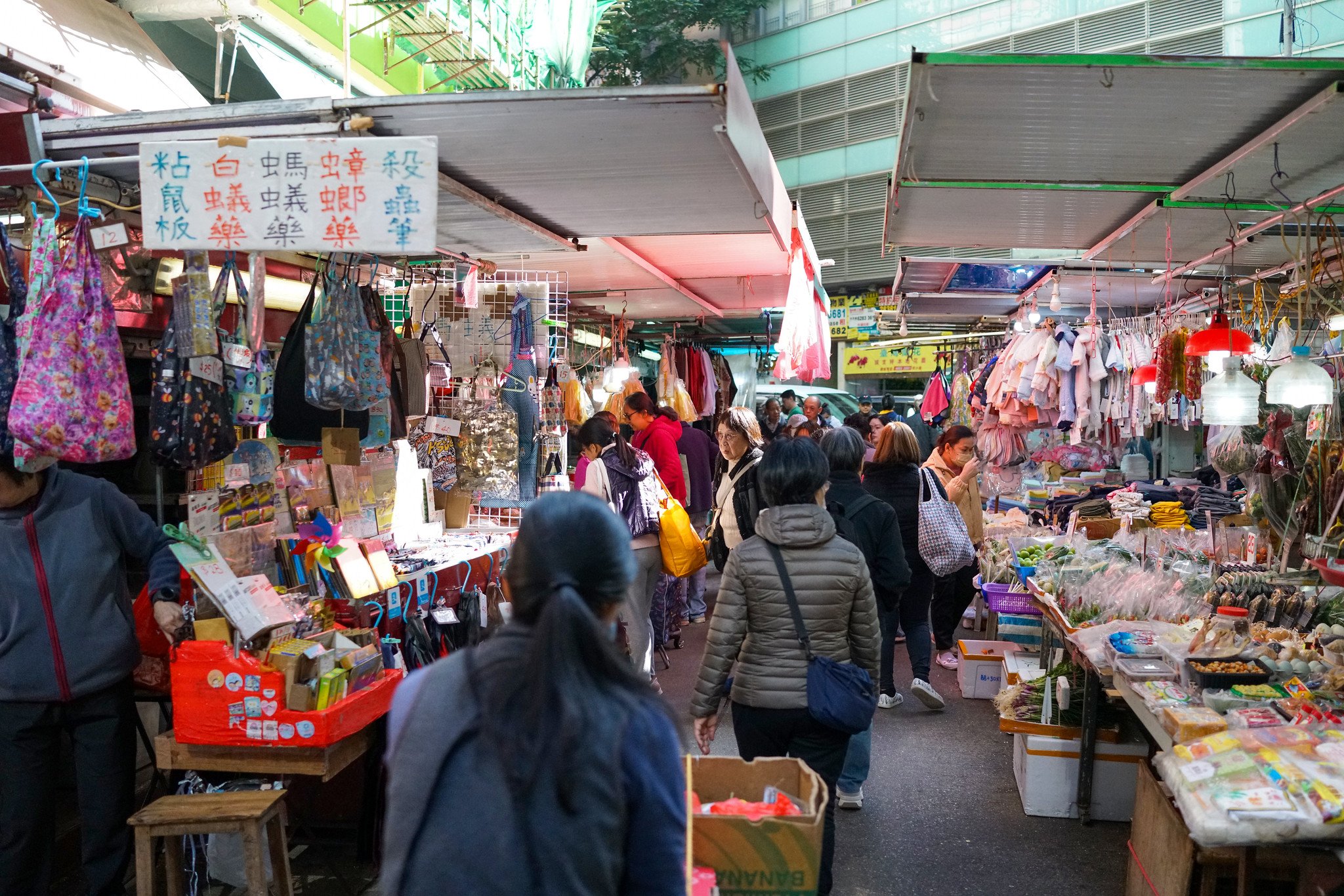
Overview of Wan Chai Street Market (Tai Yuen Street and Cross Street)
click on the image to enlarge
© Copyright Acknowledged | All rights reserved.| Image taken by Jamie
The Bauhaus Wanchai Wet Market | Now a shopping mall of sorts | Hong Kong
This is an image of the “new” Bauhaus style market, no longer a traditional wet market but a shopping mall of sorts and there is a very tall apartment block on the site as well!
The historic Bauhaus-style Wan Chai Market building (originally built in 1937 at 264 Queen's Road East) is no longer a functioning wet market. It was partially preserved and redeveloped in the early 2010s into a mixed-use complex called One Wanchai (sometimes stylized as "One Wan Chai"). The facade and front portion of the original Streamline Moderne structure were retained for heritage reasons due to public opposition to full demolition. Today, the ground and lower levels serve as a small shopping centre with retail stores (including fashion, accessories, and some casual eateries), while a tall residential apartment tower (approximately 30+ storeys) was constructed behind and integrated with the preserved section—effectively "on top" in terms of the site's overall redevelopment. It's classified as a Grade III historic building, but it's fully repurposed for commercial and residential use, not markets.
The actual government-run wet market (handling fresh produce, meat, seafood, etc.) relocated in September 2008 to a new, purpose-built facility in the lower podium levels of The Zenith (a high-rise residential complex at the junction of Wan Chai Road and Tai Yuen Street, just a short walk north of Queen's Road East). This move was part of the Urban Renewal Authority's (URA) redevelopment project for the Wan Chai Road/Tai Yuen Street area, completed in phases between 2007 and 2013. The Zenith's wet market is indeed closer to the street markets (Tai Yuen Street and Cross Street), as it's directly adjoining them—essentially integrated into the same block for easy access. This setup keeps the wet market vibrant and central to local daily life, separate from the historic site's retail focus
Overview of Wan Chai Wet Market which spans a couple of streets
See images below
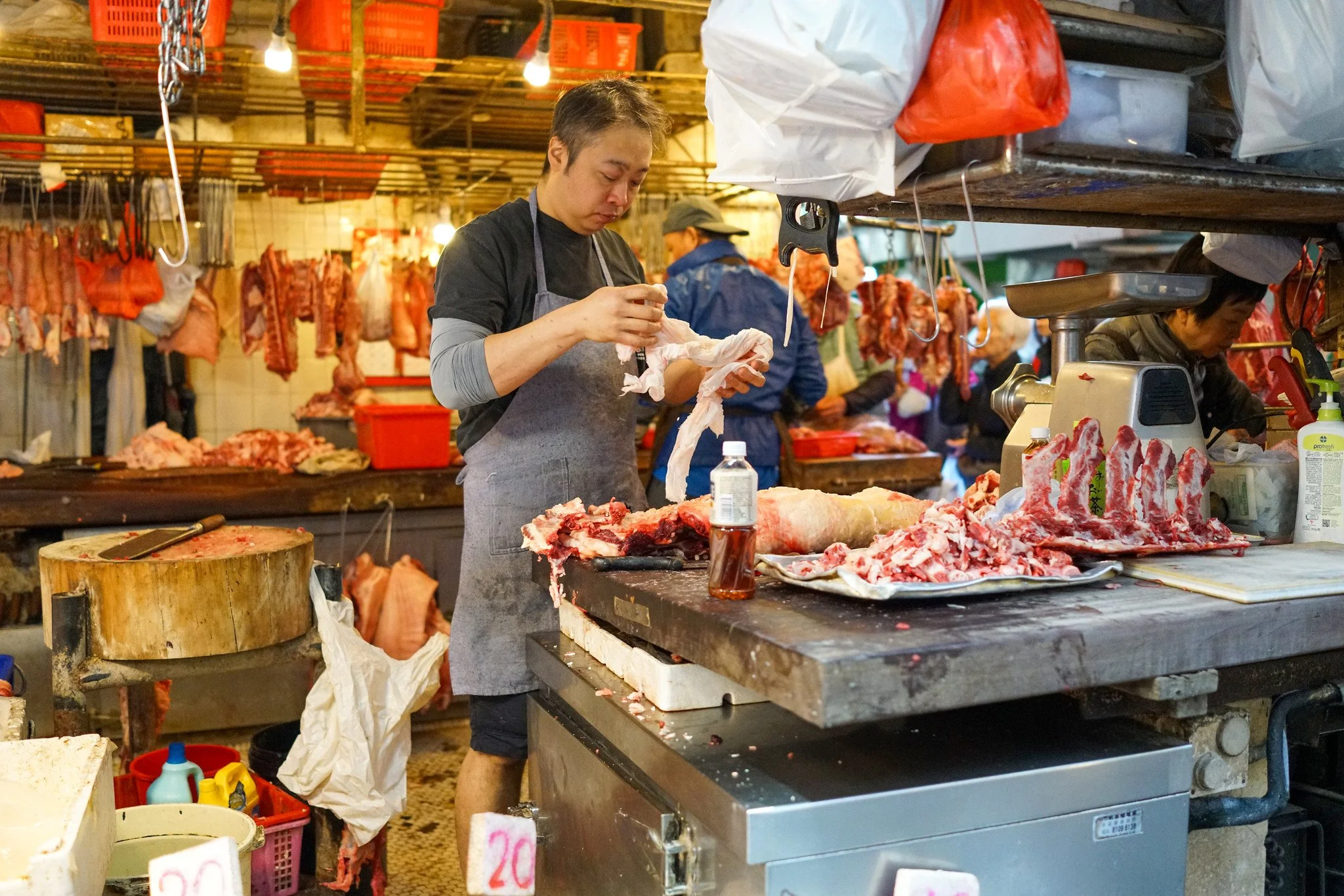
Not for the faint of heart, quite a few butchers shops, chicken shops and such and vendors selling live fish which are dispatched to the fish after life when someone makes a purchase and they will be eaten shortly thereafter, the fresher they are the better it tastes according to local lore.
click on the image to enlarge
© Copyright Acknowledged | All rights reserved.| Image taken by Jamie
The Wanchai Wet Market | Fresh chickens to purchase | Hong Kong
What you need to know about Chickens on sale in wet markets
There are quite a few shops that sell live chickens and the process may seem very basic (I mean to someone like me with an untrained eye, one chicken pretty much looks like another) but the process is a lot more detailed and locals take chicken purchases very seriously, lots of haggling!
click on the image to enlarge
© Copyright Acknowledged | All rights reserved.| Image taken by Jamie
A Hong Kong Government Public Service Sign | I kid you not | Hong Kong
The price for live chickens in Hong Kong is driven by a combination of factors, with : -
body weight and age being two of the most important criteria.
Key Factors Determining Price
Body Weight: This is often the primary factor. Heavier birds generally command higher prices as they yield more meat. Live chickens in Hong Kong are typically sold by weight, for example, prices are often quoted per kilogram or per catty (a traditional Chinese unit of weight).
Age: The age of the chicken is also important and is often related to the perceived quality, texture, and flavor of the meat.
Older birds are sometimes valued as being more flavorful and nutritious, and customers may examine physical signs (like the size of the feet or crown) to gauge the bird's age.
Some specific local breeds, like Ping Yuen chicken or Black Silkie, are raised for a longer period (e.g., 80-100 days) to reach a desirable maturity and command premium prices.
Breed Type: Certain breeds (such as the yellow-feather broilers popular in South China) are preferred by consumers and therefore fetch higher prices than others.
Other Factors: Beyond physical characteristics, broader economic principles and consumer preferences play a significant role:
Supply and Demand: Prices fluctuate based on the availability of chickens and consumer demand, particularly during festivals or holidays.
Freshness Perception: Hong Kong consumers highly value freshness, and the ability to visually assess the chicken's health and liveliness in a wet market setting influences their willingness to pay a premium for live birds.
Production Costs: Costs incurred by farmers, such as feed, labor, and veterinary care, ultimately affect the market price.
In summary, while the final transaction is often calculated based on weight, this price is heavily influenced by the age of the chicken and other quality indicators valued by the consumer.
oh and whatever you do, do not get close to a chicken and blow up it’s a** !
What you need to know about Fish on sale in wet markets
Hong Kong live fish prices in wet markets are driven by species, freshness, size, origin (local vs. imported), seasonality, and consumer perception of quality/value, with motion and specific visual cues signaling vitality and premium status, alongside market dynamics like stall ownership and high local demand for live seafood. Premium, rare, or specific local fish command much higher prices due to their taste, texture, and status as a treat or delicacy, while factors like dry-aging can further elevate costs.
Key Price Drivers:
Species & Rarity: Certain fish, like large or specific varieties of Threadfin, are highly prized for their delicate texture and fat content, making them expensive treats.
Freshness & Liveliness: Consumers look for fish that are active and moving, indicating superior freshness; vendors work hard to keep fish alive and vibrant, as motion signifies quality.
Size: Larger fish, particularly premium ones, can cost significantly more per unit or as a whole, representing a substantial purchase.
Origin & Quality Perception: Fish from certain regions or those perceived as high-quality, safe (e.g., some US imports), or farmed without chemicals command higher prices.
Seasonality: Like any food, availability changes with seasons, affecting prices.
Market & Stall Factors: Different markets (e.g., Lei Yue Mun) and even stalls within a market can have varied pricing due to ownership, location, and supply chains, notes Wikipedia.
Processing & Value-Add: A fish might be priced higher if it's dry-aged, enhancing its flavor and justifying a premium price for chefs and discerning buyers
In essence, it's a blend of luxury, tradition, and real-time market forces that dictate what a live fish costs in a Hong Kong wet market
What you need to know about Meat products on sale in wet markets
Meat prices in Hong Kong's wet markets are driven by
heavy reliance on imports (especially from Mainland China), fluctuating supply chain costs (logistics, disease outbreaks like African Swine Fever), high local demand, import monopolies (like Ng Fung Hong for beef), and market-specific factors like stall ownership and operating costs, all compounded by Hong Kong's overall high cost of living and food security risks.
Key Factors Influencing Meat Prices:
Import Dependency & Supply Chain:
High Import Rate: Hong Kong imports over 90% of its food, making it vulnerable to global price shifts and supply disruptions.
Mainland China Dominance: Most live animals (pigs, cattle, poultry) come from mainland China, giving Beijing significant control over supply and pricing.
Logistics & Transport: High shipping costs and complex logistics add to the final price.
Supply Shocks & Disease:
Disease Outbreaks: African Swine Fever (ASF) outbreaks in the past dramatically reduced fresh pork supply, causing prices to soar.
Border Closures: Pandemic-related border closures in 2022 limited food supplies, pushing prices up.
Market Structure & Costs:
Import Monopoly: Key distributors, like Ng Fung Hong for beef, control supply and can raise prices, impacting retailers.
Wet Market Ownership: Varying ownership (government, private) can lead to different operating costs and stall rental fees, affecting food prices.
High Operating Costs: Excellent infrastructure and high living standards in HK translate to higher costs for retailers.
Demand & Consumption Habits:
Strong Demand: High local demand, especially for fresh "warm meat," supports higher prices.
Consumer Behavior: Haggling can occur in the afternoons as vendors try to clear stock, but overall demand remains strong.
In essence: A fragile import system, reliance on a single major supplier (China), disease risks, and high local demand create a volatile market where even small supply chain issues or import price hikes quickly translate to higher costs for consumers at the wet market.
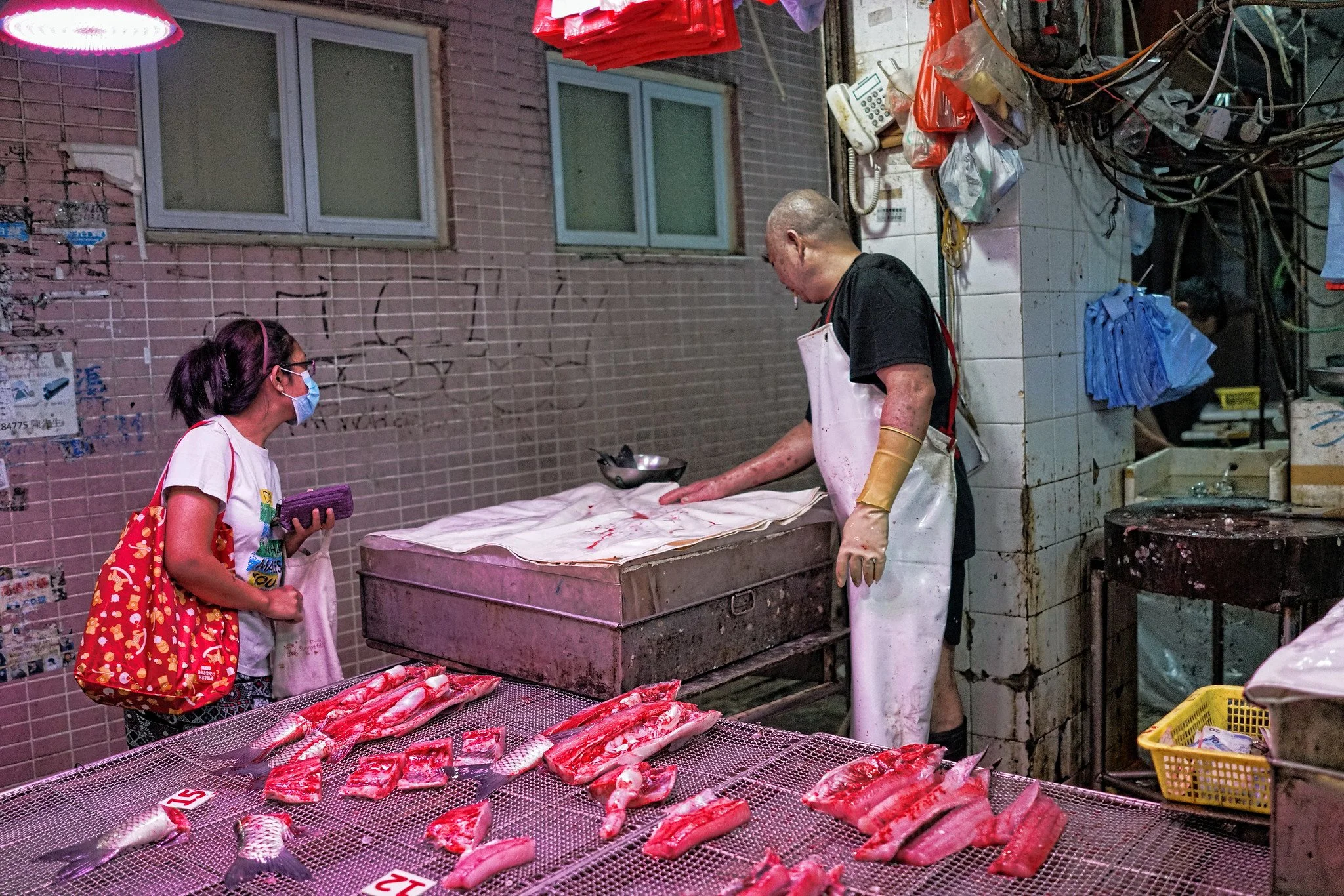
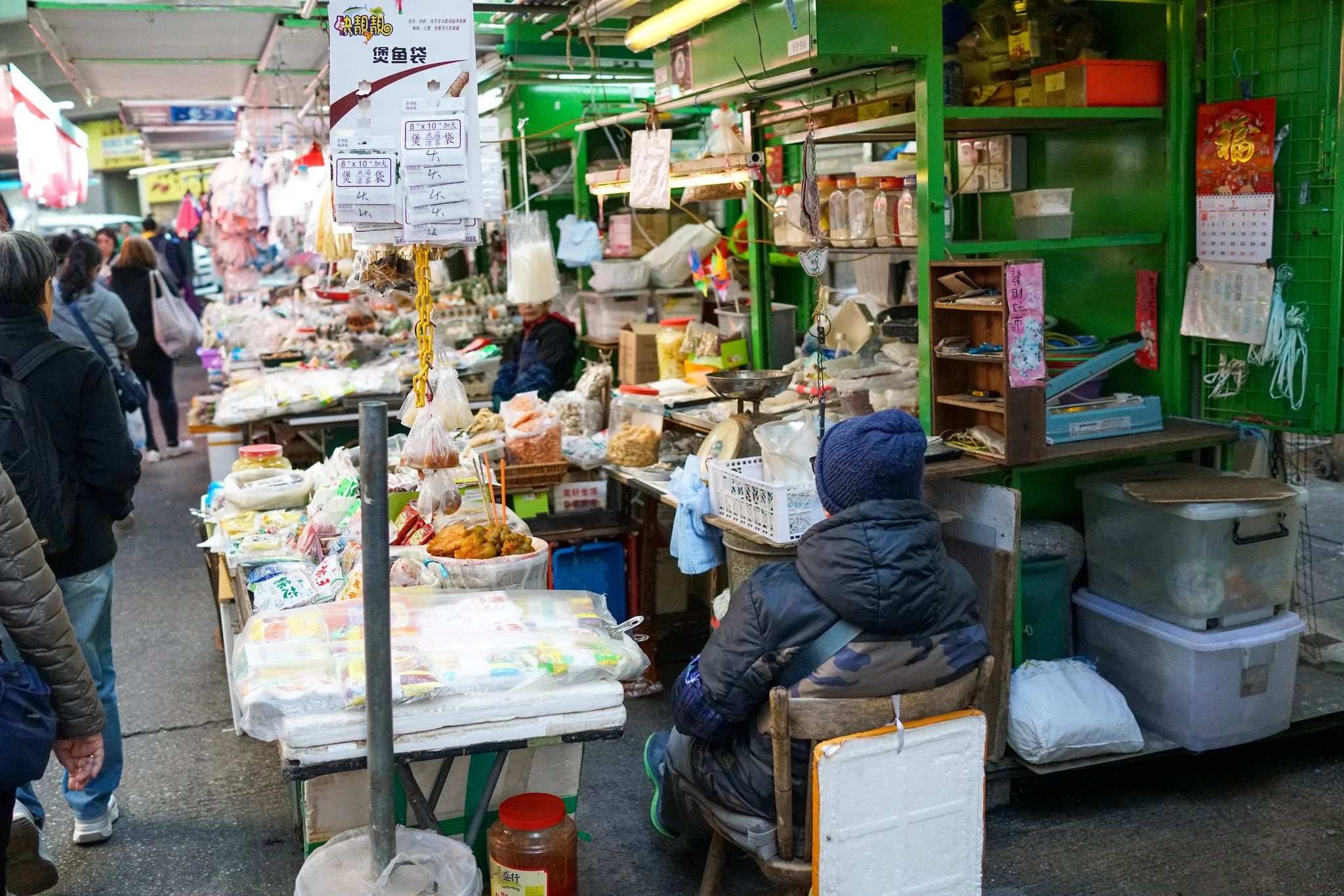
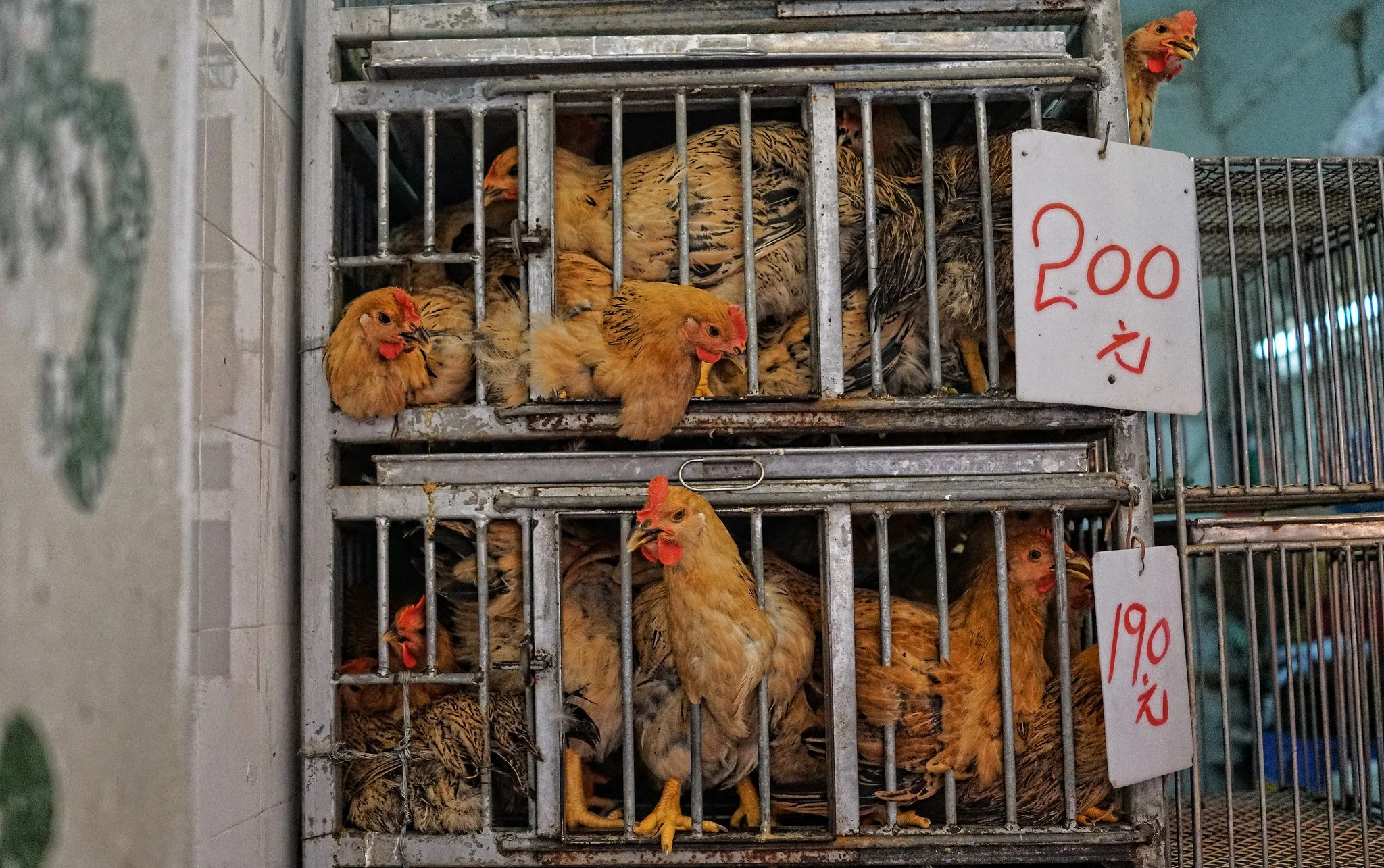
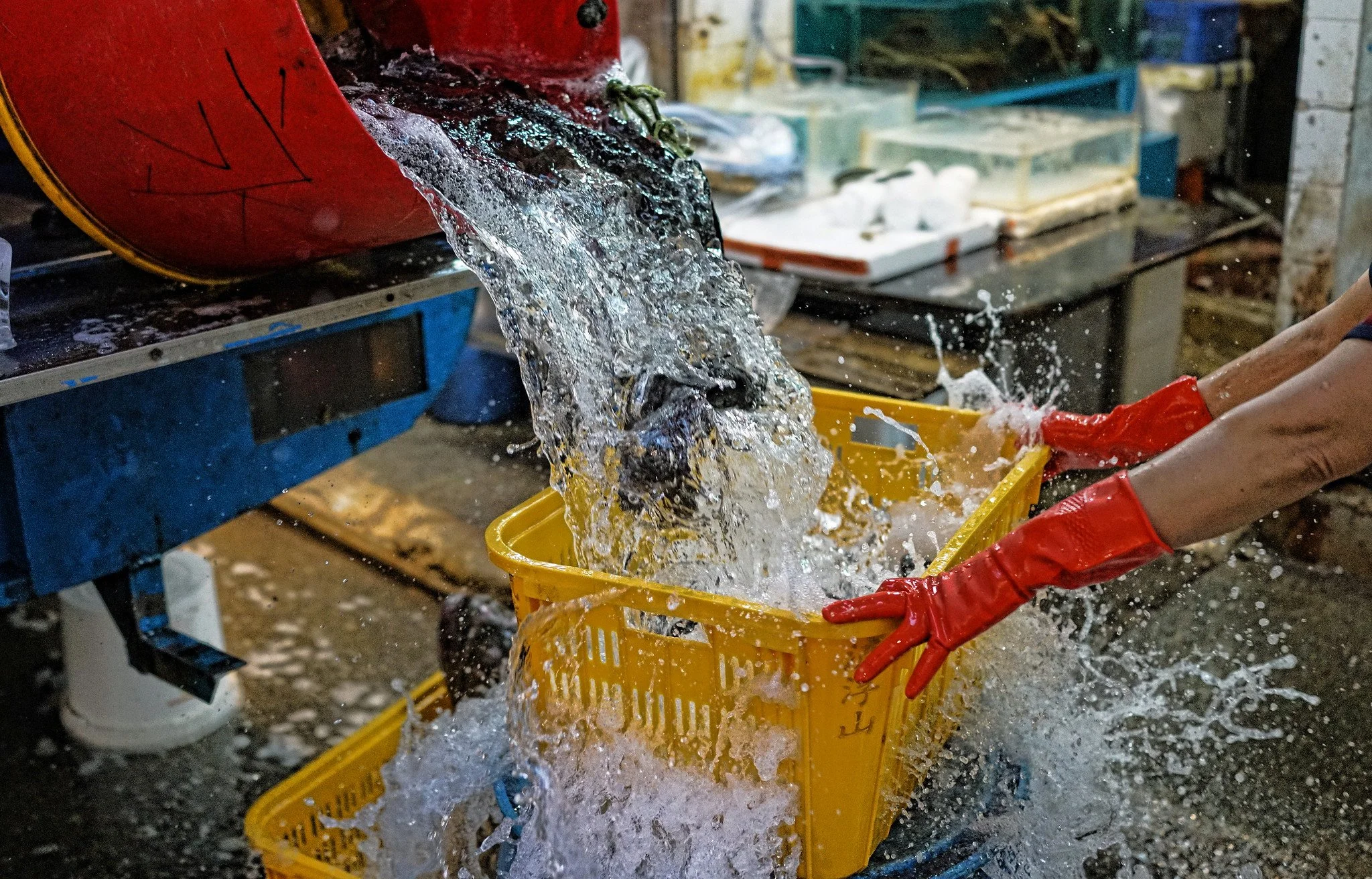
click on any image to enlarge
© Copyright Acknowledged | All rights reserved.| Images taken by Jamie
Wanchai Wet Market | Very local and gritty | Hong Kong
Key Confirmations
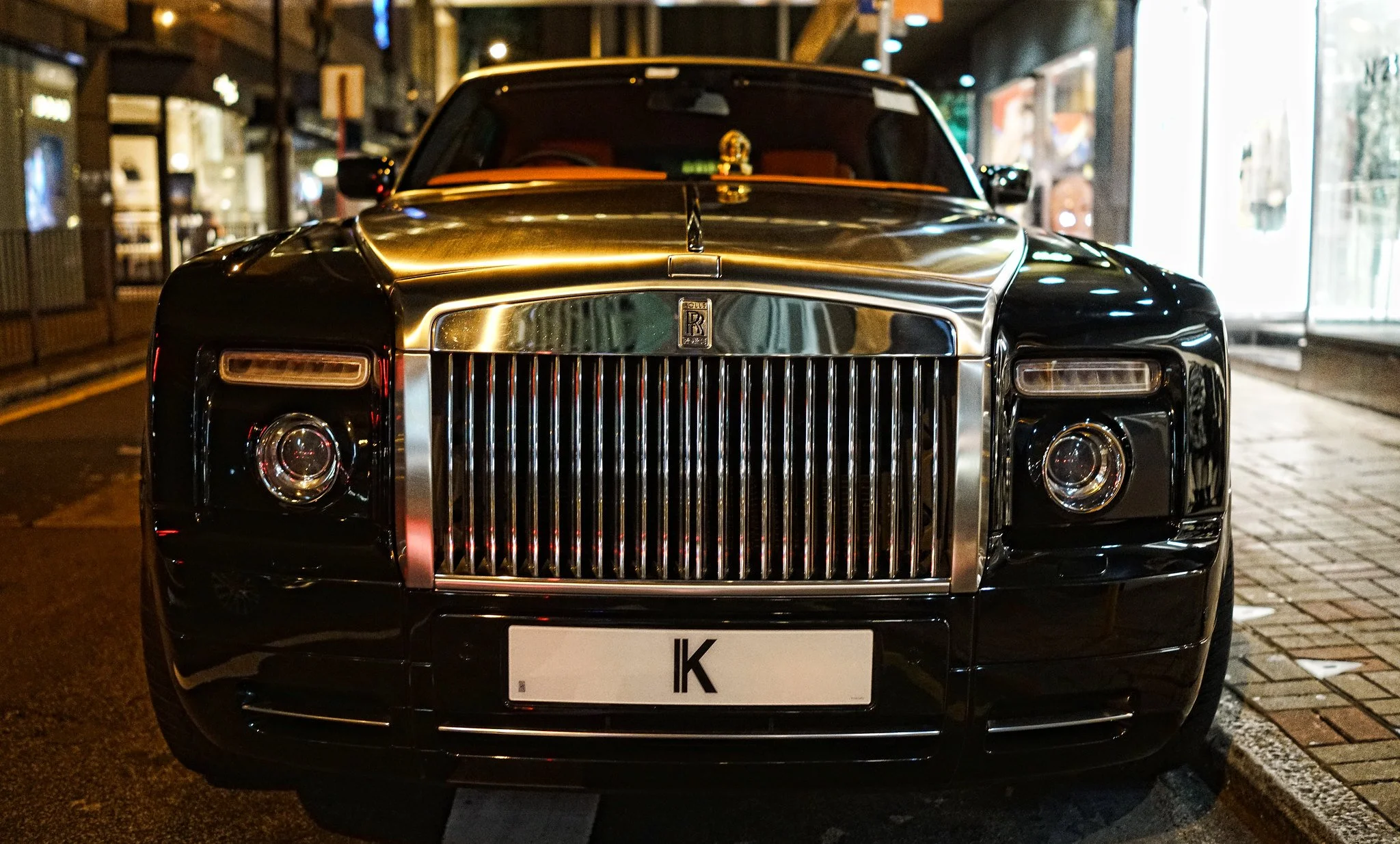
No wet market at the old Bauhaus site: Yes, operations fully ceased there over 15 years ago. It's now retail-focused with residential above/behind.| see image above that shows a Rolls Royce
Tall apartment block: Accurate -The Zenith (for the wet market) and One Wanchai (for the old building) both feature high-rise residential towers as part of Hong Kong's urban densification.
Proximity: The Zenith's wet market is right next to the Tai Yuen Street/Cross Street stalls, making it the "adjoining" government wet market I referenced earlier (my mistake was conflating the historic building with the current one).
Government Policy Update: The URA oversaw the redevelopment to balance heritage preservation, housing needs, and commercial viability. No major changes since 2013; the sites are stable, with ongoing emphasis on maintaining hawker areas amid broader efforts to revitalize Wan Chai.
To confirm with the latest details (as of late 2025):
The iconic 1937 Streamline Modern building (often miscalled Bauhaus) at around 264 Queen's Road East was the original Wan Chai Market. It ceased wet market operations in September 2008.
The wet market relocated across the street/opposite side to a new, modern indoor complex in the lower podium levels of The Zenith (residential towers at 3 Wan Chai Road / junction with Tai Yuen Street). This setup is air-conditioned, organized, and still very much active—sources describe it as clean and bustling with fresh produce, meat, seafood, etc.
The old building's facade and front portion were preserved (after public campaigns), integrated into One Wan Chai—a shopping arcade with retail/eateries on lower levels and a tall residential tower rising behind/"on top" of the historic section.
The street markets (Tai Yuen Street "Toy Street," Cross Street, etc.) remain directly adjoining this newer wet market area, with spillover stalls on nearby streets like Wan Chai Road, Stone Nullah Lane, and others. Some recent guides even refer to the whole sprawling network (indoor + outdoor) collectively as "Wan Chai Market" around 258 Queen's Road East for simplicity.
No temporary market phase mentioned in current records— the shift to The Zenith was permanent back in 2008, and it's held steady since.
Detailed History of the Wan Chai Street Markets
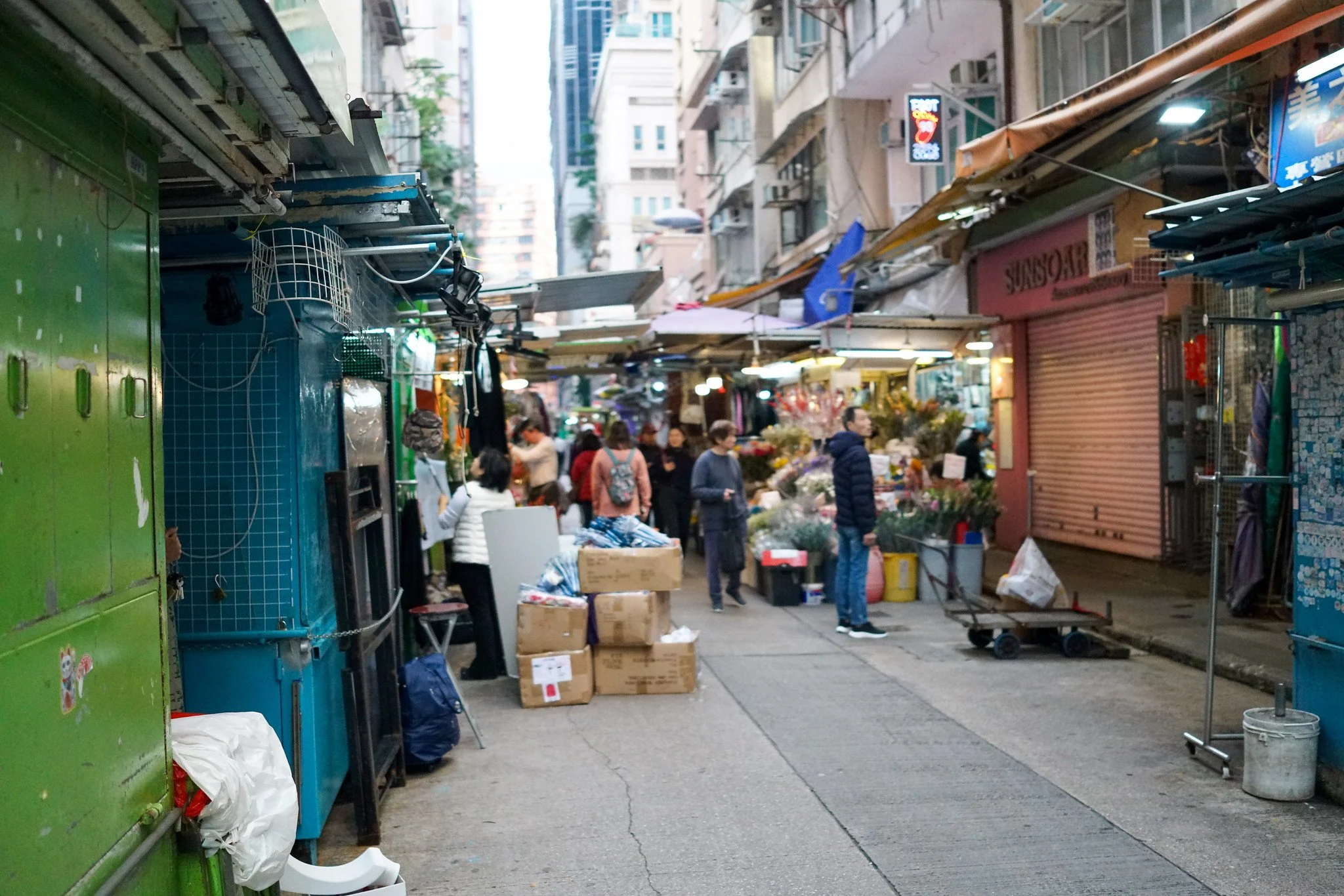
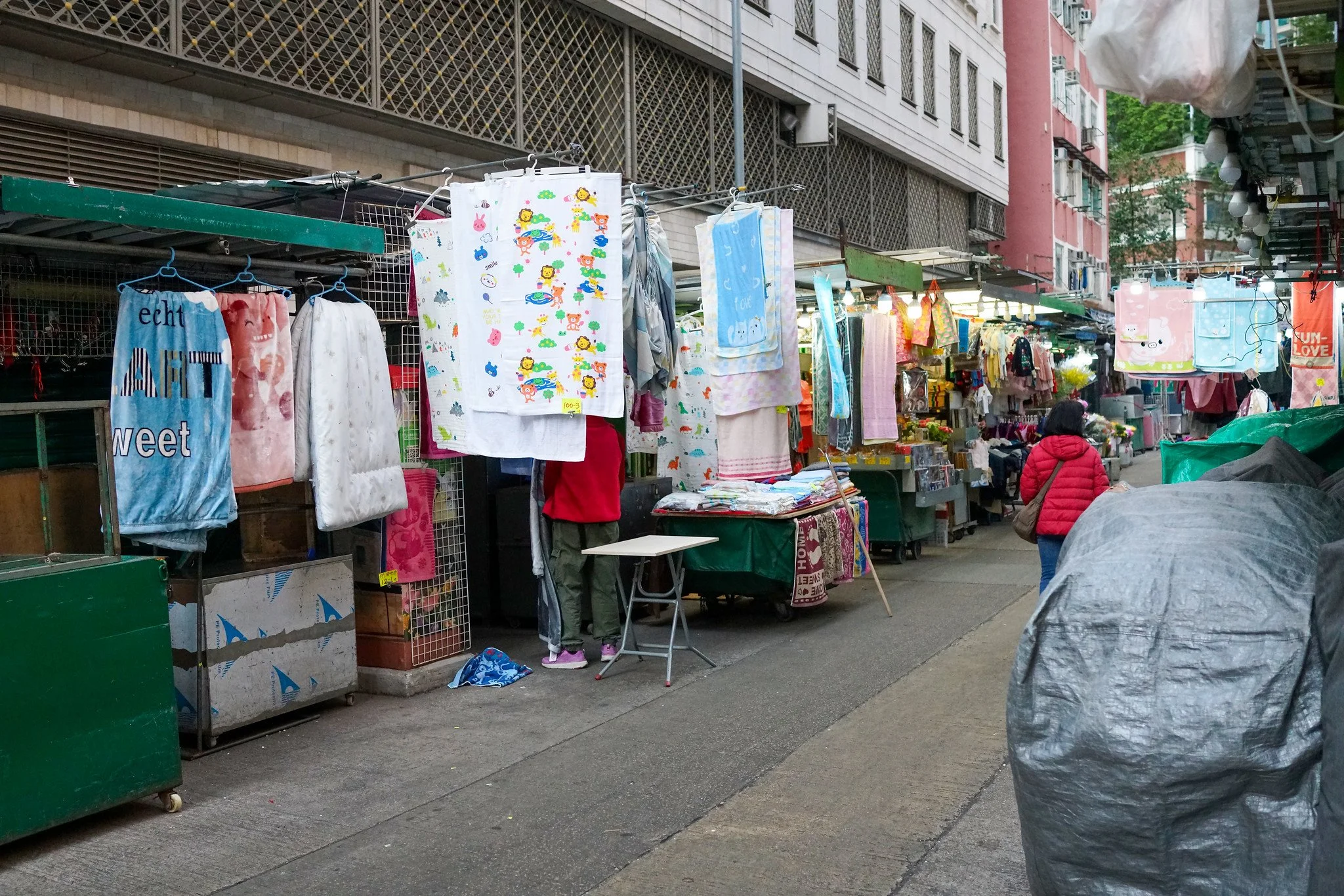
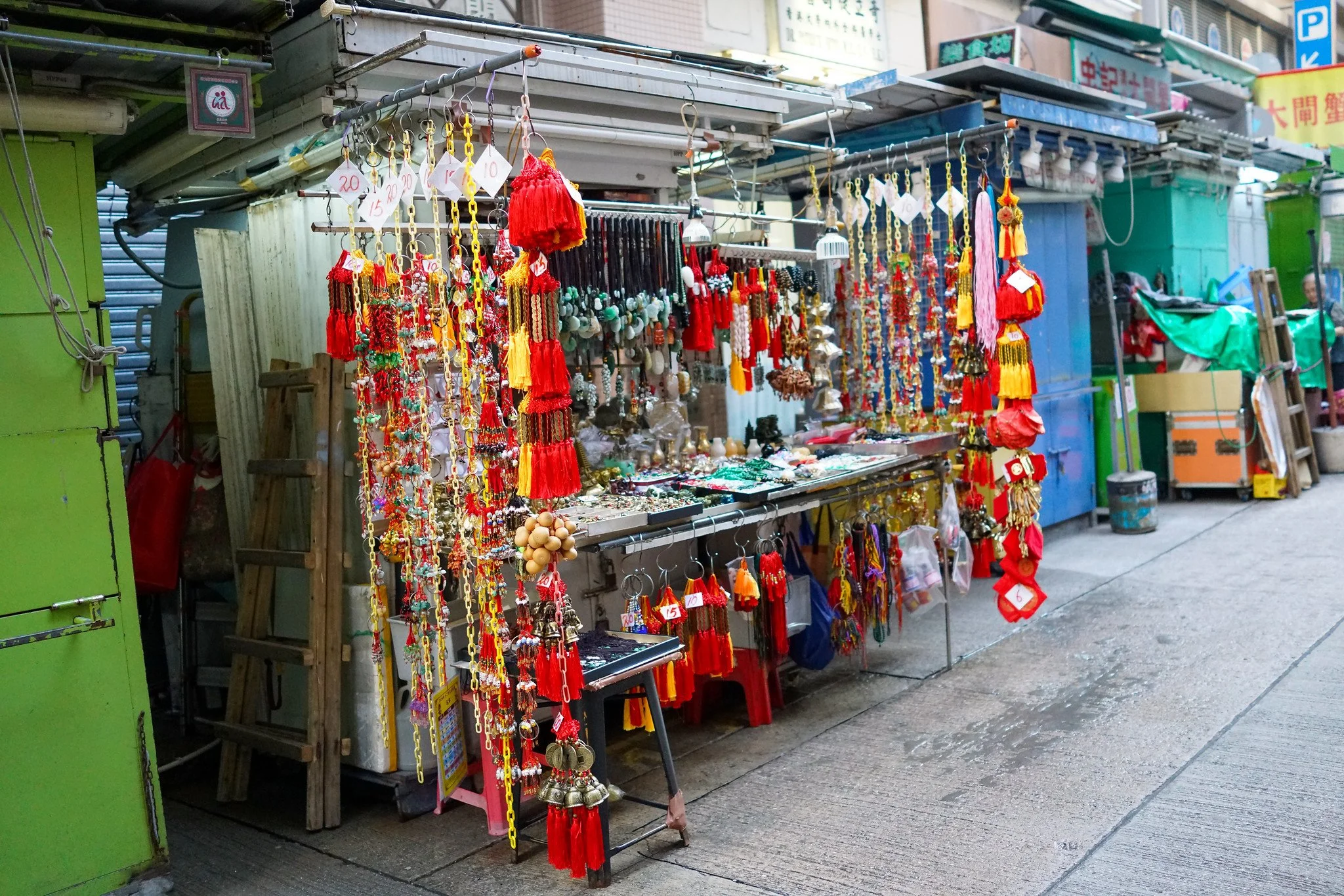
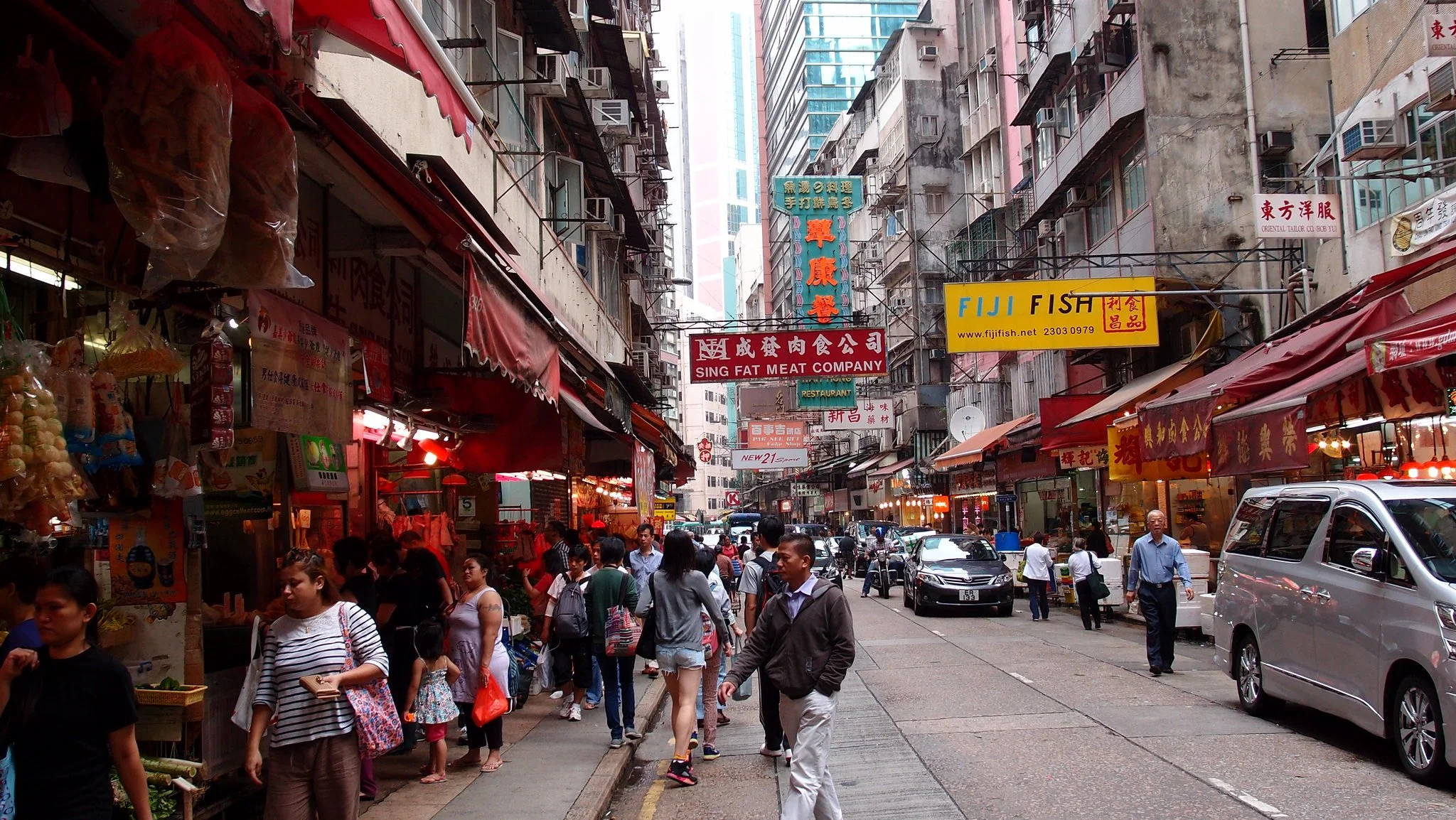
click on any image to enlarge
© Copyright Acknowledged | All rights reserved.| Images taken by Jamie
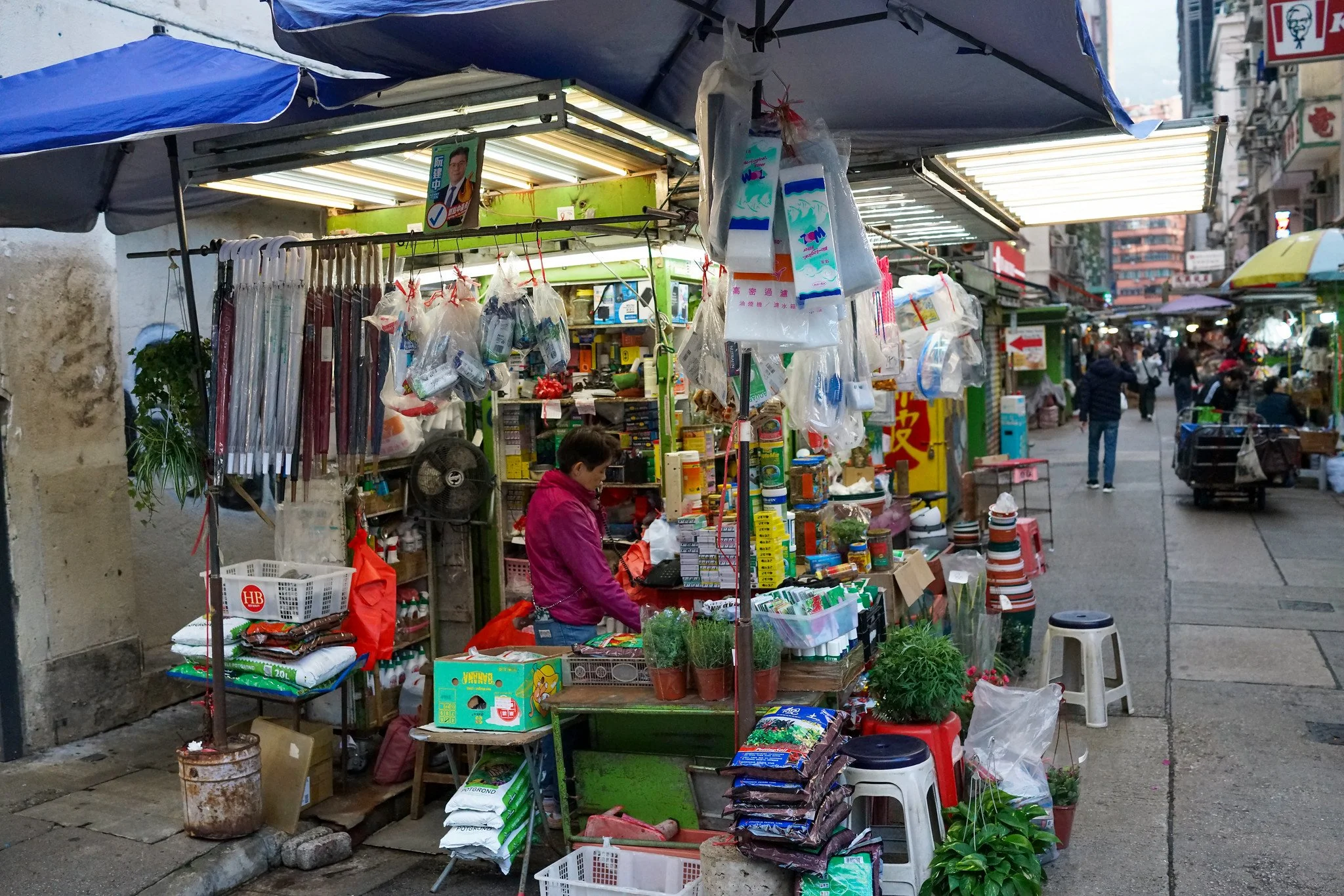
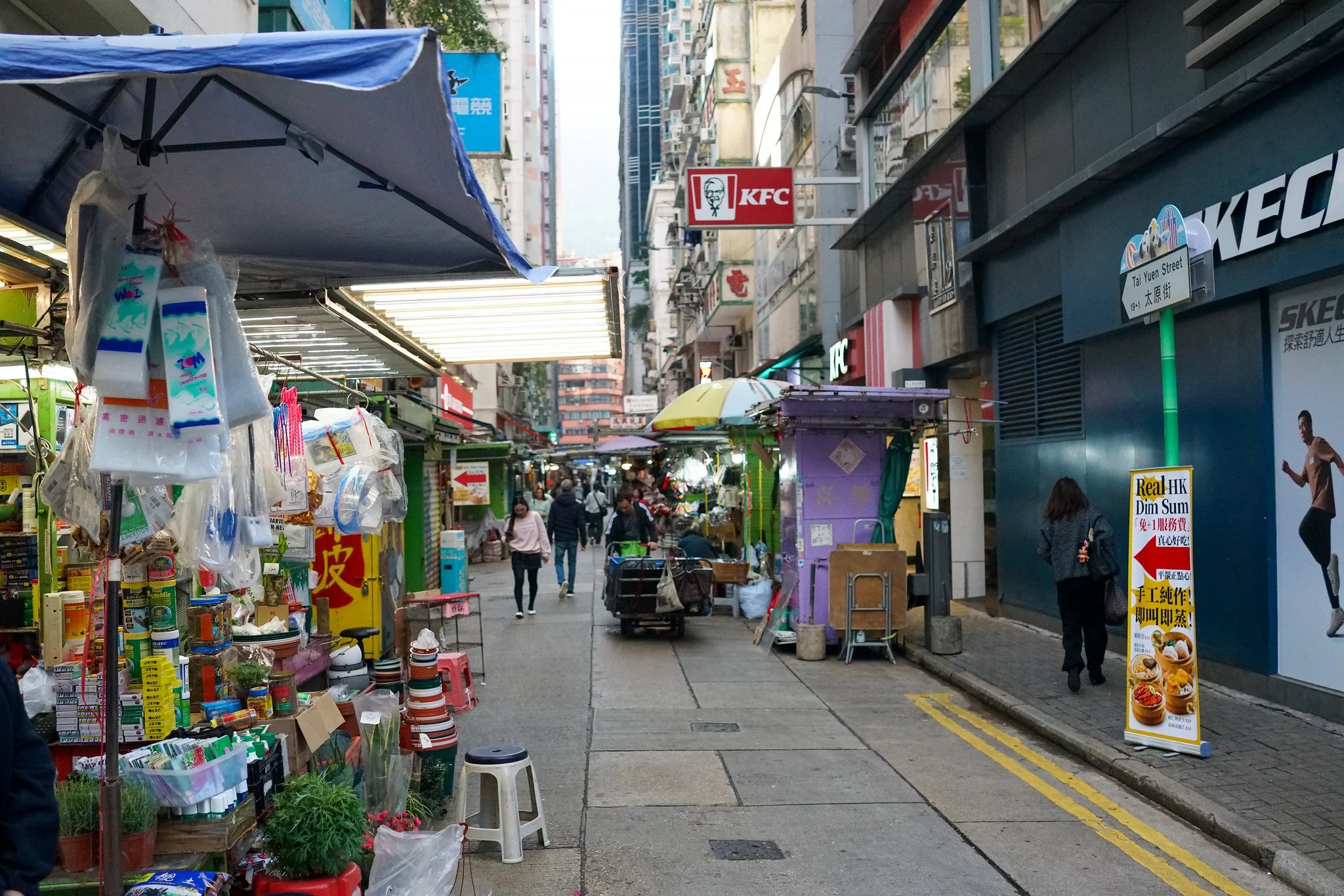
Wanchai Street Markets | Very local and gritty | Hong Kong
The area has been a traditional market hub since the early 20th century, tied to Wan Chai's working-class roots. Tai Yuen Street evolved into a specialized "Toy Street" in the 1990s, when shops and stalls began focusing on classic and nostalgic toys, attracting families and evoking childhood memories for generations of Hong Kongers (especially those from the 1980s-1990s). Hawker stalls selling dried goods, household items, and decorations have been present for decades longer, reflecting old Hong Kong's street vending culture. The market has survived urban development pressures but remains a pocket of traditional retail amid modern Wan Chai.
Approximate Number of Stalls and Shops
Tai Yuen Street and Cross Street together feature dozens of permanent shops (lining both sides) and numerous hawker stalls (often 50-100 on busy days, though exact numbers fluctuate). It's a compact area spanning about 200-300 meters, crammed with vendors.
Opening and Closing Hours
Most stalls and shops operate daily from around 10:00 AM to 7:00-8:00 PM. Some open as early as 9:00 AM, and a few linger later, but by 7:00 PM many start packing up. It's not a night market—activity winds down in the evening. Hours can vary by vendor; weekdays are more consistent.
What's on Sale
Toys (vintage/retro styles from past decades, modern toys, party favors, dolls, games—perfect for kids or nostalgic adults).
Clothing and accessories (bargain bags, hair clips, phone cases, beads).
Household goods, decorations (lanterns, festive items, stocking fillers).
Chinese souvenirs, dried goods, and small local foods. It's colorful and eclectic, with a fun, cluttered vibe.
Safety Concerns
Wan Chai street markets are generally very safe - Hong Kong has low crime rates, and this area is busy with locals. No major concerns like scams or aggression are commonly reported; tourists describe it as enjoyable and hassle-free. Standard precautions apply: watch your belongings in crowds, especially on weekends. Occasional police presence helps maintain order., personally I have never had any issues in any of our street markets
Comments on Stall | Shop Holders and What to Expect
Vendors are typically local, friendly but not overly pushy—more laid-back than in tourist-heavy markets. Expect a lively, noisy atmosphere with colorful displays spilling onto sidewalks. It's an authentic slice of daily Hong Kong life: bustling, unpretentious, and full of character. Stall holders often have long family ties to the area, adding a personal touch.
Payment Methods
Primarily cash (Hong Kong dollars)—essential for stalls. Some fixed shops accept Octopus card or mobile payments (e.g., Alipay, WeChat Pay), but cash is king for smaller purchases and bargaining.
Bargaining Techniques
Bargaining is common and expected, especially if buying multiple items. Start at 50-70% of the quoted price, smile, and negotiate politely—vendors may drop 20-30% for good deals. It's more successful on less popular items or toward closing time. Some vendors are firm, but persistence (without aggression) often works, personally I find the people running the stalls in Wan Chai to be much more friendlier than other markets, probably because most buyers are local residents!
Best Time to Visit
Weekdays (mid-morning to late afternoon, e.g., 11:00 AM-5:00 PM): Less crowded, easier browsing, and vendors more relaxed for chatting/bargaining.
Avoid weekends if you dislike crowds.
Early visits catch fresher stock; later afternoons may yield closing-time discounts.
Interesting Anecdotes
Many visitors share stories of rediscovering childhood toys (e.g., classic Hong Kong-made items from the 80s/90s), triggering strong nostalgia.
It's a go-to spot for festive decorations (like Mid-Autumn Festival lanterns or Chinese New Year roosters).
Tourists often describe it as "sense-assaulting" in the best way—overwhelming with vibrant junk and treasures, far from polished malls.
Private guides love it for showing "real" Hong Kong away from skyscrapers.
Government Policy Towards the Markets in Wan Chai
In the wet market section, vendors are often paid visits by FEGD officers who whunt in packs of 6 or more, I dislike them intensely and the only thing missing from their “look” is a service revolver! they are the sort of people who will get out a tape measure and argue about half a cm, if your stall encroaches further than it should!
Street hawking in Hong Kong is tightly regulated by the Food and Environmental Hygiene Department (FEHD). Licensed hawkers are allowed in designated areas, but no new fixed-pitch licenses have been issued since the 1970s. Unlicensed hawking is illegal, and parts of Tai Yuen Street/Cross Street are officially listed as "hawker blackspots" prone to enforcement. Policy aims to balance cultural preservation with public order, hygiene, and pedestrian flow—leading to periodic clear-ups. In recent years (post-COVID), the government has promoted temporary bazaars and night markets to boost economy, but traditional street hawkers are declining due to voluntary license surrenders and urban pressures. The market persists as a tolerated cultural feature.
The area between Johnston Road (also spelled Johnson Road) and Queen's Road East in Wan Chai is famous for its vibrant traditional street markets (open-air stalls), especially the interconnected network around the Wan Chai Market (wet market) area. These streets feature a mix of fresh produce, seafood, meat, household goods, clothing, toys, and other daily items sold from stalls that often spill onto the pavement.
This is one of the most authentic and bustling local market zones on Hong Kong Island, easily accessible from MTR Wan Chai Station Exit A3 (a short walk crossing Johnston Road). The markets are busiest in the early morning and late afternoon/evening.( and please watch out for the street trams on Johnson Road when crossing, you will understand when you see them
Here are the main roads | streets in this specific zone known for being occupied by market stalls (based on current and recent information as of late 2025):
Tai Yuen Street (太原街) - Also famously known as "Toy Street". This north-south street runs directly between Johnston Road and Queen's Road East. It's lined with stalls and shops selling toys (new, retro, collectibles), party supplies, costumes, festive decorations, clothing, accessories, knick-knacks, and some snacks. It's one of the most colorful and pedestrian-friendly in the area.
Cross Street (交加街) - A key artery for the wet market stalls, running parallel-ish and connecting to Tai Yuen Street. Stalls here focus on fresh fruits, vegetables, seafood, meats, and other food items, with vendors often setting up outdoors.
Wan Chai Road (灣仔道) - Another primary street for open-air market activity, especially around the intersection with Queen's Road East and near the old/new market buildings. It features fresh produce, live poultry, seafood, and general wet market goods spilling onto the street.
Stone Nullah Lane (石水渠街) - This street has significant outdoor stalls, particularly for fresh food, vegetables, fruits, and household items, forming part of the main north-south market flow from Queen's Road East up toward Johnston Road.
Gresson Street (機利臣街) - Features an open market (part of the Wan Chai Heritage Trail) with stalls selling wet and dry goods, including everyday items, food-related products, and more casual vendor setups.
Spring Garden Lane (春園街) - Known for bargain stalls selling clothing, towels, household items, and some fruits/vegetables. It's a bit more focused on affordable daily essentials.
Other nearby connecting lanes like Tai Wo Street and Triangle Street also have secondary spillover stalls for produce, clothes, and sundry items, contributing to the overall market vibe.
These streets form a compact, walkable grid - start from Exit A3, cross Johnston Road, and wander south toward Queen's Road East to explore. It's a great spot to experience everyday Hong Kong life, with lots of local energy (and sometimes a bit chaotic!). Note that while the main wet market building is indoors on Queen's Road East, the real charm is in the surrounding street stalls
Early Origins and Development
Wan Chai started as a small fishing village in the early 19th century, with early Chinese settlements around temples like Hung Shing (pre-1847). By the mid-1800s, as British colonial expansion pushed south from Central, Queen's Road East became a key thoroughfare (originally near the coastline before major reclamations). The area quickly grew into a bustling Chinese residential and commercial hub, with informal wet markets and street stalls emerging to serve local workers, coolies, and families.
The first formal Wan Chai Market appeared around 1903 (coinciding with tram extension to the area), but the streets around Cross Street, Wan Chai Road, Stone Nullah Lane, and Tai Yuen Street have long hosted open-air stalls for fresh produce, seafood, meat, and daily goods—reflecting centuries-old wet market traditions.
The Iconic Old Wan Chai Market Building (1937–2008)
The most famous landmark is the Old Wan Chai Market Building at 264 Queen's Road East (at the junction with Wan Chai Road, opposite Stone Nullah Lane).
Built in 1937 in the Streamline Moderne style (a 1930s Art Deco variant, often mistaken for Bauhaus), it was one of Hong Kong's most modern buildings at the time.
It replaced an earlier market and served as a central indoor wet market for decades, with stalls spilling into surrounding streets.
During the Japanese occupation (1941–1945), its basement was infamously used for corpse storage—a dark chapter still remembered locally.
The market operated here until September 2008, when it relocated to the modern indoor complex at "The Zenith" (just opposite), preserving the facade as a Grade III historic building (now part of a residential-commercial development). This building marks the heart of the market zone, with outdoor stalls on Wan Chai Road, Cross Street, and Stone Nullah Lane continuing the traditional vibe.
Tai Yuen Street (Toy Street) History
Tai Yuen Street, running north-south between Johnston Road and Queen's Road East, is the colorful north-south artery famous for its "Toy Street" nickname.
In the 1950s–1970s, during Hong Kong's manufacturing boom, it was a prime wholesale hub for plastic toys, dolls, games, and Christmas decorations—exported worldwide.
As factories moved to mainland China in the 1980s, the street shifted to retail, with shops focusing on retro/collectible toys, costumes, festive items, pop culture, and more.
By the 1990s, it solidified as a nostalgic toy destination, featured in Hong Kong films and part of the Wan Chai Heritage Trail. Today, it's still vibrant, blending old-school toy shops with fashion, snacks, and party supplies—perfect for showing visitors Hong Kong's playful side.
Overall Market Streets and Heritage Context
The interconnected streets (Cross Street, Wan Chai Road, Stone Nullah Lane, Tai Yuen Street, Gresson Street, Spring Garden Lane) form one of Hong Kong Island's largest and most authentic open-air market networks - much of it included in the Wan Chai Heritage Trail (launched in 2009 by the Urban Renewal Authority and partners to preserve local culture and architecture). These markets have survived urban renewal, with stalls offering everything from live seafood and veggies to household items and bargains, while embodying the "old meets new" essence of Wan Chai: traditional wet market energy alongside high-rises.
It's a fantastic, living slice of Hong Kong history - chaotic, colorful,
click on any image to enlarge
© Copyright Acknowledged | All rights reserved.
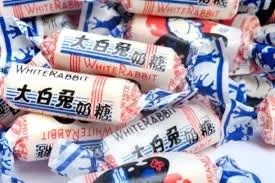
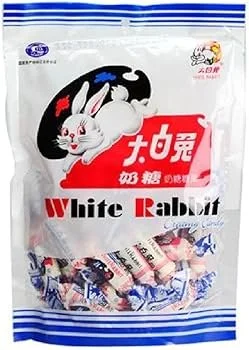
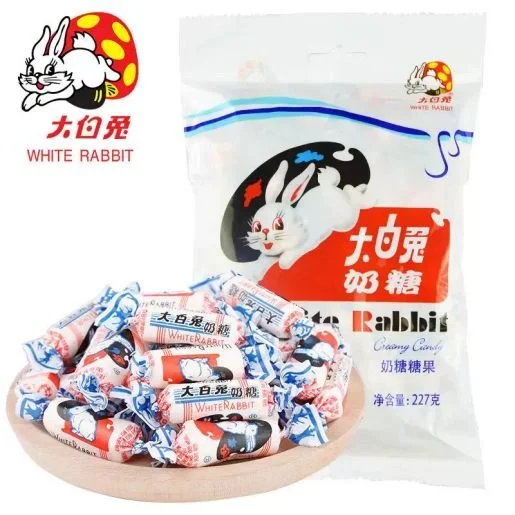
Wanchai Street Markets | White Rabbit Candy | Hong Kong
White Rabbit Candy | A Hong Kong cultural icon you can eat
I do not smoke (ever) I do not drink Alcohol (ever) I do not do drugs (ever) but I do have one serious addiction and that is White Rabbit Candy, I have been stuffing my face with them since 1972 in Hong Kong and no I never feel guilty about eating them by the handful,
I generally get my supply from a couple of market stalls (near the indoor Government wet market) in Wanchai and you can buy it by the sack if you want and I am not the only one with a thing for this candy!
The Origin Story | White Rabbit Candy
The candy was born in 1943 in Shanghai, China, at the ABC Candy Factory (short for "Anybody Can"). A merchant from the factory tasted an imported English milk candy and was so impressed that he spent about six months developing a local version using real milk. It launched as ABC Mickey Mouse Sweets, with wrappers featuring a red Mickey Mouse—perfect for kids and affordable compared to imports during wartime scarcity.
In the 1950s, as China went through political changes and state ownership, Western imagery like Mickey became sensitive. The company rebranded it with a charming cartoon white rabbit (jumping playfully on the packaging) and an artist's paint palette design in red, blue, and black against white. That's when it became "White Rabbit Creamy Candy." The brand was later transferred to Shanghai Guan Sheng Yuan Food (冠生园) in 1997, which has kept it going strong.
Fun diplomatic tidbit: In 1972, Premier Zhou Enlai loved the candy so much that he included it as a gift for US President Richard Nixon during his historic visit to China—turning it into a small symbol of opening up!
Why It's So Addictive and Nostalgic
Texture and Taste — Soft, chewy, milky, and creamy, like a mix of vanilla caramel and taffy. Each piece is wrapped in edible rice paper (thin, translucent, glutinous rice-based) that melts in your mouth, preventing stickiness—super unique and part of the ritual!
Slogan Magic — Marketed with the claim "Seven White Rabbit candies is equivalent to one cup of milk," positioning it as a "nutritious" treat. In the late 1970s–early 1990s (Deng Xiaoping era), students took it literally and dissolved piles in hot water for DIY "hot milk" in dorms!
Hong Kong Connection — For many locals (especially those who grew up in the 1970s–1990s), it's pure childhood nostalgia. It was a special treat during times when variety was limited, often saved for festivals like Chinese New Year or shared in cha chaan tengs. It's featured in classic films/TV, and even today, you'll find White Rabbit-inspired items like ice cream, cocktails (e.g., at bars like Penicillin in Central), cookies, and more around Hong Kong.
The Wrapper Ritual — Unwrapping the colorful outer paper, then the rice paper layer—it's almost meditative, and the rabbit logo is adorable and instantly recognizable.
A Bit of Drama in Its History
In 2008, during China's melamine milk scandal, White Rabbit was recalled in Hong Kong (and elsewhere) after tests showed contamination. Production paused briefly, but it bounced back by 2009 with stricter sourcing (e.g., milk from New Zealand/Australia for exports, sometimes rebranded as "Golden Rabbit" abroad). Today, it's safe, widely available, and exports to over 40 countries—still a beloved brand with new flavors like matcha, durian, red bean, and more (though the original milky vanilla remains king).
You're in good company with your addiction—it's not just candy; it's a little piece of shared history and comfort.
click on the image to enlarge
© Copyright Acknowledged | All rights reserved.| Image taken by Jamie
Exit A3 Wan Chai MTR Station | The best exit - Johnston Road! | Hong Kong
How to Get to Wanchai by MTR (Subway) - this is the easiest way
It's extremely convenient and pretty simple, I only ever use exit A3
Take the Island Line to Wan Chai Station.
Use Exit A3.
Upon exiting, cross Johnston Road (via pedestrian crossing).and watch out for those street trams
Tai Yuen Street is one of the first perpendicular streets nearby (just a 1-2 minute walk).
Cross Street is adjacent—easy to explore both on foot. The wet market building is a short stroll south toward Queen's Road East.
everything is basically within a 15 minute walking radius (including the heritage sites) it is pretty hard to get lost
click on the image to enlarge
© Copyright Acknowledged | All rights reserved.| Image taken by Jamie
Exit A3 Wan Chai MTR Station | Watch out for the trams! | Hong Kong
Johnson Road or Johnston Road is a major road directly outide of ext A3 of the MTR (Subway) Wanchai station
There are traffic lights at the major pedestrian crossing outside the entrance and yes, people do chance their luck by ignoring the lights and misjudging the speed of the trams
Over the past 20 years, accidents involving trams run to 50 - 150 per year and yes, quite a lot of fatalities, the most recent one in 2024 when a 3 year old toddler was hit by a tram. these trams weigh 28 tonnes and although quite slow, it takes time for them to break and like everywhere, time is money so people jaywalk and take the risk
My message, do not jaywalk or take on the lights and you will be fine.
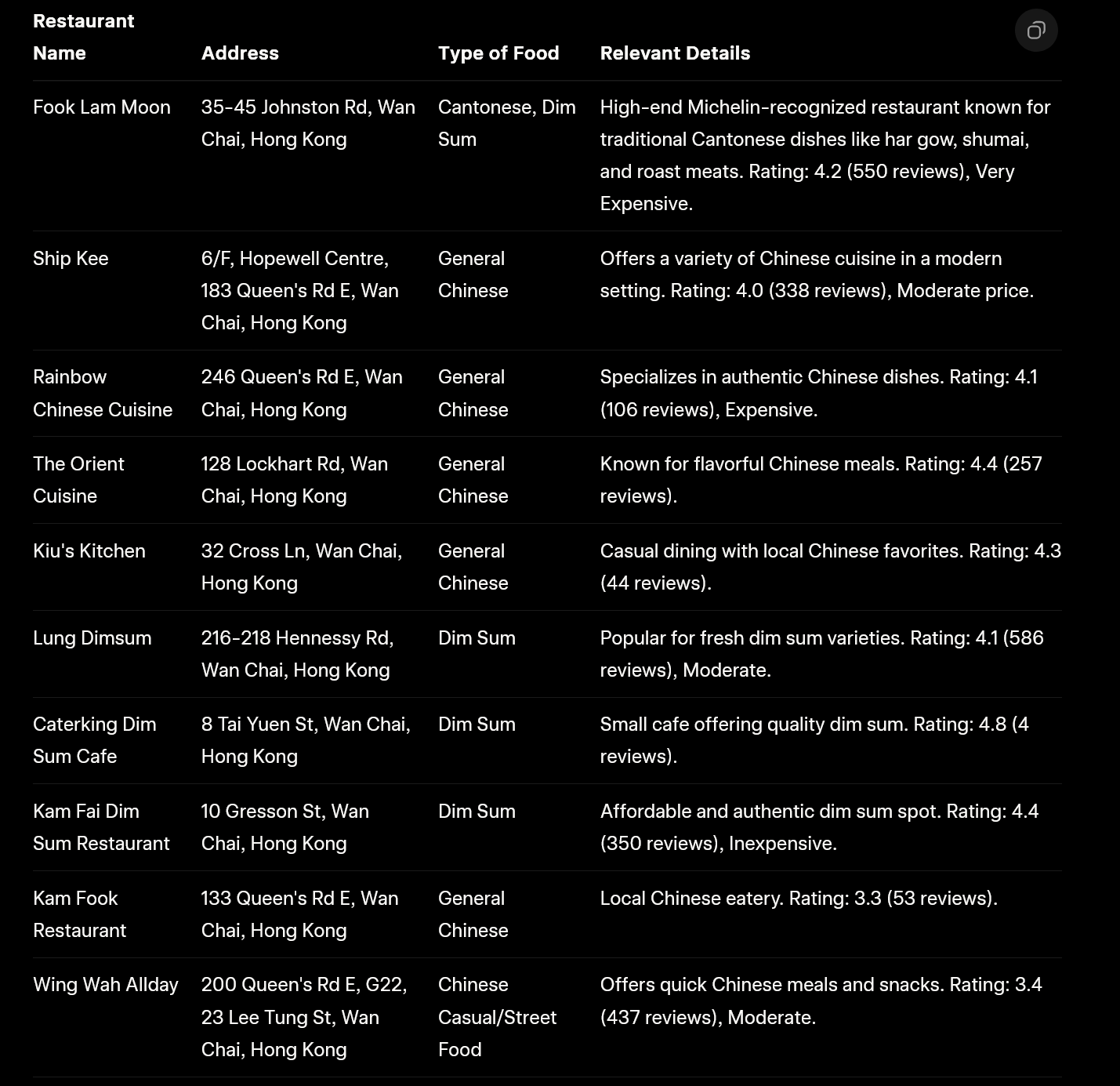
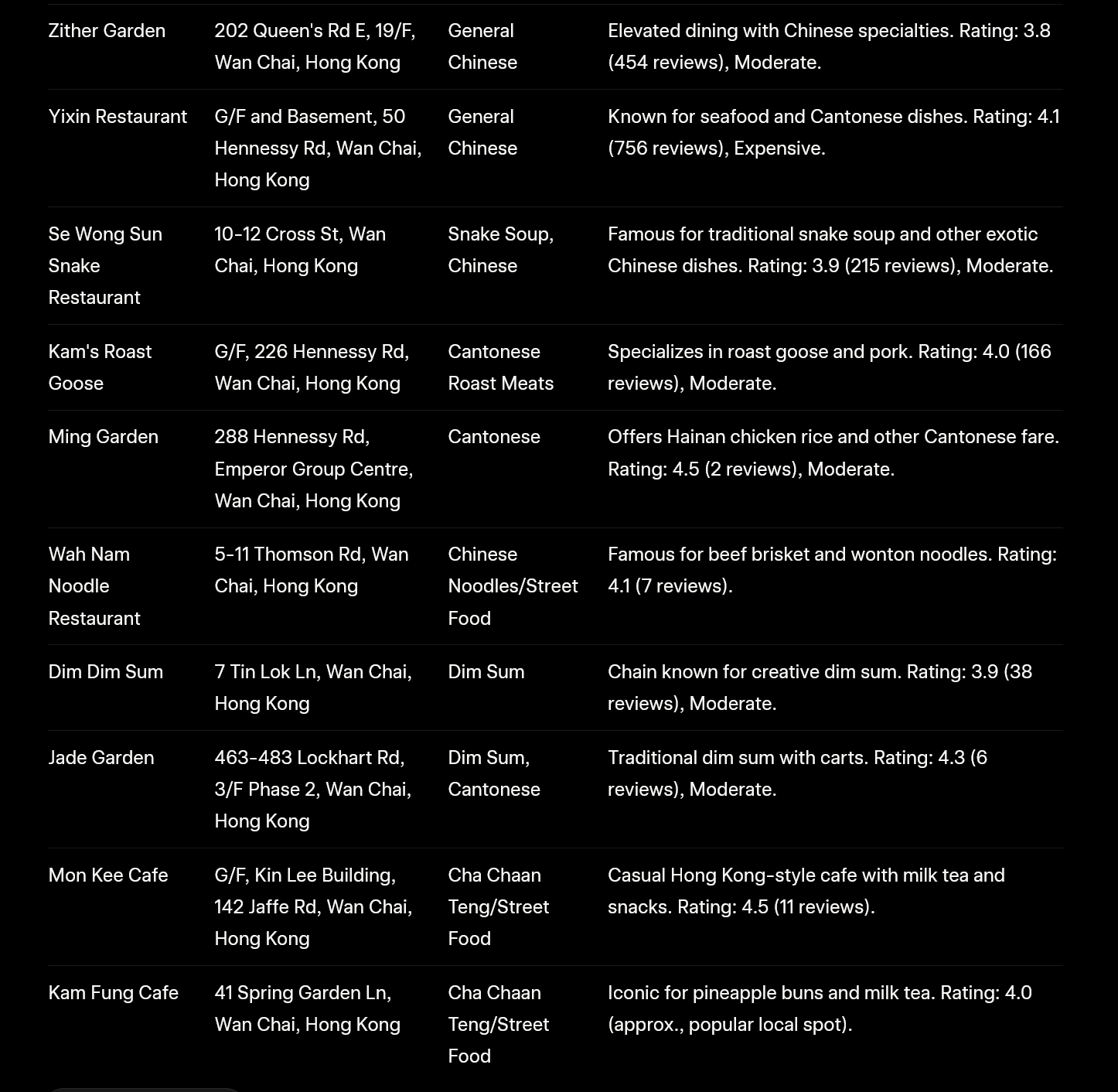
Where to eat in Wan Chai, in and around the Wan Chai Street Markets | 20 great restaurants
click on any image to enlarge
© Copyright Acknowledged | All rights reserved.| Image taken by Jamie
Wanchai Street + Wet Markets | Restaurants to try | Hong Kong
Wanchai has some great restaurants, the one where the millionaires go to is Fook Lam Moon which is about a 5 minute walk for the MTR exit A3, it is not as pricey as you think and is quite the experience!
Anyway it is quite the list and there will be something for any budget! there is not much in the way of street food as such around the market area but plenty of low priced dim sum places that have counters to sell food for those on the go so to speak
click on the image to enlarge
© Copyright Acknowledged | All rights reserved.| Image taken by Jamie
Hopewell Centre, Wanchai | est 1980 - 60+ floors | revolving restaurant | Hong Kong
The Hopewell Centre Hong Kong
Queens Road East in and around the market area and close to the Blue House and Pak Tai Temple is certainly interesing
I am still a fan of the Hopewell Centre (3 minutes from the Blue House) it is a very striking building and there are lots of fancy car showrooms near it at street level, Rolls Royce, McLaren and Porsche!
This building is from 1980 and it really does have a revolving restaurant on the top floor! also a new Hotel, the Hopewell Hotel that opened in 2024 is now part of the complex attached to the Hopewell Centre.
This building gets a mention because it is so iconic and quite striking and it is kind of hard to miss in Wanchai
Hopewell Centre (合和中心) is an iconic skyscraper in Wan Chai, Hong Kong Island, standing as a landmark of the city's 1980s economic boom. Located at 183 Queen's Road East, it's easily accessible from MTR Wan Chai Station (Exit D, about a 5-minute walk via Lee Tung Avenue) and various bus routes and yes, I still use exit A3 in Wan Chai Station!
Here are the key data and overview:
Height: 222 metres (728 feet) - some sources note architectural height around 216–222 m.
Floors: 64 storeys above ground (often described as 66 storeys including basements/mezzanines).
Completion Date: 1980 (construction began in 1977).
Developer/Owner: Hopewell Holdings Limited (a Hong Kong-listed property firm founded by Sir Gordon Wu; the building is named after the company, which maintains its headquarters on the top floors, including the CEO's office).
Architect: Designed under the direction of Gordon Wu in collaboration with architects WMKY Limited (also noted as WKMY Ltd.), with structural engineering by Ove Arup & Partners. It features an all-concrete structure using slipforming techniques for rapid construction.
Unique Design: The first circular skyscraper in Hong Kong, with a fully cylindrical floor plan. Due to the steep hillside site, the main entrance on Queen's Road East leads via escalators to the 3rd-floor lift lobby, while the "back" entrance on Kennedy Road is effectively on the 17th floor — a classic example of Hong Kong's vertical urbanism.
Historical Significance
Upon completion, it became Hong Kong's tallest building, surpassing Jardine House, and was the second tallest in Asia at the time. It held the Hong Kong record for 9 years until the Bank of China Tower took over in 1989. Today, it ranks as the 20th tallest in the city, but it remains a symbol of the confident, optimistic era of Hong Kong's rapid high-rise development.
Notable Features
Rooftop Swimming Pool: A circular private pool on the roof, added for feng shui reasons (the building's shape was likened to a cigarette, and water counters "fire").
Revolving Restaurant: Hong Kong's only remaining 360-degree revolving restaurant, now known as The Grand Buffet (on the 62nd floor; previously Revolving 66 or VIEW62). It completes a full rotation roughly every hour, offering stunning panoramic views of Victoria Harbour, the city skyline, and surrounding buildings - a must-visit for diners seeking a nostalgic, elevated experience and yes I have been there and it is awesome
Observation Lifts: Glass-walled scenic elevators (especially from the 17th to 56th floors) provide thrilling free views over Wan Chai and beyond.
Other Amenities: Primarily Grade A offices, with car parks, retail stores, and connections to the new Hopewell Mall (opened November 1, 2024, enhancing the area's shopping/dining cluster). Various floors host tenants like consulates, insurance firms, and environmental offices.
click on the image to enlarge
© Copyright Acknowledged | All rights reserved.| Image taken by Jamie
The Old Pawnshop Building | Wanchai | Hong Kong
The Old Pawnshop Building | Wanchai
This is the historic shophouse complex at Nos. 60A-66 Johnston Road in Wan Chai, often referred to as the Woo Cheong Pawn Shop building (or informally as "The Pawn" from its earlier restaurant days). It's a Grade II listed historic structure, recognized for its cultural and architectural value, and it's directly across the street from Fook Lam Moon, restaurant making it a convenient landmark and probably a 8 minute walk from Exit A3 at Wanchai MTR (Subway) Station
Brief History
Built around the early 1920s (exact date uncertain, but post-WWI based on records), these four interconnected shophouses were part of Wan Chai's early urban expansion as one of Hong Kong Island's first developed districts after the British arrival in 1841. Originally on the waterfront (before reclamations pushed the harbor north), the site was in the "Ha Wan" area, known for its mix of residential and commercial life. No. 66 was operated as the Woo Cheong Pawn Shop (和昌押) by the prominent Lo family, who ran pawn businesses for over a century—pawnshops were vital community hubs back then, offering loans against valuables like jewelry or clothing. No. 64 was linked to the Yue Clansmen Association (with a facade inscription still visible), while the others housed various retail trades on the ground floor and residences above. By the 2000s, the buildings had deteriorated, leading to acquisition by the Urban Renewal Authority (URA) in 2003 as part of the Johnston Road Redevelopment Project (H15 scheme). They were preserved and revitalized to prevent demolition, blending with the surrounding J Residence high-rise development.
Architectural Details
It's a classic example of Verandah Shophouse style (also called Guangzhou Verandah), popular in early 20th-century Hong Kong for its practical design in a subtropical climate. The four-story structure features narrow frontages with elongated plans, upper-floor verandahs (now enclosed) supported by columns that create a covered walkway below—great for shade and rain protection. The facade shows Neo-Classical influences: simple pediments at the parapet, decorative motifs like scroll patterns on vents, regular window arrangements (with some original green-painted wooden frames surviving), and rear kitchens with tall chimneys. Despite some modern alterations (e.g., air-con units and rooftop additions), it retains much of its authentic character, contributing to Wan Chai's old-new contrast amid high-rises.
Current Use
As of late 2025, the ground and upper floors have been adapted into a high-end Italian restaurant called Sophia Loren Hong Kong (opened around 2024 after a previous tenant, The Pawn—a British gastropub—closed in the late 2010s). It specializes in Neapolitan cuisine with a glamorous, cinema-inspired vibe (named after the actress), offering dishes like pizzas, pastas, and seafood in a restored heritage setting. The space includes indoor dining, a bar, and occasional events like themed dinners or film screenings. It's popular for its atmospheric blend of history and modern dining, with string lights adding a cozy touch—perfect for evening stops on your tours. Entry is via the main Johnston Road entrance; reservations are recommended, especially weekends.
This spot ties nicely into the Wan Chai Heritage Trail, highlighting the district's pawnshop legacy and urban renewal efforts
click on the image to enlarge
© Copyright Acknowledged | All rights reserved.| Image taken by Jamie
The Old Wanchai Post Office | Heritage Building | Hong Kong
The Old Wanchai Post Office
Old Wan Chai Post Office (舊灣仔郵政局) - Hong Kong's oldest surviving post office building, built in 1913 in Edwardian style with attractive gable ends and red-brick accents. It's a declared monument and now houses a small exhibition on postal history (occasionally open to the public). Location: 221 Queen's Road East (near the market area).
The building is on Queens Road East and a 3 minute walk to the Blue House or a 1 minute walk to the Jopewell Centre, it is hard to miss despite it’s small size.
This Old Wan Chai Post Office now serves as "kNOw Carbon House" (formerly the Wan Chai Environmental Resource Centre), repurposed by the Environmental Protection Department to promote carbon neutrality and environmental awareness in Hong Kong, functioning as a heritage building with educational exhibits on sustainability.
So in a nutshell it is still a Government building
Key Details:
Current Use: Environmental education center focused on carbon neutrality, named kNOw Carbon House from 2024.
History: Operated as the Wan Chai Post Office from 1915 until 1992.
Heritage Status: Declared a monument in 1990, preserving its unique architecture.
Location: At the junction of Wan Chai Gap Road and Queen's Road East.
Features: The building retains elements of its past, including old counters and post office boxes, now integrated with environmental displays
click on the image to enlarge
© Copyright Acknowledged | All rights reserved.| Image taken by Jamie
Lee Tung Avenue, Wanchai | Fabulous for Selfies! | Hong Kong
Lee Tung Avenue (formerly Wedding Card Street) - basically over the road from the Hopewell Centre on Queens Road East
This could have been a lovely story about a street that was all about Hong Kong Heritage but alas, that old street has long gone, it became part of the Wanchai revitalisation project, they have done a great job in all fairness but I remember what the street used to be like and it was old school and had character by the bucket load.
Lee Tung Avenue (formerly called Wedding Card Street) Wan Chai South, Hong Kong has become very famous in recent years with the younger crowd, it has some terrific shops and restaurants but it really does go overboard at Christmas and Chinese Newy Year with it’s holiday decorations (in the image above, those are Chinese New Year decorations) and the place comes alive when it’s dark
It is literally over the road from the Hopewell Centre and a minute away from the street markets in Wanchai.
I can tell you that younger people are in selfie heaven on this street! and it is well worth a visit.
Lee Tung Avenue (利東街, Lìdōng Jiē) in Wan Chai is a modern pedestrian shopping and leisure street that has become a popular spot in the district. It's located between Johnston Road and Queen's Road East, right in the heart of Wan Chai South, and is easily reached from MTR Wan Chai Station Exit D (opened in late 2017 for better connectivity).
Personally I still prefer arriving and leaving by the MTR Exit A3 as mentioned in this post, but yes, exit D is an option as it is literally on Lee Tung Avenue
Original History and Nickname
Originally known as Lee Tung Street (or "Wedding Card Street" / 喜帖街 or 囍帖街), the area dates back to the mid-20th century. From the 1950s onward, it was a bustling hub for the printing industry, hosting clusters of print shops that produced newspapers (including headquarters for major publications like Hong Kong Times, Ta Kung Pao, and Wen Wei Po) and specialized in custom wedding cards, invitations, red packets (lai see), New Year couplets (fai chun), and other paper goods. It attracted couples from across Hong Kong and even internationally for personalized wedding stationery, giving it a strong cultural identity tied to traditional Chinese ceremonies and celebrations. The street's fame peaked in the 1970s - 1990s as a go-to destination for wedding-related items.
Transformation and Redevelopment
The street underwent major urban renewal under the Urban Renewal Authority (URA)'s H15 scheme (Lee Tung Street / McGregor Street Project). Plans began in the late 1990s, with land resumption in 2005 and full demolition of the old low-rise buildings completed by 2007. The project, developed by Sino Land and Hopewell Holdings in partnership with the URA, aimed to modernize dilapidated structures, improve pedestrian flow, add public open space, and incorporate sustainable features (like grey water recycling and solar energy).
The site was redeveloped into a high-rise residential estate called The Avenue (with towers completed around 2014–2015), including commercial space. The street itself was pedestrianized and rebranded as Lee Tung Avenue in October 2015 (after an earlier controversial name "Avenue Walk" or 囍歡里 was dropped due to public backlash). It reopened on November 28, 2015, as a 200-meter-long European-style outdoor boulevard with a basement mall, alfresco dining, and preserved elements like three pre-war Grade III historic tenement buildings (adapted for shops and including a small museum on Chinese and Western wedding traditions).
The original promise was to create a "Wedding City" theme to revive the old specialty shops, but in practice, high rents led to dominance by international chain stores, cafes, and fashion outlets, with only a handful of traditional wedding-related businesses remaining. This shift sparked some criticism for prioritizing commercial viability over full cultural preservation, and the project involved community displacement (no original tenants resettled on-site, leading to dispersal and economic impacts for some shop owners).
Plus Points and Why It's So Popular
Despite the controversies, Lee Tung Avenue has become a go-to destination in Wan Chai for several reasons:
Pedestrian-friendly and relaxing atmosphere - It's one of the few tree-lined, stone-paved pedestrian walkways in Hong Kong, with a "boulevard-verandah" vibe inspired by 1950s Hong Kong streetscapes. This creates a pleasant, open-air environment for strolling, far removed from the usual busy roads.
Diverse dining and lifestyle options - Sidewalk cafes, gourmet restaurants, alfresco seating, and a mix of local and international brands (fashion, accessories, kitchenware) make it ideal for casual meals, coffee breaks, or evening drinks. It transforms into a lively dinner-and-drinks hub at night.
Vibrant events and seasonal appeal - It gains huge social media traction for festive decorations, such as elaborate Chinese New Year lanterns, Mid-Autumn Festival setups, and even "snow" shows during Christmas/winter periods. These turn it into a photogenic, magical spot year-round.
Convenient location and accessibility - Excellent transport links (MTR, buses, trams), proximity to traditional Wan Chai spots (markets, street food, heritage sites like the Blue House), and integration with modern residential/commercial developments make it a natural focal point for both locals and visitors.
Blend of old and new - It represents Wan Chai's evolution: modern, upscale, and polished, yet surrounded by authentic neighborhood charm, offering a contrast that appeals to people seeking a contemporary yet culturally rooted experience.
As of late 2025, it's firmly established as a trendy, lively hub that draws crowds for shopping, dining, photos, and events, while symbolizing Hong Kong's ongoing balance between heritage revitalization and urban progress
My only gripe and it is a minor one is that a lot of restaurants do not last very long and I can only conclude that the rent they pay is too high, I doubt the property people care, there is no shortage of willing tenants and basically zero vacencies
Terrific Heritage Sites to visit in Wanchai
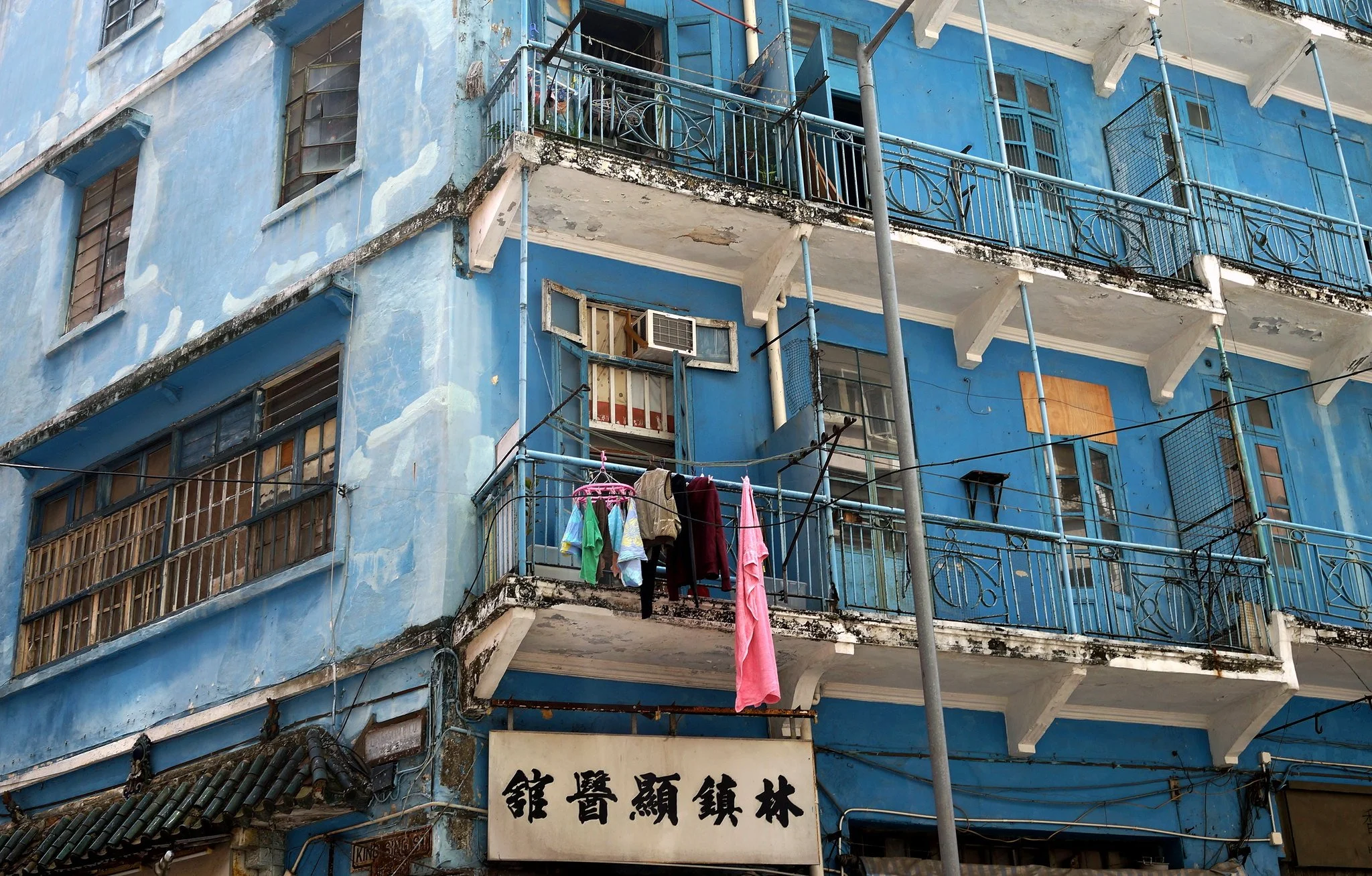
Detailed History of the Blue House in Wan Chai
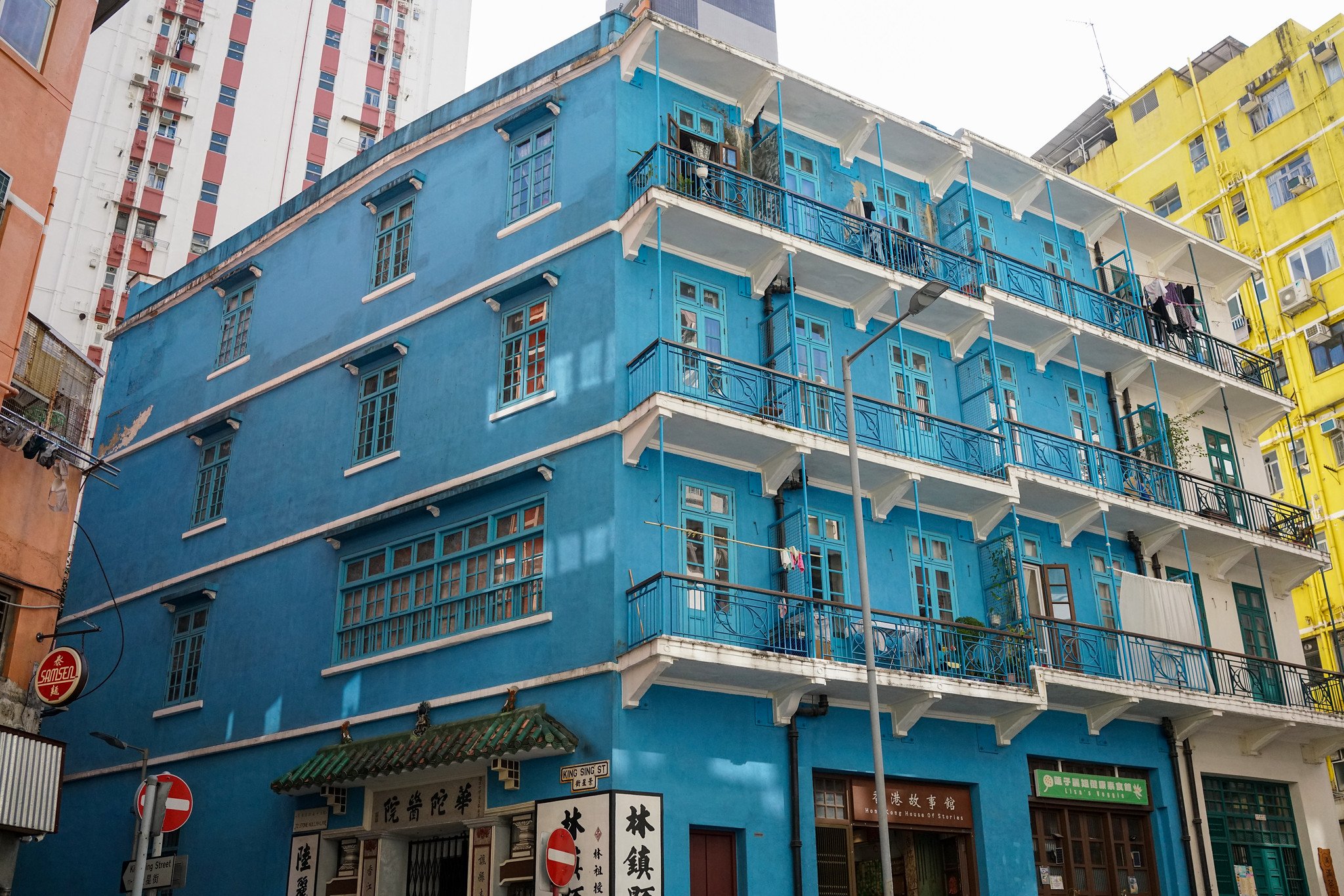
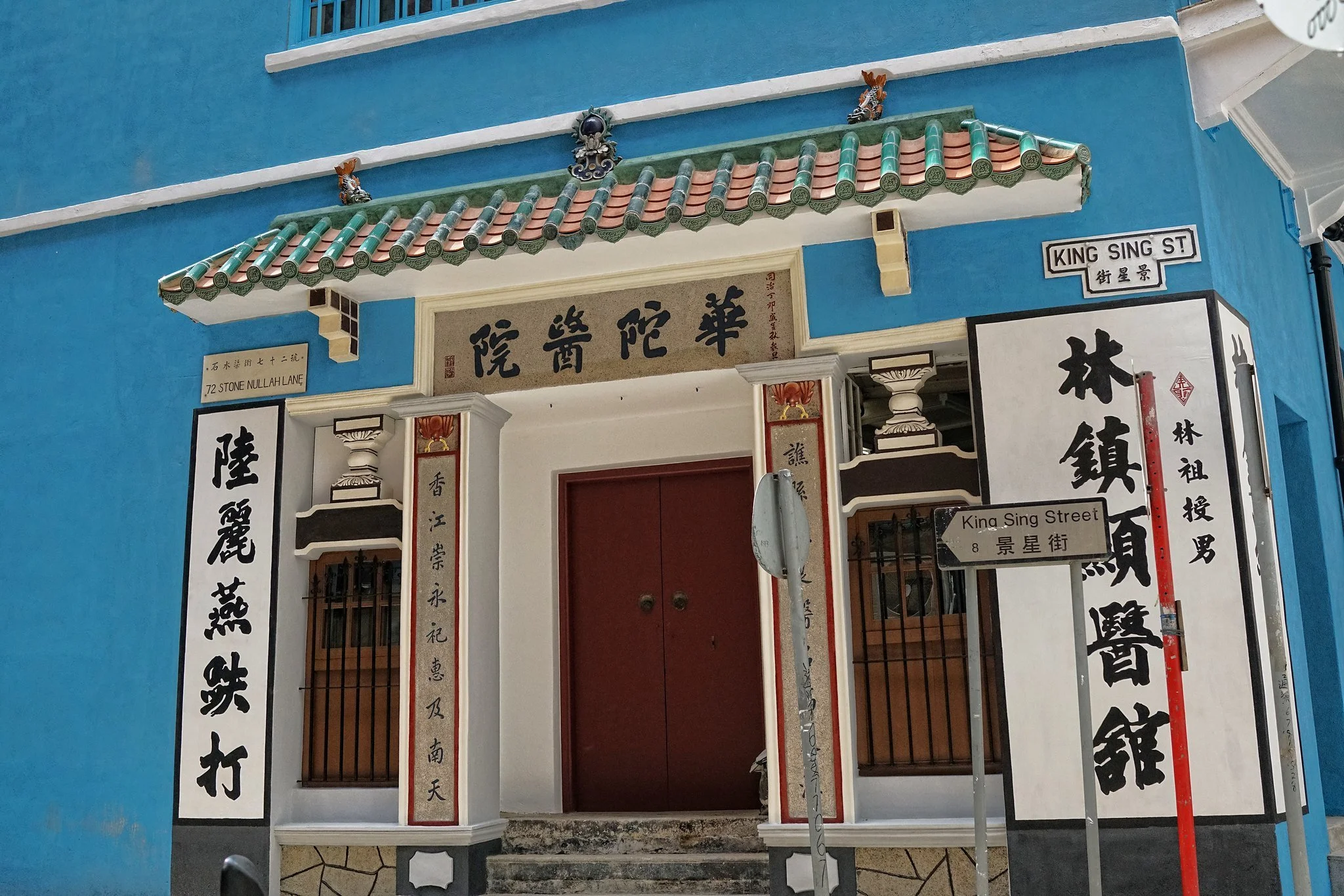
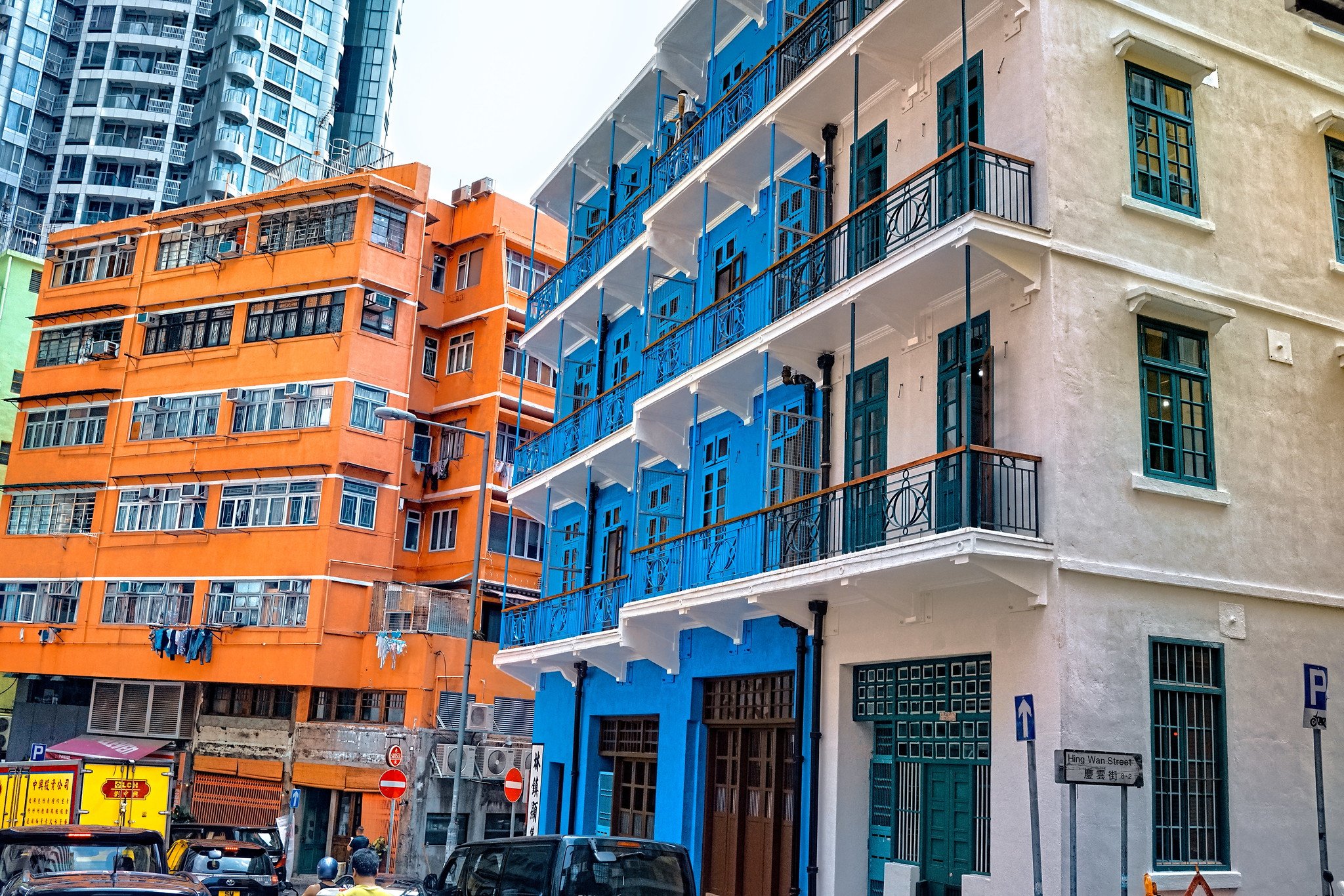
click on any image to enlarge
© Copyright Acknowledged | All rights reserved.| Images taken by Jamie
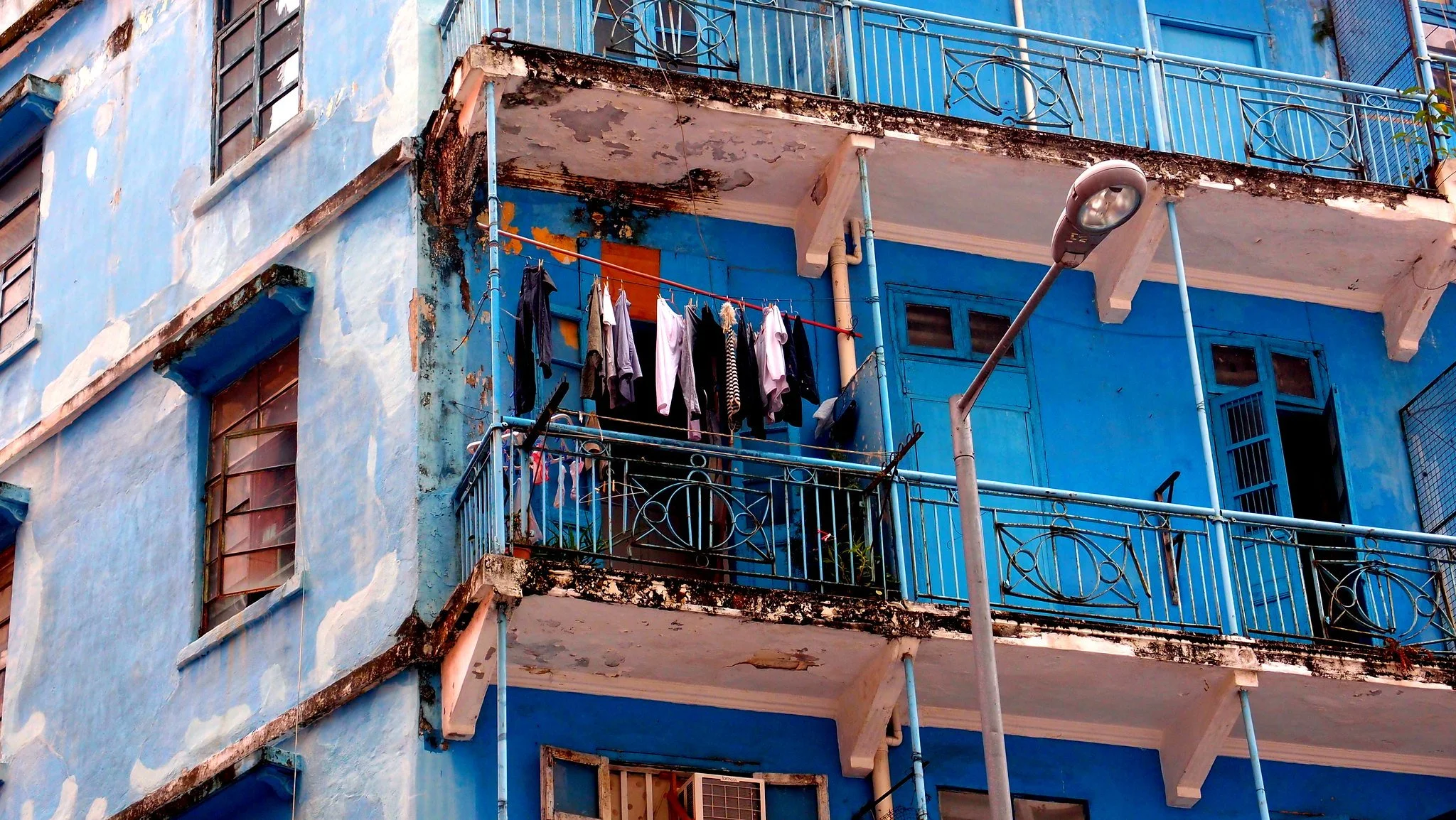
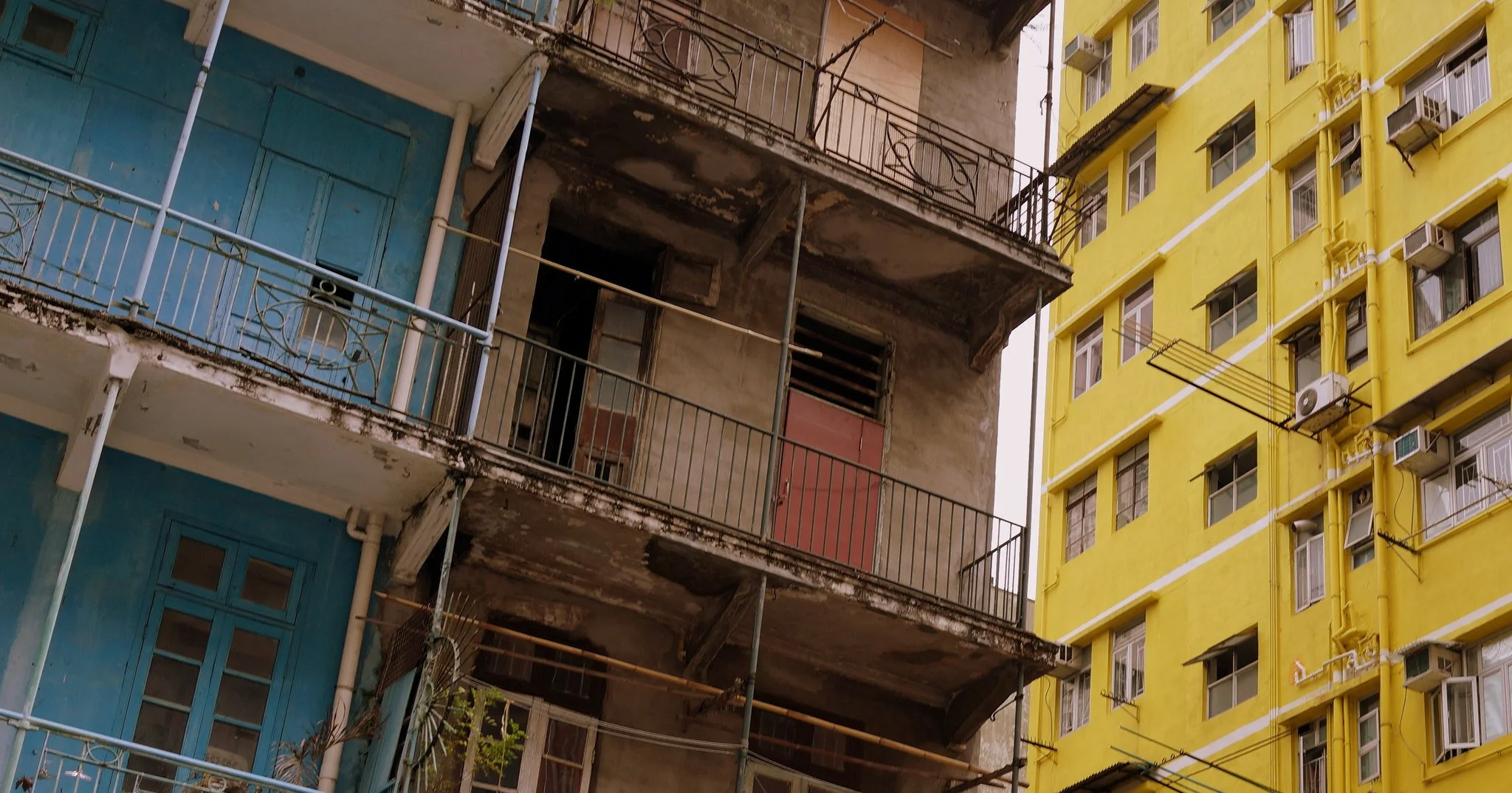
The Blue House in Wanchai | Heritage Building | Hong Kong
The Blue House Cluster (藍屋群) is one of the most iconic and beloved heritage sites in Wan Chai, perfectly complementing the market streets and tong lau (shophouse) architecture you've been exploring with your tours. It's a short walk from the area between Johnston Road and Queen's Road East—head south along Stone Nullah Lane (石水渠街) from the wet market zone, and you'll arrive in just a few minutes (very close to MTR Wan Chai Exit A3, about 5–10 minutes on foot).
This cluster represents a rare surviving example of traditional Hong Kong tong lau (balcony-type tenement buildings) from the early-to-mid 20th century, blending residential life, community spaces, and cultural preservation in a living, breathing way
I have very strong opinions on what the Government did when they decided to “renovate” the building in other words make nice, I totally disagreed with it, in it’s old original state it was a genuine heritage building (as you can see from the images above) and they have done many projects like this without realising that making it nice and new destroys any notion of heritage and history
No doubt the official line was along the line of it being a dump and falling apart and therefore unsafe and yes I am smart enough to see the logic, but this type of building is so rare they should have left it untouched at least for another 20 years
I have no idea why young tour guides (in their 20’s) take people here, all that hard earned history and heritage no loner exists and you cannot replicate it by showing before and after images.
Please bear in mind this is simply a personal opinion
Key Buildings in the Cluster
The cluster includes three interconnected colorful tong lau:
Blue House (main building, Grade 1 historic status) — The standout cobalt-blue facade that gives the whole area its name.
Yellow House (Grade 3 historic status) — Pale yellow tones, adding to the vibrant palette.
Orange House — Bright orange accents, completing the cheerful trio.
Brief History
The site dates back to the 1870s as Wah To Hospital (possibly Wan Chai's first Chinese medicine facility), later a temple for the God of Medicine (Hua Tuo/Wah To).
Rebuilt in the 1920s as four-storey tong lau (completed around 1922), with upper floors for living quarters and ground floors for shops.
Post-WWII uses included a kung fu school and Dit Da (bone-setting) clinic.
In the 1990s, leftover blue paint from government works accidentally turned the exterior blue—hence the nickname!
Faced demolition in the 2000s but was saved through strong community campaigns, leading to a groundbreaking 2007 decision allowing residents to stay (the first "retain residents" approach in Hong Kong heritage projects).
Major revitalization (2015–2017) by St. James' Settlement (a local NGO) under the government's Revitalising Historic Buildings scheme, reopening in 2017.
Won the UNESCO Asia-Pacific Award of Excellence for Cultural Heritage Conservation in 2017—the highest honor—for balancing preservation with community life.
Current Status (as of late 2025)
It's a living heritage site with around 19 families still residing there (some original tenants stayed through renovations). Managed by St. James' Settlement, it functions as "Viva Blue House" with community-focused spaces:
Hong Kong House of Stories (in Blue House ground floor): Free exhibitions on old Hong Kong life, artifacts, multimedia displays, workshops, and guided tours.
Acupuncture/Dit Da clinic (traditional Chinese medicine).
Tea house, community kitchen (in Yellow House).
Arts/cultural spaces (in Orange House).
Occasional events like Mid-Autumn lantern displays (a fun seasonal highlight—lanterns often light up the area around September/October).
The story of the blue paint remains one of the most charming quirks: In the early 1990s (around 1990–1997, after government acquisition in the 1970s), workers used leftover blue paint—often described as surplus from the Water Supplies Department or even ship hull paint from a warehouse—and simply ran out midway, leaving one corner unpainted (concrete grey). That accidental partial blue became the building's signature, turning a practical fix into an iconic look!
Your anecdote about the night soil collector (the "night soil man" with buckets on a bamboo pole) is fascinating and spot-on for that era. It was a real practice in older tong lau areas before modern sanitation fully took over - residents would use buckets or shared facilities, and collectors came regularly to empty them into drains or collection points.
Why It's Special
Unlike many preserved sites (often turned into museums), it keeps its grassroots soul - real people live here, blending history with daily life.
It's a symbol of successful bottom-up heritage conservation in a city often criticized for prioritizing redevelopment.
How to Get There (Convenient from Wan Chai Market Area)
MTR: Wan Chai Station (Island Line), Exit A3 (same exit as for Tai Yuen Street/Cross Street markets).
Walk south along Johnston Road, turn left into Stone Nullah Lane (~5 - 7 minutes total).
The Blue House is right there—impossible to miss with its bright blue facade and yes you have to cross over Queens Road East
From the old Wan Chai Market building (One Wan Chai) or The Zenith wet market: 5 - 10 minute walk north along Queen's Road East to Stone Nullah Lane.
Access and Opening Hours (as of late 2025)
Exterior: Always viewable (free, 24/7).
Hong Kong House of Stories (museum/exhibitions): 10:00 AM – 6:00 PM daily, closed Wednesdays and major public holidays (e.g., Lunar New Year, Christmas).
Free entry; guided tours sometimes available (check Viva Blue House website or on-site).
Tours: English-language heritage walks often on Saturdays (book via St. James' Settlement or apps like Klook).
Interesting Anecdotes
Locals say the blue paint "was all they had left" - a classic Hong Kong improvisation story!
During Mid-Autumn Festival, the cluster lights up with hundreds of lanterns, recreating old Wan Chai traditions.
It's a filming location for movies/TV, capturing authentic old Hong Kong vibes.
Residents' stories (shared in the museum) include tales of crowded flats, rooftop drying racks, and neighborhood solidarity.
The story of the blue paint remains one of the most charming quirks: In the early 1990s (around 1990–1997, after government acquisition in the 1970s), workers used leftover blue paint—often described as surplus from the Water Supplies Department or even ship hull paint from a warehouse - and simply ran out midway, leaving one corner unpainted (concrete grey). That accidental partial blue became the building's signature, turning a practical fix into an iconic look!
I also personally love the story about the night soil collector (the "night soil man" with buckets on a bamboo pole) is fascinating and spot-on for that era. It was a real practice in older tong lau areas before modern sanitation fully took over—residents would use buckets or shared facilities, and collectors came regularly to empty them into drains or collection points. I can vouch for this story I have lived here for 50 + year as a resident (and my wife's translation) adds priceless authenticity.
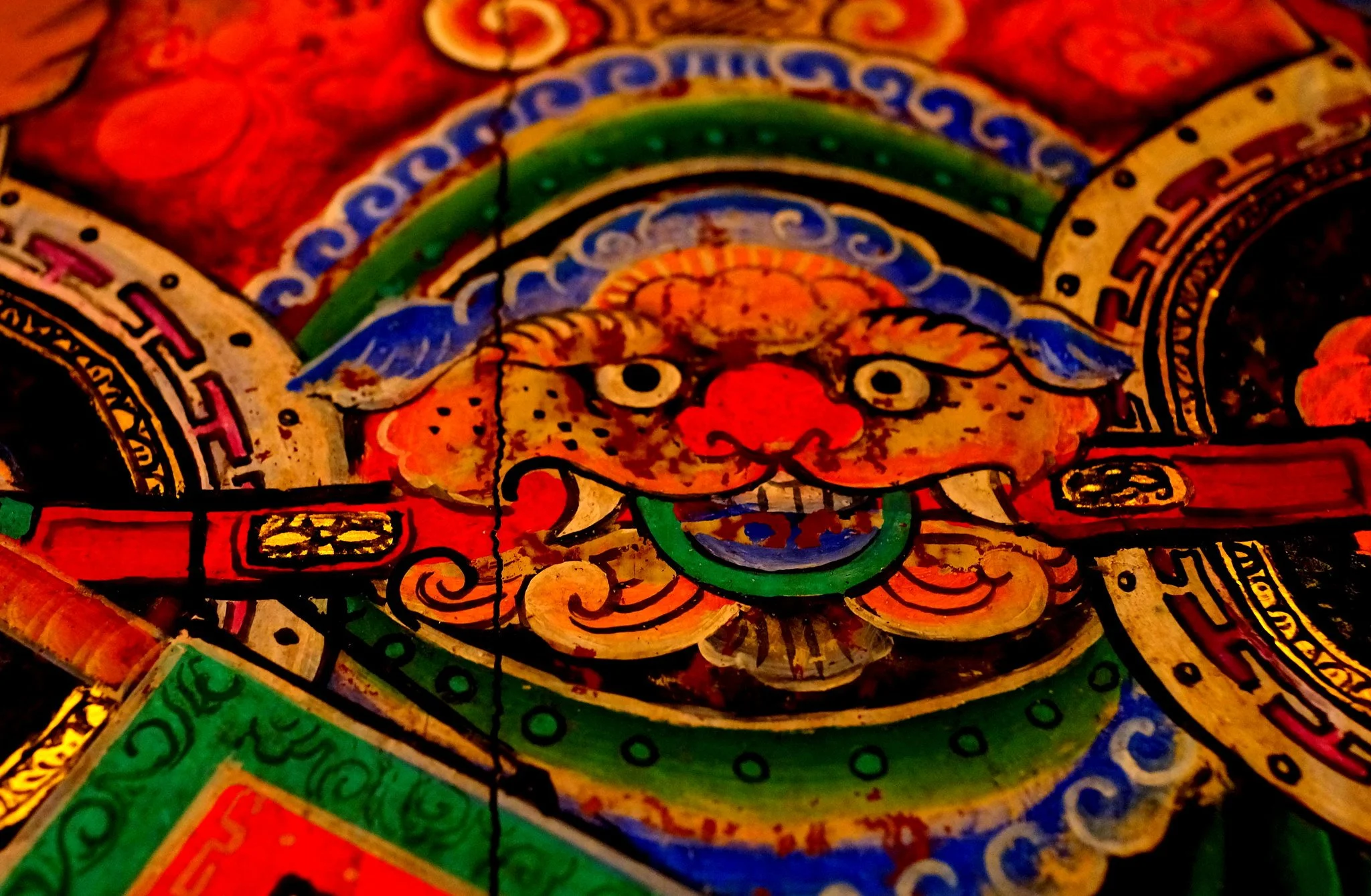
click on any image to enlarge
© Copyright Acknowledged | All rights reserved.| Images taken by Jamie
The Pak Tai Temple in Wanchai | Heritage Building | Hong Kong
The Pak Tai Temple - just 3 minutes walk from the Blue House
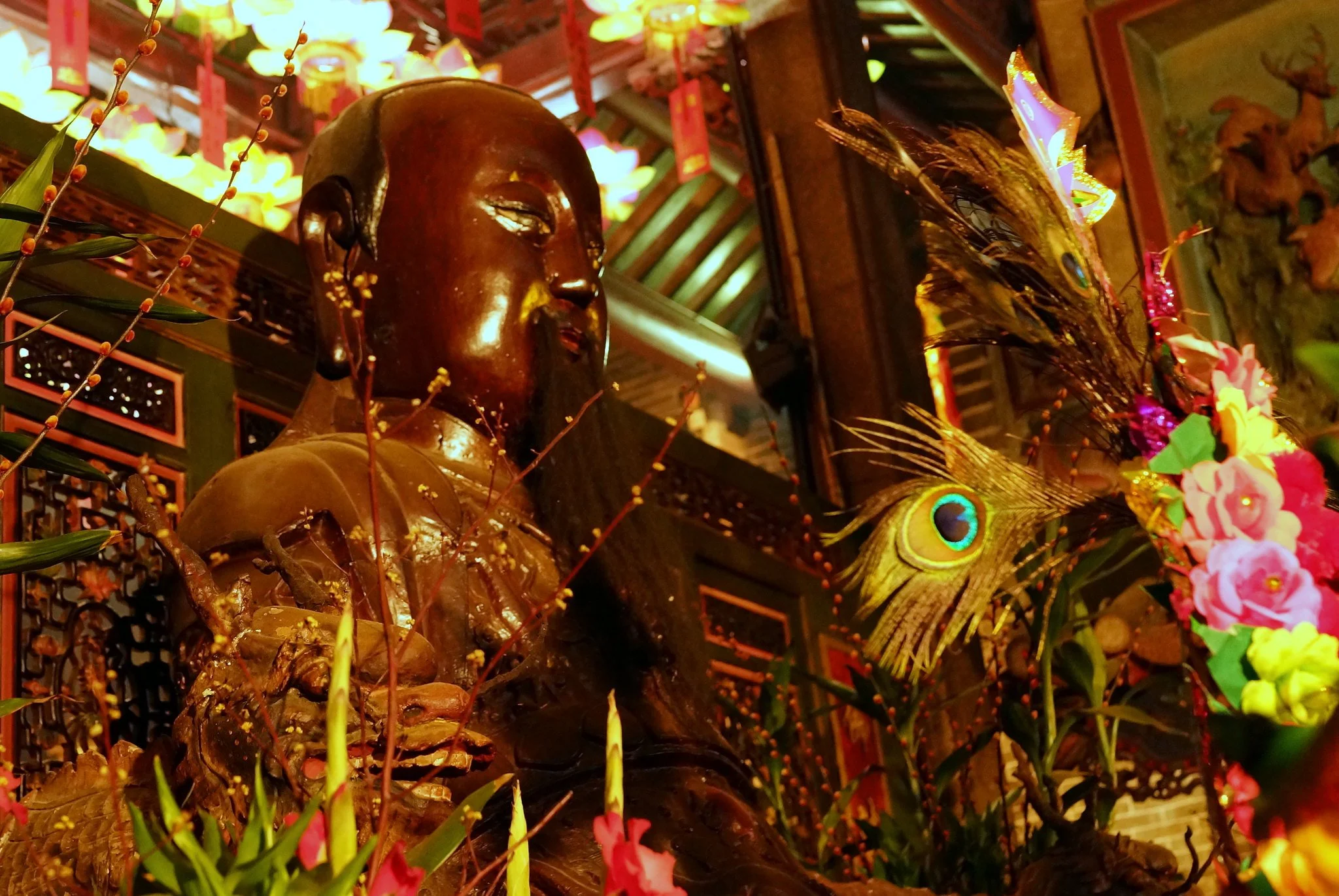
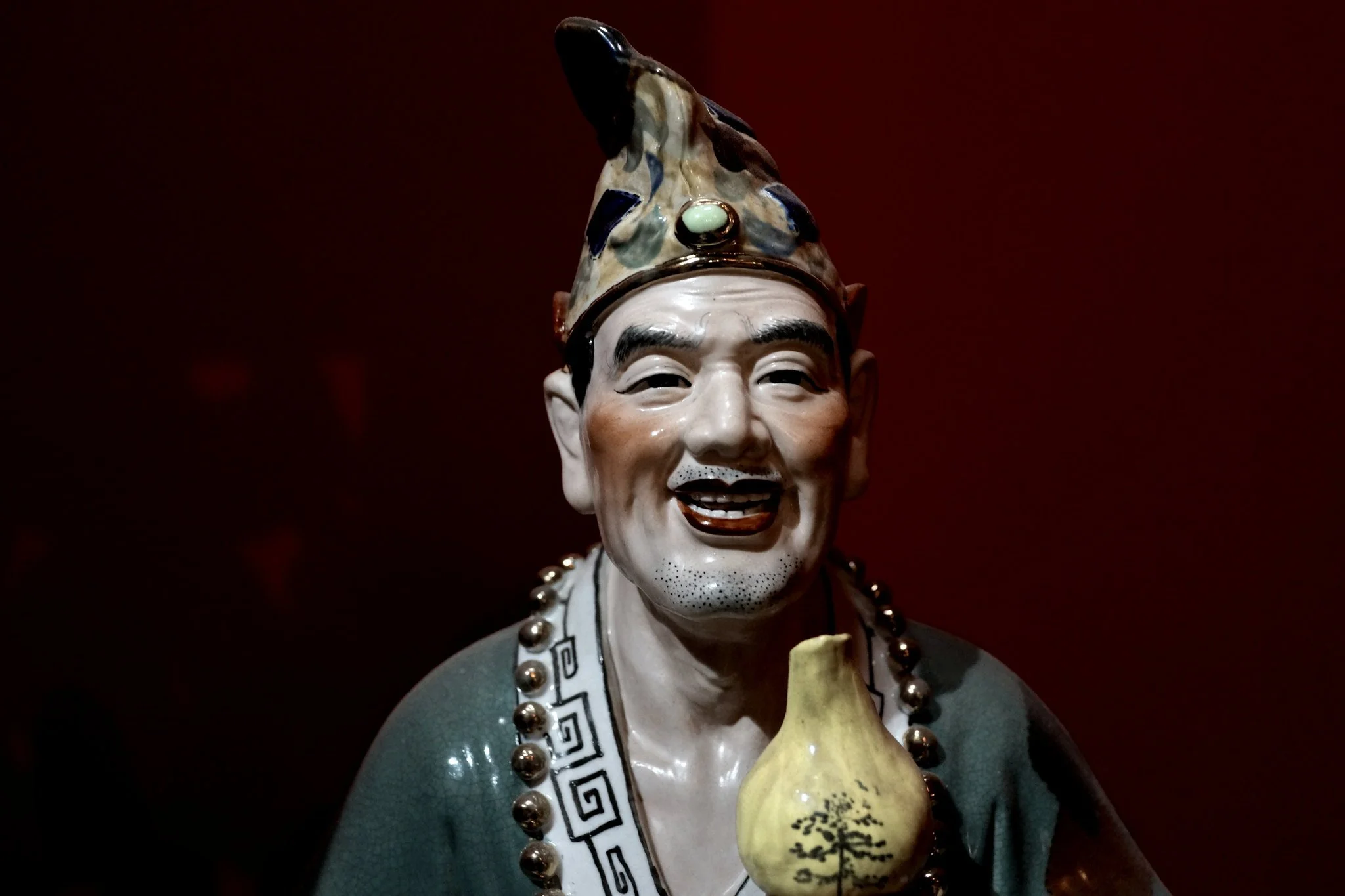
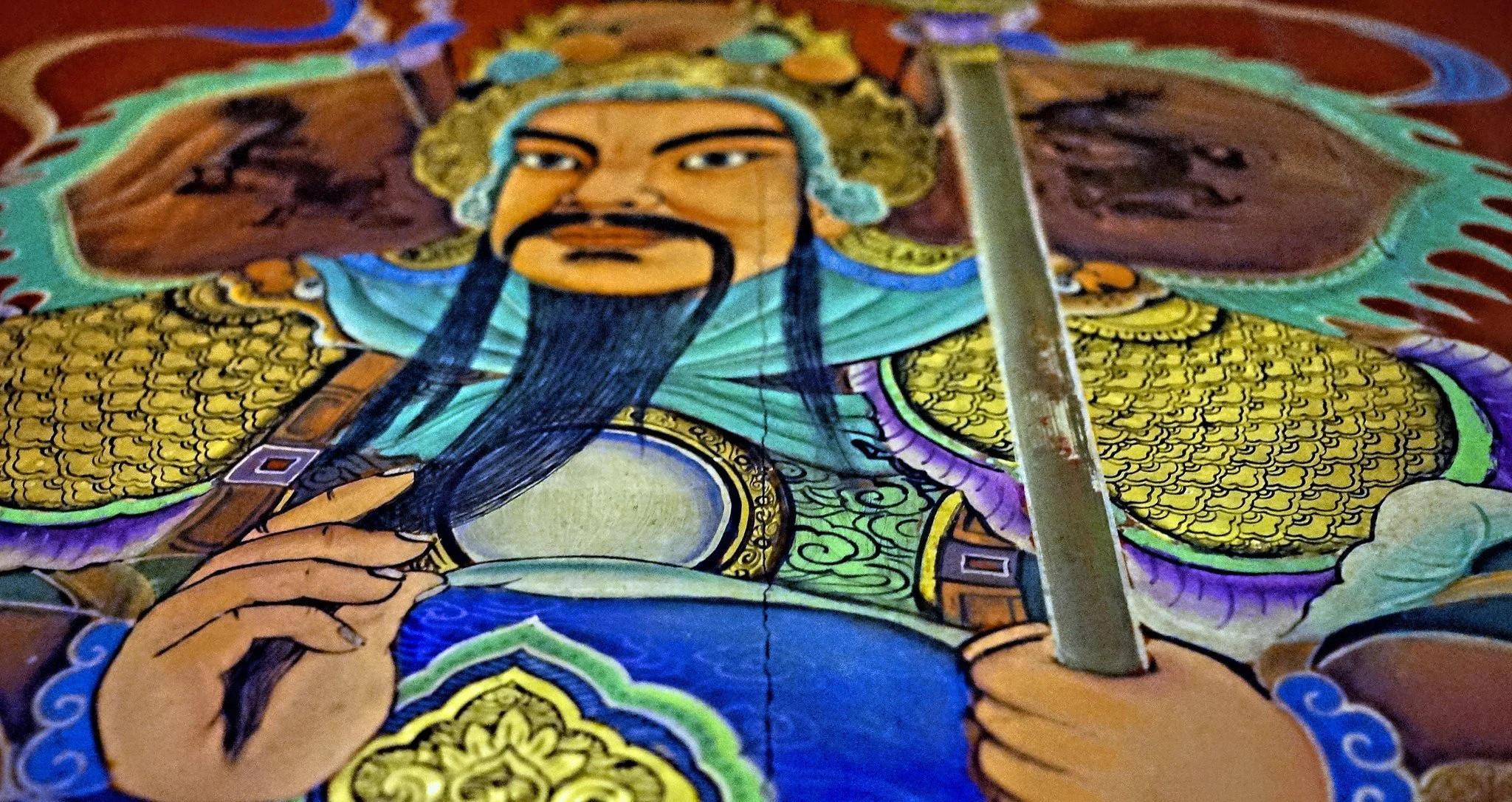
I would absolutely you take the time to visit the Pak Tai Temple (also called Yuk Hui Temple or Yuk Hui Kung) on Lung On Street- literally a 3-minute walk from the Blue House (head south along Stone Nullah Lane, turn left onto Lung On Street). It's a beautifully preserved, very local Taoist temple built in 1863 (completed during the Tongzhi reign of the Qing Dynasty), dedicated to Pak Tai (the Supreme Emperor of the Dark Heaven), a martial deity known for protection and valor. It's the largest Pak Tai temple on Hong Kong Island, housing a rare 3-meter bronze statue of Pak Tai from 1603 (Ming Dynasty), antique bells from 1863, and side halls for deities like the Dragon Mother and God of Wealth.
I do not visit as often as I should but timing on tours is an art form and sometimes a location just does not work for me but it is a must do if you visit Wanchai and I cannot help but compare it to the Man Mo Temple on Hollywood Road in Sheung Wan on Hong Kong Island, that place is jammed every day with tour coaches seemingly arriving every few minutes, you get none of that nonsense at the Pak Tai Temple
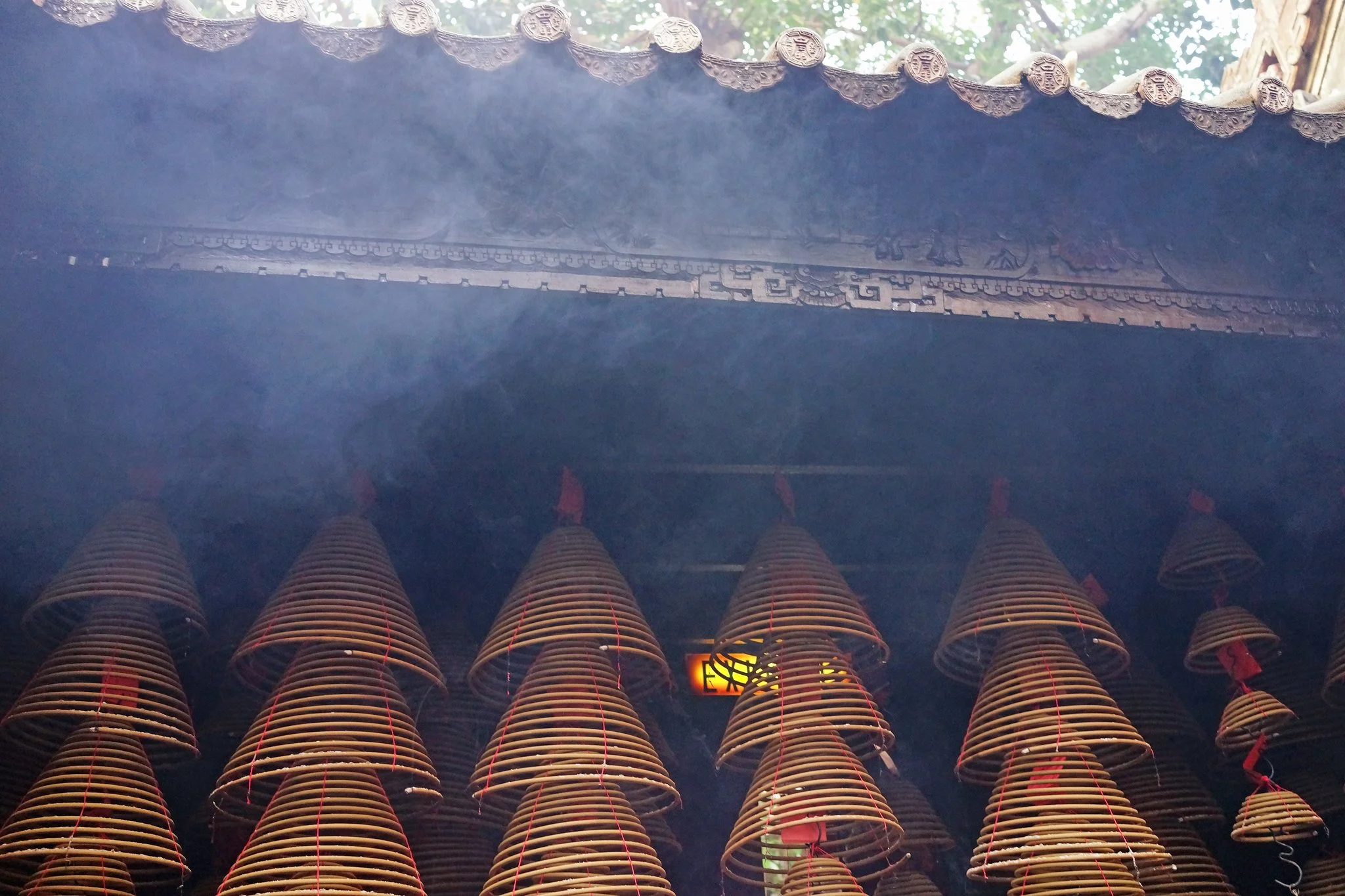
The temple feels genuinely lived-in and spiritual - quiet, incense-filled, with locals coming for prayers, especially during the Pak Tai Festival (3rd day of the 3rd lunar month). It's far less touristy than bigger spots, (such as the Man Mo Temple) offering a real glimpse into community faith amid Wan Chai's high-rises.
Please do make some time to visit the Temple during the day, I have never known it to be crowded, in fact is often devoid of any visitors and it has a very special interior.
I do not do food tours
I am pleased to say a lot of Food Tour Companies will have egg tarts and egg puffs on their tasting menu
I have very specific reasons and part of it is that I do not speak Cantonese or write Chinese, I am from Yorkshire in England and I lack the language gene and it is not through lack of trying and yes a lot of restaurants do not have English menu’s or staff who speak conversational English.
.. and yet I have eaten at close to 1,400 restaurants in Hong Kong since January 2nd 1972, my wife was born in Hong Kong and we have been together over 40 years and her first language is Cantonese and a lot of her family are Chinese or half Chinese so I have never had much of an issue!
This does not translate to doing food tours though, yes, I could do them, no problem there but they would never ever be as good as the food tours done by my friends (see the 3 links above) most of their awesome guides are locally born Hong Kong Chinese and obviously food culture is part of their DNA, it is impossible for me to compete with that!
So please feel free to contact them for food tours
© Jamie Lloyd | J3 Consultants Hong Kong | J3 Private Tours Hong Kong |
| 2010 - 2026 All rights reserved. |
Click on any image to enlarge to full screen
Current images from my Instagram feed