Nut Allergies + Chinese Food Options in Hong Kong for Allergy Travellers

The J3 Group - Premium Quality Private Tours | Experiences and Insider Chats since 2010
Me Jamie, your host, I am English and I have lived in Hong Kong since January 2nd 1972 - I know the place.
A meaningful blog post with a difference - tips on Travel, Tourism, Tours, Daily Life and my personal thoughts on Hong Kong.
Please do visit Amazing Hong Kong
Hong Kong | Pearl of the Orient


A Resident since 1972 - Private Tours of Hong Kong with Jamie
The Best Things to do in Hong Kong
click on the image to enlarge
© Copyright Acknowledged | All rights reserved | image created by Jamie
Guide to Nut Free Chinese Dining in Hong Kong 2027
Foreword by Jamie
Nut Allergies + Chinese Food Options in Hong Kong for Allergy Travellers
Why do food photographs always look so enticing? You see a plate of glistening prawns or a bamboo steamer of dumplings and the mouth waters before the brain has even asked the obvious question. For a fair number of people arriving in Hong Kong that question is simple and non-negotiable: does any of this contain nuts? Over the past 16 years of doing private youts I have sat with more guests than I can count who carry a peanut or tree nut allergy. Chinese food is not kind to them. Peanuts turn up in kung pao, satay, certain desserts and a surprising number of everyday sauces. Cashews appear in stir-fries that look perfectly innocent. Walnut paste is still common in older-style kitchens. The result is a minefield if you do not know the territory.
Hong Kong currently has roughly 17,270 licensed restaurants (FEHD figures as of late October 2026). The great majority serve Chinese food of one style or another. If you have a nut allergy the cheap local places and the big high volume chains are the ones I still treat with the most caution. Cross-contamination in a shared wok is not theoretical; it is the normal way a busy kitchen works. Upmarket restaurants and well-run hotel kitchens take the subject far more seriously. The manager can usually speak to the chef, ingredients can be checked, and a dish can be prepared without the usual nut element. That is the practical difference I have seen year after year.
How Common Are Nut Allergies in Hong Kong?
Local patterns are different from the ones most Western visitors grow up with. Shellfish remains the dominant food allergen in Hong Kong children. Nut allergies exist but have historically been lower. The most recent large surveys of Hong Kong preschoolers (covering 2006, 2013 and 2020) give a clear picture:
Perceived food allergy overall sat at 6.1% in 2006, rose to 9.5% in 2013, then eased to 8.5% in 2020.
Doctor-diagnosed (probable) food allergy stayed relatively stable around 4.4% to 5.1%.
Peanut allergy nearly tripled over the 15 years and reached 1.52% in the 2020 data.
Tree nut allergy showed a five-fold increase and stood at 0.68%.
Shellfish was still the most common single allergen at 1.99%.
Earlier population work put peanut allergy closer to 0.3–0.5%. The rise is real, driven in part by changing diets and greater Western influence, but the absolute numbers remain lower than in many European, North American or Australian cities. Guests from those places therefore bring a higher baseline risk than the average local child. That is why the subject comes up on tours more often than the raw Hong Kong statistics would suggest.
The practical good news is that nut-free adjustments are usually simpler than gluten-free ones. You are normally asking a kitchen to leave out a specific ingredient (peanuts, cashews, walnuts) rather than rebuild the base of the dish. Cross contamination is still the main residual risk, particularly with shared woks, satay sauces, kung pao style dishes and any deep-fryer that has seen peanuts.
My Standing Rule
If the restaurant is cheap, very local or a famous high-volume chain, I still treat it as higher risk even when the staff say they can leave the nuts out. The more controlled the kitchen and the more expensive the room, the safer the experience tends to be. Hotel restaurants and the better-known independent places that already deal with international guests have the systems and the habit of checking. That has been true for the guests I have taken over the years and it remains my working rule.
Restaurants I Still Recommend for Nut-Free Requests
Din Tai Fung - Silvercord Branch (Tsim Sha Tsui)
I have eaten here well over 200 times. The standard menu uses relatively few nuts and the kitchen is used to leaving peanuts or tree nuts out when asked. Safe everyday choices tend to be shrimp fried rice, many of the steamed items (always check the filling), clear soups, and the garlic string beans. Dumplings and a few sauces can occasionally contain nuts, so the conversation with the manager is still required. Walk-ins are possible but the place is busy.
Address: Shop 306, 3/F, Silvercord, 30 Canton Road, Tsim Sha Tsui.
Phone: +852 2730 6928.
Madame Fu - Grand Café Chinois (Tai Kwun, Central)
This remains one of the stronger options. Allergy awareness is good, staff often check more than once, and the kitchen can produce a wide range of Cantonese dim sum and main dishes without nuts. Seafood dumplings, pork belly, wok-fried scallops and simple greens have all worked well for guests. The verandah seating is pleasant if you are dining independently.
Address: 3/F, Barrack Block, Tai Kwun, 10 Hollywood Road, Central.
Phone: +852 2114 2118.
Email: reservations@madamefu.com.hk.
Hoi King Heen (InterContinental Grand Stanford, East Tsim Sha Tsui)
A proper hotel Cantonese kitchen with the usual hotel discipline. Dim sum, pan-fried dumplings, seafood, soups and fried rice can be adjusted by omitting any nut elements. Reliable for last-minute visits.
Address: B2/F, InterContinental Grand Stanford Hong Kong, 70 Mody Road, East Tsim Sha Tsui.
Phone: +852 2731 2883.
Email: hoikingheen@icgrandstanford.com.
Chilli Fagara (Central)
Useful if you want Sichuan heat without the usual peanuts or cashews. Many stir-fries, vegetable dishes and noodles can be prepared without them. The room is small and walk-ins are often possible.
Address: G/F, 7 Old Bailey Street, Central (opposite Tai Kwun).
Phone: +852 2796 6866 or +852 2796 6766.
Email: reservations@chillifagara.com.
Hutong (Tsim Sha Tsui)
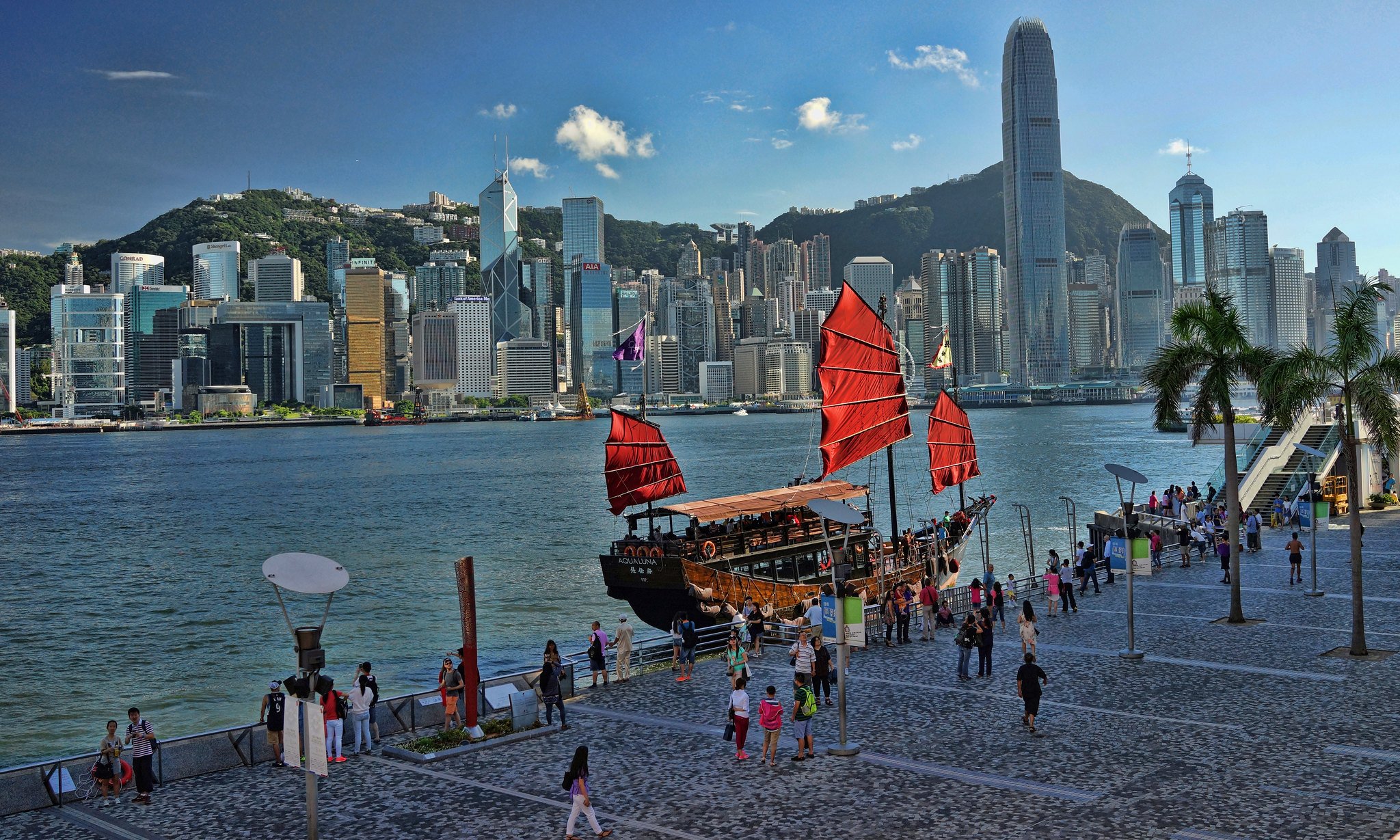
Northern Chinese cooking that adapts reasonably well. Peking duck skin, stir-fries, soups and vegetables can be done without nuts. The harbour views are a bonus. Owned by the Aqua Group; some guests combine it with an Aqua Luna harbour junk ride.
Address: 18/F, H Zentre, 15 Middle Road, Tsim Sha Tsui.
Phone: +852 3428 8342.
Email: hutong@aqua.com.hk.
Mott 32 (Central)
Modern Chinese with professional allergy handling. Dim sum, fried rice, vegetables and meats can be prepared nut-free. The basement room is elegant and suits a spontaneous upscale meal.
Address: Basement, Standard Chartered Bank Building, 4-4A Des Voeux Road, Central.
Phone: +852 2885 8688.
Email: reservations@mott32.com.
Lai Ching Heen (Regent Hotel, Tsim Sha Tsui)
Michelin-recognised hotel restaurant with high standards for customisation. Seafood and steamed dishes adapt cleanly. Luxury hotel service means the request is taken seriously.
Address: Ground Floor, Regent Hong Kong, 18 Salisbury Road, Tsim Sha Tsui.
Phone: +852 2313 2313.
Email: dining.regenthk@ihg.com.
Paradise Dynasty (multiple locations including Causeway Bay Lee Theatre, AIRSIDE Kai Tak, Mong Kok and others)
Shanghainese and northern-southern Chinese with a focus on xiao long bao. Travellers with severe nut allergies have reported safe meals here when the staff were told clearly in advance. Menus often carry allergen markers (including a “contain nut” symbol on certain items). Stick to the plain xiao long bao, soups and non-nut marked dishes and confirm with the manager. Busy but organised. Prices are mid-range for the quality; a meal for two typically lands between HK$600 and HK$1,200 (roughly US$77 to US$154) before service.
Chi Lin Vegetarian (Nan Lian Garden, Diamond Hill)
Buddhist vegetarian cooking inside the Nan Lian Garden complex. The kitchen works to traditional principles (no meat, no garlic, onion or leek). Nuts are not a default ingredient in most dishes, though you should still state the allergy. The setting is calm and the food is consistently good. Lunch sets are typically HK$80–180 (US$10–23). Closed Mondays.
LockCha Tea House (Hong Kong Park branch and Tai Kwun branch)
Vegetarian dim sum and an extensive tea list. Most savoury dishes are plant-based; egg and dairy items are usually marked. Nut use is limited and the staff are used to questions. A peaceful option if you want something lighter. Hong Kong Park branch: G/F, K.S. Lo Gallery, Hong Kong Park, Admiralty. Phone: +852 2801 7177.
Practical Points That Still Matter
Always speak to the manager, not only the server. Ask them to confirm with the chef that the dish will be prepared without peanuts, tree nuts or nut oils.
Avoid classic high-risk dishes outright: kung pao anything, satay, dishes described as “with cashews”, and most traditional walnut or peanut desserts.
Shared woks and deep-fryers remain the biggest residual risk in busy Chinese kitchens. Hotel and higher-end independent kitchens are better at isolating a request.
A simple Traditional Chinese nut allergy card is still useful. The standard wording covers “I have a severe allergy to peanuts and tree nuts, including oils. Please do not use any nuts or cook my food near nuts.” Many guests find it removes ambiguity when English is not the first language of the floor staff.
Prices at the hotel and upmarket places listed above typically run from about HK$400 - 800 per person (US$51 - 103) for a proper meal before service charge. The vegetarian and tea-house options sit lower.
A Final Observation
After more than 50 years in Hong Kong and 16 years of guiding people with every dietary complication you can imagine, the pattern has stayed consistent. The more expensive and organised the restaurant, the more realistic a nut free meal becomes. The places above have handled the request properly for guests on my private tours. Nothing is 100% risk-free in a Chinese kitchen, but these are the rooms where the conversation with the manager actually changes what comes out of the wok.
So there you go.
Safe Dining in Hong Kong for people with nut allergies
show this information to the Restaurant Manager
click on any image to enlarge
© Copyright Acknowledged | All rights reserved | images taken by Jamie