10 things you didn’t know about the iconic Western Market Building Sheung Wan
Hong Kong Oldest Surviving Market - Complete Guide to the Declared Monument

The J3 Group - Premium Quality Private Tours | Experiences and Insider Chats since 2010
Me Jamie, your host, I am English and I have lived in Hong Kong since January 2nd 1972 - I know the place.
A meaningful blog post with a difference - tips on Travel, Tourism, Tours, Daily Life and my personal thoughts on Hong Kong.
Please do visit Amazing Hong Kong
Hong Kong | Pearl of the Orient


A Resident since 1972 - Private Tours of Hong Kong with Jamie
The Best Things to do in Hong Kong
click on the image to enlarge
© Copyright Acknowledged | All rights reserved | image taken by Jamie
Western Market in Sheung Wan | Heritage Building | Hong Kong
Foreword by Jamie
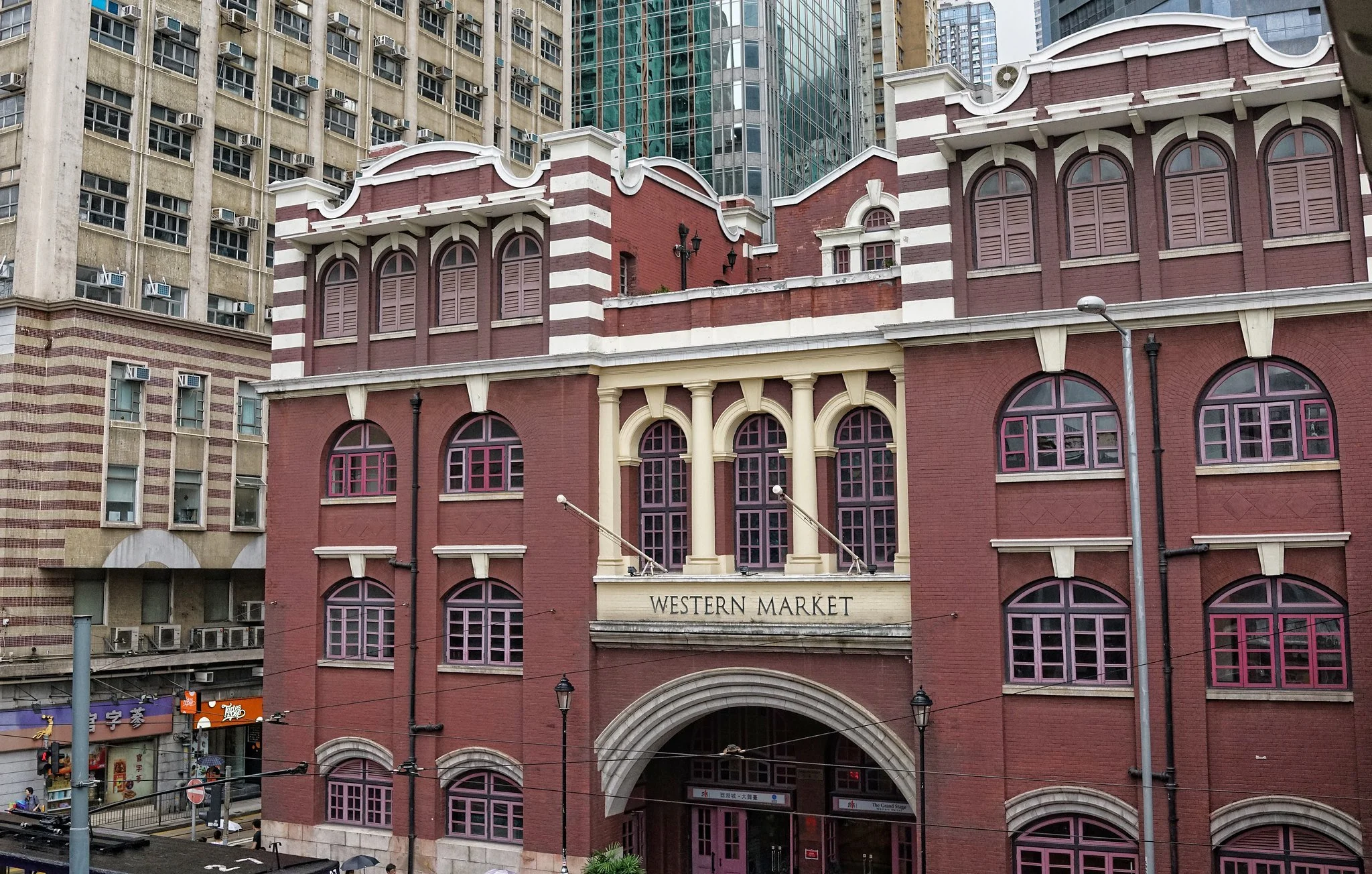
Western Market has always struck me as one of those places that sits quietly in plain sight while the rest of Sheung Wan rushes past. The red-brick Edwardian block with its banded corner towers and granite arches has watched the harbicour edge disappear under roads and reclamation, seen trams rattle by for generations, and somehow kept a foothold long after most of its contemporaries were swept away. For a building that once fed a whole district and later became a modest hub for fabric and curios, it carries more layers than many of the flashier attractions that get the glossy treatment.
Important notice - Western Market is currently closed reopening in 2028
The Urban Renewal Authority began major repair, maintenance and revamping works in mid-November 2025. Every tenant had to leave by October 2025, the doors are shut, and the building remains closed as of August 2026. Current schedules point to the works running through into early 2028, so a reopening sometime in 2028 is the realistic expectation. There has been surprisingly little public notice or tour-guide chatter about the closure, which is why it is worth stating clearly and early - anyone planning a visit or including it on an itinerary needs to know it is not accessible at present. The architecture can still be admired from the outside, of course, but the interior is off-limits for the duration of the works.
What follows is a proper dig into the details that tend to get skipped in the usual short write-ups, written with the current closed status firmly in mind.
1. Complete and detailed history of the development of Western Market from idea and concept to grand opening
The story starts earlier than the building most people recognise today. An officially sanctioned street market was already operating in the area by September 1844, not long after the colony was established, serving the growing population around what became Sheung Wan and the western end of Central. That early open-air activity sat on land leased from the government by local merchants. Demand rose steadily as the Chinese population expanded, particularly after the Taiping Rebellion pushed more people into Hong Kong.
In 1858 the government built a proper market hall - the South Block - on Queen’s Road Central. It was a solid Victorian-period structure with brick and masonry, arched entrance, colonnaded verandah and distinctive circular windows. For decades this South Block handled the bulk of the wet-market trade in fish, poultry, meat and produce for the surrounding residential and trading streets.
By the turn of the century the single hall was no longer enough. Construction of a second building - the North Block - began in 1902 on a site that had previously housed the Harbour Office (the office having moved to larger premises further east as harbour traffic grew). Piling work was under way that year; by the end of 1905 the main arches, cast-iron columns and steelwork were largely in place. The North Block was completed and handed over to the Sanitary Board in July 1906. Modelled on the South Block but more compact, it was designed in the Queen Anne Revival / Edwardian style popular in the British Empire at the time. Inside it originally provided space for dozens of live-fish stalls, poultry shops, a mezzanine level of additional shops, a slaughterhouse area, storerooms, offices and an engine room that supplied water for daily cleaning of the floors.
The two blocks together operated as the Western Market (sometimes still called Sheung Wan Market) for the best part of eight decades, interrupted only by the Japanese occupation when the building was pressed into service as a rice store. After the war it returned to market use. The South Block was eventually demolished around 1980 - 81 to make way for the MTR Island Line works and the new Sheung Wan Municipal Services Building (opened 1988 - 189). The North Block continued briefly, then stood vacant once the traders moved into the new complex. In 1990 it was declared a monument. The Land Development Corporation (predecessor of the Urban Renewal Authority) renovated it at a cost of roughly HK$55 million and reopened it in 1991 as “the Western Market” - a centre for traditional trades, arts, crafts and, crucially, the fabric merchants displaced from nearby Wing On Street (Cloth Street). Further refurbishment followed in 2003. That is the building that stood until the latest major works began in mid-November 2025.
2. Complete breakdown and overview of the ownership of Western Market
Ownership has always been public. The original market halls were government-built and managed under the Sanitary Board and later the Urban Council. After the South Block came down and the North Block emptied, the Land Development Corporation took responsibility for the 1991 conversion and adaptive reuse. When the LDC was replaced by the Urban Renewal Authority in 2001, the URA assumed the role of landlord and manager. It remains under single ownership by the URA today. The Authority has handled successive rounds of maintenance, letting and the current major repair and revitalisation programme. As a declared monument the building cannot be sold off for conventional commercial redevelopment; the URA’s brief is preservation combined with viable adaptive reuse.
3. Exact address of Western Market
323 Des Voeux Road Central, Sheung Wan, Hong Kong. The building occupies the full block bounded by Des Voeux Road Central (south), Morrison Street (east), Connaught Road Central (north) and On Tai Street (west).
4. How many retail outlets in Western Market and what they sell
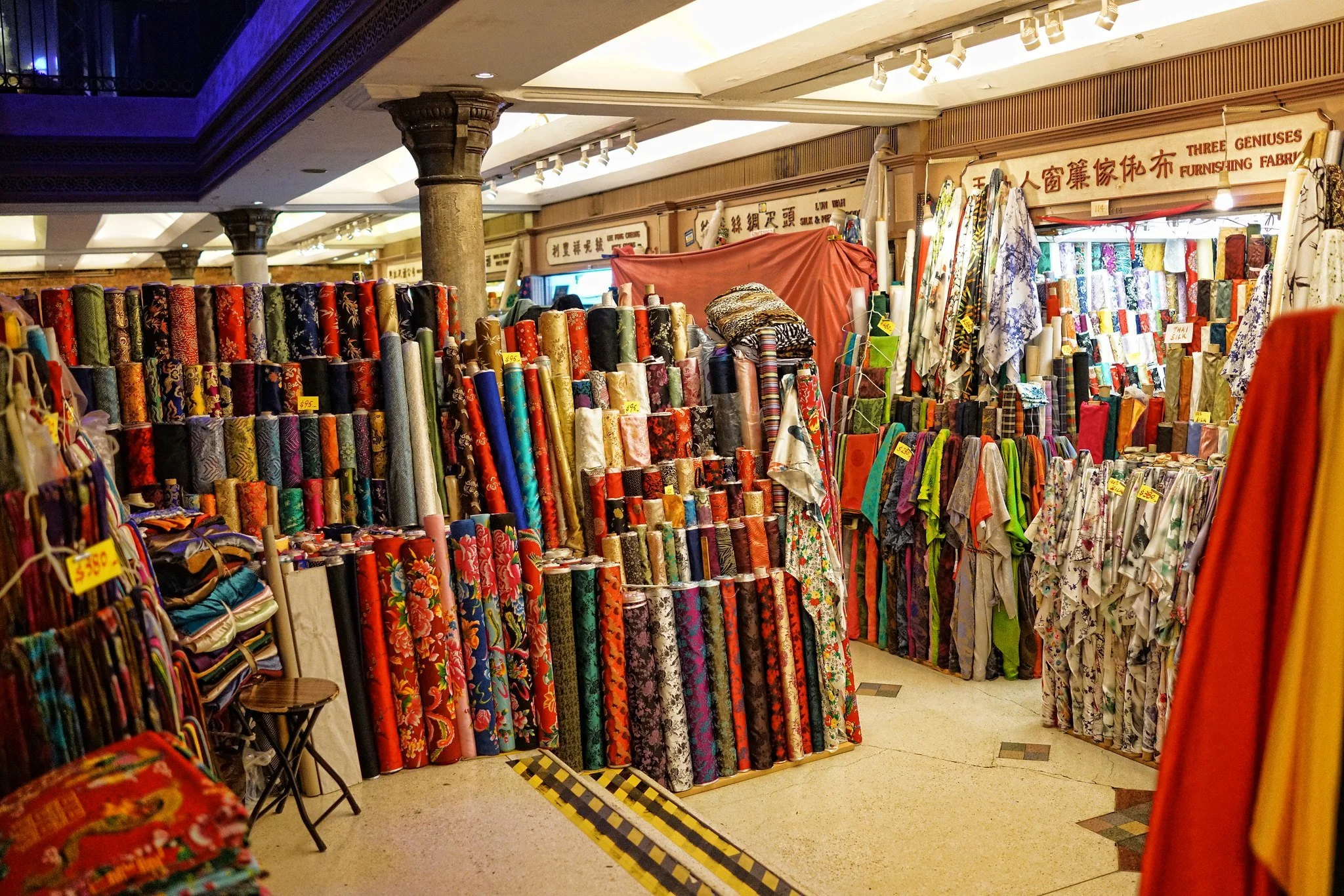
Numbers fluctuated, but in the years leading up to the 2025 closure there were roughly twenty fabric and textile shops concentrated on the first floor / mezzanine, plus a smaller number of ground-floor outlets. The fabric traders sold bolts of silk, cotton, linen, synthetics, embroidered materials, wedding-dress fabrics, cashmere and related sewing supplies - many of them continuing businesses that had relocated from Wing On Street in 1991. Ground floor typically held a handful of curio and souvenir shops, a specialist bus-model shop (80M Bus Model Shop), jewellery and craft outlets, and Chinese dessert and drinks places (notably a Honeymoon Dessert branch). Upper levels included a restaurant and banquet | dancing hall (often referred to as the Grand Stage) used for meals, events and weddings. The overall mix was deliberately low-key rather than a full shopping mall. All of that is now gone for the duration of the works.
5. Was the Sheung Wan location deliberate - was the area a core residential | trading location in the old days?
Yes, completely deliberate. Sheung Wan was one of the earliest densely settled Chinese commercial and residential districts after 1841. The western harbourfront was busy with shipping, lightermen, godowns and the everyday trade that supplied households and incoming vessels. Placing a substantial market there made practical sense: it was close to the water for fresh seafood, convenient for the surrounding streets of shops and tenements, and helped the colonial authorities bring street hawkers under a more orderly, sanitary roof. The area has always been a working district rather than a purely residential enclave - a mix of living quarters, small workshops, trading houses and later department stores such as Wing On. That practical, slightly gritty character still lingers even as office towers and modern retail have arrived.
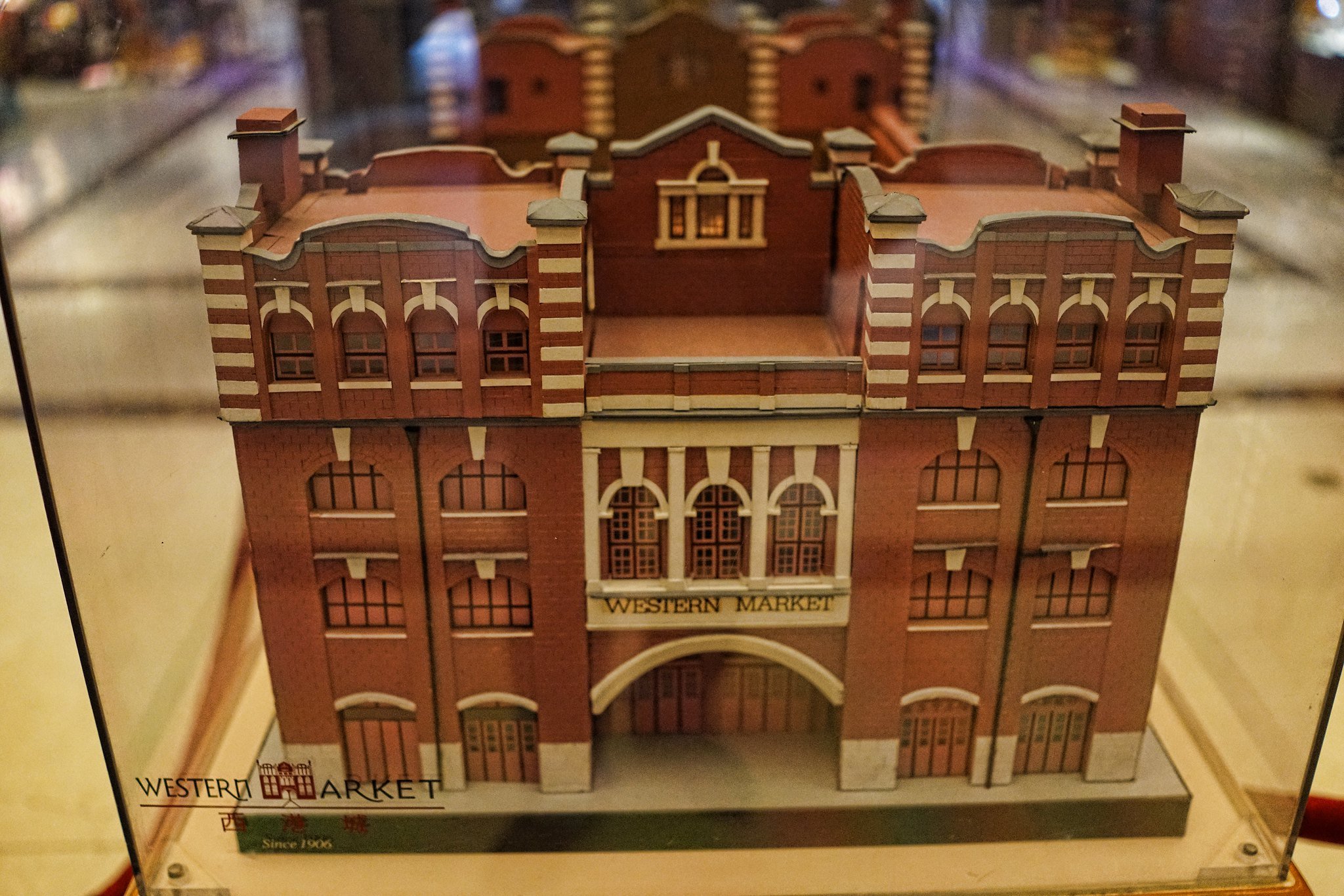
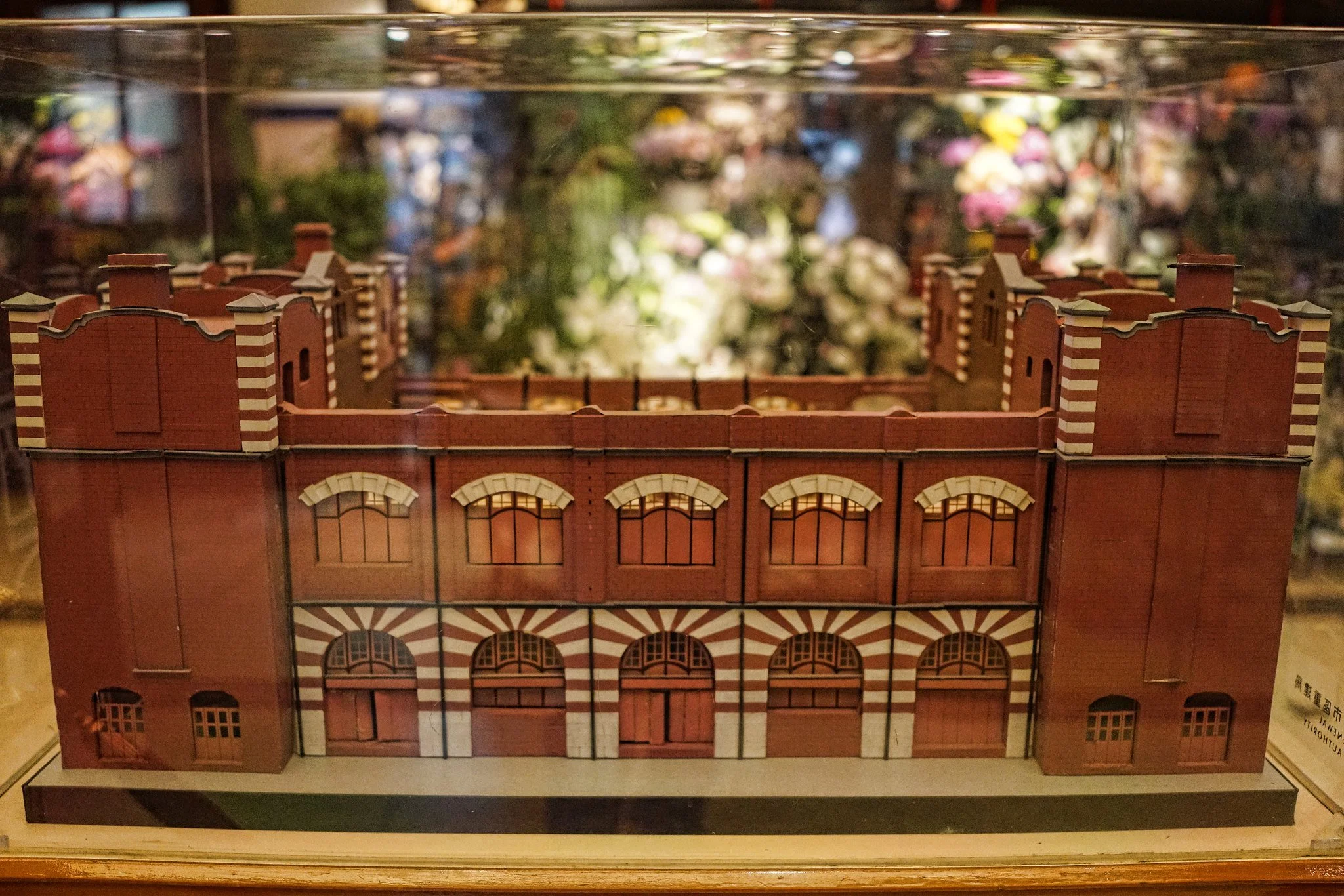
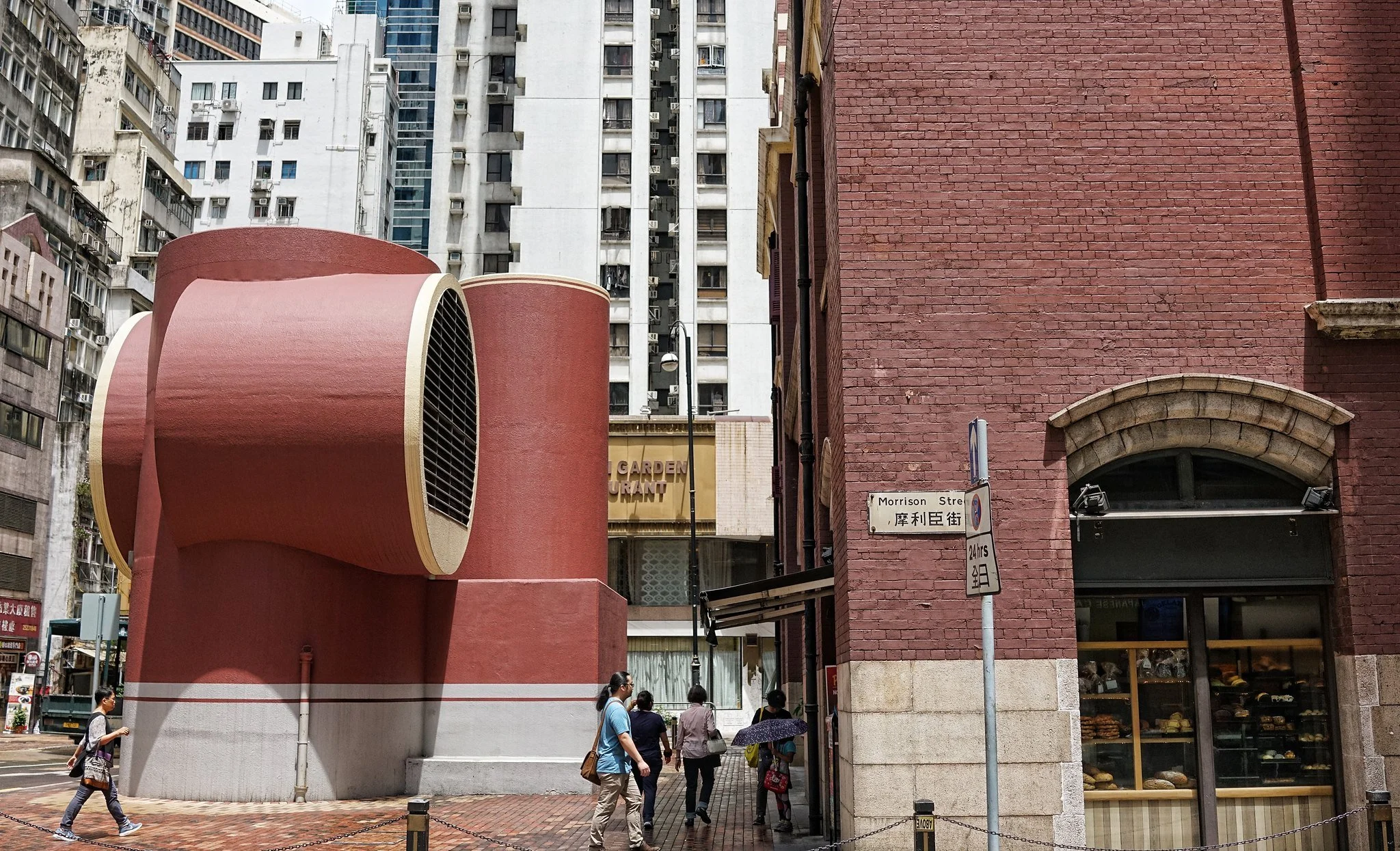
click on any image to enlarge
© Copyright Acknowledged | All rights reserved | images taken by Jamie
Western Market in Sheung Wan | Heritage Building | Hong Kong
6. Overview of reviews and the five most positive and five most negative types of comments about Western Market
Reviews over the years tend to split between appreciation of the architecture and the specialist fabric floor, and mild disappointment that the interior never felt especially lively or extensive. Positive comments most often focus on:
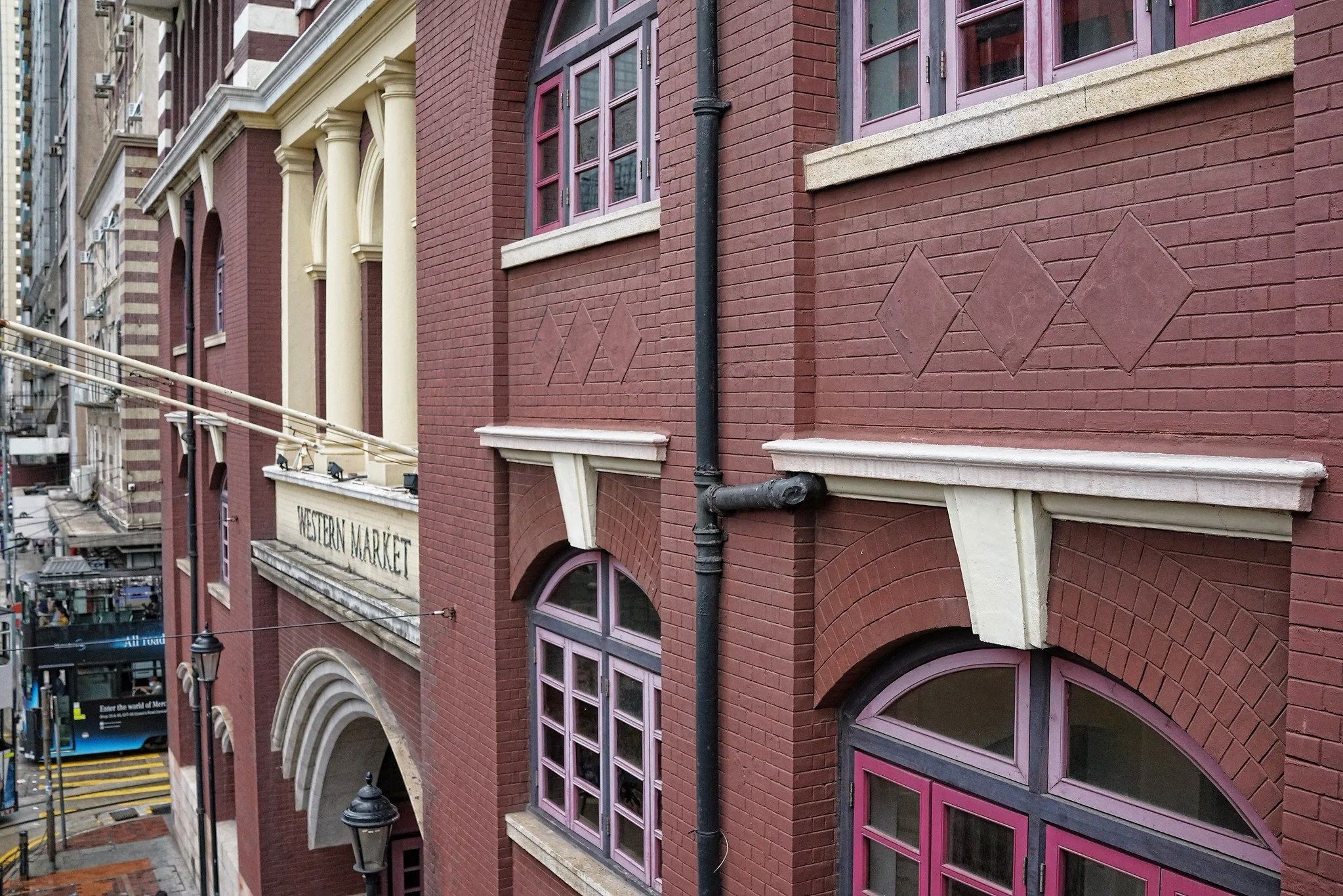
The handsome red-brick exterior with its banded corner towers, granite arches and Edwardian details
The concentrated selection of fabrics and the chance to talk to long-established traders
The sense of stepping into a preserved piece of early 20th-century Hong Kong
Convenient location right on the tram line and a short walk from Sheung Wan MTR
Occasional atmosphere of the upper-floor restaurant / dance hall with live music and older patrons
Negative or lukewarm comments most often note:
Limited number of shops and a rather quiet, sometimes sparse interior
Ground-floor outlets feeling a bit touristy or unmemorable
Not enough to justify a special trip if one is not interested in fabric or heritage architecture
A certain lack of the bustle associated with a traditional wet market
Occasional sense that the place has never quite found a strong new identity after the 1991 conversion
I have visited the market (before it closed) maybe 20 times, normally a request from my guests looking for fabrics, I have not been since 2018
7. Positive press reports and visibility of the Western Market historic building
Coverage has been steady rather than continuous. Local and heritage-focused outlets have repeatedly highlighted it as Hong Kong’s oldest surviving market building and a successful early example of adaptive reuse. Stories have appeared around the 1991 reopening, the 2003 works, the fabric traders’ long tenure, and more recently the 2025 - 26 renovation programme and the challenges faced by the elderly shopkeepers. Architectural and urban-history pieces often pair it with Central Market or other remaining colonial structures. It rarely dominates the headlines the way flashier revitalisation projects do, which is part of the reason it can feel slightly invisible despite its declared-monument status and prominent roadside position. When it does appear, the tone is generally respectful of the fabric and the practical history rather than pure nostalgia. The relative quiet around the current closure is consistent with that low-key profile.
8. Overview of facilities in Western Makret other than retail - restaurants and anything else of interest
Besides the shops, the upper levels have long housed a restaurant and banquet hall that doubled as a ballroom for dancing and events. Live music, cha-cha and tango sessions with older patrons were part of the character for years. The space has been used for weddings and private functions. Occasional exhibitions and community events have taken place on intermediate floors. The building itself is the main non-retail attraction - the cast-iron columns, staircases, high windows and overall spatial quality remain after successive renovations. Public toilets and basic visitor facilities exist, though the overall scale is modest. All interior facilities are of course inaccessible while the works continue.
9. Why Western Market has not been redeveloped - heritage status and the valuable plot
It sits on a prominent and valuable site, yet it cannot simply be cleared for high-rise commercial use because it is a declared monument under the Antiquities and Monuments Ordinance. Declared in 1990, the protection is strong: demolition or major interference requires specific permits and is effectively ruled out. The Urban Renewal Authority’s role has been to maintain and adaptively reuse the structure rather than maximise plot ratio. Successive renovations (1991, 2003 and the current major works) have focused on structural repair, services upgrades, façade conservation and finding viable commercial uses that respect the building. The large land value is acknowledged, but the heritage designation takes precedence. In practical terms the site is “untouchable” for conventional redevelopment.
10. Popularity with tour guides and the reputation for excellent fabric shops - is that still the case?
Yes, it has been a regular stop for many private guides and group tours precisely because of the fabric floor and the easy storytelling around the architecture and the Cloth Street relocation. The concentration of textile merchants offered something concrete and slightly off the usual tourist path - silks, specialised materials, the chance to watch or talk to people who had been in the trade for decades. That reputation held through the 1990s, 2000s and into the 2010s and early 2020s. By 2025 the shops were still operating (around 18 - 20 fabric outlets), though trade had softened with the broader decline in local tailoring and fabric buying. Many of the proprietors were elderly and the imminent renovation forced them to clear out by October 2025. Whether a similar cluster will return after the works finish around 2028 remains to be seen. The architectural draw for guides will certainly remain; the fabric specialism may or may not reappear in the same form. Until then, the building itself can only be viewed from the street.
Additional observation points about the iconic Western Market
A few extra thoughts that often get missed. During the Japanese occupation the building served as a rice store. The original colour scheme of the brickwork was different before it was painted the familiar red. The 1991 conversion deliberately inserted a mezzanine to create more lettable space while trying to respect the original structure. The tram tracks running right past the Des Voeux Road frontage still give it a strong sense of connection to everyday Hong Kong movement. The current major repair programme addresses long-standing issues with water seepage, ageing electrical and mechanical systems, roof tiles, timber elements and the façade – work that was overdue after more than twenty years since the last substantial refurbishment.
It will be interesting to see what happens when it reopens. Will it simply be a scrubbed-up version of its recent self, or will the URA try something different? The building sits in what is still very much a working local neighbourhood – office blocks, residential towers, small shops catering to people who live and work there, the constant flow of trams and traffic along Des Voeux Road and Connaught Road. Tourists do not generally wander into this stretch by chance the way they drift through Central, Soho or even the more polished parts of Sheung Wan closer to the MTR. Most will only clock the red-brick façade if they happen to be on a tram heading west towards Kennedy Town or if a guide has specifically pointed it out. Even then, the surrounding streets do not invite casual exploration in the same way that more deliberate heritage zones do.
That isolation has always been part of its story. When it was a wet market it made perfect sense – right on the old waterfront, convenient for the surrounding Chinese commercial and residential streets. Once the wet-market function disappeared and the fabric traders moved in, it became something of a specialist destination rather than a place people simply stumbled across. The earlier conversions never quite managed to change that fundamental reality. The building remained a quiet, slightly detached presence rather than a natural magnet.
The URA’s pattern with heritage buildings has generally been careful conservation of the fabric combined with a search for viable commercial uses that can pay the bills. They are unlikely to turn it into a highly polished, high-footfall tourist centre simply because the location works against that. A scrubbed-up version of its recent self – fabric or specialist retail on one or two floors, some food-and-beverage, perhaps a more carefully curated exhibition or event space – feels more probable than a dramatic reinvention. The declared-monument constraints also limit how radical any internal changes can be. There is always the chance they try something different – a stronger cultural or lifestyle focus, for example – but the surrounding neighbourhood will still be the same local, rather unglamorous stretch of Sheung Wan. That may actually be no bad thing. Places that retain a sense of ordinary daily life sometimes age better than those that are over-restored into pure visitor attractions. Whether the fabric traders (or a similar specialist trade) return in any meaningful numbers remains an open question; the economics of that particular business have been softening for years.
One slightly out-of-left-field thought that keeps returning: this building would make an excellent museum dedicated to Sheung Wan itself. The district has never been a major tourist destination in the conventional sense, yet it carries an enormous amount of history stretching back to the earliest years of the colony. From the 1840s onwards Sheung Wan was one of the core Chinese commercial and residential areas, with the waterfront, the markets, the trading streets and the dense everyday life that shaped so much of Hong Kong’s character. A focused district museum inside the oldest surviving market building would have felt natural – the structure already holds the physical memory of that story. It is a long-standing private musing that Hong Kong has never really developed a proper network of regional or district museums, large or small. We have the big territorial institutions, but the layered local histories of places like Sheung Wan, Wan Chai, Yau Ma Tei or even Central itself rarely get a dedicated permanent home of their own. Central Market offers a near-perfect parallel. That building stood empty for well over a decade while people scratched their heads over what to do with it, despite carrying a deep commercial and social history of its own. A museum dedicated to Central District would have been an obvious and fitting use. Instead the eventual solution leaned heavily into retail, with what feels like hundreds of kiosks and shops. The same instinct often seems to prevail: when in doubt, fill the space with commercial units rather than give the history room to breathe. Western Market could so easily have been the place where Sheung Wan’s story was told properly. Whether that idea ever surfaces in the current revitalisation is doubtful, but it remains one of the more intriguing possibilities the building still holds.
In the meantime the building continues its long habit of sitting there, solid and slightly overlooked, while the trams roll past and the rest of the district gets on with its own business. When the scaffolding eventually comes down it will be worth a careful look, if only to see how the latest chapter of adaptive reuse has been handled in a location that was never really designed for the tourist gaze.
Western Market has never been the loudest or most glamorous historic building in the city, yet it has quietly survived where many others did not. That combination of practical origins, architectural character and successive reinventions makes it worth a closer look whenever the doors reopen – which, on present information, looks like 2028.
So there you go
Customised Private Tours + Experiences in Amazing Hong Kong
Jamie has lived in Hong Kong - Pearl of the Orient for 50+ years
Carefully Crafted Personalised and Customised Itineraries by Jamie | Hong Kong’s Most Experienced Private Tour Guide for : Solo Travellers Friends Families Seniors Couples Business People MICE Delegates.
Private Tours Cultural Tours Walking Tours Sightseeing Tours City Tours Night Tours Layover Tours Transit Tours Private Shore Excursions Bespoke Tours Personalised Tours Jewish Heritage Tours Luxury Private Tours Day Tours Luxury Boat Tours Themed Tours Private Family Tours Private Day Tours Corporate Tours
Just you, your family or friends and Jamie your personal English private tour guide - over 2,400+ tours completed since 2011 - Jamie offers quality Private Tours of Hong Kong
Tour Group Size 1 - 6 people only
J3 Group Hong Kong | J3 Consultants Hong Kong | J3 Private Tours Hong Kong
Creating Memories That Will Last A Lifetime
Go here for the Hong Kong Michelin Restaurant Guide which includes the Bib Gourmand Category
I do not do Food Tours in Hong Kong but I know people that do!
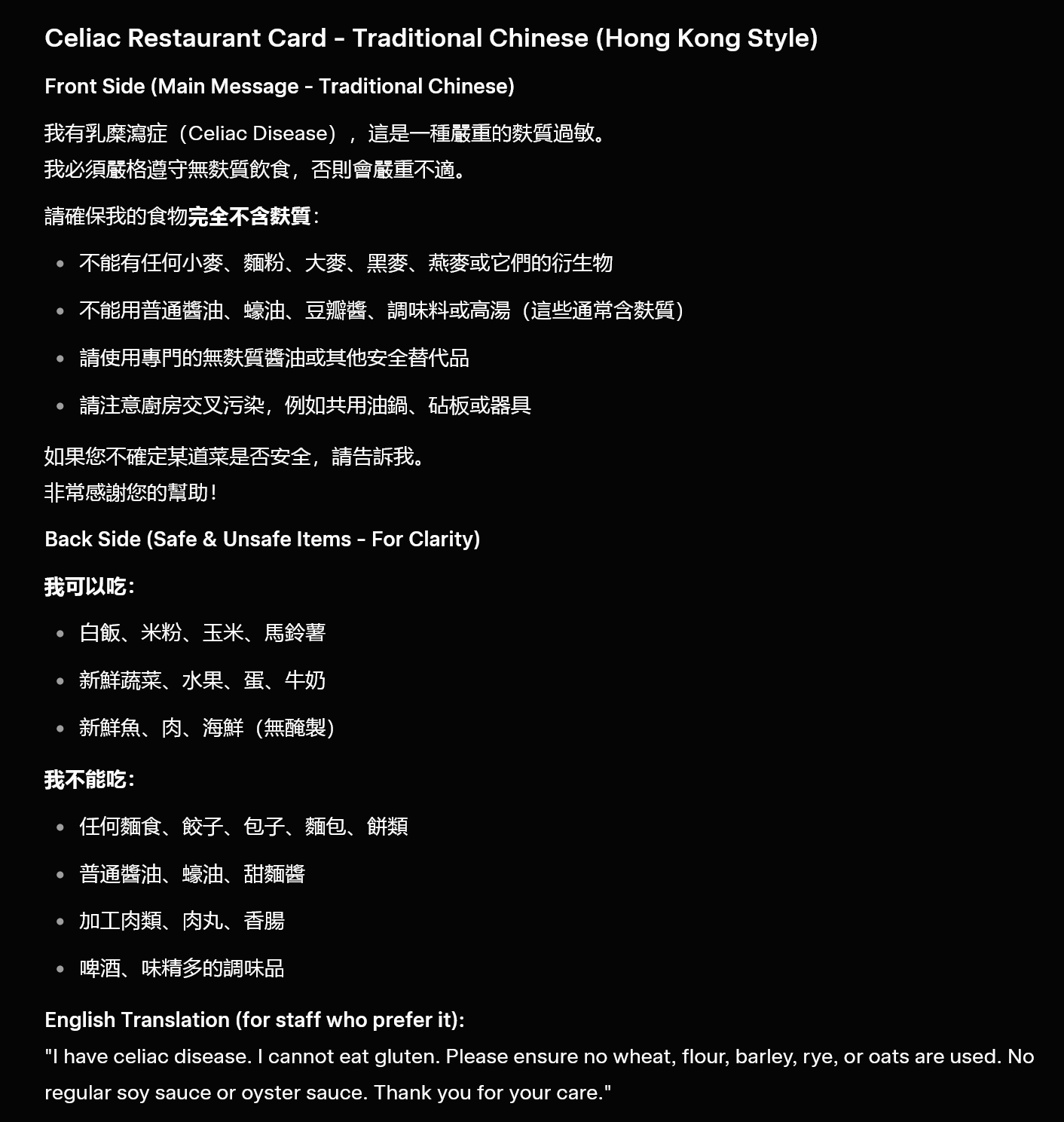
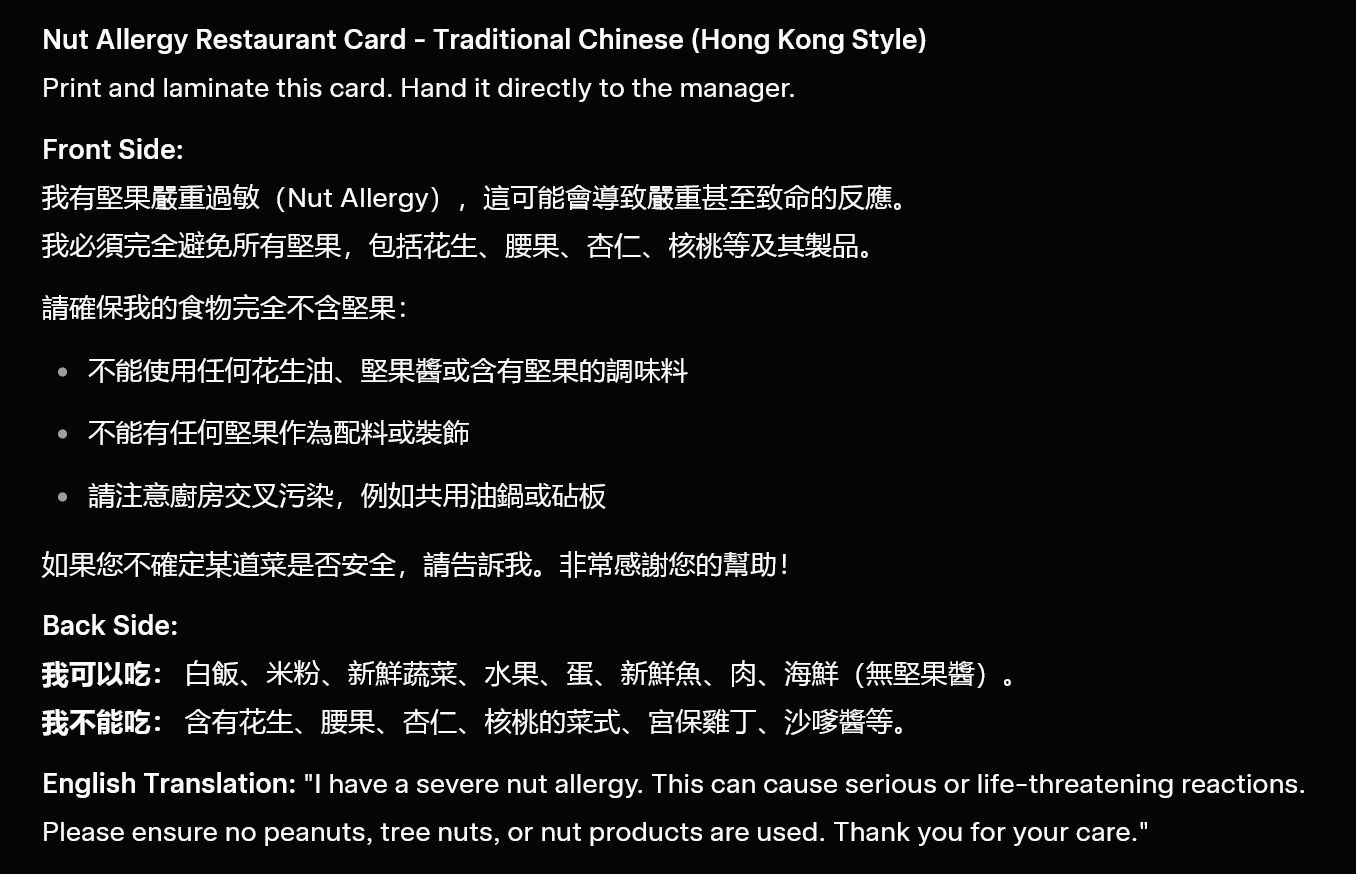
click on any image to enlarge
The information above can be shown to restaurant managers in Hong Kong if you are intolerant to gluten and nuts,
I do not do food tours as mentioned above, I have very specific reasons and part of it is that I do not speak Cantonese or write Chinese, I am from Yorkshire in England and I lack the language gene and it is not through lack of trying and yes a lot of restaurants do not have English menu’s or staff who speak conversational English.
.. and yet I have eaten at close to 1,400 restaurants in Hong Kong since January 2nd 1972, my wife was born in Hong Kong and we have been together over 40 years and her first language is Cantonese and a lot of her family are Chinese or half Chinese so I have never had much of an issue!
This does not translate to doing food tours though, yes, I could do them, no problem there but they would never ever be as good as the food tours done by my friends (see the 3 links above) most of their awesome guides are locally born Hong Kong Chinese and obviously food culture is part of their DNA, it is impossible for me to compete with that!
So please feel free to contact them for food tours
I do not do Hiking Tours in Hong Kong but I know someone that does!
I do not do Hiking Tours, never have and never will even though I used to go Hiking a lot when I was a lot younger, The Hong Kong Government is promoting hiking tours so I urge you to contact my friend Sabrina at Hong Kong Trails and Tours, she is a long time Hong Kong resident and and a very experienced hiker with close to 700 Hikes in 15+ years under her belt, please click on the link below
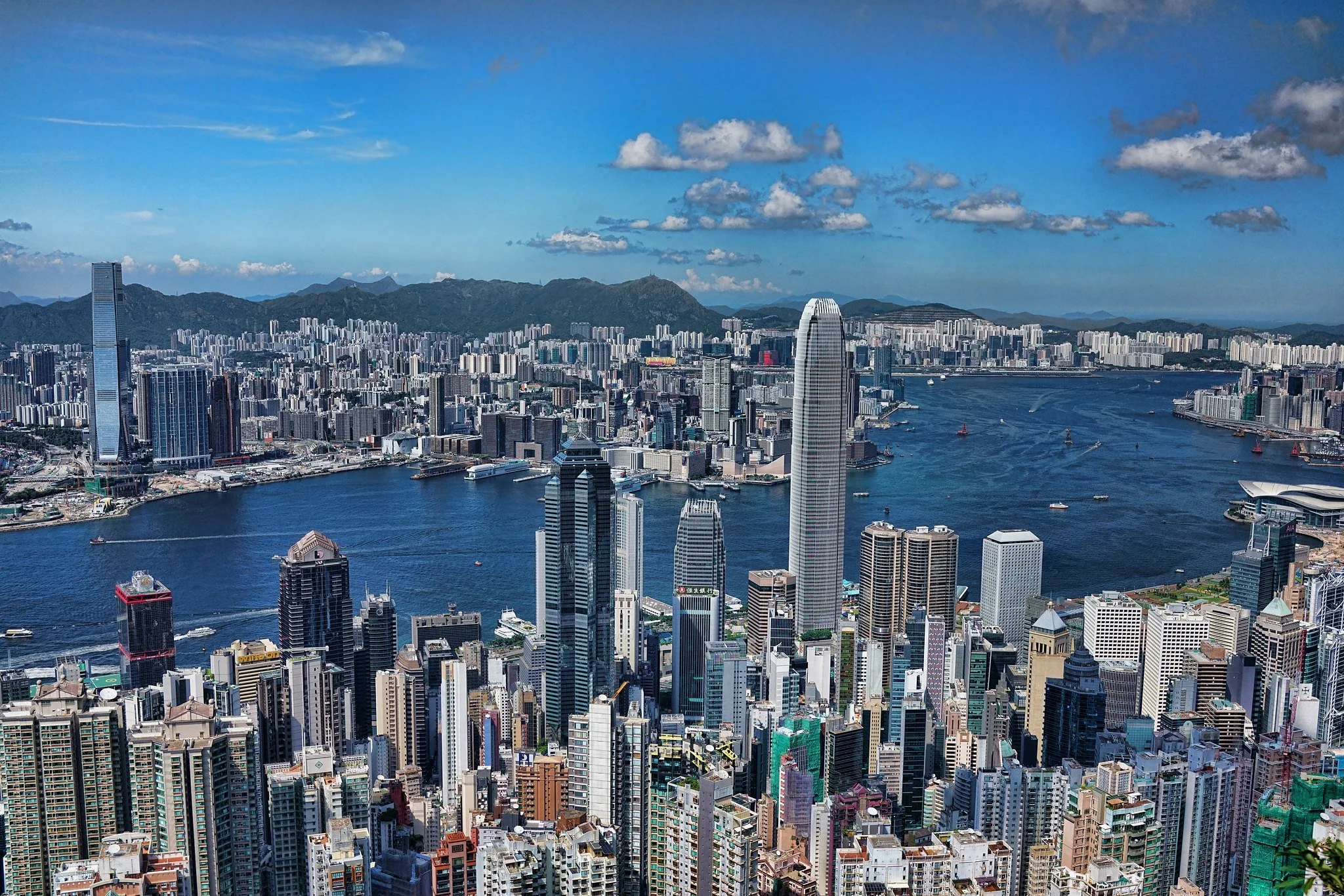
click on any image to enlarge
© Copyright Acknowledged | All rights reserved | images taken by Jamie