Hong Kong Helicopter Tours - Why We Have Only One Helicopter Tour Operator
The Monopoly, Prices and the Coming eVTO + What New York Does Differently

The J3 Group - Premium Quality Private Tours | Experiences and Insider Chats since 2010
Me Jamie, your host, I am English and I have lived in Hong Kong since January 2nd 1972 - I know the place.
A meaningful blog post with a difference - tips on Travel, Tourism, Tours, Daily Life and my personal thoughts on Hong Kong.
Please do visit Amazing Hong Kong
Hong Kong | Pearl of the Orient


A Resident since 1972 - Private Tours of Hong Kong with Jamie
The Best Things to do in Hong Kong
click on the image to enlarge
© Copyright Acknowledged | All rights reserved | image courtesy of Heliservices Hong Kong
Helicopter Tours of Hong Kong | Some Amazing Options | Hong Kong
Foreword by Jamie
Helicopter Tourism in Hong Kong - One Operator, Premium Prices and a Geography Built for the Sky
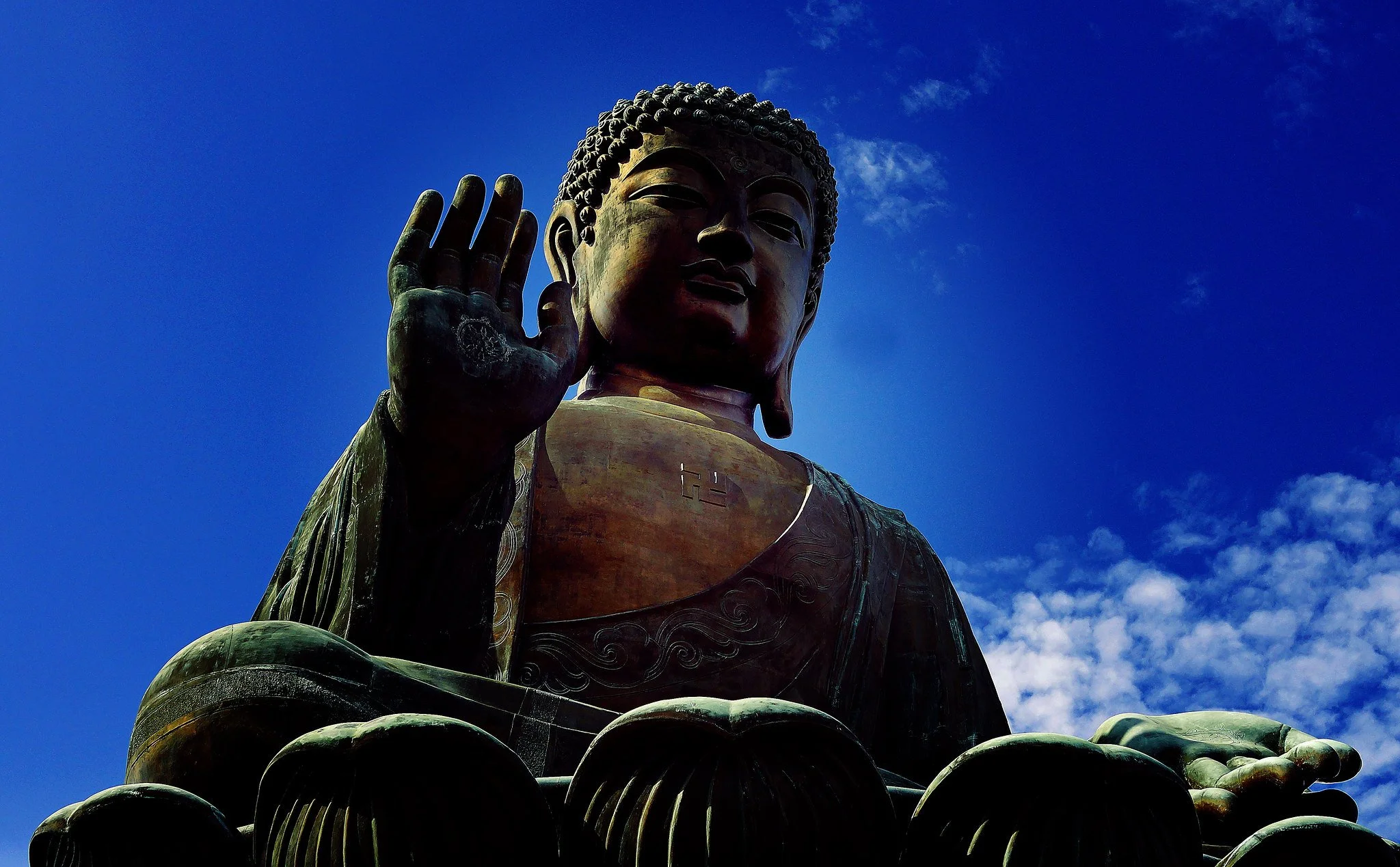
This is another one of those subjects I have been wanting to write about for quite some time, I decided to do it now after spending an hour on the website of the only operator in Hong Kong and I noticed that one of their helicopter tours does a fly by of the Big Buddha Buddha on Lantau Island in Hong Kong - that I would love to do and then reality set it when I saw the cost! more on that later
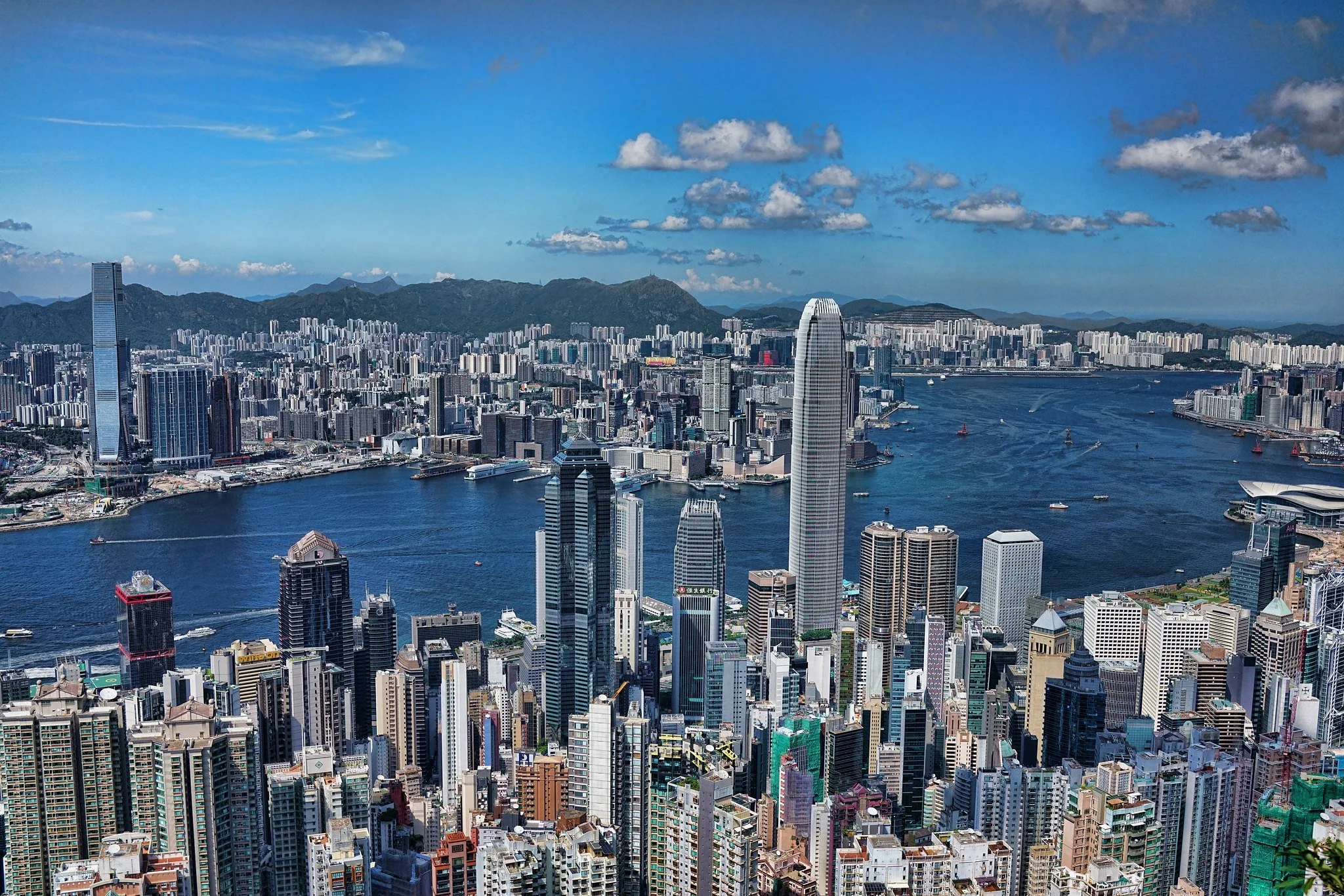
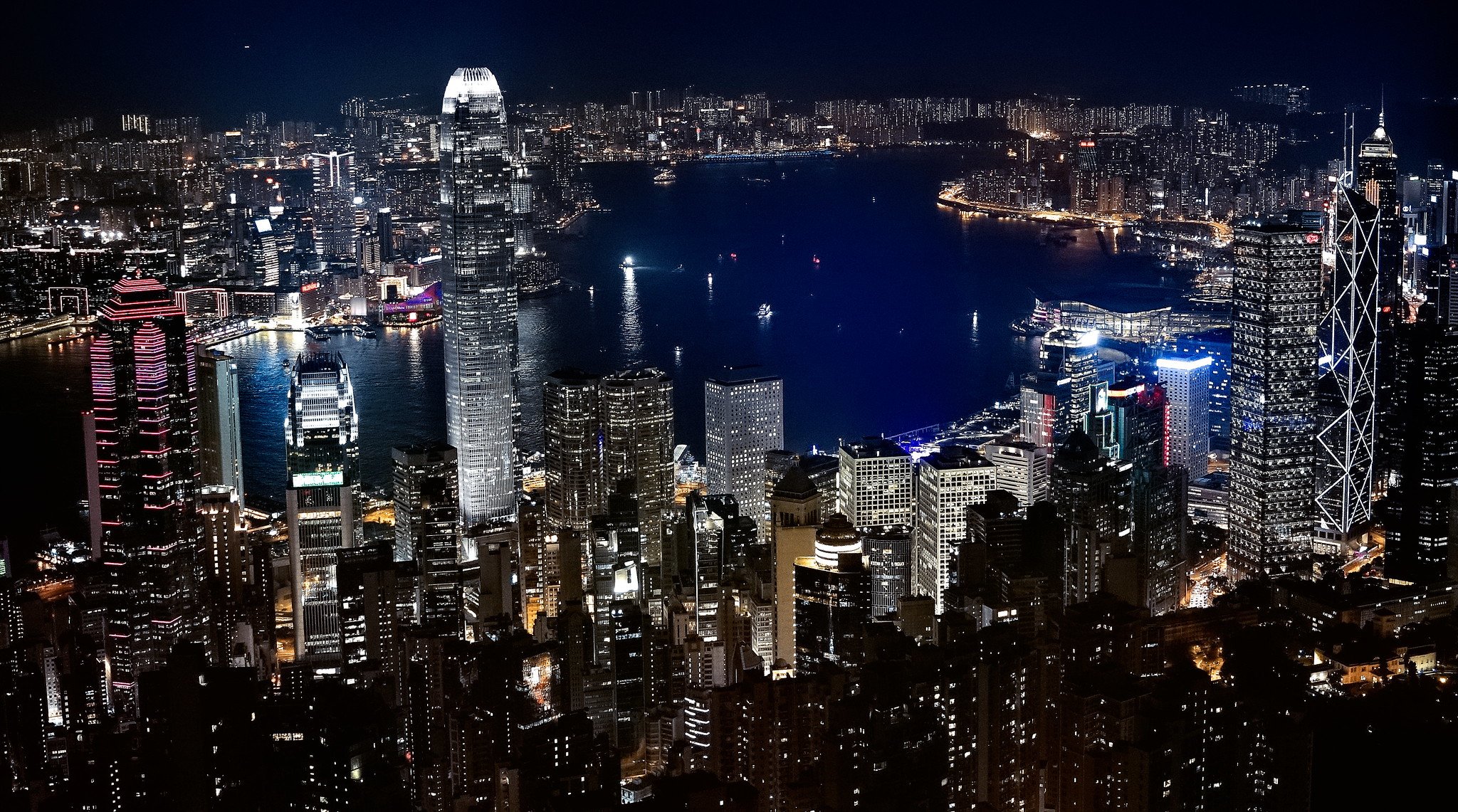
Hong Kong should be one of the finest places on earth for a tourist helicopter flight. The sudden leap from dense waterfront towers to steep green hills, the harbour slicing between Kowloon and the Island, the outlying islands, the geopark coastline - the visual drama is immediate and layered in a way few other cities can match. Visitors who enquire about it often light up at the idea. Then they see the price and the limited options, and most quietly move on.
That gap between the product’s natural appeal and the reality of what is actually available has persisted for decades in Hong Kong. Essentially one company handles the regular scenic flights over the city itself. The arrangement is not a pure market accident, yet neither is it easily explained away by simple regulation. The contrast with New York is instructive. There a mature market supports multiple competing operators - typically 5 - 7 active sightseeing companies at any one time, including well-established names such as HeliNY, Manhattan Helicopters, FlyNYON, Zip Aviation, Charm Aviation and others - and prices sit noticeably lower
After more than 50+ years of watching how this city operates, the near-monopoly still feels odd. Almost everything else the Government does is put out to competitive bids from the private sector. The new contract to run the Kai Tak Cruise Terminal is only the latest example. Yet when it comes to conventional tourist helicopter flights, the market has remained tightly controlled for decades. At the same time the same Government is actively accelerating the development of pilotless drone-type aircraft for tourism, largely at the insistence of the Mainland, and that process is being fast-tracked. The MTR (Subway) is already testing driverless vehicles to move passengers between stations at street level. The contrast is striking.
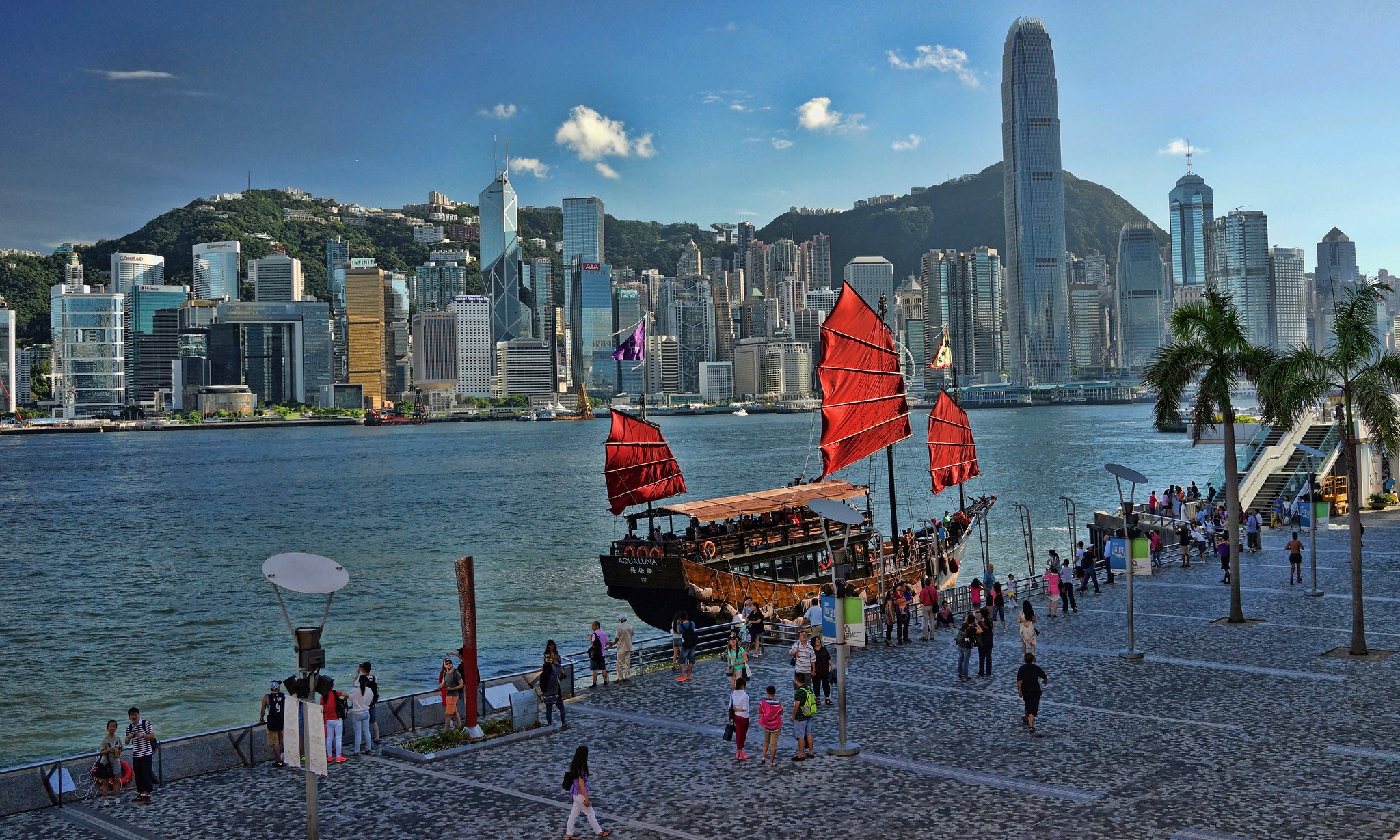
A further local parallel makes the situation even clearer. Boat tourism in Hong Kong is a mature, competitive industry with a huge number of companies offering tours and excursions. The range covers every price point, from simple and affordable to high-end luxury. The vessels themselves run from very small craft to large vessels. All of them need places to pick up and drop off passengers - piers, landing steps, ferry terminals and dedicated berths - and the Government has long embraced this activity. Luxury boat packages can and do cost more than a helicopter flight. The difference is structural. With so many operators competing, a visitor or guide who makes the effort can usually find options, negotiate, or wait for a better rate. The market has depth and flexibility. With helicopters there is effectively one supplier for regular scenic flights. There is no parallel competitive pressure and therefore no realistic route to a good deal for the average guest. The same harbour that accommodates dozens of boat operators has, for decades, supported only one regular tourist helicopter operator.
Singapore, often regarded as Hong Kong’s closest regional competitor, does not provide a strong counter-example either. Limited helicopter sightseeing and charter options exist, mainly through operators such as Singapore Heli Services, with private flights over the skyline, Marina Bay, Sentosa and surrounding areas. These are typically high-cost private or small-group charters rather than frequent shared departures, and the market has never developed into a mature multi-operator tourist product. Weather, airspace constraints and regulatory caution further limit regular urban scenic flying. Hong Kong’s geography is more dramatic for aerial viewing, yet the product remains constrained by a single dominant operator and high entry prices.
What follows is an attempt to set out the current situation clearly, examine why the near-monopoly has proved so durable, take a harder look at the claimed barriers, compare the two cities, and consider whether the coming generation of electric vertical take-off and landing aircraft - or a simple decision to open the conventional market - might loosen things up.
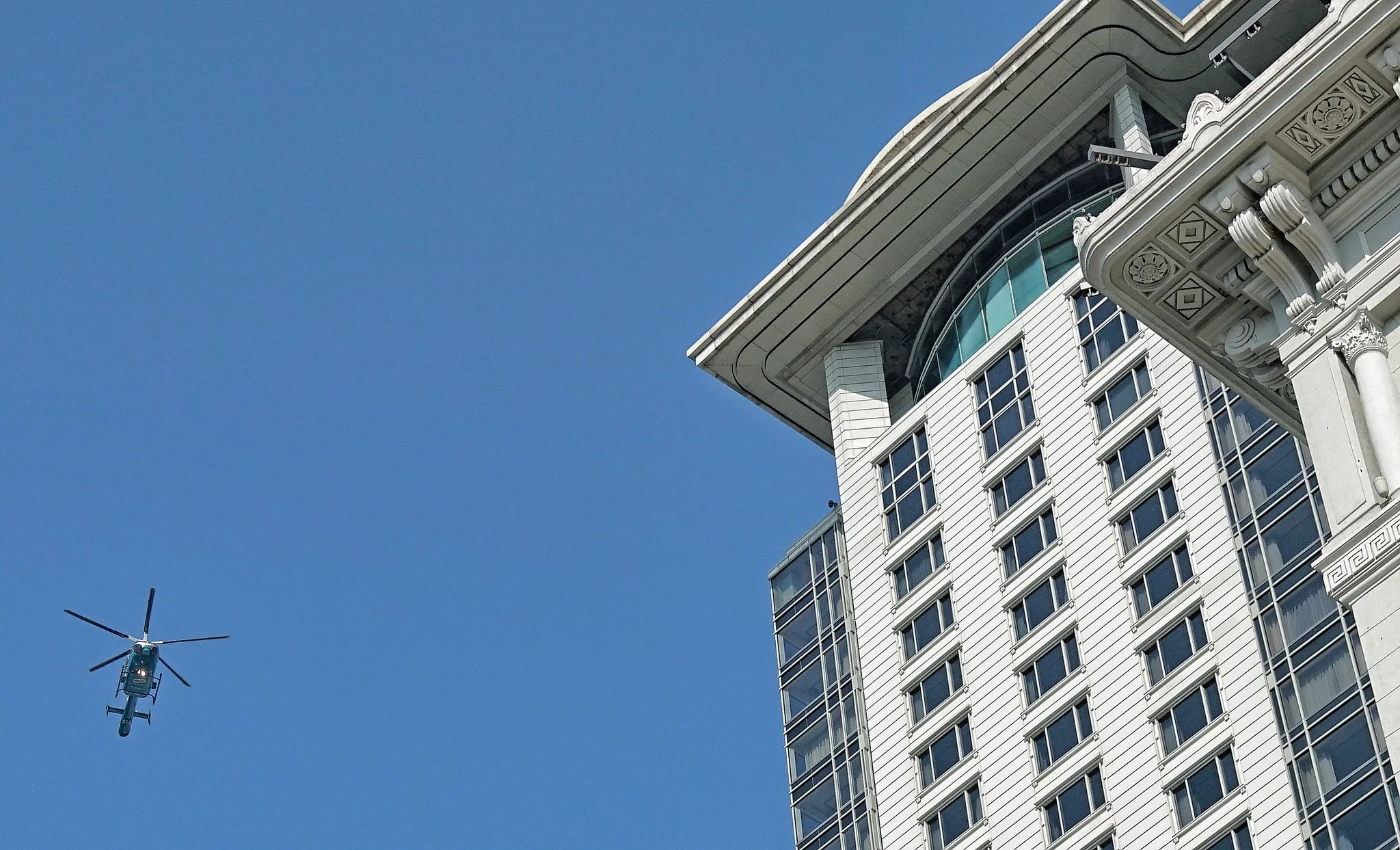
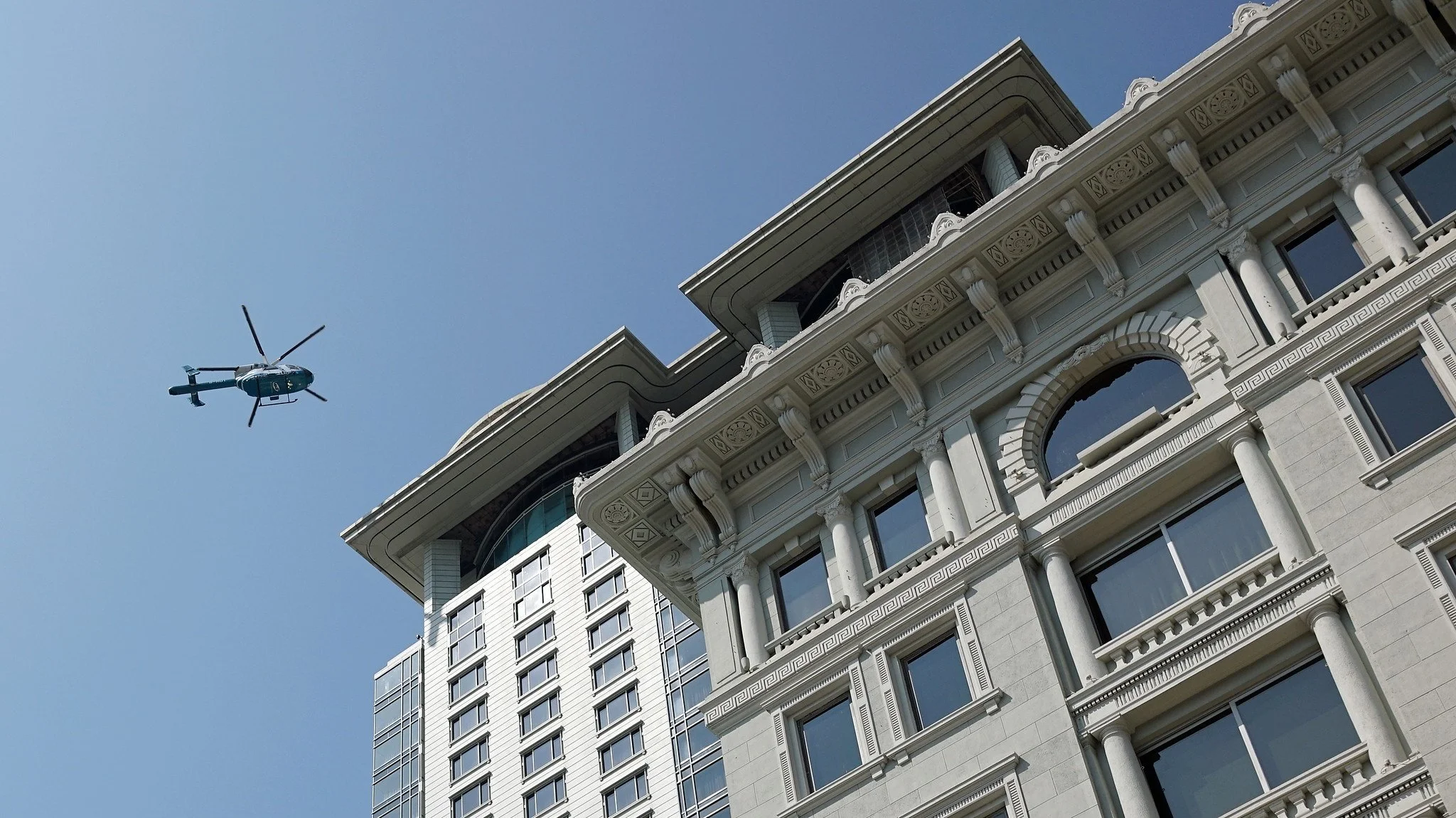
click on any image to enlarge
© Copyright Acknowledged | All rights reserved | images taken by Jamie
Helicopter Tours of Hong Kong | From the Peninsula Hotel Roof | Hong Kong
The Current Reality on the Ground
So we are clear - Heliservices has been the only sustained operator offering regular tourist and scenic helicopter flights around Hong Kong for the best part of five decades. While there may have been brief or limited helicopter activity by other parties in earlier years, none developed into a lasting competing scenic-tourism business. For the continuous, bookable product that visitors have actually been able to buy - flights over the harbour, the city, Lantau and the surrounding areas - Heliservices has been the sole practical provider throughout the modern tourism era.
History is pretty straightforward here - Heliservices (HK) Ltd has been the established provider of rotary-wing services in Hong Kong since 1978. It forms part of the Kadoorie group of companies, which also includes The Peninsula Hotels, The Peak Tram and Peak Tower. For tourist and scenic flights the great majority of departures take place from the twin rooftop helipads at The Peninsula Hotel in Tsim Sha Tsui in Kowloon. Briefings often occur in the hotel’s China Clipper lounge. The aircraft used have long been MD902 Explorer twin-engine helicopters; more recently the company has begun introducing Airbus H135 machines for sightseeing work, with the first of the new type entering service in mid - 2026.
click on the image to enlarge
© Copyright Acknowledged | All rights reserved | image courtesy of Heliservices Hong Kong
Helicopter Tours of Hong Kong | The Big Buddha Fly By - Wow | Hong Kong
As an example a flight taking in the Big Buddha on Lantau Island is listed at HK$29,900 for a group of 1 - 6 people. Private charters for the same duration can substantially higher, so you need to visit the website or contact them for a specific quote - Longer routes that take in Lion Rock, the southern beaches or the Sai Kung geopark cost more still. Shared slots are limited; in practice they have often been restricted to particular days and times. Private charters offer more flexibility but remain a high-end purchase.
As mentioned above one of the private options already on offer is the Big Buddha Experience. This is an approximately 30-minute flight that takes in Victoria Harbour and the city before continuing alongside the Tsing Ma Bridge to the scenery around the Tian Tan Buddha, the airport and the outlying islands of Lantau. It is priced as a private charter at HK$29,900 for one to six passengers. It is a flyby rather than a landing and drop-off, but it confirms that the demand for aerial views of Lantau and the Big Buddha is recognised and already being served - at the usual premium level and only through the single existing operator.
… and yes, one of my specific ideas is a Lantau Island Helicopter Tour that gives you the option of ending the flight at the Big Buddha so you can visit it etc, it would not be hard to build a simple helipad in the area surround the Nig Buddha!
The Civil Aviation Department lists two sites for commercial helicopter operations. The Permanent Government Heliport at the north-eastern corner of the Hong Kong Convention and Exhibition Centre in Wan Chai is available for domestic commercial flights, yet government emergency and essential services hold absolute priority at all times. The Sky Shuttle facility on the Hong Kong-Macau Ferry Terminal is primarily configured for cross-boundary work and carries customs, immigration and quarantine facilities. The Peninsula rooftop is a private facility with long-standing operational approval for Heliservices. There is also a maintenance and training base at Lam Kam Road Airfield in Sek Kong in the New Territories, but it is not used for regular urban scenic flights.
A helipad exists next to the Warwick Hotel on Cheung Chau Island, close to the local clinic. It serves medical and government needs rather than tourism. Its presence does demonstrate that small functional pads can be accepted on the outlying islands when a clear operational requirement exists.
Why Competition Has Remained So Limited - and Why the Barriers May Not Be as Absolute as They Appear
The scarcity of usable take-off and landing sites is usually presented as the central constraint. Suitable waterfront or rooftop locations in the dense urban core are said to be few, and those that exist face competing demands. Noise is described as a live political issue. Twin-engine aircraft, high fixed costs, rigorous approval processes and safety buffers are all cited as reasons a second or third operator struggles to enter.
Yet the noise argument is already being tested every day. When a Peninsula Hotel helicopter comes in to land on the rooftop you can hear it from a considerable distance. That landing takes place in an area packed with hotels, commercial buildings and a substantial residential population. The noise is accepted because the operation has long-standing approval and because it serves a high-profile, high-value purpose. If that level of noise is tolerable in the heart of Tsim Sha Tsui, it is difficult to argue that carefully chosen sites further along the waterfront would automatically be impossible.
The physical footprint required is also smaller than often implied. The Cheung Chau Island helipad is essentially a modest concrete circle built into the sea next to the shoreline. The government pad at the Convention Centre and the Sky Shuttle facility at the Macau Ferry Terminal occupy limited space. Helicopters can, in practical terms, land in relatively confined areas provided the surrounding airspace and approach paths are managed. Companies could keep their main bases, hangars and maintenance facilities in the New Territories; the urban pads would serve simply as pick-up and drop-off points.
Once that distinction is accepted, a number of locations become thinkable. The Ocean Terminal deck viewing platform in Kowloon is one obvious candidate. Along both the Kowloon and Hong Kong Island harbourfronts there are stretches of waterfront that sit well away from dense residential blocks. A short pier with a helipad at the end could be constructed in several places without taking large areas of land. Around the Kai Tak Cruise Terminal there is ample open space that could accommodate multiple pads if the planning will existed. Twenty or more potential sites are not difficult to identify if one looks with a commercial rather than a purely defensive eye.
The historical parallel is hard to ignore. For decades Hong Kong operated a major international airport in the middle of a densely built-up urban area in Kowloon. The aircraft involved were far larger and noisier than today’s light twin-engine helicopters. The city accepted that reality because the economic and connectivity benefits were judged to outweigh the disruption. Applying a more restrictive standard to small commercial tourist helicopters feels inconsistent.
The boat tourism industry provides an even more direct local comparison. Dozens of companies operate across the full price spectrum with vessels of every size. All require pick-up and drop-off facilities in the same crowded harbour environment. The Government has consistently facilitated this activity rather than restricting it to a single operator. Luxury packages can exceed helicopter prices, yet competition still allows visitors to find good deals. The same principle - multiple operators sharing limited but manageable infrastructure - has never been applied to tourist helicopters.
At the same time, lawmakers have been actively discussing a Monaco-style marina development on the Hung Hom waterfront - a site close to the old Kai Tak area - with capacity for hundreds of vessels and associated facilities. A project of that scale carries a substantial footprint and ongoing impact. 5 modest helipads, by comparison, would occupy a far smaller area and could be integrated with far less disruption. The willingness to contemplate large marina infrastructure on the urban waterfront makes the long-standing resistance to a small number of additional helicopter pads look even more inconsistent.”
Opening the market to 3 to 5 additional operators would not require inventing new technology or rewriting the laws of physics. It would require a decision that tourist helicopter movements are a legitimate and desirable activity, that a modest network of carefully sited pads is acceptable, and that competition is preferable to a near-monopoly. The companies could then develop their own product ranges, price points and routes. Heliservices already offers a private Big Buddha flyby. A true point-to-point service - picking up from a Kowloon or Island waterfront pad and actually landing near the Big Buddha - would still be a distinctive step beyond the current flyby, and one that becomes more feasible if additional operators and additional landing points exist.
The Oddity of the Monopoly in a Competitive System
What makes the situation particularly curious is the contrast with normal Government practice. Almost every significant public contract or operating right is put out to competitive tender. The process for selecting the operator of the Kai Tak Cruise Terminal is a recent and visible example. Private-sector bids are invited, evaluated, and awarded. Yet for decades the conventional tourist helicopter market has remained the preserve of a single established operator. No open invitation for additional companies to enter, no competitive process for additional pads or routes, no apparent appetite to test whether more operators would produce better prices, more variety or higher volumes.
At the same time the same administration is moving with noticeable speed on pilotless aircraft. The low-altitude economy programme, including the Regulatory Sandbox and Sandbox X initiatives, is being advanced with clear Mainland encouragement. Passenger-carrying eVTOL trials are being framed as a priority, with timelines of a few years rather than decades. Officials have publicly stated that costs should eventually be a fraction of traditional helicopter services and that aerial sightseeing is one of the potential uses. Parallel developments in other forms of transport reinforce the pattern: the MTR )Subway) is already running tests of driverless vehicles to ferry passengers between stations. Automation and new technology are being embraced when they align with broader policy directions. Conventional competition in an existing tourist product appears to be treated differently.
The boat sector shows what happens when the Government does embrace multi-operator tourism infrastructure. Capacity expands, prices come under competitive pressure, and visitors benefit from choice. The same logic has not been extended to the air.
After long observation of how Hong Kong works, the distinction is hard to miss. When the pressure is external and the technology is new and favoured, progress can be rapid. When the issue is simply opening an established market to a handful of additional private operators, the institutional caution remains firmly in place.
Hong Kong Compared with New York and Singapore
New York operates under strict regulations of its own, yet supports a mature competitive market with multiple active sightseeing operators - typically 5 to 7 at any given time. Shared flights of 12 to 20 minutes commonly start in the low-to-mid hundreds of US dollars once facility fees are included. Longer or doors-off options cost more, but the range of products and price points is wider. Several departure points exist across Manhattan and New Jersey. Competition keeps the market more accessible and varied.
Singapore, which is our biggest regional rival offers only limited private and charter helicopter options, mainly through a small number of operators, with no developed multi-operator shared sightseeing market. Prices remain high and regular tourist availability is restricted. Hong Kong’s geography is, if anything, more dramatic for aerial viewing than either city. The demand that appears in private enquiries is real. The drop-off once prices are quoted is also real. The difference lies less in the strictness of rules and more in the number of usable pads and the political willingness to expand them. New York has managed to accommodate a proper competitive field. Singapore has not developed one. Hong Kong has chosen to keep the conventional tourist product tightly controlled - even while supporting a highly competitive boat tourism industry that uses the same harbour.
I should point out that Singapore is relatively flat when compated to Hong Kong, here in Hong Kong we have 579 peaks and the scenery is magnificent, perfect to see from a helicopter!
The Low-Altitude Economy and Possible Change
The more interesting pressure is now coming from the low-altitude economy programme. Under the Regulatory Sandbox and the more advanced Sandbox X initiatives, mainland Chinese companies including EHang and AutoFlight have been selected for trial projects. Officials have spoken of ambitions to begin passenger-carrying eVTOL operations within a few years and have noted that costs should eventually sit well below those of traditional helicopters. Aerial sightseeing is among the use-cases discussed once cargo and safety work is further advanced.
These aircraft will need a network of take-off and landing sites - vertiports - rather than one or two. If that infrastructure is built, it could in principle support traditional helicopter tourism as well, or at least create political cover for expanding the number of approved locations. Whether sightseeing becomes an early priority or remains a secondary benefit after logistics and cargo is still an open question. Public acceptance of regular low-level flights over the city will also need to be tested.
Heliservices has continued to invest in its conventional fleet, introducing newer aircraft for the sightseeing role. That suggests confidence in the existing high-end market. At the same time, the direction of government policy is clear: Hong Kong is being positioned as an early market for the new generation of aircraft. The same logic that supports eVTOL infrastructure could, if applied consistently, support a modest expansion of conventional tourist helicopter operations. The speed with which the pilotless agenda is being advanced, compared with the long-standing reluctance to open the conventional market, remains one of the more revealing aspects of the current situation.
Helicopter Tours in Macau and Shenzhen just over the border from Hong Kong
Macau The main helicopter activity is still the scheduled cross-boundary shuttle operated by Sky Shuttle (Hong Kong–Macau and Macau–Shenzhen). These are short transport flights (around 15 minutes), not local scenic tours over Macau itself. Sky Shuttle also offers private charter work that can include sightseeing elements, but there is no developed multi-operator local tourist helicopter market offering regular city or harbour flyovers comparable to what Heliservices does in Hong Kong. Private charters exist, but Macau does not have a mature scenic-tourism product aimed at visitors.
Shenzhen This is more active. Shenzhen has been pushing low-altitude tourism hard as part of the Greater Bay Area low-altitude economy programme. Several scenic helicopter routes are operating, covering:
City-centre and skyline tours (Futian CBD, Ping An Finance Center, Civic Center, etc.)
Coastal routes (Yantian, Dameisha, Xiaomeisha beaches)
Mountain and nature routes, particularly around Wutong Mountain (including seasonal flower-viewing flights)
Operators include Heli-Eastern (linked to Shenzhen East General Aviation | CITIC Offshore Helicopter) and services that can be booked through the WeChat mini-program “空中的士出行” (Aerial Taxi), which offers both point-to-point “air taxi” routes and dedicated sightseeing options. Promotional short flights have been offered at very accessible prices (as low as US$15 - 45 for a few minutes), while longer city or coastal tours typically range from around US$100 to US$590 - 740 depending on duration and route. Multiple take-off points exist across the city (Futian, Dapeng, Yantian, Wutong, etc.).
In a nutshell:
Macau remains focused on cross-boundary shuttles rather than local scenic tourism.
Shenzhen has a growing and more accessible scenic helicopter offering, with multiple routes and operators, actively supported by local policy.
This makes Shenzhen the more interesting regional comparison for this article. While Hong Kong still has the stronger natural geography for dramatic aerial views, Shenzhen is already running a broader and sometimes cheaper range of tourist helicopter experiences under the low-altitude economy push.
A Few Observations from the Side
The current near-monopoly has delivered a safe, professional, high-quality product for those who can afford it. The Peninsula Hotel Roof departure adds a layer of theatre that many visitors enjoy. The existing Big Buddha flyby shows that Lantau aerial views are already part of the offering. Yet the same structure also means limited choice, restricted shared availability and prices that place the experience beyond most ordinary travellers. Demand exists; the conversion rate does not.
The noise already generated by existing operations, the modest footprints of helicopter pads that already function, the historical acceptance of far larger aircraft in the urban area, the thriving multi-operator boat tourism industry that shares the same harbour (where even higher-priced luxury packages still allow room for deals through competition), and the straightforward commercial possibility of additional waterfront and cruise-terminal sites all suggest that the barriers are more political and institutional than purely technical. Opening the market to a small number of additional operators, allowing them to use carefully chosen pick-up points while basing themselves in the New Territories, and permitting genuine point-to-point services rather than flybys alone would not require miracles. It would require a decision that the product is worth encouraging rather than tightly rationing.
Hong Kong’s terrain is almost purpose-built for the experience. Until the infrastructure and regulatory picture shifts - whether through deliberate expansion of conventional pads or through the side-effects of the low-altitude economy - helicopter tourism here will continue to function as a premium, relatively exclusive offering. The scenery is ready. The market structure has been slower to catch up. The question is whether commercial common sense, or the momentum of the pilotless programme, eventually prevails..
So there you go

click on any image to enlarge
© Copyright Acknowledged | All rights reserved | images taken by Jamie