10 things you didn’t know about the iconic Blue House, Wan Chai in Hong Kong
The Real Story of Hong Kong’s Blue House - Ownership, Paint and Living Heritage

The J3 Group - Premium Quality Private Tours | Experiences and Insider Chats since 2010
Me Jamie, your host, I am English and I have lived in Hong Kong since January 2nd 1972 - I know the place.
A meaningful blog post with a difference - tips on Travel, Tourism, Tours, Daily Life and my personal thoughts on Hong Kong.
Please do visit Amazing Hong Kong
Hong Kong | Pearl of the Orient

A Resident since 1972 - Private Tours of Hong Kong with Jamie
The Best Things to do in Hong Kong
click on the image to enlarge
© Copyright Acknowledged | All rights reserved | image taken by Jamie
The Blue House in Wan Chai Today | Totally Iconic | Hong Kong
Foreword by Jamie
I learn something new every day, typical for a researcher such as myself - today I learnt that Wan Chai is the official spelling of this district in Hong Kong and for decades I have used Wanchai, technically both are correct but the Government uses Wan Chai, so that is that
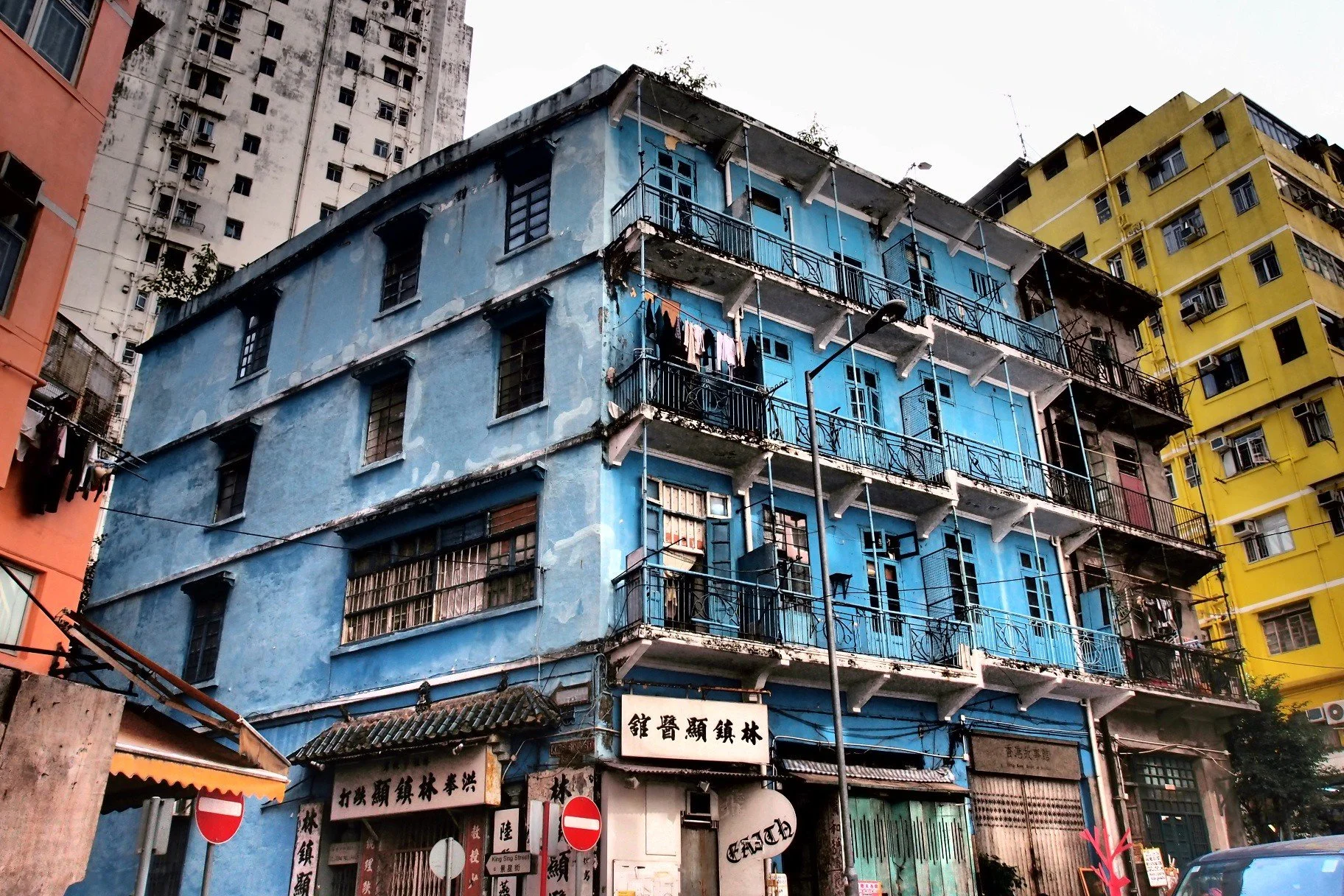
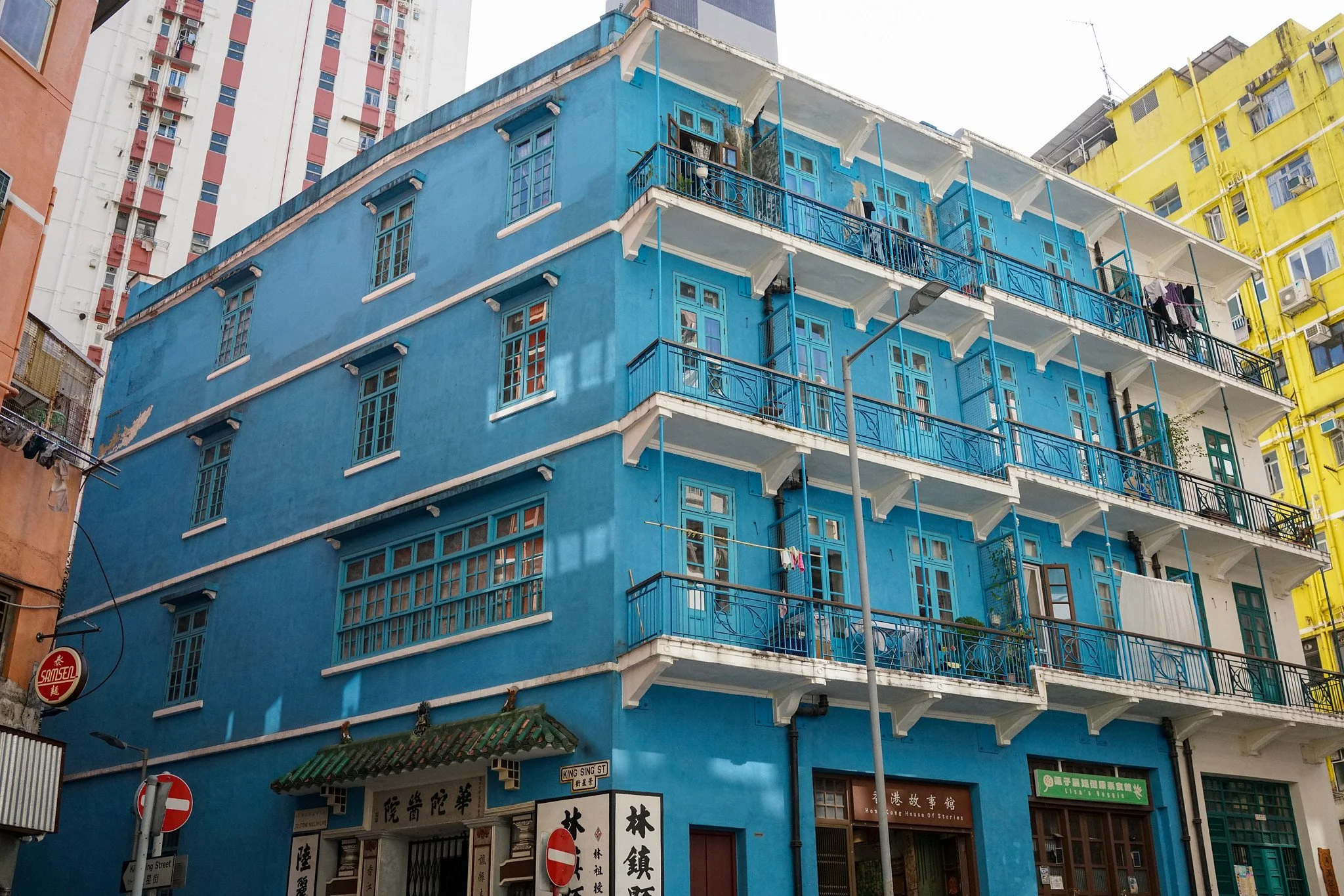
If that is not confusing enough, today I learnt that the Blue House is not a single building it is a cluster (official term) of 3 buildings - The Blue House, The Yellow House and the Orange House and just to make you tear your hair out, the Yellow House and Orange House are painted cream and to confuse you even more, on either side of the Blue House are an orange building and yellow building, I probably lost you 2 sentances ago!
The picture will get clearer as we go along
There is something quietly stubborn about the Blue House Cluster that keeps drawing people back to Stone Nullah Lane in Wan Chai. It sits there in a pocket of the district that still feels like older Hong Kong, surrounded by the usual mix of wet markets, residual dai pai dong energy and the constant pressure of redevelopment that has swallowed so much of the neighbourhood. The bright blue paint catches the eye immediately, yet once you start looking properly the story becomes far more layered than a photogenic façade. What follows is an attempt to gather the solid facts, the awkward truths and the small human details that make this place more than just another heritage postcard.
It is not quite as seedy as you think, within 5 - 8 minutes walk of the Blue House is a Rolls Royce showroom, a Porsche showroom and a McLaren showroom, cars that are very popular in Hong Kong!
click on the image to enlarge
© Copyright Acknowledged | All rights reserved | images taken by Jamie
The Blue House in Wan Chai Old vs New | Totally Iconic | Hong Kong
1. The complete history of The Blue House from the earliest days to the present, including awards
The site itself is older than the current buildings. In the 1870s it housed Wah To Hospital, also known as Wan Chai Kai Fong Hospital, one of the earliest places in the district offering Chinese medical services to local residents. The hospital appears in the 1872 Rate Book. It closed around 1886 and the premises became a temple dedicated to Wah To (Hua Tuo), the legendary physician of the Three Kingdoms period. That two-storey structure was eventually demolished between 1920 - 1922 and replaced by the four, four-storey tong lau that form the core of what we now call the Blue House.
The new buildings followed the classic balcony-type tong lau pattern of the early 1920s: shops or workshops on the ground floor, residential units above, shared timber staircases, and those distinctive cantilevered balconies with ornamental ironwork. Over the decades the ground floor of No. 72 saw a martial arts school run by Lam Cho (nephew of Lam Sai-wing, himself linked to the Wong Fei-hung tradition) which later became a dit da | osteopathy clinic still associated with the family. Other floors housed a free school (Kang Ham | Jing Han free school), Yat Chong College (one of the few English schools in the area before the war), a fishmongers’ association, a wine shop and ordinary family homes.
Most of the properties (72, 72A and 74) were surrendered to or acquired by the government in the 1970s, specifically around 1978. In the 1990s the exterior was painted blue during routine maintenance. The cluster later faced demolition pressure in the early 2000s under urban renewal plans. A sustained campaign by remaining tenants, social workers and conservation groups shifted the approach. In 2009 the Blue House Cluster was included in Batch II of the government’s Revitalising Historic Buildings Through Partnership Scheme. St James’ Settlement was selected to operate it under the “Viva Blue House” banner with the unusual “retain both house and people” principle. Works ran from roughly 2013 to 2017. The project reopened fully around 2017.
It has collected a string of awards, the most significant being the 2017 UNESCO Asia-Pacific Award of Excellence for Cultural Heritage Conservation - the highest category and the first time a Hong Kong project had taken the top prize since the awards began in 2000. Other recognitions include MIPIM Asia Awards (Best Urban Regeneration Project - Gold and Special Jury Award), Hong Kong Institute of Architects awards, and various quality building and arts promotion citations. The judges particularly praised the inclusive process that kept original residents in place rather than clearing the site for pure tourism or commercial use.
2. Ownership and operation of the Blue House and the value of the land
The land and the main Blue House buildings (72, 72A, 74 and later 74A) are owned by the Hong Kong SAR Government through the Development Bureau. Operation sits with St James’ Settlement under the partnership scheme, working with community partners including the original residents’ group, Community Cultural Concern and the Hong Kong Heritage Foundation. The government remains firmly involved: the project was funded through Legislative Council approval (around HK$75.4 million | roughly US$9.7 million at the time for the capital works) and sits under the official revitalisation framework.
St James’ Settlement has deep roots in this exact corner of Wan Chai. Their main building sits only about 30 seconds’ walk away on the same stretch of road, a large and long-established presence that makes the choice of operator feel entirely natural rather than an administrative coincidence. The organisation already knew the neighbourhood, the residents and the practical realities of the area long before the revitalisation scheme began.
Wan Chai land values have always been high. The surrounding streets have seen repeated waves of speculation and redevelopment. Earlier private attempts to assemble the site for a boutique hotel (involving Indonesian-Chinese interests and later Nam Fung) fell through partly because not every adjoining owner would sell. The decision to keep the buildings as living heritage rather than clear them for high-rise or pure commercial use was a deliberate policy choice against the usual economic logic of the district.
3. Why the Blue House is famous
Several layers sit on top of each other. Visually it is hard to miss - a rare surviving balcony-type tong lau painted a striking blue in a sea of concrete and glass. Historically it is one of the better-documented examples of working-class and lower-middle-class life in early 20th-century Wan Chai, with documented links to Chinese medicine, martial arts, free education and small trade. The “retain house and people” approach during revitalisation was unusual in Hong Kong and attracted both local and international attention. The 2017 UNESCO Award of Excellence gave it global visibility. For many visitors it also functions as a rare accessible piece of pre-war fabric that still has people living in it rather than being frozen as a pure museum. The neighbouring Yellow House and Orange House (more on those later) complete a small, colourful cluster that photographs well and feels distinct from the more polished heritage projects elsewhere in the city.
click on any image to enlarge
© Copyright Acknowledged | All rights reserved | images taken by Jamie
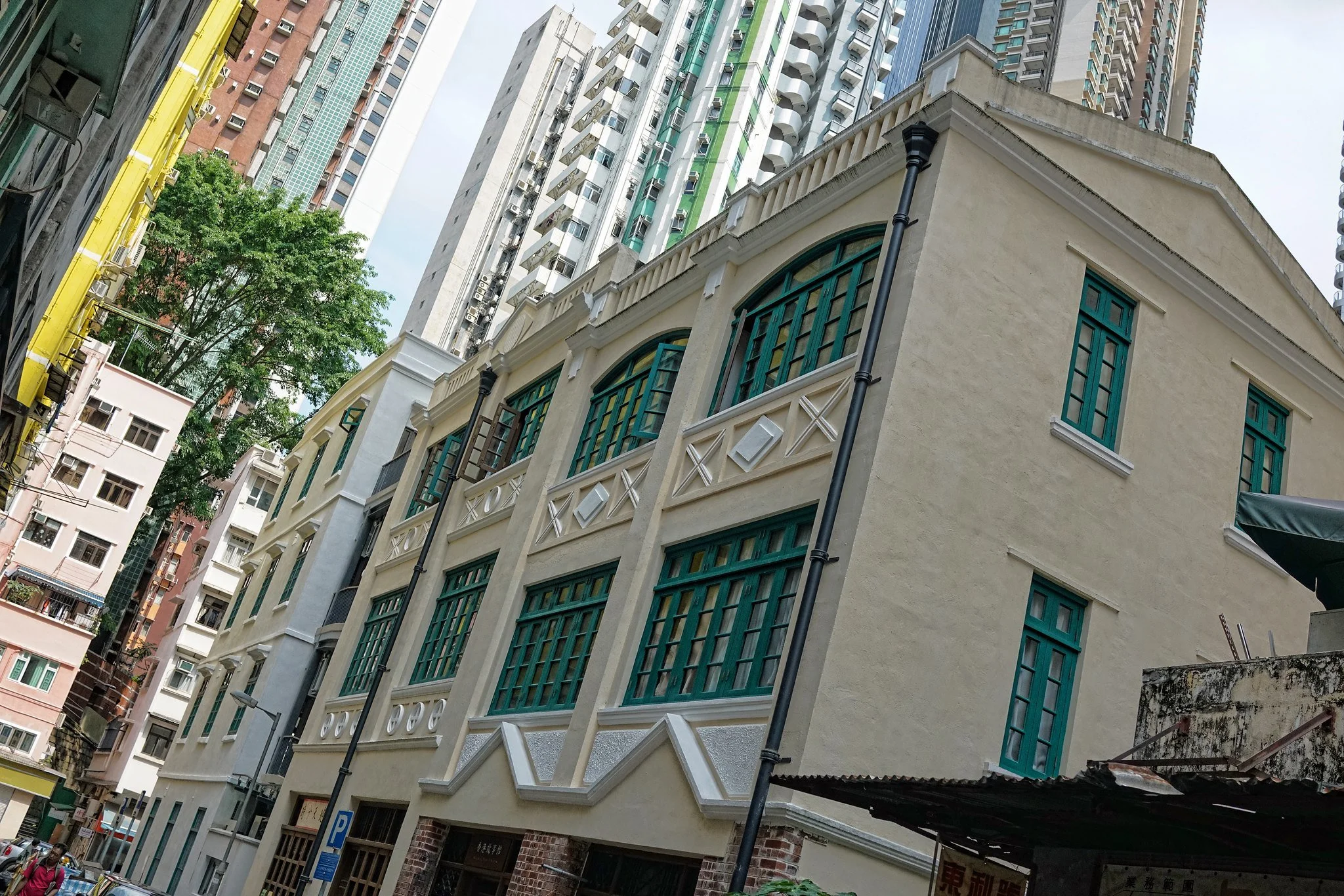
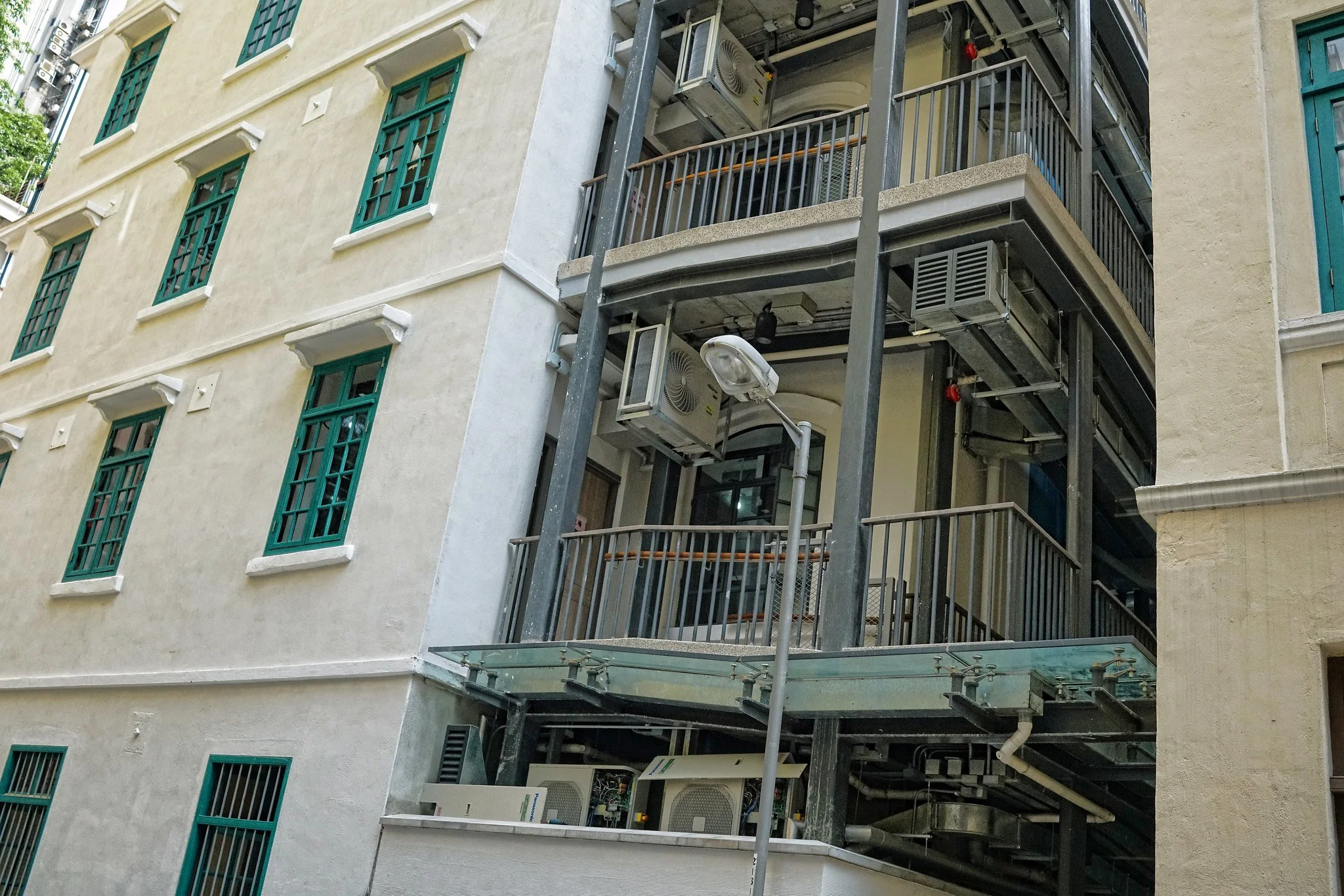
These 2 buildings used to be orange + yellow | Blue House Cluster | Hong Kong
4. Listed status and official address of the Blue House Cluster (3 houses!)
The Blue House itself (72–74A Stone Nullah Lane) is a Grade I historic building. The Yellow House (2 - 8 Hing Wan Street) is Grade III. The Orange House (8 King Sing Street) is ungraded. Full official address for the core Blue House is 72, 72A, 74 and 74A Stone Nullah Lane, Wan Chai, Hong Kong. The wider cluster includes the Yellow and Orange buildings plus the adjacent open space on King Sing Street.
A fair question is why the Yellow House and Orange House are treated as part of the same “cluster” and why the Yellow House carries a historic grading at all. From the street they can look like ordinary older apartment blocks of the kind still found across Hong Kong. The distinction is partly architectural and partly practical.
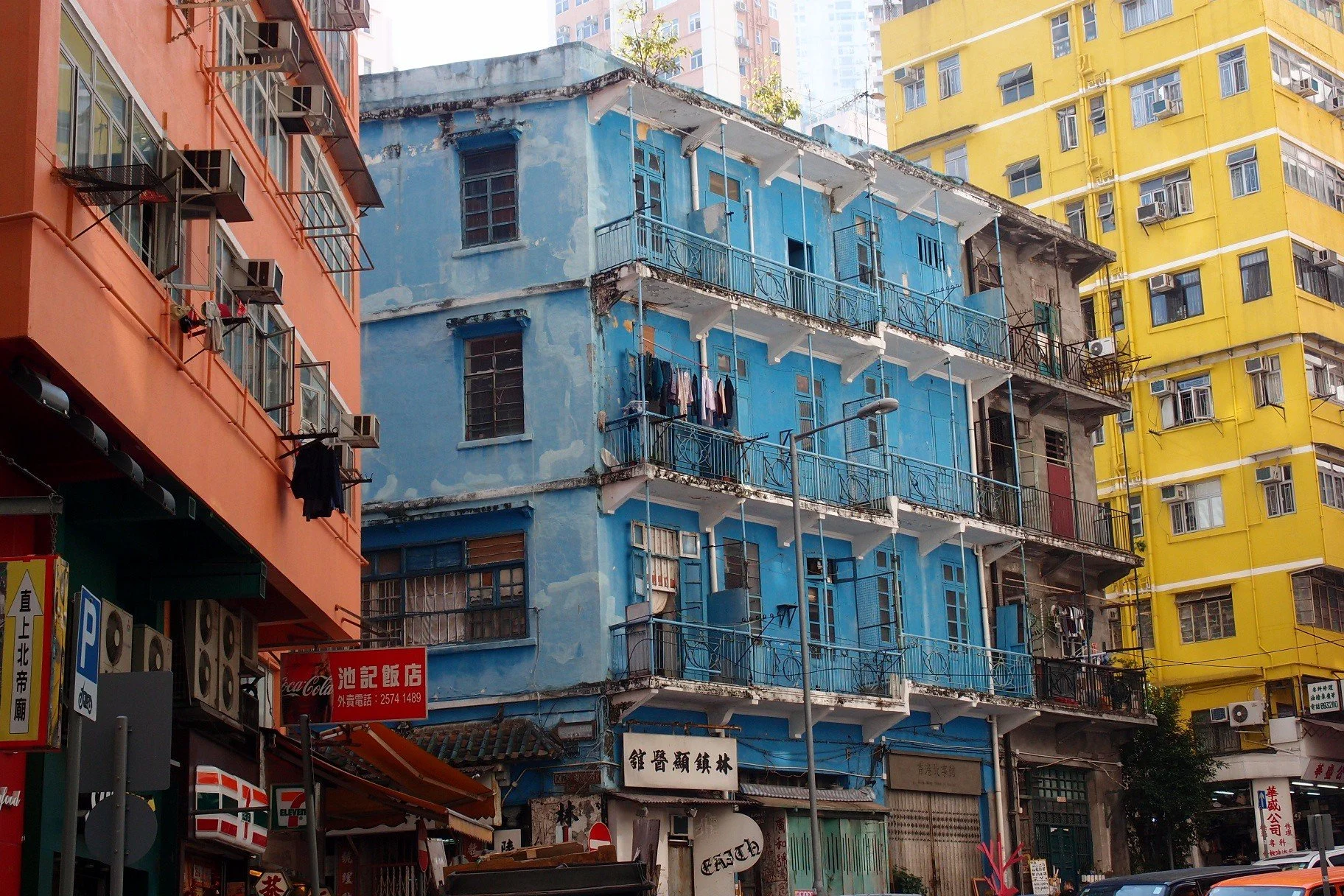
On heights and appearance: the official Blue House is four storeys. The official Yellow House (2 - 8 Hing Wan Street) is three storeys. The official Orange House is four storeys. None of the three protected buildings is significantly taller than the others. What often creates confusion in photographs is that several neighbouring buildings outside the formal cluster were also painted in vivid yellow and orange. Those taller blocks sit immediately beside or behind the cluster and are part of the wider colourful streetscape, but they are not the graded Yellow House or the Orange House of the revitalisation project.
The official Yellow House sits on the narrower Hing Wan Street (you can see the street sign in photos). After the revitalisation it was restored to a much quieter cream / off-white finish with green window frames and shutters rather than the bright yellow that many people still expect. It is connected to the Blue House and has the more formal Neo-Classical details - pediments, decorative parapet work and a restrained, almost understated look compared with the eye-catching taller neighbours. That is why it is so easy to walk past without realising it is the actual graded Yellow House. The official Orange House is similarly understated in the finished project.
Architecturally the official Yellow House retains enough of its 1920s shop-and-residence character and decorative features for the Antiquities Advisory Board to give it Grade III status. The Orange House is later (mid-1950s), more utilitarian, and remains ungraded. It was included mainly because it sits on the same tight block of land, shares the open space, and formed part of the site assembled for the revitalisation. Treating the three buildings and the open space as one package made the “retain house and people” model workable. In short, the Blue House is the star, the official Yellow House has genuine architectural interest of its own, and the Orange House is there largely because of geography and project practicality. The taller brightly painted blocks that dominate many photos are simply colourful neighbours.
5. Purpose today of the Blue House - apartments, shops and related details
It remains primarily residential on the upper floors with community and cultural uses on the ground floor and in shared spaces. A little-known fact is that the complex houses 20 apartments of roughly 600 sq ft each. From the street the buildings do not look large enough to contain that many units of that size, yet the structure is a lot bigger than first appearances suggest. The depth and layout of the old tong lau allow more usable space than the narrow façade implies.
A number of original households stayed on under the “retain people” principle and continued at their previous rental levels. Additional units were offered to new tenants selected under community criteria (connection to Wan Chai, willingness to participate in the project’s social aims). The model prioritises affordability and community contribution over pure commercial rental yields. Ground-floor spaces include the Hong Kong House of Stories (exhibitions, workshops, guided activities), residual clinic use linked to the old dit da tradition, small social-enterprise food outlets and community programme space. It is deliberately mixed-use rather than a pure tourist attraction or pure residential block.
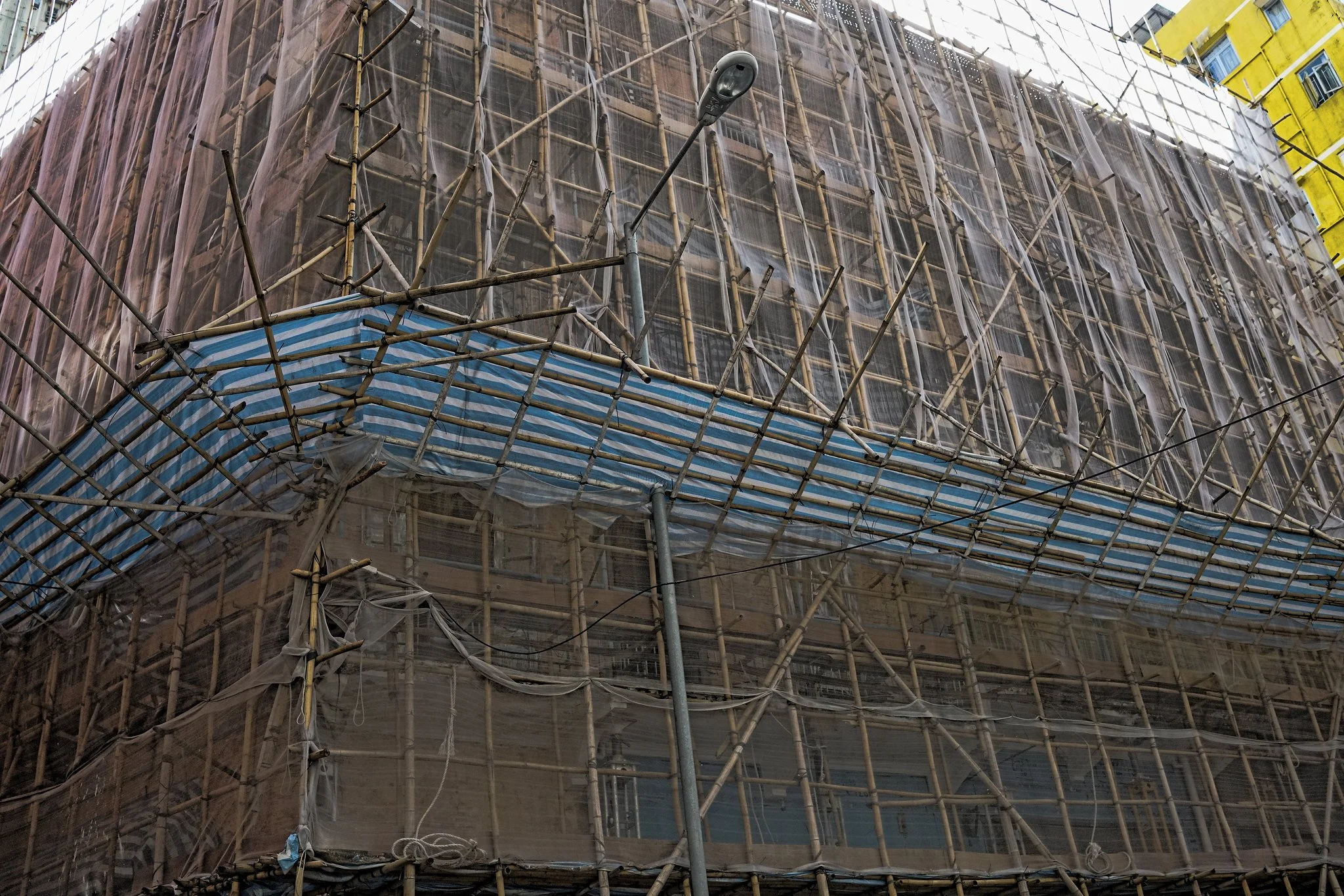
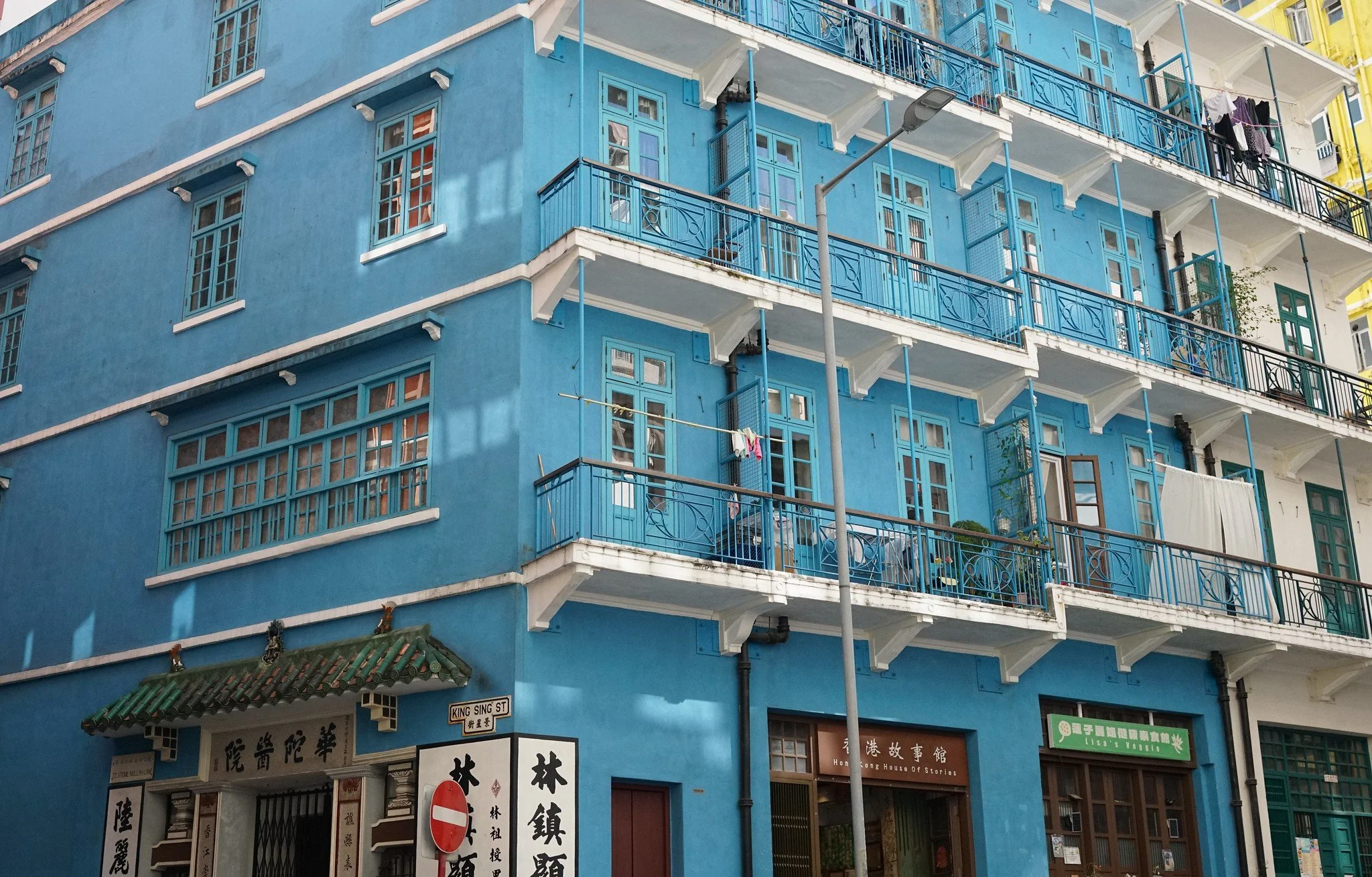
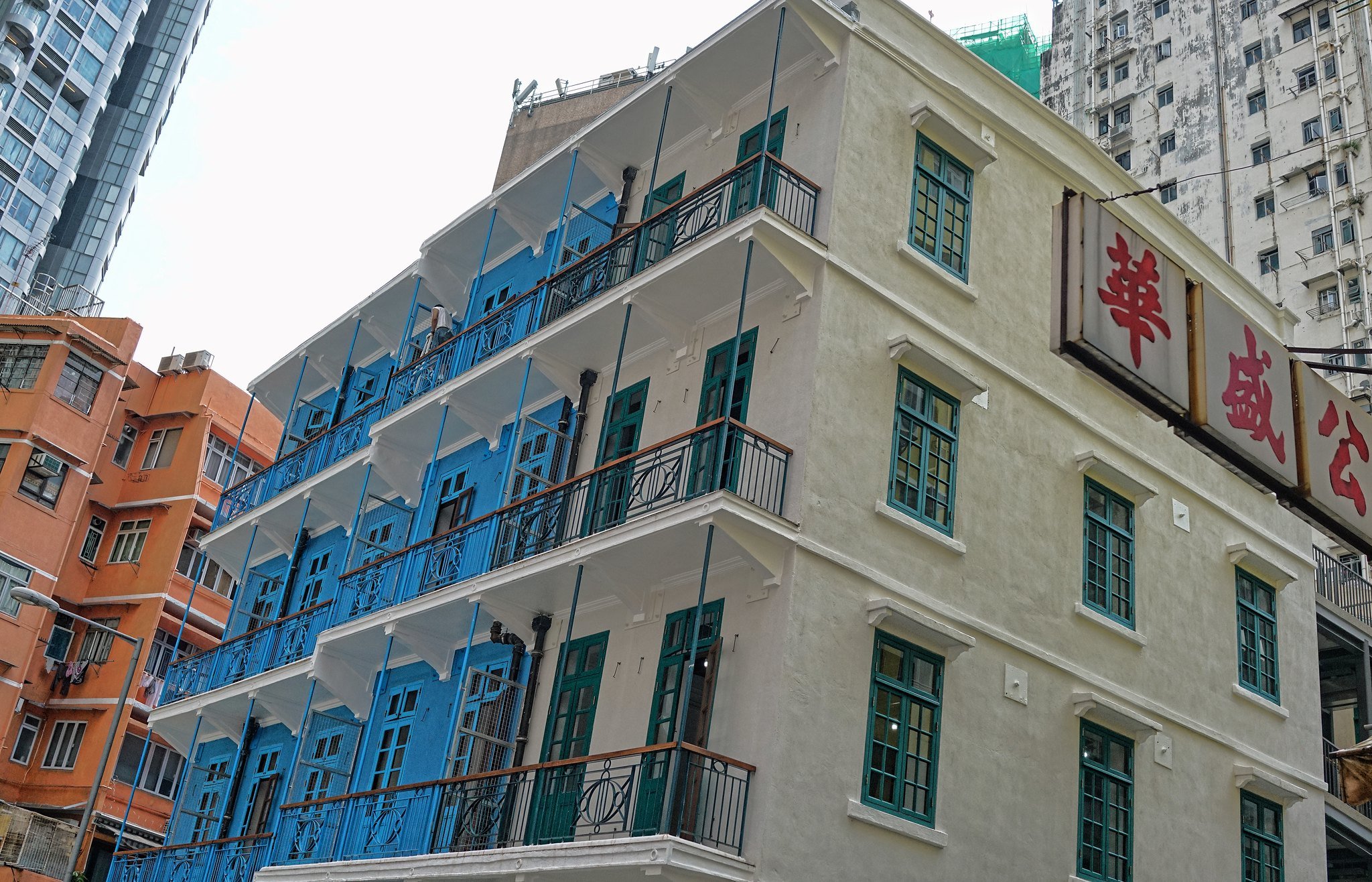
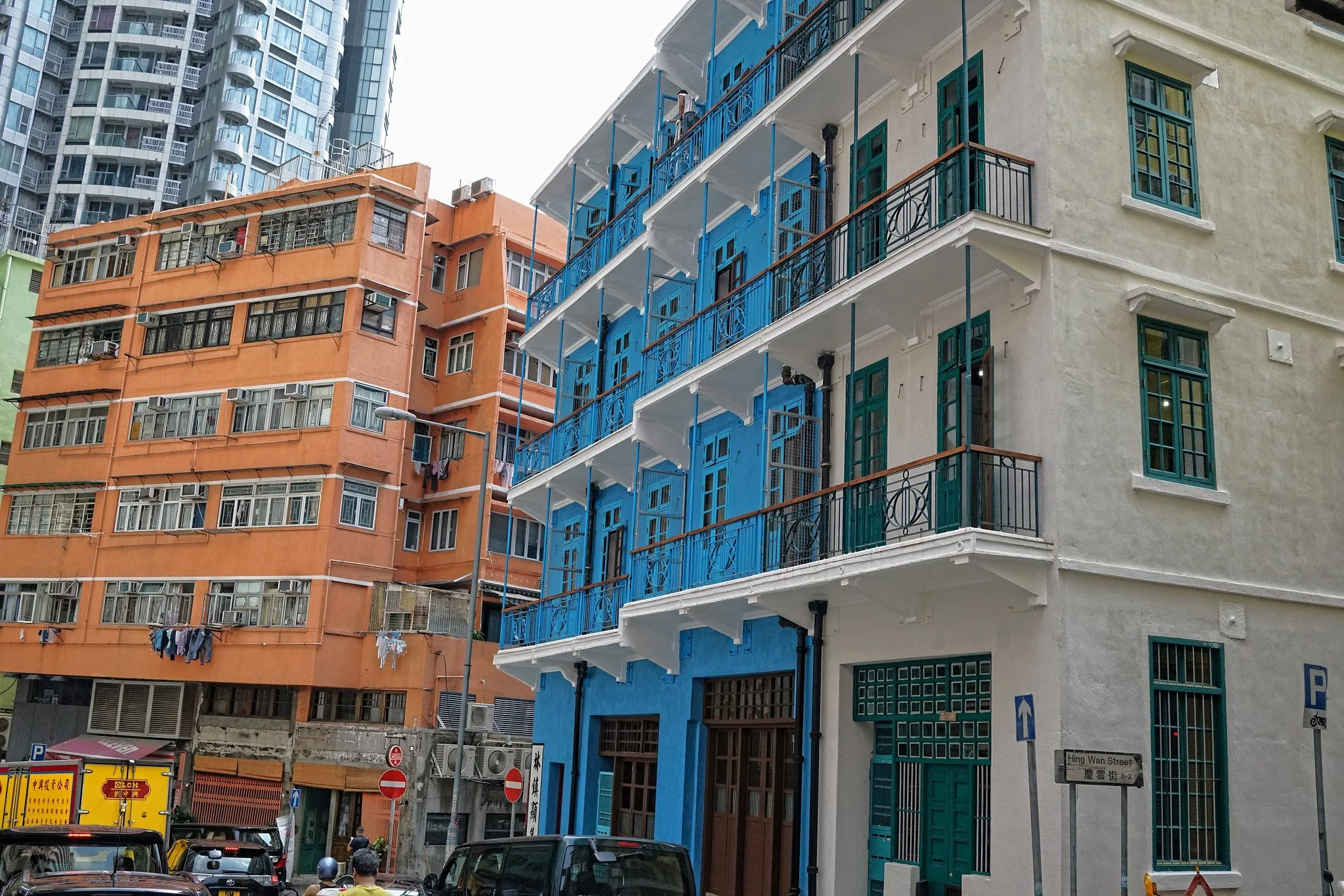
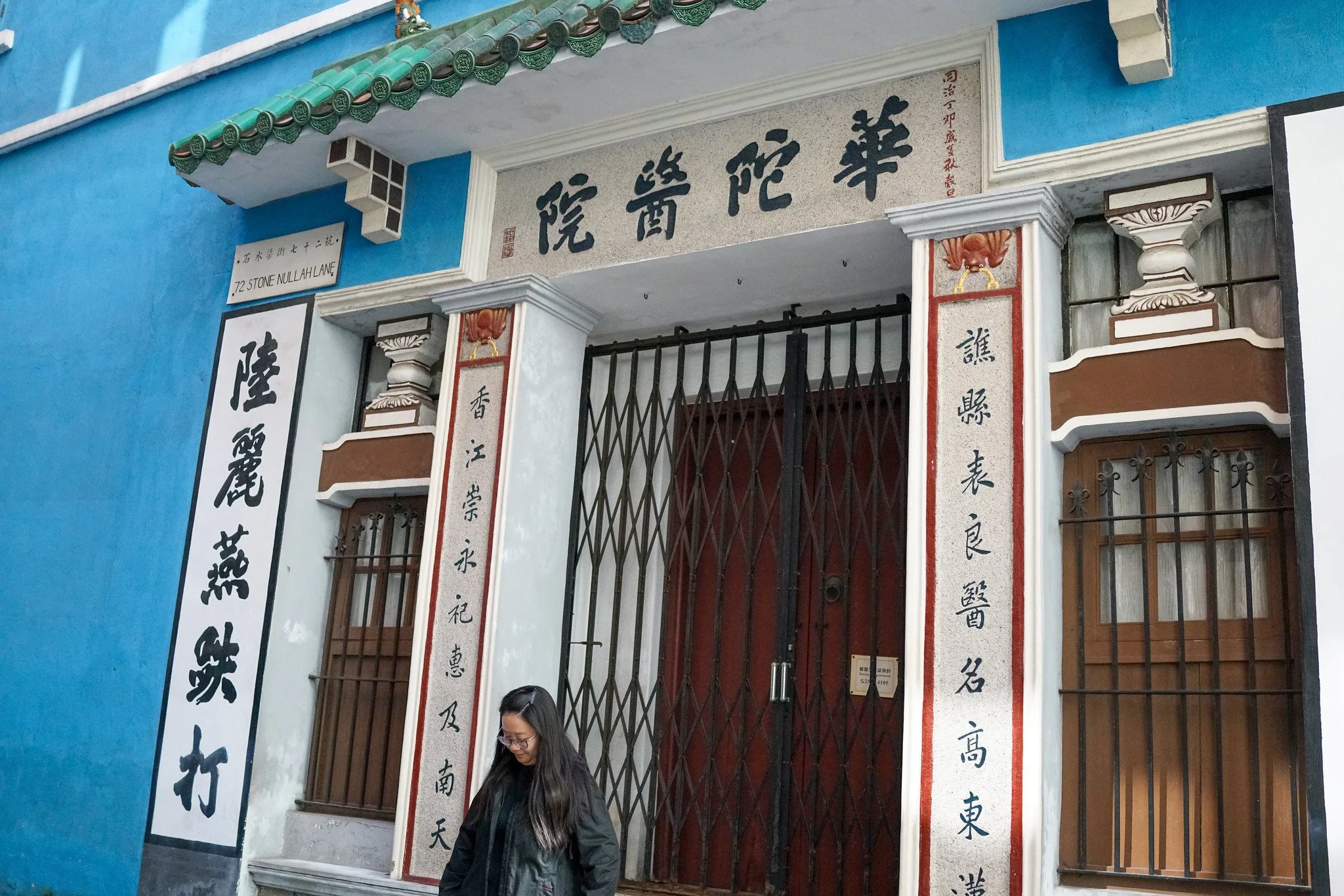
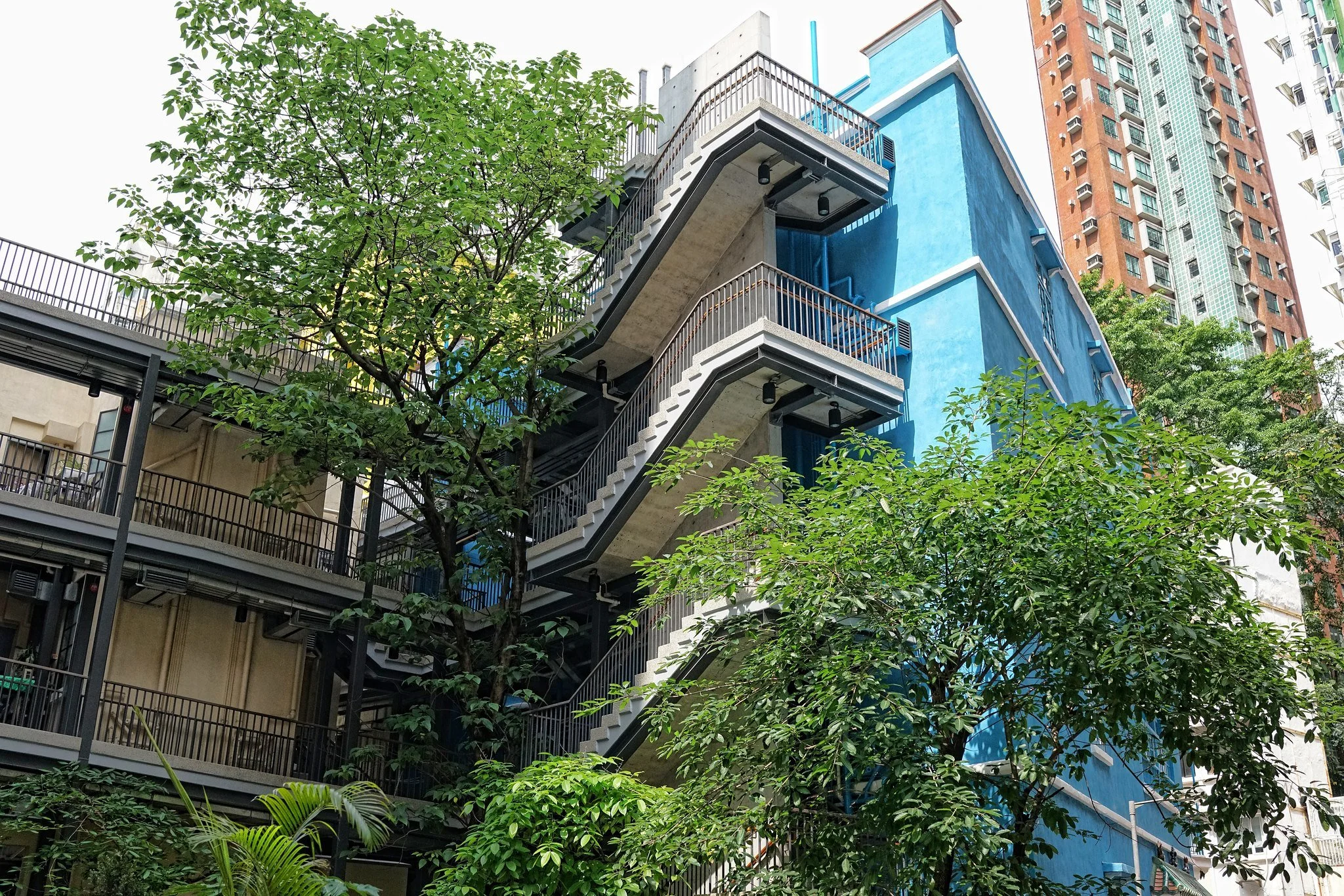
click on any image to enlarge
© Copyright Acknowledged | All rights reserved | images taken by Jamie
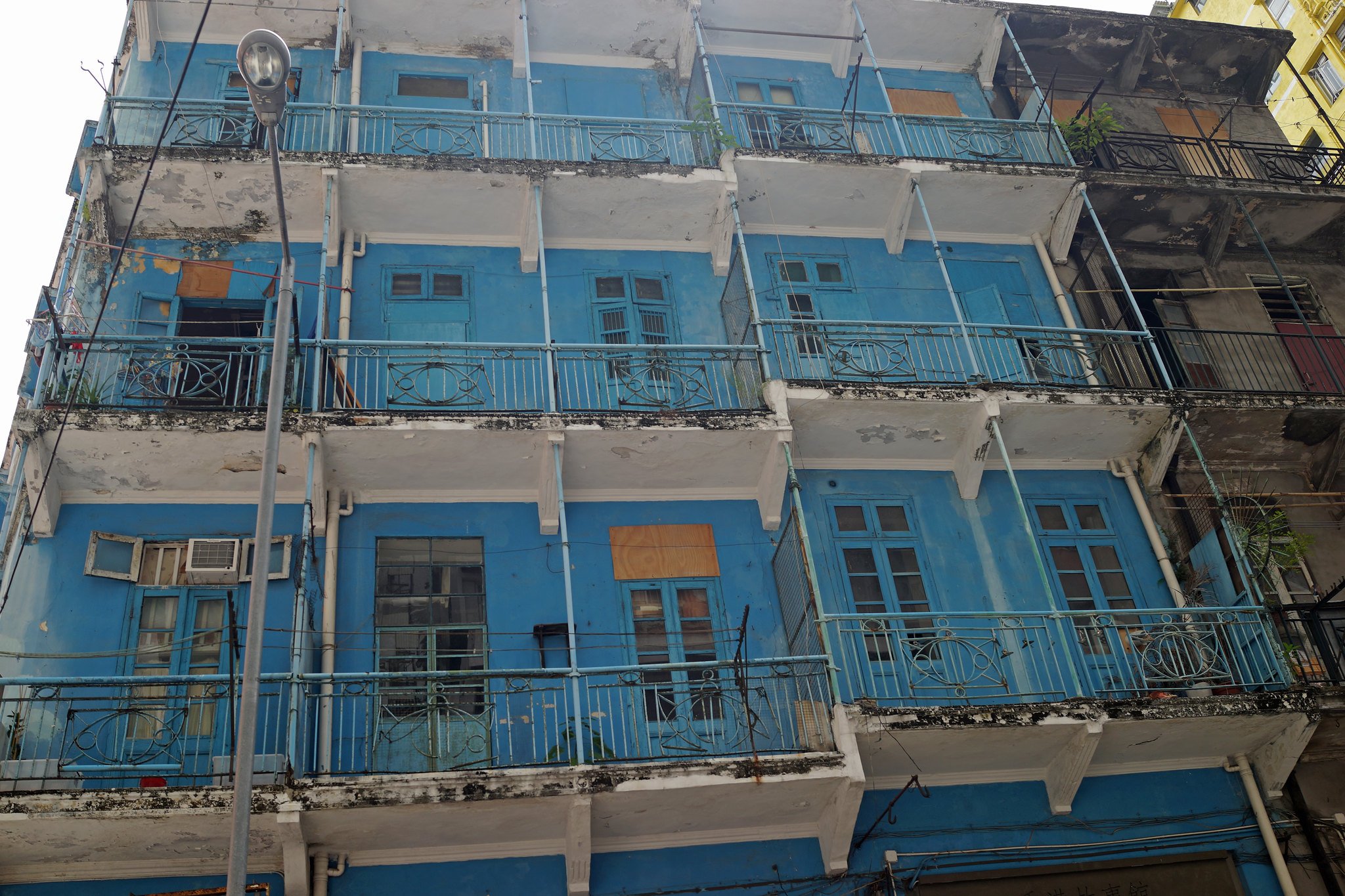
The Blue House in Wan Chai | Before & After | Hong Kong
6. Why one part of The Blue House was not blue (historically and today)
When the government painted the exterior in the 1990s, the available stock was largely Water Supplies Department blue paint. Nos 72, 72A and 74 received the blue coat. No. 74A was still in private ownership at the time and the owner declined to have it painted, so it remained in its earlier grey or unpainted concrete finish. That contrast became part of the building’s visual identity for years. Only after the later acquisition and full revitalisation was the whole cluster brought into a more coherent (though still multi-coloured) appearance. The “missing blue” section was never a design statement; it was simply a practical consequence of fragmented ownership. - the images above show that the once grey facade on the corner is white | cream
7. The Blue House, last remaining 1920s building in Hong Kong - fact or legend?
It is not the absolute last standing building from the 1920s in Hong Kong, nor even in Wan Chai. What is true is that intact balcony-type tong lau of this period and configuration have become genuinely rare. Many similar blocks were demolished, heavily altered or lost their timber elements and original shopfront character. The Blue House Cluster is one of the more complete and publicly visible surviving groups, which is why the “last remaining” phrasing circulates. It is better understood as a rare and relatively intact example rather than a literal sole survivor.
8. Tripadvisor patterns for the Blue House- five-star themes versus common complaints
The more positive and five-star comments tend to focus on the following points:
The striking blue colour and the accidental leftover-paint story behind it
The living-heritage aspect - people still actually live in the buildings
The UNESCO Award of Excellence and the rare “retain house and people” approach
The Hong Kong House of Stories and the community programmes, workshops and exhibitions
The overall feeling of stepping into a genuine pocket of older Wan Chai that has not been completely sanitised
The more critical or middling comments tend to cluster around these observations:
Limited access to the upper floors because they remain private homes
Not a great deal to see once you have looked at the exterior and the ground-floor exhibition space
The site feels small for the amount of attention it receives
Some visitors feel the renovation has made the buildings look “too neat” or overly restored
It is better appreciated from the street than as a full indoor attraction
I absolutely agree, the old Blue House prior to renovation was a dump, it was dirty, grimy and falling apart but had character by the bucketful
9. The night-soil collector story - who collected the human waste from the Blue House
Before modern plumbing was fully installed, many older tong lau relied on night-soil collection. Residents used chamber pots or shared facilities; collectors (often working in the early morning) carried the waste away in buckets suspended from a bamboo pole. The Blue House was no exception in its earlier decades. The image of an elderly collector making his rounds has become part of the oral history of the building and of Wan Chai more generally. It is not unique to this site - the practice continued in residual pockets of Hong Kong well into the late 20th century - but it is a vivid reminder of how basic daily life was in these buildings before the upgrades that came with the revitalisation. The story lands because it is both ordinary and slightly shocking to modern ears.
I guess the night soil collector figured it was just a job and probably got used to the stares and such, a heck of a way to make a living
10. The surrounding coloured buildings and any “rainbow” connection with regards to the Blue House
Official literature and most visitor guides talk about the Blue House Cluster as three buildings - the Blue House itself, the Yellow House on Hing Wan Street and the Orange House on King Sing Street. That is accurate for the formal revitalisation project. Stand on the ground, however, and the reality is broader and harder to miss. In and immediately around the Blue House there are at least seven or eight buildings carrying vivid colours. Some of these front directly onto Queen’s Road East; others sit on the side streets and lanes that feed into Stone Nullah Lane. The palette includes not only the official blue, yellow and orange but also greens, lemon yellows, tangerines and related bright tones. They are not subtle. Once you start noticing them they form a small, colourful pocket that stands out sharply against the more ordinary façades further along the road.
There is no formal “rainbow policy” or deep symbolic programme behind the palette. The Blue House’s colour remains the accidental leftover government paint story. The yellow and orange (now cream) were deliberate choices during the later revitalisation to differentiate the three core buildings and give the cluster visual coherence. The additional brightly painted façades nearby - including those facing Queen’s Road East - simply continued the same practical and aesthetic impulse. Older tong lau were given a fresh coat that made them stand out, helped define the character of the immediate area, and gave the streets a stronger visual identity. The result is a cheerful, slightly eccentric streetscape rather than a carefully orchestrated rainbow scheme.
Additional notes and out of left-field observations
One persistent personal observation after decades of walking past the place is the change in character that came with the full makeover. Before the major revitalisation the buildings had a weathered, slightly scruffy authenticity (in English it was decrepit) - peeling paint, improvised wiring, the lived-in mess of real working-class housing.
The finished project is cleaner, more organised and far better maintained, which is objectively an improvement for the residents who stayed. Yet something of the raw texture was lost in the process. That tension sits at the heart of many Hong Kong heritage projects: the government framework prioritises structural safety, fire regulations, accessibility and long-term viability, which almost inevitably produces a tidier result. Whether that counts as successful conservation or a form of gentle sanitisation depends on what one values most. The Blue House is still one of the better outcomes precisely because people continue to live there rather than it becoming an empty shell. The old photographs of the pre-makeover state remain valuable precisely because they capture a version of the building that no longer exists.
So there you go
Customised Private Tours + Experiences in Amazing Hong Kong
Jamie has lived in Hong Kong - Pearl of the Orient for 50+ years
Carefully Crafted Personalised and Customised Itineraries by Jamie | Hong Kong’s Most Experienced Private Tour Guide for : Solo Travellers Friends Families Seniors Couples Business People MICE Delegates.
Private Tours Cultural Tours Walking Tours Sightseeing Tours City Tours Night Tours Layover Tours Transit Tours Private Shore Excursions Bespoke Tours Personalised Tours Jewish Heritage Tours Luxury Private Tours Day Tours Luxury Boat Tours Themed Tours Private Family Tours Private Day Tours Corporate Tours
Just you, your family or friends and Jamie your personal English private tour guide - over 2,400+ tours completed since 2011 - Jamie offers quality Private Tours of Hong Kong
Tour Group Size 1 - 6 people only
J3 Group Hong Kong | J3 Consultants Hong Kong | J3 Private Tours Hong Kong
Creating Memories That Will Last A Lifetime
Go here for the Hong Kong Michelin Restaurant Guide which includes the Bib Gourmand Category
Jamie’s Hong Kong Insider Chat
Ready to turn your plans into a far more enjoyable reality? Click the yellow button below to learn more about Jamie’s Hong Kong Insider Chat, check pricing and book
I do not do Food Tours in Hong Kong but I know people that do!
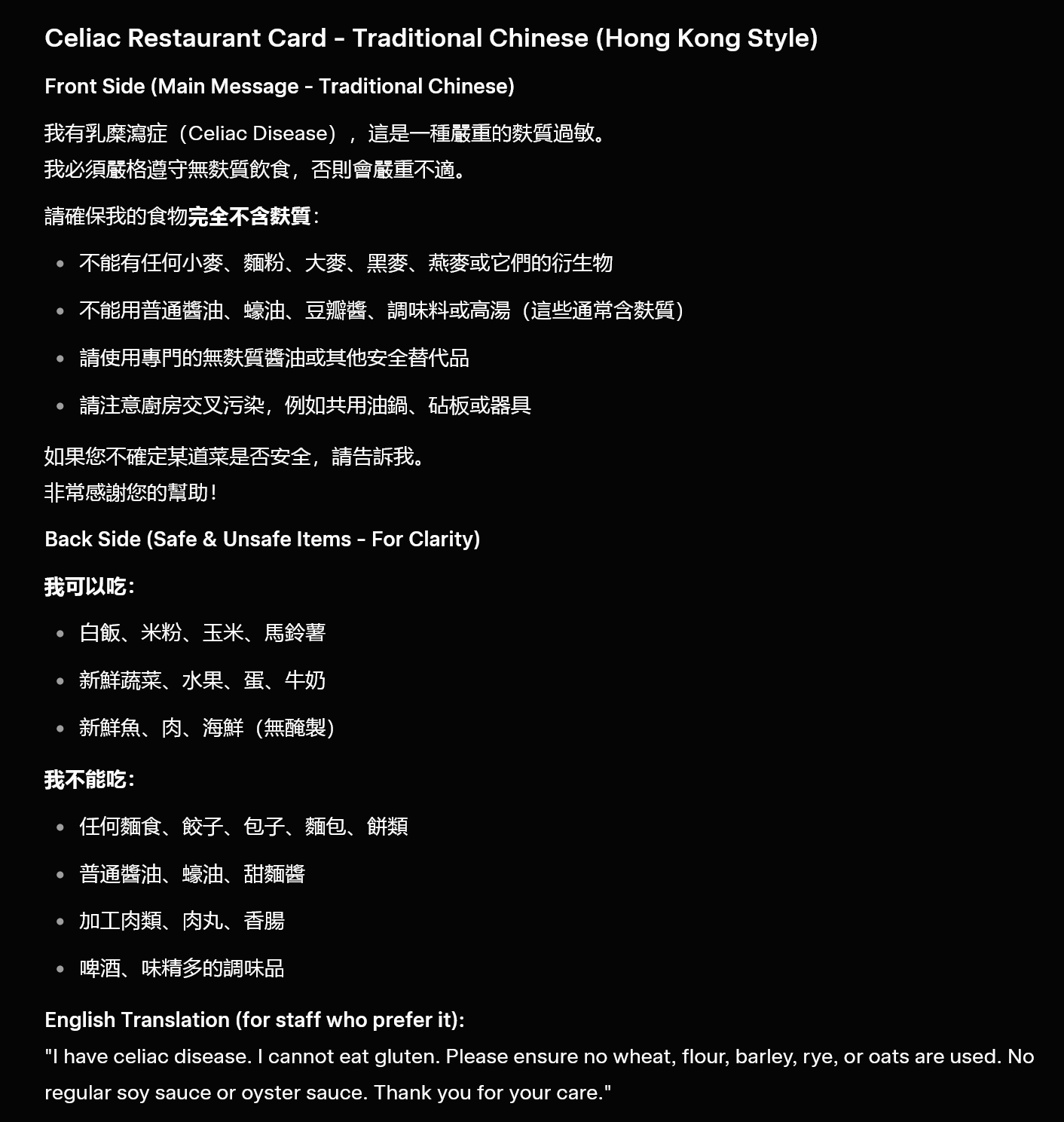
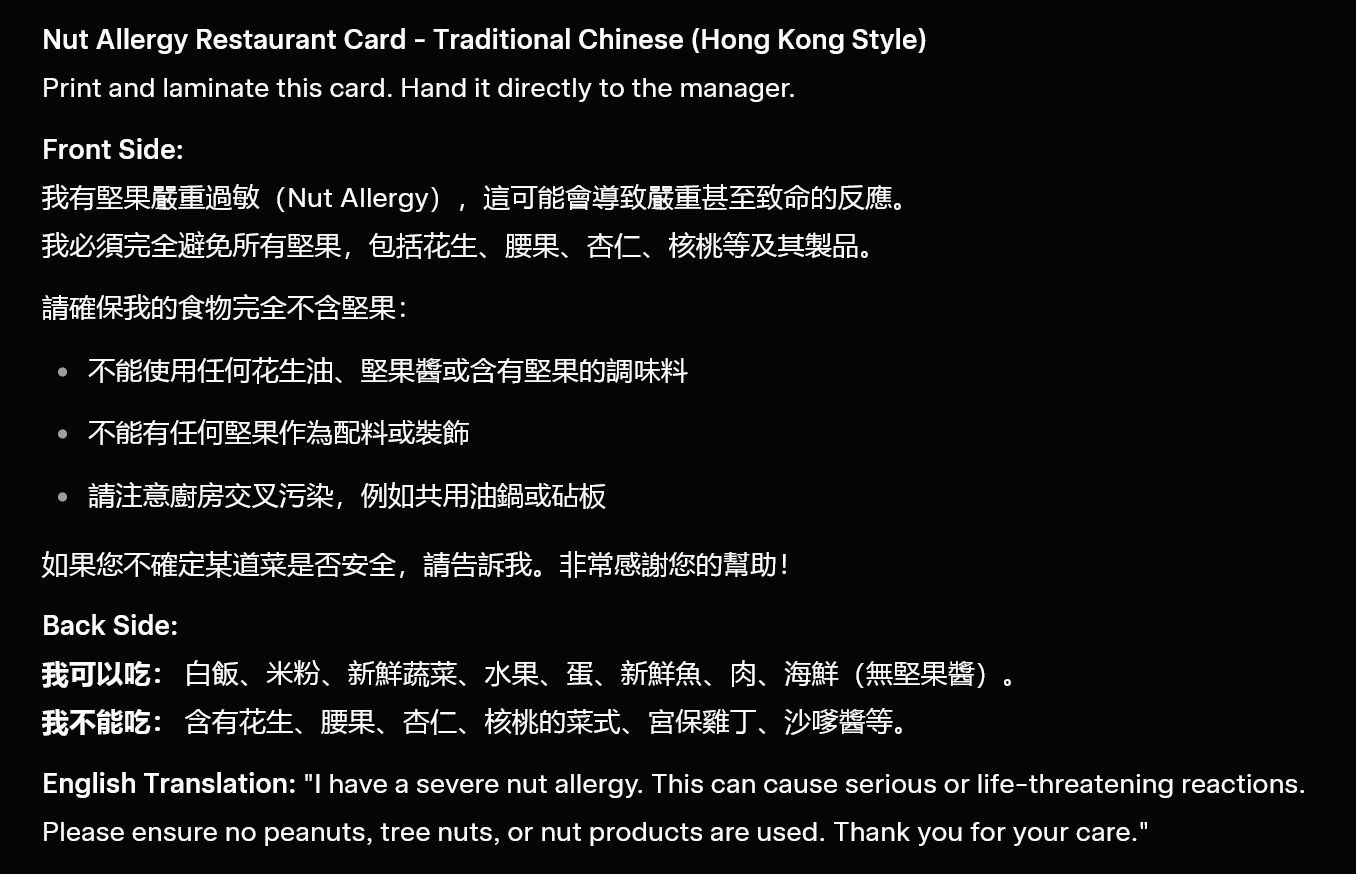
click on any image to enlarge
The information above can be shown to restaurant managers in Hong Kong if you are intolerant to gluten and nuts,
I do not do food tours as mentioned above, I have very specific reasons and part of it is that I do not speak Cantonese or write Chinese, I am from Yorkshire in England and I lack the language gene and it is not through lack of trying and yes a lot of restaurants do not have English menu’s or staff who speak conversational English.
.. and yet I have eaten at close to 1,400 restaurants in Hong Kong since January 2nd 1972, my wife was born in Hong Kong and we have been together over 40 years and her first language is Cantonese and a lot of her family are Chinese or half Chinese so I have never had much of an issue!
This does not translate to doing food tours though, yes, I could do them, no problem there but they would never ever be as good as the food tours done by my friends (see the 3 links above) most of their awesome guides are locally born Hong Kong Chinese and obviously food culture is part of their DNA, it is impossible for me to compete with that!
So please feel free to contact them for food tours
I do not do Hiking Tours in Hong Kong but I know someone that does!
I do not do Hiking Tours, never have and never will even though I used to go Hiking a lot when I was a lot younger, The Hong Kong Government is promoting hiking tours so I urge you to contact my friend Sabrina at Hong Kong Trails and Tours, she is a long time Hong Kong resident and and a very experienced hiker with close to 700 Hikes in 15+ years under her belt, please click on the link below
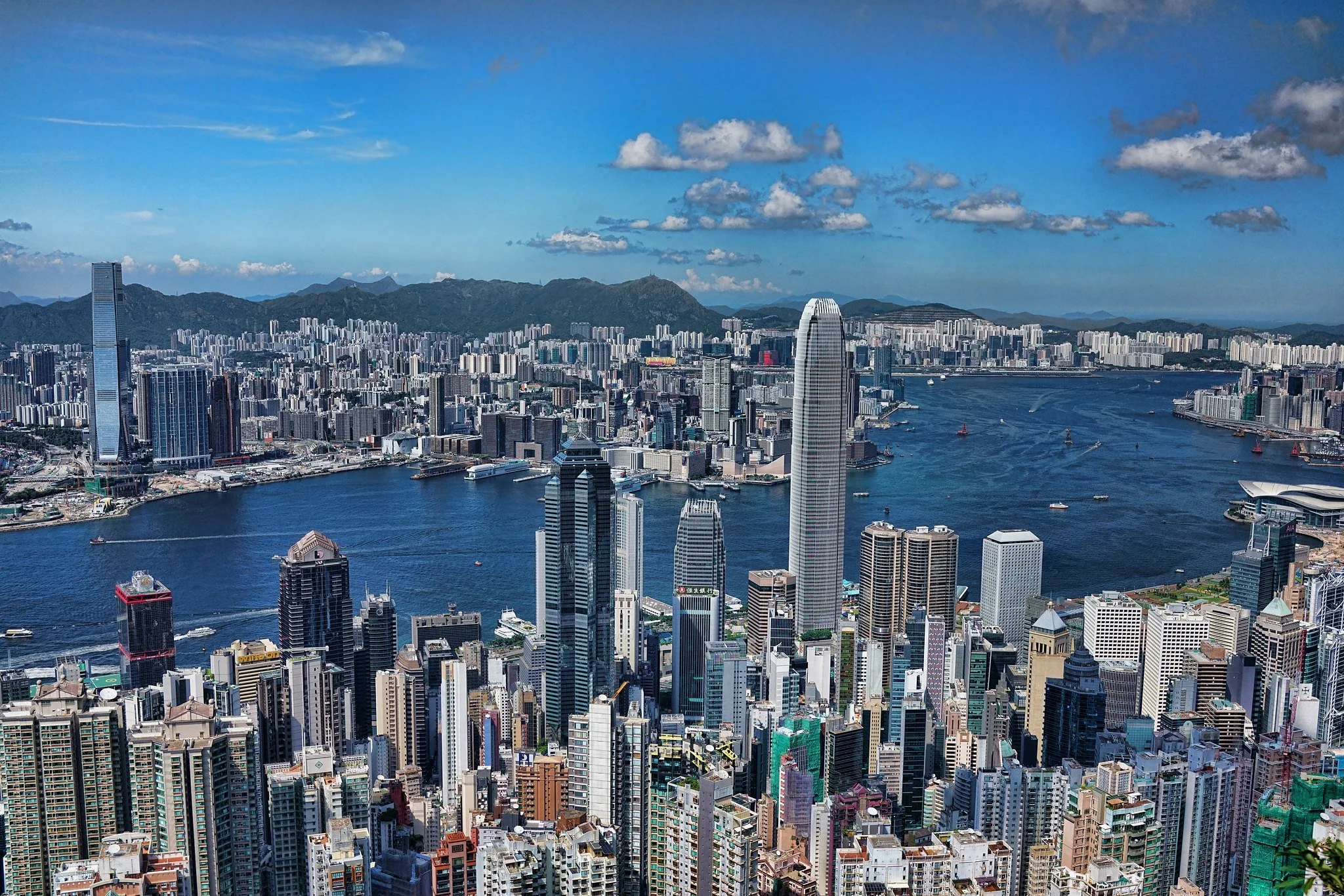
click on any image to enlarge
© Copyright Acknowledged | All rights reserved | all images taken b Jamie
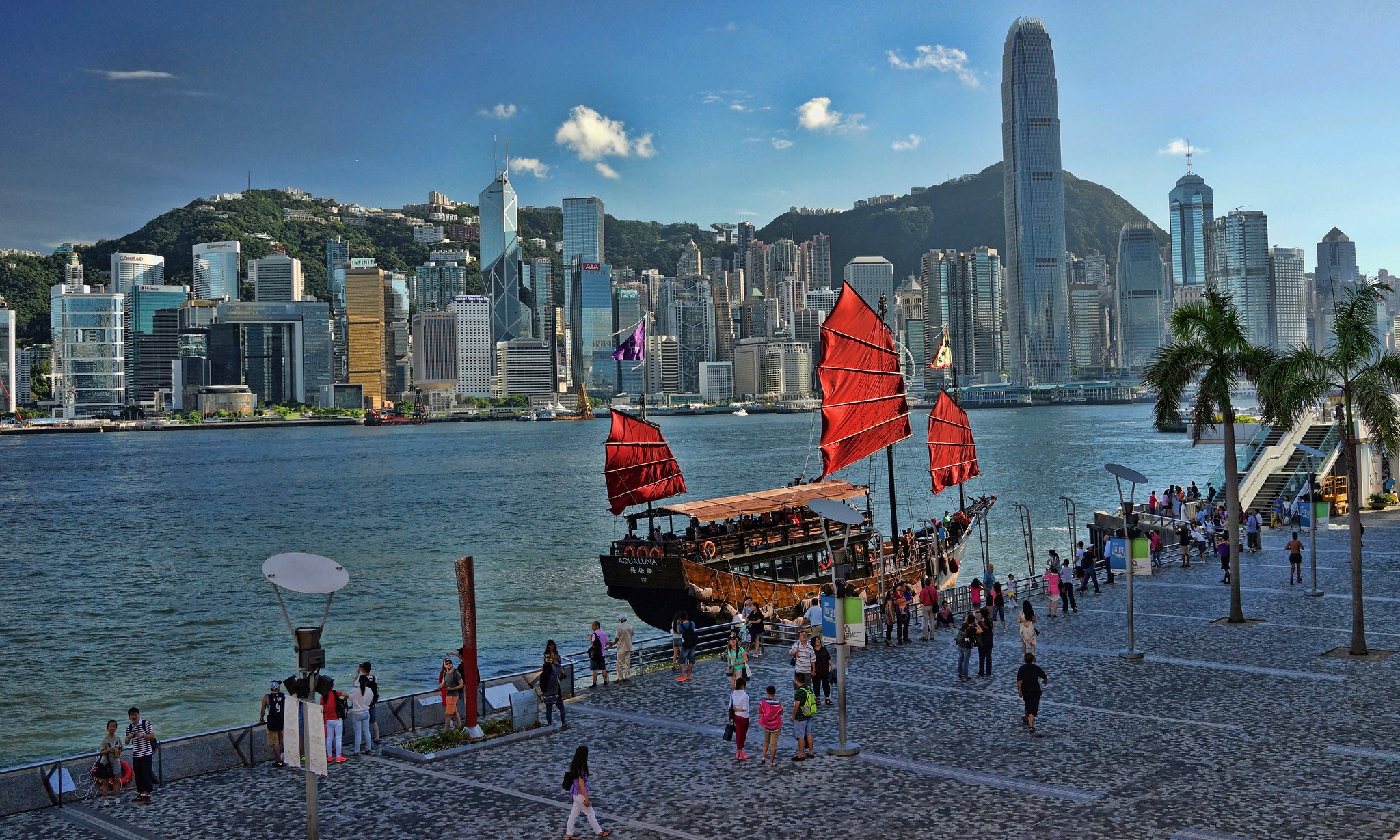
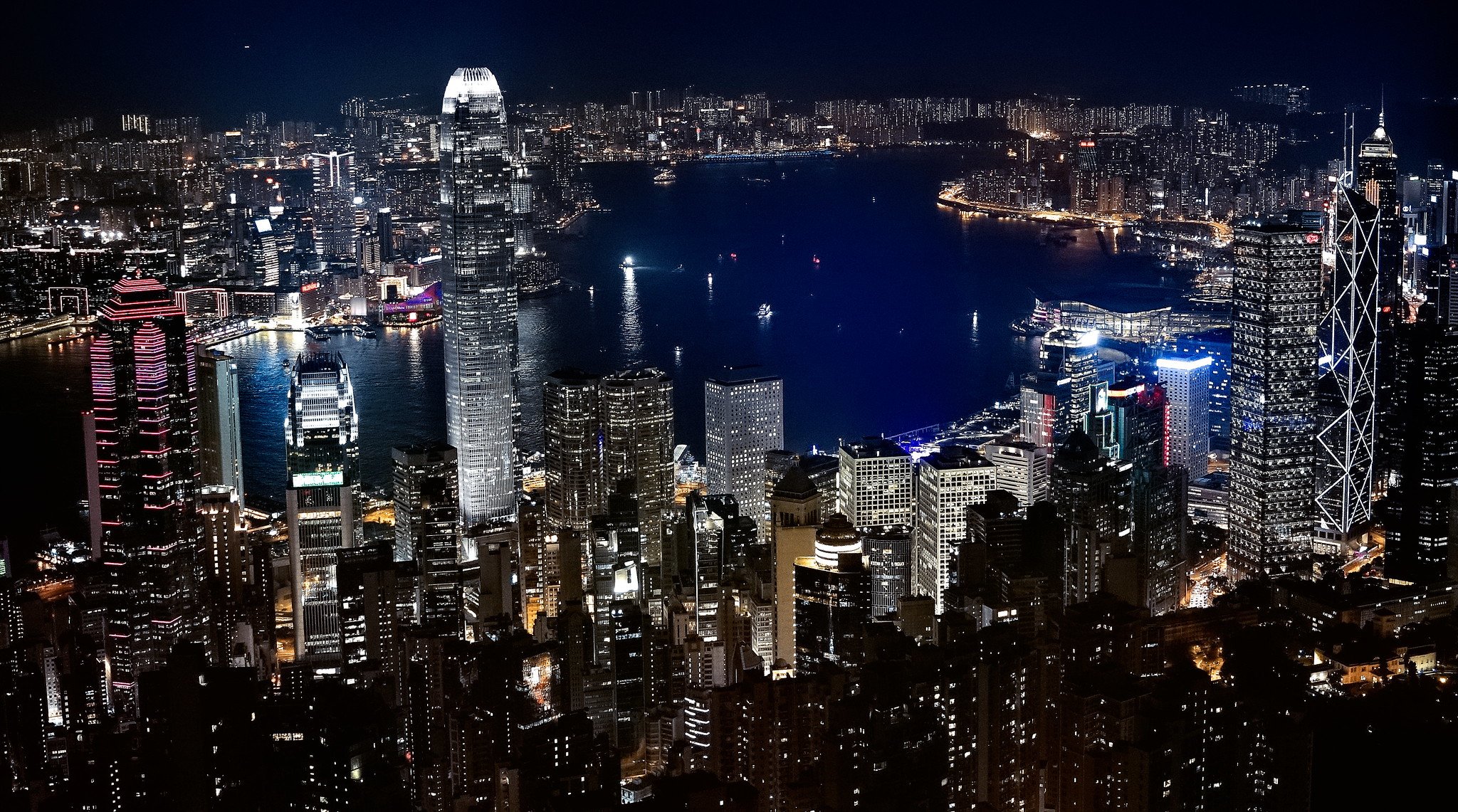
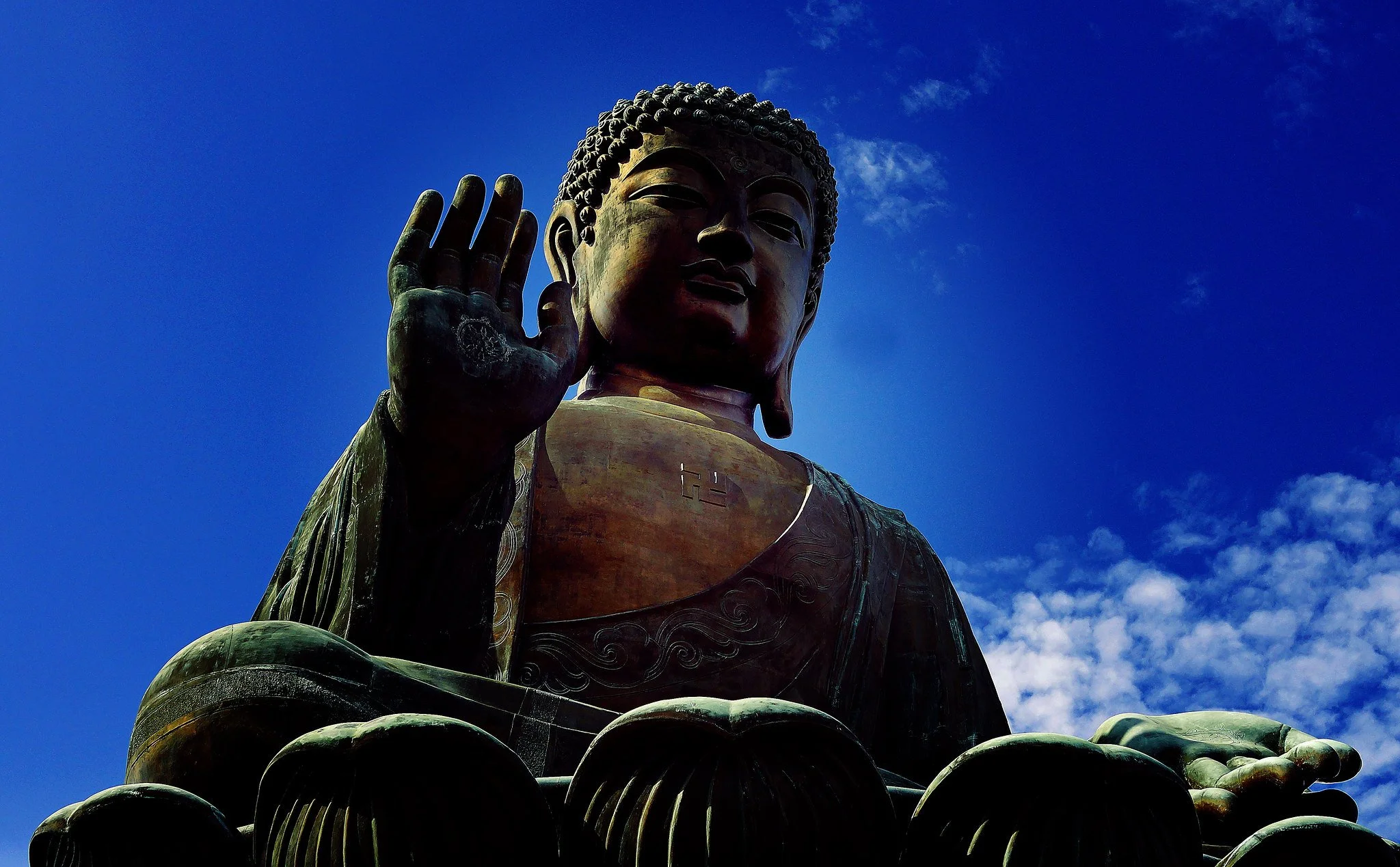
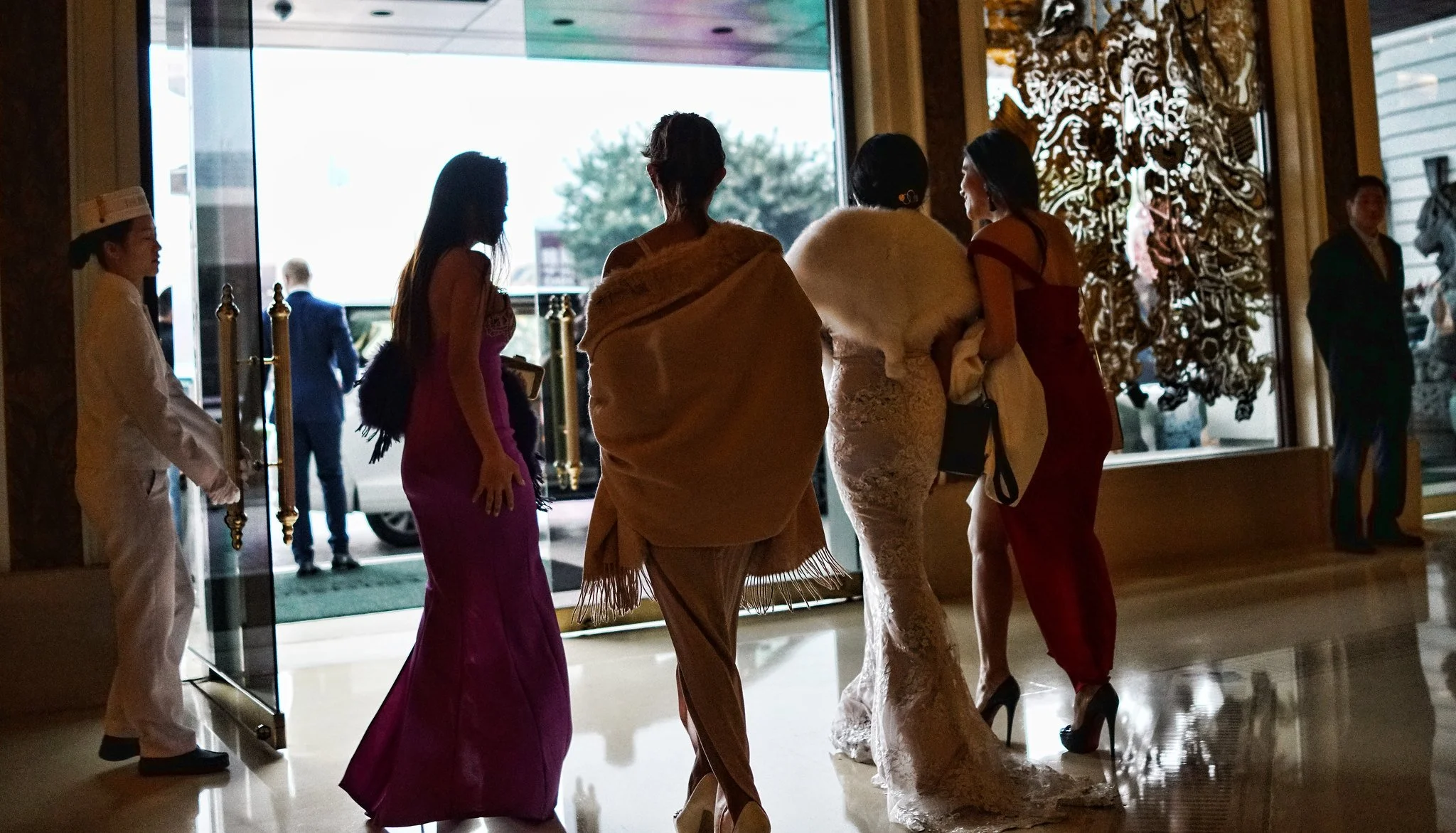
Jamie’s Hong Kong | Some of my favourite images | Hong Kong 101