10 Things you did not know about PMQ in Hong Kong
From Queen’s College to Police Flats to Craft Market

The J3 Group - Premium Quality Private Tours | Experiences and Insider Chats since 2010
Me Jamie, your host, I am English and I have lived in Hong Kong since January 2nd 1972 - I know the place.
A meaningful blog post with a difference - tips on Travel, Tourism, Tours, Daily Life and my personal thoughts on Hong Kong.
Please do visit Amazing Hong Kong
Hong Kong | Pearl of the Orient
Customised Private Tours + Experiences in Amazing Hong Kong
Jamie has lived in Hong Kong - Pearl of the Orient for 50+ years
Carefully Crafted Personalised and Customised Itineraries by Jamie | Hong Kong’s Most Experienced Private Tour Guide for : Solo Travellers Friends Families Seniors Couples Business People MICE Delegates.
Private Tours Cultural Tours Walking Tours Sightseeing Tours City Tours Night Tours Layover Tours Transit Tours Private Shore Excursions Bespoke Tours Personalised Tours Jewish Heritage Tours Luxury Private Tours Day Tours Luxury Boat Tours Themed Tours Private Family Tours Private Day Tours Corporate Tours
Just you, your family or friends and Jamie your personal English private tour guide - over 2,400+ tours completed since 2011 - Jamie offers quality Private Tours of Hong Kong
Tour Group Size 1 - 6 people only
J3 Group Hong Kong | J3 Consultants Hong Kong | J3 Private Tours Hong Kong
Creating Memories That Will Last A Lifetime
Go here for the Hong Kong Michelin Restaurant Guide which includes the Bib Gourmand Category

A Resident since 1972 - Private Tours of Hong Kong with Jamie
The Best Things to do in Hong Kong
click on the image to enlarge
© Copyright Acknowledged | All rights reserved | Image courtesy of PMQ
PMQ - Aberdeen St + Hollywood Road | Craft Market | Hong Kong
Foreword by Jamie
10 Things You Did Not Know about PMQ in Hong Kong
PMQ sits right in the middle of Central’s heritage strip and gets more than its fair share of footfall from group tours and casual visitors. After more than a decade of operation it remains one of those places that polarises opinion among people who actually work in tourism. Some see a lively creative hub that gives local designers a proper shopfront. Others look at the same building and see a polished craft market with a Grade 3 label stuck on the front. The history is genuine enough, the adaptive reuse is competent, and the location is almost too convenient. What follows is a straight look at how the place came into being, who runs it, what is actually inside, and why it continues to pull crowds even when many private guides quietly leave it off their preferred itineraries.
Hong Kong has no shortage of historic buildings, the current list stands at 1,265 split into grades 1, 2 and 3, PMQ falls into the grade category, which means it just made the grade
After 50+ years in Hong Kong and a big fan of Hollywood Road which is for the entire length of the road, a one way road which means public transport options are limited, luckily PMQ is just 8 - 19 minutes walk from the Mid Levels Escalator but be warned that the area is congested with traffice and people, the sidewalks are narrow and there are street crossings to negoiate, you have to have your wits about you!
To me anyway PMQ is just fine to visit but not on a Private Tour, it is the sort of thing a visitor can easily do on their own and spend as much time as they wish there
1. Complete history of PMQ from concept to opening
The site’s story starts long before the police ever moved in. In 1862 the Central School, Hong Kong’s first government school offering Western-style upper primary and secondary education, opened on Gough Street. By 1889 it had outgrown that location and moved to the junction of Aberdeen Street and Hollywood Road, first as Victoria College and then, from 1894, as Queen’s College. The buildings were among the more substantial colonial structures of their day and educated a generation that included Sun Yat-sen. During the Japanese occupation the school was occupied, used by cavalry units, and ultimately gutted by fire. The remains were demolished in 1948.
In 1951 the government rebuilt the cleared site as the Hollywood Road Police Married Quarters. This was the first purpose-built accommodation for married junior rank-and-file officers, including local Chinese officers, who were serving at the nearby Central Police Station. It offered 140 single-room units and 28 double-room units. These were compact, functional flats typical of early post-war government staff housing rather than general public housing.
That distinction matters. Classic public housing of the same era - the Mark I and Mark II resettlement blocks put up for people cleared from squatter areas - was routinely around 120 square feet, sometimes even smaller. Many of those early units had no internal water or electricity at first, shared communal toilets and bathrooms on each floor, and cooking done out on the open corridor. They were emergency mass housing, deliberately minimal. The Hollywood Road quarters sat in a different category altogether. The single-room flats fell in the lower-to-middle part of the 300 - 400 square foot range common for staff quarters of the period; the double-room units occupied the upper end. Kitchens were originally located outside on the shared corridor and toilets and bathrooms were communal, only later upgraded to individual facilities inside the units. Even so, the overall standard was noticeably higher than ordinary public housing of the day. It was government housing for government employees, closer in spirit to the better end of private tenement standards than to the resettlement estates.
For comparison, modern police married quarters of the kind still occupied until relatively recently often measure only around 450 square feet. Some later or higher-grade police flats ran larger still — closer to 700 square feet in certain cases - but the 1951 Hollywood Road blocks were earlier and more compact. Two of Hong Kong’s later Chief Executives, Donald Tsang and C.Y. Leung, lived there as children while their fathers served in the Force. The quarters remained occupied until 2000, after which the buildings stood empty for the best part of a decade.
The practical difficulty for any guide standing on Hollywood Road today is that there is no surviving example of genuine 1950s or early 1960s public housing nearby that could be used for contrast. It is therefore easy, and increasingly common, to wave a hand at PMQ and call it “classic public housing.” The description is convenient but inaccurate. What stood here was solid, functional staff accommodation for serving police officers and their families - better built and more spacious than the mass resettlement blocks of its time - and that difference is worth keeping clear and yes I have family members who have lived in staff accommodation for serving Police Officers.
By the mid-2000s the site was on the list for potential sale and high-rise redevelopment. Local heritage groups, notably the Central and Western Concern Group, pushed back hard, pointing out both the police housing history and the earlier school foundations that still lay beneath. In the 2009-10 Policy Address the government included the Former Police Married Quarters as one of the eight “Conserving Central” projects. In March 2010 the Development Bureau and Commerce and Economic Development Bureau invited proposals. On 15th November 2010 the Secretary for Development announced that the Musketeers Education and Culture Charitable Foundation, working with the Hong Kong Design Centre, the Hong Kong Polytechnic University and the Hong Kong Design Institute of the Vocational Training Council, would turn the site into a creative industries landmark under the name PMQ.
A long-term resident looking at the decision with a slightly cynical eye (such as me) still finds it striking. Grade 3 status is the lowest level of historic protection in Hong Kong and does not, by itself, prevent demolition. The government could have knocked the buildings down and put the site out to public tender. In the middle of Central, on a plot of that size and prominence, the land would have been worth a fortune as private residential towers. Instead the site was kept in government hands and handed to a non-profit foundation for revitalisation. Whether that outcome was driven purely by heritage considerations, or whether the successful bidders simply had the right political connections at the right moment, remains a matter of quiet speculation among people who have watched how these things usually work in Hong Kong. The official story is conservation and creative industries. The alternative reading is that someone managed to stop the government from cashing in on one of the more valuable pieces of residual government land left in the district.
I can understand the logic I really can but Hollywood Road is prime real estate land, PMQ could easily have been put in a new building or renovated old building in places like Tsuen Wan or Shatin.
Government funded the essential structural and building-services works through the Architectural Services Department. Renovation began in early 2012. Soft opening took place in mid-April 2014; the official opening ceremony was held on 21st June 2014. The compound is graded as a Grade 3 historic building. An underground interpretation area lets visitors see the remaining stone foundations of the old Central School.
2. Ownership breakdown of PMQ
The land and buildings remain government property. Day-to-day operation and long-term management sit with PMQ Management Co. Ltd, a non-profit-making social enterprise specially set up by the Musketeers Education and Culture Charitable Foundation Limited. The Foundation, established in 2008 by Stanley Chu, Lawrence Fung and Leong Ka-chai, put up a donation of HK$100 million (roughly US$12.8 million at the time) to cover fit-out beyond the government’s structural works and to underwrite early operating costs. The tenancy agreement with government was for an initial ten years, renewable for a further five. Any net operating surplus is shared 50 | 50 with government every five years, with the Foundation’s share expected to be ploughed back into the project. The arrangement is deliberately self-financing; rental income from commercial units and studio spaces is meant to cover ongoing management, maintenance and the rental subsidies offered to emerging designers.
3. Who operates PMQ on a day to day basis
PMQ Management Co. Ltd runs the place. The board is chaired by Mrs Lo Lee Oi-lin, with representatives from the collaborative institutions and industry figures. An executive director oversees operations. The company handles leasing of studio and shop units, programming of events, maintenance of the common areas, and the overall creative positioning. It is not a government department, nor is it a pure commercial landlord; it sits in that hybrid zone of non-profit social enterprise charged with both heritage care and creative-industry promotion.
4. Is PMQ a historic building or shopping mall for art, trinkets and stuff?
Both descriptions contain truth, and that is precisely the tension. The buildings are genuinely historic - Grade 3, with visible school foundations, the original 1951 police-quarters layout still readable in the corridors and the adaptive reuse carried out with reasonable care. At the same time the dominant experience for most visitors is retail: independent fashion, jewellery, homeware, gifts, ceramics, leather goods, a handful of design studios, and a selection of cafés and restaurants. Roughly 55% of the usable space is studio units aimed at create-preneurs, 25% commercial, and 20% public or event space. It is not a museum and it is not a pure craft market, yet the day-to-day atmosphere leans more towards browsing and buying than towards deep historical interpretation. For many visitors the heritage story is background colour rather than the main event.
5. Was there one driving force behind the PMQ project?
No single heroic individual. The political decision sat with the Development Bureau under the Conserving Central programme. The operational driving force was the Musketeers Education and Culture Charitable Foundation - specifically the three founders who put up the HK$100 million and assembled the partnership with the design institutions. Without that private commitment the project would almost certainly have taken a different shape or timeline. Heritage campaigners such as Katty Law and the Central and Western Concern Group deserve credit for keeping the site off the pure development market in the first place. It was a multi-party effort rather than the vision of one person.
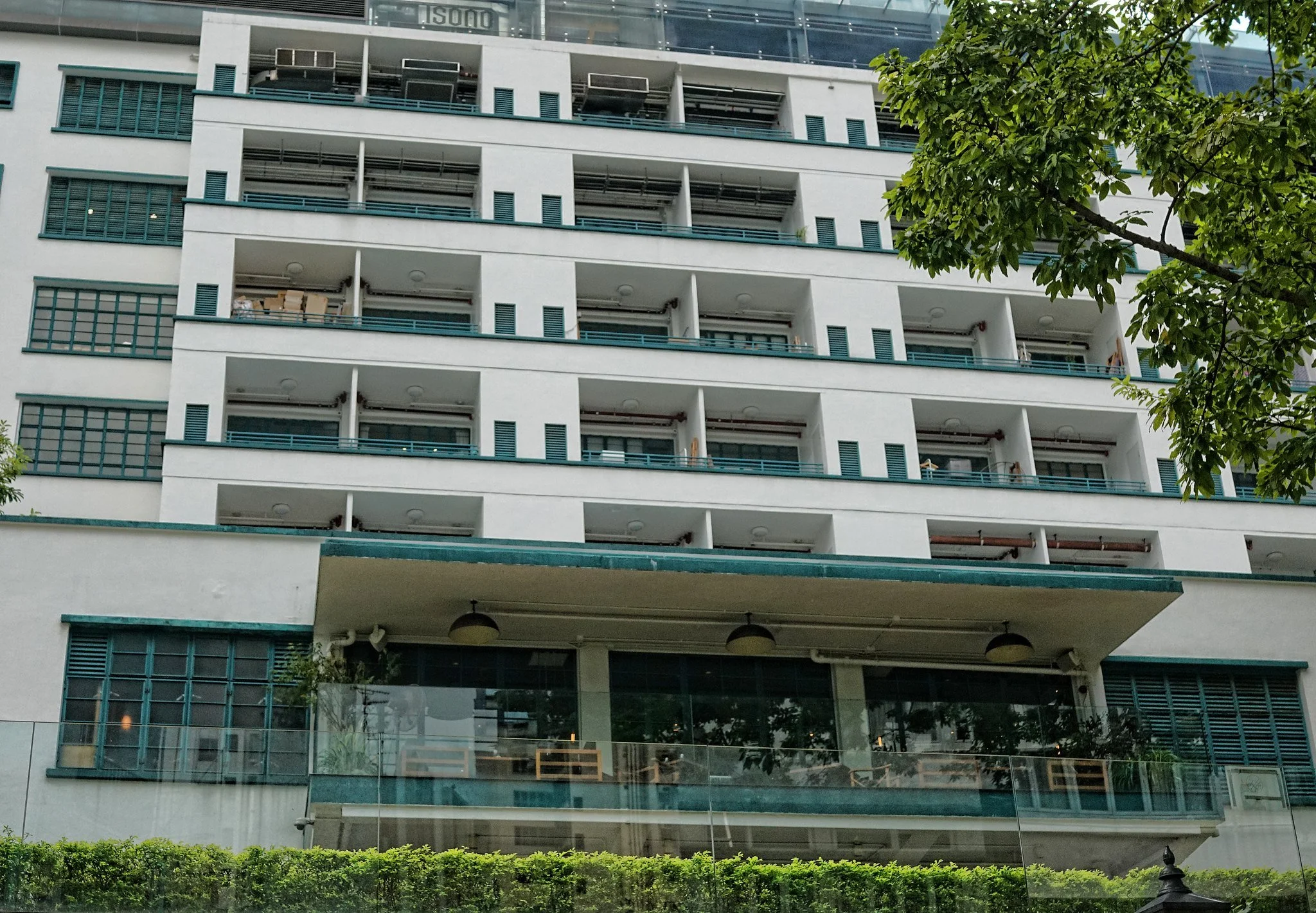
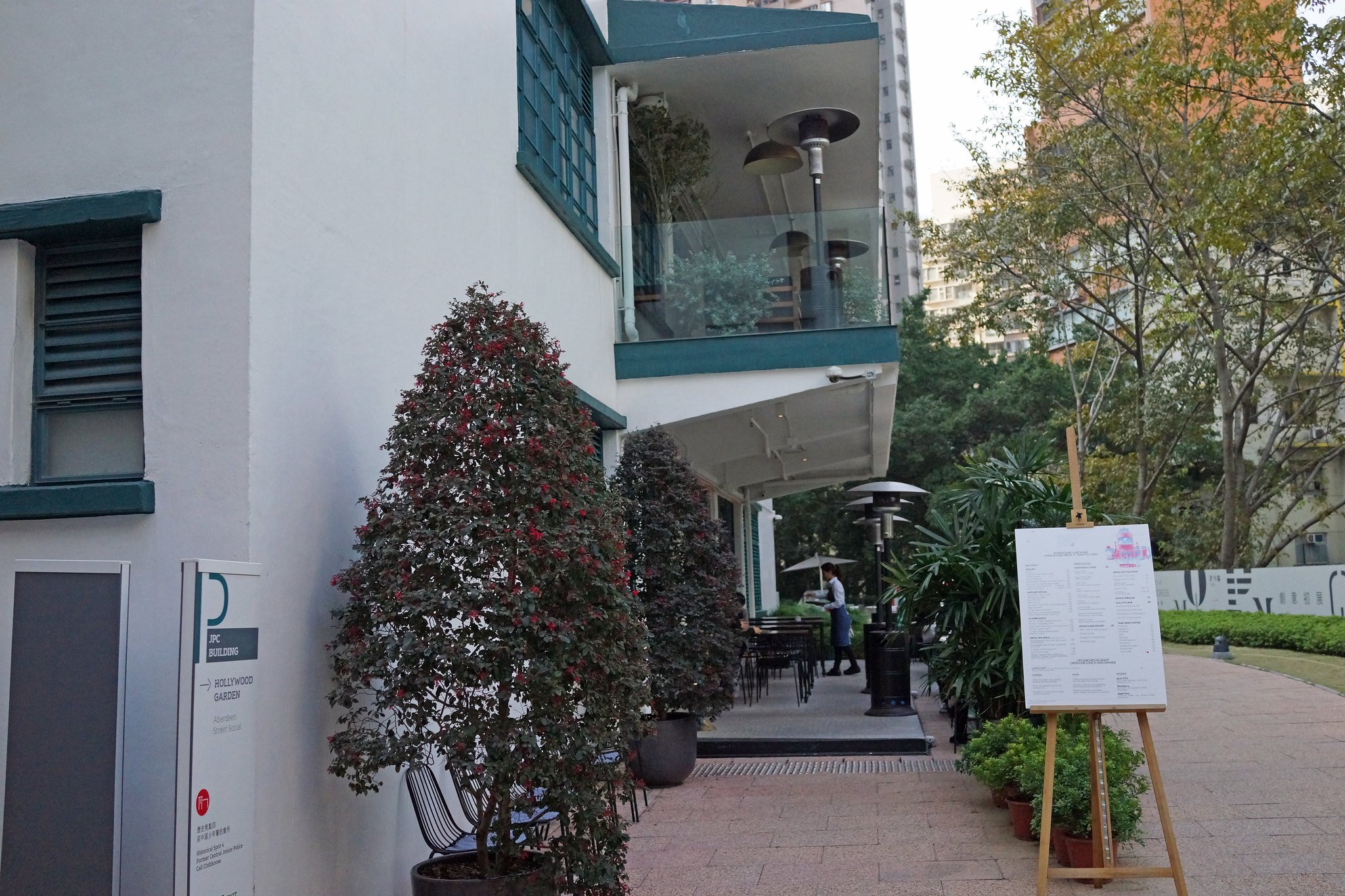
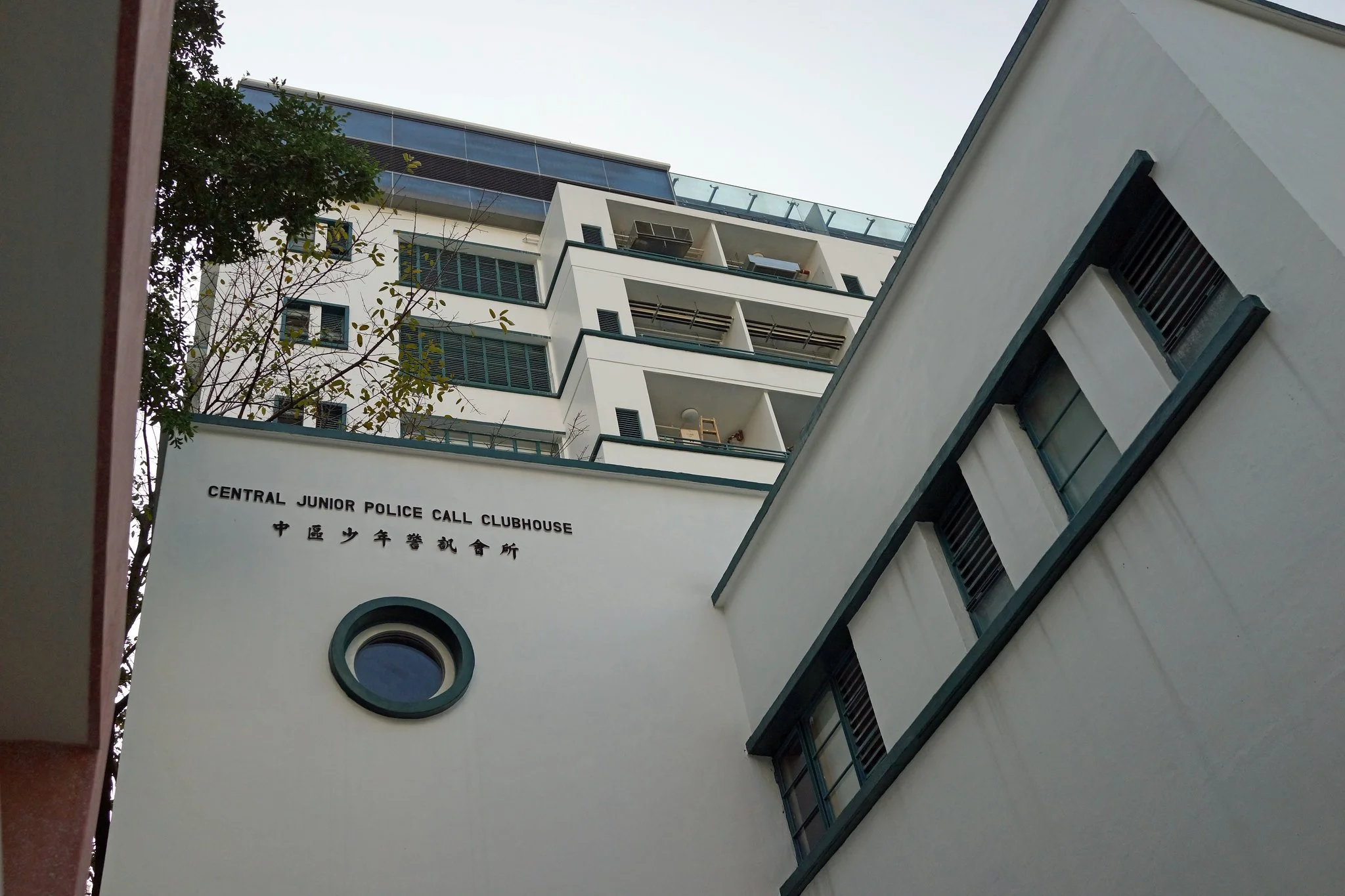
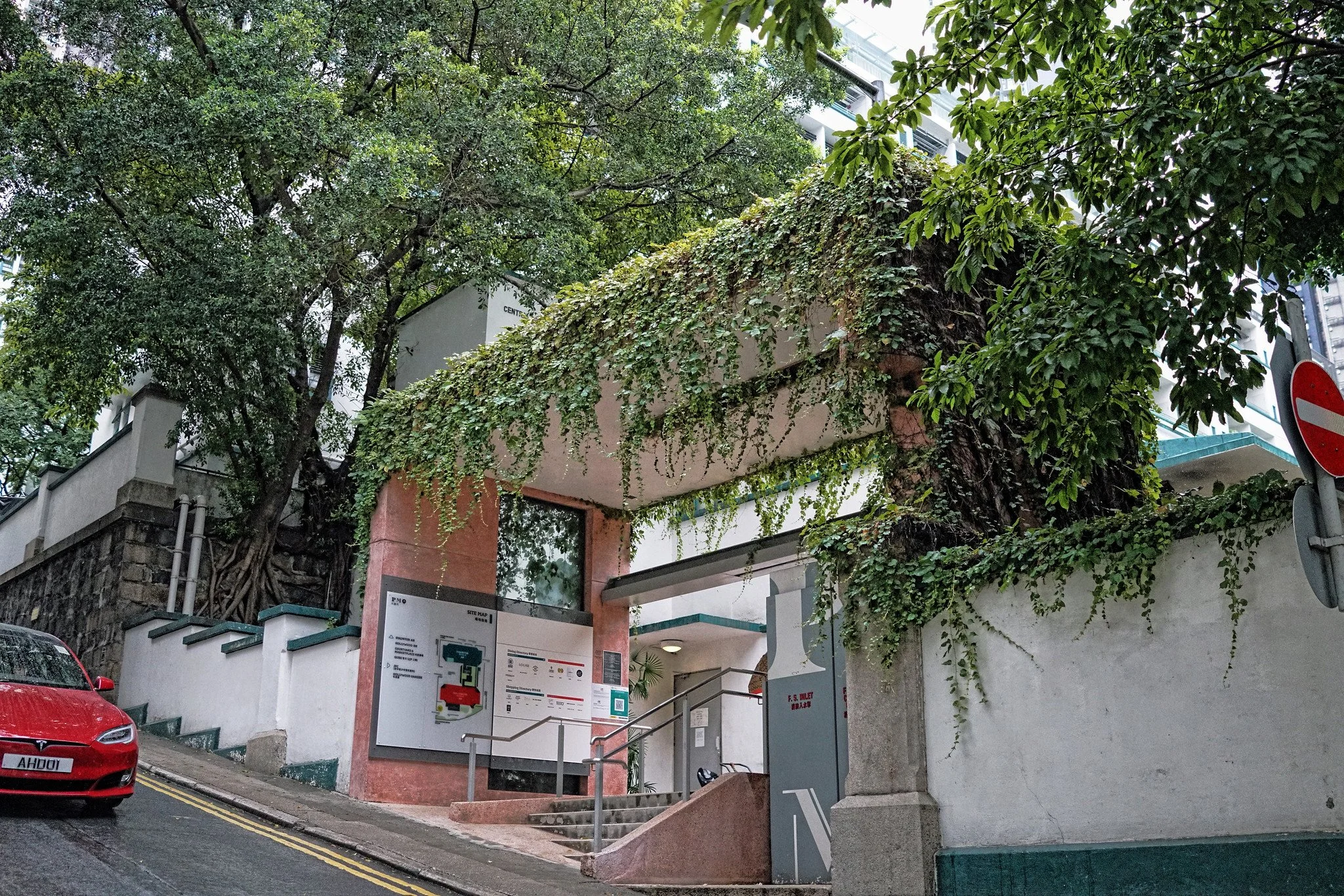
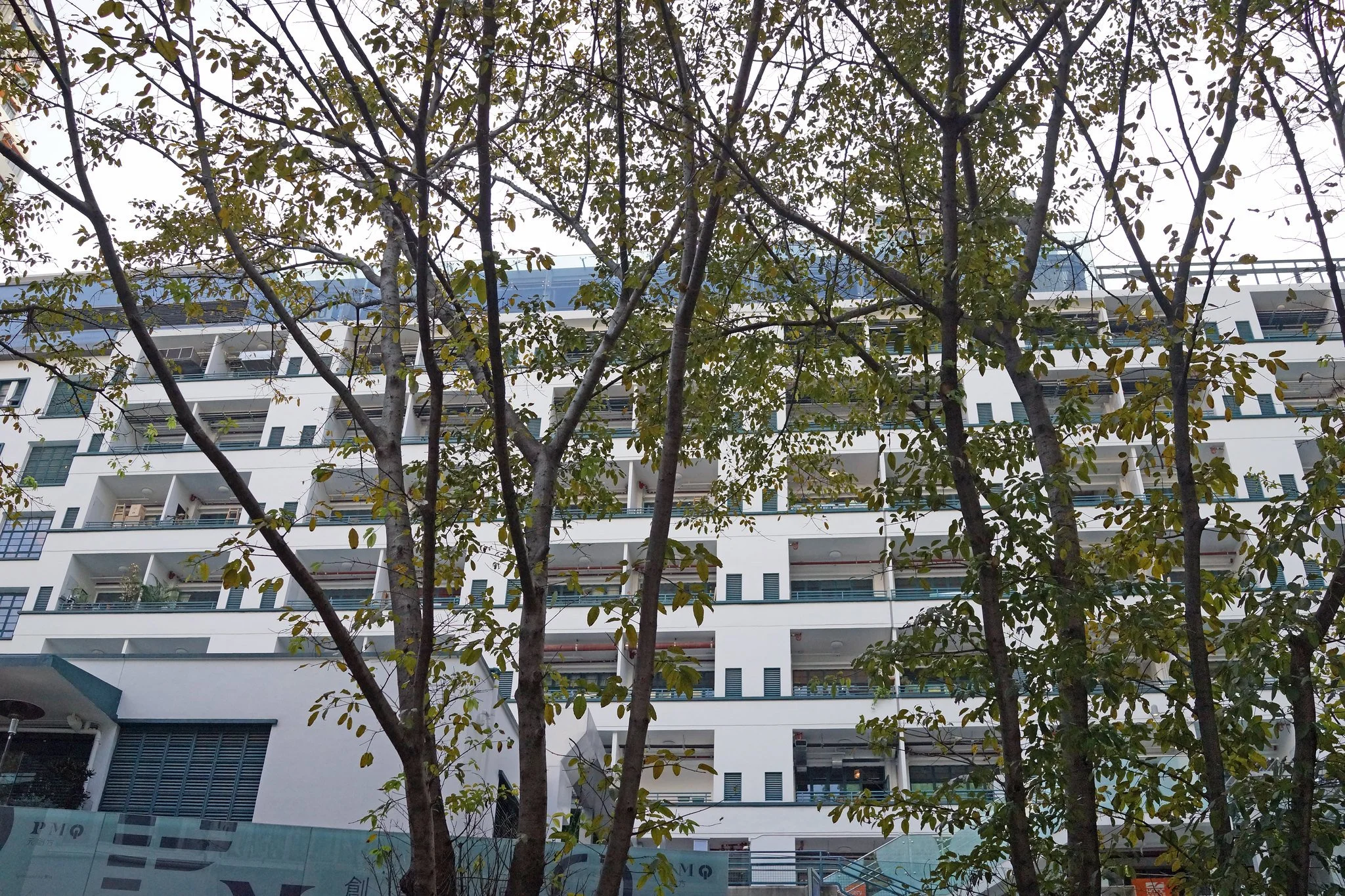
click on any image to enlarge
© Copyright Acknowledged | All rights reserved | Images taken by Jamie
PMQ - Aberdeen St + Hollywood Road | Craft Market | Hong Kong
6. Actual count of retail outlets, workshops and related spaces at PMQ
Numbers fluctuate with lease cycles and pop-ups, but the consistent figure across official and independent reporting is around 100 design studios, shops and eateries. Early publicity spoke of more than 100 create-preneur units; recent visitor guides still use the same ballpark. The original site area was about 6,000 square metres; after revitalisation the gross floor area reached approximately 18,000 square metres across the two main blocks (Hollywood and Staunton), the linking Qube structure, courtyard and rooftop Plateau. There are also dedicated pop-up units and event spaces that turn over regularly.
7. Breakdown of notable tenants at PMQ
The tenant mix is deliberately skewed towards local designers and small creative businesses, though it has never been exclusively so. Long-standing or frequently mentioned names include fashion labels such as Harrison Wong (who opened his first retail space here in 2014), Anaphe, and others working in contemporary Chinese tailoring or slow fashion. Home and lifestyle studios such as Bamboa appear often in visitor recommendations.
Jewellery and accessories ateliers, leather workshops, ceramics makers, stationery and gift designers occupy many of the smaller units. There are design-service studios (architecture, product, branding) on the upper floors. Food and beverage includes independent cafés, a few more established restaurants, and occasional specialist concepts. International or multi-outlet names have appeared over the years - Tamiya model kits is one example that draws comment - and their presence has sometimes been cited by tenants as evidence of mission drift. The mix changes; the core remains small-scale Hong Kong creative retail with a layer of F&B and temporary exhibitions.
8. Opening hours and actual address of PMQ
PMQ sits at the junction of Aberdeen Street and Hollywood Road - one of the most famous roads in Hong Kong - in Central. Site opening hours: 7:00 am to 11:00 pm. Studio units and shops: approximately 12:00 noon to 7:00 pm (individual units can vary). Cafés and restaurants: roughly 9:00 am to 11:00 pm. Entry to the site itself is free. The customer service counter on the ground floor of Block A operates extended hours and is the practical place for maps and current event information.
9. Walking distance to Tai Kwun and Man Mo Temple also on Hollywood Road - fair assessment of group-tour popularity?
Completely fair. From PMQ it is a short, largely level walk along Hollywood Road or via the surrounding streets to Man Mo Temple and only a few minutes more to Tai Kwun. Add the Mid-Levels Escalator nearby and the densest concentration of antique shops, galleries and cafés in Central, and you have a ready-made half-day circuit that requires almost no logistical effort. Group tour operators love routes that keep walking distances short, minimise coach movements, and offer multiple photo opportunities and shopping stops within a compact area. Whether the individual sites are the most interesting or authentic available is secondary to operational convenience and the ability to tick several “heritage | culture | shopping” boxes in one go. PMQ fits that model perfectly.
Please bear in mind that any street or road going up off Hollywood Road, well they are very very steep and Aberdeen Street (where you enter PMQ) is no exception
10. Why is PMQ so popular with tourists (especially on cheap group tours) when many quality private operators skip it?
Several practical reasons. Location is the biggest. It sits on a well-trodden path and needs no special transport. Entry is free, the architecture is photogenic, and the courtyards and staircases deliver the kind of images that travel well on social media. There is always something to buy - small, portable, “local design” items that feel more distinctive than airport souvenirs. Events, markets and temporary installations keep the place looking active. For many visitors on a short Hong Kong stop the combination of mild history, air-conditioned browsing and a café stop is exactly the right level of engagement. Cheap group tours, in particular, prioritise volume, ease and retail opportunities; PMQ delivers all three without the time or cost of going further afield.
From a private-guide perspective the criticism is understandable. The building is relatively small, the interiors are thoroughly modernised, and the historical interpretation is limited to one underground area and a few plaques. It functions more as a contemporary craft and design marketplace than as a site that rewards deep storytelling. Quality operators who specialise in layered history, lesser-known neighbourhoods or genuine local life often prefer to use the time elsewhere. That does not make PMQ a failure; it simply means it serves a different market - one that values convenience, aesthetics and shopping as highly as, or higher than, historical depth. Both assessments can be true at the same time.
So we are clear : Tai Kwun, PMQ and the Man Mo Temple all front onto Hollywood Road and the iconic Mid Level Escalator is right next to Tai Kwun, back in the day I used to have an office in the Kinwick Centre which is next to Tai Kwun on Hollywood Road and I was always fascinated by the antique shops on Hollywood Road, there are some real historic sites on Hollywood Road other than those mentioned, that I will leave for another post.
Additional notes and out of left-field observations
A few extra observations. The underground school foundations are worth a look if you are already there; most casual visitors walk past them. The painted staircases and the rooftop Plateau remain pleasant for a short pause. And the fact that two former Chief Executives once lived in the old quarters still makes a useful storytelling hook, even if the original flats are long gone.
In more than 15 years of doing private tours in Hong Kong not a single guest has ever specifically requested a visit to PMQ, whereas Tai Kwun comes up regularly. For that reason both places are usually best left for guests to explore independently if they wish, rather than built into a Private Tour. In the end PMQ is a competent example of adaptive reuse that has succeeded commercially and visually while leaving room for legitimate debate about how much “heritage” versus “creative retail” the project was ever meant to deliver.
I have also been on cheap group tours (for research) I did the same tour twice ie the Central Tour which is basically based on Hollywood Road and it was a little frustrating thate both times the guide made it clear that PMQ was public housing back in the day which was simply not true, there is no typical public housing blocks in that area, PMQ was housing for Police Officers so it was Government Accommadation for Government Employees and was in a different class
Overall total of graded historic buildings (Grades 1 - 3) : 1,265 of which of which 644 are Grade 3
A Grade 3 listing is the lowest of the three administrative grades used by the Antiquities Advisory Board. Officially it means a building of some merit where preservation in some form would be desirable, but if that is not practicable then alternative means can be considered. In plain terms it carries no statutory protection. Unlike a declared monument, a Grade 3 building can still be altered or demolished; the grading is simply a recognition of limited heritage value and a signal that the government would prefer to see it kept if possible. In the case of the former Police Married Quarters the Grade 3 status therefore did not, by itself, prevent the government from knocking the blocks down and putting the valuable Central site out to public tender. That the buildings survived and were handed over for revitalisation remains one of the more interesting decisions in the whole Conserving Central programme.
The figures above are current official figures (as at 11th June 2026 from the Antiquities Advisory Board
My final thought - PMQ is absolutely worth a visit but not on a tour where you might only get 15 minutes there before moving in, it deserves your attention and I am sure you could easily spend an hour or two there so best, if you have the time to do it on your own. if you have no time constraints it makes for a very pleasant visit!
So there you go
Jamie’s Hong Kong Insider Chat
Ready to turn your plans into a far more enjoyable reality? Click the yellow button below to learn more about Jamie’s Hong Kong Insider Chat, check pricing and book a convenient time
I do not do Food Tours in Hong Kong but I know people that do!
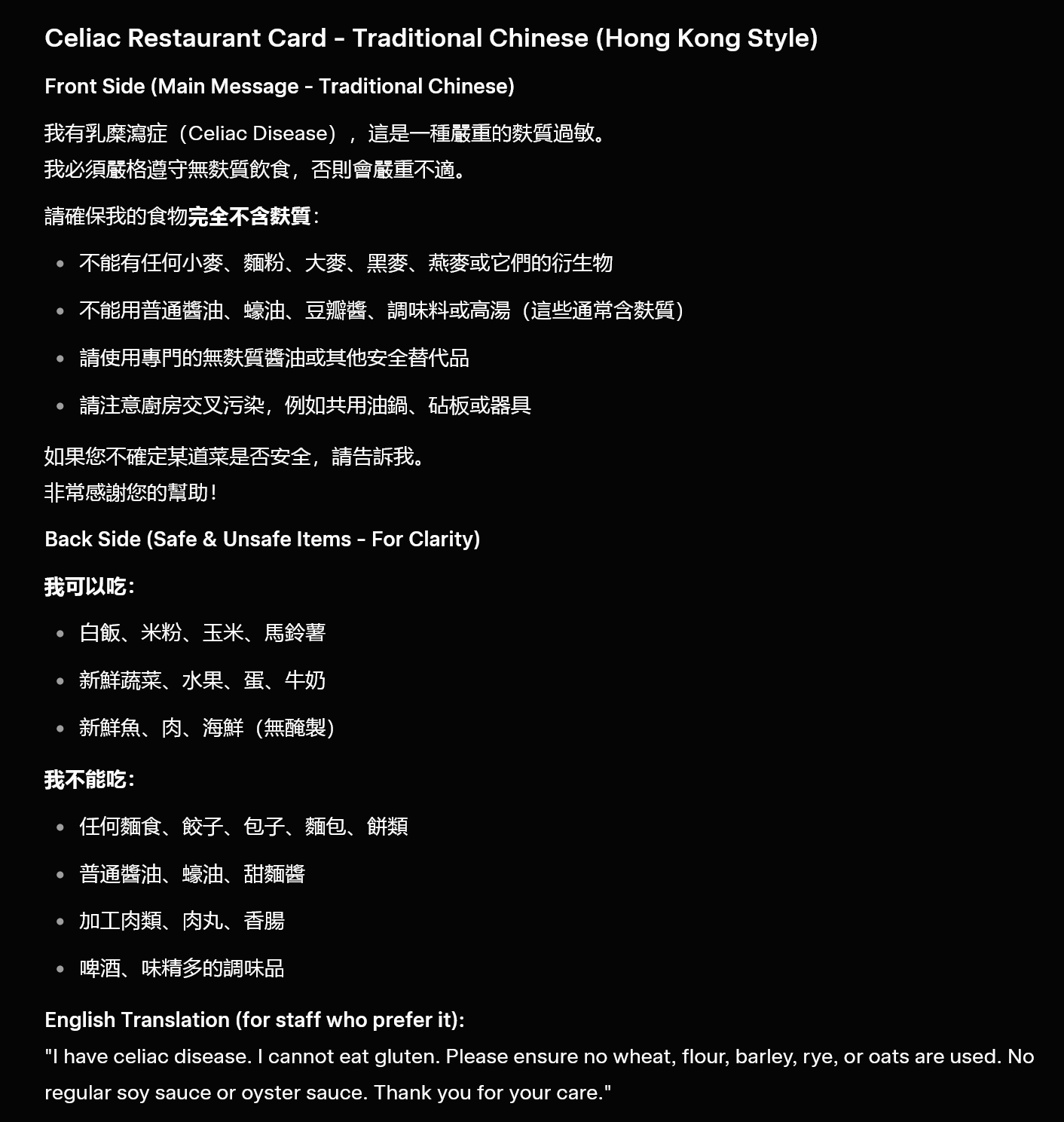
click on any image to enlarge
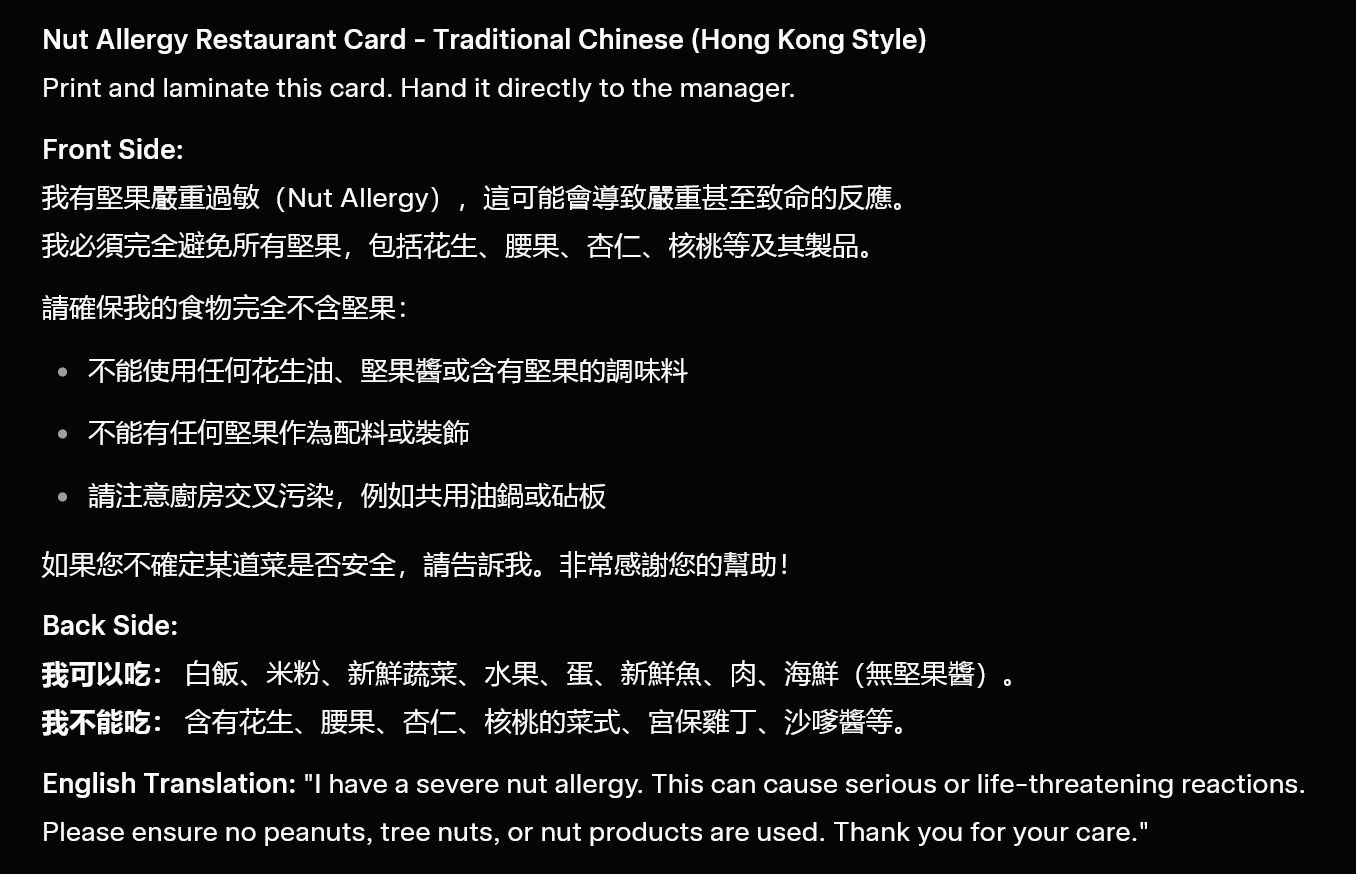
The information above can be shown to restaurant managers in Hong Kong if you are intolerant to gluten and nuts,
I do not do food tours as mentioned above, I have very specific reasons and part of it is that I do not speak Cantonese or write Chinese, I am from Yorkshire in England and I lack the language gene and it is not through lack of trying and yes a lot of restaurants do not have English menu’s or staff who speak conversational English.
.. and yet I have eaten at close to 1,400 restaurants in Hong Kong since January 2nd 1972, my wife was born in Hong Kong and we have been together over 40 years and her first language is Cantonese and a lot of her family are Chinese or half Chinese so I have never had much of an issue!
This does not translate to doing food tours though, yes, I could do them, no problem there but they would never ever be as good as the food tours done by my friends (see the 3 links above) most of their awesome guides are locally born Hong Kong Chinese and obviously food culture is part of their DNA, it is impossible for me to compete with that!
So please feel free to contact them for food tours
I do not do Hiking Tours in Hong Kong but I know someone that does!
I do not do Hiking Tours, never have and never will even though I used to go Hiking a lot when I was a lot younger, The Hong Kong Government is promoting hiking tours so I urge you to contact my friend Sabrina at Hong Kong Trails and Tours, she is a long time Hong Kong resident and and a very experienced hiker with close to 700 Hikes in 15+ years under her belt, please click on the link below
click on any image to enlarge
© Copyright Acknowledged | All rights reserved | all images taken b Jamie
Jamie’s Hong Kong | Some of my favourite images | Hong Kong 101
© Jamie Lloyd | J3 Consultants Hong Kong | J3 Private Tours Hong Kong |
| 2010 - 2026 All rights reserved. |
Click on any image to enlarge to full screen
Current images from my Instagram feed