Stanley Market, beach, bars and the history that still sits on the waterfront

The J3 Group - Premium Quality Private Tours | Experiences and Insider Chats since 2010
Me Jamie, your host, I am English and I have lived in Hong Kong since January 2nd 1972 - I know the place.
A meaningful blog post with a difference - tips on Travel, Tourism, Tours, Daily Life and my personal thoughts on Hong Kong.
Please do visit Amazing Hong Kong
Hong Kong | Pearl of the Orient


A Resident since 1972 - Private Tours of Hong Kong with Jamie
The Best Things to do in Hong Kong
click on the image to enlarge
© Copyright Acknowledged | All rights reserved | image created by Jamie
Stanley Market and Stanley - still a great way to spend a day in Hong Kong
Foreword by Jamie
Stanley Market, beach, bars and the history that still sits on the waterfront
Stanley still draws people on a weekend in a way that most other places on Hong Kong Island do not. You get the market, the waterfront, the bars and restaurants, the beach within walking distance, and a stretch of history that runs from a fishing village to a wartime internment camp to a quiet residential peninsula. I have watched it for more than 50 years. The market is not what it was 20 years ago, the waterfront is busier with Hong Kong residents than it used to be, and the historic buildings that were moved from Central still sit there looking as if they have always belonged. This is the version I would give a guest who wants more than the usual day out.
Stanley Market, its history and how it feels now
Stanley Market has been a trading place for a long time. The original village was Chek Chue, a fishing settlement. After the British arrived in 1841 the name Stanley was applied and the market continued to serve the local community and later the growing number of visitors. By the 1970s and 1980s it had become one of the places people went for clothing, souvenirs, crafts and a walk by the water. The heyday for many of the stallholders was the 1980s and 1990s into the early 2000s. Stalls were packed, the lanes were narrow, and on a good Saturday you moved slowly because there were so many people. Prices were lower, the range was wider, and a lot of the goods were aimed at people who lived in Hong Kong rather than pure tourists.
In 2026 the market is quieter than it was 20 years ago. There are still 100 to 150 stalls depending on the day, but vacancy is higher and some of the older clothing and souvenir traders have gone. The goods are more mixed. You still find the usual T shirts, bags, jewellery and the odd piece of linen or ceramic, but the volume of people is lower on a weekday and even on a weekend it is not the crush it once was. Compared with the Ladies Market in Mong Kok or Temple Street Night Market in Yau Ma Tei it is smaller, cleaner and more open to the air. Ladies Market is denser, more about clothing and accessories, and runs later into the evening. Temple Street is night only, with food stalls, fortune tellers and a different crowd. Stanley is daytime, waterfront, and still draws a mix of expats who live on the south side and Hong Kong families who come for the walk, the meal and the beach. The strip of bars and restaurants along Stanley Main Street is what keeps a lot of the weekend traffic high. Expats have used it for years as a place to meet, and more local residents have joined them since the waterfront was improved.
A major refresh is overdue. The market has not had a serious rethink of its layout or its offer for a long time. One practical idea that would change the feel of the place is a proper street food section that runs for 8 hours a day. Not the odd snack stall, but a managed run of local food operators with proper seating, clear hours and a focus on Hong Kong dishes. It would bring people who come for a meal rather than just a browse, give the existing traders more footfall, and make the market feel useful again rather than mainly a souvenir stop. Other markets in the city have done versions of this and the difference is obvious.
Murray House and Blake Pier in Stanley
Murray House was built in 1846 as officers’ quarters for the Murray Barracks in Central. It is one of the older surviving public buildings from the early colonial period, granite, with Doric and Ionic columns and deep verandahs on every floor to cope with the heat. During the Japanese occupation it was used by the military police. After the war it housed government offices. In 1982 it was dismantled stone by stone so the Bank of China Tower could be built on the site. The stones were stored and the building was reconstructed in Stanley between 1998 and 2002. The work used a concrete frame with the original granite fixed to it. That approach meant it lost its Grade I status. It reopened with restaurants and shops. By late 2024 almost every retail tenant had left and the building was empty. It has been used for occasional art and community events since then. The building itself is still there and the verandahs still give the view over the bay, but the commercial life inside has gone for the moment.
Blake Pier opened in Central on 29th November 1900. It was named after Sir Henry Arthur Blake, the governor at the time. The original pier had a steel pavilion roof added in 1909. The pier was demolished in the 1960s for reclamation. The pavilion roof was moved to Morse Park in Wong Tai Sin and used as a shelter. In 2006 it was taken down again, restored, and re erected next to Murray House. The new pier was recommissioned on 31st July 2007. It is a long covered structure with the dark tiled Edwardian roof on open supports. Small boats still use it and there is a kaito (ferry) service to Po Toi Island on certain days. The two buildings sit next to each other on the waterfront and give Stanley a stretch of colonial architecture that was never originally there.
Beaches in Stanley
Stanley has more than one beach and they are all worth knowing about if you fancy a swim or just a sit by the water after the market.
Stanley Main Beach is the main one. It sits close to the market and the promenade, a stretch of sand that runs for about 194 metres. It has changing rooms, showers, barbecue pits and a fast food kiosk. In summer it fills up with families and people who have just finished shopping. The water is usually calm enough for children. Lifeguards are on duty in the warmer months. A lot of expats bring their own food from the supermarket in Stanley Plaza and set up for the afternoon. It is not a quiet beach on a Sunday, but it is convenient.
St Stephen’s Beach is a short walk south along Wong Ma Kok Road. It is smaller and quieter. There are barbecue pits, showers and a light refreshment kiosk. It feels more local. You can walk there from the market in about 15 minutes. The cemetery is just beyond it, so some people combine the two.
Hairpin Beach is smaller still and more rocky. Facilities are basic and swimming is sometimes restricted. It is not the one most visitors head for.
Turtle Cove is a little further along towards Tai Tam. It is sheltered and has a playground, so it appeals to families who want something less crowded than Stanley Main Beach.
None of them are like the big resort beaches you see in other places, but they are proper Hong Kong Island beaches with the hills behind them and the South China Sea in front. For a lot of guests that is exactly what they want after the market.
Historic Buildings in Stanley
Stanley still has a decent collection of buildings that tell its story.
Murray House and Blake Pier are the ones everyone knows. Both were moved from Central. Murray House was built in 1846 as officers’ quarters for the Murray Barracks. It was taken down stone by stone in 1982 to make way for the Bank of China Tower, stored, and put back together in Stanley between 1998 and 2002. Blake Pier opened in Central on 29th November 1900. Its Edwardian pavilion roof went to Morse Park in the 1960s and then came to Stanley in 2007.
The Old Stanley Police Station on Stanley Village Road dates from 1846. It is the oldest surviving police station building in Hong Kong. It is a declared monument. You can still see the solid colonial lines of it.
The Tin Hau Temple on Stanley Main Street goes back to 1767. It was built for the fishing community when Stanley was still a proper village called Chek Chue. It is one of the older temples on Hong Kong Island.
Stanley Mosque sits inside the prison compound. It was built between 1936 and 1937 by Indian and Pakistani Muslim staff of the Prisons Department and members of the local Indian community. It is modelled on the Badshahi Mosque in Lahore. It was declared a monument in October 2026. You cannot visit it because it is inside the prison.
St Stephen’s College has buildings from the early 20th century. The school played a grim part in the 1941 defence and later in the internment camp. There is a heritage trail on the campus that covers the wartime story.
There are also smaller places like the Pat Kan houses, built in the mid 1930s to rehouse families from Wong Ma Kok, and Maryknoll House further along Stanley Village Road.
Stanley Prison and the Second World War
Stanley Prison opened in 1937. At the time it was one of the most modern prisons in the British Empire, built of stone, concrete and steel with six cell blocks behind an 18 foot wall. It was designed for about 1,500 prisoners.
When Hong Kong fell on Christmas Day 1941 the Japanese turned the prison grounds and the buildings of St Stephen’s College into Stanley Internment Camp. From January 1942 until August 1945 roughly 2,800 civilian internees, mainly British, American and Dutch men, women and children, were held there. The prison cells themselves were kept for people the Japanese considered criminals. Conditions were hard. Food was short. Disease spread. About 121 internees died in the camp. There were also executions. On 29th October 1943 thirty three people connected with the British Army Aid Group were executed on Stanley Beach.
The camp was not a military prison of war camp in the usual sense. It was a civilian internment camp. The internees lived in the former staff quarters and school buildings. After the war the prison went back to its normal use. The last execution in Stanley Prison took place in November 1966. The death penalty was not formally abolished in Hong Kong until 1993.
Today the prison is still in use. Next to it is the Correctional Services Museum, which is open to the public and covers the history of the prison service, including the wartime period.
The Tin Hau Temple and the tiger skin in Stanley
The Tin Hau Temple near Murray House is easy to miss if you are focused on the market, but it is worth the short walk. It was built in 1767 for the fishing community. The story that always sticks with people is the tiger skin on the wall.
In 1942, during the Japanese occupation, a tiger appeared in Stanley. It was shot by an Indian policeman named Rur Singh near the old police station. The animal weighed about 240 pounds, measured 73 inches long and stood about three feet high. The skin was given to the temple and it has hung there ever since. There is a small sign that gives the basic details. Some accounts say this was the last tiger on Hong Kong Island. During the occupation the temple also took a couple of shells that failed to explode, which locals still talk about as a piece of good fortune.
The temple itself is modest. It has the usual incense and deities. The tiger skin is the thing that makes people stop and look twice.
The Second World War Cemeteries
Stanley Military Cemetery is on Wong Ma Kok Road, a bit of a walk south from the market and St Stephen’s Beach. The original cemetery dates from the early colonial period. Burials took place there from 1841 until the 1860s. After that it fell quiet until the Second World War.
During the Japanese occupation the cemetery was used again for people who died in the internment camp and for those killed in the fighting around Stanley in December 1941. The Commonwealth War Graves Commission now looks after it. There are roughly 595 to 598 Commonwealth burials from the Second World War. About 175 of them are unidentified. Among the graves are 96 civilian internees, including a few children. There are also graves of soldiers from the Royal Rifles of Canada, the Hong Kong Volunteer Defence Corps, the Middlesex Regiment and others who fought in the last stand on the peninsula.
It is a quiet place. The headstones are the usual CWGC pattern. Some of the earlier colonial graves are still there as well. It is not a large cemetery, but it carries a lot of the local wartime history. You can walk there from the market in around 20 minutes (ish)
Population and housing in Stanley
Stanley is not a big place. The 2021 census put the Stanley and Shek O constituency at about 20,683 people. The core of Stanley itself is smaller. A reasonable working estimate for the peninsula and the immediate area is somewhere between 15,000 and 20,000, depending on how wide you draw the line.
What surprises a lot of visitors is the mix of housing. There are expensive houses and apartments along the waterfront and up the hills. There are also public housing estates. Ma Hang Estate sits close to the market area. It was built between 1993 and 2000 on the site of an old squatter area and has five blocks. There are also Home Ownership Scheme courts nearby. So you have luxury villas on one side and public rental flats on the other, all within walking distance of the same market and the same beach. That is fairly typical of Hong Kong once you get away from the pure private estatess.
On the outskirts of Stanley leading to the bus station there sits the rather swanky American Club, not a place for riff raff such as myself!
Transport from Central to Stanley
The bus service from Central to Stanley is excellent and has been for years. From the Exchange Square bus terminus you can take Citybus 6, 6X, 260 or 6A. They all go to Stanley Village.
Bus 6 is the scenic one. It goes over the hills, past Repulse Bay, and takes longer, usually 60 to 75 minutes depending on traffic. Bus 6X and Bus 260 are quicker. They use the tunnels and take about 45 to 55 minutes on a normal day. Buses run every 10 to 20 minutes through the day. Fares are in the region of HK$11 to HK$15 (about US$1.40 to US$1.90) with an Octopus card. Exact cash is accepted but the Octopuscard is easier.
There is also green minibus 40 from Causeway Bay or from the Ocean Park area if you have come down the South Island MTR Line. Taxis are straightforward. The ride from Central is usually under 30 minutes if the roads are clear, and the fare is in the HK$150 to HK$200 range depending on traffic (about US$19 to US$26).
Most people still take the bus. It is very reliable, the views on the No. 6 bus are worth the extra time, and you step off right by the market.
Hotels in Stanley
Stanley itself does not have large international hotels. What you find are smaller guesthouses, bed and breakfast places and serviced apartments. A few of them have sea views and are within walking distance of the market and the beach. Rates vary a lot with the season and the day of the week. You are more likely to see prices in the HK$800 to HK$2,000 a night range (about US$100 to US$255) for a decent double in one of the smaller places.
If you want a full service hotel the larger ones are a short bus or taxi ride away along the south side of the island, near Ocean Park. The Fullerton Ocean Park Hotel and the Hong Kong Ocean Park Marriott are the main ones people use when they want to stay in the area but not right in Stanley village. For most visitors who are just coming for the market and the waterfront, a day trip from Central or from their hotel elsewhere on the island is the usual plan.
British military links to Stanley, 1841 to 1997
Stanley has had a military connection since the first days of the British presence. After the occupation of Hong Kong Island in January 1841 the British set up a temporary administrative centre at Chek Chue, later called Stanley. A military camp was built near the town. Early records sometimes described Stanley as the capital of the new settlement, though later accounts treated that as a clerical error in the first census. Barracks were erected at Stanley in the 1840s. The original camp was largely abandoned by the 1880s and the land was later used for other purposes, including St Stephen’s College.
Coastal defence batteries were built on the peninsula, including Bluff Head Battery at the southern tip. The present Stanley Fort was constructed between 1935 and 1937 as the threat from Japan increased. It had barracks, officers’ quarters, a parade ground and supporting buildings. During the Battle of Hong Kong in December 1941 British and Canadian troops made a final stand in the area. The survivors surrendered on Christmas Day. After the war the fort returned to British Army use. It remained a military barracks until the handover in 1997, when control passed to the People’s Liberation Army. The site is still closed to the public.
The military presence shaped the peninsula for more than 150 years. The cemetery, the prison, the fort and the last stand in 1941 are all part of that story. After 1997 the British military role ended and the fort became a PLA facility. The rest of Stanley continued as a residential and visitor area.
A few other notes
Stanley Plaza sits between the market and Murray House. It has a supermarket, a McDonald’s, a Starbucks and some very popular and cool restaurants at ground level. It is less than a minute’s walk to the Tin Hau Temple with the tiger skin. A lot of the weekend crowd walk through the plaza on the way to the waterfront or the market.
The promenade along Stanley Main Street is lined with bars and restaurants. On a Saturday or Sunday afternoon it is busy with both expats and local families and has al fresco dining in abundance, the place hops on Sunday lunchtime. The mix is one of the reasons the place still feels lively even when the market itself is quieter than it used to be.
The Correctional Services Museum next to the prison is free and open to the public. It covers the history of the prison service and has material on the wartime internment. Most tour groups skip it, but it is there if someone is particularly interested in that side of the story.
Why Stanley Market was left behind and what needs to be done
The three Covid years did real damage to anyone in Hong Kong who relies on tourism, myself included. The city was closed to international visitors for three full years and the recovery has been uneven. The Tourism Authorities put together what was essentially a rescue plan for Temple Street Night Market. It was a tired old street market that had lost its way. The plan worked. Temple Street has been completely revitalised and is busy again.
What I fail to understand is why the same attention and planning was not applied to Stanley Market. Stanley still draws visitors from all over the world, including Mainland China, and it remains popular on weekends with both expats and local families. Yet nothing meaningful has been done to refresh it. The market is badly in need of the kind of practical help that Temple Street received. Even a simple, properly organised street food section running for eight hours a day would make a huge difference to the number of people who come and to how long they stay. It would give the existing traders more footfall and make the place feel useful again rather than mainly a souvenir stop.
The question is why the apathy from the Tourism Authorities. Stanley is not a forgotten backwater. It is one of the places people actually want to visit. A straightforward plan along the lines of what was done for Temple Street would not be complicated and the results would be obvious. It is long overdue.
So there you go..

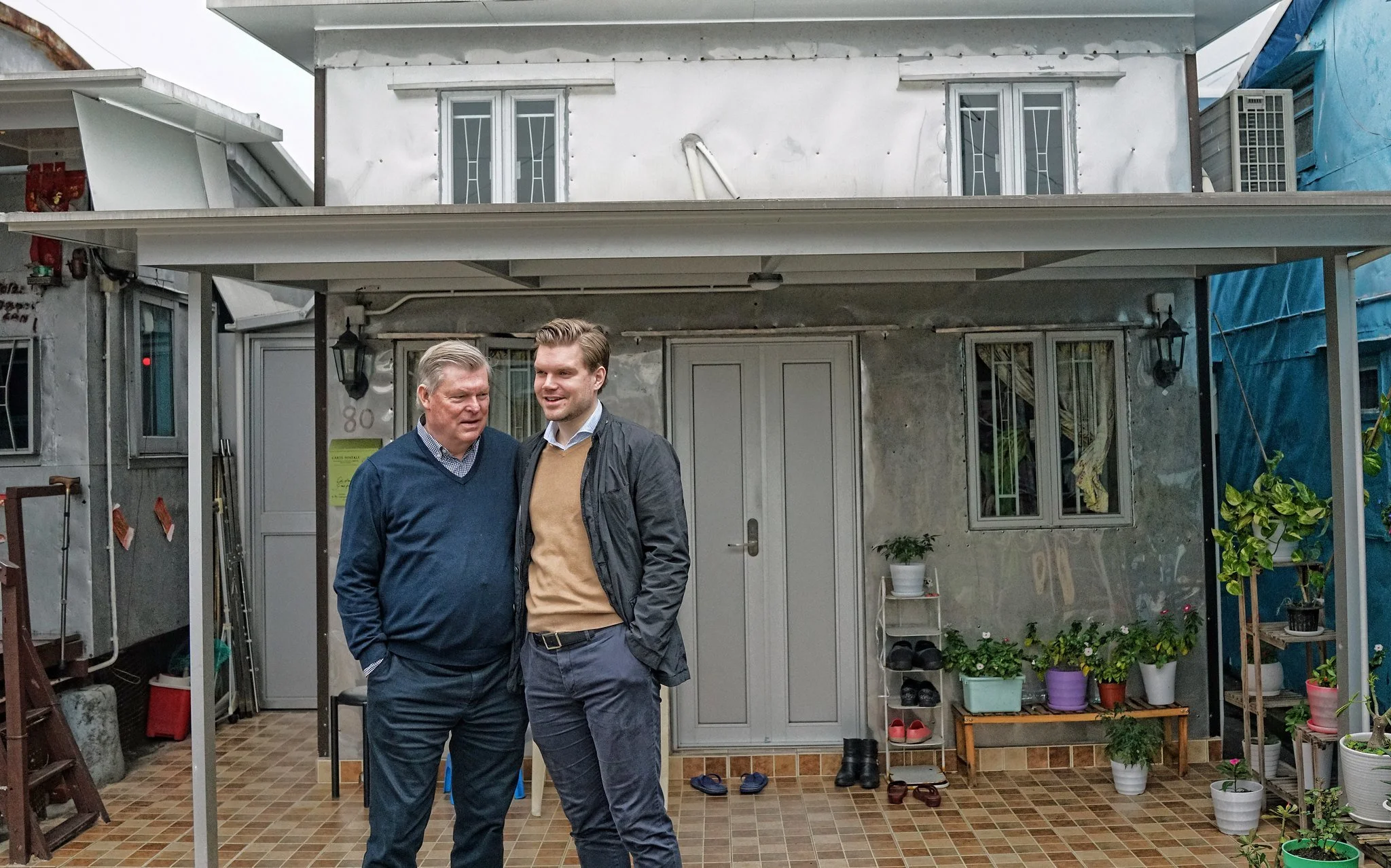
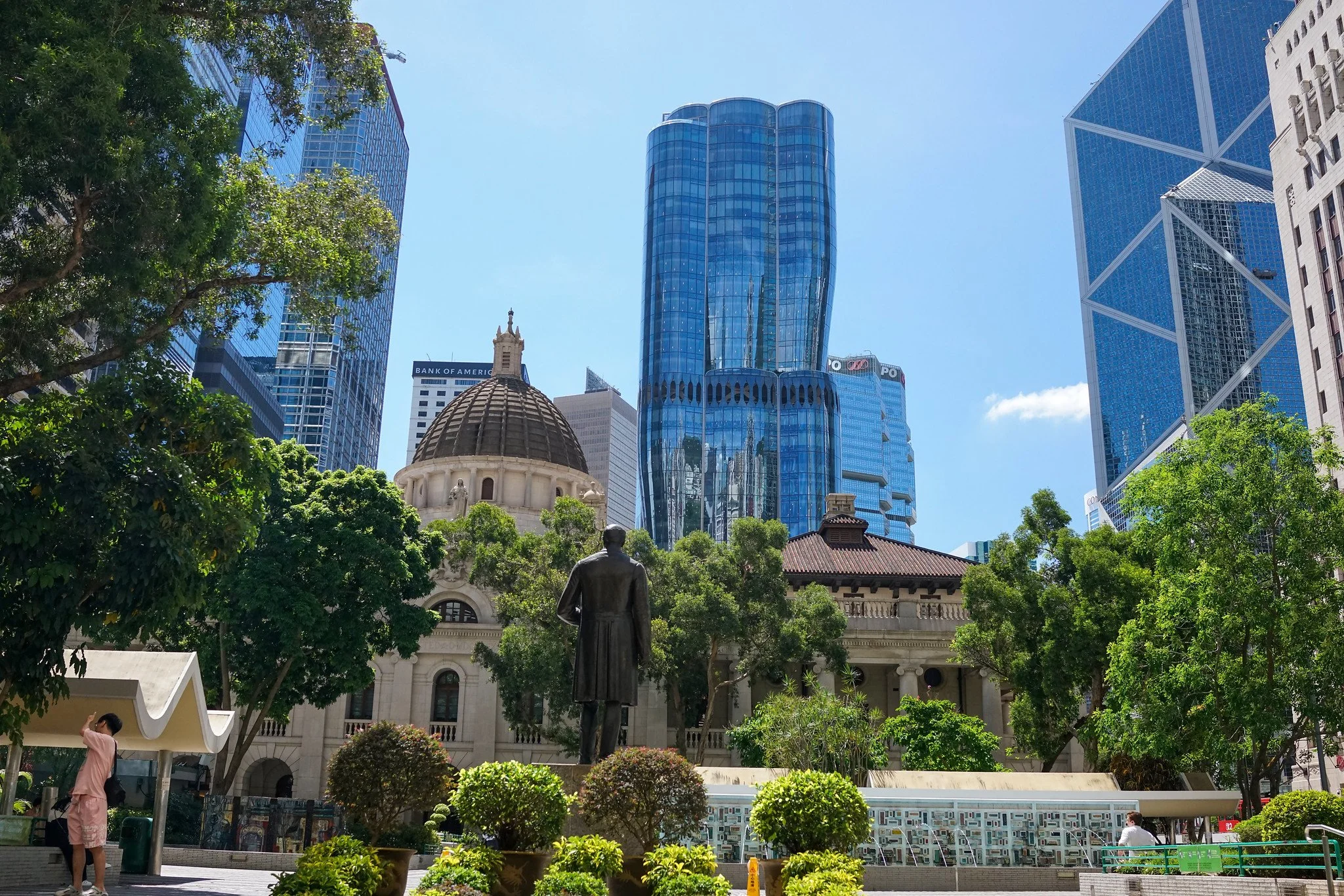
click on any image to enlarge
© Copyright Acknowledged | All rights reserved | images taken by Jamie