A Story of Soldiers, Traders and Everyday Life - shaping Hong Kong
The J3 Group - Premium Quality Private Tours | Experiences and Insider Chats since 2010
Me Jamie, your host, I am English and I have lived in Hong Kong since January 2nd 1972 - I know the place.
A meaningful blog post with a difference - tips on Travel, Tourism, Tours, Daily Life and my personal thoughts on Hong Kong.
Please do visit Amazing Hong Kong
Hong Kong | Pearl of the Orient


A Resident since 1972 - Private Tours of Hong Kong with Jamie
The Best Things to do in Hong Kong
click on the image to enlarge
© Copyright Acknowledged | All rights reserved | image created by Jamie
Indians in Hong Kong From 1841 to the Present Day - 185 years
Foreword by Jamie
A Story of Soldiers, Traders and Everyday Life - shaping Hong Kong
After more than 50 years living in Hong Kong and being a private tour guide for 7,000 visitors, showing them around the city, I have always felt that one community has been quietly present in almost every layer of daily life and yet remains almost invisible in the stories we tell about ourselves. The Indian community arrived with the British in 1841 and never left. They have been soldiers, policemen, traders, doormen, security guards, hoteliers, shipowners and philanthropists. Their numbers were always larger than those of most other non Chinese groups in Hong Kong, and their contribution has been broader and more practical than people usually acknowledge. I have Indian friends from different backgrounds and I have watched how the government and the wider population have treated their history as a footnote. This post is my attempt to put the record straight.
The Arrival and the Early Years from 1841 onwards
The first recorded Indian presence came on 26th January 1841 when Captain Charles Elliott raised the Union Jack at Possession Point in what is now Western District. At least 2,700 Indian troops were present that day, along with a handful of Indian merchants. Those soldiers were not permanent settlers, but the merchants stayed. By June 1845 the Registrar General counted 362 Indians living among a total population of 23,817. The number rose only slowly at first, reaching 391 in 1855, then climbed to 1,435 by the early 1870s once the police force began recruiting in the Punjab. Most of the early arrivals came from the west coast of India, particularly Surat and Bombay, and from the Parsi community. Muslim traders from Gujarat were also among the first to establish permanent firms. Abdoolally Ebrahim & Co, founded in 1842 by Ebrahim Noordin, a Muslim from Surat, is still trading today and is generally regarded as the oldest Indian business in Hong Kong. The firm originally ran a cross harbour steamboat service that was a forerunner to the Star Ferry.
Parsi merchants from Bombay were especially prominent in the mid nineteenth century. They dealt in opium (then a legal trade), provisions, and later in land and brokerage. Three of the thirteen original board members of the Hongkong and Shanghai Banking Corporation were Parsis. Seventeen of the seventy three business firms listed in Hong Kong in the 1860s were Parsi owned. They bid against British firms at the early land auctions and helped shape the commercial character of the colony from the start.
Population Numbers of Indians Across the Decades
Reliable census figures for the Indian population are patchy before the late twentieth century, but the pattern is clear.
1845: 362 Indians out of a total population of 23,817
1855: 391 Indians
Early 1870s: approximately 1,435 Indians, driven by police recruitment
1906: roughly 411 Indians serving in the police alone
1930s: several thousand residents, with the police Indian contingent reaching 814 of all ranks by August 1941
1991: roughly 17,500 Indians
2011: 28,616 people of Indian ethnicity
2016: 36,462
2021: 42,569
The community has grown steadily since the 1990s, though it remains well under 1% of the total population. Most post war arrivals came from Sindh (after Partition in 1947), Gujarat, and the Punjab. Today the largest concentrations live in Yau Tsim Mong (about 18.8% of the Indian population), the Islands District particularly Tung Chung and Discovery Bay (about 14.1%), Kowloon City (about 11%), and Central and Western (about 9.8%). The 2021 figure of 42,569 is the latest official census number. The next full count is due from the 2026 census.
Languages and Daily Life
Many of the Indians I know speak at least three languages without thinking about it. A typical pattern is a home language such as Punjabi, Gujarati, Hindi or Sindhi, plus fluent English, and serviceable or fluent Cantonese. The ability to switch between Cantonese and English has been useful in both the security world and in retail and restaurant businesses. Older Sikh families who worked as police or doormen often speak very natural Cantonese because they spent decades talking to local customers and colleagues. Younger professionals tend to be more English dominant, but the older pattern of three languages is still common.
I have sat with Indian friends who will conduct a conversation in Punjabi at home, switch to English for business, and then order lunch or chat with a neighbour in Cantonese that sounds completely local. It is not unusual. The Cantonese comes from years of practical use rather than formal study. Taxi drivers and shopkeepers often assume a South Asian face cannot speak the language, which leads to the same quiet surprise I have seen for decades. The community is not monolithic. Sindhi and Gujarati traders have their own networks. Punjabi Sikhs and Muslims have their own temples and mosques. Parsis remain a small but distinct group. What they share is a long presence and a practical multilingualism that has served them well.
Education and the Next Generation
For many Indian families the school system has been a practical matter rather than a political one. A large number of children have gone through the international schools, where English is the medium and the environment is already mixed. That was the route my own school friend took in the early 1970s, and it remains common. Others have used the local system, where Chinese language has long been the main hurdle for non Chinese speaking students. Community kindergartens linked to the Sikh temple have provided an early step for some families. Over the decades parents have become more familiar with the local options, and a smaller number of Indian students now move into the mainstream Chinese medium schools with support. The numbers are not large, but the pattern is the same as in other areas of community life: practical choices, long term residence, and a preference for English medium education among those who can afford it.
Police, Army and the Everyday Security Role
From the 1860s onwards the Hong Kong Police recruited heavily from India. Early attempts with men from Bombay were disappointing, so the force switched to Sikhs and Punjabi Muslims from the north. William Quin, who had served in the Bombay Police, became Captain Superintendent in 1862 and pushed the Punjab recruitment. Sikhs were allowed to keep their turbans, which earned them the local nickname “big heads”. Senior British officers were sent to India to learn Hindi or Urdu so they could command them. This continued until the Second World War.
By the 1930s Indians made up roughly one third of the force. Their service numbers were prefixed with the letter B. In August 1941 the Indian contingent stood at 814 of all ranks. Recruitment alternated between Sikhs and Muslims to reduce friction, and the two groups were not normally posted together. Indians proved especially useful in the New Territories after the 1898 lease, where they were popular and effective in the rural areas. They also formed the backbone of anti piracy units on coastal vessels in the 1930s.
Indians served in the British armed forces stationed in Hong Kong and in the prison service. In December 1941 Indian soldiers were part of the defence of the colony. After the fall of Hong Kong, large numbers of Indian troops and police were interned. By February 1942 there were 10,947 prisoners of war in Hong Kong, of whom 3,329 were Indian. The Commonwealth War Graves Commission memorial in Happy Valley includes one Sikh and eight Hindu soldiers who died in the defence, and the Muslim Cemetery holds the graves of 24 Muslims from the Indian subcontinent who died in the two world wars.
After India and Pakistan became independent, overseas recruitment stopped in 1961. Many former policemen stayed on and took work as doormen or security guards at hotels, banks and department stores. That Sikh doorman in a smart uniform became one of the quiet symbols of old Hong Kong, and a few still stand outside certain hotels today. Decades of working life gave them Cantonese that ranged from serviceable to fluent. Younger Hong Kong born men in the same community took over the roles by recommendation. The uniforms often had a theatrical quality, inspired by cinema doormen of an earlier era. The practice has thinned out, but it has not disappeared entirely.
Cemeteries in Happy Valley in Hong Kong
Happy Valley holds a cluster of historic cemeteries that quietly record the long Indian presence. On the hillside behind the Hindu Temple at 1B Wong Nai Chung Road sits the Hindu Cemetery. The colonial government granted the Hindu community a plot of about 35,000 square feet in 1928 for memorials. Hindus generally prefer cremation, so the number of actual graves is small, but the site includes a white granite obelisk, the Hong Kong Hindu and Sikh Cremation Memorial, that carries the names of eight Indian soldiers whose remains were cremated after they died in service during the First World War. The oldest visible gravestone dates to 1888. Nearby is the Parsee Cemetery, the resting place of figures such as Sir Hormusjee Naorojee Mody. The Muslim Cemetery on Wong Nai Chung Road, established in the 1870s, is the oldest Muslim burial ground in Hong Kong and contains graves of Muslims from the Indian subcontinent who served in the military and police. These small, sloping burial grounds sit among the larger Christian and other cemeteries that overlook the racecourse. They are easy to miss if you are not looking for them, yet they hold the same sort of quiet, layered history that the rest of Happy Valley does.
Religion and Places of Worship in Hong Kong
Indian religious life in Hong Kong has always been practical and community centred. The main faiths are Hinduism, Sikhism, Islam (particularly among those whose families came from the Punjab or Gujarat), and the small Parsi Zoroastrian community.
The Hindu Temple in Happy Valley opened in 1953 on land that had been allocated in 1928. It is a Grade II historic building and remains the main centre for Hindu worship in the city. The foundation stone was laid on 15th February 1953. The building faces the racecourse and serves as a place for daily aarti, festivals such as Diwali and Holi, weddings, and community gatherings. Before the temple existed, many Hindus worshipped at the Sikh gurdwara.
The Khalsa Diwan Sikh Temple at 371 Queen’s Road East in Wan Chai is the only gurdwara in Hong Kong. The first building on the site went up in 1901 on land granted by the government, built by Sikh soldiers of the British Army then stationed in the colony. It was damaged in the Second World War and rebuilt with community funds, including contributions from Sikh police and prison staff. The present building, reopened after a major renovation that lasted from 2022 to January 2025, continues the tradition of langar, the free community kitchen open to anyone. It has long been a social as well as a religious centre for the Sikh community.
The Kowloon Mosque on Nathan Road in Tsim Sha Tsui is the largest mosque in Hong Kong. The original building was put up in 1896 by the Hong Kong Regiment for the Muslim troops (mainly from what was then northern India) stationed at the nearby Whitfield Barracks, now Kowloon Park. That first mosque was damaged by MTR construction works and replaced by the present white marble building, which opened on 11th May 1984 and can hold up to 3,500 people. Other mosques exist in the city, but the Kowloon Mosque remains the most visible landmark tied directly to the early Indian Muslim military presence.
Parsis have their own cemetery in Happy Valley and a small community centre. Their numbers have always been modest, yet their philanthropic impact, from the university to hospitals, has been out of proportion to their size. Across the city these temples, the mosque and the cemeteries form a quiet network of places where the different strands of the Indian community have maintained their faiths while living ordinary Hong Kong lives.
Sports and Private Clubs in Hong Kong
Indians have long played a noticeable part in Hong Kong sport, especially cricket and hockey. Cricket in particular has always drawn players and organisers from the community. Clubs with strong Indian membership have fielded teams in local leagues for decades, and individual players have represented Hong Kong at various levels. Hockey has a similar history. In the colonial period and after, Indian players and teams were regulars on the pitches. Tennis and lawn bowls have also been popular at the community clubs.
Two private clubs stand out. The Indian Recreation Club was founded in 1917 and sits at 63 Caroline Hill Road in Sookunpoo Valley, just opposite Hong Kong Stadium on Hong Kong Island. It has tennis courts, a lawn bowls green, badminton courts, a gym, and a multi purpose pitch used for cricket training, hockey and other games. In the 1930s its teams won multiple cricket and tennis titles in the same seasons. The club remains a social and sporting centre for the community.
Close to Queen Elizabeth Hospital is the India Club at 24 Gascoigne Road in Yau Ma Tei in Kowloon. Its roots go back to the Kowloon Indian Tennis Club, which was active before the war. It took the name India Club in 1967. The club has tennis courts, badminton, a gym, function rooms, a restaurant serving Indian food, and, in recent years, a strong cricket section. It now has multiple cricket nets, including turf ones, and fields teams across men’s, women’s and junior grades. Membership is open more widely than in the early days, but the club has always been a centre for the Indian community in Kowloon. Indians are also well represented in the membership of the Kowloon Cricket Club, which has long had a multicultural character.
These clubs have given generations of Indian families a place to play the sports they grew up with, and they have helped keep cricket and hockey alive in Hong Kong even when the wider public interest was limited. The impact is practical rather than headline grabbing: regular teams, coaching for juniors, and a social life built around the games.
Indian Food and Restaurants in Hong Kong
Indian food has been part of Hong Kong dining for a long time, even if most people do not think of it that way. The oldest surviving Indian restaurant is Gaylord, which opened in 1972 on Wyndham Street in Central and later moved to Tsim Sha Tsui in Kowloon. It was backed by the Harilela family and has stayed in business for more than 50 years. In the early decades it served the Indian community and British customers. After 1997 the clientele shifted and more local Chinese diners began coming in, helped by buffet lunches that made the food less intimidating. Gaylord was also one of the first places to offer an Indian buffet.
Curry itself filtered into everyday Hong Kong cooking through several routes. Police canteens in the colonial period had Indian cooks, and the flavours travelled. Local versions of curried beef brisket and other dishes appeared on menus from the mid twentieth century onwards. Today there are well over 200 Indian restaurants in the city, ranging from small takeaways to more formal places. Most still serve the North Indian style that has long been familiar here, though regional cooking from other parts of India has become more visible in recent years. For many Hong Kong people the first taste of Indian food was in one of these restaurants, not in India.
Ten Notable Indian Families in Hong Kong After the Second World War
The post 1945 period produced several families that built substantial businesses and left lasting marks on the city. Here are ten of the better known, with a little more on how they made their money and what they left behind.
Harilela family. Naroomal Harilela (originally Naroomal Lilaram Mirchandani) left Hyderabad in Sindh in the 1920s and began trading antiques, jade and curios in Canton before moving to Hong Kong. After the war the brothers obtained contracts to supply uniforms and textiles to British and later American forces during the Korean and Vietnam wars. They moved into hotels and real estate. Hari Harilela (1922 to 2014) became the patriarch. The family owns hotels across Asia, the Middle East and elsewhere, including the Holiday Inn Golden Mile and the InterContinental Grand Stanford. They still live in the large green mansion on Waterloo Road in Kowloon Tong, built after a promise that the family would stay together in wealth as they had in poverty. Their philanthropy and business success made them the best known Indian name in Hong Kong. Aron Harilela continues the hotel business.
Chellaram family. The trading house goes back to Dhanamal Chellaram in the nineteenth century, with early branches in Cairo, Hong Kong and Shanghai dealing in arts and crafts. In the twentieth century the family expanded into shipping. Lal Chellaram established Chellaram Shipping in Hong Kong in 1979. The company remains an active shipowner and operator of bulk carriers and has been recognised among Hong Kong’s leading shipowners in recent years. The family has also supported educational and medical charities.
Ruttonjee family. Hormusjee Ruttonjee arrived from Bombay in 1884 as a wine and provisions merchant. The family later founded the Hong Kong Brewery and Distillery. After the death of a daughter from tuberculosis, Jehangir Hormusjee Ruttonjee funded the Ruttonjee Sanatorium in 1949, which became Ruttonjee Hospital. The Ruttonjee Shroff descendants continue philanthropic work in health and social welfare. The hospital remains one of the most visible Indian contributions to the city.
Jhunjhnuwala family. The family moved from India via Myanmar into textiles and later watches and hotels. Girish Jhunjhnuwala has been active in Hong Kong’s restaurant and hospitality scene for decades, and the wider family has interests in boutique hotels under names such as Naumi.
Melwani family. Sindhi traders who established textile and retail businesses in the post war decades and remain active in trading circles across Asia. Their network is typical of the post Partition Sindhi commercial diaspora that used Hong Kong as a base.
Kothari family (KGK Group). The family built a global diamond and gemstone business with a significant Hong Kong base that serves as a regional hub for trade with Asia. The fourth generation has used the city’s legal and financial systems for long term succession planning.
Chainrai family. Long established Sindhi trading family involved in import export and related businesses, part of the broader network that grew after 1947.
Lalvani family. Another Sindhi trading house with interests in retail and distribution across Asia, using Hong Kong’s position as a re export centre.
Chanrai family. Part of the broader Sindhi trading network that developed strong commercial links through Hong Kong in textiles and related goods.
Banga family (linked to Caravel / Fleet Management). Later generation professionals who built one of the larger ship management companies operating out of Hong Kong, reflecting the shift of some Indian families from pure trading into specialised maritime services.
These families made their money in textiles, trading, hotels, shipping, gems and property, then reinvested in the city. Their impact is visible in hospitals, universities (through earlier Parsi gifts such as Hormusjee Naorojee Mody’s donation that founded the University of Hong Kong), ferry services, and the hotel landscape. Mody Road in Tsim Sha Tsui is named after the Parsi merchant who partnered with Sir Catchick Paul Chater and gave the money for the university’s main building.
The Harilela Mansion on Waterloo Road, Kowloon, Hong Kong
A few paragraphs on this amazing house
Size
English-language reports (including the South China Morning Post) consistently describe the complex as about 25,000 sq ft (roughly 2,322 m²). Chinese sources, including Wikipedia and local media, give a higher figure of 48,000–50,000 sq ft for the full complex (main house plus annex). The higher number appears to cover the total built area across both wings and facilities. The property is a three-storey complex with a basement, originally completed in 1952 and later expanded.
Rooms
It has approximately 90 rooms in total. Of these, about 40 are bedrooms and 40 are bathrooms. Other facilities include:
a 75 seat private cinema
a prayer room / temple
a bowling alley
a gym, sauna and jacuzzi
a swimming pool
a bar area
basement parking for around 70 cars
When the original house was built in 1952 it had only 18 bedrooms. The expansion came later as the family grew.
How many people live there
Reports consistently say more than 90 people live on the property (family members plus staff). A 2013 South China Morning Post article put it at roughly 60 family members in the main mansion and about 30 in the connecting house. Chinese sources note that three generations of the family live there and that the total family membership has exceeded 100 at times, supported by a staff of around 30 (servants, cooks, drivers, a gardener, a tailor and others).
Estimated value
There is no public valuation or sale record for the mansion. It has never been on the market. Kowloon Tong is a premium residential area where large private houses and mansions have sold for high hundreds of millions of Hong Kong dollars. Given the size of the Harilela complex, its unique features and its location, any market estimate would likely run into the high hundreds of millions to over HK$1 billion. That is only a rough indication based on comparable luxury properties in the district. An actual figure would require a formal valuation, which does not exist in the public domain.
Indian Community Organisations in Hong Kong
The Indian community has long maintained its own formal organisations. The India Association was founded in 1948, shortly after Indian independence, by a small group that included P. Vaswani, F. T. Melwani and Ujagar Singh. It was incorporated in 1965. The Association has organised cultural events, the annual Diwali Ball, and receptions for visiting Indian dignitaries. It remains a non sectarian body focused on community life and heritage.
The Indian Chamber of Commerce Hong Kong was established on 12th December 1952 by ten Indian businessmen. It has acted as the main voice for Indian commercial interests, dealing with trade, shipping, and relations with the Hong Kong government. It is one of the bodies authorised to issue certificates of origin and has been a founder member of the Hong Kong Shippers’ Council. Both organisations, along with various regional associations for Sindhis, Gujaratis, Punjabis and others, have given the community a structured way to handle its own affairs while living in Hong Kong.
Government Service up to 1997
High level civil service posts were rarely held by Indians before 1997. The main government roles were in the police, the prison service and the military. A small number of Indians reached inspector rank in the police, but promotion ceilings were low. Europeans held the senior ranks, Indians were largely confined to the rank and file or junior supervisory posts, and Chinese officers faced even tighter limits in the early decades. After 1961 the force no longer recruited from India. The Commission for India (later the Consulate General) represented Indian government interests from 1951, but that was a diplomatic rather than a local Hong Kong government role. In short, Indians served the colonial administration mainly in uniformed and security capacities rather than in senior administrative ranks. That does not diminish the practical contribution. For decades they were the visible face of law and order in many parts of the city.
Everyday Anecdotes and the Record That Needs Straightening
I have walked past Sikh doormen at hotels in Tsim Sha Tsui for decades. Some of them have been in the same doorway for twenty or thirty years. They know the regular guests by name and they speak Cantonese that would put many expatriates to shame. In the 1970s and 1980s almost every major bank and department store on Hong Kong Island and in Kowloon had at least one. The practice has thinned out, but it has not disappeared. The same men, or their sons, also run small trading firms, tailoring shops and restaurants. Chungking Mansions is the most visible concentration of Indian and South Asian businesses, but the community is far more widely spread.
Dorabjee Naorojee Mithaiwala arrived as a stowaway cook from Bombay in 1852. He later founded the Kowloon Ferry Company in 1888 with his steamboat Morning Star, initially to carry his bakery goods and workers across the harbour. Passengers paid a small fare. The service grew, the company was renamed Star Ferry in 1898, and he sold it to interests linked to Sir Paul Chater. Every time someone takes the green and white ferry they are using a service that began with an Indian baker. That is the sort of everyday fact that rarely makes the standard history.
My own view is that both the colonial government and the post 1997 administration have underplayed this history. The numbers were never tiny, the contribution was practical and continuous, and the linguistic and cultural adaptability was remarkable. Indians built parts of the early commercial infrastructure, kept order on the streets, guarded property, and then created enduring businesses. That record deserves to be better known. People talk about other communities and their contributions, and rightly so. The Indian story is longer, larger in numbers for much of the colonial period, and more woven into the ordinary working life of the city. It is time it was told in full.
A Personal Note
When I arrived in Hong Kong on 2nd January 1972 I was enrolled at an international school. My best friend there was Indian. His father was already a well known businessman, a millionaire with several businesses running. We lost touch for decades, as people do, but I have had recent contact with my old friend. The connection never really went away.
For a long time I have also been friends with the family behind Sam’s the Tailor on Nathan Road. Roshan runs the business now. I have known the family for many years. These are the sort of ordinary, long standing ties that sit outside the big public stories. They are part of how the Indian community has lived in Hong Kong all this time, not as a distant group but as neighbours, school friends and people you have known for decades.
Since January 2026 I have been helping a passionate young Indian lady who has lived in Hong Kong for 18 years to set up her own private tour business. She knows the city like a local and she is well placed to guide Indian visitors who want a local view from someone who shares their background.
So there you go.
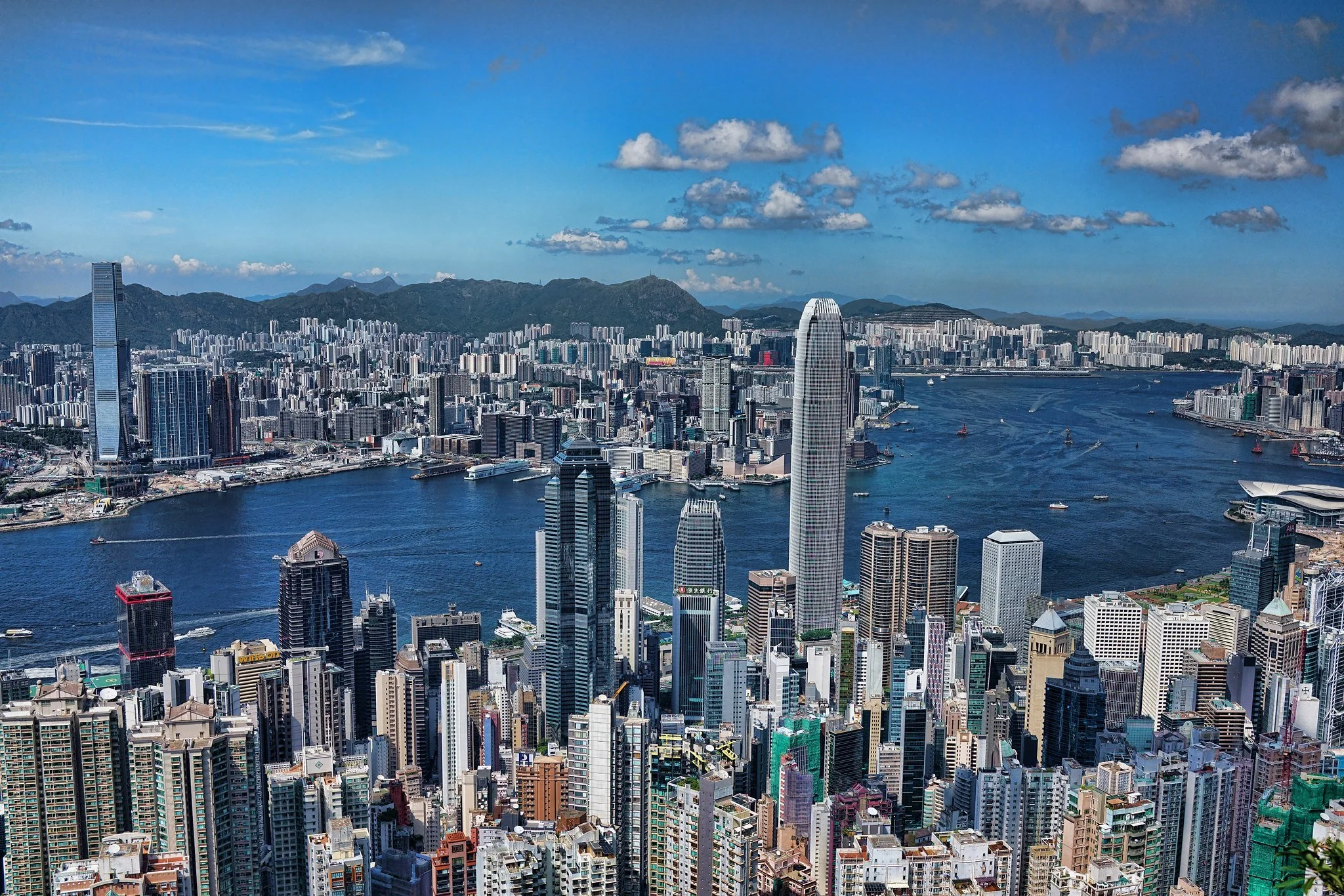
click on any image to enlarge
© Copyright Acknowledged | All rights reserved | images taken by Jamie