A detailed look at sizes, rents, waiting lists and who lives there

The J3 Group - Premium Quality Private Tours | Experiences and Insider Chats since 2010
Me Jamie, your host, I am English and I have lived in Hong Kong since January 2nd 1972 - I know the place.
A meaningful blog post with a difference - tips on Travel, Tourism, Tours, Daily Life and my personal thoughts on Hong Kong.
Please do visit Amazing Hong Kong
Hong Kong | Pearl of the Orient


A Resident since 1972 - Private Tours of Hong Kong with Jamie
The Best Things to do in Hong Kong
click on the image to enlarge
© Copyright Acknowledged | All rights reserved | image created by Jamie
Public Housing in Hong Kong - From 1953 to the present day
Foreword by Jamie
A detailed look at sizes, rents, waiting lists and who lives there
Just so we are clear, many of our family members in Hong Kong have lived and still live in Public Housing in Hong Kong, for decades I might add,, some in sub divided housing for decades and some in what you would call a nice apartment for decades, so personally I am very familiar with housing in Hong Kong.
I have lived in Hong Kong since 2nd January 1972, more than 50 years now, and public housing has been part of the landscape for almost the whole of that time. You see the blocks from the MTR (Subway), from the Street Tram, from the buses that run through Sham Shui Po and Tuen Mun, and you hear the stories from guests and from people who grew up in them. Some of those stories are about families who finally got a place of their own after years on the list. Others are about the compromises, the waiting, and the question of whether the system still does what it was meant to do.
This post is a long look at how we got here, how the flats changed size and shape, what the rents actually cost, how you get on the list, what Light Public Housing is, and how many of us still live in one form or another of public housing. I have always thought the policy has a number of flaw in it. When most young adults turn 18 they seem to put their name down for public housing almost as a matter of course. The rent is cheap, that is true, but I have never met many people who really want to raise a family in 200 square feet if they have any choice. That is just my view after watching the city for half a century.
The Fire That Started It All in 1953
The story begins on the night of 25th December 1953. A fire swept through the squatter huts on the hillsides of Shek Kip Mei in Sham Shui Po. The wooden shacks and corrugated iron roofs went up quickly. By morning more than 50,000 people, some accounts say closer to 53,000 or even 58,000, were homeless. The colonial government had been watching the squatter problem grow for years. Refugees from Mainland China had poured in after the Chinese Civil War of the late 1940s, following the end of the Second World War, and the population was climbing fast. Fires were common. This one was too big to ignore.
Within months the first multi storey resettlement blocks went up on the same site. By the end of 1954 eight six storey Mark I blocks were ready. They were H shaped, with two residential wings linked by a core of communal toilets, washrooms and cooking areas. The flats themselves were basic. Most were about 120 square feet, or 11.15 square metres. The original idea was roughly 24 square feet per adult. Families of five adults shared one of those 120 square foot rooms. There was no private water supply and no private toilet. Electricity, if you wanted it, you paid for yourself. Cooking was often done on the open corridor. It was a long way from comfortable, but it was fireproof concrete and it was a roof.
From those first eight blocks the programme grew. More Mark I and then Mark II blocks appeared through the late 1950s and into the 1960s. By 1965 the public housing population had reached one million. The early low cost housing scheme of 1961 aimed at households with incomes under about HK$600 a month. The former Housing Authority also built some better self contained flats for slightly higher incomes.
If you want a sanitised but still useful look at what the first public housing blocks were actually like, go to Mei Ho House in Sham Shui Po. It is the last remaining H shaped Mark I block from the original Shek Kip Mei Estate, finished in 1954 as one of the first eight permanent blocks put up after the Christmas night fire. The flats were the old 120 square foot rooms with communal toilets and cooking areas. The building was later listed as a Grade II historic building and reopened in 2013 as the YHA Mei Ho House Youth Hostel and the Heritage of Mei Ho House museum. Admission is free. It is open Tuesday to Sunday and public holidays from 10am to 6pm (closed Mondays except public holidays, and the first three days of Lunar New Year).
There are reconstructed units that show the 1950s living conditions and the later conversions. They could have made the museum more realistic by making it look like the apartment was lived in, packed full of the detritus, furniture and belongings of a family of 5 crammed into 120 square feet. That would show the reality. As it stands it is tidier and quieter than the real thing ever was, but it is still the only place left where you can walk through one of the original blocks and see how little space people actually had. Address is Block 41, Shek Kip Mei Estate, 70 Berwick Street, Sham Shui Po. Nearest MTR (Subway) is Sham Shui Po or Shek Kip Mei.
How the Flats Grew (and Then Sometimes Shrank)
The size of a public housing flat has never been fixed. It has moved with policy, with money, and with what the government thought people needed.
In the 1950s the standard was small. Mark I blocks generally offered around 120 square feet. Some later variations ran from about 86 to 240 square feet.
By the 1960s the Mark IV, V and VI blocks improved things a little. Private balconies appeared for cooking and laundry. Some flats got their own toilet. Sizes ranged from roughly 96 to 344 square feet depending on the mark and the family size. Communal toilets still existed in many blocks, shared by two or three households. Lifts were rare. Most blocks were still only eight or ten storeys.
The 1970s brought a real step up. Governor Murray MacLehose announced the Ten year Housing Programme in 1972, aiming to house 1.8 million people better. Wah Fu Estate, finished earlier, had already shown what a self contained estate could look like, with shops and schools inside the boundary. New blocks in places like Oi Man and Mei Lam offered flats from about 380 to 700 square feet. Private kitchens, private toilets, balconies and lifts to every floor became normal. The average person had more space than in the 1950s.
Through the 1980s and 1990s the standard block designs continued. Harmony blocks and others gave one person flats around 180 square feet, one bedroom flats around 360 square feet, two bedroom around 460 square feet, and three bedroom up to about 560 square feet. Air conditioning ledges appeared. Gas supply arrived. The flats were still compact by Western standards, but they were self contained.
In the 2000s and after, the range stayed similar for rental housing. One or two person flats often sat around 150 to 200 square feet. Larger family flats reached 400 square feet or a bit more. Average living space per person in public rental housing has edged up over time. By 2026 it was about 14.3 square metres per person, well above the old minimum allocation standard of around 7 square metres. Even so, the smallest modern units are still tight. A couple or a small family in under 200 square feet is still common enough.
Recently the Housing Authority has talked about a floor of 26 square metres (about 280 square feet) for most new flats from 2026 - 27 onwards, except for the smallest one or two person units. Larger units are also meant to make up a bigger share in future projects. Whether that changes the feel of daily life remains to be seen in my experience people collect rubbish in proportion to the size of the living space, in other words, more space, more stuff.very
What the Rent Costs
Public rental housing has always been cheap compared with the private market. That is the point of it.
As of March 2026 the average monthly rent across all Housing Authority public rental flats was about HK$2,519. After the October 2026 adjustment of 2.04 percent the average rise is roughly HK$51 a month. In US dollars that average is around US$323 before the rise and a little more after. District best rent levels vary. Urban areas sit higher per square metre than the New Territories. For a newly completed flat the rent is set by district and size.
Light Public Housing rents are set at about 90 percent of the rent for a comparable new traditional public rental flat in the same district. Median figures mentioned for Light Public Housing sit around HK$1,300 a month, or roughly US$167, though actual rents run from about HK$800 to HK$3,000 depending on size and location.
These figures are far below private market rents for similar space. A modest private flat in Kowloon or the New Territories can easily cost several times that. The low rent is why so many people stay once they get in, and why so many apply in the first place.
Who Can Apply and How the Flats Are Allocated
You can apply for public rental housing from the age of 18. The applicant and the family members must be living in Hong Kong and have the right to land here without conditions of stay (apart from any limit of stay). That means permanent residents qualify if they meet the other rules. There is no rule that bars a white person, a South Asian person, or anyone else on grounds of ethnicity or citizenship nationality. What matters is the right of abode or the right to land, plus the income, asset and residency tests. A permanent resident of any background who is within the limits can apply in the same way as anyone else.
At least half the family must have lived in Hong Kong for seven years by the time a flat is offered, and everyone must still be living here. Married people must apply with their spouse unless they are separated or the spouse cannot land. You cannot own residential property in Hong Kong.
Income and asset limits are reviewed every year. From 1st April 2026 the monthly income limit for a single person is HK$13,230 and the net asset limit is HK$295,000. For a four person family the income limit is HK$32,020 and the asset limit is HK$608,000. Elderly households get higher asset limits.
Allocation is broadly by family size and by the date you joined the list. A one person household is normally offered a smaller flat, often in the 150 to 200 square foot range. A four person family is offered something larger, typically in the 300 to 400 square foot range in newer stock. Applicants choose from a limited set of districts. Urban Hong Kong Island and Kowloon are heavily oversubscribed, so most people end up in the extended urban areas or the New Territories.
There is a separate Quota and Points System for non elderly single applicants. They do not get the same priority as families. Points accumulate with age and time on the list. Many of the one person applications are young people who join as soon as they turn 18.
New arrivals from Mainland China can apply once they have the right to land and meet the other basic rules. They do not jump the queuevery . At the time a flat is offered, at least half the household must still have completed seven years’ residence in Hong Kong. People living in subdivided flats can also apply if they meet the same income, asset and residency tests. There is no automatic priority just because someone is in a subdivided unit. The Housing Bureau has made clear that giving people displaced by the new Basic Housing Unit rules a special place on the ordinary public rental list would simply encourage others to move into the worst units in the hope of being helped first. Light Public Housing does give extra points to people in inadequate housing, but the main public rental waiting list does not.
Even supposedly well off people have to live out in the boonies
I have read stories over the years about people on the public housing list refusing new apartments in the New Territories on the basis that travel times will be too long and they want to live closer to the popular urban areas. I find this a little odd given that they are getting cheap housing. You get up to three offers, and if you turn one down for reasons the Housing Authority does not accept as valid you use up one of those chances. Urban Hong Kong Island and Kowloon are so heavily oversubscribed that most new applicants cannot even choose them as a preference any more.
They have to pick from the extended urban areas, the New Territories or the Islands. Waiting times tend to be shorter if you are willing to take the New Territories. From where I sit it looks like a refusal to accept the basic trade off. We live out in the New Territories because it is the only place where we can afford a 950 square foot apartment and up until recently there was 5 or 6 of us living in the apartment - even supposedly well off people have to live far away from town to get a decent size place. The private market forces that choice on almost everyone who wants more than a tiny flat. When the rent is already a fraction of what the private market charges, turning down a roof because the bus or the MTR (Subway) takes an extra half hour or so strikes me as strange. The system already gives people a choice of district within the limits of what is available. Expecting a cheap flat in the most popular urban areas as well as everything else seems like asking for the impossible.
The Waiting List Over the Years for Public Housing
The waiting list has been a feature of Hong Kong life for decades. Numbers rose and fell with supply, with the economy, and with policy changes. In the late 1990s and early 2000s the list was long After the Asian Financial Crisis of 1997 to 1998 and the decision in the early 2000s to suspend the Home Ownership Scheme and slow other subsidised sale schemes so the government would not compete with the private market, pressure on the public rental waiting list grew again.. By around 2020 the general applications (families and elderly) peaked near 156,000 and the non elderly one person applications peaked near 144,000.
As of the end of June 2026 there were about 100,500 general applications and about 81,000 non elderly one person applications. Both figures are well down from the peaks, by more than 30 percent and more than 40 percent respectively. The Composite Waiting Time for people who were actually housed in the previous 12 months stood at 4.8 years. That is lower than the 6.1 years recorded before the current government took office, and it has stayed under five years for a while. The target is 4.5 years by 2026 - 27.
The ordinary waiting list is ordered by registration date for general applicants. You can update your family details if circumstances change, and there are a few priority schemes (elderly people living together, harmonious families, families with newborns) that advance the effective date. For genuine and imminent social or medical hardship there is also Compassionate Rehousing, which is assessed by the Social Welfare Department and then recommended to the Housing Department. Outside those routes the queue is not open to a general review just because life has become harder. The date you joined still governs most cases.
How Many Public Housing Units Exist and What Is Coming
As of mid 2026 the Housing Authority managed roughly 837,000 public rental housing units, housing about 2.07 million authorised residents. That does not include the Housing Society’s smaller rental stock or the various subsidised sale schemes.
Looking ahead, the Long Term Housing Strategy for 2027 - 28 to 2036 - 37 sets a total housing supply target of 420,000 units. Of those, 294,000 are public housing. Within the public figure the plan is roughly 176,000 rental or Green Form Subsidised Home Ownership units and 118,000 other subsidised sale flats. Over the next five years the government aims to produce more than 30,000 public housing units a year on average, plus the remaining Light Public Housing. That is higher than recent years and is described as the highest five year average in 25 years.
Light Public Housing - the Temporary Fix
Light Public Housing is the newest addition. Announced in the 2022 Policy Address, it is meant to be a short term bridge while traditional public rental housing catches up. The target is about 30,000 units built quickly on land that is available for a few years, using modular construction. All 13 projects are now open for application. By early 2027 most of the units should be finished.
The flats are self contained, with a private toilet and shower and an open cooking space. They are open plan. You cannot put up permanent partitions. Sizes suit one to two person, three to four person and four to five person households. Rents are about 90 percent of a comparable new traditional public rental flat. Tenancies are for a fixed period, often talked about as two years, after which people are expected to move on to traditional public rental housing if they still qualify. Applicants must already have been on the traditional waiting list for three years or more. Priority goes to families, especially those in inadequate housing or with elderly members or young children. Moving into Light Public Housing does not lose your place on the main list.
It is better than a subdivided flat. That is the comparison the government makes, and it is fair. Whether it feels like a proper home for more than a couple of years is another question.
The policy still begs a larger question. Light Public Housing is temporary and is only open to people who have already been on the main public rental waiting list for three years or more. For many of the people actually living in subdivided flats it would be a genuine step up: newer, self contained, and a lot more space than the worst of those units. It would make more sense to offer Light Public Housing to them as a permanent option, or at least as the first call, rather than reserving it for people who are already in the ordinary Public Housing queue.
The government has talked for years about phasing out the worst subdivided housing. Beijing set a long term aim of clearing it by 2049, and the current administration is bringing in minimum standards under the Basic Housing Unit rules from 2026. In the meantime the people stuck in the smallest and worst units are not given a special place on the main waiting list, because the Housing Bureau says that would only encourage others to move into the worst flats in the hope of jumping the queue. Light Public Housing does give extra points to people in inadequate housing, but you still have to be on the main list first. For the families already living in those conditions, a permanent Light Public Housing flat would be a clearer improvement than waiting years for a traditional public rental unit that may or may not appear.
Public Housing - Staying In and the Rules for Leaving
Once you are in, the rules on conduct and means are strict. The Marking Scheme for Estate Management, introduced in 2003 and now covering 30 misdeeds, allots points for things like drying clothes in the wrong place, dripping water, spitting, throwing objects, or more serious breaches. Reach 16 points within two years and the tenancy can be ended with a Notice to Quit.
There is also the Well off Tenants Policy. Households whose income exceeds five times the public rental income limit, or whose net assets exceed 100 times that limit, or who own residential property in Hong Kong, are required to leave. Below those thresholds they may be charged extra rent (2.5 times, 3.5 times or 4.5 times net rent plus rates, depending on how far over the limit they sit). Declarations are required every two years after ten years in the flat (sooner in some cases). False declarations can lead to prosecution and a five year bar on reapplying.
Possession of an expensive car is treated as a clue rather than a rule in itself. The Housing Department has looked at estate car parks and followed up cases where tenants appear to own luxury vehicles such as a Mercedes Benz shortly after moving in. If the investigation shows the income or assets were under declared, the tenancy can be ended. The logic is simple enough: if the household can afford that kind of car, the resources are there for private housing.
Something that has vexed me for decades is just how many people who live in public housing have a live in helper from Indonesia or the Philippines. These days the official minimum wage for a live in helper is HK$5,220 a month (about US$670), and that does not include food or other costs. You do wonder how that sits with the income and asset limits the Housing Authority sets for public rental tenants. The government does have a policy. A public rental household can apply for the helper to stay temporarily in the flat by filling in form HD1031. Approval depends on two things: the household must show a genuine need for the helper to work and live there, and the living space must not fall below 5.5 square metres of internal floor area per person once the helper is counted. The helper is not added permanently to the household register. In practice there is almost never a spare room. Stories have circulated for years of helpers sleeping on the living room floor, in the bathroom, or sharing a bedroom with children or other family members. Privacy is limited at best. I have never seen a clear public explanation of how the salary paid to the helper is (or is not) treated when the Housing Authority looks at the household’s means, and that silence has always struck me as odd.
How Many Hong Kong Residents Live in Public Housing
The share of the population in some form of public housing has been high for a long time.
In the mid 1950s it was still small. By 1965 it had reached one million people. Through the 1970s and 1980s the numbers climbed. By the early 1990s roughly 40 percent or more of the population lived in public rental housing alone in some years. Adding the Home Ownership Scheme and other sale flats pushed the total public housing share close to half the population.
Recent figures put the population living in public permanent housing at around 45 percent. Roughly 30 percent are in rental housing and about 15 percent are in subsidised sale flats. The exact percentages shift a little each year. Domestic households show a similar pattern: about 30 percent in rental public housing and 15 percent in subsidised sale. Private housing accounts for the rest, plus a small number still in temporary housing.
The Tenant Purchase Scheme of the late 1990s and early 2000s moved a large number of rental flats into the ownership column. That is one reason the pure rental share is lower today than it was in the early 1990s even though the absolute number of rental units is still large
Out of left field - bigger apartments?
I have always wondered why the government keeps public housing apartments so small. Why not set a proper range of 400 square feet minimum to 800 square feet maximum? Construction costs would be higher, that is true, but the rent could be adjusted to match. Public housing is not built to the same specification as private apartments anyway. I have walked past plenty of public housing blocks over the years and seen interiors finished to a standard that would not look out of place in a mid range private flat, with decent kitchens, air conditioning and proper fittings. Size is what actually changes daily life. A larger flat gives room for a proper meal, for children to do homework without sitting on the bed, for an older parent to stay without everyone tripping over each other. I am not asking for 1,000 square feet. That is private market territory. But 400 to 800 square feet would be a real step up for the people who live in these blocks, even if the monthly rent rose a little. Across the border in Shenzhen the public rental flats are generally bigger for the same family size. A one person unit is often around 35 to 45 square metres (roughly 380 to 480 square feet). Two person units run about 50 to 70 square metres (540 to 750 square feet). Three person and larger units commonly reach 70 to 90 square metres (750 to 970 square feet). Subsidised rents there are often in the range of 11 to 25 renminbi per square metre a month depending on the project and the household’s income, which is roughly HK$12 to HK$27 per square metre (about US$1.50 to US$3.50).
For a mid size unit that can still come out lower relative to the space than what we charge for our smallest flats. I live in the New Territories myself in a 950 square foot place because that is what we can afford. Most people who want more than a tight flat end up doing the same. Public housing is supposed to be the affordable alternative, yet it still keeps most families in spaces that feel cramped by any normal measure. If the priority is numbers of units rather than the quality of the living space, that is a policy choice. It is not an inevitable fact of the housing market. Larger flats would cost more to build and would mean fewer units per site, but they would also mean fewer people living on top of one another for decades. That trade off seems worth examining properly instead of treating the current small sizes as fixed.
A Personal View After 50 Plus Years
I have watched this system for more than half a century. It housed people who had nowhere else to go after the fire in 1953. It gave successive generations a roof when private rents were out of reach. The estates are now part of the fabric of the city. Many of the people I meet on tours grew up in them or still live in them. The rents are genuinely low. That matters.
At the same time I have always felt the policy has a built in problem. Once you turn 18 you can put your name on the list. A large number of young adults do exactly that, almost automatically. It becomes the default plan rather than something you do because you have no other realistic option. The waiting time is long, the flats are small, and once you are in it is hard to leave because the alternative costs so much more. I understand why people do it. The rent is cheap. But I have never thought that living in 200 square feet for years is something most people would choose if they believed they could do better. It looks to me like a system that quietly accepts limited ambition as normal. That may be an old Yorkshire view, but it is what I have seen.
Whether the new floor on flat sizes, the Light Public Housing bridge, and the higher production targets will change the picture remains to be seen. The numbers are moving. The waiting list is shorter than it was a few years ago. The question is whether the next generation will still see the list as the first and obvious place to put their name, or whether more of them will look for other ways to live.
So there you go.
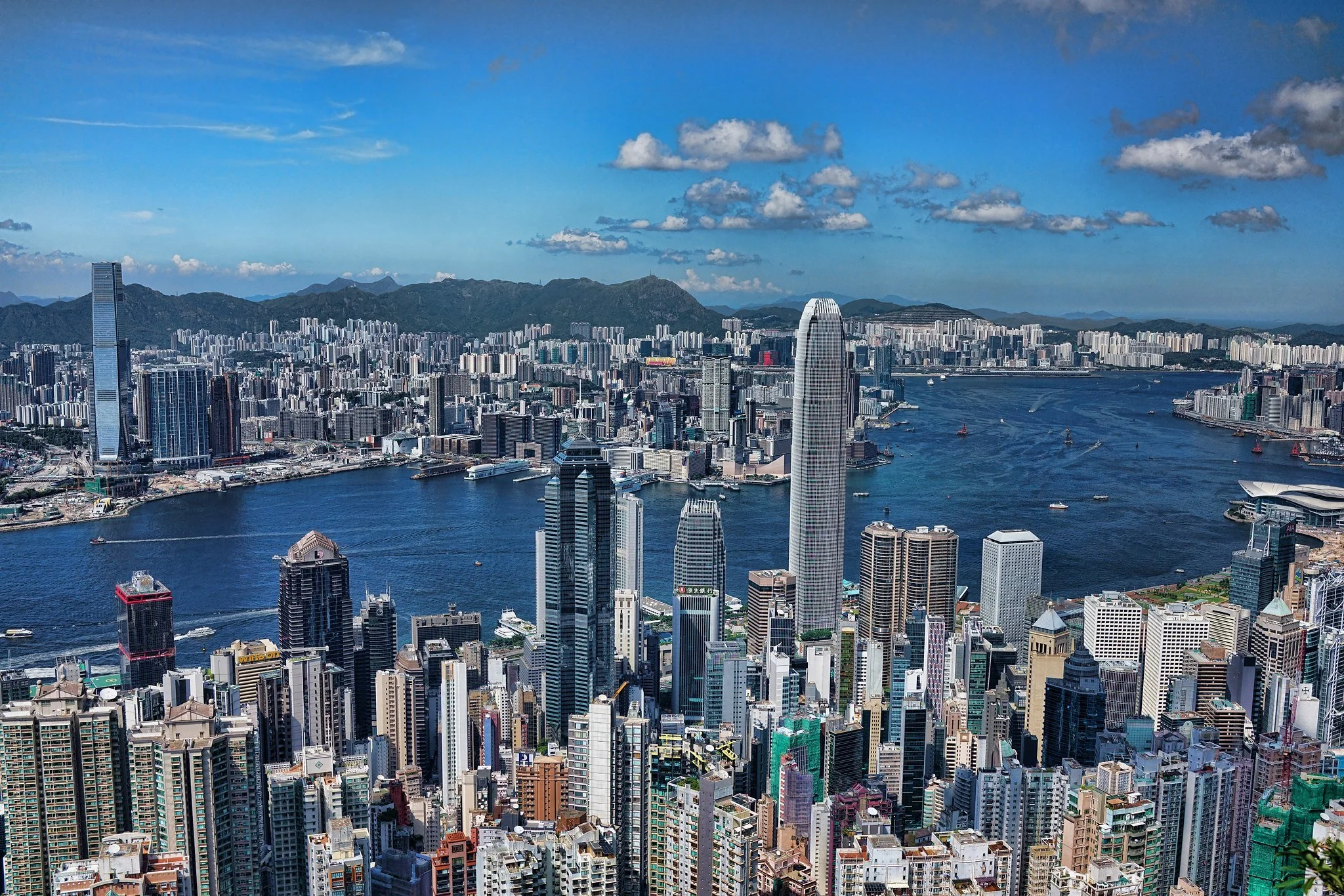



click on any image to enlarge
© Copyright Acknowledged | All rights reserved | images taken by Jamie