Feliz Yau Cooking Class in Hong Kong - From Temple Street to the Wrapping Table
A Wet Market Walk, Family Dumpling Recipes, and a Meal You Actually Made

The J3 Group - Premium Quality Private Tours | Experiences and Insider Chats since 2010
Me Jamie, your host, I am English and I have lived in Hong Kong since January 2nd 1972 - I know the place.
A meaningful blog post with a difference - tips on Travel, Tourism, Tours, Daily Life and my personal thoughts on Hong Kong.
Please do visit Amazing Hong Kong
Hong Kong | Pearl of the Orient


A Resident since 1972 - Private Tours of Hong Kong with Jamie
The Best Things to do in Hong Kong
click on the image to enlarge
© Copyright Acknowledged | All rights reserved | image created by Jamie
Book a Cooking Class in Hong Kong | with Feliz Yau | Hong Kong
Foreword by Jamie
I do not run food tours, and I have a perfectly ordinary reason for that. I do not speak Cantonese. After more than half a century in this city I can get through the day, order a meal, and understand far more than I let on, but I cannot stand at a wet-market stall and have a proper conversation with the person behind the counter. I cannot ask what came in this morning, why that bunch is cheaper than the one next to it, or what the cook in a small kitchen would actually do with it. I also have not the faintest idea about the vegetables on those stalls. I mean that literally. I walk past them, I see green things in piles, and I could not name half of them if you paid me. I have no issue with being ignorant on that subject. It is not a hole I am trying to fill.
I eat a great deal of Chinese food. I always have. Food, for me, is food. I sit down, I enjoy it, I go back to whatever we were talking about. I have zero interest in cooking. None. I do not want to learn the folds, I do not want to discuss dough, and I do not want to pretend that a morning among the greens would turn me into a guide who can interpret a market. That is skilled work. It needs the language, it needs the produce knowledge, and it needs someone who actually cares about the pan as well as the plate.
So when guests ask me for a food tour or a cooking class, I do the only honest thing. I send them to friends who do that work for a living. I leave it to the experts. Feliz Yau is one of those people.
I should say, before anyone wonders, that I am not being paid to write this. There is no arrangement, no commission, no free class in exchange for a kind paragraph. I have never met Feliz. We have only ever communicated on WhatsApp. That is enough to arrange a guest and to confirm a time. It is not a friendship conducted over lunch. What I do have is comments from clients I sent her way, and those comments speak volumes. They came back pleased - not in the vague, polite way, but with the specific details that tell you the morning or the evening was real. They talked about the market walk, the wrapping, the fact that the dumplings held together, and the recipe they thought they might use at home. That is good enough for me.
I am always delighted to help another small business owner in a related field. Hong Kong tourism is not a pie so small that one person needs to guard the plate. A private guide and a cooking-class host are in the same broad trade and not in each other’s way. If her class is good, guests eat well and I look as if I know whom to recommend. Everybody goes home in a better mood. That is the whole commercial philosophy, and it does not require an invoice.
What follows is a proper look at her small business, written for foodie visitors and for anyone who wants a few hours in Kowloon that involve their hands as well as their chopsticks. I have gone through her site, the class options, the prices, the meeting points, and the pattern of comments from people who have already done it. I have added the sort of notes you only make after living here long enough to know a working market from a market that has been arranged for photographs.
Who Feliz Yau is, and why the class exists at all
Feliz presents herself without much theatre, which I rather like. Cooking, she says, has been one of her biggest interests since she was a child because her mother taught her Chinese dishes, especially traditional dumplings. The family custom was the point: everyone gathered to prepare, wrap, and cook, then sat down together. She wants guests to have that same arc - from the market stall to the table - rather than a hotel-kitchen performance with matching aprons and a set script.
That origin story is not unusual in Hong Kong. Plenty of people of her generation learned at a mother’s or grandmother’s elbow. What is less common now is anyone still teaching those folds to strangers, in English and Cantonese, with organic pork and wrappers made from scratch, in a format small enough that nobody is left watching from the back row. She started the cooking class business in 2018. The name on the door and on the site is Feliz Yau. Some listings call her Felicity. Guests in reviews almost always call her Feliz.
The class is built around Chinese dumplings and xiao long bao - the soup dumplings that most visitors know from Shanghainese restaurants and from hotel dim sum trolleys. Xiao long bao is not a Cantonese invention. It arrived here the way so many things arrived here, and Hong Kong adopted it thoroughly. Feliz teaches it as a family recipe, not as a museum piece. That distinction matters. You are not reconstructing a 19th-century technique for an examiner. You are learning how her family made them, with the filling, the skin, and the pleats that keep the soup inside.
This is precisely the work I will not pretend to do. She can talk to the stallholder. She knows what she is pointing at. She cares whether the skin holds. I am the person who tells you she exists and how to get to Jordan.
What you actually do, hour by hour
A typical evening class does not begin in a kitchen. It begins at street level, Exit A, Jordan MTR station. From there Feliz takes the group into the neighbourhood market to buy the pork and to look properly at the rest of the stall - greens, extras, the way a local actually shops rather than the way a visitor photographs produce. Evening groups often start with Temple Street, which is the sensible choice after 6pm. Temple Street at that hour is still a working night market. It is also a street-food education if someone bothers to explain the stalls instead of rushing you past them toward a pre-booked restaurant. Several guests have mentioned buying something small on that walk - mango mochi comes up more than once - before the serious work starts.
Daytime classes use a different rhythm. The 11am meetings - the morning class in Tai Kok Tsui is a cooking studio which is a cooking class purpose at the day time and private kitchen at the night time. Organic pork is purchased by Feliz the day before. The venue itself is a local cafe restaurant rather than a purpose-built studio. After hours the place is quiet. More than one couple has said they effectively had it to themselves. That is a very Hong Kong arrangement. Spaces here work twice. A cafe that serves coffee at 11am can become a dumpling classroom at 6.30pm without anyone finding that strange.
Then the work starts.
You prepare the filling. You make wrappers from scratch for the xiao long bao, and for the boiled dumplings you make them from scratch as well, or at least a good portion of them, depending on the class. Feliz walks the group through the folds. Guests mention learning more than one shape, and on the combo class some have counted two dumpling types and three folds. The cooking methods can cover the usual family range: boil, steam, and pan-fry. You sit down and eat what you made. People consistently say there is enough for a proper meal, not a tasting plate.
Vegetarian requests are accepted. That is not a slogan on a flyer. It comes up in the class description and in comments from people who actually ate the vegetable version and were happy with it. In a pork-centred dumpling tradition that is worth knowing before you book.
The three main classes, with times and prices
Her own site lists three core options. Durations flex a little depending on the group and how much wrapping practice people want, which is honest. Dumpling-making is not a bus timetable.
Organic Dumpling Cooking Class with Market Walk
About 2 to 3 hours. From HK$629 including tax, roughly US$81 per person. Evening start commonly 6pm. Other slots by arrangement.Organic Xiao Long Bao Cooking Class with Market Walk
About 3 to 4 hours. From HK$849 including tax, roughly US$109 per person. Evening start commonly 6pm.Combo Class - dumplings and xiao long bao
About 3 to 4 hours on her site, sometimes listed longer on booking platforms when they pad the market time. From HK$1,209 including tax, marked down from HK$1,310, roughly US$155 per person.
Those are the direct prices. Book through the usual activity platforms and you will often pay more - dumpling class in the region of HK$768 / about US$100, xiao long bao around HK$1,038 / about US$136, combo around US$193. That is the normal platform mark-up. If a guest is comfortable with WhatsApp, writing to her directly is the cleaner route and the one I would use.
Children are priced separately on the dumpling class page, which is the right instinct. A 12-year-old who wants to fold dough is a different proposition from an adult who wants soup dumplings they can recreate in a foreign kitchen six months later. Groups are typically small, 1 to 6 people. She will take larger groups and team-building sessions if asked. Languages are English and Cantonese.
What is included, in practical terms:
Market walk with the host
Ingredients, including local organic pork or a vegetarian filling
Utensils and equipment
Step-by-step instruction
The food you cook - often around 10 pieces per person on the soup-dumpling class
Sitting down to eat it
Coffee and tea are not automatically part of the package on some listings. That is a small thing, but worth knowing so nobody stands there waiting for a complimentary drink that was never promised.
click on the image to enlarge
© Copyright Acknowledged | All rights reserved | image by Feliz Yau
Book a Cooking Class in Hong Kong | with Feliz Yau | Hong Kong
Organic pork, wrappers from scratch, and why that is not marketing fluff
Hong Kong wet markets still sell meat that was not sealed in plastic two days earlier in another country. “Fresh” here can still mean this morning. Feliz leans on local organic pork. Some older descriptions specify organic Hong Kong black Iberian pork. The filling is presented as a family recipe, without MSG. For a visitor who has only met dumpling filling as a uniform grey paste in a chain restaurant, the difference is obvious once they have seasoned it themselves.
Wrappers from scratch are the part that separates this from a “fold the pre-cut disc” workshop. Xiao long bao skins have a job to do. They have to hold soup. If the dough is wrong or the pleats are lazy, you get a sad dumpling and a wet steamer. Guests who had previously tried soup dumplings at home and given up say the class is what made the technique feel possible. That is the test I care about. A class that only produces a good plate on the night is entertainment. A class that sends someone home willing to try again is teaching.
There is a quiet cultural point here that I usually mention when guests ask about dumplings in general. In a lot of Chinese families, making jiaozi is not a hobby. It is a gathering. The word itself sits near ideas of reunion and a full house. Hong Kong life has squeezed a lot of that out of the working week. People buy them frozen. They order them. They eat them at a restaurant and call it tradition. A class that puts a visitor’s hands back on the dough is, in a small way, closer to the old custom than another polished dim sum lunch in a hotel.
I can tell you that much as an observer. I cannot stand there and tell you which green is which. That is Feliz’s job, and she does it.
Who this suits, and who should book something else
It suits couples who want an evening that is not another restaurant queue. It suits families, including teenagers, which is harder than it sounds. A 12-year-old and a parent have both described it as the best thing they did on the trip, which is a high bar in this city. It suits small team groups that would rather wrap dumplings than sit under fluorescent lights with a “fun activity” facilitator. It suits people who have been to Hong Kong before and are bored of the standard circuit. One comment that stayed with me came from someone who had lived here 3 years and still learned something on the market walk. Another had been here 16 years and said the same.
It also suits visitors who eat carefully. Vegetarian is possible. Dietary tweaks are discussed in advance rather than improvised in a panic at the chopping board. That only works because the groups are small.
It is less ideal for someone who wants a chef’s-table performance, a certificate, and a kitchen that looks like a television set. It is not a street-food crawl with 12 stops across 2 different districts. It is not a Central loft with designer stools. Jordan and Tai Kok Tsui are working class Kowloon. The cafe is a cafe. If a guest needs marble and a welcome drink in a fancy glass, send them elsewhere and spare Feliz the mismatch.
Seniors do this class. So do first-timers who have never so much as boiled a wonton. The teaching style that comes through the comments is patient without being slow, and specific without being schoolmasterly. That combination is rarer than good pork.
What the reviews actually say, without the brochure language
On TripAdvisor the listing sits at 4.9 out of 5 from a little over 200 reviews, and ranks around 3rd among classes and workshops in Hong Kong. That ranking moves a little as the total number of listed workshops changes, but the score has been stubbornly high for years. Travelers’ Choice is attached to it, which in their system means the reviews have been consistently strong.
The repeated points are not mysterious:
The market walk is not filler. People call it worth the price on its own.
Feliz explains stalls and ingredients instead of marching the group from A to B.
Instructions are clear enough that amateur wrappers still produce dumplings that hold.
The food at the end is a meal, not a garnish.
Communication before the class is good, which matters when you are meeting a stranger at an MTR exit.
Families, couples, and solo travellers all come through the comments without a cluster of complaints.
I do not treat review scores as gospel. Hong Kong listings get polished like everywhere else. Two hundred reviews at 4.9, with recent comments that mention specific folds, specific markets, and specific children, is a different animal from a dozen five-star blurbs posted in the same week. The pattern here matches what my own guests told me after I sent them. Their remarks are the reason this page exists. Not a contract. Not a favour owed. Just guests who came back talking.
How to book without making a meal of it
Her website is felizyau.com. The useful contact is WhatsApp on +852 9862 5882. Instagram is cookingclasshk if someone wants to see the actual tables, the pork, and the finished steamers before they commit. I would write to her directly for dates, group size, vegetarian needs, and whether you want the evening Temple Street start or a daytime market.
Ask three practical questions when you message:
Confirm the meeting point for that date - Jordan Exit A for many 6pm classes, Tai Kok Tsui Market for some morning ones.
Confirm whether wrappers will be made from scratch for the dumpling class as well as the xiao long bao.
Confirm the vegetarian filling if anyone in the group does not eat pork.
Private classes and Thursday or daytime slots exist if the standard 6pm does not fit. She is a small operator. WhatsApp is not a downgrade from a booking engine. It is how a one-person business in this city still works when it is run properly. It is also the only way she and I have ever spoken.
A few observations from the cheap seats
Hong Kong cooking classes fall into two piles. One pile is the hotel or studio class: beautiful room, set menu, everyone finishes at the same minute, and you leave with a printed recipe card you will never use. The other pile is someone’s real method, in a borrowed or after-hours space, with a market attached because that is still how cooking starts here if you are not ordering from an app. Feliz is in the second pile.
Temple Street before an evening class is a better introduction to Kowloon than another harbour photograph. You will see the same street advertised as a nightlife must-see. What you rarely get is someone who buys dinner ingredients there and then makes you cook them. That sequence - look, buy, make, eat - is the whole point of a wet market culture, and it is disappearing from daily life even for people who live here.
I also note, with no particular delicacy, that many visitors treat dumpling-making as cute. It is not cute when you have done it with a family for decades. It is repetitive work that becomes a social event because many hands make the pile smaller. Feliz has kept that feeling without turning it into a theme. That is the part I respect.
In the film Crazy Rich Asians they actually have a memorable scene with the family making dumplings around the kitchen table!
One left-field thought for anyone writing her or sending guests: the website homepage is warmer than it is complete. Prices, exact durations, and meeting points live on the product pages and on the booking platforms. A first-time visitor scanning on a phone in a hotel lift might miss the combo discount or the fact that vegetarian is possible. If I were advising her as a friend - and I am not, I am a WhatsApp acquaintance with a few happy clients in common - I would put the three classes, the two meeting points, the 6pm default, the WhatsApp number, and the “vegetarian on request” line on the first screen. The cooking does not need more adjectives. The booking path could use a little more daylight.
Another: she is well placed for the guests I see more of now - older travellers who still want to do something with their hands, families who refuse another shopping mall afternoon, and repeat visitors who have done the obvious circuit and want an evening that belongs to Kowloon rather than to a coach. The class length, 2 to 4 hours depending on the option, fits after a morning on Hong Kong Island or before a late dinner somewhere else, though in practice most people eat what they have cooked and call it a night.
I will add one more thing, because it belongs here. Hong Kong is full of residents who have lived here for decades and still cannot run a food morning. Language is part of it. Interest is the rest. There is no virtue in bluffing your way through a wet market in English while the stallholder waits for you to finish. Better to say, plainly, that you eat the food and leave the teaching to the person who grew up with the recipe and can speak to the people selling the pork. That is not modesty. It is division of labour.
The same applies to how this trade treats itself. A small cooking class and a small private-tour practice are neighbours, not rivals. I would rather send a guest to someone who knows the market than invent a food tour I am not qualified to lead. If that helps her diary and helps my guest, I am glad of it. Nobody had to pay me to take that view.
Would I send people again?
Yes, absolutely, I already have, and I will again, with the usual caveats I give for any small operator. Write ahead. Say if someone is vegetarian, very shy, or travelling with a child who will last 90 minutes and not 4 hours. Do not treat a one-woman class like a ticketed attraction that runs rain or shine with a substitute host. The person you book is the person you get. That is the risk and the reason it works.
If you want a foodie few hours in Hong Kong that do not involve staring at a menu written in three languages while a waiter hovers, this is one of the better ways to spend the time. You will walk a market that still sells food to the neighbourhood. You will make a skin that either holds soup or teaches you why the last one did not. You will sit down and eat. That is a family custom Feliz learned from her mother. It travels better than most souvenirs.
I will keep doing what I do on the street and in the stories. When the subject turns to cooking, I will keep pointing at the people who can actually do it. No fee. No lunch meeting. Just a WhatsApp thread, a few clients who came back talking, and a willingness to give another small business a fair hearing.
So there you go
Jamie









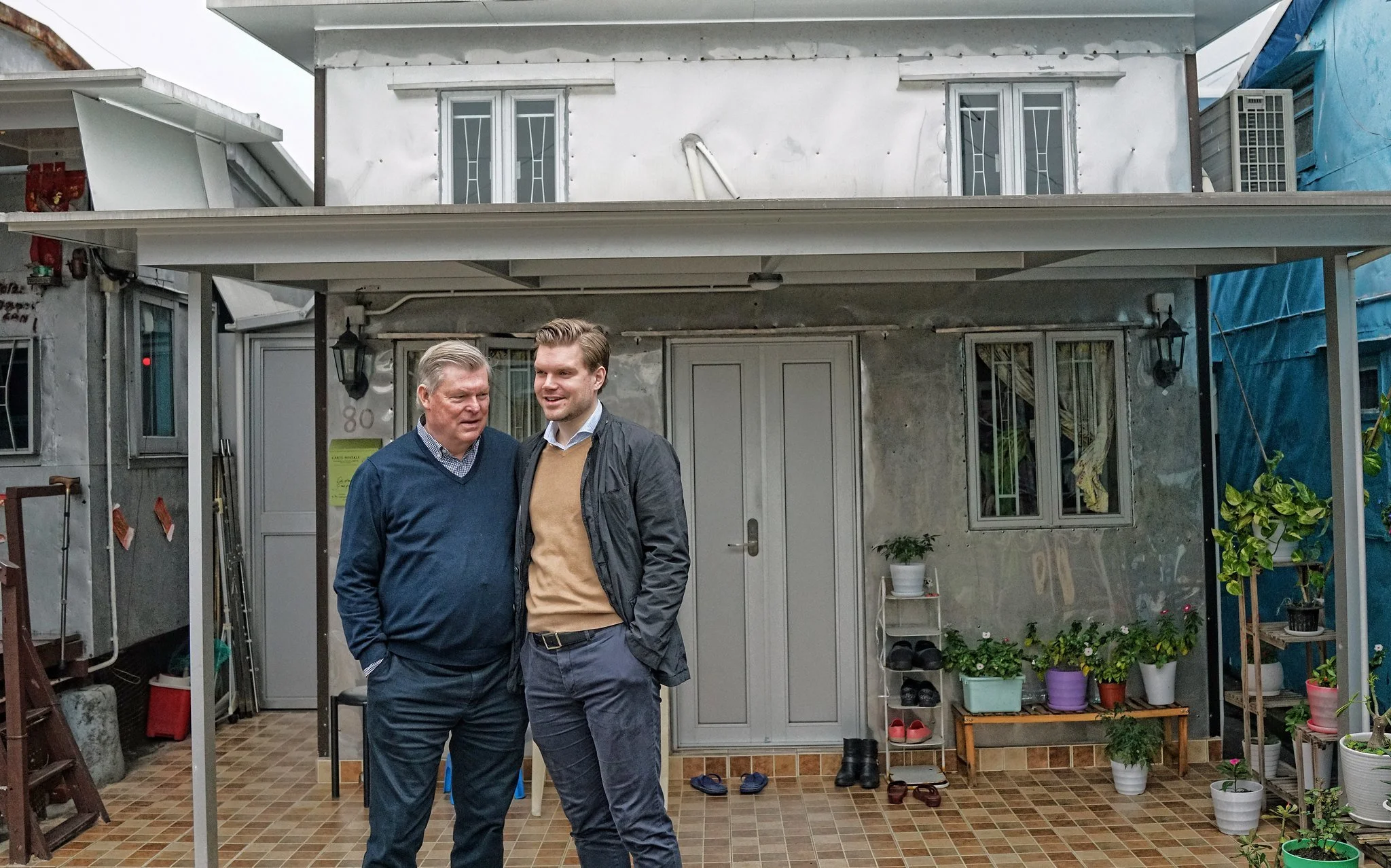
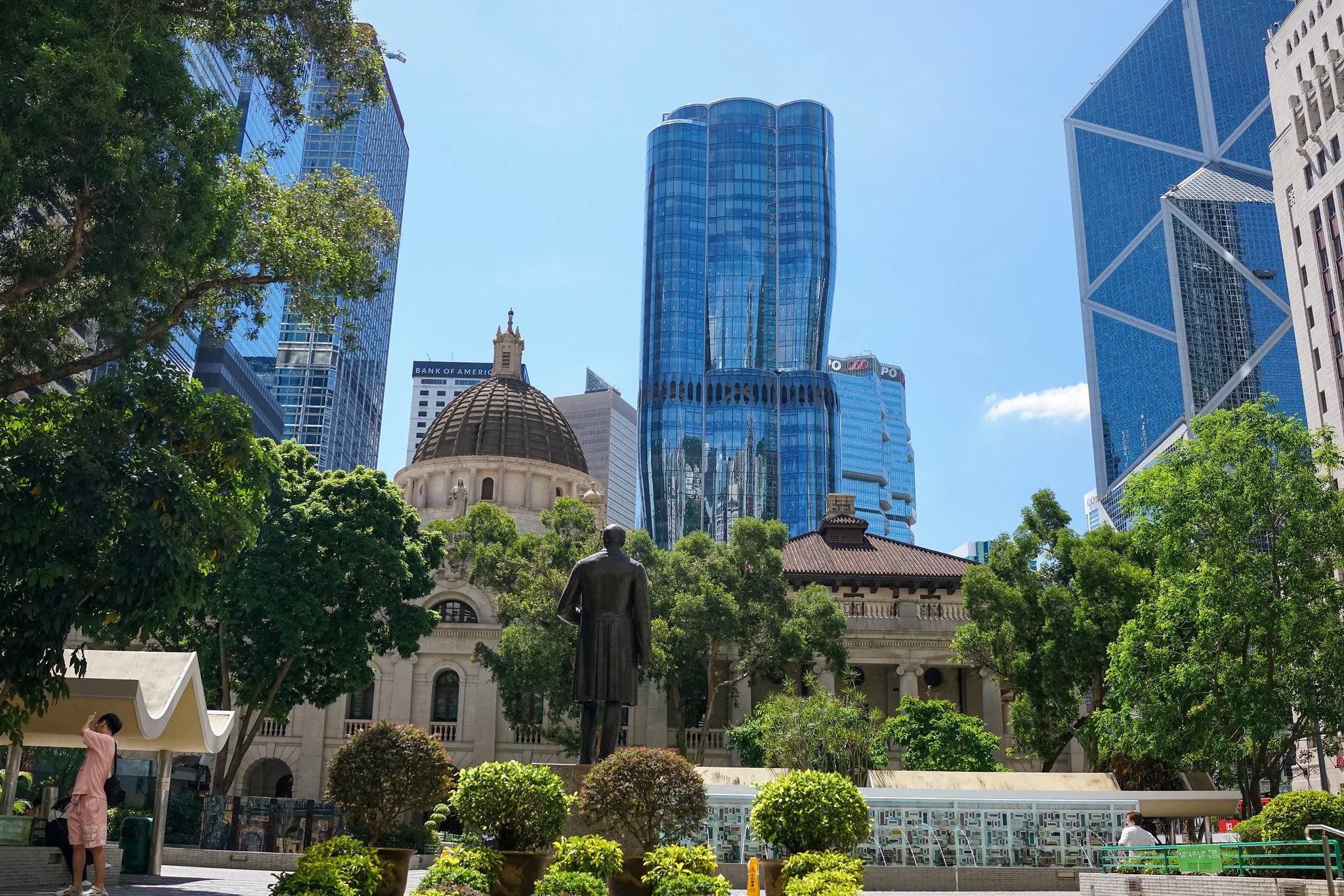
click on any image to enlarge
© Copyright Acknowledged | All rights reserved | images taken by Jamie