10 things you didn’t know about Hong Kong Tramways - The “Ding Ding”
The Ding Ding - 120+ Years of history on Hong Kong Island

The J3 Group - Premium Quality Private Tours | Experiences and Insider Chats since 2010
Me Jamie, your host, I am English and I have lived in Hong Kong since January 2nd 1972 - I know the place.
A meaningful blog post with a difference - tips on Travel, Tourism, Tours, Daily Life and my personal thoughts on Hong Kong.
Please do visit Amazing Hong Kong
Hong Kong | Pearl of the Orient
Customised Private Tours + Experiences in Amazing Hong Kong
Jamie has lived in Hong Kong - Pearl of the Orient for 50+ years
Carefully Crafted Personalised and Customised Itineraries by Jamie | Hong Kong’s Most Experienced Private Tour Guide for : Solo Travellers Friends Families Seniors Couples Business People MICE Delegates.
Private Tours Cultural Tours Walking Tours Sightseeing Tours City Tours Night Tours Layover Tours Transit Tours Private Shore Excursions Bespoke Tours Personalised Tours Jewish Heritage Tours Luxury Private Tours Day Tours Luxury Boat Tours Themed Tours Private Family Tours Private Day Tours Corporate Tours
Just you, your family or friends and Jamie your personal English private tour guide - over 2,400+ tours completed since 2011 - Jamie offers quality Private Tours of Hong Kong
Tour Group Size 1 - 6 people only
J3 Group Hong Kong | J3 Consultants Hong Kong | J3 Private Tours Hong Kong
Creating Memories That Will Last A Lifetime
Go here for the Hong Kong Michelin Restaurant Guide which includes the Bib Gourmand Category

A Resident since 1972 - Private Tours of Hong Kong with Jamie
The Best Things to do in Hong Kong
click on the image to enlarge
© Copyright Acknowledged | All rights reserved | image taken by Jamie
Hong Kong Tramways - Ding Ding | Totally Iconic | Hong Kong
Foreword by Jamie
10 Things You Did Not Know about Hong Kong Tramways - The Ding Ding
I love the trams but to be honest I get peeved when people call it the “Ding Ding” even as an 11 years old in Hong Kong to me it was the tram, Ding Ding is the sort of thing a 4 year old says! and 50+ years on I still roll my eyes, such is Hong Kong Culture (and I wouldn’t want it any other way!
I have done a few blog posts about Hong Kong Tramways before but this time I wanted to really do a deep dive into the subject matter, so read on.
There is something quietly reassuring about the sound of a tram bell cutting through the traffic on Des Voeux Road or King’s Road on Hong Kong Island. It has been there longer than most of the buildings around it. The double - decker green (or more often heavily wrapped) cars trundle along at their own pace while the rest of Hong Kong Island rushes past. For many locals they are simply the cheapest way and sometimes the quickest way to get from A to B. For visitors they are an instant postcard. Yet behind the familiar clang and the open windows sits a surprising amount of history, engineering, economics and quiet stubbornness., I should point out that many trams have air - conditioning these days, but I like the open windows and the breeze.
This is not a glossy brochure piece. It is a collection of ten solid, interesting and sometimes little-known facts and figures about Hong Kong Tramways - the kind of detail that stays with you the next time you hear that distinctive “ding ding”.
2026 Update
1. The Hong Kong Tramways complete story from idea to today’s unique system
The idea of a tramway along the northern shore of Hong Kong Island first appeared in 1881. Two proposals were put forward - one linked to Jardine Matheson interests and another by Ng Choy (Wu Ting-fang). Nothing came of them for twenty years. On 29th August 1901 the Legislative Council finally passed the necessary ordinance. The Hongkong Tramway Electric Company Limited was formed in England, quickly taken over by the Electric Traction Company of Hongkong Limited, and renamed Hong Kong Tramways Company Limited in 1910.
Track laying began in 1903. The first test run took place on 2nd July 1904. Official opening day was 30th July 1904 when the wife of the Director of Public Works drove the first car out of the Russell Street depot while her son rang the bell continuously. The initial fleet consisted of 26 single-deck cars - ten partially enclosed first-class and sixteen open-sided third-class - all built in Britain and assembled locally in Hong Kong..
Double-deck cars arrived from 1912, first with open tops, later fully enclosed. The system expanded east to Shau Kei Wan and added the Happy Valley loop. It survived the Japanese occupation (reduced to only twelve cars running a truncated service), the post-war boom, the arrival of the MTR (Subway) Island Line, and repeated modernisation programmes.
What makes it unique is simple: it is the world’s largest fleet of double-deck trams still in regular public service, and the only system that operates an exclusively double-deck fleet. Almost every other double-deck tram operation in the world is either a heritage line or a small tourist operation. Hong Kong’s remains a working urban transit system carrying tens of thousands of people every day on narrow 3 ft 6 in (1,067 mm) gauge track with 550 V DC overhead electricity supply.
2. Why are the Trams only Hong Kong Island - and never Nathan Road, Kowloon
Proposals for a Kowloon tram network appeared as early as 1901 and resurfaced seriously in the 1910s and 1920s. Plans included lines along Nathan Road and even a cross-harbour tram bridge (proposed in 1921).
One thing that has always puzzled me looking at Nathan Road today - long, straight and essentially flat - it does feel as though it would have been an easier project than the Hong Kong Island system. So what was the thinking at the time? and in hindsight was it the right or wrong decision?
The practical objections raised by government were less about dramatic hills and more about the state of the roads themselves. Kowloon’s roads in the 1910s were still relatively lightly constructed. Officials insisted they would have to be strengthened before they could carry the weight and constant vibration of electric trams, and the cost of that upgrading was to fall on the public purse. The tram company offered to build its own concrete foundation under the tracks to avoid the levy, but the government still declined. There was also a broader political dislike of handing another long-term private monopoly to a company whose shareholders’ interests might clash with those of the public.
By the mid-1920s the motor omnibus had become a proven, lower-capital alternative that required no fixed infrastructure paid for by government. Once the bus franchises were awarded in 1933 the tram idea for Kowloon was effectively dead. In short, the decision was driven more by cost, road standards and a preference for flexible road transport than by any dramatic difference in drainage or terrain between the two sides of the harbour. Whether that was short-sighted is another question; what is clear is that the Island already had its tracks in the ground and the political will to keep them there, while Kowloon was still being shaped by a different set of priorities.
3. Hong Kong Tramways Ownership, daily operation and near-abolition moments
Hong Kong Tramways Limited is wholly owned by RATP Dev (the international arm of the Paris transport operator). Full control was completed in stages from 2009 - 2010 onwards; RATP Dev has been the sole owner since 2020. Day-to-day operations, maintenance and even the building of new tram bodies remain based in Hong Kong.
There have been moments when the system’s future looked uncertain - particularly after the MTR (Subway) Island Line opened in the early 1980s and during periods of declining ridership and rising costs. Dedicated lanes were given over to general traffic in places and maintenance lagged. Yet the combination of extremely low fares, heritage value, green credentials and advertising income has repeatedly kept the trams running. No serious abolition has ever been pushed through.
4. Hong Kong Tramways Fleet, depots, staffing and the driver’s path
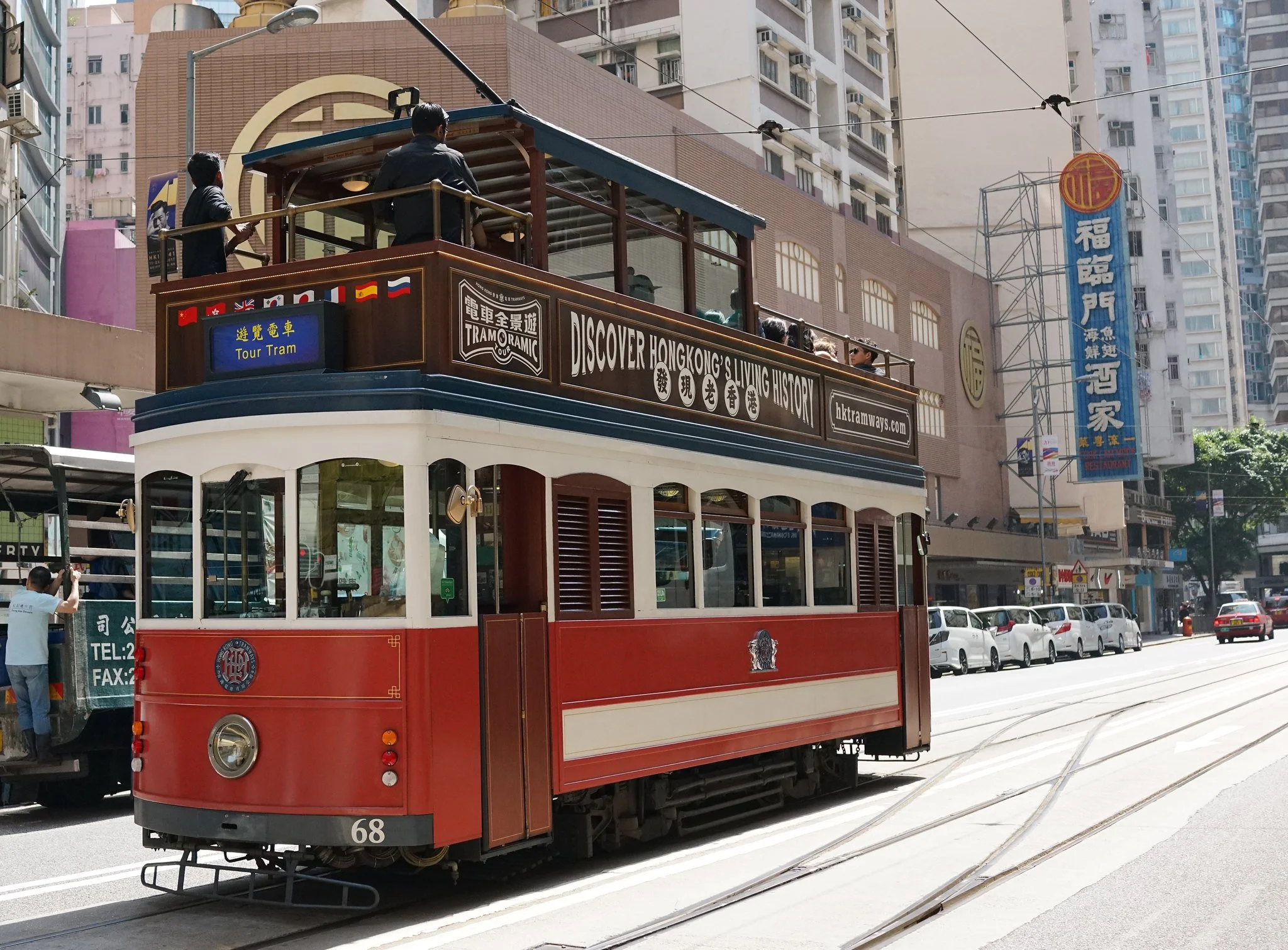
The operational passenger fleet stands at around 165 double-decker cars (figures sometimes quoted slightly higher when including maintenance and special vehicles). This includes two antique open-balcony party trams (Nos 28 and 128), the open-top TramOramic sightseeing car (No 68), the premium party tram No 18, one air-conditioned car, and a handful of maintenance vehicles.
Main depots are Whitty Street (Shek Tong Tsui) - the primary operational and overhaul centre - and Sai Wan Ho. Inside the depots the work is remarkably self-contained: body building and repair, bogie overhaul, electrical work, painting, and the fabrication of parts that are no longer available anywhere else in the world. Trams are essentially still “made in Hong Kong”.
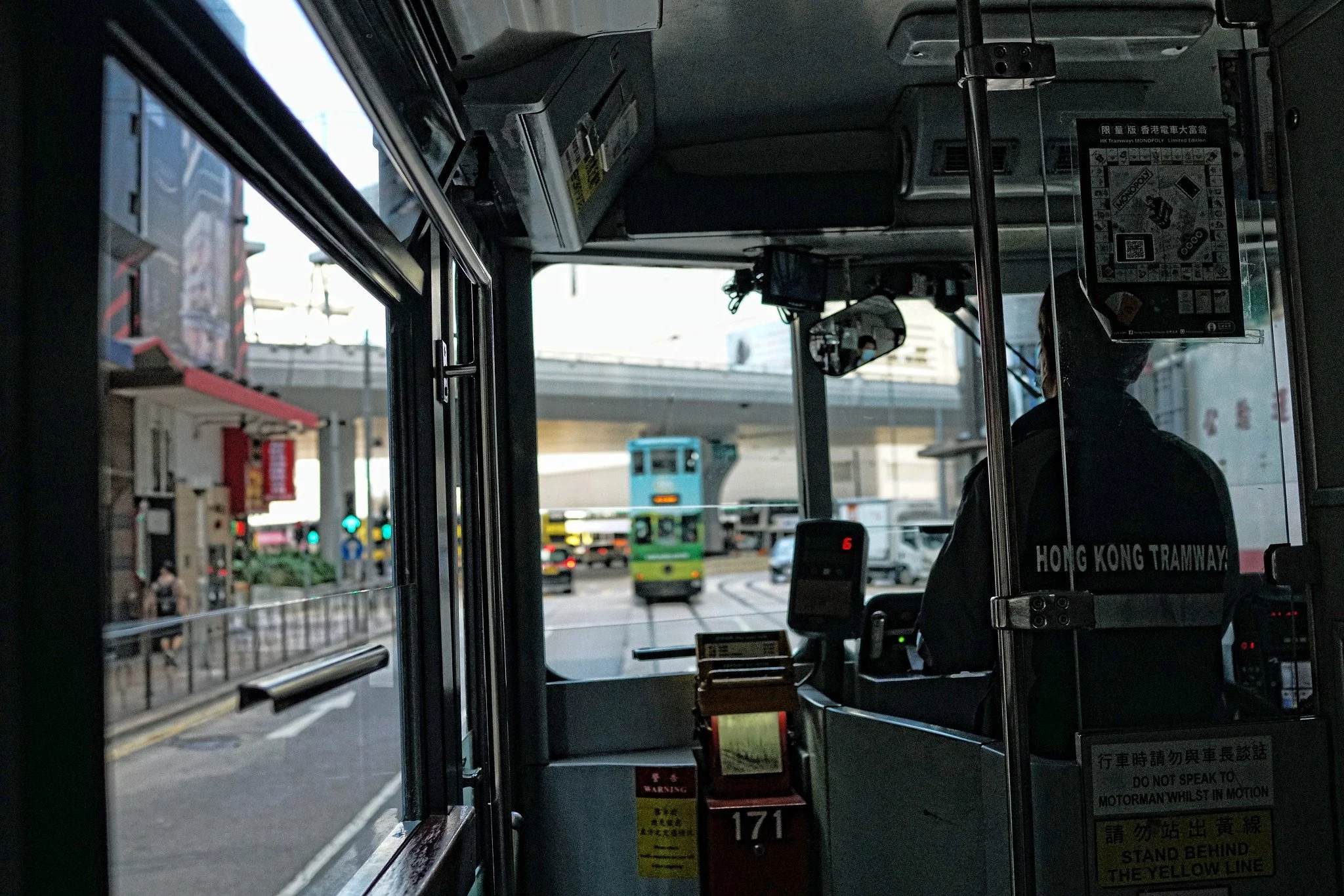
Roughly 500 - 600 people work for the company. More than 270 are drivers (motormen and motorwomen). At any given time a substantial portion of the fleet is in motion during peak hours to maintain the service frequency along the 13 km main line plus the Happy Valley loop.
Driver training lasts about eight weeks of paid instruction - two weeks of theory and depot familiarisation followed by six weeks of on-road training with an experienced instructor, covering both early and late shifts. Average annual salary for a tram driver sits in the region of HK$240,000–HK$250,000 (roughly US$30,800–US$32,000), with recent years seeing significant increases to attract and retain staff in a tight labour market. Benefits include free travel for family, medical cover, and various family-friendly leave arrangements.
5. Hong Kong Tramways | One tram’s possible daily revenue - an estimate
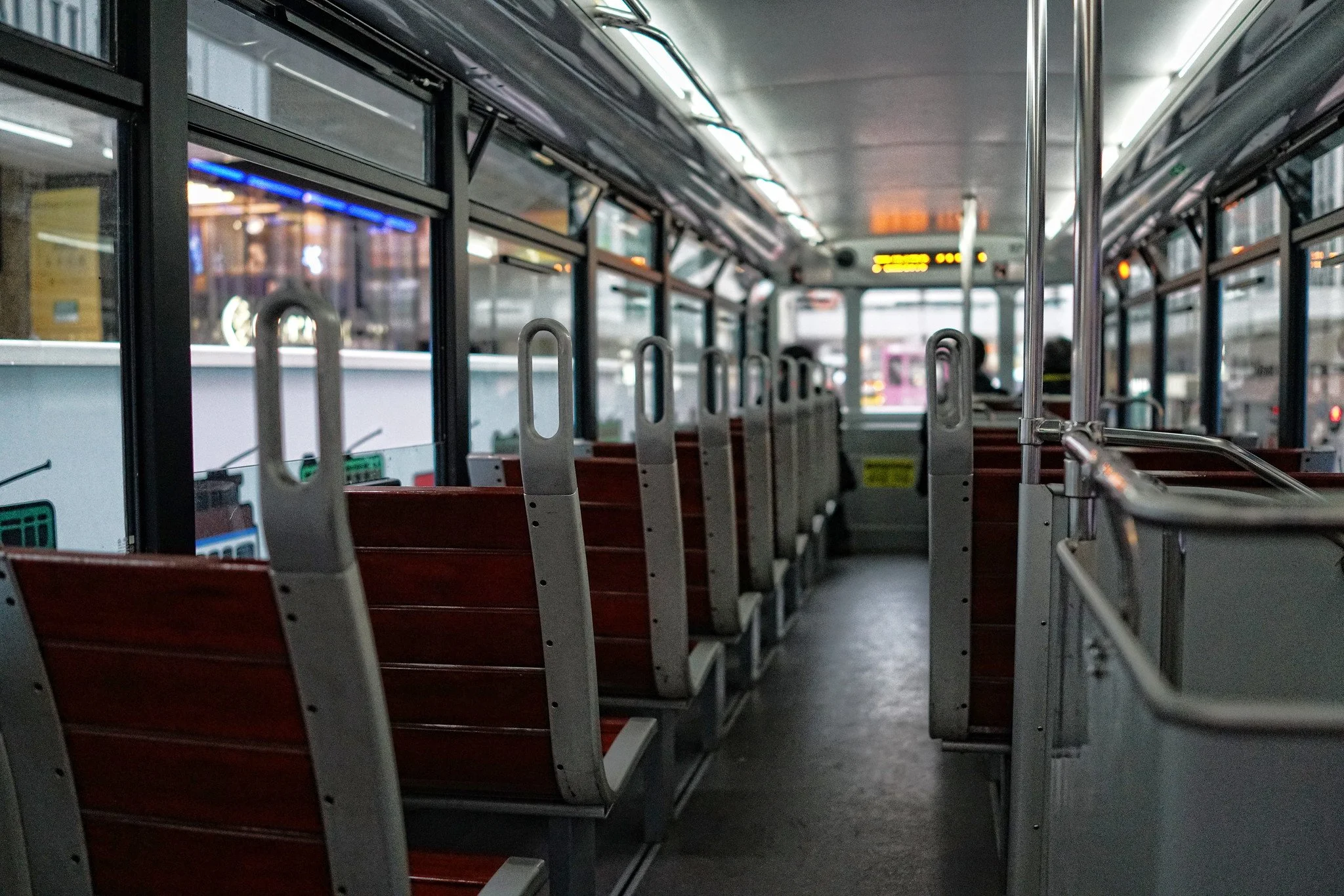
Adult fare is currently HK$3.30, child HK$1.60, senior HK$1.50. A full east - west run takes roughly 80 - 90 minutes end to end depending on traffic. Capacity is nominally 115 passengers. Real loading varies enormously - packed in the peaks, quieter in the middle of the day.
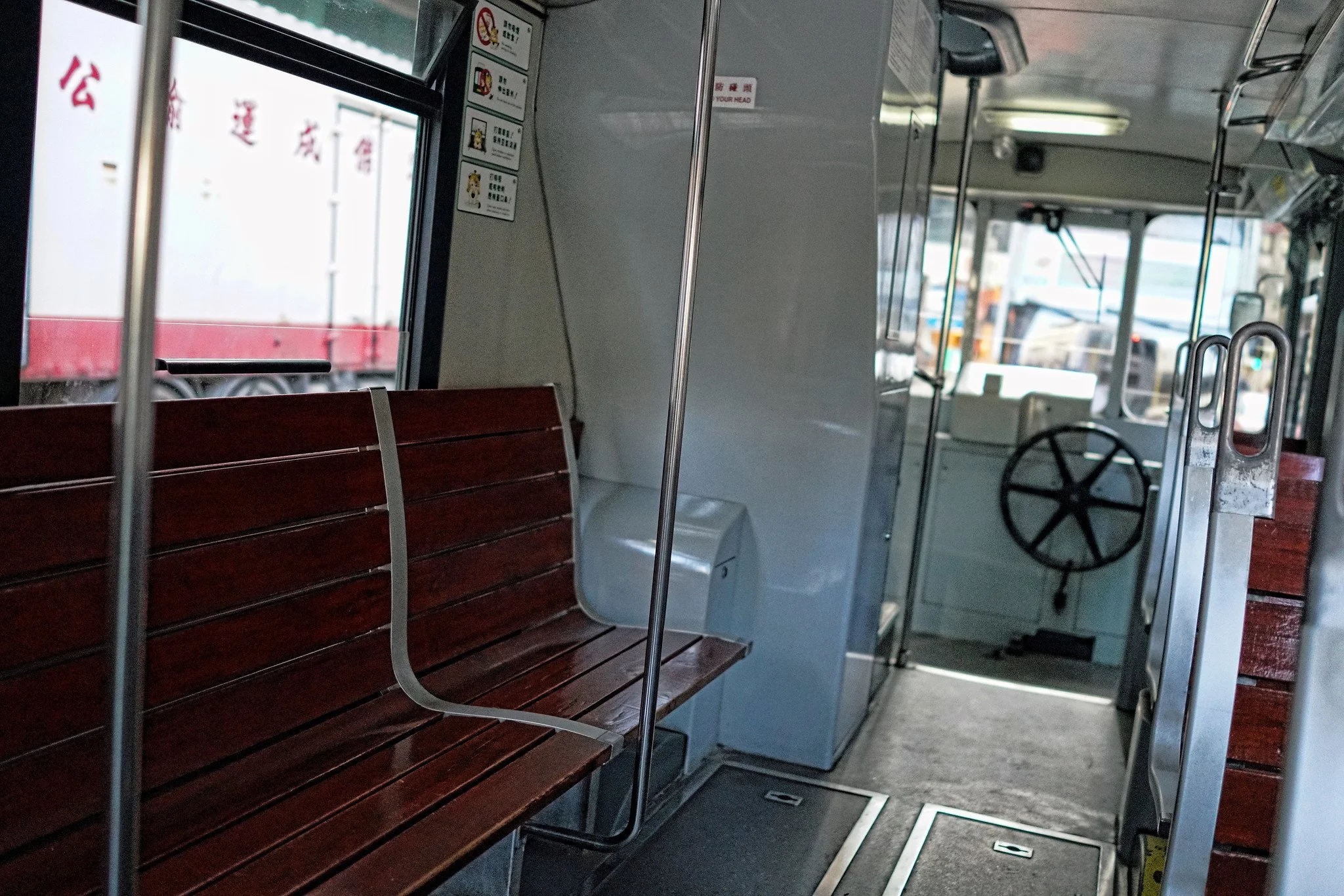
This can pose problems for non residents, you get on at the back of the tram and get off at the front (you pay when you get off) and if you do not like close contact with fellow travellers then the Tram is not for you!
A rough, optimistic working estimate for a busy car doing several round trips might generate a few thousand Hong Kong dollars in fare revenue on a good day. Many cars will do less. The flat fare and the mix of short local hops mean the system relies on high volume. Advertising on that same car can easily outweigh the day’s fare income.
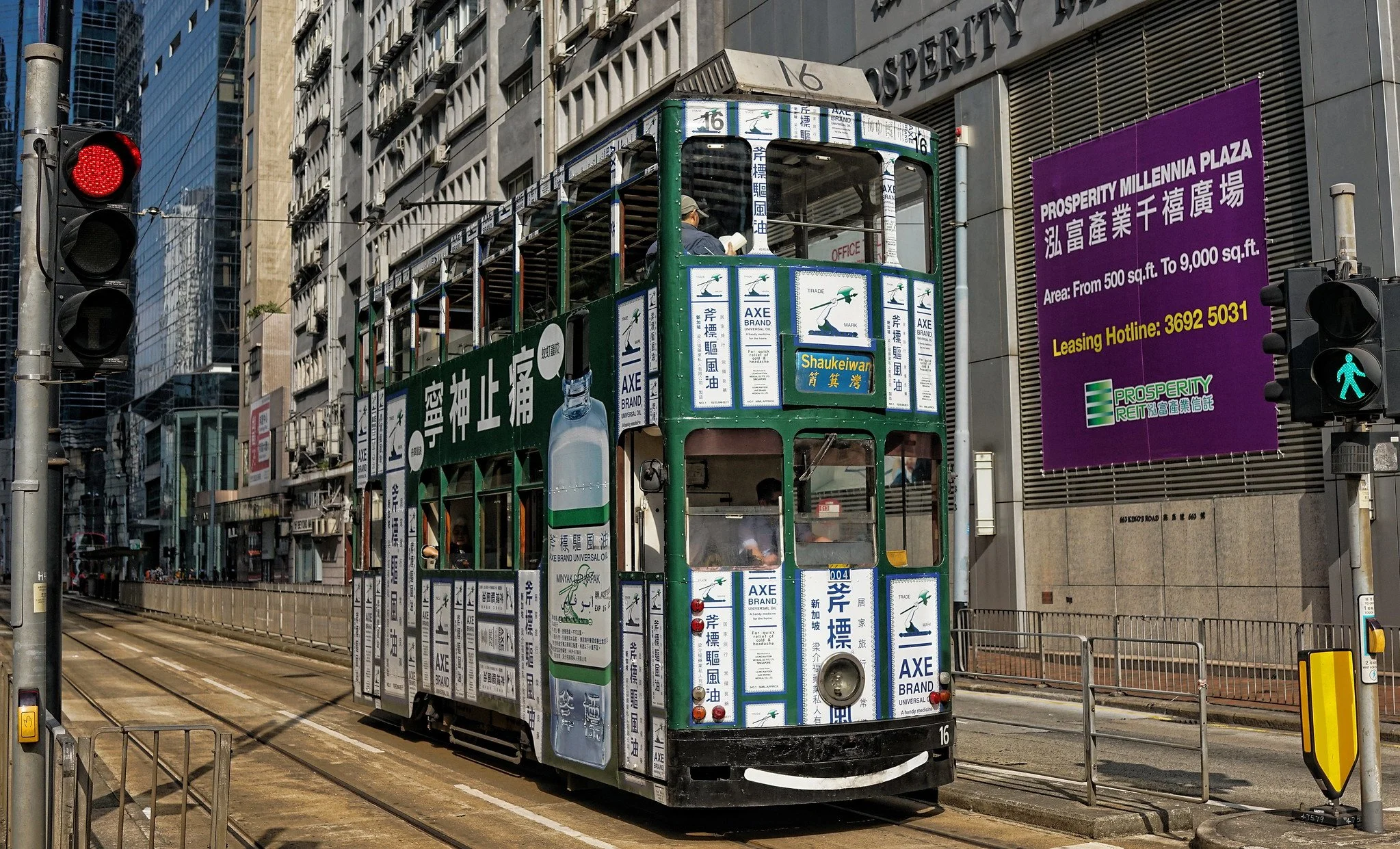
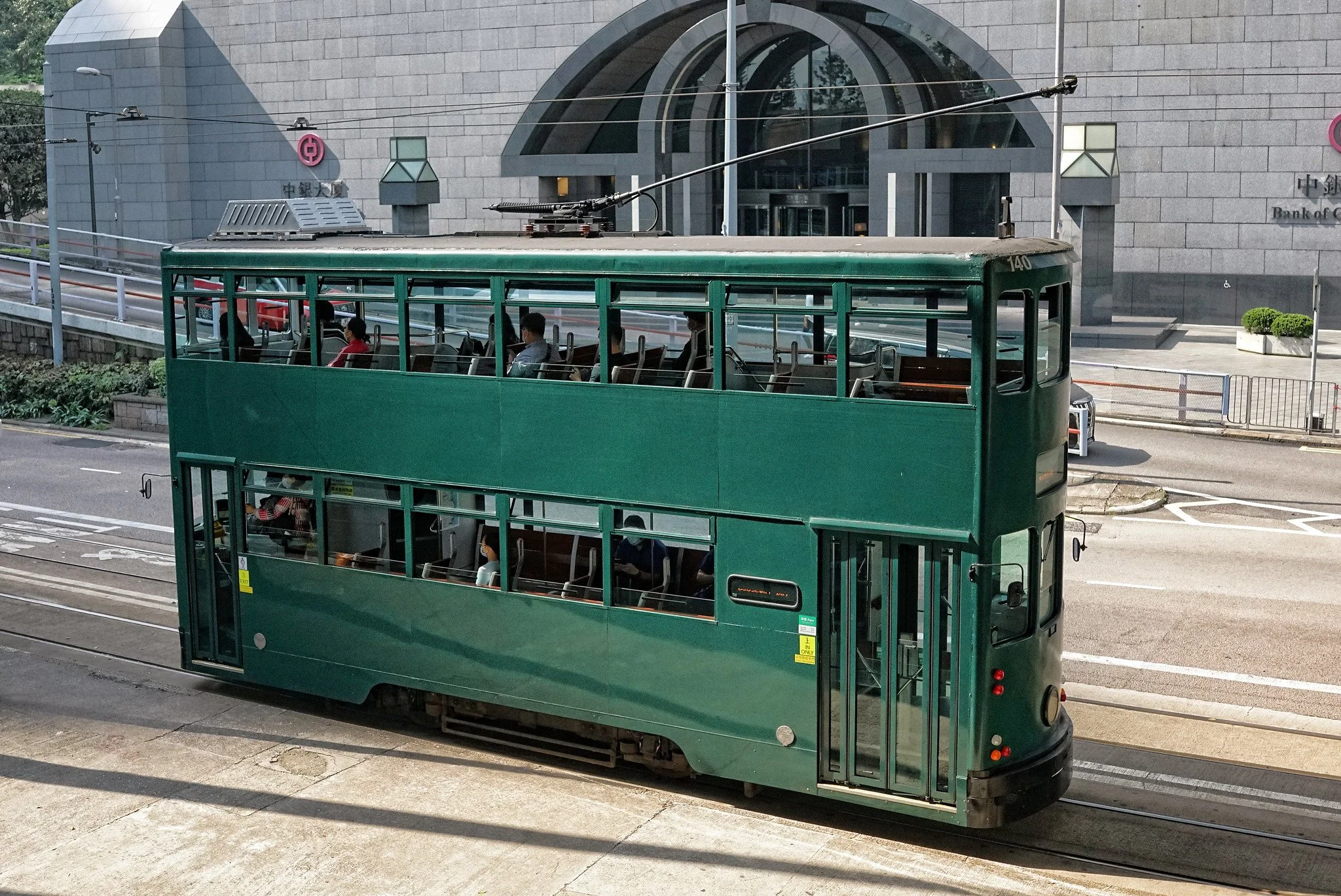
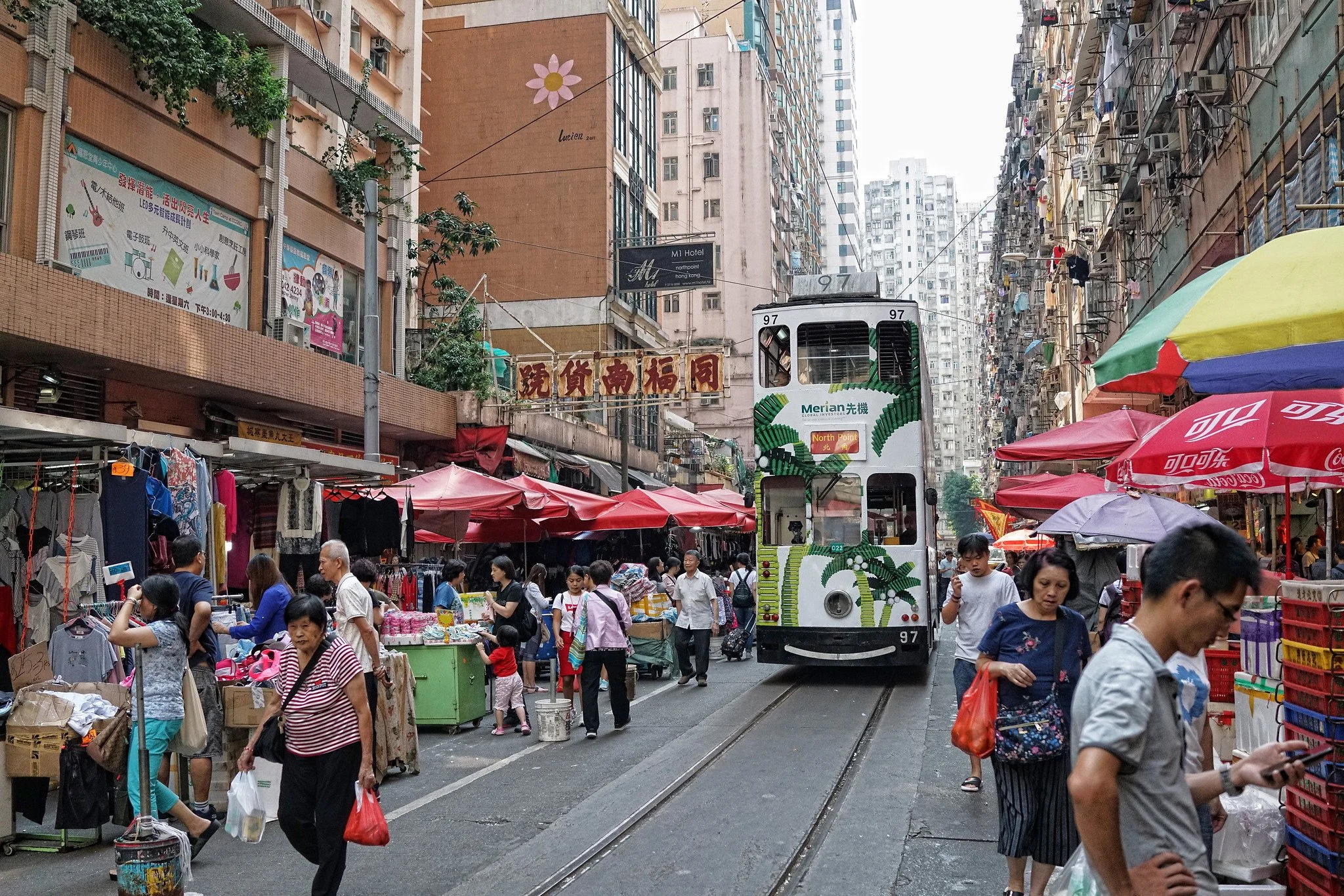
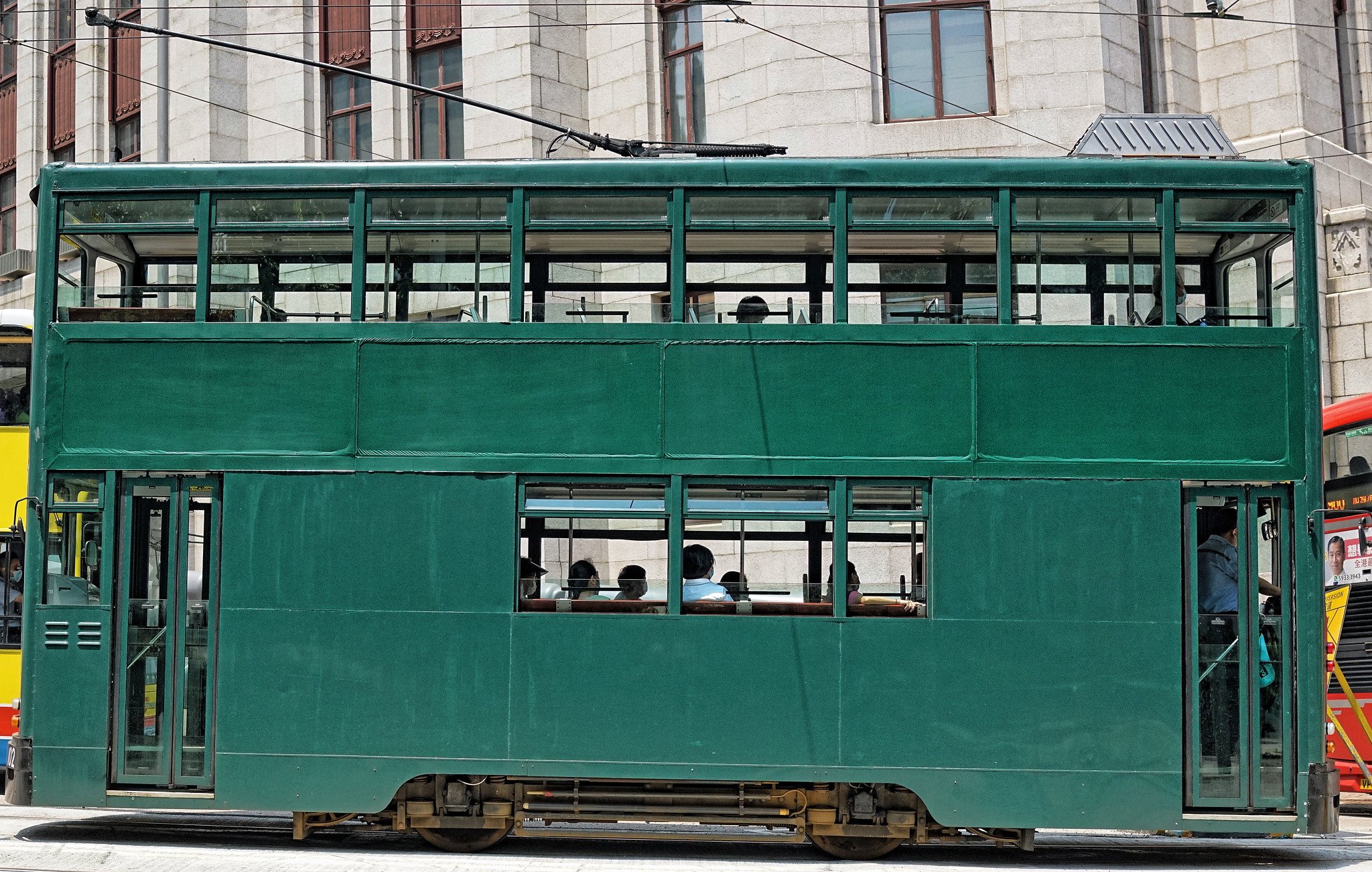
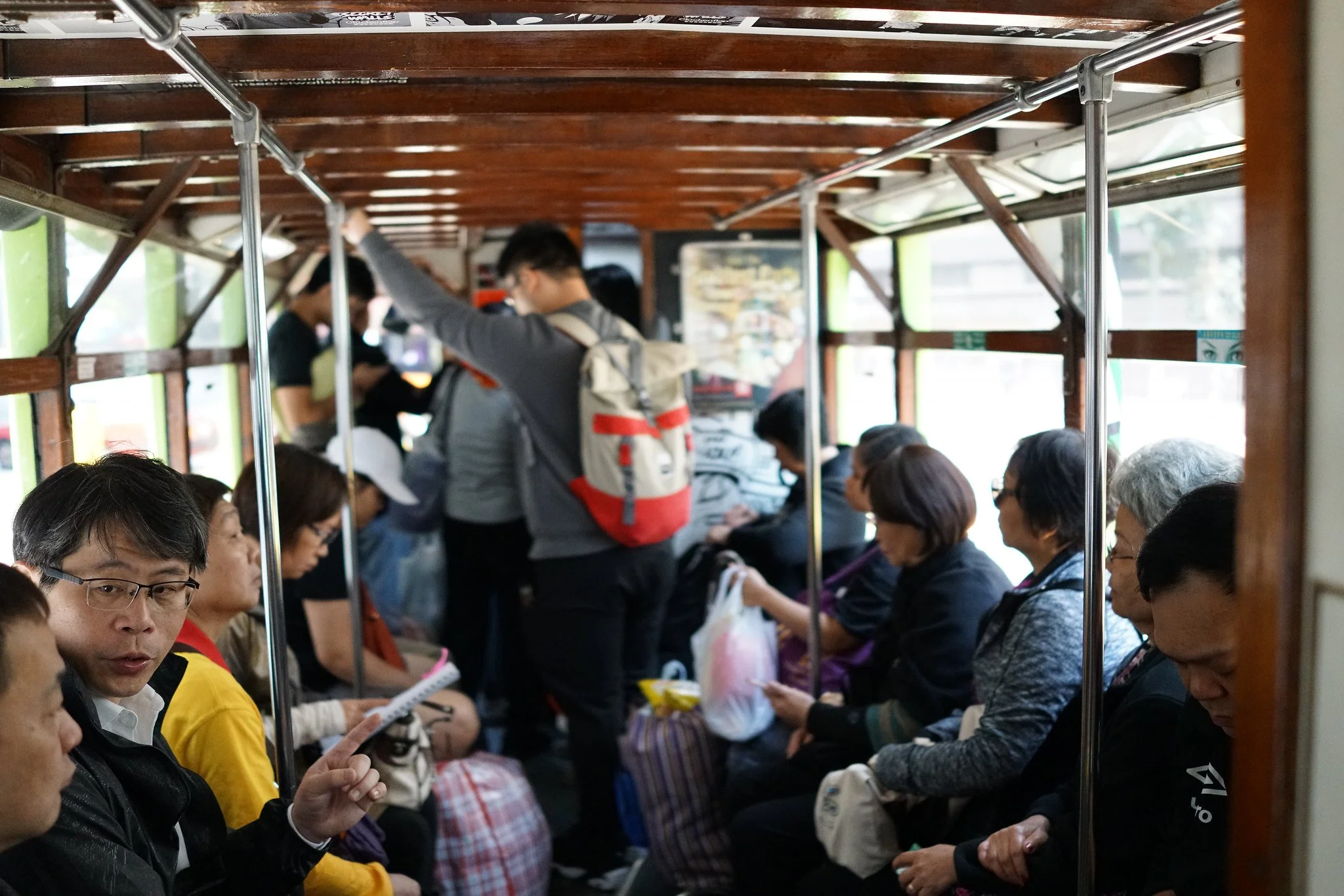
click on any image to enlarge
© Copyright Acknowledged | All rights reserved | images taken by Jamie
Hong Kong Tramways - Ding Ding | Totally Iconic | Hong Kong
6. Hong Kong Tramways | Yearly revenue picture and the non-fare sources
Exact audited figures are not always published in full public detail, but recent official papers give a clear picture. In 2024 passenger fare revenue was around HK$129 million. Advertising revenue reached approximately HK$154 million (boosted by some one-off items). Other sources - party tram charters, TramOramic tickets, souvenirs, sponsorships and Free Ride Day arrangements - make up the balance. Non-fare income has grown to roughly 50 - 57 % of total revenue in recent years. Overall annual turnover sits in the low hundreds of millions of Hong Kong dollars. Profit margins remain thin after heavy investment in track renewal, fleet upgrades and staff costs.
7. Hong Kong Tramways | The cost of a full advertising makeover - and hiring a tram for a private event and those party Trams and specific Tourist Trams
A full-body “Signature” wrap on a single tram typically costs between HK$130,000 and HK$220,000 (roughly US$16,700 -US$28,200) for a three-month campaign. Packages of three trams sit in the HK$300,000 - HK$450,000 range. Larger fleet campaigns push past HK$500,000. Interior panels and shelter advertising are considerably cheaper. Advertising is a major commercial pillar - often matching or exceeding farebox revenue - so the wraps are rarely empty.
Separately, the company offers private charter of its special trams for parties, birthdays, corporate gatherings or celebrations. The antique open-balcony cars (green No 28 and red No 128) start from around HK$2,000 - HK$2,100 per hour. The premium fully equipped No 18 and the open-top TramOramic (No 68) are higher, typically from HK$3,500 per hour. Ordinary passenger cars can also be hired at a lower rate.
Standard booking durations run from 2 hours up to 3 ½ hours, with set routes that usually start and finish at Whitty Street Depot and loop through areas such as Causeway Bay, Happy Valley, North Point or even out towards Shau Kei Wan. Extra pick-up or drop-off points can be arranged with prior notice. Capacity is generally 30 - 40 people depending on the car. Catering packages are available as an optional extra. Bookings open on a rolling two or three-month window and fill quickly, especially at weekends and around festivals.
8. Hong Kong Tramways Fleet Numbers that matter - lucky and iconic
Chinese numerology is alive and well on the tramway. Numbers containing 8 are especially favoured because “baat” sounds like prosperity. Special cars deliberately carry lucky numbers:
No 18 - the premium party tram
No 28 - green antique open-balcony car
No 68 - the open-top TramOramic sightseeing tram
No 88 - the air-conditioned car
No 128 - the red antique open-balcony car
No 120 is also cherished - the last remaining post-war style car still in regular service and a favourite among enthusiasts. Certain numbers (44, 63, 71, 85, 134 and a few others) have been retired or avoided after accidents or for superstitious reasons. (4 basically translates to death in Chinese numerology)
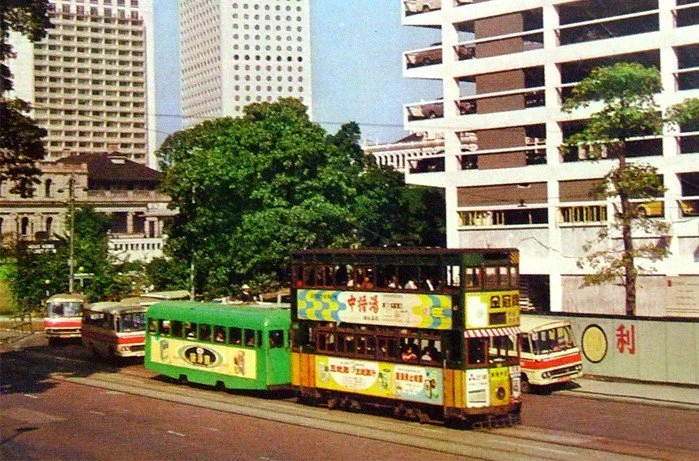
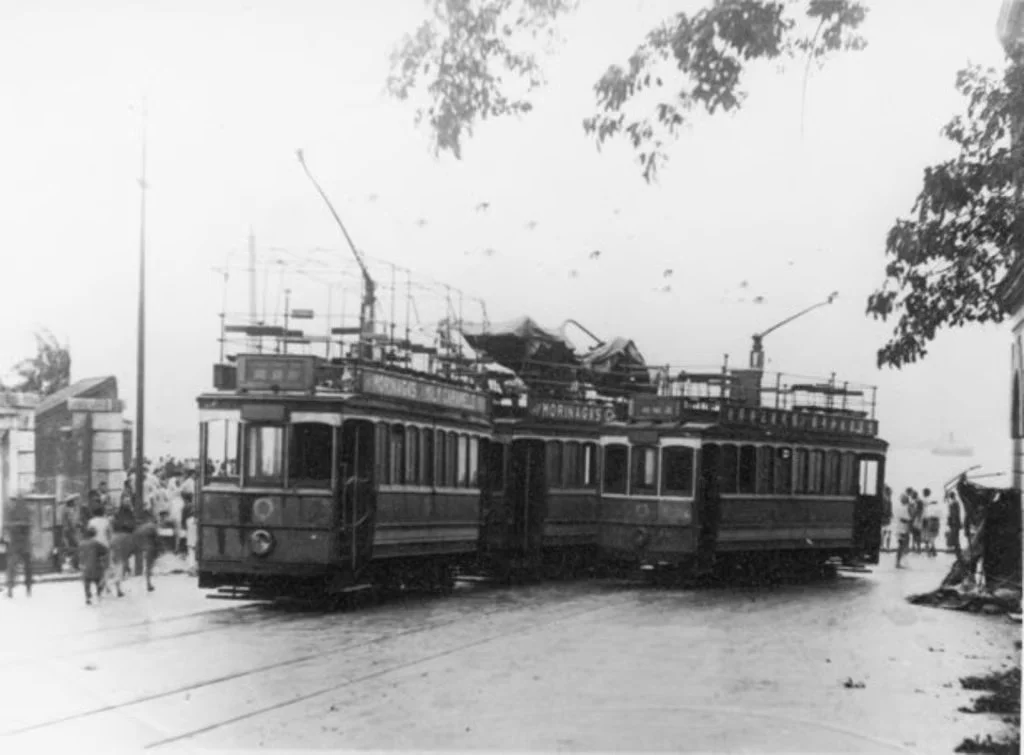
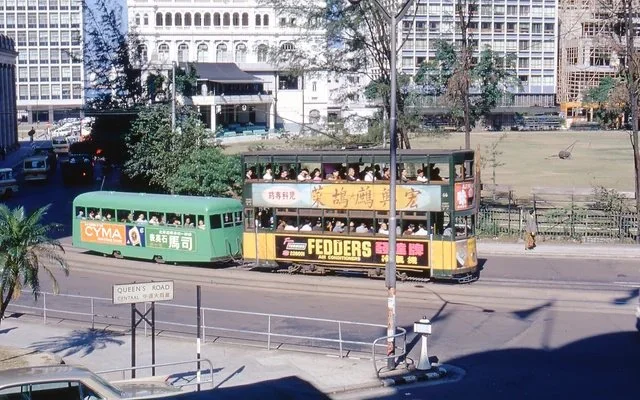
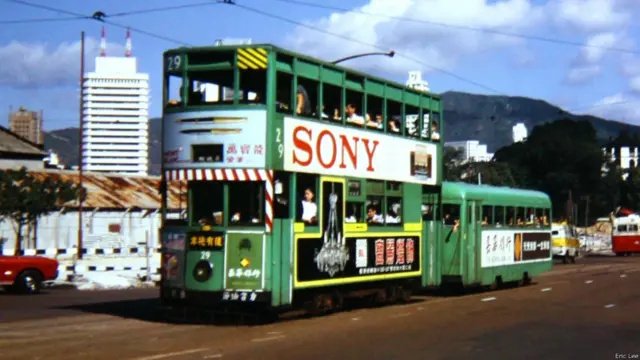
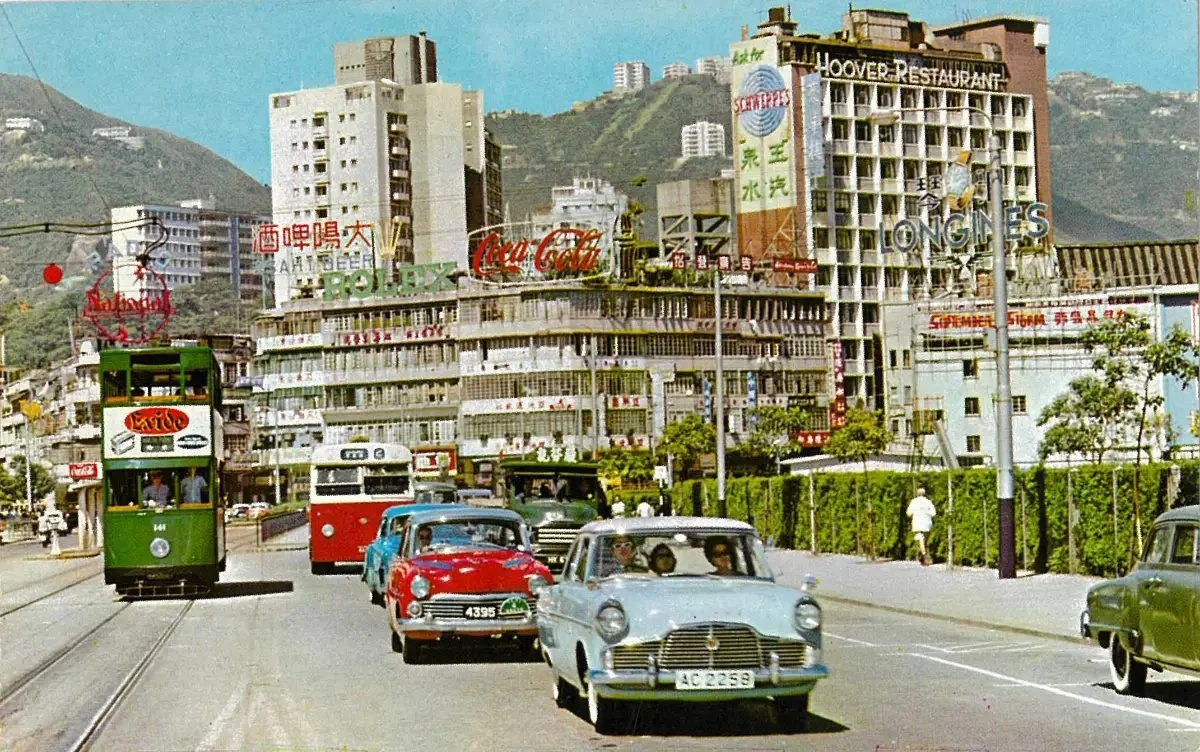
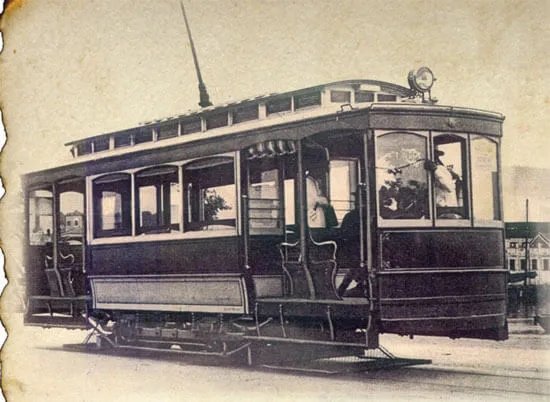
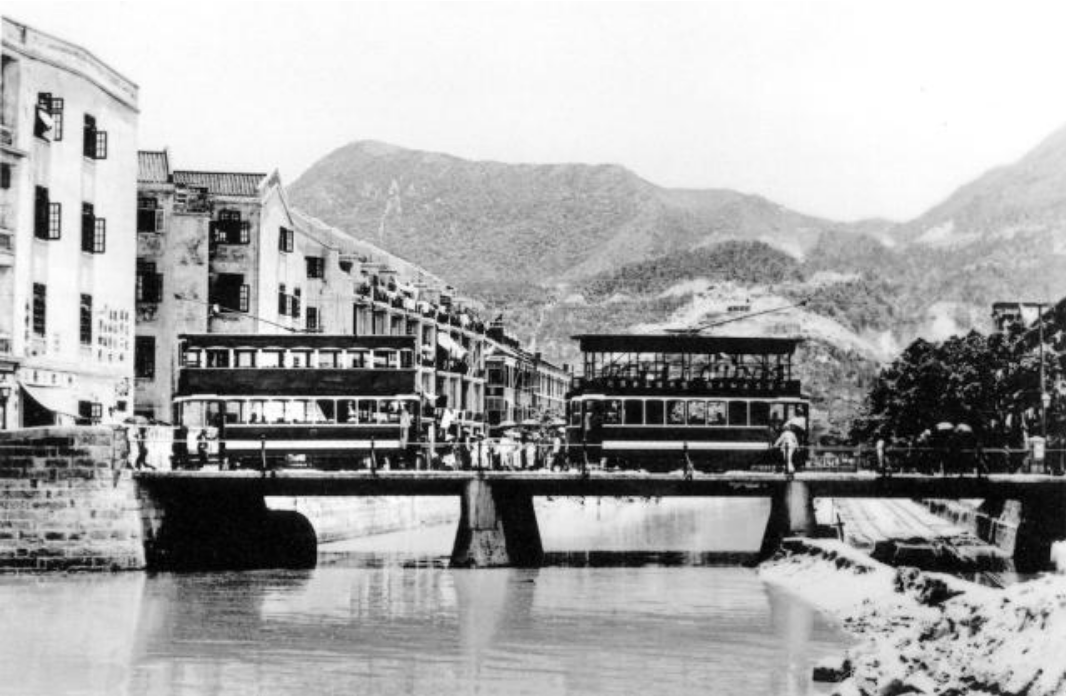
click on any image to enlarge
© Copyright Acknowledged | All rights reserved | images from various sources
Hong Kong Tramways - Ding Ding | History | Hong Kong
9. Hong Kong Tramways | Why “Ding Ding” and why it remains so popular
Please note that on some older historic images, the image may not enlarge when you click on the image and sometims the image is thumbnail size, nothing I can do about that!
The nickname comes from the distinctive two-tone warning bell that drivers ring constantly in traffic and at stops. When electronic beepers briefly replaced the bells around 2000 there was a public outcry and the traditional ding-ding sound was quickly restored.
Locals love it because it is cheap, frequent, open to the street, and still feels like “their” transport. Tourists love the upper-deck front seats, the breeze, the slow parade past wet markets, banks, temples and tower blocks. There is one dedicated open-top sightseeing tram (the TramOramic, No 68) plus the two antique party cars and the premium No 18 that can be chartered. The ordinary service cars themselves function as informal tourist vehicles every day of the year and even if you get off after one stop, it is a ride you will remember.
10. Hong Kong Tramways | Speed, weight, and the forgotten trailers
Typical operating speed in traffic is 15 - 20 km/h; maximum design speed is higher but rarely reached. A modern double-deck tram weighs in the region of 16 - 18 tonnes empty.
From 1964 to 1982 the company ran single-deck trailers towed behind ordinary trams. I remember them very well, up to 22 trailers were in use at the peak, each carrying 36 first-class passengers. They were introduced to cope with surging demand but proved noisy, prone to derailment, and required an extra conductor. Although the main tram route along the northern shore is largely flat, there was a measurable rise at Taikoo Hill (roughly 1 in 19) that limited where the trailers could safely operate; they were generally kept west of North Point for that reason. Class distinction was abolished in 1972 (and I remember that as well) and the trailers were finally withdrawn in 1982. One prototype was rebuilt into a double-deck motor car (No 163). The trailer era remains a curious footnote - a brief experiment in increasing capacity that never quite fitted the system’s character and on a personal note, the trailers where a hazard, you could not really see them behind the actual tram and even I had a moment when I walked into a trailer which I simply did not see, the low speed prevented injury
Looking ahead - longevity, the next 20 years, and the rare times things go wrong
The tram system has already outlasted almost every prediction of its demise. It survived the arrival of the motor bus, the MTR (Subway) Island Line, successive economic downturns and the pandemic. Its greatest strength is that it still does a job no other mode does as cheaply or as characterfully on those particular streets. The combination of heritage value, zero roadside emissions, high passenger capacity in a narrow corridor, and a healthy advertising income stream makes it politically and practically hard to kill.
Looking 20 years ahead, the most likely future is continued gradual modernisation rather than dramatic expansion or closure. The company is steadily replacing wooden-bodied cars with lighter aluminium Signature trams, switching from DC to AC motors, renewing track, and installing better monitoring systems. The fleet will remain recognisably the same double-decker “ding ding” that Hong Kong knows, just a little more efficient and a little more comfortable. Ridership is unlikely to return to the 200,000-plus daily figures of the pre-MTR peak, but a stable 130,000 - 150,000 range is realistic if fares stay low and service reliability holds. The tourist and private-hire side (party trams and the TramOramic) should continue to grow as Hong Kong pushes cultural tourism. The real long-term risks are less about technology and more about labour - an ageing workforce and the challenge of attracting younger drivers and technicians - and about whether the advertising market remains strong enough to subsidise the low fares.
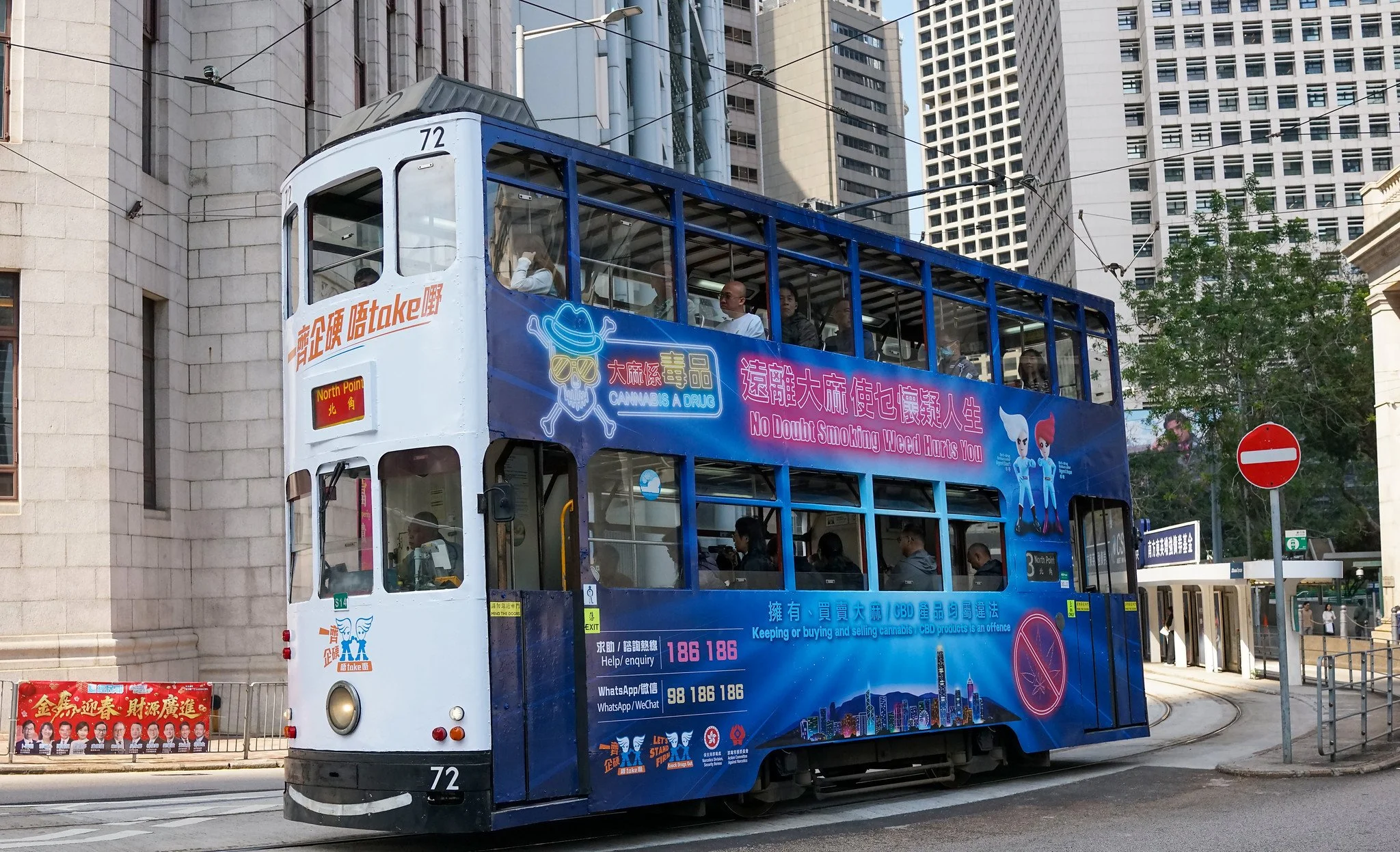
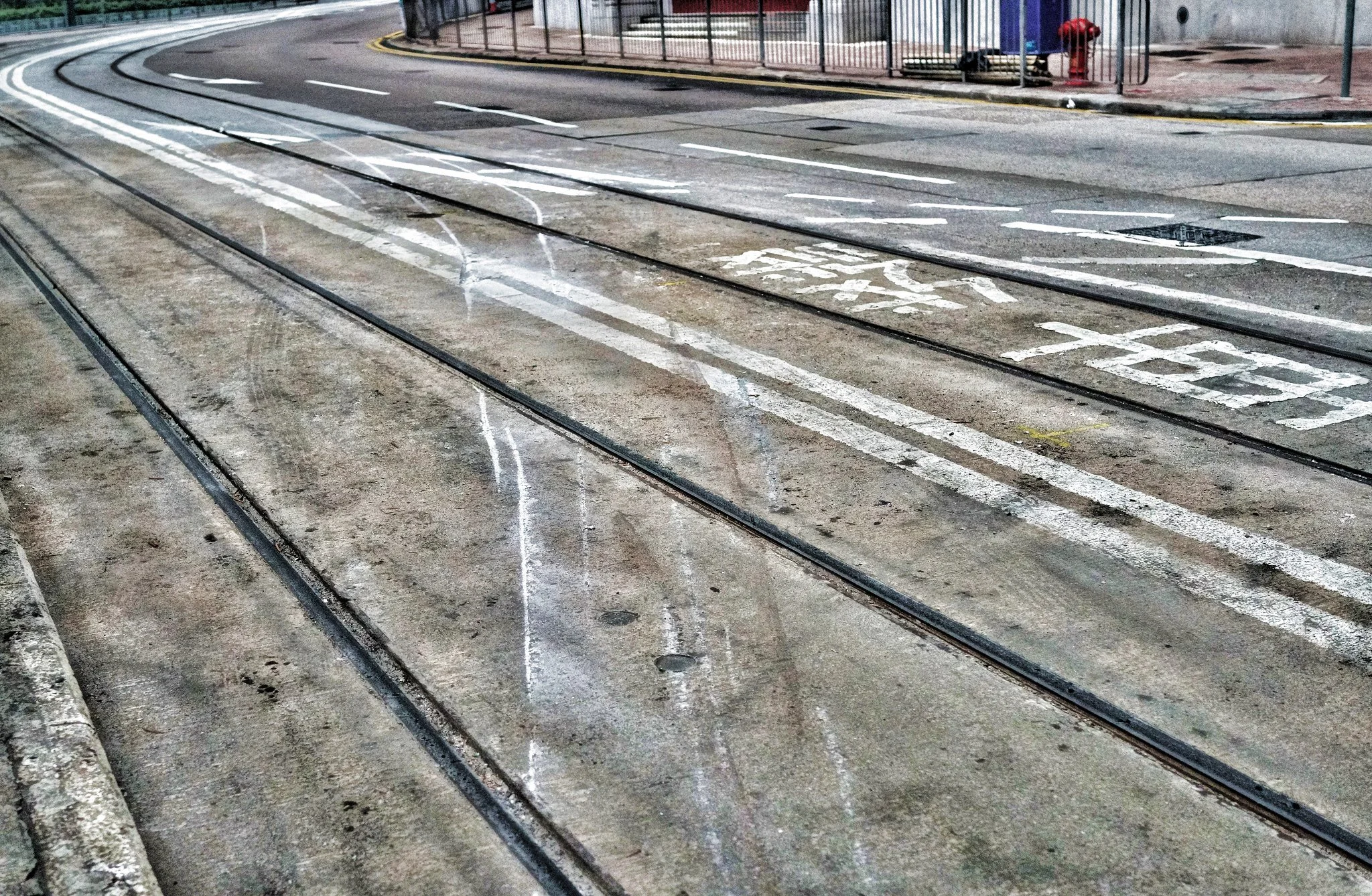
click on any image to enlarge
© Copyright Acknowledged | All rights reserved | images taken by Jamie
Hong Kong Tramways - Ding Ding | Totally Iconic | Hong Kong
On a slightly more serious note :
Derailments do happen, though they are rare given the volume of daily operations. The most serious recent incident was on 6th April 2017 when tram No 123 overturned on a bend on Des Voeux Road Central near the HSBC headquarters shortly after midnight. Fourteen people were injured; the driver was later jailed for dangerous driving after evidence showed the tram was travelling well above the recommended speed for that curve. The scars on the road surface are still visible if you know where to look - a quiet reminder that even the most familiar parts of the system can occasionally go wrong. An earlier major accident occurred in 1964 on Queen’s Road East in Wan Chai when a tram leapt the rails, struck another tram and overturned, killing one passenger and injuring 59. Smaller derailments and collisions with vehicles occur from time to time - the slow operating speed usually keeps the consequences limited - but the 2017 Central overturning remains the incident that still sticks in most people’s minds.
In the end the trams keep rolling because they still feel like Hong Kong. They are not the fastest, the most modern or the most profitable form of transport, but they occupy a unique niche that combines practicality with a living sense of place. As long as that combination continues to matter to the city, the ding ding will still be there in 20 years’ time - a little smarter, a little greener, and still ringing that same familiar bell although I would not be surprised one bit if the human drivers where replaced by robots!
So there you go
Jamie’s Hong Kong Insider Chat
Ready to turn your plans into a far more enjoyable reality? Click the yellow button below to learn more about Jamie’s Hong Kong Insider Chat, check pricing and book
I do not do Food Tours in Hong Kong but I know people that do!
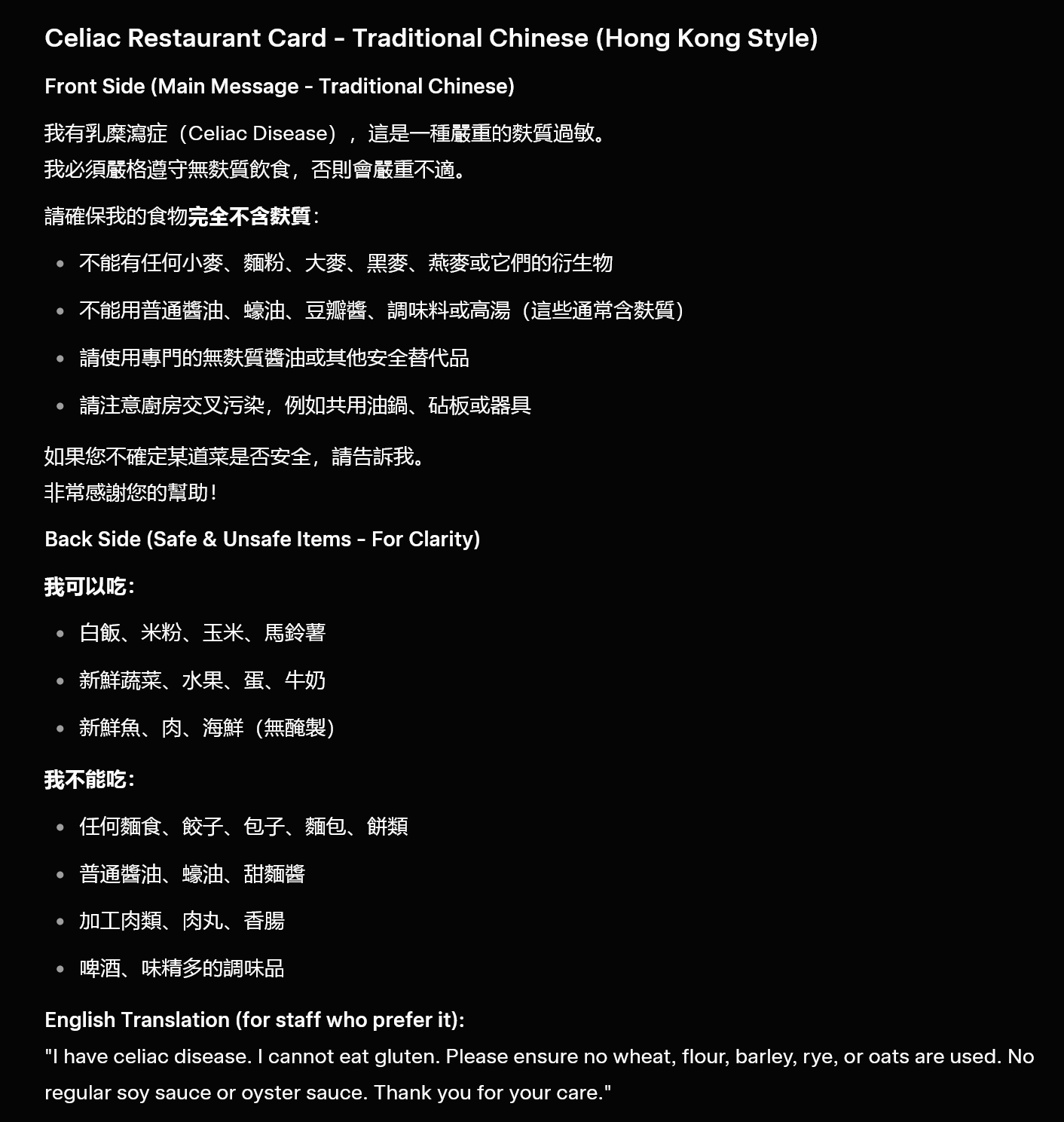
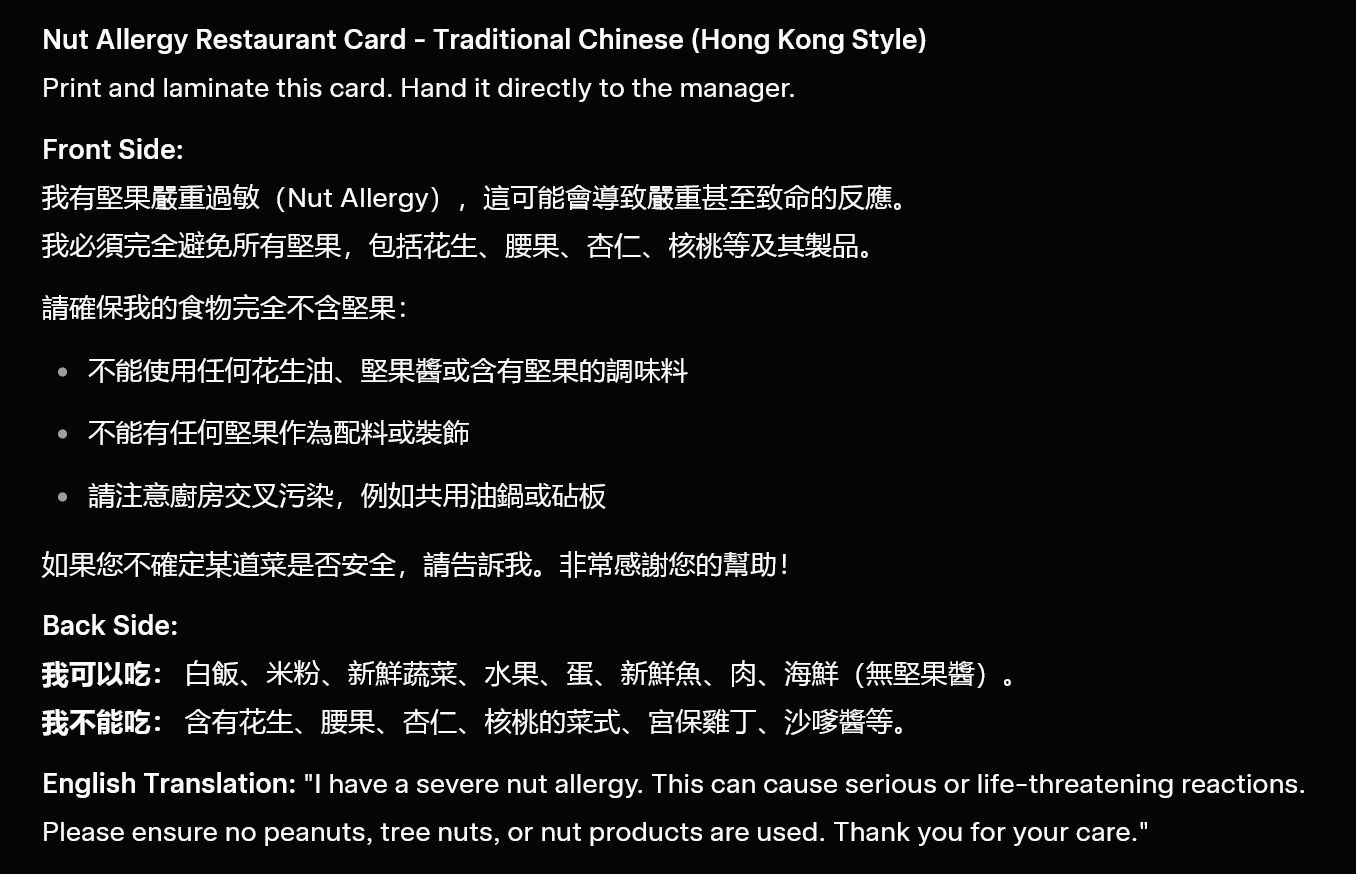
click on any image to enlarge
The information above can be shown to restaurant managers in Hong Kong if you are intolerant to gluten and nuts,
I do not do food tours as mentioned above, I have very specific reasons and part of it is that I do not speak Cantonese or write Chinese, I am from Yorkshire in England and I lack the language gene and it is not through lack of trying and yes a lot of restaurants do not have English menu’s or staff who speak conversational English.
.. and yet I have eaten at close to 1,400 restaurants in Hong Kong since January 2nd 1972, my wife was born in Hong Kong and we have been together over 40 years and her first language is Cantonese and a lot of her family are Chinese or half Chinese so I have never had much of an issue!
This does not translate to doing food tours though, yes, I could do them, no problem there but they would never ever be as good as the food tours done by my friends (see the 3 links above) most of their awesome guides are locally born Hong Kong Chinese and obviously food culture is part of their DNA, it is impossible for me to compete with that!
So please feel free to contact them for food tours
I do not do Hiking Tours in Hong Kong but I know someone that does!
I do not do Hiking Tours, never have and never will even though I used to go Hiking a lot when I was a lot younger, The Hong Kong Government is promoting hiking tours so I urge you to contact my friend Sabrina at Hong Kong Trails and Tours, she is a long time Hong Kong resident and and a very experienced hiker with close to 700 Hikes in 15+ years under her belt, please click on the link below
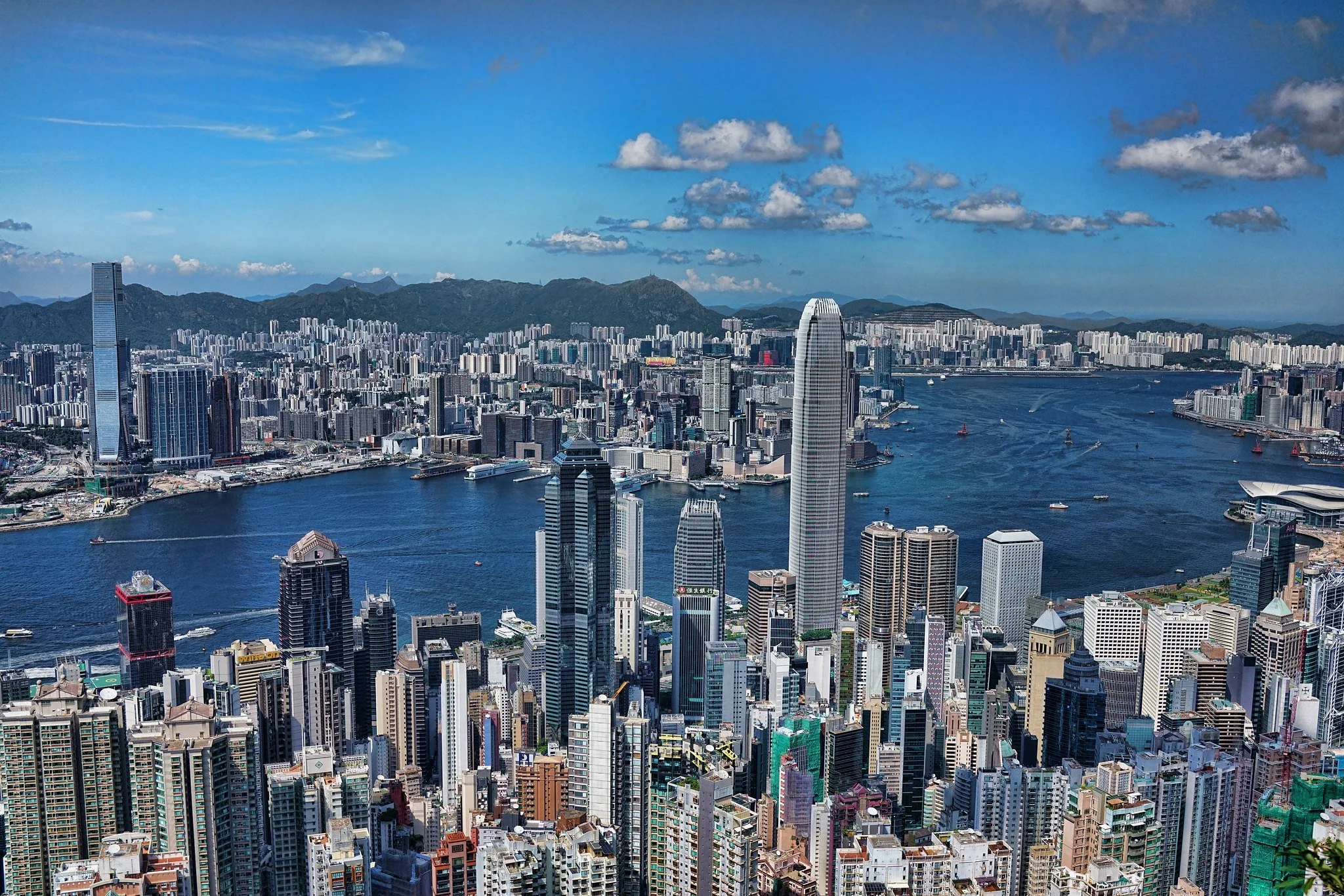
click on any image to enlarge
© Copyright Acknowledged | All rights reserved | all images taken b Jamie
Jamie’s Hong Kong | Some of my favourite images | Hong Kong 101