10 things you didn’t know about Chungking Mansions a Hong Kong Icon
What Chungking Mansions Still Reveals About Hong Kong
The J3 Group - Premium Quality Private Tours | Experiences and Insider Chats since 2010
Me Jamie, your host, I am English and I have lived in Hong Kong since January 2nd 1972 - I know the place.
A meaningful blog post with a difference - tips on Travel, Tourism, Tours, Daily Life and my personal thoughts on Hong Kong.
Please do visit Amazing Hong Kong
Hong Kong | Pearl of the Orient
Customised Private Tours + Experiences in Amazing Hong Kong
Jamie has lived in Hong Kong - Pearl of the Orient for 50+ years
Carefully Crafted Personalised and Customised Itineraries by Jamie | Hong Kong’s Most Experienced Private Tour Guide for : Solo Travellers Friends Families Seniors Couples Business People MICE Delegates.
Private Tours Cultural Tours Walking Tours Sightseeing Tours City Tours Night Tours Layover Tours Transit Tours Private Shore Excursions Bespoke Tours Personalised Tours Jewish Heritage Tours Luxury Private Tours Day Tours Luxury Boat Tours Themed Tours Private Family Tours Private Day Tours Corporate Tours
Just you, your family or friends and Jamie your personal English private tour guide - over 2,400+ tours completed since 2011 - Jamie offers quality Private Tours of Hong Kong
Tour Group Size 1 - 6 people only
J3 Group Hong Kong | J3 Consultants Hong Kong | J3 Private Tours Hong Kong
Creating Memories That Will Last A Lifetime
Go here for the Hong Kong Michelin Restaurant Guide which includes the Bib Gourmand Category

A Resident since 1972 - Private Tours of Hong Kong with Jamie
The Best Things to do in Hong Kong
click on the image to enlarge
© Copyright Acknowledged | All rights reserved | image taken by Jamie
Chungking Mansions circa 1961 | Totally Iconic | Hong Kong
Foreword by Jamie
The iamge above is one of my favouries, it shows the 5 blocks of Chungking Mansions inbetween the Holiday Inn Golden Mile Hotel on the left and the Imperial Hotel on the right
There is something about walking past the front of Chungking Mansions on Nathan Road that never quite loses its charge. The street outside is all polished shopfronts and tourist flow, yet the moment you step under the canopy the temperature, the noise and the mix of languages change. It is not the Hong Kong that most visitors expect, and it is not the Hong Kong that many locals prefer to acknowledge, yet it has been sitting there, stubborn and fully operational, since the early 1960s. What follows are ten points that dig a little deeper than the usual surface stories and fluff pieces.
The correct and long-established English spelling is Chungking Mansions. It follows the old postal romanisation of the Chinese city Chongqing, chosen because it more closely matched the Cantonese pronunciation. Variants such as “Chung King” or “ChungKing” appear from time to time but are not the standard form. In a similar vein, the name of the city itself was commonly written as the single word “Hongkong” throughout the nineteenth and early twentieth centuries. That form remained the official spelling until 1926, when the government formally adopted the two-word version “Hong Kong” that is used today. A number of long-established companies still retain the older one-word spelling in their names.
1. From Arcade to Mansions - the full history and original purpose of Chungking Mansions
The site was first developed in the early 1940s by the Tiampo family, Chinese-Filipino merchants who had moved to Hong Kong from the Philippines. They built the Chungking Arcade, a low-rise U-shaped shopping centre with roughly 30 to 50 shops aimed at tourists and sailors. After the war the arcade expanded and did solid business in tailoring, silk, ivory and small bars.
By the mid-1950s Tsim Sha Tsui in Kowloon was changing fast. The Tiampo family decided to redevelop the 50,000-square-foot site into something taller and more ambitious. Financing was difficult; one version of the family story has a British bank manager offering a loan only if the bank took ownership of one entire block - an offer that was refused. Instead the family sold individual units off the plan, taking the blueprints to Manila and selling to friends, business associates, Britons, Indians and anyone else prepared to buy. Within months the project was fully funded.
Construction produced 5 interconnected 17-storey blocks completed on 11th November 1961. (The year I was born) It was one of the first large composite buildings in Kowloon - mixed residential and commercial from the start. The lower floors were designed for shops and restaurants; the upper floors were sold as flats, many around 500 - 600 square feet with larger corner units. Early marketing presented it as modern middle-class living, and some local celebrities and British officers did live there for a short period. The building was never intended as purely residential. The lack of strict separation between living and commercial space in the planning rules of the time allowed the mixed use that still defines it today. Fires began within the first few years, a pattern that would continue for decades.
By the early 1970s the building had already become known among young Western travellers as a source of cheap beds. That reputation was cemented by Tony Wheeler’s South-East Asia on a Shoestring, first published by Lonely Planet in 1975. Later editions stated bluntly that there was a “magic word for cheap accommodations in Hong Kong - Chungking Mansions.” The guide effectively put the place on the international backpacker map and helped turn many of its subdivided flats into the dense network of guesthouses that still define it today
2. The correct address of Chungking Mansions
Chungking Mansions sits at 36 - 44 Nathan Road, Tsim Sha Tsui, Kowloon. The official occupation permit and most property records list it under that range. Some directories and estate-agent listings simply use 40 Nathan Road as a convenient single number, but the full range is the accurate one.
3. Chungking Mansions - How many buildings and how they are linked
There are 5 blocks, labelled A, B, C, D and E. From the street they look like one continuous mass, but the internal arrangement is more complicated.
The ground floor and the floor above it form a shared two-storey podium or arcade that runs under all five blocks. This is the busy commercial zone of money changers, phone shops, restaurants, grocery stalls and the constant flow of people. On these lower levels you can walk freely between the bases of the different blocks. The main entrances open onto this shared space, so once you are inside the arcade you can move across to the lift lobbies of any of the five blocks without going back outside.
At this juncture I should point out that you should not exit from any side entrances or the back entrances, use the main entrance on Nathan Road to enter and exit, the other exits lead into dark and dirty alleys and it is not uncommon to see rats and if you look at the wiring just above the back entrance and side entrances you will be horrified (they have been making attempts to clean it up) - I have walled the alleys thousands of times and never had an issue but I reckon most people would think it is too seedy.
From the third floor upwards the blocks become separate towers. Each has its own pair of lifts (one serving odd floors, one serving even floors) and its own staircases. You cannot simply walk along a corridor from, say, the 12th floor of Block A into Block B or C on the same level. The upper floors of each block are effectively sealed off from the others. To change blocks once you are upstairs you normally have to ride or walk back down to the shared podium levels, cross the arcade to the correct lift lobby, and go up again in that block’s lifts.
Block A sits closest to Nathan Road and takes most of the direct street frontage. The other blocks sit behind or alongside it, rising from the same podium. In everyday use people often treat B and C as one linked pair and D and E as another, but formally they remain 5 distinct blocks with their own vertical circulation. There are a few restricted or “known-to-regulars” connections higher up that some long-term operators use, but for ordinary visitors and most residents the rule is simple: lower floors connect everything, upper floors do not.
This layout is the reason the place feels like a vertical village rather than a conventional multi-tower development. The shared arcade keeps the commercial energy flowing horizontally while the separate towers keep the residential and guesthouse life stacked vertically and somewhat isolated from one another.
4. Chungking Mansions - who owns and operates it - and why it has never been redeveloped
Ownership is highly fragmented. Individual units were sold off the plan in 1961, so there are hundreds of separate title holders - estimates range from around 650 to over 900 titles covering both residential and commercial space. Day-to-day management is handled by the Incorporated Owners of Chungking Mansions, formed in January 1972 (when we arrived in Hong Kong) and still one of the older owners’ corporations in Hong Kong. The original Tiampo family gradually sold out and left. Many Chinese owners now simply collect rent and leave the daily running of shops, restaurants and guesthouses to South Asian and other operators.
That extreme fragmentation is also the main reason the building has never been bought and redeveloped into a fancy mall, hotel or commercial tower, despite its prime Nathan Road location and despite government policy that increasingly encourages the clearance of buildings older than 50 or 60 years on safety and urban-renewal grounds. Under the Land (Compulsory Sale for Redevelopment) Ordinance a developer normally needs to assemble 70 to 80 percent of the undivided shares (the exact threshold depends on the precise age of the building and whether the site falls inside a designated area) before it can apply to the Lands Tribunal for a compulsory sale order. With several hundred individual owners, many of whom still draw steady rental income from tiny guesthouse rooms and ground-floor shops, securing that majority has so far proved almost impossible. Acquiring the necessary titles can take a decade or more, and the current owners have little incentive to sell at the prices a developer would need for a full redevelopment to make financial sense. The building remains profitable enough, in its present form, for enough of its owners to keep the status quo in place.
The building is 65 years and past its sell by date but the pracitical reality is that no publicly documented evidence confirms a specific, ongoing problem of underground water seeping into and critically damaging the concrete foundations of Chungking Mansions. Older buildings in Hong Kong do suffer from various forms of water-related deterioration - leaking pipes, defective waterproofing, rising damp, or rainwater penetration through external walls and roofs - and these can accelerate carbonation of the concrete and corrosion of the steel reinforcement. That process leads to the familiar spalling and cracking seen on many 1960s structures. Foundation issues from groundwater pressure are theoretically possible on any low-lying site in Tsim Sha Tsui, but nothing in the available records singles Chungking Mansions out as having a uniquely severe or progressive foundation problem of that kind.
As for expected lifespan, buildings of this era were typically designed with a notional working life of around 50 years under the codes then in force. In practice the picture is more varied. With regular maintenance many 1960s reinforced-concrete composite buildings in Hong Kong continue to stand safely well beyond 70 or even 80 years. Without adequate upkeep the combination of carbonation, moisture and corrosion can produce serious defects after 40 - 60 years - concrete spalling, exposed and rusting reinforcement, and reduced structural capacity. Outright collapse remains uncommon unless the building is overloaded, has been poorly altered, or has suffered extreme neglect. More often the structure reaches a point where the cost and disruption of continuous repair make redevelopment the more rational economic choice, which is why so many comparable buildings eventually disappear even when they are not on the verge of falling down.
In Chungking Mansions case the fragmented ownership and the continuing rental income from the existing uses have so far outweighed any pressure for large-scale structural renewal. The building has received periodic upgrades (security systems, some fire-safety work, external cleaning), but it remains a classic example of a 1960s composite structure that has outlived its original design assumptions through a mixture of maintenance, adaptation and sheer inertia.
5. Approximate number of units in Chungking Mansions
Registered residential units are often listed in the low-to-mid 500s by property databases, but that figure understates the reality. Many flats have been subdivided over the decades into much smaller rooms. Guesthouse rooms alone number between 1,200 and nearly 2,000 depending on the count used. Add the hundreds of small shops, money-exchange counters, restaurants and storage spaces and the total functional units easily exceeds a thousand. The building was designed with far fewer, larger apartments; the present density is the result of continuous informal adaptation.
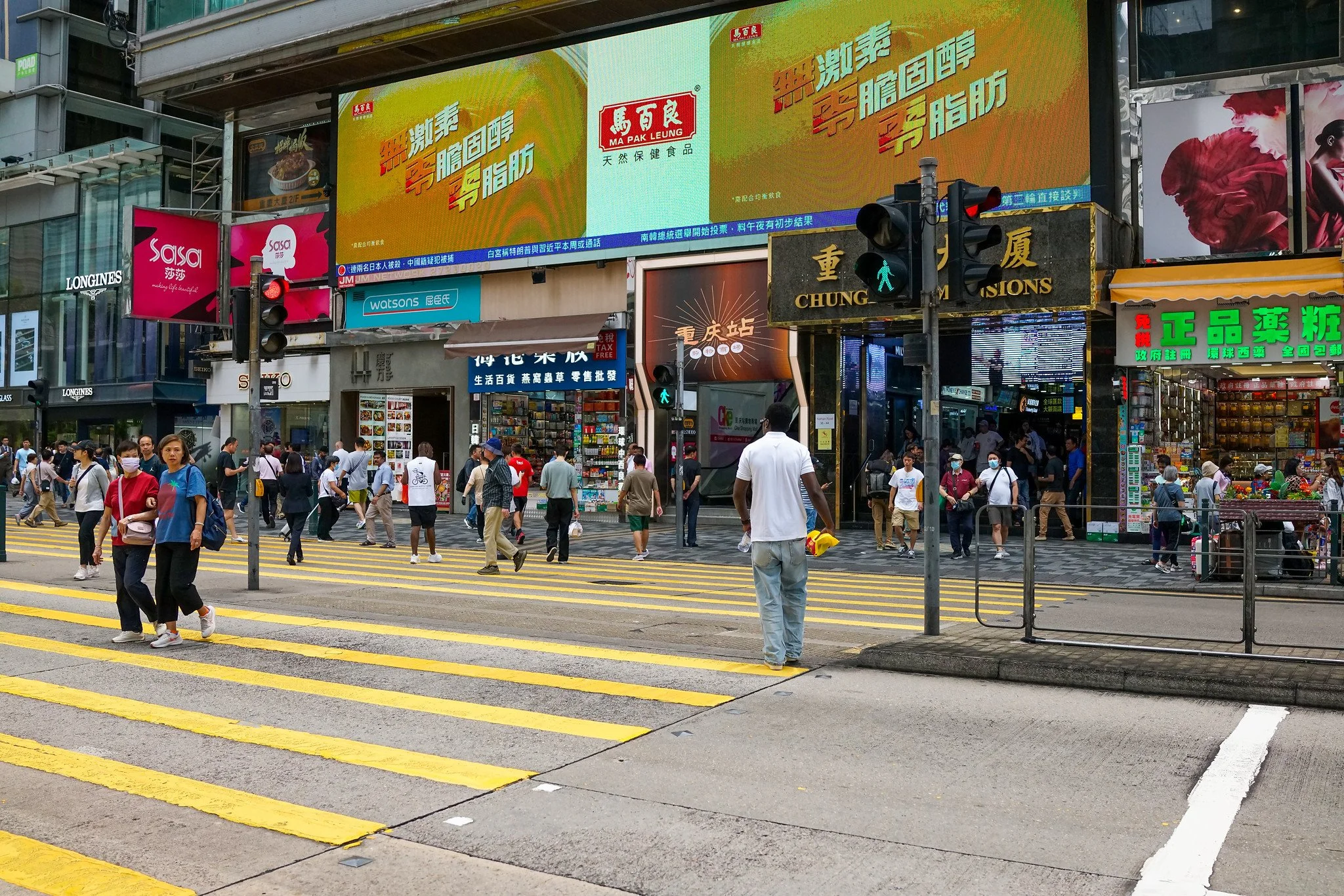
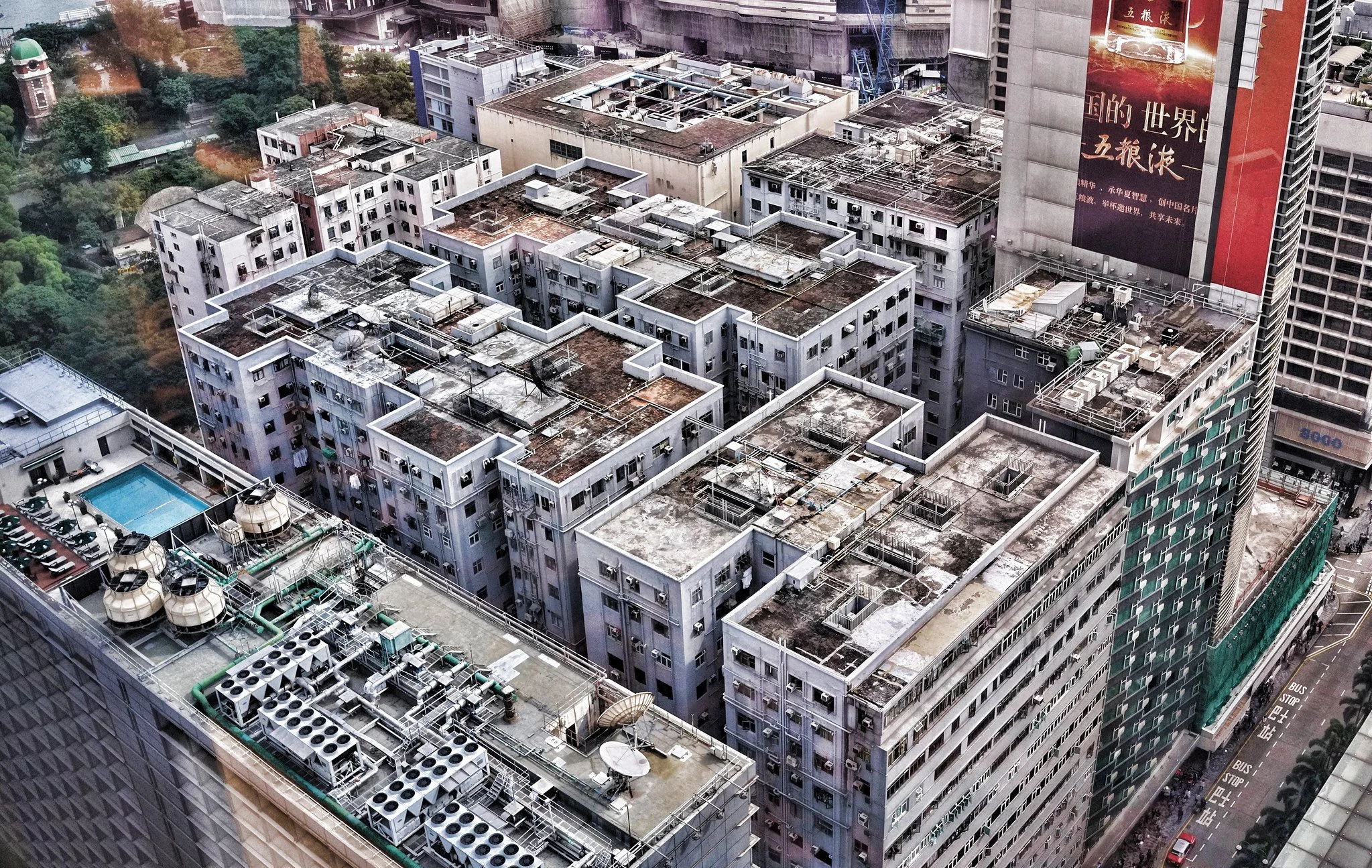
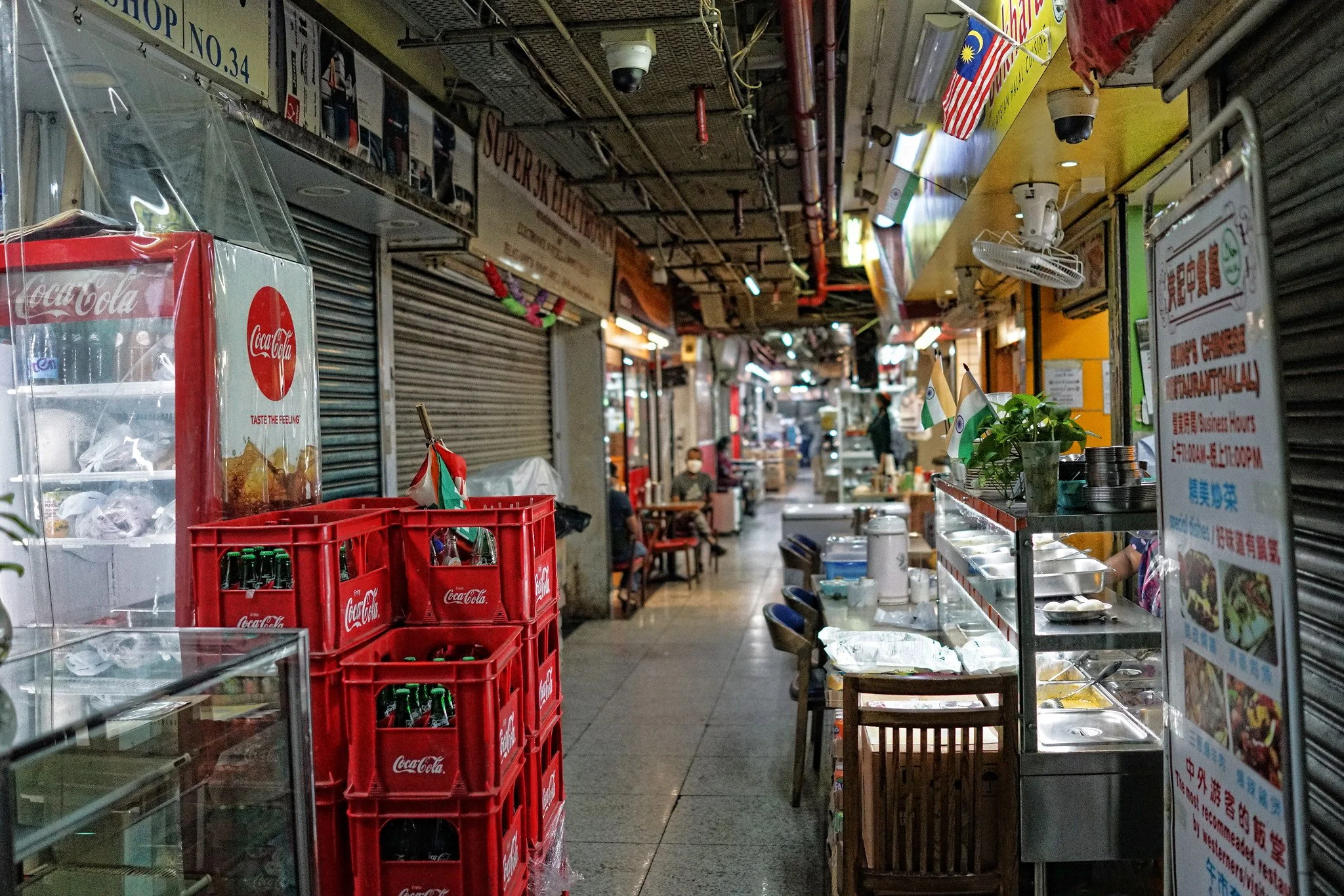
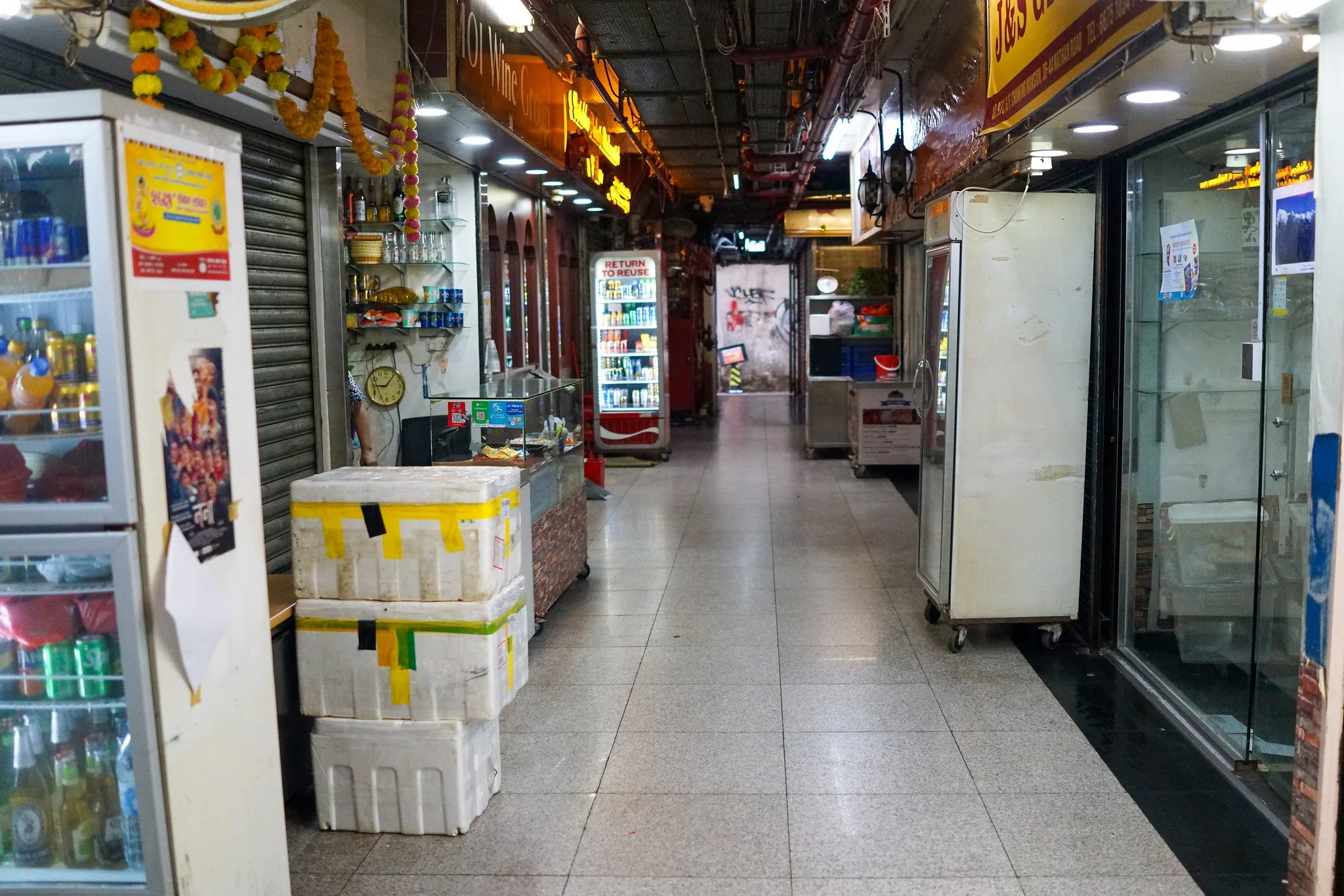
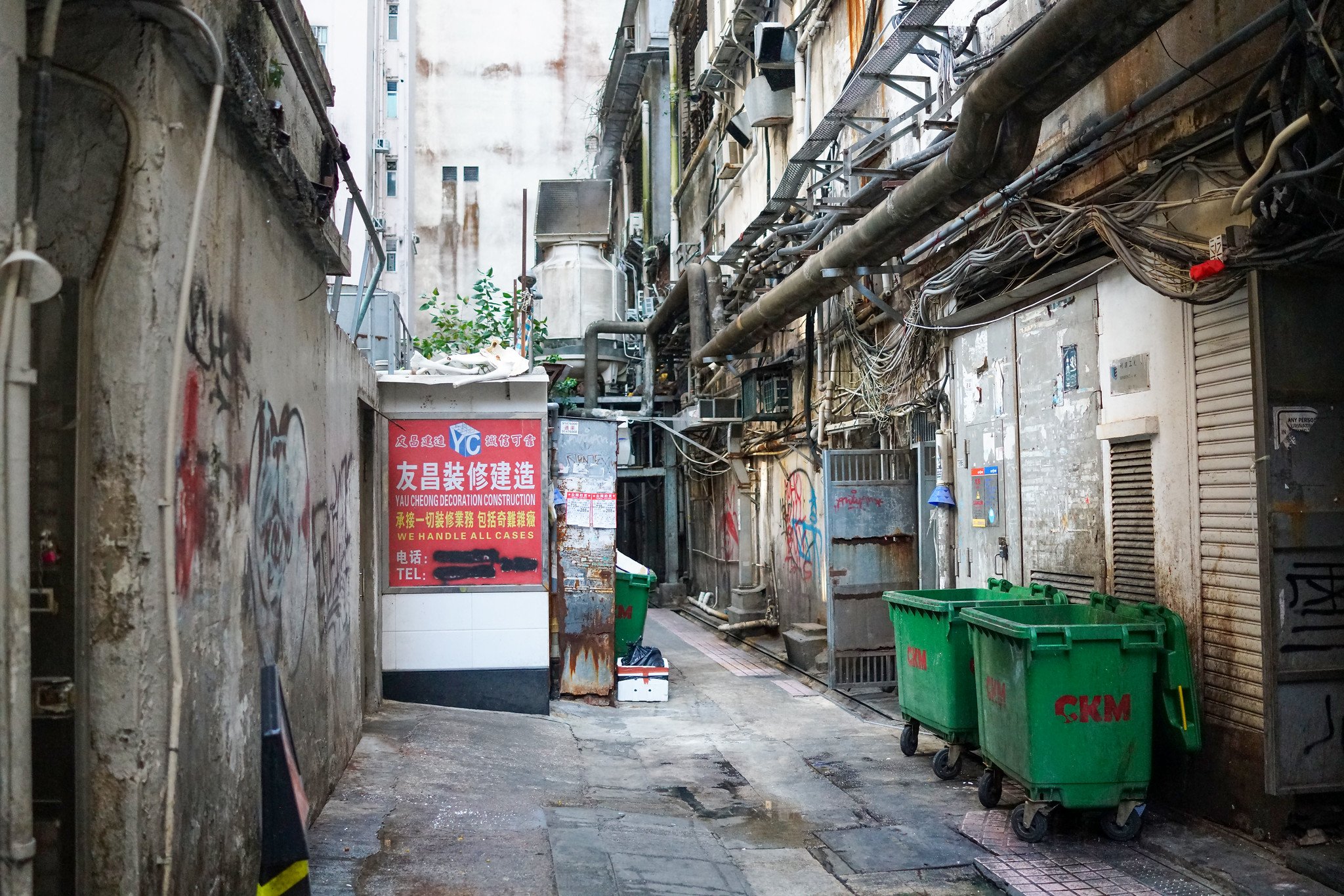
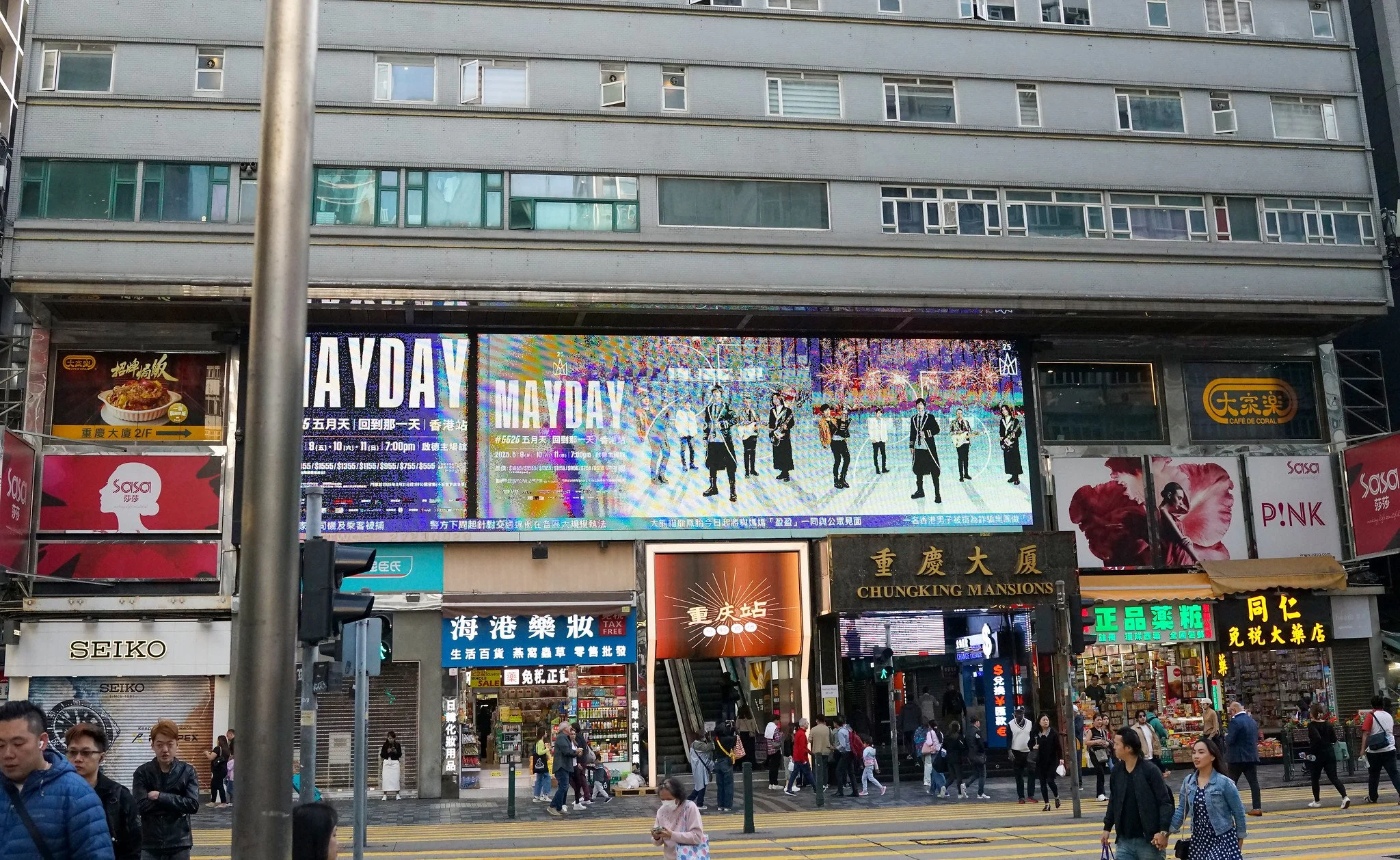
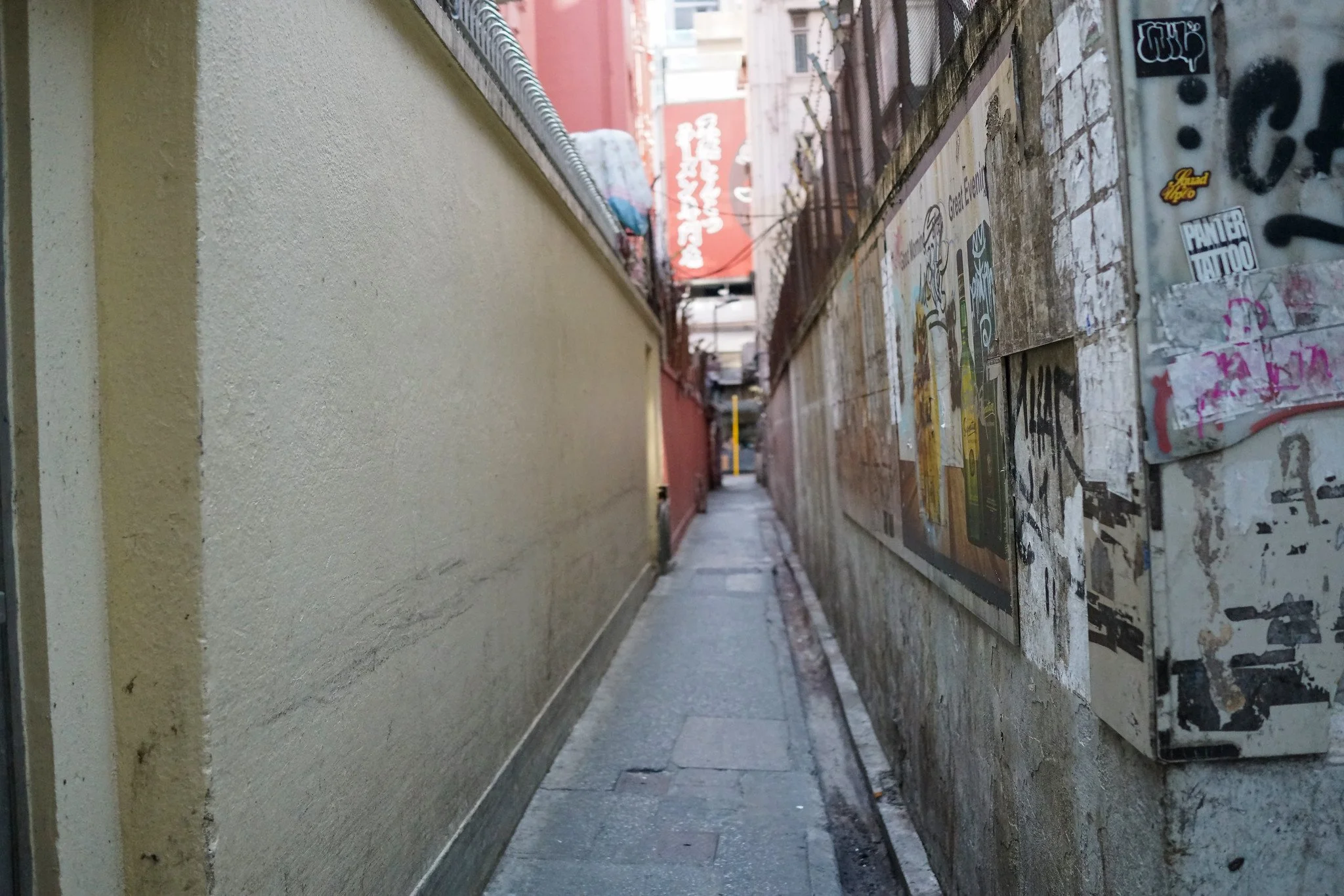
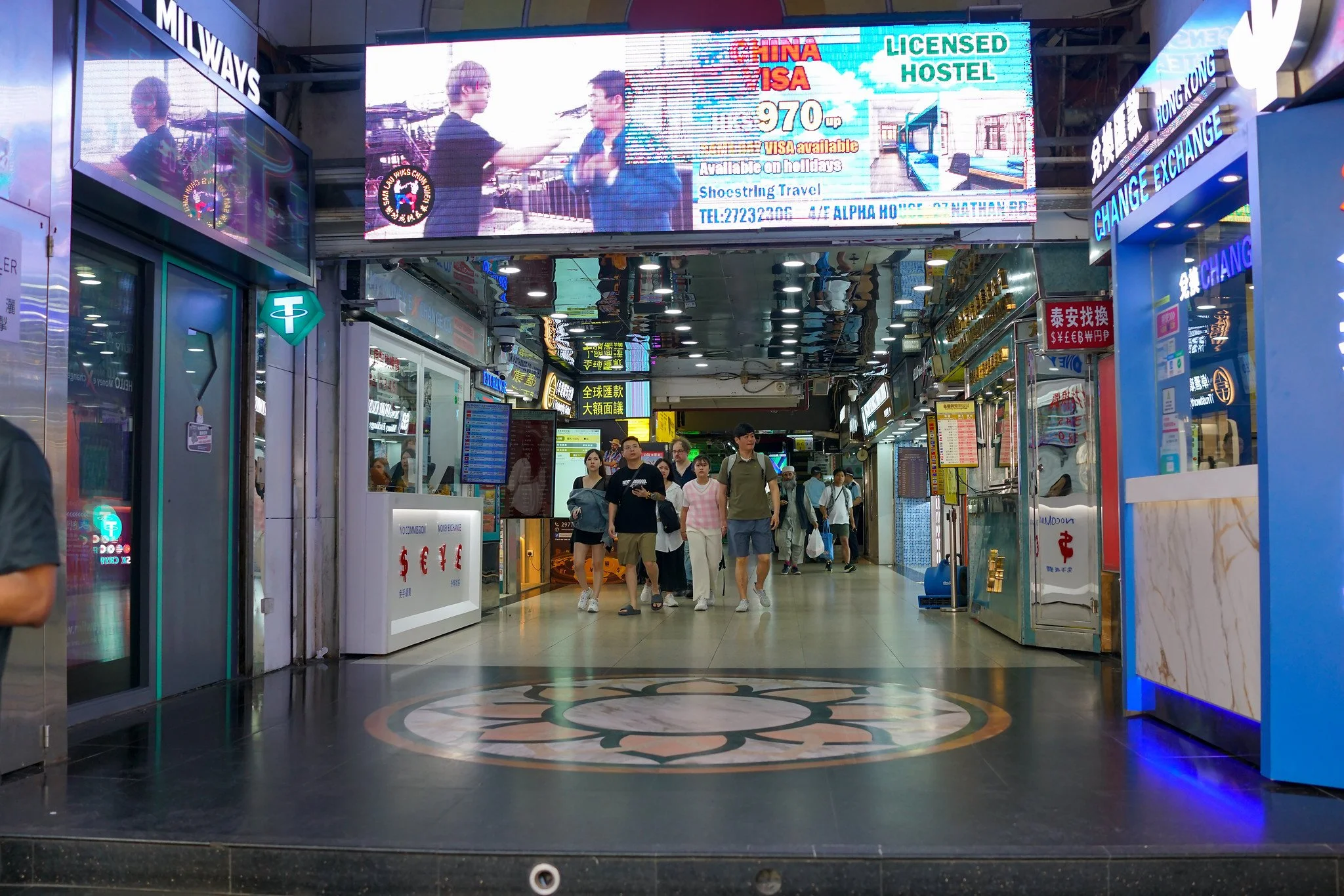
click on any image to enlarge
© Copyright Acknowledged | All rights reserved | images taken by Jamie
Chungking Mansions circa 1961 | Nathan Road | Hong Kong
6. What is Chungking Mansions most famous for - and the “ladies of the night”
Chungking Mansions is famous for three overlapping reasons: the densest concentration of budget guesthouses in one building in Hong Kong, its role as a low-end global trading hub (particularly for mobile phones and electronics heading to Africa and South Asia), and the sheer mix of nationalities under one roof. At any given time people from well over 100 countries pass through or sleep there.
Back 10 years ago it was common to see ladies of the night congregate on Mody Road near the back entrance of the Holiday Inn Hotel and a minutes walk to the back entrance of Chungking Mansions, what was unusual was that it was never local Chinese ladies but African ladies… that did not last very long given the whole area is a family friendly area.
Sex work has been part of the story almost from the beginning. In the late 1960s and 1970s American servicemen on R&R from Vietnam used the building; later it attracted a more varied clientele. Some women still book rooms, though the open street-level soliciting of earlier decades has been pushed back by security cameras and tighter licensing. The activity has not disappeared; it has become quieter and more dispersed, with some of it moving to less scrutinised nearby buildings.
7. Restaurants, hotels and hostels in Chungking Mansions
Licensed restaurants number in the low twenties to around 40 at different counts, mostly South Asian, with smaller African and Chinese places mixed in. Many more unlicensed or semi-legal food stalls operate on upper floors and in the arcade. Guesthouses and hostels exceed 90 and some counts put the figure over 110, offering the largest single-building concentration of budget beds in the city. Room rates still start well below what most proper hotels charge, which is why backpackers and traders continue to fill them.
Our youngest son is a big fan of eating in ChungKing Mansions, cheap, cheerful food and a lively atmosphere, I can quite honestly say that I never eaten in the there and never wll! however young people are more adventurous than me!
8. Why so many money-exchange counters on the ground floor of Chungking Mansions
The ground-floor arcade is dense with money changers because the building’s core business is cash-based international trade. African and South Asian traders arrive with hard currency or need to convert large sums quickly for purchases of phones, watches, clothing and other goods that will be carried home in luggage or small containers. Competitive rates, long opening hours and the ability to handle multiple currencies in one place make the counters essential. Trust still matters more than formal banking for many of these deals, so the physical presence of multiple exchange shops side by side remains useful.
9. Crime reputation, CCTV and the drop in the crime rate in Chungking Mansions
The building’s bad reputation was earned honestly through the 1970s, 1980s and early 1990s - fires, triad activity, drugs, overcrowding and occasional serious violence. The last major fire with a fatality occurred on 21st February 1988, when a blaze on an upper floor claimed the life of a Danish tourist who attempted to escape by jumping from a window. A significant electrical explosion and prolonged blackout followed in July 1993 when the overloaded transformer room failed. Smaller fires have continued to break out from time to time - a 1998 corridor fire injured eight people, and more recent incidents have been limited to individual guesthouse rooms or retail units - but none on the scale of the earlier events. The turn in overall safety began in the late 1990s. The first phase of CCTV went in around July 1999 with 96 cameras. By 2005 the system had more than doubled to 208 cameras and a dedicated control room. By the late 2000s the total had passed 310 - 350 cameras covering roughly 70 percent of public spaces, with plans to push coverage higher. Security guard numbers also rose significantly.
The combination of constant camera coverage, better-organised private security, formal licensing of guesthouses and a more professional owners’ corporation reduced opportunistic crime and open disorder. Serious incidents still occur, but the free-for-all atmosphere of earlier decades has largely gone. The cameras did not make the building genteel; they simply made it harder to get away with the old patterns.
Regular police patrols remain a visible part of daily life inside the building, particularly on the ground-floor arcade. Officers move through the lower levels checking identity documents, with the clear practical focus on verifying that people present are legal residents or visitors. In practice these stops fall overwhelmingly on those who do not appear to be either Chinese or white. The pattern has been consistent for years and forms part of the low-level but continuous official presence that now sits alongside the private security and the camera network.
10. Why so many South Asian-run businesses rather than Hong Kong Chinese in Chungking Mansions
South Asians have been present in Hong Kong since the earliest colonial years as soldiers, police, traders and later professionals. When Chungking Mansions opened, a noticeable proportion of the early commercial tenants were already Indian or Pakistani. The building offered affordable space, English as a working language, and a ready network of fellow traders. Over time Chinese owners found it more profitable to rent out the shops and rooms than to operate them themselves. The result is a self-reinforcing community: new arrivals from South Asia and later Africa find familiar food, language, prayer facilities and business contacts already in place. Hong Kong Chinese landlords collect the rent; the day-to-day energy and risk-taking belong largely to others.
Why Mirador Mansions a few steps away never became as famous - location, location. location!
Mirador Mansions stands only a short one minute walk away, built two years earlier in 1959, and shares the same basic DNA - composite blocks, mixed residential and commercial use, South Asian operators, budget rooms and a certain lived-in roughness. Yet it never acquired Chungking’s international profile. Chungking sits more prominently on the main stretch of Nathan Road, absorbed the full force of the backpacker boom of the 1970s and 1980s, became the setting (and title) of Wong Kar-wai’s film, and developed a denser concentration of African traders and money-changing activity. Mirador remained the quieter neighbour. The same elements exist there, just without the same volume of stories, cameras and global recognition. Chungking’s notoriety, for better or worse, turned into a brand that Mirador never quite matched.
The building continues to adapt. Ownership remains too fragmented for easy redevelopment, the lifts still feel inadequate, and the mix of people remains one of the most international in the city. For anyone who has walked its corridors over the years, that combination of stubborn continuity and constant small-scale change is exactly what keeps it interesting.
Additional notes and out of left-field observations
Beyond these ten points
click on the image to enlarge
© Copyright Acknowledged | All rights reserved | image taken by Jamie
Kin Shing Money Exchange | Chungking Mansions | Hong Kong
Sorry for the image quality, taken using my Iphone
I have been using Kin Shing Money Exchange for a very long time, i have used them thousands of times and they are located on the ground floor of Chungking Mansions, I still believe they have the best and most reliable rates - my general advice is shown below, please note that Kin Shing is closed on Sundays and Public Holidays which is why I have listed 3 other options.
Money Changers in Chungking Mansions on Nathan Road, Kowloon, in Hong Kong
Chungking Mansions, located at 36 - 44 Nathan Road, Tsim Sha Tsui, Kowloon, Hong Kong, is a well-known hub for money changers offering competitive exchange rates. Here’s a concise overview and as mentioned below, I frequent Kin Shing Money Exchange except on a Sunday when they are closed, the staff are older Hong Kong Chinese people and utterly reliable, I have never, ever had an issue with them.
Location and Accessibility: Money changers are primarily on the ground and first floors of Chungking Mansions, a 17-story mixed-use building. It’s a 1 to 2 minute walk from Tsim Sha Tsui MTR station (Exit H).
Why Chungking Mansions?: The building hosts multiple money changers in close proximity, fostering competition that drives better rates. Lower rental costs compared to other high-traffic areas also contribute to attractive rates.
Recommended Money Changers in Chungking Mansions:
Kin Shing Money Exchange Co Ltd: Shop 87, G/F, known for no commission fees and fair rates. Open Mon-Fri 9am-6pm, Sat 9am-2pm. Phone: 2368 0084. | this is company I use, i have changed money there thousands of times as mentioned above
Hong Kong Forex Limited: Shop 110 A-B, G/F, offers Moneygram transfers and no commission. Open Mon-Thu/Sat 10am-8pm, Fri 10am-12:45pm/2-8pm, Sun/public holidays 11am-7pm. Phone: 2766 0066.
Pacific Exchange Co. Ltd: Shops 65 (1/F) and 72 (G/F), contactable via their website.
City Foreign Exchange Ltd: Shop 9, G/F, accredited by the Quality Tourism Services Scheme. Phone: 2739 2832.
Tips for Exchanging Money:
Avoid changers near the entrance as I have it on good authority that they pay some of the highest retail rents in Hong Kong for these tiny spaces; those further inside or on the first floor typically offer better rates.Compare rates across multiple booths, as they vary. Check for hidden fees and confirm the rate before exchanging.
Count cash and verify receipts on the spot to avoid errors or scams. Be cautious of pickpockets after exchanging,some of the companies will try and shortchange you if you look like an easy mark, checking you have gotten the right amount of money is absolutely essential .
Rates are often so much better than at airports, hotels, or banks, but always compare with the mid-market rate.
as an example at Hong Kong International Airport you literally lose 10% of your money because of the lousy exchange rate
What to Know About Fixers Outside Chungking Mansions
Role and Activities of Touts and Promoters:
Fixers are often stationed outside the main entrance of Chungking Mansions, actively soliciting passersby with offers for cheap guesthouses, restaurants, or tailored suits. They may also pitch electronics, fake watches, or other goods and services if you get my drift
These individuals are usually associated with businesses inside the building and aim to draw in customers.
Please note these gentleman (never ladies) can be very persistent, a polite no thank you will suffice to make them move on
I should also point out that as fixers, they can pretty much arrange anything (legal and illegal) for example, some “evening company” fake brandname goods and such
Cultural Context:
The fixers reflect the multicultural nature of Chungking Mansions, often being immigrants or members of ethnic minority groups (e.g., South Asians or Africans) who work in or run businesses within the complex. Their presence contributes to the building’s reputation as a hub of “low-end globalization,” where traders and travelers from diverse backgrounds converge
The fixers outside and lurking inside the entrance to Chungking Mansions are a hallmark of its chaotic, multicultural charm. While they can be overwhelming, they’re part of the building’s unique identity as a global hub. Approach with caution, curiosity, and an open mind to experience one of Hong Kong’s most iconic and diverse landmarks. If you’re visiting, consider it an adventure into a microcosm of global trade and culture, but always prioritize safety and due diligence
So there you go
Jamie’s Hong Kong Insider Chat
Ready to turn your plans into a far more enjoyable reality? Click the yellow button below to learn more about Jamie’s Hong Kong Insider Chat, check pricing and book
I do not do Food Tours in Hong Kong but I know people that do!
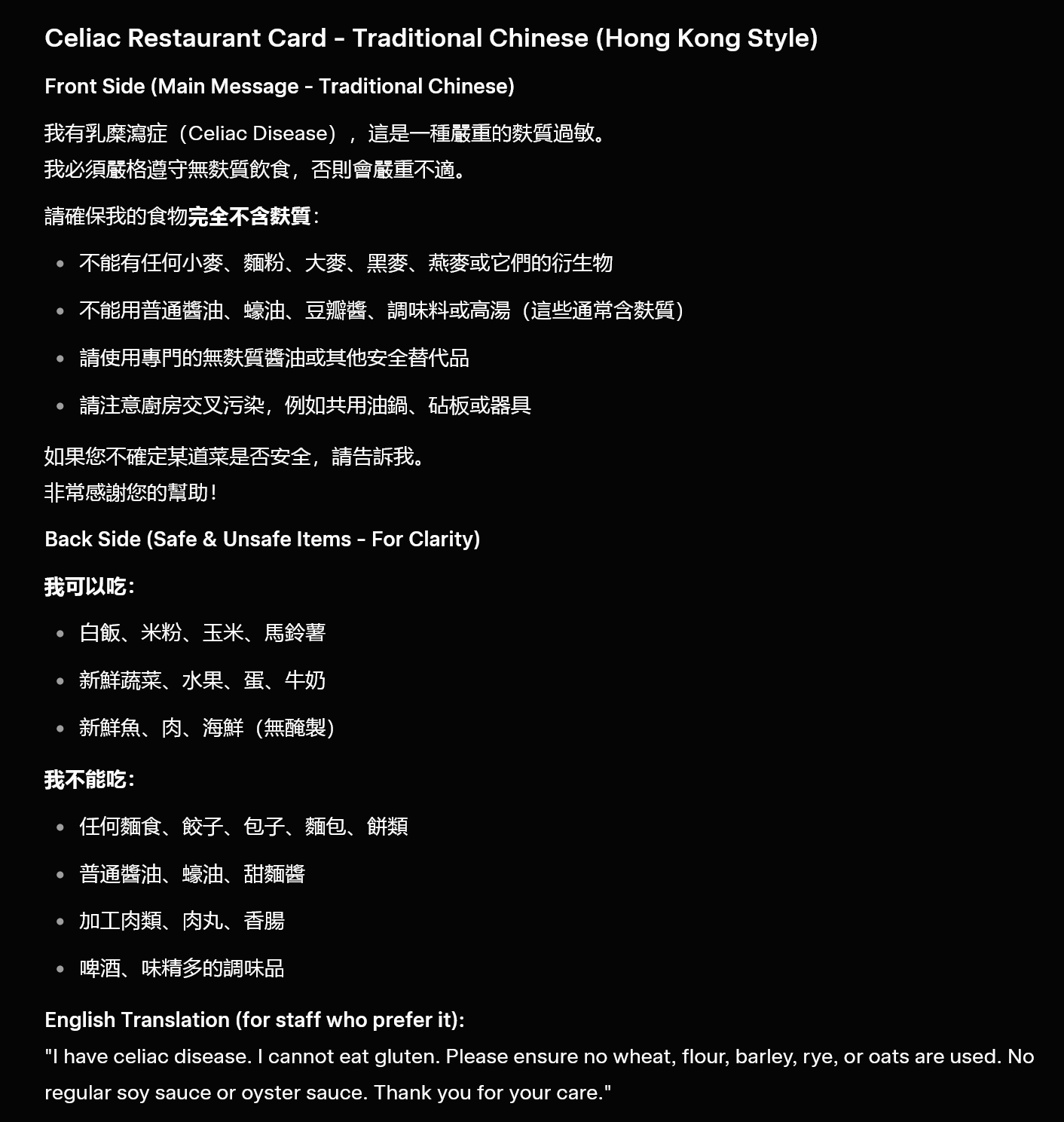
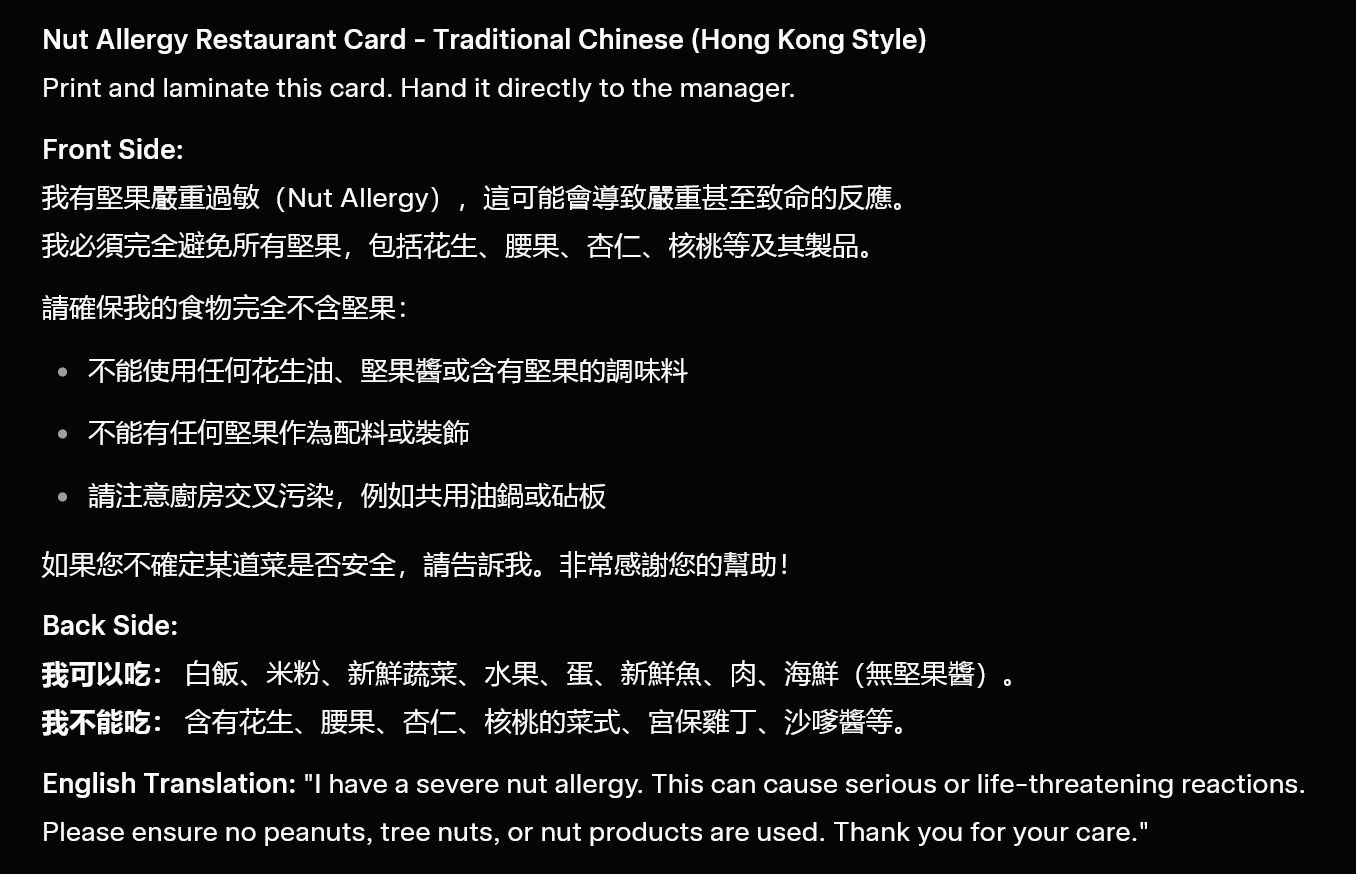
click on any image to enlarge
The information above can be shown to restaurant managers in Hong Kong if you are intolerant to gluten and nuts,
I do not do food tours as mentioned above, I have very specific reasons and part of it is that I do not speak Cantonese or write Chinese, I am from Yorkshire in England and I lack the language gene and it is not through lack of trying and yes a lot of restaurants do not have English menu’s or staff who speak conversational English.
.. and yet I have eaten at close to 1,400 restaurants in Hong Kong since January 2nd 1972, my wife was born in Hong Kong and we have been together over 40 years and her first language is Cantonese and a lot of her family are Chinese or half Chinese so I have never had much of an issue!
This does not translate to doing food tours though, yes, I could do them, no problem there but they would never ever be as good as the food tours done by my friends (see the 3 links above) most of their awesome guides are locally born Hong Kong Chinese and obviously food culture is part of their DNA, it is impossible for me to compete with that!
So please feel free to contact them for food tours
I do not do Hiking Tours in Hong Kong but I know someone that does!
I do not do Hiking Tours, never have and never will even though I used to go Hiking a lot when I was a lot younger, The Hong Kong Government is promoting hiking tours so I urge you to contact my friend Sabrina at Hong Kong Trails and Tours, she is a long time Hong Kong resident and and a very experienced hiker with close to 700 Hikes in 15+ years under her belt, please click on the link below
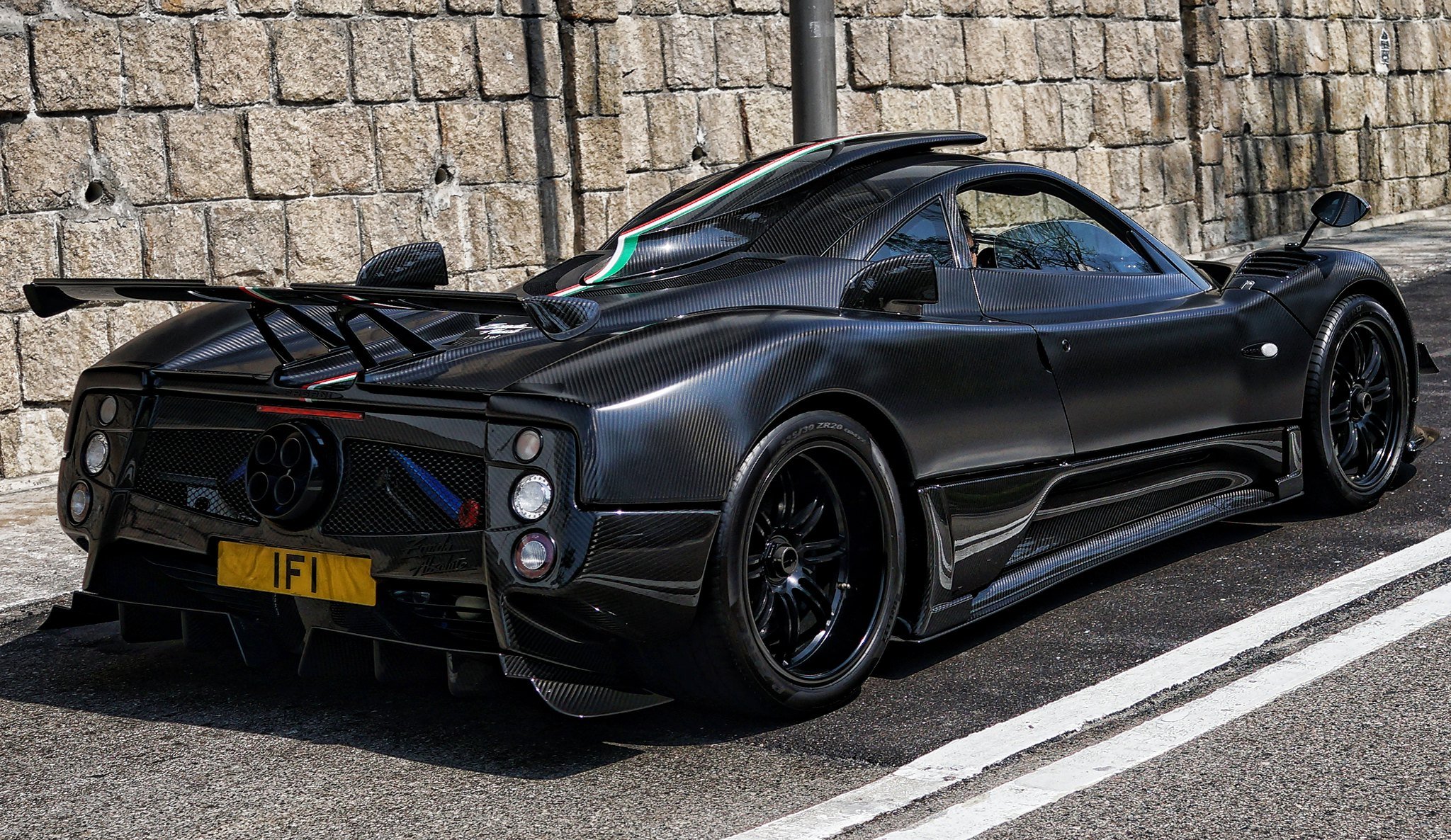
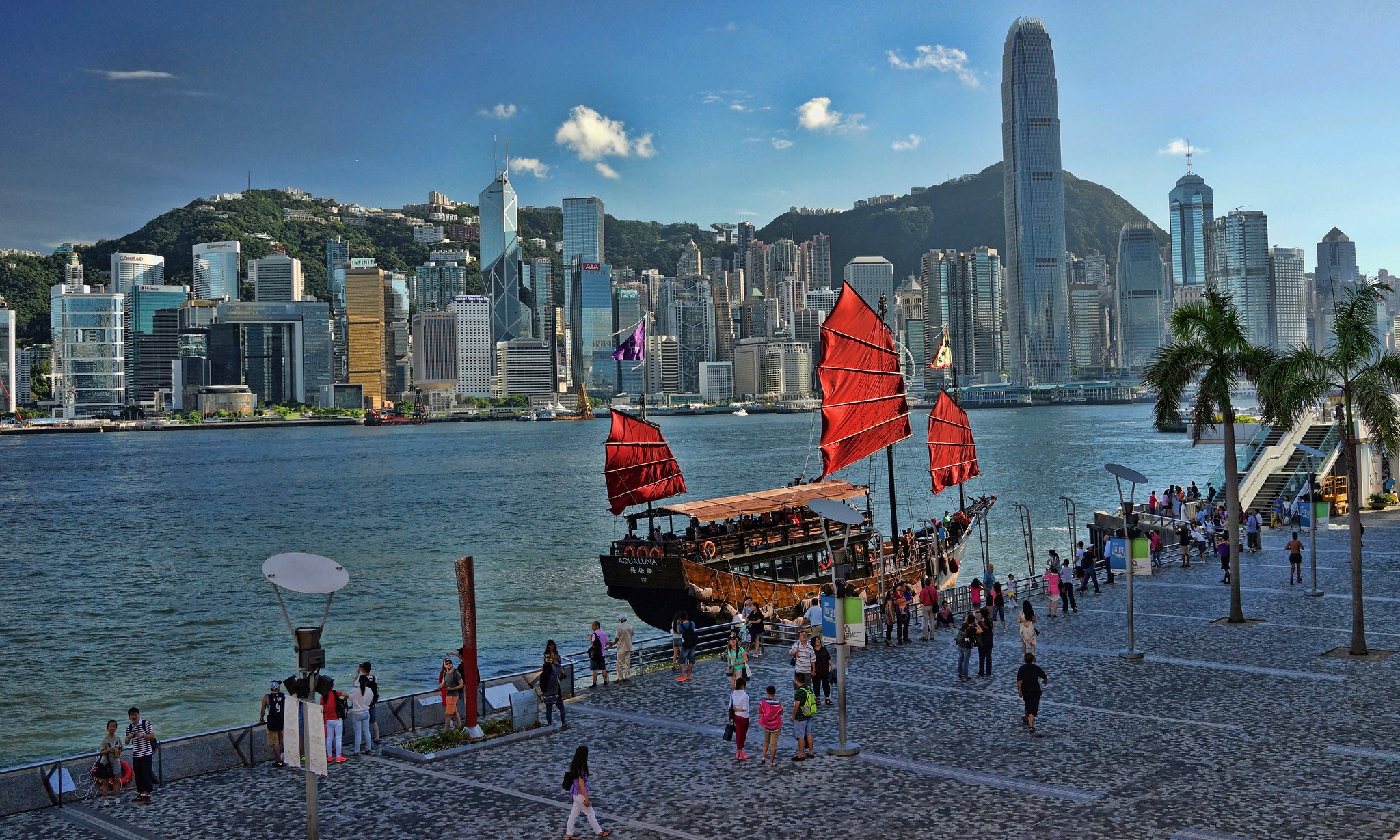
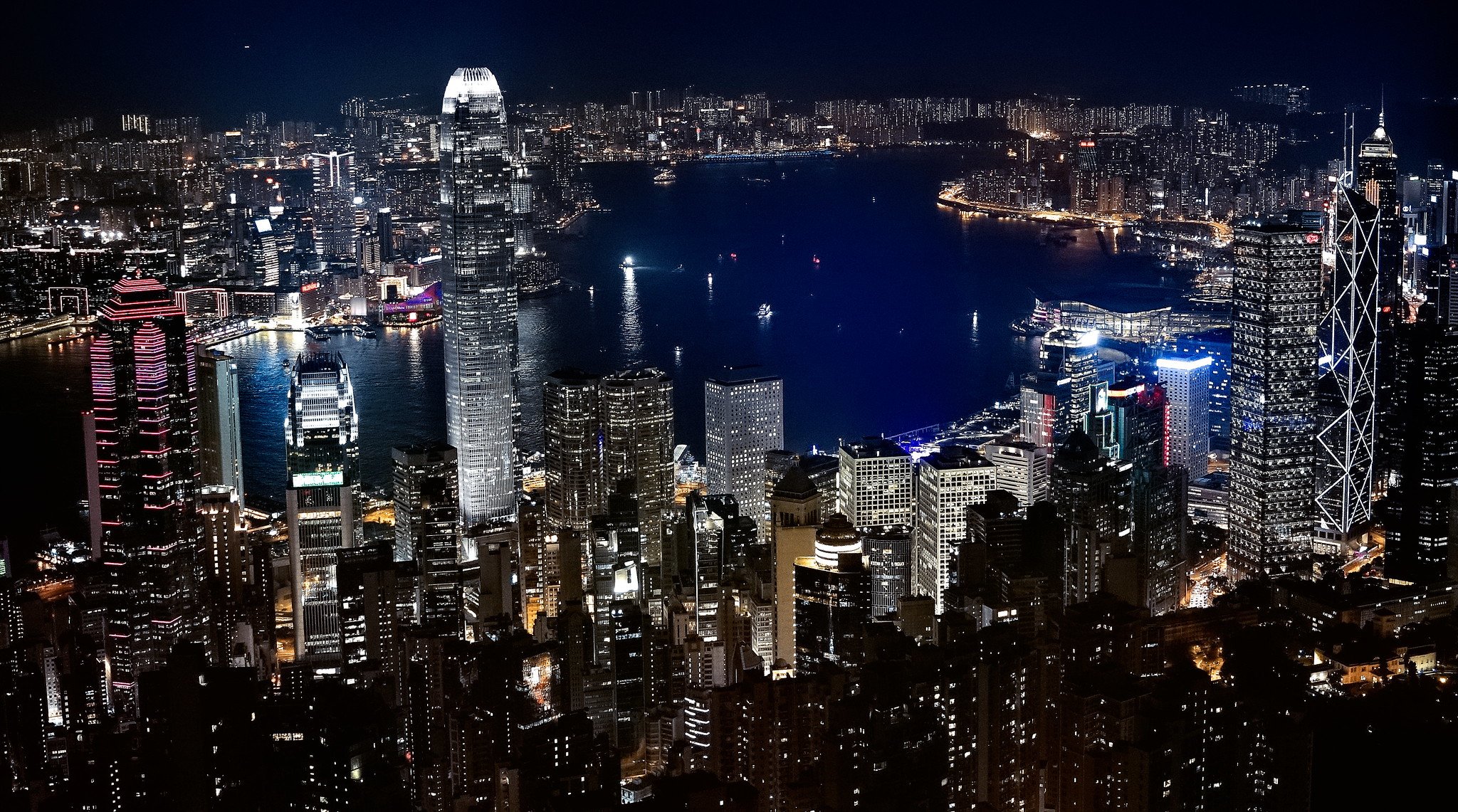
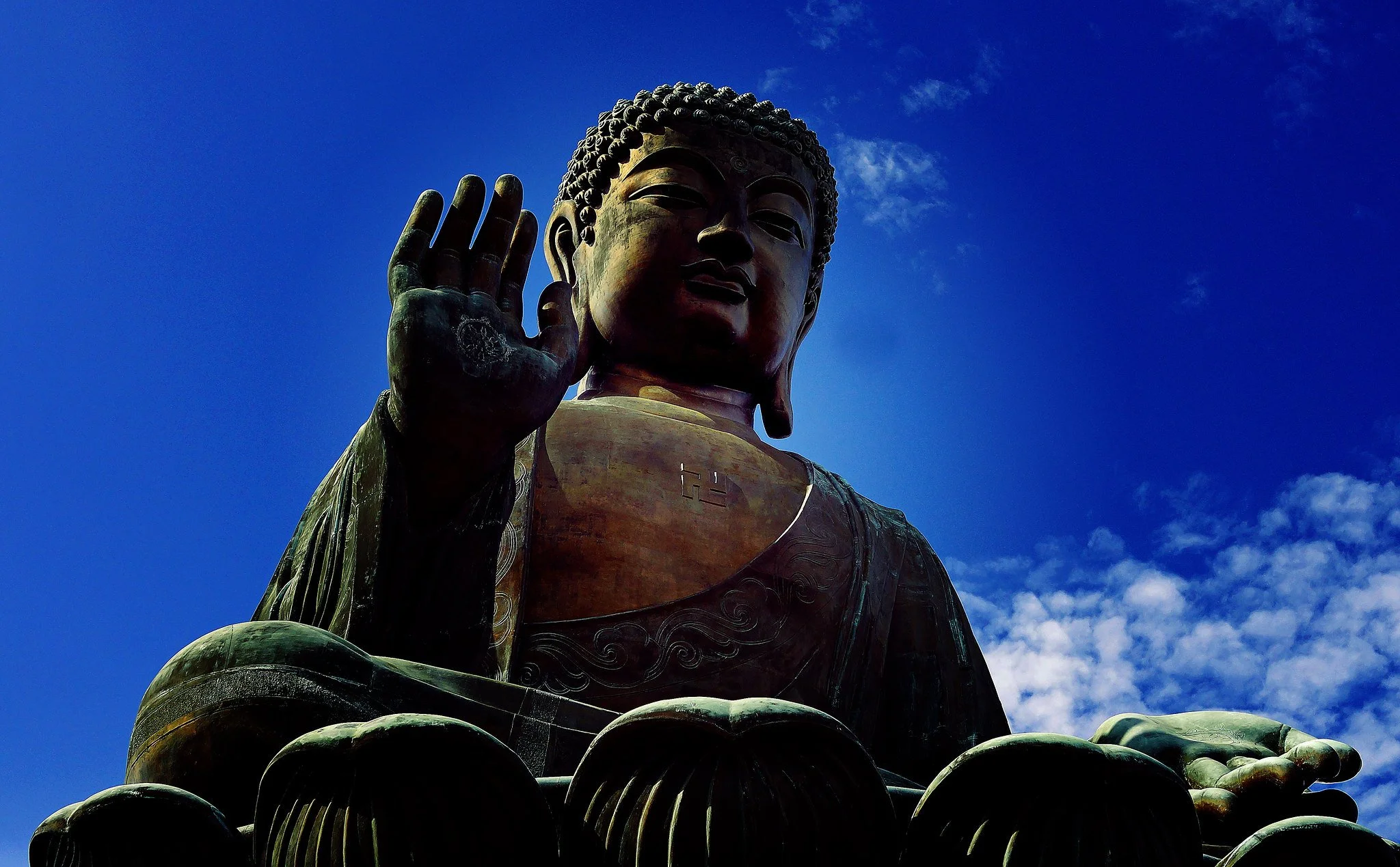
click on any image to enlarge
© Copyright Acknowledged | All rights reserved | all images taken b Jamie
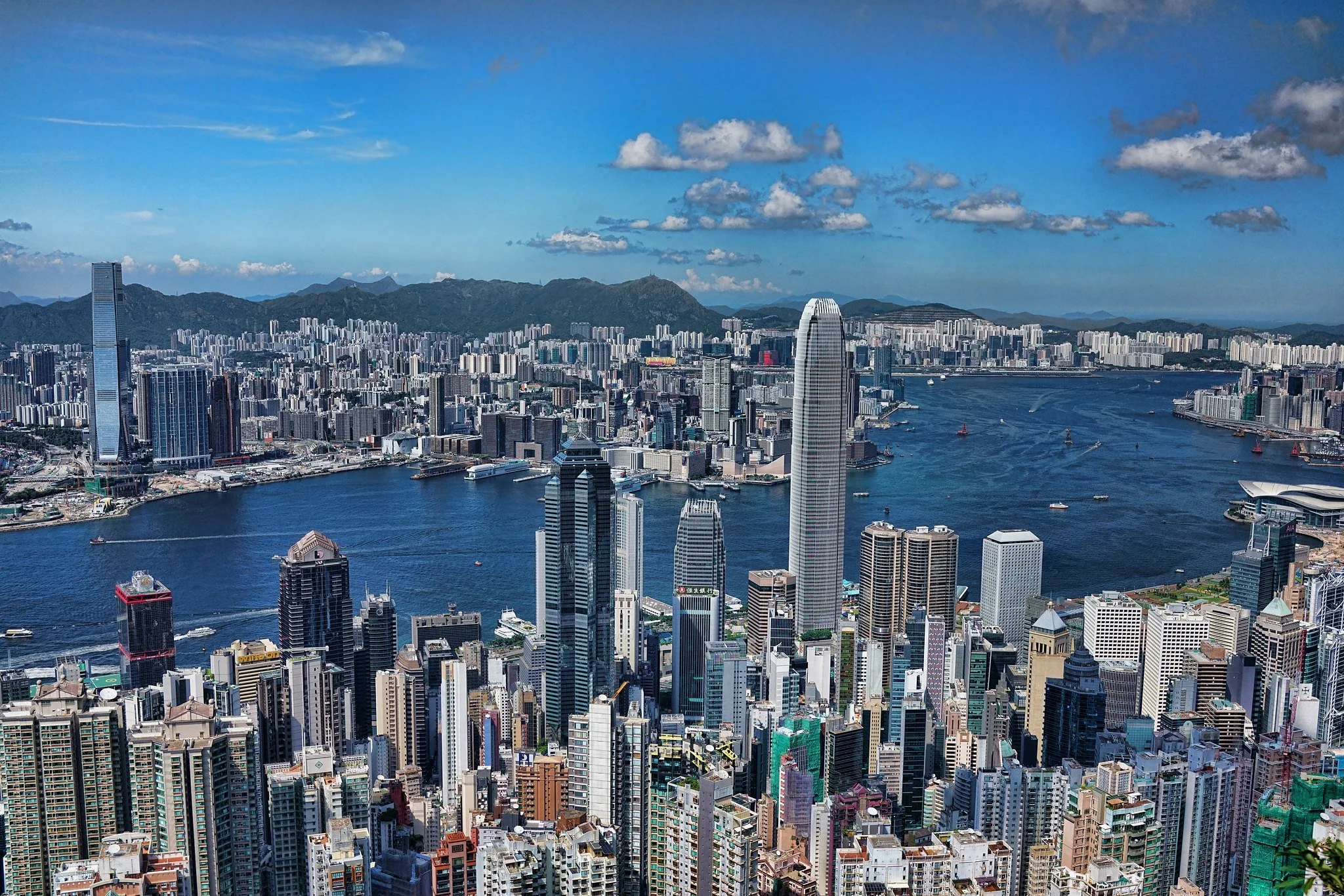
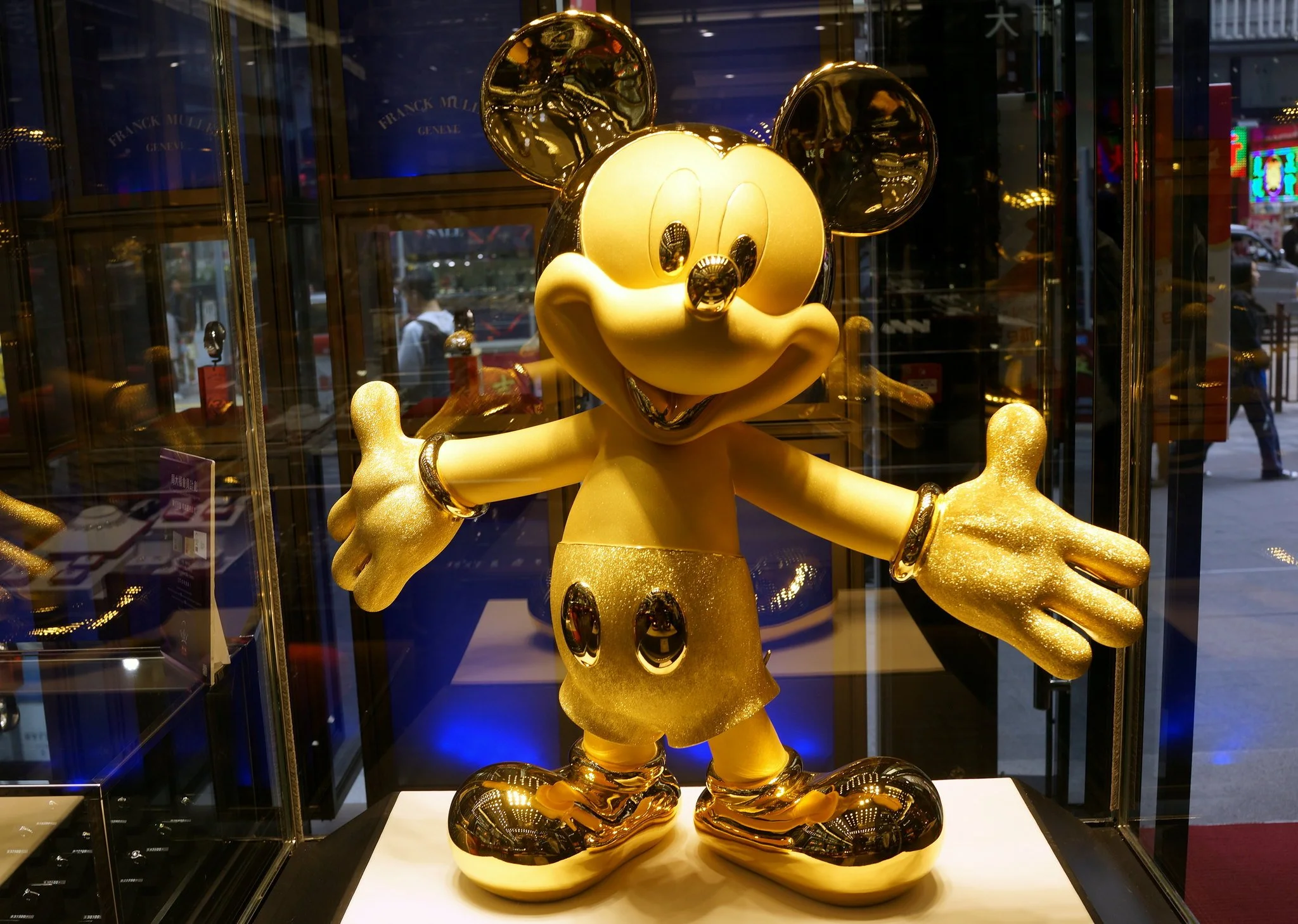
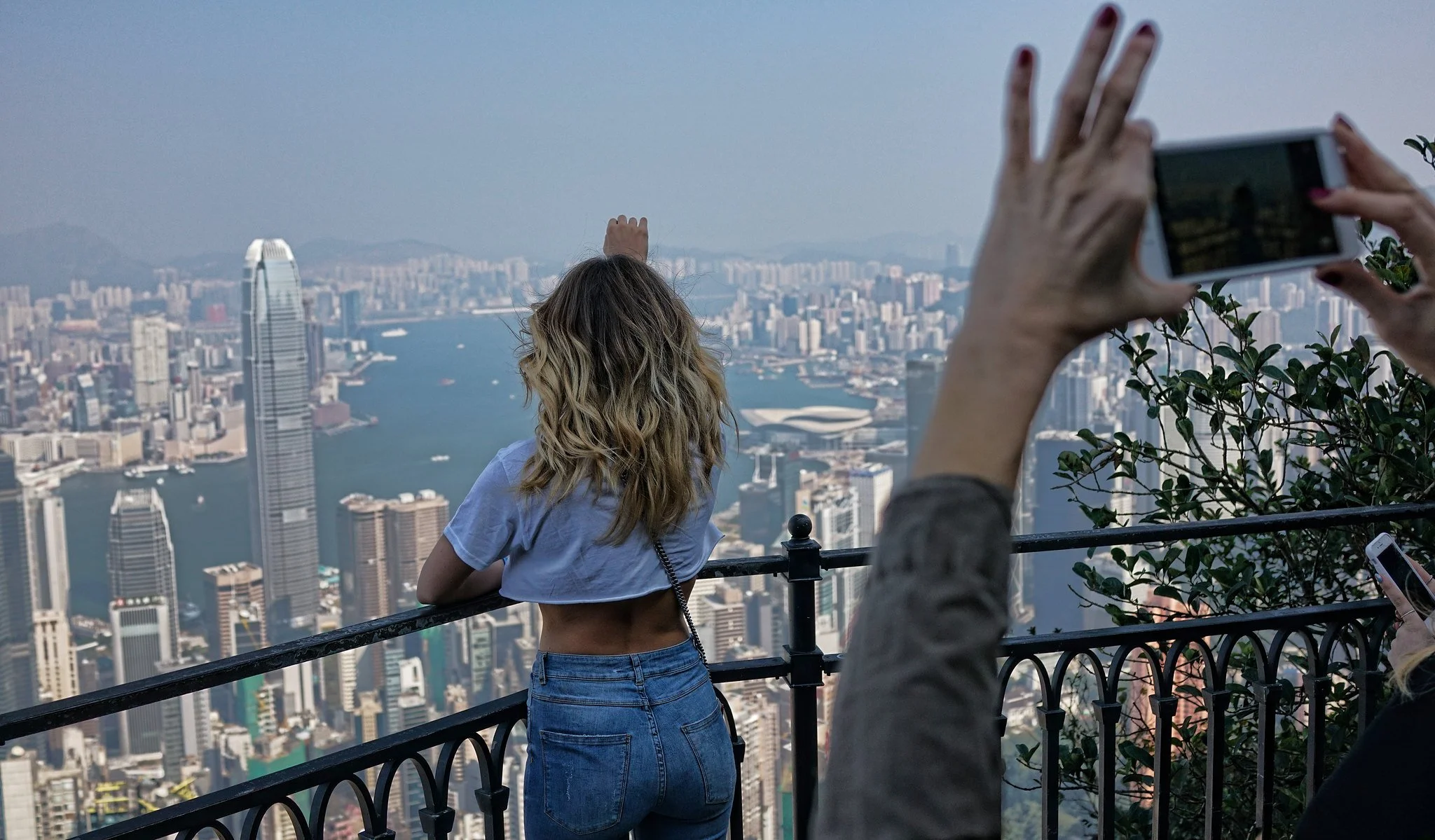
Jamie’s Hong Kong | Some of my favourite images | Hong Kong 101