Hong Kong Snakes Visitors Never Expect And Will Probably Never Encounter
14 Venomous Species, Victoria Peak Sightings and Winter Snake Soup in Hong Kong

The J3 Group - Premium Quality Private Tours | Experiences and Insider Chats since 2010
Me Jamie, your host, I am English and I have lived in Hong Kong since January 2nd 1972 - I know the place.
A meaningful blog post with a difference - tips on Travel, Tourism, Tours, Daily Life and my personal thoughts on Hong Kong.
Please do visit Amazing Hong Kong
Hong Kong | Pearl of the Orient


A Resident since 1972 - Private Tours of Hong Kong with Jamie
The Best Things to do in Hong Kong
click on the image to enlarge
© Copyright Acknowledged | All rights reserved | image taken by Jamie
Hong Kong Snakes | 14 Venomous Species | Hong Kong
Real Bite Numbers, Antivenom and Tai Mo Shan Rescue
Foreword by Jamie
If you have ever seen the movie Snakes on a Plane then you probably still have nightmares! I have always had a thing about snakes and like nothing more than a good Discovery Channel documentary particularly the series that showcase snake catchers in South Africa and Australia
…. and yes, Hong Kong has snakes how could it not, we border China and 70 - 75% of Hong Kongs land area is considered green!
Most visitors arrive in Hong Kong expecting glass towers, dim sum, and a Peak tram queue that never quite ends. What they do not expect is that this small city still shares its hills, catchwaters, village edges and country-park paths with more than 50 species of snake. I have lived here since 2nd January 1972. In 54 years I have seen them on trails, in gardens, once in a Sham Tseng drain after heavy rain, and more than once crossing a quiet New Territories road at dusk. I have also seen them at Victoria Peak itself - not in some distant country park, but at the Lugard Road Lookout, at Victoria Peak Garden, and on Findlay Path near the Lions Pavilion. That last detail matters. It tells you these animals are not confined to “the wild”. They use the same green fringe that visitors walk every afternoon for the view.
I should make it quite clear that sightings are very rare, I might see one in more urban settings once a year but trust me, they are there.
The point of writing this is not to frighten anyone off a walk. It is the opposite. Visitors leave thinking we have no wildlife left. We do. Some of it is venomous. Most of it would rather slide away than waste a drop of venom on a tourist in trainers taking a selfie. Knowing the difference, knowing where they actually turn up, knowing whether the law protects them, and knowing what happens if something goes wrong on Tai Mo Shan or the Victoria Peak paths, is more useful than another glossy brochure.
How many snakes live in Hong Kong
The Agriculture, Fisheries and Conservation Department puts the figure at about 53 species, including 6 sea snakes. Of the land snakes, 14 are venomous. Only 8 of those 14 can deliver a bite that is potentially fatal if treatment is delayed. That is the official line, and it has been consistent for years.
We do not have 20 highly venomous land snakes. Anyone who tells you we do is padding the list with mildly venomous rear fanged species and sea snakes that almost never come ashore. Honesty first.
Personally, I always take the view that any snake is potentially dangerous, I am not going to hang around getting close and trying to identify the species using Google! some of them to be fair are pretty obvious like the Cobra and the Bamboo Snake and I am pretty sure I would recognise a 14ft python and my thing is just saying pit viper makes me break out in a cold sweat!
The 14 venomous land snakes
Here they are, grouped the way a sensible person thinks about them and with their Chinese designation
Potentially lethal if not treated in time
Many-banded krait (Bungarus multicinctus), locally 銀腳帶. Black and white bands, nocturnal, eats other snakes. Neurotoxic venom. Quiet, not aggressive, but the venom is among the most potent on the list.
Banded krait (Bungarus fasciatus), 金腳帶. Broader yellow and black bands. Slower, less often encountered.
Chinese cobra (Naja atra), 飯鏟頭. The one most people mean when they say “cobra”. Hoods up, hisses, can spit. Common enough on Hong Kong Island and the New Territories.
King cobra (Ophiophagus hannah), 過山烏. The longest venomous snake in the world. Rare here now, especially on Hong Kong Island. However it is still recorded.
Tonkin pit viper (Ovophis tonkinensis). Uncommon, higher country.
Pointed-scale pit viper / Chinese habu (Protobothrops mucrosquamatus), 烙鐵頭. Painful haemotoxic bite.
Coral snake (Sinomicrurus annularis or macclellandi), 麗紋蛇. Small, brightly ringed, easily missed.
Red-necked keelback (Rhabdophis helleri), 紅脖游蛇. Rear-fanged. The bite is dangerous only if the rear fangs engage properly, but the venom can kill. Common on paths.
Venomous but rarely or never lethal to a healthy adult who reaches hospital quickly
Bamboo snake / white-lipped pit viper (Trimeresurus albolabris), 青竹蛇. Bright green, triangular head, reddish tail. Responsible for the great majority of bites. Swelling, pain, sometimes nasty local damage. Deaths in healthy adults who get treatment are now vanishingly rare.
Large-spotted cat snake (Boiga multomaculata). Mild rear-fanged venom.
Mangrove water snake, Chinese water snake, Wettstein’s mud snake, mock viper. Mild or effectively non-threatening to people.
Sea snakes are all highly venomous. They are seldom seen close to shore these days and almost never bite swimmers. (at least I am safe here as I never, ever venture into the Ocean due to my morbid fear of sharks and that is another story for another time)
The common non venomous snakes you are more likely to meet and again it raises an uncomfortable question, when it says “often mistaken for a cobra” well how the heck would a normal person even know that - I think everyone should take the view any any snake they see ( particularly if it largish) may be venomous and frankly why would you want to be bitten by a 14ft python!
These are the ones that turn up on evening walks and in village gardens.
Common rat snake / Oriental rat snake (Ptyas mucosa), 過樹榕 or 水律. Long, fast, brown, often mistaken for a cobra when it flattens its neck. Harmless, though it will bite hard if grabbed.
Indo-Chinese rat snake (Ptyas korros).
Greater green snake (Ptyas major), 翠青蛇. Bright green, slender head, round pupils. Constantly confused with the bamboo snake and killed by frightened people. It is harmless and eats worms.
Beauty rat snake, copperhead racer (三索錦蛇), various wolf snakes, keelbacks, kukri snakes, stream snakes.
Burmese python (Python bivittatus). Our largest snake. Protected. Can exceed 4 metres. Constriction and a serious bite if provoked, but not venomous. Sightings are uncommon but they still turn up across the territory.
Common blind snake. Tiny, looks like an earthworm. Lives under leaf litter and in gardens all over the place, including urban edges.
Where they live, and Victoria Peak as I have actually seen them
Snakes use woodland, shrubland, grassland, stream sides, catchwaters, abandoned fields, mangrove edges and the messy boundary between village and country park. They like cover and frogs. They do not like open tarmac and crowds. (and yet even out in the boonies they still have to cross the road like everyone else!)
Victoria Peak needs a careful sentence, because the tourist brochure and the walking path are not the same place. The paved plaza around the Peak Tower is not a snake sanctuary. Too many feet, too much light, too little cover. The vegetated slopes and the everyday walking paths around the summit are another matter.
I have seen snakes myself at the Lugard Road Lookout, at Victoria Peak Garden, and on Findlay Path near the Lions Pavilion. None of those spots is wilderness. They are the ordinary paths people walk for the view. The animals use the vegetation, the stone walls, the damp edges after rain, and the quieter hours. They are not living in the gift shop. They are living in the same green fringe that has always wrapped Victoria Peak, and they do not clock off because a tour group has arrived.
Bamboo snakes, rat snakes, the odd cobra and red-necked keelbacks have all been recorded on Hong Kong Island’s hills. Hikers on the Peak Circle Walk or the quieter paths after rain have seen them. They are not “making the Peak their home” in any special, exclusive sense. They use the same green corridors the rest of the Island’s wildlife uses.
In the New Territories and on Lantau the picture is richer. Tai Mo Shan, Pat Sin Leng, Sai Kung country parks and the wetter valleys hold more species and more individuals. After a warm wet night in May or June the trails can feel busy. Tai Mo Shan in particular is mature, dense hillside - the sort of cover snakes actually want.
Snake bites in Hong Kong - the real numbers
Older figures from the 1990s spoke of more than 300 bites a year when more people still worked the fields. That world has gone.
A 10-year review of hospital data from 2012 to 2021 recorded 592 cases, about 59 a year. Other recent tallies sit between 50 and 70 a year. The bamboo snake accounts for roughly 72% to 90% of identified venomous bites, depending on the study. Chinese cobra and many-banded krait come next, in small numbers.
Where the bites happen is worth a look, because it punctures the idea that this is only a remote-hill problem:
Rural neighbourhoods and village house edges: about 33%
Country parks and hiking tracks: about 16%
The rest includes waterfronts, urban residential patches, and the odd thoroughly unexpected indoor spot
Across the 18 districts, the Islands District, Sai Kung and Tai Po have tended to report more cases. Most patients in that hospital series reached an accident and emergency department at a median of about 1 hour after the bite. That speed is one reason Hong Kong’s death rate is now so low.
Fatalities:
Historical notes include a many-banded krait death in 1933 and a handful of deaths in the mid-1980s (bamboo snake, Chinese cobra, and one imported Russell’s viper at a snake restaurant).
The last widely cited death linked to an imported restaurant snake was in the late 1980s.
The 2012 - 2021 hospital series recorded zero fatalities.
You are statistically more likely to be struck by lightning than to die of a snake bite in modern Hong Kong.
Most bites happen when someone steps on a snake that is sitting still, reaches into cover, or tries to catch or kill the animal. Snakes do not hunt people but they do in Hollywood movies!
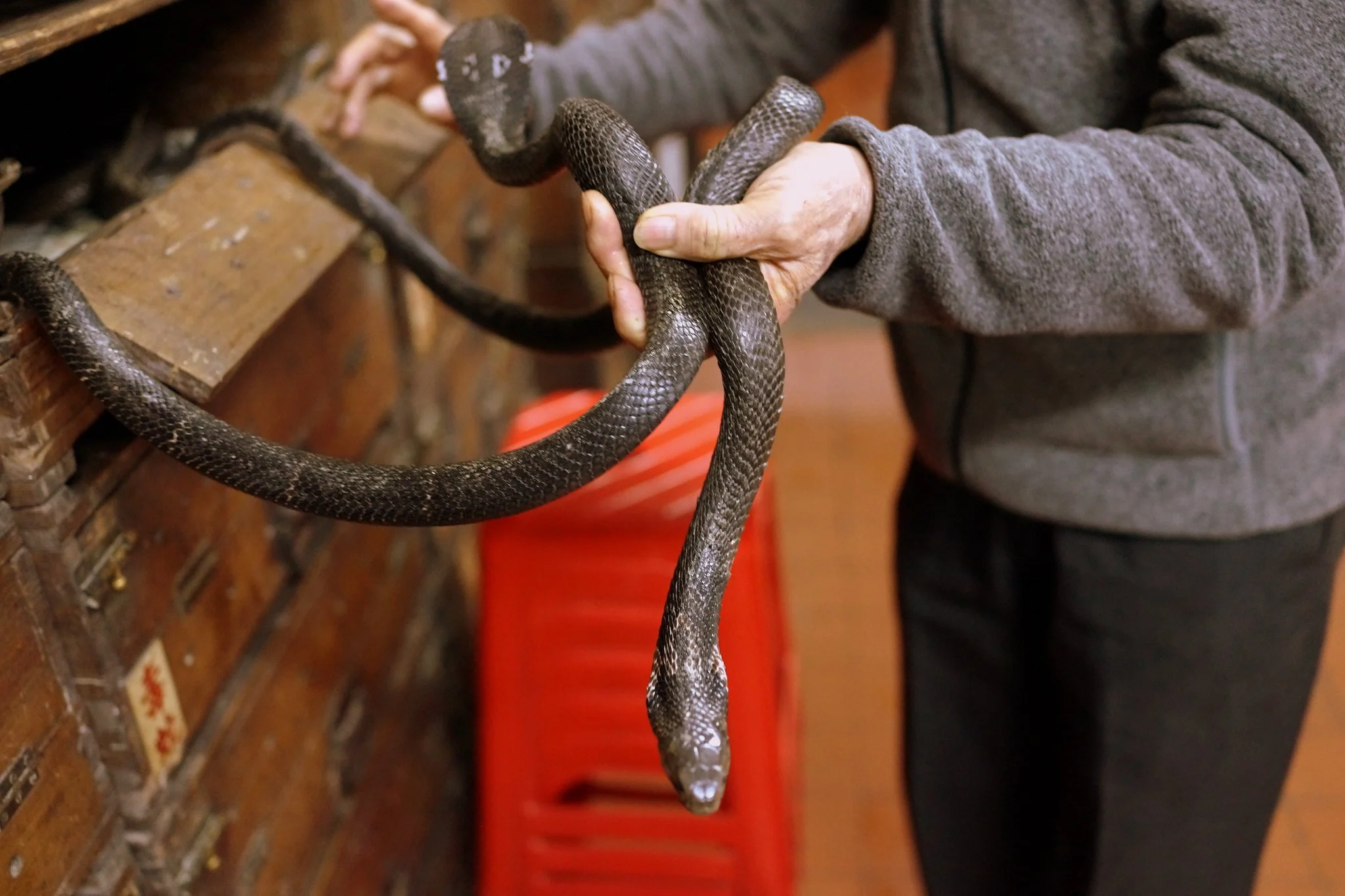
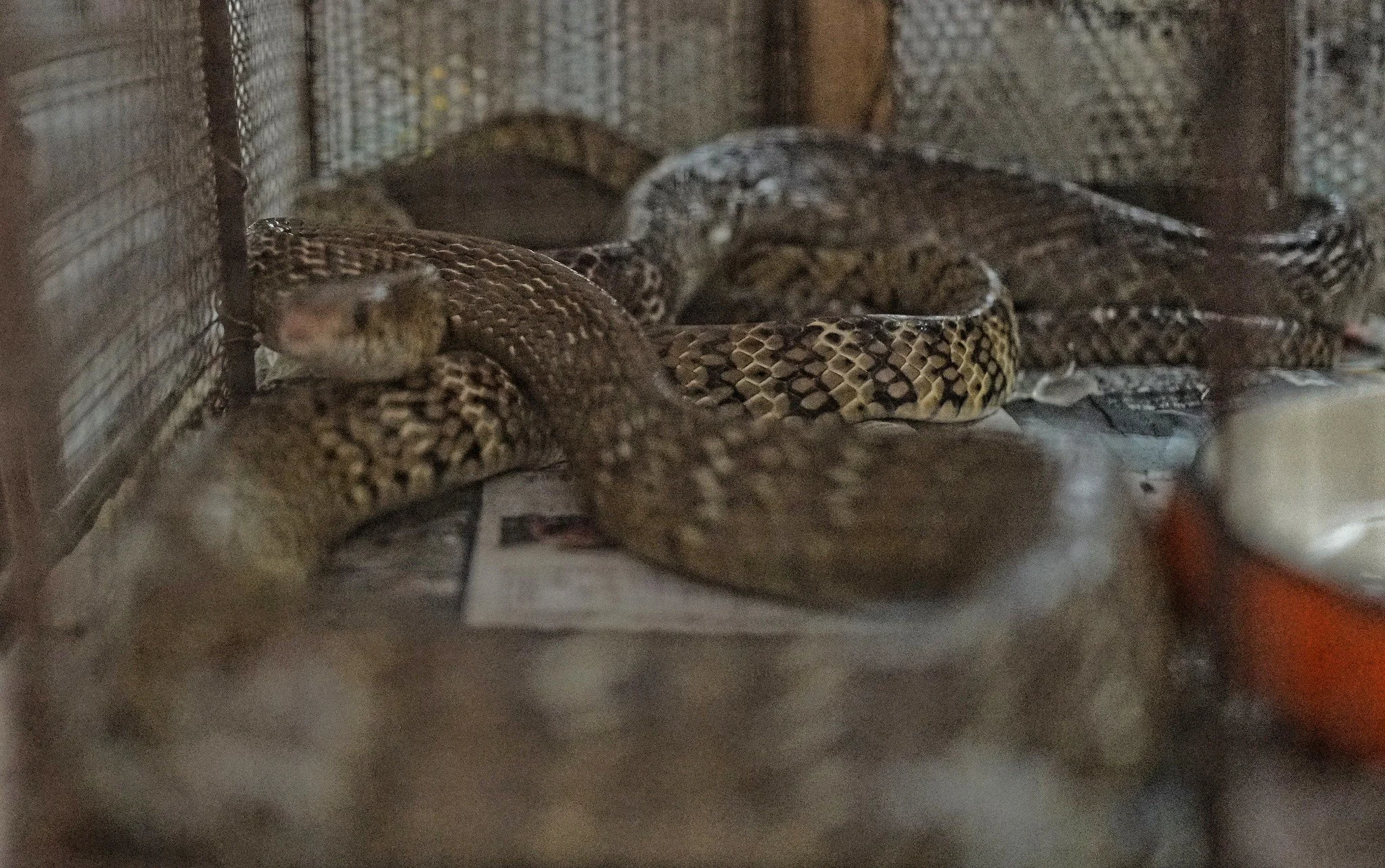
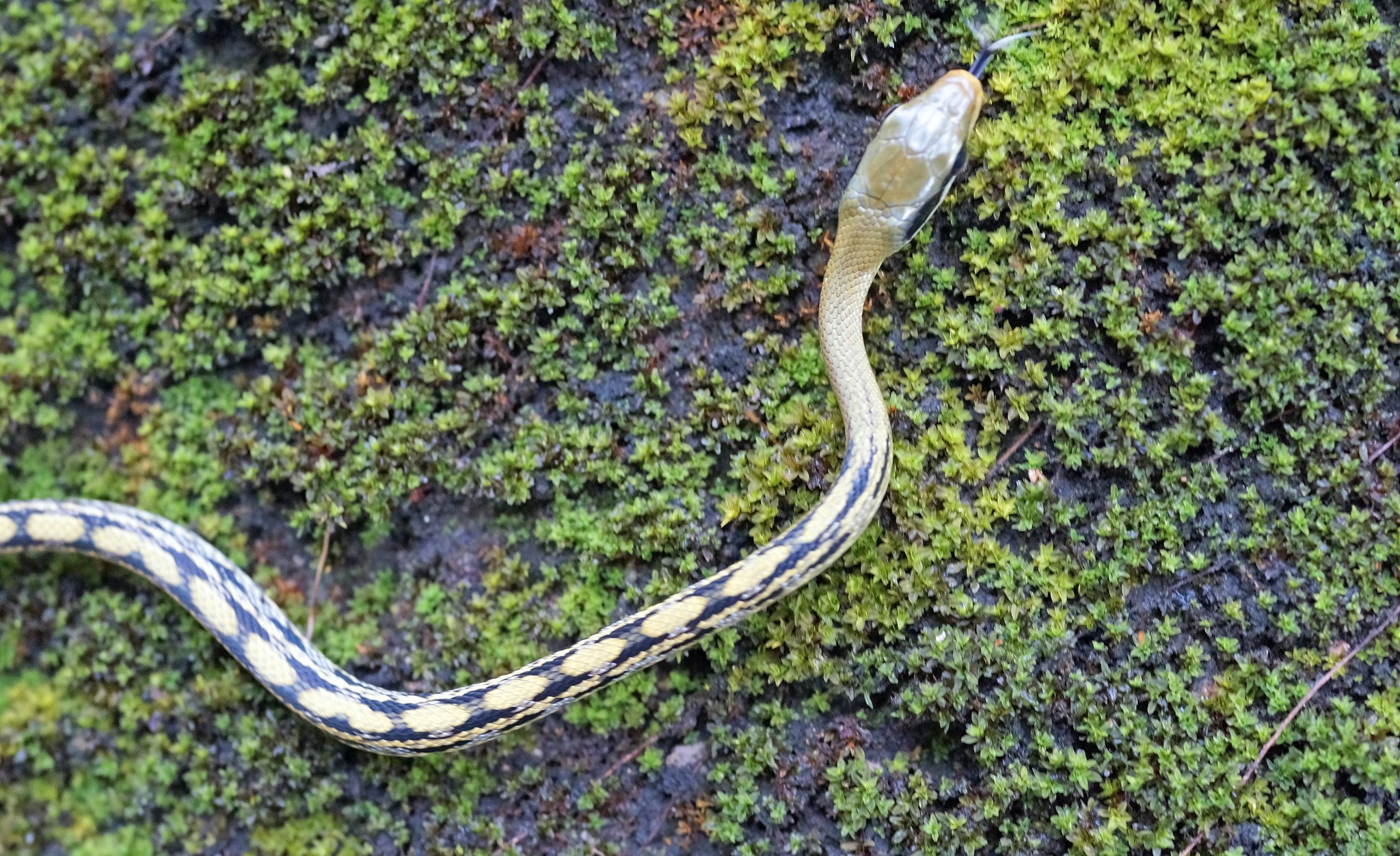
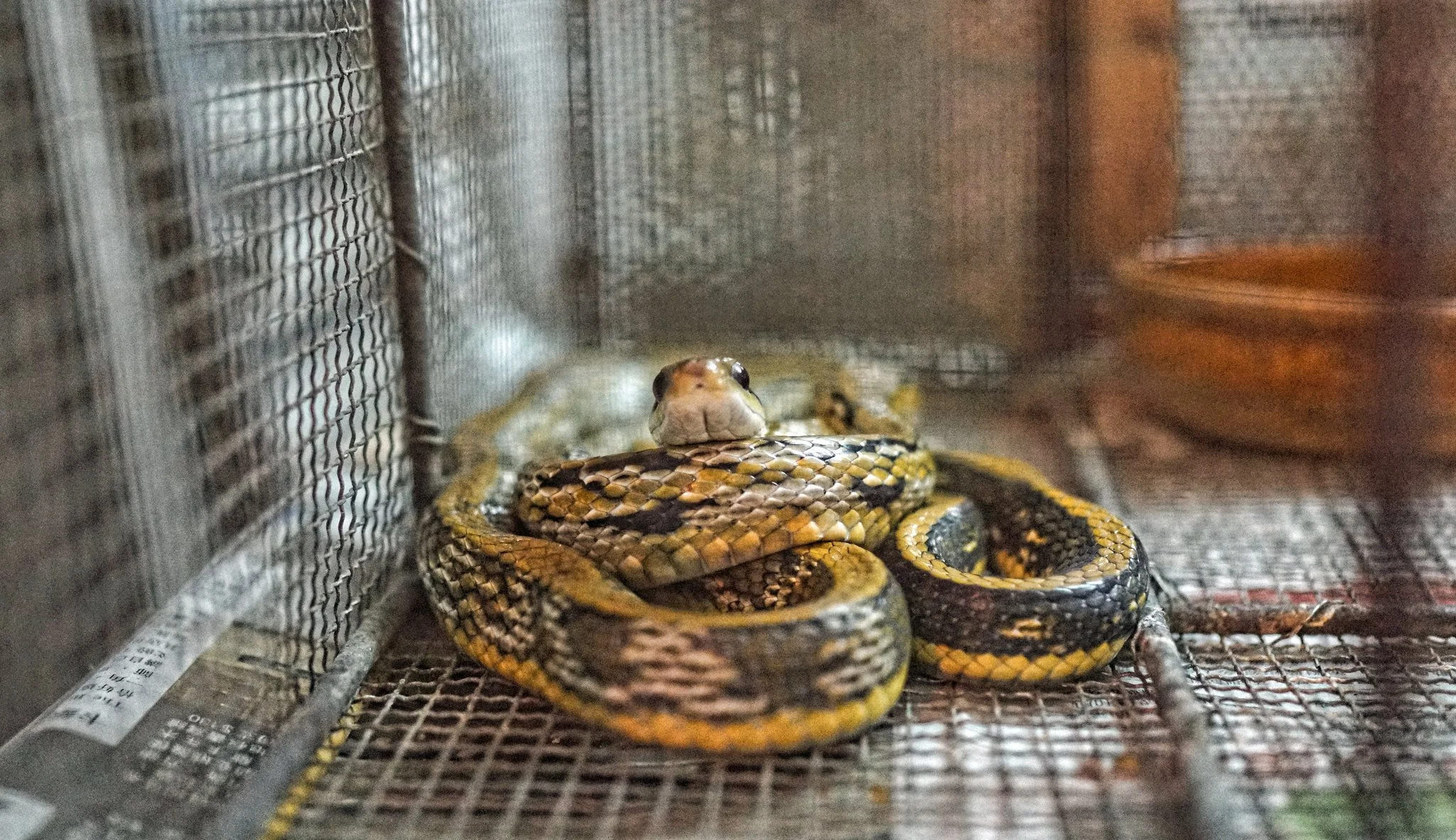
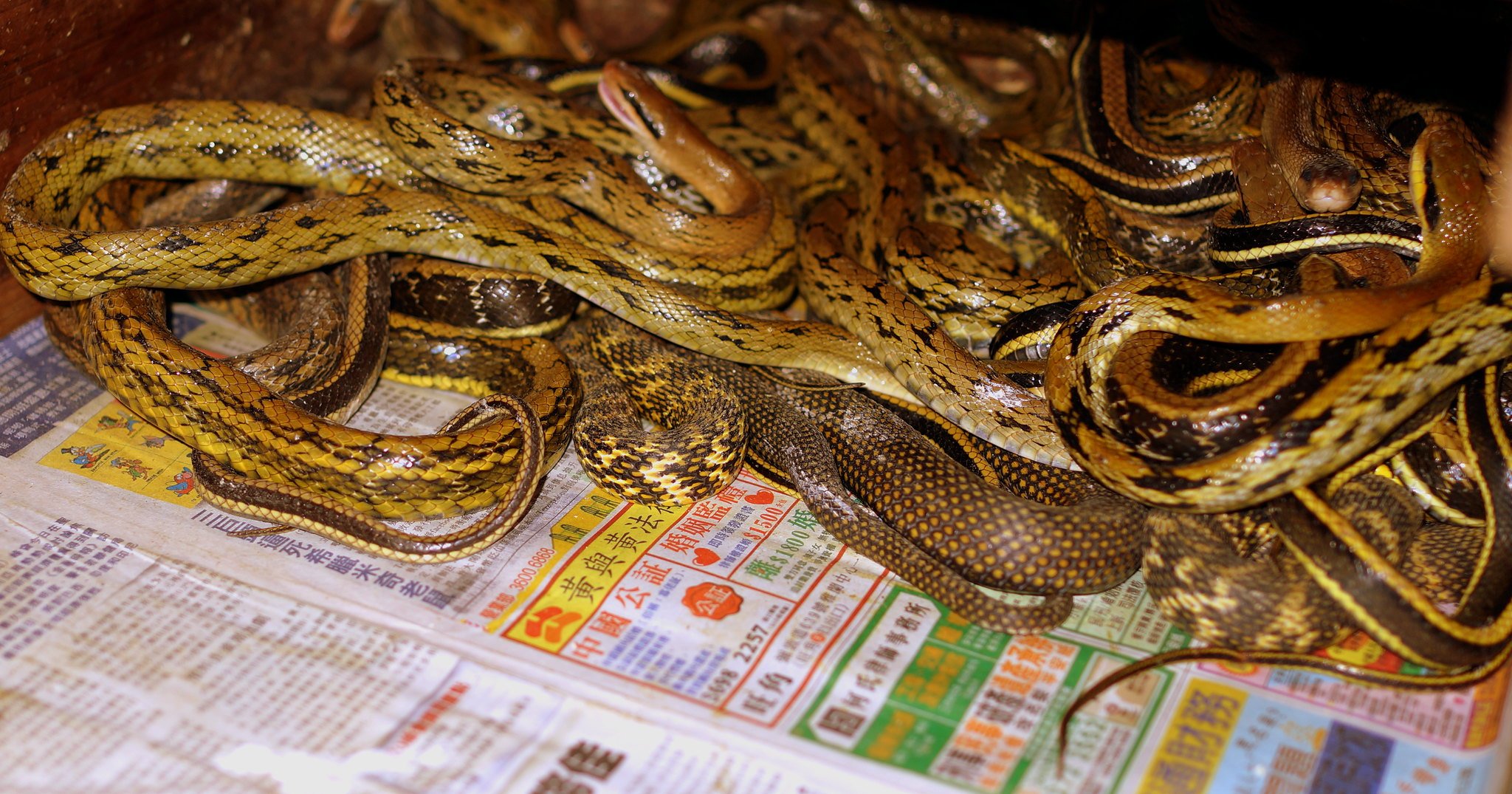
click on any image to enlarge
© Copyright Acknowledged | All rights reserved | images taken by Jamie
Hong Kong Snakes | 14 Venomous Species | Hong Kong
Do government hospitals keep antivenom
Yes. The Hospital Authority maintains a networked stock of antivenoms across acute hospitals. The list includes specific and polyvalent products for:
Green pit viper / bamboo snake
Chinese cobra
Many-banded krait
Banded krait
King cobra (held at a higher tier)
Certain pit vipers
Russell’s viper (for the rare imported-snake case)
Sea snake antivenom is also on the broader antidote list
They do not stock a unique vial for every obscure rear-fanged species because those bites almost never require it. The system is designed around the snakes that actually put people in A&E. Call 999, get to an acute hospital, tell them what you saw if you can. That is the protocol.
Which is the deadliest
If “deadliest” means raw venom potency and the risk of respiratory failure, the many-banded krait sits at the top of the local list. Its neurotoxin is extraordinarily efficient. Untreated mortality in older records was high.
If “deadliest” means the snake most capable of delivering a large, life-ending dose because of size and attitude, the king cobra wins on paper. It is rare here.
If “deadliest in practice” means the one that has historically caused serious trouble when people delayed treatment, both the krait and the Chinese cobra have that record. The bamboo snake causes the most misery and the most hospital beds, but it is not the killer.
My own view and apologies for repeating myself, after years of walking the same hills: treat every unidentified snake as if it could be a krait or a cobra, give it room, and do not become a statistic by trying to be a hero.
Are snakes protected wildlife in Hong Kong?
This is the question people ask the moment they hear that snake soup is still a winter dish in Hong Kong. The assumption is usually: if you can eat it, it cannot be protected. That is only half right, and the half that is wrong is the interesting bit.
Under the Wild Animals Protection Ordinance (Cap. 170), Hong Kong does not protect “snakes” as a group. The law protects named animals on Schedule 2. For reptiles that list is short and blunt:
every turtle, terrapin and tortoise
the water monitor
the Burmese python
That is the only wild snake on the local protected list. Government answers in the Legislative Council have said the same thing in so many words: the Burmese python is the only wild snake species listed as protected here. Hunt it, wilfully disturb it, keep it or sell it without a permit and you are looking at a maximum fine of HK$100,000 and 1 year in prison.
So a bamboo snake on Findlay Path, a rat snake in a Sham Tseng drain, a Chinese cobra in the New Territories and a many-banded krait on Tai Mo Shan are not Cap. 170 protected animals in the way a python, a barking deer or every wild bird is. That is why the soup shops can exist without the Agriculture, Fisheries and Conservation Department kicking the door in every November.
That is not the same as “snakes have no protection at all”.
Three other layers sit on top of that thin list.
First, the soup in Sham Shui Po is not, as a rule, last night’s Victoria Peak snake. Shop owners and later DNA work have pointed the same way for years: the animals in the drawers and the meat in the pot are mostly imported, historically from Mainland China, more recently from Indonesia and other parts of Southeast Asia, with some mainland supply still in the mix. Hong Kong has been a large importer of live snakes, including venomous ones. A University of Hong Kong study of the trade found few genetic matches with local wild snakes. Only one shop in that work treated Hong Kong itself as a regular source, and the trade people said catching here was not the lawful route. In other words, the winter bowl is a licensed food trade, not an open season on Lugard Road.
Second, some of the species that end up in soup or in the pet trade are separately controlled under the Protection of Endangered Species of Animals and Plants Ordinance (Cap. 586), which is Hong Kong’s CITES law. King cobra and certain other cobras sit in that world. Import, export and commercial possession of listed species need the proper paper. A licensed live-snake shop is not a free-for all. The Food and Environmental Hygiene Department has for years kept a short list of premises allowed to sell live snakes. Venomous species on those premises come with extra conditions, including the rather sober requirement that suitable antivenom be available on site or at the nearest government casualty hospital.
I have been to quite a few of these snake shops, which is why I have images and yes, I have gotten far to close to cobras and bamboo snakes but I am totally fascinated by these places, the premises are not for the faint hearted particularly in what I call the “despatching room” where the snakes meet their maker.
Third, “not on Schedule 2” does not mean you may wander Tai Mo Shan with a sack. Country parks have their own rules. Police and AFCD still treat a wild snake in a house or on a path as an animal to be moved, not harvested. Caught snakes go to Kadoorie Farm and Botanic Garden for checking and release, not into a stock pot. Killing a python is a clear offence. Beating a cobra to death because you are frightened is ugly and often unnecessary, even if that particular species is not named on Schedule 2. The official line remains: do not catch it. Call 999.
The law is narrower than people assume. The manners should be wider. Protection on paper is one thing. Not turning a living hillside into a larder is another. The animals you see at the Lugard Road Lookout, Victoria Peak Garden and Findlay Path are still wild Hong Kong. Leave them there. The bowl in Sham Shui Po came in through the cargo gate, not up the Peak tram.
Eating snakes in Hong Kong - winter, soup, and the old shops
Snake as food is a southern Chinese, especially Cantonese, winter custom that is far older than modern Hong Kong. The saying is “秋風起,三蛇肥” - when the autumn wind rises, three snakes grow fat. The animals feed heavily before the cooler months, and traditional thinking classifies snake meat as strongly yang, a warming food to balance the yin of winter. It was also sold as a remedy for rheumatism, poor circulation, coughs and general “weakness”. Whether the medicine works is a separate argument. The custom is real and still visible.
The classic high version is 太史五蛇羹, five snake soup associated with the late-Qing gourmet Jiang Kongyin. Typical snakes in the mix have been Chinese cobra, banded krait, rat snakes and others. The meat is boned and shredded into fine threads so the texture stays, then simmered with chicken, pork bones or Jinhua ham, ginger, dried tangerine peel, mushrooms, wood ear fungus, bamboo shoot, sometimes fish maw or abalone. The broth is thickened. It is served steaming with shredded lemon leaves and thin fried wonton crisps. Taste: most people say chicken with a faint earthy or fishy note. Price for a bowl in a specialist shop is commonly in the HK$70 to HK$150 range (roughly US$9 to US$19), more for banquet versions.
Yes, I have eaten snake soup, yes it tastes like Chicken but it is to bony for me and frankly I did not like it all.
Gall bladder in rice wine, snake blood, and various “tonics” sit in the same tradition. I will not pretend I queue for them every November, but I understand why older Hong Kong people still do.
Five long-standing places associated with snake soup (names and addresses as they have been publicly listed - always telephone first, as these family trades change):
Shia Wong Hip (蛇王協), G/F, 170 Apliu Street, Sham Shui Po. Family business from the 1960s, now run by the founder’s daughter. Wooden drawers of live snakes, soup simmered overnight.
Ser Wong Fun (蛇王芬), G/F, 30 Cochrane Street, Central. One of the oldest names, more than a century in the trade, often mentioned for 太史五蛇羹.
She Wong Lam (蛇王林), 13 Hillier Street, Sheung Wan. Historic Sheung Wan shop, generations of the same trade. Opening status has fluctuated with retirement of elderly handlers - check before you go.
She Wong Yee, 34 Percival Street, Causeway Bay. Another specialist winter name.
Additional long-running spots have operated on Apliu Street’s neighbours, in Yau Ma Tei / Shanghai Street, and in Tsuen Wan. The cluster has always been Sham Shui Po and the older streets of Sheung Wan and Central.
These are not tourist theme parks. They are small, practical, sometimes slightly confronting kitchens that still do what they have done since the 1960s and earlier.
Yes, many food tour operators will gladly take you to a place that has snake soup on the menu.
Other stories from the hills
Police still take thousands of “snake in the house / snake on the path” calls in a busy three-year stretch. Most end with an AFCD or police catcher moving the animal on. A few end with a dead snake that did not need to die.
Feng shui treats the snake as one of the 12 animals and, in some contexts, as a guardian. At the same time, many village households still put down sulphur powder and hope. Both attitudes live side by side.
The python is protected. Killing one can bring a fine and, in theory, a year inside. That fact alone tells you how the official mind has shifted from “pest” to “wildlife” - at least for the one snake large enough and scarce enough to make the Schedule.
People treat Victoria Peak as “town” and Tai Mo Shan as “the wild”. The snakes do not. The same green corridors, the same frogs, the same damp walls after rain. The difference is only how fast a stretcher or a helicopter can reach you when something goes wrong.
If you are bitten in a remote place - including Tai Mo Shan
What actually happens is rarely cinematic. You feel the puncture. With a bamboo snake the pain and swelling start quickly. With a krait you may feel little at first - that is the dangerous part.
You do not cut the wound, suck it, or put a tight tourniquet on. You stay as still as you can, immobilise the limb, keep it quiet, and you get to a phone. 999. Give a clear location - trail name, nearest distance post, landmark, GPS pin if the phone will give you one. The HKSOS app is built for exactly this. If you have a clear photo of the snake from a safe distance, that helps the hospital choose antivenom. Do not waste time hunting the animal.
If you have no signal you walk out steadily, not at a run. Running spreads venom faster.
I always love these “official” what to do if bitten by a snake lists, your average person may well not be in a calm and rational state of mind after a snake bite, the advice is sound though.
Will they send a helicopter from Tai Mo Shan?
Sometimes yes. Not automatically, and not because the word “snake” appears in the call. They send a Government Flying Service helicopter when the casualty cannot be reached quickly by road ambulance or walked out by Fire Services mountain rescue.
Hong Kong does use air evacuation for snakebite. In the 2012 to 2021 hospital series, Government Flying Service or Marine Police retrieval was needed in 14.5% of snakebite cases, mostly from rural ground and the outlying islands. That is not a rare curiosity. It is part of the system.
A recent, very specific example: on 27th August 2025 a man hiking in Lam Tsuen Country Park, at Kai Kung Leng near Lung Tam Shan, was bitten on the left foot. Police and rescue crews went in on the ground. The Government Flying Service also sent a helicopter, lifted him, and flew him conscious to Pamela Youde Nethersole Eastern Hospital. That is the same pattern used across the New Territories hills.
Tai Mo Shan is mixed ground, which is why the answer cannot be a simple yes.
The Tai Mo Shan Road up to the weather station is a proper vehicular road. If you are on or very near that road, an ambulance may reach you.
The MacLehose Trail Stage 8, the streams, the dense slopes off the path, the ridges in cloud, and any spot with no vehicle access are another matter. Those are classic GFS country-park jobs.
Fire Services mountain rescue, Civil Aid Service and police often start on foot while the flying service is being considered. The decision is practical: how long to a hospital with antivenom, how stable is the patient, can a stretcher be carried to a landing or winch point, and what is the weather doing.
GFS runs a 24 hour casualty evacuation service. Their published target is about 20 minutes to scene for the island zone and about 30 minutes for the rest of the territory. Tai Mo Shan sits in that second group. In practice they often fly the casualty to the helipad at Pamela Youde Nethersole Eastern Hospital in Chai Wan, or to GFS headquarters and then by ambulance. That hospital is used again and again for hill casualties, not because it is the closest as the crow flies, but because it has the pad and the emergency set-up.
Weather is the catch on Tai Mo Shan. The summit spends a lot of its life in cloud, wind and poor visibility. A helicopter that can winch on a clear afternoon may not be able to work in thick mist. That is when the ground teams matter even more.
If the operator or the flying service later asks you to share a live location on WhatsApp, do it. That is now a normal part of their hill work.
So the short, truthful line is this: if you are bitten on Tai Mo Shan they will not promise a helicopter before they know where you are. If you are on the road, you may leave by ambulance. If you are off the road on the high ground, a Government Flying Service helicopter is a real and regularly used option, and it has already been used for snakebite on neighbouring country-park slopes. The aim is the same either way - get you to an acute hospital that stocks the right antivenom, not to stage a film rescue.
The city is small. The hospitals are great. The people who die are almost always the ones who delayed, or who were handling an animal they should have left alone.
A few thoughts from someone who has walked these hills for decades
Snakes are not a reason to stay on the Peak tram and eat overpriced egg tarts. They are a reason to watch where you put your hands and feet after dusk, wear decent shoes on vegetated paths, and leave the animal alone when you see it. The greater green snake will not hurt you. The bamboo snake will make you miserable for a few days. The krait can kill you if you are unlucky and slow. Knowing which is which is adult behaviour.
I have never been bitten. I have stood still and let more than one snake choose the other direction. That is the usual ending. The unusual ending is a hospital bed and a good story. Prefer the usual ending.
The visitors who are shocked that Hong Kong has cobras are the same visitors who are shocked that we have wild boar, porcupines and barking deer. The city is dense. The country parks are still country. Both facts can be true at once. And if you needed one last reminder that Victoria Peak is not a concrete island, remember Lugard Road Lookout, Victoria Peak Garden and Findlay Path. The view is famous. The undergrowth still belongs to someone else.
So there you go


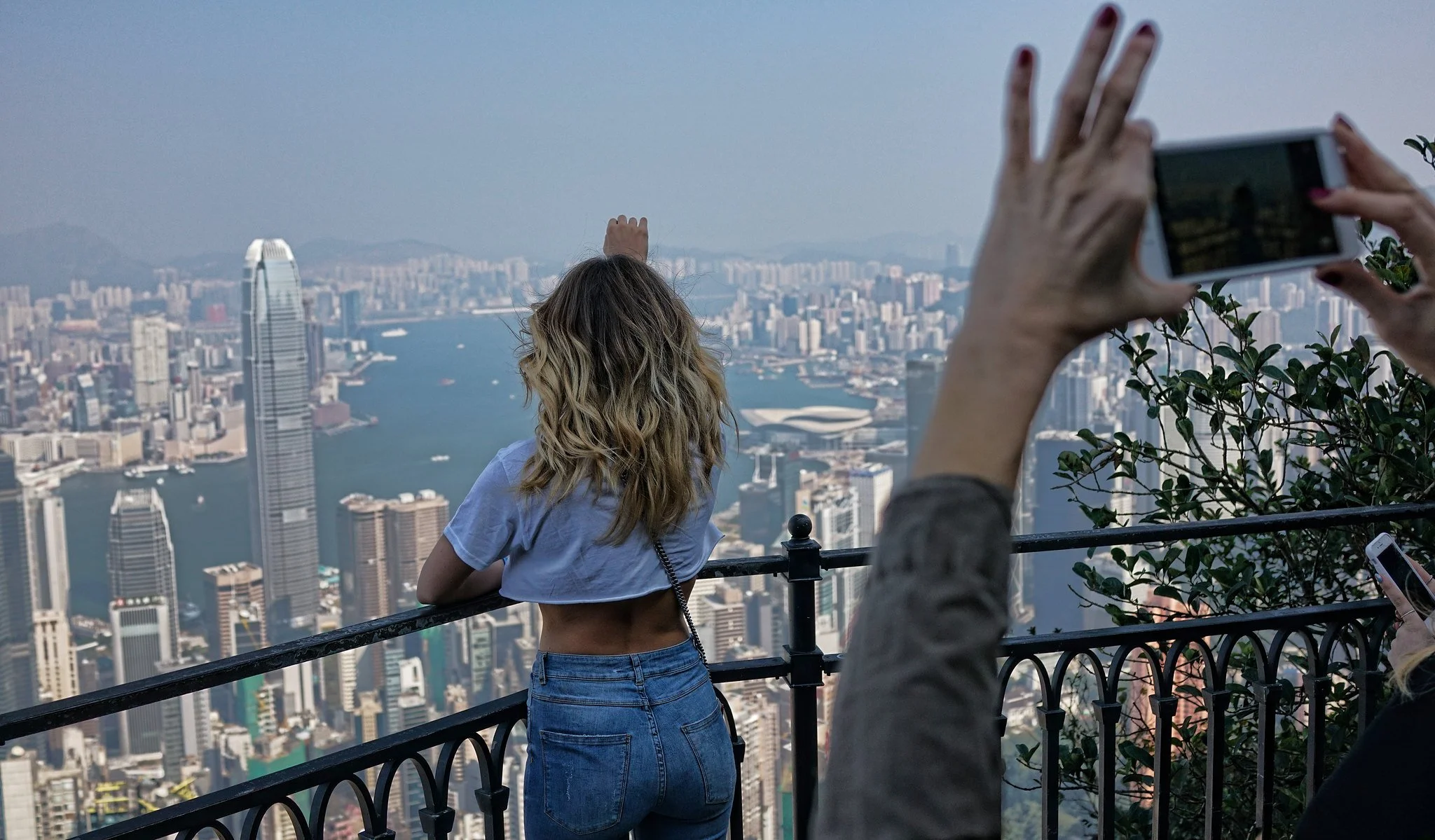


click on any image to enlarge
© Copyright Acknowledged | All rights reserved | images taken by Jamie