Wong Tai Sin to the Big Buddha: How Temple Tourism in Hong Kong Has Changed
The J3 Group - Premium Quality Private Tours | Experiences and Insider Chats since 2010
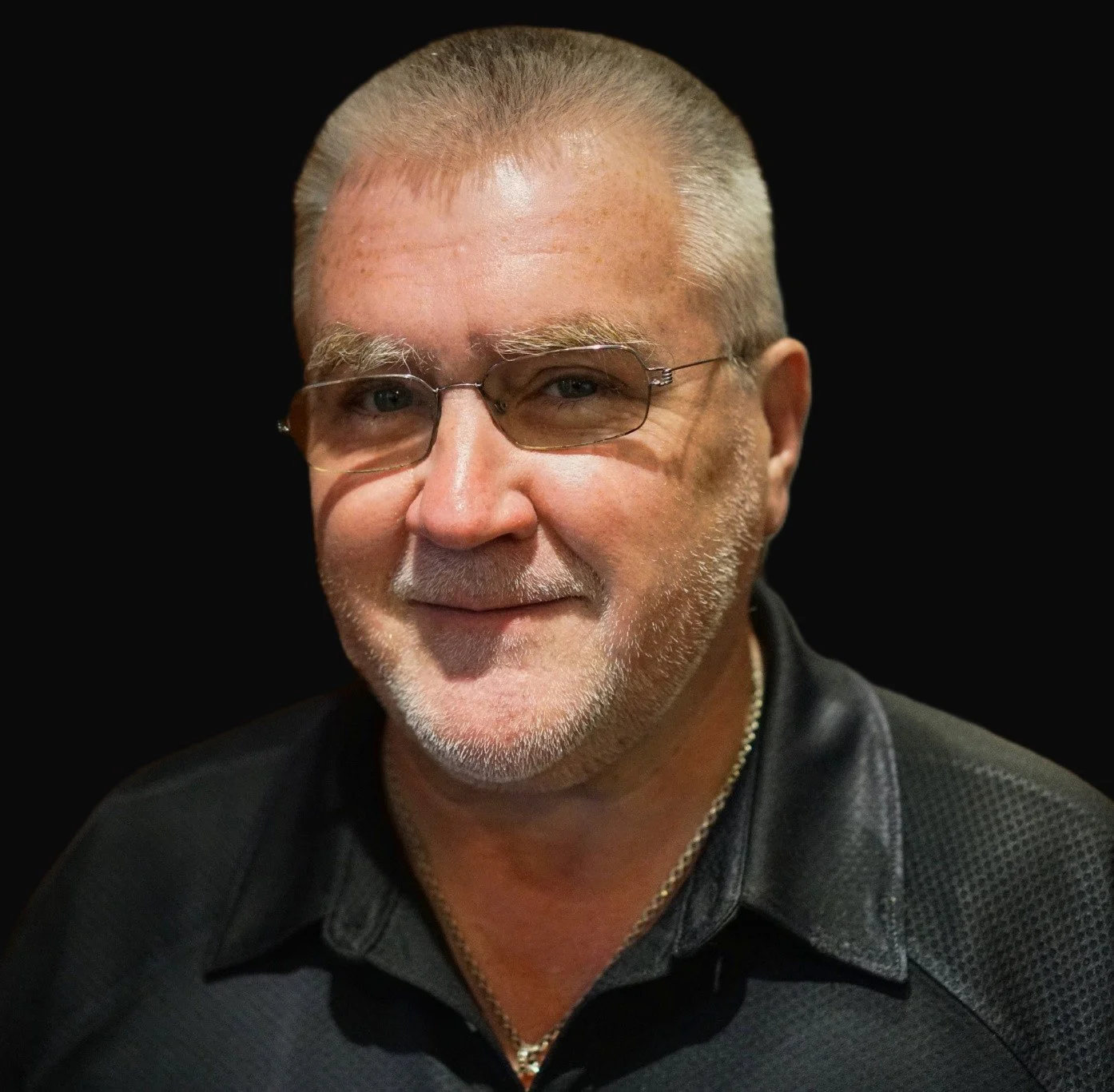
Me Jamie, your host, I am English and I have lived in Hong Kong since January 2nd 1972 - I know the place.
A meaningful blog post with a difference - tips on Travel, Tourism, Tours, Daily Life and my personal thoughts on Hong Kong.
Please do visit Amazing Hong Kong
Hong Kong | Pearl of the Orient


A Resident since 1972 - Private Tours of Hong Kong with Jamie
The Best Things to do in Hong Kong
click on the image to enlarge
© Copyright Acknowledged | All rights reserved | image created by Jamie
Templed Out in a Temple City: Why Hong Kong Faith Is Bigger Than a Photo Stop
Hong Kong's Spiritual Tapestry: Four Faiths, One City, and the Awkward Truth About Temples and Tourists
Hong Kong is sold as skyline, shopping and speed. That picture is not wrong, but it leaves out the older city sitting underneath: incense coils, a nunnery garden in Kowloon, a cathedral tower in the Mid Levels, and a Tin Hau shrine still facing the water. Faith here is not a Sunday thing. It sits in family life, work, festivals, school badges and the way people ask for luck when the year feels thin.
This is a long look at the four traditions that still shape Hong Kong Chinese life - Taoism, Buddhism, Confucianism and Christianity - and at a tourism problem that has grown sharper over the past sixteen years. Visitors often say they want culture. Many also say, before the day even starts, no temples. That clash is real. Religious belief is ingrained in this city. A temple visit is not always what a guest wants.
Why? good question, in a nutshell, a lot of visitors who come to Hong Kong may well have made stops or be making stops (particularly if they are taking a cruise) at other countries around Asia such as Singapore, Japan, South Korea, The Philippines, Indonesia, Malaysia, Thailand, Vietnam, Cambodia, Laos, etc and for a lot of people once you have seen 3 temples the novelty wears out and one Temple tends to look like another Temple and so on.
Hong Kong is no different, we have at last count over 600 temples!
Faith Without Hard Borders
Hong Kong Chinese belief has always been practical. The question is rarely which religion is the only true one. It is closer to what helps in this situation. Protection at sea. Health. Harmony at home. A school place. A quiet hour after a brutal week at the office..
That habit grew out of history. Early fishing and farming communities needed sea gods and earth gods. Later arrivals from Guangdong and Fujian in Mainland China brought temples, monks and family rites. British rule after 1841 added churches, mission schools and hospitals. People kept what worked and quietly dropped what did not. The result is a city where a Taoist temple can hold a Confucian hall, a Buddhist nunnery can sit beside a Tang-style garden, and a Christian cathedral can stand a short walk from a street of 5 temples..
What the Surveys Say, and Why the Labels Can Mislead
Official Hong Kong figures still speak of about one million Buddhists, more than one million Taoists and a Christian community of about 1.4 million. Those are follower and community estimates. They sit beside another set of numbers that look, at first glance, like a different city.
A 2023 survey of Hong Kong adults by the Pew Research Center put the religiously unaffiliated at 61%, the largest single group. About 20% identified as Christian, 14% as Buddhist, 1% as Taoist, and 3% as following other faiths, including Hinduism, Sikhism and Judaism. Disaffiliation is common: 37% said they were raised in a religion but now claim none. The split by age is sharper still. Among adults aged 18 to 34, 74% said they had no religion, compared with 57% of those aged 35 and older.
Pew, for anyone who has not come across the name, is the Pew Research Center, an independent American research organisation based in Washington. It is not a church and not a government department. It runs large public-opinion surveys on religion, society and demographics, and the East Asia study that produced these Hong Kong figures was carried out among adults between June and September 2023.
Those percentages need a local footnote. They measure labels, not habits. Plenty of people who tick “no religion” still burn incense, keep a family altar, or join the crowd at a temple festival. That is why a guest can feel the city is full of belief even when the statistics say most residents belong to no church or sect. The 1% Taoist figure is the clearest example of the gap. Temple life and government fact sheets still treat Taoism as a major local tradition. In a survey box, most people simply do not tick that name.
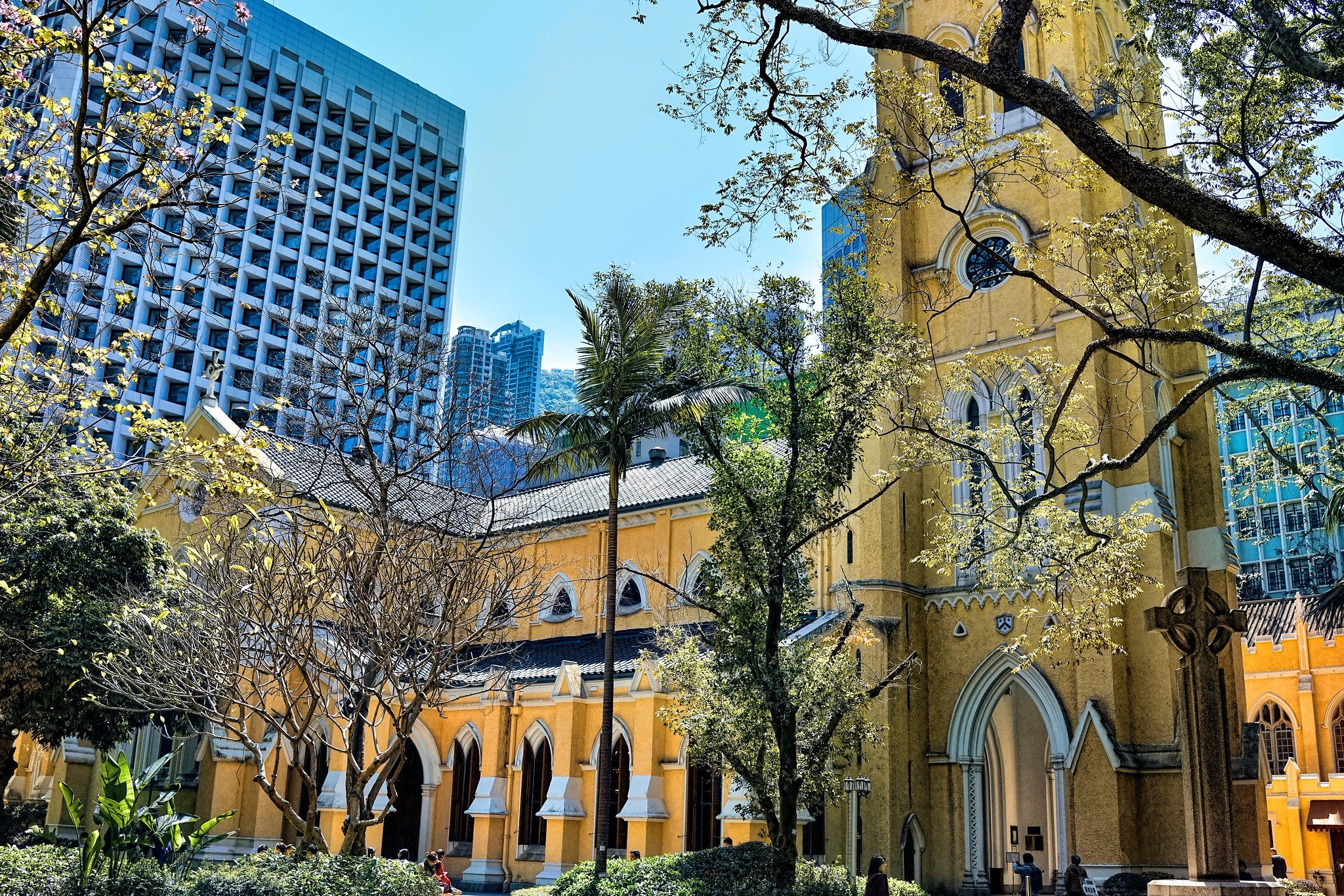
I am a sort of case study, I am an Anglican and my “local” Church was and remains to this day, St. Johns Cathedral on Garden Road in Central and I take a lot of guests there! I do not really go to Churches in a personal capacity, my wife is a Catholic and basically I have been to her Church less than 10 times, once when we got married and 3 times when our sons where baptised and the rest, to pick up the wife after a Sunday service.
Do I attend services at St. Johns Cathedral, no, I do not but if people ask I always state I am an Anglican.
Do I embrace Taoism, Buddhism and Confucianism - No I do not but I sure has heck spend a lot of time in temples! my motto is as simple as it gets - each to their own and I have had many conversations in Hong Kong with Mormons and Jehova Witnesses, it is always interesting to get a different point of view
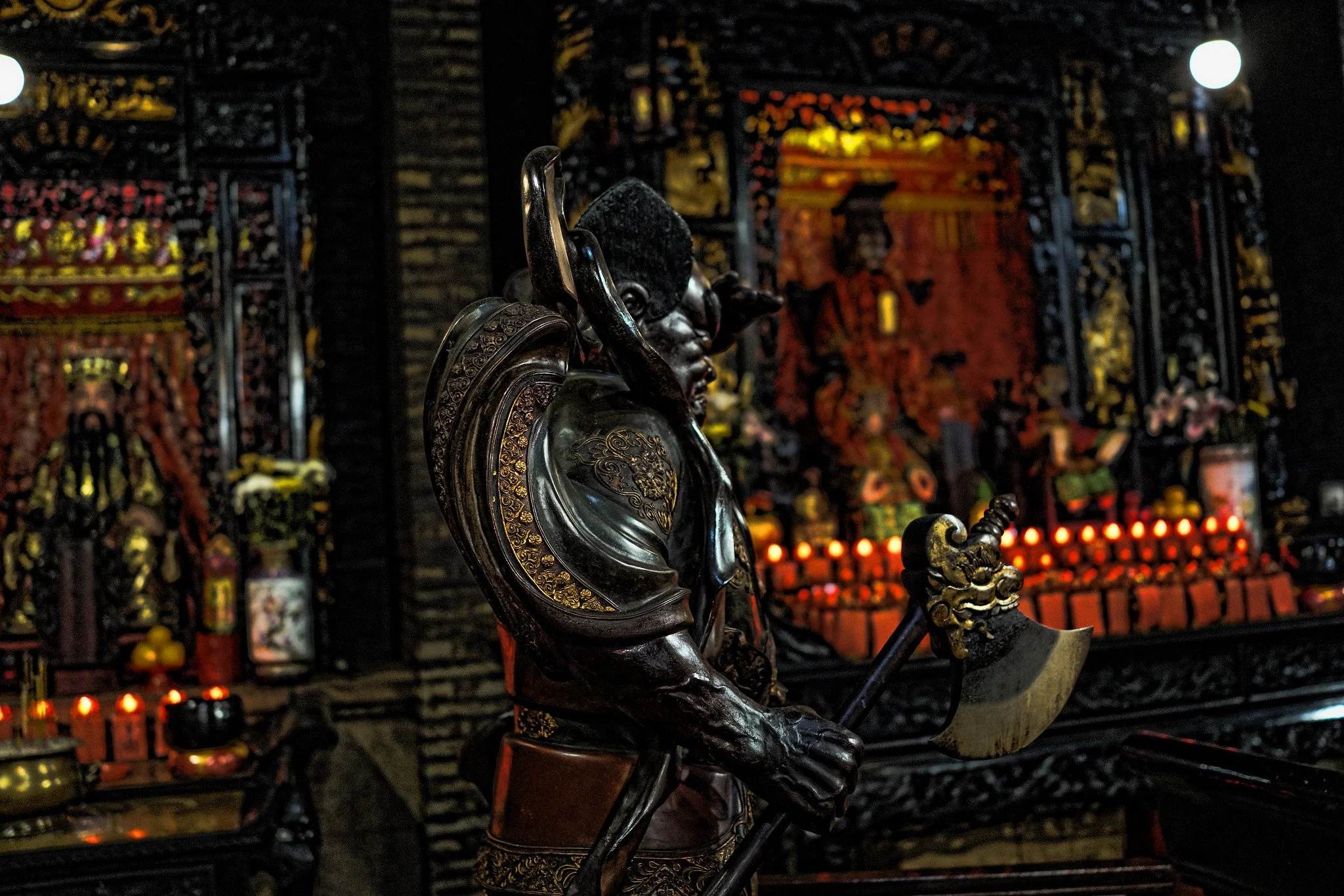
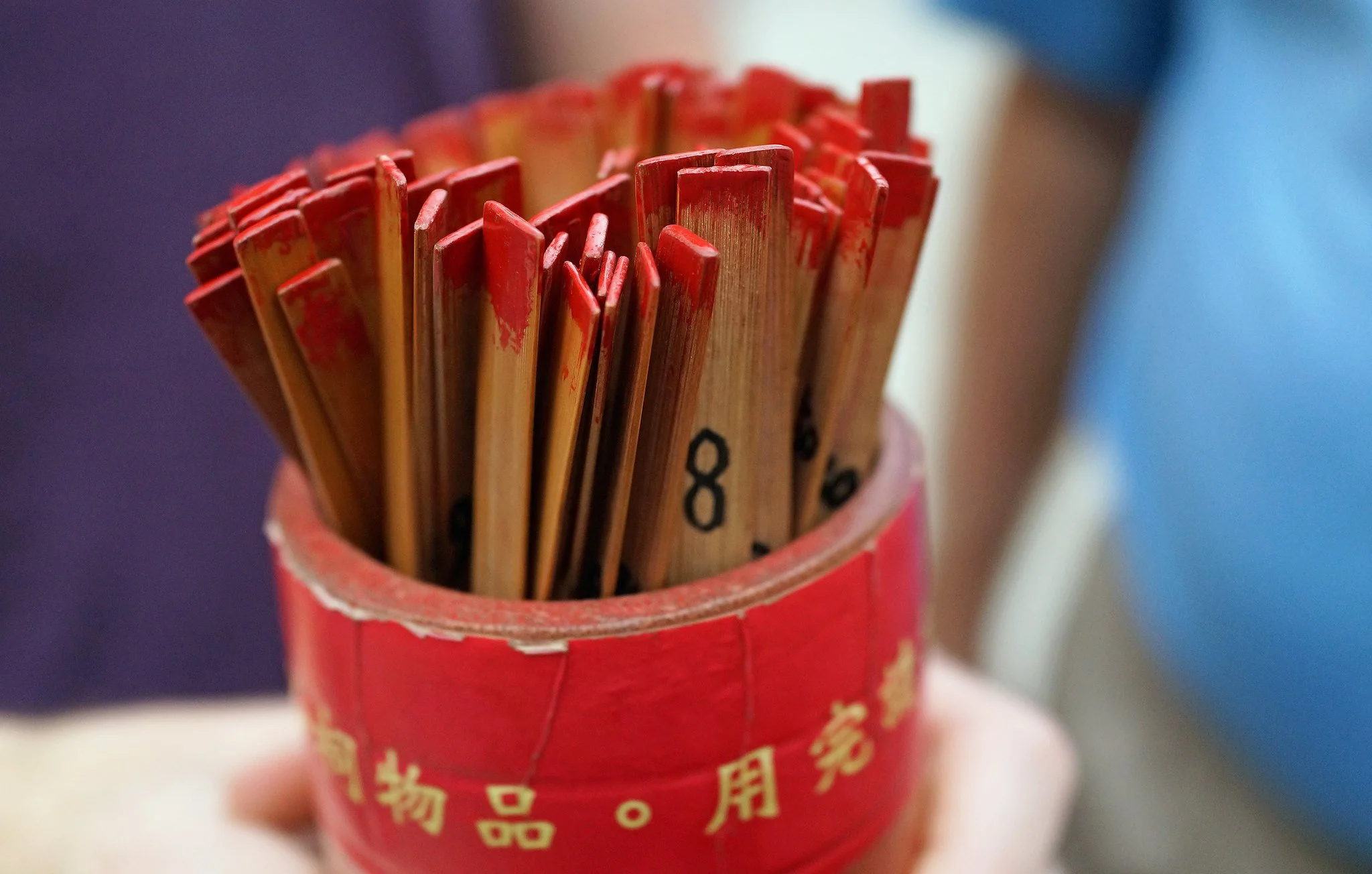
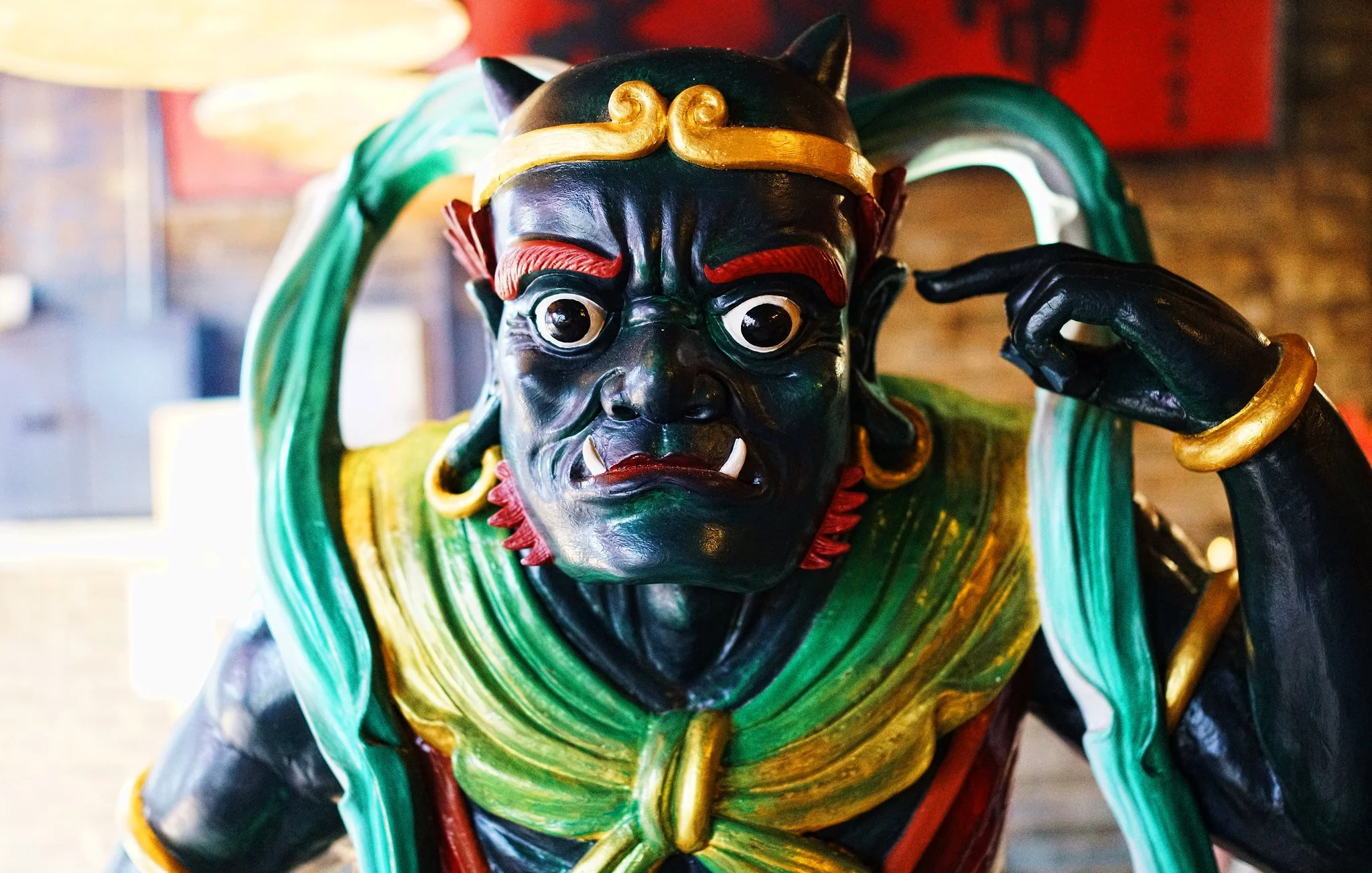

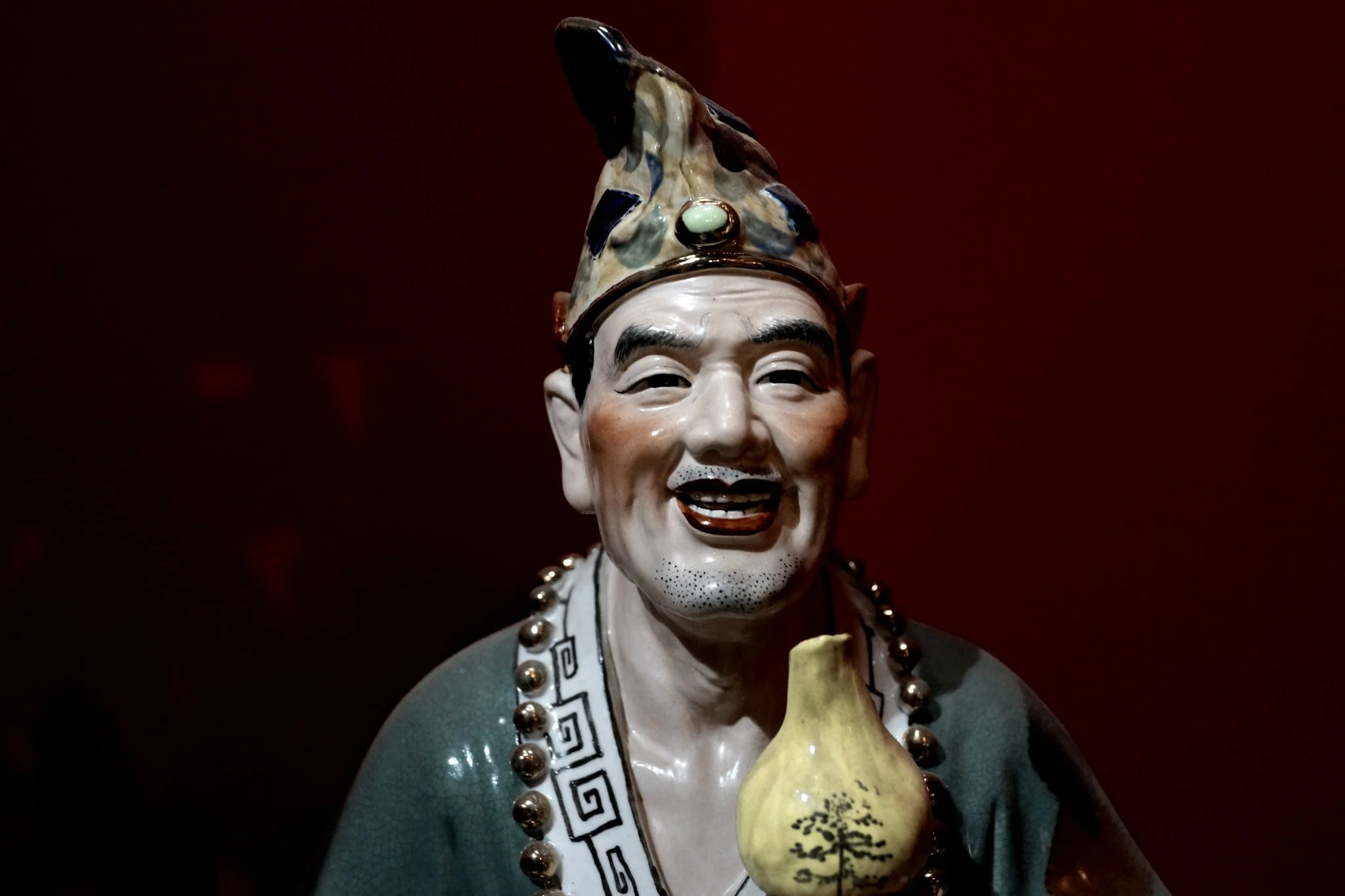
click on any image to enlarge
© Copyright Acknowledged | All rights reserved | images taken by Jamie
Hong Kong Religion | Random Selection of Taoist Temples | Hong Kong
Taoism: Home-Grown Faith and a Crowded Heaven
Taoism is China’s own religious tradition, stretching back more than 2,000 years to the Warring States period (475-221 BC) and taking organised form through the Han dynasty (206 BC-220 AD). The idea is harmony with the Tao - the way of nature - rather than one all-powerful god. In Hong Kong it took root among fishermen, boat people and farming villages. A harsh coastline needed protectors.
Official figures still put Taoist followers at more than one million, with more than 300 abbeys and temples. Across the territory there are around 600 temples, shrines and monasteries of various kinds. Most of those 600 are not tour stops. Many are small, local and tucked into villages or back streets. That matters later, when tourism is the subject.
So I did question the use of the word Abbey when it comes to Taoism - So “more than 300 Taoist abbeys and temples” is the official English phrase for the whole stock of Taoist sites - public temples plus priestly houses. It does not mean 300 Christian-style abbeys. Abbey is just the word chosen for 道觀.
So, to be absolutely clear - abbey in Hong Kong meaning is a Taoist religious house, not a Christian monastery
The deities people actually visit
Tin Hau, also called Mazu, Empress of Heaven: protector of seafarers, linked to Fujian in Mainland China in the Song dynasty (960-1279 AD). Well over 80 temples honour her. The Tin Hau Festival on the 23rd day of the third lunar month still fills temples and, in some places, the water with decorated boats. - The clean line for a visitor is this: the lunar calendar is the traditional Chinese clock. Religion uses it. Feng shui uses it. Families use it. The government mostly does not, except when it sets a public holiday such as Lunar New Year or Buddha’s Birthday. Hong Kong uses two calendars. The one on your phone is the ordinary Western one. Temples and old festivals still use the traditional Chinese calendar, which follows the moon, so the date moves each year. Tin Hau’s birthday is always the 23rd day of the third lunar month. In 2026 that was 9th May. Next year in 2027 it will be a different day in late spring. Same festival, sliding date.” it is a calendar, not a religion. Feng shui and temples use it. Banks do not.
Wong Tai Sin: a fourth-century shepherd who became an immortal, famous for the promise that what is requested may be granted. His Kowloon temple mixes Taoist, Buddhist and Confucian elements under one roof.
Kwan Tai, or Guan Yu: loyalty, justice and martial virtue, from the Three Kingdoms period (220-280 AD). Seen in police stations and shops as much as in temples.
Pak Tai: Supreme Emperor of the North, tied to water, floods and protection.
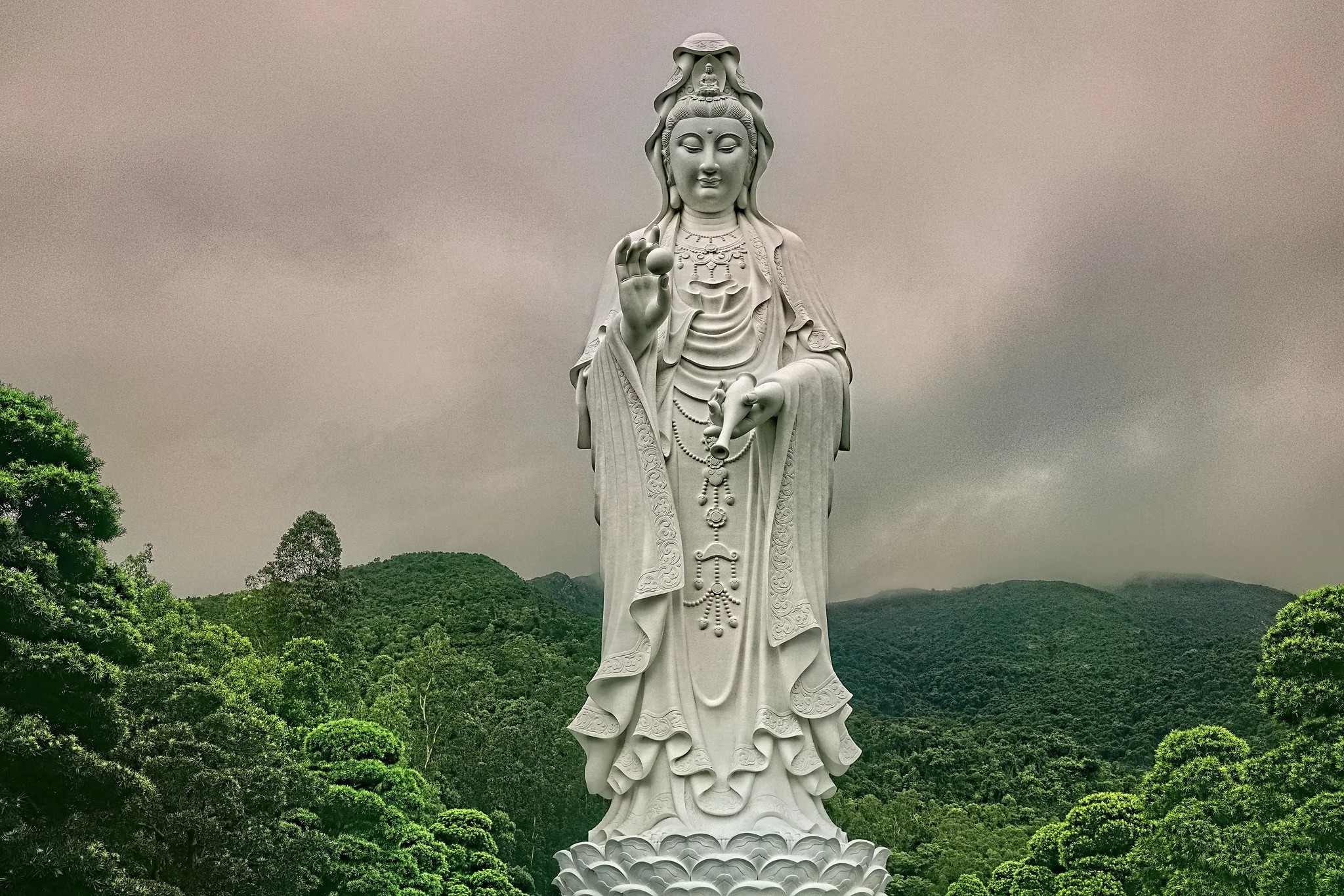
Kwun Yum, or Guanyin: goddess of mercy, claimed by more than one tradition, which is why she is everywhere.
Around them stand the Eight Immortals, city gods, earth gods and Tai Sui of the year. The rite is familiar: incense, fruit, oil, paper offerings, and sometimes kau chim sticks shaken until one falls.
Popular Taoist places of worship
Sik Sik Yuen Wong Tai Sin Temple in Kowloon.
Tin Hau Temple in Yau Ma Tei.
Man Mo Temple in Sheung Wan.
Pak Tai Temple in Wan Chai.
Che Kung Temple in Sha Tin.
Tin Hau Temple in Aberdeen.
Fung Ying Seen Koon in Fanling.
Tin Hau Temple in Stanley.
Kwun Yum Temple in Hung Hom.
Coastal Tin Hau shrines on islands such as Cheung Chau, plus the old temple at Joss House Bay.
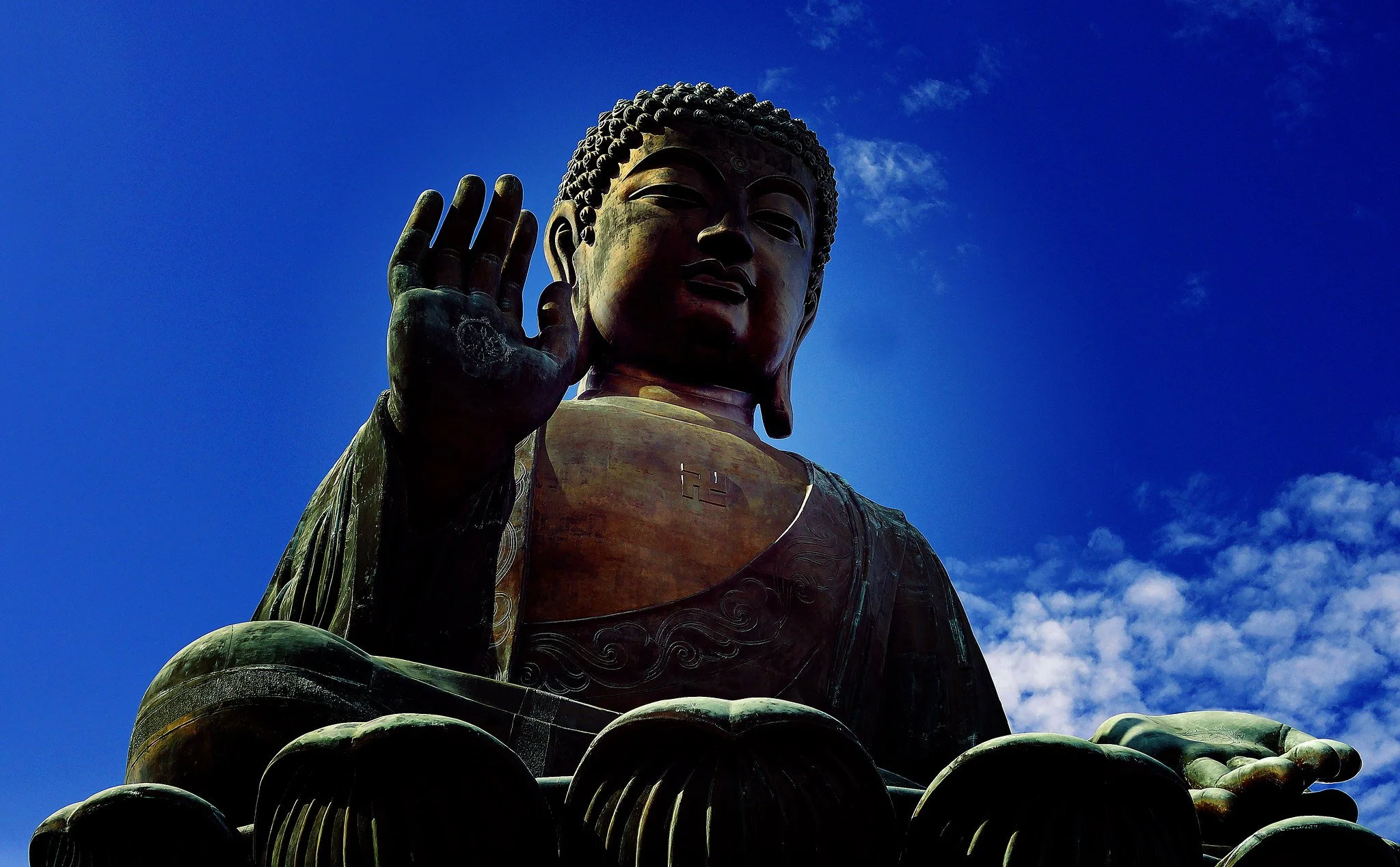
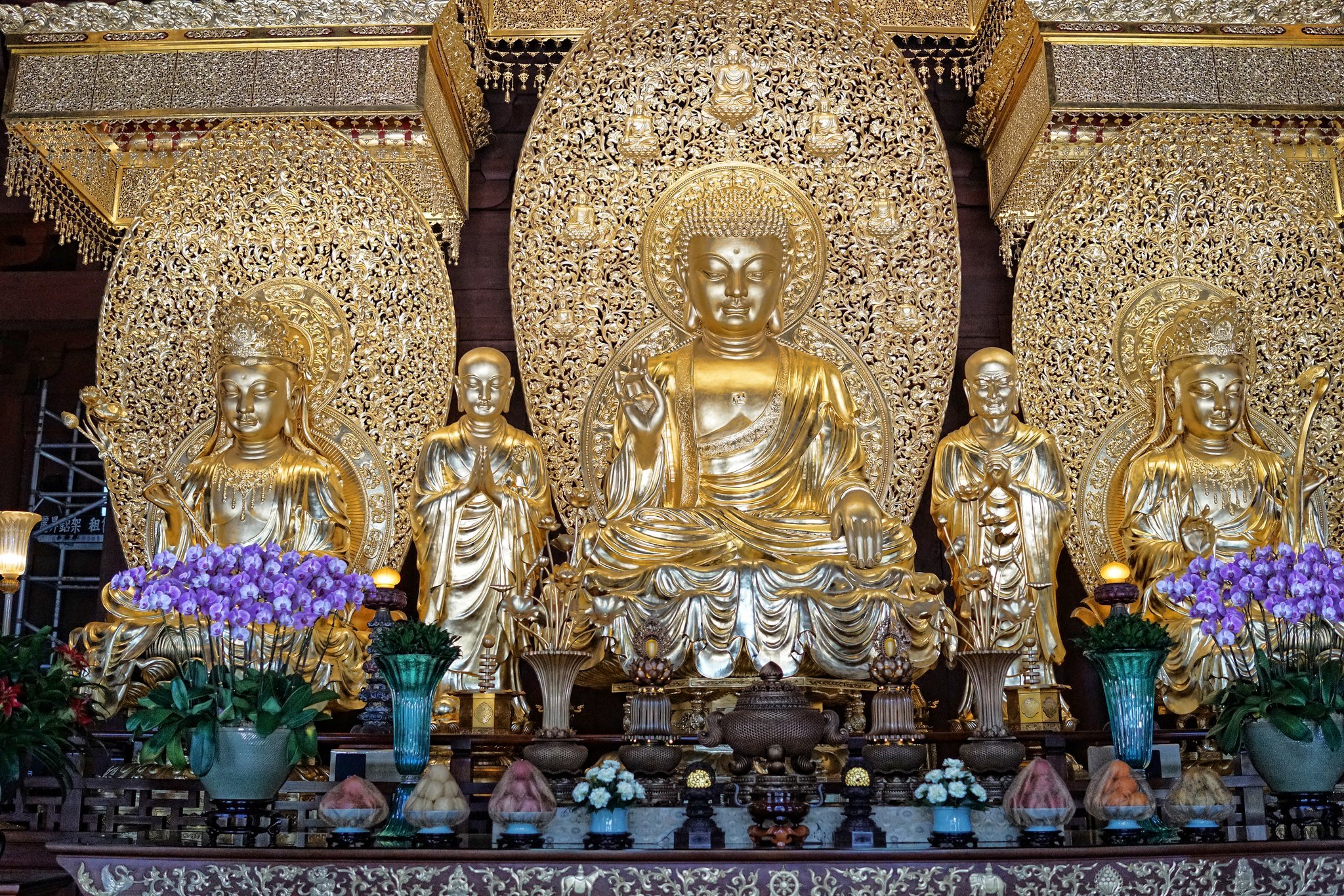
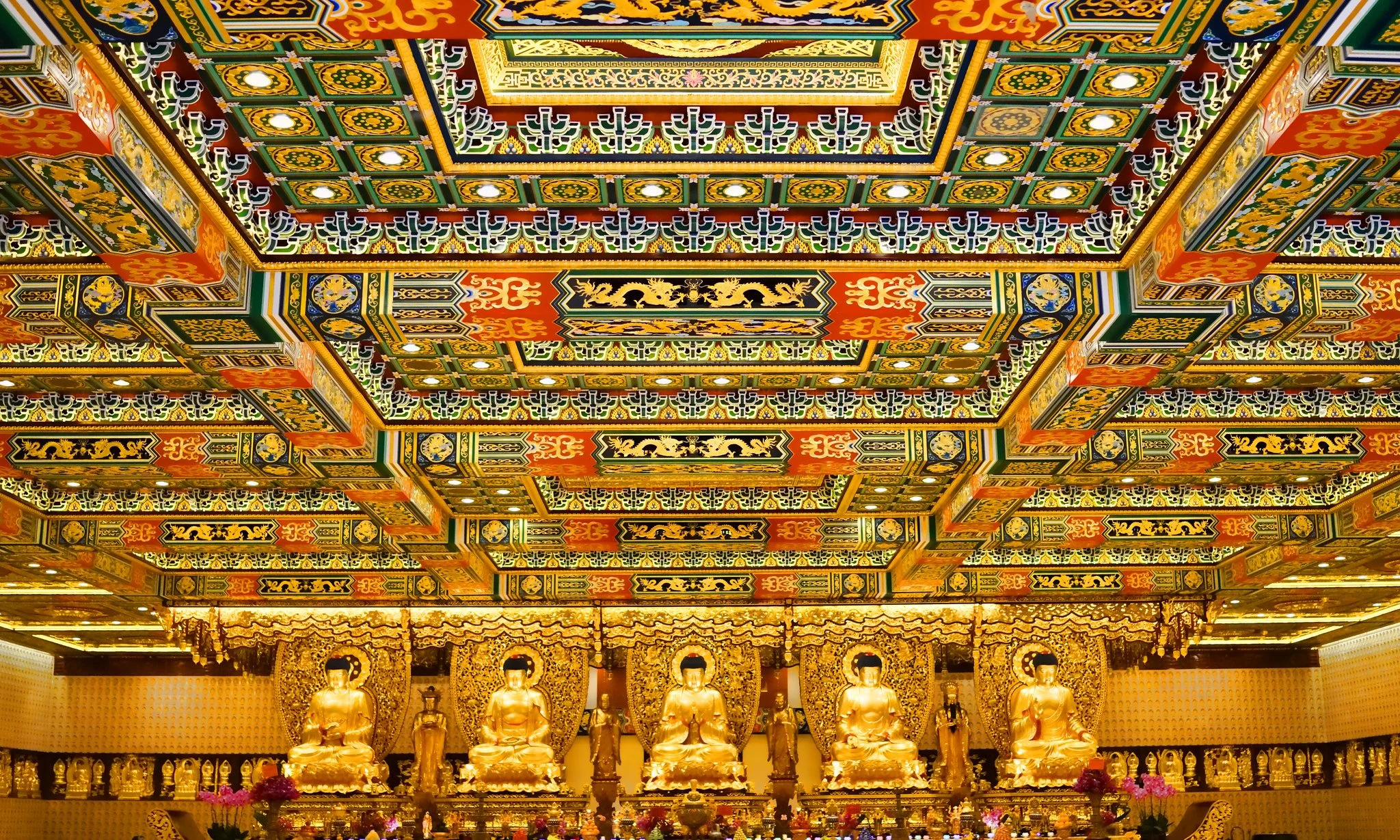
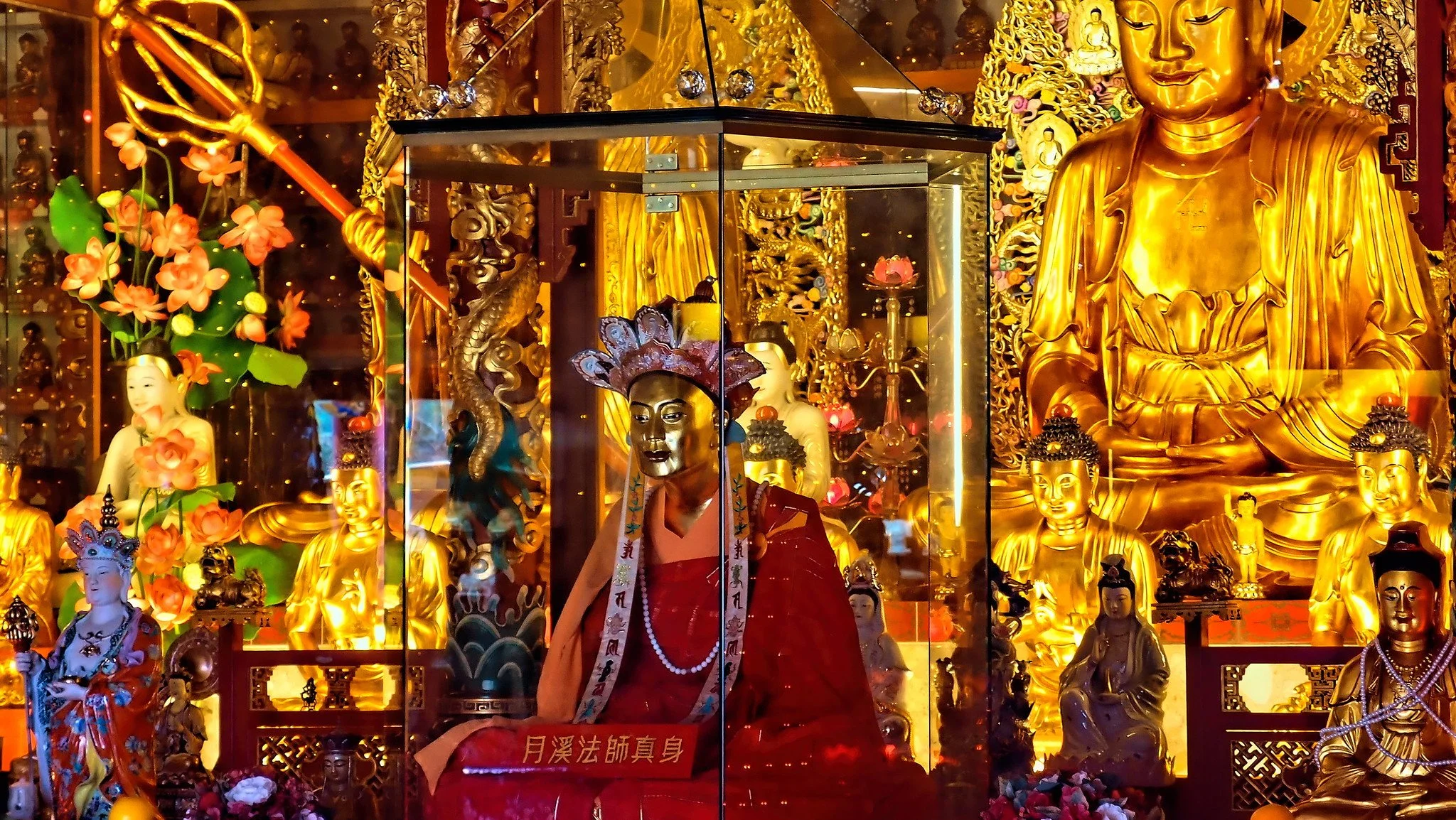
click on any image to enlarge
© Copyright Acknowledged | All rights reserved | images taken by Jamie
Hong Kong Religion | Random Selection of Buddhist Temples | Hong Kong
Buddhism: Quiet in a Noisy City
Buddhism reached China from India more than 2,000 years ago and came into Hong Kong with monks, migrants and later monasteries. Official figures still speak of about one million followers and more than 400 temples, some several centuries old. Mahayana traditions dominate, with compassion at the centre.
Hong Kong Buddhism is not only statues. It has built schools, elderly homes and gardens in dense districts. That double life - worship and welfare - is one reason the tradition still feels present even when younger people say they have no religion.
Popular Buddhist places of worship
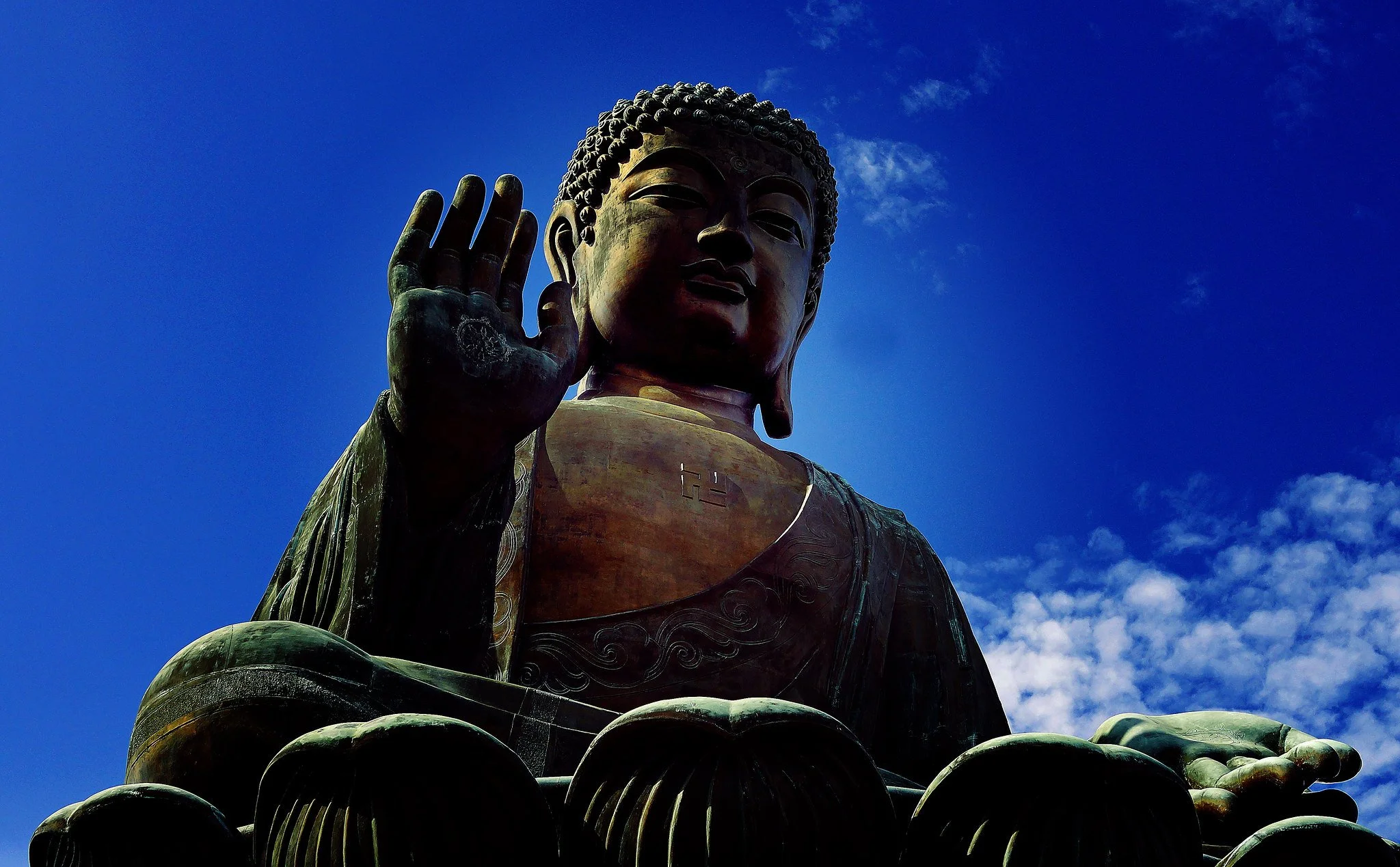
The 2 Po Lin Monasteries and the Big Buddha on Lantau, the giant bronze figure completed in 1993.
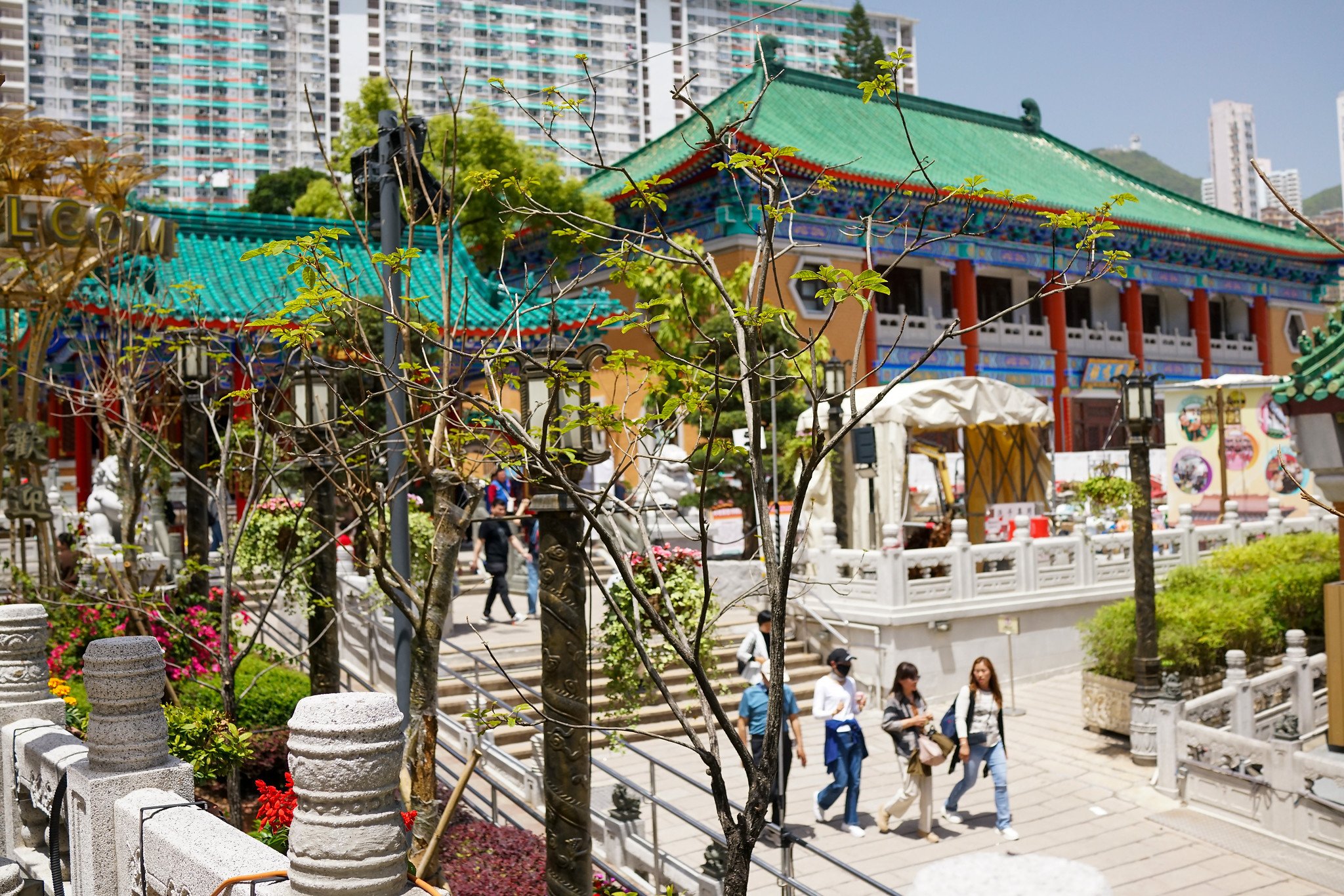
Chi Lin Nunnery in Diamond Hill, rebuilt in the manner of the Tang dynasty (618-907 AD), with Nan Lian Garden beside it.
Ten Thousand Buddhas Monastery in Sha Tin and those 430+ steps
Tsz Shan Monastery in Tai Po., a wonderful place to visit
Tsing Shan Monastery in Tuen Mun.
Lin Fa Kung in Tai Hang.
Miu Fat Buddhist Monastery in Tuen Mun.
Western Monastery in Tsuen Wan.
Cham Shan Monastery on the Clear Water Bay peninsula.
Smaller retreat halls and village temples across Lantau and the New Territories.
click on any image to enlarge
© Copyright Acknowledged | All rights reserved | images taken by Jamie
Hong Kong Religion | Elements of Confucianism | Hong Kong
Confucianism: Not a Temple Circuit, but a Way of Living
Confucianism begins with Confucius, 551-479 BC, in the Spring and Autumn period. It is less a church than a moral system: filial piety, education, proper relationships and social order. In Hong Kong it rarely stands alone as a visitor attraction. There is no grand Qufu style temple drawing coach parties every weekend.
The influence is quieter. It sits in family altars, clan halls, school mottos and the habit of asking whether a decision will bring shame or honour to the household. The Confucian Hall at Wong Tai Sin is the clearest public example of the Three Teachings sharing one compound. A dedicated Confucian temple has been discussed near that district, but it has not yet become a major pilgrimage stop.
Places where Confucian influence is easiest to see
The Confucian Hall inside Sik Sik Yuen Wong Tai Sin Temple.
Ancestral and clan halls in New Territories villages such as Ping Shan and Kat Hing Wai.
Man Mo Temple in Sheung Wan.
Older schools and halls founded on Confucian learning.
Clan halls that keep lineage records and seasonal rites.
The Confucian Academy and the marking of Confucius’s birthday on the 27th day of the eighth lunar month.
Heritage buildings tied to the old examination culture.
Family altars at home, still the most common Confucian site of all.
University and school halls that speak the language of respect for teachers.
Mixed shrines in Taoist and Buddhist temples that include Confucius among other sages.
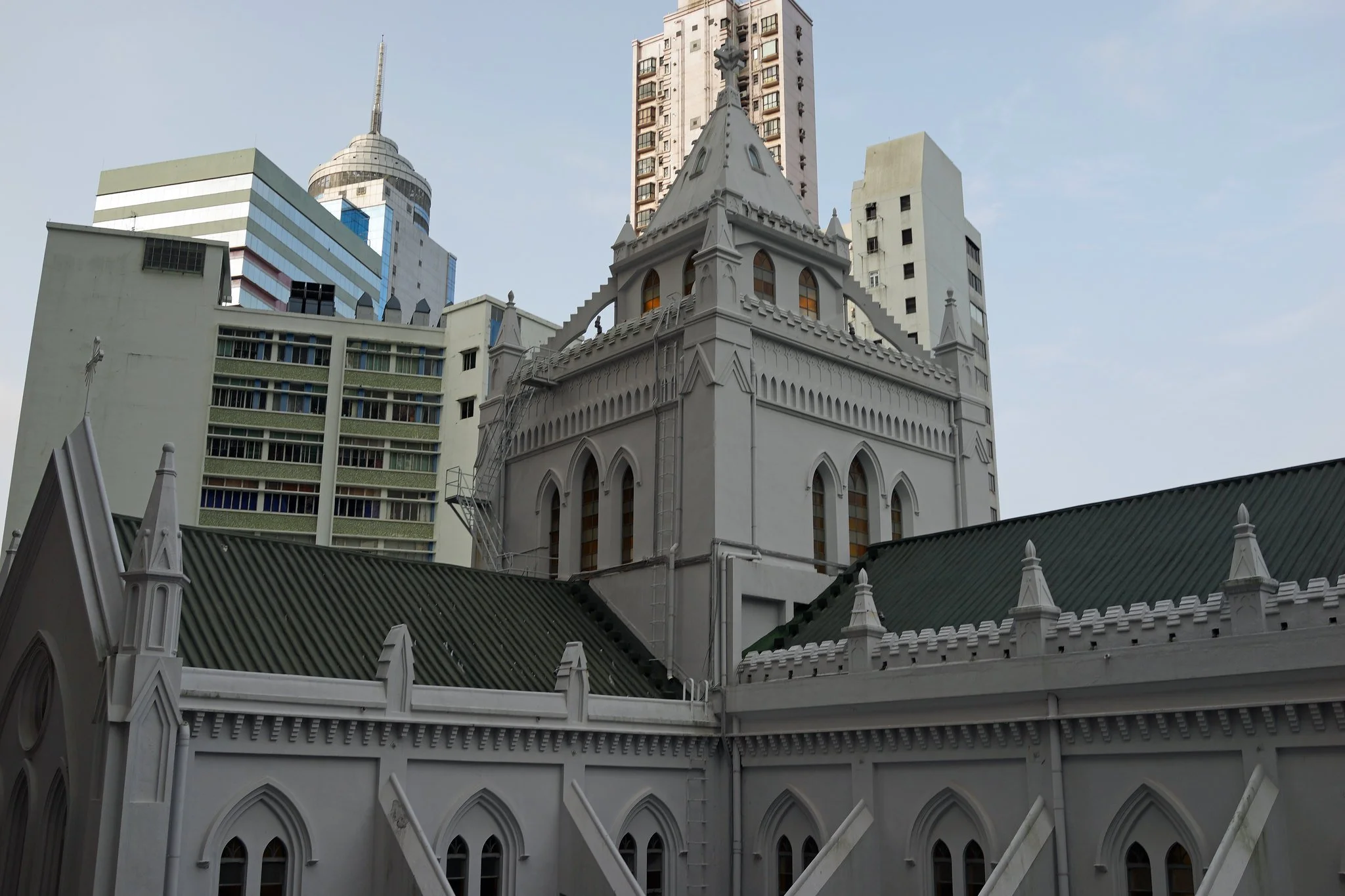
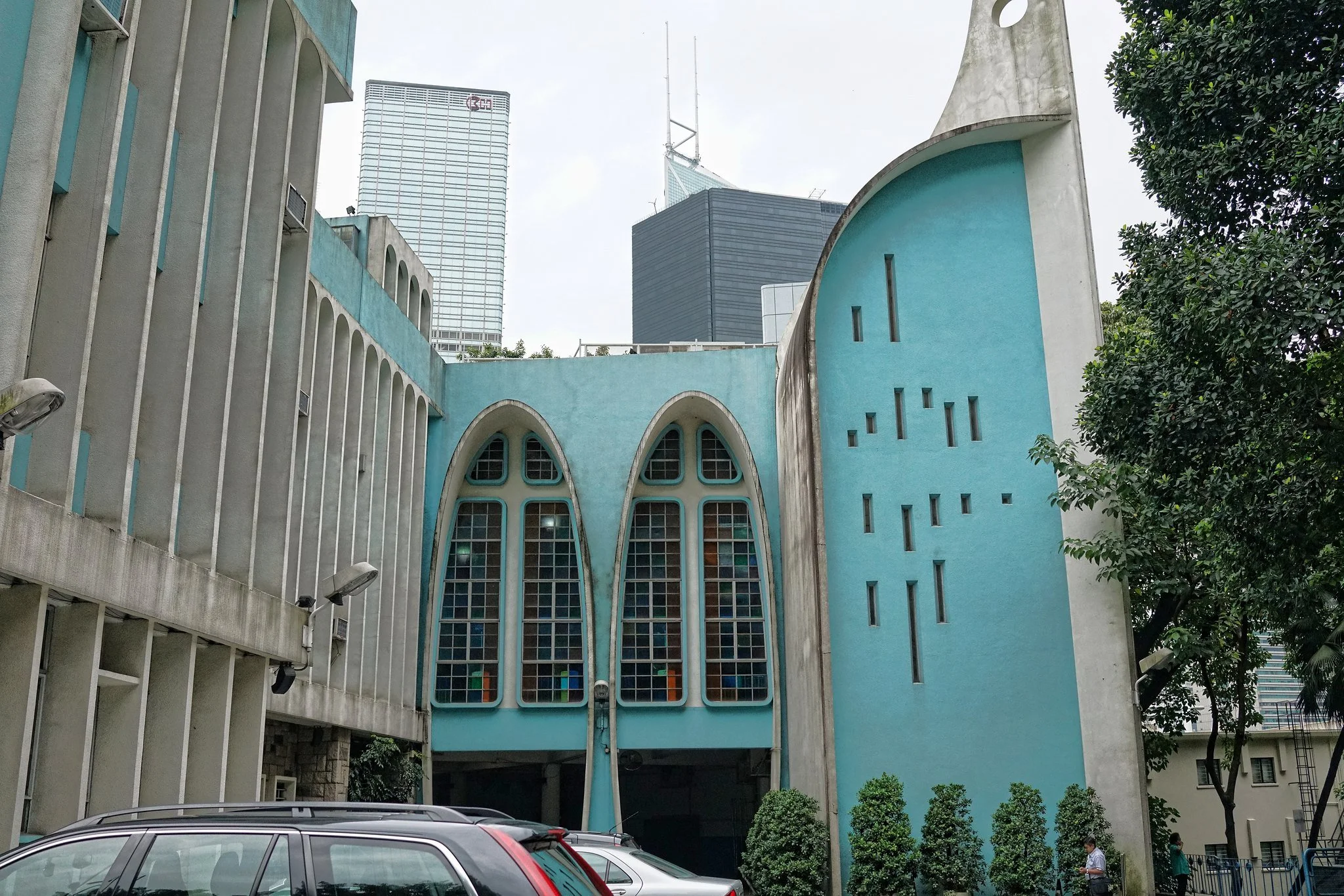
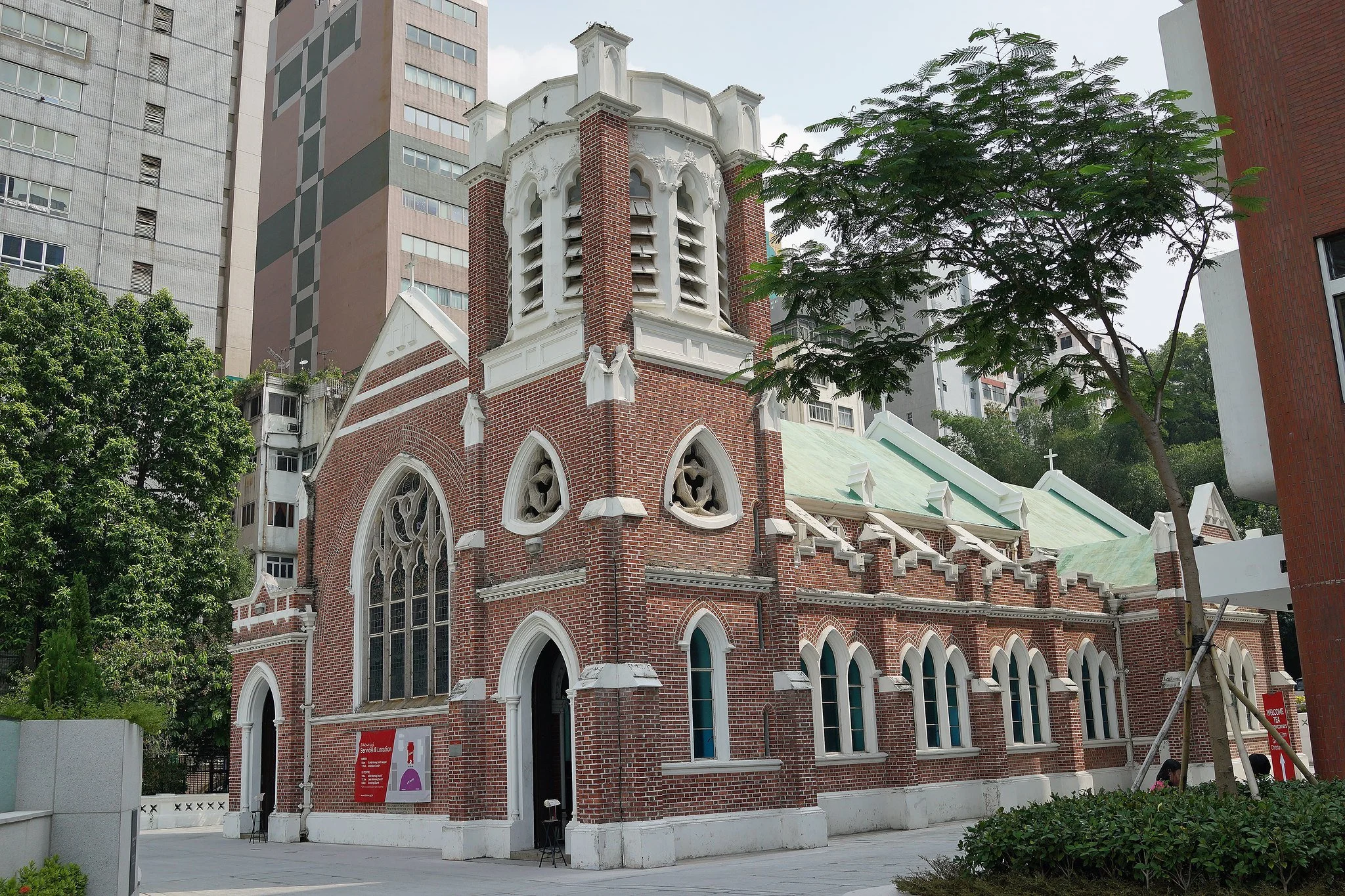
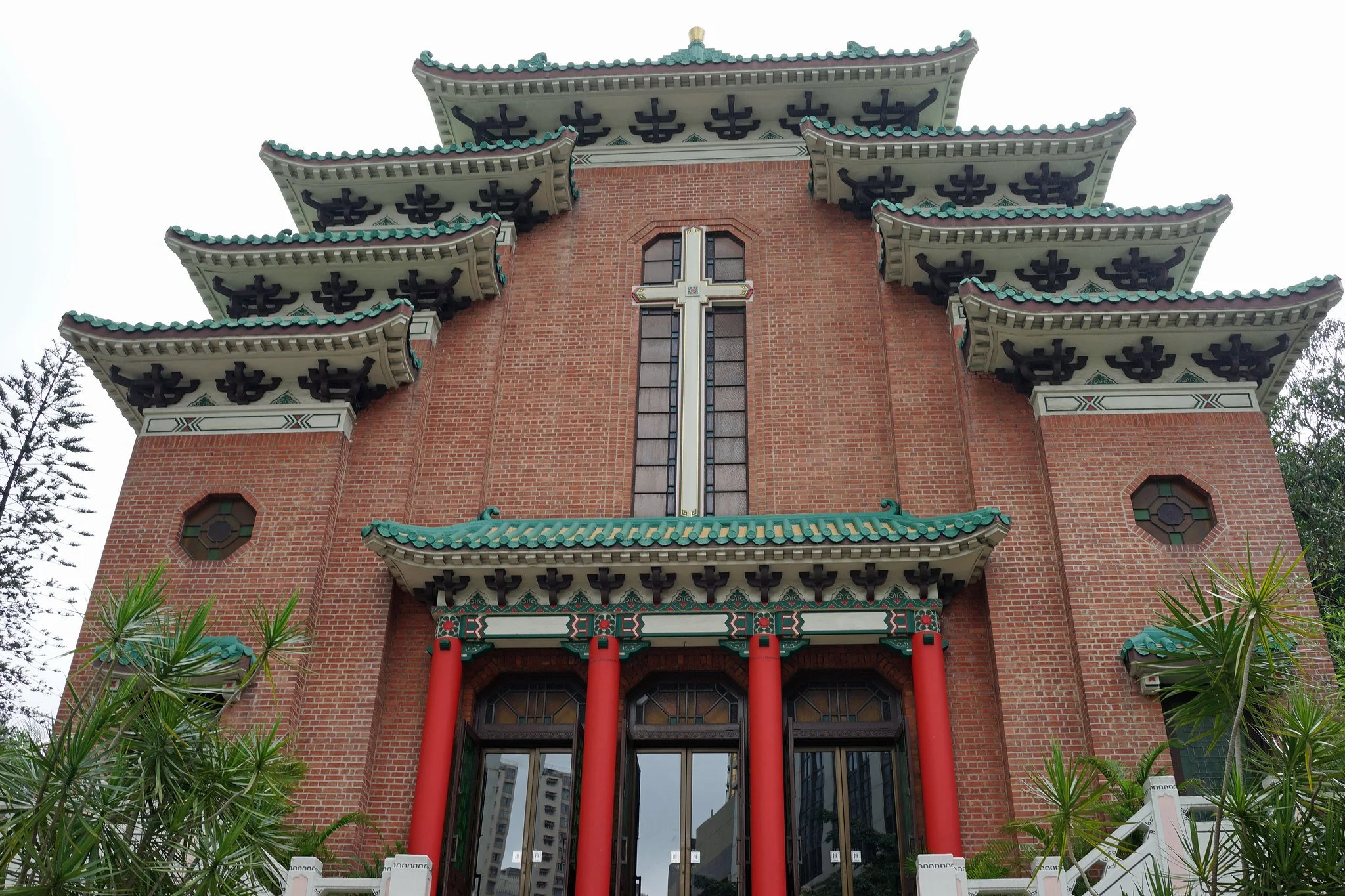
click on any image to enlarge
© Copyright Acknowledged | All rights reserved | images taken by Jamie
Hong Kong Religion | Random Selection of Christian Churches | Hong Kong
Christianity: Churches, Schools and a Different Kind of Community
Christianity arrived with British rule in 1841. Missionaries built churches, schools and hospitals, which is why the faith still punches above Sunday attendance. Official numbers put the Christian community at about 1.4 million, including around 1.04 million Protestants and about 392,000 Catholics.
Popular Christian places of worship
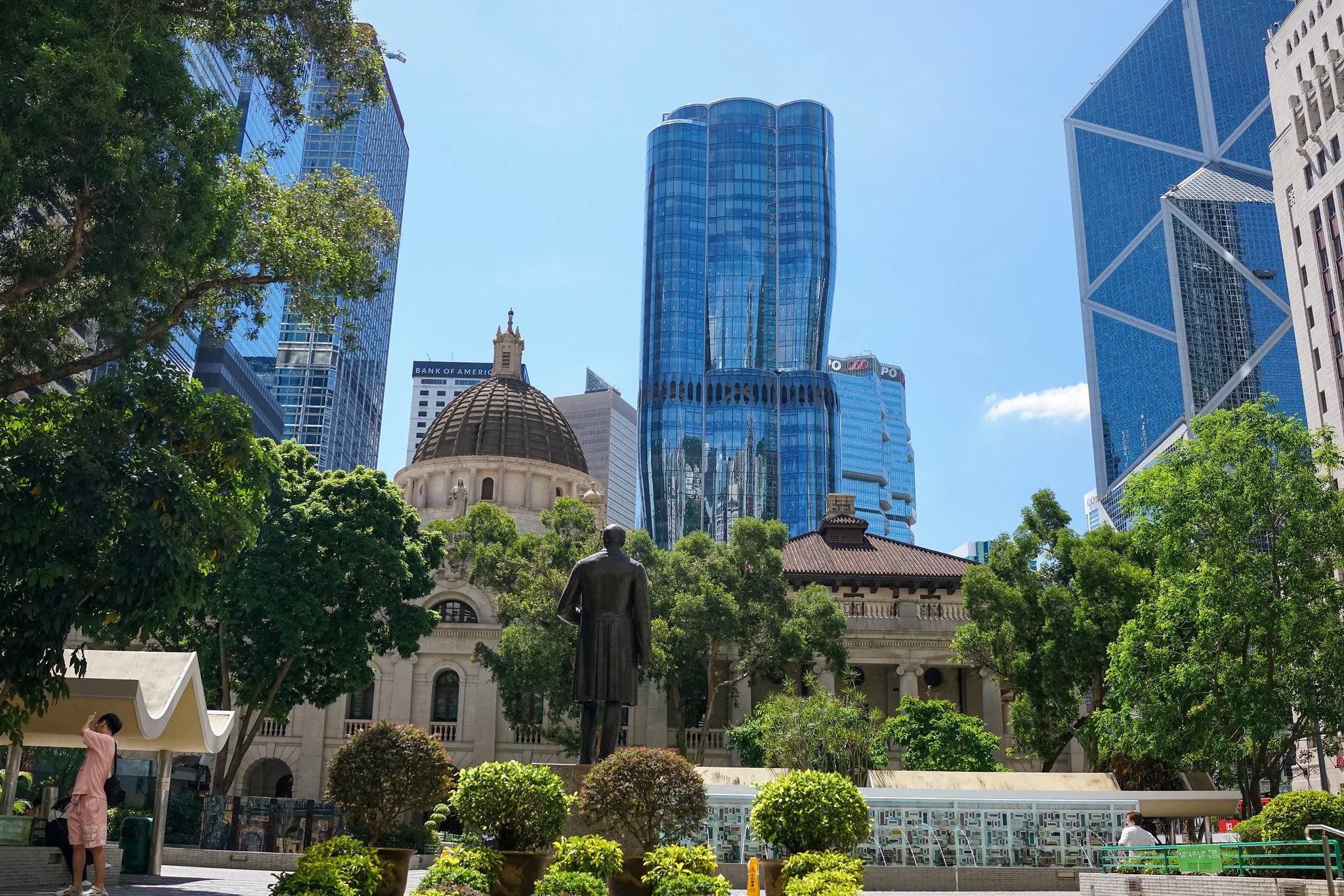
St John’s Cathedral in Central, the Anglican landmark from 1849.
Cathedral of the Immaculate Conception in Mid-Levels, this is a Catholic Church
Union Church.
Hop Yat Church.
Island ECC in Quarry Bay.
Kowloon City Baptist Church.
Contemporary international churches such as Lifehouse.
Trappist Haven Monastery on Lantau.
St Margaret’s Church in Happy Valley.
Parish churches across the districts, including those serving migrant communities.
Temples, Coaches and the Guest Who Is Already Templed Out
Here is the conflict. When I was researching the private tour business in Hong Kong was being in 2010, temple visits looked like a staple of the coach trade. Companies across Asia, and much of the wider world, treated a temple stop as something tourists expected: a building, a brief overview of religion, a photograph, back on the bus. Hong Kong had around 600+ temples, but most were small, local or remote. For a workable city day, that left 3 serious options: The Chi Lin Nunnery, The Man Mo Temple and The Sik Sik Yuen Wong Tai Sin Temple. All 3 were central enough, photogenic enough, and rich enough in story to carry a stop without eating the whole day.
Sixteen years later the request has changed. A lot of guests now say in advance, no temples, we are all templed out. After Kyoto, Bangkok, Angkor, Beijing or a week of Mainland Chinese cities, another incense hall can feel like one shrine too many. That is understandable. It is also hard to swallow, because religious belief is not a side exhibit in Hong Kong. It is in the calendar, the family table, the shop doorway and the way people talk about luck.
The other change is narrower and louder. These days the religious site many visitors actually ask for is the Big Buddha, usually paired with The Tai O Fishing Village. That is not a quick temple stop. It is an eight-hour day: cable car or bus, steps, monasteries, fishing village, traffic home. It is a landmark day, not a faith day. The statue is magnificent, the 268 steps is a conversation stoppert The overview of belief often shrinks to a few sentences before the selfie.
So do tourists coming to Hong Kong expect to learn about religion? Some do, in the thin sense that they expect a temple to appear on a classic Asia itinerary. Are they really that interested? Most people met on the ground want a basic overview and then a photograph. That is not an insult. It is how short-stay travel works. The mistake is to treat that as the whole story of the city.
A guest who refuses every temple can still be shown the subject without forcing a shrine queue. Feng shui in a doorway. A church school badge. Why Tin Hau still matters to a harbour city. Why The Sik Sik Yuen Wong Tai Sin Temple became the wish temple of postwar Kowloon. Why the Chi Nunnery Lin looks like the Tang dynasty in the middle of Diamond Hill. Religion in Hong Kong is not only a building. It is a habit. The hard part of private guiding is knowing when a guest wants the habit explained, and when they only want the picture.
Why Religious Sites Still Matter to Tourism
Religious sites remain among the few places where a visitor can feel the older city. The Big Buddha, The Sik Sik Yuen Wong Tai Sin Temple, The Chi Lin Nunnery, The Man Mo Temple and the island Tin Hau shrines keep appearing on lists because they offer smell, ritual and story. Hong Kong’s visitor numbers have climbed back towards the old highs - about 45 million arrivals in 2024 and just shy of 50 million in 2025, with official hopes for around 53.8 million in 2026. Culture and heritage are being pushed harder than ever before. The Tourism Industry Blueprint 2.0 even names religious tourism as a direction, with the warning that worship should not be drowned by cameras.
Entry to most Chinese temples is still free. Spending sits around the edges: incense, offerings, a vegetarian lunch at The Po Lin Monastery often in the region of HK$100 to HK$150 (about US$13 to US$19), fortune-telling at busy sites commonly from about HK$50 to HK$200 (about US$6 to US$26). The commercial value is real. The cultural value is larger, provided the stop is chosen with care and not treated as a compulsory tick on a coach sheet.
Young People, Smart Phones and the Old Gods
The Pew Report figures already hint at the generational shift. Younger Hongkongers are less likely to claim a formal religion than their parents. School, work, smart phones and emigration have all thinned regular temple or church attendance. Many still appear for the big days - Tin Hau’s birthday, Buddha’s Birthday, first incense at Chinese New Year - without taking a label. Others keep a Guanyin charm, read feng shui on social media, or treat Confucian family duty as common sense. Temples and churches now offer websites, live streams and donation links. A virtual offering is easy. Walking in, bowing and asking still feels like Hong Kong.
Is Feng Shui a Religion, Like Taoism?
This comes up a lot, especially from visitors who have seen a bagua mirror over a door, watched a master walk a new flat with a compass, or read that a bank or hotel in Hong Kong was designed with the hills and harbour in mind. The short answer is no. Feng shui is not a religion in the way Taoism, Buddhism or Christianity are religions.
Feng shui means wind and water. It is a traditional Chinese geomantic practice: a way of reading land, buildings, graves and interiors so that qi, the sense of living energy in a place, is thought to move well rather than stall or cut. Direction, slope, water, the shape of a mountain and the angle of a door all come into it. In Hong Kong it shows up in shop fronts, ancestral graves, the siting of old villages and, still, in arguments about whether a new block “feels wrong”.
Taoism is different. Taoism has scriptures, priests, temples, deities, festivals and a path for living in harmony with the Tao. A person can belong to it, in so far as Chinese belonging ever works that way. Feng shui has no congregation, no conversion, no single founder and no exclusive god. Nobody becomes “a feng shui-ist” in the way someone becomes a Catholic or a monk. They hire a master, buy a book, or follow family habit.
The confusion is understandable. Feng shui grew out of the same older Chinese world as Taoism. It uses some of the same language - yin and yang, the five elements, compass directions - and Taoist temples themselves were often placed with an eye to hills and water. So it is religious-adjacent. It lives next door to belief.
On the ground in Hong Kong the split is obvious. A Christian family may still ask whether a door should face the harbour. A household that told Pew it has “no religion” may still refuse a flat with a sharp corner aimed at the bed. A bank or a hotel may quietly pay for advice that never appears on the tourist brochure. That is custom and caution, not worship.
For a visitor who asks the question on the street, the useful reply is this: Taoism is a faith with gods and temples. Feng shui is a traditional way of arranging space. One can visit a Tin Hau temple and never think about a compass. One can hire a feng shui master and never light a stick of incense. In this city, plenty of people do both, and plenty do only one. Neither makes feng shui a fifth religion.
click on any image to enlarge
© Copyright Acknowledged | All rights reserved | images taken by Jamie
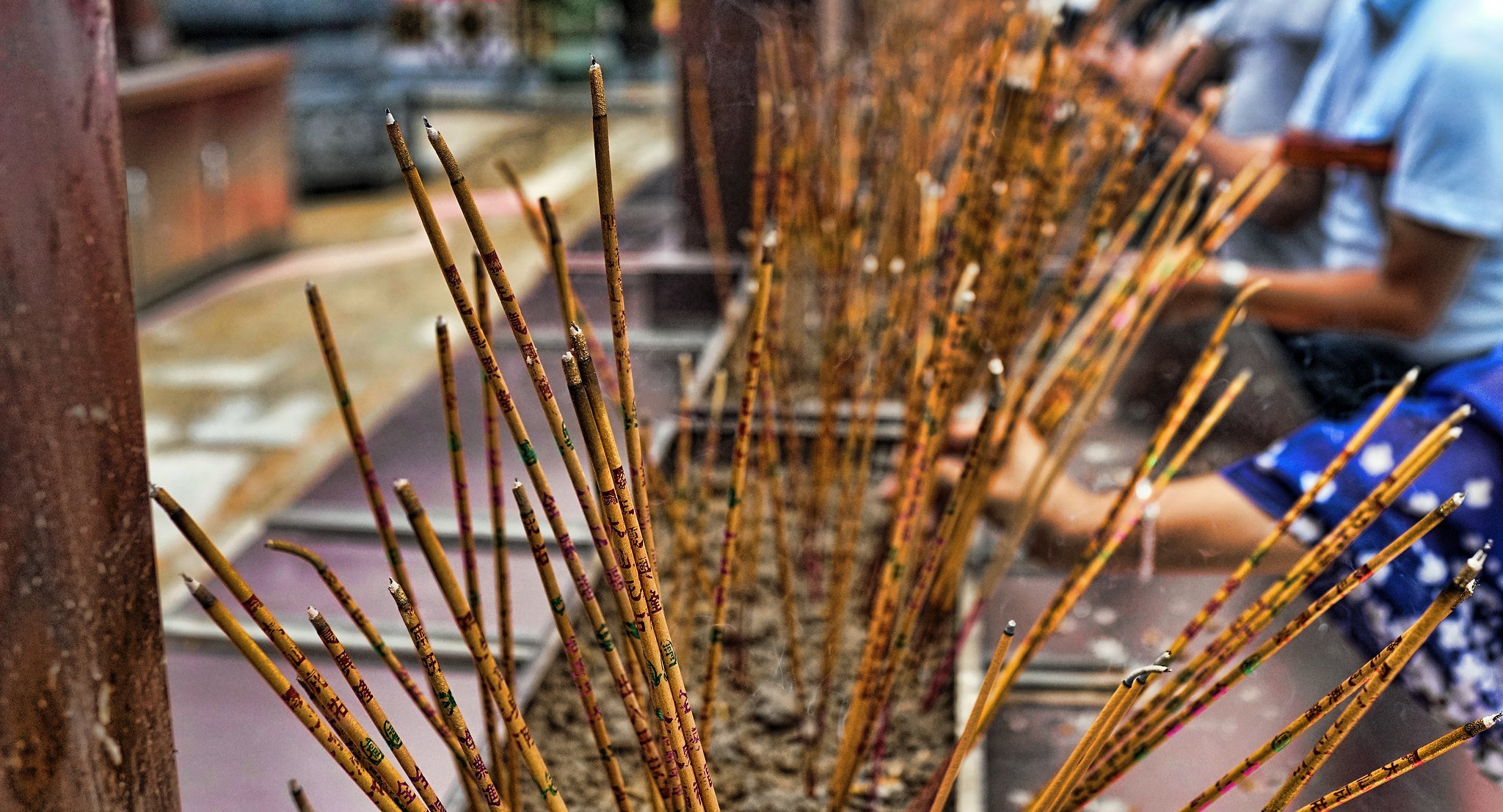
The Ritual of Burning Incense | Gigantic Incense Sticks and that Smoke | Hong Kong
The Smoke Everyone Remembers
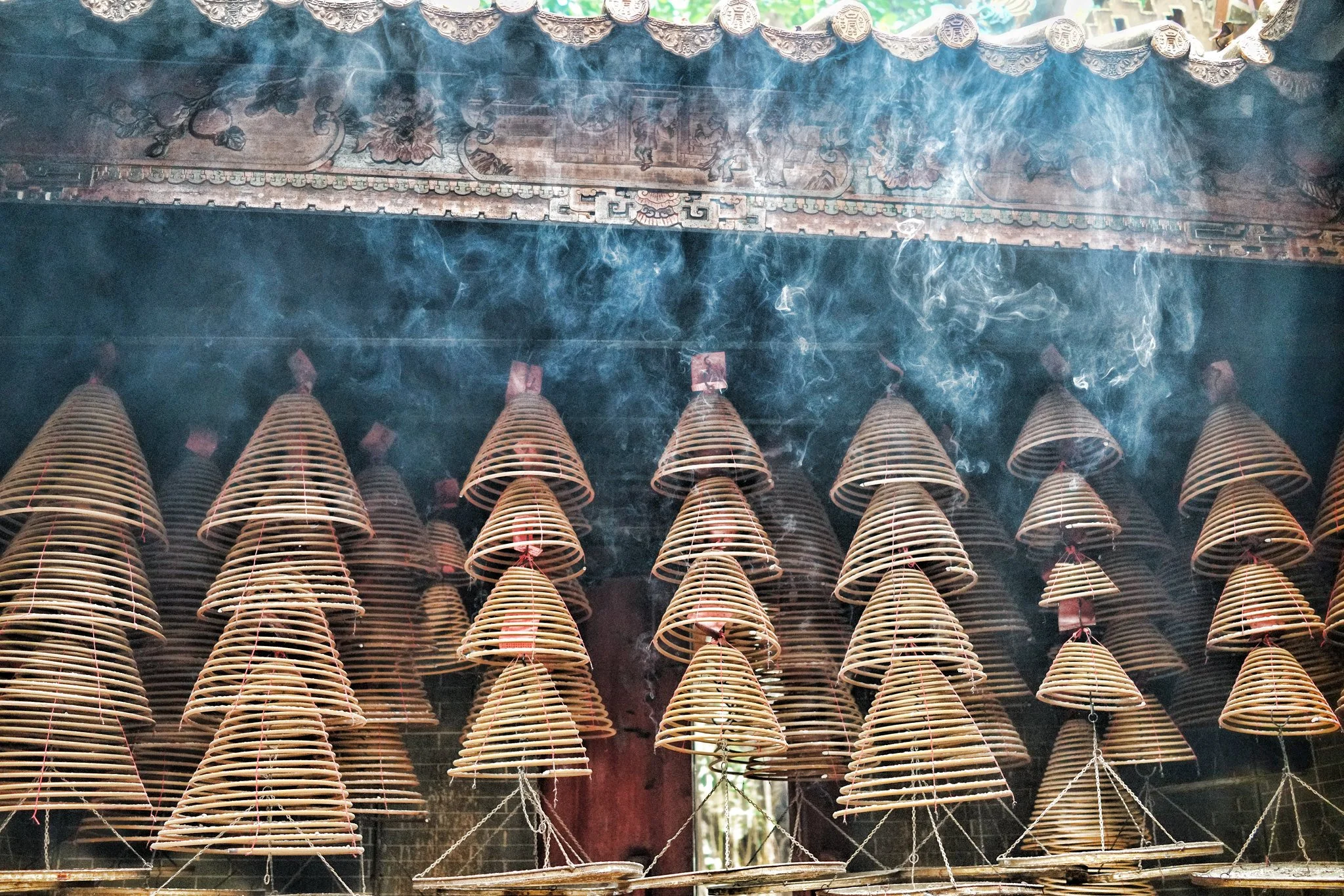
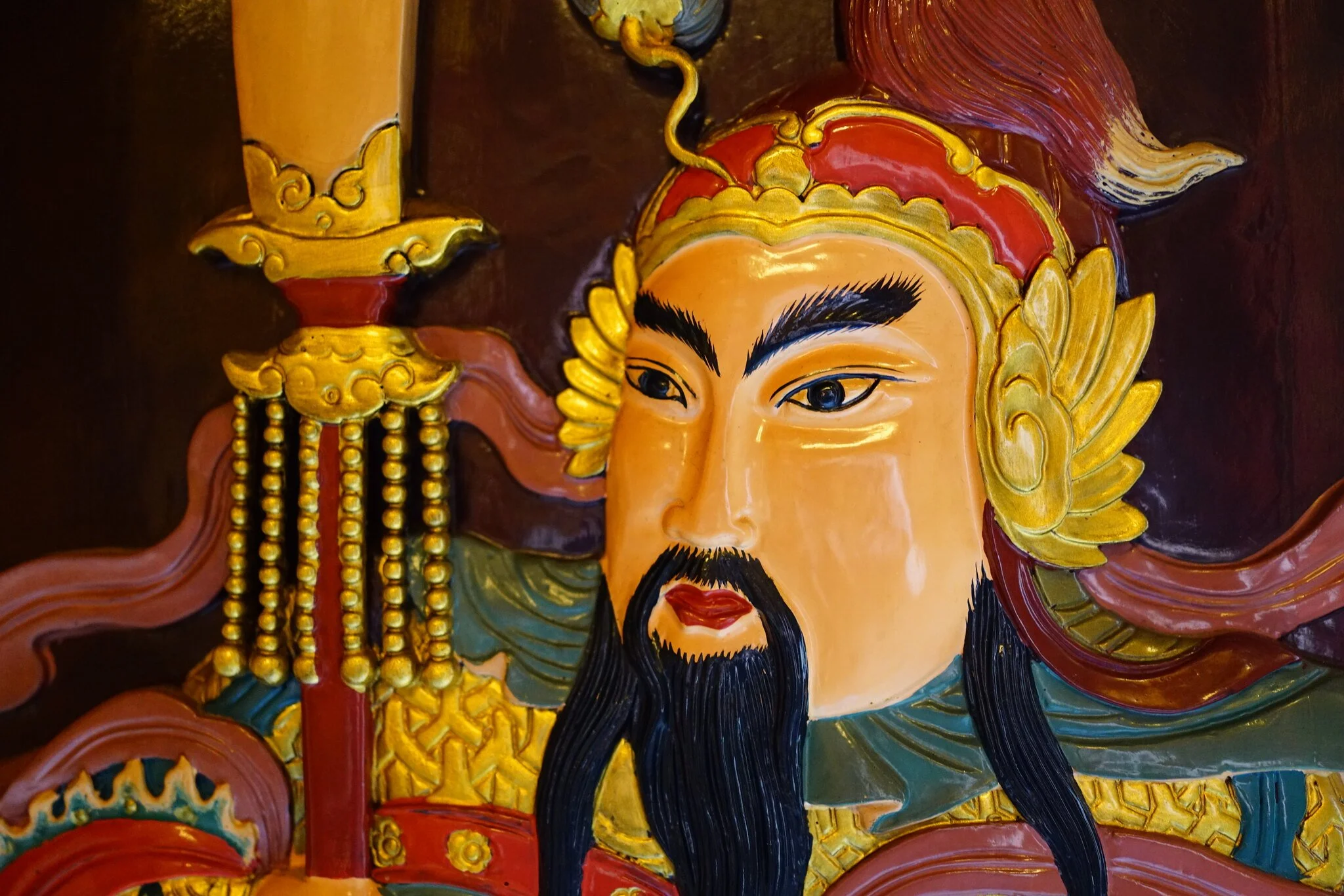
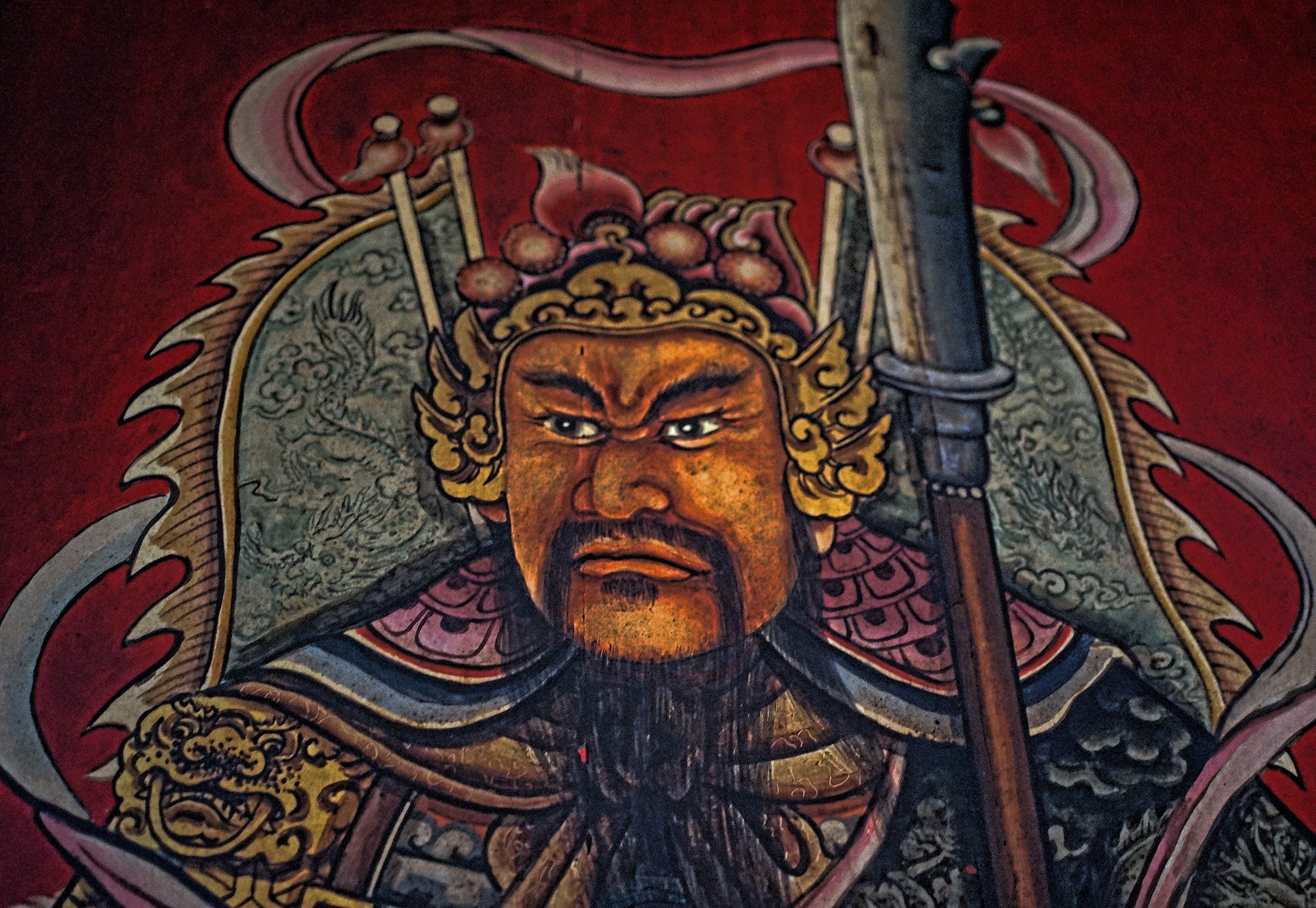
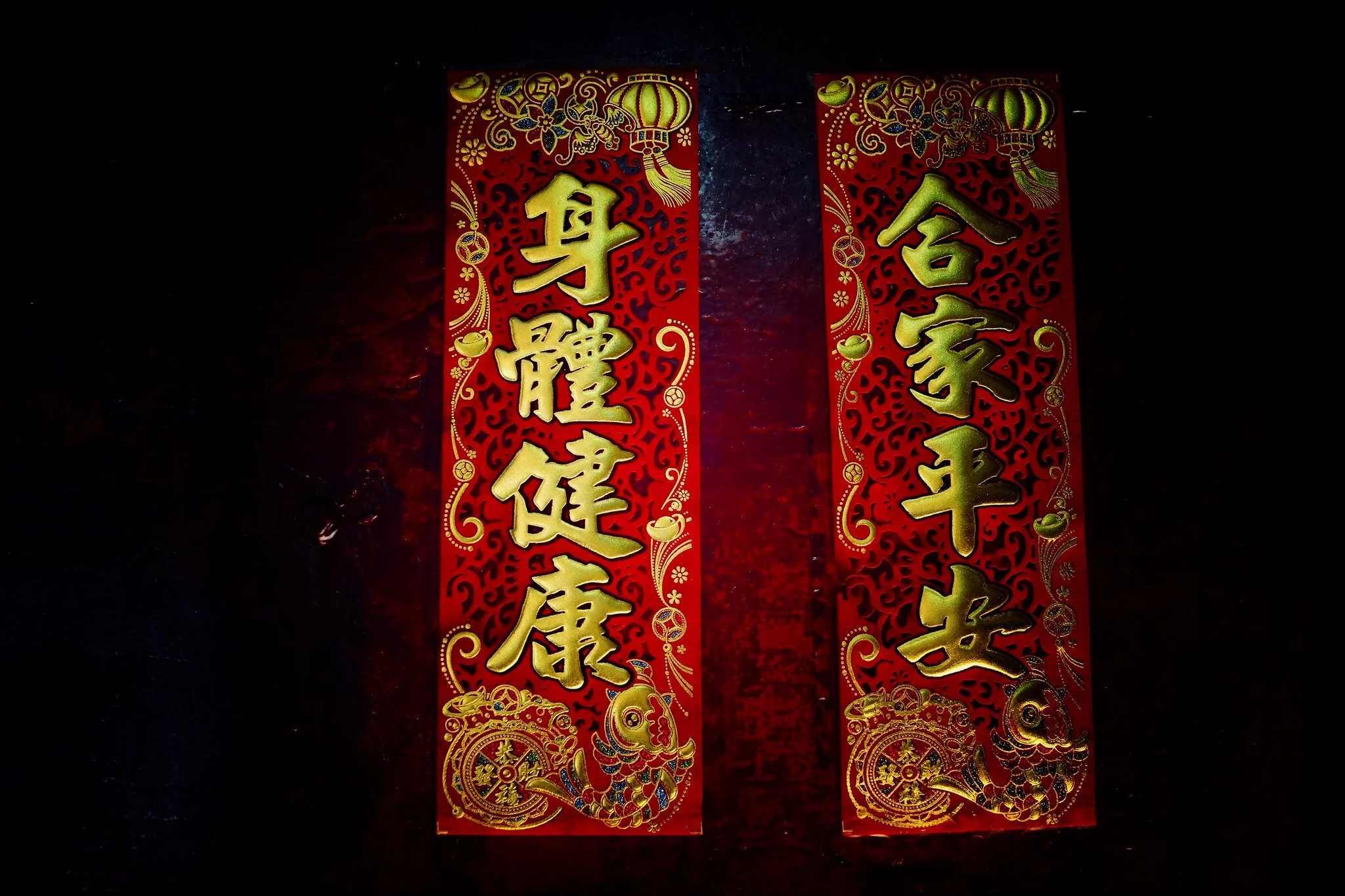
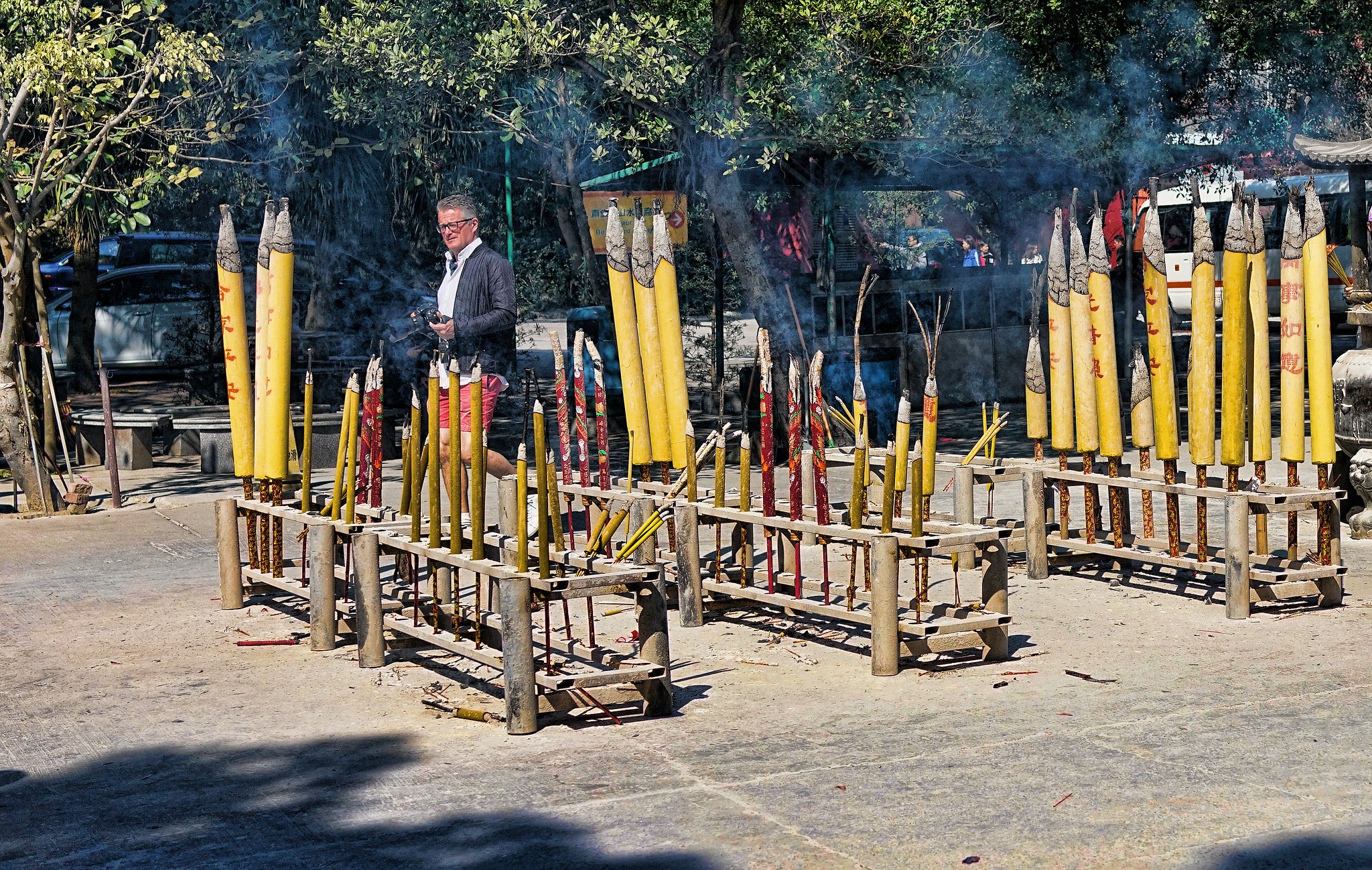
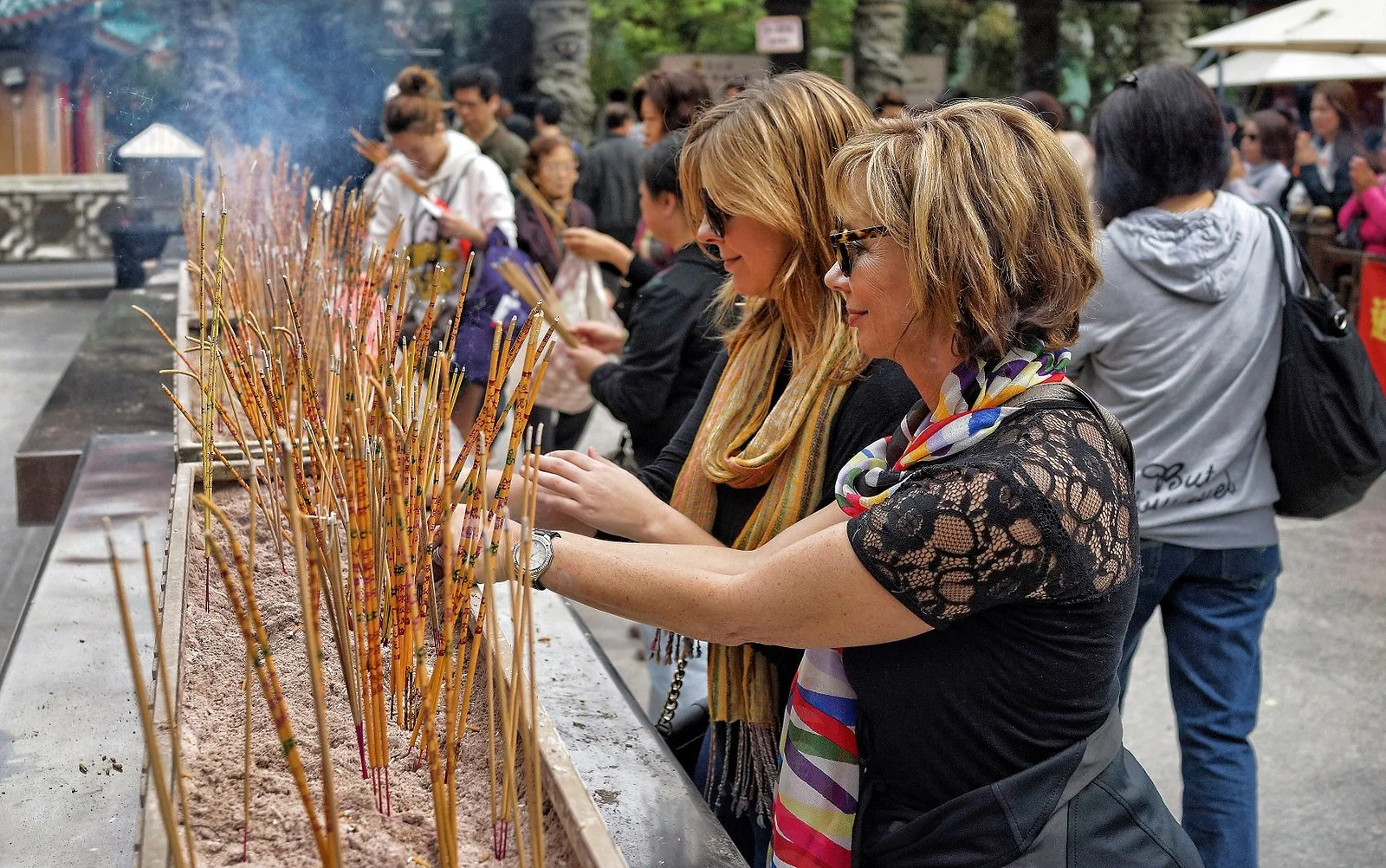
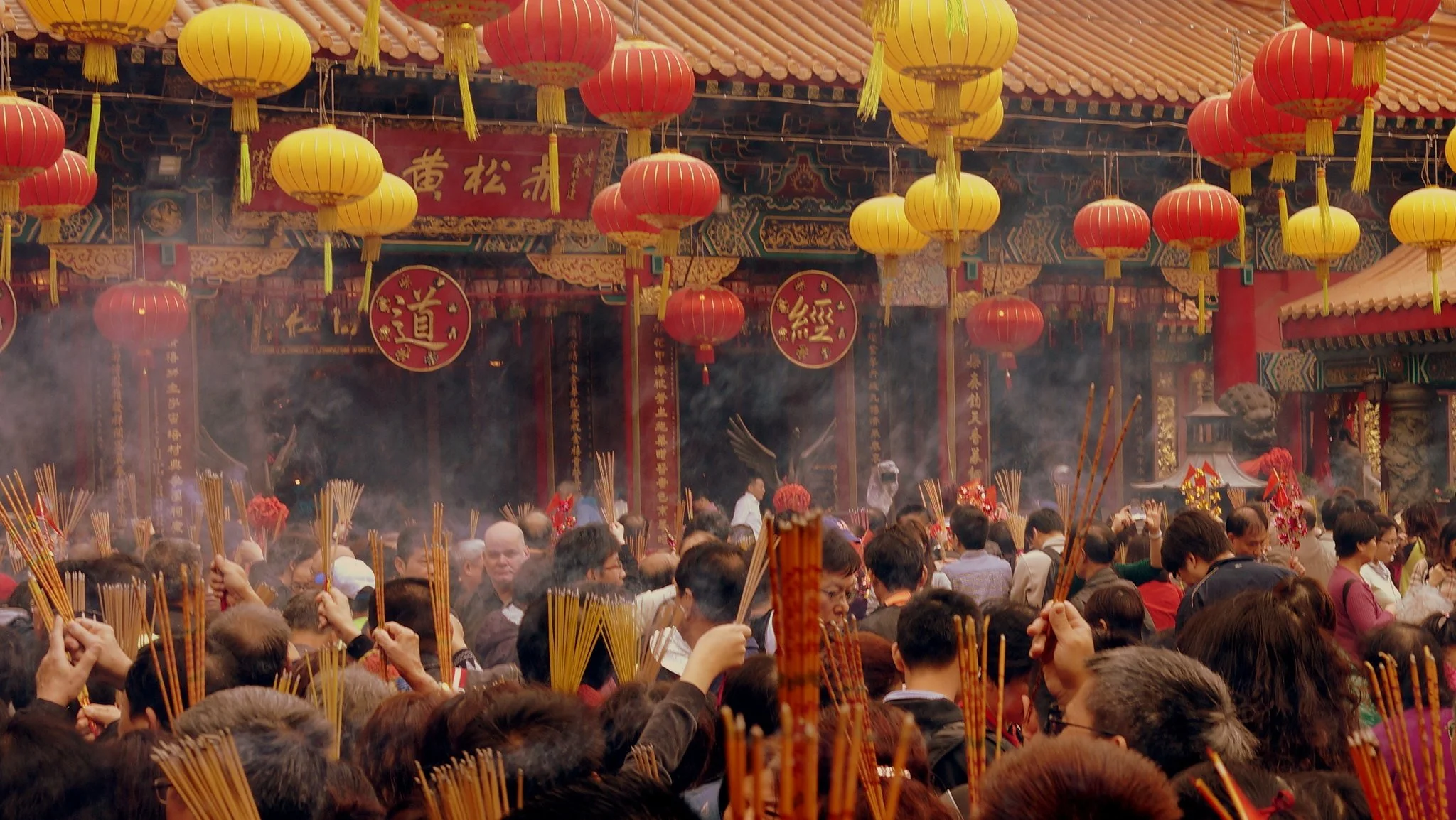
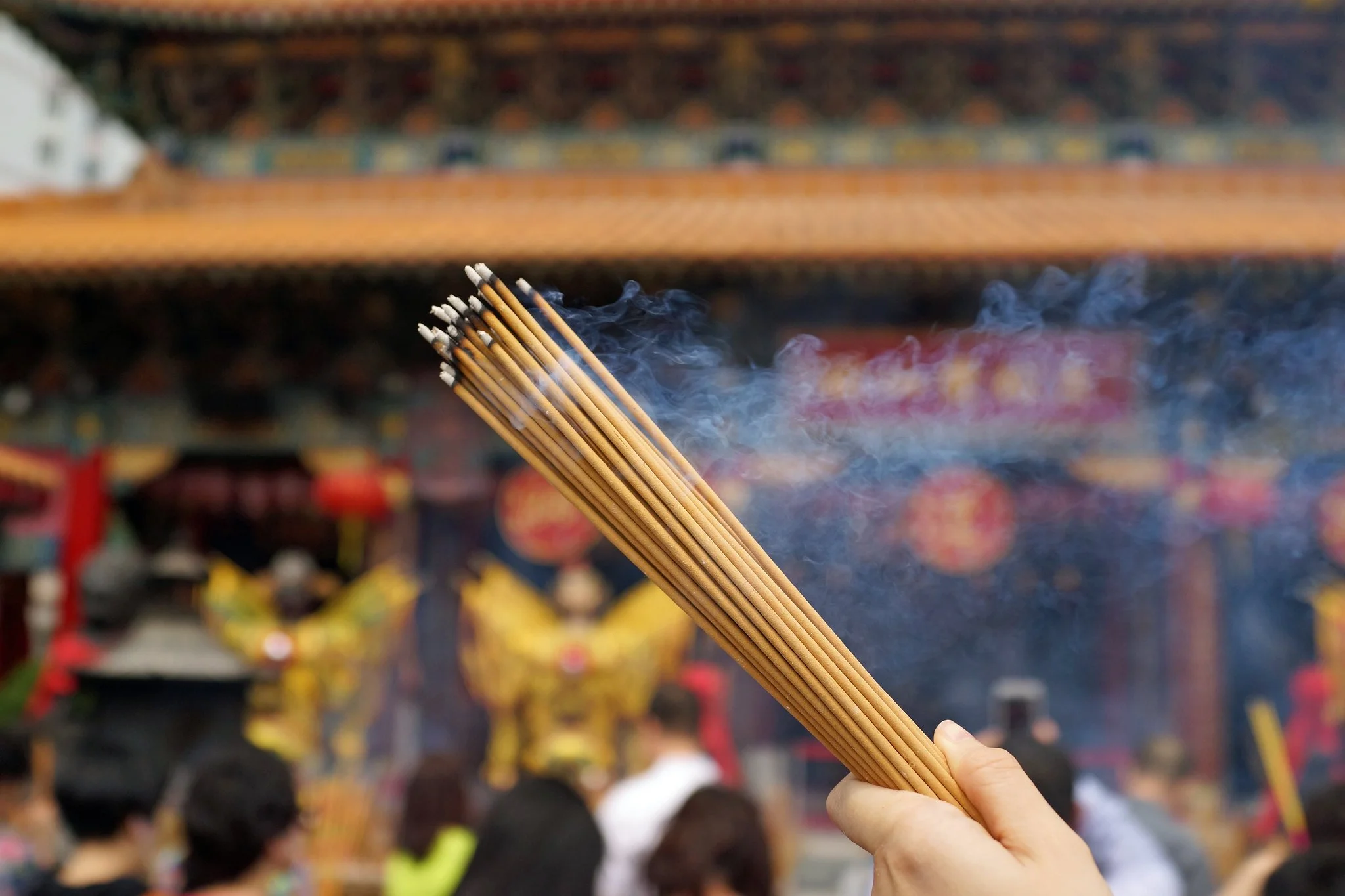
The image on the left was taken at the Po Lin Monastery on Lantau Island, the 4 images to the right where taken at the Sik Sik Yuen Wong Tai Sin in Kowloon, at certain times there should be a Government Health Warning with all that incense snokes in the air!
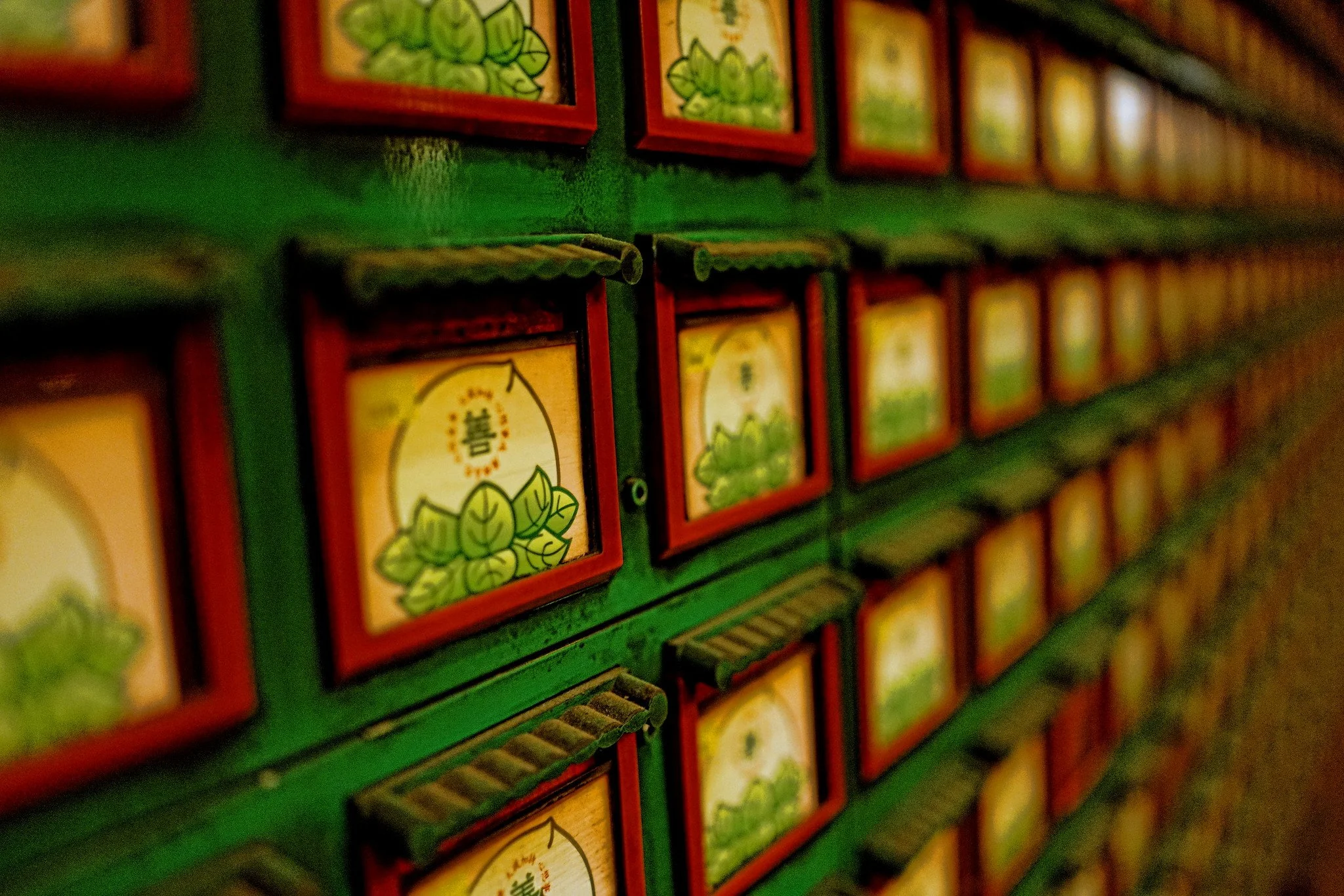
Incense is the simplest ritual most visitors will see, and the one they remember with their nose. The everyday offering is three thin joss sticks held together. That number is tradition, not a rule. In folk practice the three sticks stand for heaven, earth and humanity. In a Buddhist hall they can stand for the Buddha, the teaching and the monastic community. At a Taoist altar they may stand for the Three Pure Ones. Same gesture, different explanation depending on the building. Light them from a shared flame, hold them with both hands, bow, then plant them upright in the burner - middle first, then the two sides. Do not blow the flame out with the mouth. Wave it out. People do burn more. One stick can be a simple greeting. Five can nod to the five elements or the five directions. Festival days and the first and fifteenth of the lunar month often bring thicker bundles. A temple that cares about the air may now ask for one stick, or point everyone to a shared burner so the courtyard does not become a smoke factory.
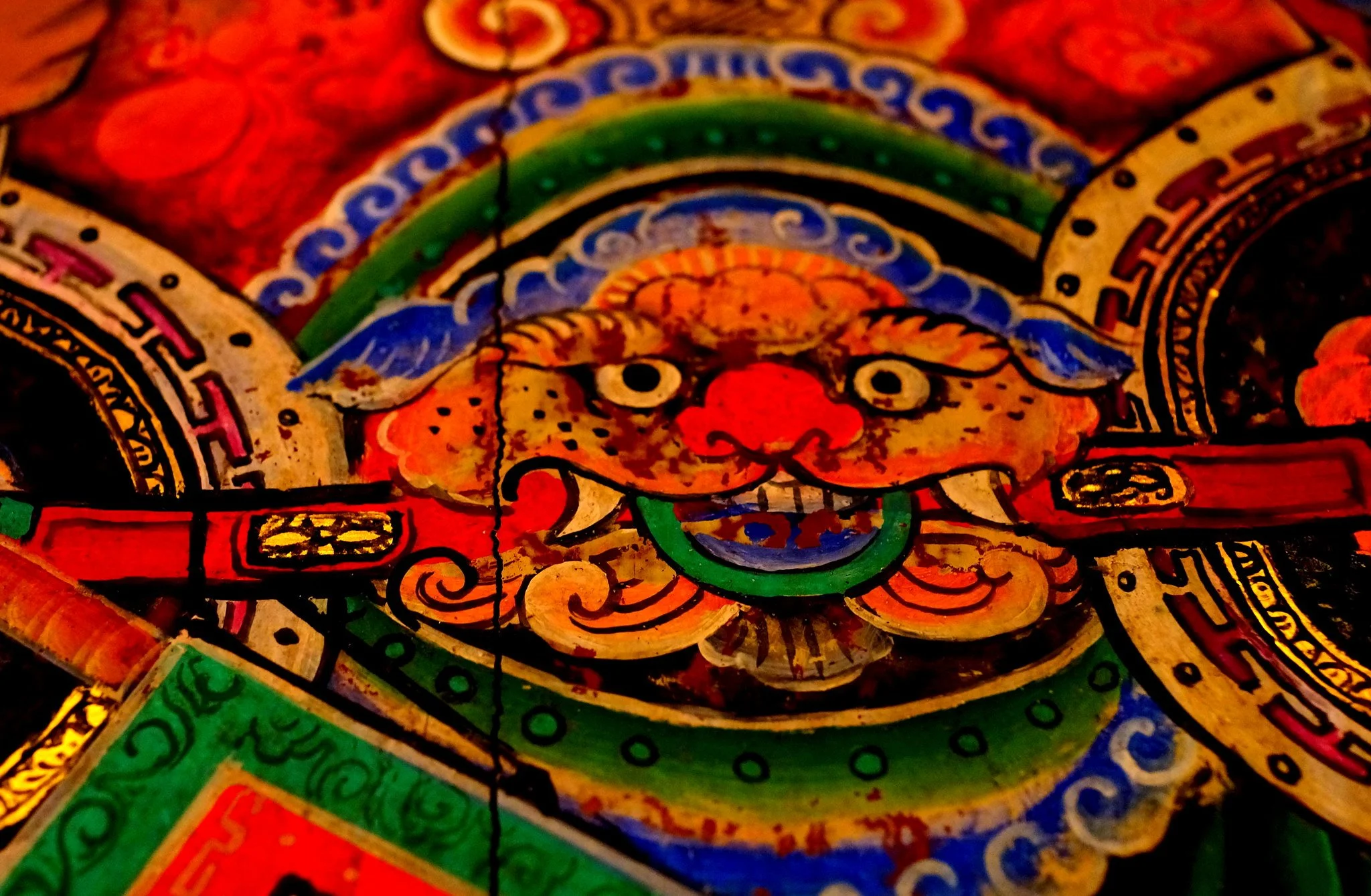
The pictures above that I took where at the Po Lin Monastery and the Sik Sik Yuen Wong Tai Sin Temple, it changes from temple to temple. The Sik Sik Yuen Wong Tai Sin Temple works at ground level. The offering is made at the great burner in front of the main hall, a wide table of ash where people stand in a row, plant their sticks and step back. It is a crowd scene, not a coil house. The hanging spirals belong to the older town temples. The Man Mo Temple in Sheung Wan is the one that ends up in photographs: coils the size of bicycle wheels, hanging from the roof beams, burning for hours. The Pak Tai Temple in Wan Chai does the same thing in a tighter courtyard. In both places the smoke sits in the air and does not leave. Anyone with asthma, a sore throat or a new white shirt should treat that as a public health notice, not atmosphere.
Then there is The Po Lin Monastery, which plays a different game. Beside the ordinary sticks sit those outdoor pillars of incense, thick as fence posts, yellow-wrapped, planted in iron racks in the monastery yard. Some are painted with characters. They burn from the top down for a long time and throw off a proper column of smoke. They cost more than the little sticks sold for a quick bow, and they are half offering, half spectacle. Anyone that has just come off the cable car will notice it. 3 temples, 3 ways of sending the same message up. Three thin sticks at a backstreet Tin Hau shrine is a handshake. The yellow pillars on Lantau are the same handshake, just thicker and smokier. For a guest who is already templed out, that is enough. Skip the theology. Point to the burner, say three sticks is the usual greeting, and move on!
Closing Thoughts
These four traditions have learned to share the same streets. Festivals still pull crowds and are heavily promoted by the Hong Kong Tourism Board. Ancestral rites still mark the year. A visitor who only photographs the Big Buddha has seen a landmark. A visitor who understands why so many local people still light three sticks of incense has started to see the city. Feng shui runs through that same landscape as practice, not as a church. That is why temples still matter, and why they cannot be forced on a guest who is already templed out. The job is to carry the belief in the storytelling, whether the day includes a shrine or not
So there you go
click on any image to enlarge
© Copyright Acknowledged | All rights reserved | images taken by Jamie