Dogs in Hong Kong - Explosion in Numbers, Popular Breeds
A Detailed Look at Dog Ownership Policies and Challenges in Hong Kong

The J3 Group - Premium Quality Private Tours | Experiences and Insider Chats since 2010
Me Jamie, your host, I am English and I have lived in Hong Kong since January 2nd 1972 - I know the place.
A meaningful blog post with a difference - tips on Travel, Tourism, Tours, Daily Life and my personal thoughts on Hong Kong.
Please do visit Amazing Hong Kong
Hong Kong | Pearl of the Orient
Customised Private Tours + Experiences in Amazing Hong Kong
Jamie has lived in Hong Kong - Pearl of the Orient for 50+ years
Carefully Crafted Personalised and Customised Itineraries by Jamie | Hong Kong’s Most Experienced Private Tour Guide for : Solo Travellers Friends Families Seniors Couples Business People MICE Delegates.
Private Tours Cultural Tours Walking Tours Sightseeing Tours City Tours Night Tours Layover Tours Transit Tours Private Shore Excursions Bespoke Tours Personalised Tours Jewish Heritage Tours Luxury Private Tours Day Tours Luxury Boat Tours Themed Tours Private Family Tours Private Day Tours Corporate Tours
Just you, your family or friends and Jamie your personal English private tour guide - over 2,400+ tours completed since 2011 - Jamie offers quality Private Tours of Hong Kong
Tour Group Size 1 - 6 people only
J3 Group Hong Kong | J3 Consultants Hong Kong | J3 Private Tours Hong Kong
Creating Memories That Will Last A Lifetime
Go here for the Hong Kong Michelin Restaurant Guide which includes the Bib Gourmand Category

A Resident since 1972 - Private Tours of Hong Kong with Jamie
The Best Things to do in Hong Kong
click on the image to enlarge
© Copyright Acknowledged | All rights reserved | Image taken by Jamie
Dogs - We All Love Them | Totally Hong Kong | Hong Kong
Foreword by Jamie
Living in Hong Kong for over 54 years and we have lived in the same apartment block for 17 years now and that has given me a front-row seat to many changes in this dynamic city, from the dramatic shifts in its skyline to the evolving rhythms of daily life in our neighbourhood. One trend that has become impossible to ignore in recent years is the noticeable explosion in the number of dogs around us.
As someone who is not particularly a dog person - though I have a soft spot for cats - and with family members who have allergies that have kept us from having pets ourselves, I find myself observing this phenomenon with a mix of curiosity and practical concern. In our apartment block in the New Territories, the early morning scene at around 8am now regularly features 10 to 20 domestic helpers walking dogs, many handling three or four at a time, with the pavement often bearing the evidence of their activities.
In addition our next door neighbours (lovely family) whose front door is literally about 18 inches from ours recently acquired a very large white dog that looks like a white wolf on steroids and is the size of a small horse and guess what, it likes to bark, a lot., not a huge problem but the wife is terrified of the darn thing, I reckon in our block which has 120+ apartments there are at least 40 dogs, maybe more and some of them are quite skittish and quite a few of them have muzzles which to me anyway sends the wrong message.
This has prompted me to delve deeper into the reasons behind the surge, including the significant role played by domestic helpers, the practicalities of dog ownership here, government policies, and some of the challenges that come with it. What follows is a detailed look at dogs in Hong Kong, drawing on available statistics and observations, presented in my usual style with plenty of context.
Dog Population Trends in Hong Kong (2016 - 2025)
Hong Kong has seen a significant rise in pet ownership, particularly dogs, over the past decade. The growth was especially noticeable during the COVID-19 period, driven by more time spent at home and a desire for companionship. Figures show the dog population increasing markedly before easing slightly post-pandemic as routines returned to normal, though overall pet-keeping culture remains strong in this dense urban environment.
Around 2018 - 2019: Dog numbers were estimated in the range of 250,000 to 300,000, with household ownership around 9 - 11 percent.
Peak during pandemic (2020 - 2021): Surge towards higher numbers as "pandemic pets" became common.
By 2023: Approximately 304,000 dogs, with some broader estimates placing the figure around 430,000 in recent years reflecting the growing pet economy.
This trend aligns with rising affluence, changing lifestyles in small apartments, and the appeal of small companion animals. Surrender rates rose again after the pandemic in some years, highlighting the realities of impulse decisions.
The Role of Domestic Helpers in Dog Walking
A key factor in the visible explosion of dogs on our streets is the central role played by foreign domestic helpers (FDHs). Hong Kong employs around 368,000 to 400,000 FDHs, who make up roughly 10 percent of the local workforce and about 5 percent of the population. These live-in workers, predominantly women from the Philippines and Indonesia, handle a wide range of household duties, and dog walking has become a common additional responsibility for many.
In apartment blocks like ours, it is routine to see groups of helpers taking multiple dogs out first thing in the morning. This allows working owners to maintain pets despite long hours and confined living spaces. Helpers provide essential exercise and care, enabling the pet boom in a city where most residents work full-time. However, managing several dogs at once can lead to challenges with training, cleanup, and control, especially with skittish small breeds in busy lifts and crowded areas.
Personally I think the story is more complex, our domestic helpers have a life of drudgery unless they have nice employers and then on top of that they have to look after dogs as well (and they have no say in the matter) and a small dog requires the attention much like a new baby gets and I have no doubt that the helpers are not paid any extra for these extra duties
Provisions in the Standard Domestic Helpers Contract Regarding Dog Duties
The standard Employment Contract for Foreign Domestic Helpers (Form ID 407) does not explicitly list "dog duties" as a separate category. Instead, it requires helpers to perform domestic duties as detailed in the attached Schedule of Accommodation and Domestic Duties. This schedule is flexible and agreed upon by the employer and helper. Pet care, including dog walking, feeding, and general attention, is commonly treated as part of household chores or child | elderly care extensions.
Employers often specify these responsibilities when hiring, and helpers who accept the contract are expected to carry them out alongside cooking, cleaning, and other tasks. The contract emphasises that helpers should only perform domestic duties for the named employer at the specified address, but pet-related work falls squarely within that scope for most families. This arrangement explains why dog ownership feels sustainable for so many busy households.
So in a nutshell if they have no inclination to look after dogs then it could seriously limit employment opportunities, I know my view is probably not the common belief in Hong Kong, we had a house maid for 40 years but to us she was a member of the family and was indispensable and that was also a factor when our dog allergic son moved out (his younger brother is allergic to cats!) we could have gotten a dog but that meant a lot of extra work for our helper who had enough on her plate.
The obvious issue that no one seems inclined to address is the messiest part of the job which is dogs poop, a lot and clearly the apartment tenants want that business to be done in the street and not in the apartment, I would say from persaonal observation over the yeats that perhaps about 80% of people scoop the poop or or pour water on the pee, you can actually see them have a furtive glance before scuttling off leaving our building maintenance staff to clean up.
Filipino Helpers and Dog Care
In general, Filipino helpers appear much more comfortable with looking after dogs compared to some of their Indonesian counterparts. Many job postings specifically seek Filipino helpers with pet experience, and cultural factors (with the majority being Catholic and fewer religious prohibitions around dogs) seem to play a role. Filipino helpers often have positive attitudes toward pet care, viewing it as part of their domestic responsibilities, though individual comfort levels still vary. This makes them a popular choice for families with dogs.
Cultural and Religious Considerations for Indonesian Helpers
Roughly half of Hong Kong's FDHs are from Indonesia and are typically Muslim. In Islam, dogs are traditionally viewed as unclean (najis), which raises the question of how this works in practice for helpers hired by families with dogs. The reality is pragmatic. Employers often specify pet care duties, including dog walking, when hiring through agencies, and they seek helpers with prior experience or willingness to handle animals. Helpers who express strong objections may not be matched with pet-owning families.
Refusing dog-related duties after being hired can lead to tensions, as the standard employment contract requires FDHs to perform agreed domestic duties. While there is recognition of cultural and religious differences - such as accommodations for prayer times, dietary needs, or modest dress - pet duties are often treated as part of the job. Some Muslim helpers adapt by wearing gloves, limiting direct contact, or drawing on prior exposure. Agencies typically filter candidates based on family requirements.
In other words and in plain English, these are your duties, suck it up and get on with the job we hired you to do (and is in your contract)
Pork in the Household: Dietary Accommodations for Indonesian Helpers
Pork is a staple in many Hong Kong Chinese households, which creates another layer of cultural navigation for Indonesian Muslim helpers. In practice, the approach is similarly pragmatic. During the hiring process, agencies frequently ask candidates whether they are willing to cook or handle pork. Many Muslim helpers indicate yes to secure employment, even if it conflicts with personal beliefs, due to economic pressures and the need to complete contracts and support families back home.
Helpers generally do not eat pork themselves but may prepare it for the family. Some households provide separate utensils or cooking tools to minimise contact, while others rely on good communication and mutual understanding. Employers are encouraged to respect religious practices, such as providing halal food options or a food allowance (currently around HK$1,236 or US$158 per month if not providing meals). The standard employment contract emphasises suitable food arrangements, and many families adjust by preparing separate meals or allowing helpers to cook their own dishes. It is not uncommon for helpers to seek Muslim-friendly employers when possible, but in a city where pork features heavily in dim sum, stir-fries, and family meals, compromises are routine. This reflects the broader dynamics of migrant labour in Hong Kong, where economic necessity often shapes daily realities.
I bring all this stuff up because it is totally relevant to the reality that these young helpers face and they have no real option but to agree to the terms.
Speculation on Dog Ownership Without Domestic Helpers
I often wonder whether dog ownership would be nearly as popular in Hong Kong if families did not have the support of domestic helpers to deal with the animals. My own observations suggest that helpers are essential when it comes to looking after dogs in this high-pressure, space-constrained city. Most households with pets rely heavily on live-in FDHs for daily walks, feeding, grooming, and general care, especially during long working hours. Without this assistance, the practical burdens of apartment living - frequent lifts rides, limited exercise space, and the need for consistent routines - would likely deter many potential owners. It is a fair speculation that the pet population surge owes much to this unique labour structure, which effectively outsources much of the hands-on work. This reliance raises interesting questions about sustainability and the true cost of pet ownership when factoring in the human element behind the scenes.
… and I will bring this up again, based on my observations, having a dog is no different to having a small child, we had 3 boys so we know from first hand experience. one of my nieces in Hong Kong and her live in fiancee have quite a large dog, they have no helper for cost reasons and both work full time 5 days a week and the dog is left to it’s own devices when they are at work, I can only surmise the state of the apartment every day when they get home after work, it is something they do not talk about and that tells me everything I need to know.
Dogs as Fashion Accessories: Is There Truth to the Assumption?
There is certainly some truth to my observation that many small dogs in Hong Kong function as fashion accessories, particularly among younger urban residents. Trendy, portable breeds like toy poodles, French Bulldogs, and Shih Tzus are frequently seen carried in designer bags or matching outfits, featured prominently in social media posts, and chosen more for their aesthetic appeal and Instagram-worthiness than for traditional companionship roles. In a city obsessed with image, status, and social media, these small dogs have become stylish statements that complement outfits and lifestyles. This phenomenon contributes to the surge in ownership, but it also raises concerns about impulse purchases, inadequate training, and higher surrender rates when the novelty wears off. Not all owners treat dogs this way, of course - many form genuine bonds - but the accessory aspect is hard to ignore on the streets and in trendy districts.
Popular Breed in Our Block: The Shiba Inu
In our own apartment block, one breed stands out as particularly popular - a Japanese breed that looks like a compact or "midget" wolf. (my words!) This is very much like the Shiba Inu. While Richard Gere starred in the film Hachi: A Dog's Tale (which features the larger Akita breed), the Shiba Inu is a smaller, fox | wolf-like Japanese breed that has gained huge popularity worldwide and in Hong Kong for its alert expression, independence, and striking appearance. They fit perfectly into apartment life and are often chosen for their photogenic qualities, aligning with the fashion accessory trend.
Most of the ones I encounter every day are lovely and friendly but some can be quite skittish and will show their teeth

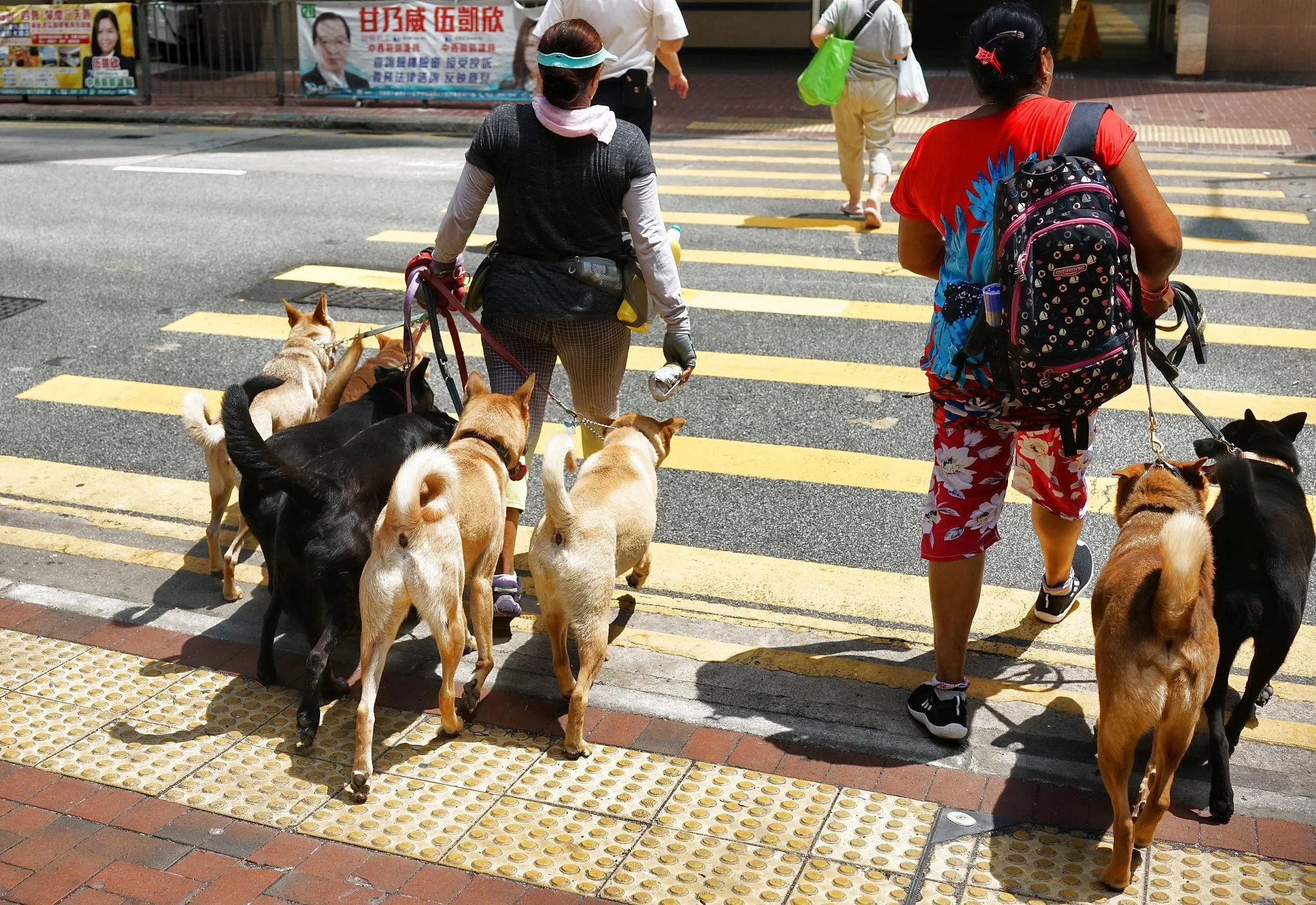
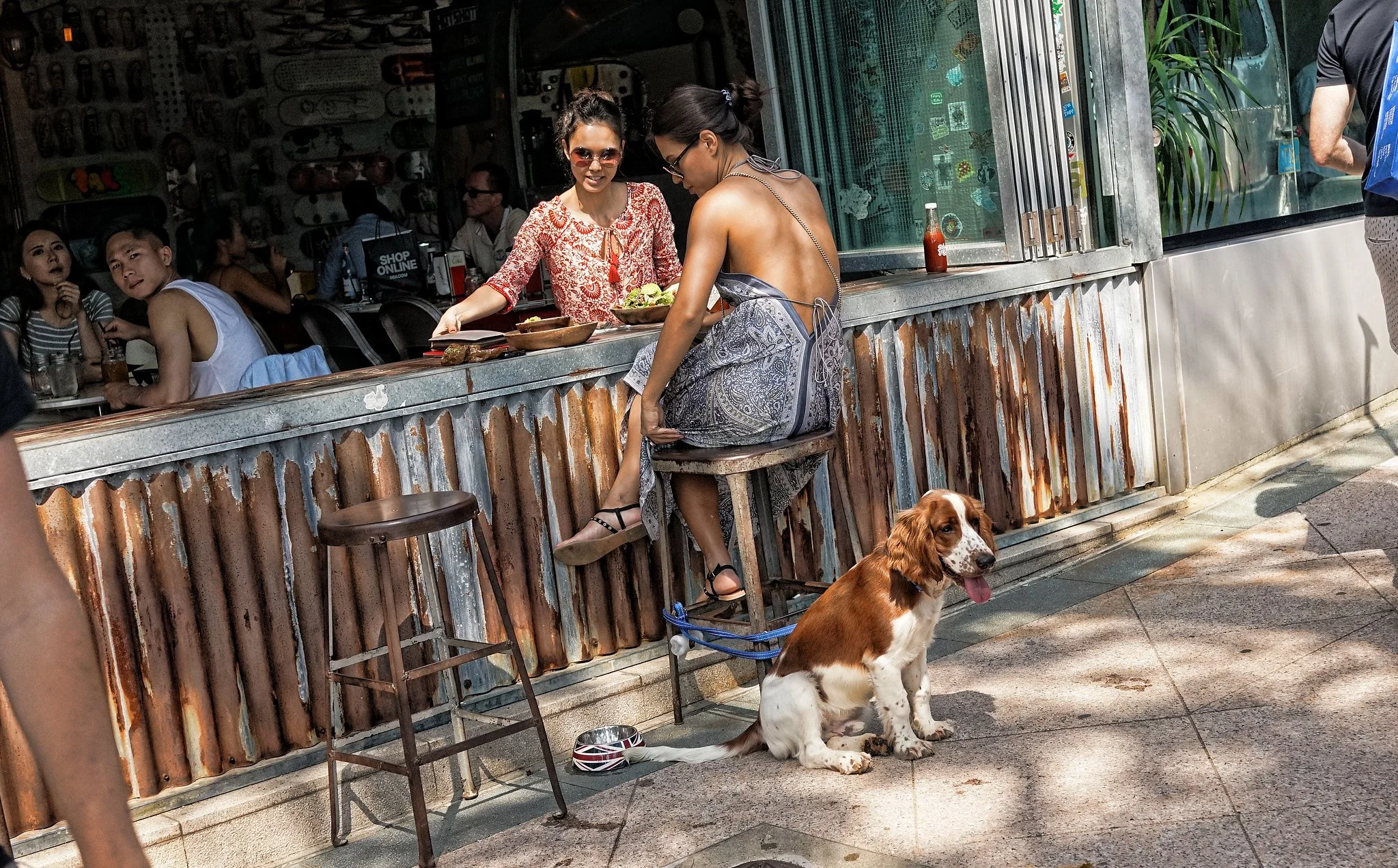
click on any image to enlarge
© Copyright Acknowledged | All rights reserved | Images taken by Jamie
Dogs - We All Love Them | Popular Breeds | Hong Kong
Top 5 Most Popular Dog Breeds
Small breeds dominate in Hong Kong due to apartment living and limited space. Compact, lower-maintenance dogs that fit easily into daily routines are clear favourites, often portable and suitable for busy urban owners, including those relying on helpers for walks.
Toy Poodle or similar small poodles - Popular for their size, intelligence, and hypoallergenic qualities.
Shiba Inu - Energetic yet manageable, with strong appeal due to their distinctive look.
French Bulldog - Compact, affectionate, and very trendy among city dwellers.
Shih Tzu - Classic lap dogs well-suited to smaller homes.
Mixed breeds including local "Tong Gau" (Hong Kong village dogs) and other hardy crosses -
Common and resilient options alongside purebreds like Golden Retrievers for those with more space.
My own observation that many small dogs serve as accessories, particularly for young ladies posting on social media, rings true in many street scenes and up until quite tecently at a small village next to our apartment bloks we had a real issue with a pack of seemingly wild or stray dogs, looks like that issue was resolved.
Registration and Licensing Procedures
All dogs over five months old must be licensed.
This involves rabies vaccination, mandatory microchipping, and obtaining a dog licence. Owners aged 18 or above with a Hong Kong ID card can apply, bringing the dog along. The fee is a modest HK$80 (about US$10) per dog, with the licence valid for up to three years. Applications are handled at AFCD centres, authorised vets, or the SPCA. Microchipping ensures identification and supports responsible ownership tracking.
Sources of Dogs: Pet Shops, SPCA, and Others
Dogs are acquired from licensed pet shops selling pedigree puppies or through adoption from welfare organisations. The SPCA and similar groups strongly promote adoption to reduce strays and surrenders. AFCD operates animal management centres that facilitate rehoming. Responsible sourcing is encouraged, with emphasis on avoiding impulse purchases that can lead to later problems.
Ballpark Prices for Small Dogs from Pet Shops
Prices vary considerably by breed, age, pedigree, and seller, but a standard small dog such as a toy breed or mix from a pet shop typically ranges from HK$5,000 to HK$20,000 (US$640 to US$2,560), with trendy or premium breeds like French Bulldogs often commanding HK$30,000 to HK$50,000 (US$3,850 to US$6,400) or more. Add to this ongoing costs for food, grooming, training, and veterinary care, which can accumulate rapidly in Hong Kong's environment.
Key Organisations Dealing with Dog Ownership
The primary government body is the Agriculture, Fisheries and Conservation Department (AFCD), which handles licensing, registration, and overall oversight. The Society for the Prevention of Cruelty to Animals (SPCA) plays a major role in adoption, welfare, veterinary services, and education. AFCD runs several animal management centres, while other rescues and welfare groups provide additional support for rehoming and responsible ownership initiatives.
Number of Vets and Veterinary Costs
Hong Kong has over 1,000 registered veterinary surgeons, with clinics spread across the city, including 24-hour facilities and specialists. Vet fees are notably high due to the cost of operating in this environment. A basic consultation often ranges from HK$500 to HK$1,000 (US$64 to US$128) or more, with after-hours, emergency visits, tests, or surgeries running into thousands or tens of thousands of Hong Kong dollars. Pet insurance has become increasingly popular to help manage these expenses.
Top 5 Reasons Dogs Visit the Vet
Common issues prompting veterinary visits in Hong Kong mirror global patterns but are influenced by urban apartment life:
Skin conditions and allergies.
Ear infections.
Digestive or stomach problems such as vomiting and diarrhoea.
Eye issues.
Urinary tract infections or dental problems.
Routine vaccinations, parasite prevention, and check-ups are also frequent.
Government Policy and Central Registry
The AFCD maintains the central dog licensing registry and oversees pet ownership policies, promoting responsible practices. Microchipping supports tracking, though there is no broader mandatory registry for all pets beyond dogs over five months. Policies continue to evolve with the growing pet economy.
No Pets in Public Housing
The policy prohibiting dogs in public rental housing estates remains in place for hygiene and nuisance reasons. Small household pets such as cats or birds are generally allowed, with exceptions for guide dogs or companion dogs under special medical approval and Housing Authority discretion. Pre-existing small dogs were grandfathered in earlier adjustments, but new acquisitions of dogs are restricted. The Home Ownership Scheme (subsidized sale flats) often follows similar restrictions through individual estate rules.
Public rental housing has the strictest dog ban; HOS has variable but often similar restrictions via estate rules. Roughly 45 - 50% of the population lives in public | subsidized housing.
Banned Breeds
Import, breeding, and ownership of certain fighting breeds are strictly controlled or prohibited: Pit Bull Terrier, Dogo Argentino, Japanese Tosa, Fila Brasileiro, and their crosses. These are classified as fighting dogs and face bans on importation and breeding. Known dangerous dogs may also be subject to magistrate orders, muzzling, and other controls. Large dogs over 20kg generally require leashing in public.
Dogs on Public Transport and in Restaurants
This is a very touchy subject in Hong Kong
Personally I would not like the MTR (Subway System) to allow dogs given that dogs are very prone to pooping (regular and messy) and peeing at the nearest pole (our subway carriages have loads of poles) I doubt very much I am in the minority here
There are roughly 5 million passenger journey’s a day on the MTR and image skittish, nervous and barking dogs in the carriage
Public transport in Hong Kong remains largely restrictive when it comes to dogs. Guide dogs are permitted, but regular pet dogs have faced strict limits. On the Light Rail system (mainly serving parts of the New Territories), there has been an ongoing “Cat/Dog Carrying Scheme” since September 2025 (following a successful pilot), allowing one small pet cat or dog in a carrier on weekends and public holidays with a monthly pass.
For the main MTR regular subway system (99 stations), the situation was even stricter until a one-day special event. On 1 March 2026, as part of the SPCA Dogathon fundraiser, MTR Corporation allowed up to 1,200 small-to-medium dogs (in fully enclosed carriers or backpacks only - no strollers) to travel on most lines for the first time ever. This was limited to the last carriage of trains, required pre-registration via a HK$90 “Woof Pass” donation to SPCA, and excluded certain stations (Airport Express, West Kowloon, Racecourse, Lo Wu, Lok Ma Chau). It was a temporary, event-specific arrangement - not the start of permanent access.
There is no evidence in 2026 that MTR Corp is seriously considering a permanent policy allowing dogs on the regular MTR subway system, whether through a dedicated dog-only carriage or general access to all carriages. The March event was framed as a one-off support for the charity, with MTR officials emphasising careful planning and passenger comfort. My concerns about dogs regularly pooping or peeing (and the practical nightmare of poles and floors in carriages) are precisely the sorts of hygiene and operational issues that make broader access highly unlikely in the near term.
Another personal observation, I have witnessed people barfing in an MTR Carriage and everyone in the carriage gets off at the next station! so imagine what would happen when a dog does his business.
Surveys from the Light Rail scheme showed high satisfaction among both pet and non-pet owners, but that was in a more open, less crowded environment. In the dense, high-volume MTR carriages, most residents would likely share your scepticism - and MTR appears to be proceeding with extreme caution. On a related note, the growing use of strollers for multiple small dogs raises its own questions - the whole point of taking dogs out is surely fresh air, exercise, and the chance to do their business properly, yet many owners seem content to wheel them around without letting them walk much at all.
For restaurants, a new policy introduced in 2026 allows licensed premises to apply for permits to welcome dogs under strict conditions (leashed, designated areas, no contact with food preparation or tables). Applications opened in May 2026, with the first approvals and implementation expected from mid-2026 onwards, initially covering up to around 1,000 venues. This aims to support the pet economy while maintaining hygiene standards.
Personal Observations and Thoughts
I have no issue with dogs or responsible owners, but the daily reality on our streets - fouling pavements, with cleaners hosing down areas multiple times a day because not everyone scoops responsibly - raises legitimate hygiene concerns in a crowded, high-density city. Not all dogs are well trained, and small ones can be skittish in lifts or around children.
The accessory aspect for social media is evident, and apartment living means space constraints that can lead to behavioural issues or surrenders if owners are unprepared. Domestic helpers shoulder much of the walking burden, which is a practical solution but one that sometimes results in groups of dogs and variable levels of control. The cultural dimensions with Indonesian Muslim helpers - whether handling dogs or preparing pork-heavy meals - add layers of complexity in a city reliant on their labour.
Without helpers, I suspect the popularity of dog ownership would be considerably lower, as the day-to-day demands would fall squarely on busy families. While policies are becoming more accommodating, a better balance is needed to respect non-owners and shared public spaces. Proper training, consistent scooping, and mutual consideration would go a long way.
Suggestions and Out-of-Left-Field Comments
Stronger public education campaigns on responsible ownership and waste management, perhaps targeted at both owners and helpers.
More designated dog-friendly parks or relief areas with proper facilities.
Encouragement of adoption and thorough pre-purchase research to reduce impulse buys.
Monitoring the new restaurant and transport pilots closely for real-world impacts.
Perhaps a tongue-in-cheek note: in a city of skyscrapers and tiny flats, those small yapping dogs are basically furry lift companions - charming to some, startling to others - and their helper escorts are the unsung heroes keeping the whole system moving, even when it crosses cultural and religious lines.
So there you go
Jamie’s Hong Kong Insider Chat
Ready to turn your plans into a far more enjoyable reality? Click the yellow button below to learn more about Jamie’s Hong Kong Insider Chat, check pricing and book a convenient time
I do not do Food Tours in Hong Kong but I know people that do!

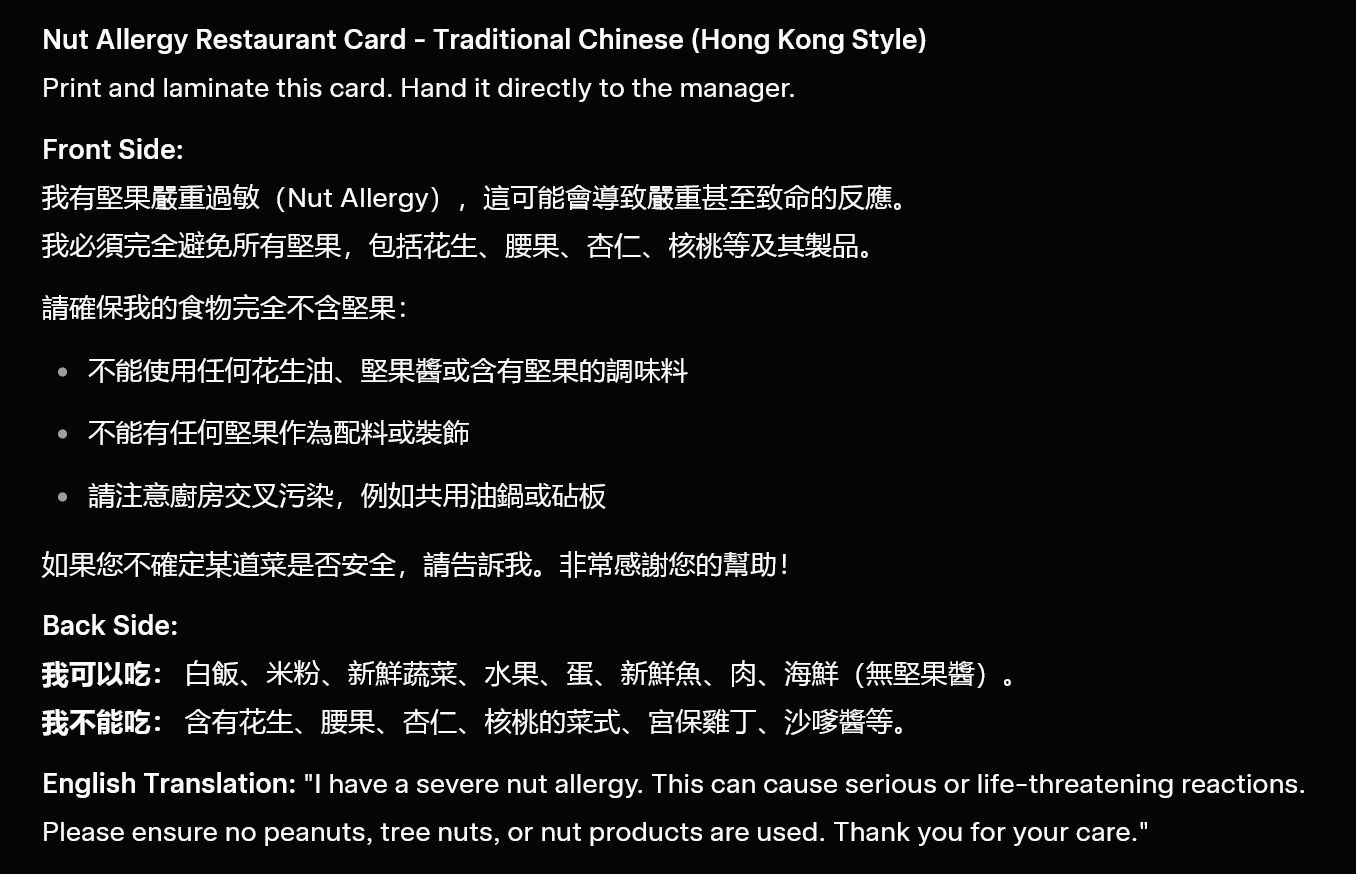
click on any image to enlarge
The information above can be shown to restaurant managers in Hong Kong if you are intolerant to gluten and nuts,
I do not do food tours as mentioned above, I have very specific reasons and part of it is that I do not speak Cantonese or write Chinese, I am from Yorkshire in England and I lack the language gene and it is not through lack of trying and yes a lot of restaurants do not have English menu’s or staff who speak conversational English.
.. and yet I have eaten at close to 1,400 restaurants in Hong Kong since January 2nd 1972, my wife was born in Hong Kong and we have been together over 40 years and her first language is Cantonese and a lot of her family are Chinese or half Chinese so I have never had much of an issue!
This does not translate to doing food tours though, yes, I could do them, no problem there but they would never ever be as good as the food tours done by my friends (see the 3 links above) most of their awesome guides are locally born Hong Kong Chinese and obviously food culture is part of their DNA, it is impossible for me to compete with that!
So please feel free to contact them for food tours
I do not do Hiking Tours in Hong Kong but I know someone that does!
I do not do Hiking Tours, never have and never will even though I used to go Hiking a lot when I was a lot younger, The Hong Kong Government is promoting hiking tours so I urge you to contact my friend Sabrina at Hong Kong Trails and Tours, she is a long time Hong Kong resident and and a very experienced hiker with close to 700 Hikes in 15+ years under her belt, please click on the link below










click on any image to enlarge
© Copyright Acknowledged | All rights reserved | all images taken b Jamie
Jamie’s Hong Kong | Some of my favourite images | Hong Kong 101
© Jamie Lloyd | J3 Consultants Hong Kong | J3 Private Tours Hong Kong |
| 2010 - 2026 All rights reserved. |
Click on any image to enlarge to full screen









Current images from my Instagram feed