10 things you did not know about the Big Buddha Hong Kong
Why the Big Buddha Is First and Foremost a Hong Kong Tourist Attraction
The J3 Group - Premium Quality Private Tours | Experiences and Insider Chats since 2010
Me Jamie, your host, I am English and I have lived in Hong Kong since January 2nd 1972 - I know the place.
A meaningful blog post with a difference - tips on Travel, Tourism, Tours, Daily Life and my personal thoughts on Hong Kong.
Please do visit Amazing Hong Kong
Hong Kong | Pearl of the Orient
Customised Private Tours + Experiences in Amazing Hong Kong
Jamie has lived in Hong Kong - Pearl of the Orient for 50+ years
Carefully Crafted Personalised and Customised Itineraries by Jamie | Hong Kong’s Most Experienced Private Tour Guide for : Solo Travellers Friends Families Seniors Couples Business People MICE Delegates.
Private Tours Cultural Tours Walking Tours Sightseeing Tours City Tours Night Tours Layover Tours Transit Tours Private Shore Excursions Bespoke Tours Personalised Tours Jewish Heritage Tours Luxury Private Tours Day Tours Luxury Boat Tours Themed Tours Private Family Tours Private Day Tours Corporate Tours
Just you, your family or friends and Jamie your personal English private tour guide - over 2,400+ tours completed since 2011 - Jamie offers quality Private Tours of Hong Kong
Tour Group Size 1 - 6 people only
J3 Group Hong Kong | J3 Consultants Hong Kong | J3 Private Tours Hong Kong
Creating Memories That Will Last A Lifetime
Go here for the Hong Kong Michelin Restaurant Guide which includes the Bib Gourmand Category

A Resident since 1972 - Private Tours of Hong Kong with Jamie
The Best Things to do in Hong Kong
click on the image to enlarge
© Copyright Acknowledged | All rights reserved | image taken by Jamie
The Big Buddha | Totally Iconic | Hong Kong
Foreword by Jamie
10 Things You Did Not Know About the Big Buddha in Hong Kong
Having lived in Hong Kong for more than five decades and spent countless hours guiding visitors around its landmarks, one develops a rather grounded perspective on places like the Tian Tan Buddha. It is undeniably an impressive achievement - a 34-metre bronze figure that dominates the Ngong Ping skyline and features in thousands of visitor photographs every week. Yet behind the scale and the serenity lie layers of deliberate symbolism, engineering ingenuity, spiritual tradition and practical management decisions that most day-trippers never pause to consider.
At the same time, the reality on the ground is far more mixed than the official narratives sometimes suggest. Most people who make the trip are not devout Buddhists seeking enlightenment but ordinary folk after a pleasant day out, some fresh air, and a few memorable images. The site has always operated in that space between genuine spiritual intent and large-scale tourism, and that tension is part of what makes it so quintessentially Hong Kong.
A useful comparison often comes up in conversation with fellow long-time residents and tourism professionals: Rio de Janeiro’s Christ the Redeemer. The two statues are broadly similar in scale. Christ the Redeemer stands approximately 30 metres tall (with an 8-metre pedestal for a total of around 38 metres), while the Tian Tan Buddha reaches 34 metres on its three-tiered base. Both are iconic, both overlook major cities, and both are visited by millions annually. Christ the Redeemer was named one of the New 7 Wonders of the World in 2007, a title that amplified its global profile. Yet like the Big Buddha, it is overwhelmingly a tourism site with a religious veneer. The religious significance is real for some, but the dominant experience for most visitors is that of a spectacular viewpoint and photo opportunity. Both places illustrate how grand religious monuments function in the modern world - as powerful cultural symbols that draw crowds primarily for the experience and the images.
What follows explores 10 aspects that go beyond the standard brochure descriptions. Some reinforce the symbolic and historical layers; others acknowledge the practical, commercial, and occasionally cynical realities that anyone who has visited repeatedly cannot ignore. The goal is not to debunk but to add texture - the sort of observations that come from seeing the place in all weathers, at different times of year, and with hundreds of different groups of visitors.
1. The official name and why “Big Buddha” persists
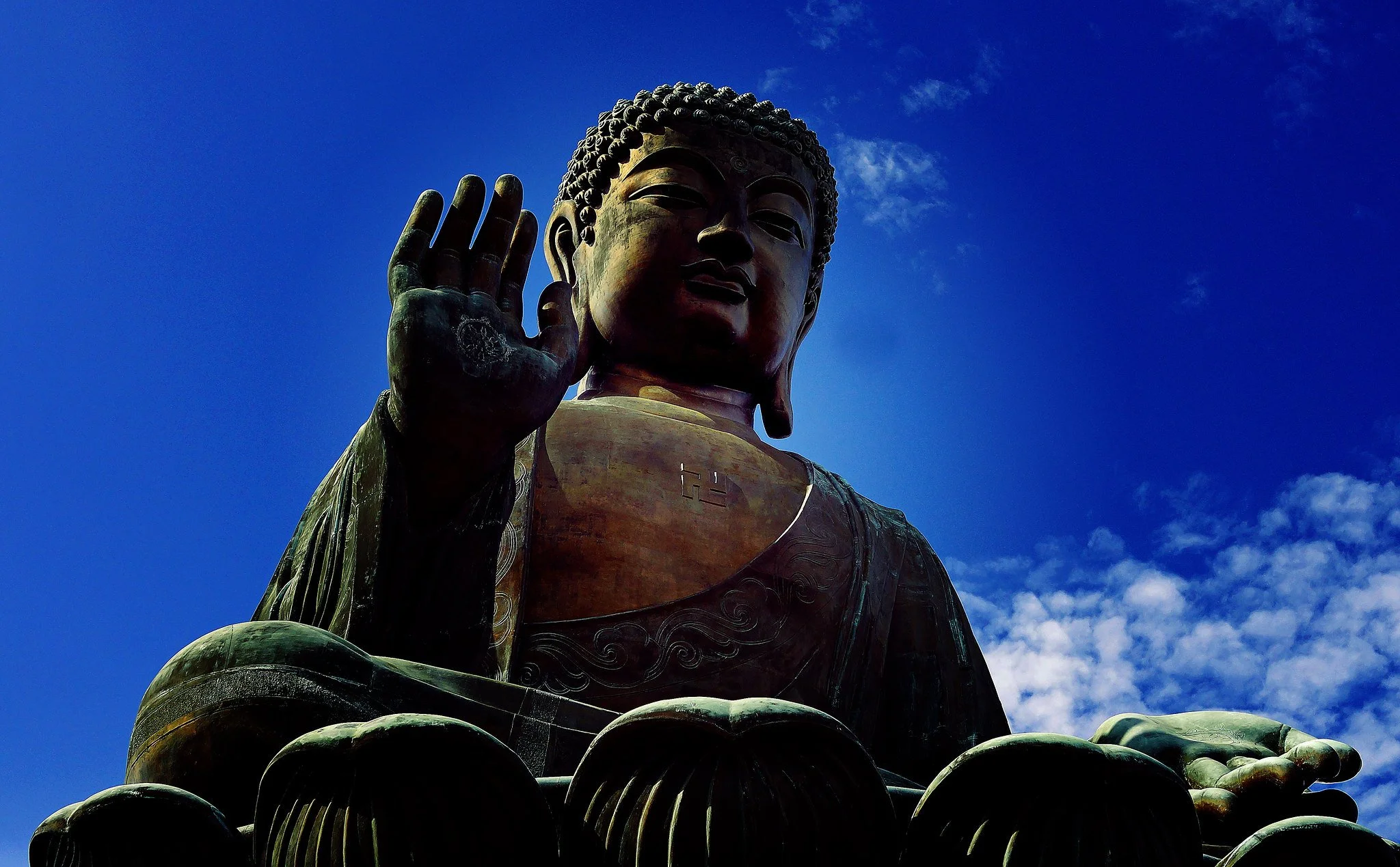
Its proper title is Tian Tan Buddha, or Tian Tan Da Fo in Chinese. “Tian Tan” refers to the Altar of Heaven - the circular sacrificial structure at the heart of the Temple of Heaven complex in Beijing. The statue’s three-tiered pedestal is explicitly modelled on that ancient altar, linking the figure symbolically to imperial Chinese cosmology and the idea of heaven-earth harmony. The full name therefore carries layers of historical and cultural resonance that the shorthand “Big Buddha” naturally flattens and I will admit that sometimes I just call it the Buddha!
Most people default to the simpler name for practical reasons: it is immediately descriptive, easy for international visitors to remember and widely used in signage and tourism materials. The affectionate diminutive also suits Hong Kong’s pragmatic character. Yet knowing the Tian Tan connection immediately shifts one’s perception - this is not merely a large statue but a deliberate architectural and spiritual statement tying Lantau in Hong Kong to Beijing’s sacred geography and to ideas of ordered harmony between the human and divine realms.
2. A unique northward orientation: protection and symbolism
Traditional representations of the Buddha in many parts of Asia face south. The Tian Tan Buddha breaks that convention by facing north, towards the mainland and the wider Chinese world. This orientation is not accidental. It symbolises the Buddha’s protective gaze over the territory and people of Hong Kong, offering blessings and stability at a time when the territory’s future was under intense discussion in the years leading to 1997. The northward direction also underscores a spiritual connection with the broader Chinese cultural sphere, reinforcing themes of peace and universal benevolence rather than separation.
Standing on the platform and looking out in the same direction as the statue provides a quiet moment of reflection on this choice. The gesture feels both protective and inclusive, a visual reminder that the teachings seated here are intended to embrace rather than exclude. In a city often defined by its east-west tensions and global flows, the simple fact of the statue’s facing carries understated political and spiritual weight.
3. The remarkable engineering story behind the bronze figure
The statue comprises 202 separate bronze sections, cast on the mainland by specialists from the China Astronautics Science and Technology Consultant Corporation - the same organisation involved in satellite and rocket technology. The sections were shipped to Hong Kong in 1989; the final piece was positioned on 13 October that year during a formal topping ceremony. The total weight exceeds 250 tonnes. Moving the largest components, especially the massive face section, up Lantau’s narrow, winding roads presented formidable logistical challenges that required careful engineering and temporary route modifications.
This aerospace-level precision in casting and assembly is one of the lesser-known facts that elevates the project from devotional sculpture to genuine feat of modern construction. The choice of an organisation accustomed to exacting tolerances for space hardware ensured both structural integrity and the fine surface detail visible up close. When visitors later learn that the same expertise behind rockets helped realise this serene figure, the statue acquires an additional dimension of human ingenuity married to spiritual purpose.
4. The four-year gap between assembly and public opening - infrastructure or something more?
This is one of those subjects that drives me slightly nuts as my theory goes completely against the official spin.
The bronze work was substantially complete by late 1989, yet the formal inauguration and opening to the public only occurred on 29th December 1993. Official accounts point to the time needed for road upgrades, construction of the 268 granite steps, plaza landscaping, installation of the six surrounding devas statues, and fitting out the three internal exhibition halls. Ngong Ping was remote, and preparing the site for expected visitor volumes was no small undertaking.
So this is the official line and it does not make much sense, the walk from the bus drop off via a simply concrete plaza takes roughly 5 - 7 minutes and logically speaking that plaza must have been in place in 1989 and the steps where in place, how could they construct all of this withour road access in 1989!
At the same time, many long-time residents (yes, me!) and tourism professionals remain somewhat sceptical. A giant statue project of this scale would hardly have proceeded without basic road access already in planning; the paved route from the bus drop-off to the base is straightforward and could, in theory, have been completed far more quickly. The four-year interval invites speculation about auspicious timing, alignment with Buddhist calendar dates (the chosen opening day traditionally linked to the Buddha’s enlightenment), and perhaps a desire to add an air of mystery and gravitas to the launch. In practice, it probably involved a combination of genuine logistical demands and the preference for a symbolically perfect moment. The gap certainly contributed to a sense of anticipation and ceremony around the final unveiling.
5. The six surrounding statues and the Six Perfections they embody
Encircling the main figure on the terrace (after you walk up the 268 steps) are six smaller bronze statues known collectively as the Offering of the Six Devas. Each deva holds a distinct offering: flowers, incense, a lamp or light, ointment or unguent, fruit, and musical instruments. These correspond directly to the Six Perfections, or Paramitas, that form the core of the Mahayana path to enlightenment: generosity, morality or ethical conduct, patience, energetic effort or zeal, meditation or concentration, and wisdom.
Walking slowly around the platform allows visitors to appreciate how each figure contributes to a complete teaching. The offerings are not merely decorative; they function as visual reminders that enlightenment is approached through balanced cultivation of these qualities. In the rush to photograph the main Buddha, many people miss this intimate circle of instruction. The devas turn the terrace into a three-dimensional dharma lesson, reinforcing that the statue is not an isolated monument but the centre of a living symbolic complex and did I mention the views are not too bad either!
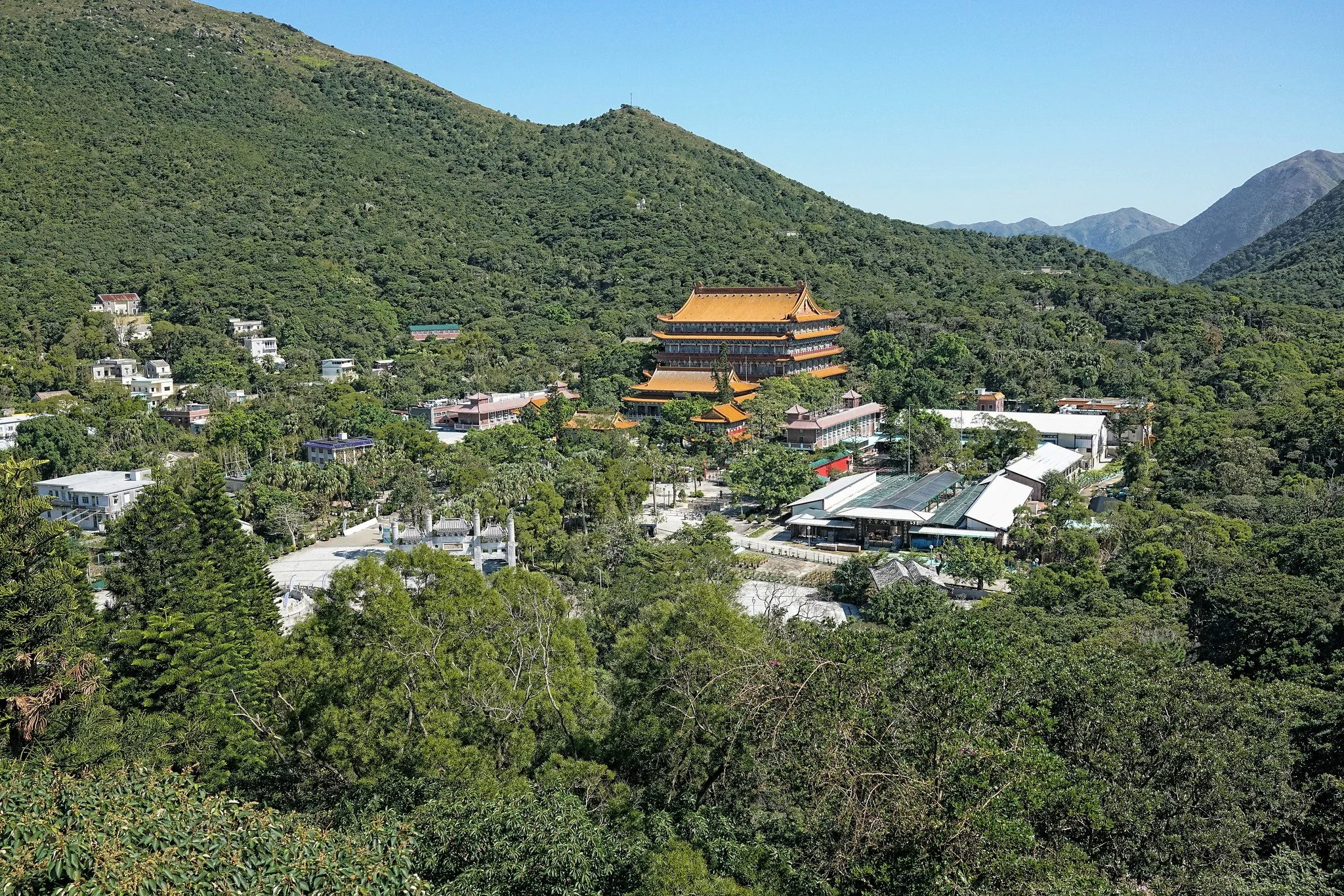
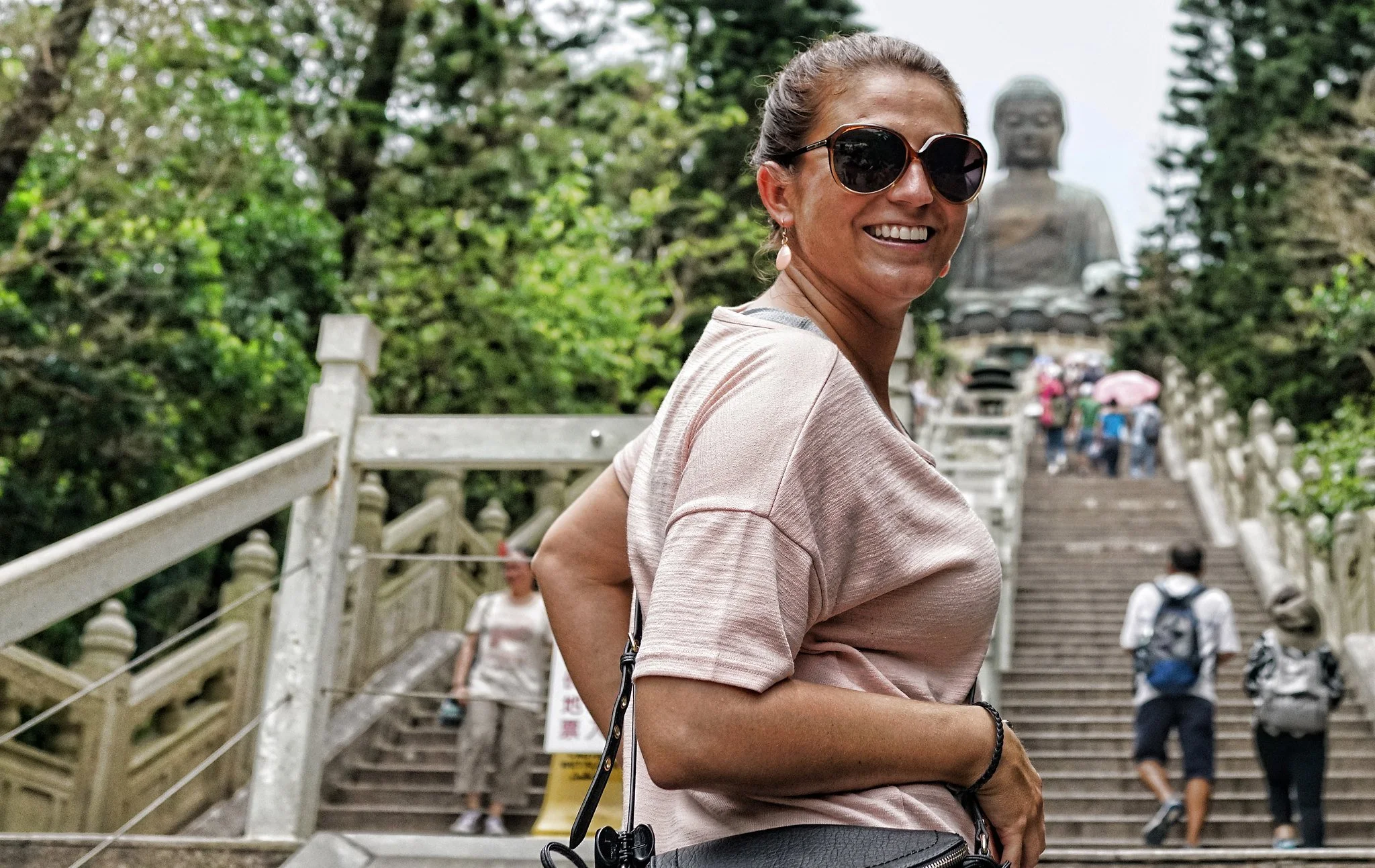
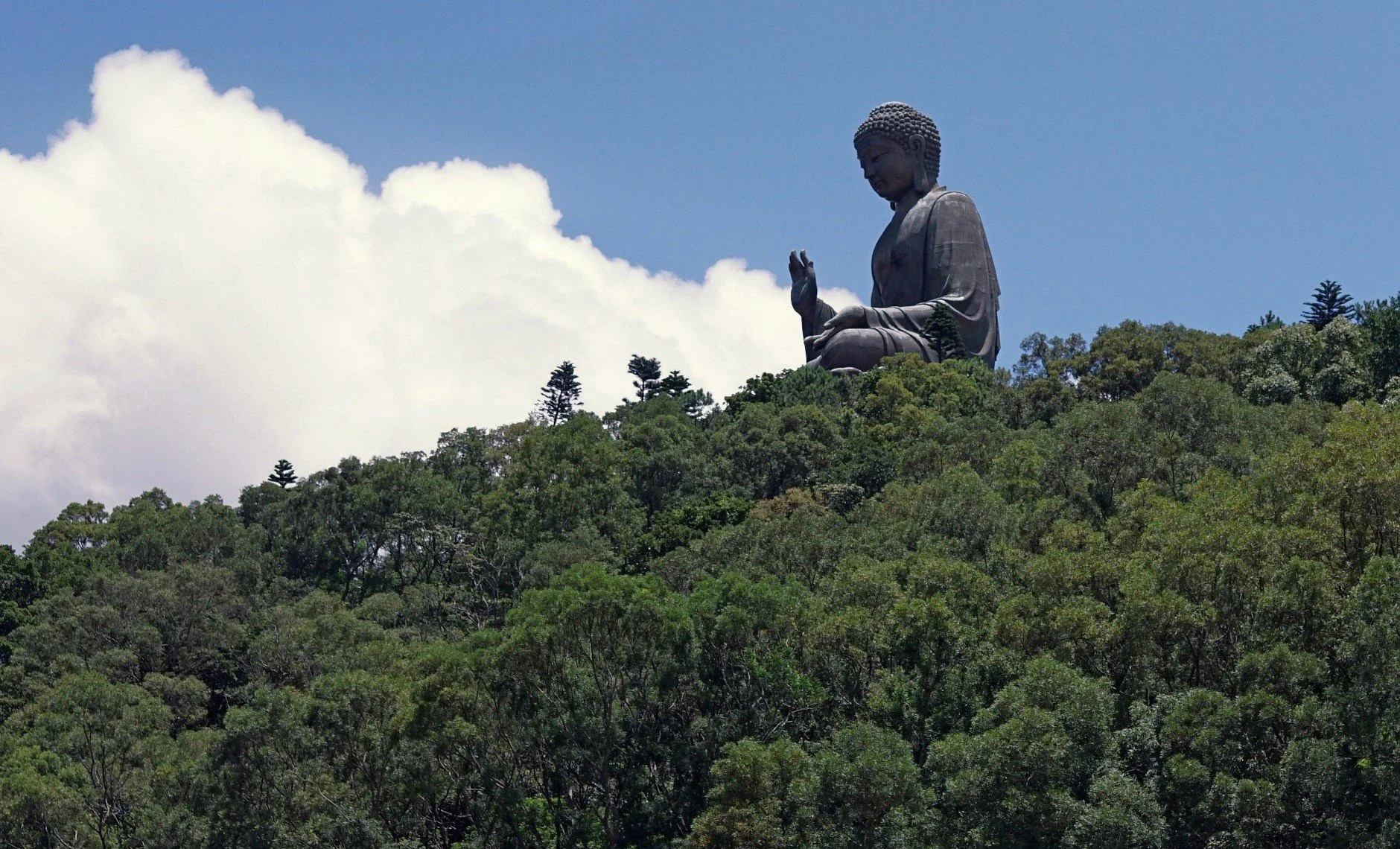
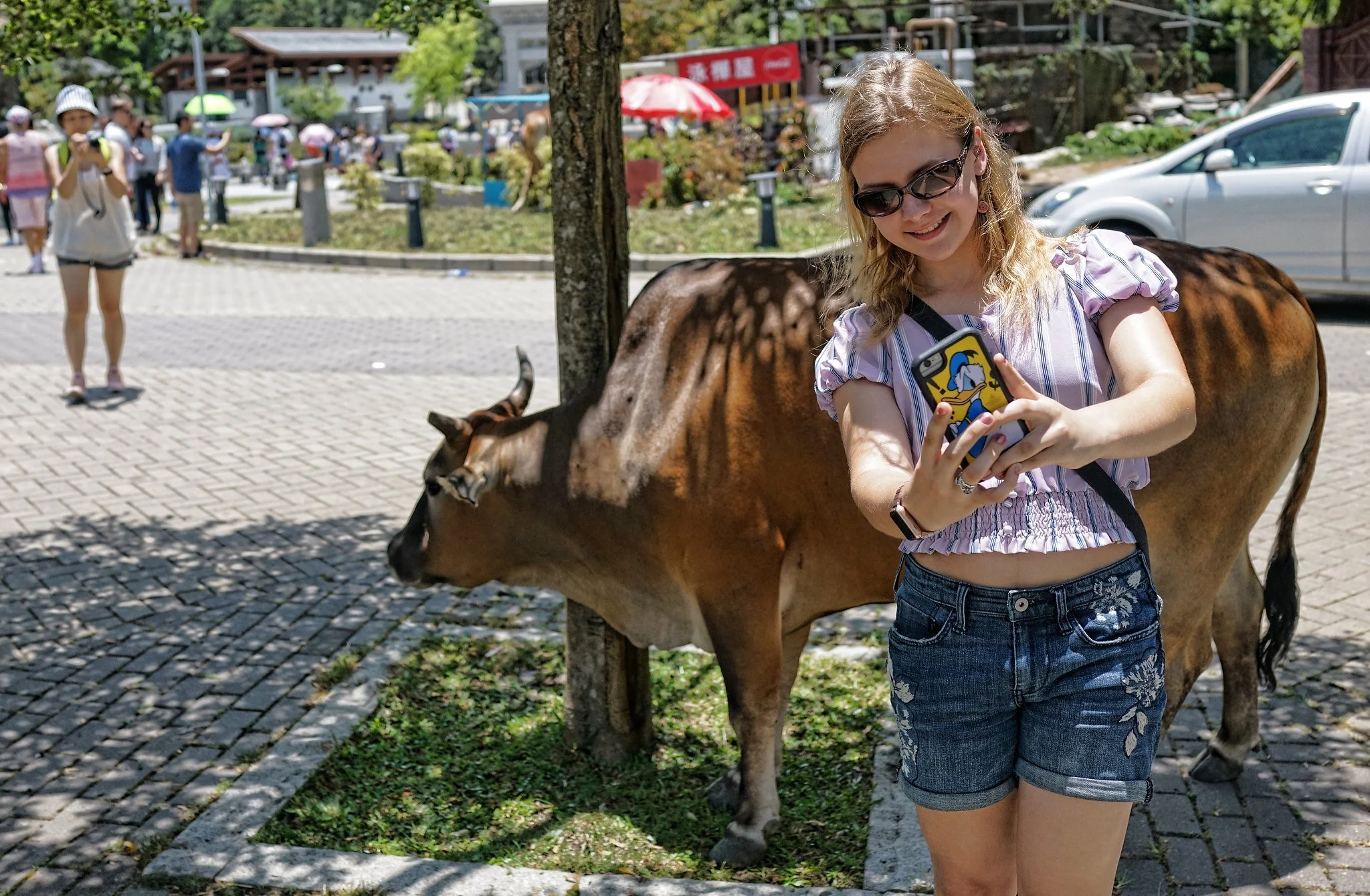
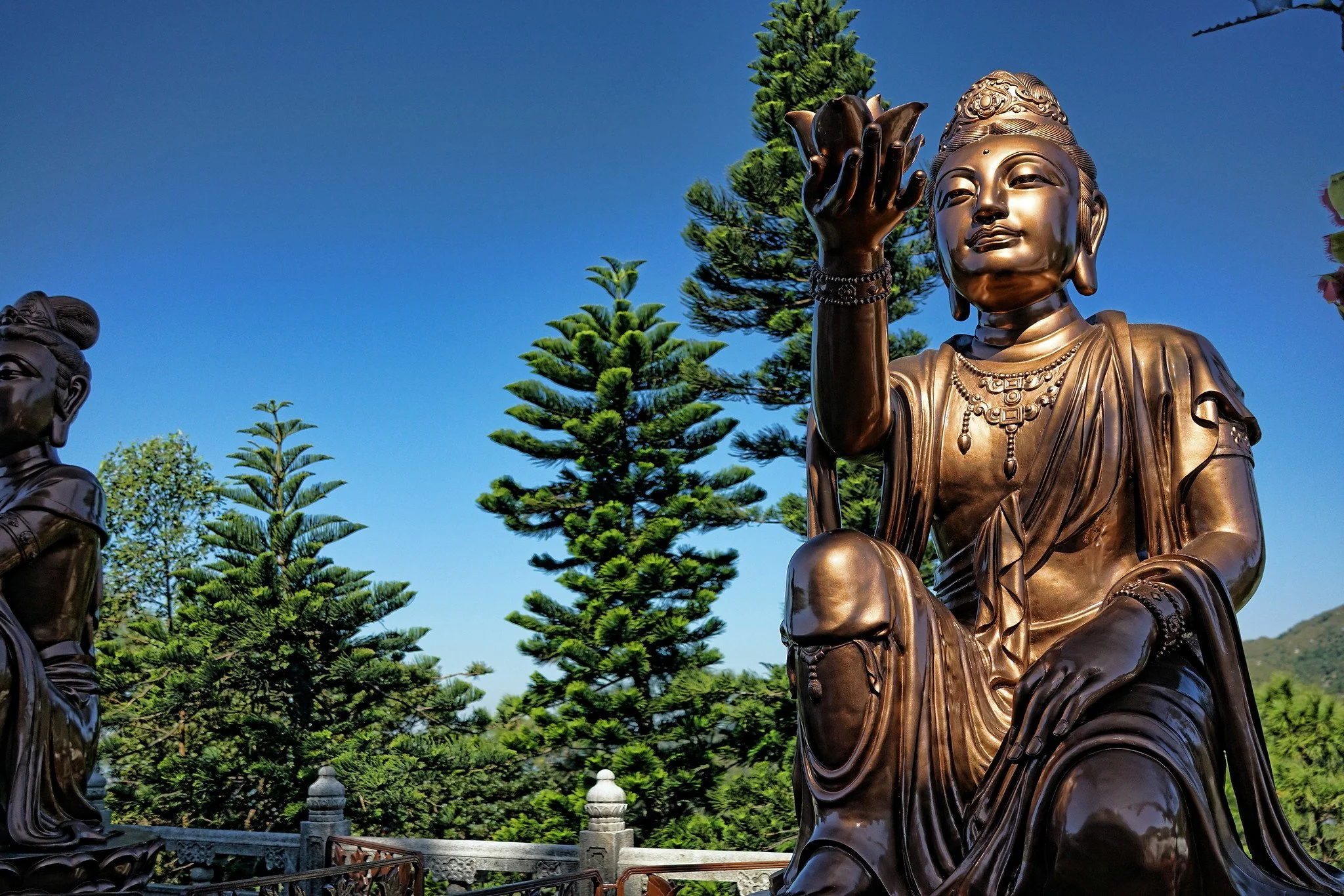
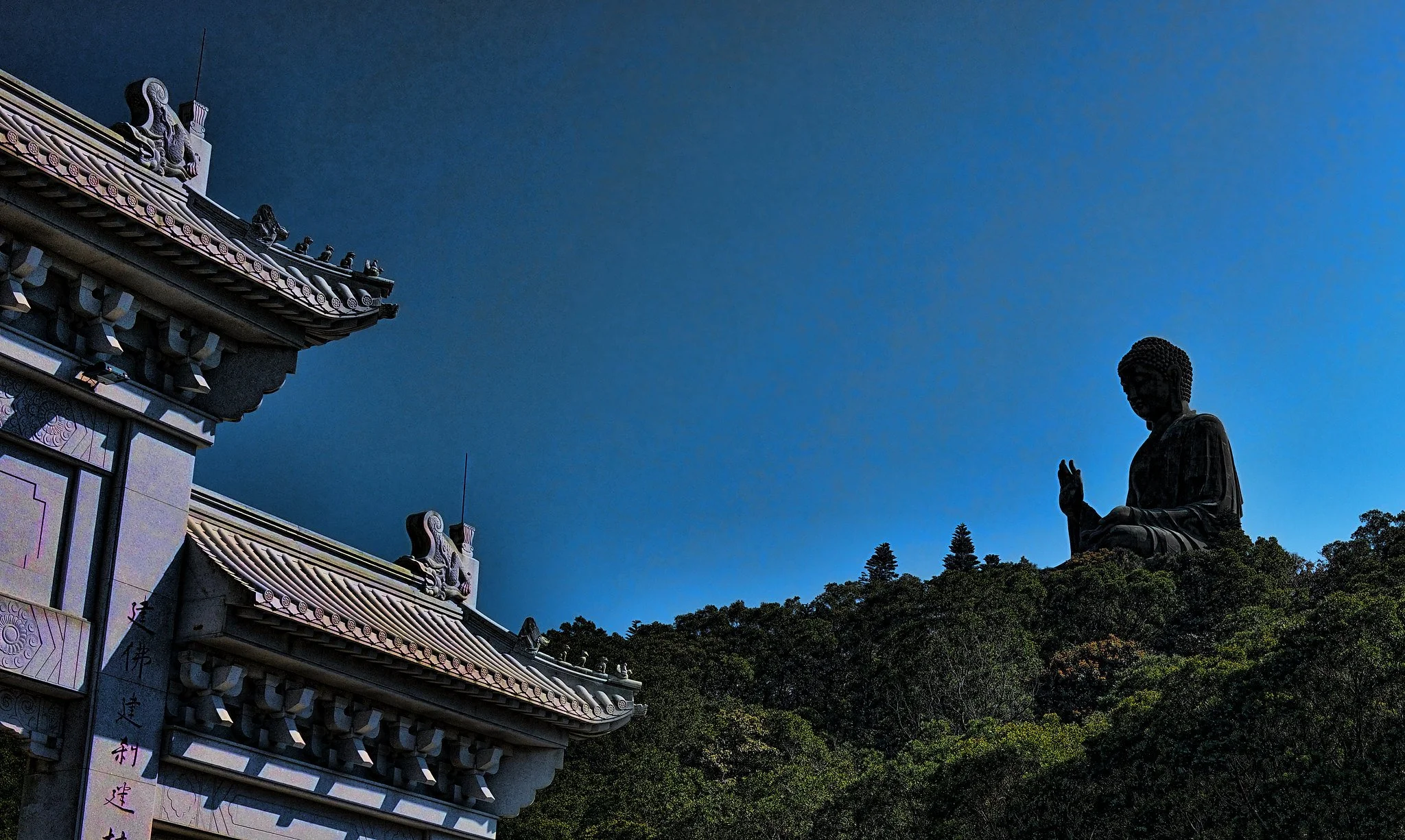
click on any image to enlarge
© Copyright Acknowledged | All rights reserved | images taken by Jamie
The Big Buddha on Lantau Island | Totally Iconic | Hong Kong
6. Inside the Buddha: three halls, a sacred relic, and why a fee applies
Beneath the seated figure is a three-storey exhibition space comprising the Hall of the Universe, the Hall of Benevolent Merit and the Hall of Remembrance. The halls present the story of the statue’s construction, the history of Po Lin Monastery and its supporters, Buddhist teachings, and - most sacredly - a relic of Gautama Buddha, understood to be a fragment of bone or cremated remains gifted from Sri Lanka. Some areas also function in a commemorative capacity, with niches associated with notable figures.
A modest admission fee applies to enter these internal spaces. The charge helps maintain the controlled environment necessary for preserving delicate exhibits and the relic, funds security and conservation, and supports the educational mission of the site. Photography is generally not permitted inside, preserving both reverence and the condition of the displays. Combo arrangements sometimes link the fee with a vegetarian meal at the monastery restaurant, reflecting the integrated spiritual and practical life of the complex. Far from a purely commercial transaction, the fee sustains the very elements that make the interior meaningful rather than merely novel.
Considering that there is no actual fee to walk up the steps and get in touch with the Buddha, this is a modest charge
7. The significance of the many lotus plants in large pots throughout the grounds
The lotus is the pre-eminent Buddhist symbol of purity arising unsullied from mud, of enlightenment emerging from the conditions of ordinary existence. Po Lin Monastery itself takes its name from the precious lotus, and the site features a dedicated lotus pond designed to evoke the “Lotus Pond of Seven Jewels” described in Pure Land sutras - a place of perfect water possessing eight excellent qualities that nourish virtue and dispel suffering.
Around the Tian Tan Buddha and the adjacent plaza, large pots containing lotus plants extend this symbolism into the everyday visitor experience. They create visual harmony with the lotus throne on which the main figure sits and serve as constant, living reminders of the teachings. During the annual Hong Kong Lotus Festival, thousands of additional potted specimens - many rare varieties - transform the entire area into an immersive “lotus fairyland”, drawing crowds for blessings, photography and cultural programmes. Even outside festival periods, the potted lotuses maintain the devotional atmosphere and offer a gentle teaching that requires no words: beauty and awakening are possible in the midst of the world as it is.
8. The 268 steps, accessibility, and the reality of visitor behaviour
The 268 steps leading to the statue’s platform are steep and demanding; they form part of the traditional pilgrimage approach. For visitors with mobility limitations, the Ngong Ping 360 cable car itself is designed to be wheelchair accessible, with level boarding, staff assistance and space for larger chairs in the gondolas. Once at Ngong Ping Village level, however, reaching the immediate base of the Buddha presents challenges.
Site management addresses this through a special vehicle that can be booked in advance for those who require it. This adapted transport allows wheelchair users and others with limited mobility to reach suitable viewing points and navigate key areas of the grounds and monastery precinct without having to negotiate every flight of steps. The provision reflects a pragmatic recognition that genuine accessibility matters, while the continued emphasis on the steps preserves the spiritual and physical dimension of the ascent for those able to undertake it. It is a thoughtful compromise rather than an afterthought
Please note this arrangement should be made in advance by contacting the Po Lin Monastery Office (see their website for details and expect you may have to wait for 30+ minutes).
9. The location: why Ngong Ping and Po Lin Monastery?
Po Lin Monastery predates the Tian Tan Buddha by many decades. Originally known as the “Big Thatched Hut”, it developed on the Ngong Ping plateau as a place of Chan Buddhist practice, benefiting from the area’s relative isolation, high altitude and natural amphitheatre of surrounding peaks. When the decision was taken in the 1970s to create a major Buddha statue, the government granted additional land adjacent to the existing monastery precisely because the site already possessed spiritual legitimacy and a monastic community capable of stewarding it.
The plateau offers practical and symbolic advantages: it is elevated enough to be visible from a distance, yet contained enough to feel set apart; the surrounding topography provides a natural frame that enhances the statue’s presence without competing with it; and the pre-existing monastery supplied the institutional continuity and ritual expertise necessary for proper consecration and ongoing care. Placing the Buddha here was never an arbitrary choice of scenic real estate. It was an extension of an established sacred landscape, intended to amplify rather than replace what was already present.
10. Funding the project and the symbiosis with NP 360 Cable Car and Village
The project was primarily funded through donations from Buddhist followers and supporters of Po Lin Monastery, with the Hong Kong government granting the necessary land in 1974 at a nominal premium. Exact total costs are not widely published in official records, but the scale of the bronze casting, assembly, site works and internal halls would have run into tens of millions of Hong Kong dollars. It was very much a monastery-driven initiative supported by private religious contributions rather than direct government funding for the statue itself.
The cable car and Ngong Ping Village, added 13 years after the Buddha opened, transformed the site. The ride is scenic and convenient; the village provides shops and dining. For those who remember the pre-2006 era, the change is striking - what was once a more secluded, less commercial experience is now packaged for mass tourism. To many visitors (and to cynical long-time locals!), the cable car and village feel straight out of the Disney playbook: efficient, entertaining, and clearly designed to maximise visitor throughput and spending.
The official reasoning behind linking Tung Chung to Ngong Ping with a cable car was straightforward tourism promotion. Following a feasibility study, the Hong Kong government tendered the project in 2000 as a Build-Operate-Transfer franchise specifically to improve access to Lantau’s attractions, enhance the range of visitor experiences, and strengthen Hong Kong’s position as a leading regional tourist destination.
… and Lantau’s attractions? well the Cable Car goes to the Big Buddha and Po Lin Monastery only, nowhere else although you can actually get to the Tai O Fishing Village from Ngong Ping by bus
The initial operato for a very short time was Skyrail-ITM, an Australian company with experience in similar systems. They lost the contract shortly after a 2007 incident involving a test cabin, after which the MTR Corporation took over. The cable car dramatically increased visitor numbers and turned the Big Buddha from what was previously a more remote statue into a major, easily reachable tourist attraction. If the primary goal had been purely religious, such large-scale commercial infrastructure would not have been prioritised. The development confirms the site’s evolution into a highly successful visitor destination, with the spiritual elements providing the distinctive and photogenic backdrop. In 2024 the cable car welcomed approximately 1.56 million guests (a 13% increase from 2023), underlining its ongoing popularity.
Despite all this cynicism, I still love going to the Big Buddha and Po Lin Monastery. As a visitor it is absolutely worth your time (even if you do not want to walk up and down the 268 steps!) and makes for a great half-day excursion I need no excuse to go there
So there you go
Jamie’s Hong Kong Insider Chat
Ready to turn your plans into a far more enjoyable reality? Click the yellow button below to learn more about Jamie’s Hong Kong Insider Chat, check pricing and book a convenient time
I do not do Food Tours in Hong Kong but I know people that do!
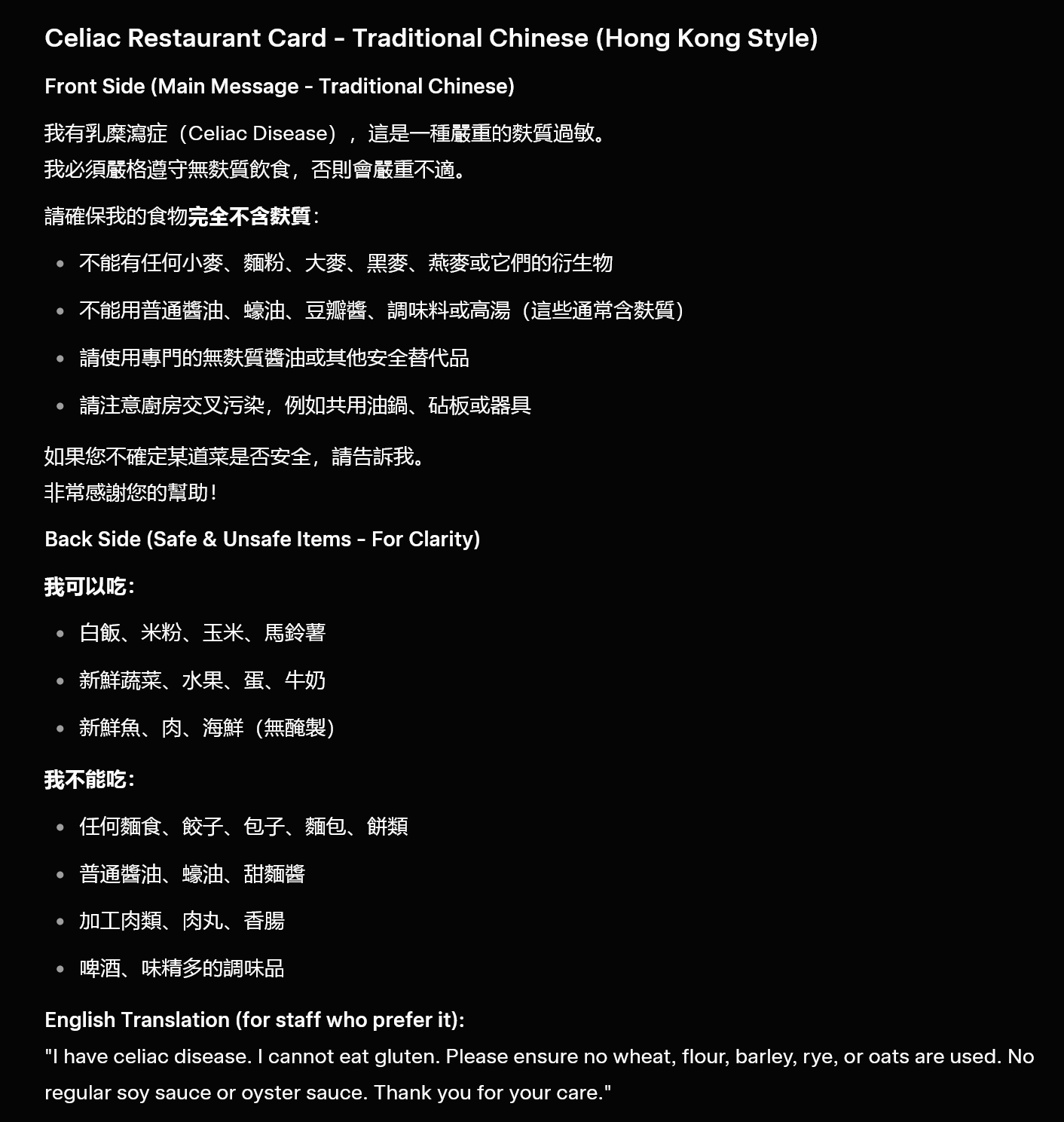
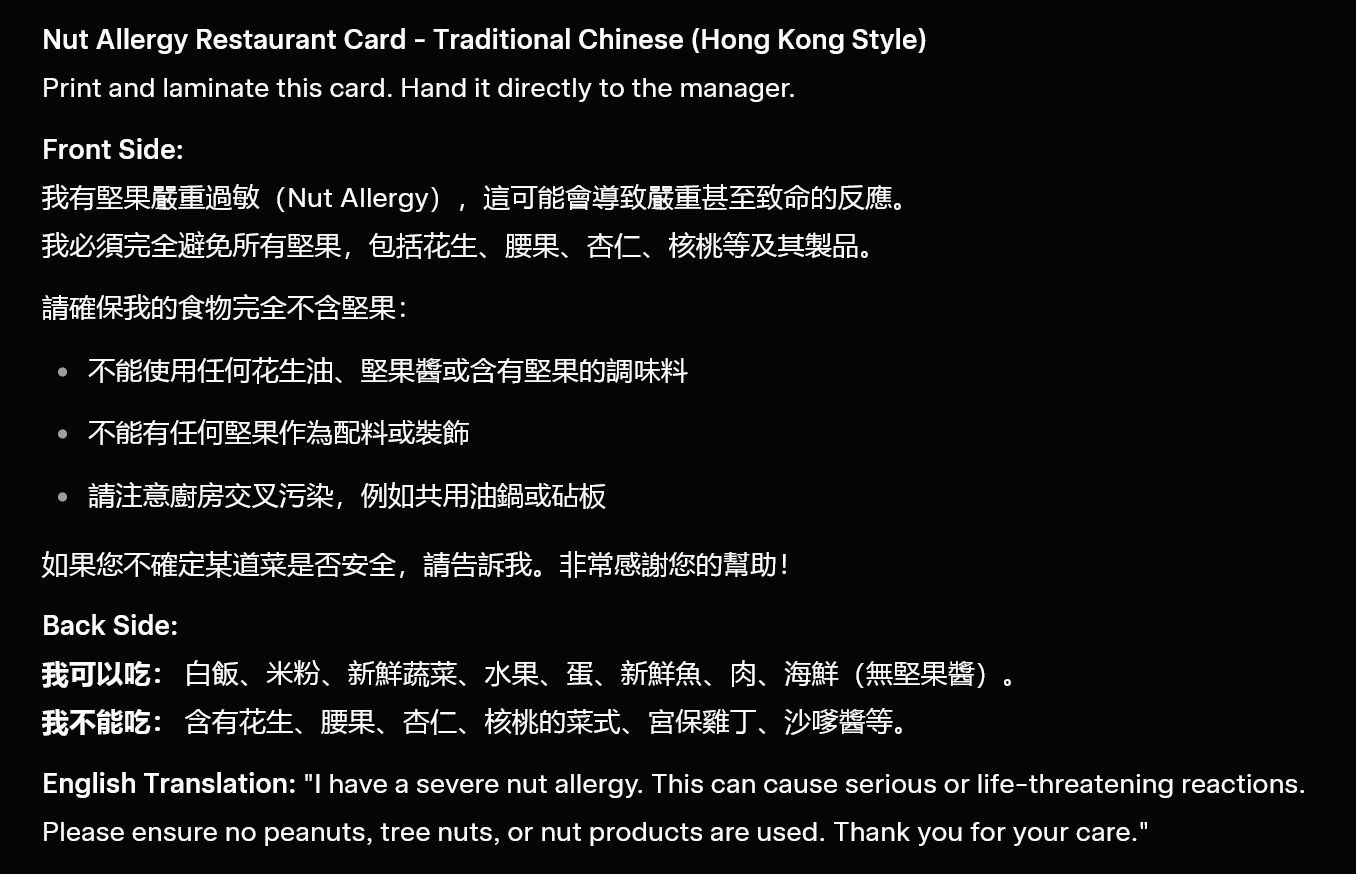
click on any image to enlarge
The information above can be shown to restaurant managers in Hong Kong if you are intolerant to gluten and nuts,
I do not do food tours as mentioned above, I have very specific reasons and part of it is that I do not speak Cantonese or write Chinese, I am from Yorkshire in England and I lack the language gene and it is not through lack of trying and yes a lot of restaurants do not have English menu’s or staff who speak conversational English.
.. and yet I have eaten at close to 1,400 restaurants in Hong Kong since January 2nd 1972, my wife was born in Hong Kong and we have been together over 40 years and her first language is Cantonese and a lot of her family are Chinese or half Chinese so I have never had much of an issue!
This does not translate to doing food tours though, yes, I could do them, no problem there but they would never ever be as good as the food tours done by my friends (see the 3 links above) most of their awesome guides are locally born Hong Kong Chinese and obviously food culture is part of their DNA, it is impossible for me to compete with that!
So please feel free to contact them for food tours
I do not do Hiking Tours in Hong Kong but I know someone that does!
I do not do Hiking Tours, never have and never will even though I used to go Hiking a lot when I was a lot younger, The Hong Kong Government is promoting hiking tours so I urge you to contact my friend Sabrina at Hong Kong Trails and Tours, she is a long time Hong Kong resident and and a very experienced hiker with close to 700 Hikes in 15+ years under her belt, please click on the link below
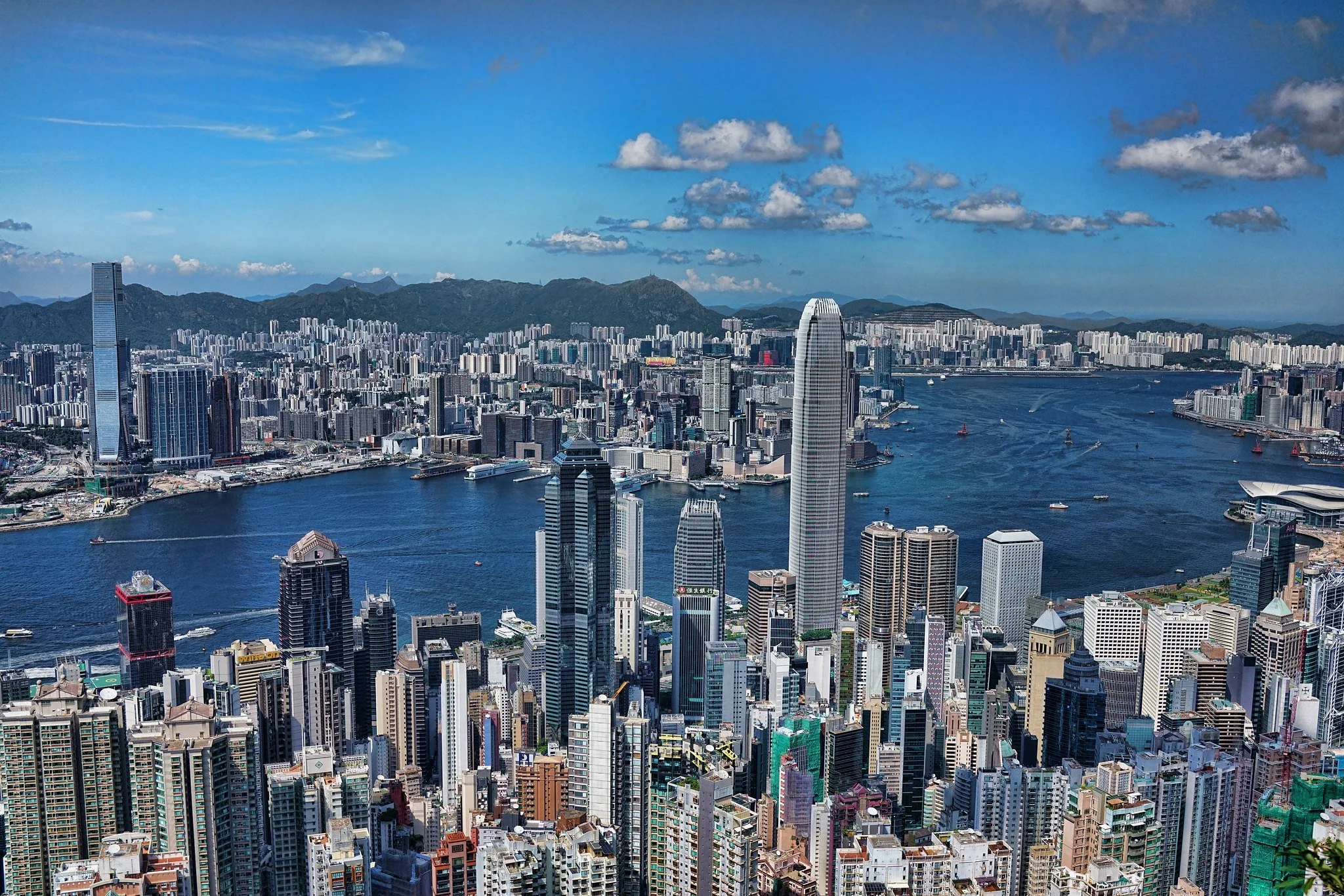
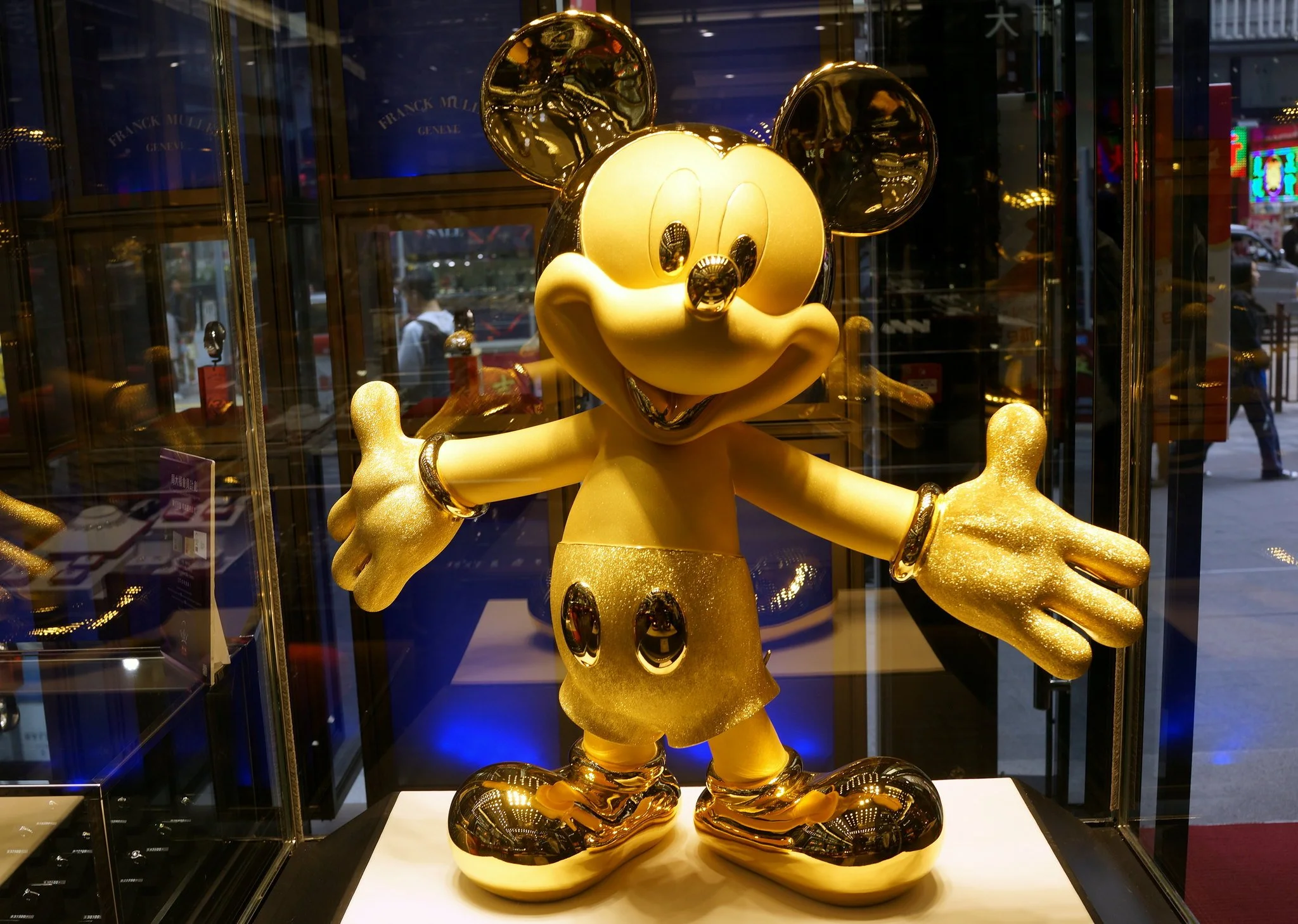
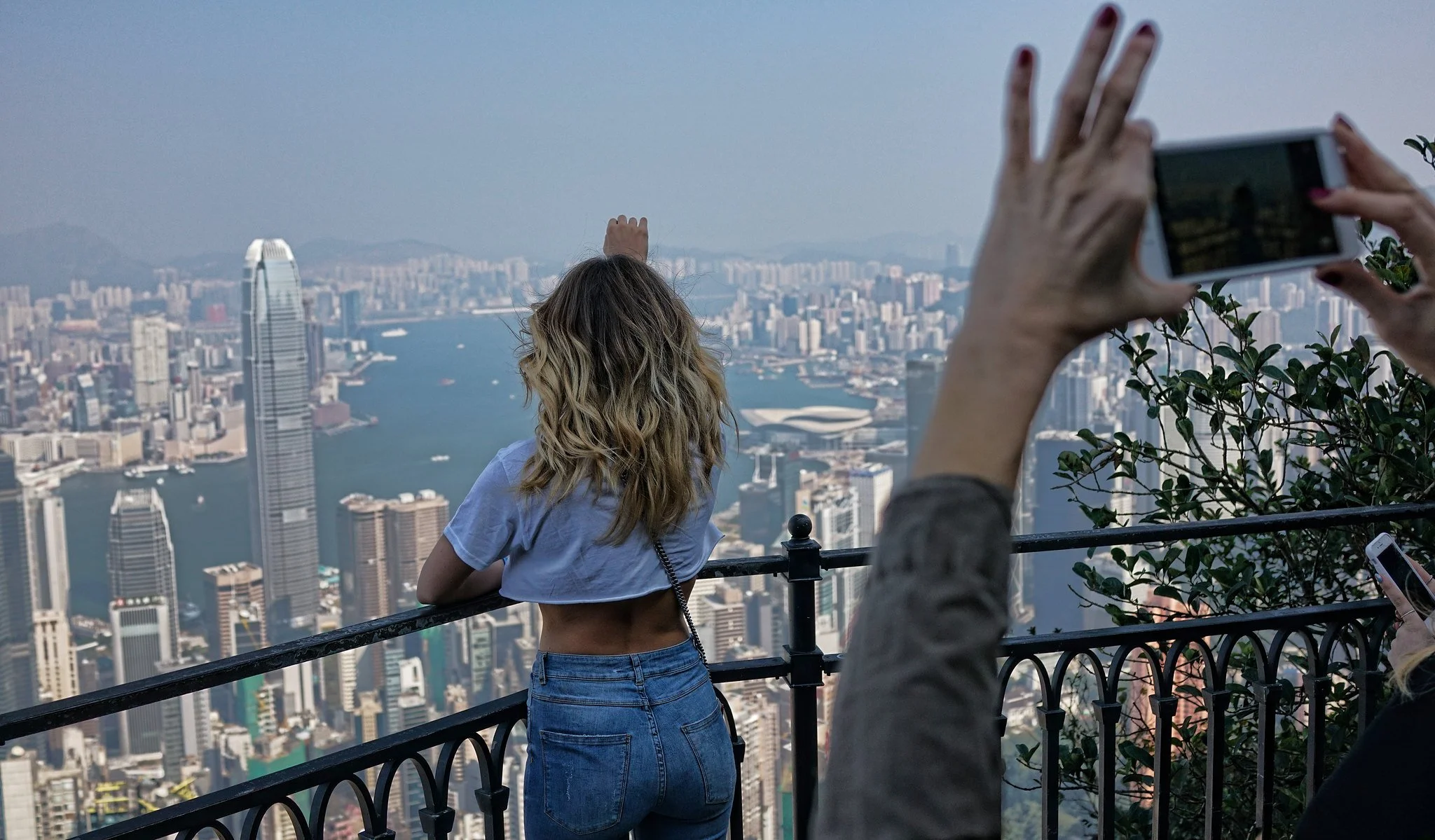
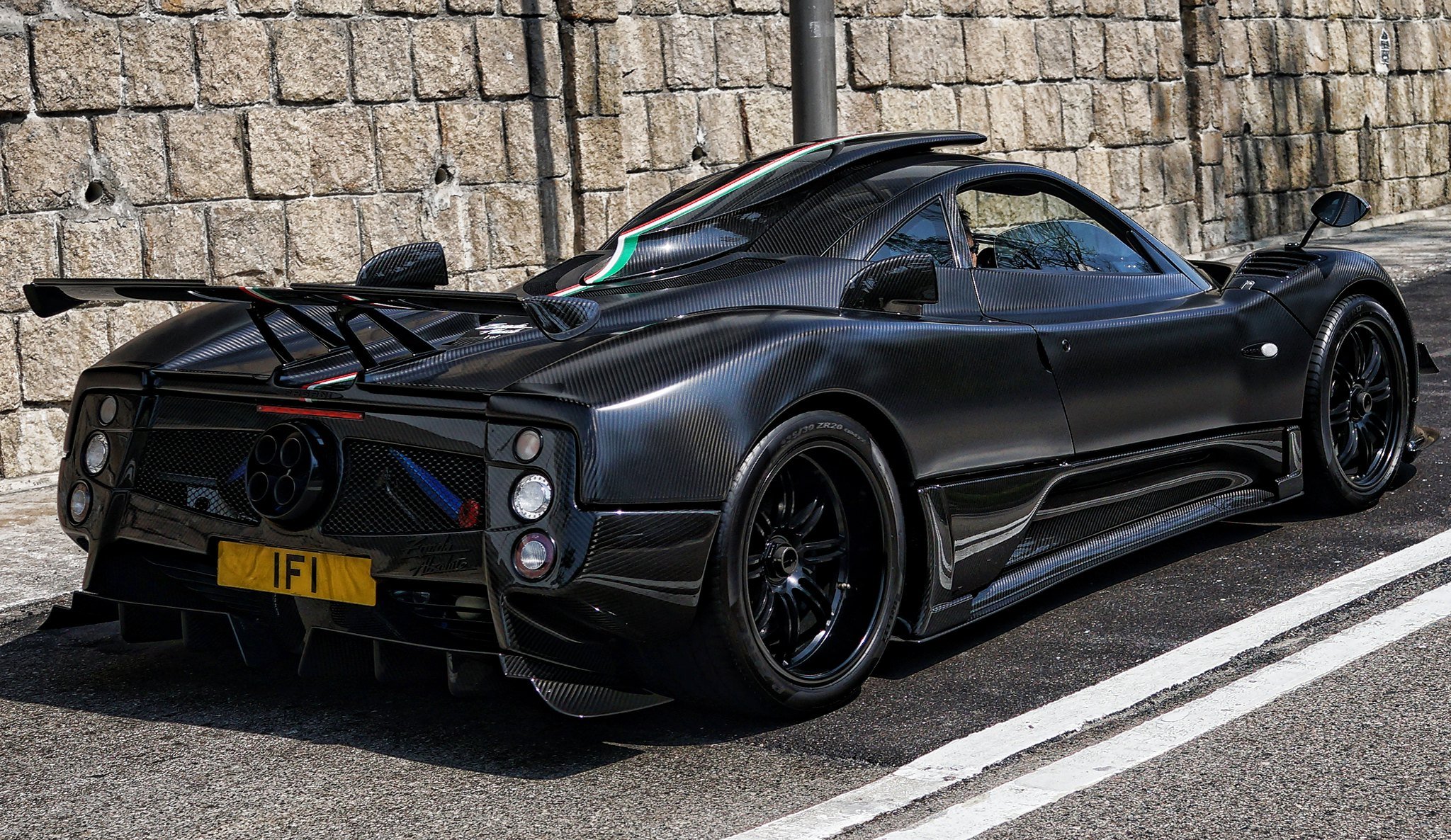
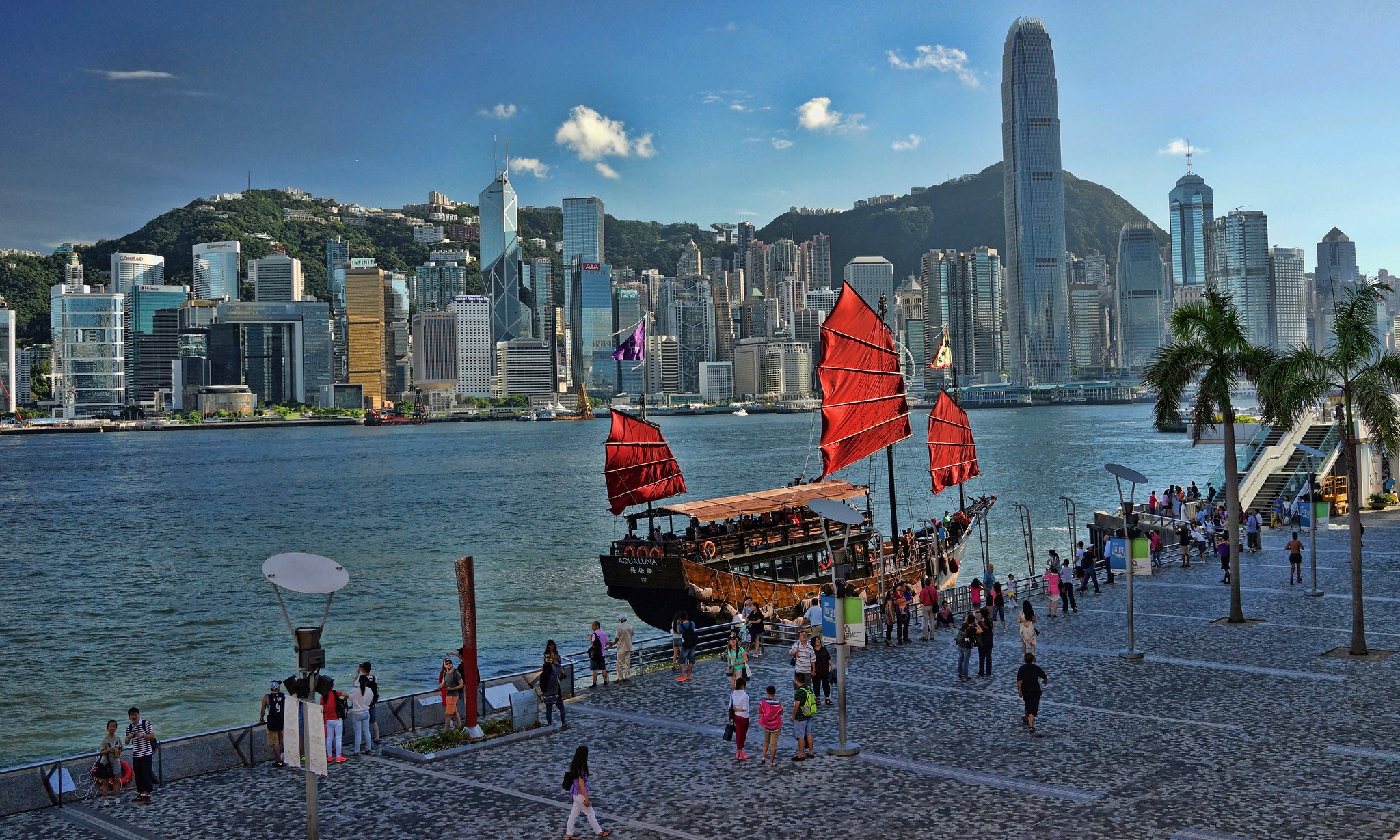
click on any image to enlarge
© Copyright Acknowledged | All rights reserved | all images taken b Jamie
Jamie’s Hong Kong | Some of my favourite images | Hong Kong 101
© Jamie Lloyd | J3 Consultants Hong Kong | J3 Private Tours Hong Kong |
| 2010 - 2026 All rights reserved. |
Click on any image to enlarge to full screen
Current images from my Instagram feed