10 things you did not know about the NP 360 cable car Hong Kong
The Story of Lantau’s Iconic Cable Car & Ngong Ping Village in Hong Kong
The J3 Group - Premium Quality Private Tours | Experiences and Insider Chats since 2010
Me Jamie, your host, I am English and I have lived in Hong Kong since January 2nd 1972 - I know the place.
A meaningful blog post with a difference - tips on Travel, Tourism, Tours, Daily Life and my personal thoughts on Hong Kong.
Please do visit Amazing Hong Kong
Hong Kong | Pearl of the Orient
Customised Private Tours + Experiences in Amazing Hong Kong
Jamie has lived in Hong Kong - Pearl of the Orient for 50+ years
Carefully Crafted Personalised and Customised Itineraries by Jamie | Hong Kong’s Most Experienced Private Tour Guide for : Solo Travellers Friends Families Seniors Couples Business People MICE Delegates.
Private Tours Cultural Tours Walking Tours Sightseeing Tours City Tours Night Tours Layover Tours Transit Tours Private Shore Excursions Bespoke Tours Personalised Tours Jewish Heritage Tours Luxury Private Tours Day Tours Luxury Boat Tours Themed Tours Private Family Tours Private Day Tours Corporate Tours
Just you, your family or friends and Jamie your personal English private tour guide - over 2,400+ tours completed since 2011 - Jamie offers quality Private Tours of Hong Kong
Tour Group Size 1 - 6 people only
J3 Group Hong Kong | J3 Consultants Hong Kong | J3 Private Tours Hong Kong
Creating Memories That Will Last A Lifetime
Go here for the Hong Kong Michelin Restaurant Guide which includes the Bib Gourmand Category

A Resident since 1972 - Private Tours of Hong Kong with Jamie
The Best Things to do in Hong Kong
click on the image to enlarge
© Copyright Acknowledged | All rights reserved | image taken by Jamie
The NP 360 Cable Car | Totally Iconic | Hong Kong
Foreword by Jamie
10 Things you probably did not know about the NP 360 Cable Car in Hong Kong
The Ngong Ping 360 cable car and the lively Ngong Ping Village that greets visitors at its upper terminus form one of Hong Kong’s most distinctive tourism successes. What began as a practical solution to improve access to Lantau Island’s spiritual centrepiece - the Tian Tan Big Buddha and Po Lin Monastery - has evolved into a 25-minute aerial journey that blends engineering ambition, cultural resonance, and commercial energy. The 5.7-kilometre bi-cable system, with its sweeping views across mountains, sea channels and the distant airport, delivers more than simple transport. It creates a memorable transition from urban Tung Chung to the high plateau of Ngong Ping, where ancient traditions meet modern visitor expectations.
I think it is much more than that, the sweeping view of Hong Kong International Airport on a totally man made island is simple magnificent.
Yet behind the smooth operation and the steady flow of passengers lies a story rich in planning twists, technical challenges, operational adaptations and thoughtful design choices. Many visitors glide up and down without realising the depth of history, the scale of the infrastructure or the daily realities of managing such an attraction in 2026. This exploration uncovers ten lesser-known aspects - and several more - while offering a detailed picture of the village itself, practical timings and a personal reflection on an intriguing “what if” idea that has surfaced in conversations about accessibility.
The piece aims to provide the fullest possible context for those who appreciate thorough background rather than surface-level summaries, drawing together historical, operational, visitor-behaviour and practical elements that shape the experience today. As someone who has experienced the cable car and the Buddha site over 300 times since the very beginning, the goal here is a realistic picture that acknowledges both the genuine achievements of the project and the everyday irritations that visitors encounter - a balanced reality check rather than polished marketing fluff.
1. The Ambitious Vision: Mooting and Building the Project
Ideas for a cable car linking Tung Chung with Ngong Ping up in the hills first circulated around the early 1990s (just prior to the Big buddha opening), roughly a decade before formal tendering. The Hong Kong government, seeking to capitalise on the new Chek Lap Kok airport and boost Lantau’s tourism potential, issued an invitation for detailed proposals in 2000. A 30-year Build-Operate-Transfer franchise was awarded in 2002 to the MTR (Subway) Corporation. Construction began in early 2004 under a consortium that included Italian cable-car specialists Leitner Ropeways for the mechanical system and Japanese firm Maeda Corporation for civil works. The original operator selected was Australian company Skyrail-ITM, experienced with a major rainforest cableway in Cairns.
The project ultimately cost in the region of HK$1 billion (approximately US$128 million at the time). It was always intended to serve both practical transport needs and tourism enhancement, creating a seamless link between the MTR network and the spiritual heart of Lantau Island. The original target opening of January 2006 slipped due to technical and construction complexities, but the system finally welcomed the public on 18 September 2006 - almost 20 years ago. This timeline reflects the considerable engineering and regulatory hurdles involved in threading a major cableway through sensitive country-park terrain while meeting stringent safety and environmental standards that were evolving even as work progressed. The Government deserves real credit for pushing this project through - it has undeniably transformed access to one of Hong Kong’s most iconic sites.
2. The Launch of the Cable Car and Early Promise
Ngong Ping Village, developed alongside the cable car as a purpose-built tourist precinct in traditional Chinese architectural style, effectively opened in tandem with the system. The village was designed to provide retail, dining and orientation facilities right at the upper terminus, turning arrival into an immediate experience rather than a simple drop-off. On the maiden day, operators sold just 1,688 tickets at HK$88 each - a figure chosen for its auspicious connotations in Chinese culture. Anniversary promotions have since revived round-trip standard-cabin adult tickets at this historic HK$88 (approximately US$11.30) price point, allowing newer generations to sample the original spirit of the launch. The deliberate selection of the number 1,688 for inaugural tickets underscores how cultural considerations were woven into the project from day one, blending modern infrastructure with local sensibilities.
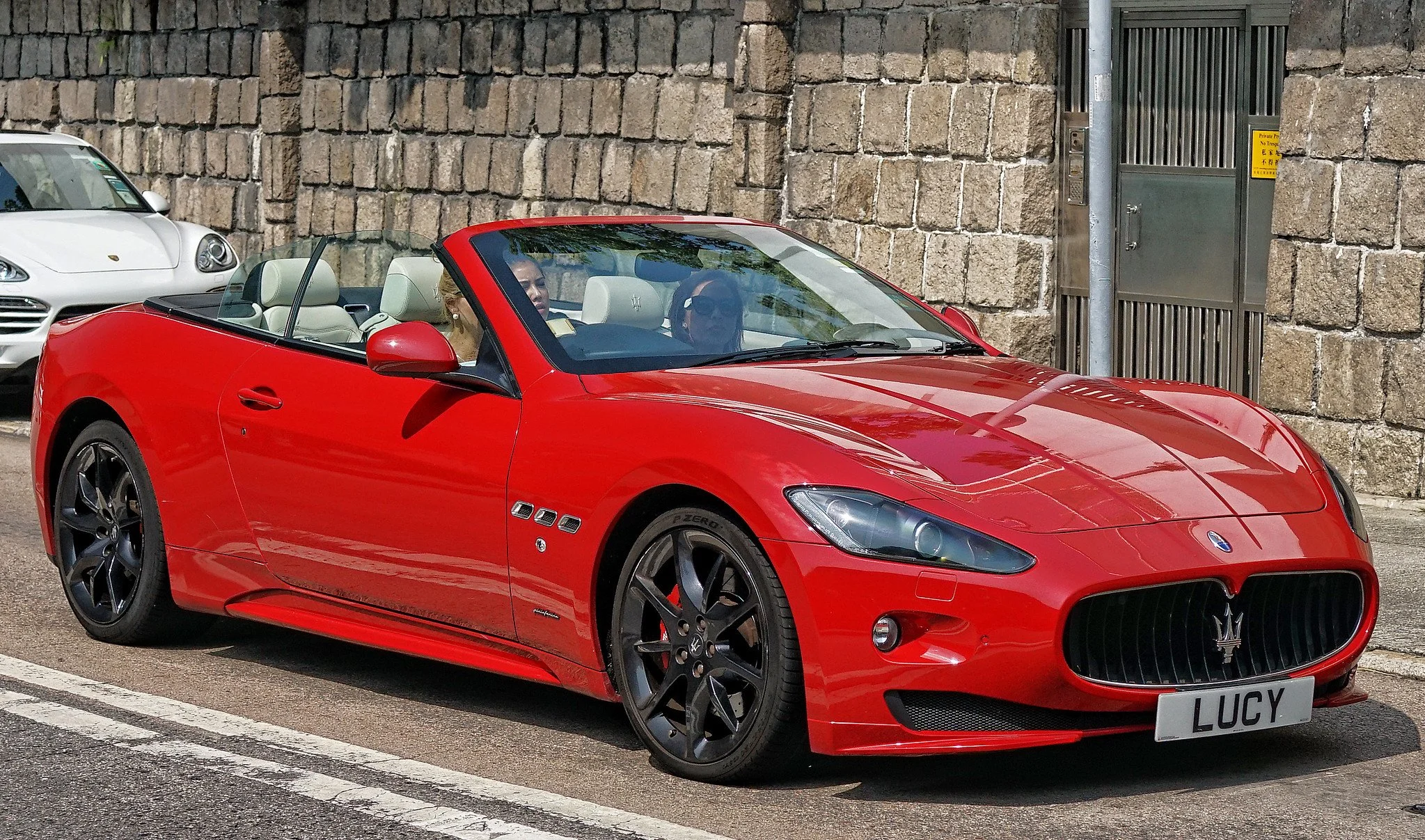
I will give you proper context as one of my hobbies is lucky licence plates on cars in Hong Kong
1688 translates to certain easy life (16) wealth and wealth (88) and 88 is wealth and wealth, top that as they say.
3. A Fateful Day in 2007: The Incident That Changed Everything
Just nine months after opening, on 11th June 2007, an empty cabin detached during a routine annual brake test and fell more than 50 metres into a hilly area near Chek Lap Kok South Road. (so near the airport) No passengers were aboard and there were no injuries, yet the incident exposed serious procedural shortcomings. Investigations attributed the detachment to improper operation of the service brakes during an unnecessary test run. Skyrail-ITM, the original operator, faced criminal negligence charges; the company was later fined HK$5,000 and removed from the project.
The MTR Corporation assumed full operational control in December 2007, implementing enhanced safety protocols and establishing a dedicated subsidiary to manage the system. Service resumed after a lengthy suspension, and the episode remains the most serious in the attraction’s history. The event, while disruptive at the time, ultimately led to lasting improvements in maintenance procedures, staff training and oversight that have contributed to the system’s long-term reliability under MTR stewardship.
4. Pricing at the Outset and Cabin Varieties Today
While exact one-way adult pricing on opening day is less prominently recorded than the memorable HK$88 figure, the launch structure centred on this accessible rate, with round-trip and one-way options available. The system has since introduced differentiated experiences. The Ngong Ping 360 cable car system has a combined fleet of exactly 108 operating cabins. The exact counts for each cabin type are: Standard Cabins: 65 cabins; Crystal Cabins: 36 cabins; Crystal+ Cabins: 7 cabins. Standard cabins accommodate up to 17 passengers (10 seated plus standing room). Crystal cabins, introduced in 2009, feature full-width transparent floors made of triple-layered tempered safety glass and accommodate 10 seated passengers for a thrilling “walking on air” sensation. Newer Crystal+ cabins offer even greater transparency - more than 80 percent visibility through the robust tempered safety glass construction - delivering an enhanced panoramic experience while maintaining similar seating capacity. These premium options depart less frequently than standard cabins, creating natural differentiation in queuing and boarding. The evolution of cabin types demonstrates ongoing investment in visitor variety, allowing the attraction to cater to different preferences and budgets while maintaining overall system capacity.
I should make it clear that in over 300 journeys (one or both ways) I have never had to stand as even in standard cabins the staff try and make sure that everyone has a seat
5. Operations in 2026: Queues, Capacity and Daily Flows
On a typical 2026 weekday morning around 10am, standard-cabin queues at Tung Chung often run 20 - 45 minutes, depending on weather, season and visitor volume. Crystal and Crystal+ queues are noticeably shorter - frequently 5 - 15 minutes - because fewer premium ca8.bins operate and demand is lower. At the Tung Chung Cable Car Station there are effectively four lines in operation: many visitors who have not purchased tickets online must first queue to buy their tickets before joining the other three lines (general standard-cabin, premium Crystal/Crystal+, and pre-booked or special pass arrangements). The system maintains these differentiated queuing systems to manage flow. Peak capacity reaches 3,500 passengers per hour per direction, supported by continuous cabin dispatch and the 25-minute journey time. Weekends and public holidays can see significantly longer waits, with frequent reports of 60 - 90 minutes or more for standard cabins during busy periods.
Recent ridership shows healthy recovery. In 2024 the attraction welcomed 1.56 million guests, averaging roughly 4,843 visitors daily - a figure that has remained in a similar range into 2025 - 2026, with particular strength from Mainland China and short-haul markets. These numbers reflect both cable-car passengers and village visitors, underscoring the integrated appeal of the destination. The sustained daily average highlights the attraction’s resilience and its role as a staple for both international tourists and local excursions, even as broader tourism patterns continue to shift.
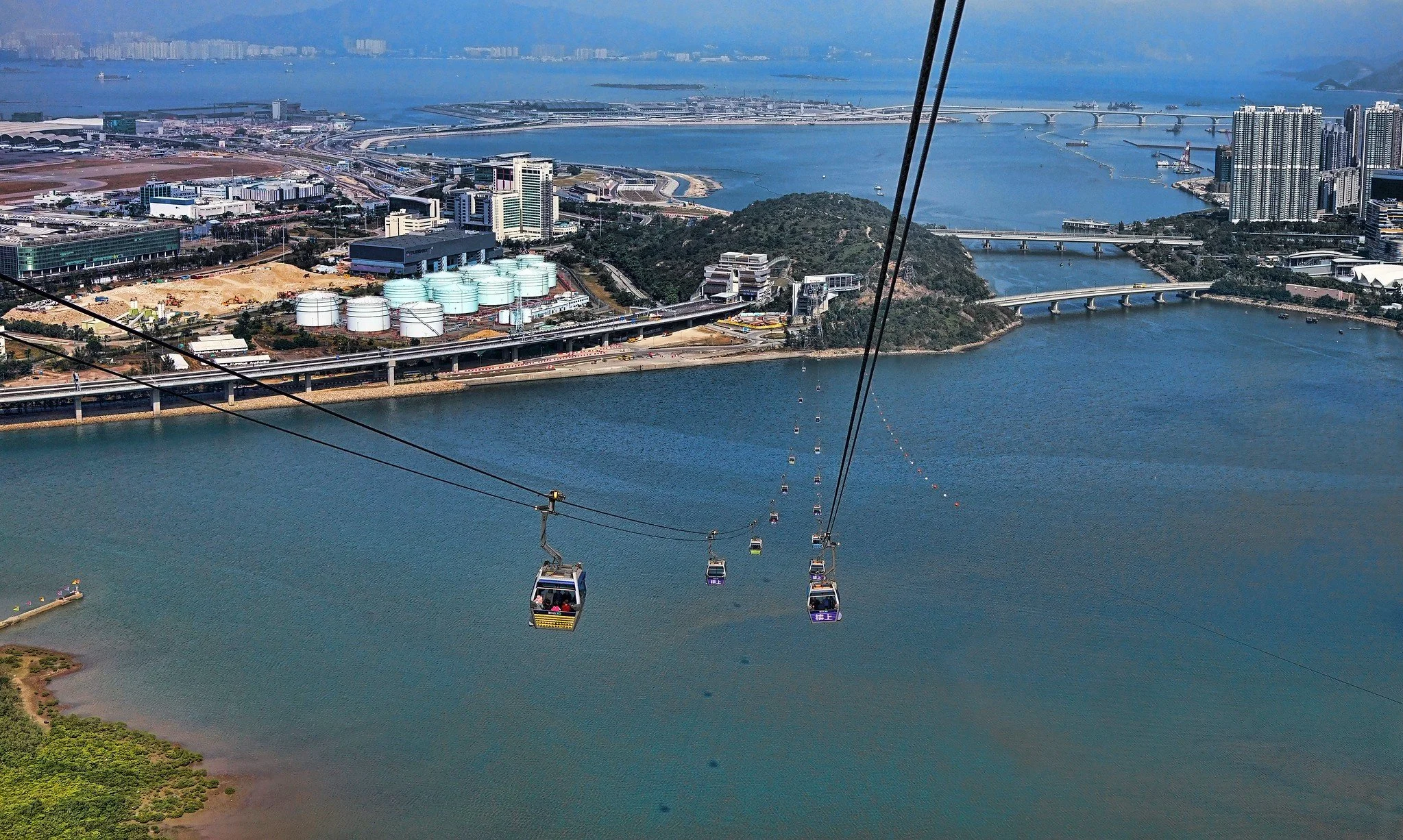
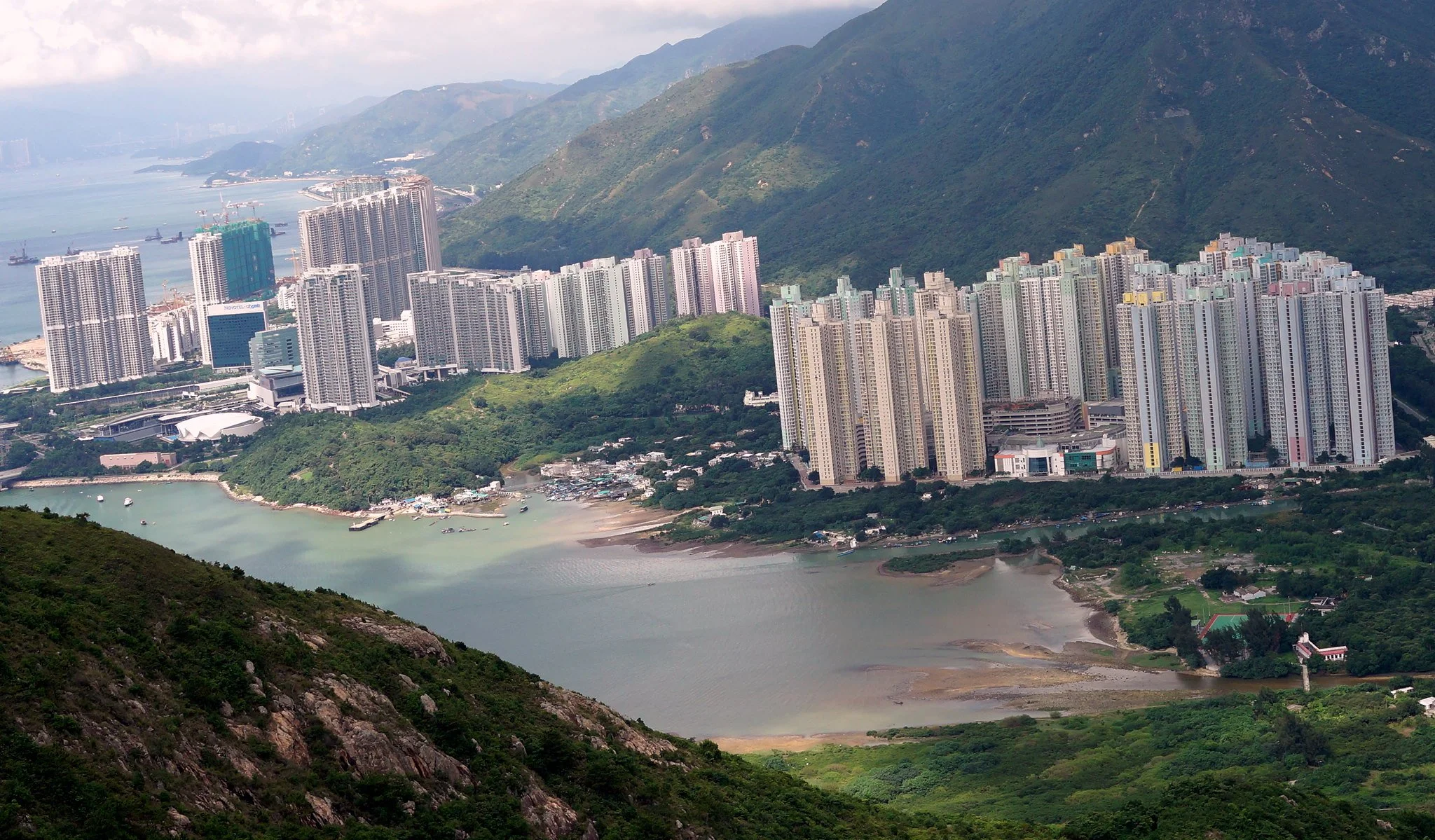
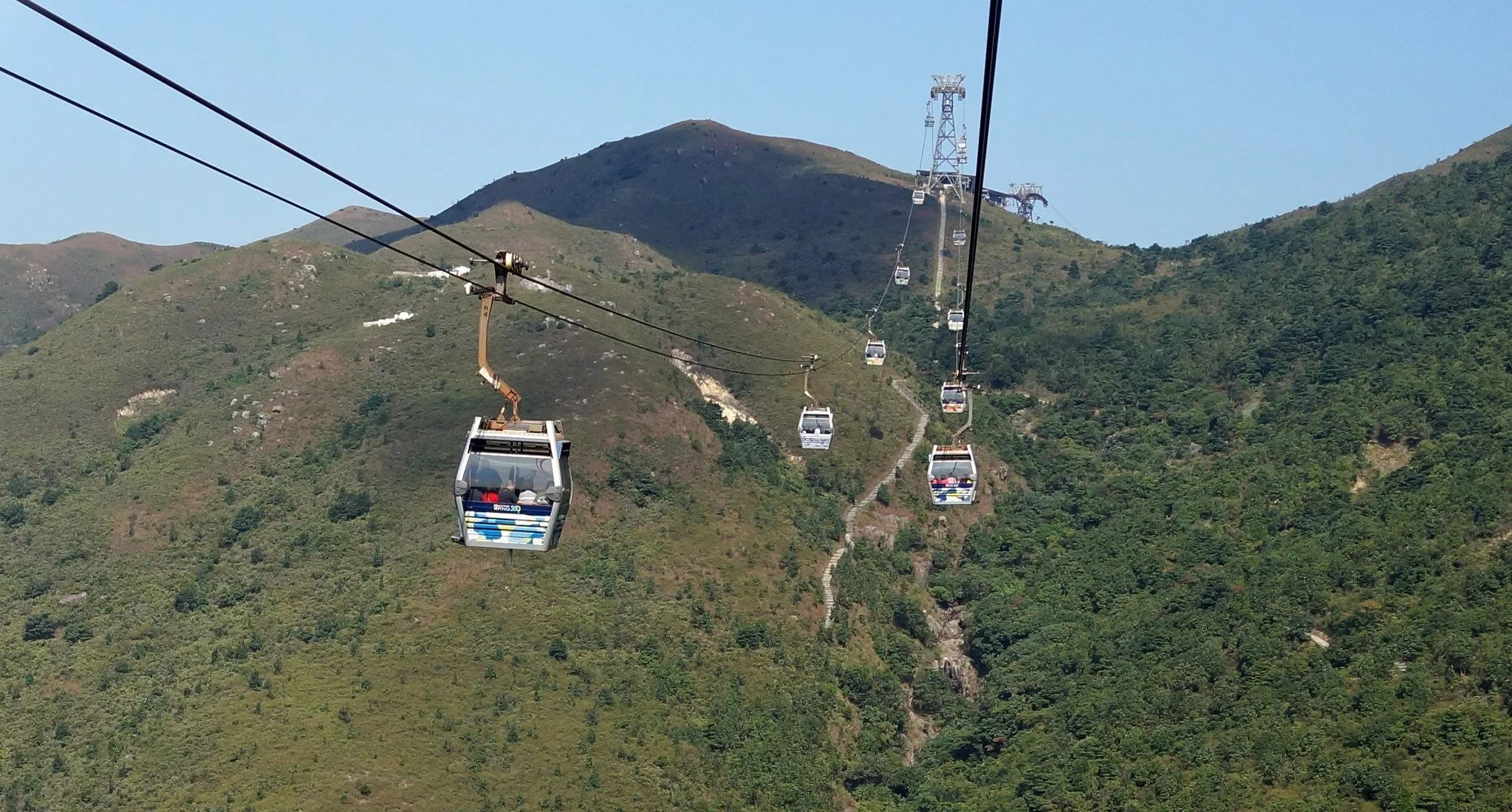
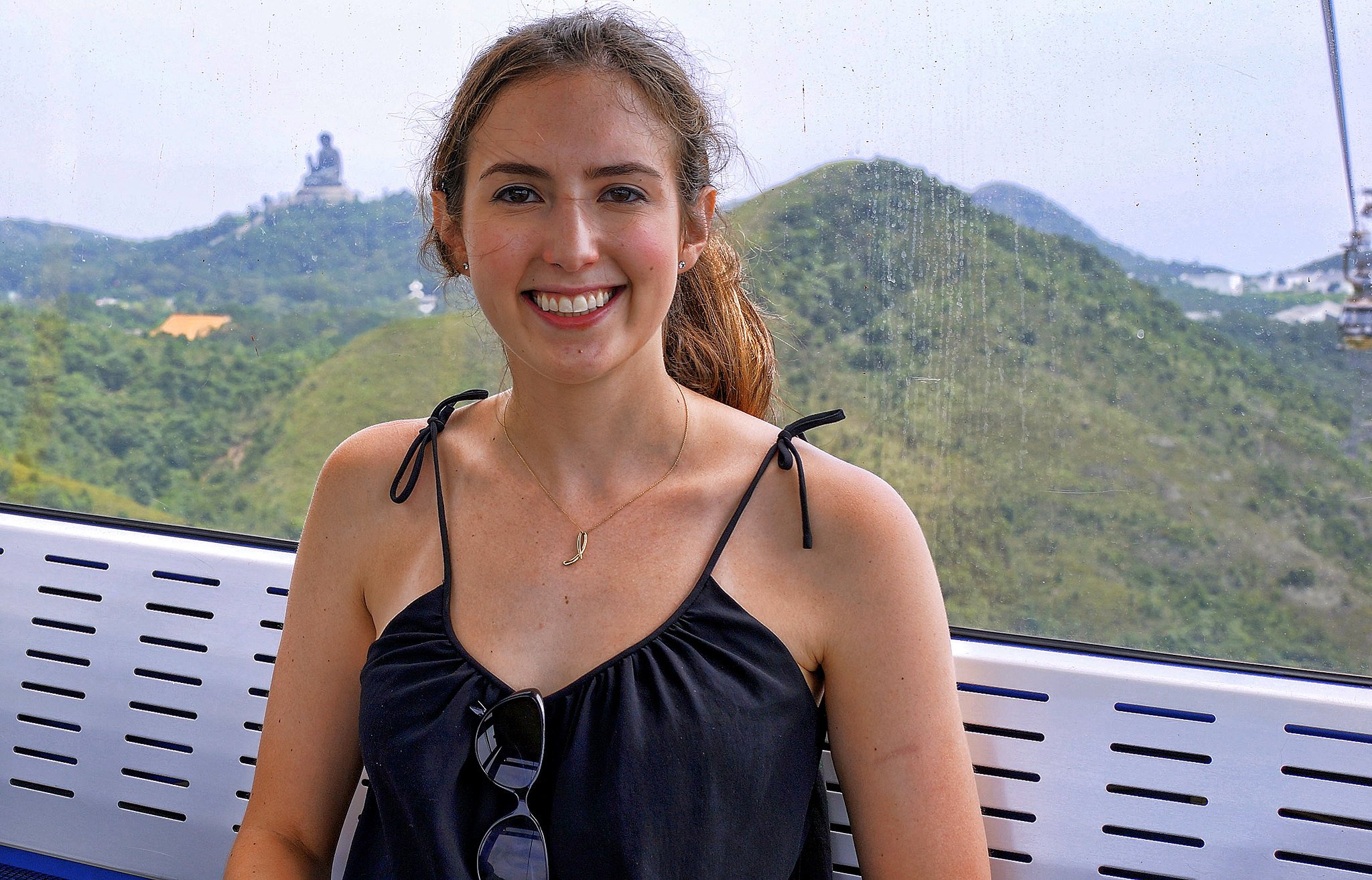
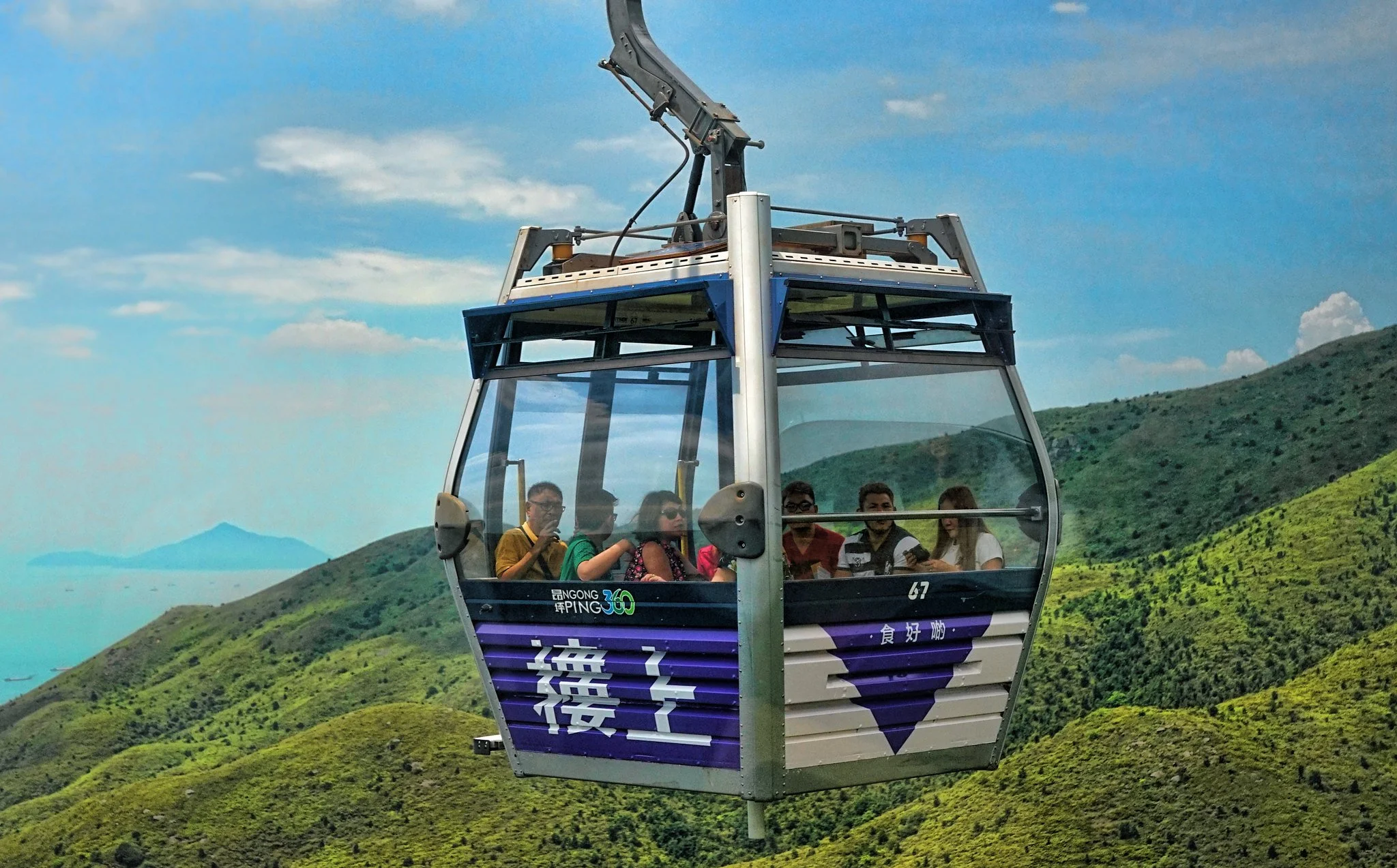
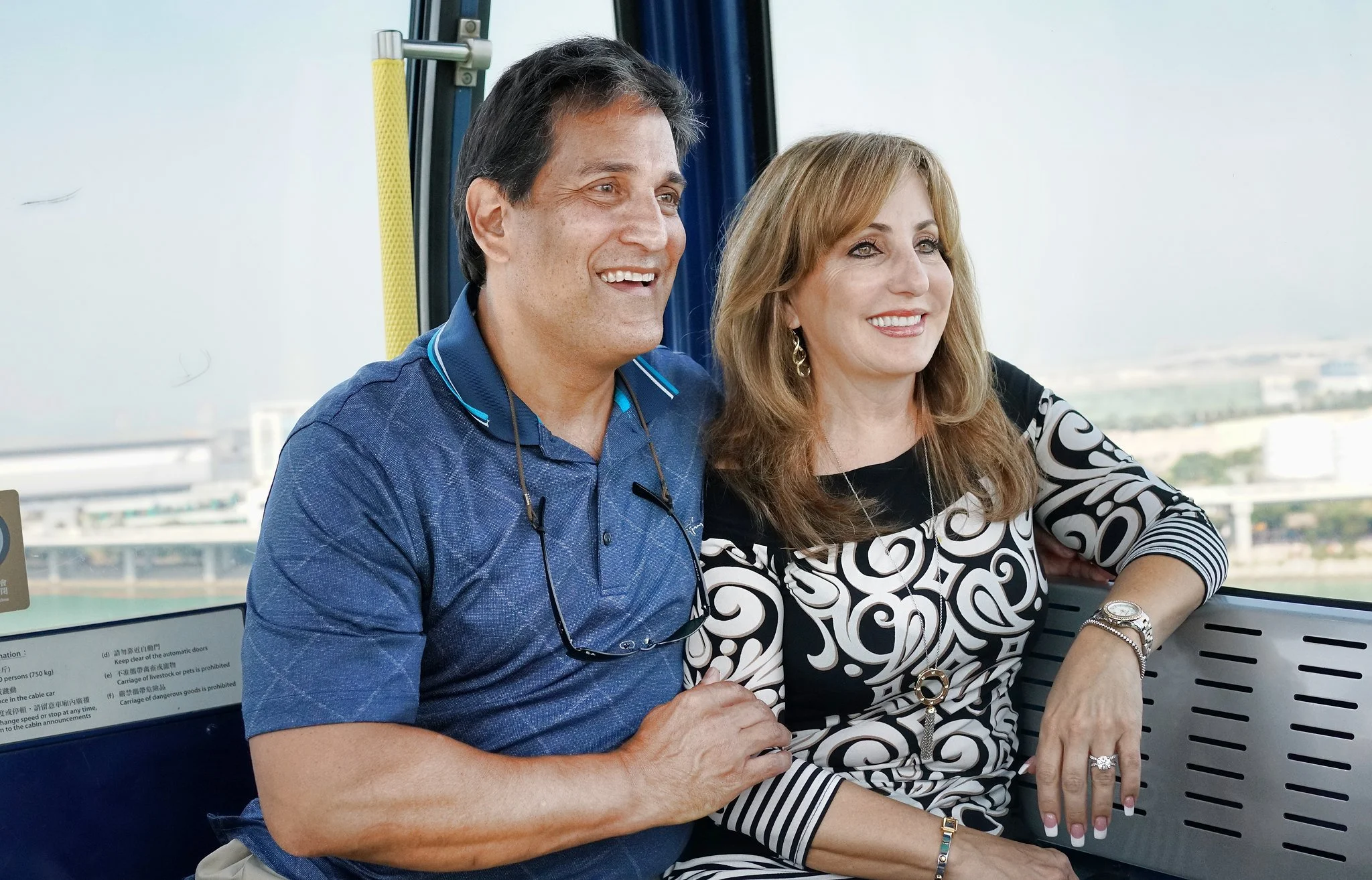
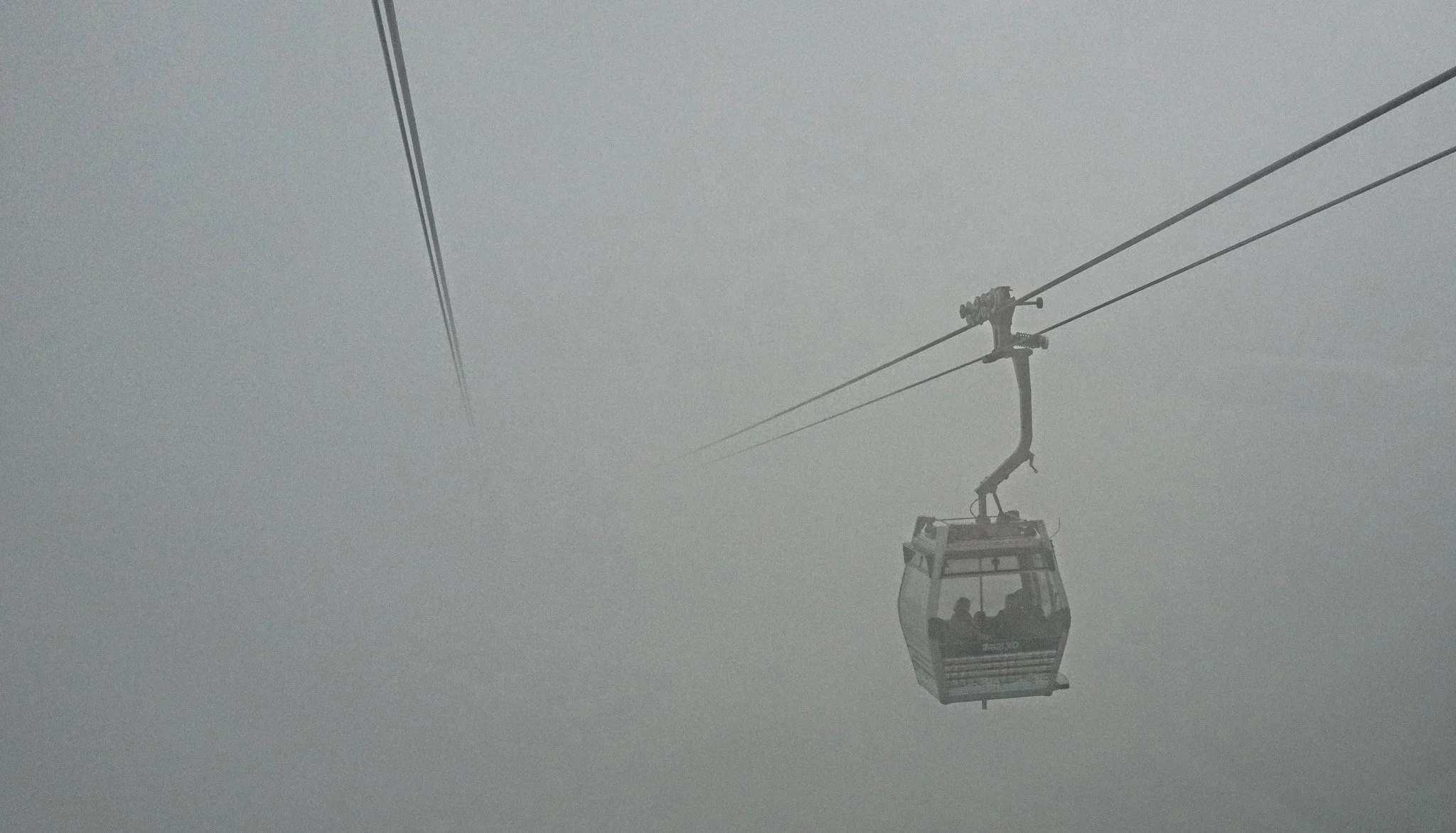
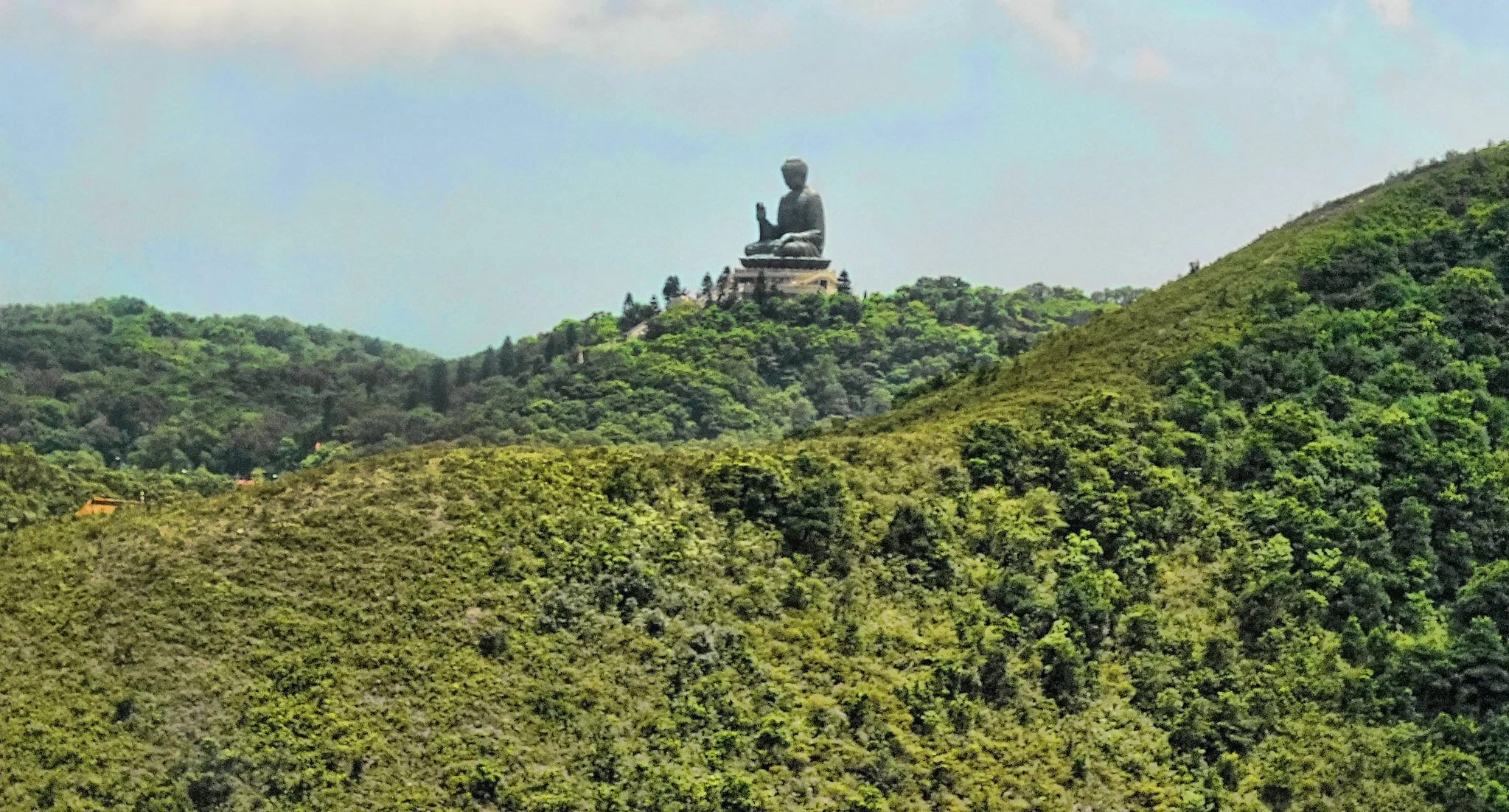
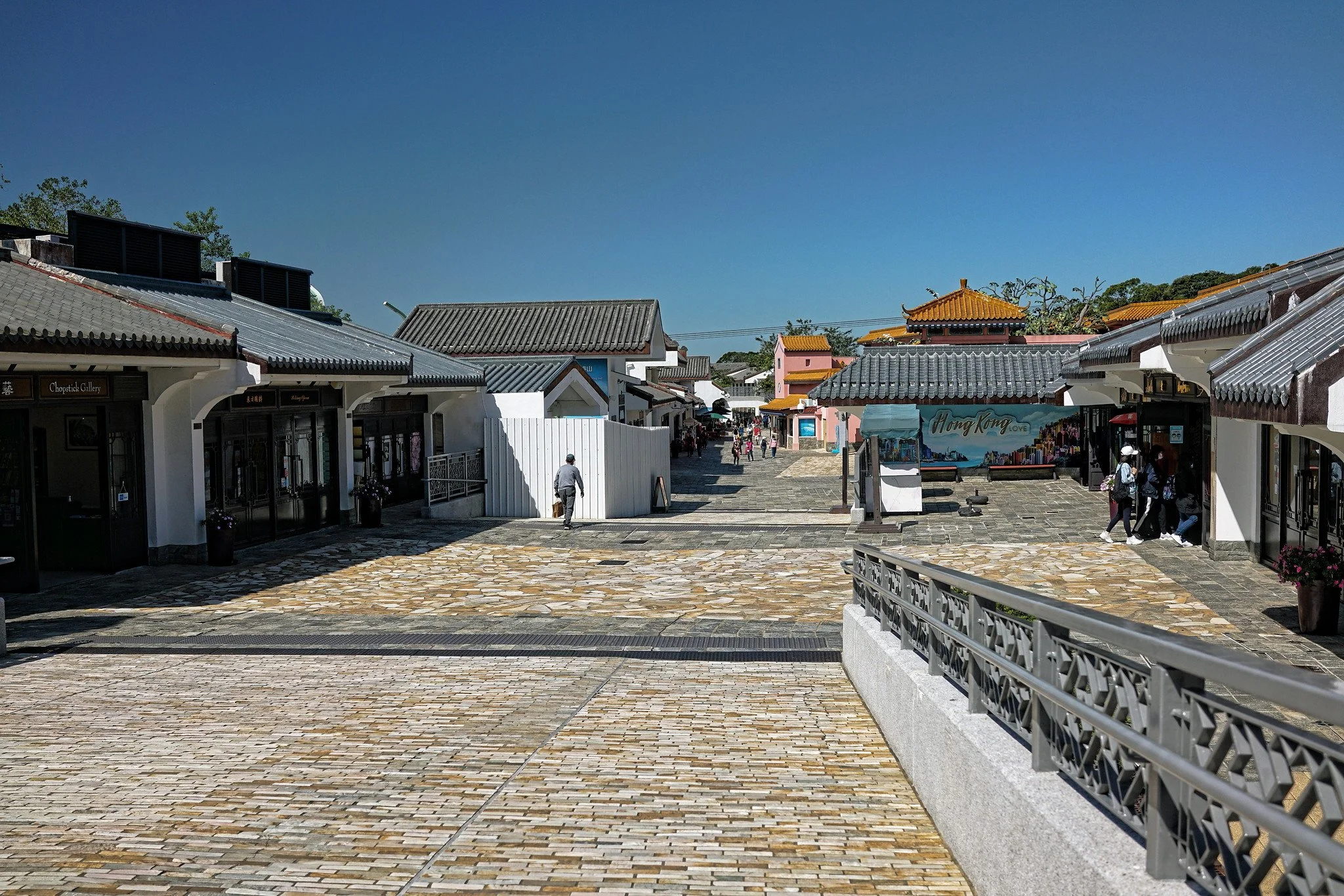
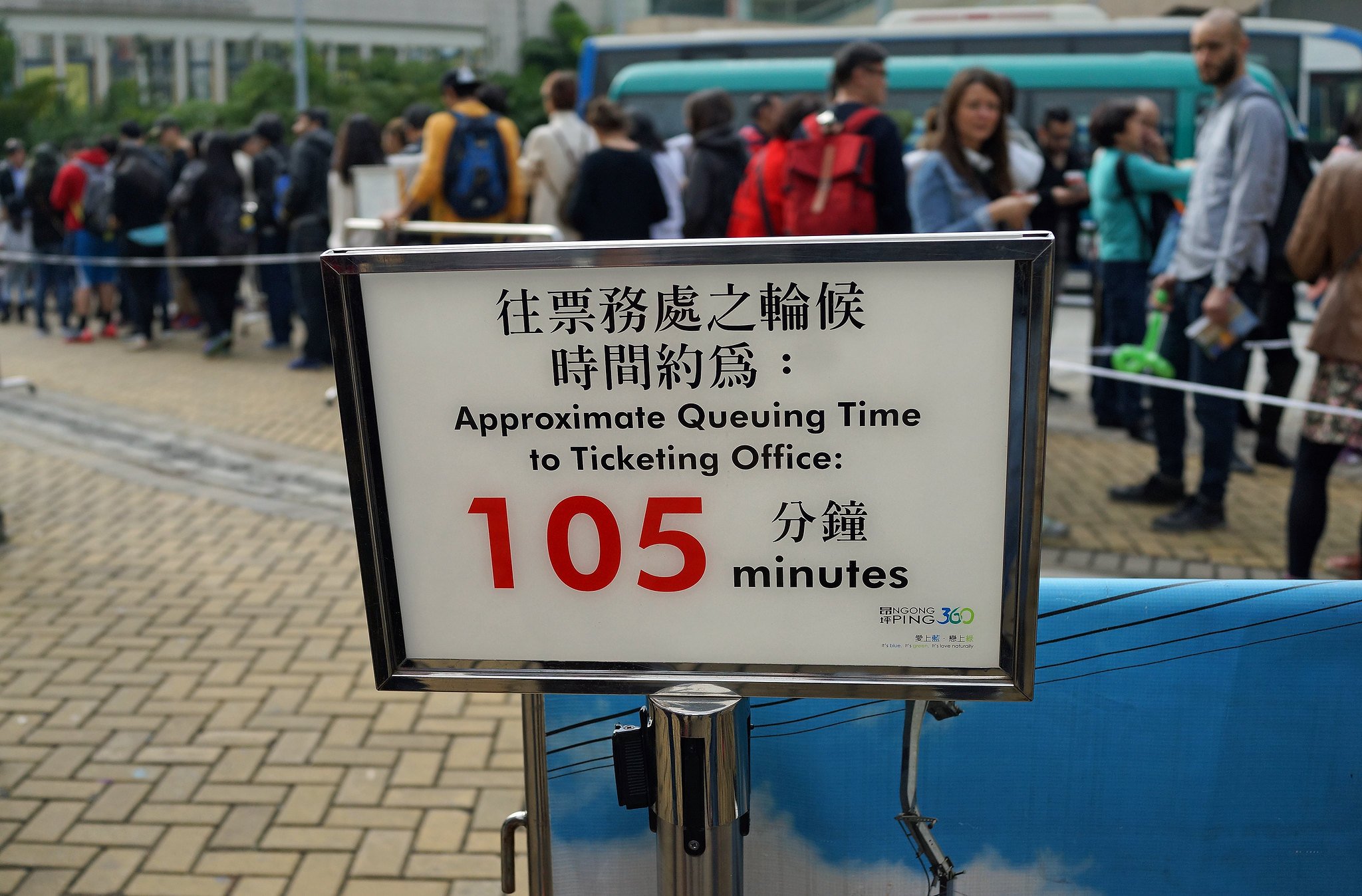
click on any image to enlarge
© Copyright Acknowledged | All rights reserved | images taken by Jamie
The NP 360 Cable Car | The NP 360 Village | Hong Kong
6. Why the Directional Queue Imbalance?
A touchy subject for a lot of people but you have to face reality
In a nutshell for many years now I have never gone to the Big Buddha on the Cable Car, I go up on the bus and come down on the Cable Car, it works very well for me, more on that later.
Morning queues from Tung Chung upward to Ngong Ping are consistently longer than the downward queues from Ngong Ping Village back to Tung Chung. The pattern stems primarily from visitor behaviour rather than operational bias. Most day-trippers arrive via MTR or other transport at Tung Chung and prioritise an early ascent to maximise time at the Big Buddha and Po Lin Monastery. Many purchase one-way tickets upward, then return by bus (cheaper and more flexible for onward journeys to Tai O or elsewhere) or linger for lunch and exploration before descending later in the day. Downward departures therefore spread more evenly across the afternoon, reducing peak pressure on the Ngong Ping boarding platforms. Wind conditions or maintenance windows can occasionally amplify the asymmetry, but the core driver remains the classic one-way tourism rhythm of “get there early, depart at leisure”. This behavioural dynamic is common to many elevated attractions worldwide and underscores how visitor flow patterns, rather than pure engineering capacity, often dictate perceived wait times on different legs of the journey.
7. Reliability, Maintenance and the Record Since 2007
No incidents of comparable seriousness to 2007 have occurred. Minor events include a 2009 emergency-rescue-vehicle drill mishap that caused superficial damage but no injuries, and a 2012 technical stoppage triggered by a bull-wheel position sensor. Weather - particularly strong winds or typhoon signals - remains the most frequent cause of temporary suspensions. Scheduled maintenance occurs multiple times each year, typically in blocks during January, March, May, September and November. Closures range from single days to multi-week periods (examples in 2025 - 2026 included spans of 9 - 20+ days). Cumulatively these account for perhaps 15 - 40 days annually, depending on the calendar. The Ngong Ping Village itself often stays open during cable-car maintenance, reachable by bus. Under MTR stewardship the system has established a strong safety culture, with continuous investment in training, equipment and protocols. This commitment to proactive upkeep explains why the attraction has maintained public confidence and operational continuity over nearly two decades despite the inherent challenges of operating a long cableway in a subtropical, typhoon-prone environment.
I am probably one of the few people that loves to be on the cable car in foggy and tainy weather (see images above) there is something ethereal about the whole experience but it can send some people into a bit of a tizz
8. Ngong Ping Village: Shops, Experiences and Atmosphere
At the upper terminus lies Ngong Ping Village, a compact, purpose-designed pedestrian precinct that serves as both gateway and destination. Styled in traditional Chinese architectural style, the village creates an immediate sense of place - although many long-time locals and frequent visitors refer to it affectionately as the “fake village” because the buildings look brand new and plasticky, lacking the patina of genuine heritage structures.
The famous wishing tree is widely believed to be plastic rather than a real living tree, which fits the overall polished but somewhat tacky commercial vibe. Shopping space totals around 6,000 square metres, with a central two-storey building alone housing over 20 outlets. Across the precinct there are more than 20 restaurants, cafés and tea houses offering Chinese, vegetarian, international and casual options - from the bland set lunches at Po Lin Monastery’s vegetarian restaurant to Starbucks, Subway, local dessert spots, kebab houses and tea houses. Souvenir and retail outlets number in the dozens overall, selling Buddha statues, incense, religious artefacts, trendy merchandise, jewellery, clothing and cultural keepsakes. One or two multimedia theatres (including shows such as “Walking with Buddha”) and occasional street entertainment or wishing-tree features add experiential layers.
To be fair, the village offers great restrooms and plenty of places for food and drink, with the Chopstick Gallery standing out as a particularly interesting retail establishment
The atmosphere blends commercial convenience with mountain serenity. Visitors browse at leisure, photograph the striking backdrop, sample snacks or enjoy a full meal, and transition gradually from the thrill of the cable-car ride to the contemplative mood of the monastery and Buddha. Some observers note a degree of commercialisation compared with the site’s earlier seclusion, yet the village undeniably improves accessibility and dwell time for the millions who visit. It functions as a practical and atmospheric buffer zone rather than a jarring intrusion. The combination of retail variety, dining diversity and cultural touches makes the village far more than a transit point - it becomes an integral part of the half-day or full-day Lantau itinerary for most guests.
In a nutshell it serves a very important purpose
9. The Short Walk to the Big Buddha
From the cable-car terminus and village exit, a comfortable, paved pathway leads through the main street of shops and eateries toward Po Lin Monastery and the Big Buddha. Most people, walking without stopping, take 15 - 20 minutes to reach the front gate and entrance plaza area (roughly 600 - 800 metres). The route is mostly level or gently inclined but can feel like a noticeable trek, especially for groups or after a long day, and in inclement weather - heavy rain and strong winds are common at the exposed Buddha site - it can become quite horrible.
Once at the plaza, the climb of exactly 268 steps to the Buddha platform itself remains a separate, more physical experience for those who choose it. There is nothing funnier than hearing the universal “Oh S**t” reaction - expressed in 48 different languages - when visitors first clap eyes on those 268 steps! This distance ensures that even visitors with limited time or energy can reach the key viewpoints and monastery areas, though advance awareness of the conditions helps set realistic expectations.
Personally I am never quite sure why people seem to think that 268 steps up and down is a breeze, it is not and I have done the steps enough times to hate the darn things, but that is just me.
10. A “What If” Reflection: The Monorail Idea and Practical Alternatives
The notion of installing a monorail or similar shuttle to carry passengers who prefer not to walk the distance from the cable-car terminus to the Buddha’s front gate is an interesting one. To the best of available information, no such monorail proposal has appeared in official plans or public feasibility studies for this specific link. Instead, past studies have examined extensions of the cable-car system itself - for example, onward connections toward Tai O - as a way to improve Lantau connectivity while minimising new ground-level infrastructure in the country-park setting.
If a full monorail proves unfeasible, (I believe it could be done) a flat moving walkway or series of covered escalators (similar to the super-long ones in many subway stations) could offer a pragmatic alternative. Such a system could even support a modest fee for usage, helping offset costs while improving accessibility.
One completely understands the arguments around preserving a sense of spiritual enlightenment and the ritualistic approach to the Buddha, yet the reality for the vast majority of visitors - who are tourists rather than devout Buddhist adherents - is different. Imagine arriving on a hot, sweaty late morning after the cable-car ride, facing a 15 - 20 minute trek through the village followed by the sight of those 268 steps: people are often not thinking particularly happy or enlightened thoughts at that moment. A moving walkway would reduce physical barriers without fully erasing the journey’s character, potentially increasing satisfaction, dwell time and repeat visits while making the site more inclusive for families, seniors and those less mobile.
It is a thought-provoking “what if” that highlights ongoing tensions between convenience, experience and preservation in Hong Kong’s tourism spots. Current alternatives - the walk itself, plus bus services from Ngong Ping - already provide reasonable flexibility, but subtle enhancements like covered moving paths could strike a better balance. The Government delivered a major success with this project overall, but these kinds of practical missteps in visitor flow and accessibility are the sort of details that make all the difference between a good experience and a truly memorable one.
Additional Closing Context and Enduring Appeal
Beyond the ten core points, several further details enrich understanding. The system was among the first to adopt a full-width single-piece transparent floor in its Crystal cabins, setting a benchmark for visual innovation. Its operating fleet and 3,500-passenger hourly capacity demonstrate serious engineering scale. The project formed part of the broader post-airport development of Lantau, complementing the 1993 opening of the Big Buddha and the longer-established Po Lin Monastery. Post-pandemic recovery has been robust, with overseas and mainland visitors returning strongly and daily averages holding steady near 4,800 - 4,850. The 20th-anniversary “Back to the Opening Price” promotion cleverly taps into nostalgia while introducing new generations to the attraction at historic rates.
Additional operational nuances include the way cabins leave stations continuously, with Crystal departures every 3 to 7 minutes, and the system’s design features that minimise ecological footprint during construction and ongoing use. In practice, despite the marketed “walking on air” thrill of the Crystal cabins with their triple-layered tempered safety glass floors, observations from hundreds of rides show that virtually no one stands up to test the durability - a testament perhaps to the influence of disaster movies or simple caution. Even in a recent Crystal cabin ride last Saturday, one side of the windows was obscured by promotional stickers, which understandably left guests less impressed with the premium experience. And for a bit of light relief, one often spots the ultra-basic maintenance worker cabins - essentially open metal cages with no windows or roof, where the worker is securely hooked to a safety bar. That must be quite the breeze at altitude and a real test of nerves for those keeping the system running smoothly.
Taken together, these elements reveal an attraction that has matured through adversity, adapted operationally and continues to deliver a compelling blend of thrill, culture and convenience. Queues, maintenance windows and commercial vibrancy in the village are simply the practical realities of managing a high-volume, high-expectation site in one of the world’s most visited cities. For those willing to plan around peak times, embrace the walk and appreciate the layered story behind the cables and cabins, Ngong Ping 360 and its mountain village remain among Hong Kong’s most rewarding day-trip experiences – a genuine marriage of modern ingenuity and timeless spirituality. The depth of planning, the lessons learned from early challenges and the ongoing refinements all contribute to why the experience continues to draw repeat visitors and high praise year after year.
So there you go
Jamie’s Hong Kong Insider Chat
Ready to turn your plans into a far more enjoyable reality? Click the yellow button below to learn more about Jamie’s Hong Kong Insider Chat, check pricing and book a convenient time
I do not do Food Tours in Hong Kong but I know people that do!
click on any image to enlarge
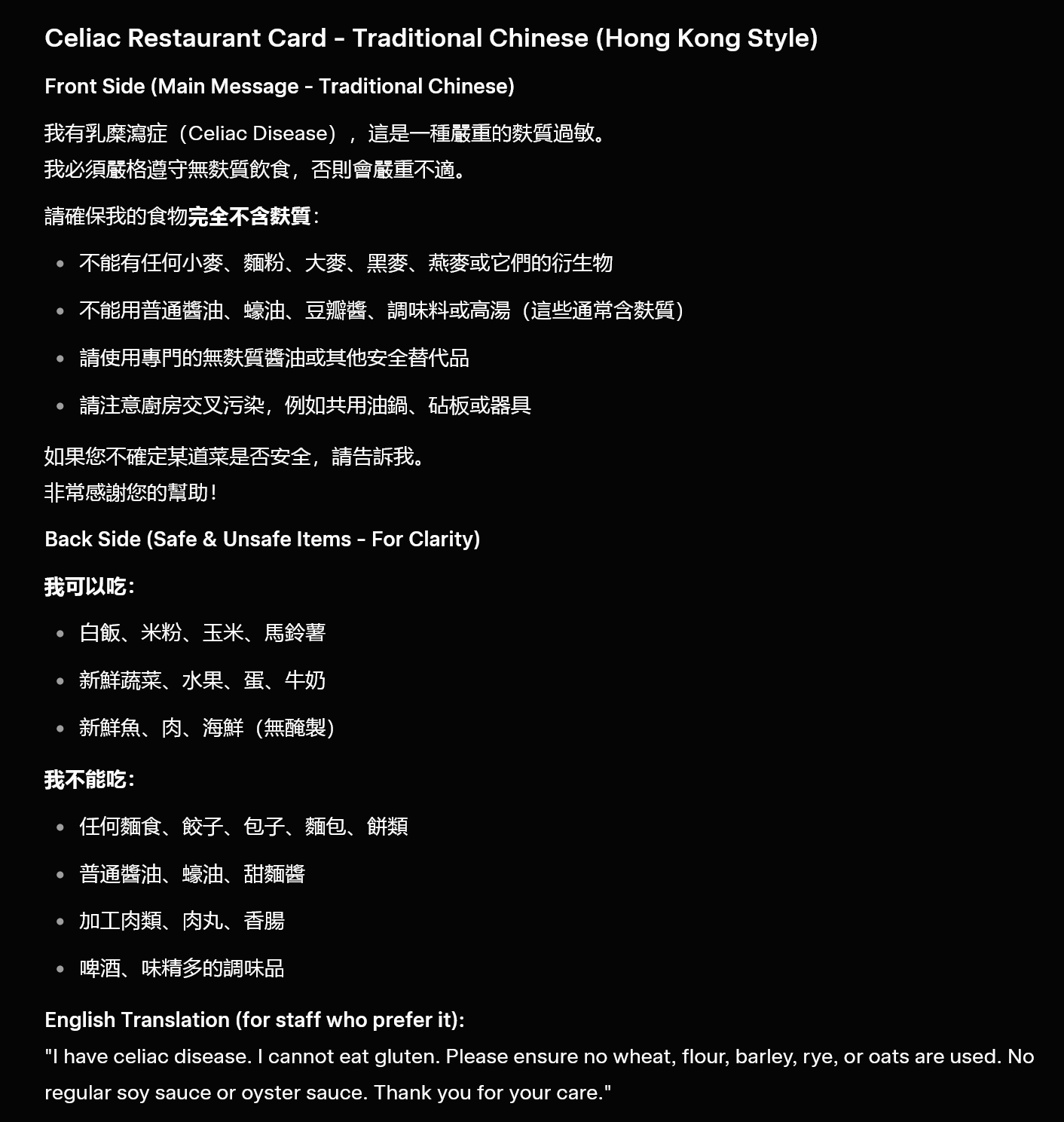
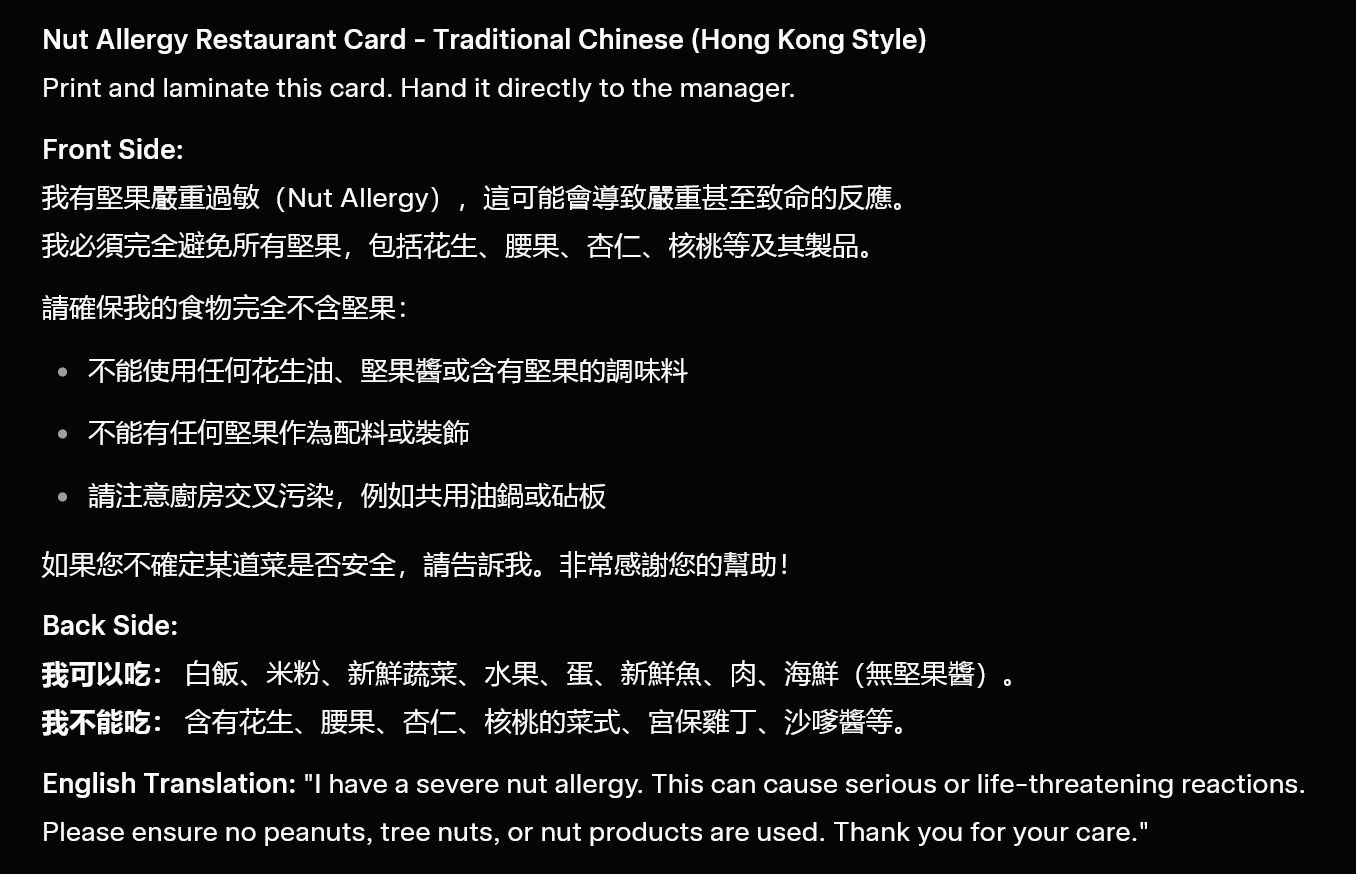
The information above can be shown to restaurant managers in Hong Kong if you are intolerant to gluten and nuts,
I do not do food tours as mentioned above, I have very specific reasons and part of it is that I do not speak Cantonese or write Chinese, I am from Yorkshire in England and I lack the language gene and it is not through lack of trying and yes a lot of restaurants do not have English menu’s or staff who speak conversational English.
.. and yet I have eaten at close to 1,400 restaurants in Hong Kong since January 2nd 1972, my wife was born in Hong Kong and we have been together over 40 years and her first language is Cantonese and a lot of her family are Chinese or half Chinese so I have never had much of an issue!
This does not translate to doing food tours though, yes, I could do them, no problem there but they would never ever be as good as the food tours done by my friends (see the 3 links above) most of their awesome guides are locally born Hong Kong Chinese and obviously food culture is part of their DNA, it is impossible for me to compete with that!
So please feel free to contact them for food tours
I do not do Hiking Tours in Hong Kong but I know someone that does!
I do not do Hiking Tours, never have and never will even though I used to go Hiking a lot when I was a lot younger, The Hong Kong Government is promoting hiking tours so I urge you to contact my friend Sabrina at Hong Kong Trails and Tours, she is a long time Hong Kong resident and and a very experienced hiker with close to 700 Hikes in 15+ years under her belt, please click on the link below
click on any image to enlarge
© Copyright Acknowledged | All rights reserved | all images taken b Jamie
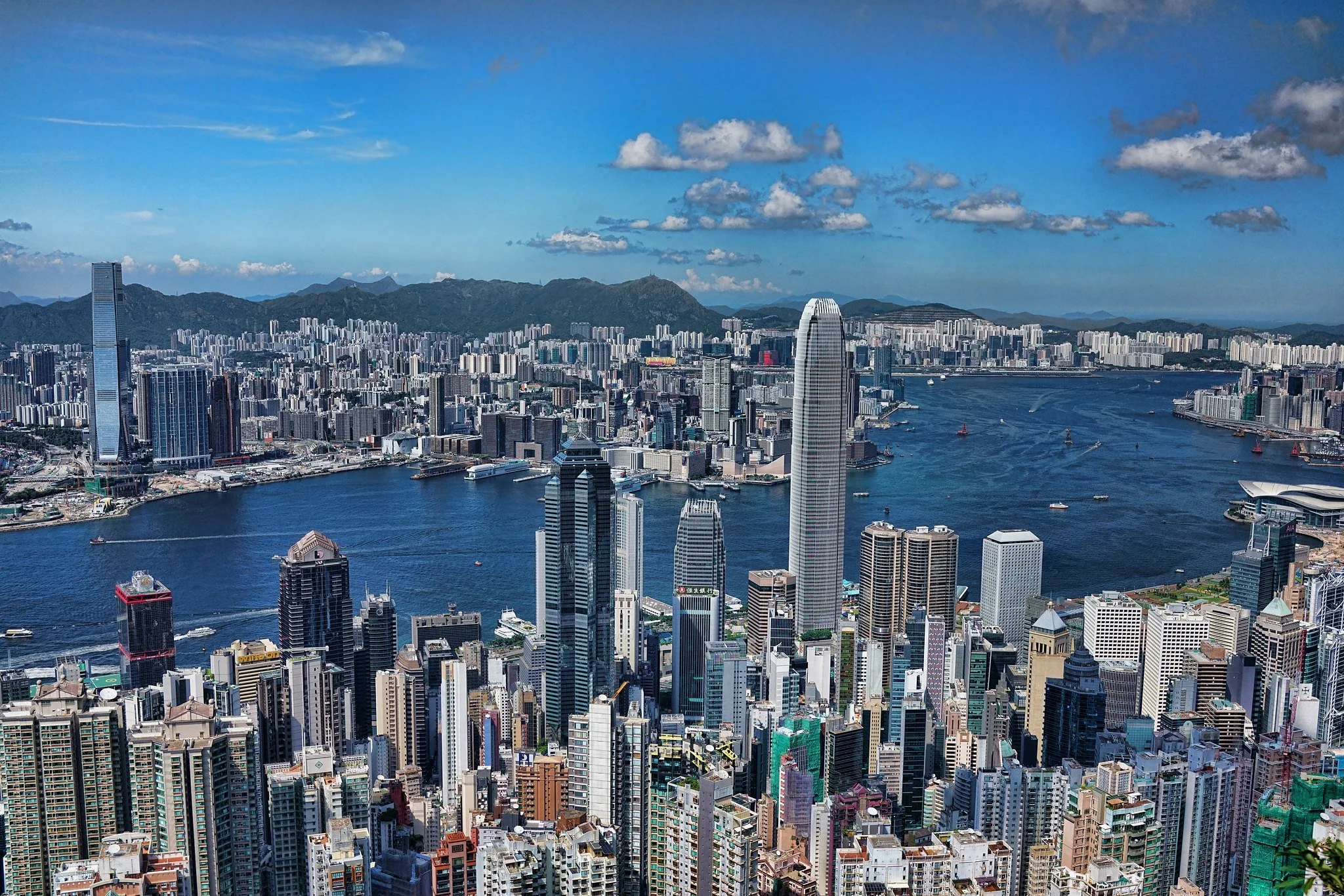
Jamie’s Hong Kong | Some of my favourite images | Hong Kong 101
© Jamie Lloyd | J3 Consultants Hong Kong | J3 Private Tours Hong Kong |
| 2010 - 2026 All rights reserved. |
Click on any image to enlarge to full screen
Current images from my Instagram feed