10 Things you did not know about the Po Lin Monastery Hong Kong
Quiet realities behind Hong Kong’s most famous monastery
The J3 Group - Premium Quality Private Tours | Experiences and Insider Chats since 2010
Me Jamie, your host, I am English and I have lived in Hong Kong since January 2nd 1972 - I know the place.
A meaningful blog post with a difference - tips on Travel, Tourism, Tours, Daily Life and my personal thoughts on Hong Kong.
Please do visit Amazing Hong Kong
Hong Kong | Pearl of the Orient
Customised Private Tours + Experiences in Amazing Hong Kong
Jamie has lived in Hong Kong - Pearl of the Orient for 50+ years
Carefully Crafted Personalised and Customised Itineraries by Jamie | Hong Kong’s Most Experienced Private Tour Guide for : Solo Travellers Friends Families Seniors Couples Business People MICE Delegates.
Private Tours Cultural Tours Walking Tours Sightseeing Tours City Tours Night Tours Layover Tours Transit Tours Private Shore Excursions Bespoke Tours Personalised Tours Jewish Heritage Tours Luxury Private Tours Day Tours Luxury Boat Tours Themed Tours Private Family Tours Private Day Tours Corporate Tours
Just you, your family or friends and Jamie your personal English private tour guide - over 2,400+ tours completed since 2011 - Jamie offers quality Private Tours of Hong Kong
Tour Group Size 1 - 6 people only
J3 Group Hong Kong | J3 Consultants Hong Kong | J3 Private Tours Hong Kong
Creating Memories That Will Last A Lifetime
Go here for the Hong Kong Michelin Restaurant Guide which includes the Bib Gourmand Category

A Resident since 1972 - Private Tours of Hong Kong with Jamie
The Best Things to do in Hong Kong
click on the image to enlarge
© Copyright Acknowledged | All rights reserved | Image taken by Jamie
The Po Lin Monastery - Lantau | Totally Iconic | Hong Kong
Foreword by Jamie
10 Things you did not know about the Po Lin Monastery in Hong Kong
The Po Lin Monastery complex on Lantau Island’s Ngong Ping plateau sits in the shadow of the Big Buddha and remains one of Hong Kong’s most visited yet least deeply understood spiritual sites. Most people arrive via cable car or bus, take the obligatory photograph of the giant bronze Buddha, perhaps burn a stick of incense or eat a vegetarian lunch, then leave. What they miss is that there are effectively two Po Lin Monasteries here: the historic complex whose roots reach back to 1906, and the substantial new Grand Hall of Ten Thousand Buddhas that opened in late 2014. Both structures share the same plateau, the same monastic community and the same Board of Directors, yet they represent very different chapters in the monastery’s evolution. The contrast between them raises all sorts of practical and philosophical questions about heritage, accessibility, money, symbolism and daily life inside a working Buddhist institution that has somehow kept its core purpose while becoming a major tourist draw.
I will also state now that many visitors to the Po Lin Monastery have no idea that there are two of them, this is not apparent when you approach at ground level, in a nutshell, the awesome monastery is directly BEHIND the original!
Having visited the site long before (1972) it turned into the major tourist attraction it is today, one notices how certain aspects have changed with the influx of visitors. These posts are not meant to replace the usual tourist spin but to add a dose of on-the-ground reality that people who have been only once (or rely on glossy articles) often miss. The Big Buddha, Po Lin and the Ngong Ping 360 cable car experience are genuinely impressive, but they are also commercial tourist operations priced accordingly and held to higher standards than many other Hong Kong attractions.
Flaws exist that could and should be addressed; given the popularity and revenue, cost cannot be the main barrier, and fixing them would significantly improve the visit for the vast majority of people who come here for the awe and the selfies rather than purely religious reasons. There is a fine line between a religious retreat (as it felt on my first visit in 1972) and a major tourist attraction, and when the balance tips toward the latter, expectations change.
1. A complete and detailed history of the two Po Lin Monastery buildings, including opening dates
The story begins in 1906 when three Ch’an (Zen) monks from Jiangsu Province in mainland China - Venerables Da Yue, Dun Xiu and Yue Ming - arrived on Lantau looking for a quiet place to practise. They found a flat stretch of land between Lantau Peak and Lei Nak Peak, cleared the thorn bushes, built a simple stone house and then a large thatched hut. For the next eighteen years the settlement was known simply as the Big Thatched Hut. In 1924 it was formally renamed Po Lin Monastery (Precious Lotus) and Venerable Ji Xiu became the first Abbot. That is the true founding date of the original monastery.
Expansion was steady but modest for the next few decades. The Hall of Great Perfection went up in 1928. Under subsequent abbots more halls appeared: the Hall of Skanda Bodhisattva, Hall of Ksitigarbha Bodhisattva, a two-storey Great Buddha Hall in 1963, and the Main Shrine Hall around 1970. The complex grew along a traditional north-east to south-west axis, with courtyards, bell and drum towers, meditation halls and pagodas. All of this constitutes the “original” Po Lin Monastery that most older visitors remember.
The second monastery building - the Grand Hall of Ten Thousand Buddhas - has a much more recent timeline. Planning began in 2000. Construction finally started in November 2007 and the hall was officially opened on 31st October 2014. It is a five-storey, 6,000-square-metre structure designed in Song-dynasty classical style with Beijing palatial influences. Inside are a shrine hall, meditation hall, scripture library, abbot’s chamber, a large exhibition space for relics and a permanent ordination platform. Only the ground floor, containing the dazzling Hall of Ten Thousand Buddhas with its thousands of illuminated small statues, is normally open to the public. The new building sits directly behind the older halls, which is why visitors notice they must climb steps to reach the original monastery before they can access the newer one.
That awesome family image above taken late June 2026 - the first time I have been able to take a picture in the new monastery after 12 years of waiting, it was some sort of open day!
2. Who actually owns the Po Lin Monasteries
Po Lin is not owned by any individual, corporation or the Hong Kong government. It is a traditional Chan Buddhist monastery operating under a Board of Directors system that was introduced in the 1960s. The Board manages all monastic business and property. The Abbot serves as chairman and spiritual leader but does not hold personal title to the land or buildings. Current leadership rests with the ninth Abbot, Venerable Tsang Chit, elected unanimously by the Board in March 2026. The arrangement keeps the institution firmly in the hands of the monastic community while providing professional oversight of finances, maintenance and external relations and yes, the Big Buddha is under this purview
3. Who actually administers the entire site, employee headcount including nuns and monks, and opening and closing times
Day-to-day religious life is guided by the Abbot and the resident monastic community. Administrative and practical matters fall to the Board of Directors. Reports suggest roughly two dozen resident monks, though exact numbers are not published and can fluctuate with ordinations, retirements and temporary retreats. The associated Chi Chuk Lam Nunnery, established in 1918 on a nearby hill, now has only a very small number of residents, reportedly just an elderly abbess. Lay staff handle the vegetarian kitchen, maintenance, security, relic exhibition logistics and general operations; their numbers are not disclosed but are clearly sufficient to keep a site of this size running smoothly for hundreds of thousands of visitors.
Official opening hours are straightforward:
Po Lin Monastery itself: 9 am to 6 pm daily (including public holidays)
Tian Tan Big Buddha: 10 am to 5:30 pm daily
Vegetarian kitchen: 11:30 am to 4:30 pm daily
These times are posted on the monastery’s own site and are reliable. Early morning or late afternoon visits offer a noticeably quieter atmosphere when the resident monks are more visible going about their routines.
4. The Hostel Question: History, my 1972 experience, current status, and that substantial brand-new looking building
There was indeed a simple pilgrims’ hostel for many decades. In the early years and at least as late as the 1990s it offered basic shared rooms (four-bunk style) with blankets and pillows provided, plus three vegetarian meals a day. One contemporary account from 1990 quoted a rate of HK$150 per night (roughly US$19 at the time) for full board, or HK$30 for lunch only. It was aimed at genuine pilgrims and those seeking a quiet retreat rather than casual tourists.
My own memory from 1972 as an 11-year-old on a school trip fits perfectly into that era - a few days in very basic conditions that provided quite the culture shock for a group of white schoolkids. “Basic” was probably an understatement even then, but it was exactly the sort of austere experience many monasteries offered in those days to instil humility and a taste of monastic discipline.
The facility no longer operates as a public hostel. The monastery’s current official information makes no mention of accommodation for visitors, and recent checks confirm that the old pilgrims’ hostel has been phased out or severely restricted. The site’s transformation into a major tourist destination, combined with changing regulations and the monastery’s own priorities, made running a public hostel impractical. Today anyone wishing to stay overnight on Lantau near Ngong Ping would look to the nearby YHA Ngong Ping SG Davis Youth Hostel or commercial hotels further down the island. Special arrangements for organised retreats or monastic guests may still be possible on a case-by-case basis, but they are not advertised to the general public.
Walking time from the Big Buddha (Tian Tan Buddha) to YHA Ngong Ping SG Davis Youth Hostel
The YHA Ngong Ping SG Davis Youth Hostel is very conveniently located in the Ngong Ping area. From the base or viewing area of the Big Buddha it is typically 8–10 minutes on foot at a normal pace (around 500–600 metres).
As for the substantial, brand-new looking building I notice when walking past - that is almost certainly part of the 2014 Grand Hall of Ten Thousand Buddhas complex or associated monastic facilities built around the same time or renovated since. The Grand Hall itself includes the Abbot’s Chamber and other internal spaces for the resident sangha (monastic community). Monks need living quarters, meditation and study rooms, dining and support areas that are kept separate from the public tourist flow. These newer structures are designed to blend with the traditional aesthetic yet meet modern functional needs for the roughly two dozen resident monks and any visiting clergy. They are not open to the public as guest rooms or apartments for laypeople, which explains why they look well-maintained and substantial without any obvious signage for overnight stays. It is internal monastic accommodation, not a hostel.
5. What is the purpose of burning the gigantic sticks of incense at the monasteries in “huge pots”? (With a Yorkshire-sized helping of humour)
Incense offering is one of the most visible and enduring practices in Chinese Buddhist temples. The smoke is understood to carry prayers and intentions upward to the Buddhas and Bodhisattvas. It also symbolises the fragrance of ethical conduct and the Dharma itself, while physically purifying the air and creating a distinct sacred atmosphere. At Po Lin the large bronze burners (often called “huge pots”) accommodate oversized sticks or long-burning spiral coils. These allow continuous offering over many hours or even days, which suits a busy site where hundreds of visitors may light incense in a single morning.
Some of these sticks really are enormous - easily five feet tall or more, often ornately decorated. With my particular brand of Yorkshire humour I have been known to remark that you could strap three of the biggest ones to your back and probably fly to the moon, or at least give the Big Buddha a decent run for his money in the height stakes. They are impressive, no question, and yes, the larger ones are not cheap. Standard sticks might start around HK$18 (roughly US$2.30), but the giant versions sold on site can easily run into HK$50–100 or more depending on size and decoration - a proper investment in merit-making for those who take the ritual seriously and be aware that the a smoky incense cloud can really irritate your throat
Visitors buy the incense on site and place it in the burners while making personal wishes – for health, family, exams, business or world peace. The act generates merit in Buddhist understanding and connects the individual to centuries of tradition. The scale of the burners simply matches the scale of the monastery and the volume of people who come. It is both devotional and practical - and, on a good day with the wind right, rather spectacularly smoky.
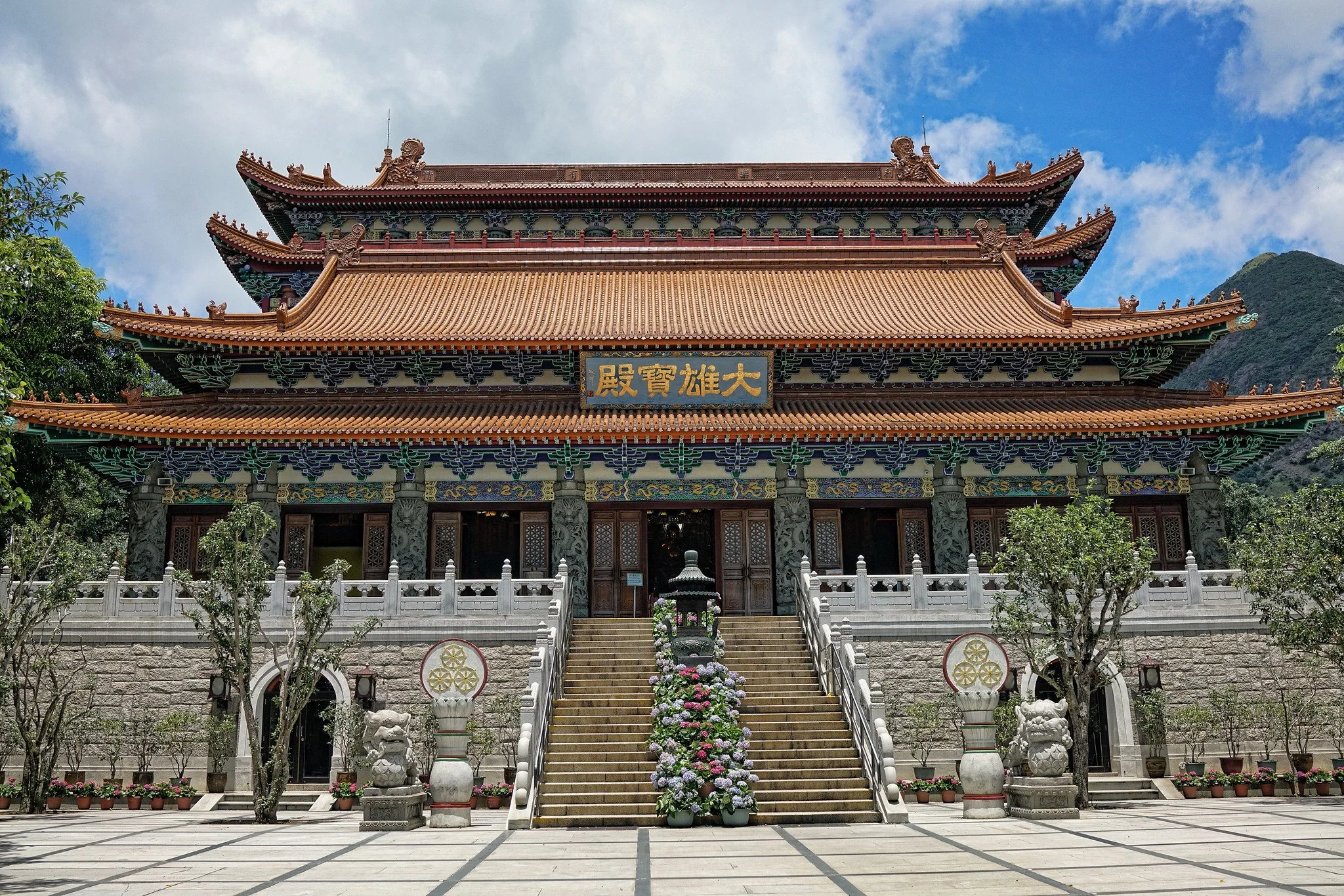
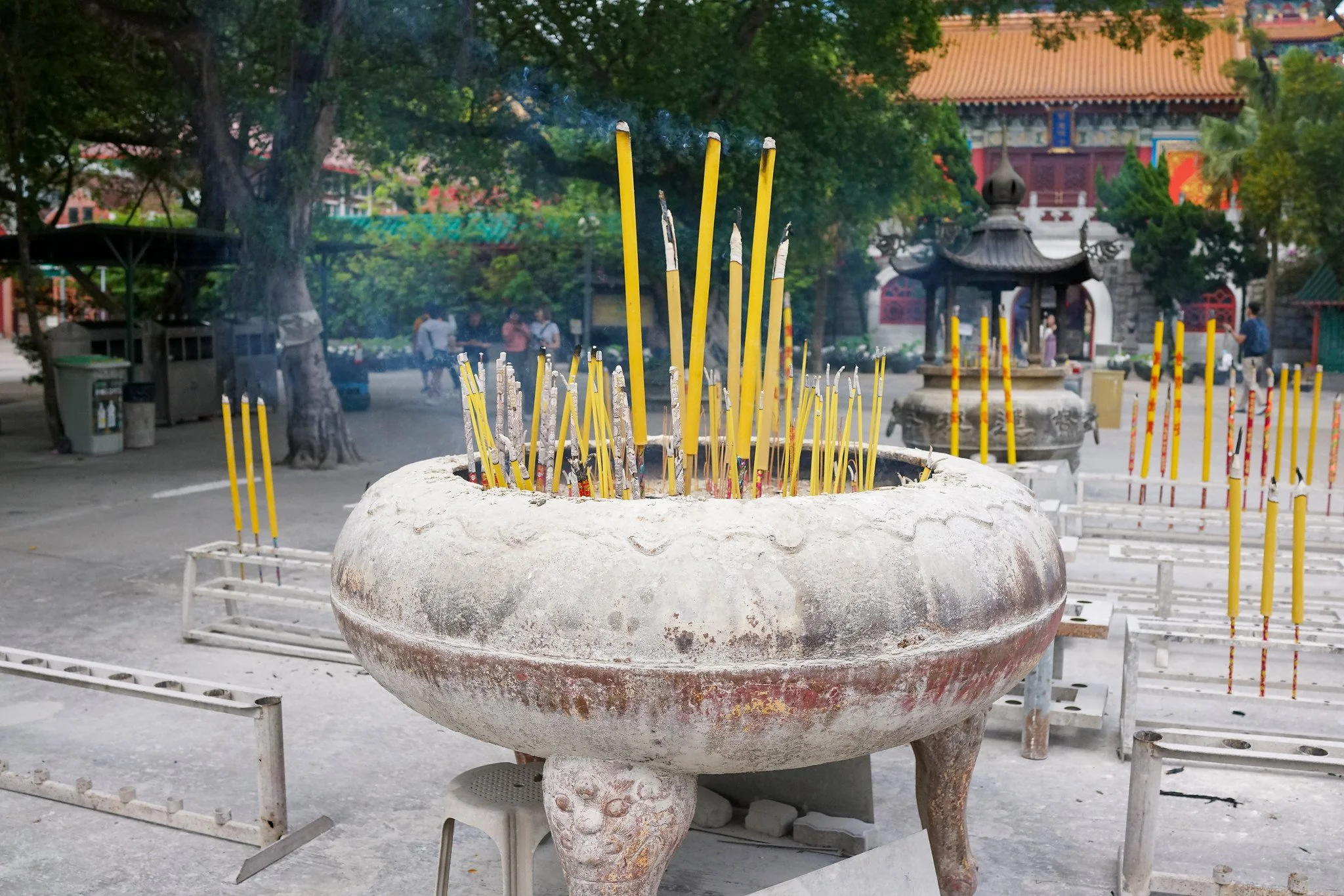
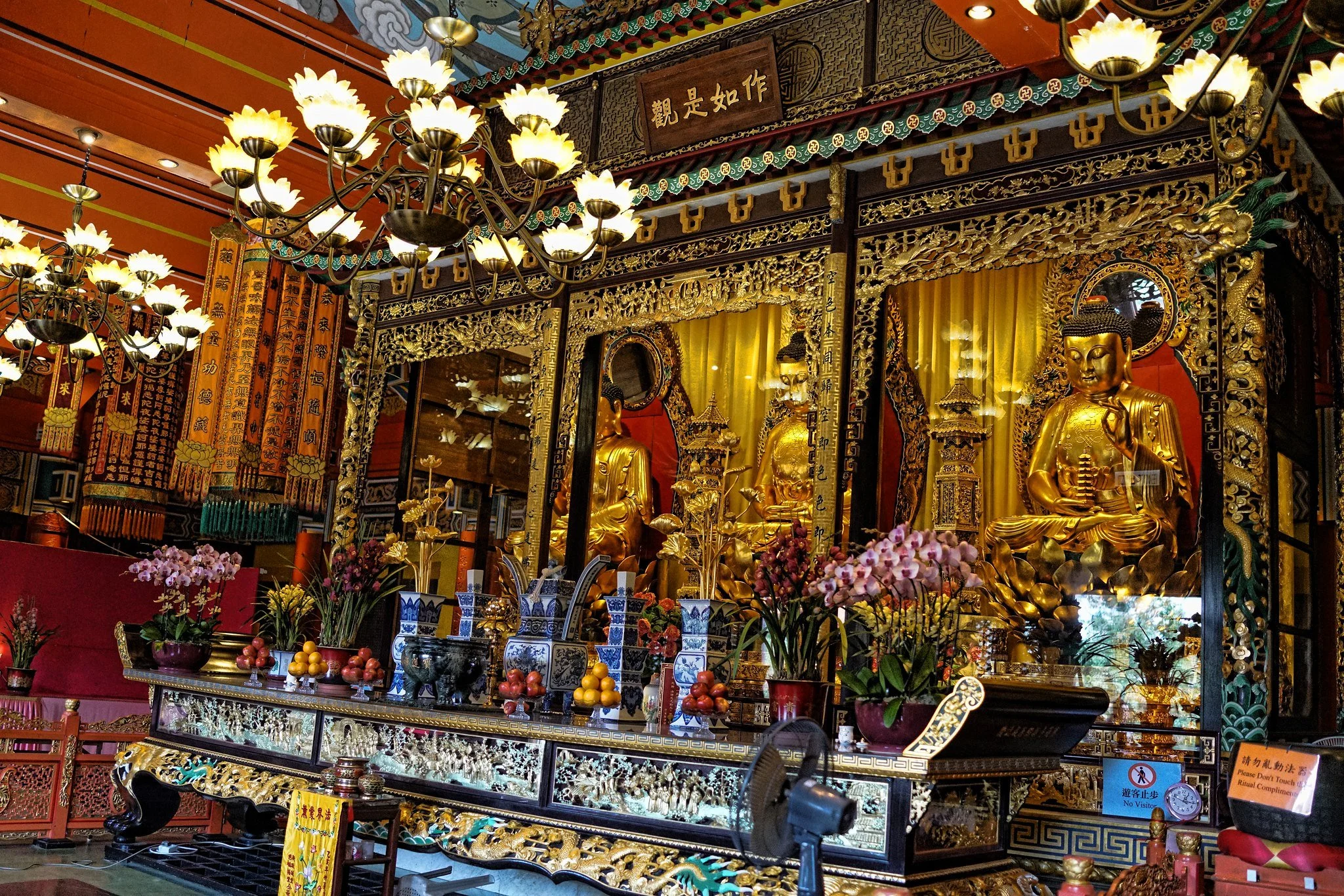
click on any image to enlarge
© Copyright Acknowledged | All rights reserved | Images taken by Jamie
The Po Lin Monastery - Lantau | Totally Iconic | Hong Kong
6. What is the main source of revenue for the Monasteries
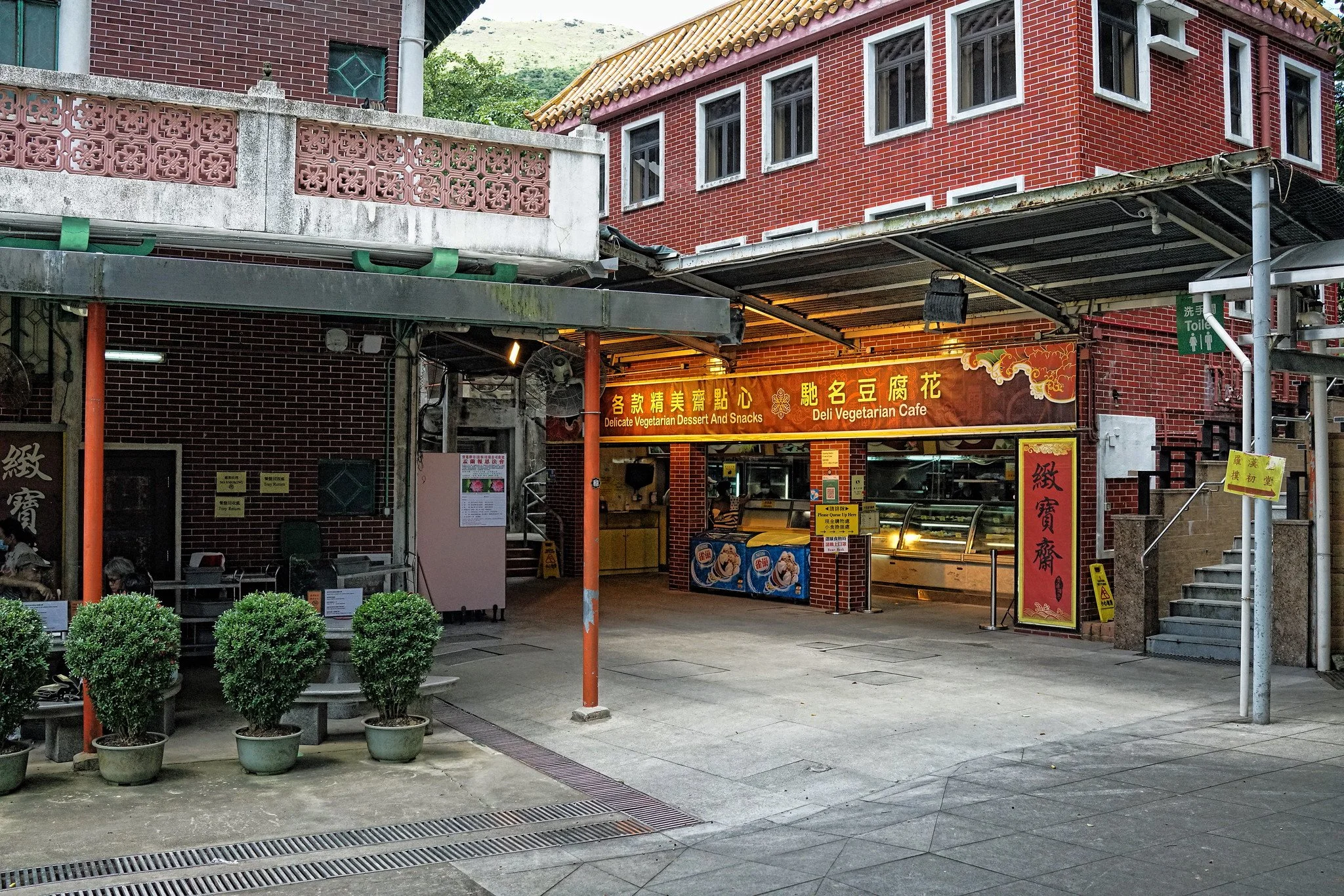
The primary income comes from donations and offerings made by devotees and visitors. This includes cash placed in donation boxes, sponsorship of specific rituals or ceremonies, and the purchase of incense and other religious items. The vegetarian restaurant is the second major contributor. Because the monastery has effectively no direct competition at the immediate site, prices are set at tourist levels and many locals (and long-time visitors) consider the food distinctly average rather than high quality - I have eaten there at least 50 times in recent years, I realise food is subjective but I cannot help but feel they could do better and generally these days my guests have zero interest in a veggie meal., I also suspect that a lot of cheap package tour companies have deals with the restaurant, both the tour company and the the restaurant love a group of 40 tourists
You would need to head back down to Ngong Ping Village for other options, most of which are not vegetarian. By contrast, the vegetarian restaurant at the Chi Lin Nunnery and Nan Lian Garden in Kowloon offers comparable pricing but noticeably superior food and a far more pleasant setting - a point many people who have visited both sites make.
As a Board-managed religious institution the monastery also channels surplus funds into maintenance, renovations (the Big Buddha itself underwent major cleaning work between 2020 and 2022), educational projects and charity. One long-running commitment has been support for Project Hope schools in mainland China, with the monastery contributing to well over 300 schools. The financial model is therefore a classic temple mix: devotional giving plus modest commercial activity (including the restaurant) that supports both the monastic community and wider good works, even if the dining experience itself draws mixed reviews from non-tourist diners.
7. What was the estimated cost for the 2nd Monastery opened in 2014 and why did it take so long? Plus an overview of what you are seeing
Construction of the Grand Hall of Ten Thousand Buddhas reportedly cost in the region of HK$400 million (roughly US$51 million at historical exchange rates). Planning started in 2000, building began in late 2007 and the hall opened in October 2014 - a seven-year construction period after years of preparation. One of the clearest reasons for the extended timeline was the funding model itself. During the construction phase I recall that large vinyl banners were prominently displayed on site acting as a very public donation scoreboard. They showed running totals raised so far, with particular emphasis on the five gold statues, milestone thank-yous whenever enough money came in for one of the statues, and updates on how much was still needed. It was a transparent, community-driven approach that kept supporters engaged but also meant money often dribbled in rather than arriving in one large lump sum. That gradual pace, combined with the scale of the project, the remote plateau logistics and the high standards of craftsmanship required, explains why it took as long as it did. The result was well worth the wait.
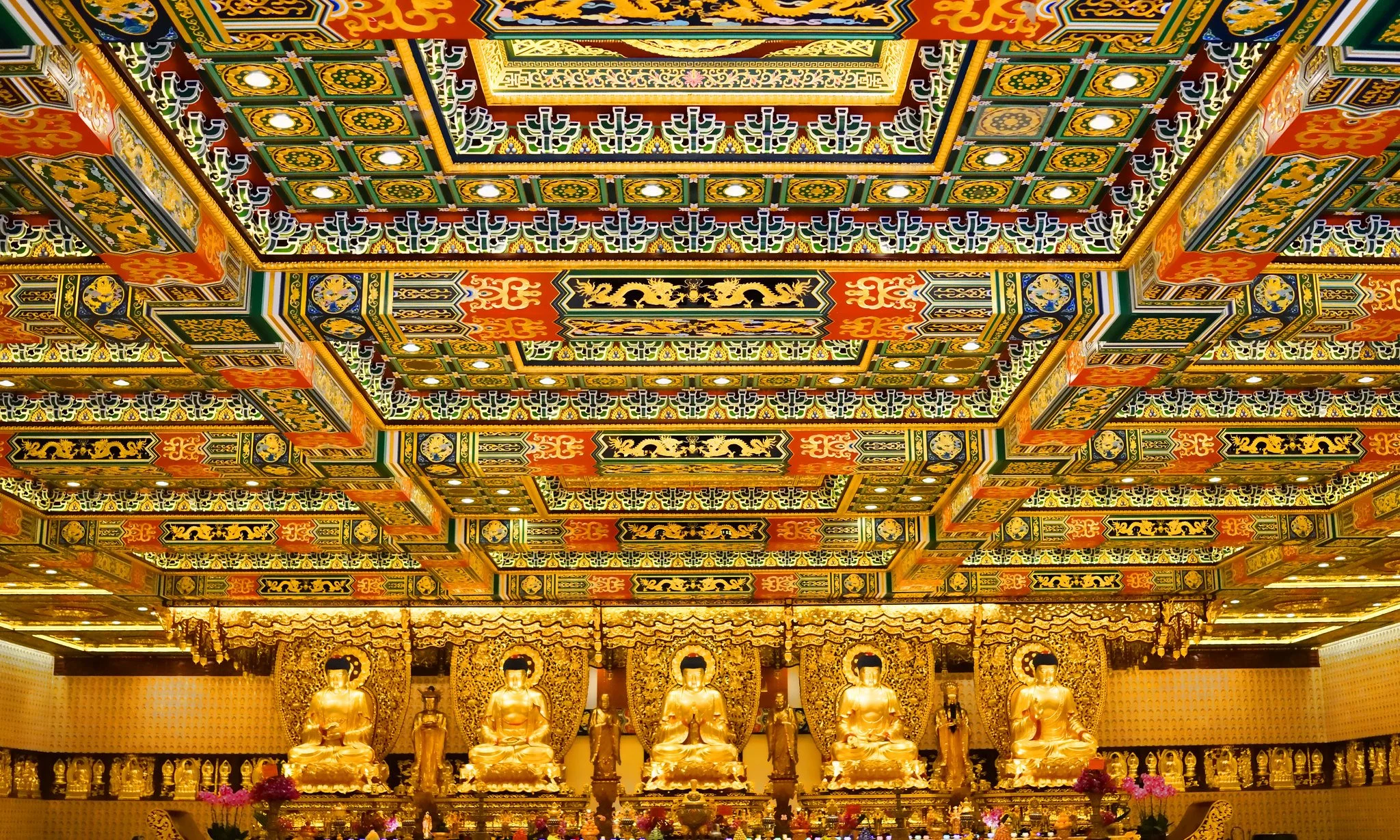
What visitors actually see is a grand, imposing structure whose ground floor presents a sea of ten thousand small, glowing Buddha statues arranged in orderly rows - an immediate visual and spiritual impact. The architecture blends classical Song proportions with subtle modern engineering. Above the public level are spaces for meditation, study, administration and future ceremonies – including living and support facilities for the monks. The hall sits directly behind the older monastery buildings, creating a layered experience: traditional halls first, then the newer, larger addition that signals the monastery’s continued evolution. Many visitors, quite reasonably, consider the new hall one of the standout modern wonders of the site.
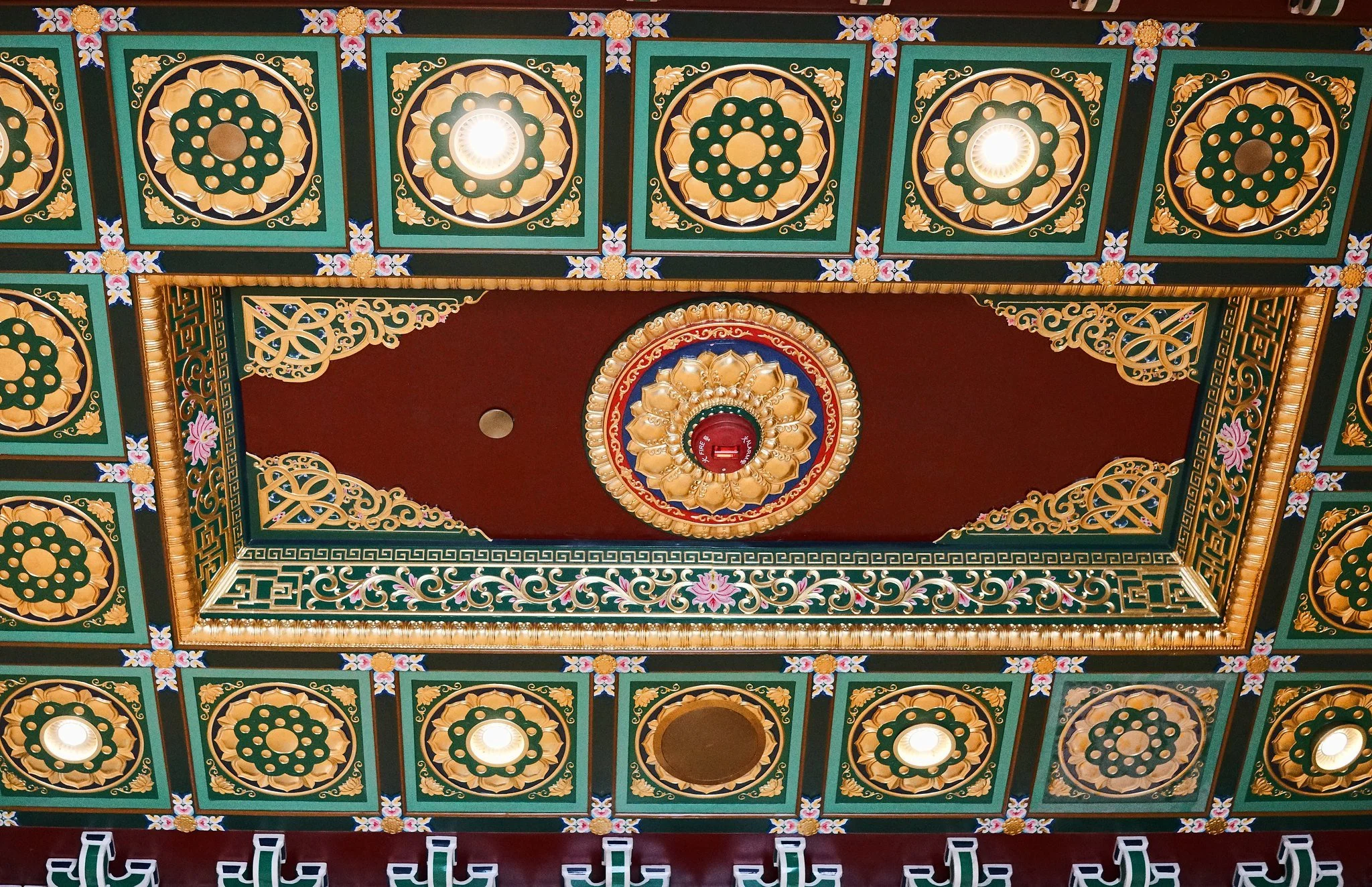
Personally I am always amazed at the roof inside, it is simply magnificent!
8. What it is with Monasteries and steps everywhere (268 at the Buddha) and lots of steps at the 2 Monasteries
The steps are not an afterthought or an oversight; they are fundamental to traditional Chinese temple design and to the Buddhist path itself. Physically they separate the everyday world from the sacred precinct. Symbolically they represent ascent - leaving ordinary concerns behind, making an effort, earning merit through the simple act of climbing. In Ch’an practice, movement itself can be meditation. The famous 268 steps up to the Big Buddha turn the approach into a deliberate pilgrimage rather than a casual stroll. The same principle applies to the steps leading to both the old monastery halls and the new Grand Hall.
Terrain plays a part too. Ngong Ping is a plateau but not completely flat, and historic buildings were deliberately elevated on platforms for drainage, views and feng shui considerations. The steps also slow visitors down, discourage rushing, and create a natural moment of transition. Modern additions such as the wheelchair ramp show that the monastery is willing to adapt, yet the retention of the original steps preserves the character and the teaching embedded in the architecture. Far from being silly, they are one of the reasons the site still feels like a living monastery rather than a theme-park version of one - even if most visitors today are not on a religious pilgrimage.
Whilst this is typical spin and blurb it also detracts from reality, for many people, particularly older or overweight folk (I am both!) mulitple steps are not a spiritual awakening moment, they are a drag and a curse when it is 34oC and 95% humidity and it is a legitimate issue and not made easier by young 20 somethings telling is to suck it up! - even to this day about half of my guests have zero interest in walking up 268 steps (and then down!)
9. The curious case of a totally useless wheelchair ramp and a missing elevator
This is a very specific and legitimate complaint about the Po Lin Monastery and it’s treatment of people who have walking issues., this is not a subject I take lightly I have had guests in Wheelchairs and using metal framed walkers and everything is fine until you get to the entrance of the original Po Lin Monastery
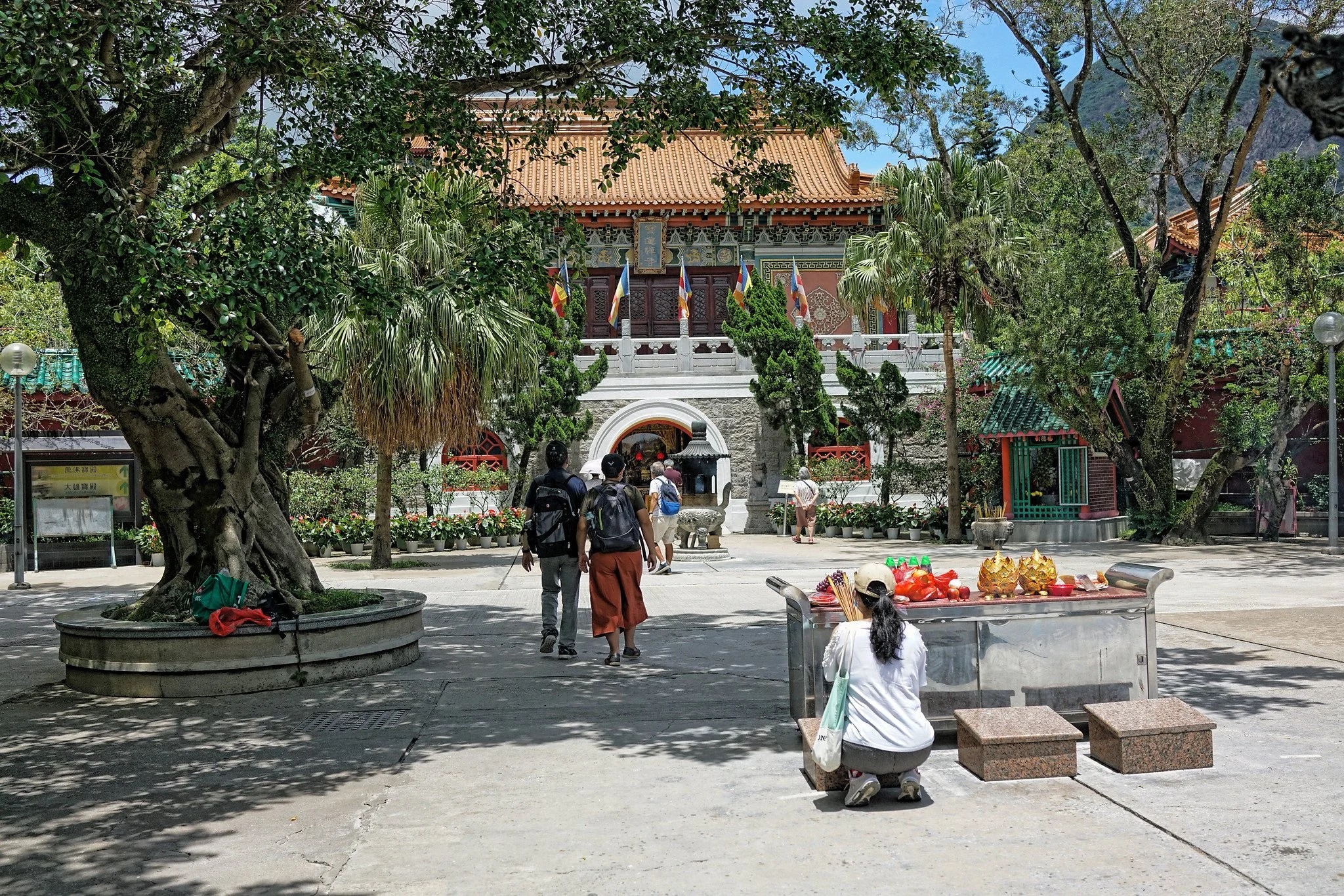
One of the images (first image in the right) above I have shared (plus the everyday scenes I witness) makes the practical problem painfully clear at the original Po Lin Monastery - Wheelchair users can indeed reach the base of the original monastery steps without major difficulty from the cable car or bus drop-off - the approach paths are manageable with someone pushing. The ground-floor openings are flanked by steps on left and right, and the main flight up to the elevated level is the real barrier. There is no public elevator or lift serving those areas.
In a nutshell, for some reason when they opened the Hall of the Ten Thousand Buddhas in 2014 they installed a wheelchair ramp connecting it to the original monastery, unfortunately (and this is really stupid) there is no wheelchair ramp connecting the original monastery entrance to the ground floor where you exit, you still have to negotiate 20 + steps!
The wheelchair ramp at the back, between the old and new structures, only becomes relevant once you are already at that upper level. In real life this means the ramp is of very limited use for most wheelchair visitors. As I described from a recent conversation with the group accompanying an elderly person in a wheelchair, the only realistic option is for companions to carry the person up the 20+ steps and then bring the wheelchair separately - something that is physically demanding, undignified, and simply too much for the average group. The same challenge applies on the way down. I have never seen a wheelchair actually reach the new Grand Hall, and that matches what many guests report. The new hall, with its Hall of Ten Thousand Buddhas, is often the bigger draw by far, so the accessibility shortfall feels particularly frustrating and frankly beggars belief and a 2nd wheelchair ramp could have easily been added before the new monastery opened in 2014
This is a classic Hong Kong situation - something that looks good on regulatory paperwork (“we added a ramp to the new building”) but falls short in everyday practice because the historic core was never fully integrated into the solution. The monastery is not short of funds, and one could reasonably argue that the government or the Board should have insisted on a proper wheelchair-accessible ramp or lift serving the original monastery level as well. Instead we have a partial, “check the box” improvement that does not solve the core issue for the many visitors who would otherwise want to experience both parts of the site comfortably. It is not ideal, and I think my point is well made - many guests notice and comment on exactly this mismatch.
I am never quite sure why Religious sites in Hong Kong (we have 6000+ temples) are not bound by regulations to retrofit wheelchair ramps or add lifts and escalators, why do they get a free pass? one of the few notable exceptions is the Sik Sik Yuen Wong Tai Sin Temple in Hong Kong, they have wheelchair ramps and escalators! and that place has been around for 100 years
Another notable site for comparison is the Chi Lin Nunnery in Diamond Hill,everyone loves the place (it is also Buddhist) it has wheelchair access to the front entrance to to speak but to explore the facility which is very large it is steps, steps and more steps with little in the way of wheelchair ramps and to get access to the Nan Lian Garden attached for people with walking issues (and issues with steps) , you have to exit the Nunnery from where you came in and cross a very busy road because there is no other way, the Garden itself is totally wheelchair friendly (just to annoy you even further)
10. Any estimate on the number of visitors per year to the Po Lin Monasteries
No official annual visitor count is published. However, context allows a reasonable estimate. The Ngong Ping 360 cable car typically carries well over a million passengers in a normal year, and the great majority of those visitors continue to the Big Buddha and Po Lin Monastery area. Add in the bus arrivals and private transport, and the combined footfall at the immediate site is comfortably in the high hundreds of thousands and very possibly exceeds one million in strong tourism years. Not everyone enters the monastery halls or the new Grand Hall; many come primarily for photographs with the Buddha, a quick incense offering, or lunch. Peak periods - Buddha’s Birthday, weekends, public holidays and mainland holiday seasons – produce noticeable crowds. Off-peak weekdays, especially early morning, feel markedly different.
The monastery has absorbed these numbers without losing its essential character, which is no small achievement.
The Final Word
A few additional observations that sit slightly outside the ten things but add texture. Having visited the site long before it became the major tourist attraction it is today, one notices how certain aspects have changed with the influx of visitors. The monastery has maintained strong links with the mainland Buddhist community since the late 1970s, including the donation of a rare Qianlong-era Tripitaka. It has also quietly supported education projects across the border for decades. The vegetarian restaurant, while convenient, draws mixed reviews - many long-time locals and repeat visitors find it distinctly average in quality and noticeably expensive due to its monopoly position at the site. Comparable vegetarian dining at the Chi Lin Nunnery and Nan Lian Garden offers better value, much better food and a superior setting.
Early morning visits, before the first cable car crowds arrive, still allow moments of genuine quiet where the resident monks can be seen going about their practice. And despite the modern Grand Hall and the accessibility ramp, the underlying rhythm of the place - chanting, offerings, study, charity - continues exactly as it has for more than a century. That substantial newer building (s) I have noticed when walking past is almost certainly serving the living monastic community rather than tourists, which explains its well-kept appearance and lack of public access. The giant incense sticks, meanwhile, continue to provide both spiritual merit and the occasional chuckle for those of us with a dry sense of humour like me!
The Po Lin complex is never going to be a quiet hermitage again, yet it has managed the transition from remote thatched hut to major spiritual landmark without completely sacrificing its soul. There is a fine line between a religious retreat and a high-volume tourist attraction, and when the balance tips toward the latter, standards and expectations are different.
Most visitors today are not on a religious pilgrimage but are simply looking for an awesome, memorable experience. Addressing the practical flaws - accessibility, food quality and pricing transparency - would add real value without undermining the site’s character. That, in the end, may be the next chapter worth watching.
So there you go
Jamie’s Hong Kong Insider Chat
Ready to turn your plans into a far more enjoyable reality? Click the yellow button below to learn more about Jamie’s Hong Kong Insider Chat, check pricing and book a convenient time
I do not do Food Tours in Hong Kong but I know people that do!
click on any image to enlarge
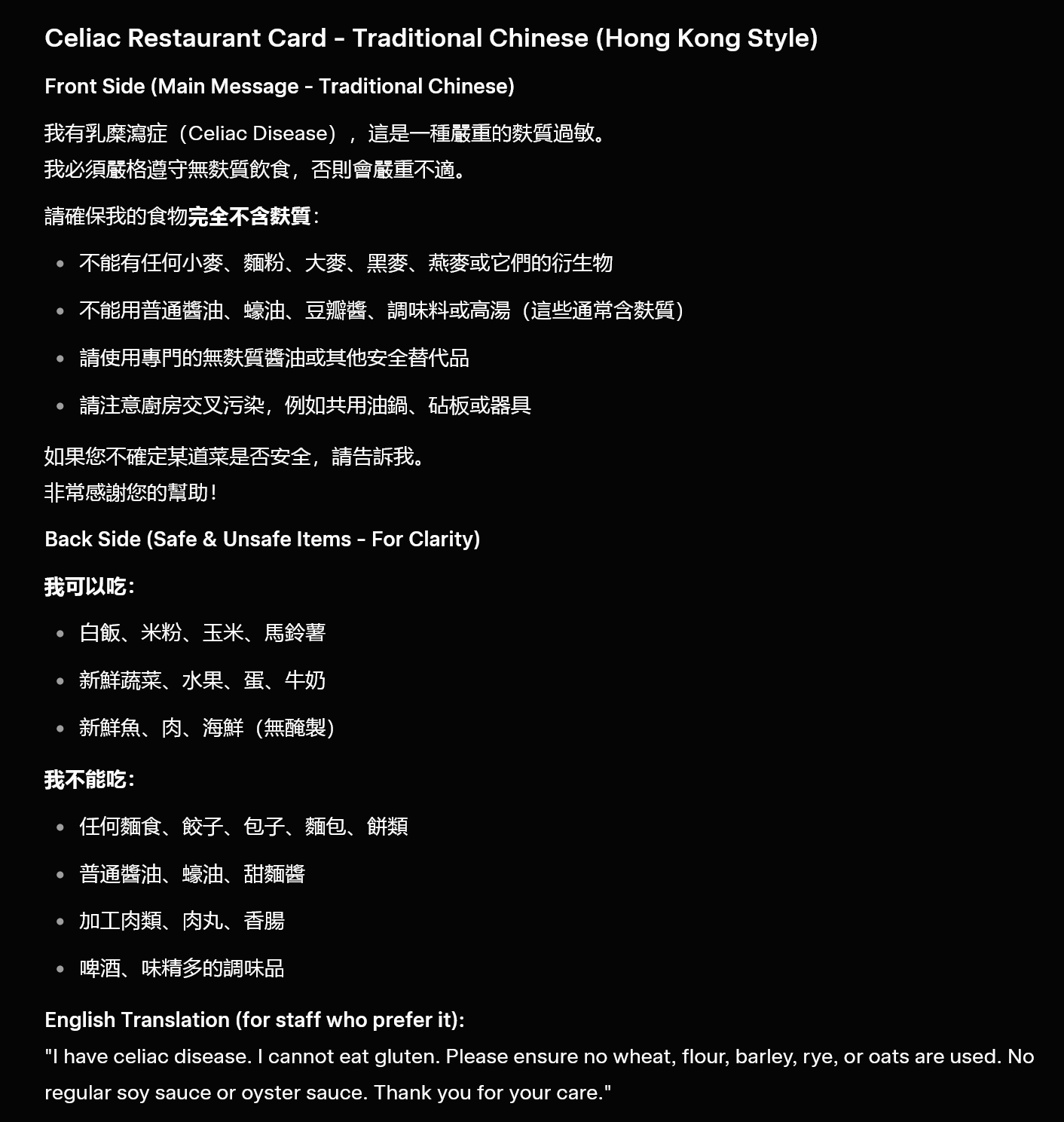
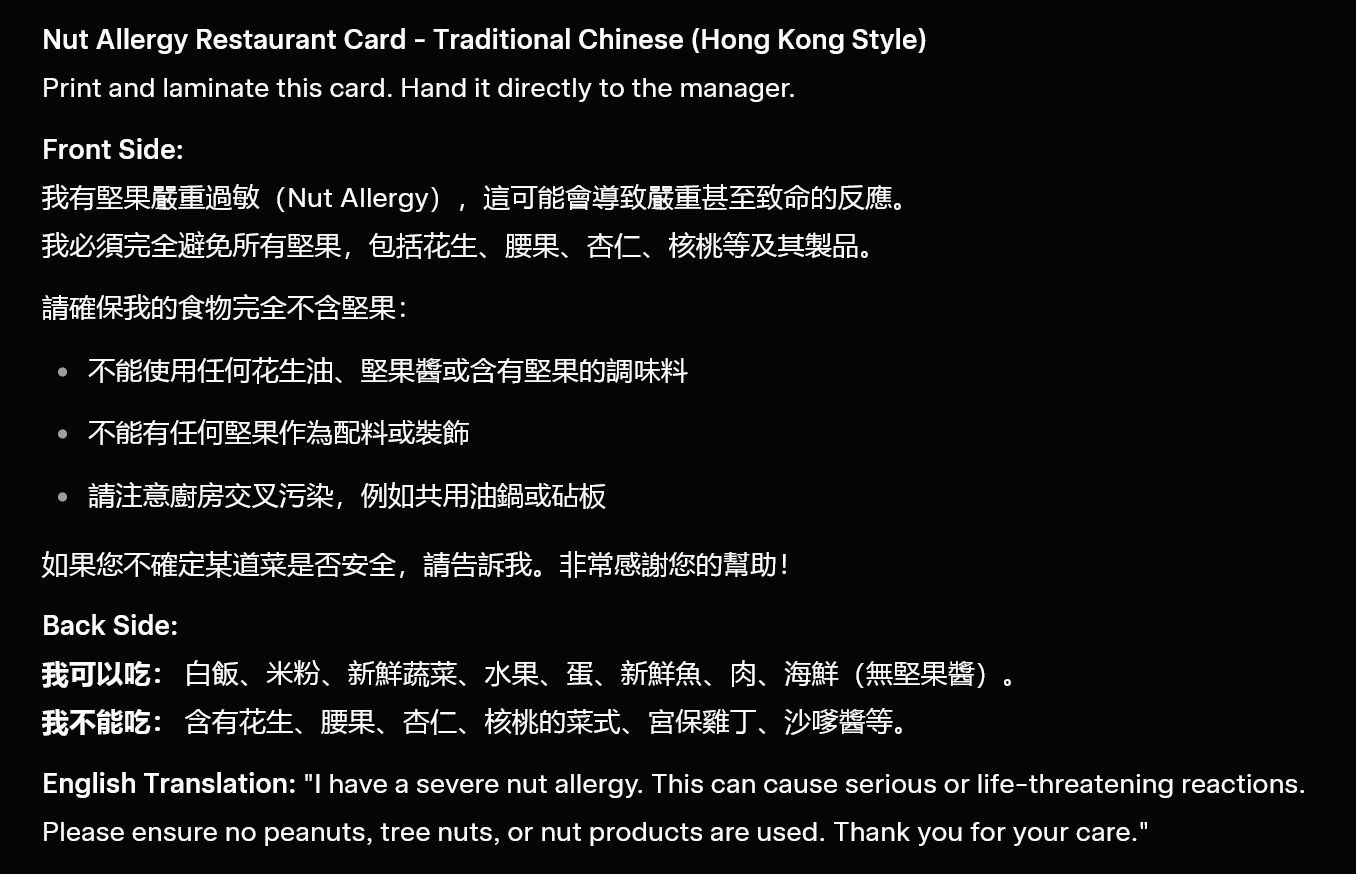
The information above can be shown to restaurant managers in Hong Kong if you are intolerant to gluten and nuts,
I do not do food tours as mentioned above, I have very specific reasons and part of it is that I do not speak Cantonese or write Chinese, I am from Yorkshire in England and I lack the language gene and it is not through lack of trying and yes a lot of restaurants do not have English menu’s or staff who speak conversational English.
.. and yet I have eaten at close to 1,400 restaurants in Hong Kong since January 2nd 1972, my wife was born in Hong Kong and we have been together over 40 years and her first language is Cantonese and a lot of her family are Chinese or half Chinese so I have never had much of an issue!
This does not translate to doing food tours though, yes, I could do them, no problem there but they would never ever be as good as the food tours done by my friends (see the 3 links above) most of their awesome guides are locally born Hong Kong Chinese and obviously food culture is part of their DNA, it is impossible for me to compete with that!
So please feel free to contact them for food tours
I do not do Hiking Tours in Hong Kong but I know someone that does!
I do not do Hiking Tours, never have and never will even though I used to go Hiking a lot when I was a lot younger, The Hong Kong Government is promoting hiking tours so I urge you to contact my friend Sabrina at Hong Kong Trails and Tours, she is a long time Hong Kong resident and and a very experienced hiker with close to 700 Hikes in 15+ years under her belt, please click on the link below
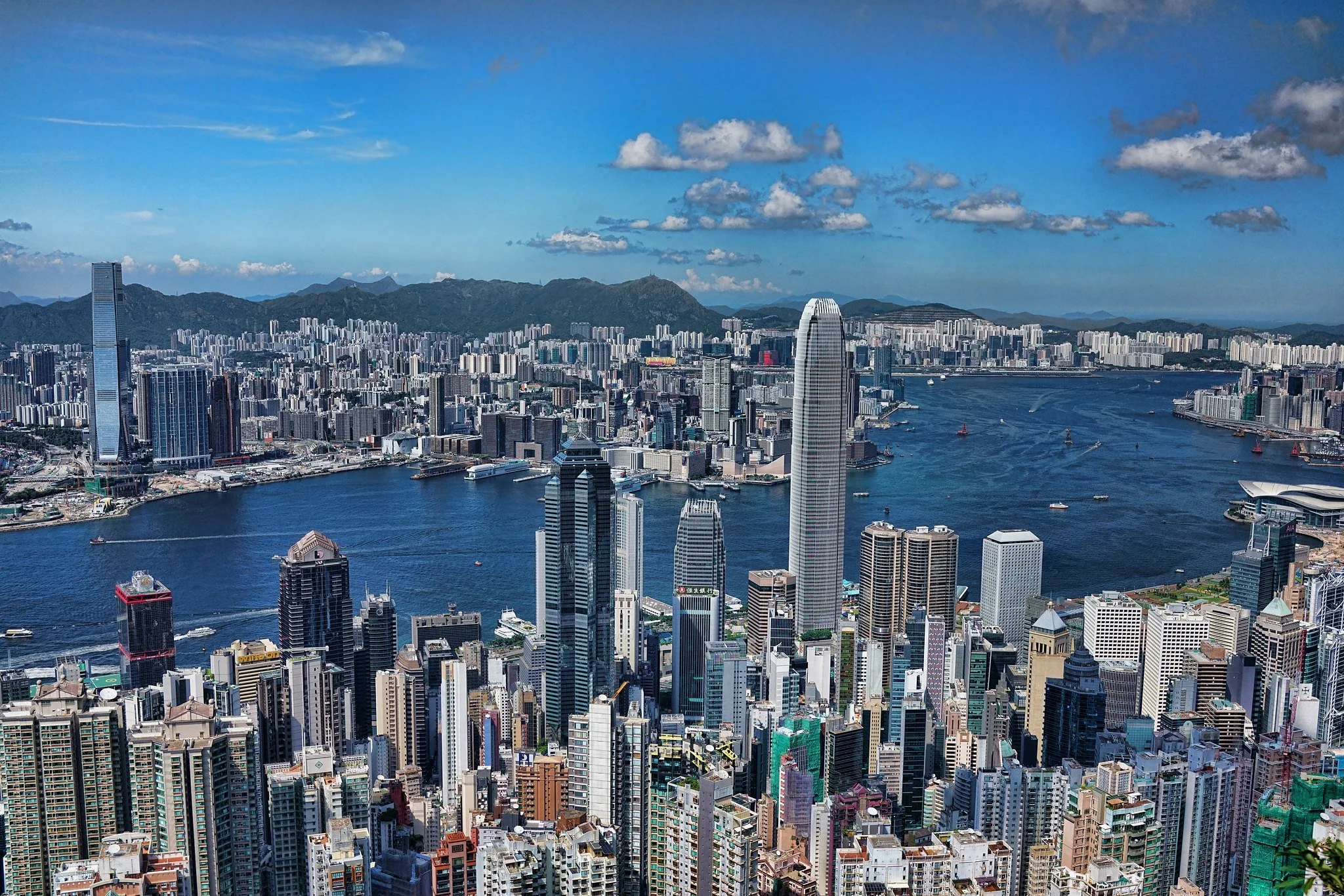
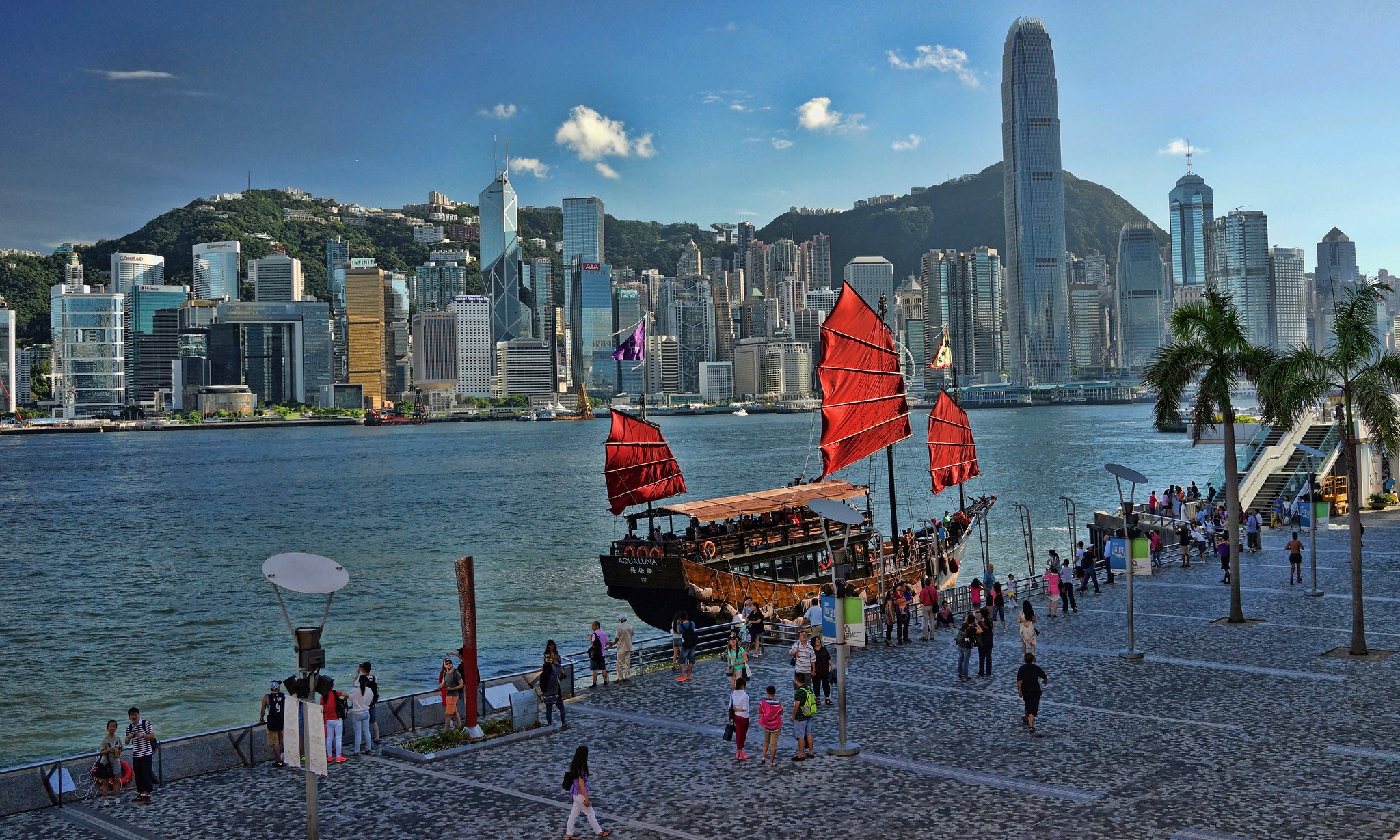
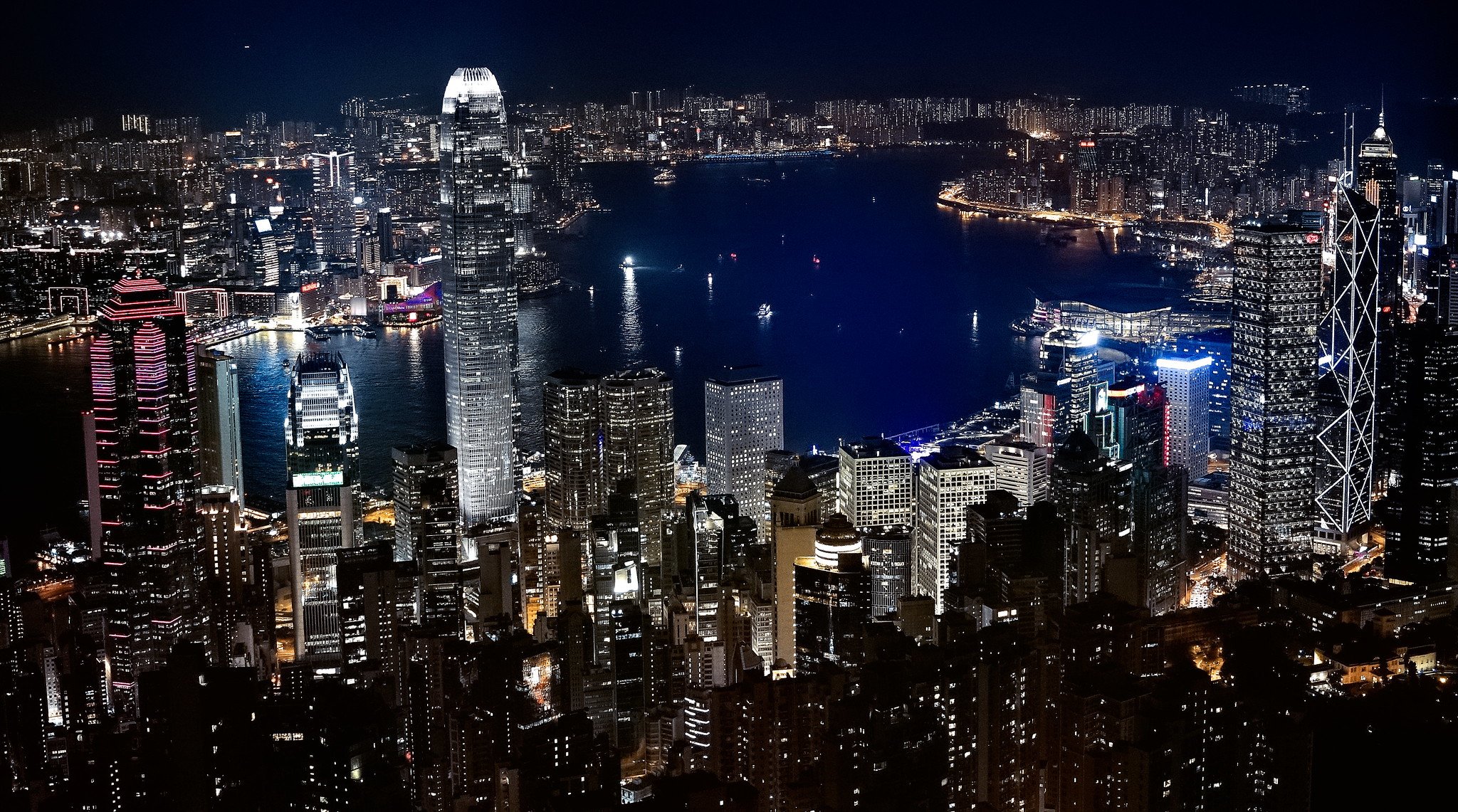
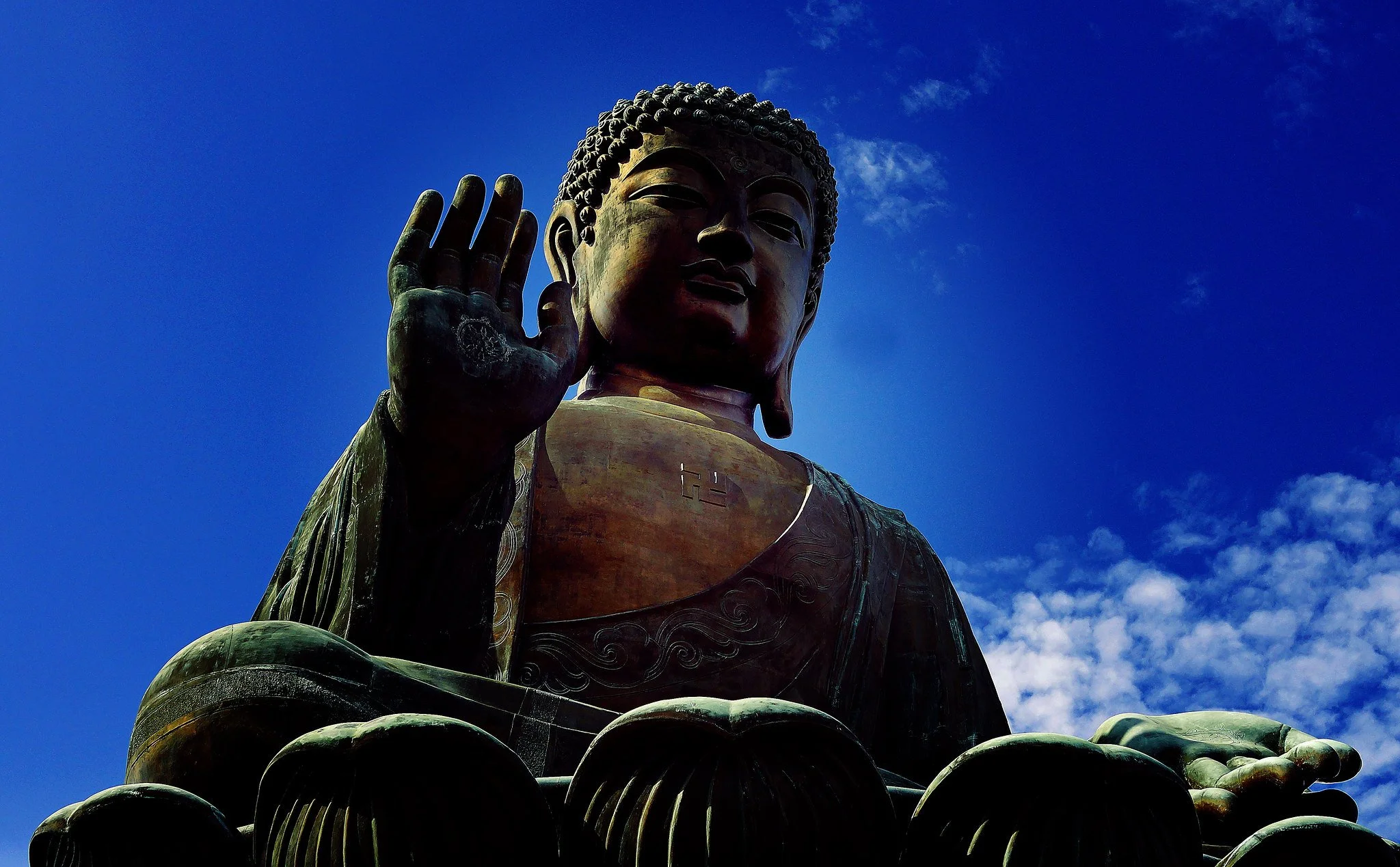
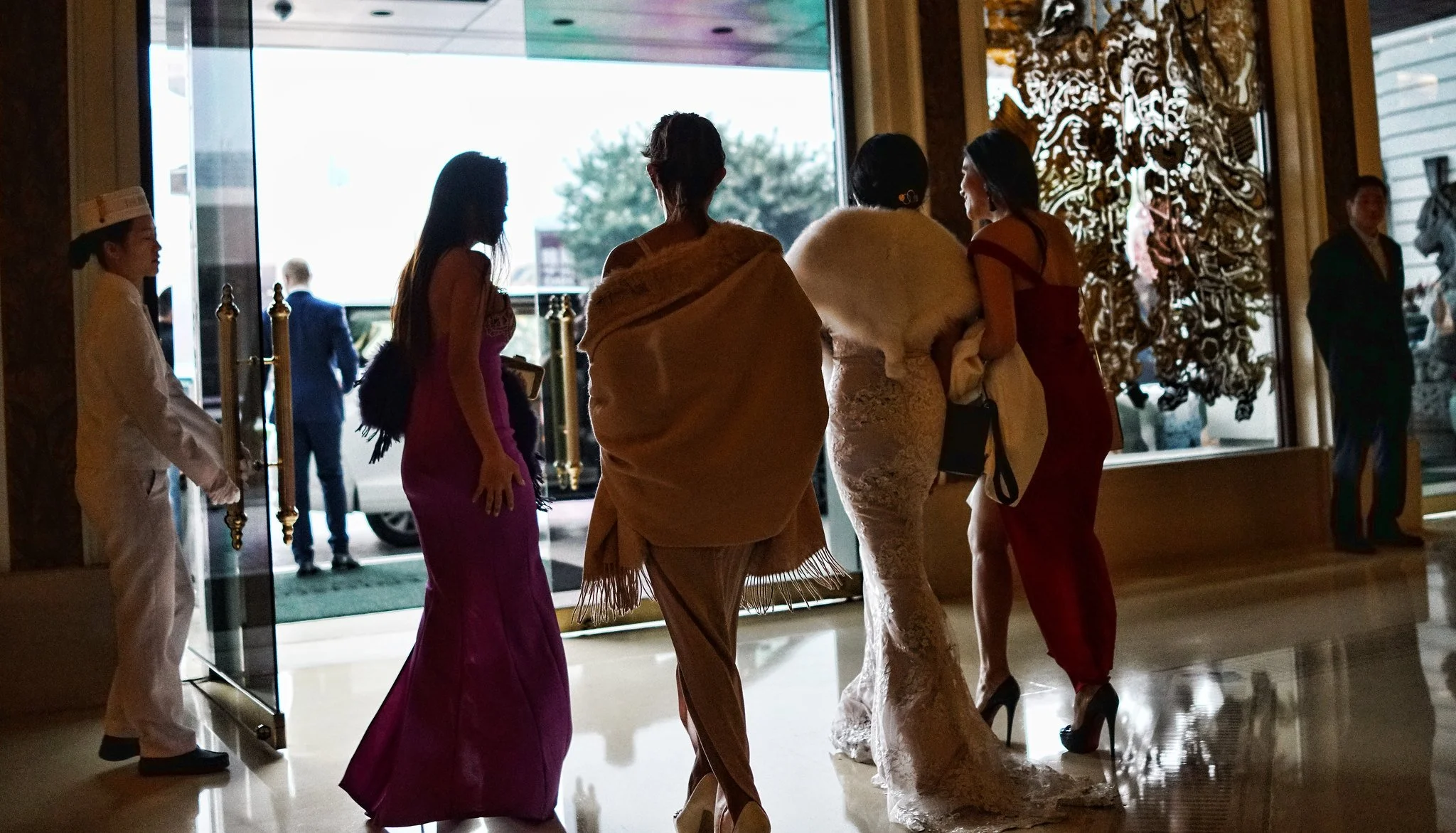
click on any image to enlarge
© Copyright Acknowledged | All rights reserved | all images taken b Jamie
Jamie’s Hong Kong | Some of my favourite images | Hong Kong 101
© Jamie Lloyd | J3 Consultants Hong Kong | J3 Private Tours Hong Kong |
| 2010 - 2026 All rights reserved. |
Click on any image to enlarge to full screen
Current images from my Instagram feed