10 Things you did not know about the Laser Light Show in Hong Kong
And Why the Tourism Board in Hong Kong Quietly Decided Enough Was Enough

The J3 Group - Premium Quality Private Tours | Experiences and Insider Chats since 2010
Me Jamie, your host, I am English and I have lived in Hong Kong since January 2nd 1972 - I know the place.
A meaningful blog post with a difference - tips on Travel, Tourism, Tours, Daily Life and my personal thoughts on Hong Kong.
Please do visit Amazing Hong Kong
Hong Kong | Pearl of the Orient
Customised Private Tours + Experiences in Amazing Hong Kong
Jamie has lived in Hong Kong - Pearl of the Orient for 50+ years
Carefully Crafted Personalised and Customised Itineraries by Jamie | Hong Kong’s Most Experienced Private Tour Guide for : Solo Travellers Friends Families Seniors Couples Business People MICE Delegates.
Private Tours Cultural Tours Walking Tours Sightseeing Tours City Tours Night Tours Layover Tours Transit Tours Private Shore Excursions Bespoke Tours Personalised Tours Jewish Heritage Tours Luxury Private Tours Day Tours Luxury Boat Tours Themed Tours Private Family Tours Private Day Tours Corporate Tours
Just you, your family or friends and Jamie your personal English private tour guide - over 2,400+ tours completed since 2011 - Jamie offers quality Private Tours of Hong Kong
Tour Group Size 1 - 6 people only
J3 Group Hong Kong | J3 Consultants Hong Kong | J3 Private Tours Hong Kong
Creating Memories That Will Last A Lifetime
Go here for the Hong Kong Michelin Restaurant Guide which includes the Bib Gourmand Category

A Resident since 1972 - Private Tours of Hong Kong with Jamie
The Best Things to do in Hong Kong
click on the image to enlarge
© Copyright Acknowledged | All rights reserved | image taken By Jamie
Symphony of Lights Laser Light Show | Not So Iconic | Hong Kong
Foreword by Jamie
10 Things you did not know about the Symphony of Lights Laser Light Show Hong Kong
Seven Thousand Shows, One Big Question - Could a Few Simple Tweaks Have Saved the Symphony of Lights?
Hong Kong has always understood the power of a good spectacle. In a city where the harbour itself performs twice daily with the tides and the neon never truly sleeps, adding a nightly light show across the skyline felt like a natural extension of the place’s character. For more than twenty-two years A Symphony of Lights gave visitors and residents a free, predictable moment of orchestrated drama at eight o’clock sharp. It was never the most sophisticated production on the planet, yet it became part of the furniture - something you could set your watch by, something tour groups dutifully photographed, and something that quietly symbolised a city still finding its feet after the 2003 SARS crisis.
I have no idea how many light shows I saw, I normally keep track of these things but not this one, I was always very careful not to raise expectations for my guests when they asked for ideas on what to do at night in Hong Kong and in the past couple of years I have dwelled on the notion, that you know what, it was not as “meh” as I thought bu with a few tweaks, just something wow could have saved it, this is a very important these days in Hong Kong given the Tourism people here are demanding we come up with world class experiences to wow tourists, it is not like turning on a light switch, a classic example is the Big Buddha on Lantau Island, it opened in 1993 but it took over 20 years for it to get it’s exalted statue, these things do not happen overnight.
Now, in the second half of 2026, that nightly ritual is coming to an end. The government has announced that the show “has completed its historical mission.” This comes despite earlier commitments in the 2024 budget to spend HK$354 million (around US$45 million) over three years on a major re-conceptualisation. The decision has left many people scratching their heads. How did a show that once held a Guinness World Record simply fade away? What exactly have we been watching all these years? And could a few sensible tweaks have turned it into something genuinely world-class rather than something most locals and many repeat visitors quietly tolerated? Here, then, are the details that rarely make it into the standard tourist blurb - the real story behind the lasers, updated with a closer look at the crowds, the persistent Victoria Peak myth, and the broader pattern of promising ideas meeting Hong Kong bureaucracy.
and you know what, generally speaking you do NOT retire a major tourism attraction after 20+ years without having a plan b! what exactly is going to take it’s place? well at this point in time, nothing.
1. The Birth of a Post-SARS Icon - Concept, Purpose and Launch
Remember SARS? not many people in Hong Kong do, it is a faint distant memory but it certainly had a major impact on Hong Kong Tourism
The show was never conceived as pure entertainment. It was a deliberate tourism recovery tool. After SARS hammered visitor numbers in 2003, the Hong Kong Tourism Commission wanted a signature nightly attraction that would get people talking and, crucially, get them coming back. In 2002 the Australian firm Laservision was engaged to develop the concept. Their brief was ambitious: turn the existing night-time illumination of prominent buildings around Victoria Harbour into a coordinated, permanent multimedia performance using lasers, searchlights, LED screens and music.
The original setup cost around HK$44 million (roughly US$5.6 million at historical exchange rates). Annual running costs settled at approximately HK$6 million (around US$770,000). The purpose was clear - create a free, accessible spectacle that reinforced Hong Kong’s image as a dynamic, East-meets-West metropolis. The music, later refreshed, was recorded by the Hong Kong Philharmonic Orchestra and deliberately blended Chinese instruments such as the erhu and dizi with contemporary orchestration. It was meant to sound like the city itself: familiar yet forward-looking. (and in the early days that was a pipe dream as you could barely hear the music!)
The first performance took place on 17 January 2004. It began with eighteen buildings on the Hong Kong Island side. By December 2005 the show had crossed the harbour and incorporated Kowloon buildings as well. From the outset it was designed to run every night at 8:00 pm Hong Kong Time, on the dot, weather permitting, and to last roughly 10 - 13 minutes. No tickets, no reservations - just turn up along the Tsim Sha Tsui waterfront, on a Star Ferry, or in a harbourfront hotel room and watch.
2. Daily Mechanics - Timing, Duration and What Actually Happened
The show started with military precision at 8:00 pm and finished around 8:10 - 8:13 pm. Music was broadcast from speakers at the Tsim Sha Tsui waterfront and Golden Bauhinia Square so that those on the Kowloon side could hear it clearly. On the Island side the visual effects were visible but the soundtrack was often faint or inaudible unless you were on the water or had a good vantage point with decent speakers.
Over the years the number of participating buildings fluctuated between roughly 40 and 47. At its peak the choreography involved lasers shooting across the harbour, coloured searchlights, simple façade lighting changes and, after the 2017 refresh, more prominent LED screens and dramatic beam effects fanning out from key government buildings in Central. The Guinness World Record for the world’s largest permanent light and sound show was awarded in 2005, though the title quietly passed to a larger installation in China’s Jiangxi province in 2015.
One persistent myth that refuses to die concerns viewing the show from Victoria Peak on Hong Kong Island. The reality is far more prosaic. From the Peak you could see some of the decorative building lights on the Kowloon side - most notably the towering ICC at 118 floors, which was hard to miss but was never actually part of the coordinated Symphony of Lights programme. The lasers and the full choreographed effects were simply invisible or hopelessly diminished from that distance and elevation. The only place to experience the show properly was down at the waterfront on the Kowloon side, where the lasers crossed the harbour and the scale came together.
3. Evolution - Or the Lack of It Nightly and the 2017 Upgrade
For the first thirteen years the show remained broadly the same. There were incremental additions of buildings and occasional special New Year’s Eve versions with added pyrotechnics, but the core sequence rarely changed. That changed on 1st December 2017 when a significantly refreshed edition launched. Ten new LED screens were added to harbourside buildings, new beam lights created fan-shaped effects, and the Hong Kong Philharmonic recorded an entirely new score with stronger Chinese instrumental colour. The Tourism Commission described it as transforming the cityscape into “a true symphony.”
After that refresh, however, momentum slowed again. Plans for a further major overhaul were announced in the 2024 budget speech, with tenders to be invited and a target launch in the first half of 2025. Those plans never materialised. By February 2026 the government had decided that another upgrade was not the answer. Importantly, once the Symphony programme ends, the decorative building illumination that forms part of Hong Kong’s normal night-time skyline is expected to remain in place. What vanishes is the coordinated laser choreography, the special effects, and the synchronised musical programme that turned the harbour into a temporary stage.
4. How Many Shows Have Actually Taken Place?
An educated estimate, accounting for weather cancellations (typically when Typhoon Signal No. 3 or above or Red or Black Rainstorm warnings are in force after 3:00 pm), occasional maintenance, protest-related adjustments, COVID disruptions and one-off suspensions such as the 2025 incident that paused proceedings for a short period, puts the total number of performances by the time the show retires in late 2026 at well over 7,000. In its prime it ran almost every single night of the year. Even with sensible deductions for bad weather and special circumstances, the figure comfortably exceeds six-and-a-half thousand full shows across more than twenty-two years.
5. The Nightly Crowds - Reality on the Ground
Official literature always spoke of “millions of tourists” enjoying the show since 2004. That cumulative claim is entirely believable. On many evenings - particularly in recent years with strong Mainland Chinese visitor numbers - the stretch of the Tsim Sha Tsui promenade from the Clock Tower all the way along the Avenue of the Stars to the Bruce Lee statue has been genuinely jam-packed, with crowds easily reaching 5,000 - 10,000 people or more. I have seen this repeatedly on random visits over the past couple of years, and it was especially noticeable last week. The atmosphere was lively, the promenade dense with visitors, and the collective anticipation palpable even if the show itself often left people wanting more. These were not sparse gatherings; they were proper evening events drawing significant footfall.
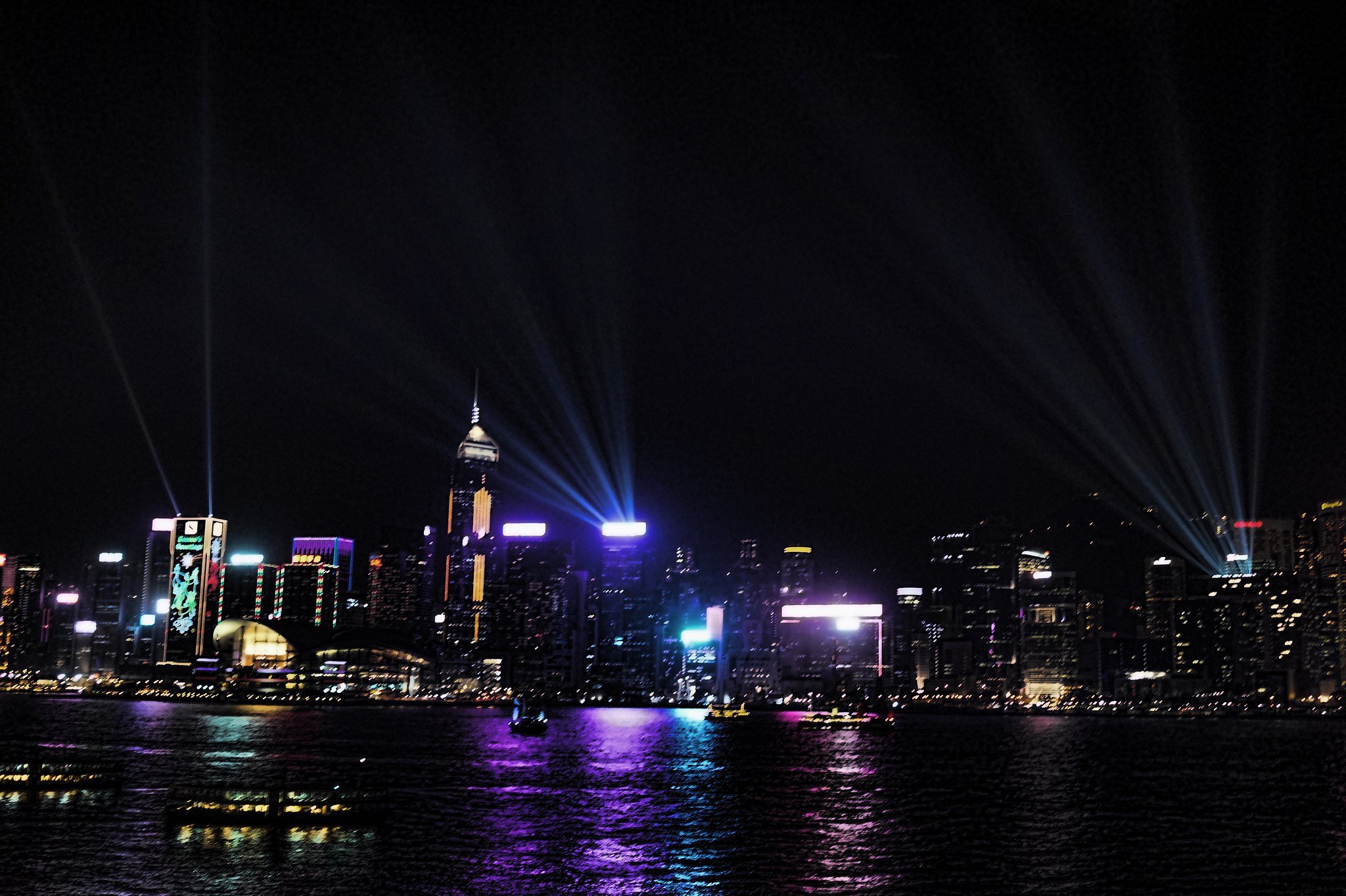
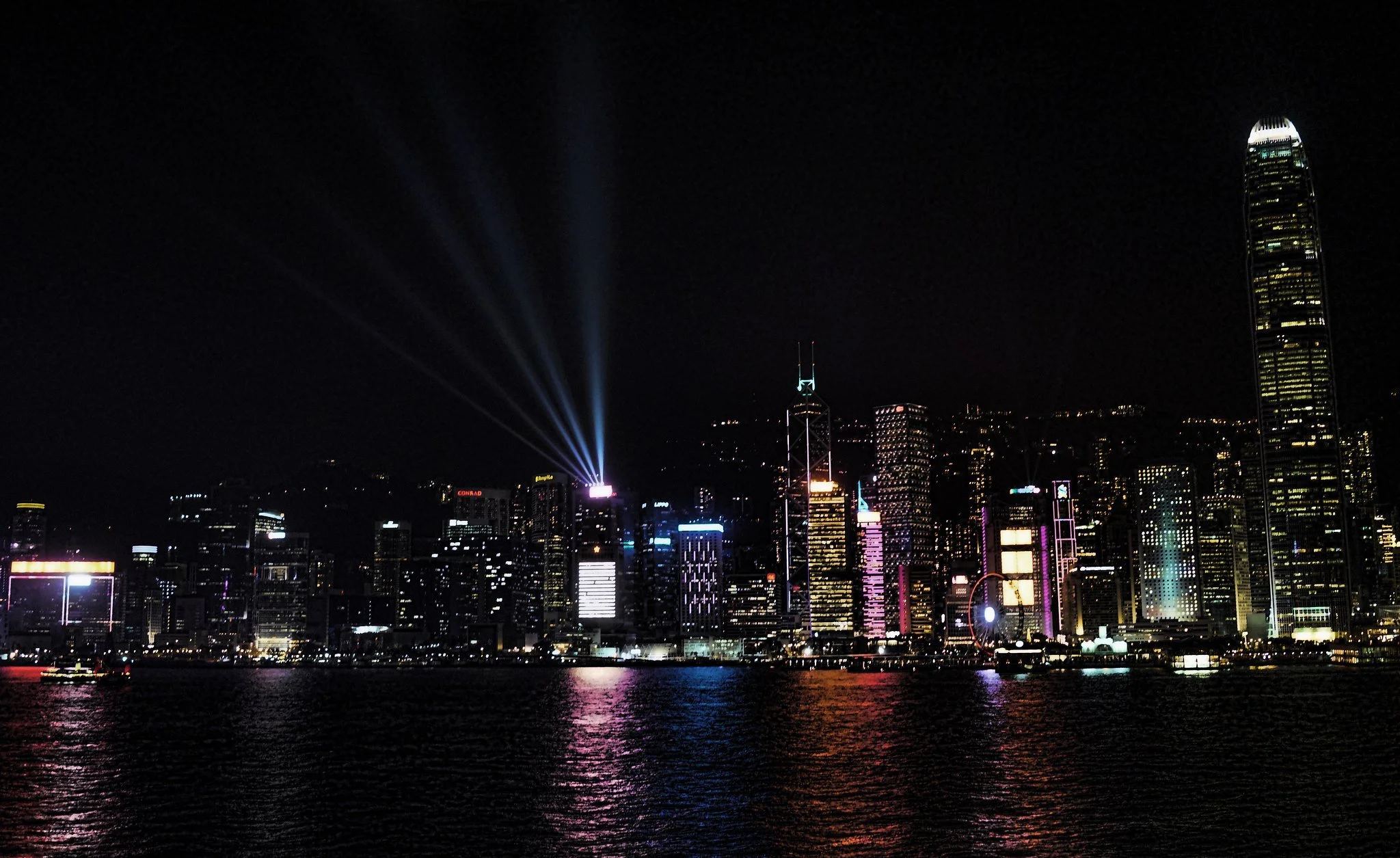
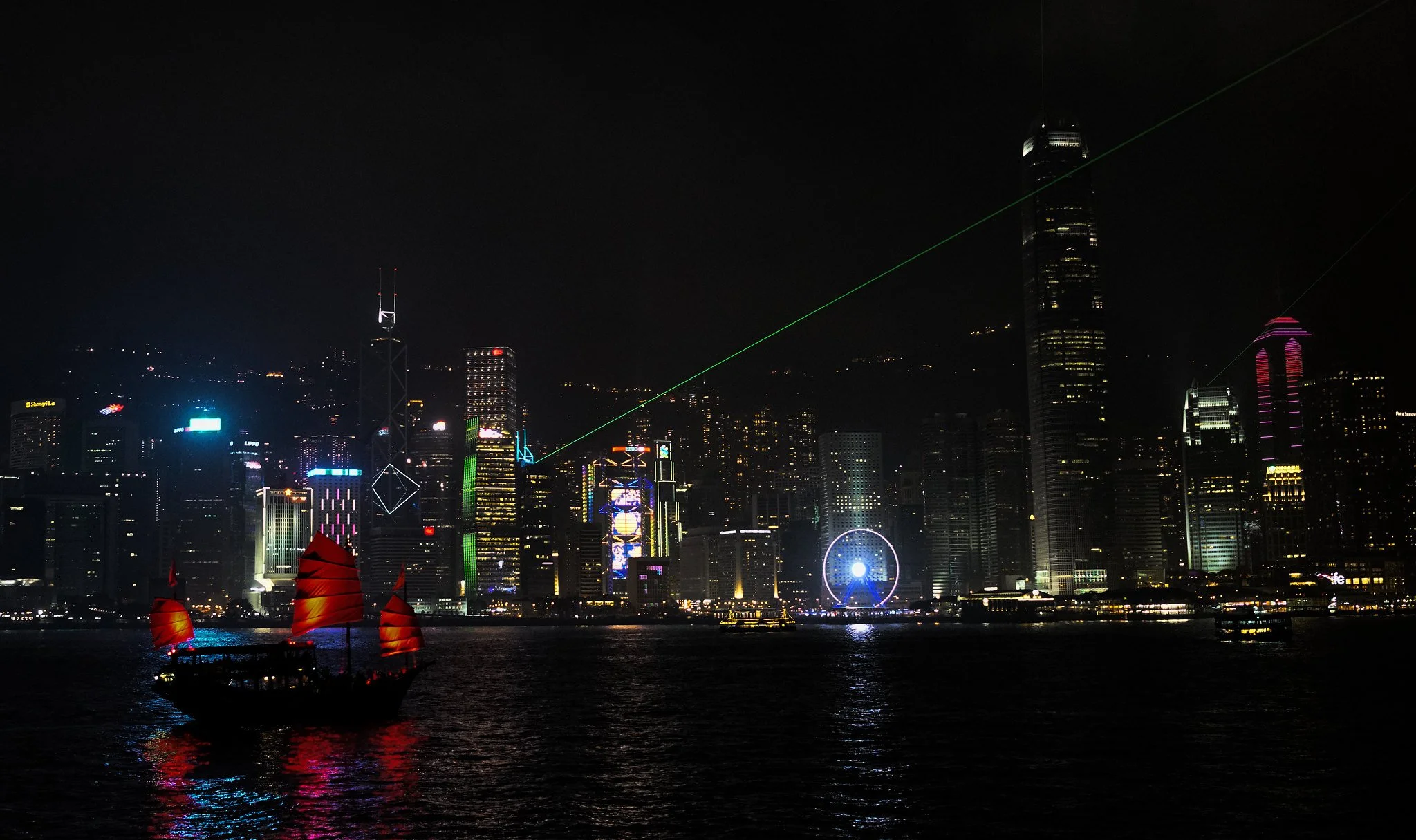
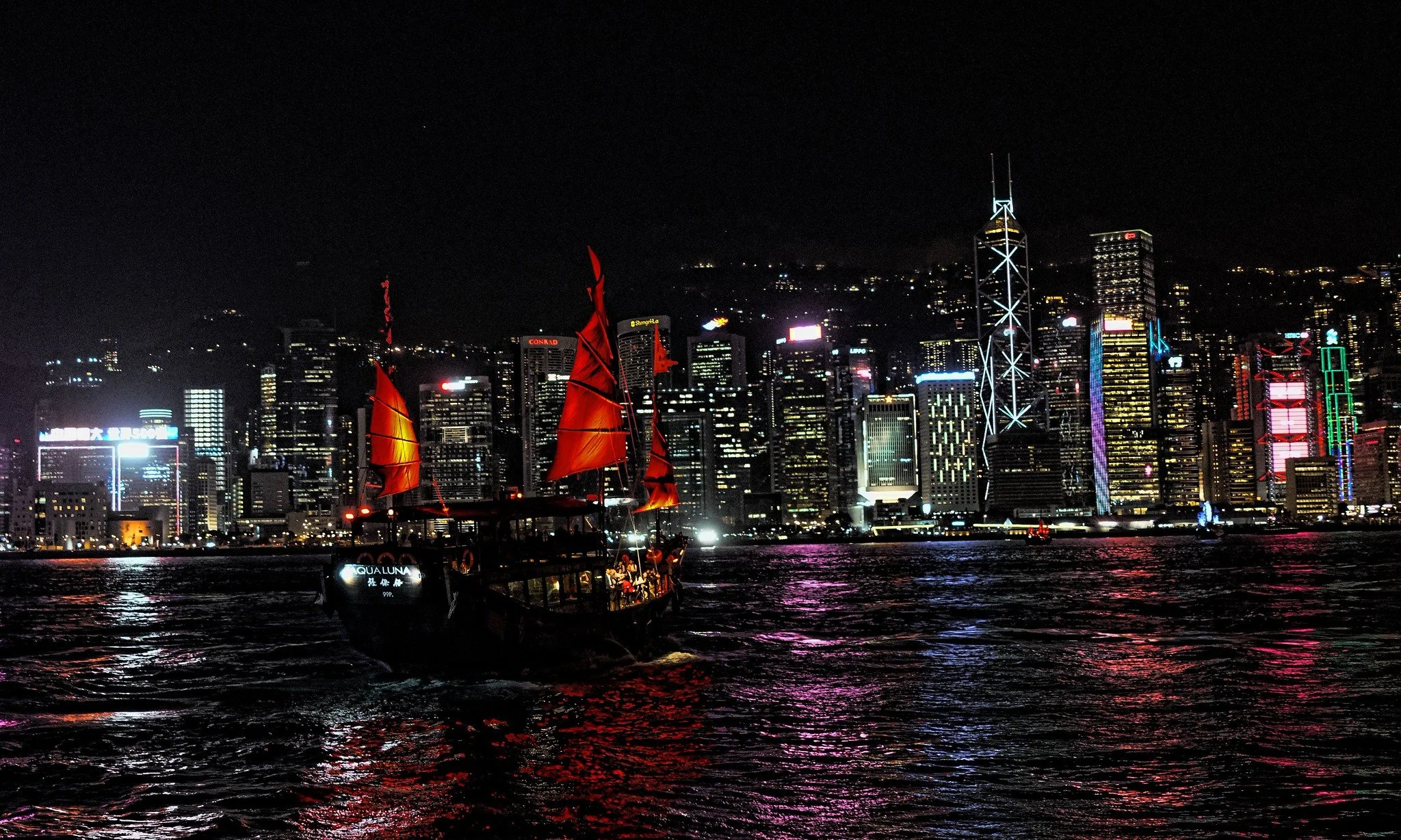
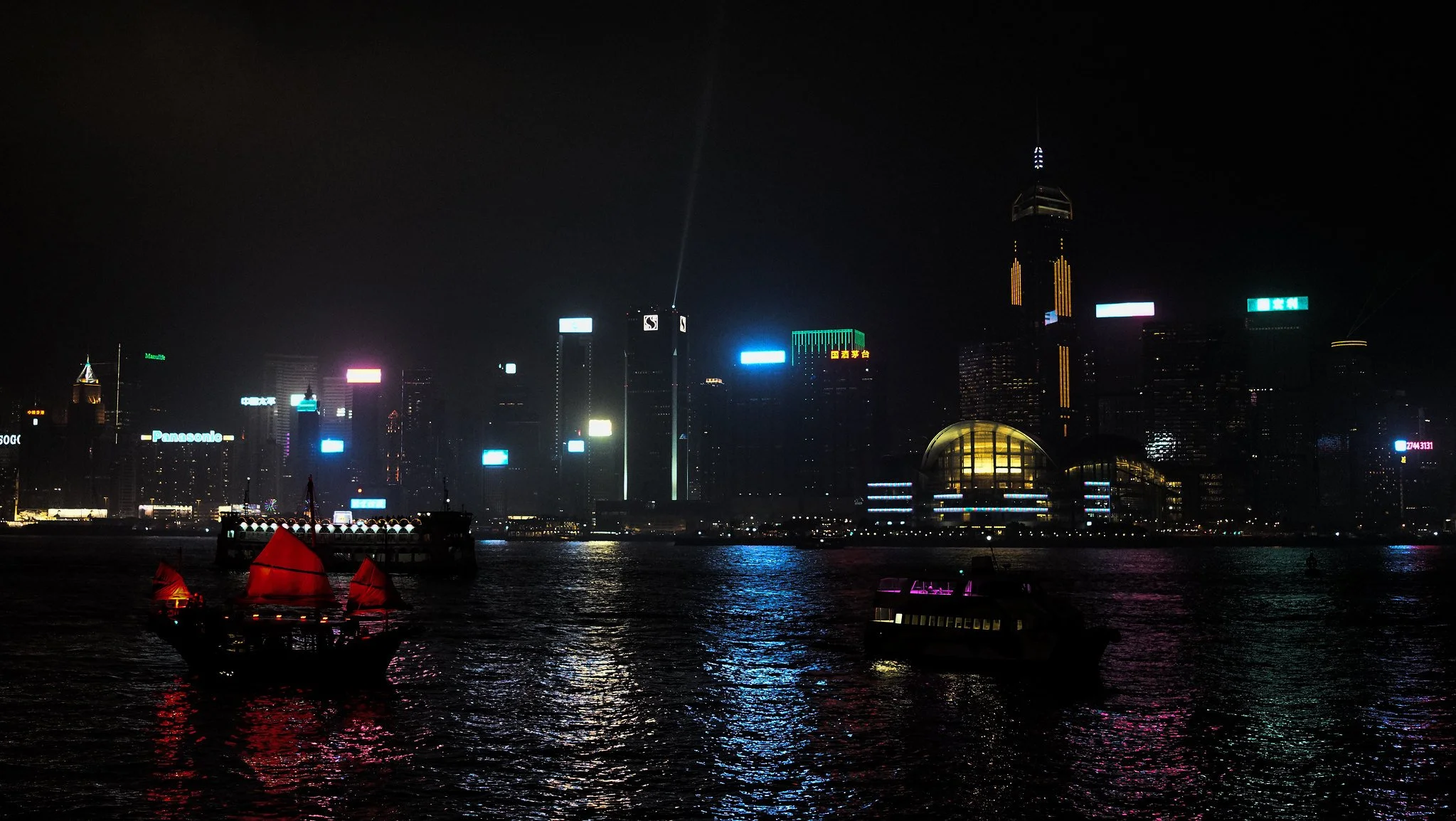
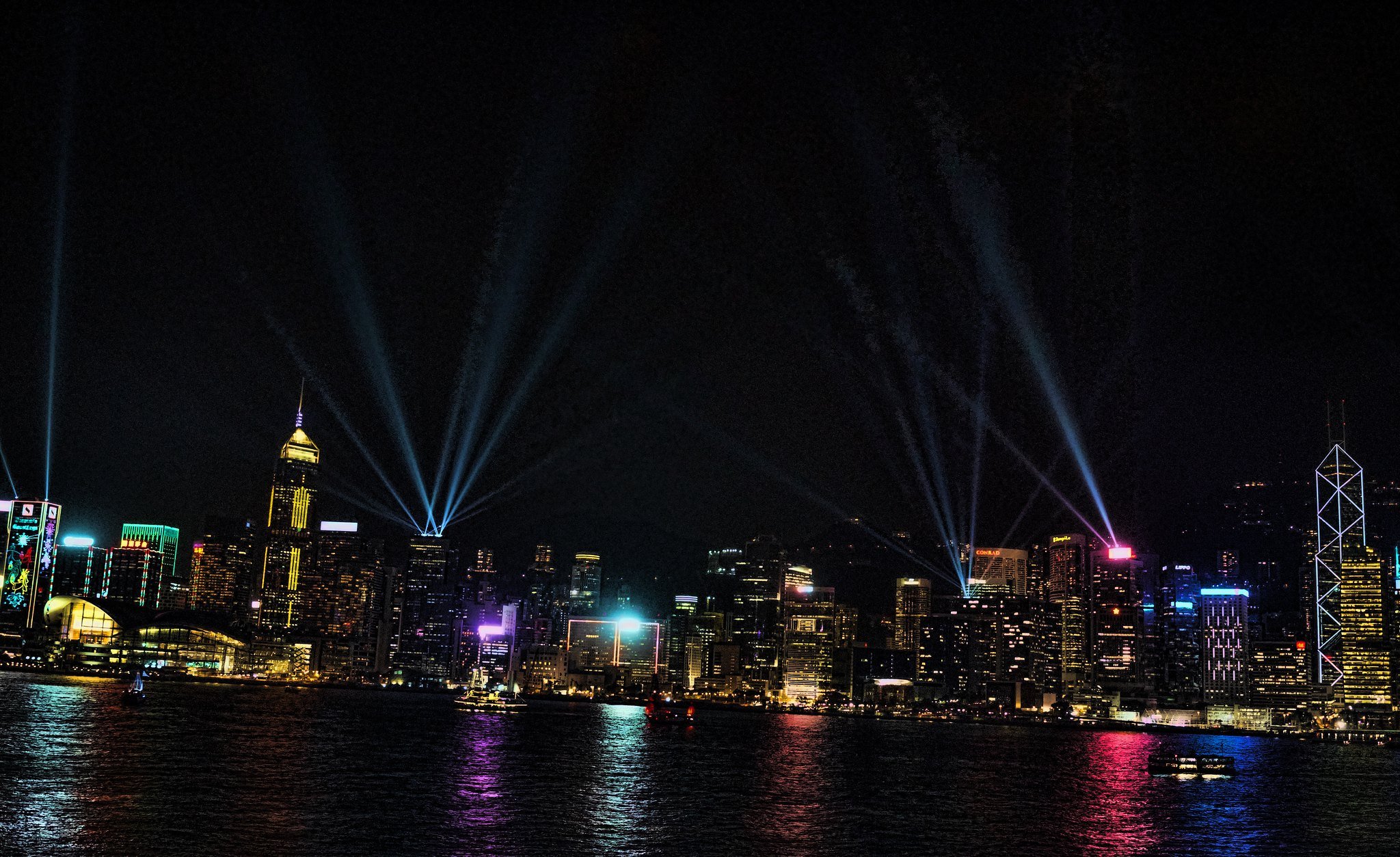
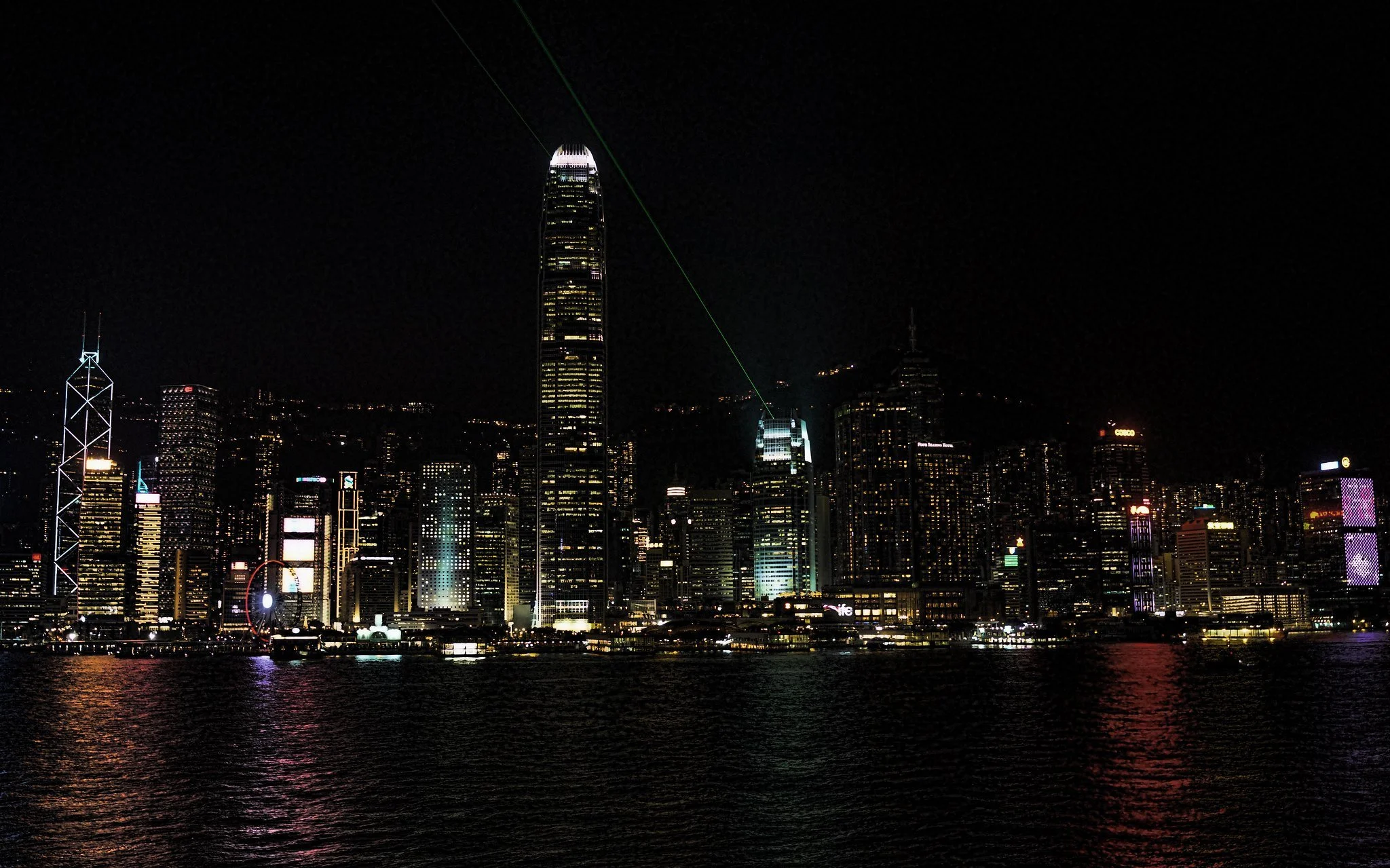
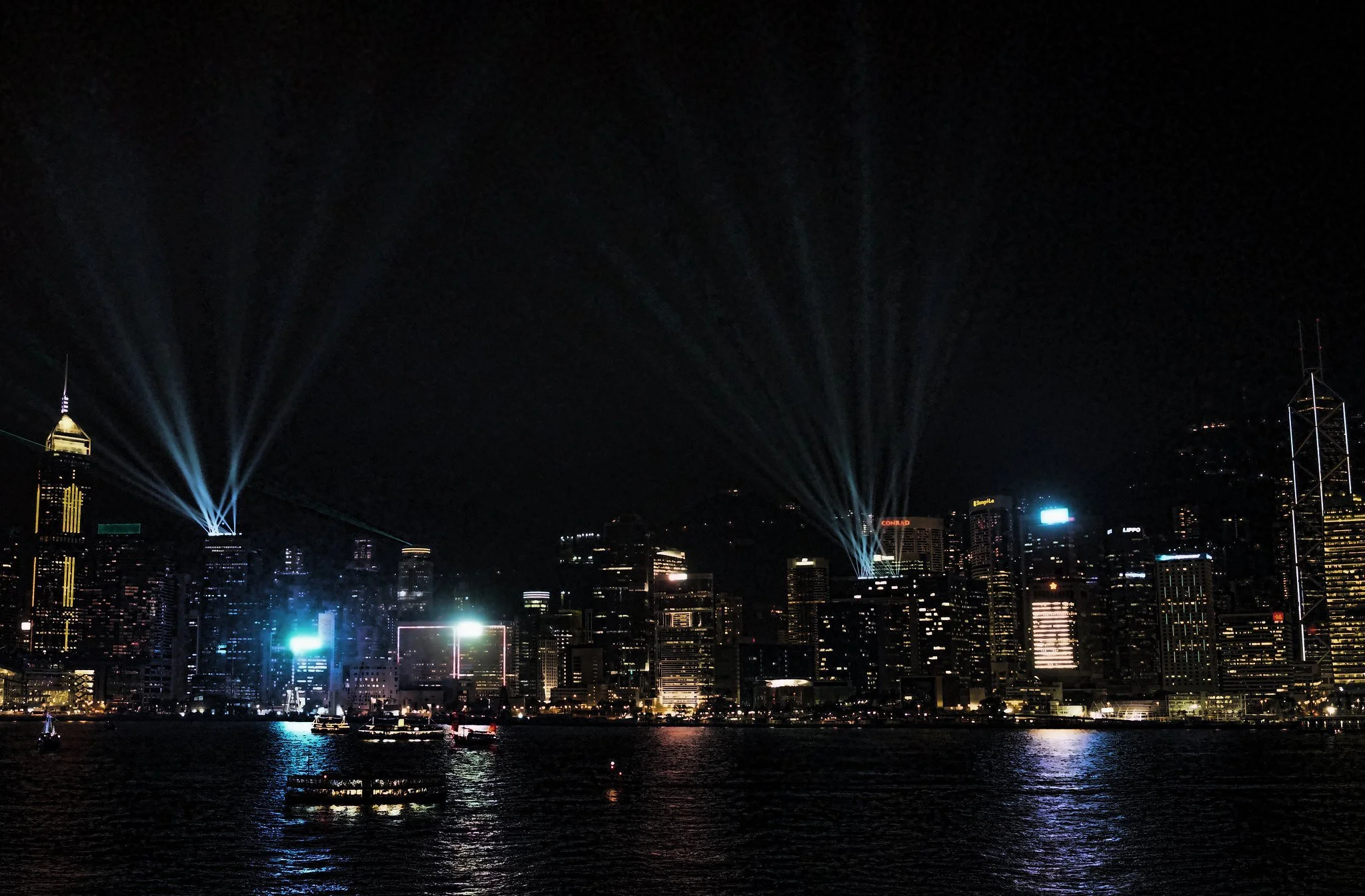
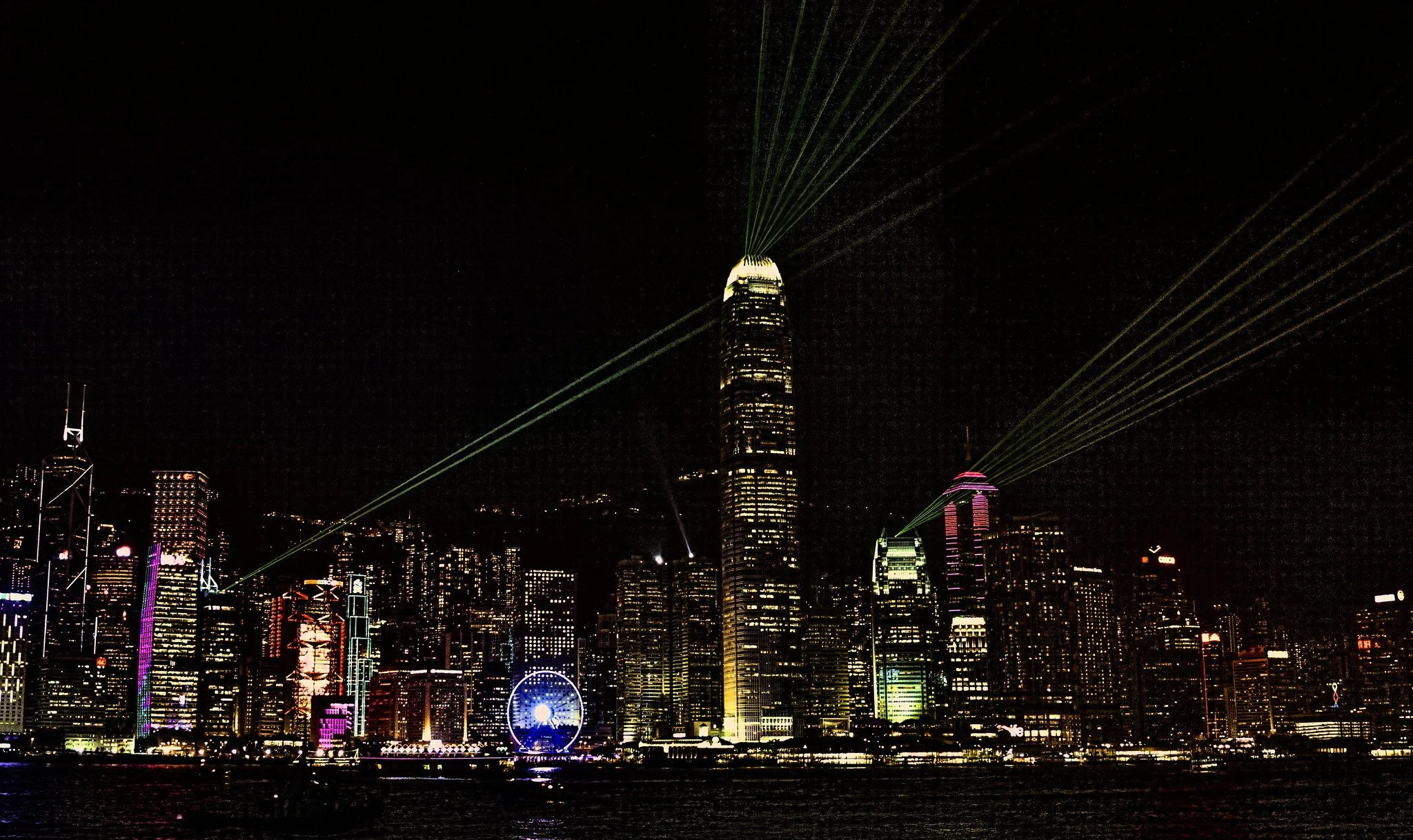
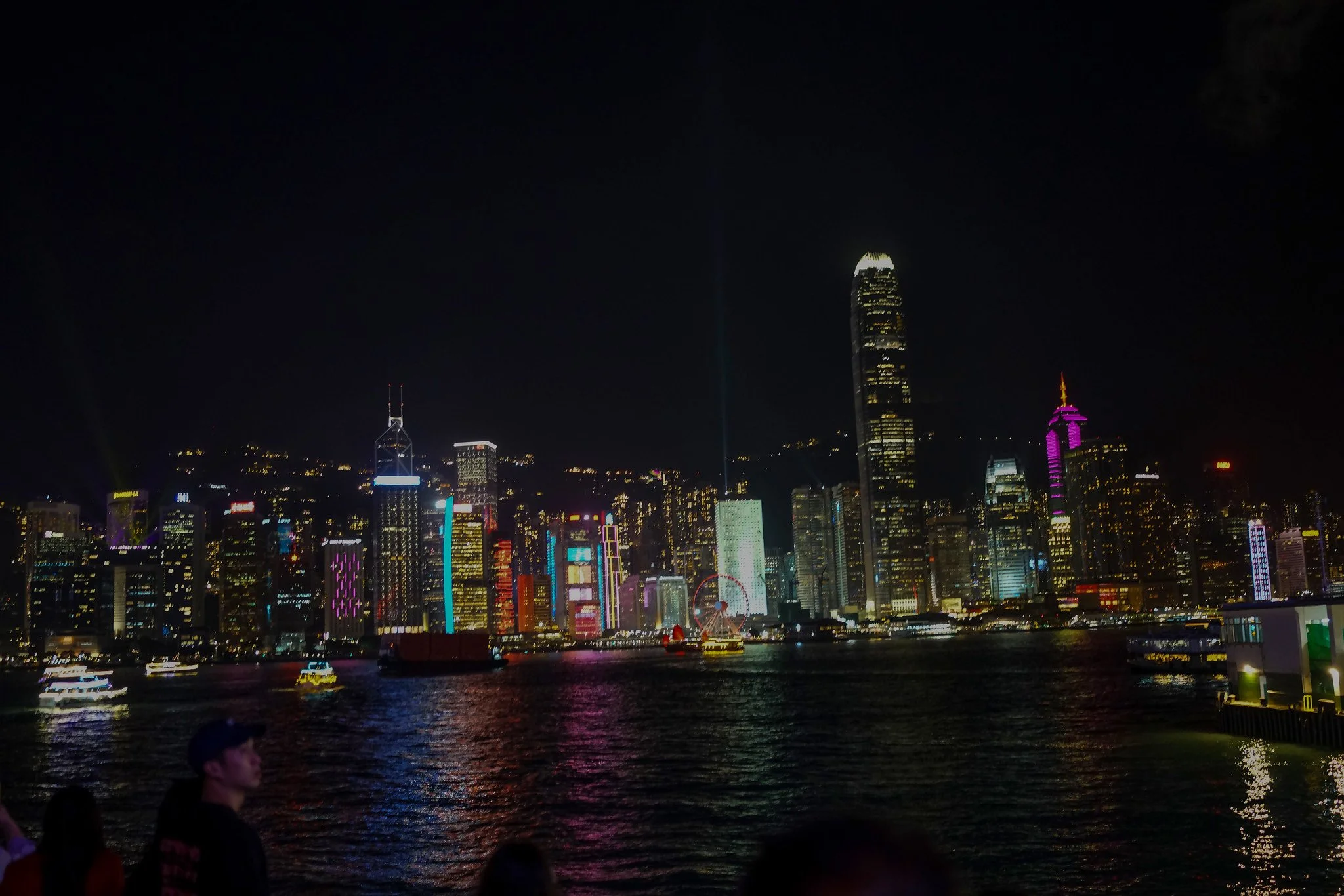
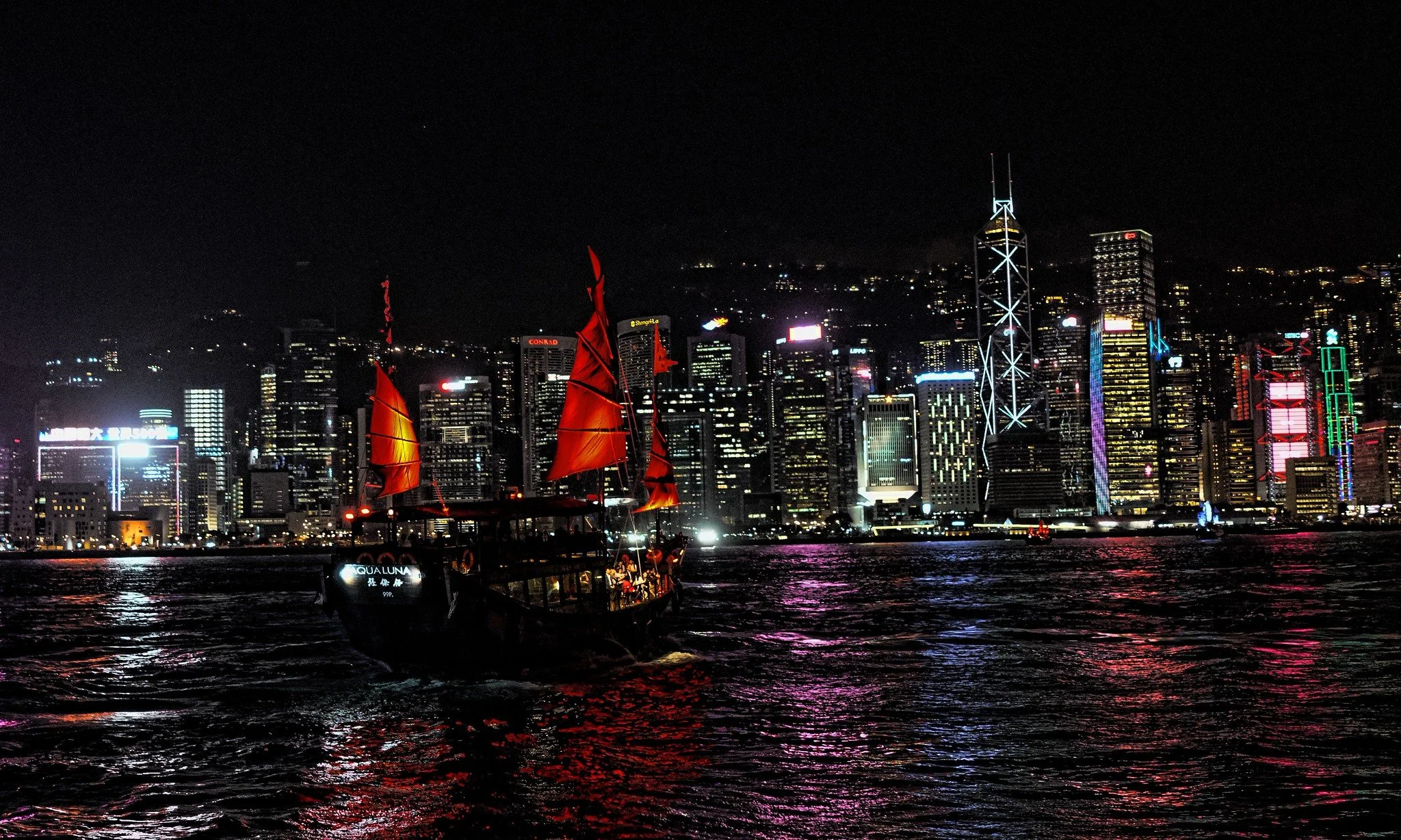
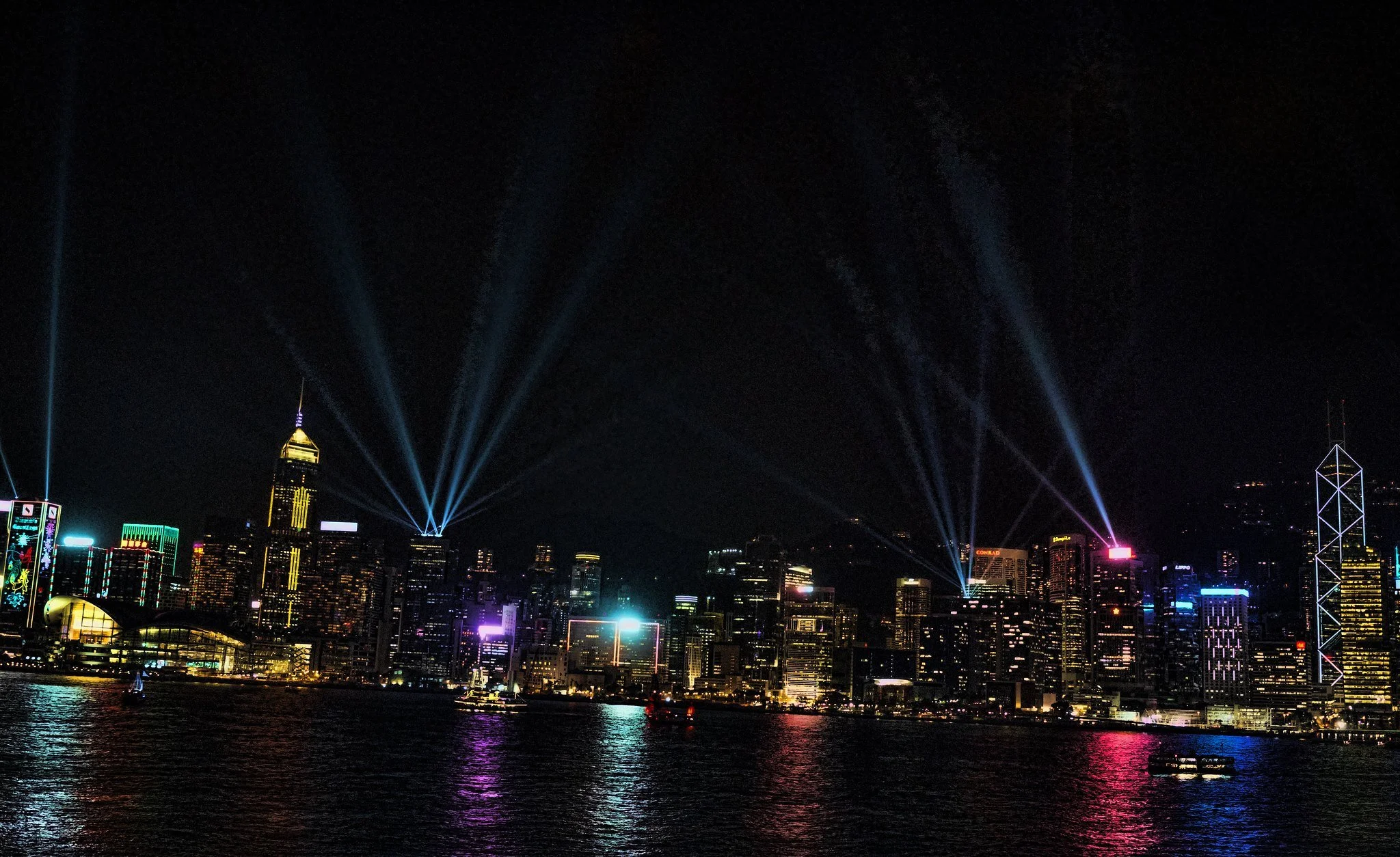
click on any image to enlarge
© Copyright Acknowledged | All rights reserved | images taken By Jamie
Symphony of Lights Laser Light Show | Not So Iconic | Hong Kong
6. The Cancellation - Why the Upgrade Promise Was Abandoned
The February 2026 budget announcement was blunt. The show had “completed its historical mission.” Tourism Secretary Rosanna Law later explained that the technology and style of presentation had reached a point where it was “no longer novel.” to me that is not the right phrase at all, the show has been going for 22 years, the novelty wore off very quickly and its status became something like what is applied to the Temple Street Night Market and the Ladies Market, both in Kowloom and they have been running for 50 years and guess what, the Temple Street Night Market was given a refresh a few years ago with the addition of a street food section and wowser, it was given a new lease on life.
However the Government has decided that rather than spend yet more money refreshing the same format, the government chose to redirect resources toward a series of new, immersive light festivals and projections at different tourist nodes - the Peak and other locations - timed around major holidays and events. The successful “Immersive Light Show in Central” during the previous Winter Wonderland programme was cited as proof that smaller-scale, higher-impact experiences could deliver greater visitor engagement., you guessed it, this sounds like Government spin and it is, you cannot declare success on one event just before Christmas, those events are a one off and it is one theme, Christmas - you cannot run the Christmas theme 365 days a year.
Tourism experts quoted in local media agreed the harbour’s sheer scale diluted the sense of immersion, more Government gibberish from so called experts, they conveniently forgot it has run for 22 years and lame or not it was part of the Hong Kong Night Culture and yes, have a look at the 12 images above, that is the scale of the event on view. So a show spread across dozens of distant skyscrapers simply could not compete with more intimate, three-dimensional projection mapping in a contained space. The decision therefore represented a strategic pivot: fewer nightly commitments, more varied and memorable moments throughout the year.
Those people making the comments seemed to also forget that the TST Promenade from the Clock Tower to the Bruce Lee Statue on the Avenue of Stars takes roughly a 30 minute walk at normal pace, allowing people to get one of the most memorable expansive views in the world looking across the harbour to Hong Kong Island, I would much rather have an expansive view than stand in a crush of 50,000 people in an area the size of a small city block
7. Could a Private Company Simply Have Taken Over?
In theory, yes - but in practice it would have been far from straightforward. Laservision, the original Australian creative and technical partner, already handled design, installation and ongoing maintenance through a local branch. The hardware – lasers, control systems, LED fixtures – was embedded across a mix of private commercial towers and government buildings. Any new operator would have needed fresh access agreements with every participating landlord, aviation and marine safety clearances for high-powered lasers over a busy harbour, and a sustainable funding model for a show that was deliberately free to the public.
Globally, large-scale permanent or nightly light shows tend to fall into two categories. Resort- or casino-funded spectacles (think the Bellagio fountains in Las Vegas or the Dubai Fountain) operate in controlled environments where ticketing, sponsorship or captive audiences make commercial sense. City- or government-led shows (many of the big Chinese skyline illuminations, or festival-style events such as Vivid Sydney) rely on public money or major sponsorship precisely because coordination across multiple buildings and public space is complex and the direct revenue potential is limited. A straightforward private takeover of Hong Kong’s harbour-wide production would have required the same level of official facilitation that created it in the first place. It was never a simple asset that could be handed over like a theatre production.
8. How Does It Compare Around the World?
Hong Kong’s version sat in an unusual middle ground - a permanent daily show on a grand scale. Most comparable experiences are either:
Frequent but shorter resort-style productions (Dubai Fountain runs multiple times daily with choreographed water, lasers and music; Bellagio does the same).
Annual festivals rather than nightly fixtures (Vivid Sydney transforms the harbour and landmarks with projections and installations for a month each year; Lyon’s Fête des Lumières is a similar concentrated artistic event).
Simple landmark illuminations (the Eiffel Tower’s hourly sparkle or Niagara Falls’ nightly colour wash).
Large but often one-off or seasonal Chinese city skyline shows that prioritise sheer scale over narrative choreography.
What none of them quite replicate is Hong Kong’s original ambition: a free, every-single-night, harbour-spanning “symphony” designed as a permanent tourism icon. That uniqueness was both its strength and, ultimately, its limitation once novelty wore off.
9. What Tripadvisor and Real Visitors Actually Said
With well over two thousand reviews on Tripadvisor and an average rating hovering around three stars, the verdict is consistent and rather lukewarm. The five most common reasons people liked it were:
It was completely free and happened every night without fail.
It gave a gentle structure and photo opportunity to an already beautiful harbour view.
The lasers crossing the water created a pleasing sense of spectacle and connection between the two sides.
For first-time visitors it felt like a proper “Hong Kong experience” to tick off.
When the music was audible it added a pleasant, if understated, East-meets-West layer.
The five most frequent criticisms were equally clear:
It was over in 10 - 13 minutes, leaving a distinct “is that it?” feeling.
The effects were too subtle; many buildings barely changed and the lasers lacked real punch or creativity.
The show was essentially identical night after night for more than two decades, with only one significant refresh in 2017.
The music was often inaudible or uninspiring unless you stood directly by the speakers; it rarely delivered the rousing orchestral thrill people expected.
The natural illuminated skyline was more impressive than the added production, making the whole exercise feel unnecessary.
In short, most people did not hate it. They simply found it underwhelming relative to the hype and the city’s reputation for spectacle and to be honest it is hard to argue that point.
10. A Considered View - Bureaucracy, Neon and the Missing WOW Factor
I remain genuinely puzzled by the decision. Hong Kong’s tourism gurus talk constantly about the need for world-class attractions to draw visitors, yet they often seem short of concrete ideas on what actually delivers that elusive WOW factor. With targeted investment and a handful of intelligent tweaks - seasonal programme variations, stronger projection mapping, better audio reach, occasional drone integration or refreshed music - the Symphony of Lights could have been elevated rather than retired. It feels like another missed opportunity and why the heck did the Government not seek Corporate Sponsorship??
click on the image to enlarge
© Copyright Acknowledged | All rights reserved | image taken by Keith McGregor
Neon Lights early 1970’s | totally iconic | Hong Kong
This pattern is all too familiar. When my family arrived in January 1972, one of the most wondrous things about Hong Kong at night was the explosion of neon signs, especially along Nathan Road in Kowloon. It was a visual feast that helped define the city’s soul after dark and drew visitors from around the world.
Have a look at the image above which is imprinted in my memory, Nathan Road in Kowloon, now that is a light show!
Over time the government, citing safety and other concerns, systematically dismantled much of that neon heritage through regulations and enforcement. The result was a noticeable dulling of the city’s nocturnal character - a great promotional asset quietly regulated into oblivion.
The Symphony of Lights followed a similar trajectory: a bold, creative idea launched with genuine ambition, only for bureaucracy and risk aversion to limit its evolution. You do not need to be a genius to understand what makes tourism tick. People come for memorable, shareable experiences with genuine spectacle. Dispensing with excessive red tape, embracing a bit of calculated risk, and committing to ongoing refreshment of flagship attractions would serve the city far better than repeatedly launching promising initiatives only to let them stagnate or disappear.
The harbour skyline will continue to glitter under its everyday lights, but something of the coordinated nightly magic is being lost. Whether the new distributed festivals can fill that gap - and whether they are allowed the freedom to evolve without the same bureaucratic constraints - will determine if this really marks progress or simply another chapter in a recurring story.
and just when you think I was done, it actually occurs to me, that one of the issues was that the show was free and cost a fair bit of money to put on without any real way of judging the success or failure of the light show, the metrics where clear, you could not track audience numbers but from my perspective, the numbers where always pretty steady, the crowds in Kowloon actually increased markedly around 2015, but I guess tourism officials have a different view, these days they are all about the KPI (Key Performance Indicator) and with the light show there was no way to count the audience and lets face it, no one came to Hong Kong to see the light show, but it was something you could do at precisely 8pm pretty much every day of the year and certainly a lot of businesses benefited from the nightly crowds oh and did I mentione the night view at TST Promenade looking across Victoria Harbour to Hong Kong Island is still one of the greatest views in the world.
So there you go
Jamie’s Hong Kong Insider Chat
Ready to turn your plans into a far more enjoyable reality? Click the yellow button below to learn more about Jamie’s Hong Kong Insider Chat, check pricing and book a convenient time
I do not do Food Tours in Hong Kong but I know people that do!
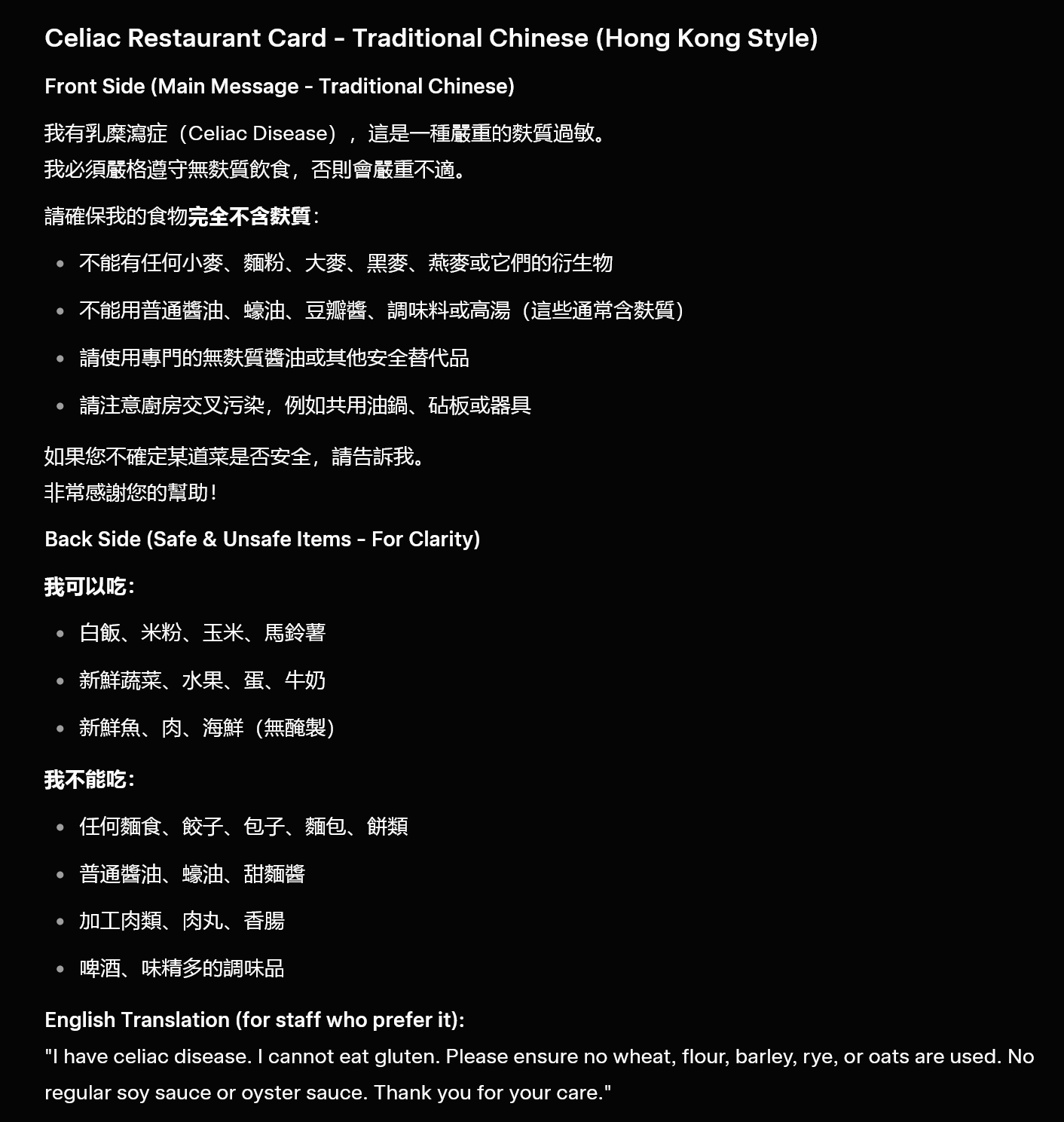
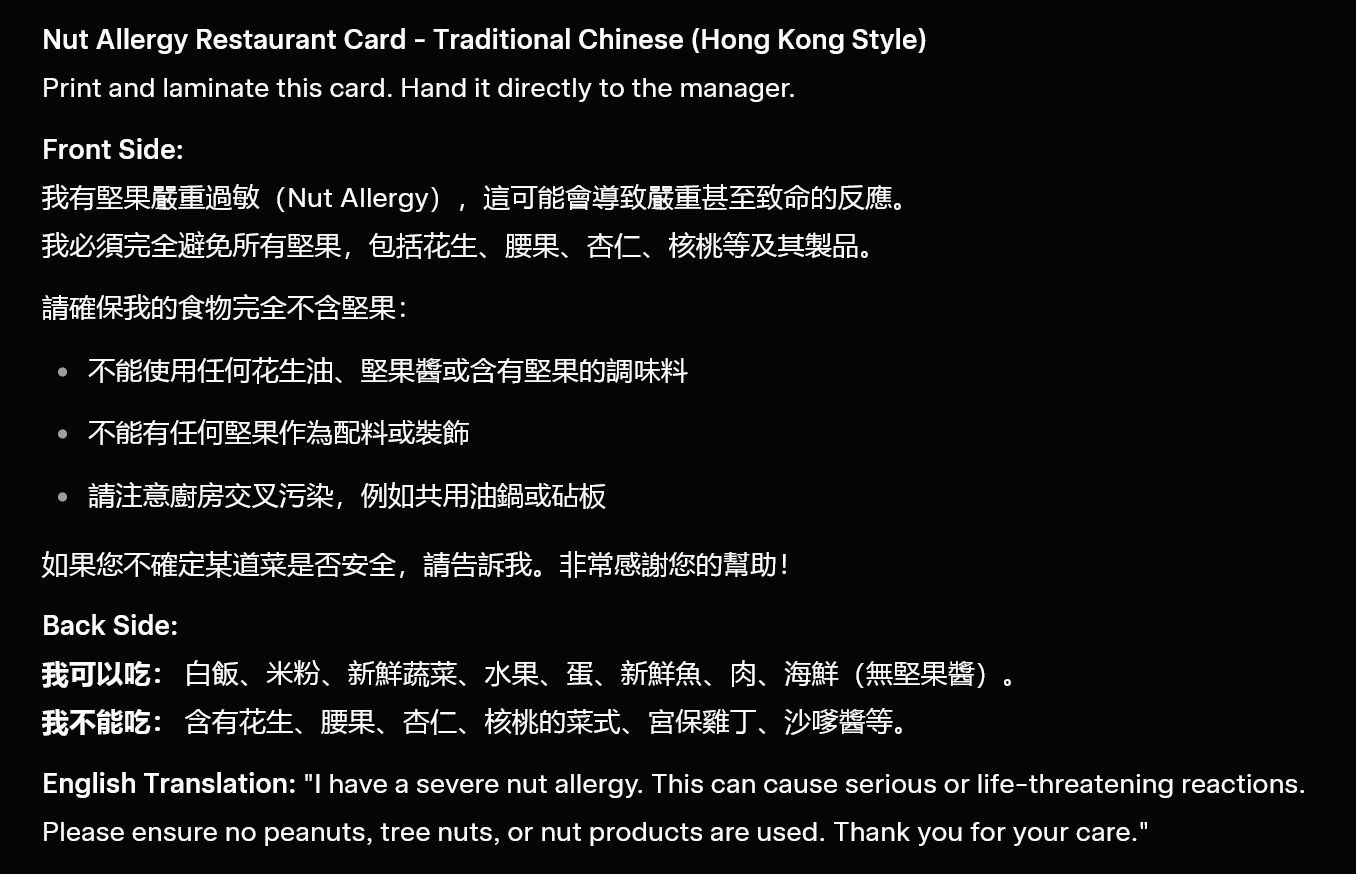
click on any image to enlarge
The information above can be shown to restaurant managers in Hong Kong if you are intolerant to gluten and nuts,
I do not do food tours as mentioned above, I have very specific reasons and part of it is that I do not speak Cantonese or write Chinese, I am from Yorkshire in England and I lack the language gene and it is not through lack of trying and yes a lot of restaurants do not have English menu’s or staff who speak conversational English.
.. and yet I have eaten at close to 1,400 restaurants in Hong Kong since January 2nd 1972, my wife was born in Hong Kong and we have been together over 40 years and her first language is Cantonese and a lot of her family are Chinese or half Chinese so I have never had much of an issue!
This does not translate to doing food tours though, yes, I could do them, no problem there but they would never ever be as good as the food tours done by my friends (see the 3 links above) most of their awesome guides are locally born Hong Kong Chinese and obviously food culture is part of their DNA, it is impossible for me to compete with that!
So please feel free to contact them for food tours
I do not do Hiking Tours in Hong Kong but I know someone that does!
I do not do Hiking Tours, never have and never will even though I used to go Hiking a lot when I was a lot younger, The Hong Kong Government is promoting hiking tours so I urge you to contact my friend Sabrina at Hong Kong Trails and Tours, she is a long time Hong Kong resident and and a very experienced hiker with close to 700 Hikes in 15+ years under her belt, please click on the link below
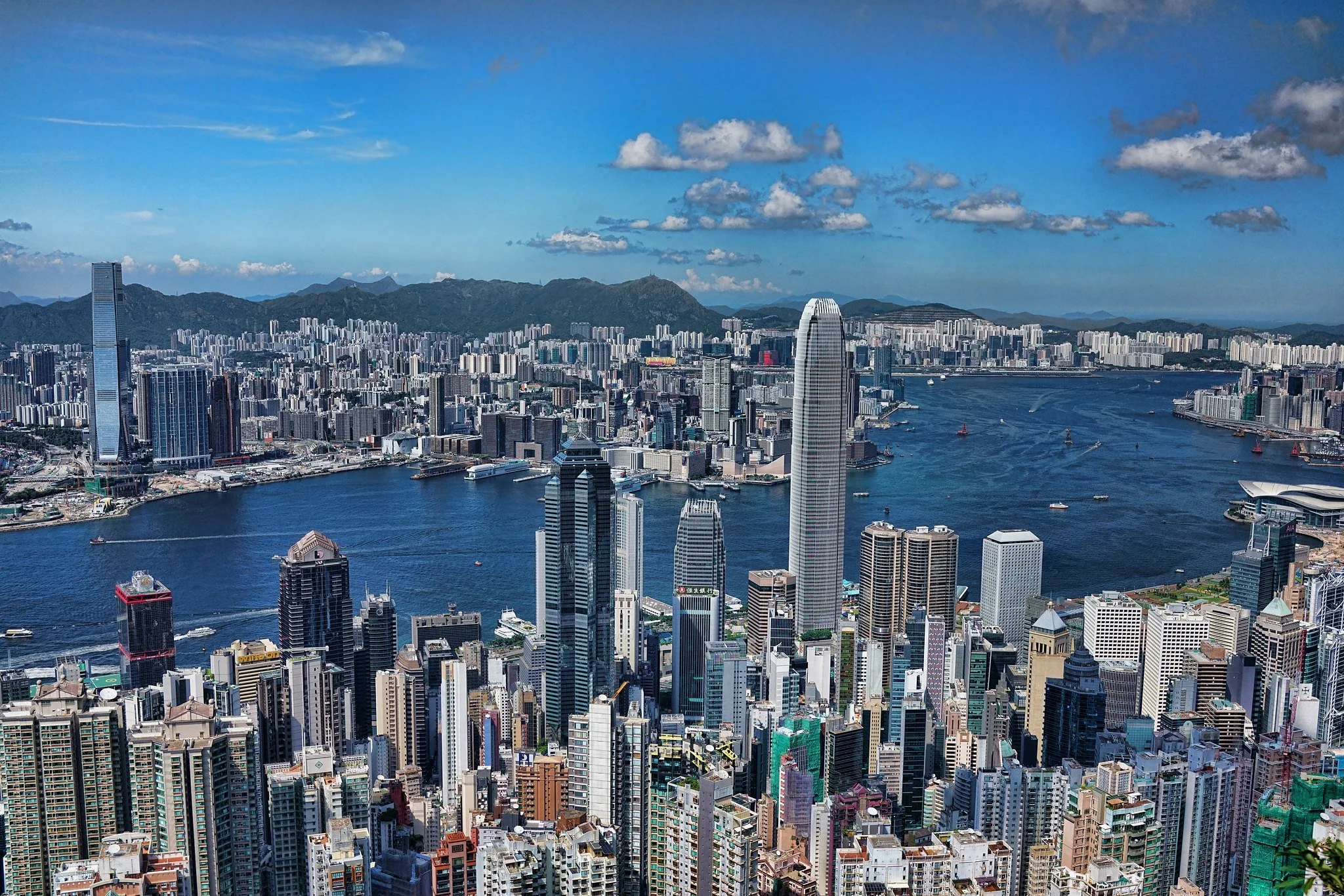
click on any image to enlarge
© Copyright Acknowledged | All rights reserved | all images taken b Jamie
Jamie’s Hong Kong | Some of my favourite images | Hong Kong 101
© Jamie Lloyd | J3 Consultants Hong Kong | J3 Private Tours Hong Kong |
| 2010 - 2026 All rights reserved. |
Click on any image to enlarge to full screen
Current images from my Instagram feed