From Rising Numbers to Sharp Declines - The Data (2010-2025)

The J3 Group - Premium Quality Private Tours | Experiences and Insider Chats since 2010
Me Jamie, your host, I am English and I have lived in Hong Kong since January 2nd 1972 - I know the place.
A meaningful blog post with a difference - tips on Travel, Tourism, Tours, Daily Life and my personal thoughts on Hong Kong.
Please do visit Amazing Hong Kong
Hong Kong | Pearl of the Orient
Customised Private Tours + Experiences in Amazing Hong Kong
Jamie has lived in Hong Kong - Pearl of the Orient for 50+ years
Carefully Crafted Personalised and Customised Itineraries by Jamie | Hong Kong’s Most Experienced Private Tour Guide for : Solo Travellers Friends Families Seniors Couples Business People MICE Delegates.
Private Tours Cultural Tours Walking Tours Sightseeing Tours City Tours Night Tours Layover Tours Transit Tours Private Shore Excursions Bespoke Tours Personalised Tours Jewish Heritage Tours Luxury Private Tours Day Tours Luxury Boat Tours Themed Tours Private Family Tours Private Day Tours Corporate Tours
Just you, your family or friends and Jamie your personal English private tour guide - over 2,400+ tours completed since 2011 - Jamie offers quality Private Tours of Hong Kong
Tour Group Size 1 - 6 people only
J3 Group Hong Kong | J3 Consultants Hong Kong | J3 Private Tours Hong Kong
Creating Memories That Will Last A Lifetime
Go here for the Hong Kong Michelin Restaurant Guide which includes the Bib Gourmand Category

A Resident since 1972 - Private Tours of Hong Kong with Jamie
The Best Things to do in Hong Kong
click on the image to enlarge
© Copyright Acknowledged | All rights reserved | image taken by Jamie
A Typical Street Sleeper | They Accumulate Stuff | Hong Kong
Foreword
As a long-time Hong Kong resident of over 50+ with deep knowledge of the city’s social landscape, I have prepared this comprehensive report on street sleepers to provide a clear, factual, and balanced understanding of the situation from 2010 to 2025. Drawing on official data and policy insights, this report examines trends, demographics, geographic patterns, underlying causes, and government responses. It aims to address common questions about why homelessness persists in a wealthy city like Hong Kong despite strong welfare systems, while offering thoughtful analysis and practical suggestions for the way forward. This includes an exploration of how subdivided units, informal sleeping arrangements, and recent enforcement measures shape the broader picture of housing precarity, oh and yes I had to look this word up, precarity, not a word I would use generally but this post calls for the proper use of terms.
As usual it is perhaps not what you expect, most residents take a out of sight, out of mind approach which is normal in Hong Kong, the Hong Kong situation when it comes to street sleepers it not at all like other major cities around the world.
Official Government Policy on Street Sleepers
Hong Kong maintains a structured official policy for addressing street sleepers, primarily managed by the Social Welfare Department through its Computerised Street Sleepers Registry established since 1981. The policy focuses on outreach, support, and reintegration rather than punishment. Three Integrated Services Teams for Street Sleepers, run by non-governmental organizations, conduct regular daytime and late-night visits across the territory to identify cases, assess needs, and connect individuals to accommodation, financial aid, employment services, and medical support. The government subsidizes emergency and short-term hostels with over 600 temporary places available. While voluntary engagement is prioritized, the approach also includes public space management through regular cleansing operations to maintain hygiene and order.
Trends in Street Sleeper Numbers (2010 - 2025)
The number of registered street sleepers showed a steady upward trend from the early 2010s through the pandemic years before experiencing a sharp decline recently. Figures started relatively low around 400–500 in 2010–2012, rising gradually to 1,297 by 2018–2019. Numbers peaked during the pandemic at 1,580 in 2020–2021. A dramatic drop followed, with 795 recorded in 2023–2024 and further declining to around 672 by late 2024. Over the full period from 2010 to 2025, the average annual registered number sits roughly between 900 and 1,000, reflecting significant variation driven by economic pressures and policy adjustments.
Demographic Breakdown: Gender and Age Profiles
Registered street sleepers are overwhelmingly male, consistently accounting for 88 to 90 percent of cases, with females making up the remaining 10 to 12 percent. The population has aged noticeably over the years, with the 50 - 69 age group forming the largest segment and the proportion aged 50 and above rising dramatically. Younger groups under 50 have remained smaller. By 2020 - 2021, nearly half had been sleeping on the streets for more than five years, with long-term cases (over 10 years) increasing to 25 percent. Many rely on casual work or government assistance such as Comprehensive Social Security Assistance.
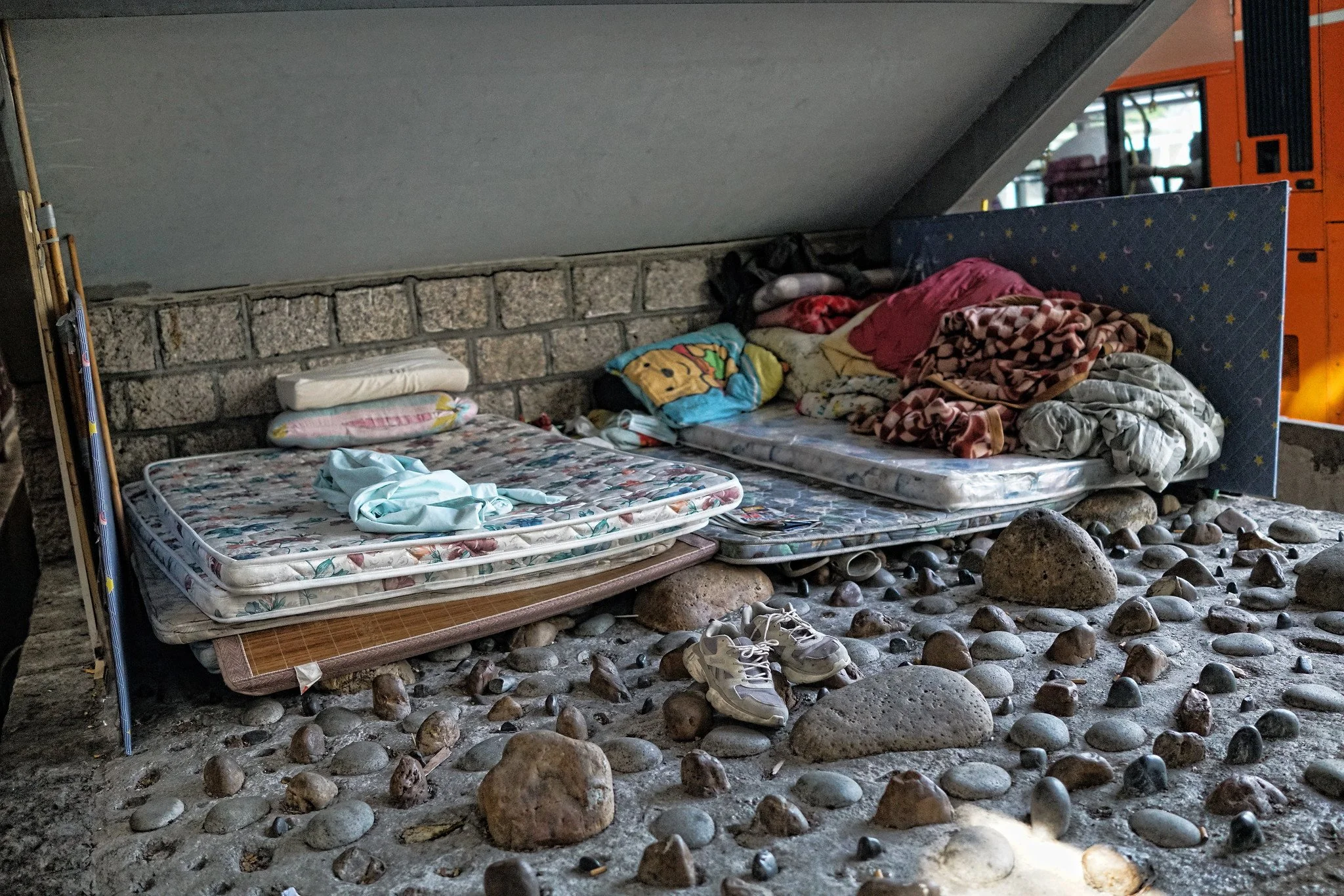
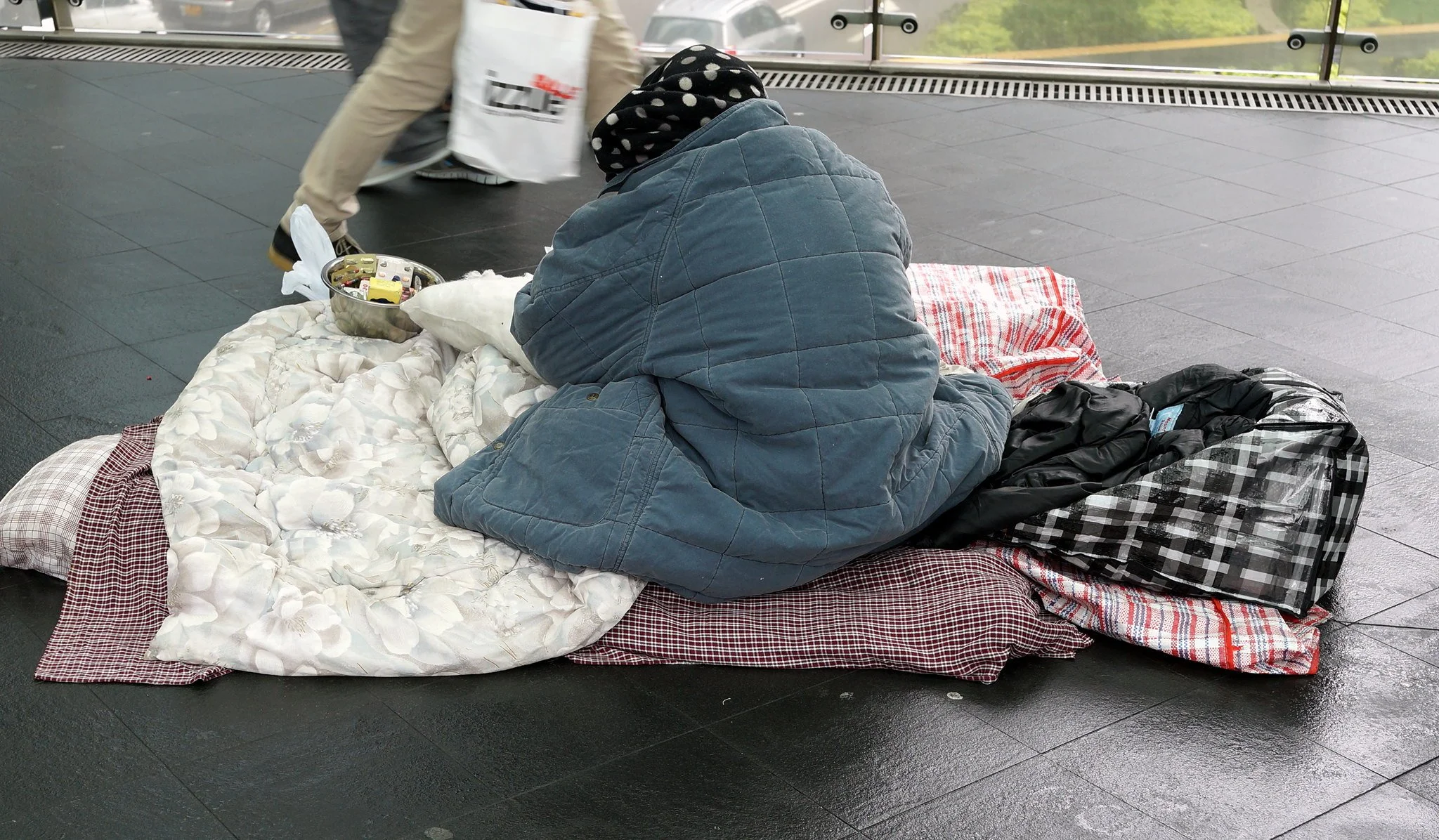
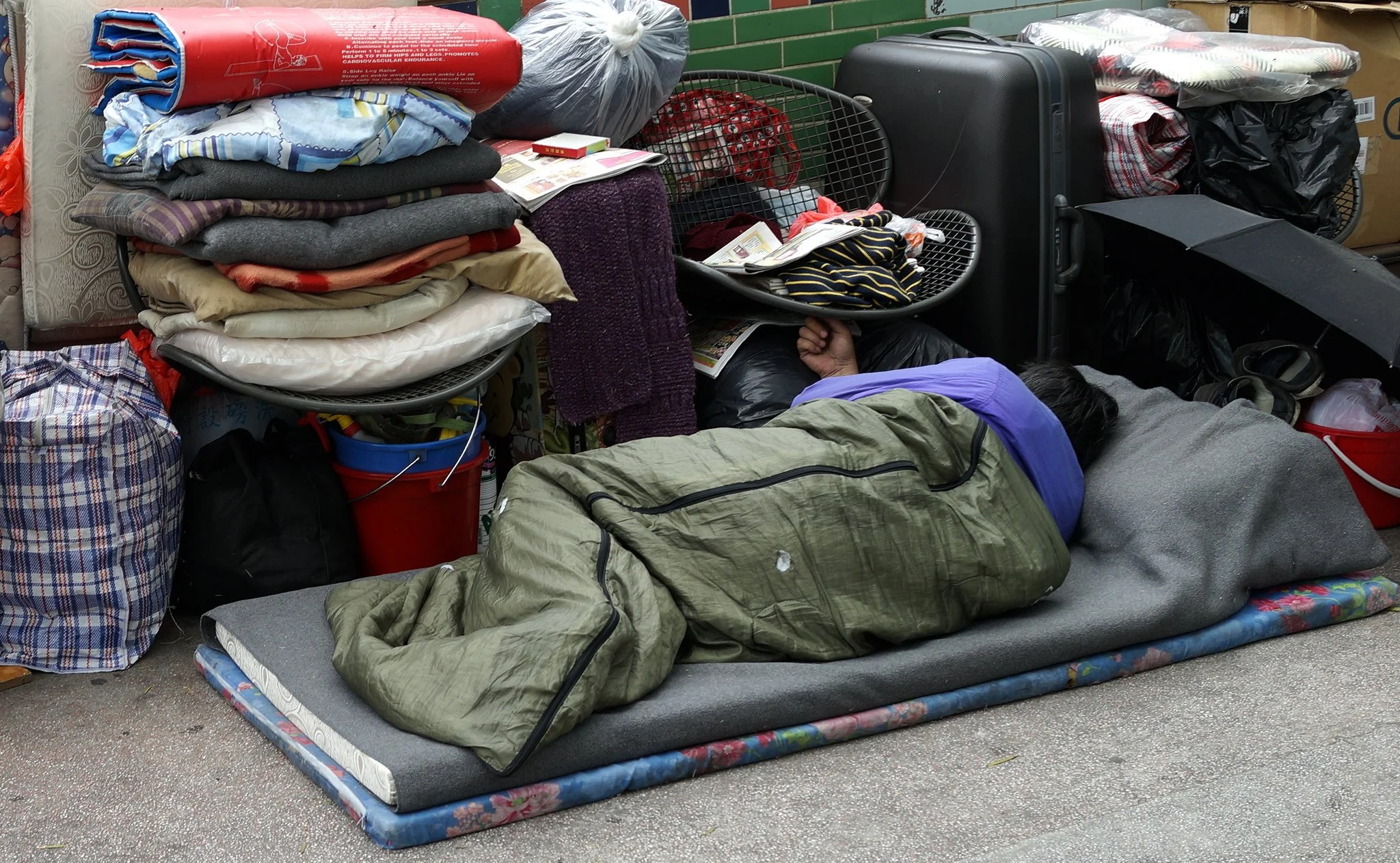
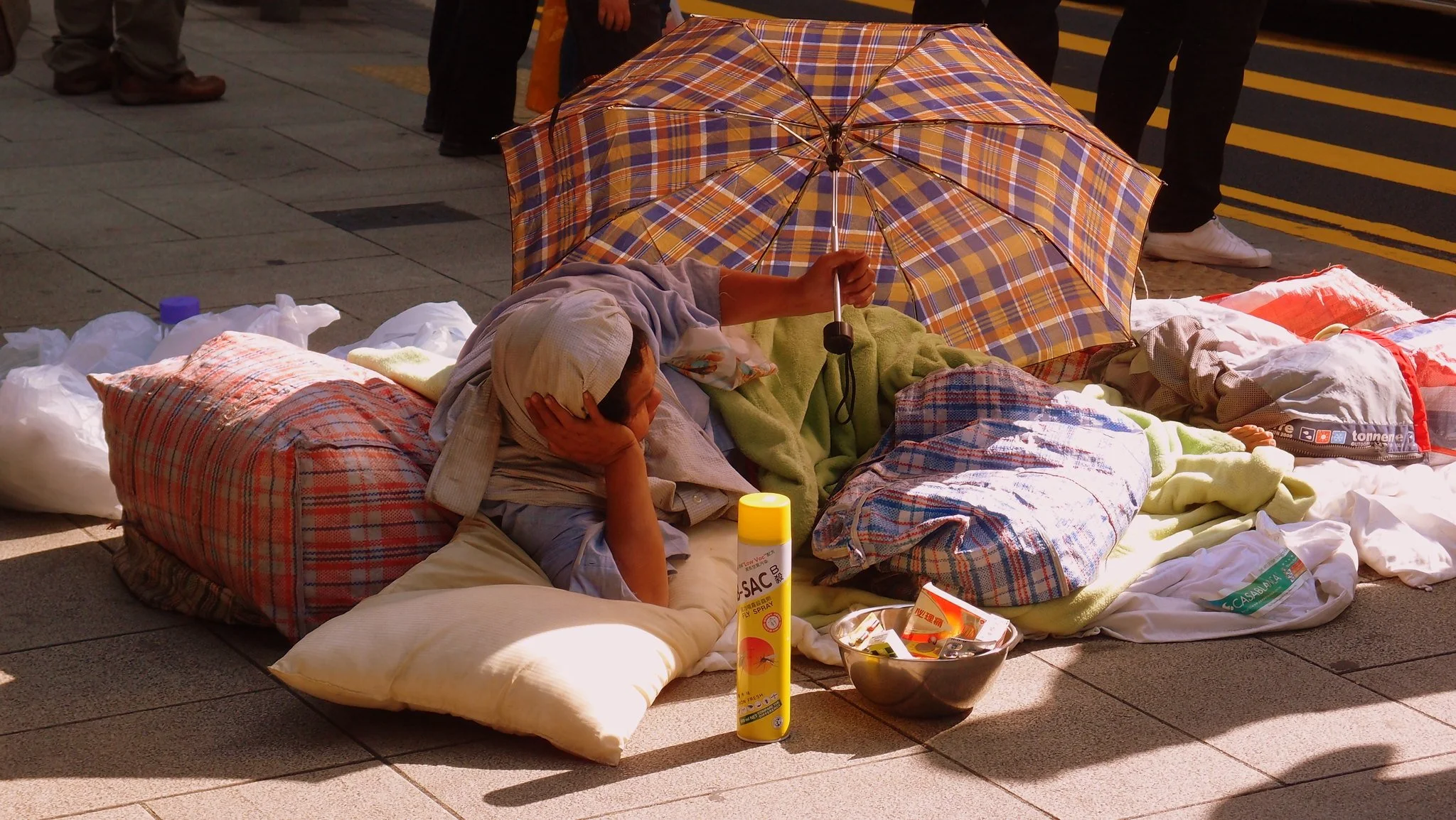
click on any image to enlarge
© Copyright Acknowledged | All rights reserved | images taken by Jamie
Street Sleepers | No Longer a Common Sight | Hong Kong
Geographic Distribution and District Hotspots
The districts facing the most acute challenges are concentrated in Kowloon, particularly Yau Tsim Mong and Sham Shui Po, which together have accounted for well over half of all registered cases in peak years. Kowloon as a whole has historically housed 78 to 91 percent of the registered population. This clustering stems from accessible public spaces such as parks, footbridges, and areas under flyovers, combined with proximity to low-wage jobs, food sources, and community networks. Hong Kong Island and the New Territories have seen much lower and more stable concentrations.
Types and Categories of Street Sleepers
Street sleepers can be broadly grouped into three overlapping categories. The first is chronic or long-term homelessness, often involving elderly single men with health issues, mental health challenges, or substance abuse histories who have spent many years on the streets. The second includes episodic cases triggered by job loss, family breakdowns, or discharge from institutions without stable housing. The third covers transitional or temporary street sleeping linked to short-term economic shocks or pandemic disruptions. Common threads across all types include unemployment, high rental costs, and strained social relationships.
Reasons Individuals Remain on the Streets
Many individuals remain homeless due to inability to afford private rents despite having some income, family conflicts that make returning home unviable, and discharge from hospitals or prisons without immediate support. Mental health conditions, substance issues, and a preference for familiar urban environments also play significant roles. In surveys, a growing minority cite personal choice, valuing autonomy or avoiding restrictive shelter rules. Pride, distrust of bureaucratic systems, and fear of losing informal support networks further prolong street sleeping for some.
Recent Government Enforcement Measures
In recent years the government has adopted a noticeably firmer stance on street sleeping through more proactive cleansing and enforcement operations aimed at clearing public spaces. These operations are primarily coordinated by the Food and Environmental Hygiene Department (FEHD), often working alongside the Police, Leisure and Cultural Services Department, Lands Department, and other bureaus in inter-departmental joint actions. Between 2021 and 2023, district offices carried out nearly 1,770 such operations to remove accumulated articles from public areas, including popular street-sleeping spots.
During these clearances, enforcement teams routinely remove unattended belongings left in public spaces. If items are not claimed within a short period, they are typically treated as waste and sent to refuse transfer stations or landfills managed by the Environmental Protection Department. Press reports and court cases have documented instances where street sleepers lost mattresses, clothing, cash, travel documents, and even mobility aids during rapid clean-ups. In one notable 2022 case, nine street sleepers received compensation through the Small Claims Tribunal after authorities were found to have mishandled and discarded their possessions. While some operations issue advance notices, rapid clearances still occur, especially in repeatedly problematic locations. The description of enforcement teams as “goons” is subjective language used by critics, but the actions are official and lawful, though often perceived as abrupt or insensitive by those affected.
As of 2025 and into 2026, these enforcement practices continue. Frontline workers link the sharp drop in registered street sleepers partly to increased evictions and displacements from public areas, which make individuals harder to track and register. This dual approach - welfare outreach combined with stricter public space management - has created tension. While necessary for hygiene, walkway access, and addressing community complaints, aggressive clearances can undermine trust in services and push street sleepers toward more hidden arrangements.
.. and that raises the question of what happens to street sleepers when their “home” is carted off to the landfills, nobody seems to know (or care) but I rather suspect they will simply find a new spot and start the accumulation of “stuff” again.
Understanding Hong Kong’s Low Homelessness Rate
With a population of 7.54 million in 2026 , Hong Kong maintains a relatively low visible rate of street sleeping thanks to its layered social safety net, including Comprehensive Social Security Assistance and public rental housing pathways. Cultural emphasis on self-reliance and residual family support also helps reduce chronic rough sleeping. However, official registry figures almost certainly underreport the true picture, as not everyone consents to registration and some avoid services. Broader housing insecurity in subdivided units and cage homes exists at higher levels but is not captured in street sleeper counts.
The Role of Subdivided Units in Housing Precarity
For the record my brother in law and my mother in law live in sub divided housing and have done for 7 years
Subdivided units (SDUs), often called subdivided flats, represent one of the most critical yet problematic elements of Hong Kong’s housing landscape. These are private residential flats informally divided into multiple smaller living spaces, ranging from basic rooms to extremely cramped “cage homes” or “coffin homes.” As of recent estimates, around 220,000 to 240,000 people live in these units - roughly 3% of the population and far exceeding official street sleeper numbers. Concentrated heavily in districts like Sham Shui Po and Yau Tsim Mong, SDUs act as a vital buffer that prevents a much larger wave of visible homelessness by offering a minimal roof, some security, and an address for accessing services. Without them, thousands more vulnerable individuals facing job loss, family conflicts, or low incomes would likely be pushed onto the streets.
Alternative Sleeping Arrangements: McDonald's and Hidden Homelessness
A notable form of hidden homelessness involves street sleepers and those in precarious housing using 24-hour McDonald’s outlets as temporary shelters, particularly in hotspots like Sham Shui Po. Press reports over the years have highlighted the phenomenon of “McRefugees” or “McSleepers,” where dozens seek refuge in air-conditioned branches for safety, comfort, and cheap food instead of enduring streets or overly restrictive shelters. High-profile cases, such as the 2015 death of an elderly woman unnoticed for hours in a Kowloon Bay outlet, drew attention to the issue. Surveys from 2018 showed hundreds regularly sleeping in these outlets, with many not fully homeless but cycling between subdivided units, casual work, and fast-food restaurants to cope with high rents and poor living conditions. This practice underscores how people avoid official street sleeping counts while still facing severe housing instability.
Public Rental Housing Access for Street Sleepers
Many street sleepers do meet the basic eligibility criteria for public rental housing (PRH), particularly single elderly or low-income individuals on Comprehensive Social Security Assistance. The Social Welfare Department can recommend eligible cases for compassionate rehousing, and the Housing Department arranges allocation as soon as possible after completing regular procedures. However, there is no automatic or blanket priority policy that places all street sleepers at the front of the queue. General applicants face a composite waiting time of around 4.7 to 5.1 years as of early 2026, though some elderly or those with urgent needs may be housed faster. Street sleepers often rely on short-term hostels, transitional housing, or recommendations for compassionate cases, but the overall PRH waiting list remains a significant barrier. Even when eligible, many end up in less popular units in the New Territories rather than preferred Kowloon locations.
Potential of Former COVID-19 Quarantine Facilities
Yes, sometimes I can think outside of the box
During the height of the COVID-19 pandemic, the Hong Kong Government rapidly constructed and repurposed numerous temporary quarantine and isolation facilities, including large-scale camps at Penny’s Bay (with capacity for thousands of units), Kai Tak, and other sites, providing accommodation for many thousands of people using modular integrated construction methods. These facilities were designed with private rooms, toilets, and basic amenities, and many were built to be demountable and reusable. After the pandemic, most were closed by early 2023, with some left on standby incurring maintenance costs. While a few sites have been repurposed - such as the Kai Tak facility converted into a youth hostel with rooms starting at HK$200 per night in 2025 - many others remain under review or partially unused. These modular units could potentially serve as a valuable temporary solution for street sleepers and transitional housing if reactivated or relocated, offering a quicker bridge than the standard public rental housing waiting list, though location, maintenance, and community acceptance would need careful consideration.
Additional Insights and Analysis
The aging profile of street sleepers reflects Hong Kong’s broader demographic challenges, with longer life expectancy and rising single-person households increasing vulnerability. Employment precarity in low-wage sectors remains a key driver, as casual workers often cannot bridge the gap to stable private rentals due to high deposits. The post-2023 decline coincides with economic recovery and stronger public space management, but it may partly reflect displacement from enforcement actions rather than complete resolution, highlighting the need for better monitoring of relapse rates. Subdivided units and alternatives like McDonald’s sleeping further illustrate the gap between visible street numbers and underlying housing stress.
My Take on This
In my opinion, the Hong Kong Government genuinely does try its very best to help street sleepers through extensive outreach services, financial assistance, hostel places, and pathways to public rental housing. There is real structural support available for those who are willing to accept it. However, some individuals simply do not want help. Many in the chronic group struggle with drug issues or mental health challenges that make them resistant to formal systems, and for them, living on the streets is ultimately a personal choice.
While I respect personal autonomy, there must be boundaries. Street sleepers need to understand the consequences of cluttering up sidewalks, footbridges, and public spaces with accumulated belongings, as this creates hygiene problems, blocks accessibility for others, and affects the wider community. A balanced approach - compassionate support for those who engage combined with firm but fair enforcement when public spaces are impacted - is essential for both individual dignity and the orderly functioning of a dense city like Hong Kong
Conclusion and Practical Suggestions
Hong Kong’s approach demonstrates a fundamentally compassionate framework that has successfully limited the scale of street sleeping. The recent reductions in numbers are encouraging, yet the persistence of a core group signals that deeper fixes around housing affordability and social integration are still required.
Five practical suggestions include: expanding low-barrier shelter options with fewer rules, prioritizing faster-track public rental housing allocations for verified long-term street sleepers, integrating more robust mental health and addiction services directly into outreach teams, introducing targeted rent subsidies or shared transitional housing in Kowloon hotspots, and conducting periodic independent street counts alongside the registry for a fuller picture. Careful management of subdivided unit regulations and a more balanced approach to enforcement - combining public order with greater compassion = will be essential to avoid unintended displacement while continuing progress toward reducing street sleeping.
So there you go
Jamie’s Hong Kong Insider Chat
AI Itinerary Rescue Service - Bring your AI-generated plan (or any self-designed itinerary) and I will spend the full two hours reviewing it with you. I’ll fix the impossible timings, suggest smarter routing, add interesting places that AI never finds, adjust for your group’s energy levels, and create a realistic, enjoyable day-by-day flow that actually works in real Hong Kong. Most guests leave saying “This is exactly what we needed”
I do not do Food Tours in Hong Kong but I know people that do!
I do not do food tours as mentioned above, I have very specific reasons and part of it is that I do not speak Cantonese or write Chinese, I am from Yorkshire in England and I lack the language gene and it is not through lack of trying and yes a lot of restaurants do not have English menu’s or staff who speak conversational English.
.. and yet I have eaten at close to 1,400 restaurants in Hong Kong since January 2nd 1972, my wife was born in Hong Kong and we have been together over 40 years and her first language is Cantonese and a lot of her family are Chinese or half Chinese so I have never had much of an issue!
This does not translate to doing food tours though, yes, I could do them, no problem there but they would never ever be as good as the food tours done by my friends (see the 3 links above) most of their awesome guides are locally born Hong Kong Chinese and obviously food culture is part of their DNA, it is impossible for me to compete with that!
So please feel free to contact them for food tours
I do not do Hiking Tours in Hong Kong but I know someone that does!
I do not do Hiking Tours, never have and never will even though I used to go Hiking a lot when I was a lot younger, The Hong Kong Government is promoting hiking tours so I urge you to contact my friend Sabrina at Hong Kong Trails and Tours, she is a long time Hong Kong resident and and a very experienced hiker with close to 700 Hikes in 15+ years under her belt, please click on the link below
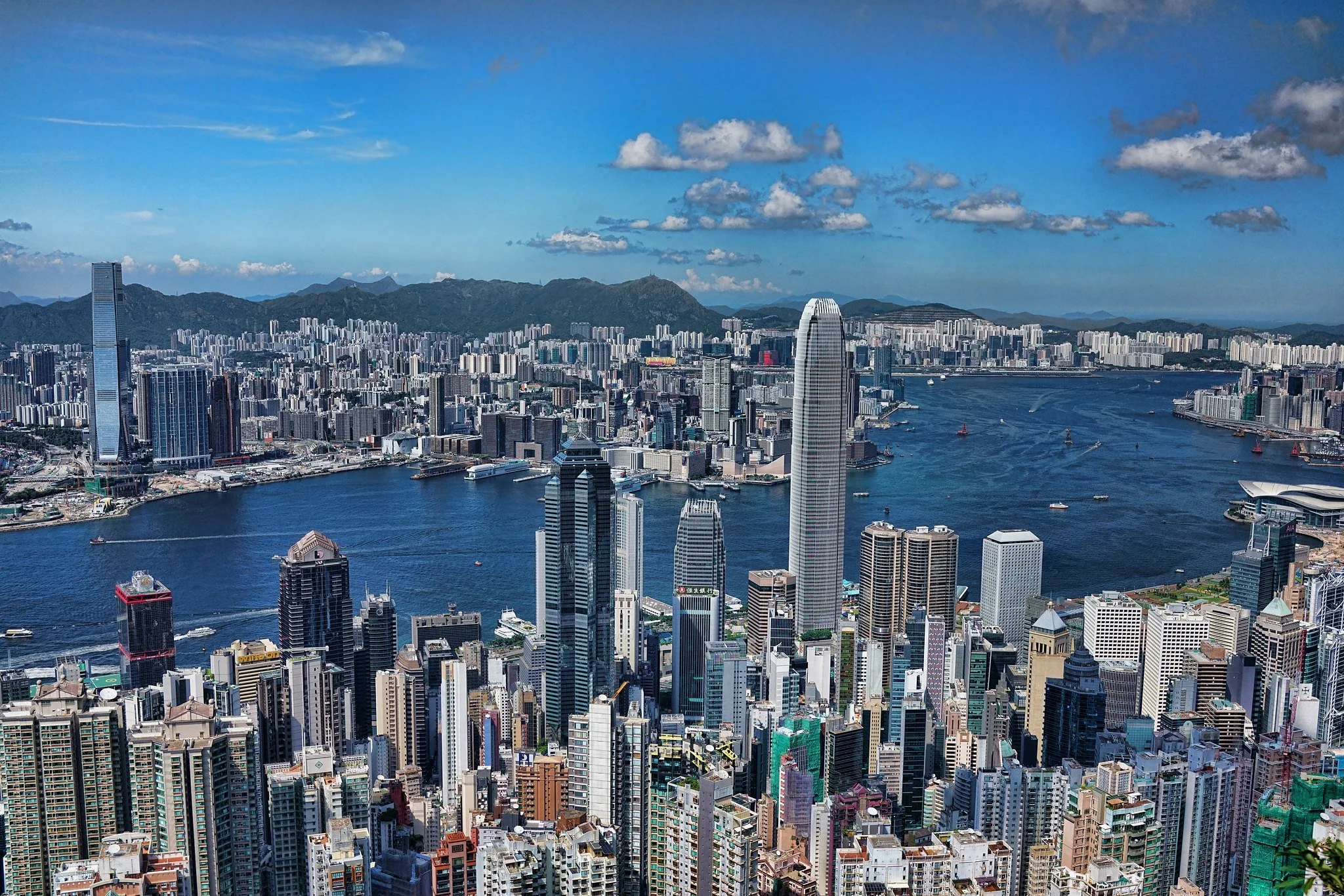




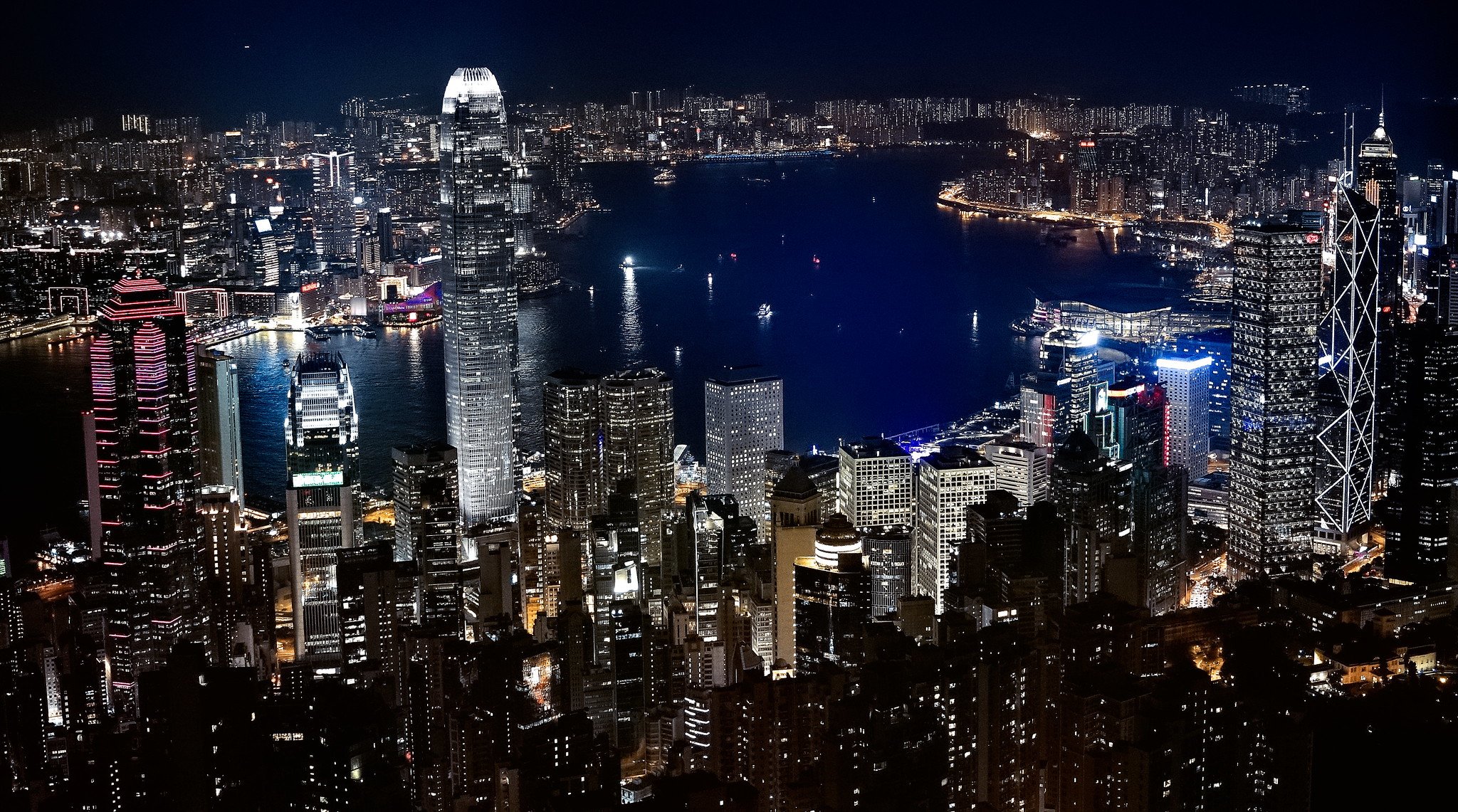


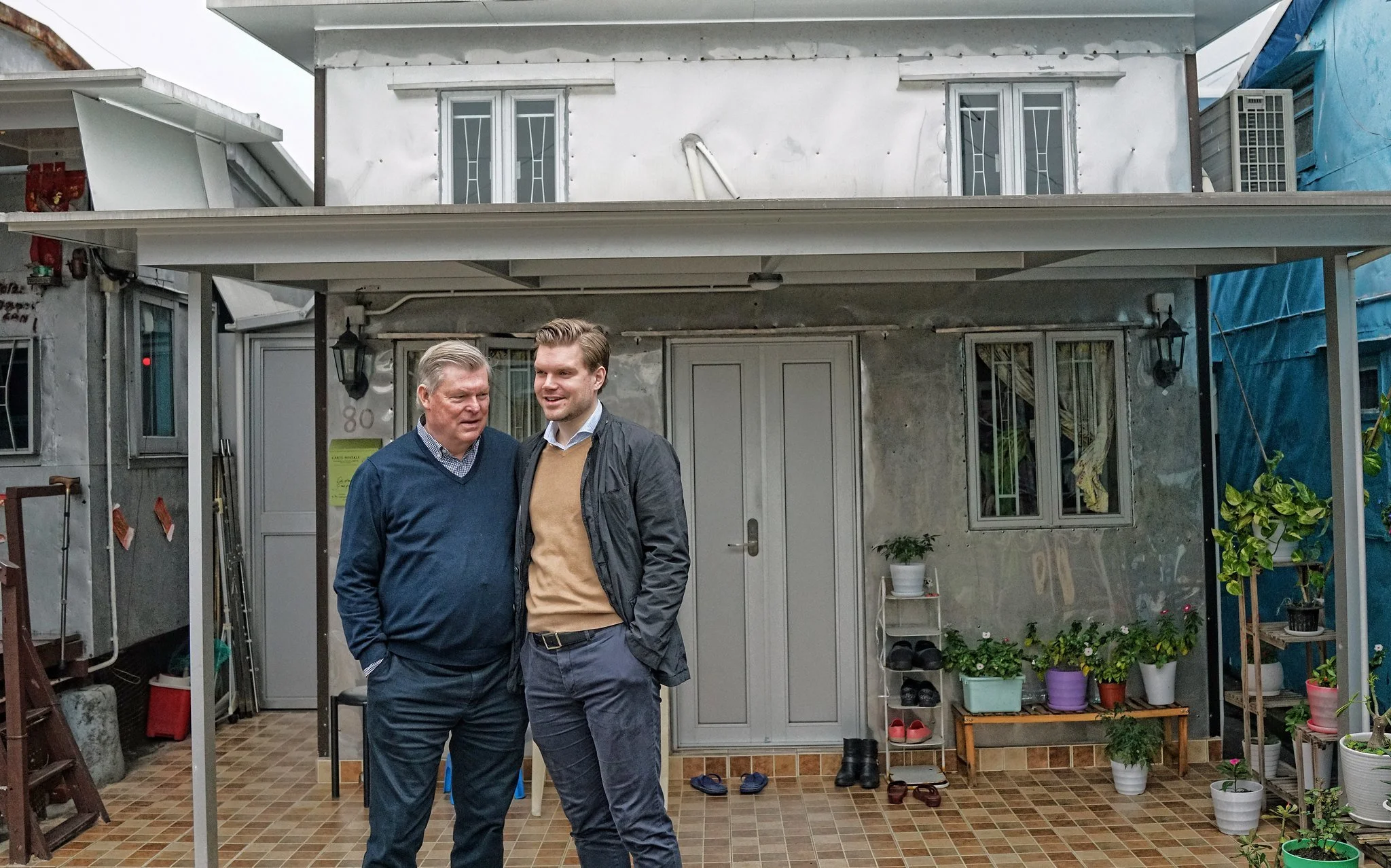
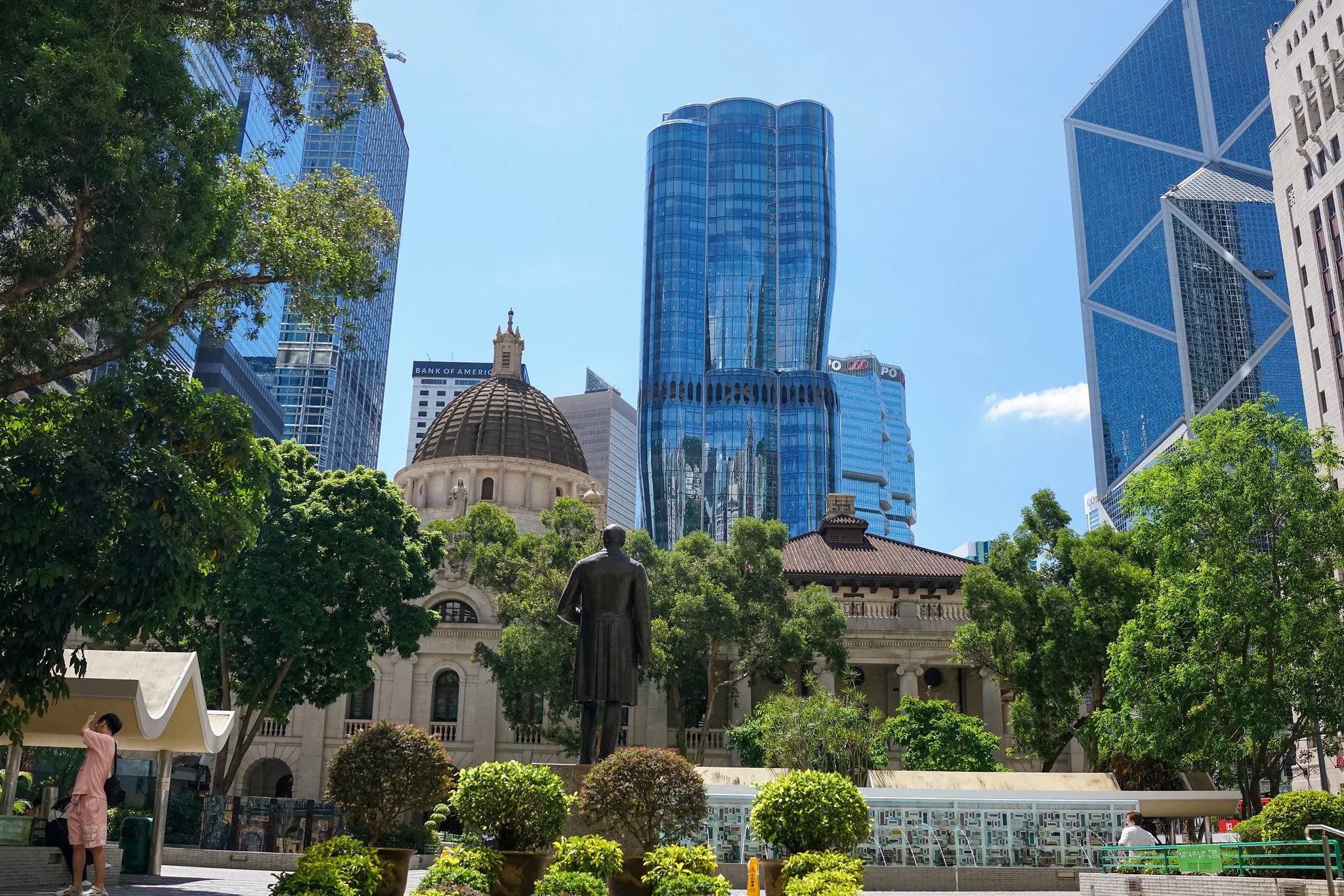
click on any image to enlarge
© Copyright Acknowledged | All rights reserved | all images taken b Jamie
Jamie’s Hong Kong | Some of my favourite images | Hong Kong 101
© Jamie Lloyd | J3 Consultants Hong Kong | J3 Private Tours Hong Kong |
| 2010 - 2026 All rights reserved. |
Click on any image to enlarge to full screen











Current images from my Instagram feed