Dragon Boats and Fire Dragons Hong Kong Cultural Tourism
A Deep Dive into Hong Kong’s Festivals & Their Appeal
The J3 Group - Premium Quality Private Tours | Experiences and Insider Chats since 2010
Me Jamie, your host, I am English and I have lived in Hong Kong since January 2nd 1972 - I know the place.
A meaningful blog post with a difference - tips on Travel, Tourism, Tours, Daily Life and my personal thoughts on Hong Kong.
Please do visit Amazing Hong Kong
Hong Kong | Pearl of the Orient
Customised Private Tours + Experiences in Amazing Hong Kong
Jamie has lived in Hong Kong - Pearl of the Orient for 50+ years
Carefully Crafted Personalised and Customised Itineraries by Jamie | Hong Kong’s Most Experienced Private Tour Guide for : Solo Travellers Friends Families Seniors Couples Business People MICE Delegates.
Private Tours Cultural Tours Walking Tours Sightseeing Tours City Tours Night Tours Layover Tours Transit Tours Private Shore Excursions Bespoke Tours Personalised Tours Jewish Heritage Tours Luxury Private Tours Day Tours Luxury Boat Tours Themed Tours Private Family Tours Private Day Tours Corporate Tours
Just you, your family or friends and Jamie your personal English private tour guide - over 2,400+ tours completed since 2011 - Jamie offers quality Private Tours of Hong Kong
Tour Group Size 1 - 6 people only
J3 Group Hong Kong | J3 Consultants Hong Kong | J3 Private Tours Hong Kong
Creating Memories That Will Last A Lifetime
Go here for the Hong Kong Michelin Restaurant Guide which includes the Bib Gourmand Category

A Resident since 1972 - Private Tours of Hong Kong with Jamie
The Best Things to do in Hong Kong
click on the image to enlarge
© Copyright Acknowledged | All rights reserved | SCMP
Cultural Tourism | SCMP Article | Hong Kong
Foreword 1
This is the exact text of a newspaper article from June 20th 2026 in Hong Kong
SCMP Article - Hong Kong
Tap ‘cultural foundation’, Shangri-La’s Kuok Hui Kwong tells Hong Kong tourism trade
Hotel group CEO calls Hong Kong ‘a vibrant international city that has really preserved a lot of its traditional culture’
Published: 12:00pm, 20 Jun 2026 Updated: 7:28pm, 20 Jun 2026
Hong Kong should do more to leverage its traditional festivals to draw international visitors and build its competitive advantage in cultural tourism, Shangri-La Group chairman and group CEO Kuok Hui Kwong has said.
Kuok, the daughter of Malaysian tycoon Robert Kuok, said Hong Kong had done well since the Covid-19 pandemic to entice international visitors back to the city, but could go even further in tapping its “cultural foundation” amid fierce competition for tourists.
She made the remarks to the South China Morning Post in a Hong Kong media-exclusive interview on the sidelines of Shangri-La’s new “Dragonbeat” festival programme, which it launched as part of a new five-year partnership with the Stanley International Dragon Boat Championships.
“Everyone knows Hong Kong is a really vibrant international city, but at the same time it’s a vibrant international city that has really preserved a lot of its traditional culture,” Kuok said.
She added that Hong Kong was uniquely positioned as a bridge between mainland China and the world, giving the city “enormous potential” for cultural tourism – particularly as the mainland grew as a popular destination among international travellers.
“I think this allows Hong Kong to have fresh opportunities to build a new competitive advantage in terms of tourism through culture,” she said.
Since Hong Kong’s reopening after the pandemic, authorities have introduced a raft of policies and strategies to reinvent the city as a top travel destination, including attracting new international events such as LIV Golf.
The city has also expanded other attractions, such as the annual Wine and Dine Festival, as part of the tourism push.
There are signs the strategy is paying off, with Hong Kong welcoming 49.9 million visitors in 2025, a 12 per cent rise from the previous year. In 2026, the city is expected to record 53.8 million visitor arrivals.
Nonetheless, tourism figures remain below the record 65.1 million visitors set in 2018.
Asked whether Hong Kong was properly leveraging its heritage or if more could be done to attract tourists, Kuok said the city was doing well in terms of hosting international events, such as the Hong Kong Sevens and Art Basel, but even more could be done to tap its “cultural foundation”.
“I think today, everyone is competing [for] the same tourism dollars, right?” she said. “Everyone is trying to make themselves a destination, and I think in order to do that, you need to offer something that is uniquely yours.”
Aside from the Tuen Ng Festival, Kuok also highlighted the Mid-Autumn Festival and the annual bun-scrambling competition held on Cheung Chau as potential events that could attract the interest of global travellers looking for unique experiences.
The Dragonbeat event, which encompasses the Stanley dragon boat races alongside a food fair and after-party, among other collaborations, was pitched as a way of modernising the traditional festival and pivoting Shangri-La into a “more lifestyle-driven brand”.
Shangri-La also appointed gold medal Olympian Eileen Gu as the event’s ambassador and collaborated with local artists, musicians and other creatives.
“This sponsorship is not only about supporting a race – it’s about creating a cultural IP that belongs to Hong Kong,” she told attendees following a traditional eye-dotting dragon boat ceremony.
Speaking with the SCMP, Kuok said the Dragon Boat Festival was not just a sporting event, but a “living tradition” that brought together the local community and visitors from around the world to celebrate together.
By integrating the races with wider offerings, visitors could experience the best of Hong Kong’s local food, culture and entertainment, Kuok said.
“I think it really aligns with the core of what we do,” she said, explaining Shangri-La’s decision to expand from its traditional luxury hotel business into cultural events with the launch of Dragonbeat.
“Today, hospitality is also about connecting with culture.”
click on any image to enlarge
© Copyright Acknowledged | All rights reserved | images taken by Jamie
Cultural Tourism | Festivals | Hong Kong
Foreword 2
I came across a thought-provoking piece in the South China Morning Post today, where Shangri-La Group’s Kuok Hui Kwong urged Hong Kong’s tourism trade to lean more heavily into our rich cultural foundation.
For the record the Shangri La Group is a Hotel Chain with a couple of lovely Hotels in Hong Kong.
Miss Kuok highlighted how we have preserved traditional culture amid our vibrant international city status, positioning us uniquely as a bridge between mainland China and the wider world. It is a sound idea on paper, and one that aligns with the Hong Kong Tourism Board’s longstanding efforts to promote our heritage. As someone who has spent over 16 years doing private tours (2,390+) and sharing the real stories of this city with visitors from around the globe, I found myself enthralled yet also reflecting on the practical realities. Cultural tourism has enormous potential, but turning festivals into major draws for overseas visitors, particularly Westerners, requires acknowledging the challenges alongside the opportunities.
oh, and she has clearly no understanding of the efforts put in by thousands of tour guides in Hong Kong who daily, promote Hong Kong Culture, this lack of understanding can be pretty much applied to every concierge in every Hotel in Hong Kong who for over 60 years have stuck to the tried and trusted technique of sticking hotel guests on a coach tour with 25 other people, a substandard guide and an itinerary that has not changed for 60 years!
I also have to wonder how the young reporter from the SCMP, Connor Mycroft has not picked up on the other side of the story, tourism is a complicated subject in Hong Kong and a bit of research would have revealed that getting comments from big wigs in the Hong Kong Hotel Industry is fine and dandy, perhaps a more realistic view from private tour guides would add a lot more context, private tour guides are promoting Hong Kong Culture every single day of the year! we are on the streets daily not working from a plush office running a hotel empire.
Finally for the record, the Hong Kong Tourism Board has a massive budget and they spend an awful lot of money promoting Hong Kong overseas and they are pretty successful and do a great job promoting Hong Kong Culture, 50 million vistors in 2025 is a number that a lot of countries envy, but the HKTB like everyone has to work around practical realities
Hong Kong’s Major Cultural Events: An Overview
Hong Kong hosts quite a number of traditional festivals each year, many tied to the lunar calendar, which means their dates shift annually. These events offer deep insights into our history, community spirit, and intangible cultural heritage. However, as my experience and conversations with fellow guides confirm, not all resonate equally with international tourists planning trips months in advance. the appeal of the Hong Kong Rugby Sevens and Art Basel and Food Festivals is that the dates are set in stone well in advance which helps with planning.
Here is a detailed look at some of the key ones.
One of the most common points of confusion for overseas visitors is the fundamental difference between the Western Gregorian calendar we all use for everyday dates and the traditional Chinese lunar calendar that governs so many of Hong Kong’s cultural festivals. The Gregorian calendar is solar-based, aligned with the Earth’s orbit around the Sun, giving us fixed 365-day years with occasional leap years and consistent dates like 25 December for Christmas. In contrast, the Chinese lunar calendar follows the cycles of the Moon, with months beginning on the new moon and typically consisting of 29 or 30 days. This creates a shorter lunar year of about 354 days, which is brought back into alignment with the solar year by adding an extra intercalary month roughly every three years. (this explanation is way above my pay grade!)
As a result, festivals shift by days or even weeks each year on our Western calendars. Chinese New Year, the one most international visitors are familiar with, illustrates this perfectly – it can fall anywhere from late January to mid-February, sometimes dramatically changing the entire festive period by nearly a month from one year to the next. This lunar rhythm keeps traditions deeply tied to nature’s own cycles, something that has shaped Chinese culture for thousands of years, but it does make advance planning more challenging for those booking trips from abroad.
Dragon Boat Festival (Tuen Ng Festival)
This is undoubtedly one of our standout cultural events and the one I see generating the most genuine interest among visitors. It commemorates the ancient Chinese poet Qu Yuan, who drowned himself in protest against corruption around 2,000 years ago. Legend has it that villagers rowed out in boats, beating drums and throwing rice dumplings (zongzi) into the water to distract fish from his body. Today, it blends this poignant history with thrilling athletic competition.
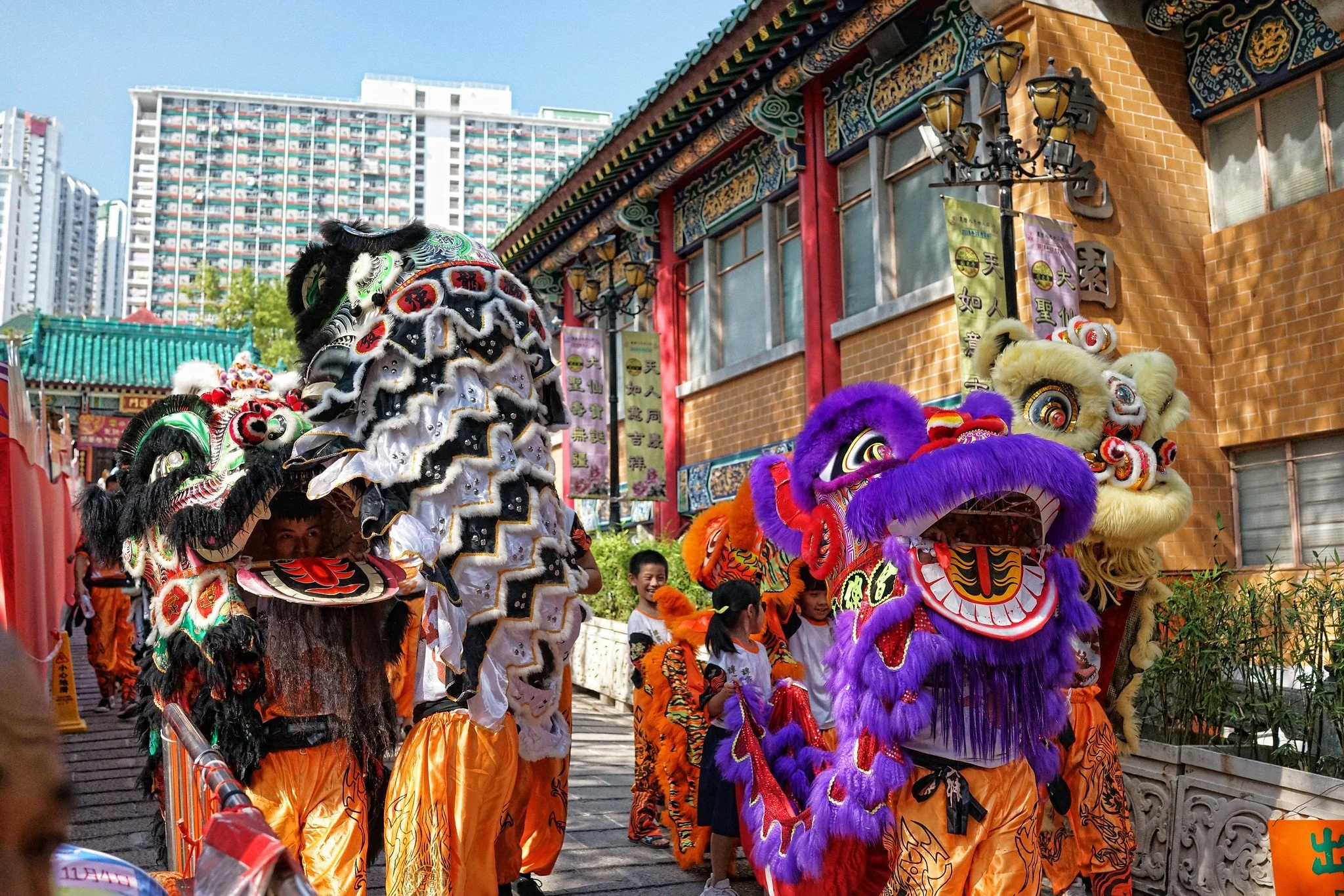
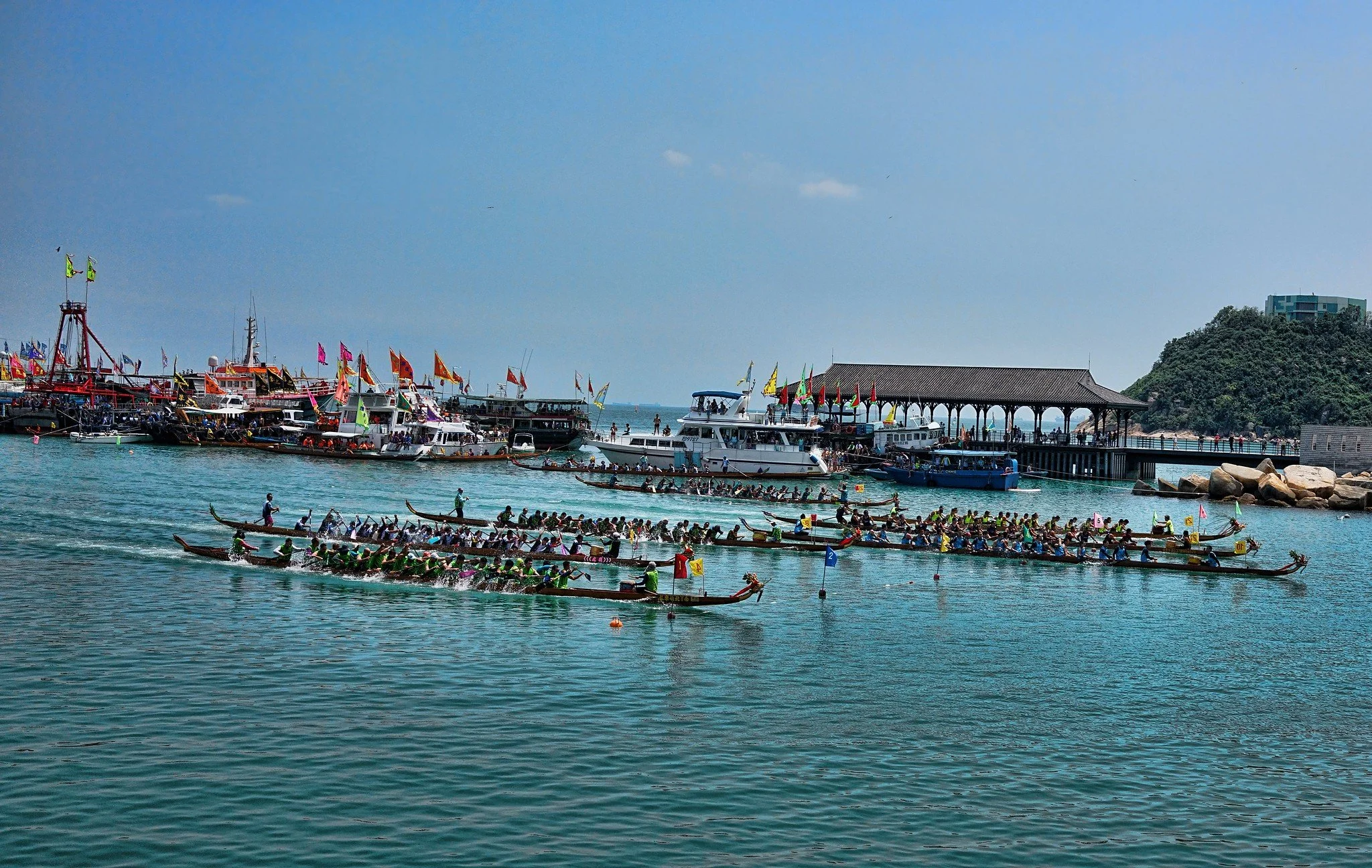
In Hong Kong, the festival typically falls on the fifth day of the fifth lunar month. For 2026, it landed on Friday, 19 June, with races and celebrations extending over several days, including major international races on 27-28 June marking a significant anniversary. Events take place at locations like Stanley, Sha Tin, Aberdeen, and the Tsim Sha Tsui Promenade, drawing local and international teams. The spectacle of colourful dragon boats racing across the harbour, accompanied by drumming and cheering crowds, creates an electric atmosphere that lasts for days. It is accessible, visually spectacular, and aligns well with shorter visits.
Cheung Chau Bun Festival
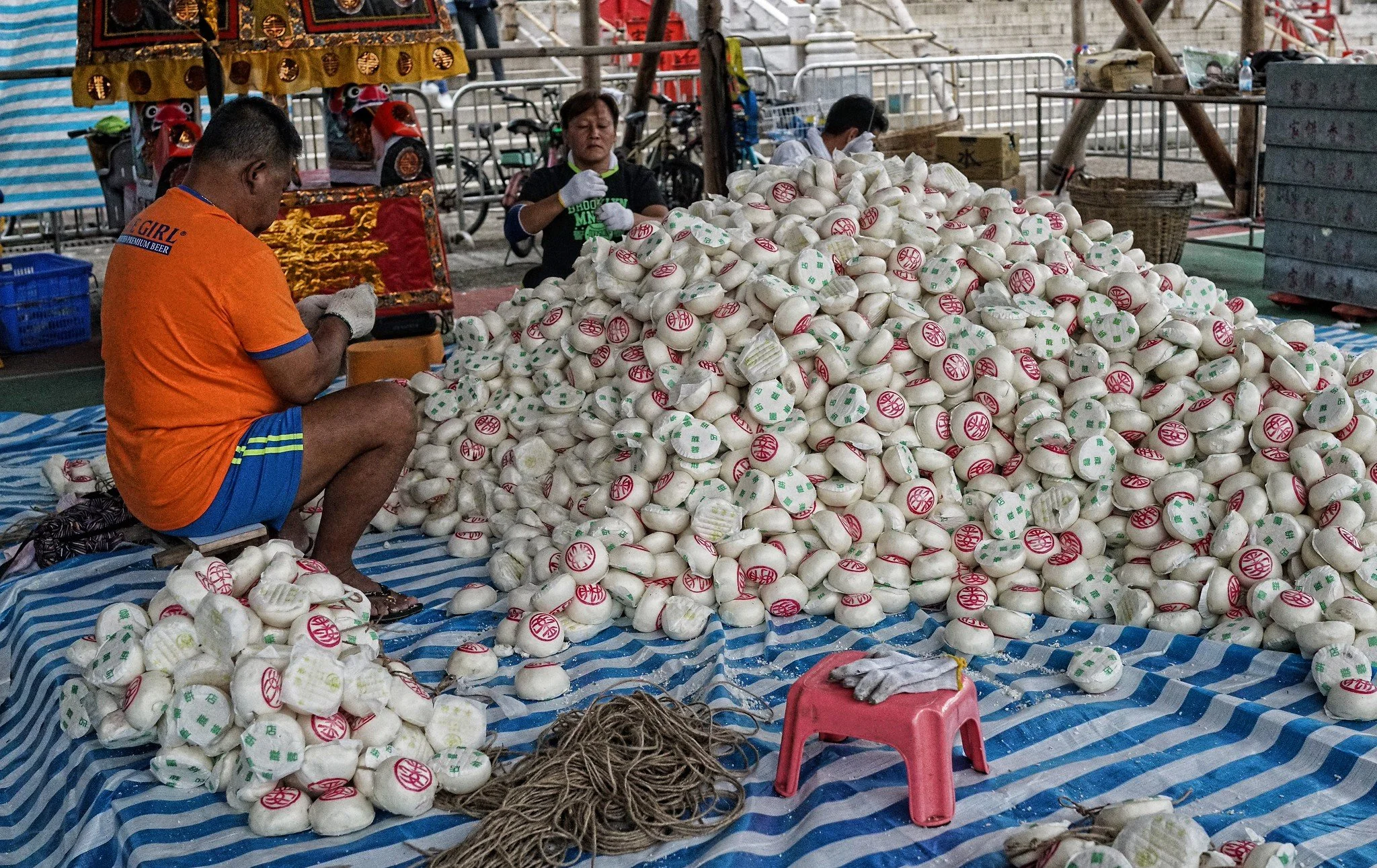
Held on Cheung Chau Island, this week-long event usually occurs around the eighth day of the fourth lunar month, often coinciding with Buddha’s Birthday in April or May. For 2026, key dates included activities building up to late May. Its origins trace back to the 18th century or earlier, linked to a plague that once ravaged the island. Islanders organised a Taoist Jiao festival to thank the gods, leading to the iconic bun towers and parades.
Highlights include the Piu Sik parade, where children dressed as deities are carried on tall frames through the streets, and the dramatic bun scrambling competition on towers. It is full of colour, vegetarian feasts, and community pride, and holds national intangible cultural heritage status.
That said, logistics pose real hurdles: the ferry ride from Central takes about 30-60 minutes each way, with limited services, and the small island can feel overwhelmed even with moderate crowds of a few thousand. It is promoted heavily but remains more of a local or day-trip experience than a primary reason for international visitors to book flights.
For the record, 18,000 visitors went to the Cheung Chau this year (2026) for the bun festival. the crowds where as usual a nightmare with lengthy waiting times for ferries back to Hong Kong Island.
Mid-Autumn Festival and Tai Hang Fire Dragon Dance
Falling on the 15th day of the eighth lunar month (usually September or October), this festival celebrates the harvest and family reunion under the full moon, with lanterns, mooncakes, and gatherings. In Hong Kong, the standout is the Tai Hang Fire Dragon Dance, a century-old tradition recognised as national intangible cultural heritage. It stems from a plague in the 19th century, when villagers created a dragon from straw and incense sticks to drive away evil spirits; the disease subsided, and the ritual endured.
The 67-metre dragon, studded with over 10,000 burning incense sticks and carried by hundreds of performers, winds through Tai Hang streets for three nights. A smaller LED dragon for children adds a modern touch. It is mesmerising and photogenic, but like many lunar events, dates vary yearly, making it tricky for advance planning. Other Mid-Autumn activities include lantern carnivals in parks.
Tai O Dragon Boat Water Parade
Tied to the Dragon Boat Festival, this unique event in the fishing village of Tai O involves dragon boats towing sampans with deity statues through the waterways to bless the community and appease spirits. It dates back over a century to another plague response and is also a national intangible cultural heritage. The procession offers an authentic glimpse into traditional fishing life, but Tai O’s remote location on Lantau adds travel time, limiting its appeal for time-poor visitors., for the record to get to Tai O from central areas of Hong Kong Island and TST Kowloon, you are looking at, at least 4 hours there and back
Lunar New Year Festival (s)
The biggest on the calendar, spanning 15 days from late January or February, with parades, flower markets, temple visits, lion dances, and fireworks. The International Chinese New Year Night Parade in Tsim Sha Tsui features floats and performances. However, the parade can draw massive crowds - up to 500,000 - leading to congestion, with prime viewing reserved for VIPs
Many visitors find it overwhelming rather than enjoyable.
Not in this lifetime or the next would I recommend this for tourists but that is just me, some folk have no issues sharing the moment on the streets with 500,000 others, that is reality and not something talked about by tourism experts.
The New Year’s Eve fireworks display on 31 December remains far more popular and accessible.
Other Events and the Broader Picture
Friends who run group tours organise experiences around the Mid-Autumn Tai Hang Fire Dragon, Tai O, Dragon Boat, and Lunar New Year, but feedback indicates they are not top sellers. The HKTB does an excellent job highlighting these, yet the reality is that overseas tourists, especially Westerners, rarely plan entire trips around shifting lunar dates for lesser-known festivals. Accessibility, crowd management, and competition from major draws like the Rugby Sevens, Art Basel, Wine and Dine Festival, play significant roles.
A quick word about food, food culture is amazing in Hong Kong, a year round thing and Hong Kong is rightly famous for promoting food culture, a great friend of mine is Cecilia of Hong Kong Foodie Tours, if you want the best of Hong Kong food and culture then book a tour with Hong Kong Foodie Tours!
The Everyday Reality of Cultural Tourism - Private Tours of Hong Kong
It occurs to me that the SCMP article and the thoughts of this major tourism player miss the blindingly obvious. Private tour guides - and group tour guides too - what exactly do we do for a living? Every single time we step out with guests, we are delivering a genuine Hong Kong cultural tour. We are showing them the real Hong Kong, its past, present and future, through storytelling that brings history to life, explains daily life and feng shui influences, explores heritage sites, bustling neighbourhoods, and the evolving cityscape.
Cultural tourism does not revolve solely around events with moveable dates on the calendar. Many of our traditions and insights have been passed down for hundreds if not thousands of years, and they are available every day of the year, rain or shine, without the constraints of festival timing or overcrowding.
click on any image to enlarge
© Copyright Acknowledged | All rights reserved
Actual 2026 Real World Data | 20 Top Attractions | Hong Kong
My Considered View on Cultural Tourism
Miss Kuok’s call to tap our cultural foundation is compelling. Hong Kong’s blend of preserved traditions and modernity is a genuine strength. She is a very successful hotel executive, that much is clear, so her status carries weight.
On the other hand, I am a nobody. I do not run a hotel empire nor was I born into money. I am just a regular guy but I do know a fair bit about Hong Kong tourism from years of walking the streets with visitors every day. I think the article is not really about cultural tourism in the deeper sense. It is more about visitor numbers, and more visitors mean more bookings for the Shangri-La Hotel Group.
Promoting cultural events is in no shape or form going to entice another 10 million people to come to Hong Kong. Most of our visitors - 75 to 80 % - come from Mainland China and they have different reasons for coming here. Yes, we had 65 million visitors in 2018 - those are real numbers - and the HKTB has spoken of the magical mark of 100 million visitors. To hotel groups like the Shangri-La Group that is the only thing that matters. Oh, and in this lowly tour guide’s universe that is a ridiculous figure unless transport infrastructure keeps pace and we build more hotels and such. Be careful what you wish for.
However, success depends on realistic promotion. The Dragon Boat Festival stands out because of its scale, international participation, and fixed harbour spectacles that fit flexible itineraries. Others shine for those already here or seeking deeper immersion, but they are not always “must-do” anchors for first-time visitors who in reality have a wish list of 20 major attractions to visit in, on average, two or three days.
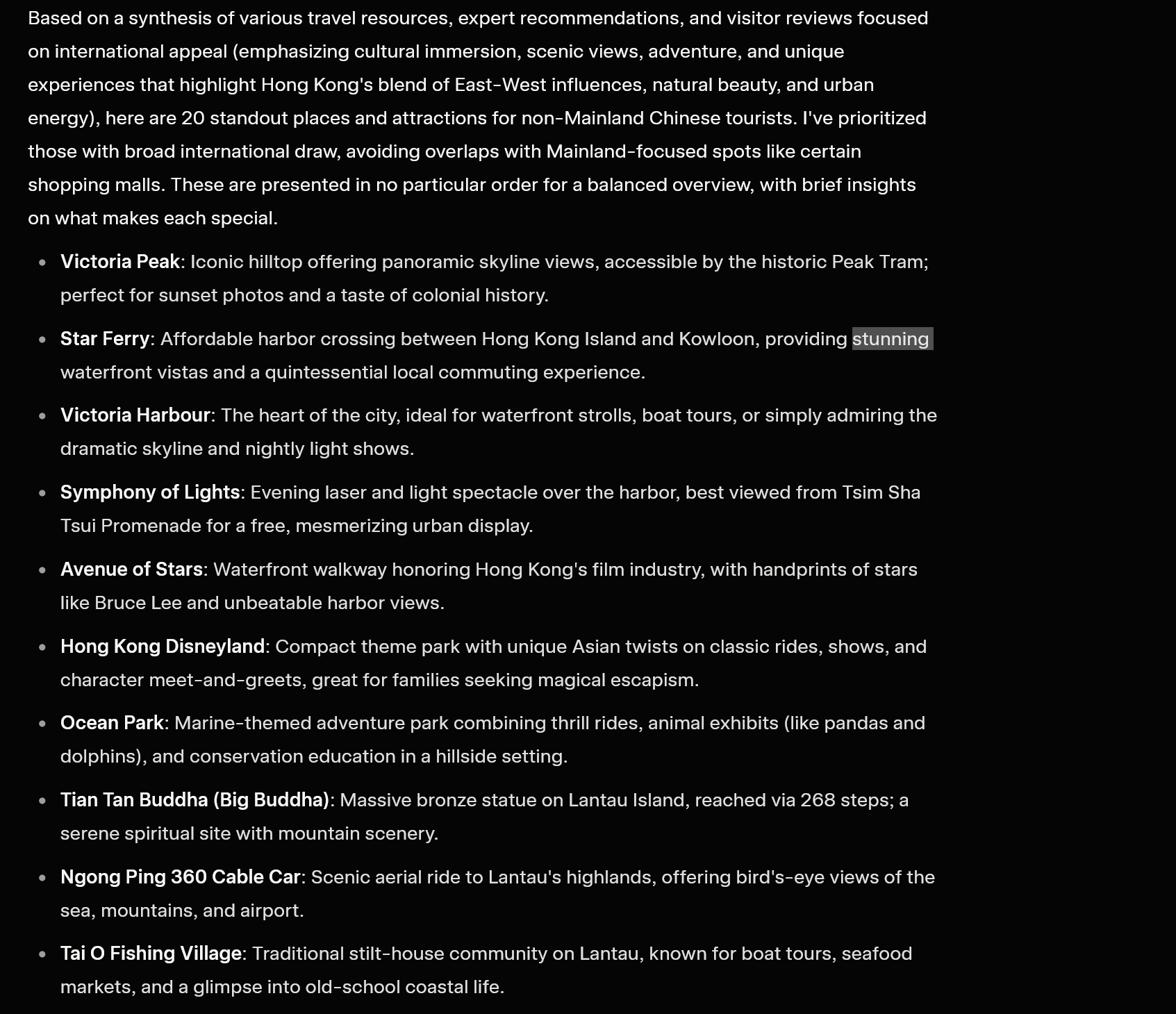
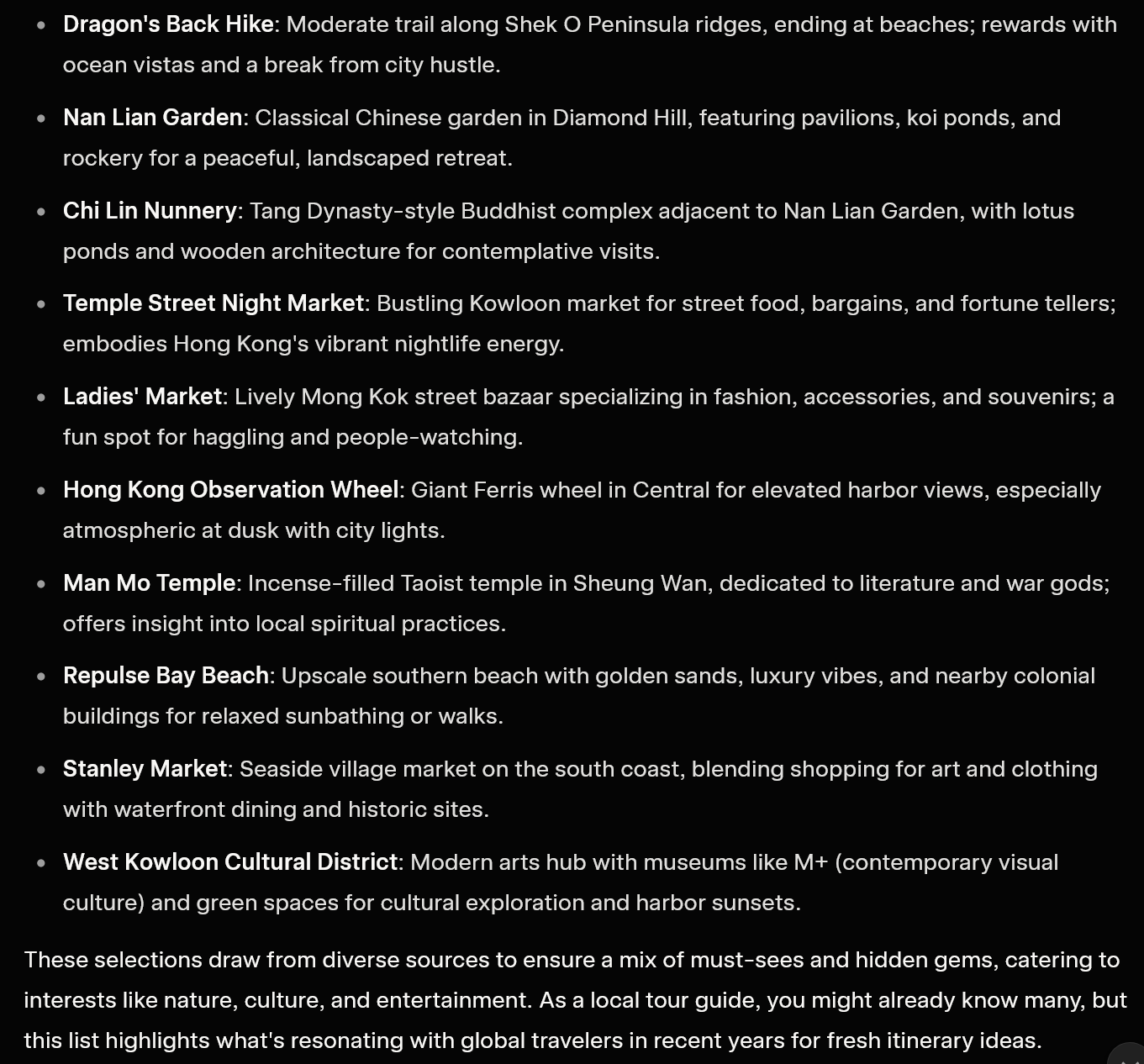
Yes, please do look at the real-world 2026 data of the 20 most popular Hong Kong places to visit and things to do. You will not see festivals on the list and yet many of these are what you would call cultural. We have two theme parks, Disneyland and Ocean Park, which account for a big chunk of foreign visitors coming to Hong Kong. Even the Dragon Boat Festival cannot come remotely close to attracting these sorts of numbers. Like I said, tourism is a complicated subject in Hong Kong and hotel groups have a vested interest. They simply do not care one jot about the reasons why tourists are visiting Hong Kong - they have rooms to fill and that, as stated, is all that matters.
I am not taking a pop at the Shangri-La Group. If I was in their shoes I would be saying the same things. I may be at the bottom of the pecking order for tourist-related entities but that does not mean I am thick. We private tour guides know exactly what we are doing.
One final thought, a quick way to boost our visitor numbers is to bring pop superstars to Hong Kong from all around the world, this would be great for Hong Kong residents but it would certainly have a positive impact on visitors from around Asia. coming to Hong Kong is quick and easy, oh yes and host more sporting events! just a thought
Suggestions for Enhancing Appeal
Package festivals with flexible, multi-day options or combine them with harbour views, heritage walks, and storytelling tours that provide context without requiring precise date alignment.
Improve transport and crowd flow, such as more ferries for Cheung Chau or better viewing infrastructure.
Leverage digital storytelling and short, engaging videos to build anticipation year-round. this would work better and is a lot cheaper than bringing so called social media influencer’s to Hong Kong
Focus on hybrid experiences that mix culture with Hong Kong’s strengths in food, shopping, and nightlife.
Out-of-left-field idea: how about promoting private tours quite simply as the very best cultural experience you can have in Hong Kong - the best of Hong Kong in 4 - 8 hours on any day of the year.
In the end, while we should celebrate and promote our festivals proudly, tourism strategies work best when they meet visitors where they are - with memorable, accessible experiences that complement rather than dictate rigid schedules. Hong Kong’s cultural depth is real; the key is making it inviting in practice, every single day.
That means dealing with practical issues such as time and the very real issue of that the dates for events can change every year and thinking outside of the box
So there you go
Jamie’s Hong Kong Insider Chat
Ready to turn your plans into a far more enjoyable reality? Click the yellow button below to learn more about Jamie’s Hong Kong Insider Chat, check pricing and book a convenient time
I do not do Food Tours in Hong Kong but I know people that do!
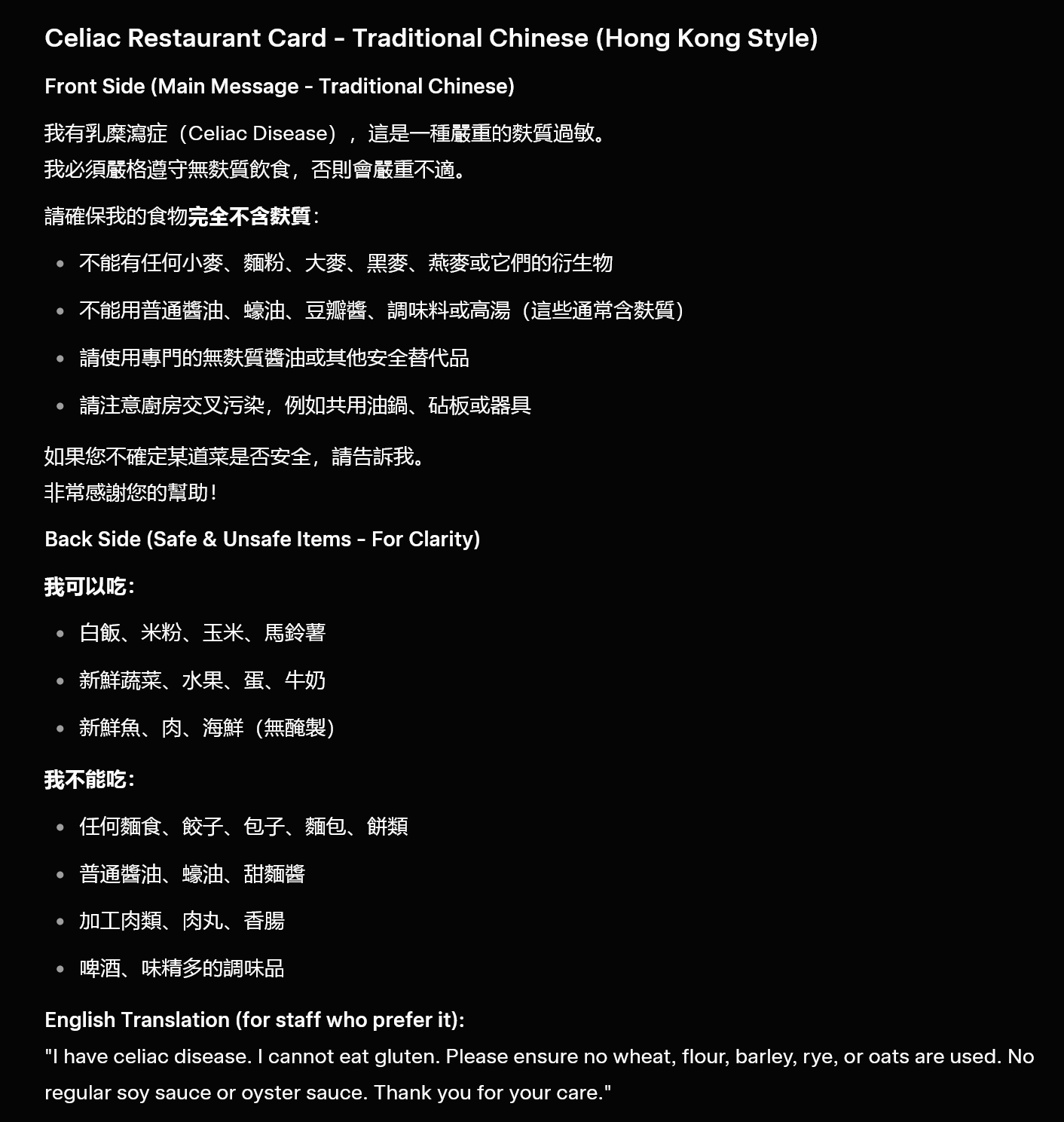
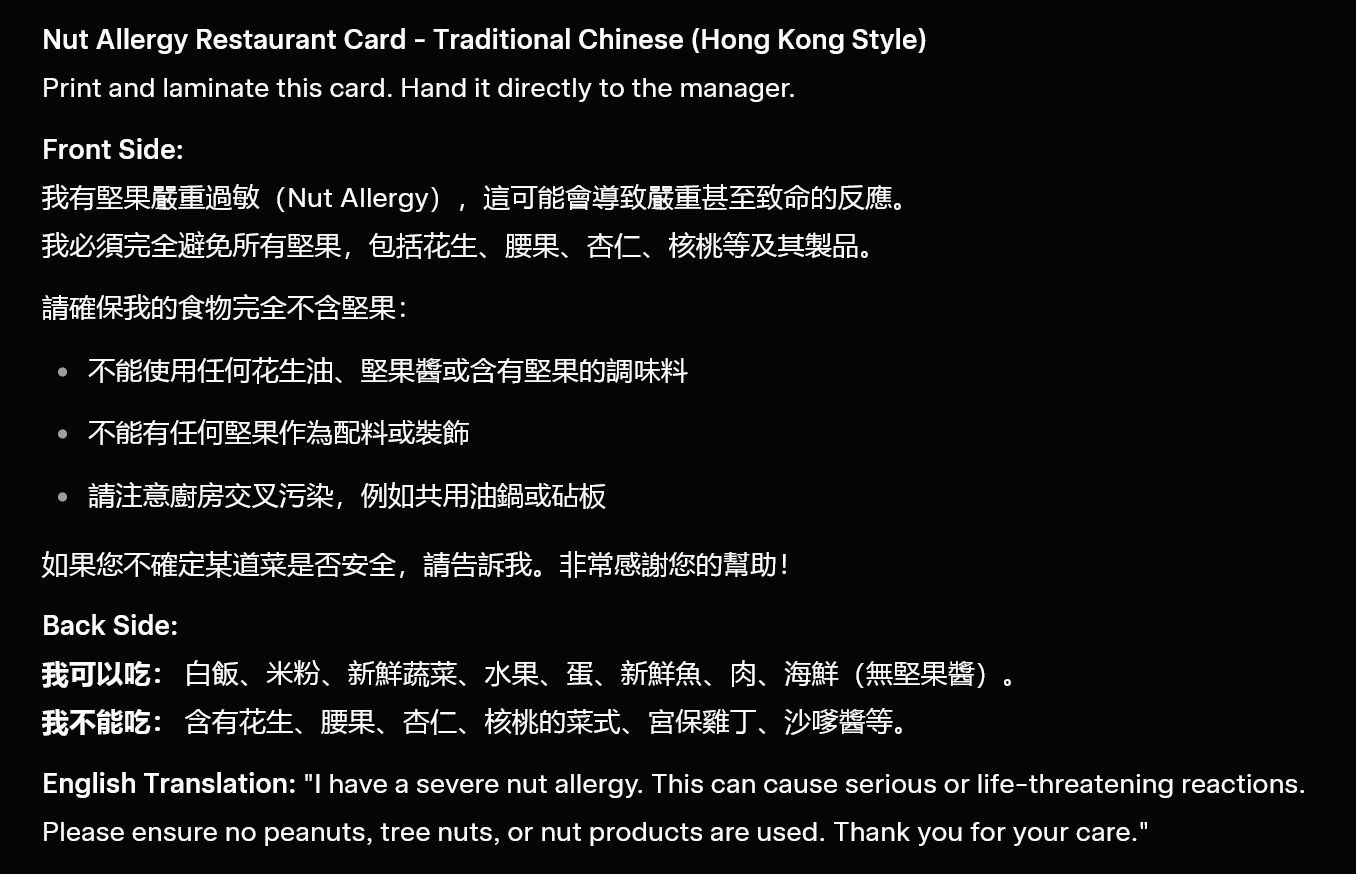
click on any image to enlarge
The information above can be shown to restaurant managers in Hong Kong if you are intolerant to gluten and nuts,
I do not do food tours as mentioned above, I have very specific reasons and part of it is that I do not speak Cantonese or write Chinese, I am from Yorkshire in England and I lack the language gene and it is not through lack of trying and yes a lot of restaurants do not have English menu’s or staff who speak conversational English.
.. and yet I have eaten at close to 1,400 restaurants in Hong Kong since January 2nd 1972, my wife was born in Hong Kong and we have been together over 40 years and her first language is Cantonese and a lot of her family are Chinese or half Chinese so I have never had much of an issue!
This does not translate to doing food tours though, yes, I could do them, no problem there but they would never ever be as good as the food tours done by my friends (see the 3 links above) most of their awesome guides are locally born Hong Kong Chinese and obviously food culture is part of their DNA, it is impossible for me to compete with that!
So please feel free to contact them for food tours
I do not do Hiking Tours in Hong Kong but I know someone that does!
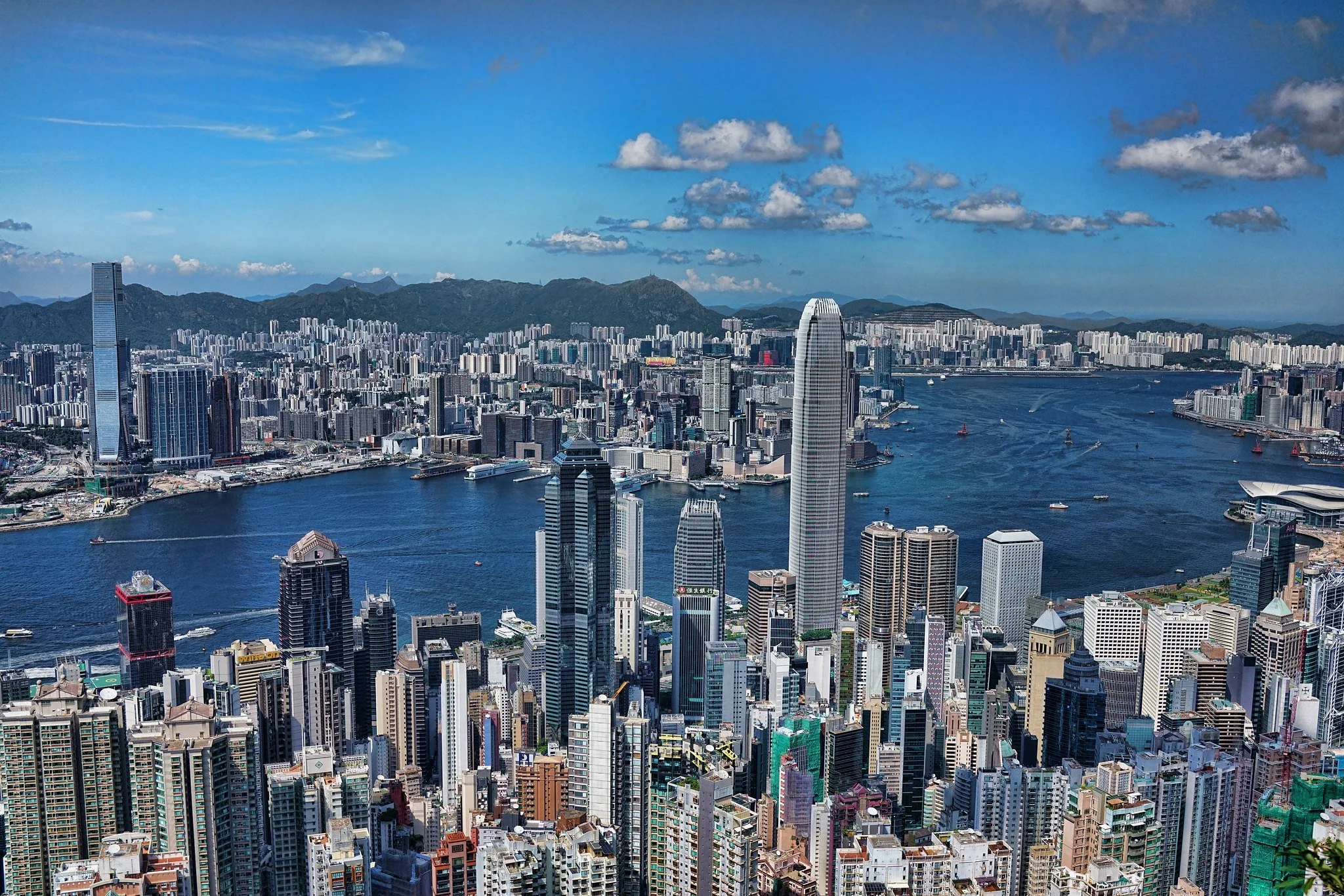
I do not do Hiking Tours, never have and never will even though I used to go Hiking a lot when I was a lot younger, The Hong Kong Government is promoting hiking tours so I urge you to contact my friend Sabrina at Hong Kong Trails and Tours, she is a long time Hong Kong resident and and a very experienced hiker with close to 700 Hikes in 15+ years under her belt, please click on the link below
click on any image to enlarge
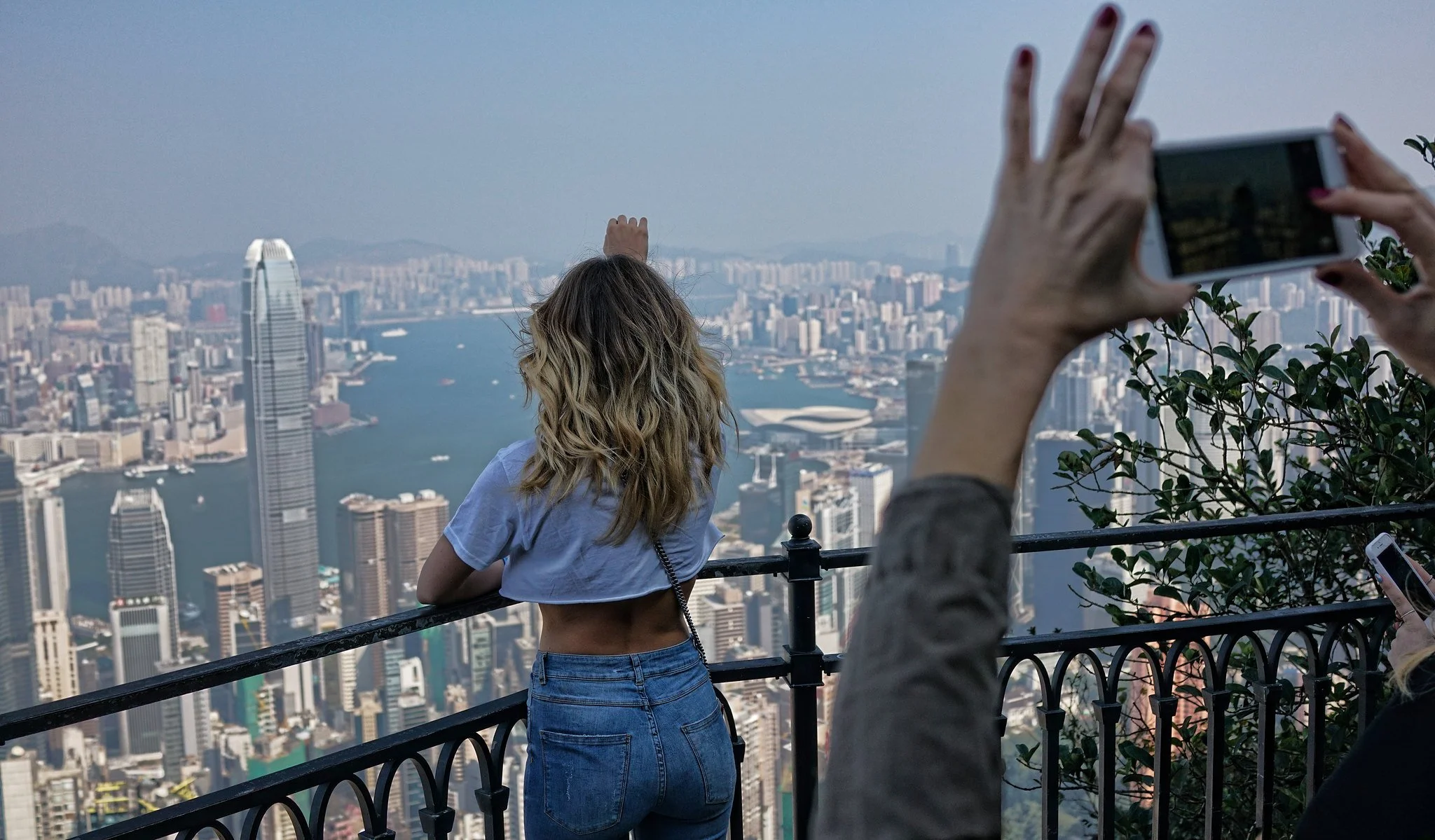
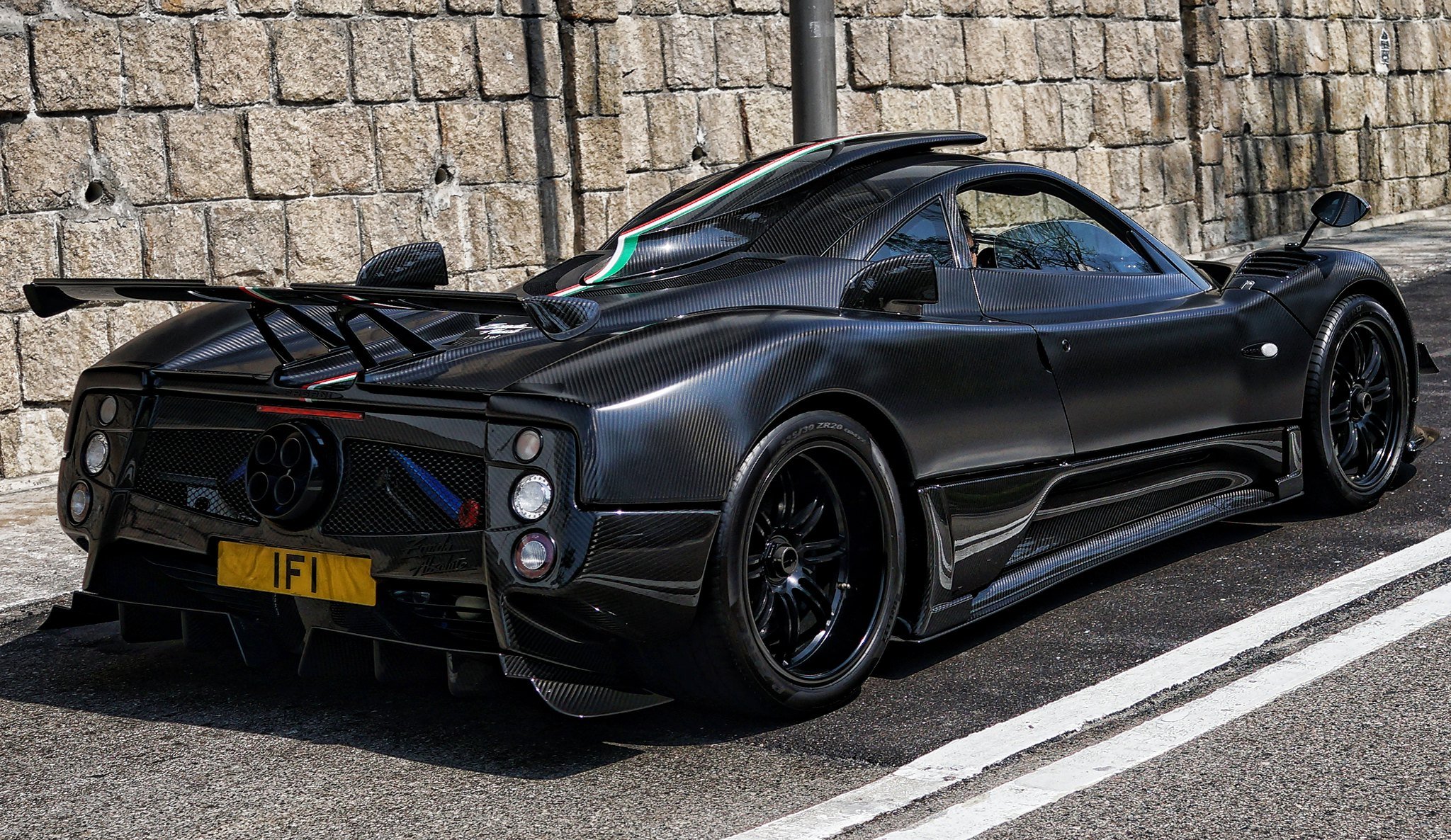
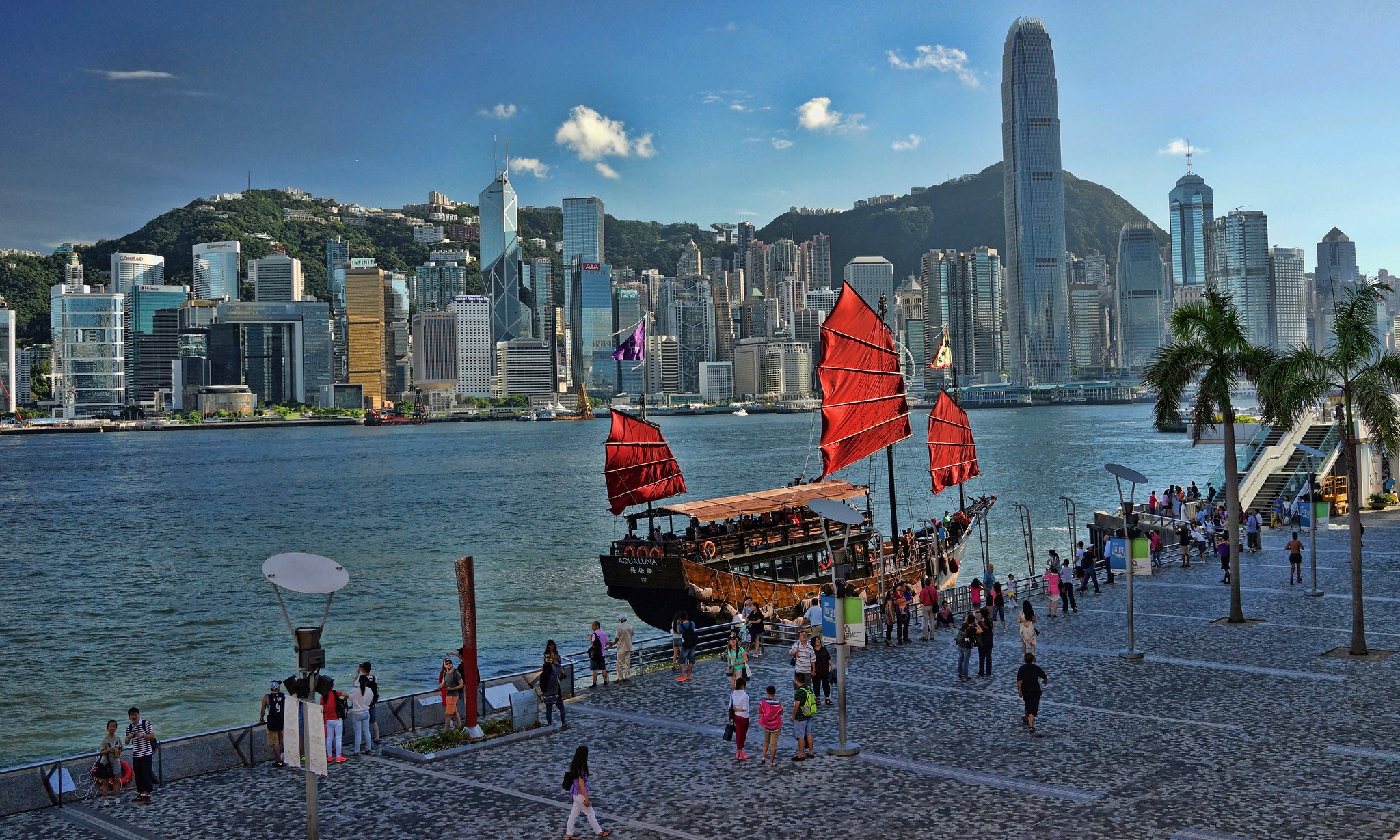
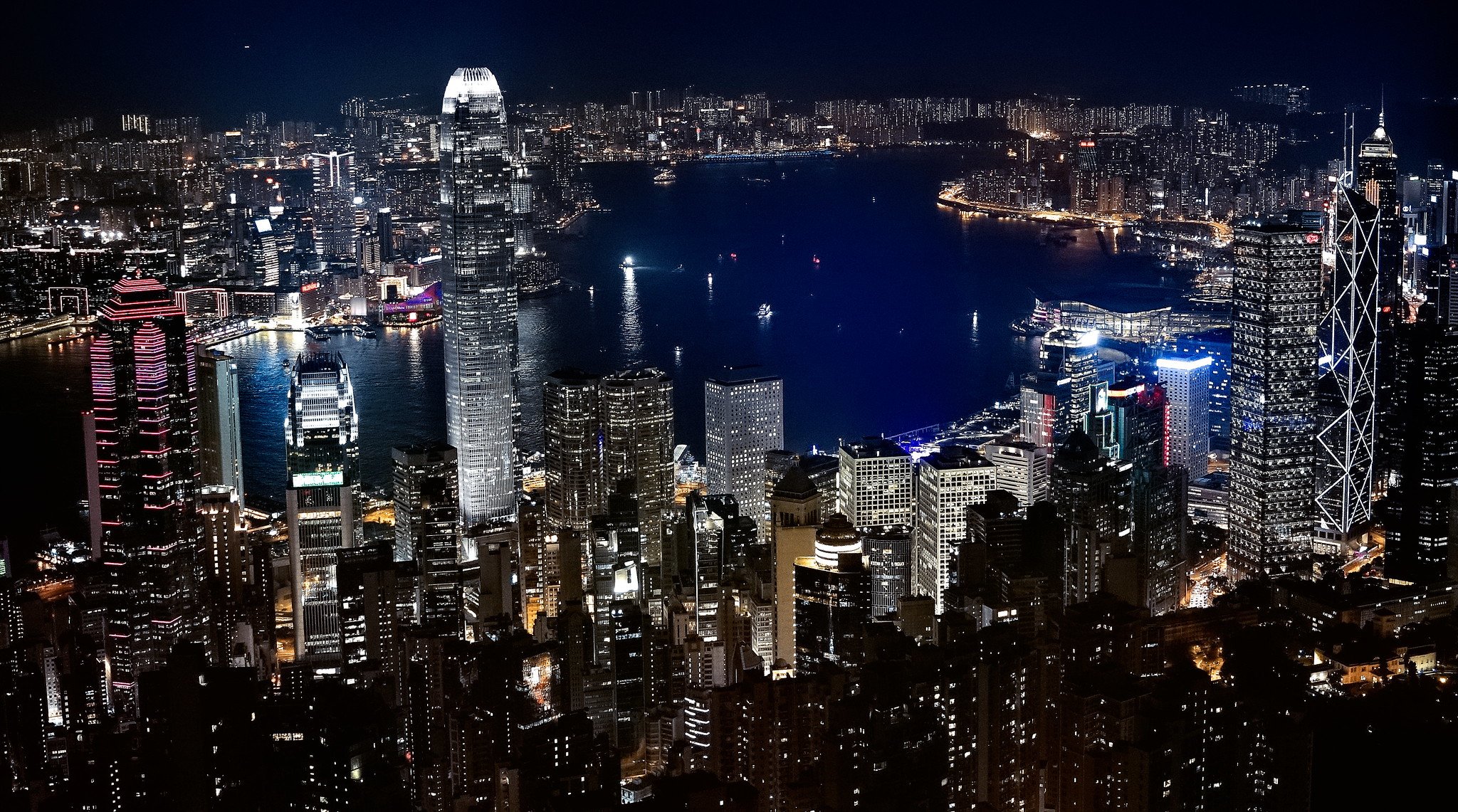
© Copyright Acknowledged | All rights reserved | all images taken b Jamie
Jamie’s Hong Kong | Some of my favourite images | Hong Kong 101
© Jamie Lloyd | J3 Consultants Hong Kong | J3 Private Tours Hong Kong |
| 2010 - 2026 All rights reserved. |
Click on any image to enlarge to full screen
Current images from my Instagram feed