10 Things you did not know about St John's Cathedral Hong Kong
St John's Cathedral Hong Kong - Full History and Heritage

The J3 Group - Premium Quality Private Tours | Experiences and Insider Chats since 2010
Me Jamie, your host, I am English and I have lived in Hong Kong since January 2nd 1972 - I know the place.
A meaningful blog post with a difference - tips on Travel, Tourism, Tours, Daily Life and my personal thoughts on Hong Kong.
Please do visit Amazing Hong Kong
Hong Kong | Pearl of the Orient
A Resident since 1972 - Private Tours of Hong Kong with Jamie
The Best Things to do in Hong Kong
click on the image to enlarge
© Copyright Acknowledged | All rights reserved | image courtesy of Gwulo
St, Johns Cathedral | Totally Iconic - late 1800’s | Hong Kong
Foreword by Jamie
10 Things you did not know about St John's Cathedral Hong Kong
I love the image above, St. Johns Cathedral at the rear, The Old French Mission Building, the oldest building in Hong Kong and and was originally called Johnston House a totally desolate Victoria Peak in the background, seeing images like this makes me wish I was a time traveller!
After more than f54 years living in Hong Kong, I have walked past St John's Cathedral countless times on my way through Central, and it never fails to catch my eye amid the towering skyscrapers that now dwarf it. This unassuming Gothic Revival building, with its history stretching back to almost the very founding of the colony, holds a special place in the story of our city.
As a long-time resident who values the deep layers of Hong Kong's heritage, I decided to dig into some of the lesser-known aspects of this landmark. Here are 10 things you might not know about St John's Cathedral, drawn from its rich past and present role in our community. I have aimed for solid facts, figures, and context to give a proper sense of its significance. It remains a staple stop for those exploring Hong Kong's colonial history precisely because of its enduring presence and unique freehold status.
1. The Complete and Detailed History of the Development of St John's Cathedral
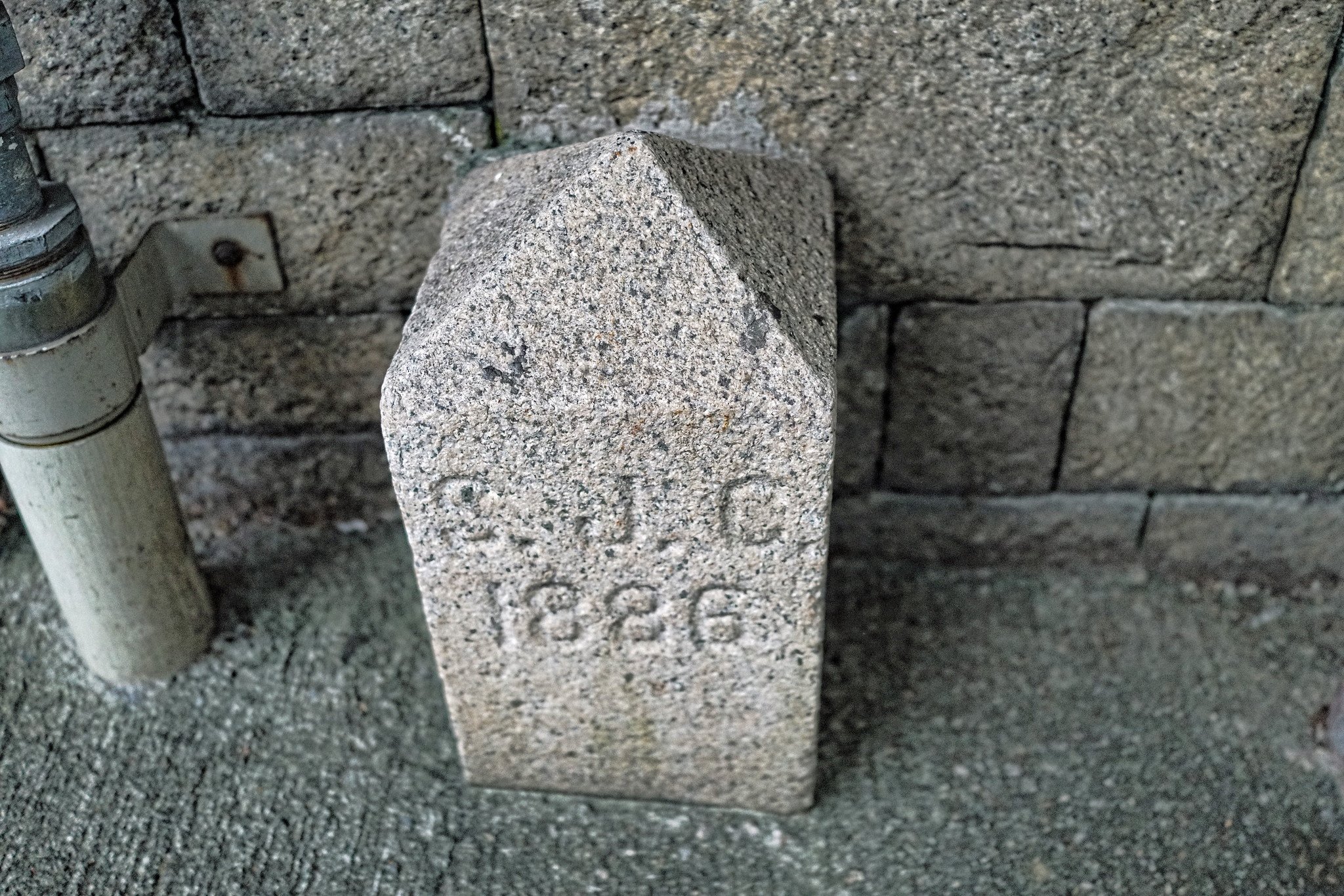
St John's Cathedral, formally the Cathedral Church of Saint John the Evangelist, traces its origins to the early days of British Hong Kong. The foundation stone was laid in 1847, with the main structure completed and opening for its first Sunday service on 11th March 1849 as the Hongkong Colonial Chapel. It was consecrated as a cathedral in 1852 by Bishop George Smith.
The building has seen extensions and restorations over the years. An extension was added in 1873, and further work followed damage during the Japanese occupation. Today, the site includes the main cathedral building, Li Hall (used for community and administrative purposes), Fanny Li Hall, an administration complex, and other support structures. It is not the largest church in Hong Kong by seating capacity or footprint, but it stands as the oldest Anglican cathedral and mother church of the Diocese of Hong Kong Island, as well as a key surviving example of a purpose-built parish church for regular worship.
2. Cost to Build, Site Choice, Operating Organisation, and Funding
Historical records detailing the exact construction cost of St. John's Cathedral in 1849 are missing or were not preserved -because the church was built directly by the British colonial government's Surveyor General's Office using local labor, specific bills and expenses were never clearly documented, but fundraising began even before settlers left Macau, reflecting strong community commitment among early residents. The site on Garden Road in Central was chosen for its central location in the growing colonial settlement, offering accessibility and prominence in the new city.
The cathedral is part of the Hong Kong Sheng Kung Hui (Anglican Province), specifically the Diocese of Hong Kong Island. It funds itself through a combination of donations, offerings from services, fundraising events like the annual Michaelmas Fair, and income from related activities. As a declared monument, it receives support for preservation while relying primarily on its congregation and community support.
3. Was It the First Church Built in Hong Kong After 1841?
This point requires some clarification based on what constitutes a full church for regular worship versus a specialised religious structure. There is a mortuary chapel (often referred to as the Cemetery Chapel or Chapel of the Resurrection) in the Hong Kong Cemetery in Happy Valley that was completed in 1845. This small building was designed primarily for funeral services and shelter during burials in the newly established colonial cemetery, making it one of the earliest Western ecclesiastical structures still standing.
I can be a bit of a stickler for facts at times and this is one of those cases, I have visited the Chapel in Hong Kong Cemetery and have images, it looks like a Church and feels like a Church, fine it is not on the scale of St. Johns but a Church it is!
However, St John's Cathedral is widely recognised as the oldest purpose-built Anglican church for ongoing congregational worship and parish activities, with regular Sunday services commencing in 1849. It remains the oldest surviving cathedral and active Anglican church building in Hong Kong and the Far East in that full sense, distinguishing it from the earlier cemetery mortuary chapel which served a more limited, primarily funerary role.
4. The Exact Religion the Church Serves
St John's Cathedral is an Anglican church, part of the worldwide Anglican Communion. It follows the liturgy and traditions of the Church of England, adapted to the Hong Kong context, with services in English, Cantonese, Mandarin, and Tagalog. It serves a broad Christian community but is rooted in Protestant Anglican theology.
For the record St. Johns Cathedral is my Church, I am an Anglican, my wife is Catholic as are out 3 sons.
5. Primary Role Beyond Church Services and Leadership
Beyond regular worship, St John's plays a vital community role through outreach ministries. These include the Mission for Migrant Workers (MFMW), St John's Cathedral Counselling Service, support for the elderly, education programmes, and events like the Michaelmas Fair that raise funds for charities. It fosters fellowship across nationalities and provides spaces for meetings, choirs, and social activities.
The person in charge is the Dean, currently The Very Revd Kwok-keung Chan (since 2021), who oversees day-to-day operations under the Bishop of Hong Kong Island, The Rt Revd Matthias Der.
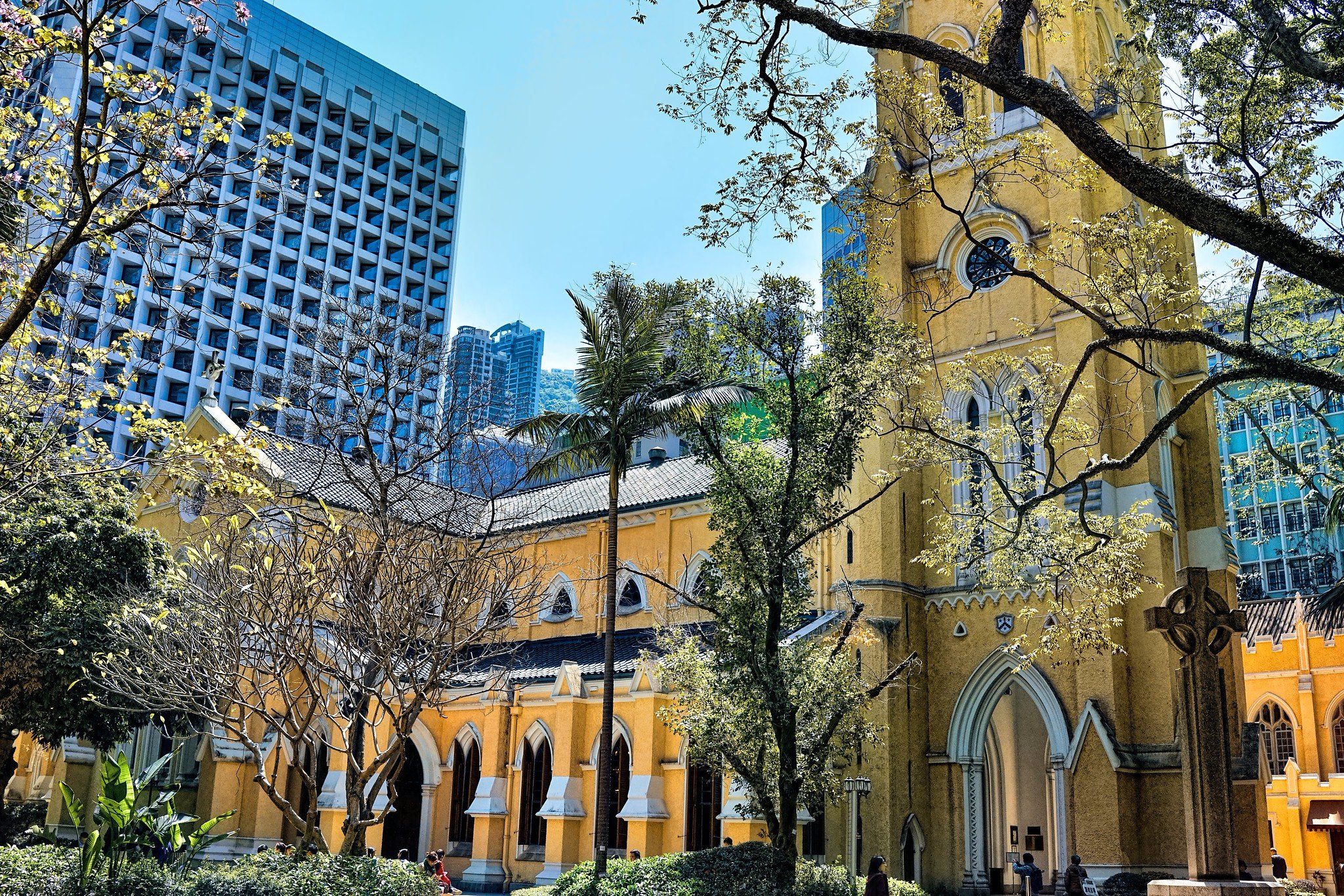
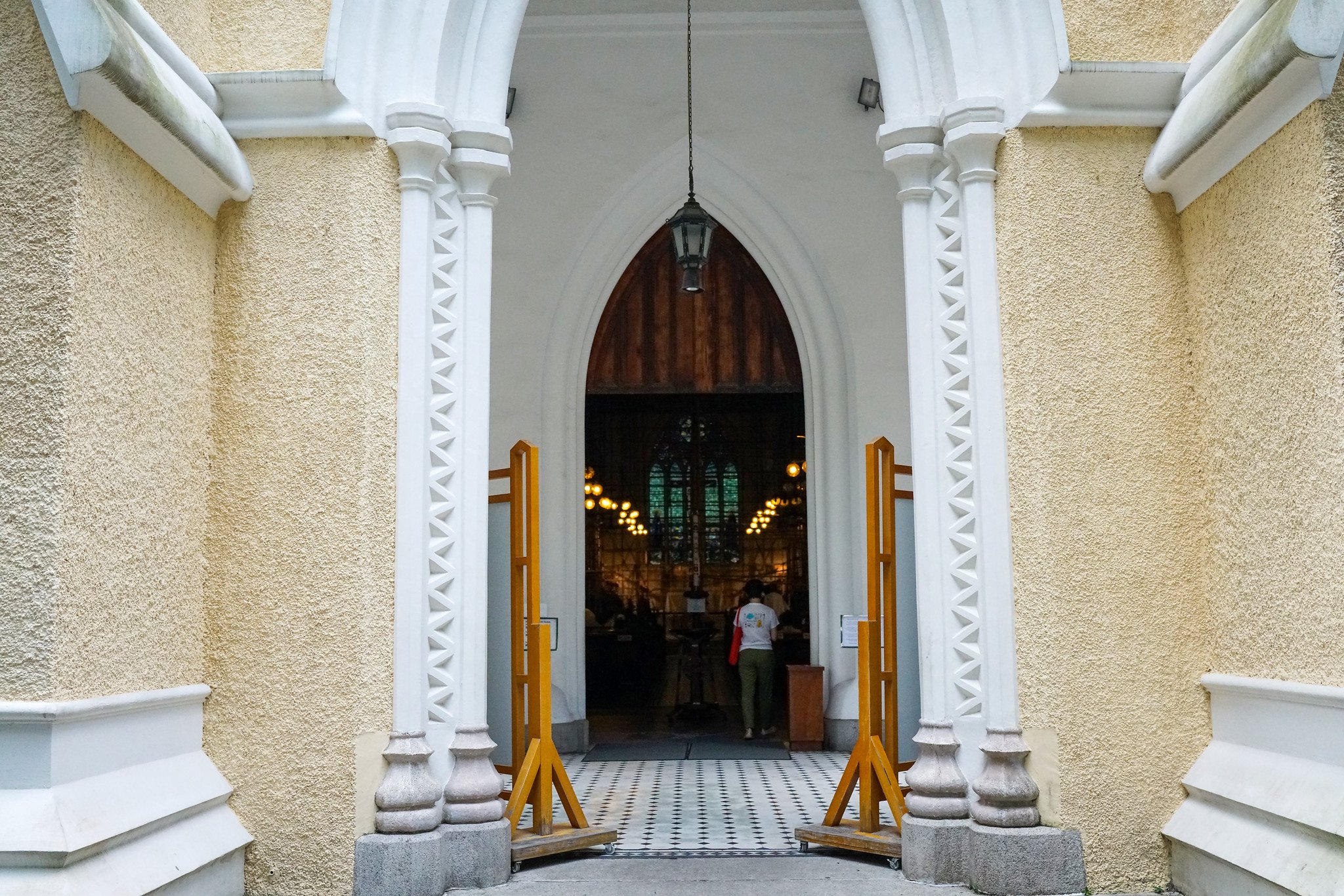
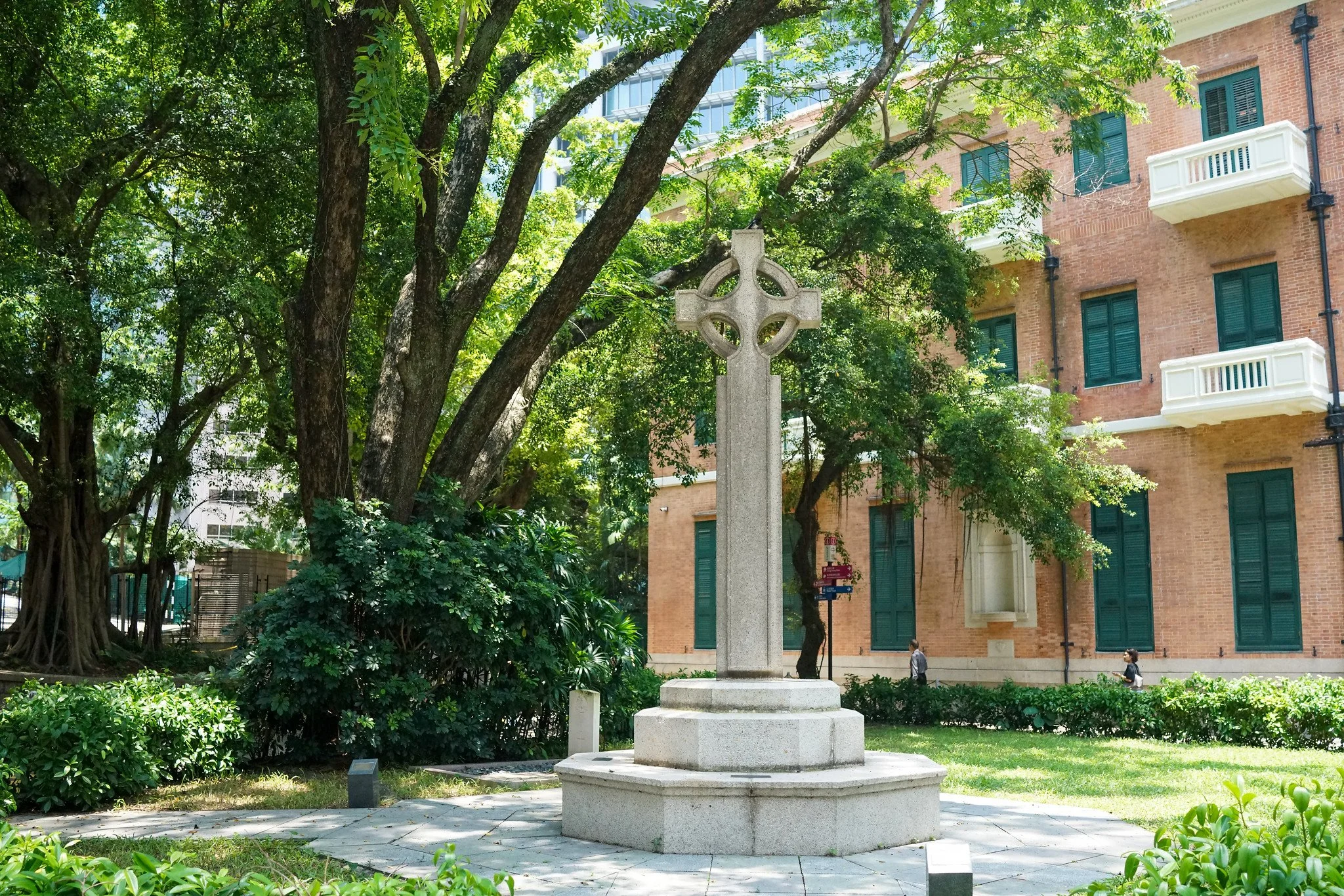
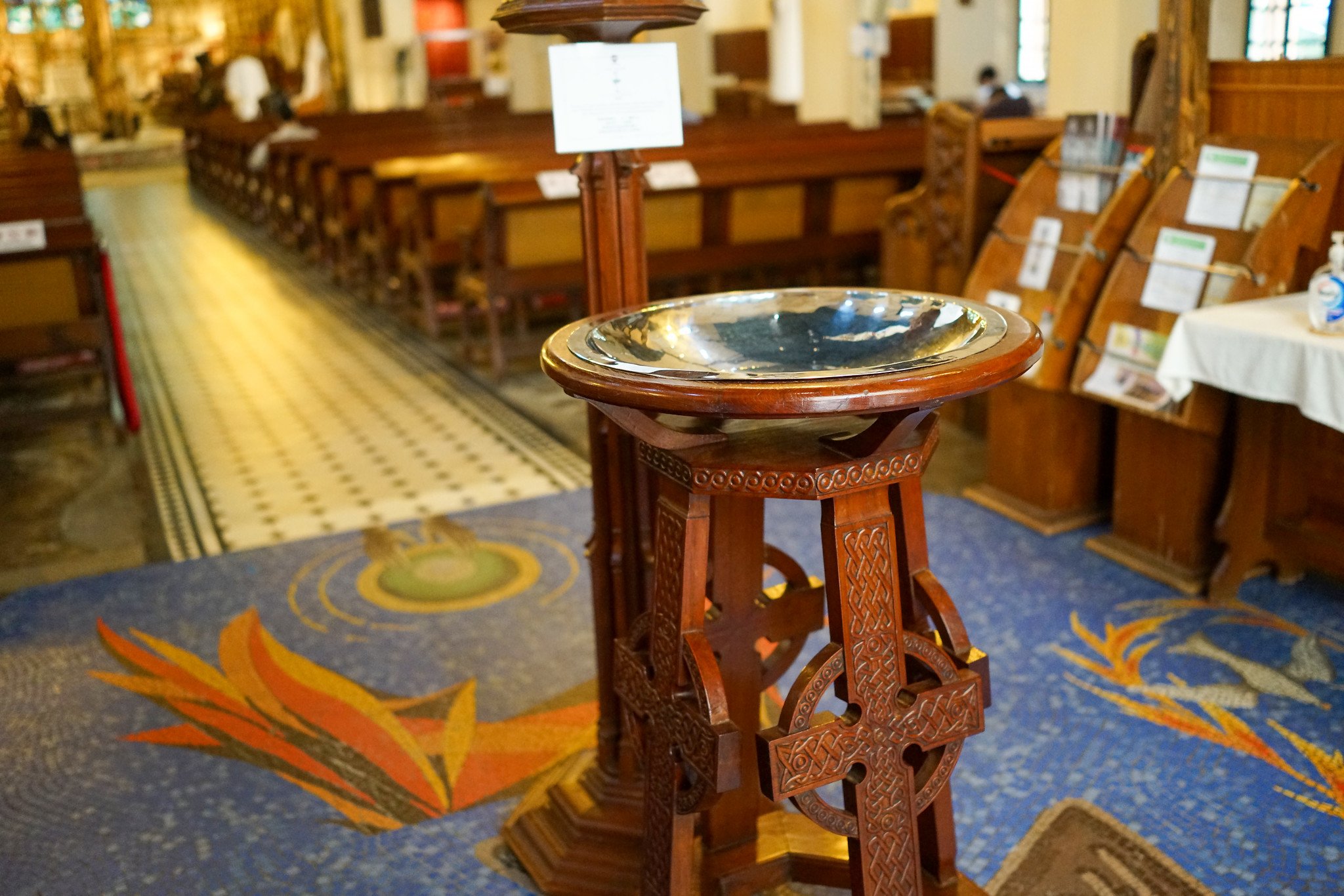
click on any image to enlarge
© Copyright Acknowledged | All rights reserved | images taken by Jamie
St, Johns Cathedral | Totally Iconic for 175 Years | Hong Kong
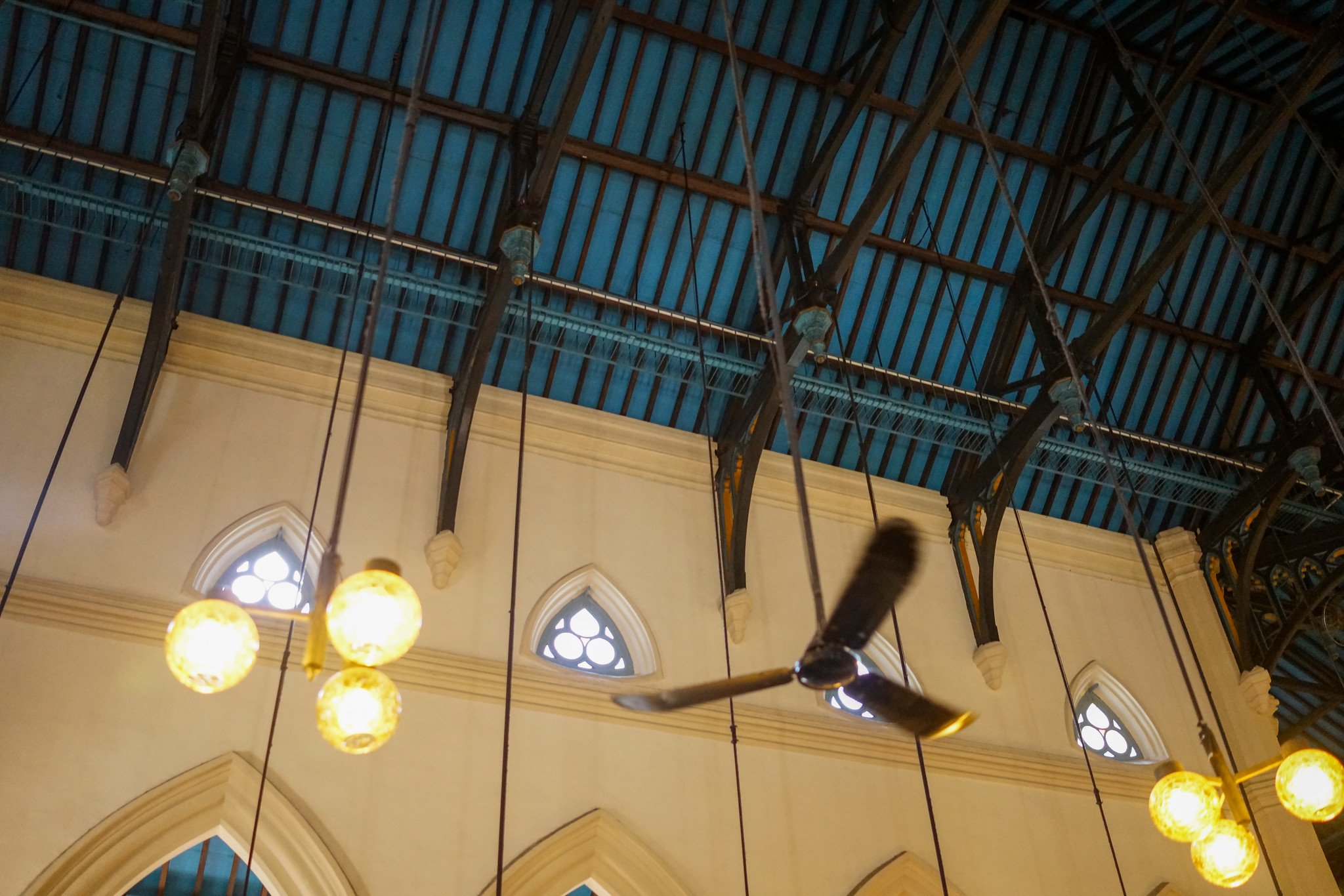
6. What Happened During the Japanese Occupation (1941-1945) and the Blue Interior Roof explained
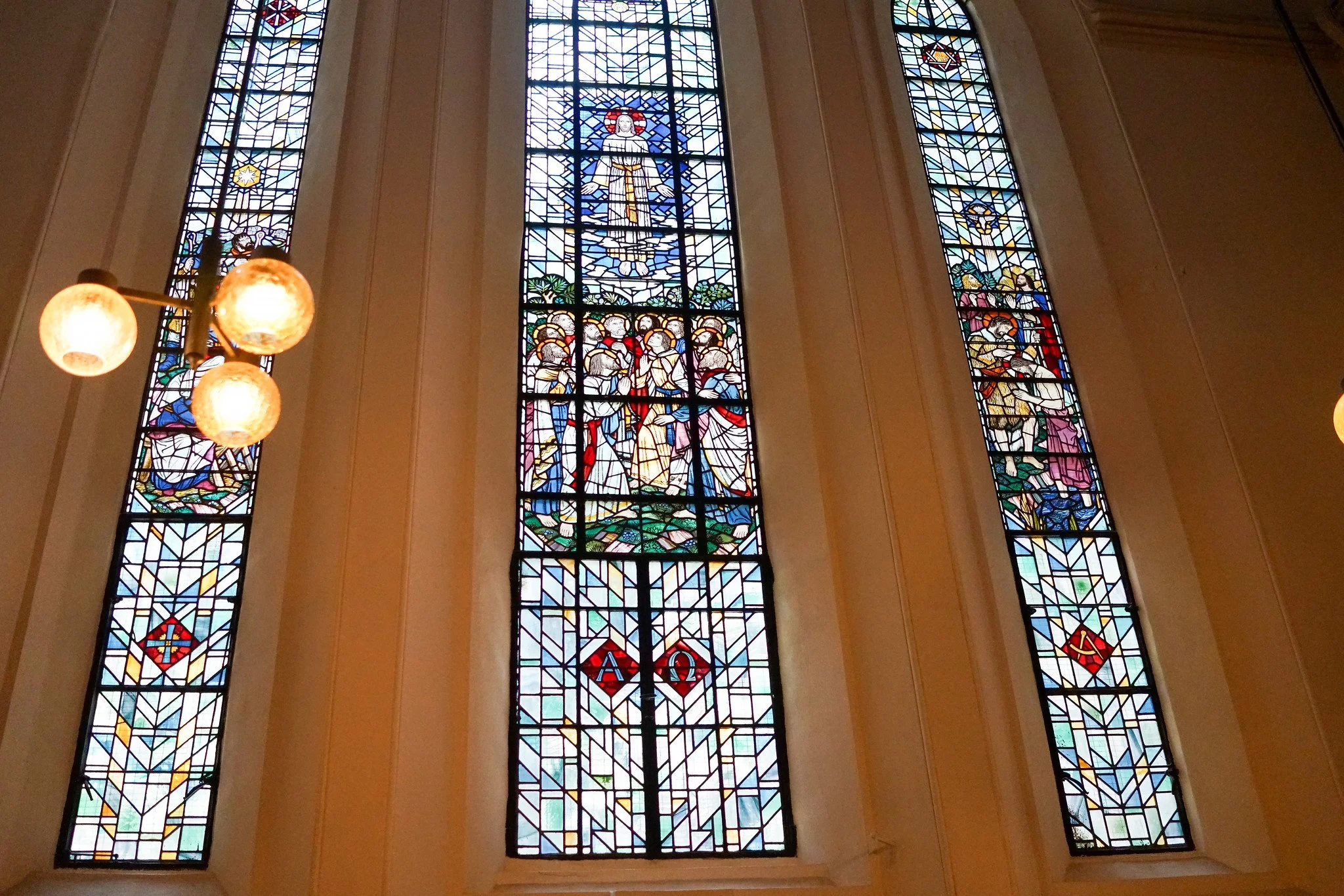
On Christmas morning 1941, Revd Alaric P. Rose held a service with about 100 congregants amid shelling. After the fall of Hong Kong, the cathedral was converted into a clubhouse for Japanese officers, leading to damage including the stripping of original fittings and stained-glass windows by William Morris's firm. It was restored after liberation in 1945.
The blue interior roof appears to be a feature from restoration or a longstanding element post-occupation; historical accounts do not pinpoint a precise pre- or post-occupation date in readily available records, but the overall interior has been gradually refurbished over decades. I have always believed the blue roof combined with the large fans have a cooling effect inside St. Johns
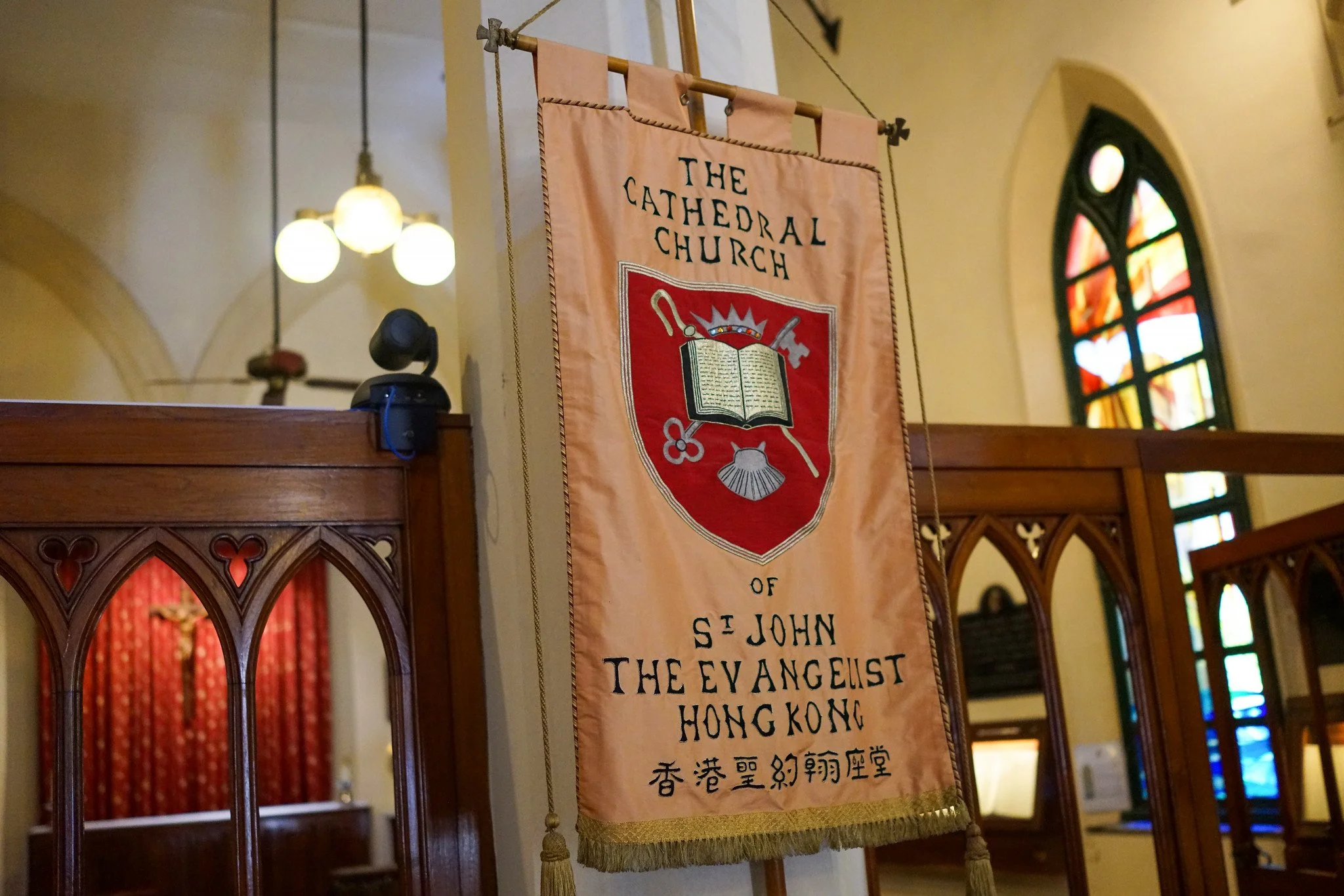
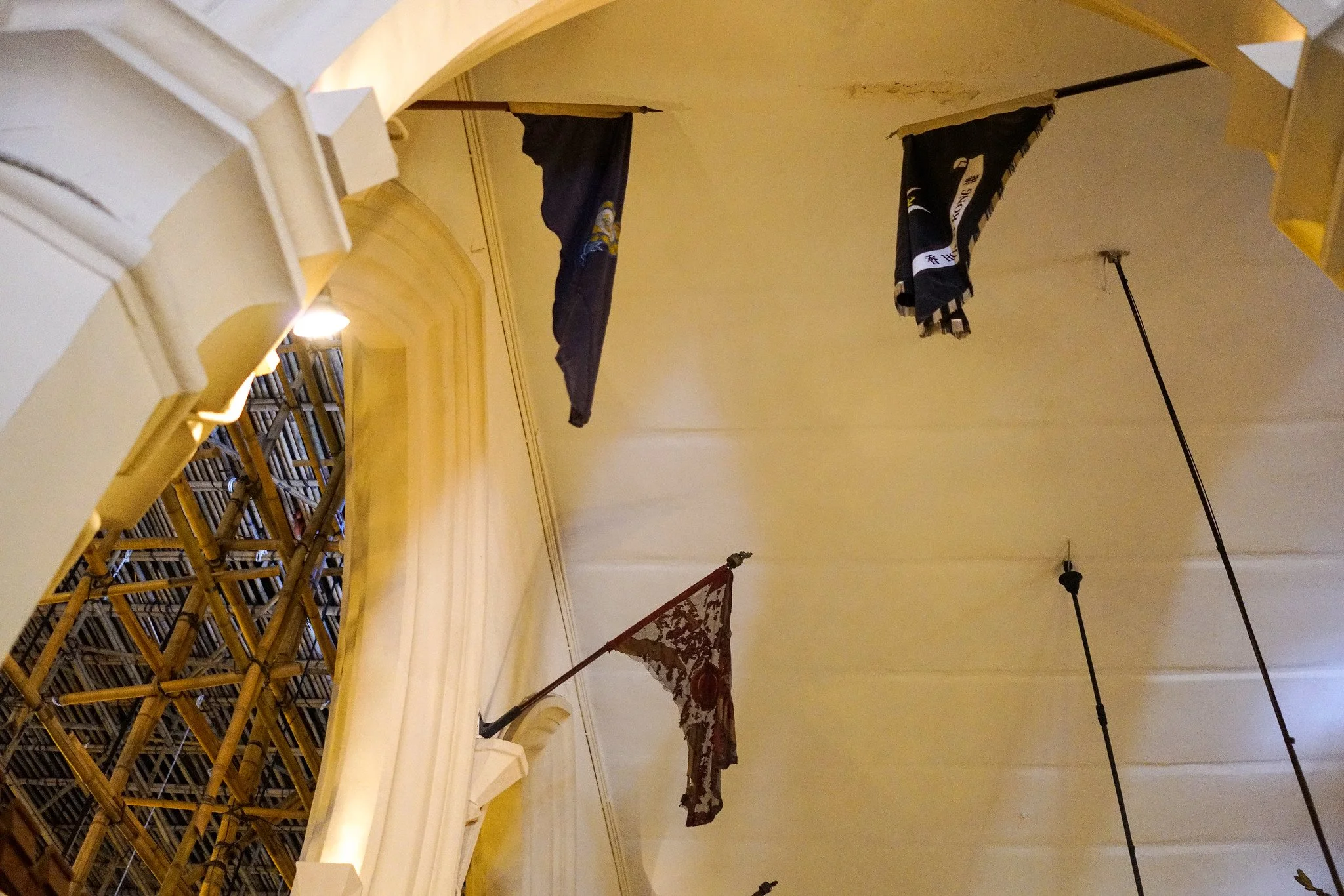
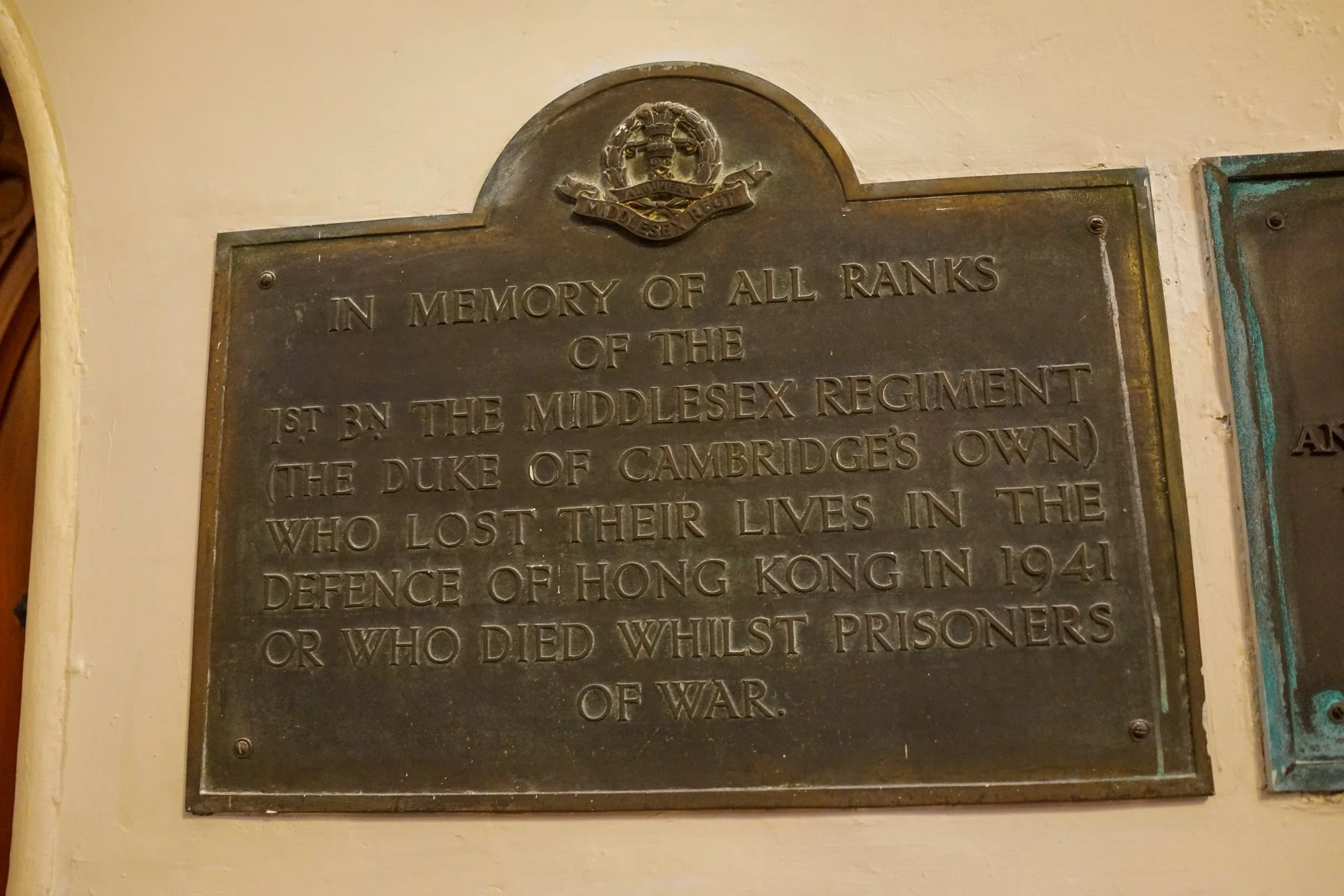
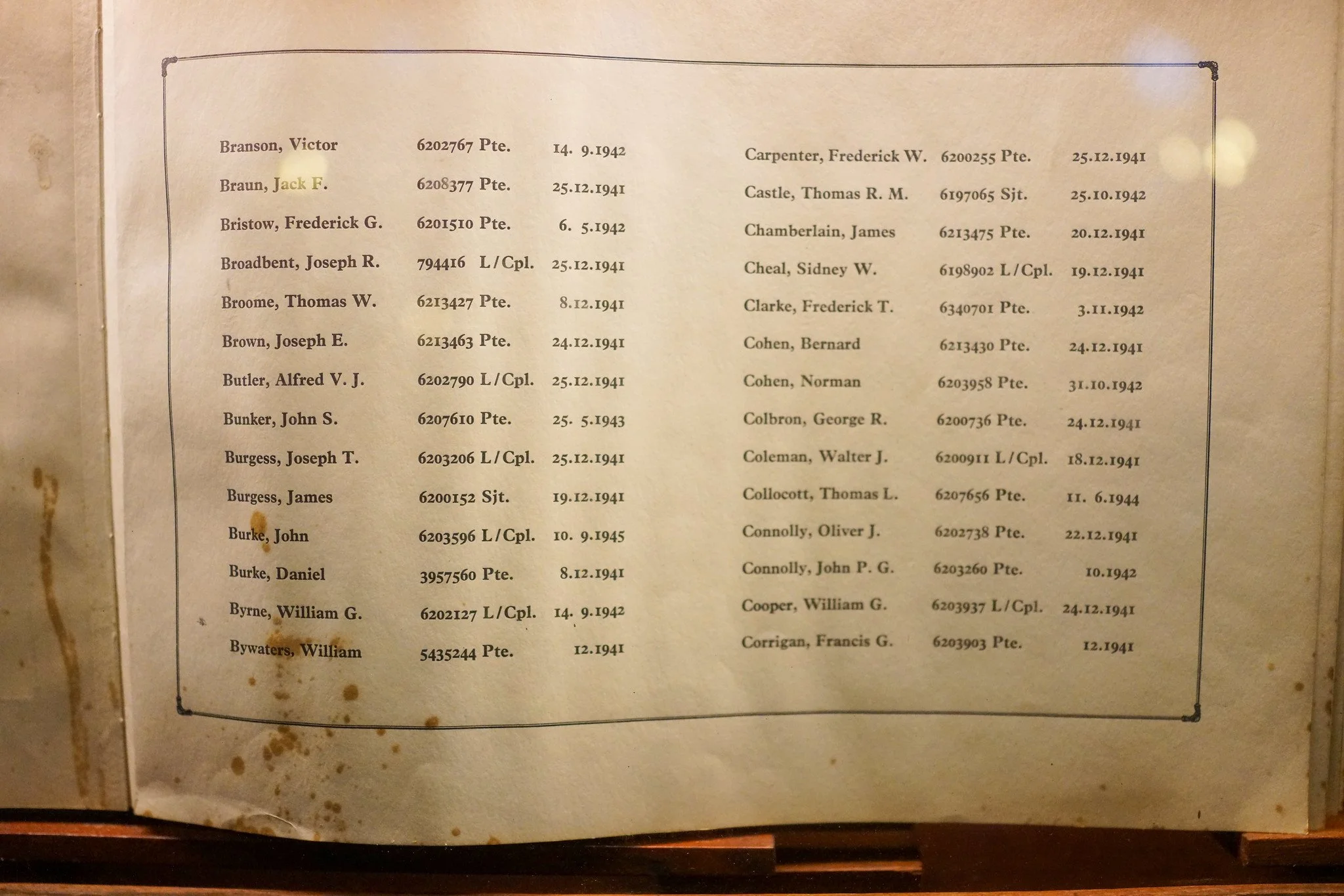
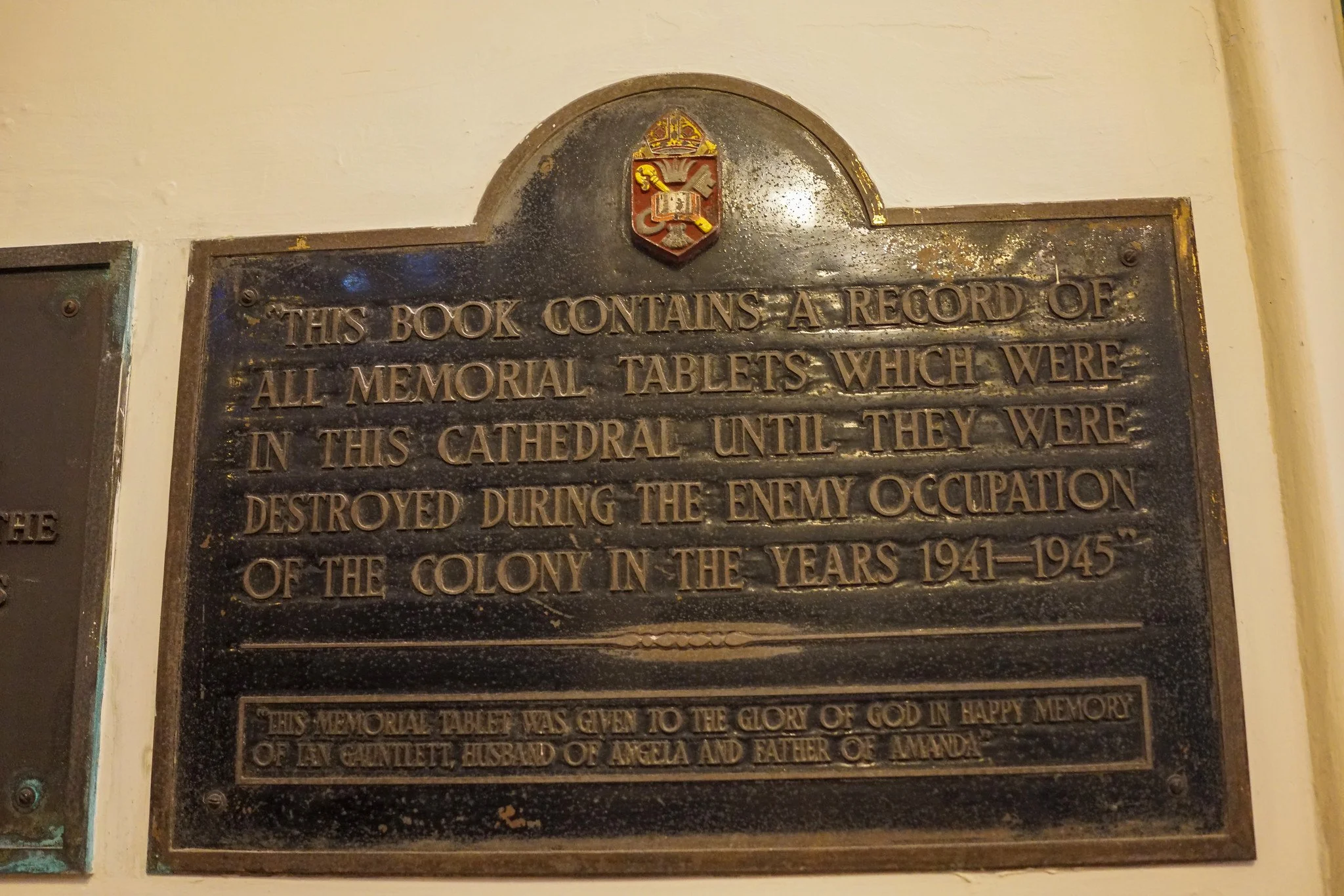
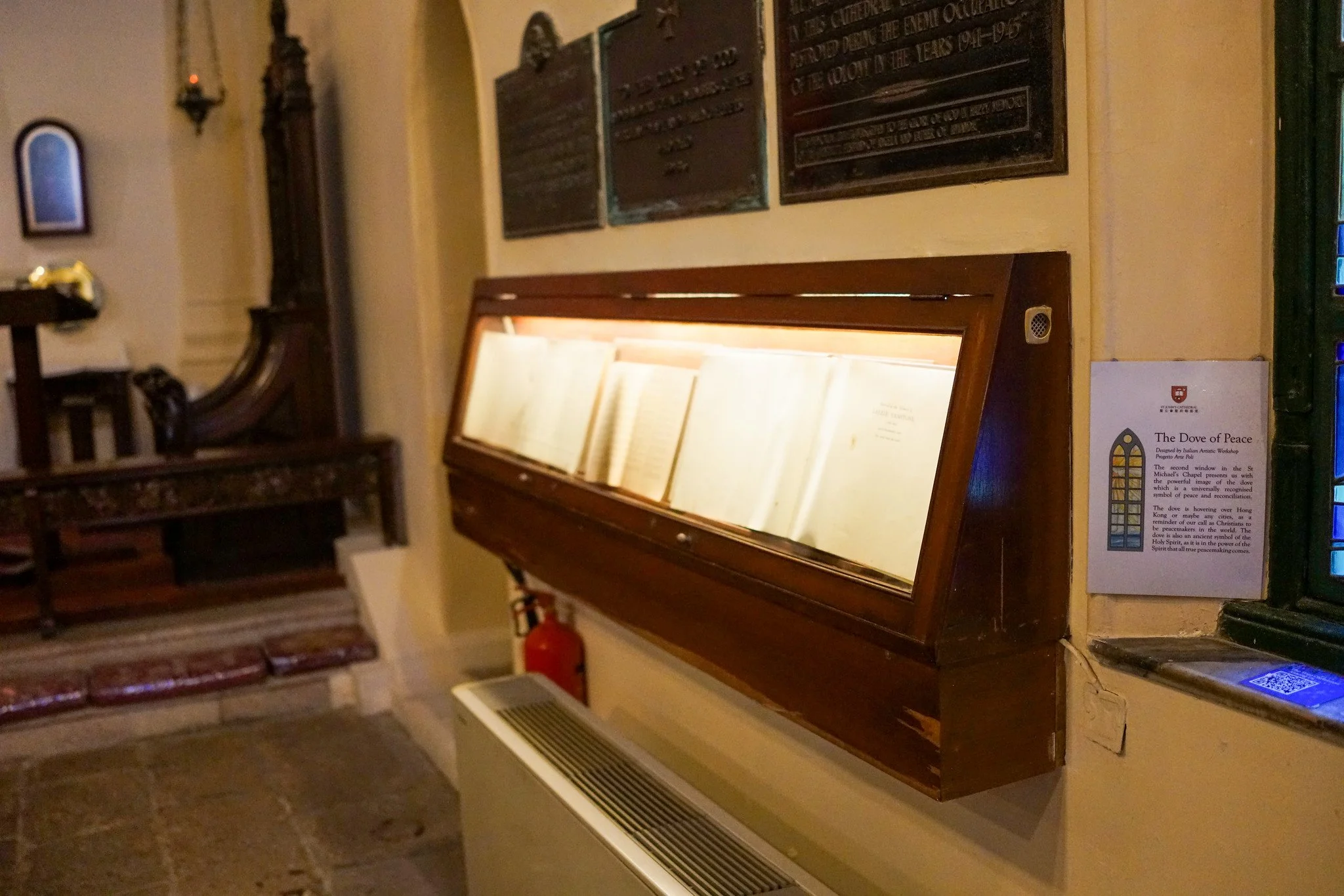
Within the cathedral there is also a small side chapel (St Michael's Chapel) with seating for around 20 people. It serves as a poignant war memorial space containing books with detailed records of deaths during the Second World War, glass cases with further documentation, numerous memorial plaques, and old military colours (flags) hanging near the roof that still bear visible battle scars and damage from the conflict. I have never seen or heard of a similar concentrated collection of wartime memorials and artefacts in any other church in Hong Kong. This intimate chapel stands as a powerful and moving tribute to those who suffered and died during the Japanese occupation, linking the building's own wartime history directly to the wider story of Hong Kong's experiences in the Pacific War.
I have been known to sit in the chapel every now and then for 30 minutes or so for some quiet reflection and light a candle for my younger brother
7. Full Details on the Grave of the Soldier Near the Front Entrance
Just yards from the front entrance lies the only grave on the cathedral grounds: that of Private Ronald Douglas Maxwell of the Hong Kong Volunteer Defence Corps (HKVDC). He was killed on 23 December 1941 at age 22 during fighting in Wan Chai, shortly before the British surrender. His Portland stone headstone, maintained by the Commonwealth War Graves Commission, marks his resting place. He also has a commemorative stone at Sai Wan War Cemetery. This solitary grave serves as a poignant reminder of Hong Kong's wartime sacrifices.
8. Unique Status as the Only Freehold Property in Hong Kong
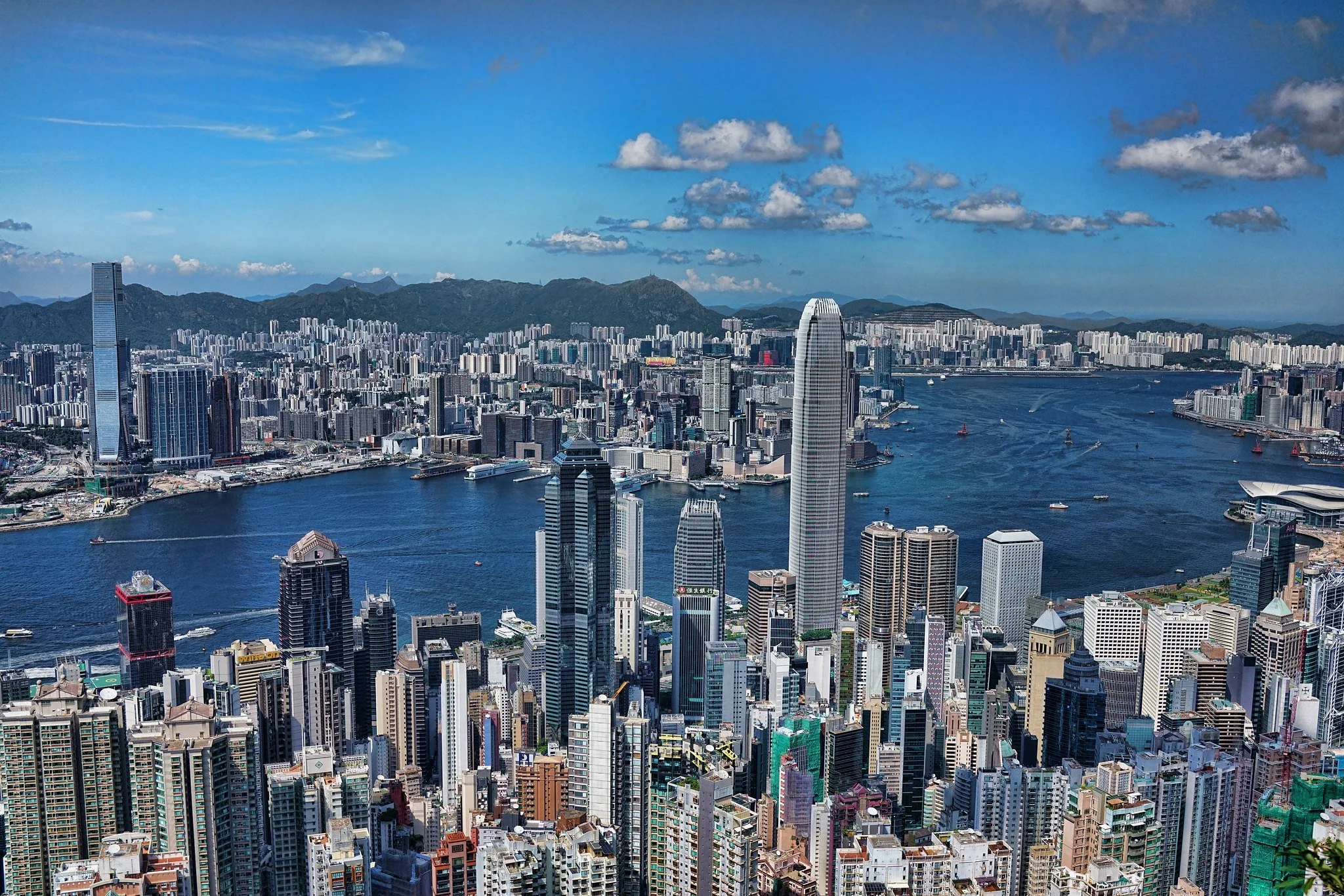
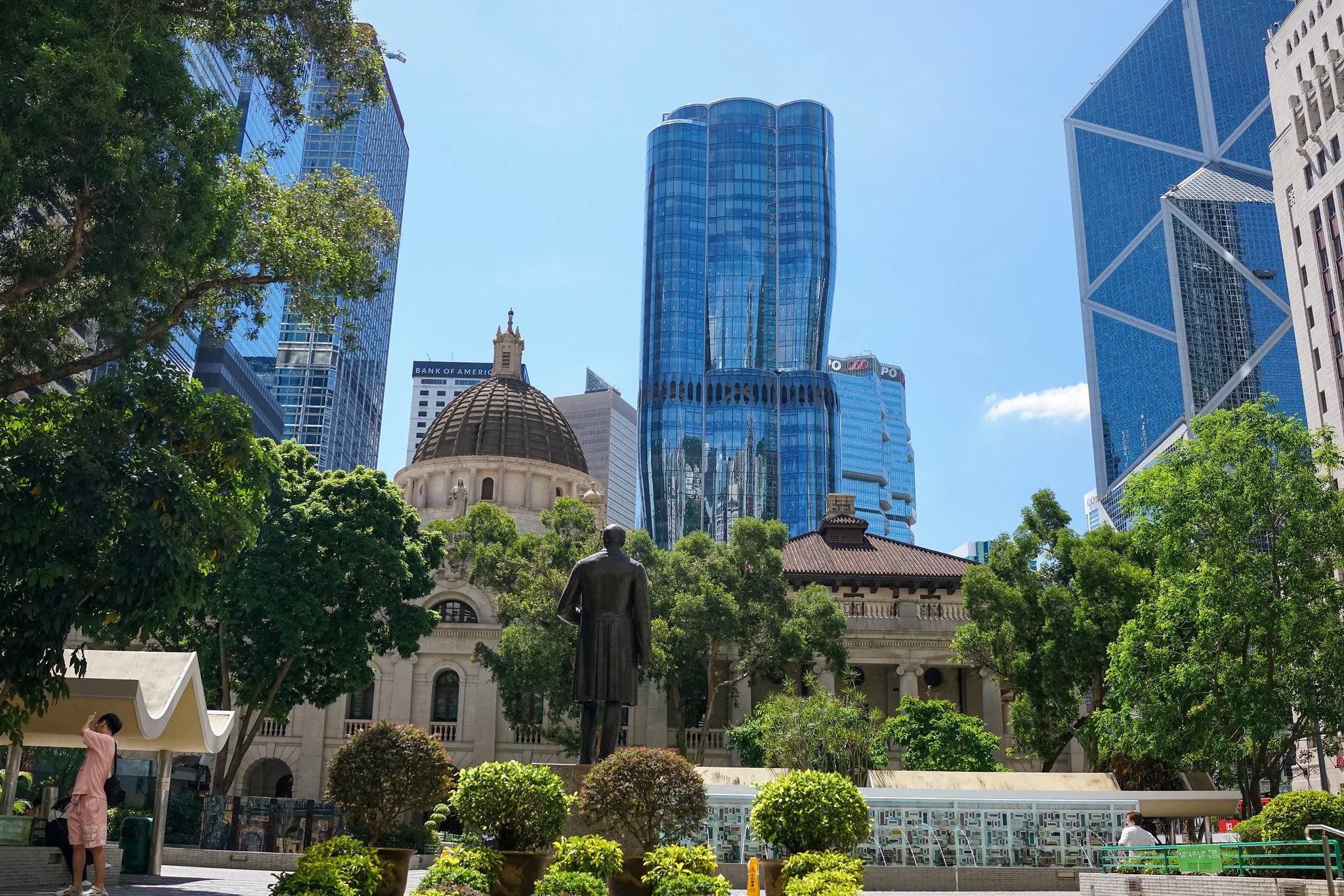
St John's Cathedral stands on the only freehold land in Hong Kong, granted in perpetuity to the Church, unlike the standard 50- or 99-year leases mere mortals have. This makes it a unique piece of British-era legacy, owned by the Anglican Church. The 53,147-square-foot plot in prime Central has been estimated in older valuations at around HK$3.99 billion (approximately US$510 million), but given current Central land prices and the record-breaking sale of the much smaller former Murray Road Car Park site for around US$3 billion some years ago, a realistic open-market bid from developers could easily reach US$5 billion to US$10 billion or more. Its prime position, surrounded by major commercial towers like Cheung Kong Center, underscores the extraordinary protected status of this land amid sky-high property values.
9. Why Is the Church Packed on Sundays with Filipino Domestic Helpers?
On Sundays, the cathedral often fills with Filipino domestic helpers, many of whom are Catholic but attend services here, including Tagalog-language Eucharists. While St Joseph's Catholic Church is nearby, St John's offers a welcoming space with dedicated Filipino fellowships, outreach like the Mission for Migrant Workers, and a convenient Central location. Practical factors such as timing of services and the cathedral's inclusive atmosphere appear to draw many, even if, as my wife (a Catholic) and I (an Anglican) can attest from our own preferences, some maintain clear denominational boundaries when it comes to attending services.
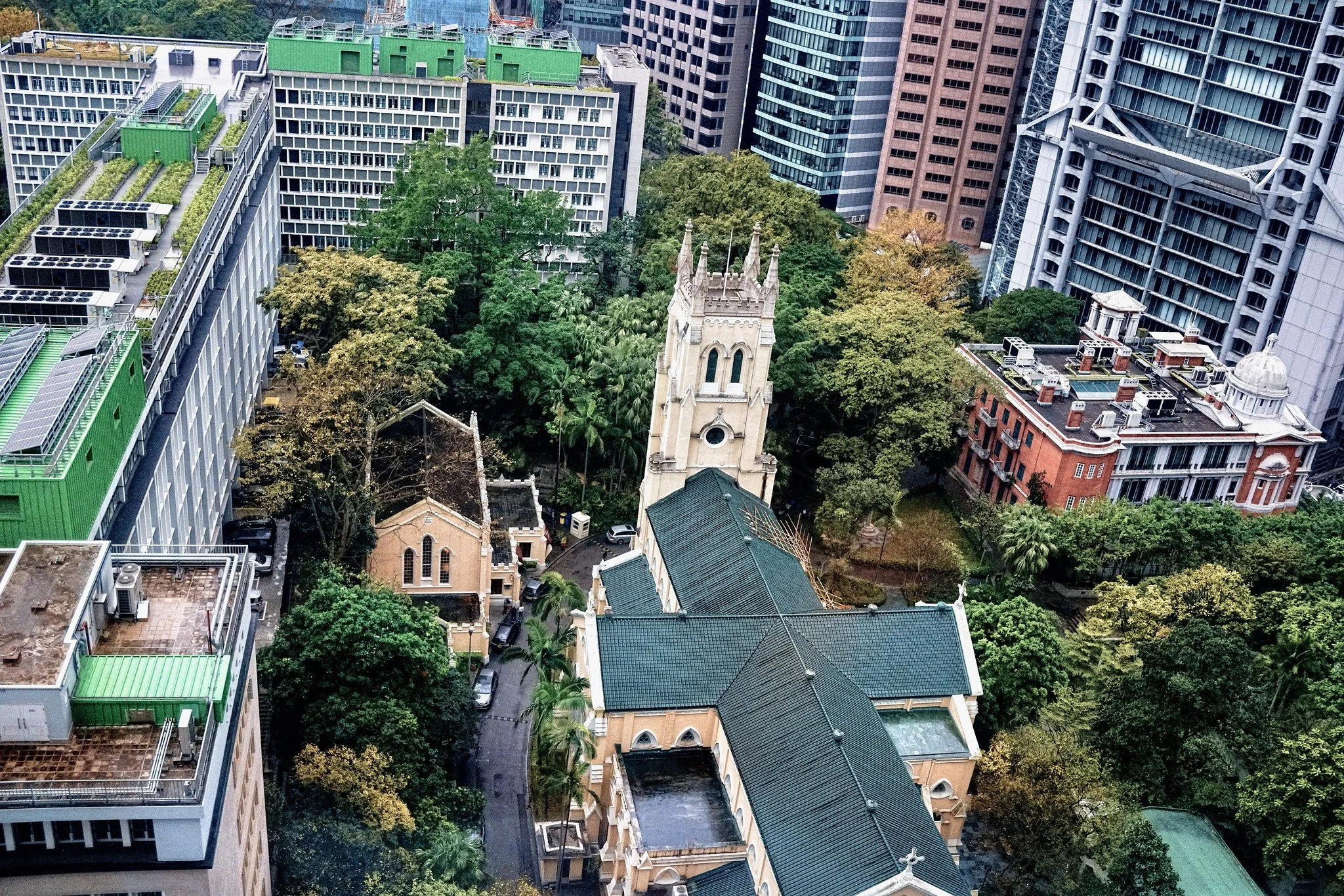
10. A Little Known Fact: The Cross-Shaped Roof
A little known fact is that the main church building has a roof in the shape of a cross, which you can only fully appreciate if you are looking down on the Church from surrounding taller buildings. It took me a full 52 years of living in Hong Kong and walking past it regularly before I noticed this detail from a high vantage point. (The Murray Hotel over the road) This cruciform roof design is a traditional architectural feature in many Christian churches worldwide, symbolising the cross of Christ, but it is not especially common or obvious in Hong Kong's other churches due to the dense urban environment and the way most buildings are viewed from street level. St John's subtle yet deliberate design choice adds another layer of symbolic depth to this historic landmark.
Additional Insights and Thoughts
Other notable elements include the cathedral's role as a declared monument since 1996, its beautiful stained-glass windows (many post-war replacements), and its function as a peaceful oasis in bustling Central. Its ship-like timbered ceiling and Gothic features evoke a sense of history that contrasts sharply with the modern city around it. At the main entrance inside there is typically a stoup or font containing holy water. In Anglican and broader Christian tradition, worshippers dip their fingers in the holy water and make the sign of the cross as a reminder of baptism and to symbolically cleanse themselves before entering the sacred space. It is a simple act of reverence and preparation for worship.
It is a little known fact but I am a quarter Welsh, my surname is about as Welsh as it gets and my sister married a very famous Welsh businessman in Hong Kong., which is why I am familiar with the Hong Kong Welsh Male Voice Choir to listed to them, well it makes your hairs stand on end
I can also confirm that the Hong Kong Welsh Male Voice Choir continues to rehearse at Li Hall next to St John's Cathedral, maintaining a wonderful historical connection that I remember fondly from attending in earlier years. From my perspective as someone who has seen Hong Kong transform over 54 years, places like St John's remind us of the enduring human and spiritual threads that run through our shared story. It is more than a building - it is a living part of the community that continues to adapt while honouring its past.
So there you go



click on any image to enlarge
© Copyright Acknowledged | All rights reserved | all images taken b Jamie
Jamie’s Hong Kong | Some of my favourite images | Hong Kong 101
© Jamie Lloyd | J3 Consultants Hong Kong | J3 Private Tours Hong Kong |
| 2010 - 2026 All rights reserved. |
Click on any image to enlarge to full screen










Current images from my Instagram feed