The Peak Tram Hong Kong - Fixed Seats & Undulating Floors
Are Electronic Reversing seats & NO standing the answer?
The J3 Group - Premium Quality Private Tours | Experiences and Insider Chats since 2010
Me Jamie, your host, I am English and I have lived in Hong Kong since January 2nd 1972 - I know the place.
A meaningful blog post with a difference - tips on Travel, Tourism, Tours, Daily Life and my personal thoughts on Hong Kong.
Please do visit Amazing Hong Kong
Hong Kong | Pearl of the Orient
Customised Private Tours + Experiences in Amazing Hong Kong
Jamie has lived in Hong Kong - Pearl of the Orient for 50+ years
Carefully Crafted Personalised and Customised Itineraries by Jamie | Hong Kong’s Most Experienced Private Tour Guide for : Solo Travellers Friends Families Seniors Couples Business People MICE Delegates.
Private Tours Cultural Tours Walking Tours Sightseeing Tours City Tours Night Tours Layover Tours Transit Tours Private Shore Excursions Bespoke Tours Personalised Tours Jewish Heritage Tours Luxury Private Tours Day Tours Luxury Boat Tours Themed Tours Private Family Tours Private Day Tours Corporate Tours
Just you, your family or friends and Jamie your personal English private tour guide - over 2,400+ tours completed since 2011 - Jamie offers quality Private Tours of Hong Kong
Tour Group Size 1 - 6 people only
J3 Group Hong Kong | J3 Consultants Hong Kong | J3 Private Tours Hong Kong
Creating Memories That Will Last A Lifetime
Go here for the Hong Kong Michelin Restaurant Guide which includes the Bib Gourmand Category

A Resident since 1972 - Private Tours of Hong Kong with Jamie
The Best Things to do in Hong Kong
click on the image to enlarge
© Copyright Acknowledged | All rights reserved | image taken by Jamie
The Iconic Peak Tram | 6th Generation | Hong Kong
Foreword
As a Hong Kong resident of 54 years and a private tour guide since 2010, I have ridden the Peak Tram many thousands of times in all weather conditions and at every hour of the day. The distinctive seating layout and the unusual floor design never fail to draw comments from visitors on my tours. Many ask why the seats do not flip like those on the Star Ferry and why the floor feels like a gentle wave rather than a flat surface. After years of observation and reflection, I have put together this detailed look at the engineering and logic behind these features.
Seating on the Peak Tram - Logical Design for Steep Slopes
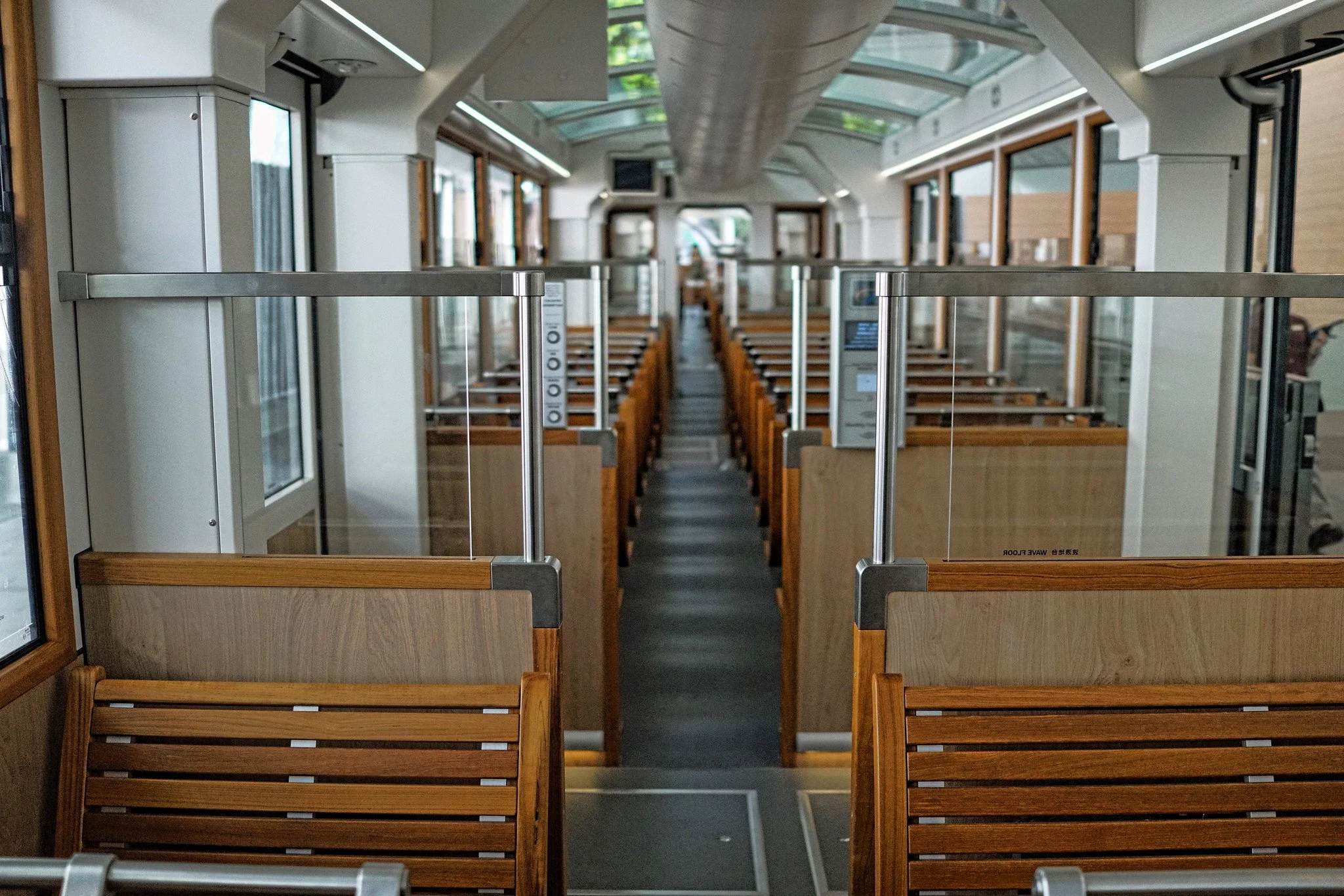
The current Peak Tram carriages have a total capacity of 210 passengers, with 167 seated and 43 standing. The majority of the seats are fixed to face primarily in one direction, generally oriented towards the downhill side. This means that when travelling up to Victoria Peak, many passengers sit facing backwards relative to the direction of travel. On the way down, the same seats result in passengers facing forwards. Unlike the Star Ferry, where wooden benches can be reversed by hand to always face the direction of movement, the Peak Tram uses a fixed arrangement.
This choice is driven by safety and the extreme gradients of the route. The track reaches a maximum incline of 25.7 degrees, one of the steepest funicular railways in the world. Fixed seating helps prevent passengers from sliding forward or backward during acceleration, braking, or on the steeper sections. It provides stability for families, elderly visitors, and those less steady on their feet. The design also supports efficient boarding and alighting on a busy service that carries millions of passengers each year. While some seats in the newer carriages offer improved forward views on descent, the core layout remains fixed for structural and operational integrity or so the official blurb says!
The Peak Tram Company has not released a specific public policy document declaring reversible seats impossible, but all technical specifications and upgrade materials stress that the fixed orientation is essential for passenger safety on this demanding 1.4 kilometre route that climbs 396 metres in elevation.
Honestly speaking, I use the word extreme to define the gradient but personally I think it is just fine and you do not see people sliding around on their seats
I should also point out that I am not some know it all, the Peak Tram has been running since 1888 so they know a thing or two about tram carriage design, no one disputes that, the carriages are made to the highest quality and safety in Switzerland, I am merely pointing out that technology has changed since 1888 and 2026 there are electroinc seating options which would not compromise safety, I have been on the tram over 6,000 times since January 2nd 1972 and listened to thousands upon throusands of comments made by my guests and other passengers
Seating History Across Six Generations of the Peak Tram
Evidence shows that the first five generations of Peak Tram carriages featured primarily fixed, uphill-facing seating arrangements with no reversible seats as a standard feature. The original 1888 wooden carriages had open rows of slatted seats at the front and rear, plus an enclosed first-class compartment, all in a fixed layout suited to the steep incline. Subsequent generations, including the lightweight metal-bodied cars introduced in 1956 and the fifth generation from 1989, maintained this all uphill-facing approach for safety on the gradients.
It was only with the sixth generation, introduced in 2022, that a limited number of downhill-facing or reversible-style seats were added - specifically 22 per carriage - following a long-standing wish from the chairman. This marked a significant departure from the previous five generations, which stuck rigidly to the fixed uphill orientation. Earlier designs prioritised structural simplicity and stability, with features like reserved governor seats in the early years also being fixed in place. There is no record of full reversible bench systems like those on the Star Ferry being implemented in any prior generation
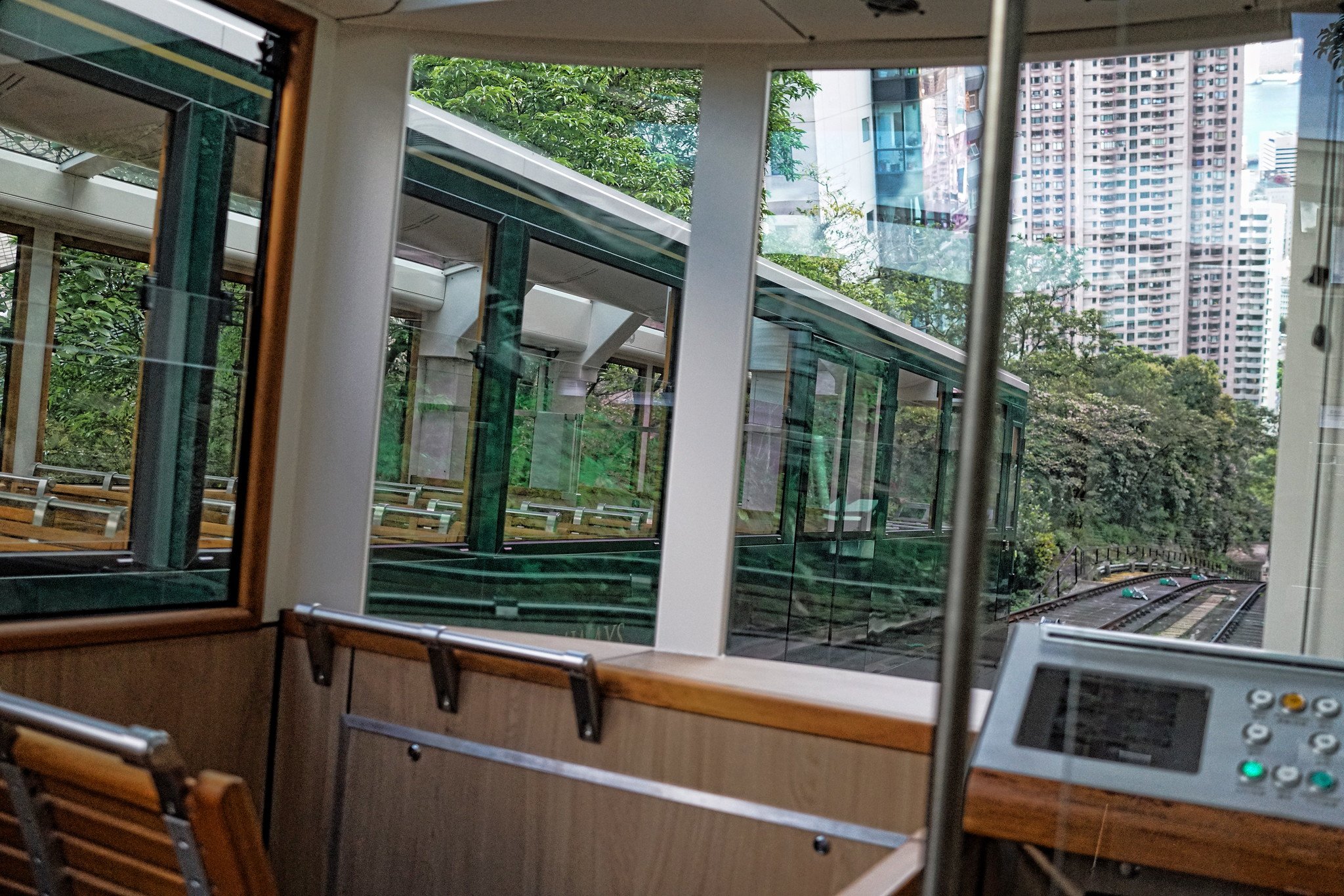
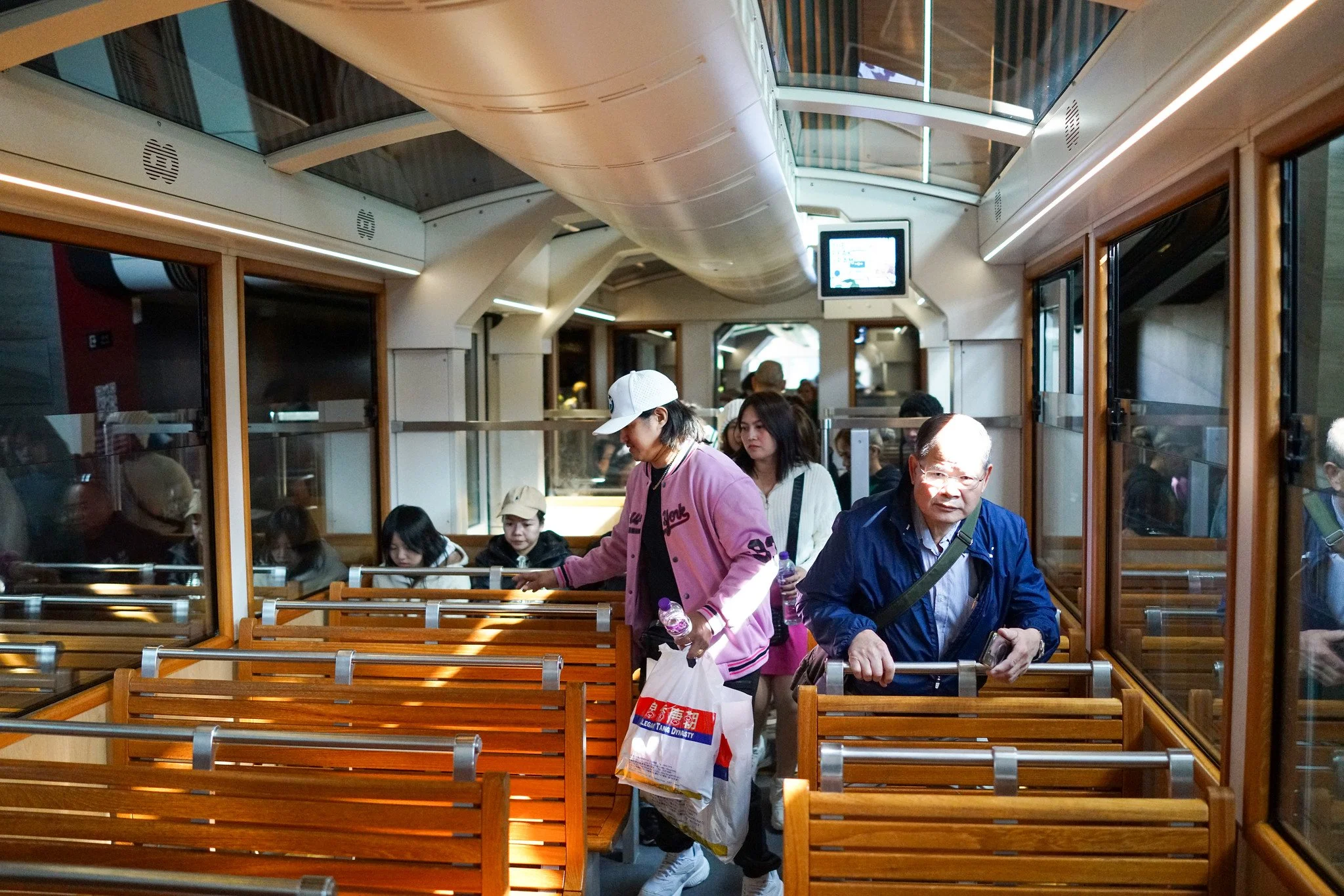
click on any image to enlarge
© Copyright Acknowledged | All rights reserved | images taken by Jamie
The Iconic Peak Tram | 6th Generation | Hong Kong
Fixed Seating - Could Electronic Locking Make It Better?
The Peak Tram runs with just two carriages operating in tandem - one ascending while the other descends - on its 1.4 kilometre track with gradients reaching 25.7 degrees. The seats are fixed primarily facing one direction, meaning many passengers travel backwards on the way up. As someone who is no engineer, I still question whether electronic locking mechanisms could allow seats to be reversed safely between trips. With all passengers off at the termini, a simple button-controlled system could theoretically unlock, rotate or flip the benches, and lock them again before boarding. Swiss manufacturers are renowned for precision and innovation, so I suspect the technical challenge is not insurmountable.
Yet the current fixed layout prioritises absolute stability on the steep incline. Reversible seats might introduce extra moving parts that could fail or require more maintenance on a system that carries millions annually. I understand the safety logic, but after so many journeys I believe a well-engineered electronic solution could offer greater passenger comfort without compromising security or in plain English, who wants to ride on the tram sitting backwards going down!
High-Tech Examples from Other Funicular Railways Around the World
I have looked into whether other funiculars use more advanced seating or cabin designs, and there are impressive examples. The Stoosbahn in Switzerland, one of the world's steepest funiculars, features remarkable rotating cylindrical cabins that automatically adjust to keep the floor level and passengers upright regardless of the changing gradient. This hydraulic system ensures a comfortable, forward-facing experience throughout the ride. Other modern funiculars in Europe incorporate tilting mechanisms or adjustable interiors that adapt to the slope. These high-tech approaches show what is possible when innovation is embraced, and they make me wonder if the Peak Tram could benefit from similar thinking in future upgrades.
My Disagreement with Allowing Standing Passengers on the Peak Tram
This is a touchy subject in the office of the Peak Tram and it should be but in these times many passengers push and shove to get on theTram and then push and shove people who are standing and blocking the views!
The Peak Tram is not a franchised double decker bus service, you are paying a premium price for a premium experience a point which seems to be lost on the management of the Peak Tram Company perhaps every now and then senior management should ride on the tram when it is packed and just witness the chaos and the comments.
To be honest, I have never supported the policy of allowing 43 standing passengers. Even with the clever floor design, it feels unsafe on a 25.7-degree incline, particularly in wet conditions or when the tram is full. Standing passengers sway, block views for those seated, and the experience can be miserable for families or anyone with bags. People often push and shove to get better positions for photos, making it even more uncomfortable. Given the premium pricing, I believe a seated-only approach with more frequent services would be far better. Safety and enjoyment should outweigh maximum capacity.
The Undulating Floors - Clever Engineering for Stability
The floors inside the tram are deliberately not flat but feature a series of gentle undulations or waveform patterns. This design takes a moment to get used to, especially if you are expecting a perfectly level surface. The purpose is practical. The waves create natural footholds and bracing points for the standing passengers, helping them maintain balance as the tram tilts through its steepest sections and curves.
This feature has been refined through six generations of trams since the line opened in 1888. The latest vehicles, introduced in 2022, kept the undulating floor while significantly increasing overall capacity and adding step-free access. It works in harmony with the fixed seating to create a secure environment even when the tram is full.
Comparison with the Star Ferry in Hong Kong
The Star Ferry operates on calm, flat harbour waters with almost no tilt, making simple reversible seats both possible and practical. The Peak Tram, by contrast, is a true mountain railway with pronounced changes in angle and direction. Adding reversible mechanisms would require complex locking systems that could introduce new risks on gradients between four and 25.7 degrees. The fixed design is the more logical and safer solution for this specific terrain and operation.
Current and Historical Ticket Prices for the Peak Tram
The Peak Tram has seen regular price increases over the years to fund operations and upgrades. In 2016, an adult one-way ticket was around HK$28 (approximately US$3.60). By 2026, following adjustments effective from late December 2025, the adult one-way fare stands at HK$82 (approximately US$10.50). Return tickets are now HK$116 (around US$14.90) for adults. These rises reflect the investment in the sixth-generation fleet, which boosted capacity from 120 to 210 passengers, along with enhanced accessibility and views. While the increases are noticeable, they support a system that handles millions of visitors annually.
This is where the cynical me kicks it, I have been in business for over 40 years and I am familiar with pricing both products and service
Over the past 10 years I have witnessed the tram morph from actual public transport with public transport prices to a premium experience with premium prices, an adult ticket is now 3 times the price of the 2016 ticket, so yes, it could be said that they support a system that handles millions of passengers but most people have no idea that those millions of people exit the Peak Tram into the the giant shopping mall that is the Peak Tower, I bet the company makes more from the Peak Tower than it does for the Peak Tram, yes both operations are owned by the same company and they also charge US$10 for the view at the Peak Tower 428 sKY Terrace
Ownership, Pricing, and Potential for Further Innovation
The Peak Tram is owned and operated by The Peak Tramways Company Limited, part of The Hongkong and Shanghai Hotels Limited (HSH Group), known for premium properties like The Peninsula. Given this prestigious parent company and the fact that only two carriages operate at any time, one ascending and one descending, I believe implementing electronic locking mechanisms for more widespread reversible seating would not be prohibitively expensive. With passengers disembarking fully at each terminus, a button-activated system to adjust seats could be feasible and would enhance the overall experience.
Ramping up prices as they have suggests that passenger comfort should be a top priority. I doubt the parent company would dismiss such ideas if they demonstrably improved satisfaction, especially as the 2022 upgrade already introduced some downhill-facing seats. Swiss manufacturing expertise behind the current fleet further supports the possibility of sophisticated solutions.
Fixed downhill-oriented seats for safety on 25.7-degree gradients contrast with Star Ferry reversibles. No full reversible seats existed in generations one to five, with only limited additions in the sixth. The undulating floor aids standing passengers but I disagree with allowing standing at all. Electronic mechanisms could be feasible given Swiss manufacturing and just two carriages.
Passenger Numbers for the Peak Tram in 1972
I wanted this for context, this is when I first went on the Peak Tram
I have searched available public records and historical sources, but I could not find any official annual passenger count specifically for 1972 in the public domain. Earlier data shows the tram carried about 150,000 passengers in its first full year of operation in 1888-1889. By the late 1990s the annual figure had grown to around 2 million, and today it exceeds 4 million. Figures from the early 1970s appear not to have been widely published or preserved in accessible archives.
I am guessing the number will have been around 1.5 million people which is a darn sight less than 2025 numbers.
Ride Duration of the Peak Tram
Official sources state the one-way journey takes approximately five to seven minutes, with some references noting around six minutes for the 1.4 kilometre track. However, in my experience after thousands of rides, this does not always match reality. Once the tram starts moving, it typically takes closer to 8 minutes, and at least 50 percent of the time the tram will stop at one of the intermediate stations or in the middle of nowhere. causing noticeable delays. Because the two trams operate in tandem on the single track, if one stops the other must also stop. Sometimes the tram sits motionless for two or three minutes at these points. The official five-minute figure feels like it belongs in an alternate reality where there are no operational pauses or full loads. The total door-to-door experience from boarding to alighting is therefore often longer than advertised.
Practical Advice for Passengers on the Peak Tram
You do not ride the Peak Tram for the views. Both day and night journeys are heavily obscured by trees, vegetation and buildings along the route, so the real panoramas are best enjoyed from one of the four dedicated viewing spots once you reach Victooria Peak.
Hold handrails if standing, especially at the start and on steep sections and hold your ground when people try and push you out of the way to take pictures.
Trams usually run every 10 to 15 minutes.
Buy return tickets for flexibility if you plan to come back down the same way.
Out-of-Left-Field Observations
The fixed seats and incline produce delightful optical illusions where buildings outside appear to lean or fall, sparking conversations about physics on almost every tour. The bench seating also nods to the original 1888 carriages, blending history with modern engineering. While I respect the safety-first logic, I believe thoughtful innovation like electronic seats could make this iconic ride even more enjoyable for everyone.
So there you go
Jamie’s Hong Kong Insider Chat
Ready to turn your plans into a far more enjoyable reality? Click the yellow button below to learn more about Jamie’s Hong Kong Insider Chat, check pricing and book a convenient time
I do not do Food Tours in Hong Kong but I know people that do!
click on any image to enlarge
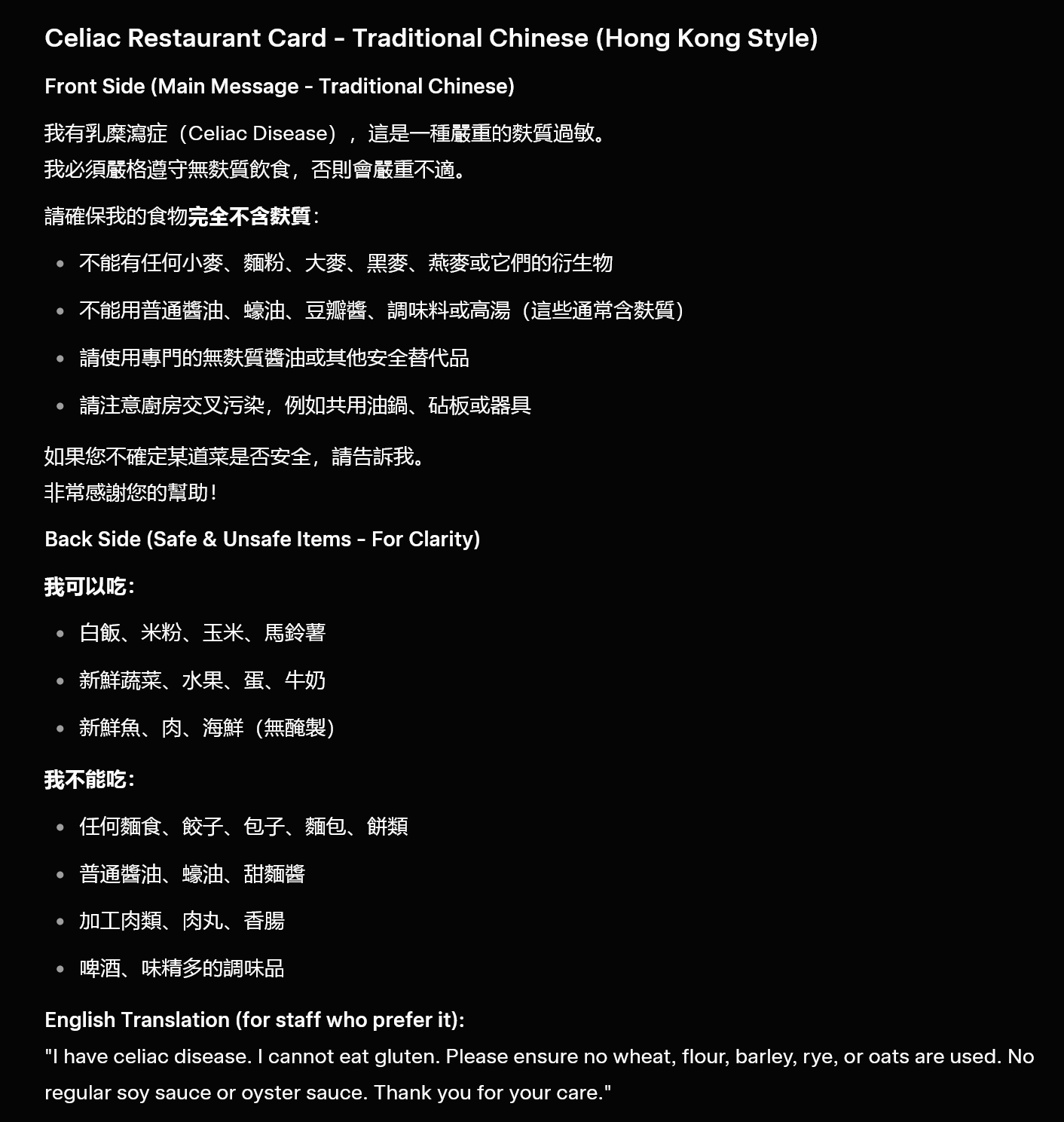
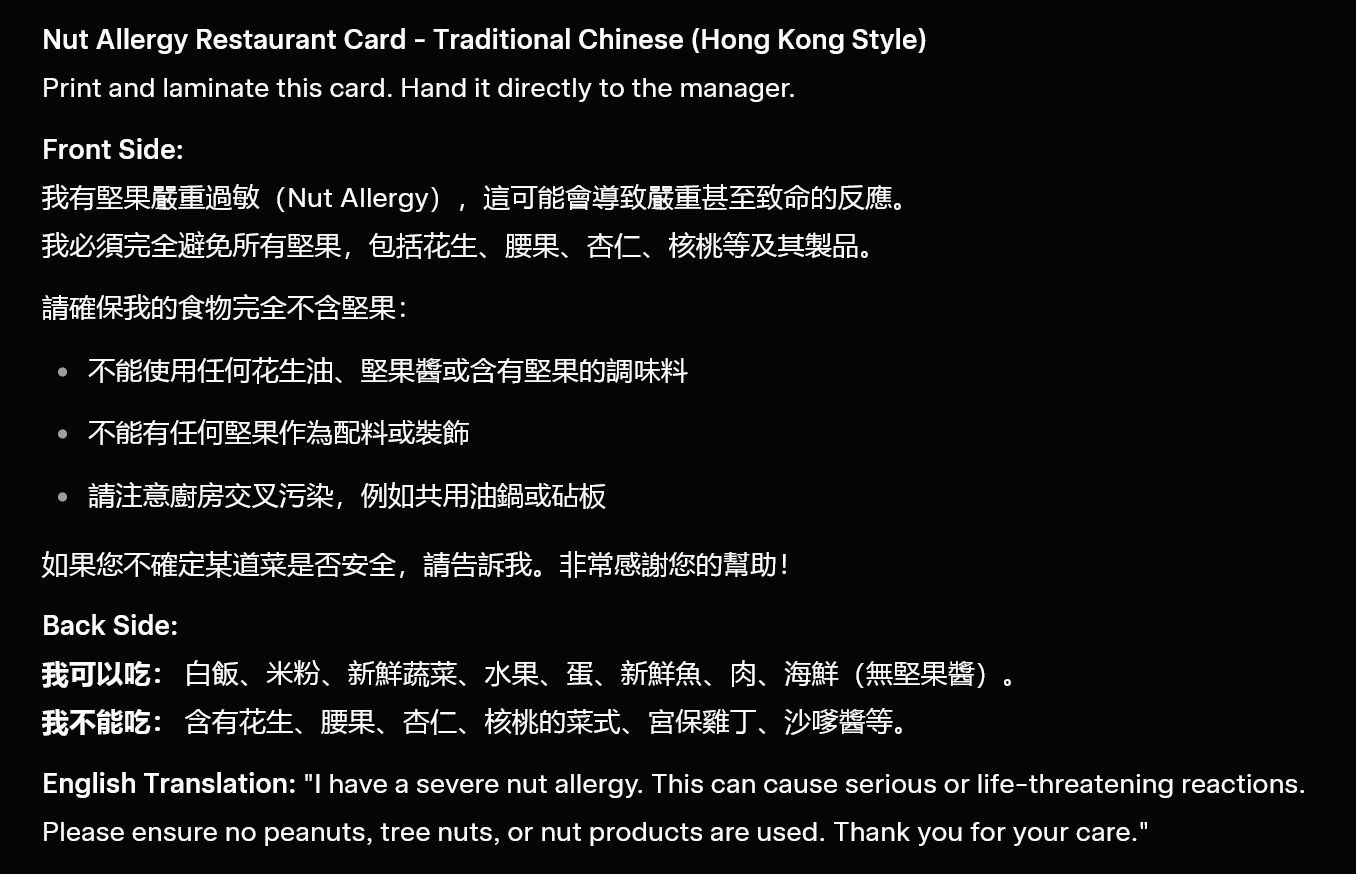
The information above can be shown to restaurant managers in Hong Kong if you are intolerant to gluten and nuts,
I do not do food tours as mentioned above, I have very specific reasons and part of it is that I do not speak Cantonese or write Chinese, I am from Yorkshire in England and I lack the language gene and it is not through lack of trying and yes a lot of restaurants do not have English menu’s or staff who speak conversational English.
.. and yet I have eaten at close to 1,400 restaurants in Hong Kong since January 2nd 1972, my wife was born in Hong Kong and we have been together over 40 years and her first language is Cantonese and a lot of her family are Chinese or half Chinese so I have never had much of an issue!
This does not translate to doing food tours though, yes, I could do them, no problem there but they would never ever be as good as the food tours done by my friends (see the 3 links above) most of their awesome guides are locally born Hong Kong Chinese and obviously food culture is part of their DNA, it is impossible for me to compete with that!
So please feel free to contact them for food tours
I do not do Hiking Tours in Hong Kong but I know someone that does!
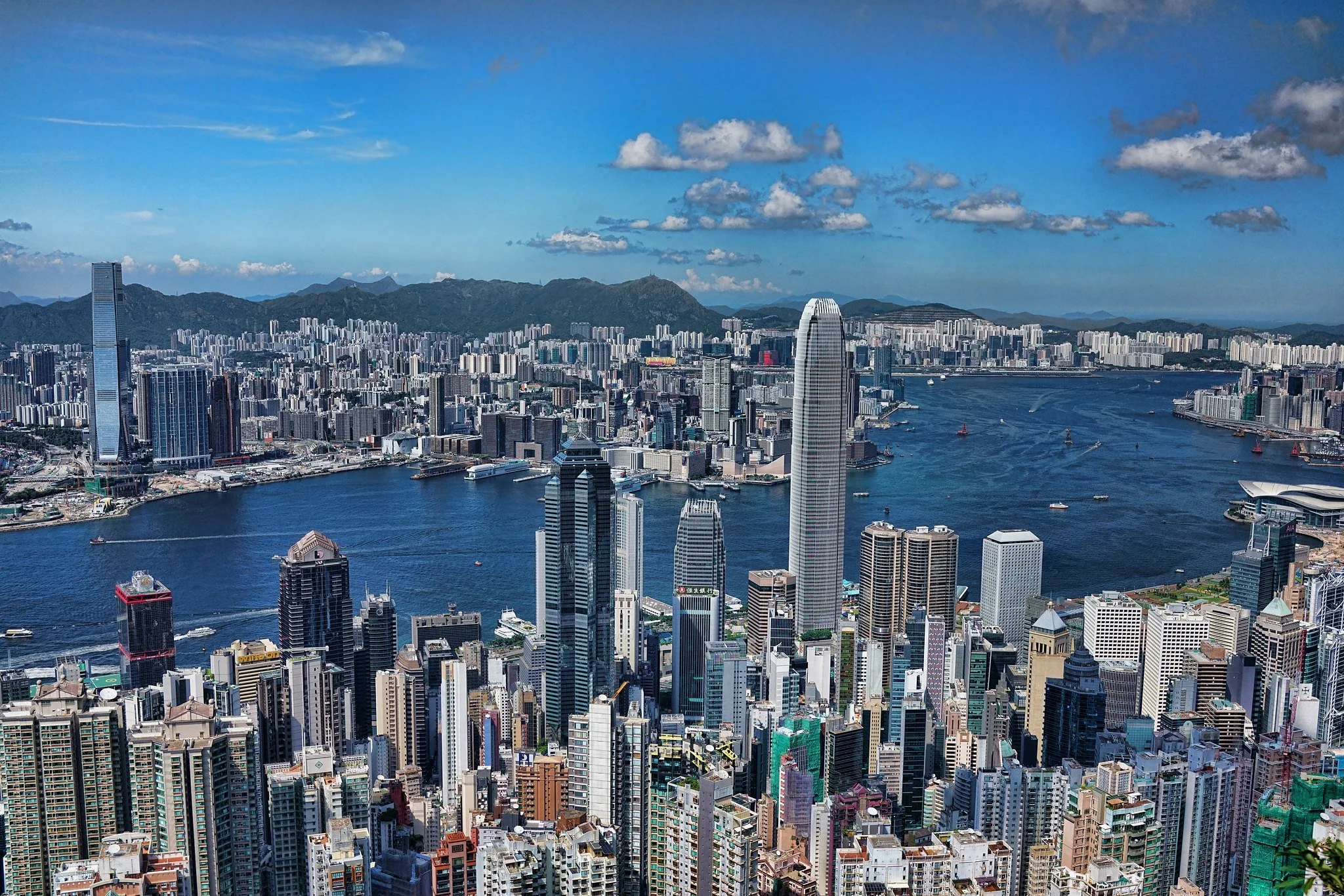
I do not do Hiking Tours, never have and never will even though I used to go Hiking a lot when I was a lot younger, The Hong Kong Government is promoting hiking tours so I urge you to contact my friend Sabrina at Hong Kong Trails and Tours, she is a long time Hong Kong resident and and a very experienced hiker with close to 700 Hikes in 15+ years under her belt, please click on the link below
click on any image to enlarge
© Copyright Acknowledged | All rights reserved | all images taken b Jamie
Jamie’s Hong Kong | Some of my favourite images | Hong Kong 101
© Jamie Lloyd | J3 Consultants Hong Kong | J3 Private Tours Hong Kong |
| 2010 - 2026 All rights reserved. |
Click on any image to enlarge to full screen
Current images from my Instagram feed