The Henderson Building vs Bank of China Tower Hong Kong
The Land Sale Paradox of two iconic buildings, Hong Kong
The J3 Group - Premium Quality Private Tours | Experiences and Insider Chats since 2010
Me Jamie, your host, I am English and I have lived in Hong Kong since January 2nd 1972 - I know the place.
A meaningful blog post with a difference - tips on Travel, Tourism, Tours, Daily Life and my personal thoughts on Hong Kong.
Please do visit Amazing Hong Kong
Hong Kong | Pearl of the Orient
Customised Private Tours + Experiences in Amazing Hong Kong
Jamie has lived in Hong Kong - Pearl of the Orient for 50+ years
Carefully Crafted Personalised and Customised Itineraries by Jamie | Hong Kong’s Most Experienced Private Tour Guide for : Solo Travellers Friends Families Seniors Couples Business People MICE Delegates.
Private Tours Cultural Tours Walking Tours Sightseeing Tours City Tours Night Tours Layover Tours Transit Tours Private Shore Excursions Bespoke Tours Personalised Tours Jewish Heritage Tours Luxury Private Tours Day Tours Luxury Boat Tours Themed Tours Private Family Tours Private Day Tours Corporate Tours
Just you, your family or friends and Jamie your personal English private tour guide - over 2,400+ tours completed since 2011 - Jamie offers quality Private Tours of Hong Kong
Tour Group Size 1 - 6 people only
J3 Group Hong Kong | J3 Consultants Hong Kong | J3 Private Tours Hong Kong
Creating Memories That Will Last A Lifetime
Go here for the Hong Kong Michelin Restaurant Guide which includes the Bib Gourmand Category

Private Tours, Personal Stories - The real Hong Kong Experience
A Resident since 1972 - Sharing Hong Kong as Only a Local Can
click on the image to enlarge
© Copyright Acknowledged | All rights reserved | Image taken by Jamie
The Henderson | The Bank of China in Central | Hong Kong
Comprehensive Report: Murray Road Car Park Site (Now The Henderson) vs. Murray House Site (Now Bank of China Tower) - Two Iconic Central District Redevelopments Opposite Each Other in Hong Kong
I arrived in Hong Kong as an 11 year old on January 2nd 1972 and I have witnessed dramatic changes in the Central Business District and I have always been fascinated by 3 “property sites” in particular which evolved in the mid 1970’s to the late 1980’s and finally to the mid 2020’s
I have left out a 4th site (which I will address in another blog post) that site used to be a magnificent Hilton Hotel and developed into Cheung Kong Center which is literally over the road from the Bank of China, The Henderson and Chater Garden
I have had an exceptional vantage point on Central’s evolving skyline and history. Setting aside Chater Garden until later in this post, these two sites sit in the heart of the CBD, rooted in the colonial-era Murray Barracks/Murray Parade Ground area. They are effectively opposite or immediately adjacent across Murray Road and near Chater Garden, representing dramatic shifts from military/recreational use to ultra-prime commercial towers. I’ve compiled a detailed history, timelines, site specifics (including land costs in HK$ and US$), and my considered opinions below, drawing from verified public records, government announcements, and architectural/historical sources.
click on any image to enlarge
© Copyright Acknowledged | All rights reserved | Images taken by Jamie
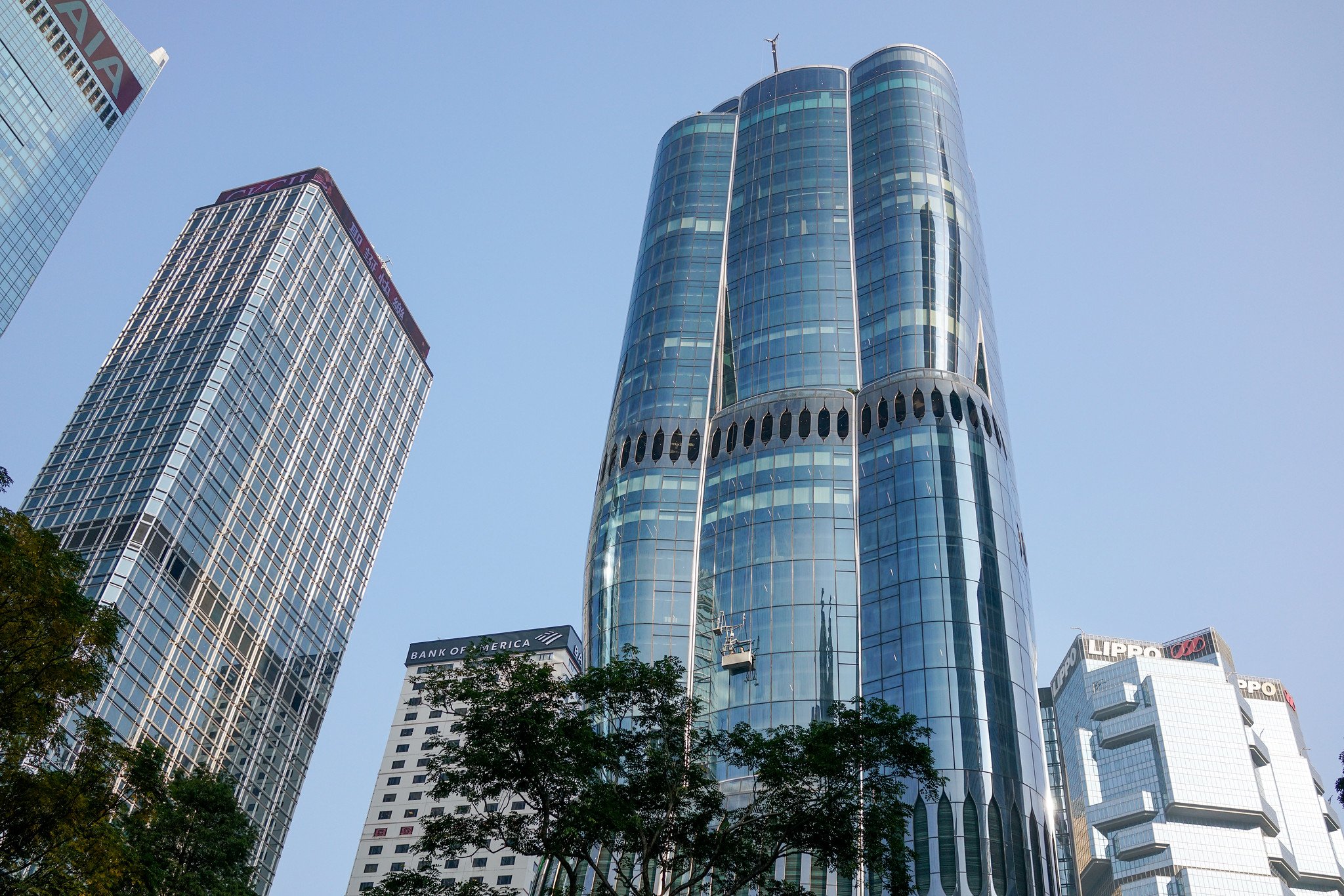
Murray Road Car Park | The Henderson Building | Hong Kong
Murray Road Car Park Site → The Henderson Building
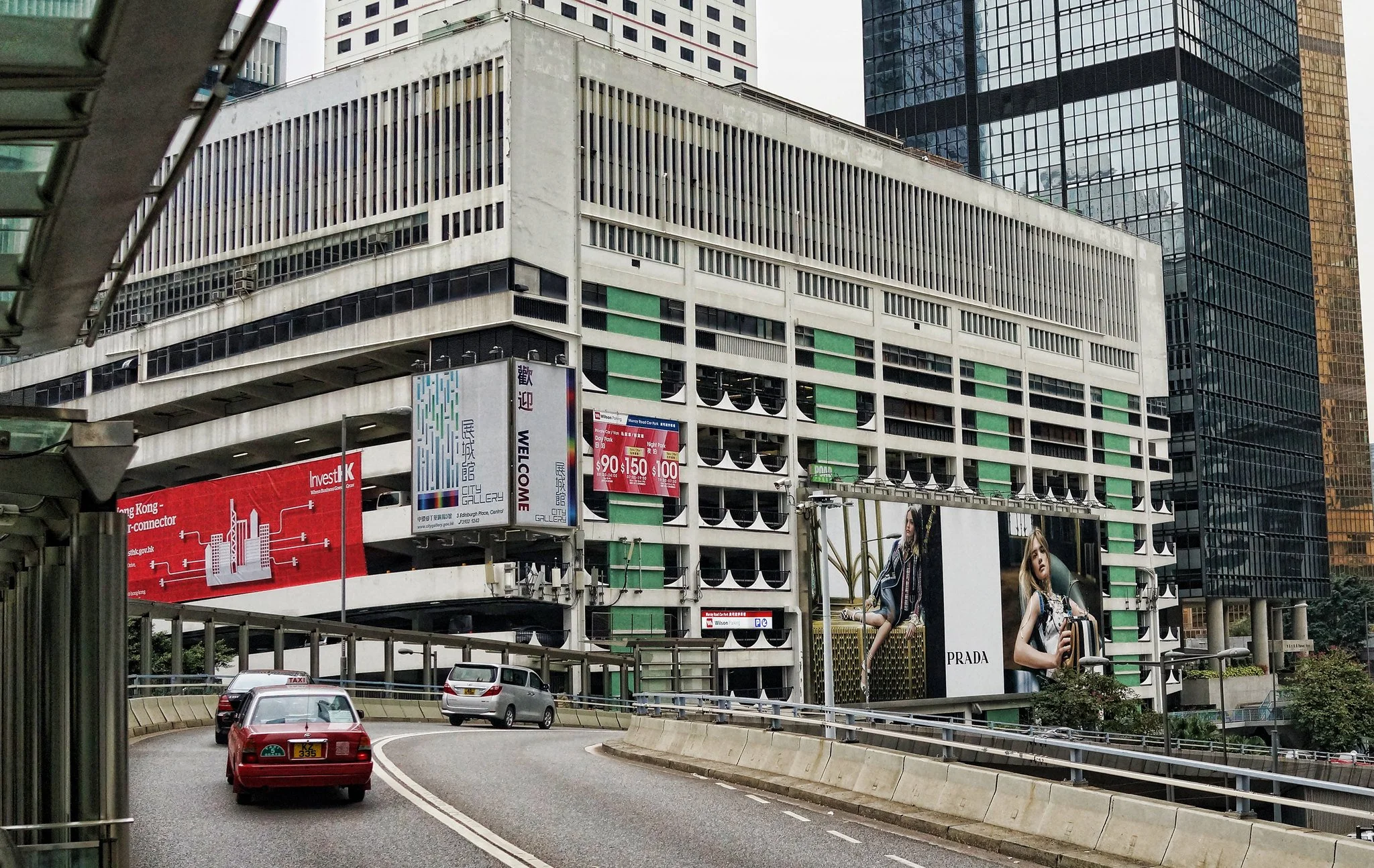
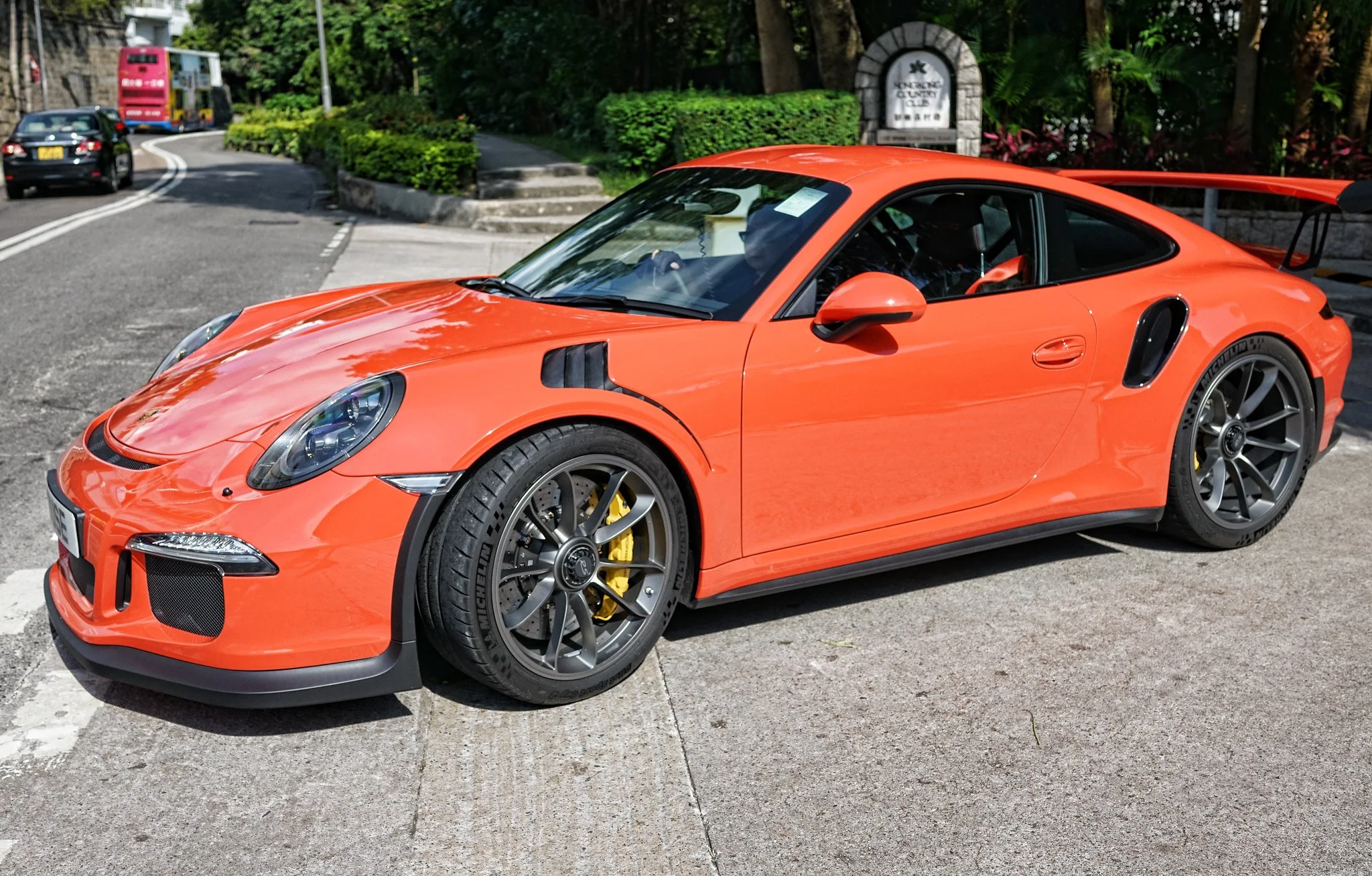
Gosh, I am very familiar with the Old Murray Road Car Park (image on the left) prior to it being demolished it was (and still is) my prime location to photograph cars, right on the bend in front of the red taxi image! to me it was always a very ugly building, functional but ugly and was home to the ICAC on the upper floors for quite a while (Independent Commission Against Corruption), I am pretty sure no one was sad to see it go.
Site Details
Location: 2 Murray Road, Central (flanking the eastern edge of Chater Garden, between Central and Admiralty MTR stations).
Site area: 2,880 m² (≈31,000 sq ft).
Gross floor area (GFA) approved: 43,200 m² (465,000 sq ft).
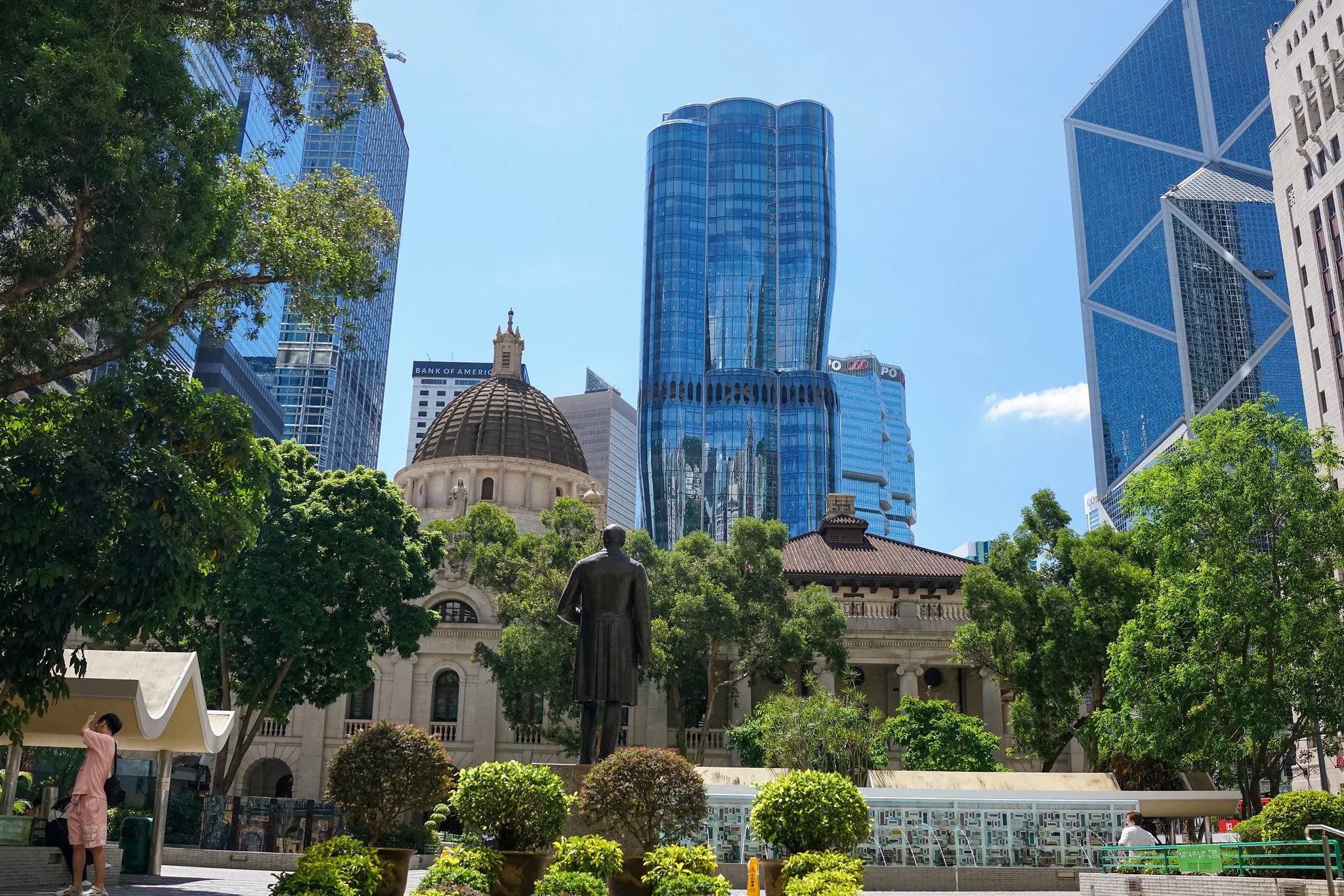
Current building: The Henderson - a 36-storey (190 m tall) Grade-A office tower with retail and a premium banquet hall, designed by Zaha Hadid Architects (inspired by the Bauhinia flower). Construction began post-2018 demolition; it neared completion by 2024 with first tenants moving in around mid-2024. It emphasizes an “urban oasis” with sky gardens and courtyard
Full History and Timeline
Pre-1970s: Part of the historic Murray Barracks/Murray Parade Ground (colonial military area established in the 1840s).
1972 - 1973: Construction of the Murray Road Multi-Storey Car Park Building (a 5-storey public facility with ≈388 parking spaces). Opened to the public on 30 July 1973. It also housed government offices (e.g., Transport Department headquarters from 1974; ICAC Operations Department 1978–2007; later City Gallery).Wikipedia
1973 - 2017: Served as a vital (but aging) public car park and mixed-use government building in the CBD.
16 May 2017: Hong Kong Government auctioned the site – the first premium commercial plot sold in Central since 1996. Henderson Land Development (led by Lee Shau-kee) won with a record bid of HK$23.28 billion (≈US$3 billion at 2017 exchange rates). This equated to roughly HK$50,064 per sq ft of GFA or about HK$8.08 million per m² of site area - the world’s most expensive land plot at the time. Eight other developers bid; the price far exceeded pre-auction estimates (HK$14–22 billion). The car park closed at midnight on 30 April 2017.Hongkongfp
2018: Full demolition.
2019- 2024+: The Henderson completed and occupied. It creates a striking contrast with neighboring icons (HSBC, old Bank of China Building, Court of Final Appeal).
This redevelopment transformed a utilitarian car park into a modern landmark, capitalizing on its unbeatable location.
click on any image to enlarge
© Copyright Acknowledged | All rights reserved | Images taken by Jamie
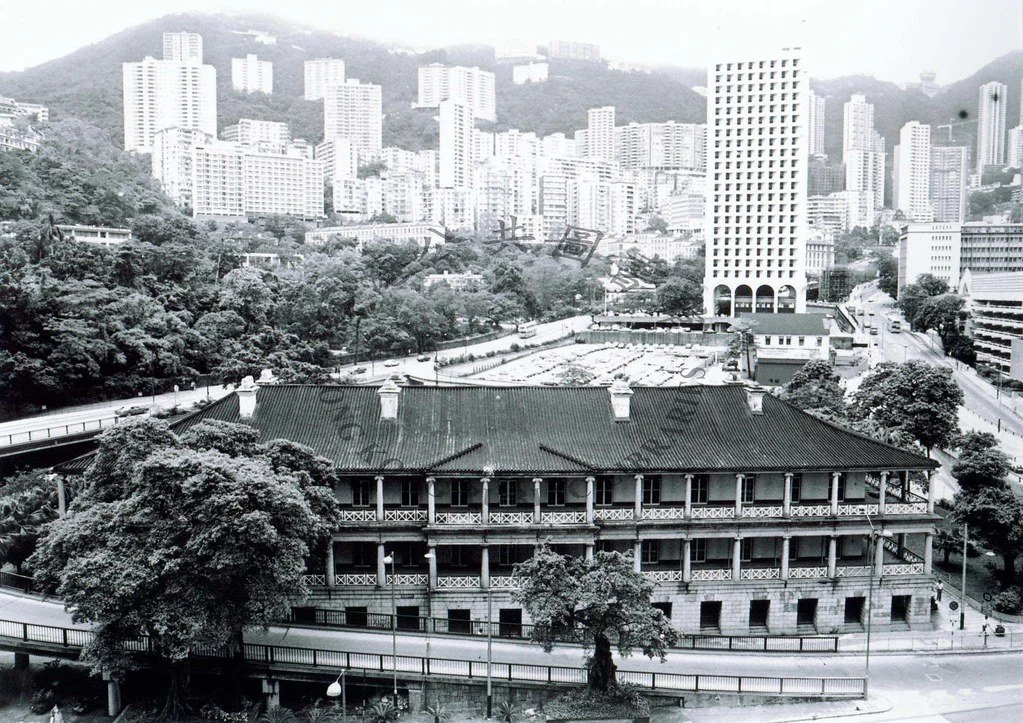
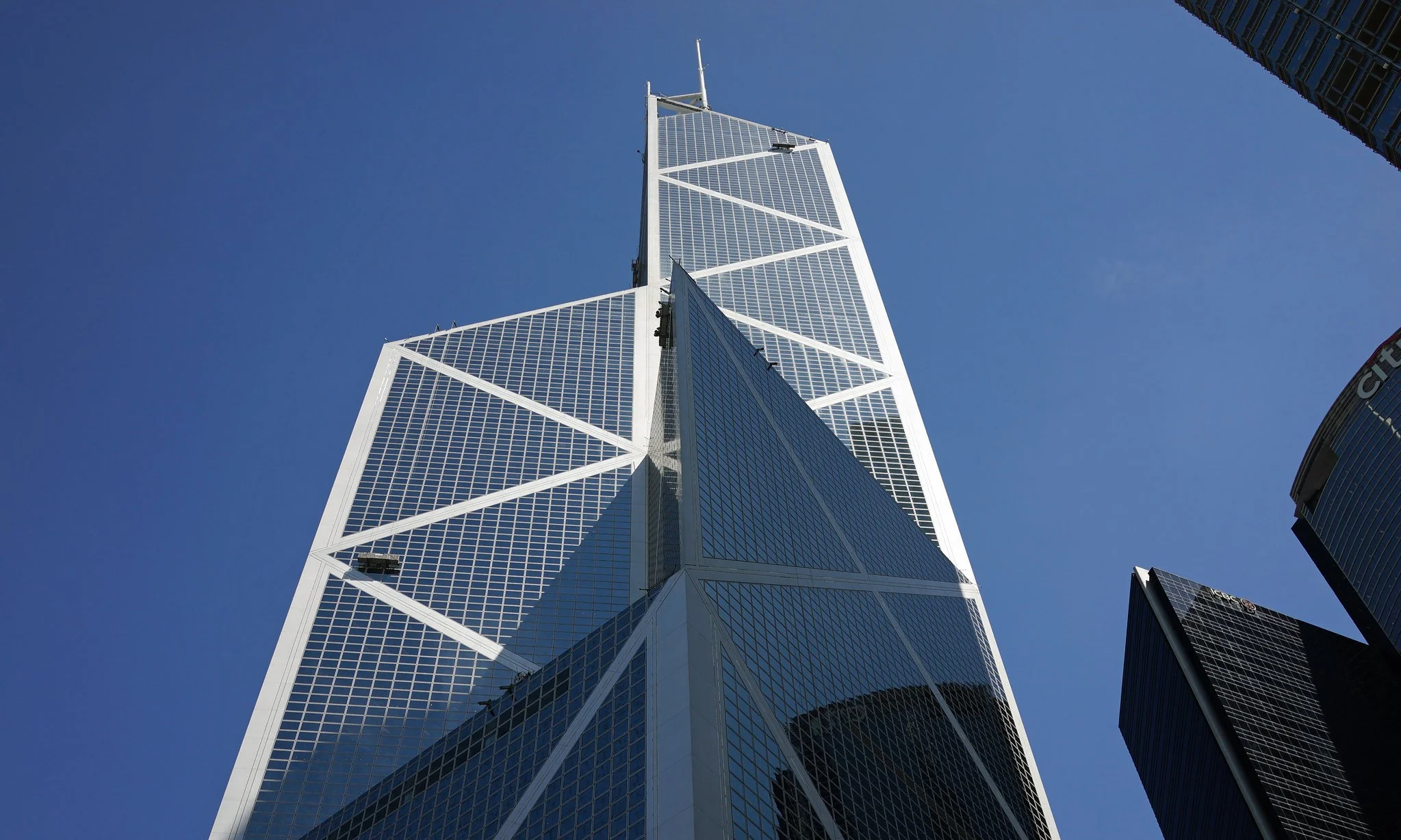
Murray House | The Bank of China Building | Hong Kong
Murray House Site → Bank of China Tower
Site Details
Location: 1 Garden Road, Central (immediately adjacent/near the Murray Road site, overlooking the same historic precinct).
Site area: 6,700 m² (≈72,000 sq ft).
Current building: Bank of China (BOC) Tower - 70-storey (315 m to roof; 367.4 m with masts), designed by I.M. Pei & Partners. GFA ≈130,000 m² (1.4 million sq ft). Completed 1990; it was briefly Asia’s tallest building. Features a distinctive triangular prism form with feng shui considerations (though controversial at the time for its sharp angles).Wikipedia
Full History and Timeline
1846: Murray House constructed as officers’ quarters for the Murray Barracks (neoclassical Victorian style with grand columns and verandahs; designed/built by Royal Engineers Major Edward Aldrich and Lt. Thomas Bernard Collinson). Named after Sir George Murray. Part of early British military infrastructure post-1841.
1846 - 1941: Primarily military/officers’ use.
WWII (Japanese Occupation): Became Kempeitai (military police) headquarters – site of documented torture and atrocities. Post-war, it carried a reputation as “haunted.”
Post-1945 - 1982: Used for government offices.
1982: Dismantled brick-by-brick (over 3,000 granite blocks meticulously labeled and stored) to clear the site for the new BOC Tower. This was a controversial decision that preserved the building physically but sparked heritage debates.
August 1982: Hong Kong Government sold the cleared site directly to the Bank of China (state-linked) for HK$1 billion (initial payment HK$60 million, balance over 13 years at 6% interest). This was amid intense pre-handover uncertainty (Sino-British negotiations). Critics called it a “sweetheart deal”; the announcement triggered a market dip (Hang Seng Index fell 80 points; HK$ weakened 1.5%). For context, a similar-sized Admiralty plot sold for HK$1.82 billion around the same time. In 1982 terms, HK$1 billion - US$170 - 180 million (exchange rates fluctuated, but roughly 5.5 - 6 HK/US /US /US). Price per m²: - HK$149,000.Wikipedia
1985 - 1990: BOC Tower constructed and opened. It symbolized China’s growing presence in Hong Kong pre-1997.
2001 - 2002: Murray House reassembled and reopened in Stanley (now restaurants/shops; not Grade I listed post-relocation due to heritage standards).
The site shifted from colonial military quarters to a symbol of modern Chinese finance.
Opinion on the Astronomical Price Difference for Redevelopment
The raw numbers highlight a staggering contrast:
1982 (BOC site): HK$1 billion (≈US$170–180M) for 6,700 m² → ≈HK$149,000/m².
2017 (Henderson site): HK$23.28 billion (≈US$3B) for 2,880 m² → ≈HK$8.08 million/m² (over 54 times higher per m², even adjusting for inflation and site size differences).
My considered view:
This isn’t just inflation or size - it reflects Hong Kong’s unique land economics, political confidence cycles, and extreme scarcity in the CBD core. in plain English, it is just nuts and does not make much sense to regular folk like myself
Timing and confidence: 1982 was the height of handover anxiety (Joint Declaration signed 1984). Low bids reflected risk; the direct sale to BOC was partly political. By 2017, post-1997 stability, China’s economic rise, and Hong Kong’s status as Asia’s finance hub drove a massive boom. Central commercial land had been locked up for decades - this was the first auction since 1996.
Scarcity and policy: Government owns all land; sales are rare and competitive. The Henderson plot’s GFA premium and location (next to Chater Garden with MTR access) justified the record price. Property values in prime Central multiplied manyfold due to demand from multinationals.
Broader context: HK$ has been pegged to the US$ since 1983, but real estate decoupled upward. Similar patterns appear in other 2010s mega-sales (e.g., elsewhere in Central). The difference underscores how land in Hong Kong functions as a finite, high-stakes asset class. For someone like me, this is a powerful story of “from car park to Zaha Hadid icon” versus “colonial barracks to Pei skyscraper” - perfect for guests on my Private Tours interested in Hong Kongs transformation.
In short, the 2017 price was “astronomical” because the market had matured into one of the world’s most expensive, while 1982 was discounted by geopolitics.
Comparison and Context by the numbers
Bank of China Tower Site (Original Murray House Location)
Plot size: Approximately 6,700 m² (roughly 72,000 square feet).
This was the land occupied by the original Murray House and its immediate surroundings within the old Murray Barracks complex. The low-rise granite building itself covered only a portion of this plot, but the entire cleared site was sold to the Bank of China in 1982 for a total of HK$1 billion (initial payment HK$60 million, balance over 13 years at 6% interest).
Murray Road Car Park Site (The Henderson)
Plot size: 2,880 m² (approximately 31,000 square feet).
This was the footprint of the former multi-storey public car park at 2 Murray Road, directly across the road from the Bank of China Tower.
Quick Side-by-Side
Bank of China / old Murray House site: ~6,700 m² (~72,000 sq ft) - roughly 2.3 times larger than the Henderson site.
Henderson / old Murray Road car park site: 2,880 m² (~31,000 sq ft).
The sites are adjacent (literally "over the road" from each other in the former military barracks area), both rectangular or near-rectangular urban plots in the dense core of Central, and both benefited from excellent location, harbour proximity, and high development potential. However, the Bank of China plot was noticeably bigger, which partly explains why it could support the massive 70-storey triangular tower with its distinctive form and large gross floor area (around 130,000 m² total).
Again - Why the Price Difference Remains Astonishing
Even though the Henderson site is smaller, Henderson Land paid HK$23.28 billion in 2017 - still roughly 23 times more than the HK$1 billion total paid for the larger Bank of China site in 1982. On a per-square-metre basis, the gap is even starker:
1982 deal: roughly HK$149,000 per m² (with favourable deferred payment terms).
2017 deal: over HK$8 million per m² (a record at the time).
This highlights how Central land values exploded over 35 years due to extreme scarcity of large developable plots, sustained demand for Grade-A office space, and Hong Kong’s position as a global financial hub. The 1982 sale was a negotiated transaction with heritage and diplomatic considerations; the 2017 sale was a fiercely competitive public tender among major developers.
The point is very simple - The Bank of China got the bargain of the century for purchasing the land where Murray House once stood
So a final summary
Yes - Henderson Land paid dramatically more than what the Bank of China paid in 1982. The difference is enormous:
1982 sale (Murray House site): HK$1 billion total (with an initial payment of HK$60 million and the balance payable over 13 years at 6% interest; approximately US$140–154 million at the time) - a negotiated direct sale in an era when Central land values were high but nowhere near today's levels, and when heritage considerations and political factors (pre-handover uncertainty) played a significant role.
2017 sale (Murray Road car park site): HK$23.28 billion (US$3 billion) - roughly 23 times higher in nominal total terms.
This gap reflects several realities of Hong Kong's property market:
Time and inflation: 35 years of explosive economic growth, with Central remaining the premier financial district in Asia.
Scarcity: By 2017, large, developable commercial sites in Core Central were extremely rare. The Murray Road car park offered one of the last significant redevelopment opportunities in the area.
Market conditions: Intense competition among major developers, ultra-low interest rates for much of the period, and strong confidence in long-term demand for Grade-A office space drove prices to extraordinary levels.
Per-square-foot intensity: The 2017 deal set a record not just in total price but in price per square foot of developable area, underscoring how Central land had become among the most expensive real estate on earth.
In hindsight, the 1982 transaction looks like a relative bargain for the Bank of China, especially when viewed against later deals like Henderson's. However, at the time it was a strategic move that helped shape Central's modern skyline while allowing the government to preserve (via relocation to Stanley) a piece of colonial heritage
… and you know what, the net result is very simple, we got two quite magnificent and iconic buildings!
click on any image to enlarge
© Copyright Acknowledged | All rights reserved | Image taken by Jamie
Chater Garden | Central District | Hong Kong
Chater Garden: Why It Wasn’t Sold, Site Details, and Developer Bid Estimate
So the burning question I have always had is why Chater Garden has never been redeveloped, I played cricket there as a kit when it was the Hong Kong Cricket Club and by the end of the 1970’s it turned into Chater Garden which is very underwheming
Given the size of the land it occupies and real estate prices (see above!) it would surely break many world records, after the Henderson Building was completed, I put the theory out there that the land lease for Chater Garden would sell for US$15 Billion if it was put on the market.
Site Details
Location: Immediately adjacent to The Henderson (eastern edge), bounded by Chater Road, Des Voeux Road Central, etc. – a key pedestrian link from Central MTR to Peak Tram/Garden Road.
Site area: ≈16,000 m² (1.6 hectares / ≈3.86 acres).
Features: Multi-level design (opened in phases 1978 and 1983 at a cost of HK$7.9 million). Includes trees/shrubs (over 11,000 plants, 27 species), lily pond, fountains, waterfalls, Tree Walk promenade, benches, and Wi-Fi. However, ≈4,033 m² (≈25%) is hardscape/concrete plaza/pathways - my description is spot-on: it functions more as a paved thoroughfare and gathering spot (e.g., for domestic helpers on weekends, tai chi) than a lush park like Hong Kong Park across the road. It replaced the Hong Kong Cricket Club’s pitch (1851 - 1975).
History (Brief Timeline)
1851- 1975: Hong Kong Cricket Club grounds (recreational/sports use).
1970: Rezoned “open space” by Town Planning Board.
1973: Urban Council approved conversion to public garden (club relocated to Wong Nai Chung Gap due to MTR construction/urban pressure).
1978: First phase opened; full completion 1983.
Why Not Sold to a Developer? Purely planning and policy: Zoned as “Open Space” (Government, Institution or Community use) since the 1970s to provide “green relief” in the concrete jungle of Central. Government policy prioritized public amenities amid rapid commercialization. Selling it would require rezoning - politically sensitive given its proximity to the Legislative Council/Court of Final Appeal and role as a tourist/pedestrian connector. It balances the CBD’s skyscrapers with accessible public space (a deliberate 1970s urban planning choice). No government has pushed to auction it; preserving such pockets maintains social harmony and Hong Kong’s “liveable” image for finance/tourism.
This all sounds very plausible but it has not stopped the Government cashing in on its land assets before, a simple example is the Murray Road Car Park which was considered essential given its location in Central and there was quite an outcry from the public but at the end of the day, the Goverment was paid US$3 Billion for the land lease, that trumped everything and frankly I doubt there would be much objection to Chater Garden being turned into a large building
Measured Guess on Developer Bid: My US$15 billion estimate is remarkably close to reality if it were ever rezoned and auctioned like the Henderson plot. Using 2017 Henderson benchmarks (≈US$1.04 million per m² site area), 16,000 m² would theoretically fetch ≈US$16.6 billion today (adjusted upward for current market). A developer would bid aggressively for the location, views, and GFA potential (possibly 5 - 10x the Henderson’s scale). However, I accept that rezoning is highly improbable - the government has consistently protected such spaces for public benefit. It’s a rare “non-monetized” asset in Central.
Other Relevant Information and Final Thoughts
Shared Context: Both sites originated from the Murray Barracks/Parade Ground (1840s colonial military hub). Central itself sits on 19th-century reclamation (Chater’s projects). This precinct embodies Hong Kong’s layers: colonial → wartime → handover transition → global finance powerhouse.
Current Relevance (2026): The Henderson adds to Central’s evolving skyline without exceeding height caps (190m max). Chater Garden remains a vital “lung” amid concerns over over-development.
My Overall Opinion
These redevelopments showcase Hong Kong’s pragmatic evolution - sacrificing some heritage (Murray House) or functionality (car park) for iconic architecture and economic value, while wisely retaining Chater Garden as public space. The price gulf between 1982 and 2017 isn’t just economics; it measures restored confidence after uncertainty.
I see this as a microcosm of Hong Kong’s resilience: turning constraints (tiny plots, history) into world-beating assets.
I do not do Food Tours in Hong Kong but I know people that do!
I do not do food tours as mentioned above, I have very specific reasons and part of it is that I do not speak Cantonese or write Chinese, I am from Yorkshire in England and I lack the language gene and it is not through lack of trying and yes a lot of restaurants do not have English menu’s or staff who speak conversational English.
.. and yet I have eaten at close to 1,400 restaurants in Hong Kong since January 2nd 1972, my wife was born in Hong Kong and we have been together over 40 years and her first language is Cantonese and a lot of her family are Chinese or half Chinese so I have never had much of an issue!
This does not translate to doing food tours though, yes, I could do them, no problem there but they would never ever be as good as the food tours done by my friends (see the 3 links above) most of their awesome guides are locally born Hong Kong Chinese and obviously food culture is part of their DNA, it is impossible for me to compete with that!
So please feel free to contact them for food tours
I do not do Hiking Tours in Hong Kong but I know someone that does!
I do not do Hiking Tours, never have and never will even though I used to go Hiking a lot when I was a lot younger, The Hong Kong Government is promoting hiking tours so I urge you to contact my friend Sabrina at Hong Kong Trails and Tours, she is a long time Hong Kong resident and and a very experienced hiker with close to 700 Hikes in 15+ years under her belt, please click on the link below
click on any image to enlarge
© Copyright Acknowledged | All rights reserved | all images taken b Jamie
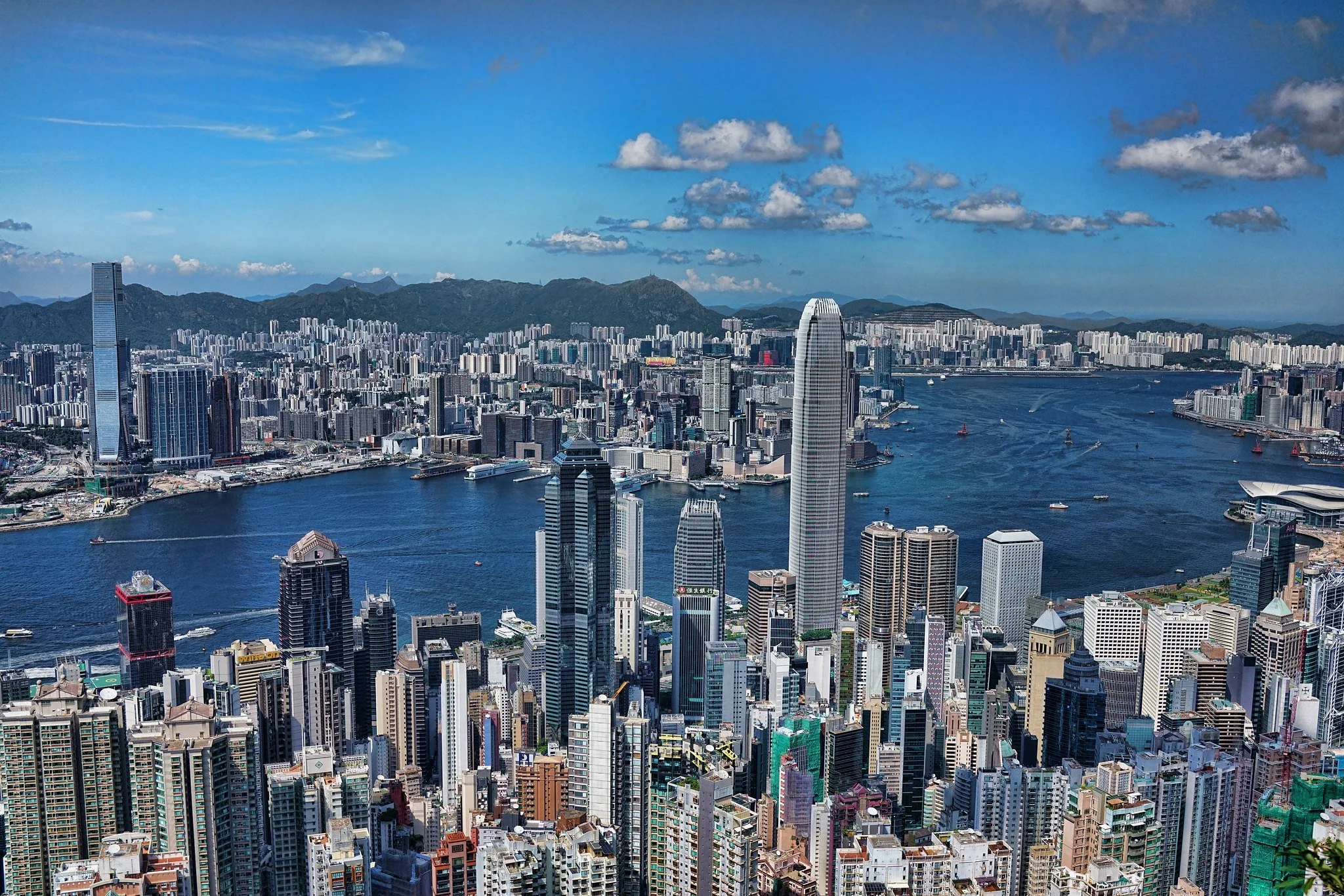
Jamie’s Hong Kong | Some of my favourite images | Hong Kong 101
© Jamie Lloyd | J3 Consultants Hong Kong | J3 Private Tours Hong Kong |
| 2010 - 2026 All rights reserved. |
Click on any image to enlarge to full screen
Current images from my Instagram feed