Chater Garden comparison to Nan Lian Garden in Hong Kong
Chater Garden in Central should get a radical make over NOW!

The J3 Group - Premium Quality Private Tours | Experiences and Insider Chats since 2010
Me Jamie, your host, I am English and I have lived in Hong Kong since January 2nd 1972 - I know the place.
A meaningful blog post with a difference - tips on Travel, Tourism, Tours, Daily Life and my personal thoughts on Hong Kong.
Please do visit Amazing Hong Kong
Hong Kong | Pearl of the Orient
Customised Private Tours + Experiences in Amazing Hong Kong
Jamie has lived in Hong Kong - Pearl of the Orient for 50+ years
Carefully Crafted Personalised and Customised Itineraries by Jamie | Hong Kong’s Most Experienced Private Tour Guide for : Solo Travellers Friends Families Seniors Couples Business People MICE Delegates.
Private Tours Cultural Tours Walking Tours Sightseeing Tours City Tours Night Tours Layover Tours Transit Tours Private Shore Excursions Bespoke Tours Personalised Tours Jewish Heritage Tours Luxury Private Tours Day Tours Luxury Boat Tours Themed Tours Private Family Tours Private Day Tours Corporate Tours
Just you, your family or friends and Jamie your personal English private tour guide - over 2,400+ tours completed since 2011 - Jamie offers quality Private Tours of Hong Kong
Tour Group Size 1 - 6 people only
J3 Group Hong Kong | J3 Consultants Hong Kong | J3 Private Tours Hong Kong
Creating Memories That Will Last A Lifetime
Go here for the Hong Kong Michelin Restaurant Guide which includes the Bib Gourmand Category

Private Tours, Personal Stories - The real Hong Kong Experience
A Resident since 1972 - Sharing Hong Kong as Only a Local Can
click on the image to enlarge
© Copyright Acknowledged | All rights reserved | Image taken by Jamie
Chater Garden | Concrete Jungle in Central | Hong Kong
Being from Yorkshire in England I can be pretty blunt and living here since January 2nd 1972 has not changed that, I love Hong Kong, it is my home but sometimes I get attached to a subject and I will not let it go.
The Hong Kong Government has done a fantactic job in creating Hong Kong as it is and also they have are very keen to build parks and gardens which is just great for locals and visitors BUT I have to say that they have got Chater Garden all wrong and it is one of the busiest gardens in Hong Kong and its aesthetics are at odds with its surroundings given its location in the very heart of the business district in Central
In a nutshell there are gardens and then there is Chater Garden which I find to be toally uninspiring and have done so going all the way back to the late 1970’s when it was changed from a cricket pitch do a concrete garden and it fits perfectly into that 1970’s vibe
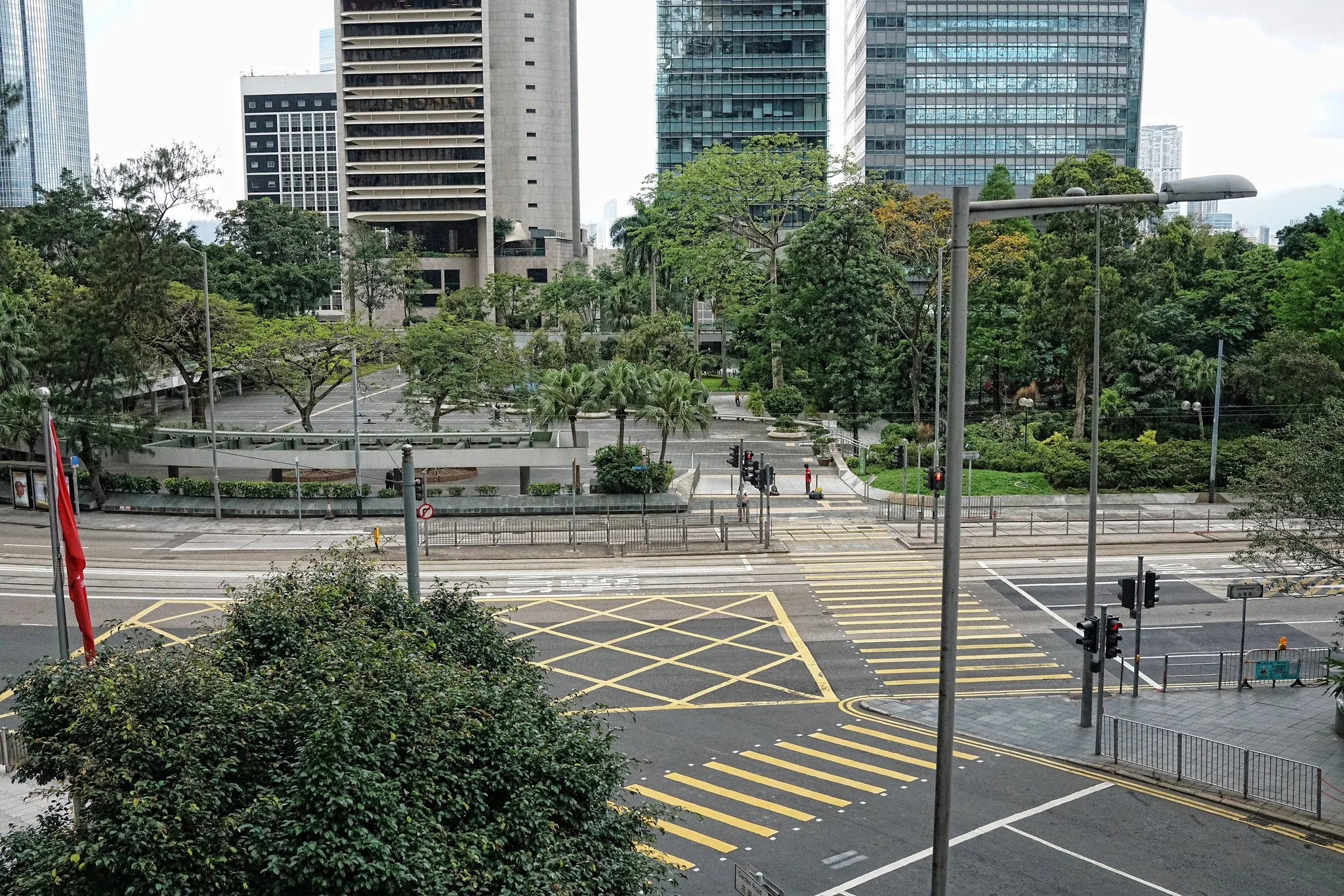
The Government can deny it as much as they like, bit the perception is that the garden is about 40% concrete and for many people it is simply a short cut from exit J2 at the Central MTR Station (Subway) to the Peak Tram Terminal on Garden Road just up the road.
My idea is very simple
Given it’s prime location I feel that Chater Garden should be closed for at least 12 months and totally revamped into a smaller version of the Nan Lian Garden in Diamond Hill in Kowloon, now that is a Garden and it is loved by locals and visitors alike
Now, I do feel it is important to be as comprehensive as possible with my argument for this project with lots of images and information, I am also very realistic, who the heck reads my blog posts anyway? but just maybe someone of importance will stumble across this and start a chain of events that will culminate in a new garden in the heart of the business district, the same style as Nan Lian Garden, it will become an instant classic and a must place to visit.. well, I can but dream
Chater Garden: A Historic Garden in the Heart of Hong Kong’s Central District
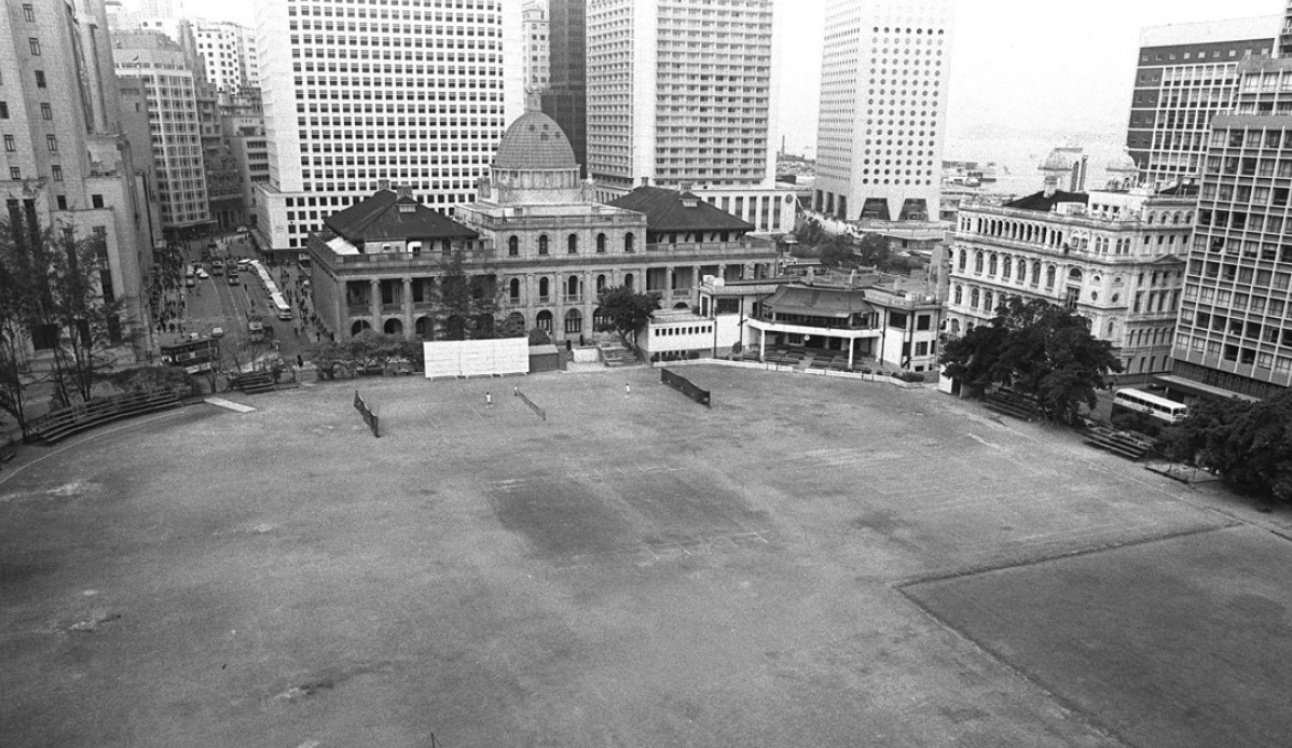
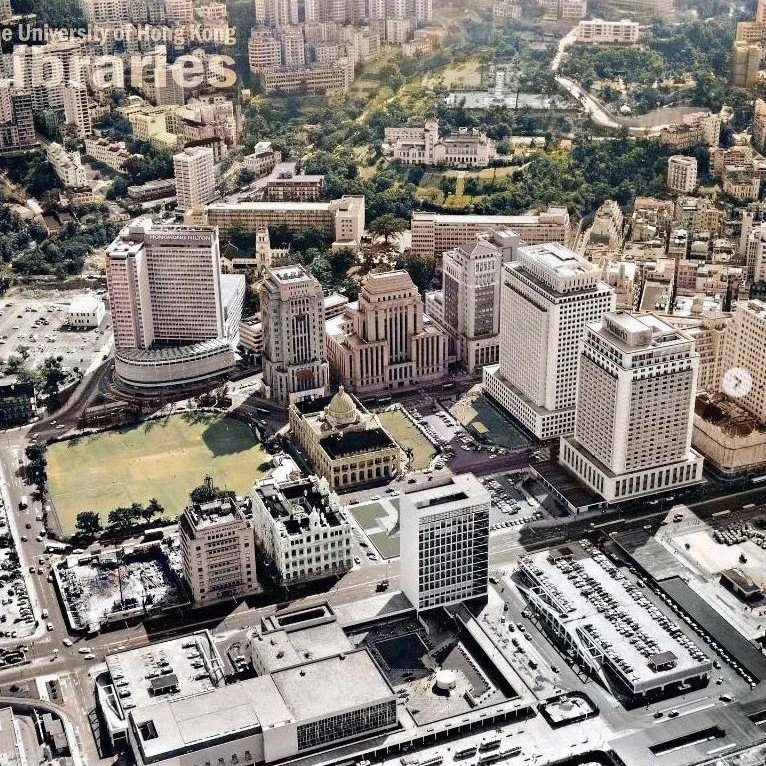
Chater Garden stands as one of Central’s most cherished public spaces, offering a rare pocket of greenery and a large expanse of concrete amid the towering skyscrapers and relentless pace of Hong Kong’s financial hub. Named after Sir Catchick Paul Chater, the influential Armenian-born businessman and philanthropist who played a pivotal role in shaping modern Central through land reclamation, the garden occupies a site with deep roots in the city’s colonial and post-colonial evolution. What began as a military parade ground evolved into a premier sports venue before transforming into today’s urban park. (so thats what the call it!) Its story reflects broader themes in Hong Kong’s development: the shift from colonial recreation to public amenity, the pressures of urban expansion, and the enduring value of open space in a dense metropolis and frankly this urban space is simply not good enough when you look at its surroundings.
click on any image to enlarge
© Copyright Acknowledged | All rights reserved
Chater Garden | When it was an iconic Cricket Club | Hong Kong
Historic Timeline of the Site (from 1841 Onwards)
The site’s history is intertwined with Hong Kong’s earliest days as a British colony and the physical transformation of Victoria Harbour’s foreshore.and
1841 - 1842: British forces occupy Hong Kong Island following the First Opium War. Central District begins to take shape through initial land reclamations from the sea. The area that would become the garden site forms part of the early Murray Parade Ground - a military drill and parade area on reclaimed waterfront land, initially used by troops as a waste piece of seaside ground.
1851: A public meeting in June leads to the founding of the Hong Kong Cricket Club (HKCC), one of the oldest cricket clubs outside England. The Murray Parade Ground (still technically liable to military use, though rarely exercised) is turfed and converted into a public recreation ground for cricket, tennis, croquet, and other sports. The club’s first simple matshed pavilion is erected in the northeast corner. The ground quickly becomes a hub for colonial social and athletic life.
1860s - 1880s: The site hosts its first major interport cricket match against Shanghai in 1866. Subsequent matches draw teams from the Straits Settlements and beyond. It also accommodates other events, including the first Hong Kong amateur athletic sports meeting in 1883 and even a baseball game between U.S. Navy officers and local players that same year. By 1883, the ground is leased to the HKCC at nominal rent, though it retains its original status as a public recreation area east of the old City Hall. Pavilions are upgraded from the initial matshed to more solid structures.
1890: A significant foundation stone is laid on 2 April by H.R.H. the Duke of Connaught to commemorate the start of the Praya Reclamation Works under Governor Sir G. William des Voeux. This project, closely associated with Sir Paul Chater’s vision for expanding Central’s commercial waterfront, adds vital land to the district. The stone is placed near the Cricket Club pavilion fence.
Early 20th Century: A more extensive clubhouse is built diagonally opposite the original (near the old Bank of China site). The 1923 clubhouse, the final one on the site, faces Chater Road opposite the Hong Kong Club. The ground continues as a venue for cricket, tennis, and community events, solidifying its place in colonial Hong Kong society.
1970: The Town Planning Board zones the grounds as an open-space area, signaling shifting priorities toward public amenities amid growing urban density.
1973: The Urban Council approves plans to transform the site into a public garden following the HKCC’s agreement to relocate.
1975: The HKCC’s lease expires and is not renewed. The club relocates approximately 6 km away to a new, greener facility at Wong Nai Chung Gap (with enhanced facilities, including attendance by cricket legends at the opening). The old Central site is vacated to accommodate urban infrastructure needs, including construction related to the Mass Transit Railway (MTR) Central Station (originally planned as Chater Station).
1978 - 1983: Construction of Chater Garden begins under the Urban Council. The first phase opens to the public on 20 October 1978, featuring initial multi-level elements. The second phase, completing landscaping and planting, opens in December 1983. The 1890 foundation stone is dismantled in 1975 during relocation works and relocated to its current position in the garden in 1983. The MTR Central Station opens around 1980, with the garden developed in harmony with the underground infrastructure.
1980s - Present: The garden matures as a public space. It becomes a venue for daily leisure (such as tai chi), weekend gatherings (notably by domestic helpers), and occasional political rallies and demonstrations (which are no longer allowed,) owing to its prime location adjacent to the Legislative Council Complex and Court of Final Appeal Building.
The Decision to Relocate the Hong Kong Cricket Club and Create Chater Garden
By the early 1970s, Hong Kong faced intense pressures from rapid urbanization, population growth, and major infrastructure projects like the MTR. The HKCC’s historic grounds in the heart of Central - prime real estate at the corner of Chater and Murray Roads - were no longer sustainable for exclusive club use. The Town Planning Board’s 1970 zoning as open space reflected a deliberate policy shift: prioritizing public green areas over private sports facilities in the commercial core.
The Urban Council, responsible for amenities, approved the garden plan in 1973. The government invited the club to relocate to Wong Nai Chung Gap, offering superior facilities and a more spacious setting away from the intensifying development of Central. The HKCC accepted, ending 124 years of continuous use at the site. This move freed the land for redevelopment while addressing public demand for recreational space in a district increasingly dominated by offices and high-rises. The garden was explicitly conceived as a “green relief” in the concrete jungle -a multi-level urban park to provide respite for workers, residents, and visitors. Construction cost approximately HK$7.9 million, balancing practicality with landscaping amid the constraints of the MTR works below.
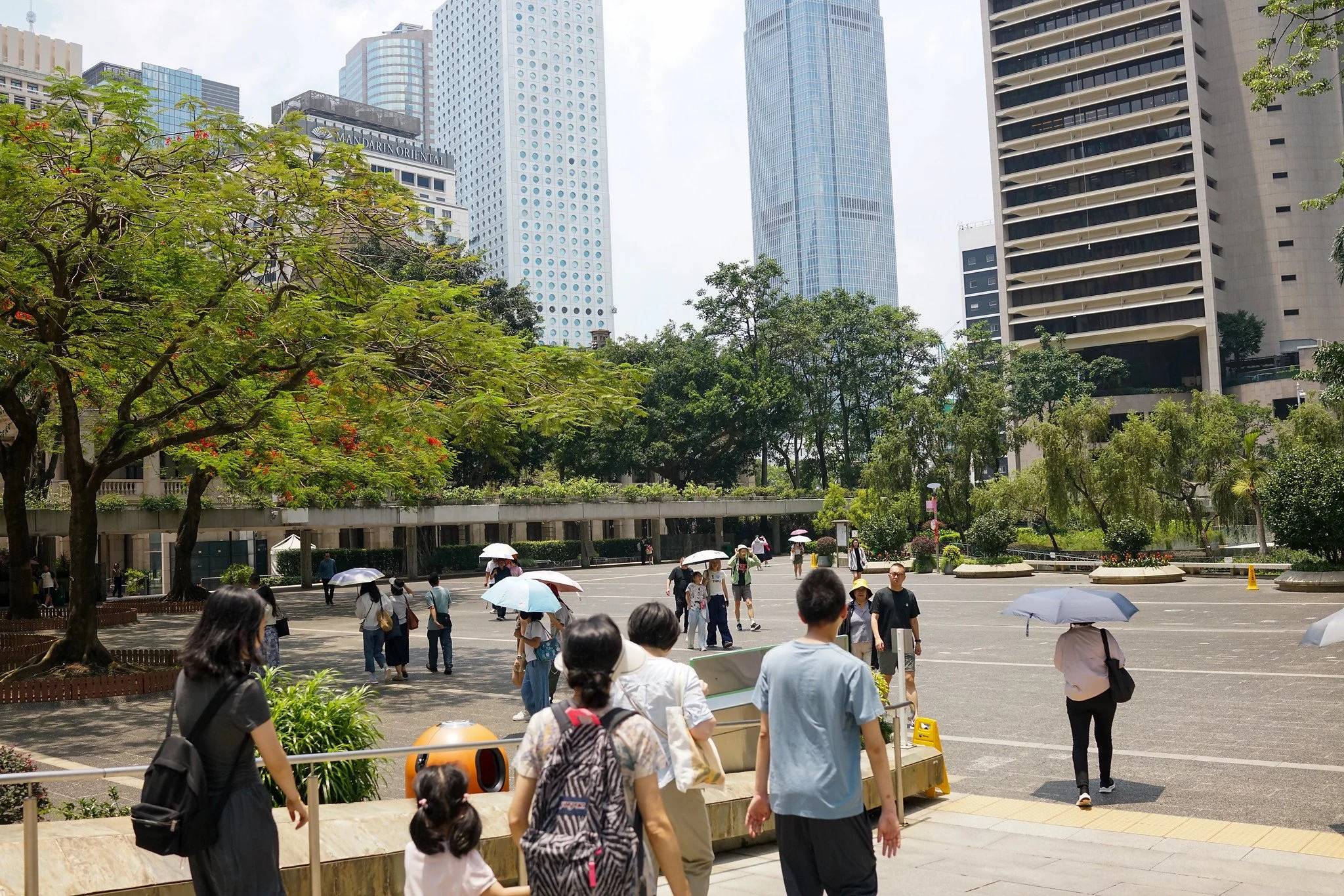
So in nutshell you have what I call the Chater Garden Paradox where you have a garden built to make you forget you are in a concrete jungle yet a huge expanse of the farden is yes, you guessed it, a mass of concrete, it may have been a thing 45 yearsd ago but times and designs change and surely it is time for a revamp? and the images below, well I rest my case
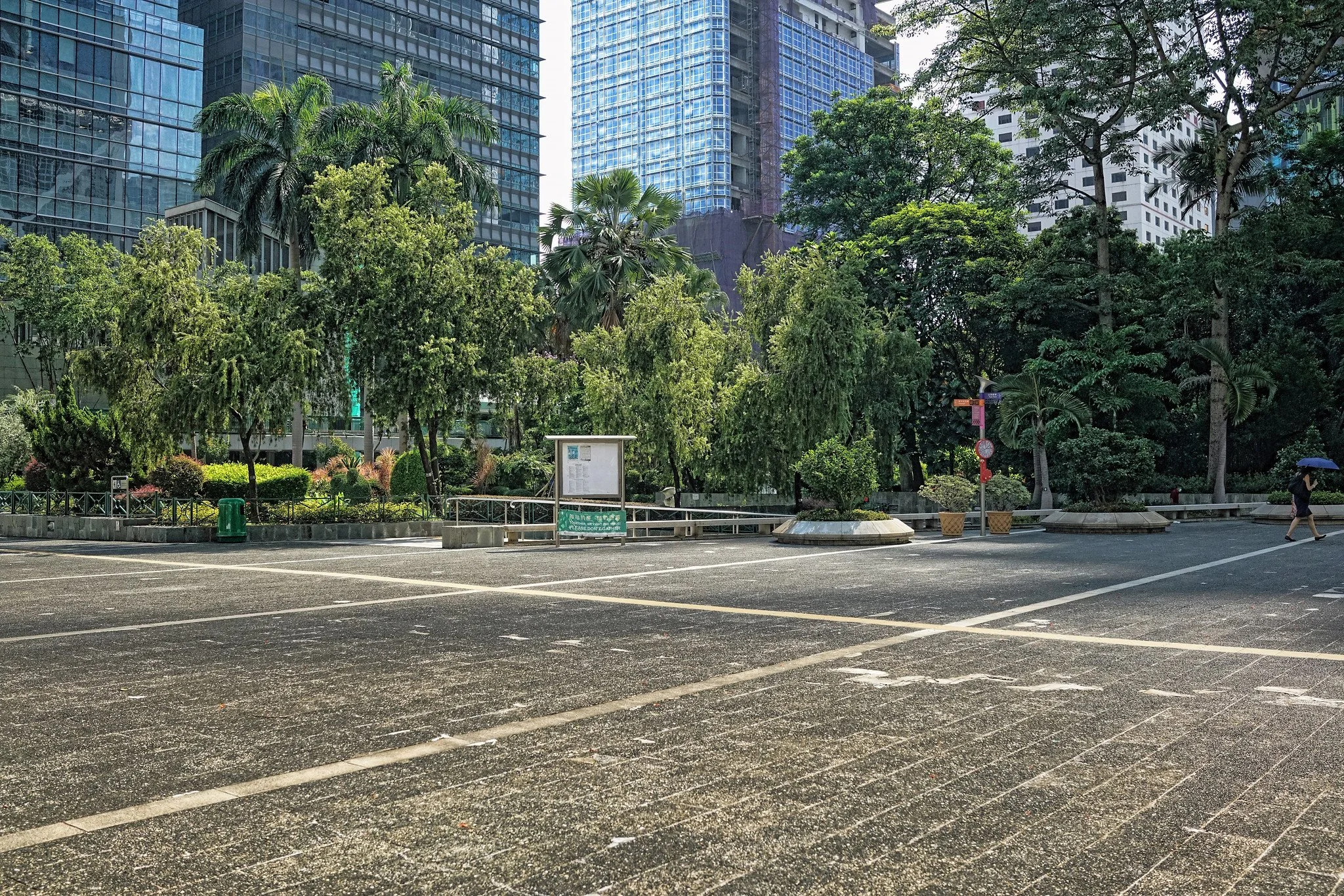
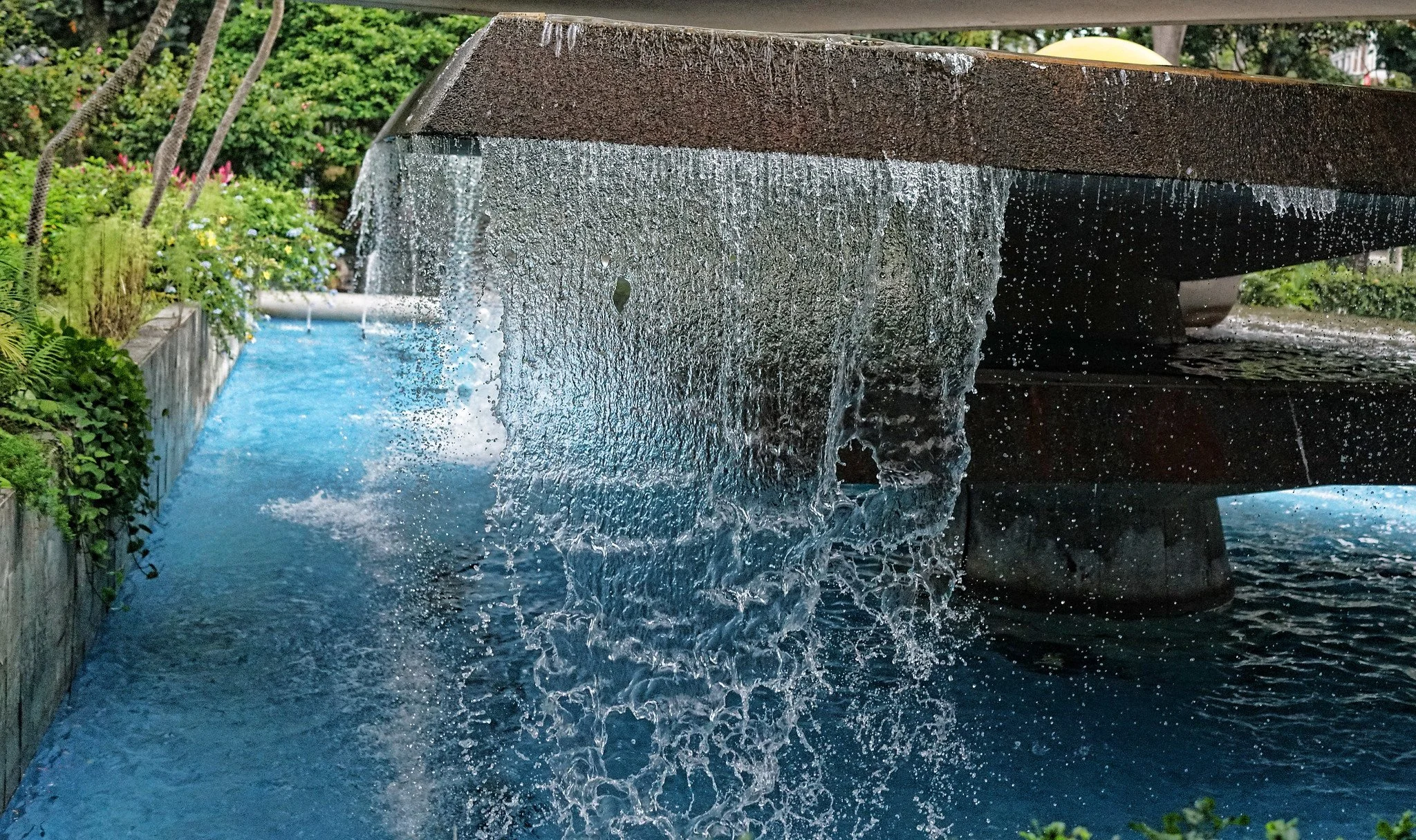
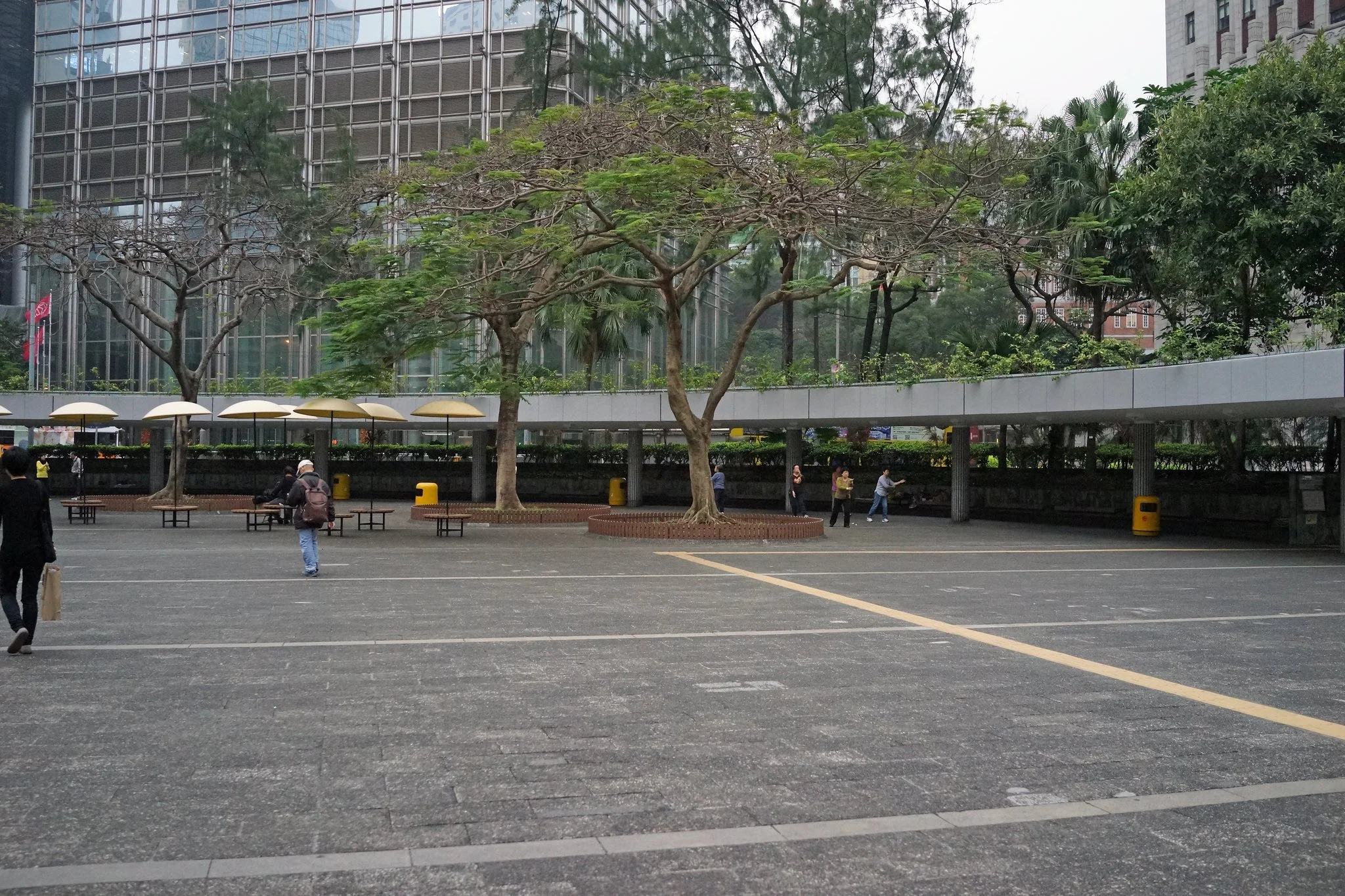
click on any image to enlarge
© Copyright Acknowledged | All rights reserved | images taken by Jamie
Chater Garden | in 5 images | Hong Kong
History and Specifics of Chater Garden: Size, Attractions, Builders, and Management
Chater Garden covers approximately 16,000 square metres (about 1.6 hectares or 4 acres), making it a compact but impactful urban concrete park. Its multi-level design cleverly optimizes space: surface lawns and paths sit above underground seating and MTR-related infrastructure, creating a layered oasis of concrete!
Key attractions include:
Tree Walk promenade: A shaded pathway featuring around 27 - 30 labelled species of trees and plants from around the world, offering an educational and tranquil stroll.
Water features: A lily pond, glass fountain, small waterfalls, pools, and additional fountains that add soothing sounds and visual interest.
Landscaped gardens and greenery: Over 11,000 trees, shrubs, and flowering plants across manicured beds, providing biodiversity and shade.
Seating and viewing areas: Benches (many tree-shaded), viewing platforms, and an underground sheltered seating zone. I take issue with this, most of the benches are NOT tree shaded which is why people do not sit there!
Commemorative foundation stone: The 1890 Praya Reclamation plaque, relocated in 1983, serves as a tangible link to the site’s history.
Open lawns and hardscape: While roughly 4,000 square metres feature concrete surfaces for durability and gatherings, the emphasis remains on greenery and accessibility.
Concrete: and this is what people remember, even the 11,000 trees/shrubs/plants (27 species) and I think that, that is an optimistic total, are uninspiring
There are approximately 1.7 million trees under regular maintenance by the Hong Kong Government, with about 1 million located in high-traffic urban areas. While this figure represents managed trees, the total number of trees including natural forests covering 53% of the land is significantly higher
The Urban Council oversaw planning and construction in the 1970s as a utilitarian yet thoughtful public project—no single prominent architect or landscape designer is prominently recorded, reflecting the era’s focus on practical urban renewal. Today, the garden is managed and maintained by the Leisure and Cultural Services Department (LCSD), which handles horticulture, cleaning, security, and community programming in the Central and Western District.
Articles and Public Comments on Chater Garden
Contemporary coverage and visitor reflections highlight the garden’s role as a valued, if modest, public asset. A 2018 South China Morning Post feature recounted the club’s relocation with a sense of nostalgia, noting how the century-old grounds gave way to a planned garden with underground seating, a lily pond, glass fountain, promenade, and viewing platform. It quoted Urban Council explanations that only a portion of the site would be concrete (initially about 4,033 square metres out of 16,000), with the rest dedicated to over 11,000 trees/shrubs/plants addressing early public concerns about “being completely covered with concrete.” the fact remains that there is simply NOT that many trees compared to most gardens and parks
.. and that is the issue really, the perception really is that it is just a mass of concrete, the layout of the garden simply does not attract people to visit and admire the greenery, people walk through as quickly as possible, the reality is that in the summer no one lingers that much in parks due to the stifling heat and humidity and Chater Garden is no exception, in the summer except for the stream of people walking to the Peak Tram terminal, it is largely deserted
TripAdvisor and travel site reviews frequently describe it as “a small urban park” and “much-needed green space” in Central, praising the Tree Walk as “pleasant” and the water features as refreshing for a quick break near the MTR. Visitors note its convenience for office workers and its popularity with domestic helpers on Sundays. Some comment on its role in civic life, hosting rallies and peaceful gatherings, while others appreciate the contrast between the surrounding skyscrapers and the pocket of foliage. Overall, feedback emphasizes its function as an accessible oasis rather than a grand botanical garden—practical, central, and quietly significant.
… and a much needed green space in Central? if you want a green space in Central you go to Hong Kong Park 10 minutes walk away and that is a very impressive garden | park with more amenities and it is huge in comparison
Other Relevant Information
The garden’s location -bounded by Chater Road, Des Voeux Road Central, and Jackson Road, directly east of the Legislative Council Complex - makes it a natural focal point for both leisure and public expression. It integrates seamlessly with nearby heritage elements like Statue Square and underscores Hong Kong’s layered history: from military parade ground to colonial cricket pitch, reclamation landmark, transit hub, and modern public park. Maintenance challenges in a high-traffic urban setting include balancing hardscaping for durability with greenery for appeal, but the LCSD’s ongoing care ensures it remains inviting but the reality is much harsher, there are few places to sit, most of the garden is wide open to the elements which is a real issue in the summer and again, you cannot get past the concrete, it just does not inspire people to explore the Garden, they walk through it as briskly as possible like I do, I thinK I have made this point quite clear.
My Considered and Thoughtful Opinion
Chater Garden exemplifies the best of pragmatic 1970’s urban planning in a city where land is at a premium which is also a bit of a ludicrous statement….
“Approximately 75% to 76% of Hong Kong's total land area is not built up, remaining in a natural or rural state. While known for high-density living, only about 24 - 25% of the total 1,110 square kilometer land area is developed, with much of the undeveloped land protected as country parks, woodland, or wetlands”
Its transformation from an exclusive sports ground to an inclusive public space was not just necessary but visionary—preserving public access to prime Central real estate at a time when commercial pressures could easily have swallowed it entirely. In a metropolis known for its vertical density and fast pace, this modest 1.6-hectare enclave provides genuine psychological and social relief: the gentle splash of fountains, the rustle of labelled trees from distant lands, and open lawns invite pause amid the financial district’s hustle.
.. and this is not me speaking, I deal in reality not romantic descriptions of a park that after 45 + years is showing its age and no amount of flowery language can change that.
That said, the garden’s design reflects the constraints of its era and location - multi-level engineering to accommodate the MTR below inevitably results in more hardscape than one might wish in an ideal park. Yet this practicality is precisely what makes it enduringly useful: it hosts everything from quiet contemplation to vibrant community gatherings without pretension. The retained foundation stone cleverly anchors the present to the reclamation that literally built Central, reminding us that Hong Kong’s story is one of continuous adaptation, well it is time they adapted Chater Garden to a smaller version of the Nan Lian Garden.
Ultimately, Chater Garden is more than a park; it is a quiet testament to civic foresight. In an age of ever-taller towers and denser development, spaces like this affirm that green, open areas are not luxuries but essentials for a livable city. It fosters community, preserves history, and offers breathing room -qualities that will only grow more precious as Hong Kong evolves. For locals and visitors alike, it remains a small but powerful symbol of resilience and respite in the heart of one of the world’s most dynamic district… thats enough blurb, time to change the Gardens look and purpose,
Finally, the Tourism Paradox
Tourism is the big thing in Hong Kong, the Government is obsessed with visitor numbers and we have many wonderful sights and sites and investment in tourist related projects is staggering and yet it has never occured to anyone in Tourism to look at this “park” in one of the most dynamic and expensive districts in the world
A make over to make it like the Nan Lian Garden is not going to break the bank but it would have a major impact on tourism given its locatation (when compared to the Nan Lian Garden)
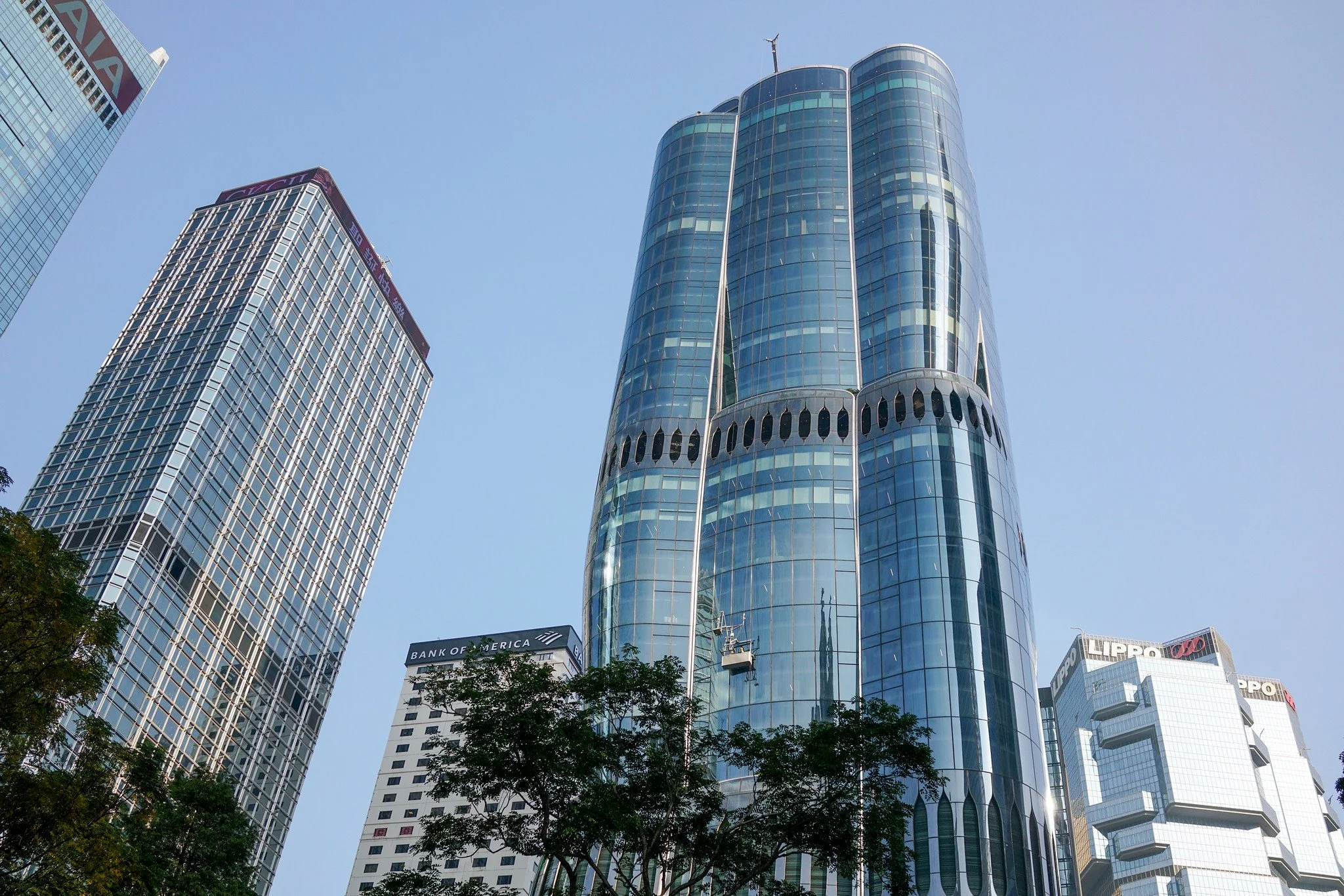
Sadly, I just do not see the Government even considering a revamp in which case the should look at what happened when next door they demolished a large public car park and in its place we got the Henderson Builidng which is truly world class!
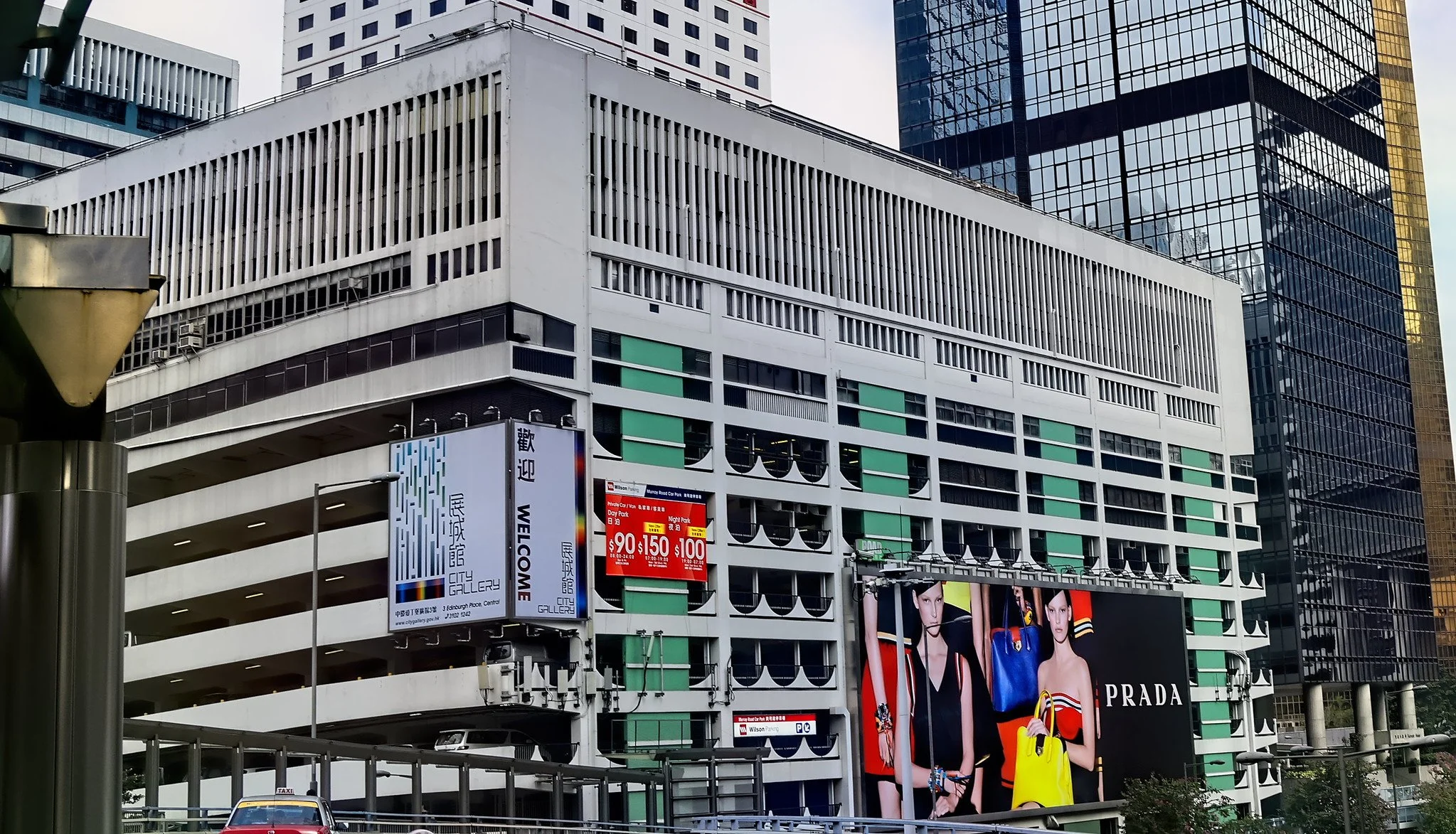
click on any image to enlarge
© Copyright Acknowledged | All rights reserved | Images taken by Jamie
The Henderson | as seen from Chater Garden | Hong Kong
Now is that not a magnificent building? The Murray Road car park which preceded this iconic building opened in 1973, the same era as Chater Garden and the car park was an incredibly ugly building and a real eyesore, the Goverment did the right thing (the land lease was sold for US$3 Billion) and now we have a world class building to look at, right next to Chater Garden
You can see the contrast in the before and now images above, well Chater Garden is the same era as the Murray Road Car Park, time to bring Chater Garden up to the same level as the Henderson Building next door
click on the image to enlarge
© Copyright Acknowledged | All rights reserved | Image taken by Jamie
Nan Lian Garden | Oasis in Diamond Hill | Hong Kong
Nan Lian Garden: A Tang Dynasty Oasis in the Heart of Kowloon
All the text below is from my recent blog post about the Nan Lian Garden
Before I ger stuck into this wonderful garden, just a personal observation, we have a garden in the Central Business District on Hong Kong Island called Chater Garden, it is my belief that they should close Chater Garden for 2 years and make it in the image of the Nan Lian Garden which is just about perfect, Chater Garden is more of a mass of concrete and basically a short cut for tourists from the MTR Station to the Peak Tram Terminus on Garden Road, it would be amazing if it looked like the Nan Lian Garder, just saying
Nan Lian Garden stands as one of Hong Kong’s most serene and meticulously crafted public spaces, a living embodiment of classical Chinese landscape design transported into the modern metropolis. Nestled in Diamond Hill, this 3.5-hectare (approximately 35,000 square metres) garden offers a profound contrast to the surrounding high-rises and urban bustle. Built in the authentic style of the Tang Dynasty (618 - 907 AD), it features graceful timber structures, dramatic rock formations, tranquil water elements, and carefully selected ancient trees and bonsai. The garden serves not only as a leisure destination but as a cultural bridge, inviting visitors to experience the harmony, balance, and philosophical depth of traditional Chinese garden artistry. What makes it especially remarkable is its intimate connection to the adjacent Chi Lin Nunnery, forming a unified Tang-style complex that feels both timeless and deeply rooted in Hong Kong’s evolving story.
Historic Timeline of the Site: From Colonial-Era Rural Landscape to Cultural Landmark from (1841 Onwards) to the present day
The land that now forms Nan Lian Garden and its neighbouring Chi Lin Nunnery has witnessed Hong Kong’s transformation from a sparsely populated colonial outpost to a densely developed urban district. While precise records for this exact plot in the early colonial period are limited, the broader Diamond Hill area (southern foothill of the hill in New Kowloon) provides the context:
1841- 1860: Following the cession of Hong Kong Island to Britain in 1841, the Kowloon Peninsula (including Diamond Hill) remained under Chinese control until the 1860 Convention of Peking, when it was ceded. The area was largely rural and agricultural, with small indigenous villages, farms, and scattered settlements amid steep hillsides. Development was minimal, focused on basic subsistence rather than large-scale infrastructure.
Late 19th to Early 20th Century: The site remained part of New Kowloon’s suburban and agrarian landscape - quiet, underutilized hillsides with limited population and no major urbanisation.
1934: A pivotal moment arrives with the founding of Chi Lin Nunnery on the site of an old mansion known as Chan Chat Mansion. Donated by Madam Nam Chong Yuen to Venerable Kok Yat and Venerable Wai Um of the Pure Land School, it began as a modest retreat for Buddhist nuns, complete with a simple Buddhist hall and reception area. This marked the first significant institutional presence on the southern slopes of Diamond Hill.
1930s - 1960s: The Japanese occupation (1941 - 1945) disrupted activities, with the premises commandeered and damaged. Post-war, Diamond Hill evolved into a major squatter settlement as waves of refugees from mainland China arrived amid civil war and political upheaval. Shantytowns of makeshift huts spread across the hillsides, lacking utilities and prone to fires. The nunnery stepped in as a community anchor, establishing a charity school in 1947 - 1948 (later Chi Lin Primary School), an orphanage, and a home for the elderly (opened 1957 with expansions in the 1960s). Nuns cultivated vegetables and engaged in small industries like towel weaving to sustain operations while providing education and welfare.
1980s - Early 1990s: Government urban redevelopment plans intensified. The construction of Tate’s Cairn Tunnel (completed 1989) necessitated the demolition of the original nunnery buildings amid surrounding squatter clearances. The 1985 Sino-British Joint Declaration and subsequent land-use revisions for Diamond Hill created opportunities for planned growth, clearing informal settlements for modern infrastructure.
1991 - 1998: Chi Lin Nunnery undertook a major redevelopment into a grand “seven-hall” timber monastic complex in Tang Dynasty style. Drawing on extensive research into traditional Chinese architecture (including Foguang Temple in Shanxi and Dunhuang murals), the project used mortise-and-tenon joinery without nails, high-quality cypress, and expert craftsmanship. It was completed in phases, with monastic halls opening in 1998, aligning with Hong Kong’s return to Chinese sovereignty.
Early 2000s: Post-redevelopment collaboration with the Hong Kong Government led to the creation of Nan Lian Garden on the land immediately south of the nunnery. The garden was commissioned around 2003 as a joint initiative to enhance cultural and community amenities in the redeveloped district.
2003 - 2006: Construction of the garden took approximately three years at a cost of around HK$245 million. The Government funded core infrastructure, while the nunnery covered design, timber structures, landscaping elements (trees, rocks, bonsai), and ancillary features.
14 November 2006: Nan Lian Garden officially opened to the public as a free, designated public park. It has been managed by Chi Lin Nunnery (initially for five years at a nominal fee, with ongoing oversight of daily operations and maintenance by the nunnery, while the Government handles infrastructure).
This timeline reflects resilience: from humble refugee aid amid postwar hardship to a deliberate cultural revival amid urban renewal. The site’s evolution mirrors Hong Kong’s broader journey - adapting colonial legacies, absorbing migrant waves, and prioritising heritage in a fast-paced city.
On a personal note, I did not know that the Chi Lin Nunnery or the Nan Lian Garden existed prior to 2010 when I was actively doing private tour research, I was sat on a double decker bus on the upper deck and we drove past the complex and I went there the next day! again, what an amazing place.
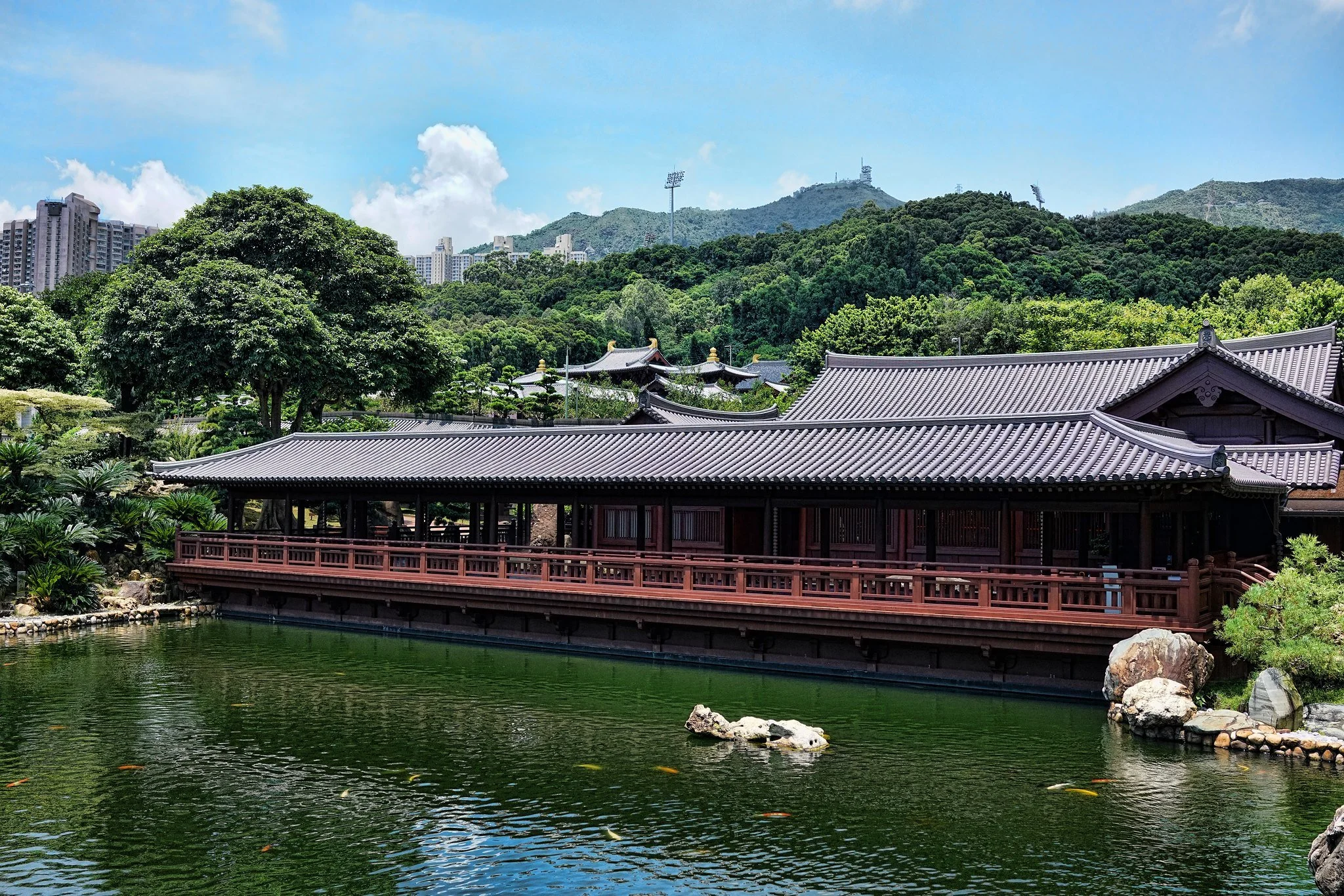
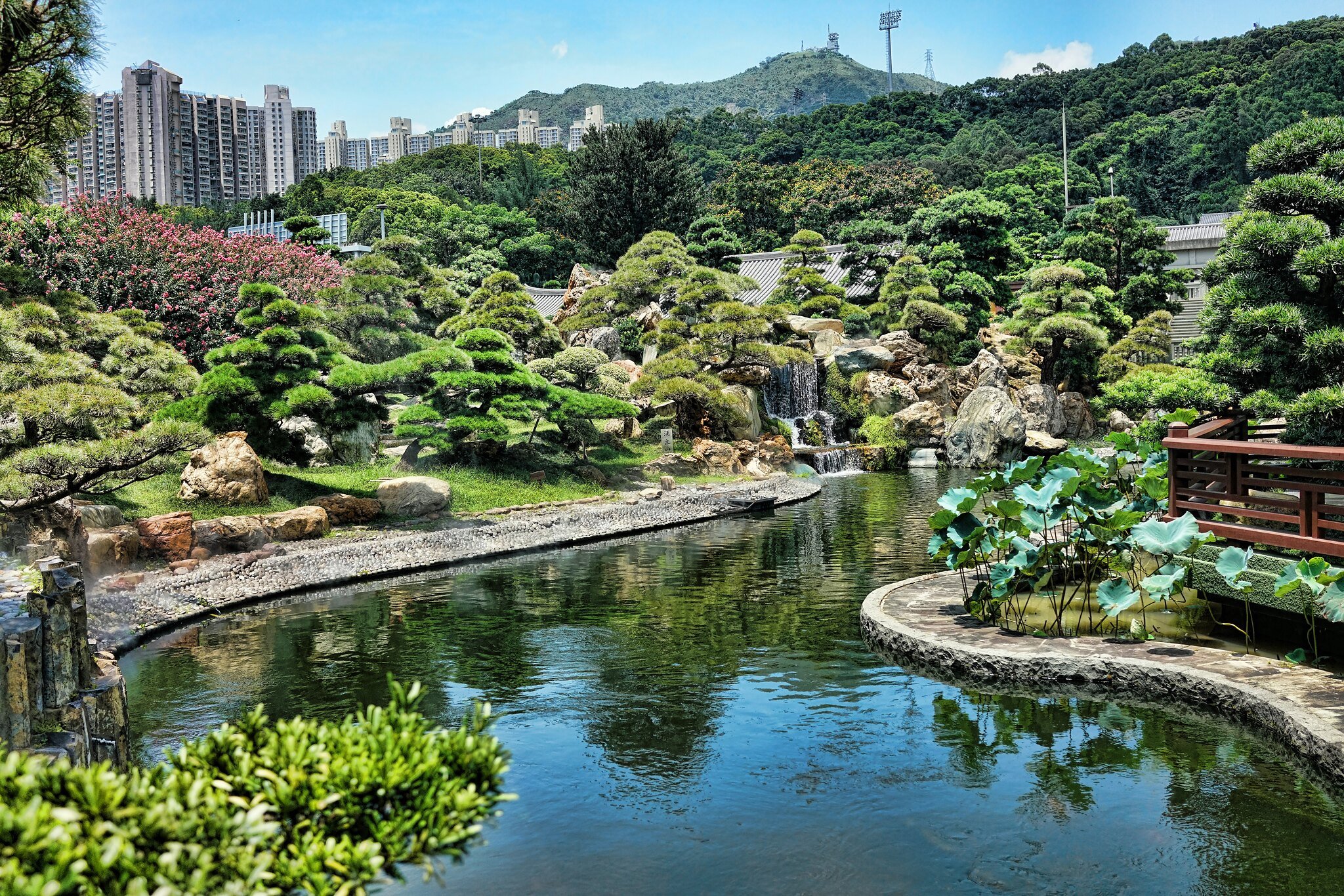
click on any image to enlarge
© Copyright Acknowledged | All rights reserved | images taken by Jamie
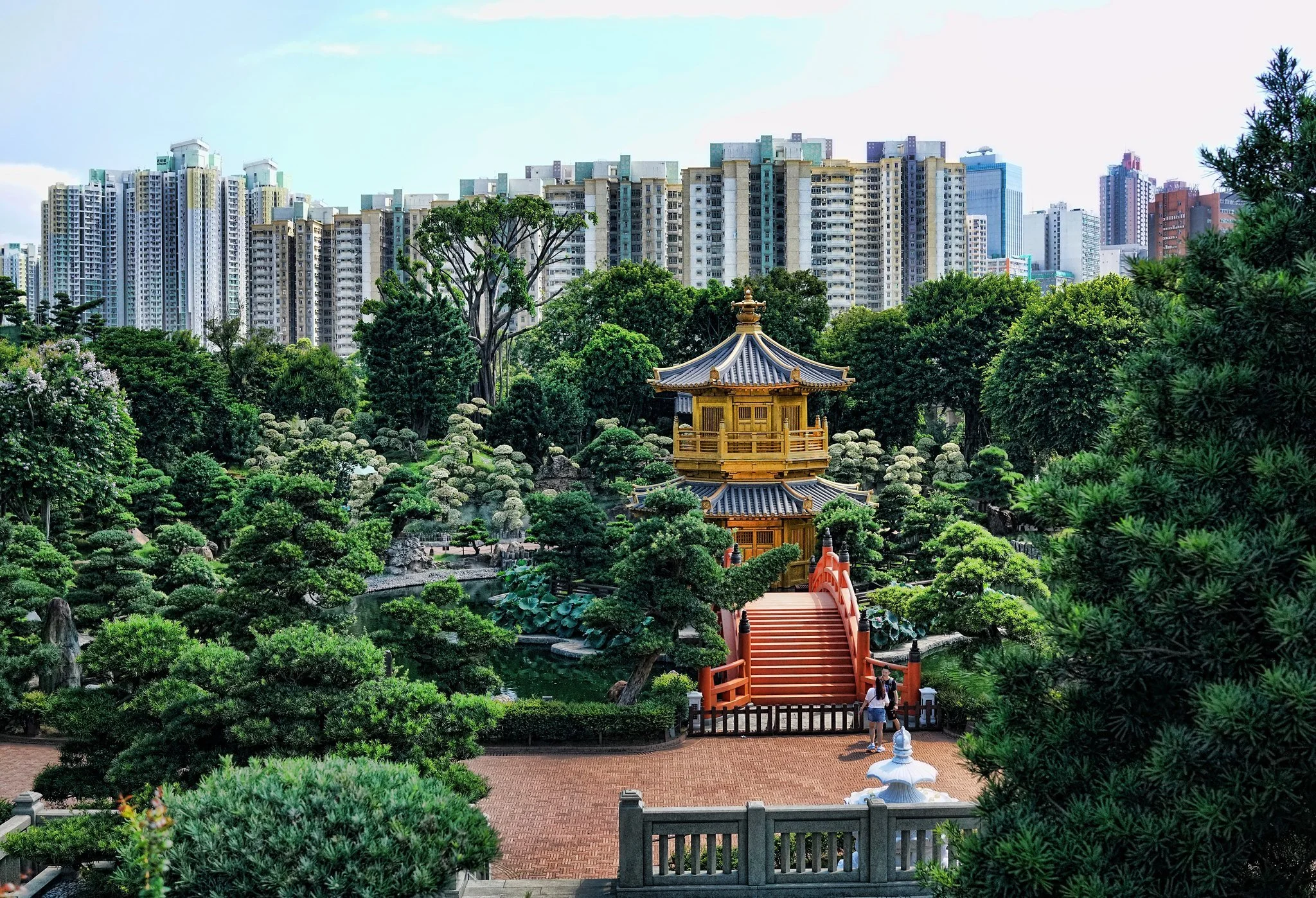
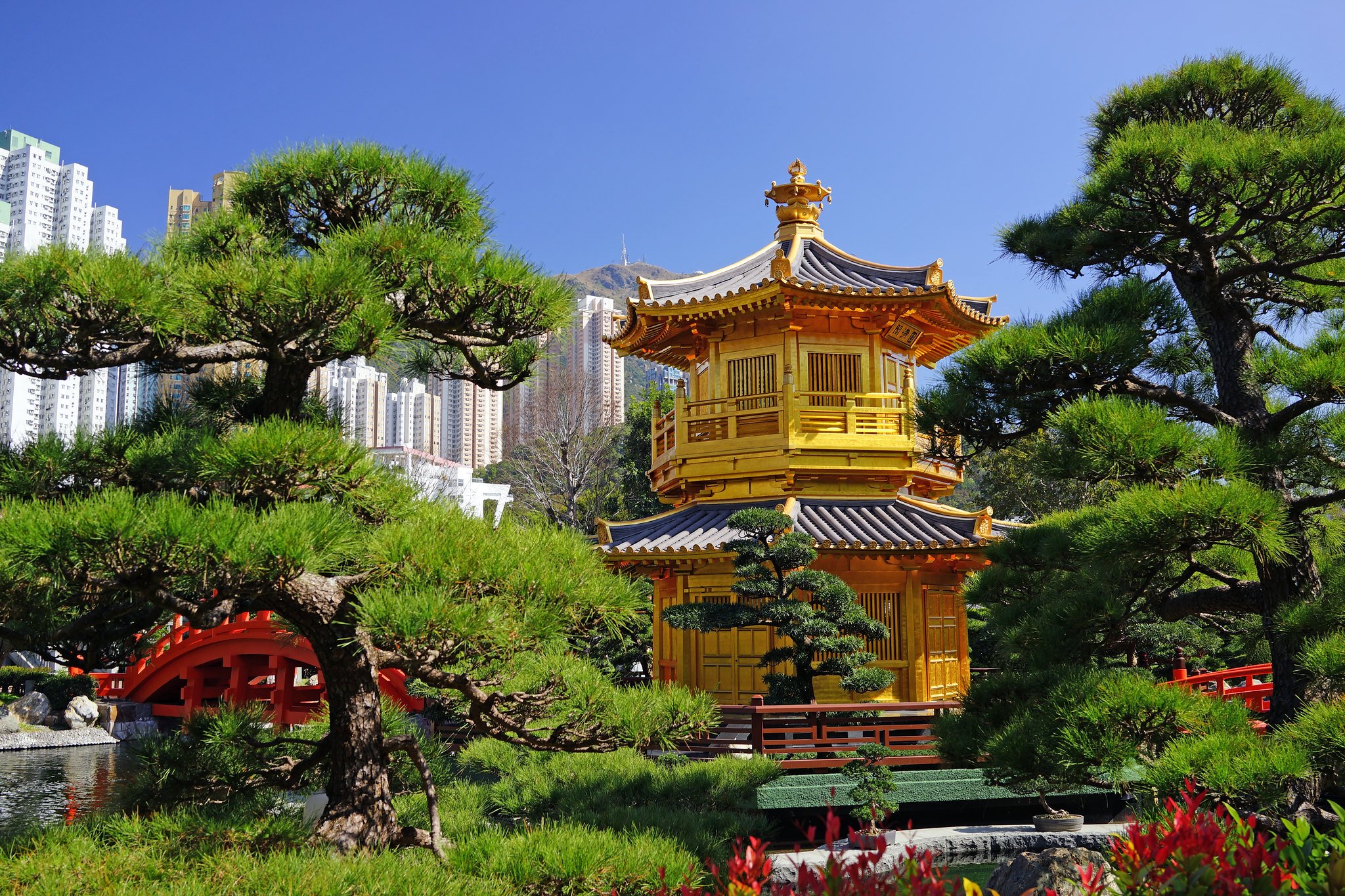
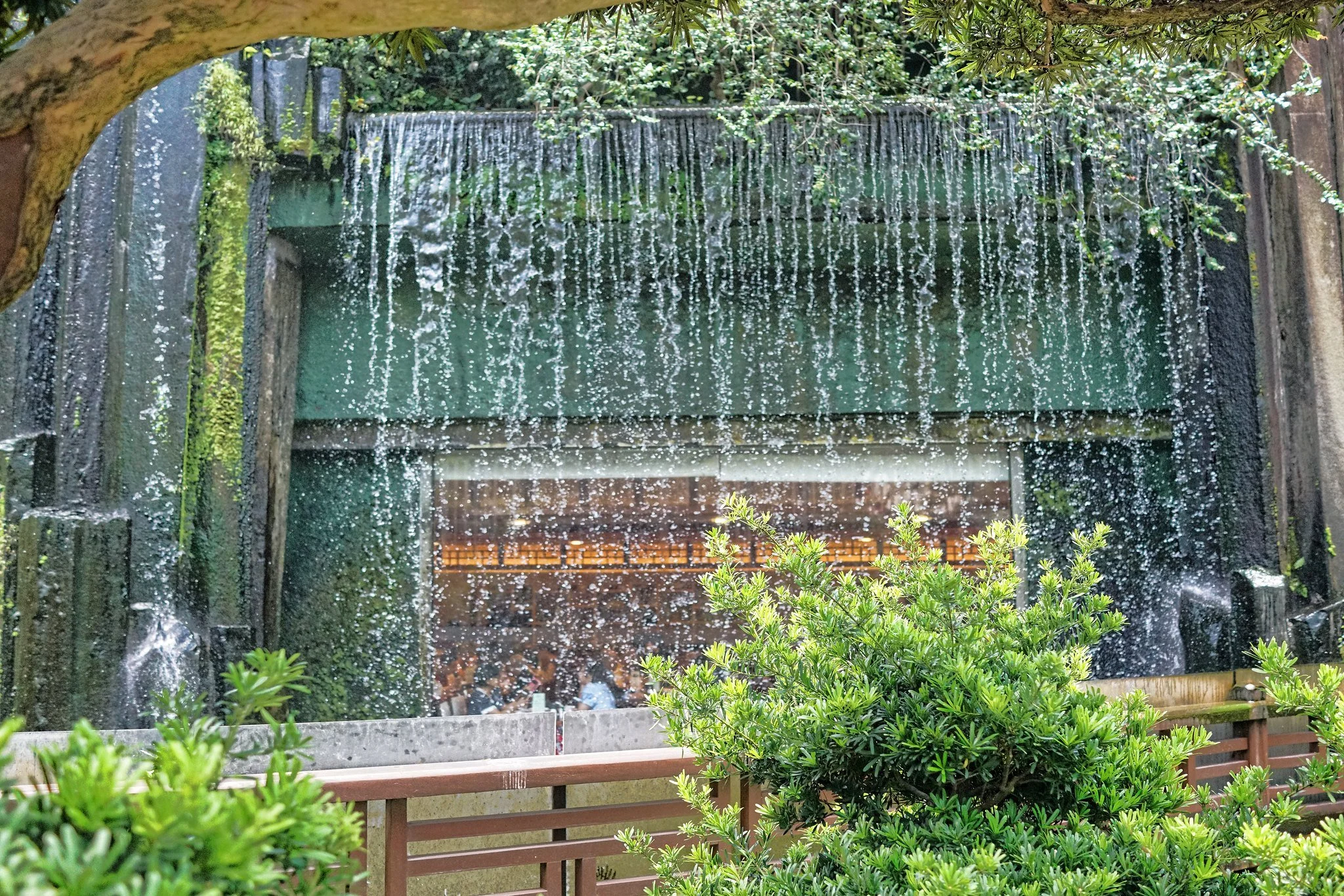
Nan Lian Garden | in 5 images | Hong Kong
The Decision to Build Nan Lian Garden and Its Connection to Chi Lin Nunnery
The creation of Nan Lian Garden was a strategic partnership born from the nunnery’s successful Tang-style redevelopment and the Government’s town-planning goals for Diamond Hill. Following the nunnery’s 1998 reopening, the two entities collaborated to transform the adjacent southern land into a complementary landscape garden. This was not merely an expansion but a holistic vision: to create a comprehensive Tang Dynasty-style environment blending monastic architecture with classical garden design. The nunnery, drawing on its expertise in traditional techniques and its role as a cultural steward, took the lead on garden aesthetics and construction elements, while the Government provided foundational support. The result promotes Chinese cultural heritage, offers public leisure space, and fosters community harmony in a once-impoverished area.
The physical connection is literal and symbolic - a beautifully landscaped footbridge (which I must stress is NOT wheelchair friendly) spans the road (and conceals the traffic below), linking the garden directly to the nunnery. Together, they form an integrated sanctuary: the nunnery’s halls, lotus ponds, and golden statues on one side; the garden’s winding paths and pavilions on the other. This adjacency enhances the spiritual and aesthetic experience, allowing seamless movement between temple reflection and garden contemplation. The nunnery’s ongoing management ensures the site’s serene, meditative atmosphere is preserved.
To make it clear, the Nunnery in particular (and certain parts of the Nan Lian Garden) are NOT wheelchair friendly and if you have issues with steps then be warned! - the bridge between the Nunnery and the Garden can be a real issue.
Garden Design: Spectacular Fidelity to Tang Traditions
The garden’s design is nothing short of spectacular - a faithful recreation that captures the essence of Tang Dynasty landscaping at its most refined. It is explicitly modelled on the Jiangshouju Garden in Shanxi Province, the only surviving Tang-era garden in China whose original layout can still be traced and reconstructed. This blueprint influenced every detail: the placement of rocks, water features, trees, and structures follows classical principles of asymmetry, “borrowed scenery,” layered views, and philosophical harmony with nature. No element feels random; paths create non-repeating perspectives, rocks evoke mountains, and water suggests flowing energy, all evoking the elegance and poetic restraint of Tang aesthetics.
The Chi Lin Nunnery drove the design and construction, leveraging architects and craftsmen experienced in Tang revival (informed by the nunnery’s own rebuilding and research into historical texts like the Yingzao Fashi). Timber structures employ traditional mortise-and-tenon joinery - interlocking without nails - for authenticity and durability. The overall effect is one of profound tranquillity and cultural depth, proving that ancient wisdom can thrive in a contemporary city. It stands as a masterclass in restraint and intentionality, where every bonsai, rock cluster, and pavilion invites quiet awe rather than spectacle for its own sake.
Attractions Within the Garden
Visitors follow a thoughtfully designed one-way (in theory!) touring route to ensure smooth, respectful flow. Highlights include:
Pavilion of Absolute Perfection : Usage: An octagonal pavilion on an island in the Lotus Pond, connected by two vermillion-colored Zi Wu Bridges. It serves as a focal point for photography and reflection, symbolizing perfection and harmony. Visitors cannot enter the pavilion (I understand that there is nothing inside the actual pagoda)
Lunar Reflection Terrace: Usage: A scenic spot for viewing the garden’s layout, offering a place for quiet contemplation and appreciation of the symmetrical design
Zi Wu Bridges : Usage: Two red-painted timber bridges linking the Pavilion of Absolute Perfection to the mainland, offering scenic views and a pathway for visitors to enjoy the pond and surrounding flora.
Water features: Tranquil lotus and koi ponds, streams, and waterfalls (such as Long Man Lou), symbolising purity and the flow of life.
Blue Pond:Usage: Usage: One of two main ponds, featuring red, gold, and pearl koi fish and rock formations, with the Pavilion Bridge as a backdrop. It provides a calming space for relaxation and photography. a few minutes walk from the Veggie restaurant is well worth a look, hundreds of large Koi fish are amazing to look at
Pavilion Bridge: Usage: Located at the east end of the Blue Pond, this bridge offers shade and a vantage point for viewing the pond and garden, enhancing the visitor experience
Rockery and artificial hills: Usage : Dramatic clusters of “bizarre rocks” arranged to mimic natural mountain landscapes., The Rockery is a display area near the Light of Enlightenment statue, featuring exquisitely shaped stones set in raked gravel, used for contemplation and showcasing geological beauty. and it is ok to sit on rocks (for luck) and they have some awesome bonsai trees near the rockery entrance
The Mill: Usage: A romanticized structure evoking traditional Chinese farm life, serving as a decorative and thematic element within the garden’s landscape
Souvenir Shop: Usage: Sells items like tea sets, bookmarks, journals, bags, fans, and vegetarian sauces,providing visitors with unique gifts and mementos - This place has many exquisite but expensive items, be sure to check the prices very carefully and be careful not to break anything!
Xiang Hai Xuan (Hall of Fragrance): Usage: An exhibition hall in the south part of the garden, hosting special exhibitions, musical performances, or seminars. It provides a cultural and educational space for visitors.
Chinese Timber Architecture Gallery: Usage: An air-conditioned gallery near the entrance, showcasing scale models, diagrams, and historical information about traditional Chinese timber architecture, particularly Tang Dynasty techniques. It educates visitors on construction methods
Trees and plantings: Mature pines, cypress, flowering trees, orchids, bauhinias, and meticulously pruned bonsai—each positioned according to traditional rules for seasonal beauty and symbolic meaning.
Overall atmosphere: Designed for quiet strolling, meditation, and appreciation—no active recreation, with rules prohibiting smoking and restricting eating to designated areas.
Places to Eat
Chi Lin Vegetarian: Located behind the Silver Strand Waterfall in the adjacent Nan Lian Garden, this restaurant offers elegant Chinese vegetarian cuisine with fresh, seasonal ingredients like mushrooms, tofu, and local vegetables. It serves lunch, afternoon tea, and dinner in a Zen-inspired setting with set menus. I absolutely recommend it
Song Cha Xie Teahouse: Situated beside a pond in Nan Lian Garden, this Tang-style teahouse offers premium Wuyi rock teas (e.g., Da Hong Pao, Tie Luo Han) and dim sum. Open daily from 12:00 PM to 6:00 PM, it also features occasional live music and cultural performances.
Snack Shop: Next to the souvenir shop and excellent rest rooms it has a good selection of food and drink and a great stop when it is hot and humid
A word about the Zi Wu Bridge
All official documents and such call it the red bridge, to me this is nonsense, I have been there over 1,000 times and all my guests say the same thing, it is ORANGE not red, you can use any scientific term you wish but that does not change my view that the bridge is ORANGE and not some artsy fartsy shade of red. The common description is Vermilion-red/Orange-red. which to me is just those who came up with this description acknowledge that the bridge is orange and not red! and yes, red is a very famous and popular colour in Chinese Culture.
Comments and Impressions from Visitors and Writers
Reviews consistently describe Nan Lian Garden as a “hidden gem” (a term which is such a cliche) and “tranquil oasis” amid Kowloon’s density - a place where the chaos of the city fades into profound peace. Many highlight the Tang-style fidelity, noting how the pavilion and bridges create postcard-perfect scenes that contrast beautifully with surrounding high-rises. The teahouse and vegetarian dining are praised for extending the immersive experience, while the garden’s design is lauded for its discipline and vision: “It reminds you how advanced Chinese civilisation was,” with quotes from over a thousand years ago still resonating. Families and solo travellers alike call it restorative, ideal for reflection or a gentle escape. While the vast majority celebrate its beauty and free access as a must-see, a rare dissenting voice has described it as feeling somewhat enclosed under infrastructure - yet this is overwhelmingly outweighed by acclaim for its role as a soul-restoring sanctuary.
Other Relevant Information
The garden operates daily from 7:00 am to 9:00 pm with free admission. Group visits (over 20 people) require advance booking. It prohibits smoking due to the timber and plant life and emphasises respectful, unhurried enjoyment. In 2012, the garden and nunnery were jointly placed on China’s tentative list for World Cultural Heritage consideration, underscoring their significance.
My Considered Opinion
Nan Lian Garden is a triumph of thoughtful urbanism and cultural stewardship - one of the most impressive examples I’ve encountered of how a dense, forward-looking city can carve out space for historical reverence and human respite. In Hong Kong’s relentless pace, its existence feels almost miraculous: a deliberate counterpoint to concrete and commerce that prioritises the intangible—harmony, contemplation, and connection to ancient roots. The partnership between the nunnery and Government was inspired; it harnessed institutional expertise and public resources to deliver something far greater than a mere park. The design, rooted in Jiangshouju yet perfectly adapted, achieves a rare authenticity that doesn’t feel like a theme-park replica but a genuine continuation of Tang elegance. Every rock, ripple, and timber joint whispers of patience and precision, offering layers of discovery that reward slow exploration.
Historically, the site’s arc - from rural quietude to refugee crucible to cultural phoenix—embodies Hong Kong’s spirit of renewal. It reminds us that progress need not erase the past; it can amplify it. For residents and visitors alike, Nan Lian Garden isn’t just scenic - it’s restorative, a place where the mind can reset amid nature’s curated beauty. In an era of rapid change, spaces like this sustain the soul and enrich the collective memory. If you seek depth beyond the city’s surface glamour, this garden delivers it in abundance. It is, quite simply, spectacular.
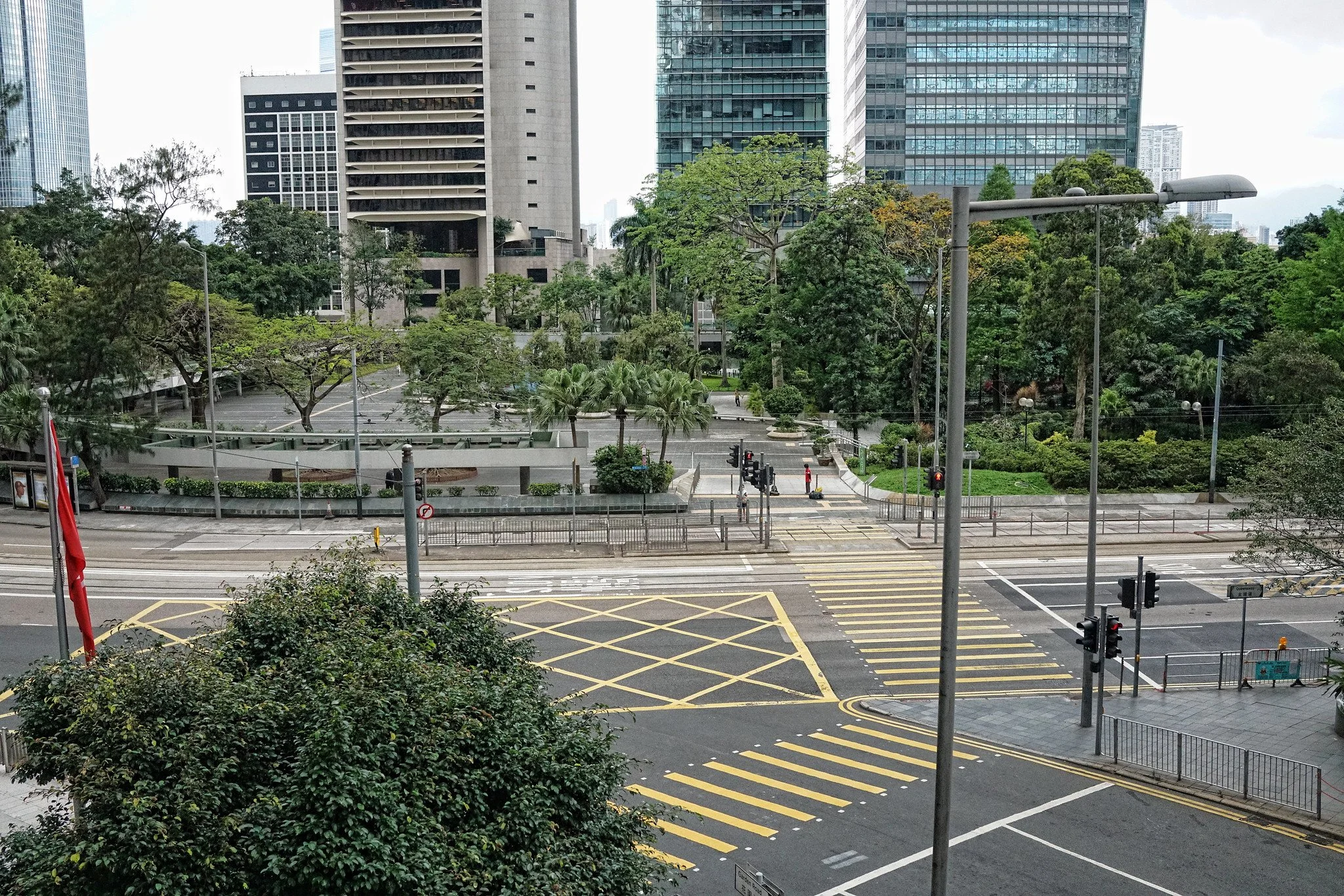
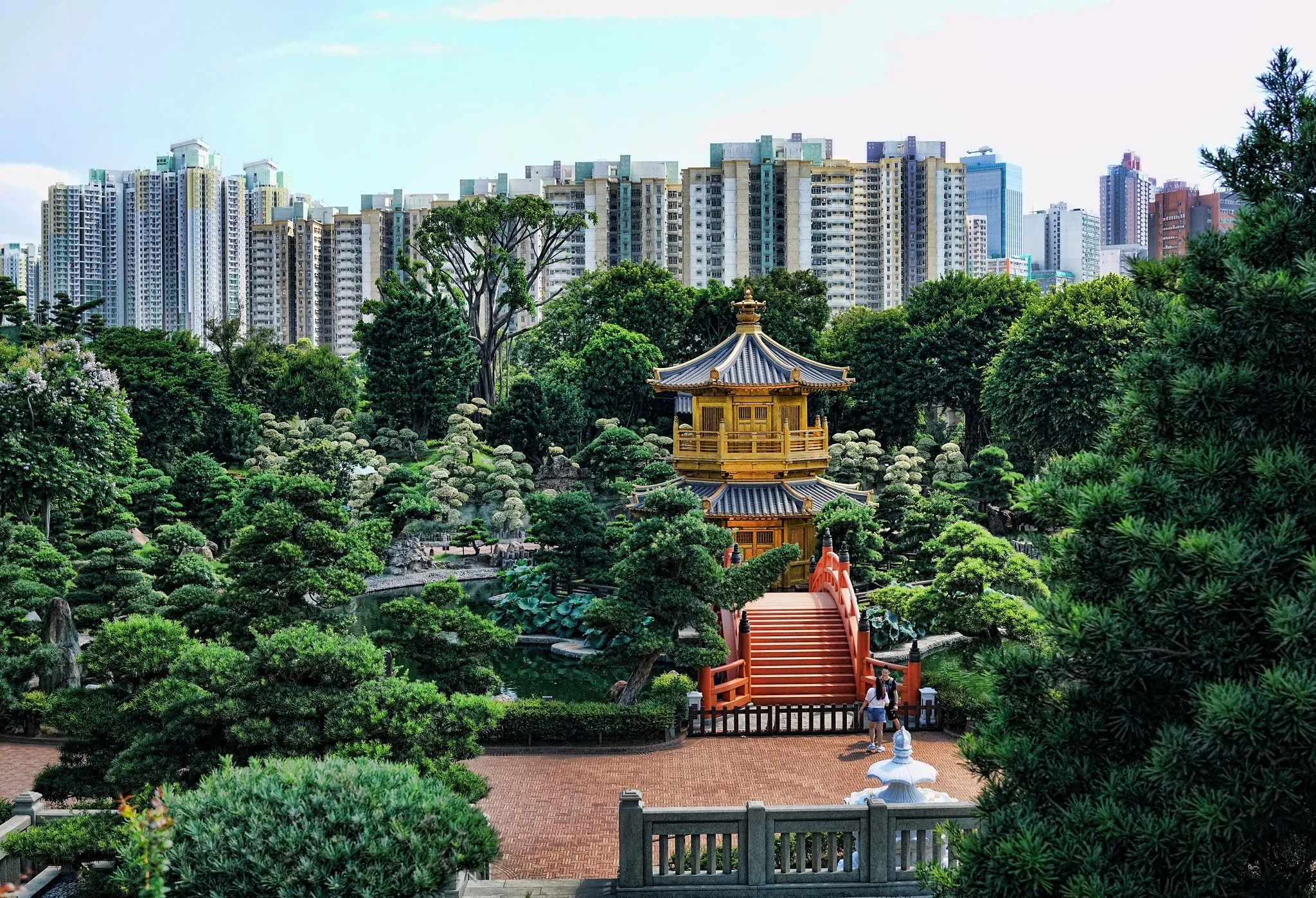
click on any image to enlarge
© Copyright Acknowledged | All rights reserved | Images taken by Jamie
Chater Garden - Left | Nan Lian Garden - Right | Hong Kong
Chater Garden vs Nan Lian Garden: A Missed Opportunity in the Heart of Central?
As a 54-year Hong Kong resident and private tour guide with J3 Private Tours and J3 Consultants Hong Kong (over 2,360 tours completed), I’ve walked every inch of Central with guests from around the world. One spot I pass almost daily - right next to The Henderson Building and the Bank of China Tower - is Chater Garden. It’s meant to be a green oasis in the concrete jungle of Hong Kong’s financial district, but in reality, it often feels more like a paved shortcut than a proper park.
Many of my guests notice it immediately: “It’s nice… but why is there so much concrete?” They’re right. And yet, just a short MTR ride away in Diamond Hill, Kowloon sits Nan Lian Garden - a true classical Chinese masterpiece that shows exactly what a high-quality urban garden can be. If the Hong Kong Government ever wanted inspiration for a thoughtful upgrade to Chater Garden, they need look no further than Nan Lian Garden
Here’s a detailed comparison, the issues with Chater Garden, and why a Nan Lian Garden -inspired refresh could win overwhelming support from locals, domestic helpers, tourists, and the business community alike.
Chater Garden Today: A Functional but Underwhelming Urban Space
Size: Approximately 16,000 m² (1.6 hectares / roughly 4 acres).
Location: Prime Central District, bounded by Chater Road and Des Voeux Road Central. It sits directly beside The Henderson, across from the Bank of China Tower, and serves as a key pedestrian link from Central MTR Station to the Peak Tram terminal on Garden Road and Statue Square which is about 1 minute away
History: Once the home of the Hong Kong Cricket Club (1851 - 1975). Rezoned as public open space in 1970 and opened in phases in 1978 and 1983 at a cost of HK$7.9 million. It was designed as “green relief” in the rapidly developing CBD.
On paper, it has all the right elements: a Tree Walk promenade, lily pond, fountains, small waterfalls, over 11,000 trees/shrubs/plants (27 species), benches, and free Wi-Fi. It’s managed by the Leisure and Cultural Services Department (LCSD) and remains fully public and free (and yes, the LCSD manages the Nan Lian Garden as well)
In practice, however, concrete dominates the experience. Official figures note about 4,033 m² of hardscape (around 25%), but to visitors and regular users it feels closer to 40 - 50% because of the large central plaza and wide paved pathways. The result? It functions more as a busy thoroughfare and weekend gathering spot (especially popular with domestic helpers for picnics and socializing) than a place to truly relax and “chill among trees.”
Many people - myself included on tours - simply walk through it quickly and head 10 minutes away to the much lusher Hong Kong Park or the nearby Statue Square for any real greenery. In a city as dense as Hong Kong, this feels like a missed opportunity, especially right in the shadow of some of Asia’s most expensive real estate.
Nan Lian Garden: The Benchmark for What a Proper Urban Garden Should Be
Size: 35,000 m² (3.5 hectares / 8.6 acres) - roughly twice the size of Chater Garden.
Location: Diamond Hill, Kowloon, right next to Chi Lin Nunnery and a short walk from Diamond Hill MTR.
Style: Classical Tang Dynasty (618 - 907 AD) Chinese garden, with rolling hills, ponds, waterfalls, carefully placed rocks, timber pavilions, and layered planting that creates serene, ever-changing views.
Opened in 2006 as a joint project between the Hong Kong Government and Chi Lin Nunnery, Nan Lian cost around HK$245 million to build. What makes it special is the partnership model: the government provided the land and major funding, while the nunnery took the lead on design, traditional wooden structures (many built without nails), and ongoing management. The nunnery maintains the garden under a long-term agreement with the LCSD for a nominal fee of just HK$1.
The result is one of Hong Kong’s most loved green spaces:
Dense, lush greenery dominates - trees, shrubs, and ornamental plants create shaded groves and peaceful corners.
Water features are prominent and beautifully integrated (ponds, cascades, red bridges).
Traditional pavilions offer shaded seating and quiet spots for reflection or tai chi.
Excellent on-site amenities: a high-quality Chinese tea house and the superb vegetarian restaurant Long Men Lou (tucked behind a waterfall, serving excellent dim sum-style dishes and full meals). These turn a visit into a relaxing half-day experience rather than a quick walk-through.
My guests and I always rate it highly - it feels like stepping back in time to ancient China, yet it’s perfectly maintained and peaceful even on busy days.
Yes, for the record it is correct that the Leisure and Cultural Services Department (LCSD)of the Hong Kong Government is responsible for the management and maintenance of Nan Lian Garden. While the garden was designed and built in collaboration with the Chi Lin Nunnery, it is managed as a public park under the LCSD, it amazing that 2 Gardens managed by the Government can be so paradoxically opposites.
Why the Government Should Seriously Consider a Nan Lian-Inspired Upgrade for Chater Garden
Chater Garden is already protected as “Open Space” zoning - no one is suggesting selling it off (least of all me) . But a thoughtful redesign would cost a fraction of a new park and deliver huge benefits:
Overwhelming Public & Visitor Support: Locals, office workers, domestic helpers, and tourists would love it… a serene, well-maintained public garden promotes social harmony without the risks of large open plazas. My guests constantly comment on how much better Central would feel with more genuine greenery.
Tourism & Livability Boost: Central is Hong Kong’s global showcase. A Nan Lian-style upgrade next to The Henderson and Bank of China Tower would become an Instagram-worthy attraction, encouraging people to linger rather than rush through.
Proven Partnership Model: The government could replicate the Chi Lin Nunnery model - work with a respected cultural or landscape organisation for design and maintenance. It keeps costs down and brings genuine expertise.
Aligns with Existing Goals: Hong Kong has active greening initiatives. Reducing concrete, adding thousands more trees/shrubs, creating shaded pavilions, enhancing water features, and adding a small quality tea house or light café would turn Chater into the “proper garden” it was always meant to be - while still preserving its role as a pedestrian connector.
Practical & Low-Risk: No land sale needed. Phased works could happen without major disruption. The site is already multi-level and MTR-integrated, so functionality stays intact.
In short, it’s a win-win: better quality of life, stronger tourism appeal, and a visible commitment to making Central more liveable.
Final Thoughts from a Hong Kong Private Tour Guide (that would be me)
Chater Garden is not bad - it’s just dated and under-achieving compared to what’s possible, as Nan Lian Garden so beautifully demonstrates. With the incredible redevelopment happening all around it (The Henderson, Bank of China Tower, etc.), now feels like the perfect time for the government to give this historic space the refresh it deserves.
If they ever decide to act, I’ll be the first to update my J3 Private Tours itineraries to include “before and after” walks. Until then, I’ll keep recommending that guests experience both gardens on the same day: a quick Central loop via Chater, then a relaxing afternoon in Nan Lian to see what Hong Kong’s green spaces can be.
I do not do Food Tours in Hong Kong but I know people that do!
I do not do food tours as mentioned above, I have very specific reasons and part of it is that I do not speak Cantonese or write Chinese, I am from Yorkshire in England and I lack the language gene and it is not through lack of trying and yes a lot of restaurants do not have English menu’s or staff who speak conversational English.
.. and yet I have eaten at close to 1,400 restaurants in Hong Kong since January 2nd 1972, my wife was born in Hong Kong and we have been together over 40 years and her first language is Cantonese and a lot of her family are Chinese or half Chinese so I have never had much of an issue!
This does not translate to doing food tours though, yes, I could do them, no problem there but they would never ever be as good as the food tours done by my friends (see the 3 links above) most of their awesome guides are locally born Hong Kong Chinese and obviously food culture is part of their DNA, it is impossible for me to compete with that!
So please feel free to contact them for food tours
I do not do Hiking Tours in Hong Kong but I know someone that does!
I do not do Hiking Tours, never have and never will even though I used to go Hiking a lot when I was a lot younger, The Hong Kong Government is promoting hiking tours so I urge you to contact my friend Sabrina at Hong Kong Trails and Tours, she is a long time Hong Kong resident and and a very experienced hiker with close to 700 Hikes in 15+ years under her belt, please click on the link below
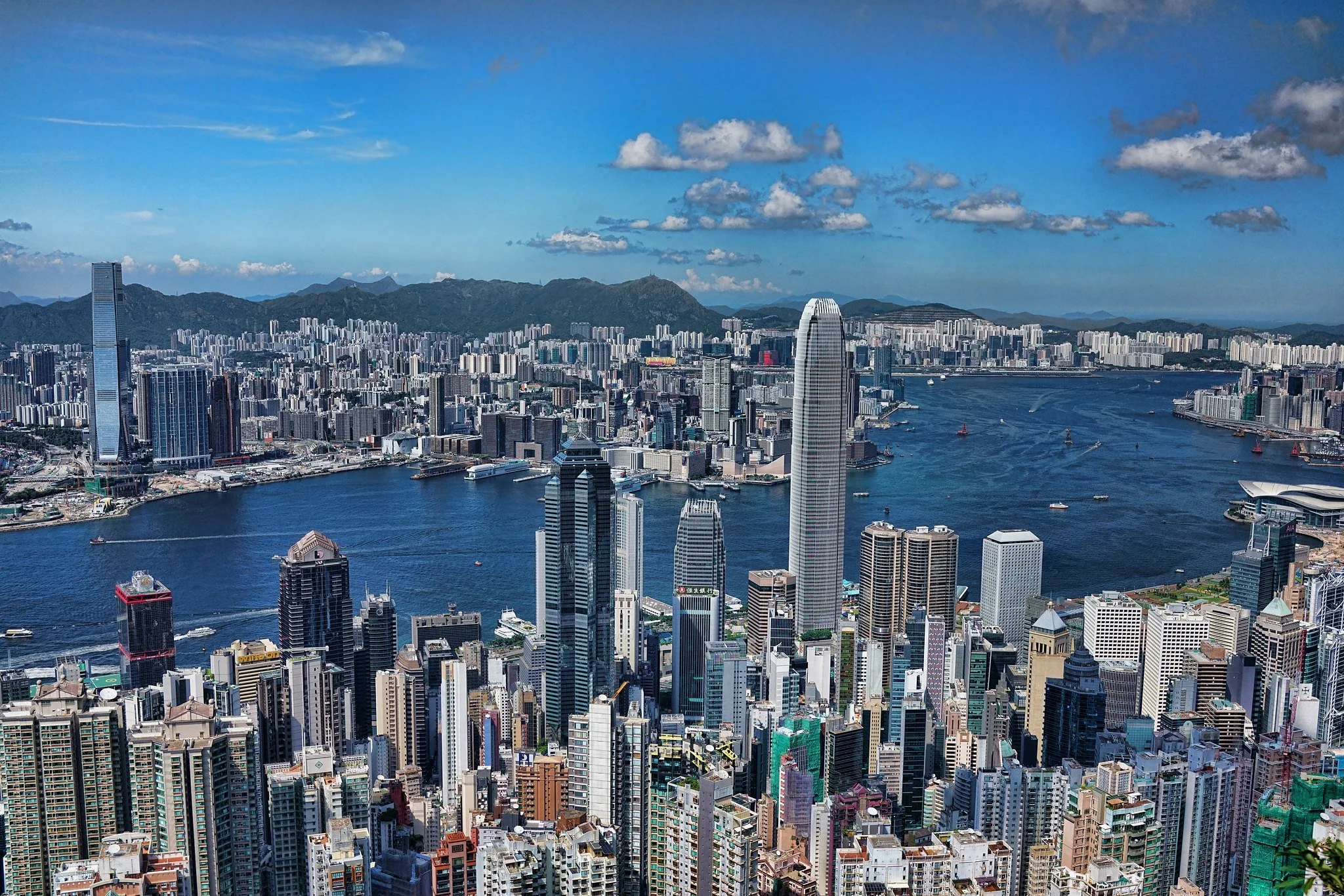



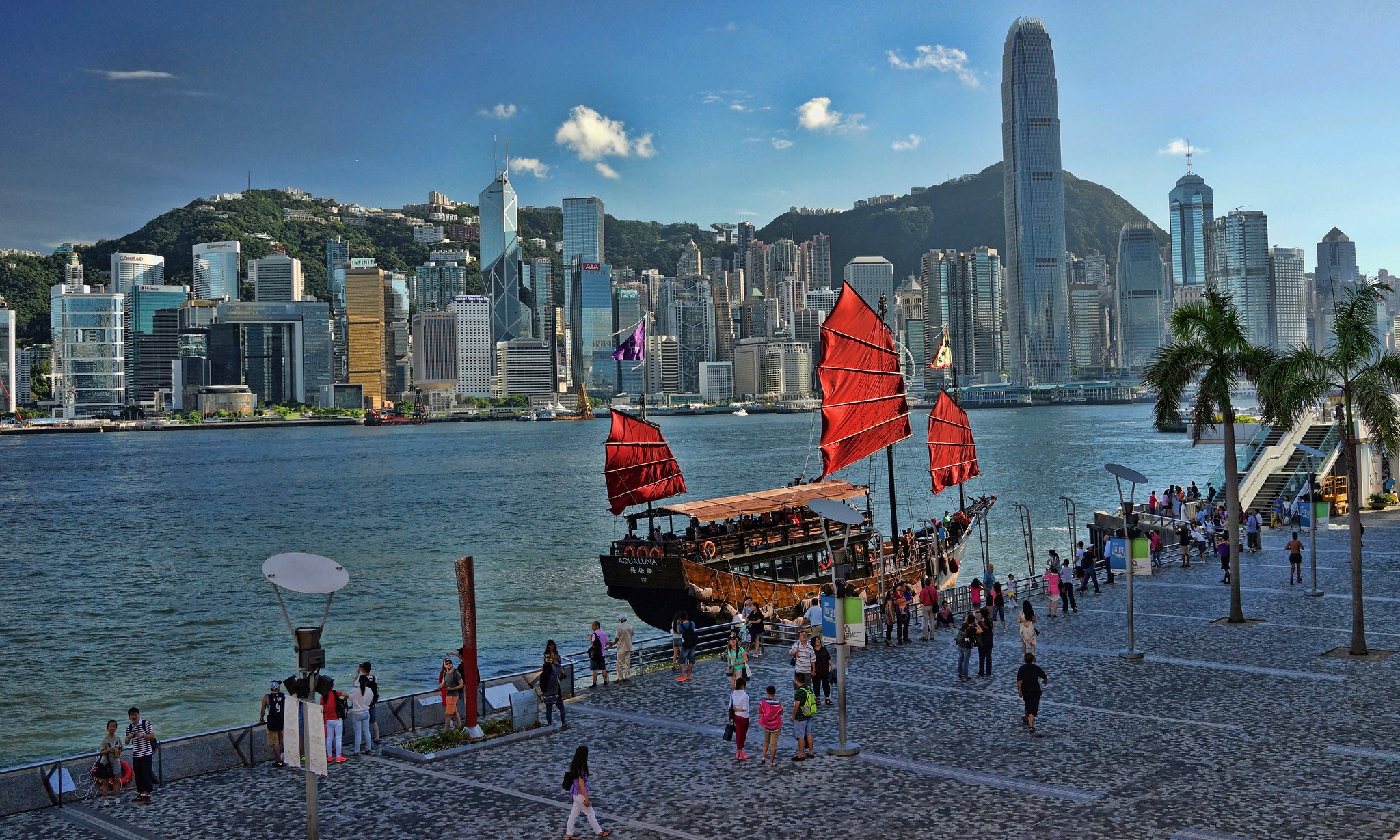
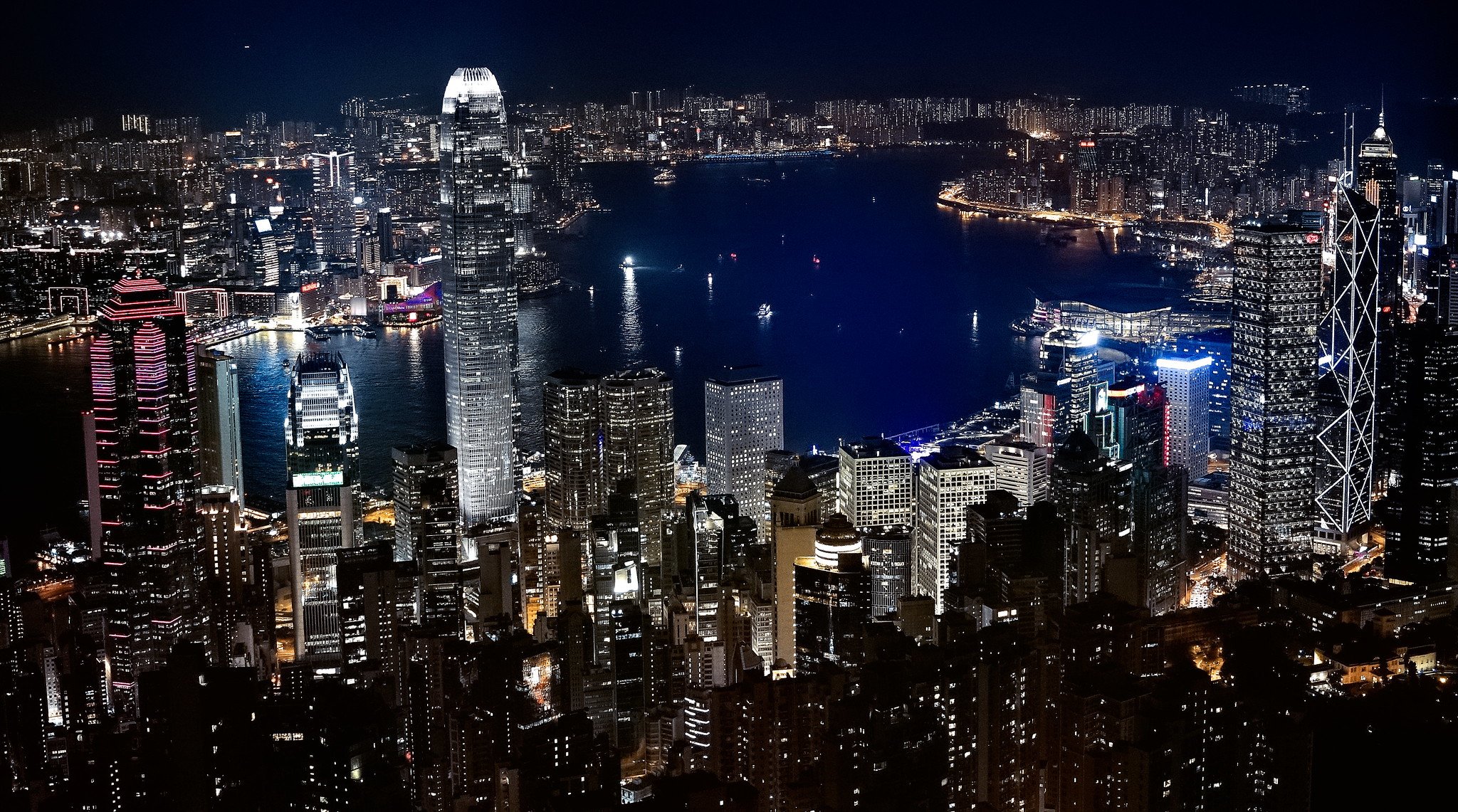
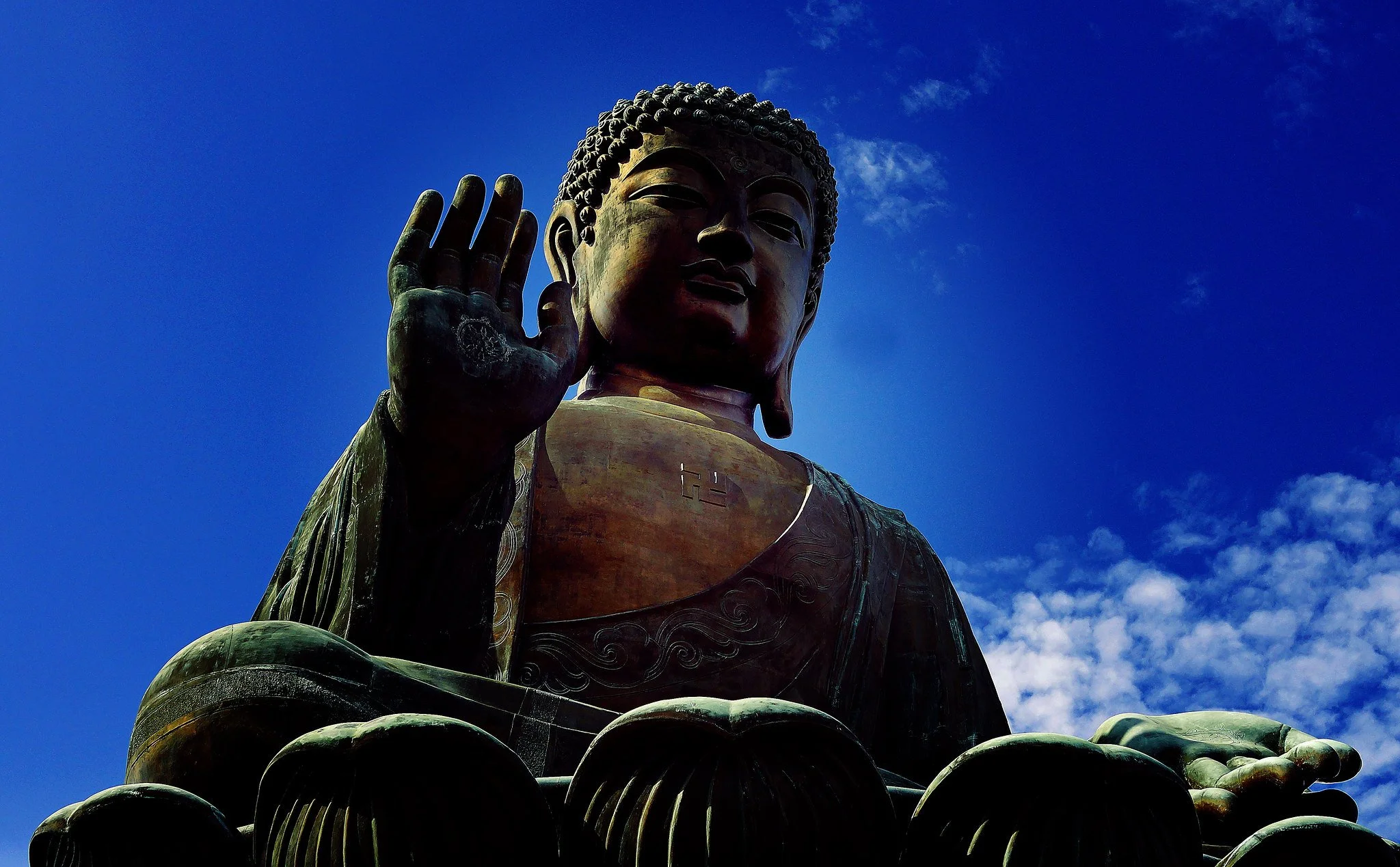

click on any image to enlarge
© Copyright Acknowledged | All rights reserved | all images taken b Jamie
Jamie’s Hong Kong | Some of my favourite images | Hong Kong 101
© Jamie Lloyd | J3 Consultants Hong Kong | J3 Private Tours Hong Kong |
| 2010 - 2026 All rights reserved. |
Click on any image to enlarge to full screen









Current images from my Instagram feed