Statue Square Hong Kong - the HSBC 999 year lease history
This is why nobody can build in front of HSBC Headquarters in Hong Kong

The J3 Group - Premium Quality Private Tours | Experiences and Insider Chats since 2010
Me Jamie, your host, I am English and I have lived in Hong Kong since January 2nd 1972 - I know the place.
A meaningful blog post with a difference - tips on Travel, Tourism, Tours, Daily Life and my personal thoughts on Hong Kong.
Please do visit Amazing Hong Kong
Hong Kong | Pearl of the Orient
Guided by Stories, Private Tours of Hong Kong with Jamie
A Resident since 1972 - Quality Private Tours of Hong Kong
click on the image to enlarge
© Copyright Acknowledged | All rights reserved
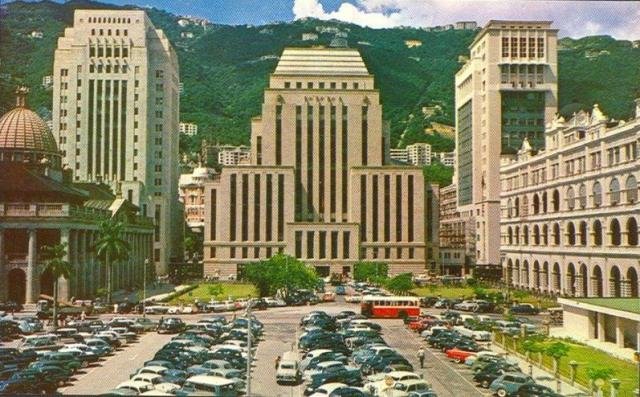
Statue Square Hong Kong | Mid 1960’s | Hong Kong
The iconic image of Statue Square in Hong Kong - no one is allowed to build in all that space that ends up at Victoria Harbour, unobstructed views for HSBC
Jamie a Hong Kong resident of well over 50 years and 2,360+ private tours completed since 2011
I just love this awesome and iconic image which was taken when Statue Square had a major revamp in the mid 1960’s and it pretty much looked the same when we arrived in January 1972, there have been some changes since then but it still pretty much looks like this
I have always known the basics of the connection between HSBC and Statue Square but not in any great detail, I knew they had a very long lease but as I have learnt it was always a little bit more complicated and today Statue Square remains my favourite place, I quite often just sit near the Sir Thomas Jackson Statue (who put HSBC on the map) and contemplate the meaning of life and such!
This is my take on the subject matter with input as usual from AI
My understanding of the Statue Square plot in Central District - specifically the area in front of the HSBC headquarters building that extends to Connaught Road Central - is largely accurate, with some important historical and legal nuances that clarify the precise nature of the "ownership" and ongoing management and it reveals the long and strong relationship between HSBC and successive Hong Kong Governments
In Hong Kong's land tenure system (which has always been leasehold-based under ultimate government ownership, a structure carried over from the colonial era into the post-1997 framework), this particular plot forms part of the reclaimed land created in the late 19th century under the Praya Reclamation Scheme. The square itself was laid out as a public open space around the turn of the 20th century, divided into northern and southern sections by Chater Road. The southern portion (the area directly in front of HSBC and running south toward Connaught Road Central) ties directly to the lots in question.
Lease Details and HSBC's Role
Historical land records show that Inland Lot 1841 (and a related lot, I.L. 7414) covering part of Statue Square was granted on a 999-year lease commencing 20 November 1895 to The Hongkong and Shanghai Banking Corporation (HSBC). This exceptionally long lease term—rare even in colonial Hong Kong, where most grants were for 75 or 99 years - was effectively a near-perpetual interest at the time. HSBC had acquired interests in these western lots created from the reclamation, while the government held the eastern ones. The plot's location made it prime real estate right in the heart of the emerging Central business district, adjacent to HSBC's headquarters.
click on the image to enlarge
© Copyright Acknowledged | All rights reserved | image taken by Jamie
HSBC Headquarters | 2026 | Hong Kong
The 1901 Perpetual Open-Space Agreement
In 1901, HSBC (under the leadership of Sir Thomas Jackson, whose statue remains the only one still standing in the square today) and the Hong Kong Government reached a formal understanding. Both sides pledged that their respective lots in the area would never be developed commercially and would remain an open public space in perpetuity. This mutual covenant was a pragmatic colonial-era deal: it allowed the government to secure public open space in a rapidly growing city without bearing full reclamation or maintenance costs alone, while giving HSBC prestige and goodwill by preserving the vista in front of its flagship building. The agreement explicitly extended to the lots reaching north to the original Queen Victoria monument area. This is why the square has never been built over, despite its extraordinarily valuable location - any commercial development would breach the long-standing covenant and if I was to take a punt, the Statue Square Land lease would go for US$25 Billion but that will never happen
1965 Sub-Lease and Government Control
A key development occurred on 26 July 1965, when HSBC granted a sub-lease for the residue of the 999-year term (less the last three days) to The Colonial Treasurer Incorporated. This government body effectively took over operational control of the lot for nearly the entire remaining lease period (running until approximately 2894). In practical terms, this transferred day-to-day possession and management rights to the public sector while HSBC retained the head lease interest. The square was later modernised and reopened as a public garden in the mid-1960s, consistent with the earlier open-space commitment
In practical terms, this is why you see workers for the LCSD employees all day in Statue Square (Leisure and Cultural Services Department) keeping the Square in immaculate condition.
Current Management as a Public Park
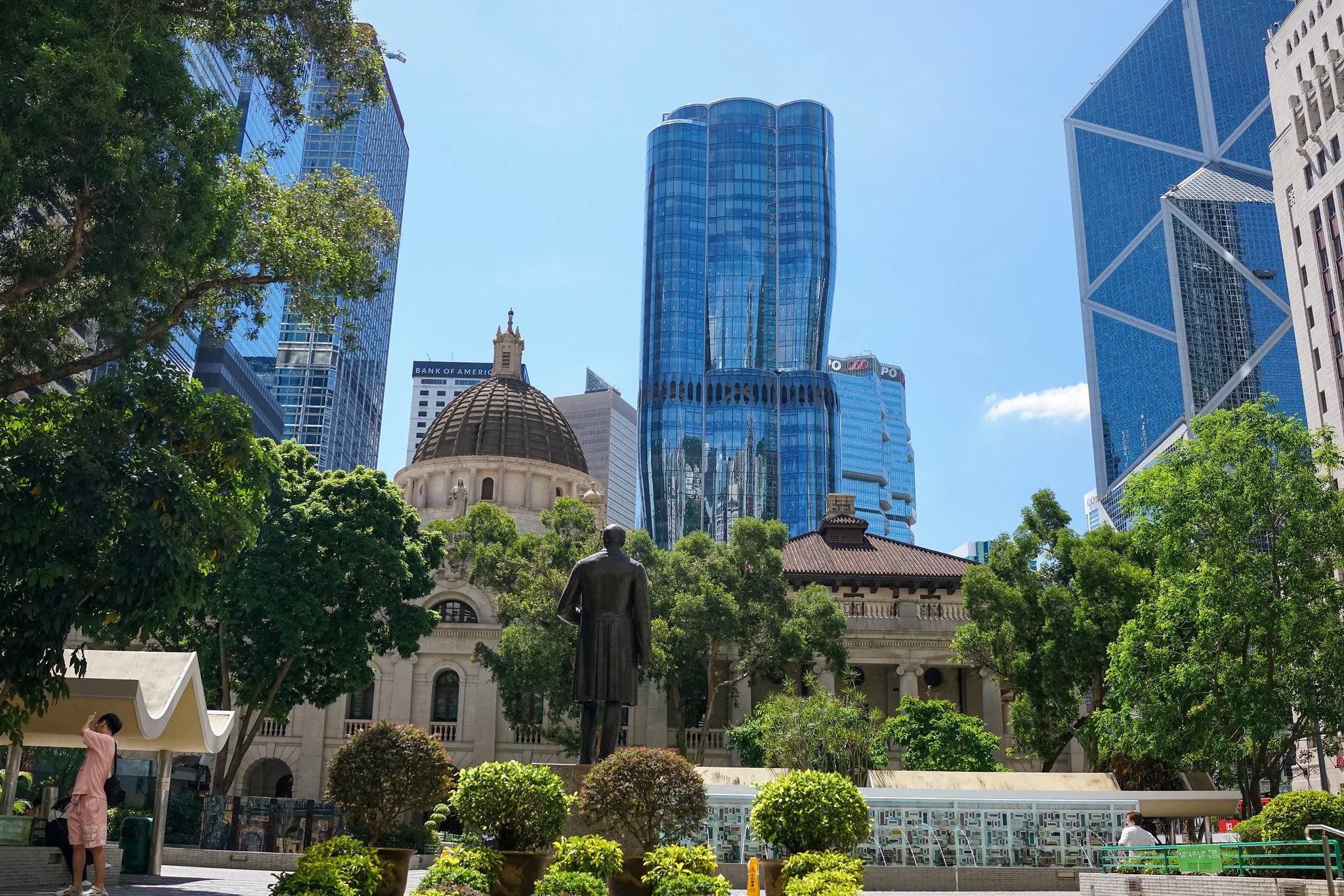
Today, the relevant section of Statue Square functions exactly as you described: it is maintained and (as mentioned above) operated like a public park or garden by the Hong Kong Government (specifically under the Leisure and Cultural Services Department). The public has unrestricted access for recreation, gatherings, and events, with no private commercial use permitted. The 1901 covenant, combined with the 1965 sub-lease, ensures this status is locked in for the foreseeable future—essentially making the plot "public" in use and upkeep despite its origins in a private long-term lease grant to HSBC. The government handles landscaping, maintenance, cleaning, and any regulatory oversight, treating it as civic open space in the same way it does other urban parks in Central.
I should point out the quirk that Statue Square has, Monday to Saturday is tends to be very quite and peaceful however on a Sunday and Public Holiday it is taken over by Housemaids } Domestic Helpers on a well deserved day off, primarily young ladies from the Philippines, who occupy every nook and cranny and overflowing to the front of HSBC Headquarters, the close Chater Road as well which dissects the 2 parts of Statue Square, it really is an amazing sight and Hong Kong Culture 101
Summary of "Ownership"
Ultimate title: Remains with the Hong Kong Government (as with all land in Hong Kong).
Head lease: Held by HSBC under the 999-year term from 1895.
Effective control and sub-lease: With a government entity since 1965.
Use restriction: Perpetual open-space covenant dating to 1901, preventing any building or private commercial exploitation.
This arrangement is a fascinating example of how colonial-era land deals and gentlemen's agreements between major institutions and the government created lasting public benefits in one of the world's most expensive real estate markets. It explains why the square feels like government-managed parkland even though its lease history traces back to HSBC. The setup has proven remarkably durable, surviving the 1997 handover and continuing to serve as a rare green breathing space amid the high-rises of Central and it is so much more iconic than Chater Garden a minutes walk away but that is another story and I have done a few blog posts about that!
HSBC has maintained a continuous and prominent presence in Hong Kong's Central District since its founding in 1865, with its headquarters site at 1 Queen's Road Central (bordered by Des Voeux Road Central, Queen's Road Central, and what is now Bank Street) serving as the core of its historical property holdings. This location has hosted four successive generations of the bank's main building, reflecting the institution's growth and adaptation over more than 160 years. While the 999-year lease on parts of Statue Square (Inland Lot 1841 and related lot) is a distinctive arrangement tied to the 1895 grant and the 1901 open-space covenant, other HSBC properties in the vicinity generally follow the standard colonial-era leasehold patterns of 75 or 99 years, with some later extensions or modifications post-1997
A word about Bank Street
Historical Note on the hiding in plain sight Bank Street
Originally, the area had a street called Wardley Street (named after the early Wardley House, HSBC's very first premises from 1865). When the third-generation HSBC building was constructed in the 1930s, part of the old Wardley Street was absorbed or realigned to accommodate the larger footprint and the demolition of the former City Hall site nearby. The current Bank Street was laid out shortly after as the replacement/shortened version, inheriting the banking theme but in a much more compact form.
In a nutshell Bank Street is a short (200 yards?) road that splits HSBC Headquarters and the Bank of China (old headquarters) - I have walked it many times because it is a great place to photograph cars but I had forgotten that it was a street with a name and a very iconic name at that!
This evolution is why it never developed into a "real" street in the everyday sense - it was always secondary to the grand banking institutions flanking it.
click on the image to enlarge
© Copyright Acknowledged | All rights reserved | image taken by Jamie
Statue Square Hong Kong | 2026 | Hong Kong
Successive HSBC Headquarters Buildings at the Core Site
The bank's operational heart has always been anchored on the same prime plot, which originated from early land grants and acquisitions:
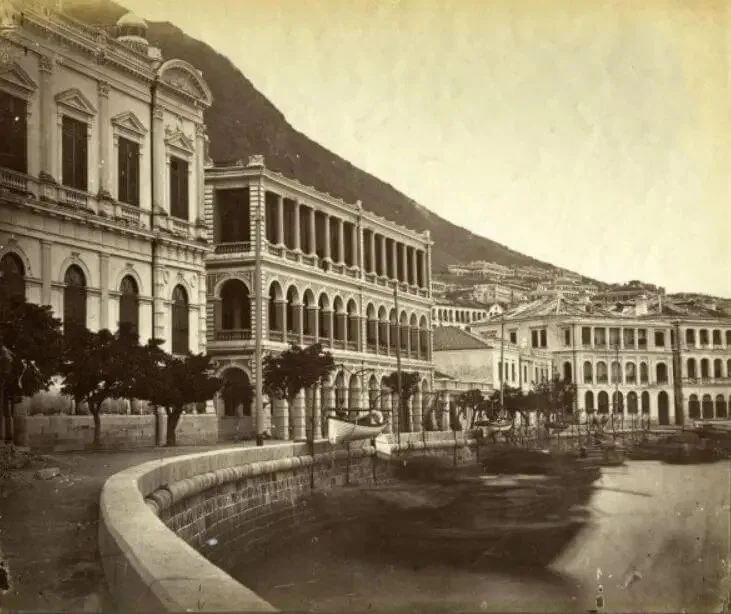
Our oldest son Jordan who lives in London, UK has done a bit of work for HSBC Archives department and colourised some old black and white images of the early HSBC buildings on the same site (see images below) and yes, that is Victoria Peak in the background! and that what the original harbour waterfront. where the water is in the image, well that is Statue Square
click on the image to enlarge
© Copyright Acknowledged | All rights reserved | image colourised by Jordan Lloyd
HSBC Headquarters | over 100 years ago | Hong Kong
First premises (1865 -1886): HSBC began operations by leasing (and soon purchasing) Wardley House, a existing building at the junction of Queen's Road Central and Wardley Street (later renamed Bank Street). This marked the bank's initial foothold in the newly developing commercial hub, with Queen's Road still close to the waterfront at the time. The site was acquired outright by the bank in 1866 after starting with a monthly rental.
Second building (1886 - 1935): As business expanded rapidly, HSBC demolished Wardley House and constructed a purpose-built four-storey headquarters in Victorian style, designed by architect Clement Palmer. Completed in 1886, it incorporated an adjoining lot previously occupied by the Chartered Mercantile Bank, which HSBC had acquired to enlarge the footprint. This structure featured modern amenities for the era, including a lift, gas lighting, and an electric bell system. It stood until the 1930s when it was replaced due to growing space needs.
Third building (1935 - 1980s): The 1886 building was demolished, and a larger Art Deco / Stripped Classical-style headquarters opened in October 1935. This iteration incorporated additional land, including part of the former Old City Hall site (demolished in 1933). During the Japanese occupation (1941–1945), the building served as the Japanese government's headquarters in Hong Kong. The famous pair of bronze guardian lions ("Stephen" and "Stitt") was installed at the entrance in 1935. In the early 1980s, during redevelopment, the lions were temporarily relocated to Statue Square under feng shui supervision before returning to the new structure.
Current building (opened 1986): The Norman Foster-designed headquarters replaced the 1935 building in a major project that became one of the most expensive constructions of its time. The design incorporated public open space at ground level (allowing free pedestrian access through the plaza), which helped secure additional gross floor area under planning incentives. The structure remains a landmark, symbolizing HSBC's commitment to Hong Kong, especially in the lead-up to the 1997 handover.
Throughout these rebuilds, the underlying land interest has been tied to the bank's long-standing holdings in Central, though specific lot details beyond the Statue Square portion (I.L. 1841) typically involved standard lease terms rather than another 999-year grant. The bank has consistently invested heavily in the site, demonstrating confidence in the location's enduring value.
Other Notable HSBC Historical Properties and Interests
Beyond the main headquarters plot, HSBC's historical footprint in Hong Kong included supporting properties for operations, staff, and ancillary functions, though fewer stand out with the same exceptional long-lease characteristics as the Statue Square arrangement:
Manager's and Sub-Manager's Houses: In the colonial period, senior HSBC executives resided in dedicated accommodation, sometimes on or near the main site or in nearby residential areas like the Mid-Levels or Peak vicinity. These were typically held under shorter-term leases aligned with staff postings rather than perpetual interests.
Branch and Office Expansions: As the bank grew, it occupied or acquired additional commercial spaces in Central and surrounding districts for branches. These were generally on standard leasehold lots from the 19th century (75/99 years), later subject to post-war renewals or the 2047 extension framework for leases expiring before then. No widespread evidence points to other HSBC-held 999-year leases comparable to the Statue Square lots.
Broader Land Context in Central: The reclaimed land in the Praya East and Central areas (where much of modern Central sits) was divided into marine and inland lots in the mid-to-late 19th century. HSBC secured western portions near the future Statue Square, while the government retained eastern sections. The 1901 agreement specifically preserved the open character of the square area, but adjacent commercial lots developed more conventionally under the bank's or other owners' interests.
HSBC has not been documented as holding multiple other 999-year leases akin to the Statue Square plot; such ultra-long terms were relatively rare even in the colonial era and were largely phased out after 1898 in favor of shorter grants to allow government more control over redevelopment. The bank's primary historical "property story" revolves around its continuous redevelopment of the 1 Queen's Road Central site rather than a portfolio of scattered long-lease holdings.
Comparison and Context
The Statue Square lease stands out due to its combination of the 999-year term, the 1965 sub-lease to government entities for management, and the binding open-space covenant. In contrast, most other early HSBC properties operated under more typical leasehold conditions, with the bank focusing on vertical expansion and modernization on its core lot rather than accumulating similar perpetual-like interests elsewhere. This reflects the practical realities of Hong Kong's land system, where even major institutions like HSBC worked within government-granted leases while building institutional prestige through landmark architecture and public goodwill arrangements (such as the square covenant).
In summary, while HSBC's other historical properties are fewer and less uniquely structured than the Statue Square plot, they center overwhelmingly on the evolving headquarters complex at 1 Queen's Road Central. This site encapsulates the bank's history in Hong Kong - from modest rented premises in 1865 to a globally recognized architectural icon today - underpinned by strategic land acquisitions and repeated investment in one of the city's most valuable locations. The arrangement has allowed HSBC to maintain a highly visible and stable presence amid Central's constant transformation
click on any image to enlarge
© Copyright Acknowledged | All rights reserved
HSBC Headquarters | Historical Buildings | Hong Kong
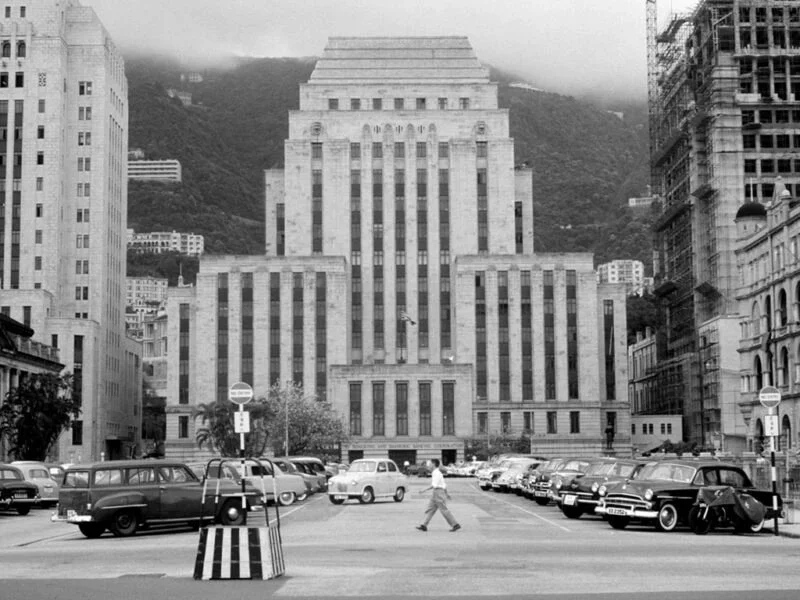
If you look at the colour image on the left, Bank Street is the small “road” that splits between HSBC on the right and the Bank of China old headquarters on the left (which is still there in 2026) - gosh, Bank Street, hiding in plain sight!
I just love these old images of HSBC and Statue Square, quite incredible really that in all 3 images, all the land in front of HSBC used to be the waterfront ie Victoria Harbour and up until the Mid 1960’s Statue Square was more of parking garage than a lovely square!
I have always had a soft spot for the old HSBC Headquarters built in 1935, so imposing, so granite and so art deco! I remember it well, the bank lobby just screamed security, everyone talked in hushed tones and the history just seeped into the lobby, those where the days
So there you go.
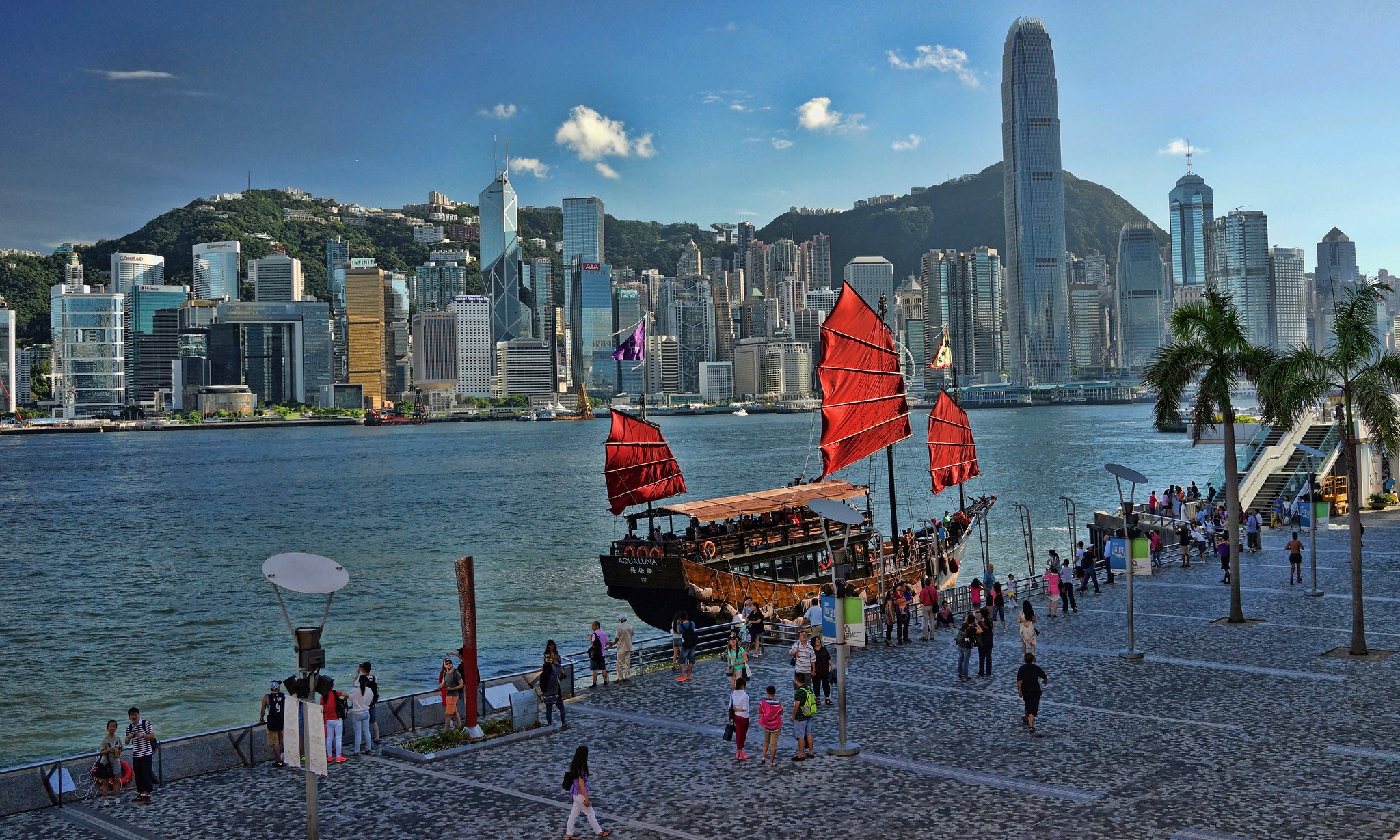
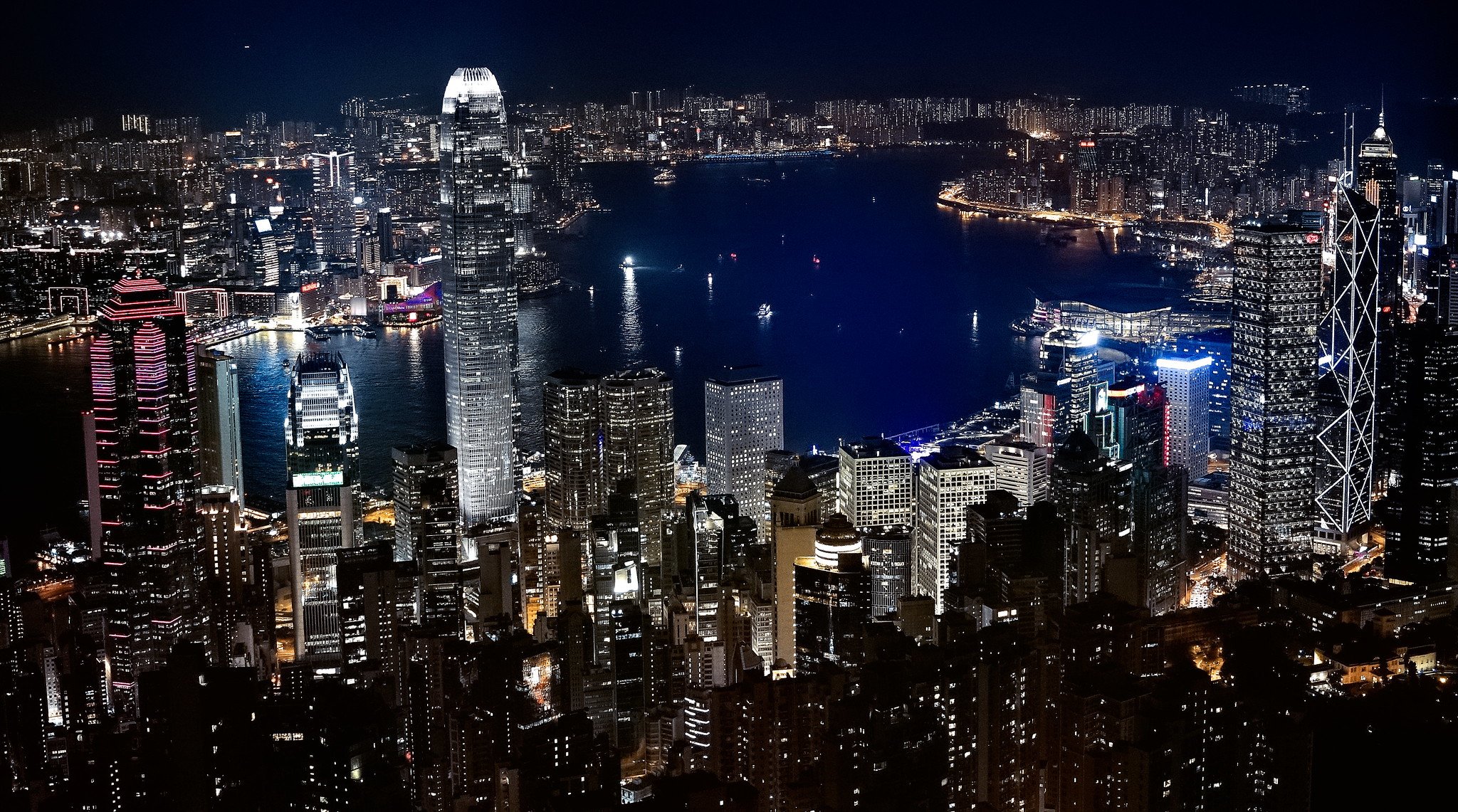
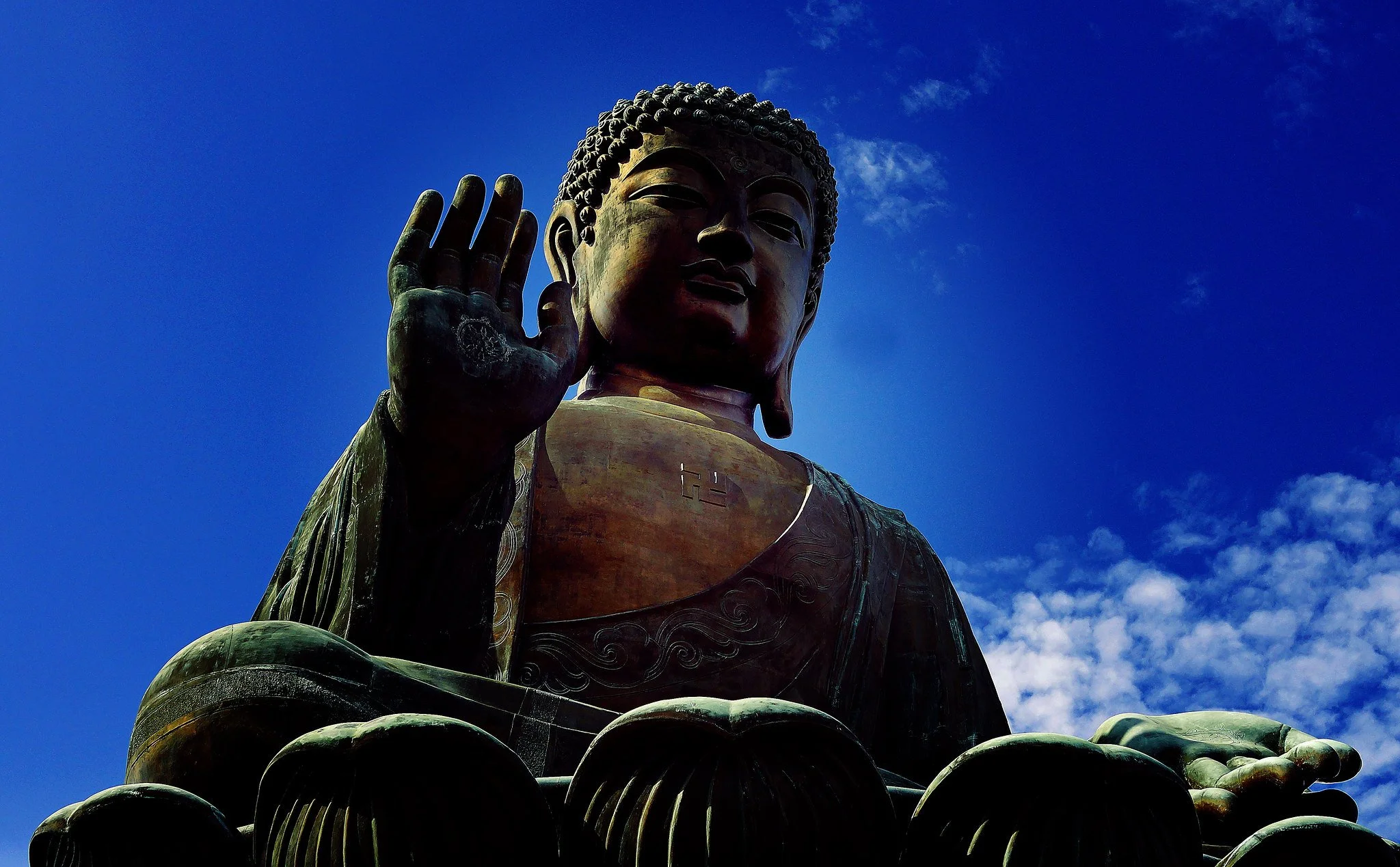
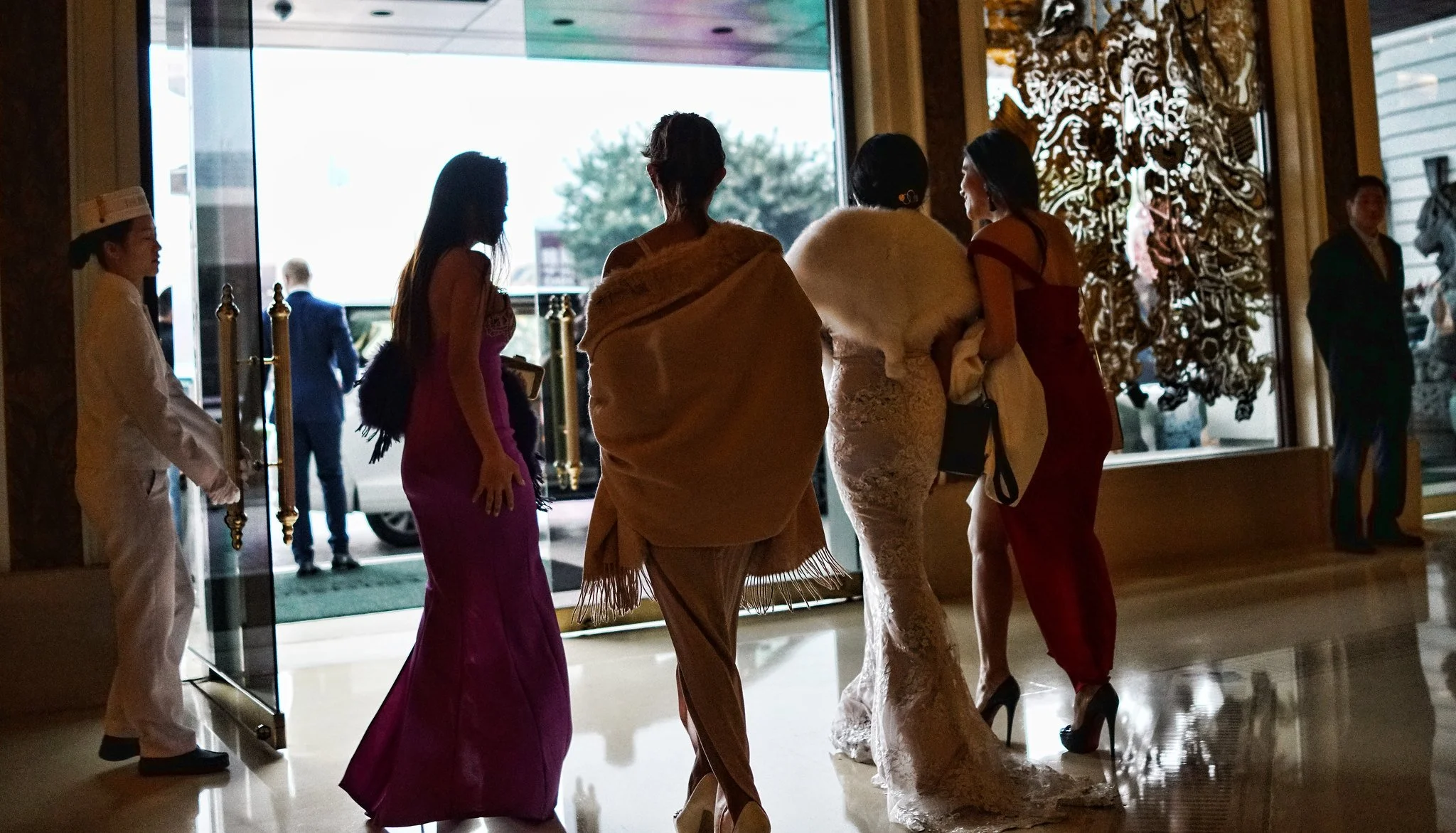
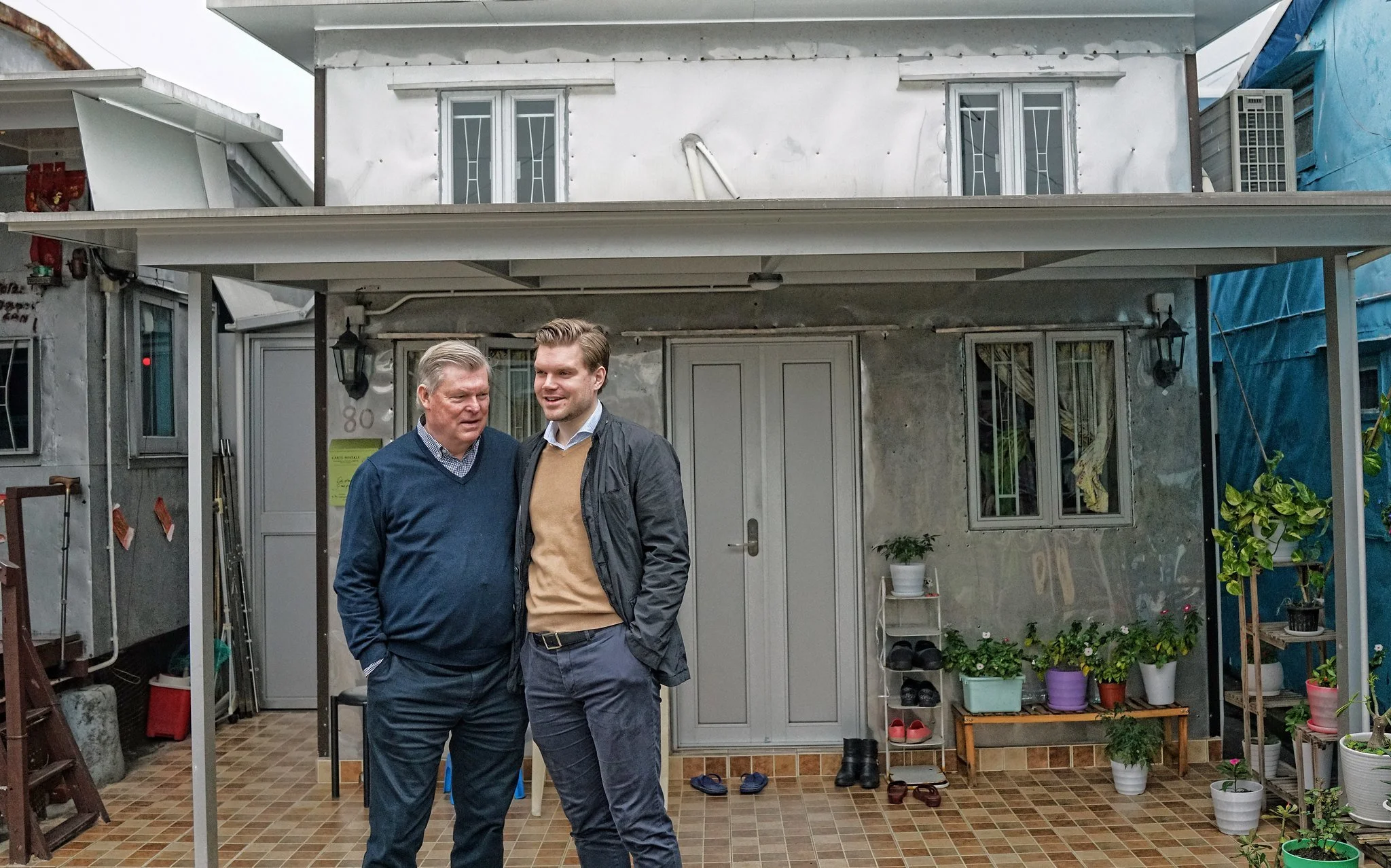
click on any image to enlarge
© Copyright Acknowledged | All rights reserved | all images taken b Jamie
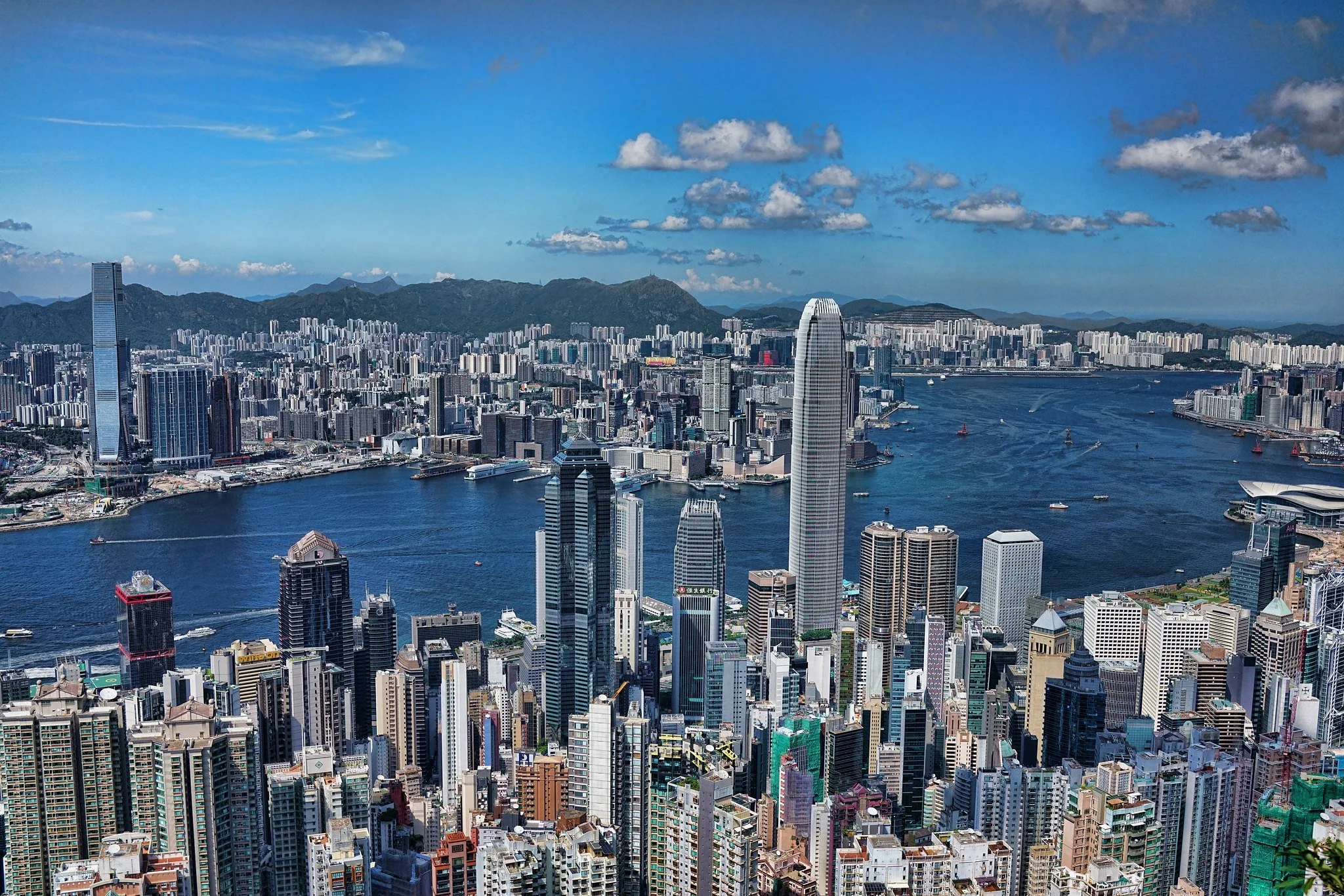
Jamie’s Hong Kong | Some of my favourite images | Hong Kong 101
© Jamie Lloyd | J3 Consultants Hong Kong | J3 Private Tours Hong Kong |
| 2010 - 2026 All rights reserved. |
Click on any image to enlarge to full screen

Current images from my Instagram feed