Why Sam the Local Story Still Matters in Hong Kong Tourism
The Untold Story of Sam the Local Innovative Rise and Fall in Hong Kong

The J3 Group - Premium Quality Private Tours | Experiences and Insider Chats since 2010
Me Jamie, your host, I am English and I have lived in Hong Kong since January 2nd 1972 - I know the place.
A meaningful blog post with a difference - tips on Travel, Tourism, Tours, Daily Life and my personal thoughts on Hong Kong.
Please do visit Amazing Hong Kong
Hong Kong | Pearl of the Orient
Customised Private Tours + Experiences in Amazing Hong Kong
Jamie has lived in Hong Kong - Pearl of the Orient for 50+ years
Carefully Crafted Personalised and Customised Itineraries by Jamie | Hong Kong’s Most Experienced Private Tour Guide for : Solo Travellers Friends Families Seniors Couples Business People MICE Delegates.
Private Tours Cultural Tours Walking Tours Sightseeing Tours City Tours Night Tours Layover Tours Transit Tours Private Shore Excursions Bespoke Tours Personalised Tours Jewish Heritage Tours Luxury Private Tours Day Tours Luxury Boat Tours Themed Tours Private Family Tours Private Day Tours Corporate Tours
Just you, your family or friends and Jamie your personal English private tour guide - over 2,400+ tours completed since 2011 - Jamie offers quality Private Tours of Hong Kong
Tour Group Size 1 - 6 people only
J3 Group Hong Kong | J3 Consultants Hong Kong | J3 Private Tours Hong Kong
Creating Memories That Will Last A Lifetime
Go here for the Hong Kong Michelin Restaurant Guide which includes the Bib Gourmand Category

Guided by Stories, Private Tours of Hong Kong with Jamie
A Resident since 1972 - Quality Private Tours of Hong Kong
click on the image to enlarge
© Copyright Acknowledged | All rights reserved
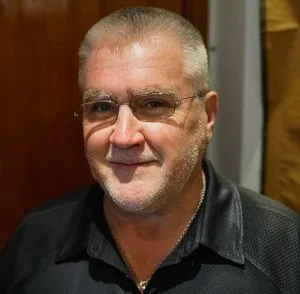
The Sam The Local Founders | Happier Days | Hong Kong
Foreword
One of life’s great tragedies in the private tour industry here in Hong Kong has always been watching genuine innovation get crushed before it could truly take root, and few stories hit me harder than the rise and fall of Sam the Local. Back in the pre-COVID days, when the city was still buzzing with fresh ideas and visitors were hungry for something beyond the usual canned tours, this platform burst onto the scene like a breath of fresh air. It wasn’t just another agency churning out the same old routes; it was a genuine attempt to connect real people with real locals who wanted to share their city in a personal, storytelling way. I remember scrolling through their site and thinking how different it felt - young, energetic, and full of potential. Yet, as with so many disruptors in our tightly regulated world, it all came crashing down, leaving two passionate young women to pick up the pieces after pouring everything they had into it.
I will be honest with you, when I first saw the Sam the Local page with 10 - 15 locals listed, my first thought was that they are going to change the whole market (which was pretty cosy at that time) and more importantly what if it spawns 10 or 20 competitors doing the same thing which happens all the time in Hong Kong and around the world.
A lot of people dismissed them as a fly by night operation, we (myself and my friends in he Private Tour Industry) knew better, the locals where local residents, mostly young, some more mature, not tour guides but they where story tellers and they knew their way around Hong Kong in the basic sense (more on that later)
Threat is the wrong word to use, I was basically the first private tour guide in Hong Kong a and it was innovative, yes, tours in Hong Kong have been around in Hong Kong since the 1960’s, a bunch of tourists on a bus with a lousy tour guide reading a script (and that is still popular here), I knew the market was ripe for change and new ideas tend have a slow beginning and then everyone jumps in, I saw this again with Sam the Local.
… and just so we are clear on the timeline, I set up in May 2010, did one full year of research and such, including handing out leaflets to tourists in Hong Kong but my first tour was April 2011 and it just exploded - Sam the Local set up in 2014
What follows is my deep dive into what made Sam the Local special, why it mattered, and why its demise still stings years later.
The 3 images below and the image above, sadly are some of the last remaining artifacts and all that remains of Sam the Local in Hong Kong.
The Birth of an Innovative Idea
Sam the Local didn’t start as some big corporate venture with deep pockets and slick marketing. It was the brainchild of two young women, Anita Chan and Maggie Lau, both Californians who had relocated to Hong Kong around 2011. Anita had worked at companies like Logitech and Crocs before diving into this, while Maggie came over for a role at Haymarket Asia and quickly fell head over heels for the city’s energy.
They officially set up Sam the Local Limited in 2014, with the platform going live in early 2015. From day one, their vision was clear: create a peer-to-peer marketplace where travellers could book private, customised experiences with vetted “locals” or “insiders” - not formal tour guides, but passionate residents ready to share little known places of interest, personal stories, and authentic slices of Hong Kong life. It was positioned squarely in the sharing economy wave, letting people connect over shared interests rather than following a rigid itinerary.
Who Were the Founders and What Drove Them?
Anita and Maggie struck me as the perfect embodiment of that Americanised Hong Kong spirit - energetic, forward-thinking, and deeply in love with the city they’d made their home. Maggie wrote openly about her emotional pull to Hong Kong, describing how a 2009 visit hooked her with everything from afternoon tea at fancy hotels to spontaneous hikes, affordable street eats, and the sheer diversity of experiences packed into one compact place. Anita echoed that in her own pieces, talking about building a community where people who might never cross paths could swap knowledge and excitement. They weren’t outsiders cashing in; they were returnees or transplants who saw Hong Kong’s magic and wanted to bottle it for others. The two of them personally met every single local who joined the platform through one-hour trial outings, vetting them not for licences but for genuine passion and unique perspectives. They even held monthly gatherings where the locals - affectionately called “Sams” - could share tips, favourite spots, and lessons from their outings. It felt warm, community-driven, and refreshingly human in an industry that can sometimes feel transactional.
I would like to slip in a quick comment here, monthly gatherings soon turn into every 6 months and then every year because even on a platform like Sams the Locals, factions forms, petty jealousies surface and I think Sams the Local may have forgotten that having 70 “sams” means that competition is very stiff and when you are all chasing the money (and it was always about money) strange things happen, friends become enemies, you get my drift
in a nutshell, they should have kept it to around 20 locals , the ones with the best reviews etc
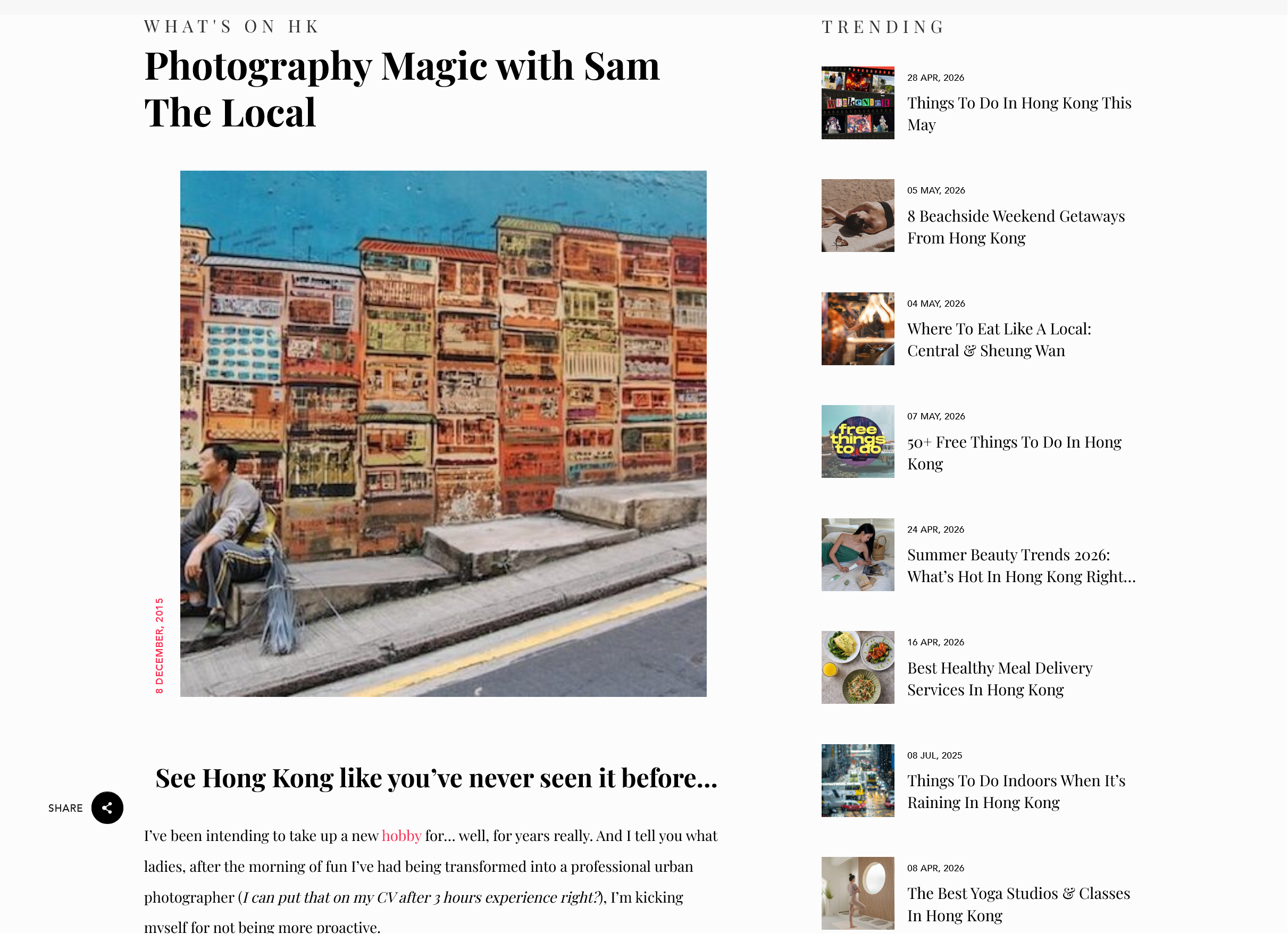
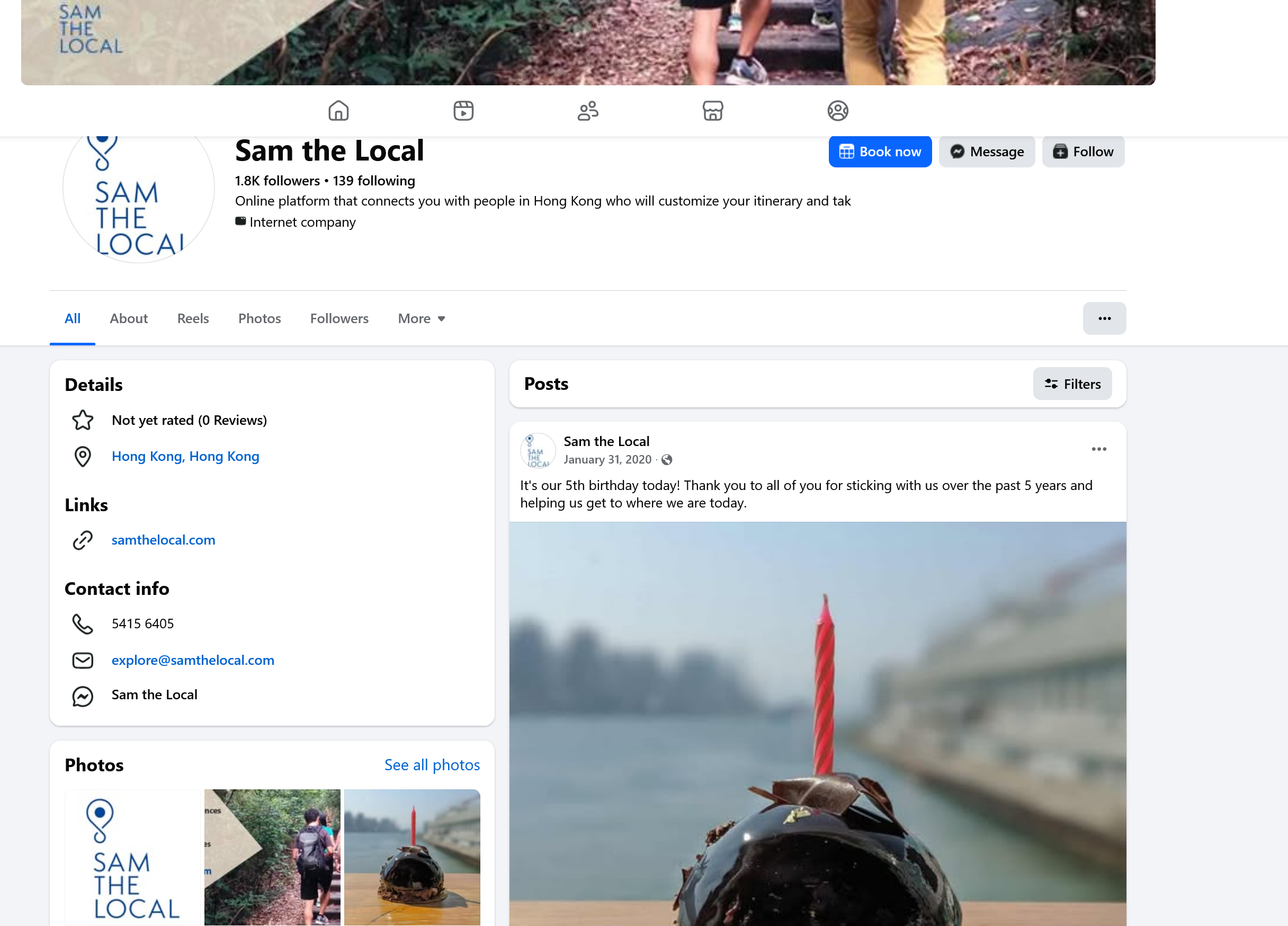
click on any image to enlarge
© Copyright Acknowledged | All rights reserved
The Sam The Local empire | All that remains | Hong Kong
How the Platform Actually Worked
At its core, Sam the Local was a gallery-style platform. Travellers browsed profiles of dozens of locals, each with their own specialties - whether it was urban photography walks capturing reflections in puddles and backstreet markets, deep dives into tea culture and history, hiking routes most tourists never see, or food tours that went way beyond the usual dim sum spots. You didn’t book a standard tour; you hired someone for a flexible hourly rate to craft an experience around your interests.
Pricing started around the equivalent of HK$200 (US$26) per hour all the way up to HK$500 (US$64) per hour or more, making it accessible and scalable - book for two hours, four, or a full day if you clicked with your local, at this time I thought the pricing was optimistic at best, no one pays that hourly rate for someone who has no guiding experience., you get a better deal on a free tour.
The founders curated everything carefully: each “Sam” went through that personal trial outing with Anita or Maggie, and the platform handled the matching while taking a commission. It was simple, modern, and designed for younger travellers or those craving something personal rather than polished and scripted. No big groups, no buses - just one-on-one or small, intimate explorations that felt like hanging out with a knowledgeable friend. (and forgive my jumping in again, it may have felt like you where hanging out with a ftiend, but it is a person you might have met just 2 hours earlier, that is not my definition of a friend but sounds good on paper and in blurb)
Appeal to Young Travellers: Tapping into a Massive Untapped Market
What made their model especially clever - and, in hindsight, threatening - was how perfectly it aligned with the preferences of 18- to 30-year-olds. This demographic generally steers clear of traditional tours altogether. They might love the concept of free walking tours for that low-commitment, social vibe, but paid, structured private tours often feel too formal, expensive, or geared toward older crowds. Sam the Local lowered every barrier: affordable hourly rates, casual storytelling instead of lectures, interest-based matching, and profiles that felt like chatting with a cool local friend rather than hiring a professional.
It turned exploration into something fun and spontaneous, exactly what younger backpackers, digital nomads, and first-time visitors crave. In the broader picture, I would surmise that the vast majority of the 10 to 13 million non-Mainland Chinese visitors who came to Hong Kong each year pre-COVID had little to no interest in booking any kind of formal tour. Many were here for business, shopping, events, or short city breaks; others preferred independent travel via apps, public transport, and their own research. This huge segment simply sat outside the traditional tour ecosystem, yet Sam the Local found a way to gently pull some of them in with minimal friction. That wasn’t direct competition with established players - it was expanding the entire pie by reaching people who otherwise spent zero on guided experiences.
The Gallery of Locals and Its Appeal
What really set them apart was the sheer variety in their lineup. They started with about 10 locals when they launched publicly in January 2015 and grew steadily to dozens - peaking somewhere around 70 at one point, with a heavy lean toward young people, especially women, who brought fresh energy and diverse backgrounds. These weren’t seasoned, licensed guides with decades in the industry; many were everyday Hong Kongers with day jobs, hobbies, or stories to tell - students, creatives, foodies, photographers, history buffs. The site presented them like a living gallery: photos, short bios, and highlights of what they loved sharing. It was perfect for a younger demographic or first-timers who wanted to feel the pulse of the city without the formality. I always thought most of them were just enthusiastic kids with limited life experience in guiding, but that was part of the charm - they weren’t pretending to be experts; they were sharing what they knew and loved. It forced the rest of us in the business to rethink how we presented Hong Kong and whether we were truly connecting or just ticking boxes.
The Rise, the Positive Press, and the Industry Shake-Up
For a couple of years, it looked like they were onto something big. Media picked up on the story positively, framing it as an exciting part of Hong Kong’s sharing economy and a fresh way for visitors to experience the city through local eyes. Travellers raved about the personalised touch, and the platform built a solid reputation with high ratings. It wasn’t competing head-on with traditional private tours in every way; it carved out a niche for interest-based outings that felt organic and modern. In my view, that was exactly why it succeeded initially - it shook things up. We all had to look in the mirror and ask ourselves how we could offer more authenticity, flexibility, and value. There was more than enough business to go around, and competition like this pushed everyone to raise their game. I had no real issue with it; in fact, I welcomed the fresh air it brought into a scene that could sometimes feel stuck in the status quo.
In fact I have always believed that Hong Kong Free Tours who set up in mid 2016 was inspired by Sam the Local and they are going from strength to strength, similar marketing strategy as well, I have been friends with the owner since early 2017
The Challenges, the Reports, and the Sudden Fall
But as anyone in this industry knows, Hong Kong’s travel regulations are strict for a reason, and Sam the Local operated in a grey area that eventually caught up with them. They weren’t a licensed travel agency, and their locals weren’t registered guides - they were passionate insiders sharing stories, not delivering official commentary. Certain established players in the private tour world saw the threat, reported them for operating without the proper licences, and that was pretty much the end.
The company faded out pre-COVID, with the last real traces around 2018 or so. No big public drama, just a quiet shutdown after what I can only imagine was immense pressure. Anita and Maggie had pumped their life savings and countless hours into building this community, curating those relationships, and creating something innovative. To watch it all disappear because of vested interests resistant to change felt not just unfair but genuinely tragic. They weren’t out to undercut anyone maliciously; they were trying to offer something different that appealed especially to younger crowds who wanted storytellers, not scripted tours.
click on the image to enlarge
© Copyright Acknowledged | All rights reserved
The Sam The Local | My one & only email message | Hong Kong
The Vanishing Gallery: How Digital Erasure Deepens the Tragedy
One of the saddest ironies in this whole story is how completely the visual heart of Sam the Local has disappeared. I spent days hunting for any archived version of their website - hoping for even a single screenshot of that vibrant gallery page filled with dozens of young, smiling faces ready to share their Hong Kong. The original domain samthelocal.com has long gone dark, and there are no meaningful captures on the Wayback Machine or elsewhere that preserve the full gallery experience.
This digital erasure only amplifies the tragedy. It’s as if the entire innovative spirit they built, those personal connections and fresh faces, was wiped away along with the company itself. The absence of those images feels like another layer of loss, a reminder of how fragile these experiments can be when they challenge the established order.
I checked multiple date ranges and variations (http/https, with and without www), but the captures are either non-existent, blocked, or too minimal to show the visual "gallery" experience you’re hoping for. The platform was relatively small and short-lived, which often means sparse archiving - especially for dynamic, user-generated content like profile pages.
What does remain are scattered secondary traces:
Old articles and blog mentions from 2015 - 2018 that reference the site and sometimes include small embedded images or descriptions.
Social media footprints on Instagram (@samthelocal), Facebook, and X/Twitter, where you can still find some promotional posts with individual local photos or event shots from their outings.
YouTube videos featuring their locals (e.g., short clips of Aditi R. or food/history walks) that give a flavour of the storytelling style.
Press features that occasionally screenshot or describe the platform's clean, profile-based layout.
None of these deliver a clean, full-screen capture of the main gallery page with its dozens of smiling young locals lined up like a digital roster. The closest visuals come from contemporary write-ups that praised the personal, approachable vibe of the profiles - think headshots paired with short bios highlighting hobbies like photography, hiking, or street food expertise.
It’s a real shame because that gallery was the heart of what made Sam the Local feel fresh and human. In its absence, I have considered reaching out directly to Anita or Maggie via LinkedIn (they’ve both moved on to other roles but are still traceable) to ask if they have personal screenshots or archives from their own records., I want nothing to do with Linkedin and I am not a menber so that is not going to happen, Former “Sams” (the locals) might also have kept profile shots or memories. Otherwise, piecing together public domain images from old articles and social posts is probably the best available route for those that are intrigued and want more details.
This gap only adds to the tragedy of the story- something vibrant and full of faces simply vanished from the internet almost as completely as the company itself, it just underscores how fleeting these innovative experiments can be in a regulated environment.
My Reflections on the Broader Impact and What We Lost
On reflection, I liked what these 2 young ladies did, but you should also take into account that I have lived in Hong Kong for 54 years, I have been in business for myself since I was 18 and I have completed over 2,360+ private tours of Hong Kong and I started in the private tour business in 2010., so I have experience. I also have experience in meeting new guides, training them and testing them
I always thought that their one hour vetting session was simply not nearly enough, this makes my following statement seem a little odd, which is I advise guides to treat each tourist as if they where members of your own family, unfortunately it not as simple as that, dealing with tourists is not at all like dealing with your family, I have had close to 7,000 guests on my tours, I know!
Actually it takes a lot of skill to deal with people, I am people person, always have been and I have been meeting visitors since 1979 but no two people are alike and you have to have the gift to relate to people, you cannot just pluck 50 youngish people off the streets and expect them to spend 4 or 8 hours with strangers and show them Hong Kong. I have also met many tour guides in Hong Kong who have done the Tour Guide Course and frankly a lot of them have no business being a tour guide and I am an excellent judge of character., and I hate to say it but a one hour vetting interview is simply NOT enough
I used to spend a lot of time in the Sam the Local site checking all the “sams” now it is true that generally people would be happier with a female “guide” I have done research on female bias in the tour industry but on this site, I have to say that it looked remarkaby like a dating app, all the young ladies where invariably lovely to look at, but they where not tour guides, they had no experience and to me it did not sit right particularly as in the private tour business, older guides are in great demand
Now I have not forgotten that Sam the Local seemed to be targetting young visitors 18 - 30 years old which is fine but you must remember, when you where on Sam the Local the reality is that your where basically choosing a tour guide and a 1 hour vetting procedure is quite frankly useless, young people do not learn about Hong Kong at school in the manner of knowing thousands of statistics or knowing the history of 200 major sites or even getting from A to B to C to D to E, simply put, tourists ask questions and you had better know the answers
I personally did a full year of research between 2010 - 2011, 16 hours a day, 7 days a week for a year - I was still under prepared to show my guests Hong Kong with confidence
To be fair I did notice a switch in Sam the Locals, as they got more locals listed, there was a definite switch to older people with some experience and less of the pouty young beauty queens.
There is a huge difference between a vetted local as Sam the Local put it and a guide with experience and training.
I took this to mean that they where learning lessons, even their target audience of 18 - 30 year old tourists still want a “guide with solid knowledge of Hong Kong” I witness this all the time with the big Free Tours company in Hong Kong who is a friend and I have known him a long time, he deals with these young tourists but he still has to send out licenced trained guides to do the tours,
It is funny you know, had Sam the Local been a tip based site it might have worked as then people would have lowered their expectations when it comes to the “sam” or guide, the tour or experience
Looking back the whole episode still makes me reflective. Sam the Local wasn’t a threat in the destructive sense - it was a catalyst. It Lookin highlighted how the industry could evolve with technology and the sharing economy while staying true to Hong Kong’s unique character. The two founders poured their hearts into it, building real connections and empowering everyday locals to participate in tourism in a meaningful way. I feel real sorrow for Anita and Maggie; they took a risk, believed in Hong Kong’s potential, and lost everything to bureaucracy and pushback from those who prefer things stay exactly as they are.
One of my own big regrets is that I never got the chance to meet them in person during those heady early days. It’s a reminder that progress in any sector, especially one as regulated as ours, often comes at a personal cost. Yet their short-lived success left a mark - it made us all think harder about authenticity, flexibility, and meeting travellers where they are. Hong Kong’s tour scene is richer for the brief time they were here, even if the company itself didn’t survive. In the end, one of life’s great tragedies was how quickly innovation got sidelined, but the lessons endure
Jamie’s Hong Kong Insider Chat
AI Itinerary Rescue Service - Bring your AI-generated plan (or any self-designed itinerary) and I will spend the full two hours reviewing it with you. I’ll fix the impossible timings, suggest smarter routing, add interesting places that AI never finds, adjust for your group’s energy levels, and create a realistic, enjoyable day-by-day flow that actually works in real Hong Kong. Most guests leave saying “This is exactly what we needed”
I do not do Food Tours in Hong Kong but I know people that do!
I do not do food tours as mentioned above, I have very specific reasons and part of it is that I do not speak Cantonese or write Chinese, I am from Yorkshire in England and I lack the language gene and it is not through lack of trying and yes a lot of restaurants do not have English menu’s or staff who speak conversational English.
.. and yet I have eaten at close to 1,400 restaurants in Hong Kong since January 2nd 1972, my wife was born in Hong Kong and we have been together over 40 years and her first language is Cantonese and a lot of her family are Chinese or half Chinese so I have never had much of an issue!
This does not translate to doing food tours though, yes, I could do them, no problem there but they would never ever be as good as the food tours done by my friends (see the 3 links above) most of their awesome guides are locally born Hong Kong Chinese and obviously food culture is part of their DNA, it is impossible for me to compete with that!
So please feel free to contact them for food tours
I do not do Hiking Tours in Hong Kong but I know someone that does!
I do not do Hiking Tours, never have and never will even though I used to go Hiking a lot when I was a lot younger, The Hong Kong Government is promoting hiking tours so I urge you to contact my friend Sabrina at Hong Kong Trails and Tours, she is a long time Hong Kong resident and and a very experienced hiker with close to 700 Hikes in 15+ years under her belt, please click on the link below
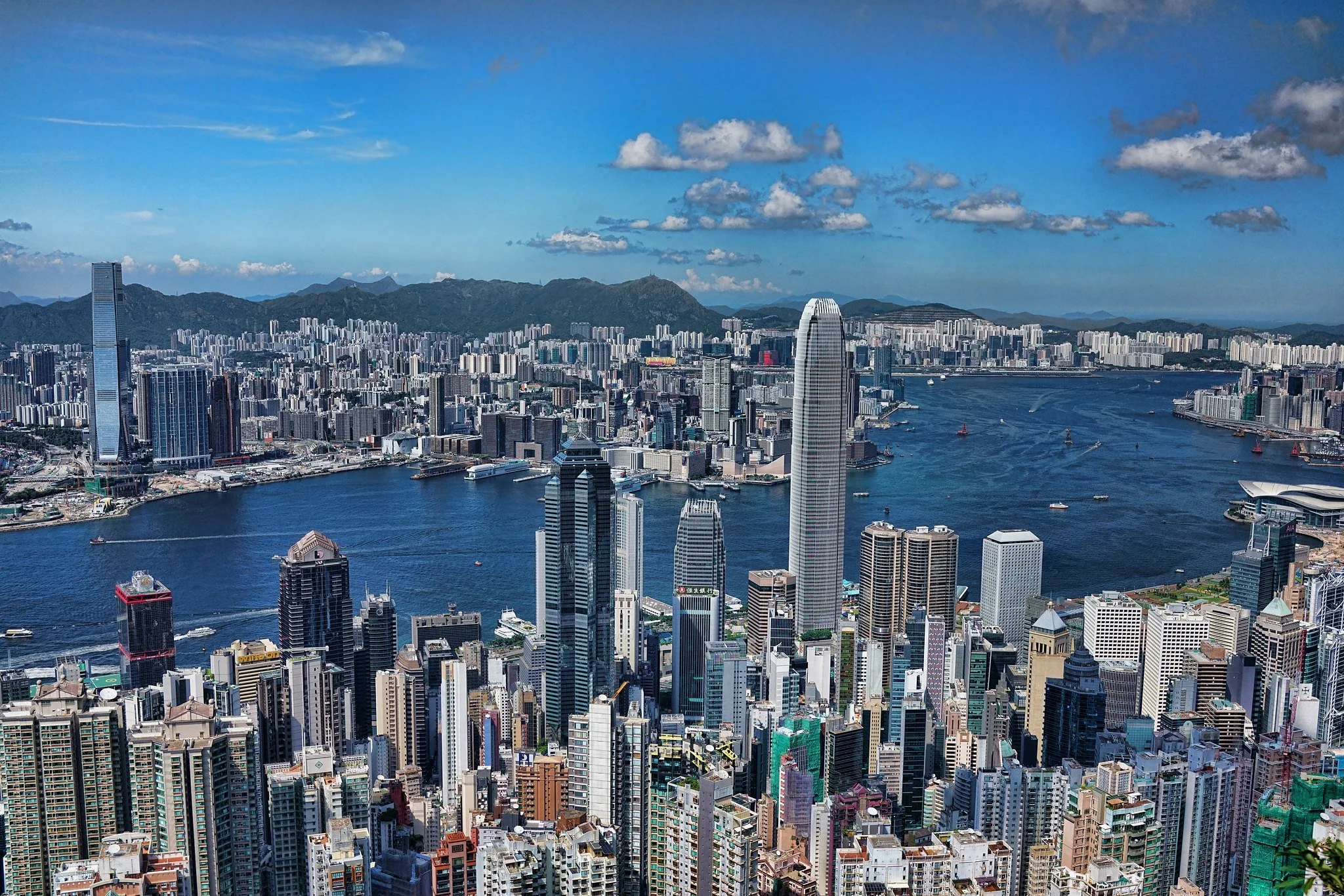


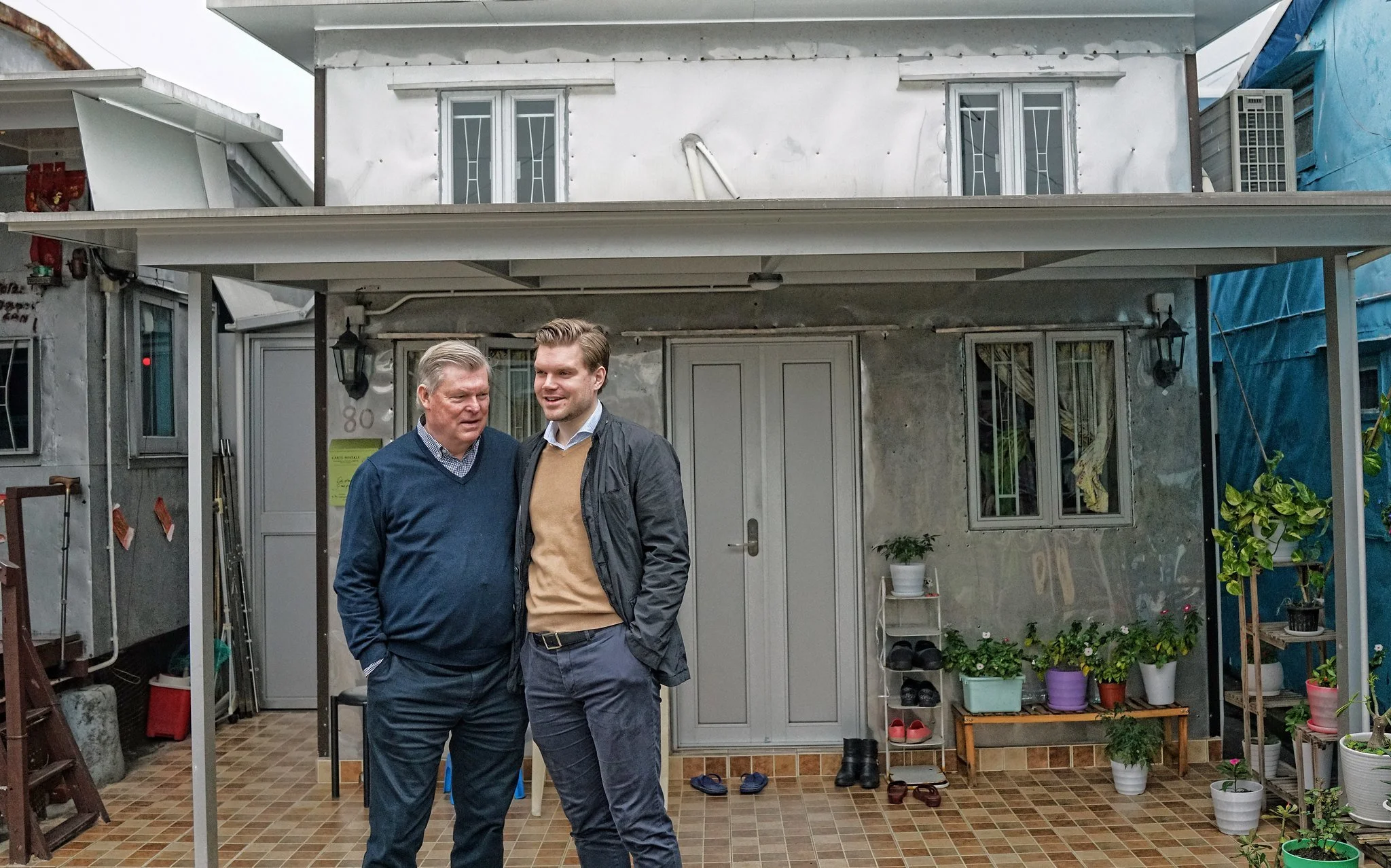
click on any image to enlarge
© Copyright Acknowledged | All rights reserved | all images taken b Jamie
Jamie’s Hong Kong | Some of my favourite images | Hong Kong 101
© Jamie Lloyd | J3 Consultants Hong Kong | J3 Private Tours Hong Kong |
| 2010 - 2026 All rights reserved. |
Click on any image to enlarge to full screen





Current images from my Instagram feed