Foo Dog Statues in Hong Kong - Symbolism and meaning
These mythical statues are quite common in Hong Kong

The J3 Group - Premium Quality Private Tours | Experiences and Insider Chats since 2010
Me Jamie, your host, I am English and I have lived in Hong Kong since January 2nd 1972 - I know the place.
A meaningful blog post with a difference - tips on Travel, Tourism, Tours, Daily Life and my personal thoughts on Hong Kong.
Please do visit Amazing Hong Kong
Hong Kong | Pearl of the Orient
Customised Private Tours + Experiences in Amazing Hong Kong
Jamie has lived in Hong Kong - Pearl of the Orient for 50+ years
Carefully Crafted Personalised and Customised Itineraries by Jamie | Hong Kong’s Most Experienced Private Tour Guide for : Solo Travellers Friends Families Seniors Couples Business People MICE Delegates.
Private Tours Cultural Tours Walking Tours Sightseeing Tours City Tours Night Tours Layover Tours Transit Tours Private Shore Excursions Bespoke Tours Personalised Tours Jewish Heritage Tours Luxury Private Tours Day Tours Luxury Boat Tours Themed Tours Private Family Tours Private Day Tours Corporate Tours
Just you, your family or friends and Jamie your personal English private tour guide - over 2,400+ tours completed since 2011 - Jamie offers quality Private Tours of Hong Kong
Tour Group Size 1 - 6 people only
J3 Group Hong Kong | J3 Consultants Hong Kong | J3 Private Tours Hong Kong
Creating Memories That Will Last A Lifetime
Go here for the Hong Kong Michelin Restaurant Guide which includes the Bib Gourmand Category

Timeless Hong Kong Stories, Tailored Just for You by Jamie
A Resident since 1972 - Sharing Hong Kong as Only a Local Can
click on the image to enlarge
© Copyright Acknowledged | All rights reserved | image take by Jamie
Hong Kong Culture | The mythical stone statues hiding in plain sight | Hong Kong
Foo Dogs pop up all over the place in Hong Kong and the tradition of giving them a rub is ingrained into my habits!
click on any image to enlarge
© Copyright Acknowledged | All rights reserved | images take by Jamie
Hong Kong Culture | The mythical stone statues hiding in plain sight | Hong Kong
What Exactly Are Foo Dogs?
Foo dogs aren't actually dogs -they're stylized lions (in Chinese, "shi" means lion, and "shi shi" means stone lion). The name "foo dog" or "fu dog" is a Western invention from the 19th/20th century, probably because early Westerners thought they looked like lion-like dogs (some resemble breeds like the Chow Chow or Shih Tzu). In reality, they're majestic Asiatic lions reimagined through Chinese art and Buddhism.
They originated in China during the Han Dynasty (around 206 BC–220 AD) but became hugely popular from the Tang Dynasty onward, influenced by Buddhist ideas brought from India. Real lions weren't native to China, so artists based them on descriptions, imported pelts, and Buddhist lion imagery (lions as protectors of the dharma/Buddha's teachings). Over time, they evolved into these fierce, muscular, curly-maned guardians with bulging eyes, sharp claws, and dramatic expressions.
Symbolism and Meaning of Foo Dogs
Foo dogs always come in pairs—one male and one female—to create perfect balance (yin and yang). Together, they protect against evil spirits, negative energy (sha qi), and misfortune while attracting wealth, prosperity, and good fortune ("fu" means happiness, wealth, and blessing in Chinese).
The male (Yang energy—active, outward, powerful): Usually on the right side as you face the entrance. He rests his right front paw on an embroidered ball (often called the "pearl of wisdom," "Flower of Life," or symbol of the world/universe). This represents supremacy, control over the external world, and protection of the building/structure itself.
The female (Yin energy—nurturing, inward, receptive): Usually on the left side. She rests her left front paw on a playful cub (sometimes shown nursing or suckling). This symbolizes protection of the family/people inside, fertility, thriving offspring, and nurturing the inner/home life.
Their open/closed mouths (one roaring/open, one calm/closed) often represent the cosmic sounds "om" or the in-and-out breath of life. Placement is crucial in Feng Shui: facing outward to ward off threats, with the female (cub) on the left for harmony. Wrong placement or mismatched pairs can disrupt the energy flow.
History and Use of Foo Dogs
Foo Dogs have been around since the period 206 BCE–220 CE (in dry academic terms) which refers to the Han Dynasty, a foundational imperial era of China lasting roughly 426 years. It signifies the span from 206 Before Common Era (BCE) to 220 Common Era (CE). BCE stands for Before Common Era, a secular, academically preferred term for "Before Christ" (BC), representing the years before the year 1, so in a nutshell a couple of thousand years at least.
While they appeared in the Han Dynasty, their popularity as protectors of imperial palaces and tombs grew, becoming more standardized by the Tang Dynasty (618 -917 AD).
Traditionally, foo dogs guarded imperial palaces, temples, government offices, wealthy homes, and important buildings—never standalone, always in pairs at entrances. They became a status symbol: the more elaborate or larger, the more powerful the owner. In modern times, they're everywhere - mini versions on desks, doorstops, jewelry, or huge stone ones at banks, hotels, and malls.
In Feng Shui, they're powerful remedies: they block bad qi from entering while letting positive qi in. Some people place smaller ones inside homes facing the door for extra protection.
From a cultural point of view because lions were not native to China, artists combined the description of lions with native dogs (like the Chow Chow).
So now you know
The Shiny Foo Dogs Heads
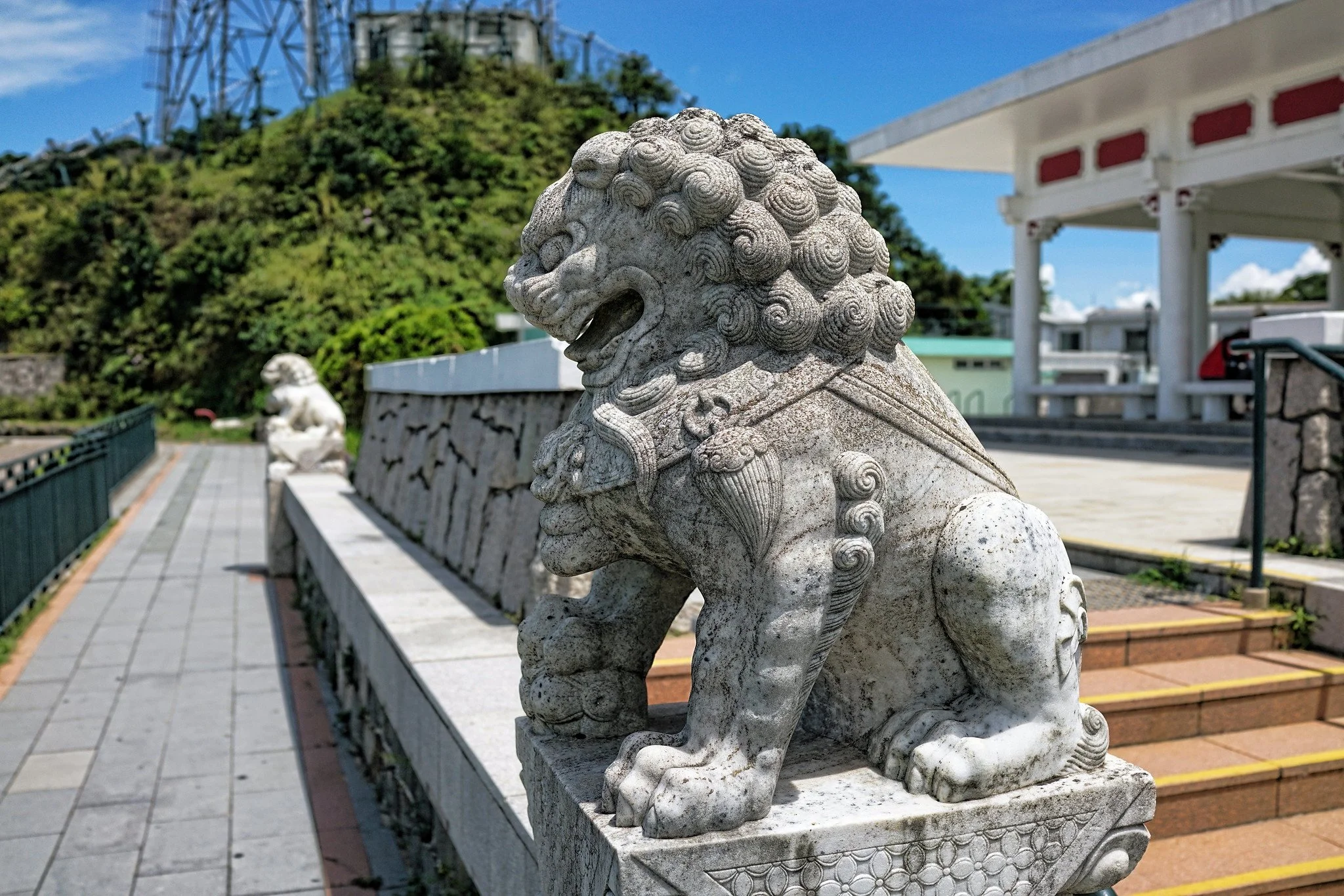
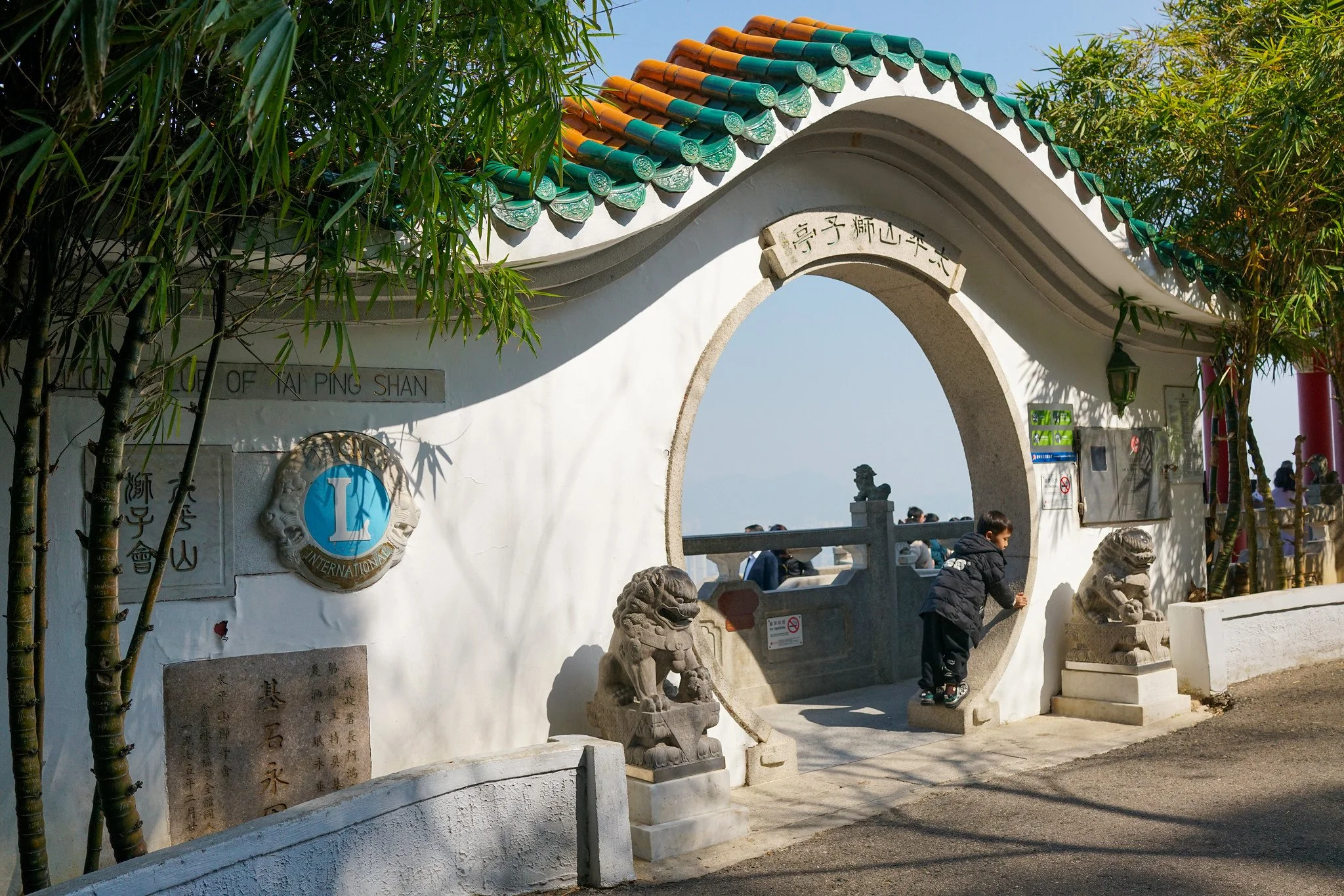
If you look at the images above the on e on the right, rubbing the foo dogs (guardian lions) at the Lions Pavilion (also called Lion View Point Pavilion) on Victoria Peak is a classic move for good luck, especially with that killer view of the harbour and skyline right behind them. The shiny head on one (or both) is exactly like what happens with the HSBC lions: constant touching and rubbing over the years polishes the surface smooth and glossy, even though the material is stone.
The Lions Pavilion's guardian lions, they are made of stone - likely a durable variety like granite or a similar hard decorative stone, which is the traditional material for outdoor Chinese shishi (stone lions). These aren't bronze like HSBC's Stephen and Stitt; they're classic carved stone sculptures, often in a light grayish-white or beige tone that shows wear and polishing clearly.
Why the head gets so shiny:
The head, nose, and sometimes the mane or paws are the spots people instinctively rub for luck (transferring positive energy or just following the tradition). I always rub the head
Stone, especially granite or marble-like varieties, can develop a high natural polish from repeated human contact - oils from hands, friction, and weathering all contribute to that glossy, almost metallic-looking sheen over time.
It's the same phenomenon as the super-polished paws on HSBC's bronze lions or even temple foo dogs across China/Hong Kong: the more people believe in the luck-rubbing ritual, the shinier those high-touch areas become. The rest of the body stays rougher and more matte because fewer people reach up there.
The Lions Pavilion itself is a traditional Chinese-style structure (red columns, curved tiled roof, moon gate entrance) built as a free viewpoint and it opened in the mid 1970’s and the pair of stone lions at the entrance fit perfectly with its protective, auspicious theme - guarding the "lion's" spot on the Peak while channeling that dragon-vein energy from Victoria Peak down to the city.
click on any image to enlarge
© Copyright Acknowledged | All rights reserved | images take by Jamie
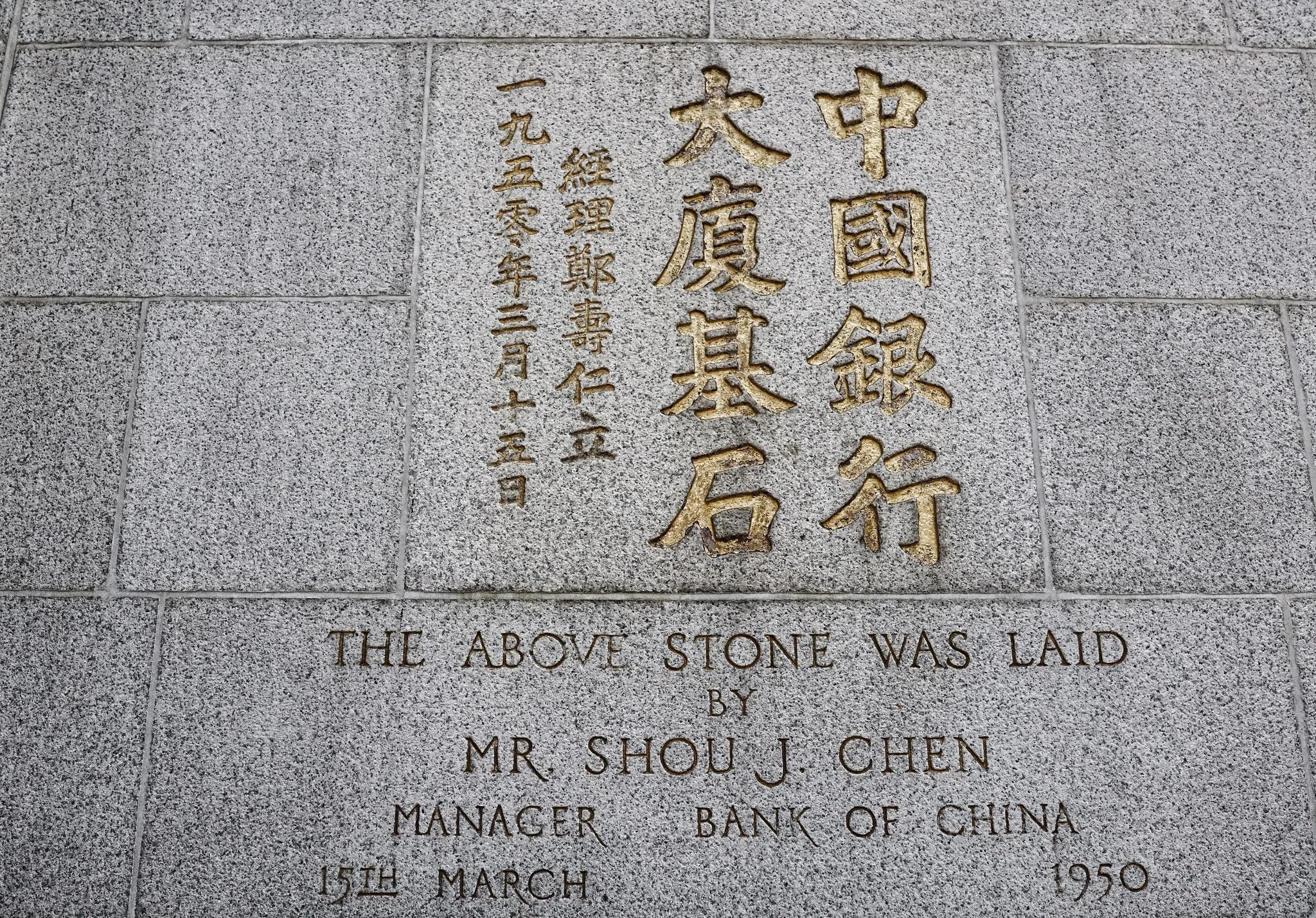
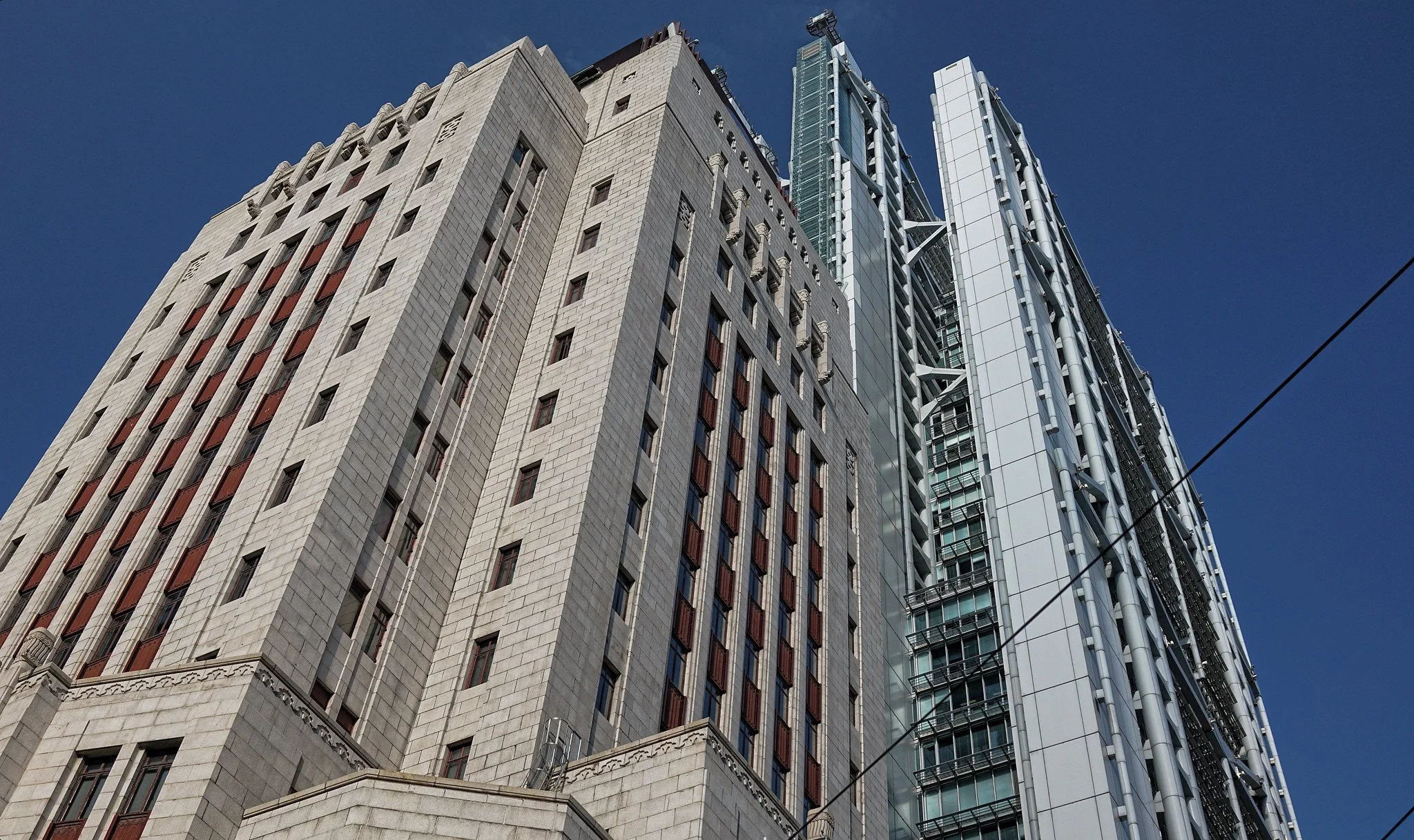
Hong Kong Culture | The mythical stone statues Bank of China Building | Hong Kong
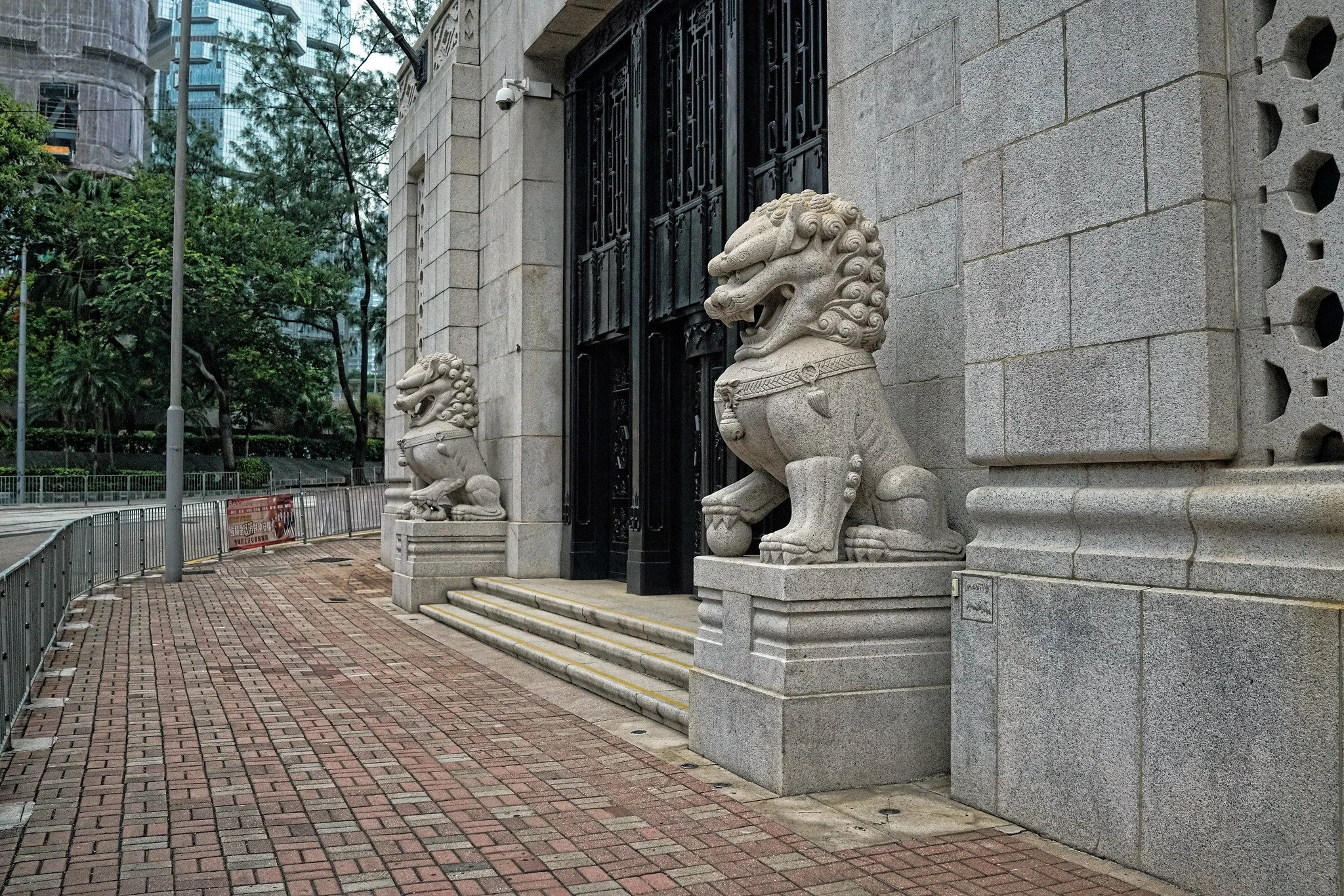
The 2 Pairs of Foo Dogs at the original Bank of China Headquarters in Hong Kong
The Bank of China next door to HSBC Headquarters is actually the Old Bank of China Building (舊中銀大廈), the handsome Art Deco | granite-clad tower at the corner of Des Voeux Road Central and Queen's Road Central, right across from HSBC and adjacent to the Cheung Kong Centre. (Note: This is the original 1950s headquarters building, not the famous sharp-angled Bank of China Tower by I.M. Pei at 1 Garden Road, which is a bit further up and doesn't have entrance foo dogs.)
This older building has a fascinating dual-guardian setup with two distinct pairs of lions, reflecting Hong Kong's blend of Chinese tradition, Western influence, and mid-20th-century style. Here's the full story:
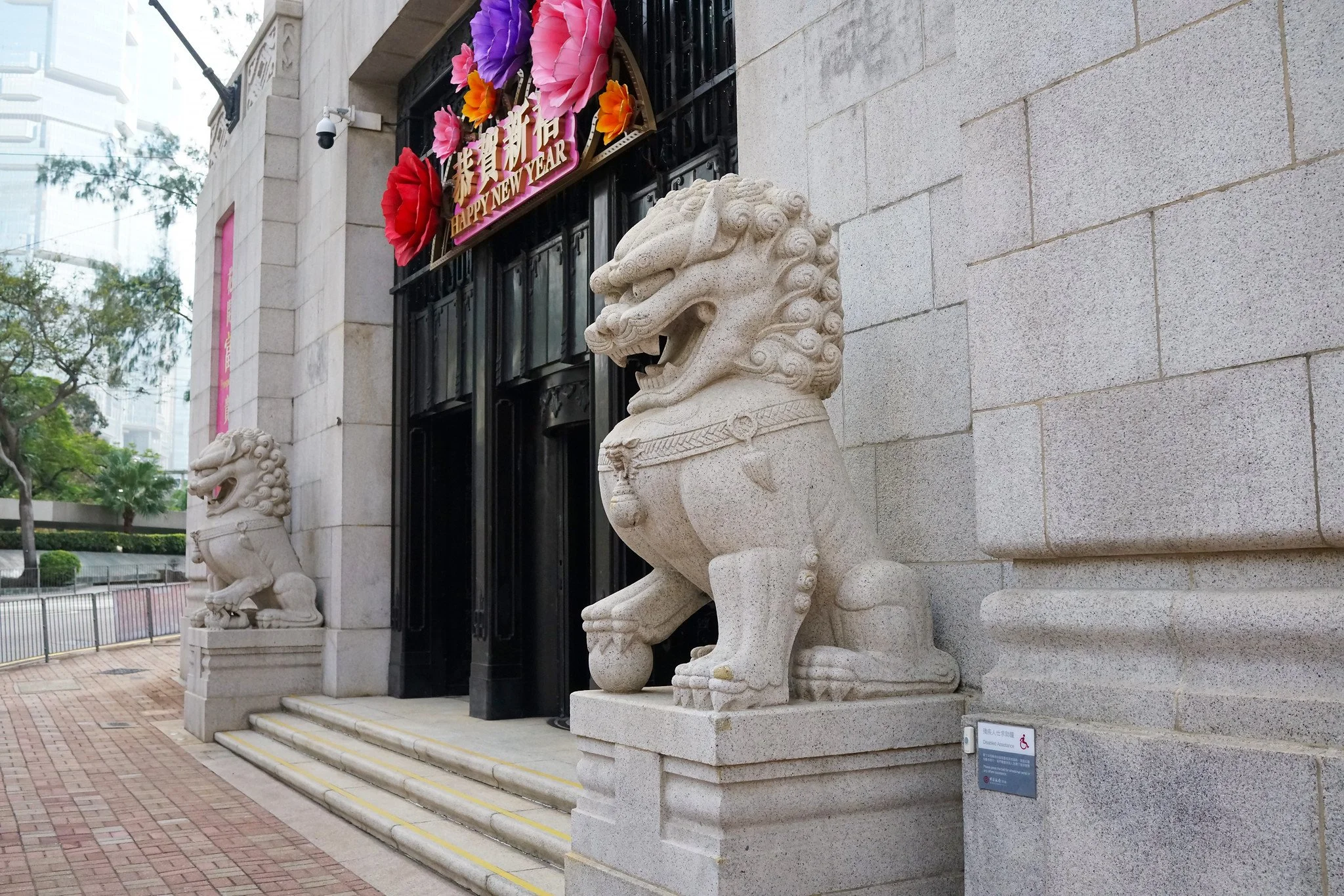
The Traditional Chinese Foo Dogs at the Main Entrance
At the primary main entrance on Des Voeux Road Central, you'll see a classic pair of stone guardian lions (foo dogs/shi shi) in the traditional Chinese style - fierce, muscular, with bulging eyes, curly manes, and dramatic expressions. These are a male-female pair for perfect yin-yang balance and you know what I have never seen anyone rub them! but I do, I will take my luck from anywhere!
The male (usually on the right as you face the building) has his paw on an embroidered ball (symbolizing power, the universe, or supremacy over the external world).
The female (on the left) has her paw on a playful cub (representing protection of family, nurturing, and inner harmony).
They're made of stone, snarling and protective, just like the ones at temples or imperial gates. Placed to ward off evil spirits (sha qi) and attract prosperity, they guard the bank's main door directly. Many locals and visitors rub or pat them for good luck (see my comment above) though they're not as famous (or as polished from constant touching) as HSBC's Stephen and Stitt bronze lions. This pair embodies straightforward, traditional Feng Shui protection - ensuring positive qi flows in while keeping negativity out, especially important for a financial institution.
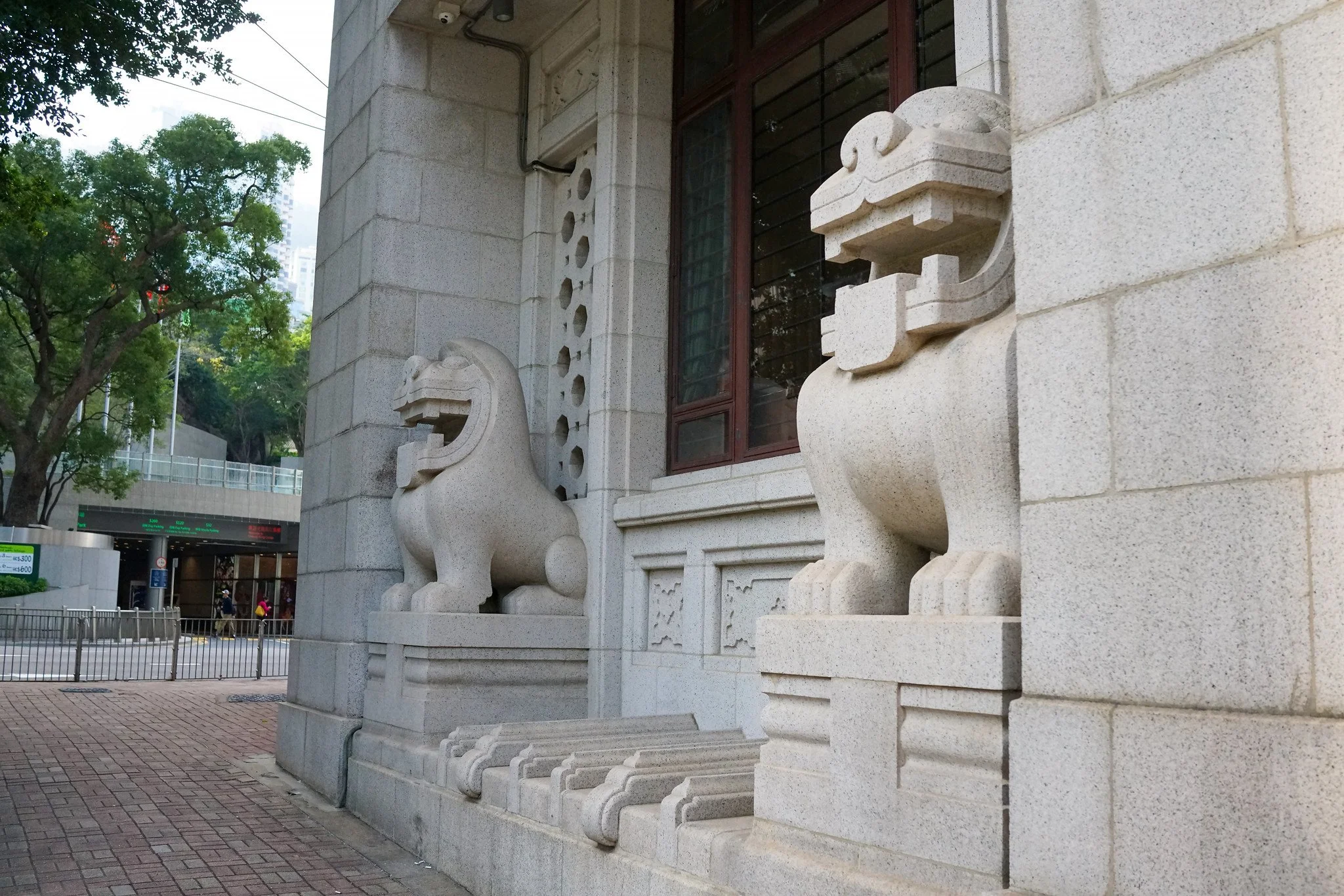
The Art Deco Lions Facing Cheung Kong Centre
Now for the interesting story, if you are facing the Foo Dogs at the main entrance, walk left around the corner to the side of the ban, this is the building's side/east wall along Des Voeux Road Central (facing toward the Cheung Kong Centre and Admiralty direction)
You will seer the more intriguing (and somewhat mysterious) pair of Art Deco - style Foo Dogs: These are very different - sleek, geometric, with clean lines, grinning mischievous faces, lolling tongues, cubic block teeth, and a playful yet modern vibe. They blend Chinese motifs (like traditional lion features) with 1930s Art Deco curves and abstraction, making them look almost whimsical compared to the stern traditional ones.
These lions were originally at the main entrance when the building was new (completed around 1950, though the style draws from earlier influences). Sculpted by Italian artist Rodolfo Nolli (who created similar sets for other colonial-era buildings in Hong Kong and Singapore), they were part of a series of eight such lions commissioned in the 1930s.
But here's the twist: At some point (likely in the 1950s or post-1949 political shifts, as the Bank of China became tied to the mainland), the Art Deco lions were "banished" or relocated from the front entrance and moved to this side position. Some old accounts call them "reactionary lions" removed due to their modernist/Western look not aligning with new political tastes after 1949. Others speculate it was a stylistic or Feng Shui decision to favor the more traditional Chinese pair at the main door.
Today, they still guard that side elevation, facing out toward the Cheung Kong Centre (the harmonious, curved building by Cesar Pelli designed in the 1990s partly to "absorb" or balance energy from the nearby Bank of China Tower's sharp edges). Spotting them is a fun hidden detail - best viewed from a tram rumbling along Des Voeux Road, where their grins pop out against the granite facade.
Why Two Different Pairs?
It highlights Hong Kong's layered identity and ancient traditions which to me is wonderful given the social media age that makes people forget life and history and hopefully will distract you from your phone for a few minutes!
Traditional Chinese lions - cultural roots, strong Feng Shui protection, and mainland ties (especially post-handover symbolism).
Art Deco lions - colonial-era flair, artistic fusion (East meets West in the 1930s/50s style), and a nod to the building's original design era.
In the broader "Feng Shui battlefield" of Central, these guardians add to the drama: While the Bank of China Headquarters Building by I. M. Pei sends out sharp sha qi, and HSBC counters with cannons and its lions, the Old Bank of China Building quietly holds its ground with dual protection—traditional at the front, stylishly modern on the side.
What a contrast - see the fierce traditional ones guarding the front door like temple protectors? And around the corner, the cheeky Art Deco ones grinning at Cheung Kong Centre - Hong Kong banks love their lions!"
click on any image to enlarge
© Copyright Acknowledged | All rights reserved | all images taken b Jamie
Jamie’s Hong Kong | Some of my favourite images | Hong Kong 101
I do not do food tours in Hong Kong but I know people that do!
I am pleased to say a lot of Food Tour Companies will have egg tarts on their tasting menu
I have very specific reasons and part of it is that I do not speak Cantonese or write Chinese, I am from Yorkshire in England and I lack the language gene and it is not through lack of trying and yes a lot of restaurants do not have English menu’s or staff who speak conversational English.
.. and yet I have eaten at close to 1,400 restaurants in Hong Kong since January 2nd 1972, my wife was born in Hong Kong and we have been together over 40 years and her first language is Cantonese and a lot of her family are Chinese or half Chinese so I have never had much of an issue!
This does not translate to doing food tours though, yes, I could do them, no problem there but they would never ever be as good as the food tours done by my friends (see the 3 links above) most of their awesome guides are locally born Hong Kong Chinese and obviously food culture is part of their DNA, it is impossible for me to compete with that!
So please feel free to contact them for food tours
© Jamie Lloyd | J3 Consultants Hong Kong | J3 Private Tours Hong Kong |
| 2010 - 2026 All rights reserved. |
Click on any image to enlarge to full screen
Current images from my Instagram feed