Flagstaff House & Murray House - classic Hong Kong tale
Two classic old Military Buildings in Hong Kong - complete History and Legacy

The J3 Group - Premium Quality Private Tours | Experiences and Insider Chats since 2010
Me Jamie, your host, I am English and I have lived in Hong Kong since January 2nd 1972 - I know the place.
A meaningful blog post with a difference - tips on Travel, Tourism, Tours, Daily Life and my personal thoughts on Hong Kong.
Please do visit Amazing Hong Kong
Hong Kong | Pearl of the Orient
Customised Private Tours + Experiences in Amazing Hong Kong
Jamie has lived in Hong Kong - Pearl of the Orient for 50+ years
Carefully Crafted Personalised and Customised Itineraries by Jamie | Hong Kong’s Most Experienced Private Tour Guide for : Solo Travellers Friends Families Seniors Couples Business People MICE Delegates.
Private Tours Cultural Tours Walking Tours Sightseeing Tours City Tours Night Tours Layover Tours Transit Tours Private Shore Excursions Bespoke Tours Personalised Tours Jewish Heritage Tours Luxury Private Tours Day Tours Luxury Boat Tours Themed Tours Private Family Tours Private Day Tours Corporate Tours
Just you, your family or friends and Jamie your personal English private tour guide - over 2,400+ tours completed since 2011 - Jamie offers quality Private Tours of Hong Kong
Tour Group Size 1 - 6 people only
J3 Group Hong Kong | J3 Consultants Hong Kong | J3 Private Tours Hong Kong
Creating Memories That Will Last A Lifetime
Go here for the Hong Kong Michelin Restaurant Guide which includes the Bib Gourmand Category

Your Private Personal Tour of Hong Kong Begins Here
A Resident since 1972 - Sharing Hong Kong as Only a Local Can
click on the image to enlarge
© Copyright Acknowledged | All rights reserved | image taken by Jamie
Murray House | The Original Building | Hong Kong
Twin Granite Sentinels: The Parallel Stories of Murray House and Flagstaff House
This was orginally going to be a blog post about Murray House but whilst engaged in research it occured to me that it should be about 2 famous old hostoric buildings, Murray House and Flagstaff House, both built around the same time, similar purposes and history both still remain but not in a way expected or logical! a classic Hong Kong tale
Murray House was dismantled, relocated, rebuilt and turned into a shopping mall, Flagstaff House is still in its original location and is a high quality tea museum,
Please read on, if you like the story then please make a point of visiting them both when you come to Hong Kong
Murray House Hong Kong
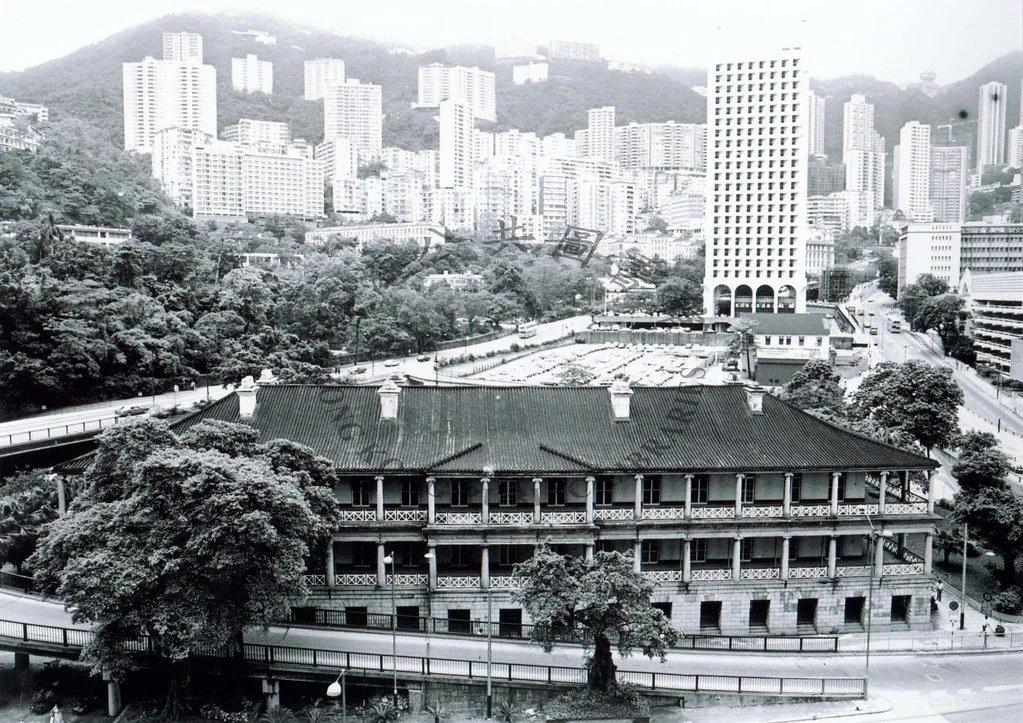
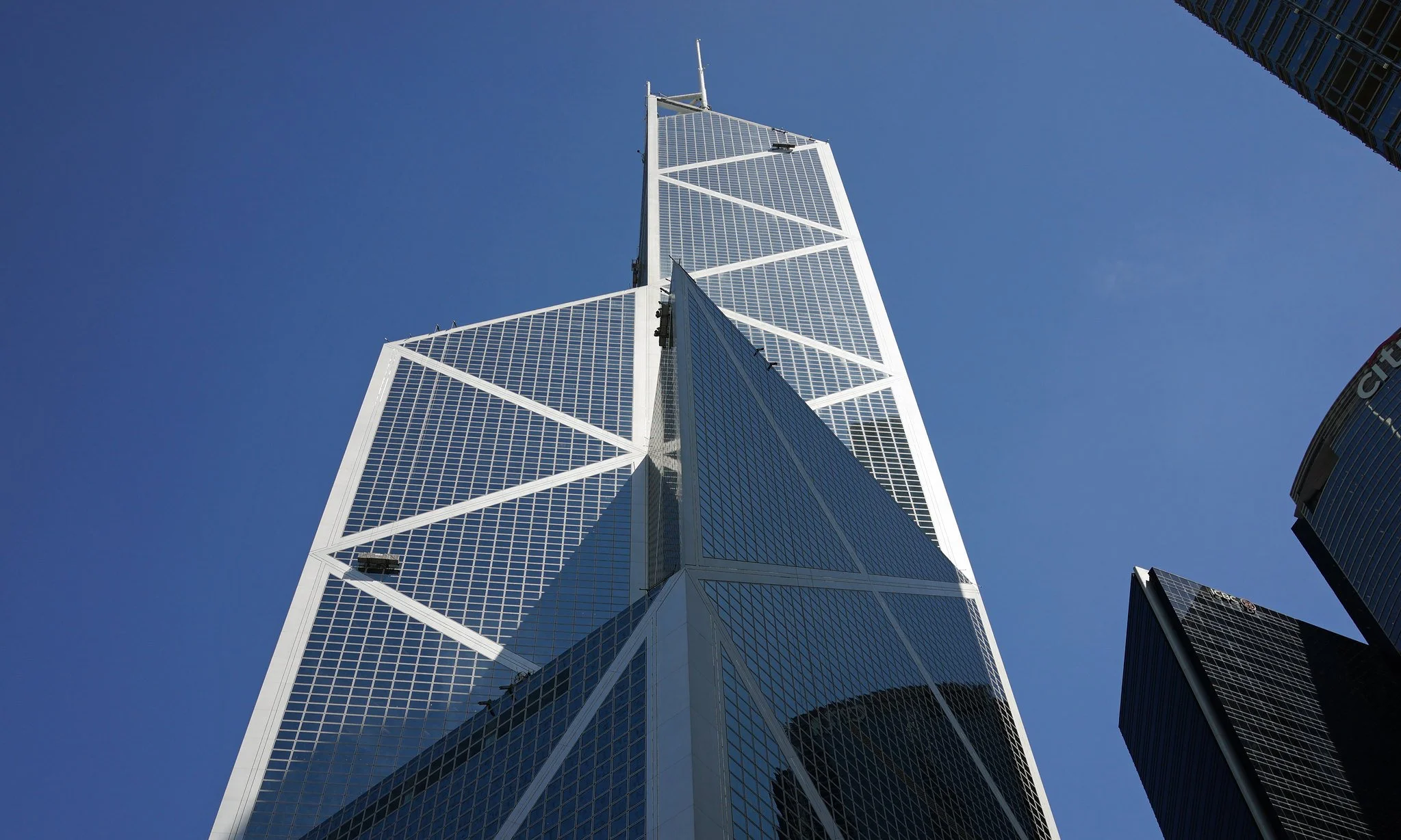
click on any image to enlarge
© Copyright Acknowledged | All rights reserved | image taken by Jamie
© Copyright Acknowledged | All rights reserved | for the old image
Old Murray House | Newish Bank of China | Hong Kong
The Murray House is one of Hong Kong’s most historically significant colonial-era structures, originally built as part of the British military presence in the early years after the cession of Hong Kong Island in 1841. Its story spans military use, wartime atrocities, postwar government functions, a controversial dismantling, and a remarkable relocation and rebirth. Below is a complete, detailed history based on official heritage records and historical accounts, covering every aspect you requested.
I was lucky enough to visit Murray House as a kid in Hong Kong but my pragmatic older self really likes the Bank of China Tower and for a short period well over a decade ago it had a viewing floor which gave some astonishing views of Central District, it was closed and has never re opened.
Original Location and Exact Address
The Murray House originally stood at the corner of Queensway and Garden Road in Central, on the site now occupied by the Bank of China Tower. Its precise address was No. 1 Garden Road, Central (the land parcel directly beneath the current tower). This location placed it within the larger Murray Barracks complex, which occupied much of the area east of present-day Central along the slopes rising toward what is now Hong Kong Park and the government offices. The barracks as a whole were named after Sir George Murray (1772 - 1846), a senior British military figure and Master-General of the Ordnance; the specific building known as Murray House served as the officers’ quarters and mess.
The original building and todays building are surrounded by 3 roads, Cotton Tree Drive and Garden Road, both going up and down to and from Victoria Peak and then in front, Queensway which leads into Queens Road Central
Construction, Opening and Early Purpose (1846 onward)
Construction of the original Murray House was completed in 1846, making it one of the earliest permanent colonial buildings erected after British rule began. It was designed by officers of the Royal Engineers (Major Aldrich and Lieutenant Collinson) as a three-storey neoclassical structure using locally quarried granite. Its architecture featured imposing colonnades, spacious verandahs for ventilation in the subtropical heat, arched openings, and a distinctive hybrid roof with Chinese-style red tiles layered to prevent leaks - blending Western Georgian/Regency form with practical local adaptations.
From the day it opened in 1846 until the Japanese invasion in 1941, its sole purpose was as the officers’ quarters and mess hall for the British Army garrison stationed at the Murray Barracks. It provided accommodation, dining, and social facilities for senior military officers. The building formed an integral part of the broader barracks complex, which supported the defence and administration of the new colony. It was not a public or civilian structure but a functional military facility in a strategically located, elevated position overlooking the harbour.
World War II and the Japanese Occupation (1941-1945)
During the 44-month Japanese occupation of Hong Kong, the Murray House was repurposed as the headquarters of the Japanese military police (Kempeitai). It housed jail cells, interrogation and torture chambers, and execution grounds on or immediately adjacent to the site. Historical accounts record that thousands of Hong Kong residents (estimates reach as many as 4,000 in some reports) were imprisoned, tortured, or executed there. This dark chapter left a lasting imprint: after the war, the building gained a reputation for being haunted, with reports of ghostly disturbances persisting into the postwar decades.
Clarification on Kempeitai Use in World War II1
During the Japanese occupation (1941-1945), the Old Supreme Court Building ( the historic building next to Statue Square) was indeed used as one of the key headquarters of the Kempeitai (Japanese military police). It housed administrative command functions, interrogation rooms, and detention facilities. Many survivor accounts and postwar records link it to the suppression of resistance, with local detainees held and questioned there. Its central, symbolic location in the heart of British colonial administration made it a logical choice for the occupiers to repurpose as a centre of control.
Murray House (original site at what is now the Bank of China Tower footprint on Garden Road/Queensway) has a separate but parallel association. Multiple historical and heritage accounts describe it as being used by the Japanese as a command centre or operational base for the Kempeitai, specifically involving jail cells, torture chambers, and execution grounds on or immediately adjacent to the premises. Postwar ghost stories, staff reports of hauntings, and the two documented exorcisms (1963 and 1974) are directly tied to the atrocities said to have occurred there, with some local narratives estimating hundreds to several thousand victims affected at or near the site.
Why Multiple Buildings Were Used
The Kempeitai did not limit itself to a single building. As the occupation force’s secret police and enforcement arm, they operated a dispersed network across Hong Kong to maintain tight control over the population. This included:
Taking over existing colonial structures (military barracks like Murray House, courthouses, police stations, and government buildings).
Setting up district-level operations (e.g., East and West Hong Kong divisions).
Using different sites for different purposes: some for high-level command and administration, others for detention, interrogation, torture, or executions.
The proximity of these sites in Central (the Old Supreme Court Building near Statue Square is only a short walk from the old Murray House location) made coordination straightforward. The Japanese could spread their operations to avoid concentrating everything in one vulnerable spot while maximising coverage of the occupied territory.
Murray House’s granite construction, relatively secure position within the former barracks area, and isolation from the main civilian thoroughfares likely made it suitable for more hands-on “field” operations involving holding and processing detainees. The Old Supreme Court Building, being a prominent judicial landmark, suited higher-profile or administrative Kempeitai functions.
This overlap is common in occupied territories: the Kempeitai (and similar forces elsewhere) routinely commandeered multiple buildings for efficiency and psychological impact.
Summary of this new information (for me anyway!) - Context
Old Supreme Court Building (next to Statue Square/Chater Garden): Served as a major Kempeitai headquarters during the occupation, with strong associations in judicial and central administration histories.
Murray House (original Central site): Also used by the Kempeitai as a command centre with documented links to torture and executions on-site, contributing to its enduring haunted reputation even after relocation.
Postwar Use and Government Functions (1945 - 1982)
After liberation in 1945, the British military handed the building over to the Hong Kong government. It transitioned from military to civilian administrative use and housed various government departments over the following decades. These included offices for rating and valuation, transport-related functions, and other administrative roles. By the 1960s and 1970s it was still in active government service, though its age and wartime history continued to fuel ghost stories among staff. Two notable exorcisms were performed on the premises—one in 1963 and a second in 1974 organised by the then-Commissioner of Transport, Brian Wilson, involving dozens of Buddhist monks chanting and making offerings to address persistent staff complaints of supernatural activity.
Connection to Murray Barracks and the Decision to Dismantle (1970s - 1982)
The Murray House was always physically and functionally tied to the Murray Barracks complex. As Hong Kong’s economy boomed in the postwar period and Central became the financial heart of the city, large tracts of former military land (including parts of the barracks) were progressively redeveloped into commercial, hotel, and government office sites. By the late 1970s, the pressure for prime land in Central became overwhelming. The Hong Kong Government identified the Murray House site for redevelopment due to a combination of factors: the building’s structural problems after more than 130 years of exposure to Hong Kong’s humid climate, and the urgent need for high-value commercial space in the expanding business district. In 1982 the site was sold to the Bank of China for HK$120 million - a deal widely viewed at the time as commercially advantageous and diplomatically strategic ahead of the 1997 handover negotiations. Rather than demolish the historic structure outright, the government took the then-unusual step of carefully dismantling it.
Why Murray House Could Not Stay
Murray House sat on the more strategically valuable lower site at the corner of what became Queensway and Garden Road (No. 1 Garden Road), right in the path of Central’s explosive commercial expansion in the late 1970s and early 1980s. The land was flatter, more accessible, and far more attractive for a major financial institution like the Bank of China, which needed a prominent headquarters in the heart of the business district. By 1982 the pressure was intense: the site was sold for redevelopment (reportedly HK$120 million), and keeping a low-rise, aging granite building there was economically and spatially unfeasible amid the push for skyscrapers.
At the time, full-scale heritage legislation was still relatively weak, and conservation often took a backseat to development. Rather than lose the structure entirely, the authorities chose the then-novel option of complete dismantling—cataloguing over 3,000 granite blocks and components for later reassembly. This was an early, pragmatic attempt at preservation in an era when many other colonial buildings simply vanished. The relocation to Stanley (proposed around 1988–1990 by the Housing Department as part of the Ma Hang estate development) was intended to give the building a viable new public role on the waterfront, supporting tourism and community life on the south side of the island.
The decision to sell the site to the Bank of China for HK$1 Billion (US$127.6) - context
The original Murray House site (No. 1 Garden Road) was sold by the Hong Kong government to the Bank of China in 1982 for HK$1 Billion. At the time, this was considered a substantial sum and carried diplomatic weight in the lead-up to the 1997 handover negotiations. The cleared land enabled construction of the iconic I.M. Pei-designed Bank of China Tower.
The Murray Road Car Park Site (Directly Opposite + Over the Road)
The site I am referring to is the Murray Road Multi-Storey Car Park at 2 Murray Road, literally across the road from the old Murray House | Bank of China Tower location. This was a public multi-level car park built in the early 1970s that operated until 2017. I estimate it was 200 yards away!
In May 2017, the Hong Kong government sold this site through a competitive tender (the first major commercial land sale in Central since 1996). Henderson Land Development won the bid with a record-breaking offer of HK$23.28 billion (approximately US$3 billion at the time). This was the highest price ever paid for a single plot of land in Hong Kong at that point and was even recognised in global records as the world's most expensive commercial land plot by sale price.
Key details on the Henderson deal:
Plot size: approximately 2,880 square metres (about 31,000 square feet).
Potential gross floor area for development: around 465,005 square feet.
Price per square foot (based on allowable GFA): roughly HK$50,064 - a new benchmark that far exceeded analysts' expectations (which had ranged between HK$15.7 billion and HK$22 billion).
Henderson outbid eight other major developers in a highly competitive process.
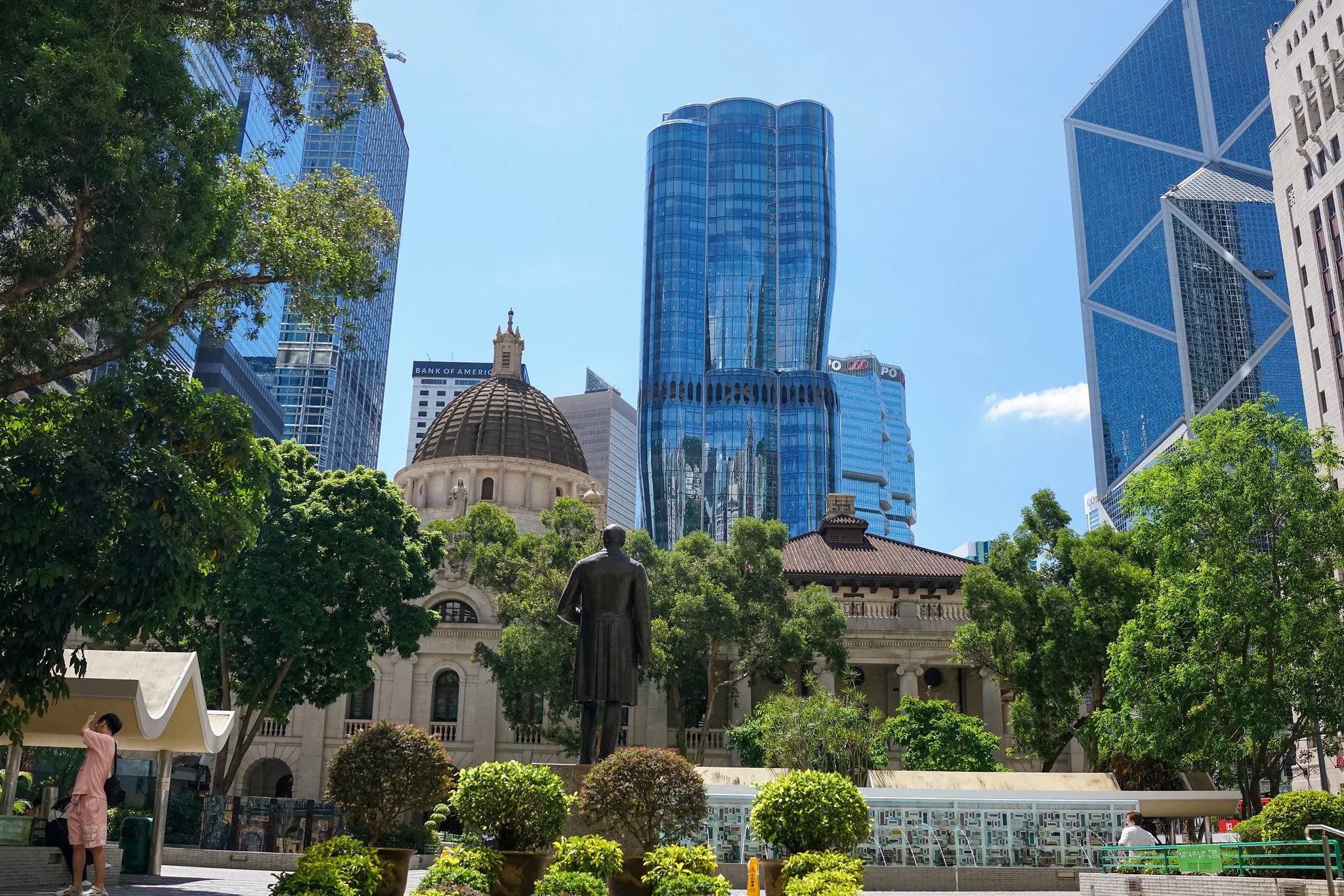
The site later became The Henderson, (which is my favourite building in Hong Kong) a premium office tower designed by Zaha Hadid Architects, with height restrictions capped at 190 metres.
Comparison and Context
Yes — Henderson Land paid dramatically more than what the Bank of China paid in 1982. The difference is enormous:
1982 sale (Murray House site): HK$1 billion total (with an initial payment of HK$60 million and the balance payable over 13 years at 6% interest; approximately US$140 -154 million at the time) - a negotiated direct sale in an era when Central land values were high but nowhere near today's levels, and when heritage considerations and political factors (pre-handover uncertainty) played a significant role.
2017 sale (Murray Road car park site): HK$23.28 billion (US$3 billion) — roughly 23 times higher in nominal total terms.
This gap reflects several realities of Hong Kong's property market:
Time and inflation: 35 years of explosive economic growth, with Central remaining the premier financial district in Asia.
Scarcity: By 2017, large, developable commercial sites in Core Central were extremely rare. The Murray Road car park offered one of the last significant redevelopment opportunities in the area.
Market conditions: Intense competition among major developers, ultra-low interest rates for much of the period, and strong confidence in long-term demand for Grade-A office space drove prices to extraordinary levels.
Per-square-foot intensity: The 2017 deal set a record not just in total price but in price per square foot of developable area, underscoring how Central land had become among the most expensive real estate on earth.
In hindsight, the 1982 transaction looks like a relative bargain for the Bank of China, especially when viewed against later deals like Henderson's. However, at the time it was a strategic move that helped shape Central's modern skyline while allowing the government to preserve (via relocation to Stanley) a piece of colonial heritage.
Bank of China Tower Site (Original Murray House Location)
Plot size: Approximately 6,700 m² (roughly 72,000 square feet).
This was the land occupied by the original Murray House and its immediate surroundings within the old Murray Barracks complex. The low-rise granite building itself covered only a portion of this plot, but the entire cleared site was sold to the Bank of China in 1982 for a total of HK$1 billion (initial payment HK$60 million, balance over 13 years at 6% interest).
Murray Road Car Park Site (The Henderson)
Plot size: 2,880 m² (approximately 31,000 square feet).
This was the footprint of the former multi-storey public car park at 2 Murray Road, directly across the road from the Bank of China Tower.
Quick Side-by-Side
Bank of China / old Murray House site: ~6,700 m² (~72,000 sq ft) — roughly 2.3 times larger than the Henderson site.
Henderson / old Murray Road car park site: 2,880 m² (~31,000 sq ft).
The sites are adjacent (literally "over the road" from each other in the former military barracks area), both rectangular or near-rectangular urban plots in the dense core of Central, and both benefited from excellent location, harbour proximity, and high development potential. However, the Bank of China plot was noticeably bigger, which partly explains why it could support the massive 70-storey triangular tower with its distinctive form and large gross floor area (around 130,000 m² total).
Why the Price Difference Remains Astonishing
Even though the Henderson site is smaller, Henderson Land paid HK$23.28 billion in 2017 — still roughly 23 times more than the HK$1 billion total paid for the larger Bank of China site in 1982. On a per-square-metre basis, the gap is even starker:
1982 deal: roughly HK$149,000 per m² (with favourable deferred payment terms).
2017 deal: over HK$8 million per m² (a record at the time).
This highlights how Central land values exploded over 35 years due to extreme scarcity of large developable plots, sustained demand for Grade-A office space, and Hong Kong’s position as a global financial hub. The 1982 sale was a negotiated transaction with heritage and diplomatic considerations; the 2017 sale was a fiercely competitive public tender among major developers.
The point is very simple: the Bank of China got the bargain of the century for purchasing the land where Murray House once stood.
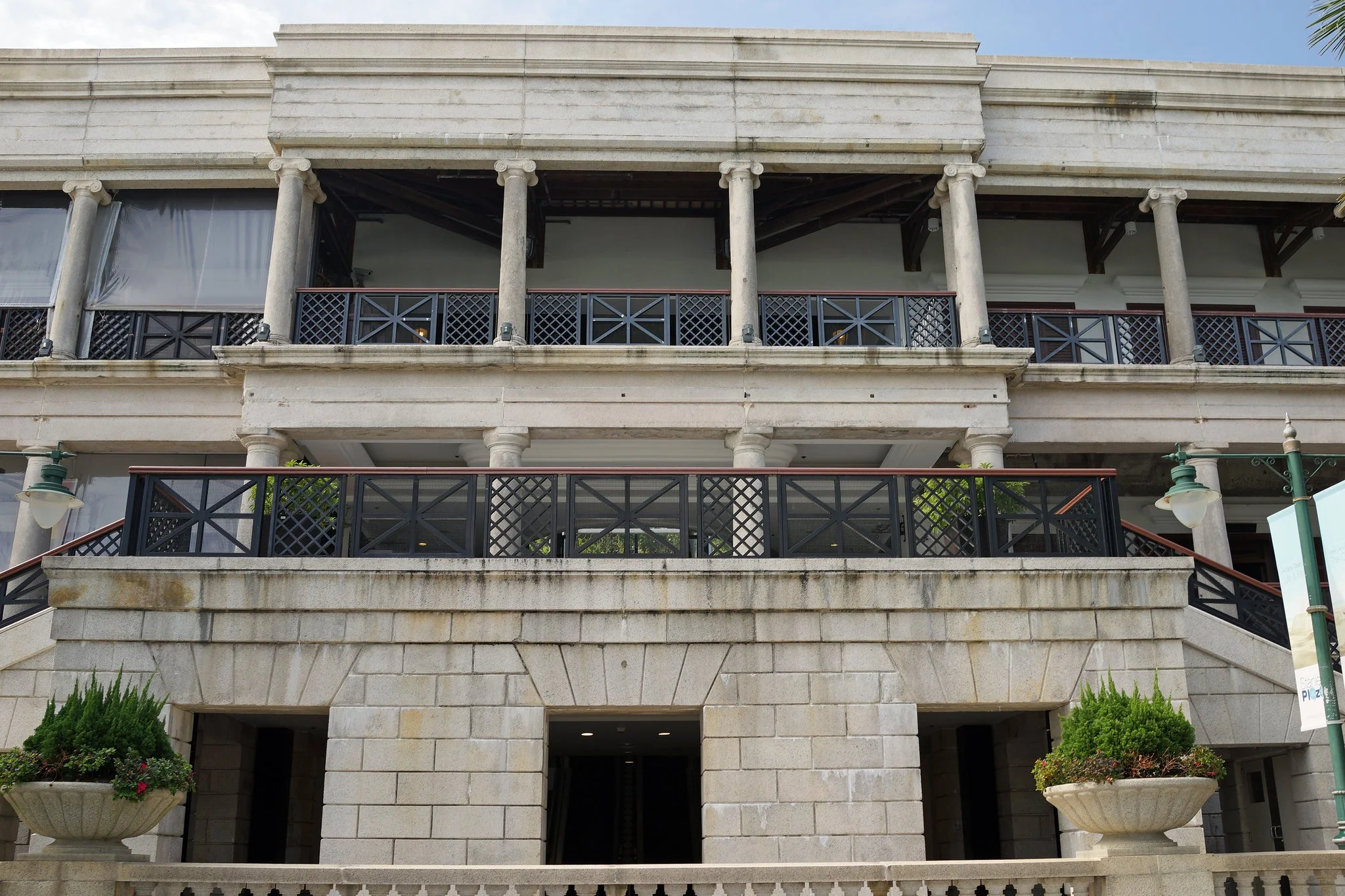
click on any image to enlarge
© Copyright Acknowledged | All rights reserved | images taken by Jamie
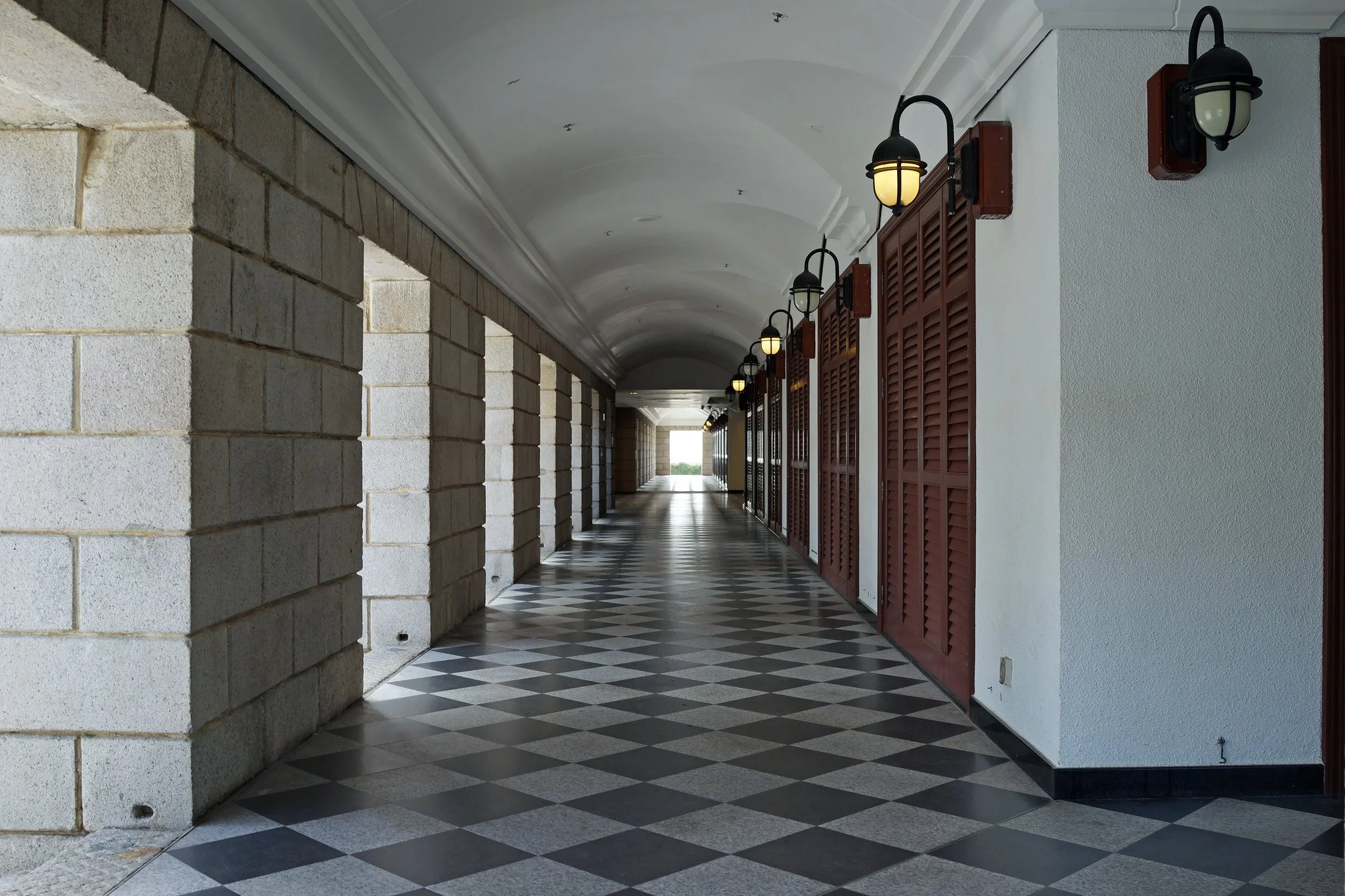
Murray House | Rebuilt in Stanley | Hong Kong
Dismantling, Relocation Logic, and Bank of China Tower Project
In 1982 the Murray House was meticulously disassembled. More than 3,000 individual granite blocks, columns, tiles, and other components were numbered, catalogued, and placed in storage. The logic behind dismantling and relocating rather than destroying it was pragmatic heritage conservation: full demolition would have erased a rare surviving example of early colonial architecture, but the building could not remain on its original site given the intense commercial development pressures in Central. The surrounding area was rapidly transforming into a forest of skyscrapers; preserving the structure in situ was simply not feasible economically or spatially. Stanley was selected as the new home because the Housing Authority was simultaneously developing a major public housing estate at Ma Hang nearby. Placing the reassembled building on the Stanley waterfront promenade would create a complementary dining and entertainment venue, boosting the new community, attracting visitors to the south side of the island, and giving the historic fabric a viable new public role. Discussions about the relocation site and purpose continued for several years after 1982, with the Housing Authority formally proposing the Stanley waterfront option around 1988 - 1990.
Construction of the Bank of China Tower on the cleared site began on 18 April 1985. Designed by renowned architect I.M. Pei, the 70-storey triangular-prism tower (with distinctive bamboo-shoot symbolism) was completed for occupancy in August 1989 and officially opened in May 1990. At the time it was the tallest building in Asia outside the United States and quickly became an iconic landmark in Hong Kong’s skyline, representing the city’s modern economic ascent.
Reassembly of Murray House in Stanley and Timeline (1998 - 2002 onward)
Reconstruction in Stanley began in the late 1990s. The numbered components were transported to the waterfront site beside what became Stanley Plaza. The building was reassembled using traditional techniques where possible, though some lost elements (such as certain ventilation chimneys) were replaced with compatible pieces from period buildings of similar style. The core structure today incorporates a modern concrete frame for safety and longevity, with the original granite façade and architectural features affixed to it. The reassembly was largely completed by around 2001, and the Murray House officially reopened to the public in 2002 - exactly 20 years after its dismantling.
Personally and I have to say this, they did a terrific job but it still lacks something (probably just the history and not something more tangible)
History and Purpose of Murray House in Stanley (2002 to Present)
From its reopening in 2002, Murray House has functioned primarily as a commercial and leisure destination housing restaurants, cafés, boutique shops, and event spaces. It sits prominently on the seafront promenade at Stanley Plaza, offering panoramic views across Stanley Bay. Between 2005 and 2013 it also housed the Hong Kong Maritime Museum on its ground floor before the museum relocated to Pier 8 in Central. The choice of retail and dining use (rather than converting it into a museum) was driven by practical considerations: a commercial adaptive-reuse model ensured ongoing maintenance and operational sustainability without relying solely on public funding; it integrated seamlessly with the adjacent Stanley Plaza shopping and housing development; and it turned the building into an active visitor attraction that brings foot traffic and economic benefit to the south side of Hong Kong Island. A static museum might have limited public engagement and higher upkeep costs, whereas restaurants and shops make the heritage accessible daily to locals and tourists alike in a relaxed, waterfront setting.
In recent years the building has continued in this role, though individual tenancies have evolved (some well-known restaurants and retail outlets have come and gone). It remains one of Stanley’s most photographed landmarks and a popular spot for dining with harbour views.
Covid had a dramatic effect on the building with many retailers closing down including most of the restaurants, it is every so slowly coming back
My opinion on the Relocation and Current Use
The relocation of Murray House has always been controversial among heritage professionals. (and I am not a heritage professional!) On one hand, it was a forward-thinking act of preservation in an era when many colonial structures were simply demolished for progress; the physical fabric survives, and thousands of people can still experience its architecture every day. On the other, moving it stripped away its original urban and historical context - the military barracks setting, the Central harbour views it once commanded, and the layered memories tied to that specific location. Experts have described the result as something of a “replica” or “Frankenstein’s monster” because the reassembled building sits on a new concrete core in an entirely different environment, and it consequently lost its Grade I heritage status. In my view, however, the decision was ultimately the right one given the realities of 1980s Hong Kong: Central had become too valuable for low-rise colonial buildings, and outright loss would have been far worse. The Bank of China Tower that replaced it is itself a masterpiece of modern architecture and a symbol of Hong Kong’s transformation into a global financial powerhouse - fitting for a city that constantly reinvents itself.
…. and this maybe what bothers me a little, there is something missing and it kind of looks out place considering that Stanley is a pretty high end place to live for the most part, there are no other historic buildings (the historic rebuilt ferry pier next door was also relocated from Central) so Murray House just does not fit, but hey, it is there and is still interesting.
As for the retail-mall use in Stanley rather than a museum, it makes excellent practical sense. Stanley is a leisure destination; restaurants and shops turn the building into a living, breathing part of daily Hong Kong life rather than a quiet exhibit. It draws visitors who might otherwise never engage with colonial heritage, supports local tourism economically, and ensures the structure remains cared for indefinitely. A museum would have been more reverent but potentially under-visited and costly. In the end, Murray House’s journey reflects Hong Kong’s own character - pragmatic, resilient, and adaptive - preserving the past not by freezing it in amber but by giving it new life in a place where people can enjoy it. The building stands today as a tangible link between 19th-century colonial military life, the horrors of occupation, postwar governance, and contemporary leisure, all while the Bank of China Tower continues to dominate the Central skyline as a bold statement of the city’s modern era. It’s a story of both loss and survival, perfectly emblematic of Hong Kong’s layered history.
Flagstaff House and the Murray House (originally the officers’ quarters of the Murray Barracks) share a close historical and geographical connection as part of the same early British military cantonment in Central, Hong Kong. They were not directly attached as a single complex but formed key elements of the broader Victoria Cantonment (also encompassing parts of Victoria Barracks and other military facilities) that developed in the 1840s on the slopes above what was then the waterfront along Queen’s Road.
There is a connection between Murray House and the stanley Internment Camp that was located there in WW2 and the Stanley Military Cemetery also fits the narrative so to speak
In a nutshell version
Murray House: The Transposed Monument
Murray House was completed in 1846 as the officers’ quarters and mess for the Murray Barracks, located at what is now the exact site of the Bank of China Tower (No. 1 Garden Road, Central). Named after Sir George Murray, it served British Army officers with spacious accommodation, dining facilities, and social spaces in a prominent, elevated position overlooking the harbour.
During the Japanese occupation (1941 - 1945), it was repurposed as the headquarters of the Kempeitai (Japanese military police). It housed interrogation rooms, jail cells, and execution grounds, with historical accounts noting thousands of local residents imprisoned, tortured, or executed on or near the site. This dark chapter contributed to its postwar reputation for being haunted, leading to two notable exorcisms - one in 1963 and another in 1974 involving Buddhist monks.
After liberation, the building transitioned to civilian government use, housing departments such as rating and valuation and transport-related offices. By the late 1970s, intense commercial pressure in Central made its original low-rise footprint untenable. In 1982, it was meticulously dismantled - over 3,000 granite blocks, columns, and components were numbered and stored—to clear the site for the Bank of China Tower. Construction of the iconic I.M. Pei-designed tower began in April 1985 and it opened in 1990, becoming a symbol of modern Hong Kong.
The decision to relocate rather than demolish was a pragmatic early conservation effort. After years of planning, reassembly began in the late 1990s on the Stanley waterfront beside Stanley Plaza (part of the Ma Hang public housing development). The building was reconstructed on a new concrete core for safety, with original granite elements reattached (supplemented by compatible pieces from other period structures). It officially reopened to the public in 2002.
Today, Murray House still functions primarily as a leisure and commercial destination housing restaurants, cafés, boutique shops, and event spaces. It offers panoramic views across Stanley Bay and draws visitors for dining and promenading. It briefly housed the Hong Kong Maritime Museum (2005–2013) before the museum moved to Central. The adaptive commercial use ensures ongoing maintenance and public engagement in a vibrant waterfront setting, though the relocation meant it lost its original context and Grade I heritage status - it is now ungraded.
Flagstaff House
click on any image to enlarge
© Copyright Acknowledged | All rights reserved | image taken by Jamie
© Copyright Acknowledged | All rights reserved | for the old image
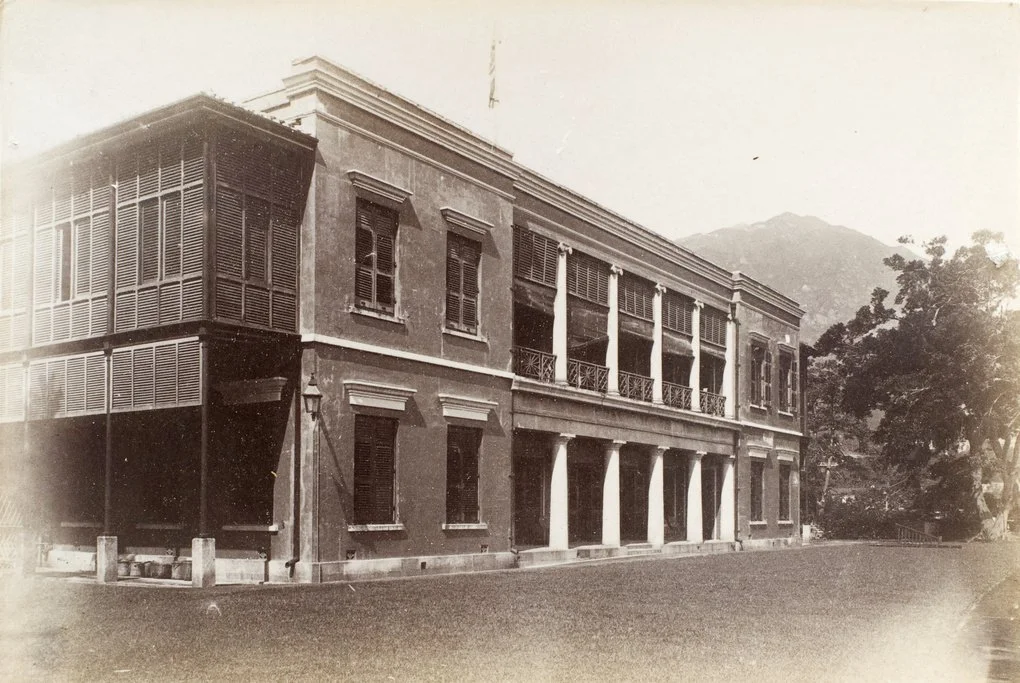
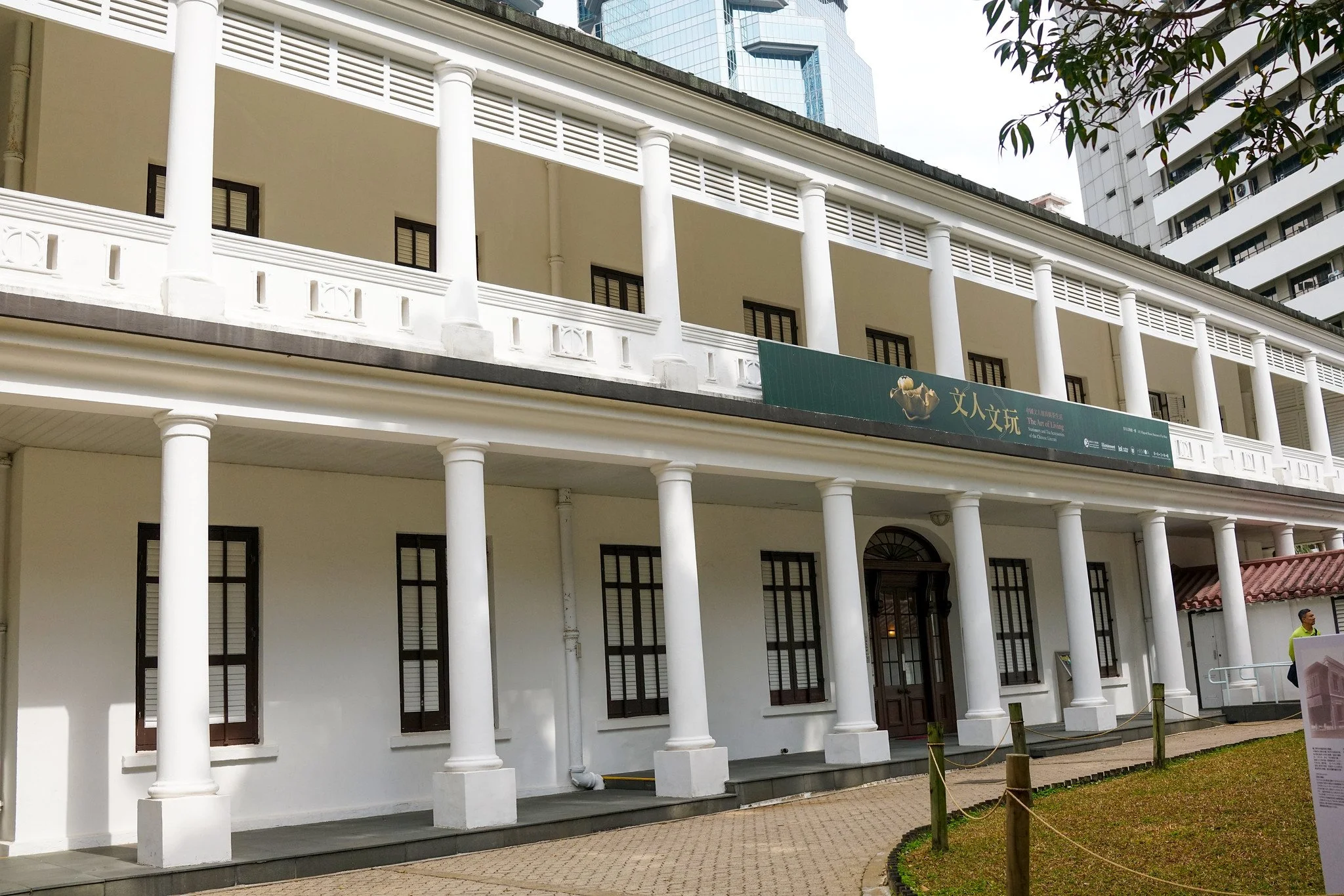
Flagstaff House | Old and New | Hong Kong
Construction and Purpose of Flagstaff House
Flagstaff House was constructed between 1844 and 1846 - the same period as the Murray House. It was originally known as Headquarters House (renamed Flagstaff House around 1932) and designed in a Greek Revival style, also by Royal Engineers officers (including contributions from the same team involved in the early barracks planning, such as Major Edward Aldrich).
Its sole and continuous primary purpose from completion in 1846 until 1978 was as the official residence and office of the Commander of the British Forces in Hong Kong (the General Officer Commanding, or GOC). The first occupant was Major-General George Charles D’Aguilar (who also served as Lieutenant Governor). The building sat on a small bluff, giving it an elevated, commanding position overlooking the harbour and the surrounding barracks area. It combined living quarters for the most senior military officer and his family with workspace for command functions. Unlike the Murray House, which served more junior and mid-level officers as quarters and a mess, Flagstaff House was the top-tier accommodation reserved exclusively for the highest-ranking commander on station.
Personally I have never been a fan of Flagstaff House, I always found Murray House to be more interesting both in its original state and its current “new state” but Flagstaff House is located in Hong Kong Park which is always a pleasant place to chill out for an hour ot two.
Why Flagstaff House Was Able to Stay
Flagstaff House (originally Headquarters House) occupied a slightly more elevated and peripheral position within the broader Victoria Barracks area, on a small bluff at what is now 10 Cotton Tree Drive, inside today’s Hong Kong Park. When the government began releasing large portions of the former military lands in the 1970s for civilian redevelopment, the upper sections of the Victoria Barracks (including Flagstaff House) were not under the same immediate commercial redevelopment pressure as the lower, more waterfront-adjacent Murray Barracks site.
By the late 1970s, the British military commander had already moved out to a new residence on Barker Road (1978). The building was handed over to the civilian government relatively smoothly and placed under the Urban Council in 1981. Rather than facing demolition or sale for high-value office | tower development, it was earmarked for adaptive reuse as a public cultural facility. It was restored to approximate its mid-19th-century appearance and opened in 1984 as the Flagstaff House Museum of Tea Ware—a peaceful, low-impact use that fitted neatly into the newly created Hong Kong Park (itself a green lung carved from former barracks land). In 1989 it was formally declared a monument, giving it the strongest legal protection available under Hong Kong law. Its survival in situ was helped by the fact that it was smaller, more residential in character, and less directly blocking prime commercial plots compared with the larger Murray House footprint.
Direct Connection to Murray Barracks | Murray House
There was no operational or administrative “chain of command” link in the sense that Murray House reported to Flagstaff House on a daily basis, but they were functionally and spatially intertwined within the same military precinct:
Both buildings were planned and erected as part of the initial permanent garrison infrastructure in the newly established colony.
Historical maps and contemporary drawings from the 1840s (including one by Lieutenant Martin in 1847) show them in close proximity: Murray House (the officers’ mess and quarters) to the west in the Murray Barracks area, and Flagstaff House (Headquarters House) slightly to the east on higher ground within the Victoria Barracks zone.
Together they formed the social and command heart of the early British military presence. Senior officers would have lived or dined at Murray House while the overall commander resided at Flagstaff House. The parade grounds, batteries, and other barracks facilities lay between or around them.
Both survived into the postwar era as rare remnants of the original 1840s military architecture in Central, though the wider barracks lands were progressively redeveloped.
In short, Flagstaff House was indeed simply (and specifically) the housing and headquarters for the most senior military officer - the Commander himself - while Murray House catered to the broader officer corps of the garrison. They complemented each other: one for command leadership, the other for officers’ daily living and mess facilities.
In a nutshell version
Flagstaff House: The Enduring Anchor
Flagstaff House (originally known as Headquarters House) was also completed in 1846, designed in a Greek Revival style by the same circle of Royal Engineers officers. It stood on a small bluff within the Victoria Barracks area, at what is now 10 Cotton Tree Drive inside Hong Kong Park.
Its sole and continuous primary purpose until 1978 was as the official residence and office of the Commander of the British Forces in Hong Kong (the General Officer Commanding). The first resident was Major-General George Charles D’Aguilar. While Murray House served the broader officer corps as quarters and mess, Flagstaff House was reserved exclusively for the most senior commander and his family, combining living quarters with command functions. It enjoyed an elevated, commanding position overlooking the harbour and surrounding barracks.
During the Japanese occupation, it was used by Japanese admirals or senior officers. After the war, it resumed its role as the Commander’s residence until the military relocated to a new house on Barker Road at Victoria Peak in 1978. The building was then handed over to the civilian government and placed under the Urban Council in 1981.
Rather than facing redevelopment pressure, Flagstaff House was sensitively restored to approximate its mid-19th-century appearance and converted into a cultural venue. It opened in 1984 as the Flagstaff House Museum of Tea Ware, showcasing Chinese teaware collections (including major donations from Dr K.S. Lo). In 1989 it was declared a monument, receiving the highest level of legal protection. A new wing, the K.S. Lo Gallery, was added in 1995.
Today, it remains one of Hong Kong’s best-preserved colonial structures, sitting authentically in its historic park setting as a peaceful museum dedicated to tea culture.
,, and yes, the site has a teahouse called the Lok Cha Tea House which is also a splendid place to have dim sum
The Broader Context of the Victoria Barracks Redevelopment
Shared Wartime and Postwar History
During the Japanese occupation (1941-1945), both buildings were taken over by Japanese forces. Flagstaff House was repaired and used as a residence by Japanese admirals or senior officers, mirroring how Murray House became the Kempeitai headquarters with its darker record of imprisonment and executions.
After liberation, both returned to British military/government use. Flagstaff House continued as the Commander’s residence until 1978, when the commander moved to a new purpose-built house on Barker Road. It was then handed over to the civilian Hong Kong Government as part of the gradual return of former Victoria Barracks land. Today it houses the Flagstaff House Museum of Tea Ware (opened in 1984 after a donation of teaware collections), making it one of Hong Kong’s best-preserved and most accessible colonial heritage sites within Hong Kong Park.
Why the Distinction Matters
For visitors, this pairing offers a clear illustration of the British military hierarchy in 19th-century Hong Kong: Flagstaff House represented the apex of command (elevated literally and figuratively), while Murray House reflected the day-to-day social life of the officer class. Their near-identical construction dates and shared designers highlight how rapidly the colonial administration moved to establish a permanent military footprint after 1842. The fact that both structures still exist today — one in its original (adapted) location in the park, the other carefully relocated and reassembled in Stanley - is remarkable given the intense redevelopment pressures in Central.
In my view, the relationship underscores the pragmatic layering of early colonial Hong Kong: a compact, efficient military cantonment where command, accommodation, and defence functions were concentrated in a small, defensible area that later became the financial heart of the city. Flagstaff House’s survival in situ and conversion into a peaceful museum contrasts nicely with Murray House’s journey, showing two different but equally valid approaches to heritage preservation in a space-starved metropolis.
This connection adds depth when visiting Hong Kong Park or Stanley - people often appreciate understanding that these two granite buildings, built simultaneously, once anchored the same garrison that helped secure the young colony. No deeper administrative merger existed beyond their shared role in the Victoria Cantonment, (also referred to as the Military Cantonment) was a dedicated British military but their proximity and parallel histories make them natural companions in any discussion of Hong Kong’s colonial military legacy.
Yes, the contrast between the fates of Murray House and Flagstaff House is indeed one of the more fascinating quirks in Hong Kong’s colonial heritage story. Both buildings were constructed in the same narrow window (1844 - 1846) by the same team of Royal Engineers officers, using similar granite construction techniques, and they once formed complementary parts of the early Victoria Cantonment military precinct in Central. Yet one was painstakingly dismantled and relocated while the other remains standing—relatively intact—in its original setting. The difference boils down to timing, location within the barracks complex, land-use pressures, and evolving attitudes toward heritage preservation.
The entire military cantonment was gradually carved up in phases. The lower Murray Barracks area went to intense commercial use (Bank of China Tower, hotels, offices), while higher or greener sections became Hong Kong Park, government offices, and cultural spaces. Flagstaff House benefited from being folded into the park plan, whereas Murray House’s original plot was too valuable to incorporate any open or low-rise heritage element. This reflects Hong Kong’s classic tension in the 1980s: rapid economic growth versus nascent heritage awareness.
Interestingly, the relocation of Murray House is now often cited as a pioneering but imperfect project. Because it was moved and reassembled on a new concrete core in an entirely different context, it lost its original setting and historical layering. As a result, it was eventually stripped of its Grade I status (it is no longer graded at all), whereas Flagstaff House retains its full declared monument protection and sits authentically in its historic environment.
In hindsight, the divergent paths make perfect sense given the practical realities of land-scarce, development-driven Hong Kong. Flagstaff House survived because its location allowed it to be absorbed into a park setting with a sympathetic cultural use (tea museum), and its handover timing aligned with growing (if still limited) official interest in preservation. Murray House, by contrast, stood directly in the way of one of Central’s most iconic modern towers and a key diplomatic/commercial project. Dismantling and relocating it was a creative compromise - far better than outright demolition - but it came at the cost of authenticity and context, which is why many heritage advocates still view it as a “transposed monument” rather than a fully preserved one and time has not changed my view on this.
For visitors, this pair offers a rich teaching moment about Hong Kong’s heritage trade-offs: Flagstaff House shows what is possible when a building can stay put and be gently adapted, while Murray House illustrates the limits of preservation when economics and urban growth dominate. Both buildings, built simultaneously in the 1840s, now represent different survival strategies—one rooted in place, the other reborn through relocation. Together they remind us that Hong Kong’s history is rarely static; it is constantly negotiated between memory, practicality, and progress. The survival of even one of these early granite structures amid the skyscrapers is remarkable, and the contrast between them adds depth and nuance to any discussion of the city’s colonial legacy
Finally - Their Shared Roots and Divergent Paths another point of view
Both buildings were integral to the same early military cantonment, planned and erected rapidly to establish a permanent British garrison after 1842. They complemented each other spatially and functionally: Flagstaff House at the apex of command on higher ground, Murray House supporting officers’ daily life nearby. Both survived wartime occupation and postwar transitions, embodying early colonial neoclassical architecture with practical local adaptations.
Their fates diverged due to timing, precise location, and development realities. Flagstaff House occupied a slightly more peripheral, elevated spot that could be absorbed into the creation of Hong Kong Park with a low-impact cultural use. Murray House sat on flatter, highly valuable land directly in the path of Central’s commercial boom, leading to its 1982 dismantling for the Bank of China project.
The contrast highlights Hong Kong’s classic 1980s tension: rapid economic growth versus emerging heritage awareness. Flagstaff House benefited from stronger protection and a sympathetic adaptive reuse that preserved its authenticity and setting. Murray House’s relocation was a creative compromise—saving its physical fabric when outright retention was impossible—but at the cost of original context, resulting in a “transposed” structure on a modern core.
In my view, both approaches have merit in a land-scarce city that constantly reinvents itself. Flagstaff House shows the value of in-situ preservation when feasible, turning history into quiet cultural reflection. Murray House demonstrates pragmatic resilience - its granite bones now bring daily enjoyment to locals and visitors in a lively waterfront setting rather than being lost forever. Together, these twin sentinels remind us that Hong Kong’s heritage is rarely static: it is negotiated between memory, practicality, and progress. Their stories enrich any visit to Hong Kong Park or Stanley, illustrating how two similar 1840s structures became enduring symbols of Hong Kong’s layered past.
So there you go
I do not do Food Tours in Hong Kong but I know people that do!
I do not do food tours as mentioned above, I have very specific reasons and part of it is that I do not speak Cantonese or write Chinese, I am from Yorkshire in England and I lack the language gene and it is not through lack of trying and yes a lot of restaurants do not have English menu’s or staff who speak conversational English.
.. and yet I have eaten at close to 1,400 restaurants in Hong Kong since January 2nd 1972, my wife was born in Hong Kong and we have been together over 40 years and her first language is Cantonese and a lot of her family are Chinese or half Chinese so I have never had much of an issue!
This does not translate to doing food tours though, yes, I could do them, no problem there but they would never ever be as good as the food tours done by my friends (see the 3 links above) most of their awesome guides are locally born Hong Kong Chinese and obviously food culture is part of their DNA, it is impossible for me to compete with that!
So please feel free to contact them for food tours
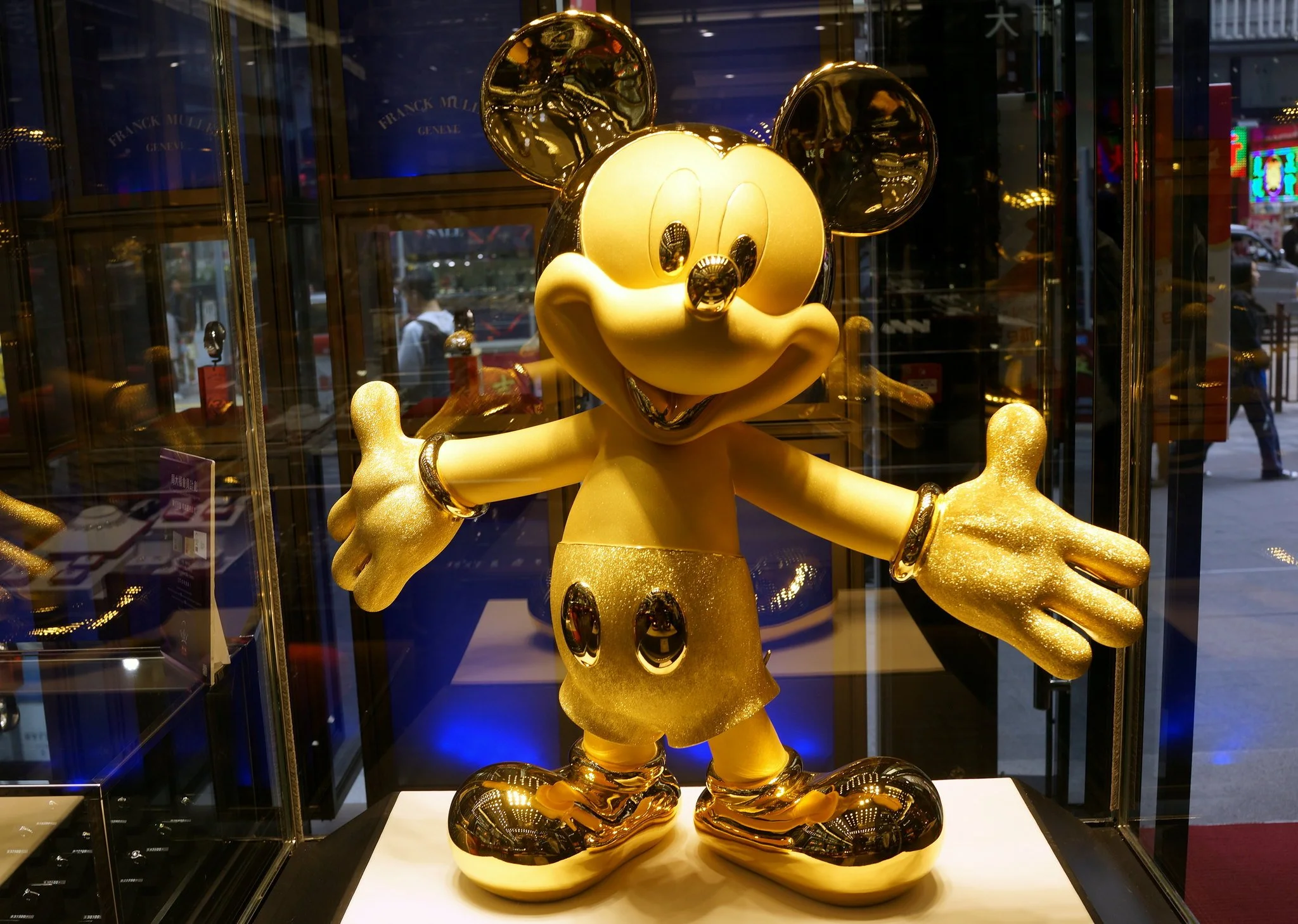
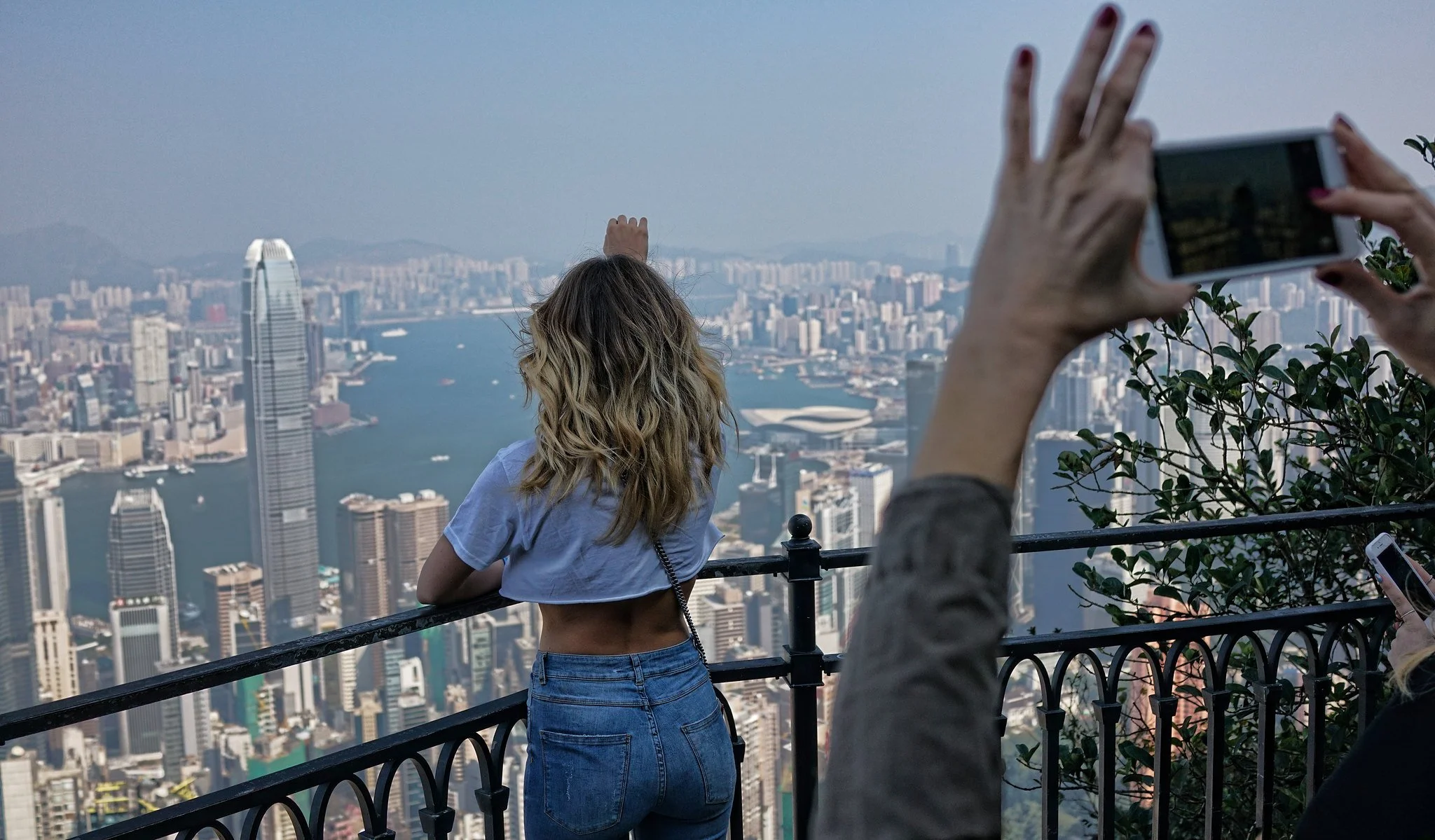
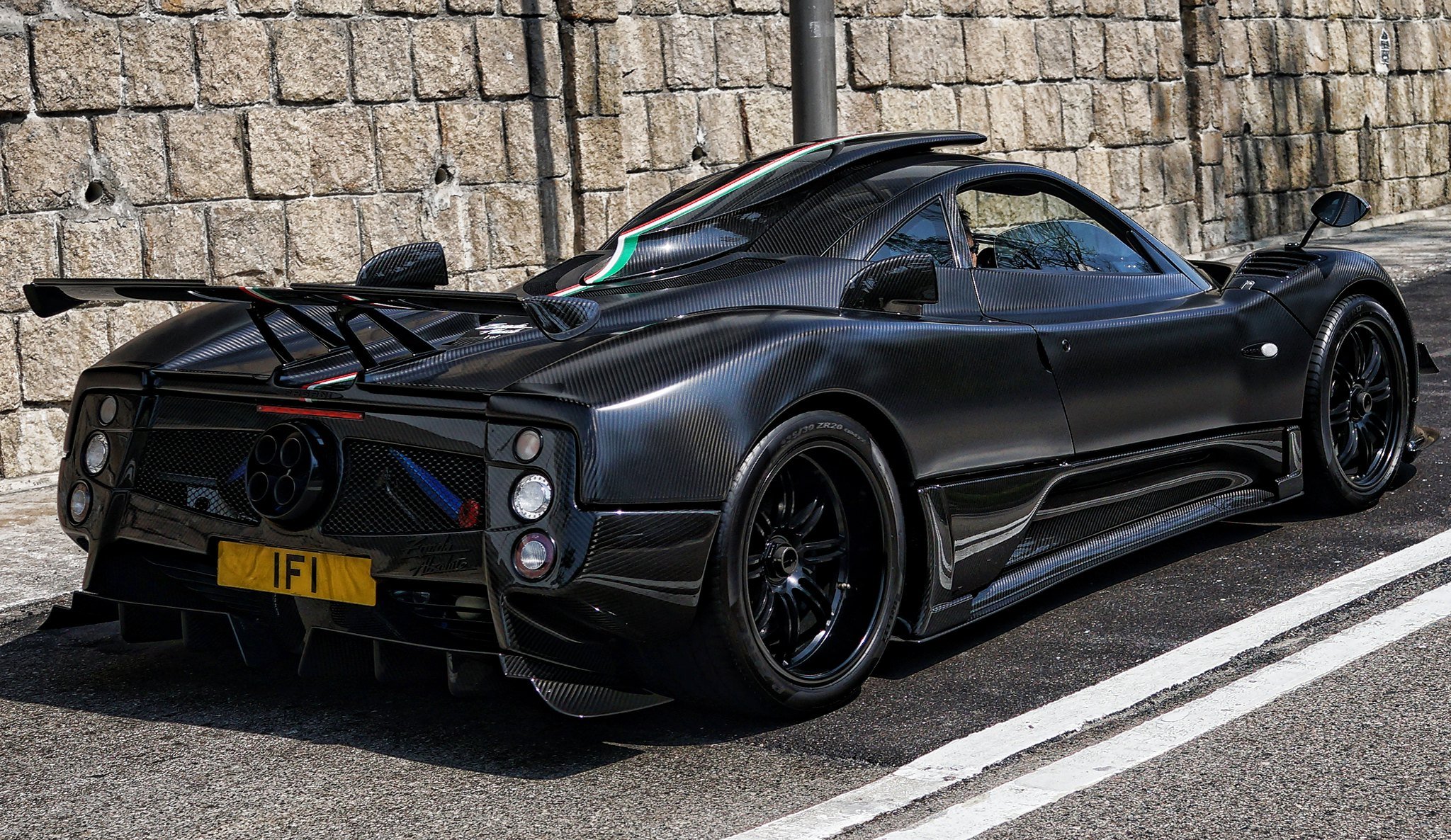
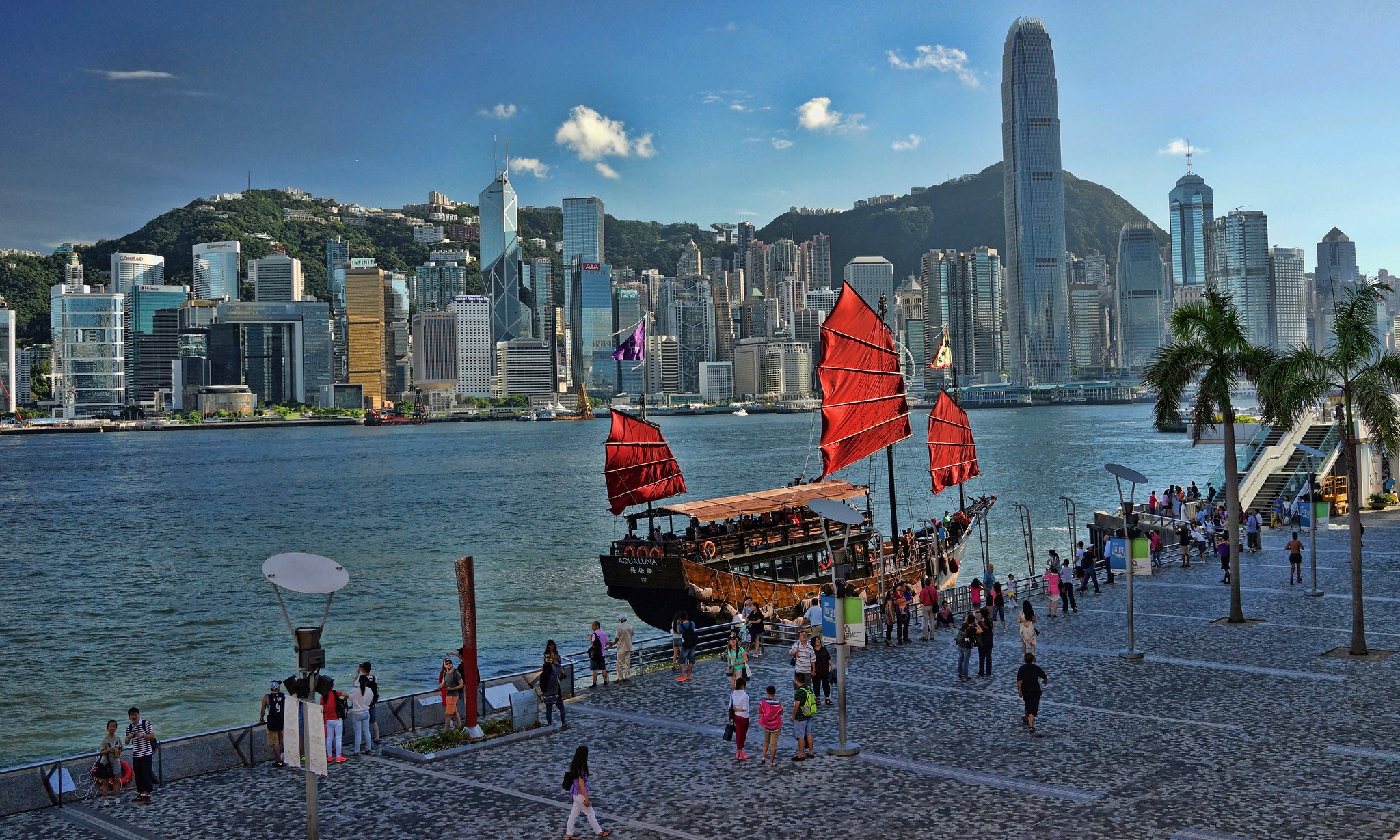
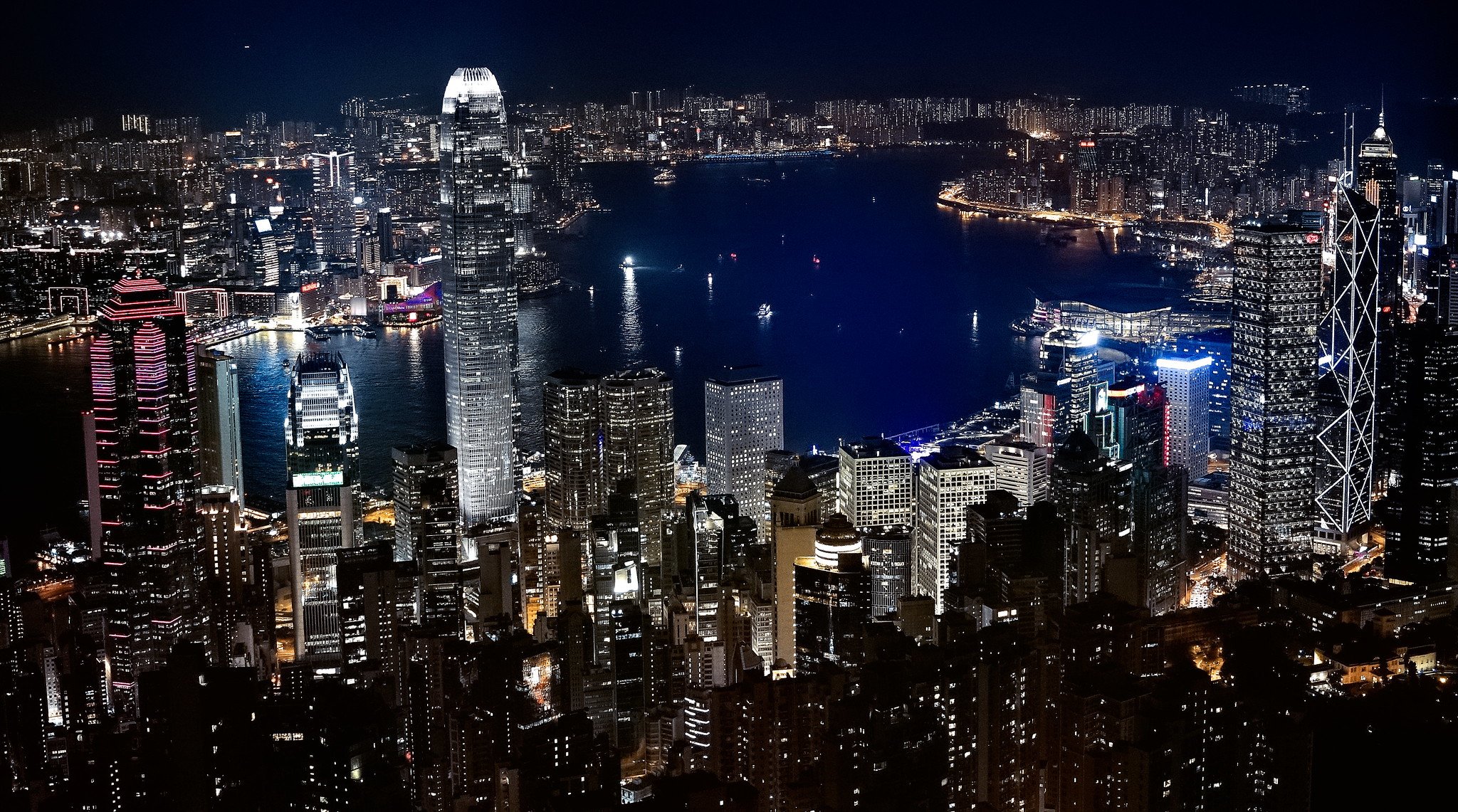
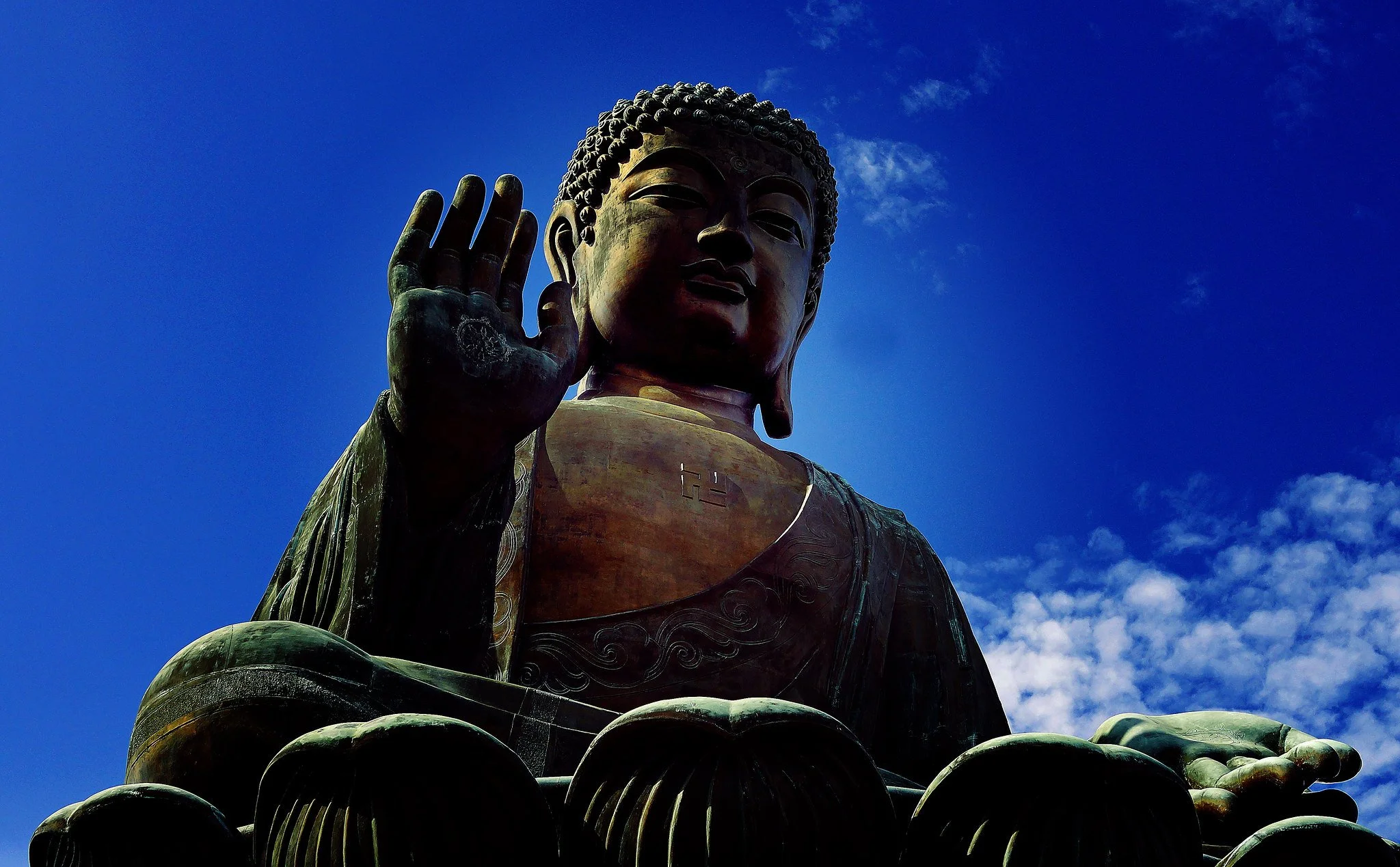
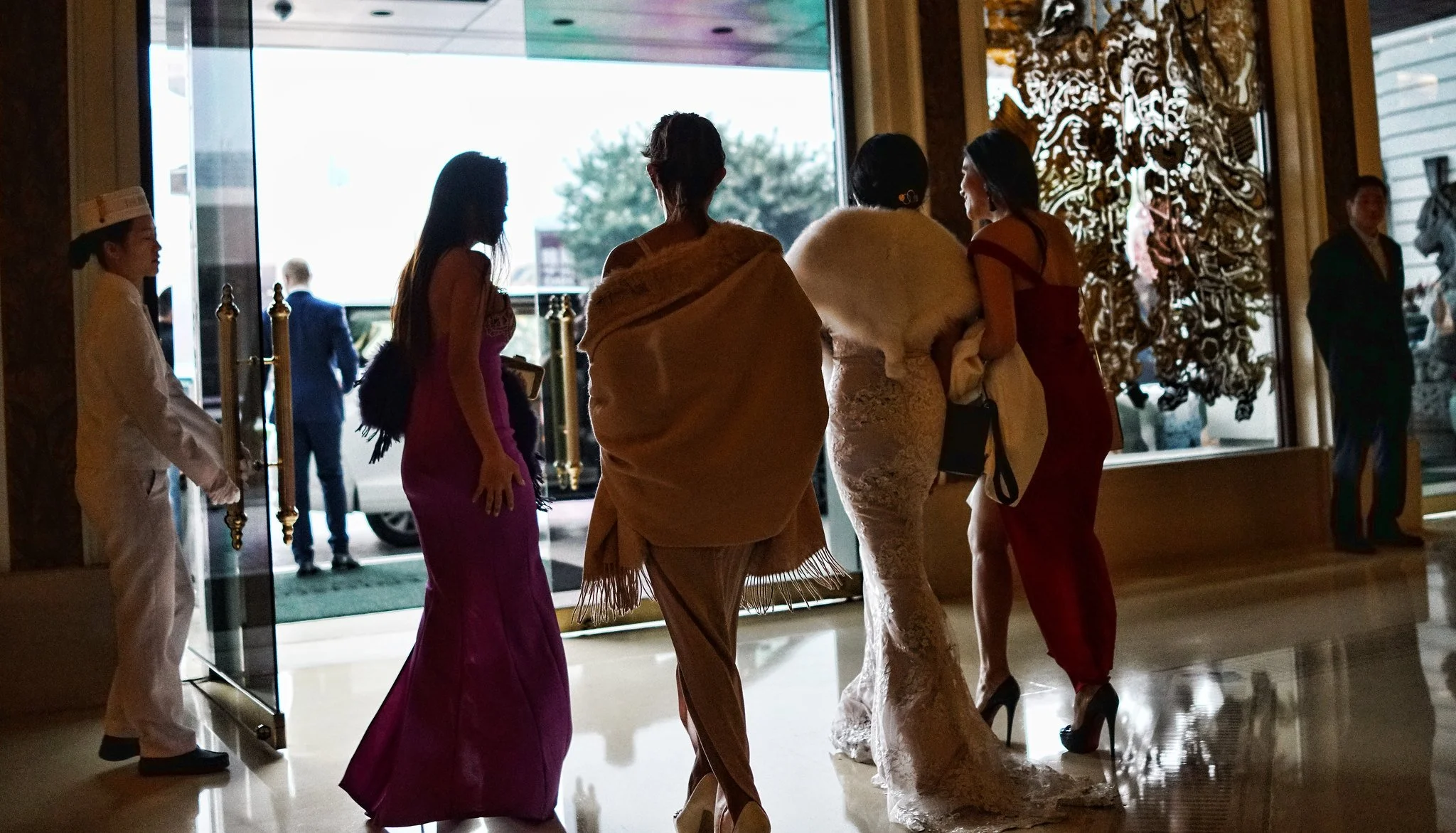
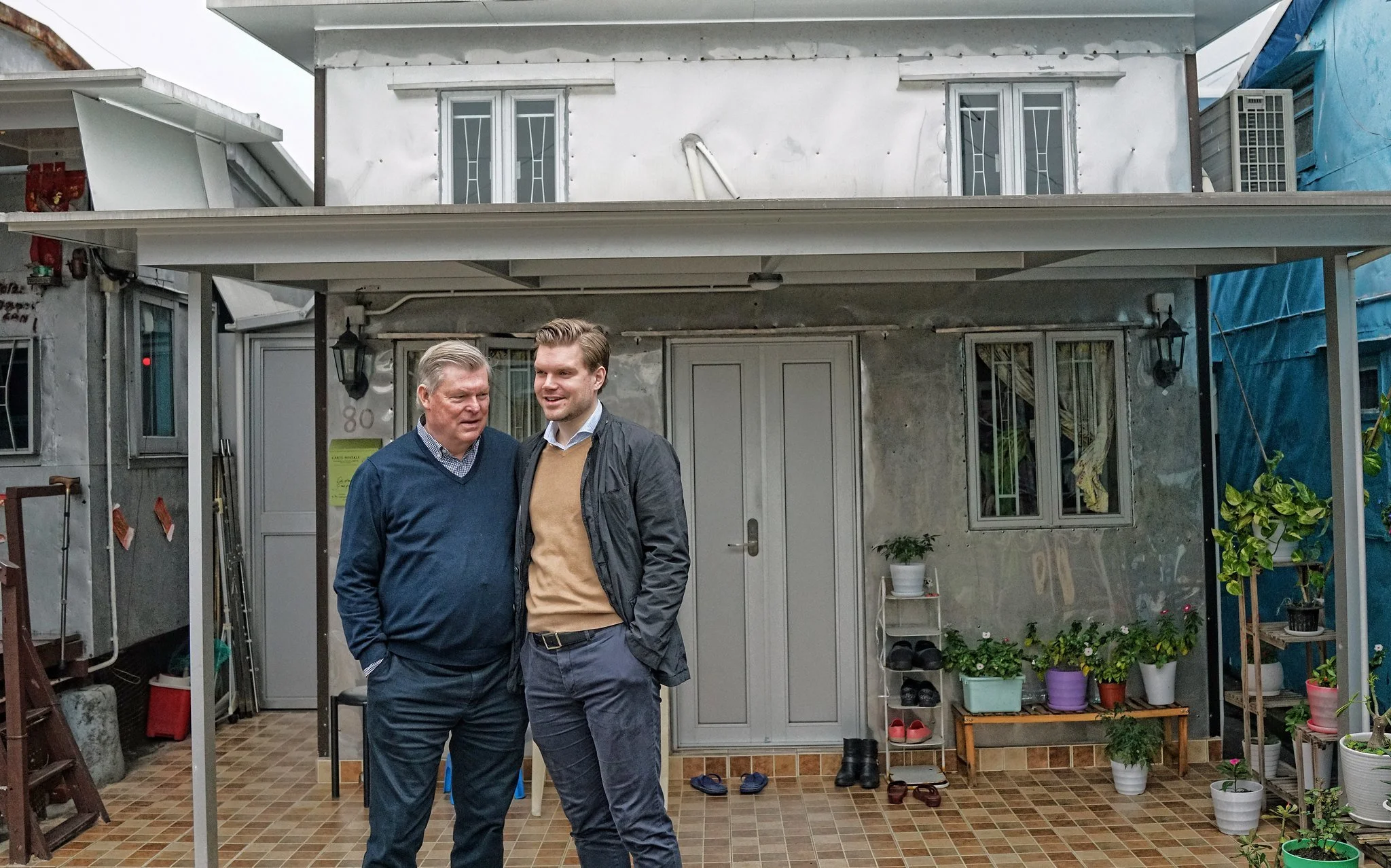
click on any image to enlarge
© Copyright Acknowledged | All rights reserved | all images taken b Jamie
Jamie’s Hong Kong | Some of my favourite images | Hong Kong 101
© Jamie Lloyd | J3 Consultants Hong Kong | J3 Private Tours Hong Kong |
| 2010 - 2026 All rights reserved. |
Click on any image to enlarge to full screen


Current images from my Instagram feed