Jewish Heritage in Hong Kong - Emanuel Raphael Belilios
A little known, mysterious trader in 19th Century Hong Kong
The J3 Group - Premium Quality Private Tours | Experiences and Insider Chats since 2010
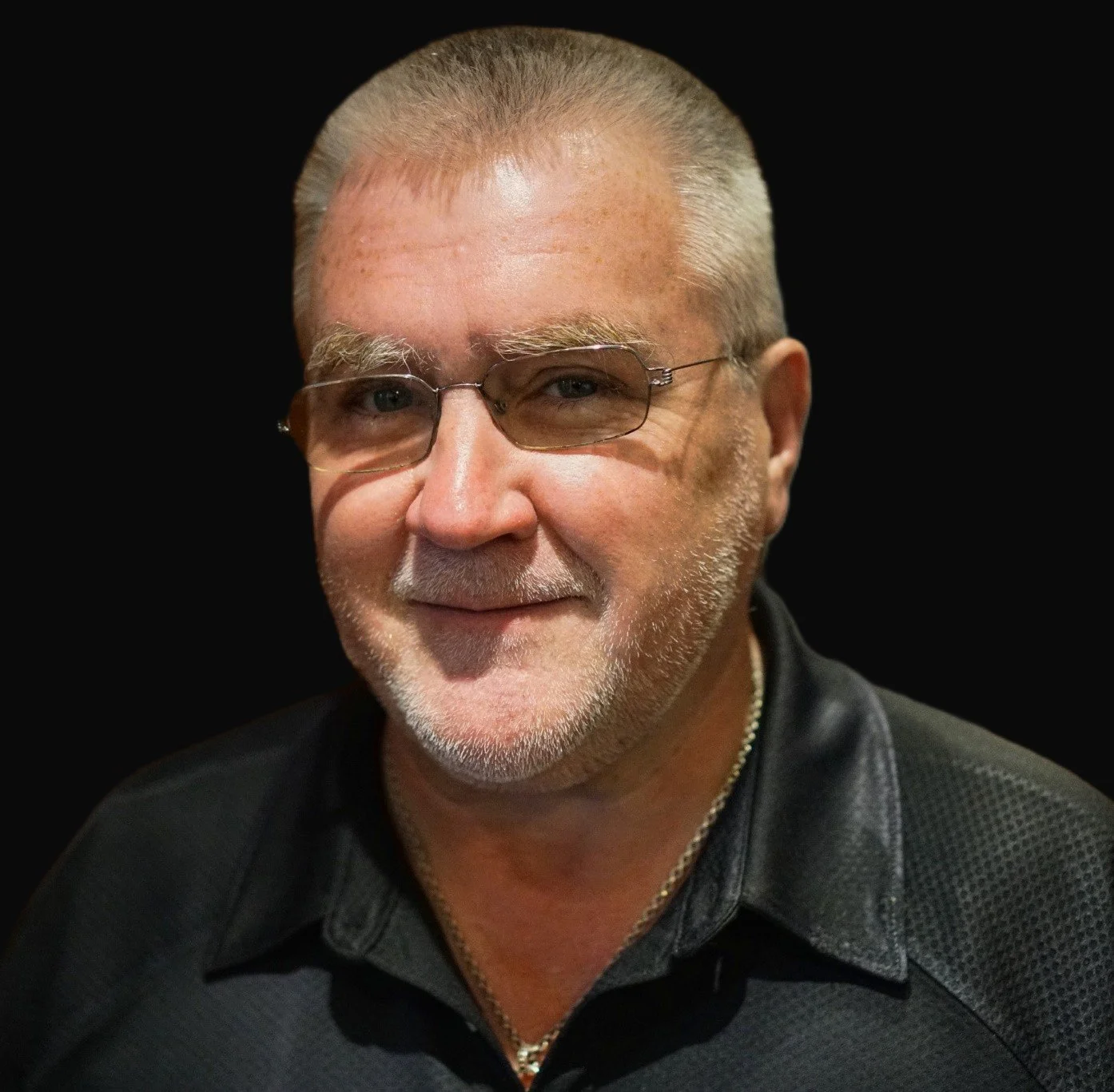
Me Jamie, your host, I am English and I have lived in Hong Kong since January 2nd 1972 - I know the place.
A meaningful blog post with a difference - tips on Travel, Tourism, Tours, Daily Life and my personal thoughts on Hong Kong.
Please do visit Amazing Hong Kong
Hong Kong | Pearl of the Orient
Customised Private Tours + Experiences in Amazing Hong Kong
Jamie has lived in Hong Kong - Pearl of the Orient for 50+ years
Carefully Crafted Personalised and Customised Itineraries by Jamie | Hong Kong’s Most Experienced Private Tour Guide for : Solo Travellers Friends Families Seniors Couples Business People MICE Delegates.
Private Tours Cultural Tours Walking Tours Sightseeing Tours City Tours Night Tours Layover Tours Transit Tours Private Shore Excursions Bespoke Tours Personalised Tours Jewish Heritage Tours Luxury Private Tours Day Tours Luxury Boat Tours Themed Tours Private Family Tours Private Day Tours Corporate Tours
Just you, your family or friends and Jamie your personal English private tour guide - over 2,400+ tours completed since 2011 - Jamie offers quality Private Tours of Hong Kong
Tour Group Size 1 - 6 people only
J3 Group Hong Kong | J3 Consultants Hong Kong | J3 Private Tours Hong Kong
Creating Memories That Will Last A Lifetime
Go here for the Hong Kong Michelin Restaurant Guide which includes the Bib Gourmand Category

Jewish Heritage in Hong Kong - Emanuel Raphael Belilios
A little known, mysterious trader in 19th Century Hong Kong
click on the image to enlarge
Emanuel Raphael Belilios - A little known Jewish Trader in 19th Century Hong Kong whose importance was eclipsed by the two great and rather famous Jewish families, the Kadoories and the Sassoons, it is time his story was told.
I have lived in Hong Kong since 1972 so 53 years and I have always had a keen interest in 19th and 20th Century Hong Kong history.
I have doing Jewish Heritage Tours in Hong Kong since 2011 and in general everything revolves around the 2 famous Jewish families in Hong Kong historically, the Kadoories and the Sassoons, it is only recently whilst researching another project (the history of the old French Mission Building in Central, Hong Kong) did the name Belilios pop up and I was fascinated by what I learnt, I also remembered that I had seen the family graves in the Jewish Cemetery in Happy Valley in Hong Kong.
Mr. Belilios deserves to have his story told, he was certainly a colourful character in 19th Century Hong Kong and amazingly the Belilios Public School is still going strong with a 135 year history, what a legacy, it never clicked with me as I just knew it as BPS!
Emanuel Raphael Belilios (1837–1905)
….. was a prominent Jewish banker, opium trader, philanthropist, and businessman who left a significant mark on Hong Kong’s history during the late 19th century. Born in Calcutta, British India, on November 14, 1837, to a Jewish Venetian family, Belilios arrived in Hong Kong in 1862 at the age of 25, seeking fortune through trade. His father, Raphael Emanuel Belilios, was part of a Sephardic Jewish lineage with roots tracing back to Portugal, where the family had lived as crypto-Jews (marranos) before fleeing persecution to Venice in the early 17th century.
Early Life and Arrival in Hong Kong
Belilios was born into a family with a history of mercantile success, having established wealth in Calcutta through trade networks spanning Europe, the Middle East, and India. His mother, Salha Lanyardo, came from a prominent Aleppo family. In 1855, he married Simha (Sema) Ezra, a Jewish woman from a Baghdadi family, and together they had several children, including Hannah, Sally, David, and Raphael Emanuel ("Billy"). In 1862, Belilios sailed to Hong Kong with a cargo of opium purchased at a British government auction, intending to sell it quickly and return to Calcutta. However, established traders had monopolized the market, forcing him to stay and build a business in the colony.
Business Success and Influence
Belilios thrived in Hong Kong, becoming one of its most successful merchants, described by the British press as a “merchant prince of the colony.” His business ventures included opium trading, banking, and real estate. He served as chairman of the Hongkong and Shanghai Banking Corporation (HSBC) from 1876 to 1882 and was a director of the Hong Kong, Canton & Macao Steamboat Company in 1888. He also chaired the Hongkong and Shanghai Hotels, Limited in the 1870s, contributing to the development of the colony’s hospitality sector. His wealth allowed him to build grand residences, including two properties named Kingsclere (one on Caine Road and another on Kennedy Terrace) and a summer retreat called The Eyrie on the Peak, where he famously kept a pet camel.
Belilios was a contentious figure, known for using litigation to achieve his goals. For example, he offered land on Kennedy Terrace for a synagogue but insisted on building a personal residence there as well. When the Jewish community rejected this condition, he sued, lost, and built a large mansion on the site instead, overlooking the synagogue’s eventual location on Robinson Road.
Philanthropy and Legacy
Belilios gained a reputation as a generous philanthropist, particularly in education and healthcare. In 1887 and 1888, he funded two annual scholarships worth $60 for students at the Hong Kong College of Medicine for Chinese, affiliated with the Alice Memorial Hospital, to which he donated $5,000 (one-third of its establishment costs). In 1889, he gave $25,000 to establish a government school for girls, which was renamed Belilios Public School in his honor in 1893. Originally the Central School for Girls, it became Hong Kong’s first bilingual government school for girls and remains a prestigious institution today. He also funded a probation home for Chinese girls to prevent poverty-driven crime and prostitution, and established scholarships for university students. Upon his death, he bequeathed £250,000 to found a free college for Jewish children in Calcutta.
Political and Social Contributions
Belilios was deeply involved in Hong Kong’s governance, appointed to the Legislative Council (LegCo) in 1881 and serving as its Senior Unofficial Member from 1892 to 1900. His progressive views on the Chinese population were notable for the time; he observed that the Chinese made no distinction between Jews and Christians, viewing both as foreigners but showing a slight preference for Jews as fellow Asians. He was honored as a Companion of the Order of St. Michael and St. George (CMG) and served as a Justice of the Peace (JP).
He also sought to build ties with British elites, proposing a marble and bronze statue of Prime Minister Benjamin Disraeli, which was declined. Instead, he built the Beaconsfield Arcade in Hong Kong, named after Disraeli’s title, Lord Beaconsfield, and annually sent a wreath to decorate Disraeli’s statue in London’s Parliament Square until his death.
The Belilios Public School (BPS) still going strong!
Belilios Public School (BPS), located in Tin Hau, Hong Kong, holds a significant place in the history of education in Hong Kong as the first government school for girls and the first bilingual school in the region. Below is a detailed history of the school based on available information:
Founding and Early Years (1890–1893)
Establishment in 1890:
Belilios Public School was founded in 1890 as the Central School for Girls by the Hong Kong Government, intended as a counterpart to the Central School for Boys (later Queen’s College). This marked a significant step in providing English education to girls of all classes—Chinese, Indian, Eurasian, and European—during a time when education for girls was not widely valued in Chinese society. The initiative was driven by Dr. E.J. Eitel, the Inspector of Schools, who presented a proposal to the Legislative Council on July 5, 1889, under Governor Sir Des Voeux, emphasizing the need for a government-run girls’ school to offer English education. The school was initially located at Old Bailey Street in Sheung Wan.
Cultural Context:
In the late 19th century, societal attitudes, particularly among the Chinese population, often viewed English education for girls as unnecessary, with traditional practices like the "Mui Tsai" system (where girls served as domestic workers) prevailing. Despite resistance, the government aimed to promote girls’ education through free schooling and industrial training, such as needlework, to make it more appealing.
Renaming and New Building (1893)
Philanthropic Donation: In 1893, Emanuel Raphael Belilios, a Jewish Venetian businessman, philanthropist, and successful opium trader, donated HK$25,000 to fund the construction of a new three-story building for the Central School for Girls. The new building was erected on the former site of the Government Central School (now Queen’s College) at the junction of Hollywood Road and Gough Street. In recognition of his contribution, the school was renamed Belilios Public School. Belilios was a prominent figure in Hong Kong, having served as chairman of the Hongkong and Shanghai Banking Corporation and Hongkong and Shanghai Hotels, Limited, and his philanthropy extended to scholarships and other educational initiatives.
Bilingual Education: As the first bilingual school in Hong Kong, BPS offered instruction in both English and Chinese, a pioneering approach that distinguished it from other institutions of the time.
Relocations and Post-War Recovery (1946–1965)
Impact of World War II: During the Japanese occupation of Hong Kong (1941–1945), the school’s Hollywood Road building was severely damaged. After the war, BPS reopened by borrowing premises from the Northcote College of Education on Bonham Road. In 1946, the school relocated to Hospital Road, and for a time, it shared a campus with Shaukeiwan Government Secondary School in Island Road (Chai Wan Road) while awaiting a new permanent site.
Move to Tin Hau (1965): In April 1965, BPS moved to its current location at 51 Tin Hau Temple Road, North Point. To commemorate this milestone, the school adopted a new motto, "Climb High, See Wide," along with a new school song and badge, symbolizing its aspirations for broad perspectives and academic excellence.
Development and Modern Era
Academic Excellence: BPS has established itself as one of Hong Kong’s most prestigious secondary schools, known for its rigorous admission criteria and strong academic performance. It is among the 38–40 schools (depending on sources) that have produced top scorers in the Hong Kong Diploma of Secondary Education Examination (HKDSE), with notable achievements such as Sze Yik Yan’s 7 x 5** score in 2017, earning her the Charles Frankland Moore Award for the highest aggregated marks in that year’s HKDSE.
Holistic Education: Beyond academics, BPS emphasizes all-rounded development, fostering achievements in arts, music, and sports. The school operates 24 classes (Forms 1–6, with four classes per form: B, P, S, H) and uses English as the primary medium of instruction, earning a Band 1A ranking among Hong Kong secondary schools.Belilios Old Girls’ Association (BOGA): Established under the guidance of Headmistress Hannah F. Skinner and coordinator Miss Lewis, BOGA was formed to connect alumnae and support the school’s legacy. The Belilios Old Girls’ Foundation, chaired by notable alumna Nellie Fong, further supports the school through a charitable trust fund.
Notable Alumnae
BPS has produced distinguished graduates, including:
• Lee Sun Chau (1890–1979): One of the first female Chinese doctors of Western medicine in China.
• Nellie Fong: Former member of the Executive and Legislative Councils of Hong Kong.
• Denise Yue: Former Secretary for the Civil Service.
• Canny Leung: Entrepreneur, author, lyricist, and screenwriter.
• Money Lo: Practising barrister and former actress.
• Jenny Kwok: Adjunct Assistant Professor at The University of Hong Kong.
• Yoyo Kwok: Member of the Cantopop group Lolly Talk.
Legacy and Significance
The establishment of Belilios Public School in 1890 was a landmark in Hong Kong’s educational history, reflecting the colonial government’s commitment to girls’ education despite societal challenges. Its bilingual approach and government backing set a precedent for inclusive education. The school’s resilience through wartime disruptions and its continued reputation for academic and extracurricular excellence underscore its enduring impact. The philanthropy of Emanuel Raphael Belilios, whose contributions extended beyond the school to institutions like the Alice Memorial Hospital, remains a cornerstone of its legacy
click on the image to enlarge
One of the Belilios family gravestones - The Jewish Cemetery in Hong Kong
Personal Life and Dual Families
Belilios led a complex personal life, maintaining two families in Hong Kong. With his wife, Simha, he had several children, including Raphael Emanuel (“Billy”), born around 1874, who became a barrister in England, and David, born in 1882, who tragically died of the plague in 1898 at age 16. Around 1869–1872, Belilios began a relationship with a Chinese woman, known only as Mrs. Li, with whom he had at least one daughter, Felicie, and possibly others. Mrs. Li took the Belilios surname, and her daughter Felicie married Choa Po-sein, a comprador. While Simha lived at Kingsclere and was active in Hong Kong’s social and philanthropic circles, Mrs. Li’s status and residence remain less documented, possibly as a concubine or “protected woman.” This dual life was not uncommon in colonial Hong Kong but was often whitewashed in official records.
Later Years and Death
In the late 1890s, Belilios moved to London with his son Raphael, leaving both his Jewish and Chinese families in Hong Kong. He secured a coat of arms for his family in 1901, cementing their status. He died on November 11, 1905, at Green Park House, Piccadilly, aged 67, and was buried at Golders Green Jewish Cemetery. His wife, Simha, lived until 1926, passing away at 90 in Hong Kong and buried beside their son David in the Jewish cemetery in Happy Valley. Mrs. Li outlived Simha, but her burial place is unknown. Unlike other Baghdadi Jewish families like the Sassoons, Belilios’ fortune did not establish a lasting dynasty, partly due to the early deaths of key heirs.
Cultural and Historical Significance
Belilios exemplified the cosmopolitan nature of early Hong Kong, a city shaped by diverse communities, including Jews, Armenians, Parsis, and Eurasians. As a “Port Jew,” he navigated multiple cultural identities, engaging with European, Chinese, and Indian merchants while maintaining a flexible approach to religion and identity. His contributions to education, particularly for girls, and his role in Hong Kong’s financial and political spheres helped lay the groundwork for the city’s development as a global hub. His story, with its blend of ambition, philanthropy, and personal complexity, reflects the contradictions and dynamism of colonial Hong Kong.
My insider tip
Please note that in general if you book a tour on Viator or Tripadvisor you generally have NO control over what guide will lead your Private Tour of Hong Kong and this is the most important component of the tour. I urge you to check the actual company website and book via their website and do not forget to read Tripadvisor reviews as well.
© Jamie Lloyd | J3 Consultants Hong Kong | J3 Private Tours Hong Kong |
| 2010 - 2025 All rights reserved. |
Click on any image to enlarge to full screen










Current images from my Instagram feed