Hong Kong Icons - Tai Kwun Complex on Hollywood Road in Hong Kong
A stocking filler place or a major cultural attraction? You decide

The J3 Group - Premium Quality Private Tours | Experiences and Insider Chats since 2010
Me Jamie, your host, I am English and I have lived in Hong Kong since January 2nd 1972 - I know the place.
A meaningful blog post with a difference - tips on Travel, Tourism, Tours, Daily Life and my personal thoughts on Hong Kong.
Please do visit Amazing Hong Kong
Hong Kong | Pearl of the Orient
Customised Private Tours + Experiences in Amazing Hong Kong
Jamie has lived in Hong Kong - Pearl of the Orient for 50+ years
Carefully Crafted Personalised and Customised Itineraries by Jamie | Hong Kong’s Most Experienced Private Tour Guide for : Solo Travellers Friends Families Seniors Couples Business People MICE Delegates.
Private Tours Cultural Tours Walking Tours Sightseeing Tours City Tours Night Tours Layover Tours Transit Tours Private Shore Excursions Bespoke Tours Personalised Tours Jewish Heritage Tours Luxury Private Tours Day Tours Luxury Boat Tours Themed Tours Private Family Tours Private Day Tours Corporate Tours
Just you, your family or friends and Jamie your personal English private tour guide - over 2,400+ tours completed since 2011 - Jamie offers quality Private Tours of Hong Kong
Tour Group Size 1 - 6 people only
J3 Group Hong Kong | J3 Consultants Hong Kong | J3 Private Tours Hong Kong
Creating Memories That Will Last A Lifetime
Go here for the Hong Kong Michelin Restaurant Guide which includes the Bib Gourmand Category

Hong Kong Icons - The Tai Kwun Complex on Hollywood Road
A stocking filler place or a major cultural attraction? You decide!
click on the image to enlarge
© Copyright - my own image | All rights reserved.
Tai Kwun on Hollywood Road | Central District | Hong Kong - 2025
Foreword
Tai Kwun is NOT like visiting a place like Alcatraz in the USA, in fact I wish it had been if you make an educational prison and police station complex an attraction the very least you can do is make it authentic a possible
Let me be clear from the beginning, I am not a fan of Tai Kwun, don’t get me wrong, I appreciate the buildings very much, nicely restored, we have too few old buildings left and I am all for cultural preservation and you cannot argue with the amount of money the Hong Kong Government threw at this project, quite staggering actually and I just feel it is a bit of a shame that with the crowds and the sheer number of retail establishments has given the place an outdoor shopping mall | market feel
The complex is in a great location (which is part of the problem) but in a nutsell it is far too commercial and has become the worst sort of tourist trap, I should point out that there is NO entrance fee.
I have to look at things differently, I am a private tour guide and for the most part I have 8 hours tops to show my guests the very best of Hong Kong and given them a sense of what Hong Kong is all about
... and with just 8 hours to play with TIMING is everything particularly if my guests have something on their wish list they want to see.
One of the issues with Tai Kwun is you either drop in for a quick look for 5 minutes or spend a couple of hours there (which on my tours is not possible) the place is certainly interesting.and very photogenic and in my mimd you can absolutely do it on your own. It is either a stocking filler or a major attraction and when it opened and after my first few visits I decided it is one of those places you can get to yourself and spend as much time or as little time as you wish and have a drink or a meal in very nice surroundings.
Unfortunately there are far too many tour companies in Hong Kong (group tours) who love Hollywood Road in Hong Kong because you can make a tour out of it with 4 attractions within a 15 minute walk, convenient for the guide but I call it the stocking filler tour and frankly the time spent on Hollywood Road can be better spent exploring other far more interesting places in Hong Kong
My big issue (s) with Tai Kwun is really 3 fold, it is far too commercial, history takes a back seat to restaurants, bars and gift shops and it is far too crowded and as mentioned the prison complex is too sanitised and not based on the realities of prison life it is basically one of the most popular selfie spots for Mainland Chinese Tourists in Hong Kong (along with the rest of Hollywood Road)
I know the Government has spent a lot of money on Tai Kwun but it should have been marketed as a museum type attraction with crowd quota’s instead it has turned into a shopping mall type attraction, just a personal opinion of course, it has a massive parade ground which seems to be able to absorb huge crowds but totally inadequate shaded seating which is a real problem in the summer and yes the shaded seating all belongs to bars and restaurants which are totally overpriced.
…and to stress again the other gripe (and can be used against many museum (y) attractions is it does not feel authentic
For example the jail cells in Tai Kwun are bare and freshly painted (at least when I have visited) there is nothing in them, why not kit out the cell with typical prison furniture and prisoners belongings? and make it grimy, at least something to give the impression of the harsh conditions in prisons. In addition they should have left the CID room in Central Police Station in situ as it was when it closed to give you a sense of the chaotic reality of a busy Police Station... but thats just me, prisons in Hong Kong are not a holiday camp environment, conditions are harsh (no air conditioners!) and discipline very strict, at Tai Kwun you do not get that impression.
So, while air conditioning isn’t entirely absent from all prison facilities in Hong Kong, it’s largely not provided in areas where inmates live, relying instead on alternative cooling measures like fans
So there you go, my professional opinion, if you are on Hollywood Road then pop in for a couple of hours and really explore or pop in for 5 minutes and take a few selfies! Whichever you choose you will probably think it was time well spent!
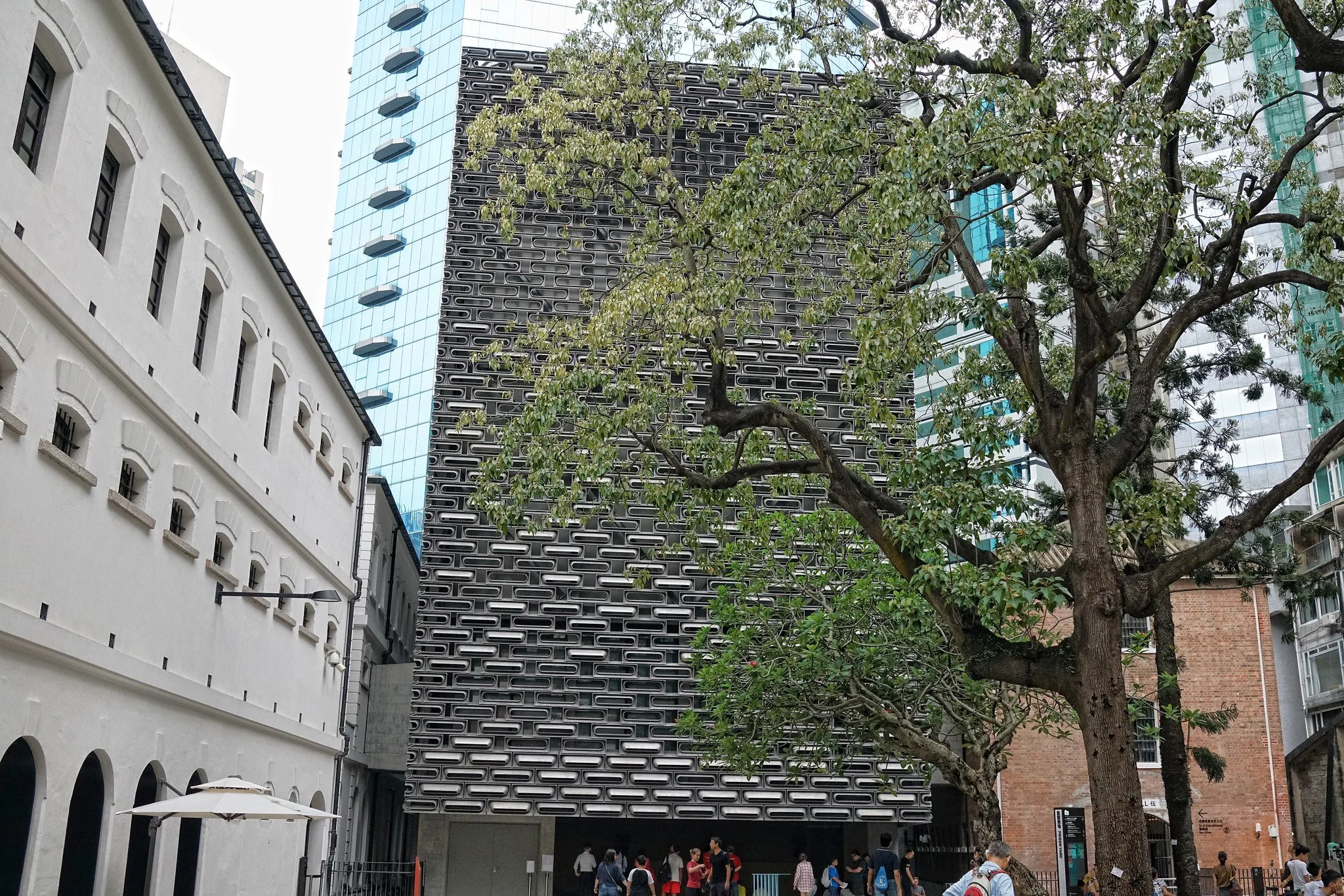
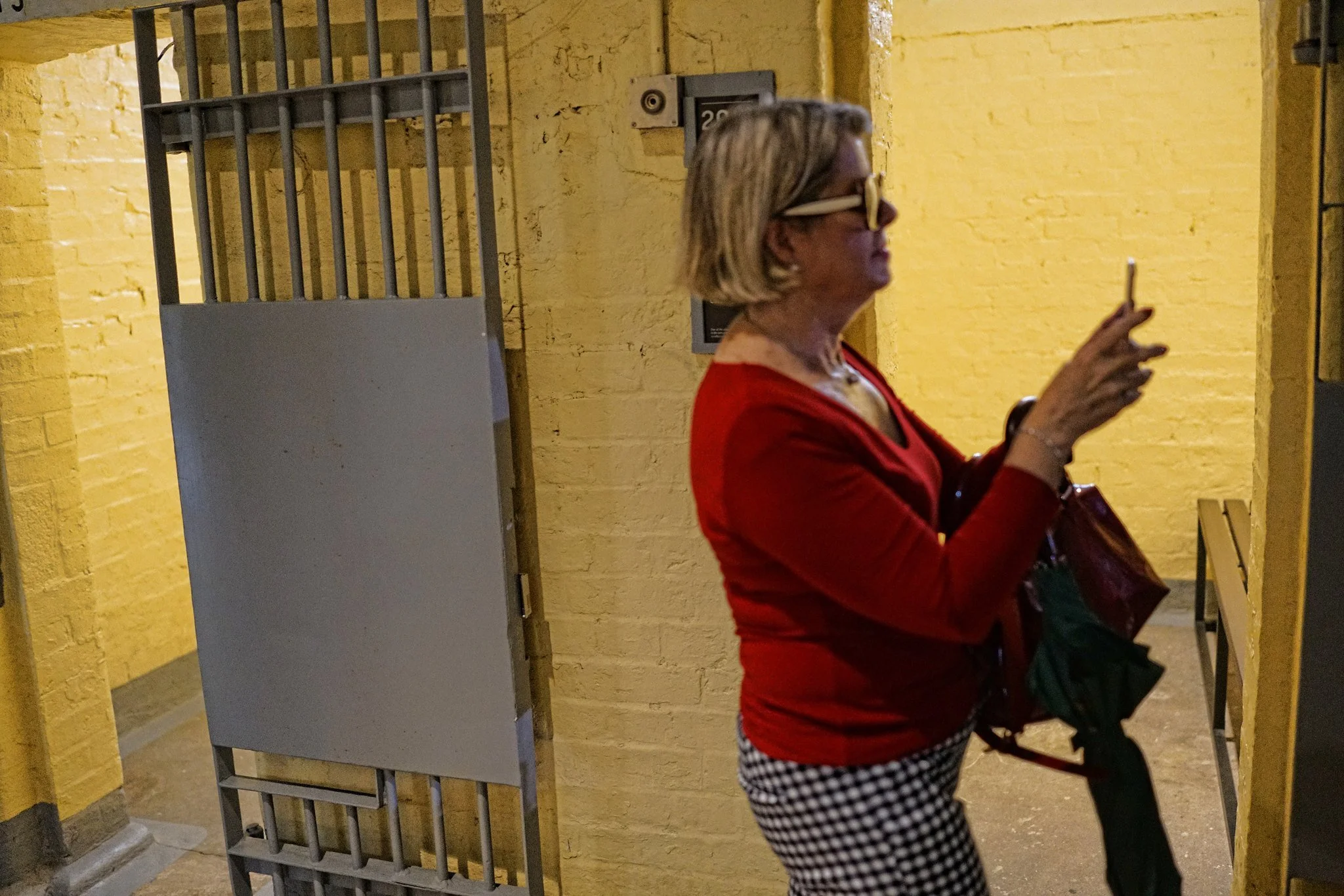
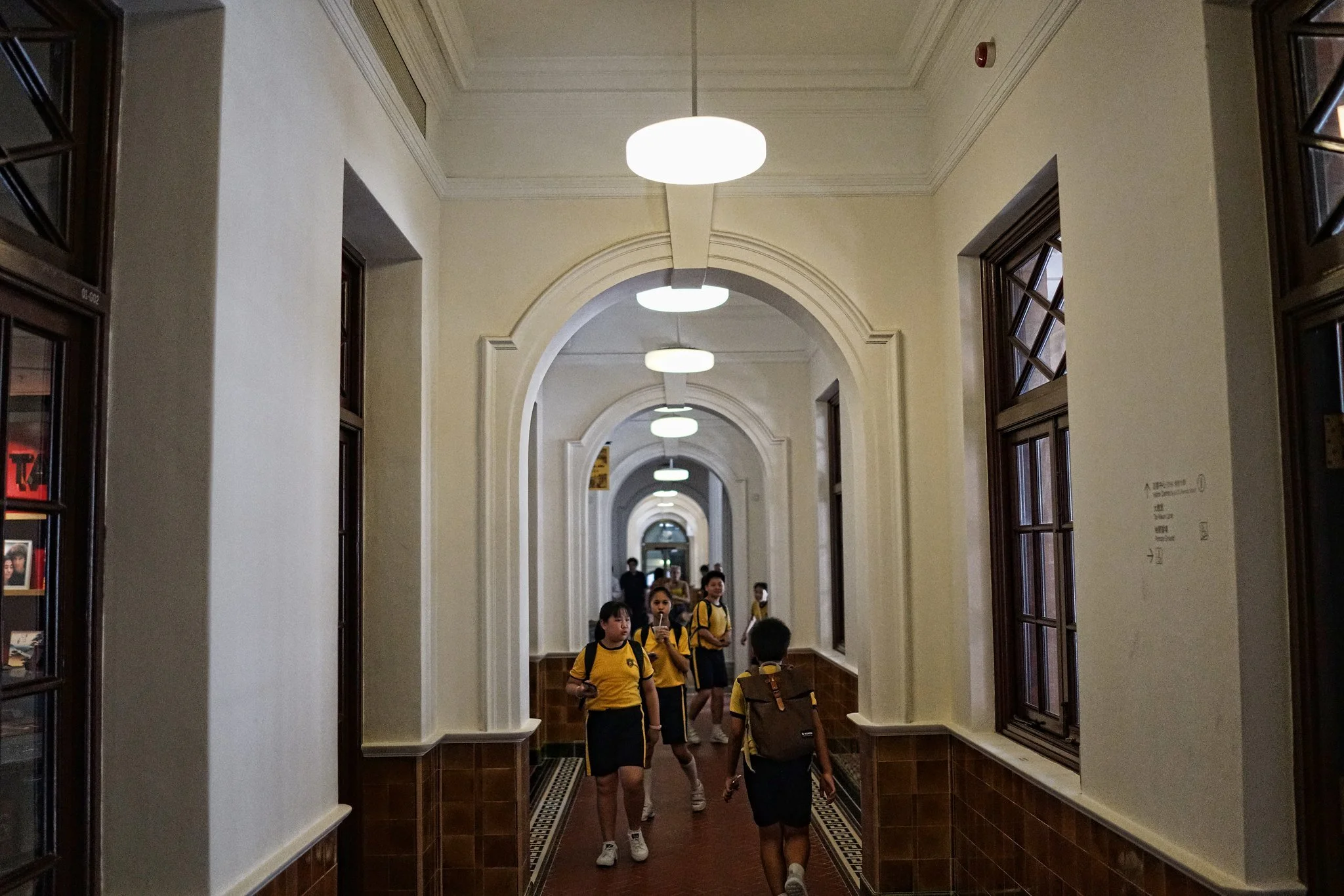
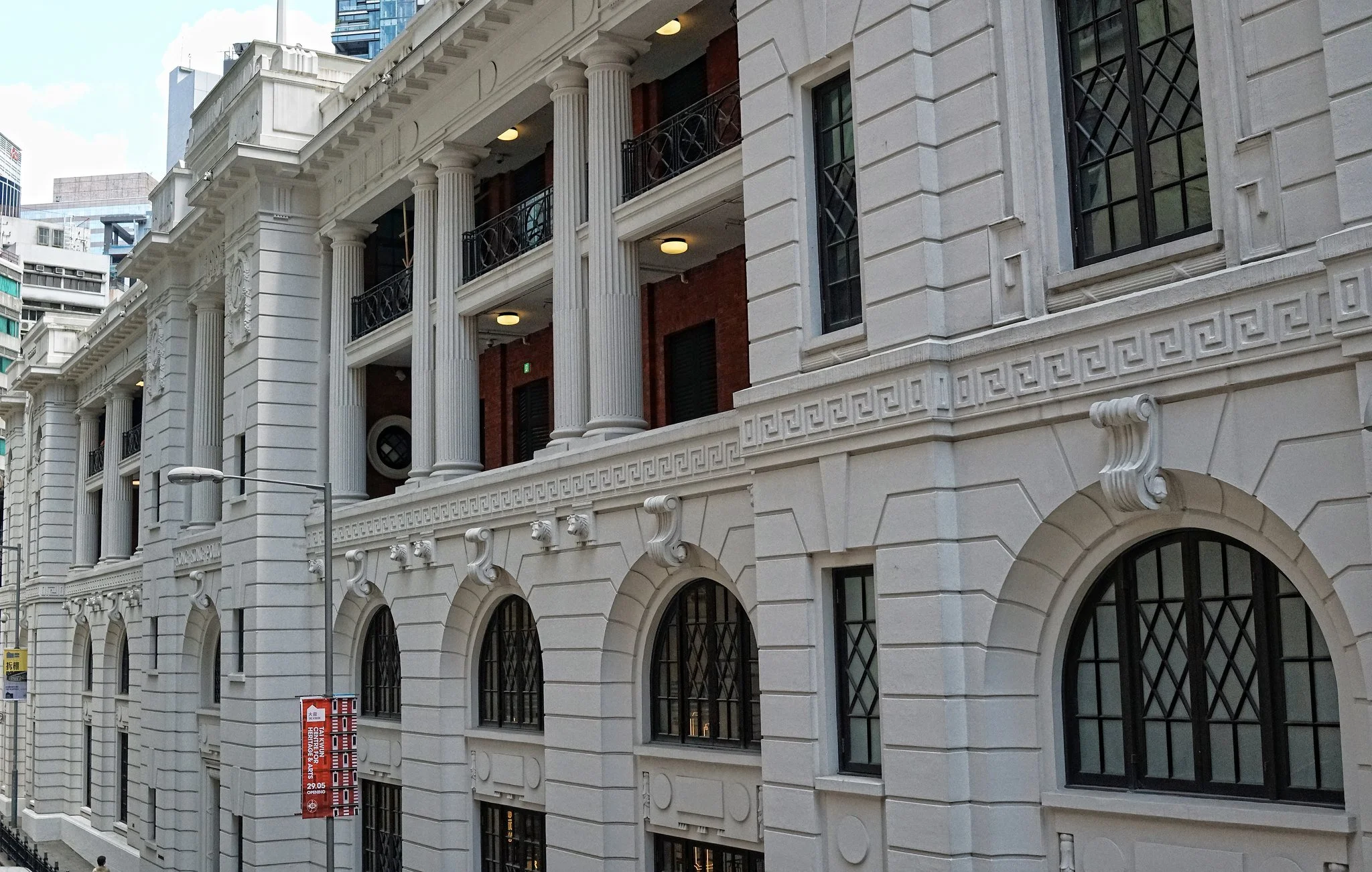
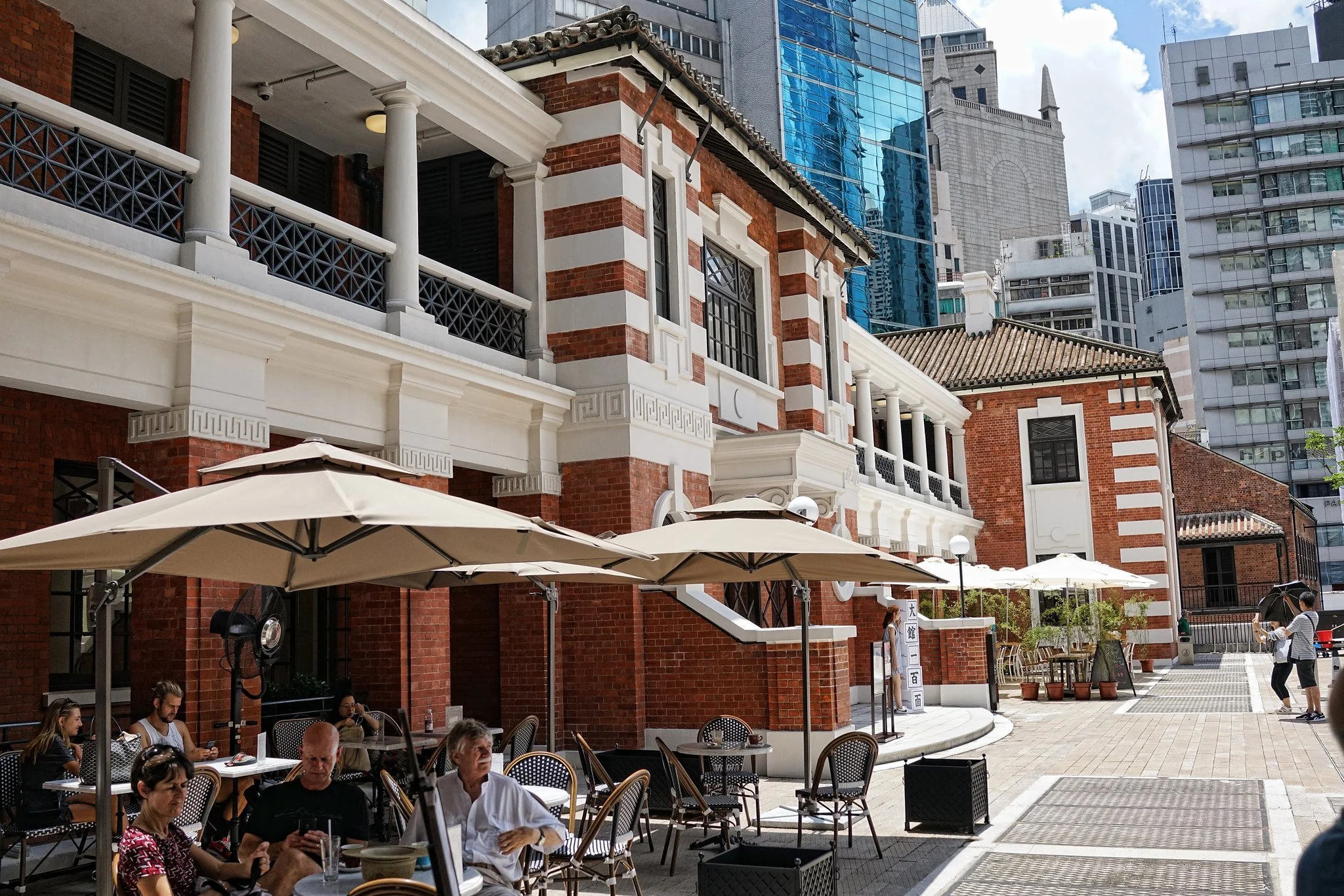
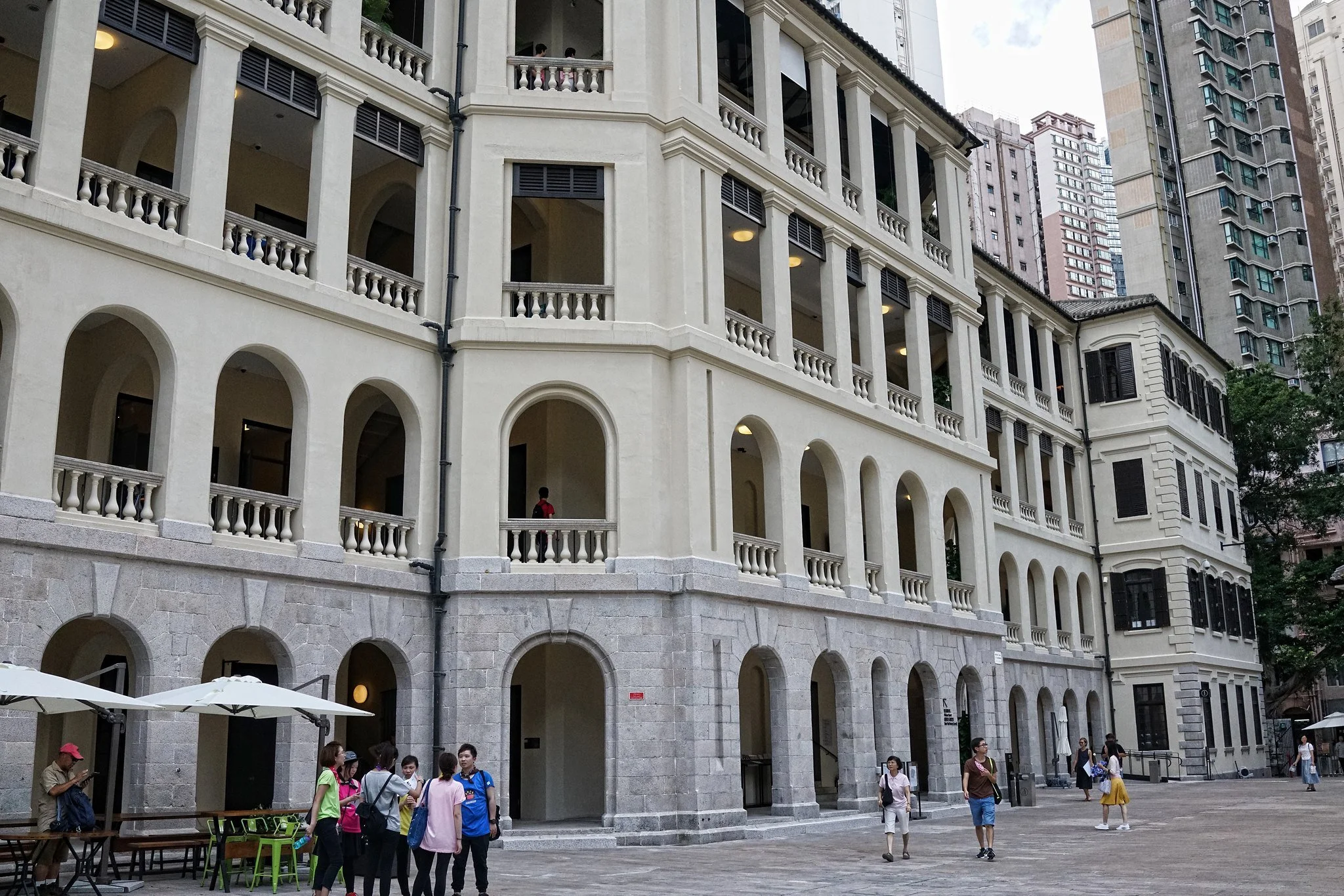
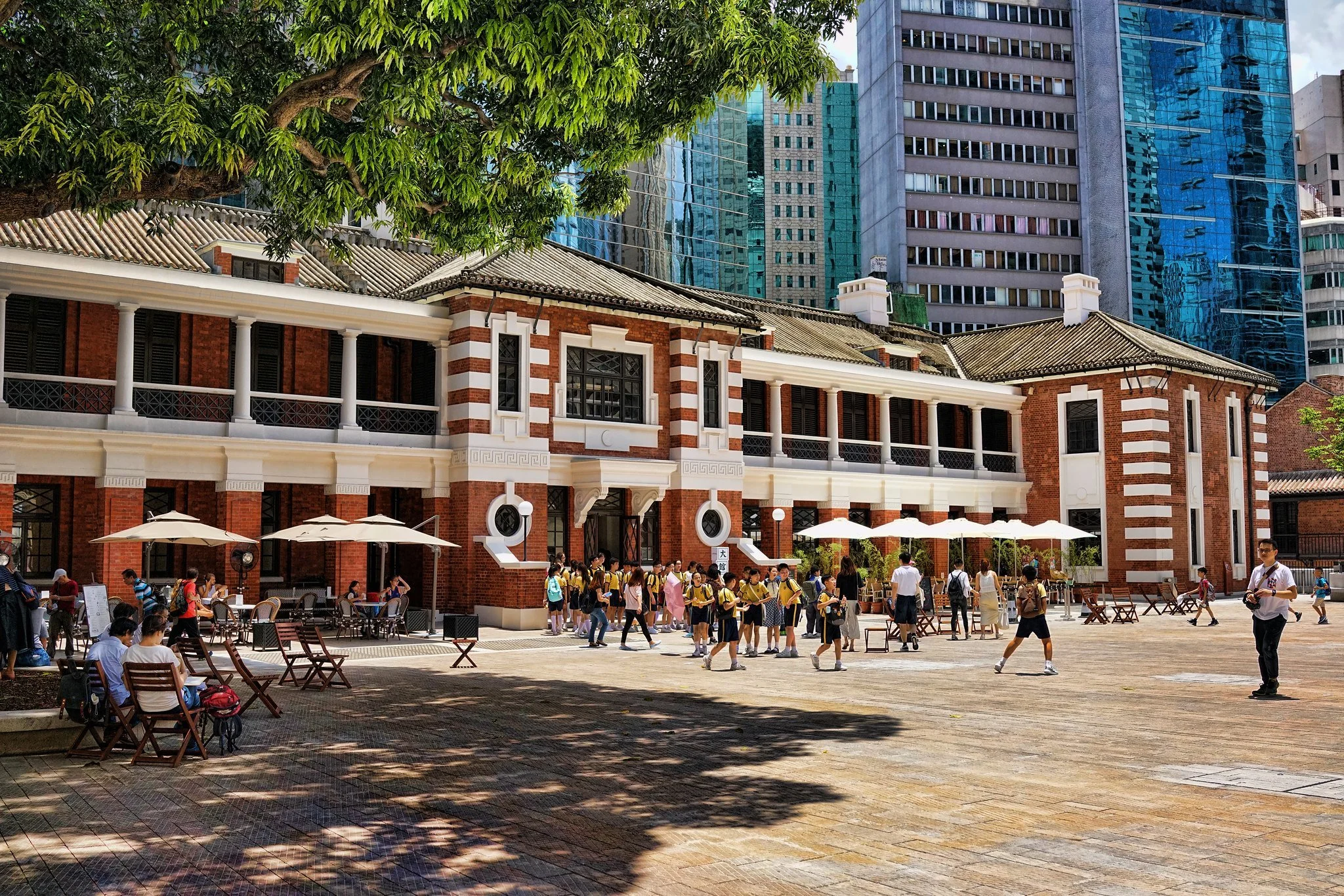
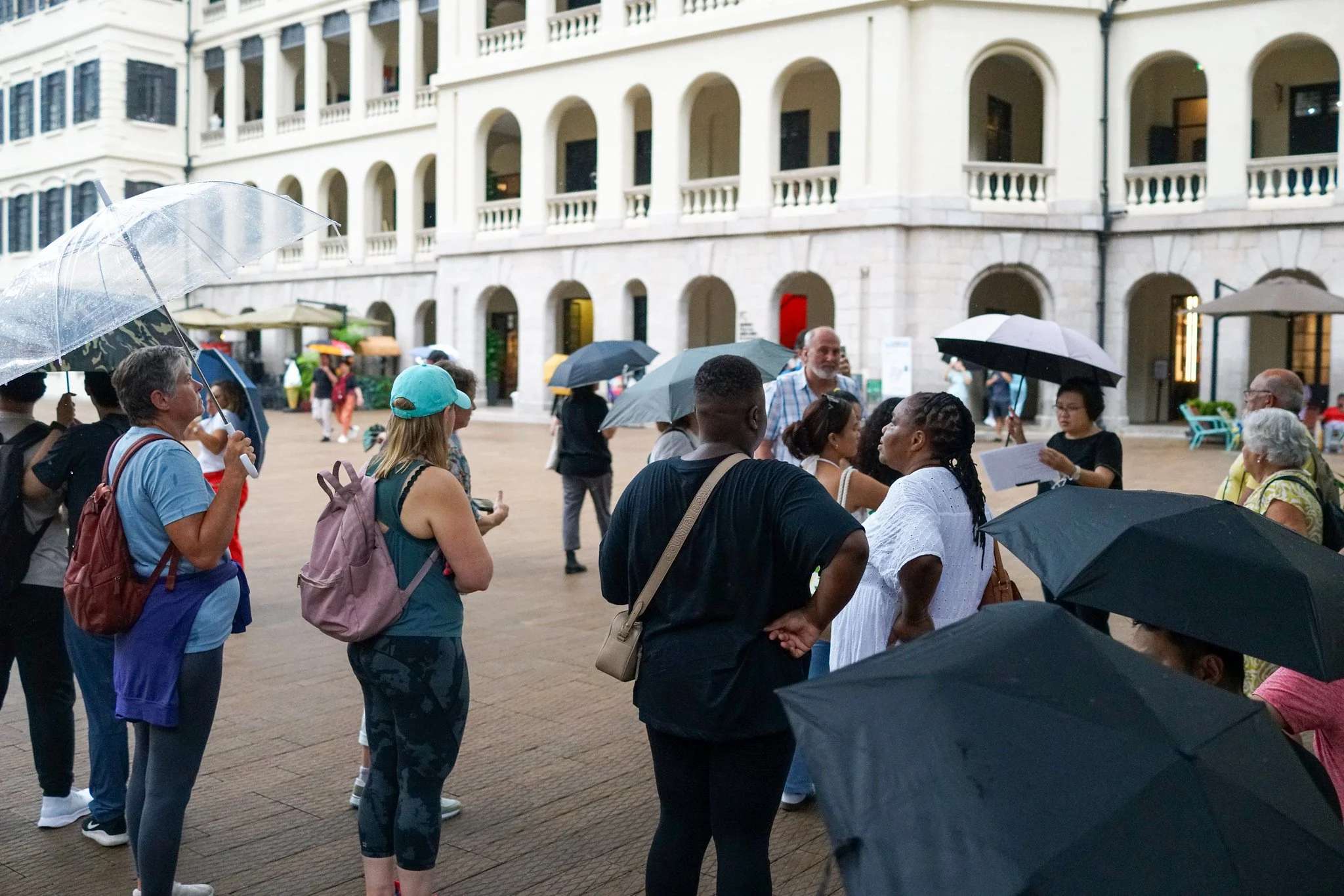
click on the image to enlarge
© Copyright - my own images | All rights reserved.
Tai Kwun on Hollywood Road | Central District | Hong Kong - 2025
Tai Kwun, or the Former Central Police Station Compound includes three declared monuments in Central, Hong Kong: the former Central Police Station, the Former Central Magistracy, and the Victoria Prison.
Operator, Budget, and Estimated Yearly Operation Costs
Tai Kwun is operated by the Hong Kong Jockey Club (HKJC) through its subsidiary, The Jockey Club CPS Limited, a not-for-profit organization, in partnership with the Hong Kong SAR Government. The revitalization project, which transformed the historic site into a cultural hub, had a total budget of approximately HK$3.8 billion (about US$480 million in 2018 terms), which was higher than the initial estimate of HK$1.8 billion due to overruns during construction.
The estimated yearly operating costs are around HK$80 million, covered through revenue from tenants, events, and HKJC funding to ensure sustainability under its not-for-profit model.
Historical Timeline of the Tai Kwun Compound
The Tai Kwun Compound, located on Hollywood Road in Central, Hong Kong, has a rich history spanning over 180 years, evolving from colonial law enforcement facilities to a modern cultural destination.
Below is a detailed timeline based on key events and developments:
Mid-19th Century - The site begins development as one of Hong Kong's earliest structures, growing with the city's foundation.
1841 - Captain William Caine is appointed Chief Magistrate, overseeing the first magistracy and prison. Victoria Prison (originally Victoria Gaol) is established as Hong Kong's first permanent prison.
Before 1864 - Second-generation Magistracy built on Arbuthnot Road. First-generation Central Police Station moves to the site; Barrack Block completed, integrating police, magistracy, and prison.
1862 - Prisoner numbers reach 650, prompting site expansion.
1890s - Victoria Gaol extended with two new blocks on Old Bailey Street (later demolished).
1897–1901 - Parts of Victoria Gaol's radial-plan prison demolished, leaving a T-shaped structure for additional facilities.
Before 1914 - Fourth floor added to Barrack Block for expanding police force.
1914–1915 - Third-generation Central Magistracy constructed with two courtrooms; first hearing in April 1915.
Before 1937 - New Police Headquarters Block built with a grand façade on Hollywood Road
1937 - Victoria Gaol briefly closed; prisoners transferred to Stanley Prison
1939 - Victoria Gaol reopens; part converted to Victoria Remand Prison.
December 1941 - Compound damaged by bombs during WWII; used by Japanese military until war's end.
Post-WWII - Site repaired and reopened; Police Headquarters relocates to Wan Chai.
1967 - During the 1967 Riots, a control room is set up at Central Police Station; many cases tried at Magistracy; Victoria Reception Centre used for detentions.
Before 1979 - Victoria Remand Prison becomes Victoria Reception Centre.
1979 - Central Magistracy decommissioned; converted to Supreme Court Annex (ceased in 1984), then offices.
23 October 1980 - Touch-base" Policy ends, affecting immigration; grace period until 26 October.
27 October 1980 - Victoria Immigration Centre established for processing offenders.
1984 - Prisons Department renamed Correctional Services Department, emphasizing rehabilitation; Bauhinia House becomes a halfway house.
1995 - Site declared monuments under Antiquities and Monuments Ordinance.
2004 - Central Police Station decommissioned.
2006 - Victoria Prison decommissioned.
2008 - Hong Kong SAR Government and HKJC announce not-for-profit revitalization plan.
2011–2018 - Revitalization work begins; includes appointing architects (Herzog & de Meuron, Purcell, Rocco Design); conservation plans; archaeological studies; construction of new buildings (JC Contemporary and JC Cube). Setback in 2016 due to wall/roof collapse.
May 2018 - Tai Kwun opens to the public in phases as a heritage and arts center.
2019 - Receives UNESCO Asia-Pacific Award of Excellence for Cultural Heritage Conservation.
This timeline reflects the site's role in Hong Kong's colonial and modern history, from law enforcement to cultural revitalization.
Detailed Descriptions of Buildings in the Compound and Their History
Tai Kwun features 16 meticulously restored historic buildings, plus two contemporary additions (JC Contemporary art gallery and JC Cube auditorium), blending colonial architecture with modern design. The buildings are grouped into three main declared monuments: the former Central Police Station, Former Central Magistracy, and Victoria Prison.
Below is a table with detailed descriptions:
Barrack Block (1864) - Original purpose: Housing for police officers. History: One of the earliest structures; expanded with a fourth floor pre-1914. Features: Colonial-style verandas; now includes visitor center, heritage exhibits, and storytelling spaces. Restoration preserved original brickwork and added interpretive displays.
Police Headquarters Block (pre-1937) - Original purpose: Administrative hub for police. History: Built with a grand Hollywood Road façade; used post-WWII until 2004 decommissioning. Features: Imposing colonial architecture; now hosts exhibitions and events. Notable for its role in 1967 Riots control room.
Central Magistracy (1914–1915) - Original purpose: Courthouse with two courtrooms. History: Third-generation magistracy; handled riots and immigration cases; decommissioned 1979, later offices. Features: Simulated courtrooms for interactive exhibits; free historical displays and videos. Restoration revealed original elements like benches.
Victoria Prison Blocks (1841 onwards) - Original purpose: Hong Kong's first permanent prison (Victoria Gaol). History: Expanded in 1890s; radial plan partially demolished 1897–1901; closed 1937, reopened 1939 as remand prison; WWII Japanese use; became reception/immigration center 1979–1980; decommissioned 2006. Features: T-shaped structure with cells (e.g., Blocks A–F); open cells show inmate life; prison yard for events. Restoration included murals and projections of prisoner silhouettes.
Superintendent’s House - Original purpose: Residence for prison superintendent. History: Part of Victoria Prison; murals discovered during restoration. Features: Restored interiors; now used for heritage interpretation.
Bauhinia House - Original purpose: 19th-century watchtower. History: Converted to halfway house in 1984 for released women. Features: Emphasizes rehabilitation shift; integrated into prison exhibits.
Other Prison Facilities (e.g., Workshops, Radial Blocks)
Original purpose: Prisoner workshops and additional cells. History: Added in late 19th century; some demolished. Features: Remaining structures show prison labor history.
JC Contemporary and JC Cube (2018 additions) - Original purpose: New builds for arts. History: Designed by Herzog & de Meuron; inspired by historic brickwork. Features: Art gallery and auditorium; host exhibitions, performances.
The restoration respected authenticity, using conservation plans and archaeological studies to preserve features like brick piers and paint layers.
Reasoning for Creating the Compound as a Tourist Attraction
The revitalization of Tai Kwun was driven by a desire to preserve Hong Kong's colonial heritage while creating a vibrant, accessible public space in the heart of Central. Initiated in 2008 as a not-for-profit partnership between the Hong Kong SAR Government and HKJC, the project aimed to repurpose decommissioned monuments into a cultural hub to enrich community life, foster arts appreciation, and support youth in creative industries.
It positions Hong Kong as a global arts center, countering urban development pressures that often demolish historic sites. By integrating heritage with contemporary elements like exhibitions, dining, and events, it attracts tourists and locals, generating revenue for sustainability while promoting cultural exchange and adaptive reuse. The UNESCO award in 2019 underscores its success in balancing preservation and public engagement.
Details of Retail Stores, Restaurants, and Visitor Numbers
Tai Kwun hosts a mix of tenants offering culturally themed experiences, with income supporting operations. While a full current list isn't available from sources, common categories include:
Restaurants and Cafes: Madame Fu’s (international fusion, excellent for dining with views); various dim sum spots, French bistros, and casual cafes; bars like Bar at Armoury (overlooking parade ground) and hidden bars for cocktails.
Retail Stores: Fashion boutiques, coffee shops, and souvenir outlets focusing on local designs and heritage-inspired items; antique and gallery-adjacent shops nearby.
Other Tenants: Art galleries, performance spaces, and event venues; some buildings leased for offices or pop-up shops.
Visitor numbers: Since opening in 2018, Tai Kwun has welcomed over 20 million visits by 2024, reflecting strong appeal despite COVID impacts. Early figures include 270,000 in the opening season (2018). Annual averages suggest around 3–4 million per year post-2020, with peaks during events.
Analysis of Tripadvisor Reviews and Speculation on Popularity with Tourists, Particularly from Mainland China
Tripadvisor reviews for Tai Kwun generally rate it highly (around 4.5/5 stars, based on thousands of reviews), praising its free entry, stunning restoration, and blend of history, art, and dining. Top positive aspects include the adaptive reuse of colonial buildings (e.g., "architectural phoenix" and "oasis in the city"), interactive exhibits like prison cells and courtrooms, and events such as neon sign displays or Cantonese pop exhibitions.
Visitors appreciate the peaceful courtyards, photo opportunities, and mix of educational and leisure elements, often spending 1–3 hours. Negative aspects are minor: some find it confusing due to commercial leasing (e.g., "more shops than exhibits"), occasional event closures without notice, or overcrowding.
Common themes: Redemption of a "sullied past" into a cultural heart; value as a break from Hong Kong's high-rises; rewarding for history buffs, foodies, and families (e.g., mugshot ).
Speculation on popularity, especially with Mainland China tourists: Reviews from Chinese users (identifiable by language or mentions of Cantonese culture) highlight nostalgia, such as exhibitions on Hong Kong pop music (e.g., Koo Ka-Fai and Wong Jim's collaboration evoking the "golden era"). The site's colonial history contrasts with mainland narratives, offering a glimpse into British-era Hong Kong without political sensitivity.
Speculatively, it's popular due to proximity (easy access via high-speed rail), Instagram-worthy architecture, shopping/dining (appealing to affluent travelers), and free/immersive experiences aligning with rising interest in cultural tourism post-COVID. Mainland visitors may see it as a "safe" way to explore Hong Kong's unique blend of East-West heritage, fostering curiosity about the city's evolution—evident in reviews reliving "old Hong Kong" through music and films.
Stories and Significant Events in the History of Tai Kwun
Famous Prisoners: Ho Chi Minh was imprisoned in Victoria Prison in the 1930s; he faced torture and wrote poetry about his ordeal before release on health grounds. Other stories include anonymous prisoners' silhouettes projected in cells, symbolizing colonial-era hardships.
WWII Occupation: In 1941, the site was bombed and seized by Japanese forces, serving as a military base until 1945.
1967 Riots: Acted as a command center; many protesters tried and detained here, marking a turbulent chapter in Hong Kong's social history.
Immigration Shifts: In 1980, it processed offenders post-"Touch-base" Policy end, highlighting Hong Kong's evolving border controls.
Revitalization Setback: A 2016 collapse during renovation delayed work and led to legal action, underscoring conservation challenges.
Modern Milestone: The 2018 opening exhibition "100 Faces of Tai Kwun" drew crowds, symbolizing rebirth from prison to cultural icon.
So there you go
My insider tip
Please note that in general if you book a tour on Viator or Tripadvisor you generally have NO control over what guide will lead your Private Tour of Hong Kong and this is the most important component of the tour. I urge you to check the actual company website and book via their website and do not forget to read Tripadvisor reviews as well.
© Jamie Lloyd | J3 Consultants Hong Kong | J3 Private Tours Hong Kong |
| 2010 - 2025 All rights reserved. |
Click on any image to enlarge to full screen

Current images from my Instagram feed