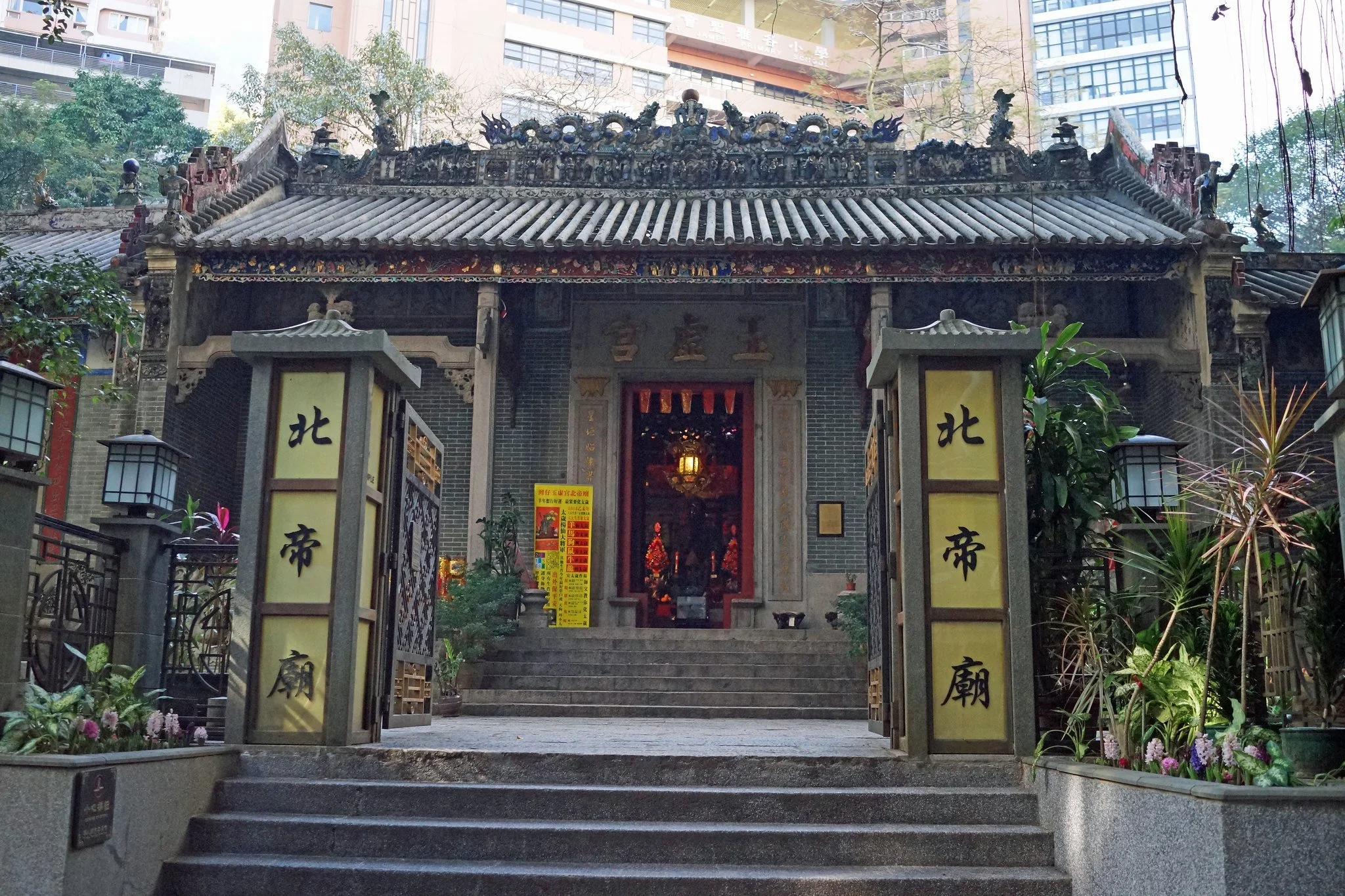
The very old | moody Pak Tai Temple in Wanchai Hong Kong

The J3 Group - Premium Quality Private Tours | Experiences and Insider Chats since 2010
Me Jamie, your host, I am English and I have lived in Hong Kong since January 2nd 1972 - I know the place.
A meaningful blog post with a difference - tips on Travel, Tourism, Tours, Daily Life and my personal thoughts on Hong Kong.
Please do visit Amazing Hong Kong
Hong Kong | Pearl of the Orient
Customised Private Tours + Experiences in Amazing Hong Kong
Jamie has lived in Hong Kong - Pearl of the Orient for 50+ years
Carefully Crafted Personalised and Customised Itineraries by Jamie | Hong Kong’s Most Experienced Private Tour Guide for : Solo Travellers Friends Families Seniors Couples Business People MICE Delegates.
Private Tours Cultural Tours Walking Tours Sightseeing Tours City Tours Night Tours Layover Tours Transit Tours Private Shore Excursions Bespoke Tours Personalised Tours Jewish Heritage Tours Luxury Private Tours Day Tours Luxury Boat Tours Themed Tours Private Family Tours Private Day Tours Corporate Tours
Just you, your family or friends and Jamie your personal English private tour guide - over 2,400+ tours completed since 2011 - Jamie offers quality Private Tours of Hong Kong
Tour Group Size 1 - 6 people only
J3 Group Hong Kong | J3 Consultants Hong Kong | J3 Private Tours Hong Kong
Creating Memories That Will Last A Lifetime
Go here for the Hong Kong Michelin Restaurant Guide which includes the Bib Gourmand Category

Photo of the day No. 53 - The Pak Tai Temple in Hong Kong
The very old | moody Pak Tai Temple in Wanchai Hong Kong
Hong Kong is home to approximately 600 temples, shrines, and monasteries according to multiple sources, just how do you choose which one to visit?
click on the image to enlarge
The Tin Hau Temple at Joss House Bay in Hong Kong is considered the most sacred and oldest. Built in 1266, it is the oldest and the largest Tin Hau temple in Hong Kong. It is a Grade I historic building and yes, all the search engines and AI sources seem to agree on that.
I mention this because many Temples in Hong Kong claim to be the oldest in Hong Kong as I am sure it influences donations and such and adds to the prestige.
As a Private Tour Guide I have to visit numerous temples, research is a very important part of what us guides do and over the years we acquire a list of Temples that we may or may not visit on a private tour, it is a tough job when there are over 600+ of them.
I started to visit the Pak Tak Temple on a regular basis in 2011 after my first visit in 2010 and I was over the moon as it is a 5 minute walk from the Blue House which is a listed building and Wanchai Wet Market which is great for a glimpse of Hong Kong culture, the problem is there is always a bigger and better Temple and over time I have stopped visiting this Temple simply because of the TIME factor.
My daytime tour lengths vary from 4 - 8 hours and there are simply too many sites and sights to visit and see and these days I feel that there are better temples and such to visit rather than then Pak Tai Temple and by extension the Blue House and Wanchai Wet Market.
I would absolutely recommend this one rather than the famous but totally overcrowded Man Mo Temple on Hollywood Road
Of course if some one wants to pay a visit to the Pak Tai Temple in Wanchai I will make it happen, as it really is a pretty interesting place and since I stopped visiting it has been granted the status of “declared monument” in 2019 (see below) apparently there are 136 in Hong Kong and it would take at least a couple of weeks at least to see them all
The Establishment and History of the Pak Tai Temple on Lung On Street in Wanchai District Hong Kong
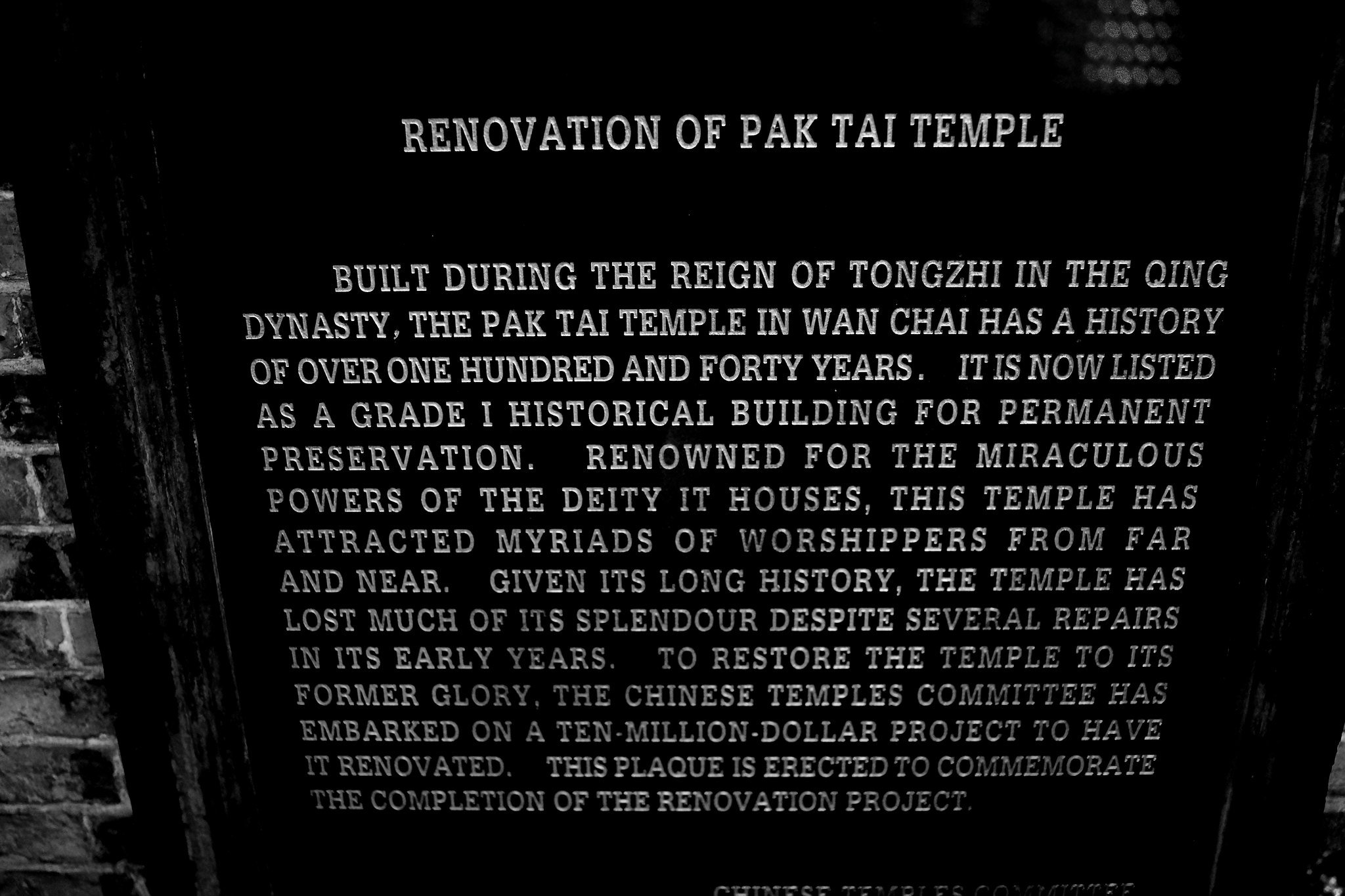
The Pak Tai Temple, also known as Yuk Hui Temple, is a significant Taoist temple located on Lung On Street in Wan Chai, Hong Kong. It was constructed by local residents in 1862 during the first year of the Tongzhi reign of the Qing Dynasty and completed in 1863, making it the largest Pak Tai temple on Hong Kong Island. The temple was declared a monument in 2019, recognized for its historical and architectural value, and serves as a landmark of Wan Chai’s early development and community identity.
Establishment of the Pak Tai Temple
The temple was built to worship Pak Tai, a Taoist deity associated with the sea and the northern stars, also known as the "Supreme Emperor of the Dark Heaven" or Yuen Tin Sheung Tai. Pak Tai is revered for protection against floods, longevity, and safe voyages, particularly by southern Chinese communities. According to legend, Pak Tai, born a prince during the Shang Dynasty (circa 1776–1046 BC), defeated a demon king, earning his divine title. The temple’s establishment reflects the spiritual needs of Wan Chai’s early residents, primarily fishermen and traders, who sought divine protection from natural disasters.
The temple’s construction began in 1862, with completion in 1863, as inscribed on a ridge purlin in the entrance hall—a rare feature in traditional Chinese buildings in Hong Kong. The characters “Yuk Hui Temple” on the granite lintel at the main entrance were written by Zhang Yutang, a Qing Dynasty military official stationed at Kowloon Walled City. The temple’s plaque, “Yuk Hui Kung,” was penned by Cheung Yuk Tong, another Qing official, during the Opium War period.
Architecture and Features of the Wanchai Pak Tai Temple
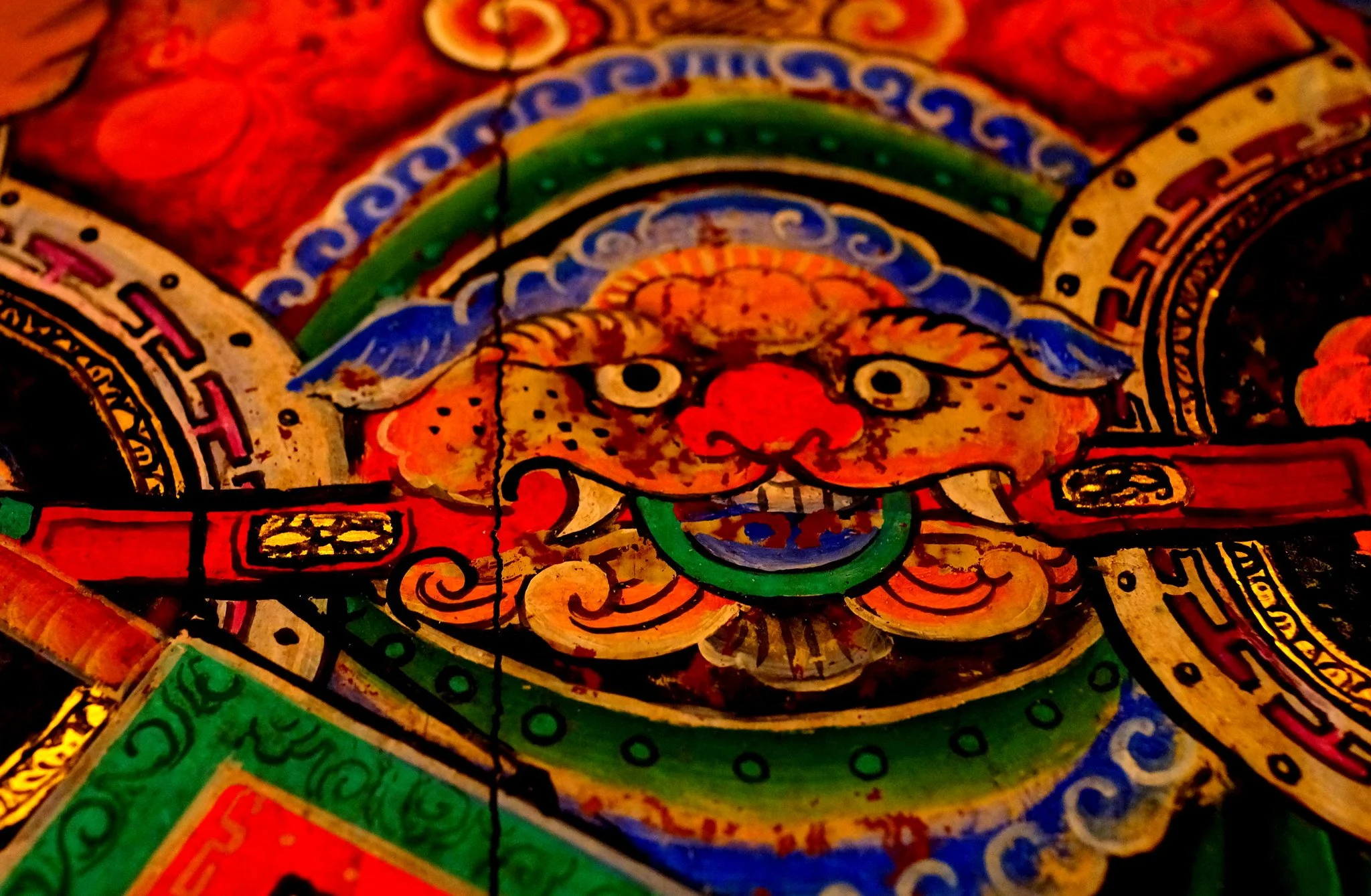
The temple is a classic Qing vernacular structure, featuring a two-hall, three-bay design with an incense pavilion at the center and annexes on either side, built using grey bricks, granite, and timber. Its roof ridge is adorned with Shiwan ceramic decorations depicting Cantonese opera scenes and Chinese folk stories, and a pair of dragon sculptures symbolizing peace, prosperity, and protection.


click on the image to enlarge
The very old | moody Pak Tai Temple in Wanchai Hong Kong
The main hall houses a 3-meter-tall bronze statue of Pak Tai, cast in 1603 during the Ming Dynasty’s Wanli reign, which predates the temple by over 250 years. The statue’s origin is unclear, possibly brought from mainland China during the Japanese occupation in World War II.
Flanking Pak Tai are statues of Lung Mo (Dragon Mother), the God of Wealth, the Three Pure Ones, and the Sei Dai Tin Wong (Four Heavenly Generals), depicted with lifelike poise. The temple also contains antique bells from 1863 and lotus lanterns that create an ethereal atmosphere.
Side halls include the Hall of Lung Mo, Hall of the God of Wealth, and Hall of Three Treasures, with annexes historically used as a community center and school. In the 1950s, the left annex hosted the St. James’ Settlement Boys’ and Girls’ Club, showcasing the temple’s role in community cohesion despite religious differences.
Historical and Cultural Significance
The Pak Tai Temple has been a pillar of Wan Chai’s community since its inception, reflecting the area’s evolution from a fishing and trading port to a modern metropolitan district. It served not only as a place of worship but also as a social hub, with its annexes facilitating education and community activities. The temple’s acceptance of diverse community initiatives, such as the St. James’ Settlement, highlights its role in fostering social unity.
The temple is central to the Pak Tai Festival, held on the third day of the third lunar month, where worshippers pay tribute to Pak Tai’s courage and valor. Its historical artifacts, including the 1603 Pak Tai statue and 1863 bells, underscore its cultural importance. The temple was renovated in 2005, preserving its traditional features while ensuring structural integrity. It remains a Grade I historic building and a declared monument under Hong Kong’s Antiquities and Monuments Ordinance.
So there you go, if you book a private tour with me and want to visit, I will make it happen, if not it is NOT in a remote location and quite easy to get to as long as you have the time to spare!
My insider tip
Please note that in general if you book a tour on Viator or Tripadvisor you generally have NO control over what guide will lead your Private Tour of Hong Kong and this is the most important component of the tour. I urge you to check the actual company website and book via their website and do not forget to read Tripadvisor reviews as well.
© Jamie Lloyd | J3 Consultants Hong Kong | J3 Private Tours Hong Kong |
| 2010 - 2025 All rights reserved. |
Click on any image to enlarge to full screen
Current images from my Instagram feed